
Search Intent: The Four Types and How to Read Them in Seconds
Two teams target the same keyword. Both write a careful, well-researched, two-thousand-word article. One climbs to the top three within a few months; the other never breaks the second page. The keyword was identical. The effort was comparable. The difference was almost always the same thing: one team read the search intent correctly, and the other guessed.
Search intent is the single most important concept in modern SEO, and also the most quietly skipped. It is skipped because it sounds soft — "understand what the user wants" — and soft things are easy to nod along to and never actually do. So let us make it concrete. This guide covers what intent is, the four types, and how to read the intent of any keyword in about thirty seconds using a resource you already have open.
What search intent really is
Search intent is the goal behind the query — the job the searcher is trying to get done in the moment they type. It is not the words. The words are just the searcher's best, fastest attempt to summon that goal. Two people typing the same three words can want genuinely different things, and Google's entire job is to figure out the dominant want and serve it.
That last point is the one to internalise: Google does not rank pages against a keyword. It ranks pages against an intent. The keyword is a label on a door; the intent is the room behind it. If your page is built for a different room, the quality of your page is irrelevant — you are simply not what the door opens onto.
This reframes the whole task. You are not asking "how do I write a good page for this keyword?" You are asking "what is the searcher trying to accomplish, and what is the page that accomplishes it?" Get that right and good writing compounds your advantage. Get it wrong and good writing is wasted on a page nobody wanted.
The four types of search intent
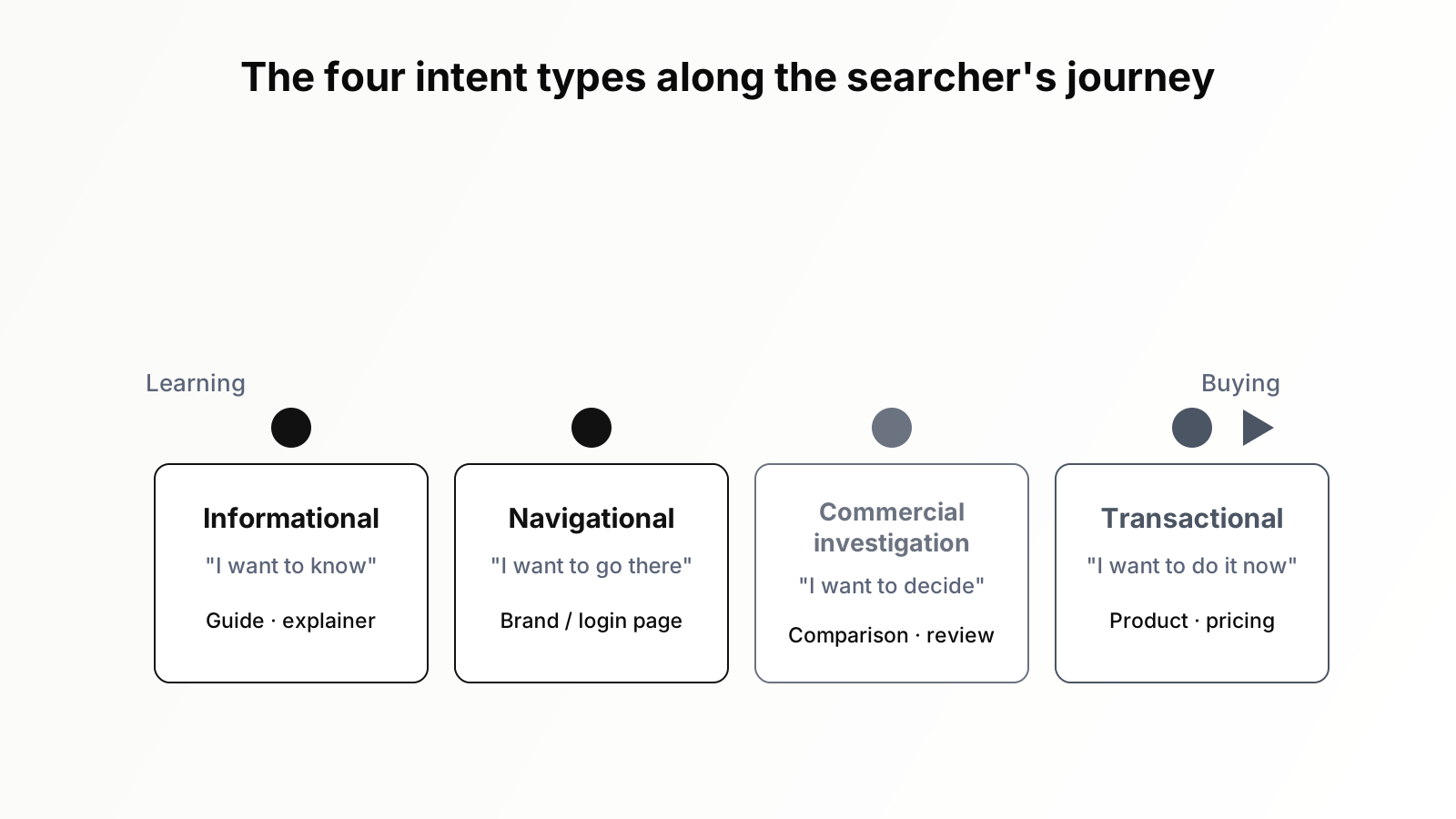
Intent is usually sorted into four categories. They are not academic boxes — each one implies a different page format, a different length, a different call to action, and a different definition of "success."
1. Informational — "I want to know"
The searcher wants to learn something. How does HTTPS work. What is a topic cluster. Why is my coffee bitter. They are not buying anything right now; they are filling a gap in their understanding.
The right page is a clear, complete, well-structured explainer or guide. Success is the reader finishing with their question fully answered. Informational pages rarely convert on the spot, and that is fine — their job is to build trust and topical authority, and to introduce a brand the reader may return to when they are ready to buy. Trying to hard-sell on an informational page is the fastest way to make a reader leave.
2. Navigational — "I want to go there"
The searcher already has a destination in mind and is using the search box as a shortcut. Orova login. Notion pricing. Gmail. They want a specific page of a specific brand.
For navigational queries about your own brand, the task is simply to not get in your own way: make sure the obvious page exists, is indexable, and has a sensible title. For navigational queries about other brands, the honest answer is usually to leave them alone — you cannot outrank a brand for its own name, and you should not try. The rare exception is a genuinely useful comparison the searcher might appreciate, but that is really a commercial query wearing a navigational coat.
3. Commercial investigation — "I want to decide"
The searcher intends to buy — soon — but has not chosen what. They are comparing, weighing, and reducing risk. Best SEO tools. Ahrefs vs Semrush. Orova review. Project management software for small teams.
This is the most valuable intent for most SaaS companies, and the most misunderstood. The right page is not a sales pitch and not a neutral encyclopedia entry — it is a genuinely useful decision aid: honest comparisons, clear criteria, real trade-offs, and a confident recommendation. Success is the reader leaving able to make a choice. Win the commercial-investigation queries in your space and you are present at the exact moment money is about to move.
4. Transactional — "I want to do it now"
The searcher is ready to act. Buy, sign up, download, get a demo, pricing. The decision is made; they want a frictionless path to completing it.
The right page is a product, pricing, or signup page — short on prose, long on clarity, with the action obvious and unmissable. A long article here is a mistake; the searcher does not want to read, they want to do. For transactional queries, success is measured in conversions, not time on page.
How to read intent in seconds
Here is the practical method, and it does not require a tool that claims to label intent for you. Those labels are guesses. The definitive answer is already published, for free, by the only authority that matters: search the keyword and read the results page.
The current top ten results are Google's own verdict on what satisfies the query. Google has measured, at enormous scale, what searchers click and stay on. The SERP is that verdict made visible. So read it deliberately:
- What page format dominates? Ten blog posts means informational. Ten product and category pages means transactional. A wall of "best of" listicles means commercial investigation. The format the searcher wants is the format that already ranks.
- What SERP features appear? A featured snippet and "People Also Ask" lean informational. Shopping results and ads scream transactional. A "things to know" panel signals exploration.
- What do the titles promise? Scan the language. "How to," "what is," "guide" — informational. "Buy," "pricing," "free trial" — transactional. "Best," "top," "vs," "review" — commercial.
- How long and deep are the ranking pages? This sets the bar for what "complete" means for this specific query. The SERP is also telling you the expected depth.
Thirty seconds of this beats thirty minutes of theorising. If you wrote a 3,000-word guide and the entire first page is product pages, you have not been unlucky — you have built the wrong type of page, and no amount of editing the prose will fix a format mismatch.
A worked example: one keyword, three readings
Take the keyword "email automation." A team that does not read the SERP will guess at its intent — and three reasonable people will guess three different things.
The first reader assumes informational. They picture a beginner asking "what is email automation?" and brief a 2,500-word explainer covering definitions, benefits, and history. The second reader assumes commercial. They picture a buyer comparing tools and brief a "best email automation software" listicle. The third assumes transactional and points the keyword straight at the product page.
Only one of them is right, and none of them knows which — because they all skipped the one step that settles it. Search the term and the SERP delivers its verdict in seconds. Suppose the first page is mostly explainer guides, with a featured snippet defining the term and a row of "People Also Ask" questions. That is Google telling you, plainly, that the dominant intent is informational. The buyer-comparison listicle would underperform here; the product page would not rank at all. The explainer wins — but it should still close with a clear next step for the reader who, having now learned what email automation is, wants to see it in action.
Now imagine the same search a year later, after a wave of new tools turned "email automation" into a crowded product category. The SERP may have shifted — more listicles, a few product pages creeping in. Same keyword, different verdict. The team still ranking their old pure-explainer is not being punished for bad writing; the query moved and their page did not. This is why intent is a reading you repeat, not a label you assign once. The keyword never told you its intent. The results page did — and the results page can change its mind.
Mixed and shifting intent
Real keywords are not always tidy. Two complications deserve attention.
Mixed intent. Some SERPs show a blend — a few guides, a couple of product pages, a comparison. This means Google sees a genuine split in what searchers want and is hedging. Your move is to identify the dominant intent (which format has the most slots), build primarily for that, and acknowledge the secondary intent inside the page — for instance, an informational guide that ends with a clear next step for the reader who has now decided to act.
Shifting intent. Intent is not frozen. A query can drift as a market matures, as seasons turn, or as news breaks. A term that was purely informational two years ago can turn commercial once a category of products appears. This is why intent is something to re-check, not decide once. A page that mismatched a shifted intent is a common, invisible cause of slow ranking decline — the page did not get worse, the query moved underneath it.
The intent mismatches that quietly kill rankings
Most intent failures fall into a few recognisable patterns. Watch for these:
- Selling on an informational query. The reader wanted to learn; you gave them a pitch. They leave. The engine notices.
- Writing an essay for a transactional query. The reader wanted to act; you made them read. Friction added where speed was needed.
- Staying neutral on a commercial query. The reader wanted help deciding; you gave them a fence-sitting overview with no recommendation. They go find a page brave enough to have an opinion.
- Chasing navigational queries for other brands. Effort spent on rankings you cannot win and traffic that would not want you anyway.
Notice that none of these is a writing-quality problem. Each is a format and purpose problem, decided before the first sentence is written. That is why intent belongs at the start of the brief, not in a post-publish review.
You can edit a sentence. You cannot edit your way out of building the wrong type of page. Intent is decided in the brief or it is decided by your rankings — and the rankings are a much more expensive place to learn.
Building intent into the workflow
Intent should be a required field, not a vibe. Every content brief should state the target intent explicitly, name the page format that serves it, and define what success looks like for that type. An informational brief that lists "signups" as its success metric is mislabelled before anyone writes a word.
It also helps to make intent visible at the editing stage, not just the briefing stage. A simple habit: before any draft is approved, the editor opens the target keyword's results page one more time and asks a single question — "does this page belong here?" If the draft is an explainer and the SERP is all explainers, it belongs. If the draft quietly drifted into a sales pitch while the SERP stayed informational, the mismatch is caught before publication rather than discovered three months later in a rankings review. Intent is cheap to check twice and expensive to get wrong once.
At scale, this is where consistency breaks down — reading the SERP honestly for every keyword in a large plan is real, repetitive work, and tired teams start guessing. An SEO AI agent like Orova can read the live results for each keyword, classify the dominant intent from what actually ranks, and recommend the matching format before drafting begins — so the page is built for the right room from the first line. It is the same method described here, applied without the fatigue that makes humans cut the corner.
Search intent is not a soft concept. It is the most concrete decision in SEO, and it is mostly free to get right: the answer is sitting in the results page, published by Google, waiting for anyone willing to look. Read the SERP. Match the format. Then write. In that order, good writing finally gets to do its job. (For turning these intent-classified keywords into a sequenced plan, continue with our keywords-to-content-plan workflow.)
Run your business with AI Agents
Orova is the always-on Biz AI Agent — it plans, runs, and optimizes the work for you. Save time, unlock productivity.
Try it free