
How We Doubled Traffic Without Publishing a Single New Post
For the better part of two years, our answer to every traffic question was the same: write more. Traffic flat this quarter? Increase the publishing rate. Want to grow next year? Hire another writer, raise the output, fill more of the calendar. The model in our heads was a simple conveyor belt — content in one end, traffic out the other — and the only lever we knew how to pull was speed.
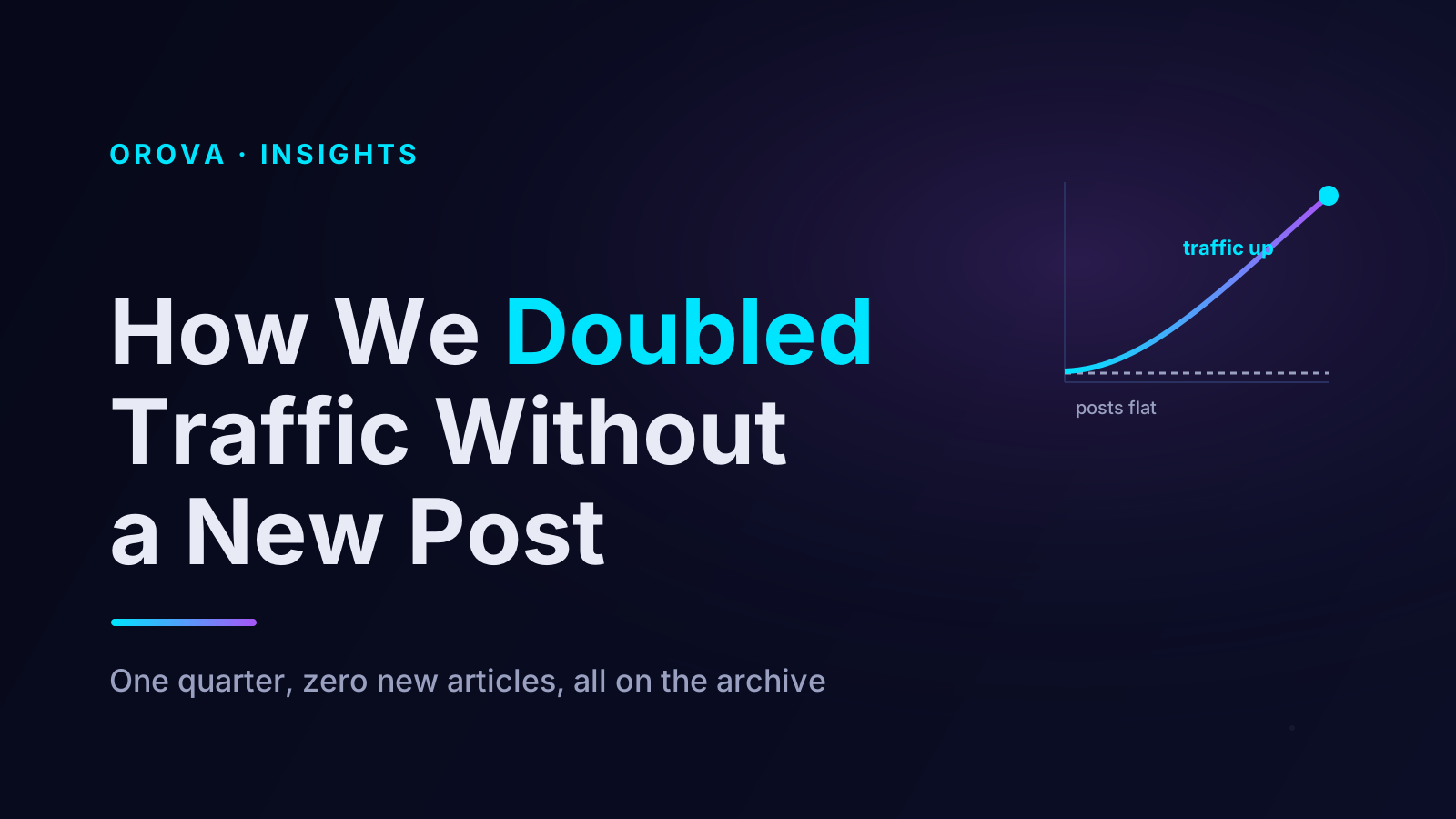
Then we ran an experiment that broke the model. For one full quarter we published nothing new. Not one new article. Instead, every hour of content capacity went into the pages we already had. By the end of that quarter, organic traffic had roughly doubled. This is the account of what we did, what we measured, and why the conveyor-belt model was wrong all along. The specific numbers were ours and your mileage will vary — but the pattern is general, and the pattern is the point.
The plateau that made us stop
The experiment was not born from insight. It was born from frustration. We had been publishing steadily for two years, the post count kept climbing, and traffic had simply stopped climbing with it. The chart of articles published rose in a clean diagonal. The chart of organic traffic had gone flat. Two lines that were supposed to move together had stopped agreeing.
The conveyor-belt model could not explain that. If content reliably produces traffic, more content should produce more traffic, and ours was not. So we did something we had never seriously considered: instead of writing the next article, we went and looked, properly, at the archive we had built. What we found there is the reason the experiment happened.
What the archive audit revealed
We pulled every page on the site into one spreadsheet, with its traffic, its rankings, its last update, and the query it was meant to serve. Seeing the whole archive in one place for the first time was genuinely uncomfortable.
A large share of our pages — well over half — attracted almost no organic traffic at all. They had been published, indexed, and then ignored by searchers ever since. A second group of pages was more painful to see: pages that ranked just outside the top results, positions roughly in the eight-to-fifteen range, for queries we genuinely cared about. These pages were close. They were one solid push from real visibility, and they had been sitting there, stuck and unattended, for a year or more. And a third pattern: clusters of three, four, five posts all circling the same topic, none of them definitive, all of them quietly splitting signals and competing with one another.
The audit reframed the problem completely. We did not have a content shortage. We had a content maintenance shortage. We had been so busy adding to the pile that we had never tended it — and the untended pile was holding the whole site down.
The decision: a quarter with no new posts
Confronted with that audit, publishing another new article felt almost irresponsible. It would land on the same neglected foundation as everything else and probably join the silent majority of pages nobody visits.
So we made the call: one quarter, zero new articles, all capacity redirected to the existing archive. It was uncomfortable to commit to. Not publishing felt like not working — like the conveyor belt had stopped and we were just standing there. We had to keep reminding ourselves that the belt had not been producing traffic anyway. The output we were so proud of had been flat for a year. Stopping it for ninety days was not a sacrifice. It was the experiment.
Work stream one: refreshing the near-miss pages
The first and most rewarding stream of work targeted those pages stuck just outside the top results. We took each one, opened the pages currently outranking it, and diagnosed honestly why ours was losing.
The reasons were consistent and unglamorous. Our pages were often a year or two out of date — stale facts, old screenshots, examples that no longer landed. They were frequently thinner than the competition, missing sections and follow-up answers that the winning pages included. And in several cases the query itself had shifted: people now wanted something slightly different from what our page delivered. So we did real refreshes — updating every fact, filling every gap the diagnosis exposed, restructuring where intent had moved, then re-linking to each refreshed page so search engines would come back and look.
This stream produced the fastest, clearest gains. Pages that had been frozen on page two for a year began moving up within weeks. Because they already had history and were already close, a focused push was enough to tip them over. (The content refresh playbook goes deeper into the exact diagnose-and-fix sequence we used.)
Work stream two: consolidating the overlap
The second stream addressed the clusters of overlapping posts. Where we found four mediocre articles all circling one topic, we did not refresh all four. We merged them.
For each overlap cluster, we picked the strongest page as the survivor, pulled the genuinely useful material out of the others into it to build one deep, authoritative page, and then redirected the now-emptied posts into that survivor. Four blurry pages became one sharp one — and crucially, all the link equity and ranking signals that had been scattered across four URLs now converged on a single page.
The effect was almost immediate. Pages that had been competing with themselves stopped, and the consolidated survivors climbed because the search engine finally had one clear answer to rank instead of four contradictory candidates. Self-competition, it turned out, had been costing us more than any external competitor.
Work stream three: pruning the dead weight
The third stream was the hardest emotionally and the simplest in practice. The large group of pages with effectively no traffic, no links, and no real purpose — the genuinely dead weight — we removed.
We were careful about it. Any page with backlinks or a place in our structure was redirected rather than deleted, so no equity leaked. But the truly inert pages, the thin posts written years ago to "cover a keyword" and never visited since, were taken down. It felt like deleting work, and we had to keep reminding ourselves of the audit: these pages were not assets, they were ballast, and every one of them was a small vote telling search engines our site was, on average, mediocre.
This stream produced no instant spike. Its effect was slower and broader — over the following weeks, the site-wide quality average rose, and pages we had not even touched began to inch upward. Removing the worst pages had quietly helped the good ones.
What the numbers showed
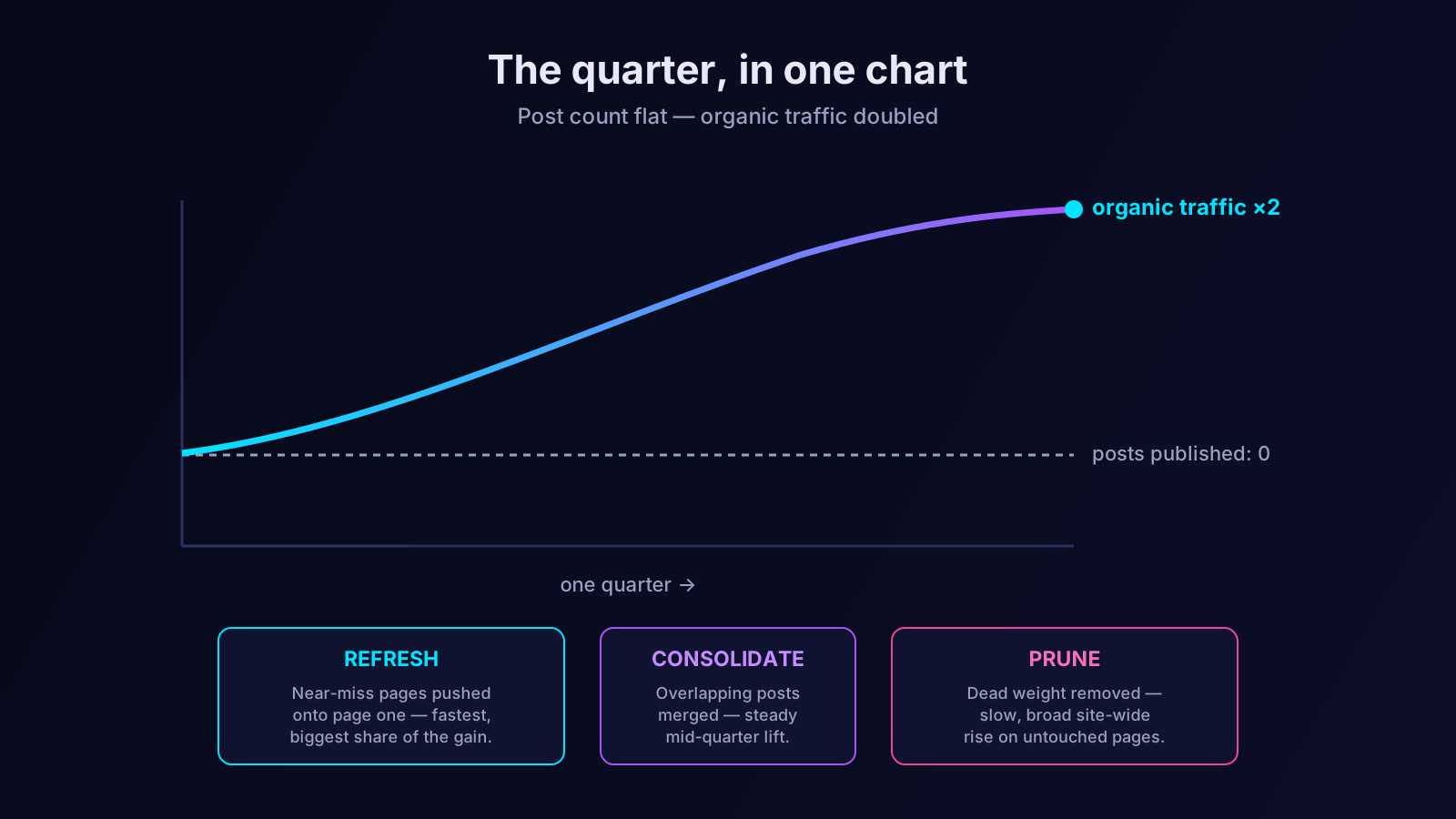
By the end of the quarter, with not a single new article published, organic traffic had roughly doubled. Watching it happen taught us where the gain actually came from.
The refresh stream delivered the bulk of it and delivered it fast — those near-miss pages crossing onto page one moved the traffic line visibly within weeks. The consolidation stream delivered a steady mid-quarter lift as merged pages climbed. The pruning stream delivered the slowest and most diffuse gain, a gradual site-wide rise that showed up in pages we had never directly worked on. Three different mechanisms, three different speeds, one combined result: a traffic chart that finally moved, produced entirely from content we already owned.
What we got wrong for two years
The hard lesson was about the two years before the experiment. We had not been failing to work. We had been working hard and steadily — just on the wrong half of the job.
We had treated content as a thing you produce and then file. Published meant finished. The archive was a record of past work, not a portfolio of live assets needing maintenance. Under that belief, the only available lever was "write more," so when traffic stalled we pulled that lever harder, and it did nothing — because the problem was never a shortage of pages. The problem was an archive of pages depreciating faster than we were maintaining them. The conveyor belt was real, but it had a leak at the far end, and we had spent two years feeding the front of it instead of fixing the leak.
What surprised us most
Going in, we expected the experiment to work — that was the whole reason for running it. What we did not expect was how the gains were distributed, and that distribution taught us something we have carried into every quarter since.
We assumed the result would be a broad, even lift: every old page nudged up a little, the total rising gently. That is not what happened. The gains were lumpy. A relatively small number of refreshed near-miss pages produced a strikingly large share of the total traffic increase, because moving a page from the bottom of page two to the middle of page one is not a small nudge — it is a step change in visibility. Meanwhile, most of the archive moved very little. The lesson was uncomfortable but valuable: traffic growth from archive work does not come from touching everything. It comes from finding the few pages where a push crosses a threshold, and concentrating effort there. We had been mentally budgeting our time as if every page deserved equal attention. The data said the opposite — a handful of pages were worth more than the rest of the archive combined, and the entire skill was identifying which handful.
Could we have just published instead?
The fair challenge to this whole experiment is a counterfactual: what if we had spent that same quarter writing new articles, the way we always had? Would the result have been just as good?
We cannot rerun the quarter, but the logic strongly suggests not. New articles, in our experience, took many months to mature into meaningful traffic, and a large fraction never matured at all. A quarter of new posts would, optimistically, have started contributing traffic two or three quarters later, and only some of them. The archive work paid off inside the same quarter, because the pages we refreshed already had history, links, and an established relationship with search engines — a foundation a new page has to spend months building. The honest conclusion is not that new content is worthless. It is that, for a site with a substantial neglected archive, the existing pages are simply closer to the goal. They need a push; new pages need a journey. When the archive is full of pages one push from page one, spending the quarter on those pushes beats starting fresh journeys almost every time. That is situational, not universal — but the situation it describes is extremely common.
What we changed permanently
We did, of course, start publishing new content again the following quarter — the experiment was never an argument for never writing anything new. It was an argument about balance.
The permanent change was a fixed split. A defined share of content capacity every cycle is now reserved for the archive: refreshing decaying pages, consolidating overlap, pruning dead weight. It is scheduled with the same seriousness as new articles, because we learned that whatever is not scheduled does not happen. New content still gets written. But it now lands on a foundation that is actively maintained rather than quietly rotting, and the traffic line has kept rising instead of going flat.
Where an AI agent fits
The honest reason we had never done this audit before is that it was a daunting amount of work. Pulling every URL together with its traffic, rankings, last-update date, and intent; spotting the near-miss pages; finding the overlap clusters; identifying the dead weight — that is a large, painstaking analysis, and it has to be repeated regularly or the archive simply drifts back into neglect.
That continuous, structured audit is precisely what an SEO AI agent is built to carry. Orova can keep a running inventory of an entire site, surface the pages stuck just outside the top results, detect clusters of posts that overlap and compete, flag the genuine dead weight, and recommend an action for each one. The decisions and the writing stay human. What changes is that the audit which took us a painful month of spreadsheet work — and which we had skipped for two years because of that pain — becomes something that simply runs, so the archive gets watched continuously instead of rediscovered in a crisis.
If your post count keeps rising and your traffic has gone flat, do not reach for the obvious lever. Do not write more. Go and look, properly, at what you have already written. The quarter we doubled traffic without publishing anything was not a fluke. It was the predictable result of finally tending a garden we had spent two years only ever planting.
Let an AI Agent handle your SEO
Orova plans, writes, optimizes, and tracks rankings on its own — you just read the results.
Try it free