
Comparison Pages: How to Write "X vs Y" Without Lying
The "X vs Y" page is one of the most valuable assets a SaaS company can publish and one of the most commonly botched. Valuable, because the people searching for it are at the very end of their buying journey — they have narrowed the field to two options and want them set side by side. Botched, because the company writing the page is almost never a neutral party. It sells one of the two products. And so the temptation, on nearly every comparison page ever published, is to tilt the scales.
This is a how-to for writing a comparison page that ranks, converts, and does not lie. Not a vague plea to "be honest" — a concrete method for building a page that a skeptical, decision-ready reader trusts, even though they can plainly see you have a stake in the outcome. Done right, the comparison page is a quiet revenue engine. Done dishonestly, it is a page that ranks for a while and converts for almost nobody, because readers comparing software have very good lie detectors.
Why readers reach a comparison page already suspicious
Start by understanding the reader, because everything in the method follows from it. Someone searching "[Product A] vs [Product B]" is sophisticated. They have done their research. They know both products exist, they know roughly what each does, and they have arrived at your page for one reason: to resolve a final, close decision. They are also, crucially, aware of bias. They know that if they have landed on Product A's website, Product A's comparison page will probably say Product A wins.
That awareness is the central fact of comparison-page writing. Your reader expects you to be biased. They are reading the page partly to extract useful information and partly to test how trustworthy you are. The moment the page confirms their suspicion — every row favours you, every competitor weakness is magnified, every competitor strength goes unmentioned — they stop reading the content and start discounting all of it, including the parts that were true. You have not persuaded them. You have proven their prediction right and lost them.
The counter-intuitive consequence: the way to convert a comparison-page reader is to defeat their expectation of bias. A page that is visibly, demonstrably fair — that says true things about the competitor, including good ones — breaks the reader's defensive crouch. Now they are reading you as a credible source. And a credible source making a case for their product is enormously more persuasive than an obvious advertisement.
The rule: win the rows you should, concede the rows you shouldn't
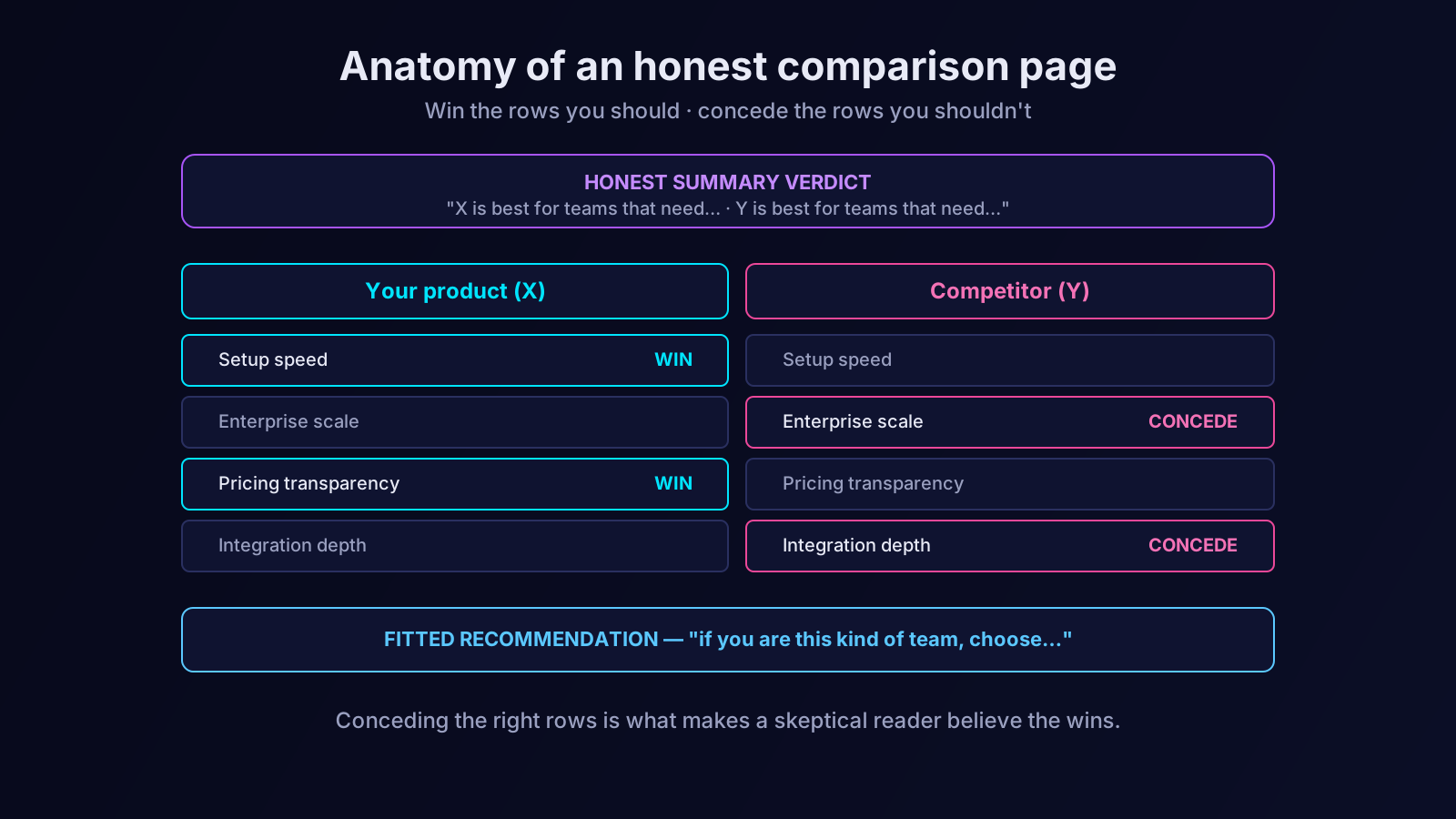
Here is the principle at the heart of an honest comparison page. No product is better at everything. Yours has genuine strengths and genuine weaknesses, and so does the competitor. An honest comparison page reflects that reality: it shows your product winning the comparisons where it genuinely wins, and it concedes — clearly, without hedging — the comparisons where the competitor genuinely wins.
This feels dangerous to a marketer. Conceding a row means admitting a competitor is better at something. But think about who is reading. A decision-ready buyer will discover the competitor's strengths anyway — from a trial, a review site, a peer. The only question is whether they discover them from you, in a context where you can frame them honestly, or from someone else, in a context where it looks like you were hiding something. Concede the row, and the concession becomes proof you can be trusted on the rows where you claim the win. Hide it, and the eventual discovery poisons the whole page.
And here is the part marketers underestimate: conceding the right rows actually helps conversion, because it qualifies the reader. If a competitor is genuinely better for a use case yours does not serve well, you do not want that customer — they will churn, complain, and leave bad reviews. A comparison page that honestly says "if you need X, the other tool is the better fit" sends away the buyers who would have been unhappy and keeps the ones who will be delighted. That is not a lost sale. That is a saved support headache and a protected reputation.
How to structure the page
An effective comparison page has a predictable architecture. Each part does a specific job.
Open with an honest summary
The first thing the reader should see is a short, fair verdict: who each product is best for. Something in the spirit of "Product A is the stronger choice for teams that need [your real strengths]; Product B is the better fit for teams that prioritise [their real strengths]." This does two things at once. It serves the reader who wants the answer fast, and it signals immediately that the page is fair — which buys you the credibility to be believed in everything below.
Compare on the dimensions buyers actually weigh
The body of the page should be organised around the decision criteria your buyers genuinely use — pricing, ease of setup, specific capabilities, integrations, support, scalability — not around a list of features cherry-picked because you happen to win them. If you only compare on dimensions where you win, a sharp reader notices the suspicious gaps. Compare on the criteria that matter, and let the chips fall.
Be specific and verifiable
Vague superiority claims — "more powerful," "easier to use," "more flexible" — read as marketing and persuade nobody. Specific, checkable statements build trust: which integrations each tool offers, how each pricing model is structured, what each does and does not include at a given tier. The more verifiable the page, the more credible it is. And specificity has a maintenance cost — see below.
Close with a fitted recommendation
End not with a generic "choose us" but with a recommendation tied to the reader's situation: if you are this kind of team with these priorities, here is the better choice — and for many readers, honestly, that will be your product. A fitted recommendation converts better than a blanket pitch because it respects the decision the reader is actually making. (Our piece on why traffic doesn't become signups covers why fitted CTAs outperform generic ones across all content types.)
The mistakes that sink a comparison page
Several recurring errors turn a potentially excellent comparison page into a liability.
Comparing only your winning features. A page where every row goes your way is not a comparison; it is an advertisement wearing a comparison's clothes, and decision-stage readers see through it instantly.
Misrepresenting the competitor. Describing a rival's product inaccurately — claiming it lacks a feature it has, quoting outdated pricing, mischaracterising its limitations — is the fastest way to destroy the page's credibility, and a reader doing real research will catch it. Worse, it can be discovered and publicised, turning your comparison page into a reputational problem.
Letting the page go stale. Software changes. The competitor adds the feature you said they lacked; their pricing changes; yours does too. A comparison page that was accurate at publication slowly becomes a page full of false claims — not through dishonesty, but through neglect. This is the hidden tax of specificity: a specific page must be maintained, or its specificity becomes a liability. Schedule a review of every comparison page at least quarterly.
Burying the answer. A reader on a comparison page wants a conclusion. A page that lays out endless detail and never commits to a recommendation has failed the reader's actual need. Be willing to say who should choose what.
Comparing against your own product, not just competitors
One more category worth a page: the comparison a buyer makes between you and the option of doing nothing, or between your product and a manual process or a spreadsheet. Not every comparison is "us vs a rival." Sometimes the reader is weighing whether to buy any tool at all. A page that honestly compares "using [your category of product]" against "doing this manually" serves a real decision-stage query and tends to be less adversarial to write, because there is no competitor to be unfair to — only an honest account of when the manual approach is genuinely fine and when it stops scaling.
How to research a comparison page properly
An honest comparison page is only as good as the research behind it, and the research is where most comparison pages quietly go wrong. Writing about a competitor from memory, from a sales deck, or from a half-remembered demo two years ago is how false claims creep in — not from malice, but from stale or shallow knowledge.
Proper research means actually examining the competitor as a prospective buyer would. Read their current pricing page, their feature documentation, their changelog. If feasible, use the product — sign up for a trial and form a first-hand impression rather than relying on assumptions. Read independent reviews of the competitor to understand what their real users praise and complain about, because those reviews surface strengths and weaknesses that marketing pages on either side will never mention. The goal is to be able to describe the competitor's product as accurately as the competitor would describe it themselves — accurately enough that, if their team read your page, they would have nothing factual to object to.
This research has a second benefit beyond accuracy: it makes the page genuinely useful. A comparison page written from real knowledge of both products contains the specific, concrete detail that decision-stage readers crave. A comparison page written from assumptions contains vague generalities that persuade no one. The research is not overhead. It is the substance of the page.
The objection: "won't this help my competitor?"
Every marketer asked to write a fair comparison page raises the same worry: by naming a competitor and describing them accurately — even acknowledging their strengths — am I not doing their marketing for them? Sending them traffic? Legitimising them?
The worry deserves a direct answer. First, the competitor is already known to the reader. Someone searching "[your product] vs [competitor]" did not learn the competitor's name from your page; they arrived already aware of both. You are not introducing a rival. You are intercepting a comparison the reader was going to make anyway, and the only question is whether they make it on your page, with your framing, or somewhere you have no influence.
Second, the alternative to writing the page is not that the comparison disappears. It is that the comparison query gets answered by someone else — an affiliate site, a review aggregator, or the competitor's own comparison page, which will certainly not concede any rows to you. By declining to write the page out of fear of helping a rival, you hand the rival an uncontested win on one of the highest-intent queries in your category. The page you were afraid to write was the defensive move, not the risky one.
Third, the traffic concern misunderstands the dynamic. A comparison page on your domain, that ranks for the comparison query, keeps the reader on your site during the most decisive moment of their journey. That is the opposite of sending traffic away. The fair treatment of the competitor is what earns the reader's trust; the trust is what lets your case land. Fairness is the mechanism, not the sacrifice.
Why honesty is the commercial choice, not the noble one
It is worth being clear that honesty on a comparison page is not advocated here as a moral position. It is the commercially superior strategy, and that is a stronger argument.
A dishonest comparison page might win a few sales from readers who did not check. But it loses more than it wins: it loses the skeptical majority who detect the bias and discount the page; it loses the customers it tricked into a bad fit, who churn and leave poor reviews; and it risks the public embarrassment of being called out for misrepresenting a competitor. An honest comparison page does the opposite. It earns the trust of skeptical readers, attracts customers who genuinely fit and therefore stay, and builds a reputation for straight dealing that compounds across every other page you publish. Over any horizon longer than a quarter, honest comparison pages simply outperform. The choice is not between ethics and results. It is between a short-term trick and a long-term asset.
Where an SEO AI agent fits
A complete comparison cluster — every "[you] vs [competitor]," every "[category] alternatives," every "[you] vs the manual way" — is a real body of work, and it carries an ongoing maintenance burden that most teams underestimate. That combination of initial volume and continuous upkeep is where an SEO AI agent earns its place. Orova can map the comparison queries your category generates, identify which competitor and alternatives pages you are missing, structure each page around the decision criteria buyers actually weigh, and flag comparison pages whose specific claims may have gone stale and need a refresh. The judgement that makes a comparison page honest — knowing where your product genuinely wins and where it genuinely loses — stays with the people who know the product. The agent handles the mapping, the structure, and the upkeep that otherwise keeps these high-converting pages thin and outdated. Write the X vs Y page. Just write the one that tells the truth — it is the one that ranks, converts, and keeps converting.
Let an AI Agent handle your SEO
Orova plans, writes, optimizes, and tracks rankings on its own — you just read the results.
Try it free