
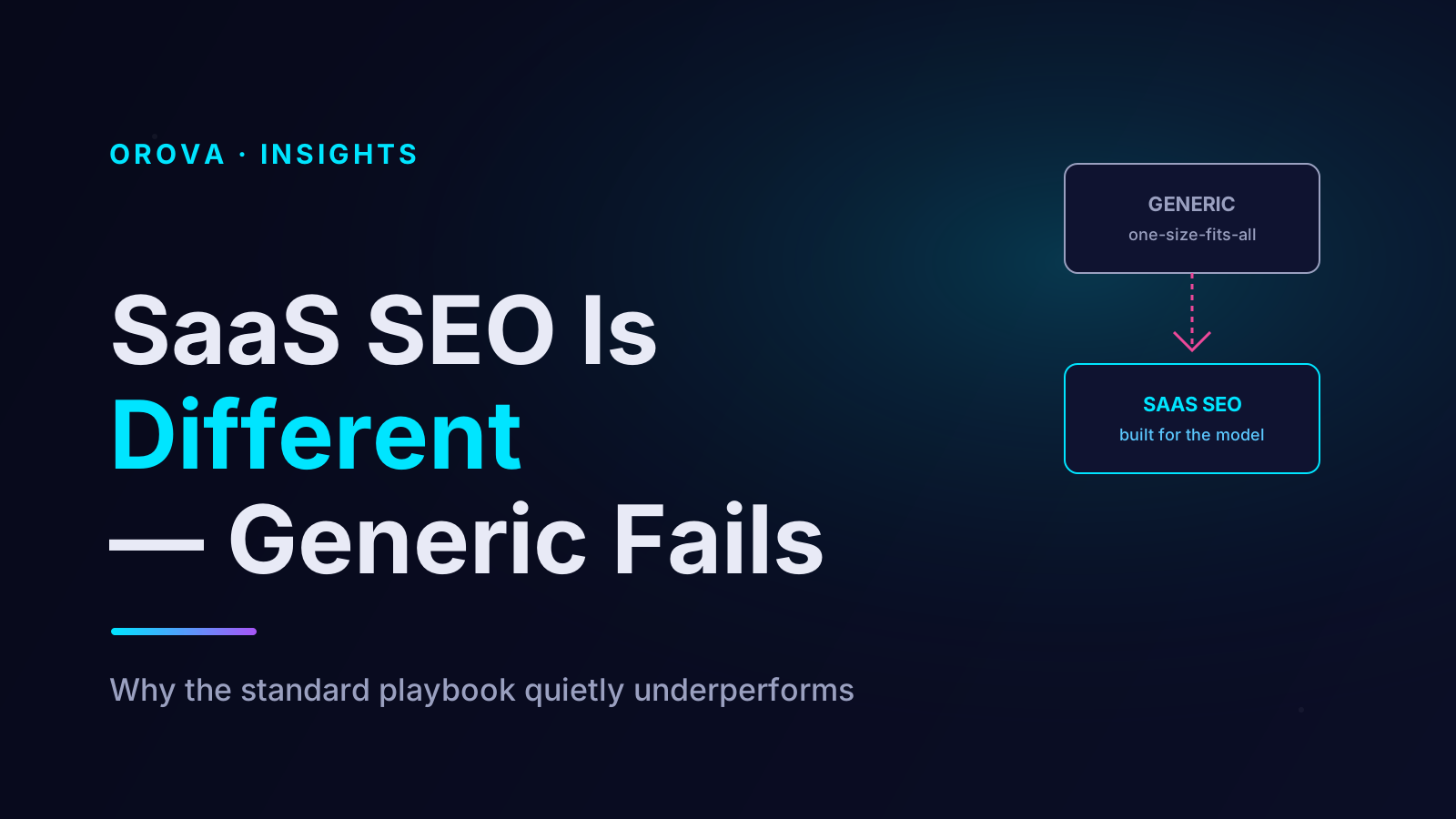
SaaS SEO Is Different — Here's Why Generic Advice Fails
Open any popular SEO guide and you will find the same advice repeated with the confidence of physical law. Find keywords with high volume and low difficulty. Publish consistently. Build backlinks. Optimise your title tags. Track your rankings. None of it is wrong, exactly. But applied to a SaaS company, this generic playbook quietly underperforms — and worse, it underperforms in ways that look like success on a dashboard. Traffic goes up. Rankings improve. The blog gets busier. And the number that actually matters — trials, signups, paid conversions traceable to organic search — barely moves.
This is not a tooling problem or an effort problem. It is a category problem. SaaS SEO is structurally different from the SEO that most guides were written to describe, and treating it as the same discipline is the single most common reason SaaS content programs fail to pay for themselves. This article is a critique of the generic advice — not because the advice is stupid, but because it was built for a different business and nobody mentions that when they hand it to you.
The generic playbook was written for a different business
Most widely circulated SEO advice was shaped by two business models: the publisher and the e-commerce store. Both are perfectly legitimate, and both have economics that make the generic playbook sensible. They are just not your economics.
The publisher monetises attention. Every additional visitor is worth a fraction of a cent in ad revenue, so the publisher's job is volume — as many sessions as possible across as many topics as possible. For a publisher, "traffic went up" genuinely is the goal, because traffic is the product. Advice optimised for publishers therefore optimises for raw sessions, and it tells you to chase high-volume keywords because high volume directly equals more money.
The e-commerce store monetises transactions with a short, legible path: a shopper searches for a product, lands on a product page, and buys within the same session or the same week. The keyword maps cleanly to a SKU, the conversion happens fast, and attribution is relatively honest. Advice optimised for e-commerce optimises for that clean keyword-to-purchase line.
A SaaS company is neither. It does not monetise attention and it does not monetise fast transactions. It monetises a considered decision, made over weeks or months, by a buyer who needs to be educated, persuaded, and reassured before they commit — often a buyer who is not the same person who first found your article. When you take advice tuned for publishers and stores and apply it to that, the mechanics misfire in specific, predictable places.
Misfire one: volume is the wrong target
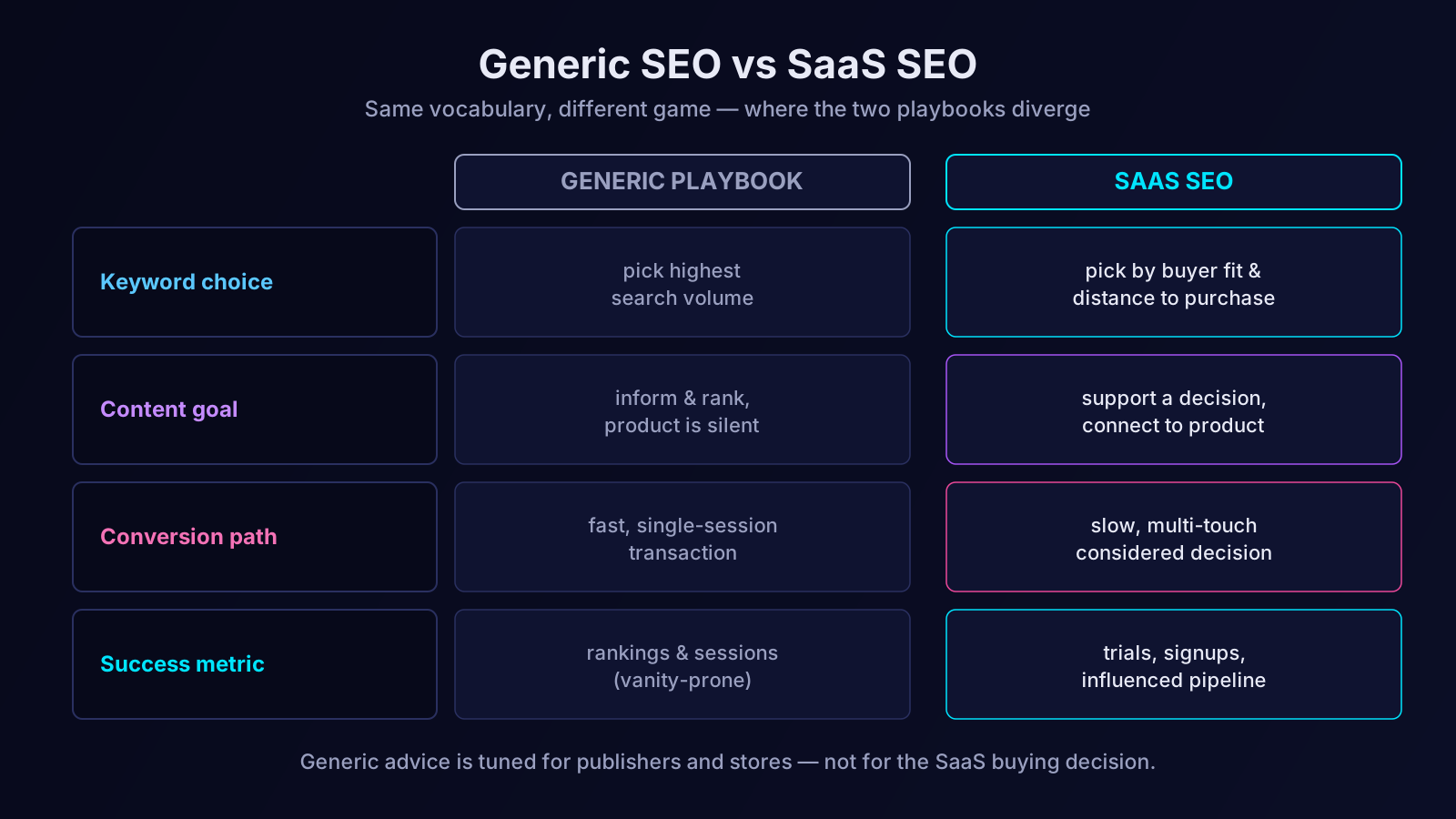
The generic playbook treats search volume as the headline metric of a keyword's worth. For SaaS, volume is close to noise. A SaaS company is not trying to reach the largest possible audience; it is trying to reach a narrow, specific audience — the people with the particular problem its product solves and the authority to buy a solution. That audience is small, and the keywords that reach it have modest volume by design.
Chase volume in a SaaS context and you systematically pull yourself away from your buyers. The high-volume terms in any subject are the broad, early-stage, often consumer-flavoured queries — exactly the ones searched by people who will never buy enterprise software. You will rank for them, your traffic chart will look magnificent, and your conversion rate will quietly collapse, because the traffic is made of the wrong people. A SaaS keyword should be judged by who searches it and how close they are to a buying decision, not by how many of them there are. The volume column belongs near the bottom of your priority list, not the top — a point we make in detail in our guide to turning keywords into a content plan.
Misfire two: "publish consistently" with no funnel logic
"Publish consistently" is good advice about cadence and terrible advice about strategy, because it is silent on the only question that matters for SaaS: publish what, aimed at which stage of the buying journey. A SaaS buyer moves through a journey — becoming aware of a problem, exploring approaches to it, comparing specific tools, and finally choosing one. Content has to exist at every stage of that journey, deliberately, in the right proportions.
A blog that simply publishes consistently, without funnel logic, almost always drifts to the top. Top-of-funnel articles are the easiest to think of, the easiest to write, and the ones that win the most traffic, so an undirected content engine fills up with them and starves the middle and bottom. The result is the defining SaaS content pathology: a blog with healthy traffic and almost no influence on revenue, because nothing it publishes ever helps a reader move toward a decision. "Be consistent" never warned you about this, because the publishers it was written for do not have a funnel to starve.
Misfire three: rankings and traffic as success metrics
The generic playbook tells you to measure success with rankings and traffic, because for a publisher those metrics genuinely correlate with revenue. For SaaS the correlation is so loose it becomes actively misleading. A SaaS content program can climb the rankings, grow its traffic quarter after quarter, and contribute nothing measurable to the business — and the dashboard will applaud the whole way down.
The honest SaaS metrics are further down the funnel and harder to look at: trials or demos started from organic, signups attributable to organic content, paid conversions where an organic article played a role, and the influence of content on existing pipeline. These numbers are smaller, slower, and messier than a traffic chart. They are also the only ones that tell you whether the program is working. The generic advice points your attention at the comfortable metrics precisely because the business it was written for could trust them. Yours cannot. Reporting against rankings and sessions in a SaaS company is not measurement — it is reassurance.
Misfire four: the missing product
Here is the omission that most cleanly separates SaaS SEO from everything else: the generic playbook has nothing to say about your product. It treats content and product as separate worlds — content attracts visitors, and then, somehow, off the page, conversion happens. For a publisher that is accurate, because the publisher's product is the content. For SaaS it is a serious blind spot.
In SaaS, the product is the destination of the entire content effort, and the best-performing content is content that is genuinely, specifically about the problems the product solves. This is the discipline of product-led content — articles that teach a real solution to a real problem and, where it is honestly relevant, show how the product makes that solution faster or easier. Not interruptive ads bolted onto unrelated posts; content where the product belongs because the article is about exactly what the product does. The generic playbook never mentions this, so SaaS teams trained on it write product-less content: helpful, well-optimised, and disconnected from the thing they actually need readers to buy. Traffic with no bridge to the product is traffic that leaves.
Misfire five: backlinks as the universal lever
"Build backlinks" is presented as a universal growth lever, and for the broad, competitive head terms publishers fight over, link authority does heavy lifting. SaaS SEO lives somewhere else. A great deal of the content that drives SaaS revenue targets specific, lower-competition, decision-stage queries — "[your category] for [specific use case]," "[competitor] alternative," "how to solve [precise problem]." These terms are often winnable on relevance and depth alone, without an aggressive link campaign, because few sites have content that matches the query as precisely as a focused SaaS page can.
This is not an argument that links never matter for SaaS — for the broadest, most competitive terms, they still do. It is an argument against the generic ordering, which puts link building near the front of the queue. For most SaaS programs, the highest return comes first from getting content onto the right decision-stage topics and structuring it well internally, and only later from chasing external links for a handful of competitive head terms. Pour your early energy into link building and you are spending on a lever that, at your stage, moves very little.
What SaaS SEO actually optimises for
If the generic playbook is the wrong instruction set, what is the right one? SaaS SEO optimises for a different set of things, and naming them makes the contrast concrete.
It optimises for buyer fit over volume — choosing keywords by who searches them and how close that person is to a purchase, treating raw volume as a minor tiebreaker. It optimises for funnel coverage over publishing rate — making sure content exists deliberately at every stage from problem-awareness to final decision, with the middle and bottom protected from neglect. It optimises for decision support over session count — judging an article by whether it moved a reader closer to choosing, not by how many readers it drew. It optimises for product connection over product silence — building content on the problems the product solves so there is an honest bridge from page to signup. And it optimises for conversion-aware measurement over vanity metrics — reporting trials, signups, and influenced pipeline even though those numbers are smaller and harder to read than a traffic graph.
None of this contradicts the fundamentals. Search intent still matters; internal linking still matters; technical health still matters. SaaS SEO is not a different craft. It is the same craft pointed at a different target — and the generic playbook never tells you the target moved.
Why the generic advice is so sticky
If generic advice fits SaaS so poorly, why does it dominate? Three reasons, and they are worth naming because they explain why this mistake keeps repeating.
First, the generic advice is genuinely easier to act on. "Find high-volume keywords and publish a lot" is a clear instruction with an obvious next step. "Map content to a buying journey, judge keywords by buyer fit, and connect every article to the product" is harder to start and harder to measure. Teams reach for the easy instruction because it lets them feel productive on Monday morning.
Second, the generic advice produces fast, visible, flattering results. Volume keywords rank sooner and move the traffic chart quickly. The chart goes up, everyone feels good, and the absence of revenue impact takes months to become undeniable. By the time the gap is obvious, the program has momentum and a year of habits behind it.
Third, the generic advice is what gets published, because publishers — the people writing the SEO guides — are themselves optimising for the publisher model. The advice that reaches the most people is, naturally, advice optimised for reaching the most people. It is sincere and competent. It is just calibrated for a business that is not yours, and almost nobody adds that disclaimer.
The correction is reframing, not more effort
The encouraging part of this critique is that fixing it does not require working harder. SaaS teams running the generic playbook are usually already working hard — publishing steadily, optimising diligently, tracking carefully. The problem is not the volume of effort; it is the target the effort is aimed at. The correction is a reframe, applied to decisions you are already making.
When you choose a keyword, ask who searches it and how close they are to buying — not how big the volume is. When you plan content, ask which funnel stage it serves and whether the middle and bottom are covered — not just whether you are publishing on schedule. When you write, ask where the product honestly belongs in the piece — not just how to rank it. When you report, lead with trials and signups and influenced pipeline — not with sessions. Same work. Different questions. A program that asks the SaaS questions instead of the generic ones will, over a couple of quarters, look completely different on the only chart that pays the bills — even if the traffic chart grows more slowly than it used to.
Where an SEO AI agent fits
Running the SaaS playbook instead of the generic one means making a sharper judgement on every keyword, every brief, and every article — and holding that judgement across hundreds of decisions without drifting back to the comfortable defaults. That consistency is exactly where most teams slip: they know SaaS SEO is different, and then under deadline pressure they quietly reach for the volume keyword and the easy top-of-funnel post again.
This is where an SEO AI agent earns its place. Orova is built to work the SaaS way by default — scoring keywords by buyer fit and funnel stage rather than raw volume, flagging when a content plan is starving its middle and bottom of funnel, pointing out where an article should connect to the product, and reporting against conversion-stage outcomes rather than vanity traffic. It does not replace the strategic reframe in this article; it makes the reframe stick, applying the SaaS questions to every decision so the program does not relapse into the generic playbook the moment a deadline gets close. Generic advice fails SaaS because it answers the wrong questions consistently. The fix is to answer the right ones — just as consistently.
Let an AI Agent handle your SEO
Orova plans, writes, optimizes, and tracks rankings on its own — you just read the results.
Try it free