
The Marketer's Job in 2027: Editor-in-Chief of Machines
Somewhere around 2024, marketers started asking the question quietly, in the way you ask a doctor about a mole: "Is AI going to take my job?" The industry's answer has been a chorus of reassuring keynote slides — "AI won't replace marketers; marketers who use AI will replace marketers who don't" — which is the kind of sentence that sounds profound until you notice it has the nutritional content of a fortune cookie. It reassures without informing. Replaced how? Using AI to do what? What does the surviving marketer's Tuesday actually look like?
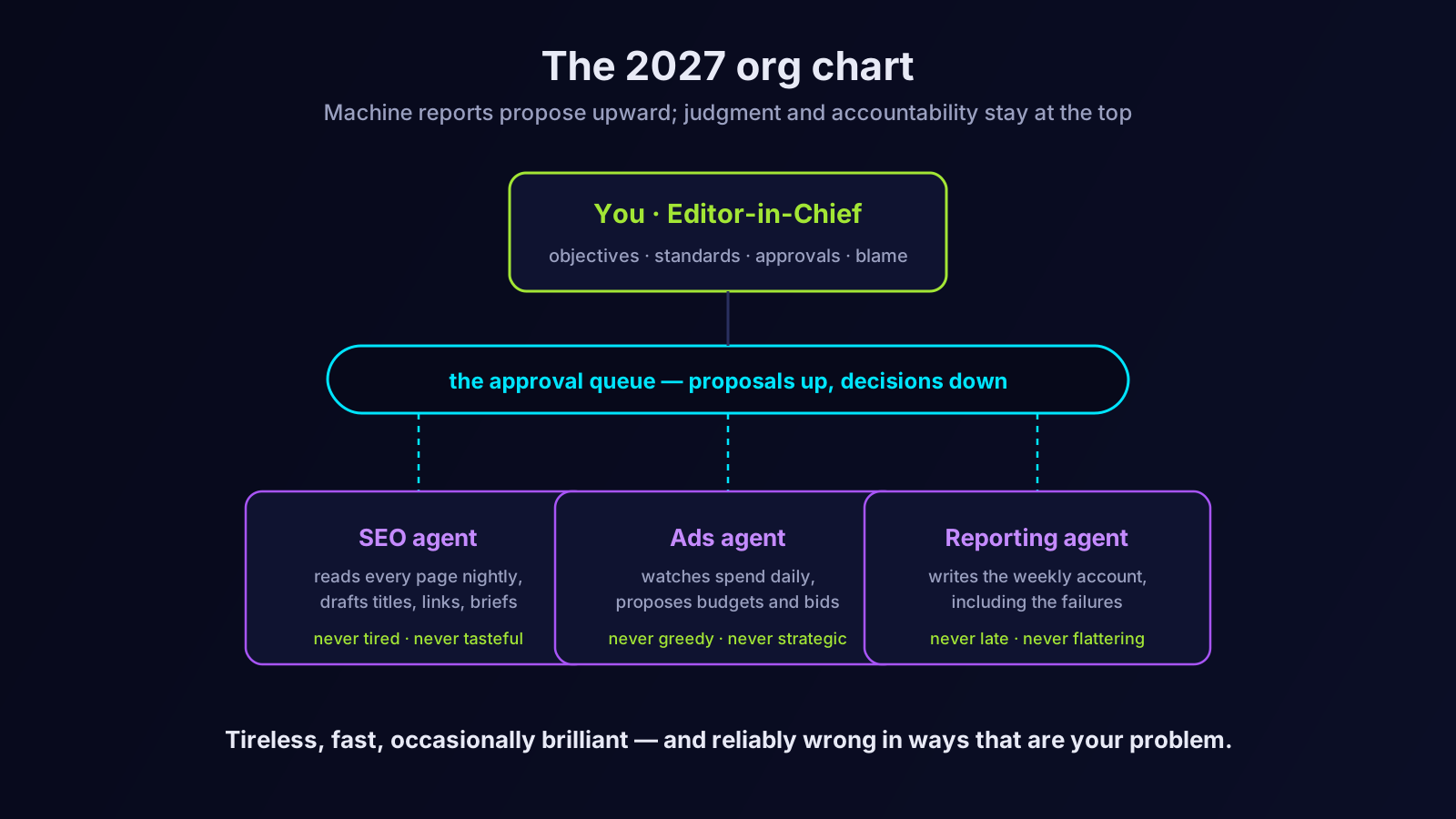
So let us skip the fortune cookies and answer the question properly, with a job title. The marketer of 2027 is an editor-in-chief. Not a metaphorical one — an operational one. Your direct reports will be machines: an agent that reads your search data and drafts content fixes, an agent that watches your ad accounts and proposes budget moves, perhaps several more. They will be tireless, absurdly fast, occasionally brilliant, and reliably wrong in ways that are entirely your problem. Your job will be what an editor-in-chief's job has always been: decide what gets made, review what got made, kill what shouldn't ship, and take the blame for whatever does.
This is, to be clear, a promotion. It is also a different job than the one most marketers trained for, and the gap between the two is where careers will be made and quietly lost over the next couple of years. Let's tour the new office.
What will a marketer's job look like in 2027? Less production, more editorial control: AI agents will handle the daily reading of data, drafting of content and campaign adjustments, while the marketer sets strategy, reviews and approves the agents' proposed actions, enforces brand and quality standards, and owns the results — an editor-in-chief managing machine reporters.
Meet your new direct reports
Your first report is the SEO agent. It has read every page on your site, every query in your Search Console, and every overnight ranking wobble, and it arrives each morning with a stack of memos: this page is decaying, here is a rewritten title; this query cluster is growing, here is a brief; these twelve internal links are missing, may I add them? It is the most conscientious junior employee you have ever had. It is also incapable of knowing, unless told, that the page it wants to "optimise" is the one your legal team rewrote by hand after last year's incident and nobody is allowed to breathe on it. (If this employee sounds unfamiliar, the orientation document is our explainer on what an SEO AI agent is.)
Your second report is the ads agent. It watches your campaigns the way a day trader watches a ticker, except it never gets bored, never gets greedy, and never sneaks off to check its phone. It notices that one ad set's cost per result has been quietly climbing for six days, that another has been throttled by budget while printing conversions, and it files precise, numbered proposals about both. It will also, if badly supervised, cheerfully optimise your entire account toward whatever metric you carelessly told it to maximise, like a genie with an analytics degree. (Its background check is in what an AI ads agent actually does.)
Notice what neither report does: neither one decides what your company is. They optimise toward objectives. Someone in the building still has to choose the objectives, know which pages are sacred, sense that this quarter's clever growth hack will read as desperate, and explain to the CEO why the numbers moved. That someone is the editor-in-chief. Congratulations on the new title. The pay rise is pending performance.
A day in the corner office
Here is the honest shape of the editor's day, and the first joke is that it starts with reading — just like the old job — except now the reading has already been done twice before you arrive.
Morning: the queue. Overnight, your agents have synced the data, scanned it, and drafted their proposals — we walked through that machine shift in detail in what an AI marketing agent does all day. You open the approval queue with your coffee and find, say, nine items. Each reads like a memo from a very earnest junior: the change, the reasoning, the predicted effect. You approve five in ninety seconds because they are obviously right. You reject two with a one-line note — "we never bid on that term," "this page is mid-redesign" — and the note matters, because it is how the junior learns. You edit one, because the rewritten title is technically optimal and tonally embarrassing. And you stare at the ninth for a full minute, because it is a budget move large enough that approving it means owning it, and you feel the precise weight of your new job title settle onto your shoulders. Then you decide. That is the job now: the deciding.
Midday: the standards work. Editors-in-chief do not just approve copy; they maintain the standards that make approval fast. In 2027 terms: refining the brand guidelines your agents draft against, tightening the objectives and constraints they optimise toward, adjusting which action types are allowed to run autonomously and which must always queue. This is unglamorous governance work, and it compounds exactly the way good editorial standards always have — every hour spent sharpening the rules saves ten hours of correcting output that followed bad ones.
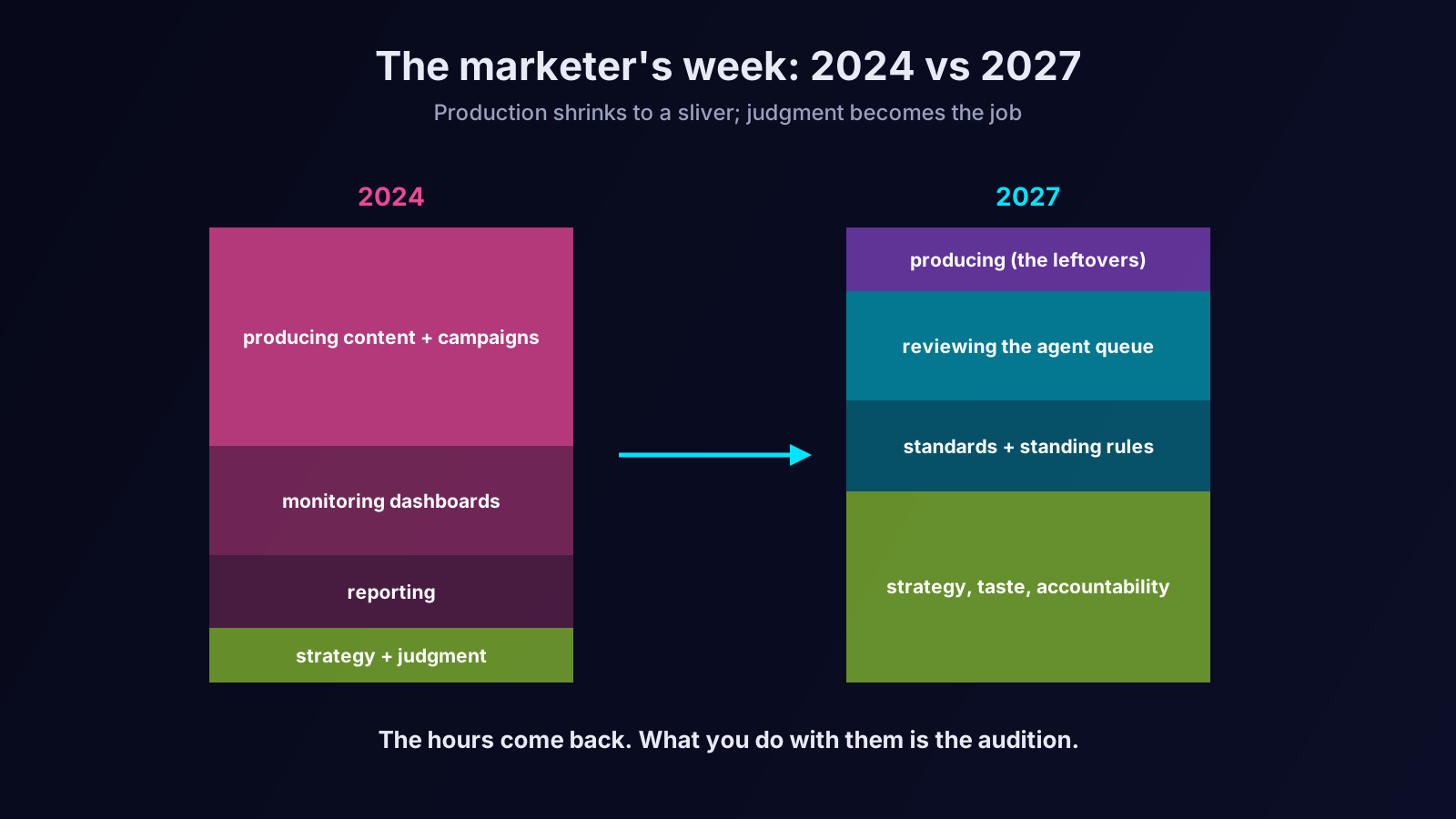
Afternoon: the actual thinking. Here is the plot twist nobody puts on the keynote slide: once the production grind moves to the machines, what remains for the human is the hard part. Positioning. Which market to enter. What the brand should sound like in a category where every competitor's blog is now also written at machine speed. Whether the strategy the agents are so efficiently executing is, in fact, the right strategy. The marketer of 2019 spent four hours a day producing and one hour thinking, and called the ratio "being busy." The editor of 2027 inverts it — or fails at the job.
What the machines are genuinely better at (concede gracefully)
A good editor knows what their reporters do better than they do, and has the security to admit it. Concede the following without a fight, because fighting it is how marketers lose the next two years.
Coverage. You cannot read four hundred pages of performance data daily. The agent reads all of it before you wake up, every day, including the boring middle of your site where — inconveniently — a large share of the recoverable value lives. The human strategy of "watch the top twenty pages and pray for the rest" was never a strategy. It was a coping mechanism with a dashboard.
Consistency. The agent applies the same checklist to the four-hundredth item as to the first. It does not get decision fatigue at 4 p.m. It does not skip the meta description audit because it is Friday. Humans wrote excellent processes for years and then didn't follow them; the machines follow them with a literalism that is occasionally maddening and statistically magnificent.
Memory. Ask a marketing team why a campaign's budget was changed eight months ago and watch the archaeology begin — old emails, departed employees, a spreadsheet named "final_v3_REAL." The agent's log answers in one second, with the reasoning attached. Institutional memory used to evaporate with staff turnover; now it accumulates. This one isn't funny. It's just better.
Verification. The machine checks whether its past actions actually produced the predicted results, because checking is in its loop and there is no ego in the loop with it. Humans, bless us, ship the fix and flee the scene. An honest editorial culture has always required someone willing to ask "did that work?" — and it turns out the easiest way to get that someone is to build it.
What stubbornly stays human (defend ruthlessly)
Now the other half of the editor's self-awareness: the things the machines do not do, written without mysticism, because vague humanism ("AI will never have heart") is as useless as vague hype.
Objectives. Agents optimise toward goals; they do not originate them. "Grow qualified pipeline in segment X while protecting brand search" is a sentence a human must write, because it encodes business context — board promises, cash position, competitive fear — that lives in no data feed. Point an agent at the wrong objective and it will achieve it with horrifying efficiency. The genie metaphor again: the wish-phrasing is the job.
Taste. The agent's rewritten title is correct. Yours is good. The difference is invisible to a metric until months later, when it shows up as the difference between a brand and a content mill. In a world where every competitor has the same drafting machinery, taste — the editorial judgment of what not to publish, which optimisation to decline, which trend to sit out — becomes one of the few non-commoditised inputs left. It is also, conveniently, the part of the job most marketers actually enjoy.
Accountability. When the budget move goes wrong, the machine does not attend the awkward meeting. You do. This is not a flaw in the system; it is the system. Organisations run on humans owning consequences, which is precisely why well-designed agents put a human approval in front of consequential actions rather than asking for blind trust. The signature is the point. Orova builds its SEO and Ads agents around exactly this review-then-act spine — the agent drafts, the editor decides — on the theory that the future of marketing is not unsupervised machines, but supervised ones with an extremely good work ethic.
Trust. Audiences and search engines alike are getting better at asking "who is behind this content, and why should I believe them?" — the entire thrust of E-E-A-T and what Google actually rewards. Experience, authorship, a reputation worth defending: these are human assets that machines can amplify but cannot manufacture. The editor's byline still has to mean something, or the whole machine-assisted operation is a very fast way to publish things nobody trusts.
The skills audit, or: how to interview for your own job
If the title is changing, the interview is too. Here is the uncomfortable little quiz the 2027 job market will administer, whether or not anyone schedules it formally.
Can you review fast and well? Editing is a skill distinct from producing, and most marketers have far more practice producing. Reviewing an agent's queue badly has two failure modes with equally embarrassing names: rubber-stamping (approving everything, at which point you are a decorative layer between the machine and the budget) and bottlenecking (re-litigating everything, at which point you have hired a brilliant junior and assigned them to wait for you). The skill is calibrated trust — knowing which classes of proposal deserve ninety seconds and which deserve a meeting. It is learnable. It is learnable fastest by people who start reviewing agent output this year rather than in 2027.
Can you write objectives and constraints? The new literacy is not prompt wizardry — it is the ability to specify what you actually want with the precision of someone who knows the specification will be executed literally. "Increase conversions" is how you get a consent-button-coloured disaster. "Increase trial signups from organic, excluding branded queries, without increasing page weight or touching pages tagged legal-hold" is how you get a colleague. Marketers who can think in objectives-plus-constraints will discover the machines make them look brilliant; marketers who manage by vibes will discover the machines execute vibes literally.
Can you read a verification log? The agent era's version of "data-driven" is not quoting the dashboard — the agent quotes the dashboard. It is interrogating the loop: which action types have a verified track record on our account, where do predictions keep missing, what does that say about our assumptions? The closed loop generates an archive of cause-and-effect — we analysed why that archive is the real prize in our piece on closing the loop between dashboards and decisions — and the editors who read it will out-strategise the ones who still argue from anecdotes.
And can you still smell a bad idea? This one does not change. It just gets more valuable, because bad ideas now ship faster.
One more line for the quiz, aimed at managers of marketers rather than marketers themselves: can you evaluate someone's editorial judgment separately from their output volume? The old proxies are dying. "Published forty posts this quarter" measures the machine now; "rejected the right twelve proposals and wrote the standing rule that prevented the next twelve" measures the human, and almost no performance framework knows how to see it yet. The companies that figure out how to hire, promote and pay for judgment — rather than throughput that machines have made nearly free — will quietly assemble the best editorial benches in the industry while their competitors keep interviewing for typing speed.
Objections from the back row, answered
Every talk about this gets the same three hands in the air, so let us take them in order and save everyone the Q&A.
"But my job is creative — machines can't do creative." Half right, and the half matters. Machines now produce competent creative drafts at volumes that would hospitalise a copywriter, which means competence is no longer the differentiator. Creative judgment — knowing which of forty competent drafts is the one, and why the brief behind all forty was wrong — has never been more scarce or better paid. If your creativity lives in the choosing, the machines just gave you forty times more to choose from. If it lives in the typing, you have, regrettably, been competing with a keyboard since 2023 and the keyboard has stopped charging by the hour.
"But AI content is slop." Unsupervised AI content is slop, yes — and that is an argument for the editor-in-chief model, not against the machines. Slop is what machine output looks like when nobody occupies the editor's chair: no standards, no rejection, no taste in the loop. The same drafting engine under a demanding editor produces work indistinguishable from a strong junior's — because that is structurally what it is. Blaming the machine for slop is blaming the printing press for bad novels. The press is innocent. The publisher was asleep.
"But we tried marketing automation in 2019 and it sent the same email to everyone named NULL." A fair scar, and worth examining, because what you bought in 2019 was rules — if-this-then-that with no comprehension of anything. Rules execute; they do not read, reason, draft, or explain themselves, which is why they failed the moment reality left the flowchart. Agents are a different species: they interpret undecided situations, write you a memo about what they intend and why, and wait for your signature on anything consequential. You are not being asked to trust the NULL machine again. You are being asked to interview a junior strategist who happens to read four hundred pages a night. Different candidate. Take the meeting.
And the unasked fourth question, the one behind the other three: "Is it safe to start before this is all figured out?" The honest answer is that the editors learning on low-stakes scopes today are exactly how it gets figured out — and that waiting for the finished playbook means joining a game whose referees trained for two years while you watched.
The part where we administer the performance review
To make all this concrete, here is a performance review you might plausibly write in 2027 for your machine report. "Q2 summary: handled 1,180 routine optimisations with a 92 per cent approval rate; verification shows title rewrites delivering consistent click-through gains; flagged the tracking outage on May 3rd within one sync cycle, saving the quarter's attribution. Areas for development: continues to propose competitor-comparison pages despite seven rejections — escalating to a standing rule; remains tonally over-enthusiastic in draft copy for the enterprise segment; does not understand why the founder's personal essay must never be 'optimised,' and at this point we have stopped explaining and simply locked the page."
It is a joke, except it is not. Every line of that review corresponds to a real management behaviour — feedback, standing rules, locked scopes, escalation — that effective teams are already applying to agents today. The marketers writing reviews like that, half-smiling, are managing. The ones who refused the editor's chair are competing against them with a keyboard and optimism.
The fortune cookie, rewritten
So let us replace the keynote slide with something that actually says something. AI will not take the marketer's job; it will take the marketer's tasks — specifically the producing, monitoring, and reporting tasks that consumed most of the week — and hand back a job consisting of judgment, standards, strategy, and accountability. That job has a name, and newsrooms have run on it for a century: editor-in-chief. The title is a promotion. The catch is that promotions are auditions, and this one has already started.
The practical move, then, is unglamorous: get a machine report and start managing it badly, then less badly, then well — because editorial judgment over machine work is built through reps, not keynotes. Start with low-stakes scopes, review with real attention, reject with reasons, and watch the verification log until you trust what you read there. Two years from now, "managed a team of agents to measurable results" will sit on marketing CVs where "proficient in Excel" used to sit. The marketers who can write that line honestly will not be the ones who feared the machines, or the ones who worshipped them — but the ones who, like every good editor in history, learned exactly how far to trust a talented, tireless, occasionally idiotic newsroom.
Let an AI Agent handle your SEO
Orova plans, writes, optimizes, and tracks rankings on its own — you just read the results.
Try it free