
The Real Cost of an In-House SEO Team
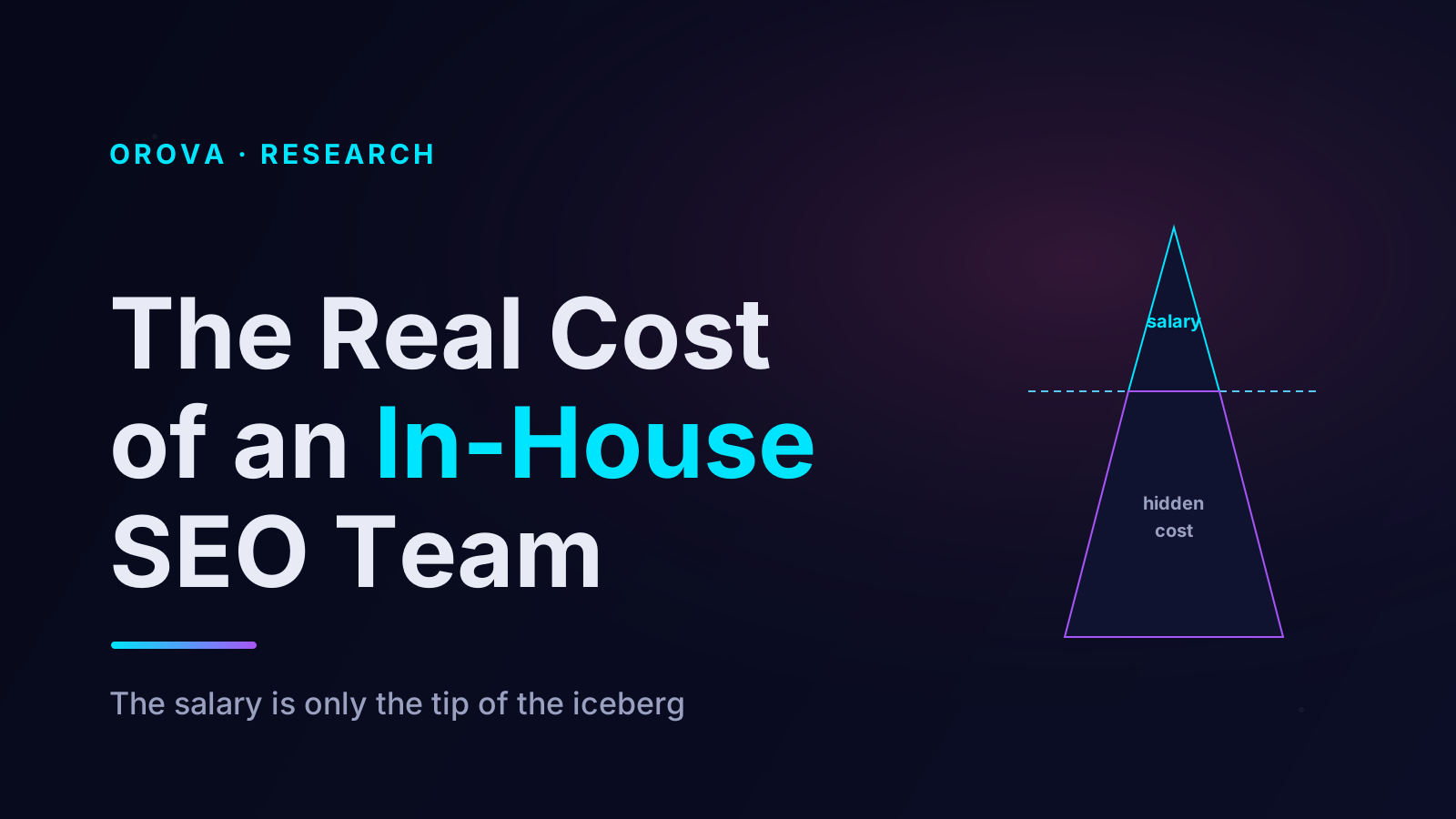
When a company decides to "do SEO in-house," the budget conversation usually centres on one number: the salary of the SEO hire. That number is real, but it is a fraction of the actual cost — and the gap between the salary line and the true cost is where a lot of SEO programmes quietly run into trouble. This is an analytical look at what an in-house SEO team genuinely costs, built from the patterns that recur across organisations rather than from invented figures. The aim is not to argue against in-house teams. It is to make sure that when you choose one, you are choosing it with the real number in front of you.
Why the salary number is misleading
The reason teams anchor on salary is simple: it is the one cost that arrives as a clean, single figure on an offer letter. Everything else about an SEO programme is diffuse — spread across tools, time, other people's calendars, and opportunity cost — and diffuse costs are easy to overlook precisely because no one ever sees them totalled on one line.
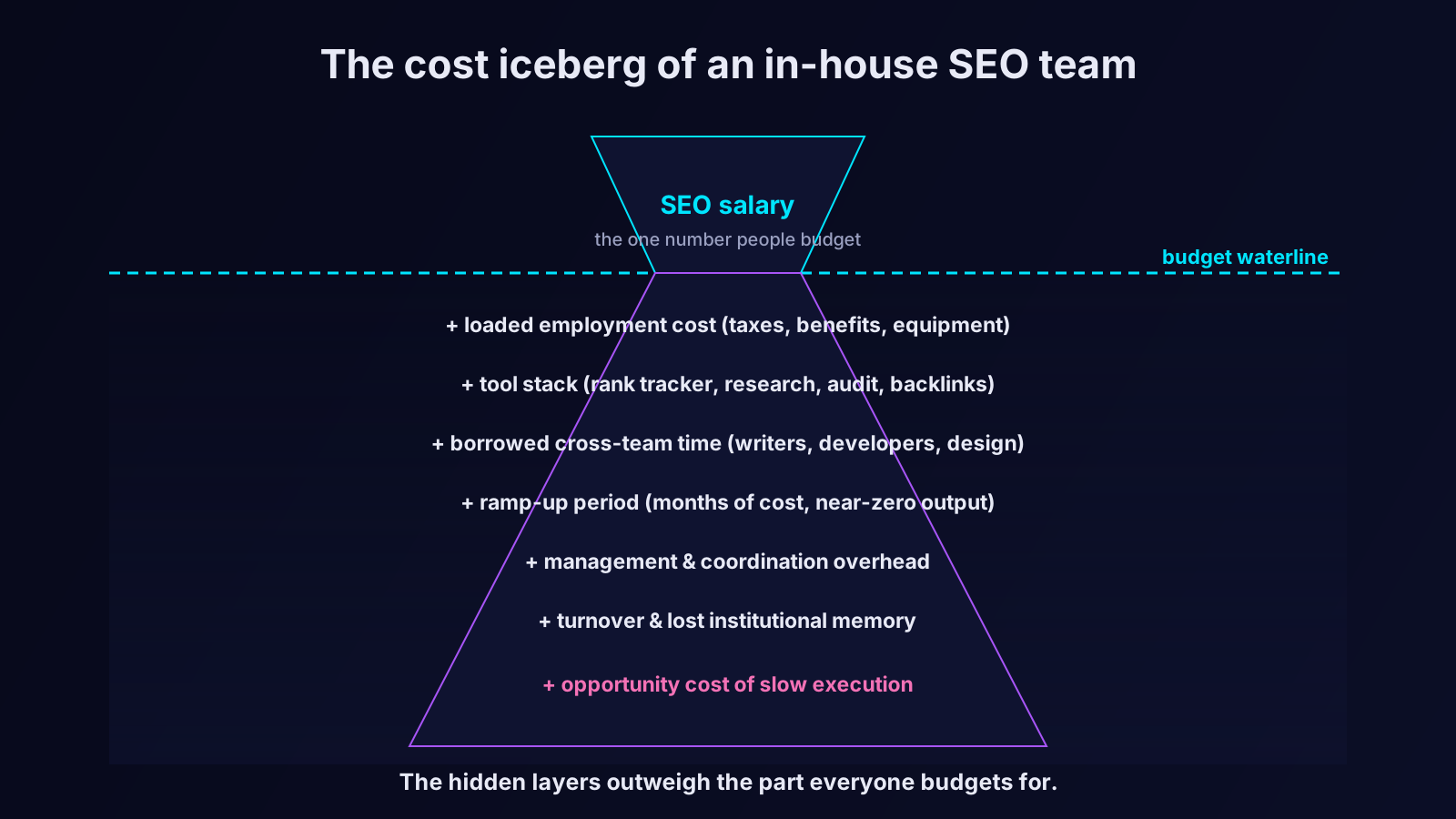
But a useful pattern holds across organisations of all sizes: the fully loaded cost of an employee is meaningfully higher than their salary, and the cost of the function they perform is higher still. An SEO programme is not one person typing. It is a person, plus the tools they need, plus the time of writers and developers and designers they depend on, plus management overhead, plus the cost of the months before the programme produces anything. Counting only the salary is like budgeting for a car by counting only the sticker price and ignoring fuel, insurance, maintenance, and the road tax.
To make a sound build-versus-alternative decision, you have to see the whole cost. So let us walk through the layers.
Layer one: the loaded cost of the people
Start with the obvious layer, but count it properly. An employee costs more than their salary because of employer-side additions: payroll taxes and statutory contributions, health and other benefits, paid leave, equipment, software licences, office space or remote stipends, recruiting cost amortised over their tenure, and onboarding time before they are productive. The standard pattern across most markets is that fully loaded cost runs well above base salary — often substantially so once every addition is counted.
Then consider that one SEO is rarely enough to run a real programme. SEO spans technical work, content strategy, content production, link acquisition, and analytics. A single generalist can touch all of these but cannot do all of them at depth. Most organisations that take SEO seriously end up with either several specialists or one strategist plus a roster of contractors — and either way, the people cost is a multiple of that first salary line, not equal to it.
Layer two: the tool stack
SEO runs on software, and the tool stack is its own recurring line that the salary conversation usually omits entirely. A working SEO programme typically needs a rank tracker, a keyword and competitive research platform, a site-audit and crawling tool, backlink data, analytics and reporting tooling, and often content-optimisation software on top.
Each of these is a subscription, billed monthly or annually, and the better ones are not cheap. The pattern is that the annual tool spend for a serious in-house programme is a non-trivial figure in its own right — small next to salaries, but large enough that ignoring it materially understates the programme cost. And tool costs tend to creep: more seats as the team grows, higher tiers as usage rises, new tools added as gaps appear. The stack is rarely cheaper next year than this year.
Layer three: the borrowed time of other people
This is the layer that is almost always missed, and it is frequently the largest hidden cost of all. An SEO does not produce results alone. They produce a list of things other people must do.
Content has to be written — by writers, or by subject experts whose time is expensive and scarce. The site has to be changed — by developers, who must be pulled off product work to fix technical issues, adjust templates, or implement structured data. Design has to produce images and assets. Product and engineering leadership has to approve changes. Every one of these is real cost, and it is real cost that lands on other departments' budgets, which is exactly why it escapes the SEO budget conversation.
The pattern worth internalising is that for every hour the SEO spends, some number of hours of other people's time is consumed downstream — and those people are often more expensive per hour than the SEO. A technical recommendation that takes five minutes to write can take an engineer days to implement. An in-house SEO programme is, in budget reality, a claim on the time of the writing team, the development team, and the design team — and that claim is a cost even though it never appears as an SEO invoice.
Layer four: the ramp-up cost
SEO has a long lag between effort and result, and that lag is itself a cost. For the first several months of an in-house programme, you are paying the full loaded cost of the people and the full tool stack while the programme produces little or no measurable return. Pages are being researched, written, and published, but they have not yet ranked, so they are not yet bringing traffic or conversions.
This ramp-up period is real spend against zero or near-zero output. It is not waste — it is the necessary investment phase — but it is a cost, and it must be budgeted. A programme that is funded as if it will return value from month one will hit a crisis around the time the first invoices have stacked up and the first results have not arrived. Many in-house SEO programmes are killed in exactly that window, not because they were failing, but because the ramp-up cost was never acknowledged, so it looked like failure when it was actually the plan working.
Layer five: management and coordination overhead
Someone has to manage the SEO function. They have to set priorities, review work, run reporting, coordinate with other departments, handle hiring and retention, and make the case for the programme upward to leadership. This management time is a cost, whether it is a dedicated manager's salary or a senior leader's attention diverted from other work.
Coordination has its own overhead too. The more the SEO programme depends on other teams, the more meetings, briefs, status updates, and negotiations are required to get anything shipped. This coordination friction is a quiet tax on every deliverable, and it grows as the organisation grows. It rarely appears in any budget, but it consumes real, expensive senior time every week.
The cost that hides on the revenue side
There is one more cost that is not a cash outflow at all but matters just as much: the opportunity cost of slow execution. SEO is competitive and time-sensitive. If your in-house team is small, stretched, waiting on developer time, and ramping slowly, your competitors are publishing and ranking while you are still in setup.
The cost of a slow programme is not only the money spent — it is the rankings, traffic, and pipeline that a faster competitor captures in the same window and that become progressively harder to take back. This cost never appears on any invoice, but it is one of the most consequential of all, because lost ground in SEO compounds the same way won ground does.
So is in-house wrong? No — but go in informed
None of this argues that in-house SEO is a mistake. In-house teams have real advantages: deep product knowledge, full availability, tight alignment with the business, and institutional memory that contractors cannot replicate. For many organisations, in-house is the right answer.
The argument is narrower and more important: decide with the real number, not the salary number. When you compare in-house against an agency, against contractors, or against a leaner tooling-led approach, you must compare like for like — the fully loaded people cost, plus the tool stack, plus the borrowed cross-team time, plus the ramp-up period, plus management overhead, against the alternative's true total. Comparing one option's salary line against another option's full invoice is how organisations make build-versus-buy decisions that look smart on a spreadsheet and go wrong in practice. For more on translating SEO activity into business terms leadership can weigh, see our guide to structuring content into topic clusters.
How to reduce the real cost without cutting the programme
If the true cost is higher than expected, the response is not to abandon SEO — it is to attack the cost layers directly. Several levers help.
Reduce the borrowed-time layer by making cross-team requests sharper and better prioritised, so developers and writers spend their expensive hours on the highest-impact items rather than a long undifferentiated list. Reduce the ramp-up cost by sequencing work so that the fastest-winning opportunities come first and some return arrives sooner. Reduce the coordination overhead by standardising briefs and reporting so less senior time is spent in meetings. And reduce the tool-and-headcount layer by being honest about which tasks genuinely need a specialist human and which are repetitive analytical work that does not.
That last lever is where the economics have shifted most. A large share of SEO work — tracking, auditing, keyword analysis, competitor monitoring, reporting — is repetitive and rules-driven. It needs to be done well and consistently, but it does not need to be done by an expensive human every time. Concentrating your human cost on judgement, strategy, and relationships, and routing the repetitive analytical load elsewhere, lowers the real cost without lowering the quality of the programme. See our piece on turning keywords into a content plan for where human judgement matters most.
Layer six: the retention and rehiring cost
There is a cost layer that only reveals itself over time: the cost of turnover. SEO specialists are a mobile, in-demand group, and an in-house SEO who builds genuine expertise in your business becomes more valuable — to you and to the market. When that person leaves, the cost is not just the gap until a replacement is found.
It is the recruiting cost again, the onboarding ramp again, and — most expensively — the loss of institutional memory. The departing SEO carries away the knowledge of why certain pages were structured a certain way, which technical fixes are still pending, which keywords were deliberately not pursued and why. The replacement starts not from where the predecessor finished but somewhere behind it, re-learning context that was never written down. A programme that loses a key person every couple of years is, in effect, paying a recurring restart tax that no budget line names.
This is why the durability of a programme's knowledge matters as much as the talent of its people. Documentation, consistent processes, and analytical work that does not live solely in one person's head all reduce the rehiring cost — they turn the programme into something that survives a departure rather than something that resets with one.
Comparing in-house against the alternatives, properly
With all the layers visible, the build-versus-buy comparison becomes possible to do honestly. An agency invoice looks large next to a single salary — but the agency invoice already includes their tools, their management overhead, their ramp-up structure, and their cover for turnover. Comparing it against only your SEO's salary is comparing a full total against a partial one, and it makes the agency look more expensive than it is.
The fair comparison puts the complete in-house total — loaded people cost, tool stack, borrowed cross-team time, ramp-up, management overhead, and the retention tax — against the agency's complete invoice, and against any third option such as a leaner, more automated approach. Only then are you comparing like with like. Many organisations that "saved money" by going in-house simply moved the cost off the SEO budget and onto the engineering, content, and management budgets, where it became invisible — and then concluded in-house was cheaper because they were only ever looking at one budget. The cost did not shrink. It scattered.
Where an AI agent changes the math
This is the part of the cost picture an SEO AI agent directly affects. A meaningful portion of an in-house team's loaded cost goes to repetitive, analytical, never-finished work: tracking rankings, auditing site health, analysing keywords and competitors, assembling reports. Orova handles that continuous analytical layer — the tracking, the auditing, the keyword and competitor analysis, the reporting — which lets a smaller, more senior human team concentrate on strategy, on the cross-team relationships that get work shipped, and on the judgement calls software cannot make.
That does not eliminate the cost of an SEO programme, and it should not pretend to. But it changes the shape of the cost: fewer hours spent on the repetitive layers, a shorter and cheaper ramp-up, less tool sprawl, and human time concentrated where it actually creates advantage. The real cost of in-house SEO is far larger than the salary line — but seen clearly, layer by layer, it is also a cost you can deliberately manage down rather than simply pay in full.
Let an AI Agent handle your SEO
Orova plans, writes, optimizes, and tracks rankings on its own — you just read the results.
Try it free