
SEO Optimization Cost: Real Pricing Tiers, Budget Breakdown, and Modern Cost-Reduction Strategies
Investing in search engine optimization remains one of the highest-leverage acquisition channels for digital businesses, but calculating an accurate seo optimization cost is notoriously difficult. Agency quotes range from $500 to upwards of $25,000 per month, leaving founders, Chief Marketing Officers, and marketing directors confused about what constitutes a fair market rate, what deliverable value is actually included, and where their capital goes.
Paying too little invites algorithmic penalties from automated spam or substandard execution. Overpaying drains critical runway before search equity compounds.
This comprehensive guide delivers a transparent balance sheet of current SEO costs across distinct business tiers, breaks down itemized pricing for technical, content, and off-page initiatives, and outlines practical frameworks to optimize spend without sacrificing organic performance.
1. Executive Summary: What Does SEO Actually Cost?
Current market data shows that the majority of US companies invest between $2,500 and $10,000 per month for full-service SEO retainers. However, baseline pricing shifts drastically based on your domain authority, market competitiveness, and technical scope:
- Hourly Consulting Rates: $100 – $300/hour for experienced US-based specialists; $350 – $600/hour for elite enterprise consultants.
- One-Time Audits & Strategy: $2,500 – $15,000+ depending on total URL count and structural complexity.
- Monthly Retainers (SMB / Local): $1,500 – $3,500/month.
- Monthly Retainers (Mid-Market / E-commerce): $4,000 – $9,000/month.
- Monthly Retainers (Enterprise / High-Difficulty B2B): $10,000 – $25,000+/month.
If a vendor promises full-service execution for under $1,000/month, your budget rarely covers manual labor. It almost always funds automated submissions, spun text, or unvetted private blog networks (PBNs) that create long-term algorithmic liabilities.
2. Comprehensive SEO Cost Balance Sheet by Business Segment
Every business profile brings unique technical debt, publication velocity demands, and backlink requirements. Below is an itemized balance sheet modeling real-world monthly allocations across three core business segments.
Monthly SEO Budget Allocation Matrix (USD)
| Cost Center / Line Item | Segment A: Local & Early-Stage ($1,500–$3,500/mo) | Segment B: Mid-Market & Growth ($4,000–$9,000/mo) | Segment C: Enterprise & High-Difficulty ($10,000–$25,000+/mo) |
|---|---|---|---|
| 1. Technical Architecture & Auditing | $300 – $500 (Core Web Vitals maintenance, index hygiene) | $800 – $1,800 (Schema markup, crawl budget, JS rendering) | $2,500 – $5,000 (Edge SEO, headless setups, internationalization) |
| 2. Content Strategy & Production | $600 – $1,500 (4–8 targeted blog posts or local landing pages) | $1,800 – $4,000 (10–20 comprehensive guides, comparison assets) | $4,500 – $10,000 (30+ expert-led cluster articles, original data studies) |
| 3. Link Acquisition & Digital PR | $300 – $800 (Local citations, industry directories, niche guest posts) | $1,000 – $2,200 (Editorial mentions, guest insights, Tier-2 PR) | $2,500 – $7,000 (Top-tier placements, custom data PR, reactive pitches) |
| 4. Tooling & Platform Infrastructure | $100 – $200 (Core tracking, shared enterprise suites) | $200 – $500 (Dedicated Ahrefs/Semrush, Screaming Frog, scraping) | $500 – $1,500 (Enterprise rank intelligence, API connectors, custom data pipelines) |
| 5. Account Management & Strategic Direction | $200 – $500 (Monthly review call, metric tracking dashboard) | $400 – $1,000 (Dedicated strategist, bi-weekly sprints, CRO audits) | $1,000 – $2,500 (Executive briefing, multi-channel alignment, data attribution) |
| Expected Timeline to Meaningful ROI | 3 to 6 months | 6 to 9 months | 9 to 14 months |
3. Deep Dive: Segment Profiles & Scope of Work
Segment A: Local Businesses, Boutique Services, and Early-Stage Startups
Total Budget: $1,500 – $3,500 / month
Primary Objective: Local pack dominance, initial keyword validation, fixing base-level technical barriers, and capturing high-intent local queries.
Typical Scope:
- Setup and ongoing optimization of Google Business Profile (GBP), Bing Places, and Apple Business Connect.
- Local citation building and cleanup across data aggregators (Data Axle, Neustar Localeze, Foursquare).
- Creation of 4 to 8 targeted pages per month targeting localized service queries (e.g., “commercial HVAC repair Austin TX”).
- Resolution of base-level crawl anomalies, mobile viewport bugs, and missing meta tags.
- Basic review acquisition strategy and local schema implementation.
Segment B: Mid-Market Growth, Regional Chains, and Scaling E-commerce
Total Budget: $4,000 – $9,000 / month
Primary Objective: Expanding top-of-funnel non-branded traffic, dominating non-local commercial search queries, building topic clusters, and scaling product catalog visibility.
Typical Scope:
- Systematic topic clustering covering bottom-of-funnel (BOFU) purchase intent and mid-funnel comparison terms.
- Technical fixes for faceted navigation, pagination, duplicate canonicals, and Core Web Vitals optimization.
- Proactive link earning campaigns securing 4 to 8 high-authority (DR 50+) editorial links per month.
- Advanced structured data deployments (Product, Review, FAQ, Organization, Author).
- Conversion rate optimization (CRO) reviews on organic traffic landing pages to maximize lead flow.
Segment C: Enterprise Brands, B2B SaaS, and Hyper-Competitive Verticals
Total Budget: $10,000 – $25,000+ / month
Primary Objective: Market share conquest, outranking venture-backed incumbents, programmatic page architecture, and institutional digital PR.
Typical Scope:
- Custom data journalism and reactive media pitching generating organic Tier-1 publication links (Forbes, Bloomberg, TechCrunch).
- Technical oversight of complex JavaScript frameworks (Next.js, Nuxt, React), headless CMS setups, and international multi-region routing (hreflang).
- Production of 20 to 50+ deep technical assets per month verified by recognized Subject Matter Experts (SMEs) to satisfy Google’s E-E-A-T guidelines.
- Programmatic SEO (pSEO) builds generating thousands of structured, crawlable landing pages.
- Full-funnel attribution tracking tying keyword clusters directly to Salesforce/HubSpot pipeline revenue.
4. Itemized Cost Breakdown: What Are You Paying For?
To evaluate third-party proposals or build an in-house budget model, you must evaluate the standard market rates for individual SEO deliverables.
┌────────────────────────────────────────────────────────────────────────┐
│                   TOTAL SEO INVESTMENT ARCHITECTURE                    │
└───────────────────────────────────┬────────────────────────────────────┘
                                    │
    ┌───────────────────────────────┼───────────────────────────────┐
    ▼                               ▼                               ▼
┌──────────────────────┐┌──────────────────────┐┌──────────────────────┐
│  1. Technical / Dev  ││ 2. Content Pipeline  ││ 3. Link Architecture │
│   ($100 - $250/hr)   ││   ($0.12 - $0.50/wd) ││   ($250 - $1,200/ea) │
├──────────────────────┤├──────────────────────┤├──────────────────────┤
│• Architecture Audits ││• SME Writing         ││• Editorial Outreach  │
│• JS Rendering/Speed  ││• Topic Clusters      ││• Digital PR Studies  │
│• Schema & Structured ││• Optimization & CRO  ││• Broken Link Recovery│
└──────────────────────┘└──────────────────────┘└──────────────────────┘
Technical Audits and Site Engineering
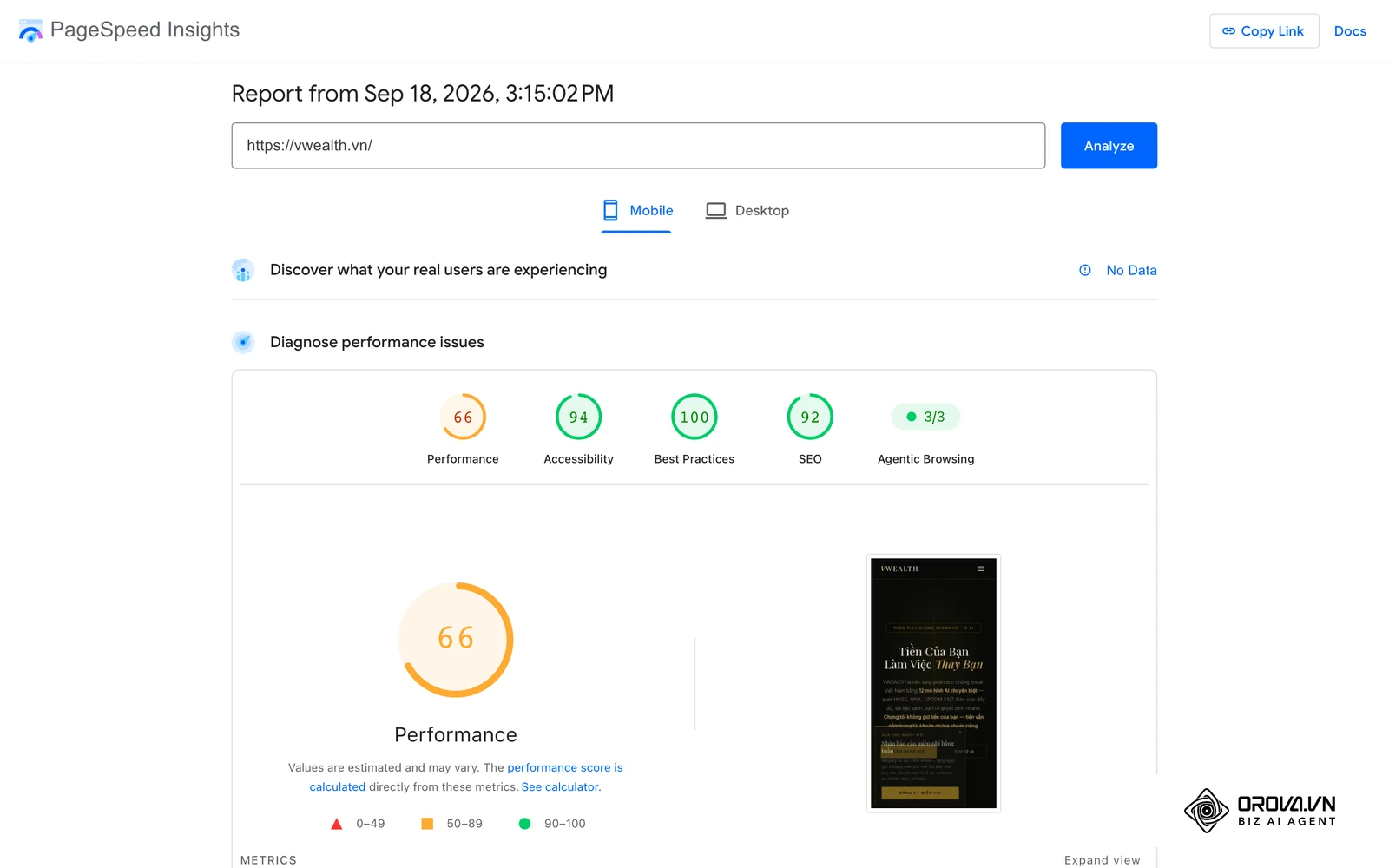
- Comprehensive Technical SEO Audit: $3,000 – $10,000 (One-time fee). A comprehensive diagnostic reviews log files, crawl paths, JavaScript rendering, index bloat, internal redirect chains, site speed, and Schema validation.
- Hourly Engineering Execution: $100 – $220 / hour. Agencies often diagnose issues, but clients must implement them. If the agency provides dedicated web development to fix server-side issues, expect dedicated billable developer hours.
Content Strategy and Production
Search engines evaluate content depth, topical completeness, and author qualifications. Low-cost content ($20–$50 per post) almost always creates long-term editorial debt that requires full rewrites.
- Standard Informational Content (1,500 – 2,500 words): $250 – $600 per article. Written by qualified native writers with targeted heading structures, original imagery, and complete on-page formatting.
- Specialized B2B / Technical / Medical SME Content: $700 – $1,800+ per article. Researched and written by verified practitioners (engineers, CPAs, attorneys, physicians) with first-party commentary and source citations to satisfy strict E-E-A-T criteria.
- Content Refresh and On-Page Tuning: $150 – $400 per page. Rewriting title tags, adjusting internal links, updating factual stats, and expanding thin sections on decaying URLs.
Link Building and Digital PR
Link acquisition remains one of the most unpredictable cost centers. Google strictly forbids direct link purchasing; capital is deployed toward manual outreach, content creation, and creative PR campaigns that earn editorial links.
- Niche Guest Placements (Vetted & Clean): $250 – $600 per placement (covering outreach labor, content development, and publication costs).
- High-Tier Editorial Links (DR 65+ via Digital PR): $800 – $2,000+ per earned placement. Usually executed through original survey data, proprietary data studies, or reactive expert commentary distributed via platforms like Connectively or Qwoted.
- Dedicated Digital PR Campaign: $5,000 – $12,000 per project. Includes dataset collection, infographic design, press release creation, and pitching to top-tier journalists.
Software Stack and Infrastructure
Running a modern SEO program requires specialized indexing, scraping, and tracking software.
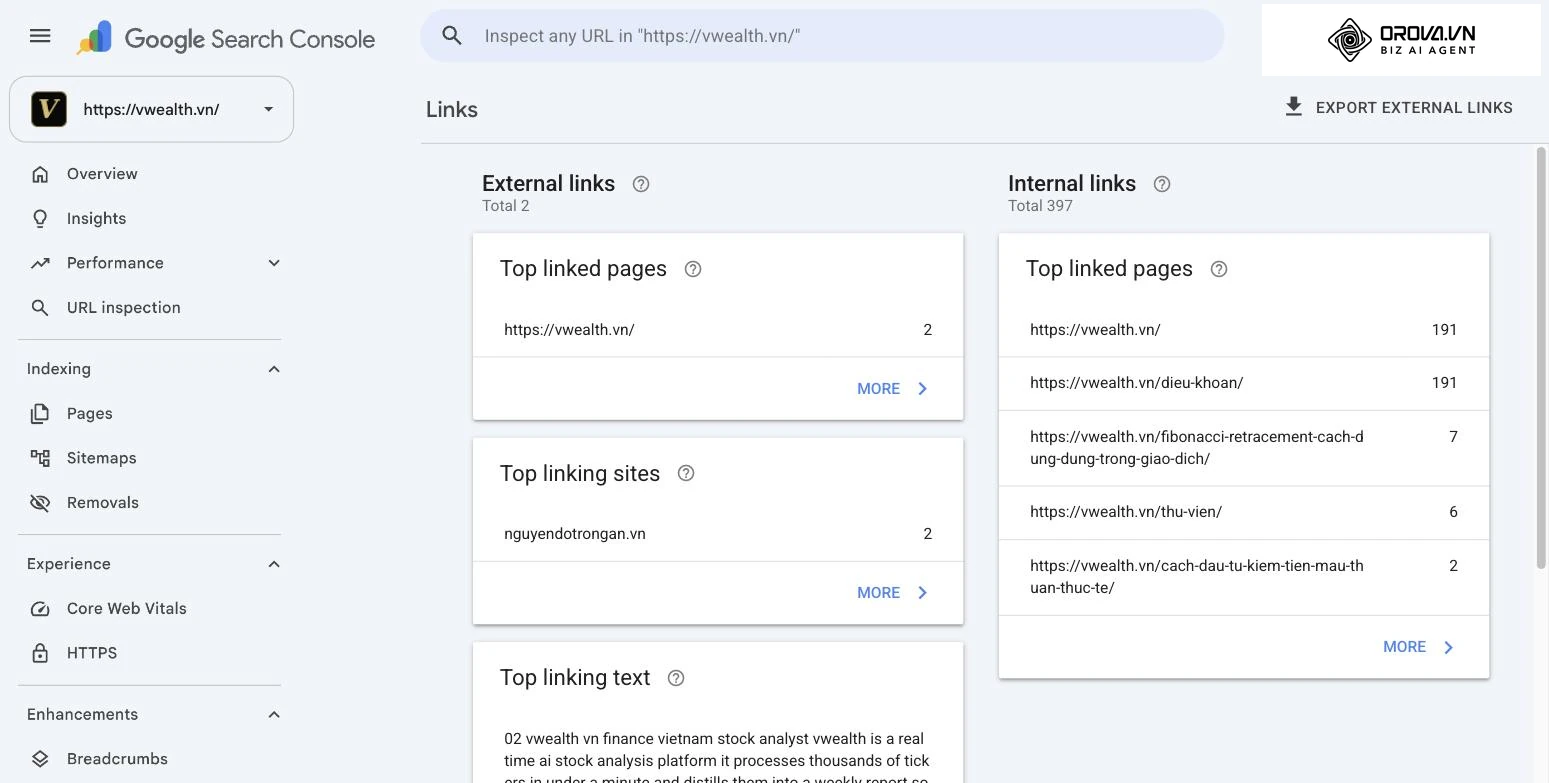
- Core Research Suites (Ahrefs, Semrush): $130 – $500 / month.
- Crawlers & Log Analyzers (Screaming Frog, Sitebulb): $250 – $400 / year.
- Enterprise Rank Tracking & Intelligence (AccuRanker, seoClarity, Conductor): $300 – $2,500+ / month.
- Content Optimization Platforms (Clearscope, SurferSEO): $100 – $400 / month.
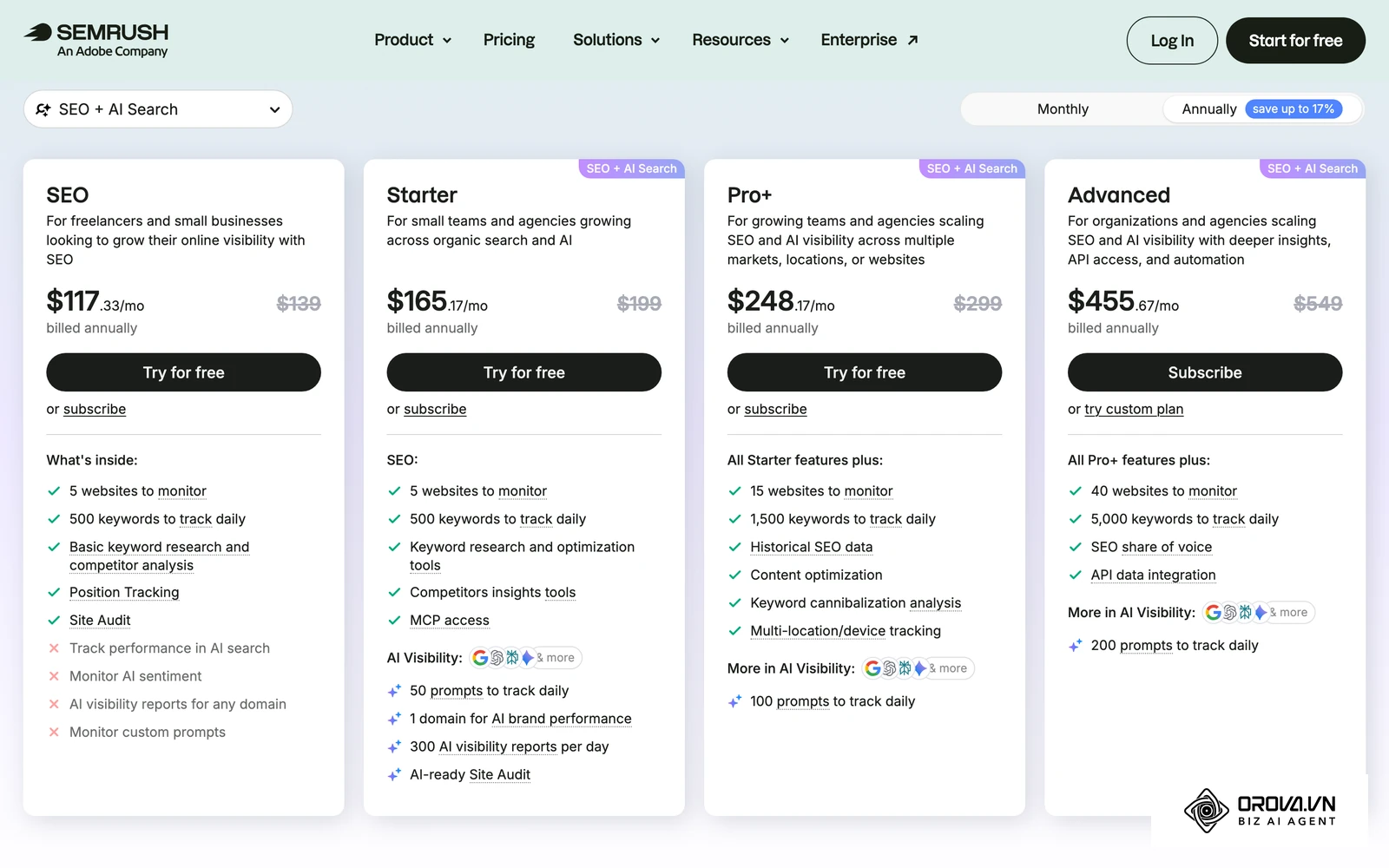
Discover Orova.vn – a Biz AI Agent platform with OROVA SEO, a complete solution for every website. The system supports search engine optimization from A to Z with features including keyword research, writing new SEO-ready articles, optimizing existing content, rank tracking, plus competitor analysis and in-depth technical analysis. Sign up today to experience OROVA SEO completely free (offer valid through July 7, 2027).
5. Agency vs. In-House vs. Freelancers: Cost & Capability Breakdown
Understanding which operational model delivers the best cost-to-performance ratio depends entirely on your organizational maturity and internal capabilities.
┌────────────────────────────────────────────────────────────────────────┐
│                     OPERATIONAL MODEL SELECTION                        │
└───────────────────────────────────┬────────────────────────────────────┘
                                    │
    ┌───────────────────────────────┼───────────────────────────────┐
    ▼                               ▼                               ▼
┌──────────────────────┐┌──────────────────────┐┌──────────────────────┐
│       In-House       ││   Full Agency Model  ││  Hybrid Architecture │
├──────────────────────┤├──────────────────────┤├──────────────────────┤
│• High Fixed Payroll  ││• Variable Retainer   ││• Scaled In-House Lead │
│• Deep Brand Context  ││• Broad Cross-Industry││• Specialized Vendors │
│• Single Point Failure││• Plug-and-Play Stack ││• Lowest blended cost │
└──────────────────────┘└──────────────────────┘└──────────────────────┘
| Operational Model | Initial Financial Commitment | Annual Direct Cost | Core Advantages | Structural Weaknesses |
|---|---|---|---|---|
| In-House Team (1 Lead + 1 Writer + Dev share) | High (Recruiting fees, benefits, payroll tax, tool suite) | $160,000 – $260,000 / year | Total alignment with brand voice; dedicated focus on single product. | Single point of failure; lacks multi-domain testing data; slow to scale up production. |
| Full-Service Agency | Medium (Setup fee + 3 to 12 month contract) | $48,000 – $140,000 / year | Instant access to specialists (Dev, PR, Copy, Tech); shared enterprise software costs. | High client-to-manager ratios; potential loss of deep domain nuances. |
| Freelance Network (Strategist + Contract Writers) | Low (Pay-as-you-go, project sprints) | $25,000 – $60,000 / year | Highly cost-effective; flexible commitment; hyper-specialized expertise on demand. | Requires high internal management overhead; inconsistent output quality. |
| The Hybrid Model (Internal Lead + Specialized Agency) | Medium-High | $70,000 – $130,000 / year | Combines internal domain expertise with external link building and dev execution. | Demands clear governance and mutual accountability to avoid scope overlap. |
With OROVA.VN and the OROVA SEO module, you put an end to the exhausting days of manual work for good. Instead of struggling for hours to write articles and compile reports, the entire process is now optimized and completed in just 5 minutes.
6. Seven Strategies to Optimize and Lower SEO Costs
Lowering your organic search customer acquisition cost (CAC) does not require cutting corners on quality. Instead, businesses can optimize capital efficiency by automating operational bottlenecks and focusing spend exclusively on compounding assets.
1. Build an AI-Assisted, Human-Governed Content Engine
Content production represents 40% to 50% of the recurring SEO budget. Using traditional agencies to write top-of-funnel articles from scratch at $400 each is inefficient.
The Cost Optimization: Build custom prompts or Retrieval-Augmented Generation (RAG) workflows using LLMs to ingest your company's product documentation, case studies, and brand guidelines.
The Execution: Use automated systems to run competitor gap analyses, generate detailed semantic outlines, and produce first-draft briefs. Employ subject-matter experts strictly to review, insert proprietary data, verify claims, and polish tone.
Savings: Reduces content drafting time by 60% and lowers per-article editorial costs from $400 to roughly $120 – $150, while maintaining original value and high E-E-A-T standards.
2. Prioritize Bottom-of-Funnel (BOFU) Terms to Accelerate Time-to-Revenue
Targeting broad keywords like "CRM software" drains tens of thousands of dollars competing with established enterprises.
The Cost Optimization: Reallocate 70% of initial content spend toward high-intent long-tail keywords:
- Alternative pages: “[Competitor] alternatives”
- Direct comparisons: “[Product A] vs [Product B]”
- Integration use cases: “How to connect [Tool A] with [Tool B] via API”
Savings: These keywords feature low search difficulty (requiring far fewer backlinks to rank) and deliver conversion rates 3x to 5x higher than broad educational content. This shortens the timeline to break-even ROI from 12 months down to 4 months.
3. Establish a Formal Content Pruning and Updating Protocol
Publishing new URLs is expensive. Upgrading existing URLs that have fallen from positions 4–10 back into positions 1–3 generates incremental traffic at a fraction of the cost.
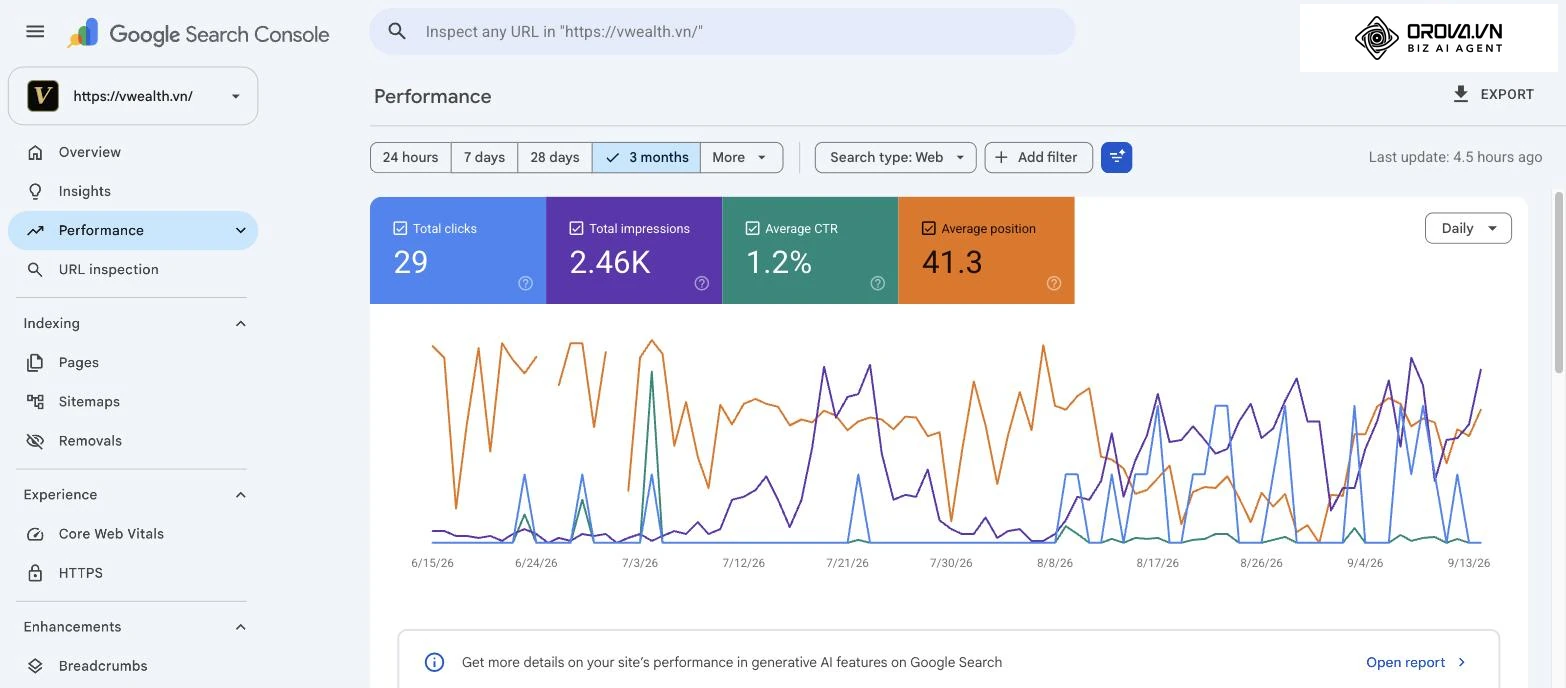
The Cost Optimization: Run a bi-annual content decay audit via Google Search Console. Identify pages with declining impressions over the trailing 12 months.
The Execution: Instead of paying $500 for a new post, invest $100 to update outdated facts, consolidate cannibalizing articles, improve search intent matching, and re-index.
Savings: Often produces an immediate 20% to 40% organic lift within 30 days without spending budget on net-new links.
       NEW CONTENT VS. CONTENT REFRESH: COST & SPEED TO VALUE

       [New Content Pipeline]
       Spend: $500 - $1,500/article
       Index & Ramp Time: 4 - 9 Months
       ├── Research ──► Draft ──► Edit ──► Publish ──► Build Links ──► Wait for Authority

       [Content Refresh Protocol]
       Spend: $100 - $250/article
       Ramp Time: 2 - 6 Weeks
       ├── Audit Decay ──► Update Facts ──► Add Schema ──► Re-Index ──► Immediate Rank Lift
4. Resolve Technical Debt Before Purchasing Backlinks
Pouring money into link acquisition while your site suffers from poor technical hygiene is like pouring water into a leaky bucket.
The Cost Optimization: Invest in an upfront technical overhaul to ensure your site is fast, index-efficient, and logically structured.
The Impact: Fixing critical architecture issues—such as incorrect canonicals, redirect loops, slow Core Web Vitals, and orphan pages—allows link equity to flow efficiently across all subdomains. A technically sound website can rank with a Domain Rating of 35 against bloated sites with a DR of 60, saving thousands of dollars in outreach costs.
5. Repurpose Editorial Assets Across Growth Channels
Treating SEO as an isolated silo inflates blended acquisition costs.
The Cost Optimization: Require every long-form SEO asset to fuel multiple distribution channels:
- Convert H2 sections into focused LinkedIn carousels or executive posts.
- Use technical guides as lead magnets for email acquisition campaigns.
- Equip sales teams with comparison guides as bottom-of-funnel collateral.
Savings: Distributes the cost of production across multiple departments (Organic, Social, Sales Enablement), reducing effective standalone customer acquisition costs.
6. Replace Retainer-Based Agency Link Packages with Digital PR Data Assets
Fixed retainer link-building packages often default to low-tier directory submissions or paid guest-post networks that carry algorithmic risk.
The Cost Optimization: Reallocate three months of link-building retainers ($9,000) into a single high-impact data report or proprietary industry survey.
The Execution: Package anonymized product usage data, survey 500 industry executives, and publish the findings as a reference report. Run direct media outreach to specialized trade publications.
Savings: A single well-executed data report can earn dozens of high-authority links naturally over time as other writers cite your statistics, driving marginal backlink acquisition costs down to zero.
7. Enforce Clear Milestone-Based Scopes of Work (SOW)
Vague agency contracts that promise "ongoing optimization" often result in low-value maintenance work with minimal strategic impact.
The Cost Optimization: Structure contracts around verifiable deliverables rather than billable hours:
- Month 1: Technical resolution of all critical crawl errors and architecture mapping.
- Month 2: 8 BOFU comparison pages mapped, written, and deployed.
- Month 3: Deployment of Schema clusters and execution of Digital PR campaign outreach.
Savings: Eliminates scope creep, establishes clear performance indicators, and makes it easy to spot underperformance before wasting capital.
7. How to Accurately Forecast SEO ROI
To justify your SEO budget to executive leadership, calculate organic search return as an investment in a compounding asset rather than an ongoing operational expense.
ROI = (Total Revenue Attributable to Organic − Total SEO Capital Invested) / Total SEO Capital Invested × 100
The Paid Search Equivalent Model
A simple, defensible method for calculating SEO return on investment is the Paid Search Equivalent (PSE) method:
- Track your monthly organic traffic by keyword.
- Determine the average Cost-Per-Click (CPC) for those exact terms within Google Ads.
- Calculate what purchasing that identical commercial traffic would cost via Google Ads:
Monthly Media Equivalent = Σ (Organic Clicks per Keyword × Google Ads Average CPC)
If your organic search program costs $5,000 per month to run, but generates 12,000 clicks across high-intent queries with an average Google Ads CPC of $4.50, your equivalent media value is:
12,000 × $4.50 = $54,000 / month
This delivers an immediate net media surplus of $49,000 per month over paid acquisition channels, while building a durable organic asset that retains search visibility long after ad campaigns are paused.
Final Takeaway: Budgeting for Compounding Growth
SEO costs should align with market competitiveness, domain authority, and target revenue. Trying to execute an enterprise campaign on a local business budget produces weak results and creates technical debt. Conversely, paying five-figure monthly retainers without clear deliverable tracking wastes valuable growth capital.
For most growing companies, an optimal monthly budget sits between $3,500 and $7,500. Pairing this budget with an AI-augmented content pipeline, a clean technical architecture, and a strict focus on high-intent conversion queries maximizes capital efficiency and builds a durable organic acquisition engine.
Run your business with AI Agents
Orova is the always-on Biz AI Agent — it plans, runs, and optimizes the work for you.
Save time, unlock productivity.