
The Ultimate Guide to the Best Keyword Research Tools for SEO Dominance
In the ever-evolving landscape of Search Engine Optimization (SEO), one fundamental truth remains absolute: keyword research is the bedrock of any successful digital marketing campaign. Before you write a single line of copy, design a landing page, or build a backlink, you must understand exactly what your target audience is typing into search engines.
Without comprehensive keyword research, you are essentially navigating the vast ocean of the internet blindfolded. You might create phenomenal content, but if nobody is searching for the topics you cover, your organic traffic will flatline. This is where leveraging the best keyword research tools becomes not just a luxury, but an absolute necessity for businesses, bloggers, and enterprise organizations alike.
In this massive, definitive guide, we will dissect the ecosystem of search behavior. We will explore the psychology behind search intent, break down the core metrics that dictate keyword value, and provide an exhaustive review of the best keyword research tools available on the market today. Whether you are bootstrapping a startup on a zero-dollar budget or managing a multi-million-dollar enterprise SEO strategy, this guide will equip you with the knowledge to dominate the SERPs (Search Engine Results Pages).
Part 1: The Evolution and Importance of Keyword Research
To understand why utilizing the best keyword research tools is so critical, we first need to define what keyword research actually entails in the modern SEO era.
What is Keyword Research?
At its core, keyword research is the process of discovering, analyzing, and selecting the exact words and phrases that people use in search engines (like Google, YouTube, Bing, and Amazon) with the ultimate goal of optimizing content around those terms to rank highly in search results.
However, keyword research has evolved far beyond merely finding a string of words with high search volume. Today, it is deeply intertwined with market research, consumer psychology, and competitive analysis. When you use top-tier tools, you are not just looking for words; you are looking for intent.
Why Keyword Research is the Foundation of SEO
- Targeting the Right Audience: By understanding the specific queries your demographic uses, you can tailor your content to attract highly qualified leads.
- Content Strategy Roadmapping: Keyword research dictates your editorial calendar. It tells you what blog posts to write, what product categories to create, and what videos to film.
- Budget Efficiency: For those utilizing Pay-Per-Click (PPC) alongside SEO, knowing which keywords drive conversions ensures you do not waste ad spend on irrelevant traffic.
- Competitor Benchmarking: The best keyword research tools allow you to reverse-engineer your competitors' success, revealing the exact terms driving traffic to their most lucrative pages.
The Shift from Strings to Things (Entity SEO)
In the past, SEOs would stuff exact-match keywords into articles. Today, search engines use natural language processing (NLP) and artificial intelligence to understand the context of a query. Google’s algorithms focus on entities, relationships, and user intent. Therefore, modern keyword research is less about finding a single "golden" keyword and more about building topical authority around a cluster of related terms.
Part 2: Core Metrics Every SEO Professional Must Know
Before diving into the best keyword research tools, it is crucial to understand the language they speak. Every tool will present you with a dashboard of data. Here is how to interpret the most important metrics:
1. Search Volume (SV)
Search volume represents the average number of times a specific keyword is searched for within a given timeframe (usually per month) in a specific location.
- High Volume: Indicates high interest but often comes with fierce competition.
- Low Volume: Less traffic potential, but often highly targeted and easier to rank for.
2. Keyword Difficulty (KD) or SEO Difficulty
Keyword Difficulty is a proprietary metric (scored from 0 to 100) created by SEO software companies to estimate how hard it will be to rank on the first page of Google for a specific term. A KD of 15 is generally easy, while a KD of 85 will require a massive budget, stellar content, and high-authority backlinks.
3. Search Intent
Search intent is the "why" behind the search. Google aggressively ranks pages that best satisfy the user's intent.
- Informational: The user wants to learn something (e.g., "what is keyword research").
- Navigational: The user is looking for a specific website (e.g., "Ahrefs login").
- Commercial Investigation: The user is comparing options before buying (e.g., "best keyword research tools").
- Transactional: The user is ready to buy (e.g., "Semrush pro subscription price").
4. Cost Per Click (CPC)
While primarily a PPC metric, CPC is heavily utilized in SEO keyword research. A high CPC indicates that advertisers are willing to pay a premium for a click from that keyword, meaning it is highly lucrative and likely converts well.
Part 3: Deep Dive into the Best Premium Keyword Research Tools
When you are ready to scale your organic growth, investing in premium software is mandatory. These tools crawl billions of pages, maintain massive databases, and provide historical data that free tools simply cannot match. Here are the reigning champions of the industry.
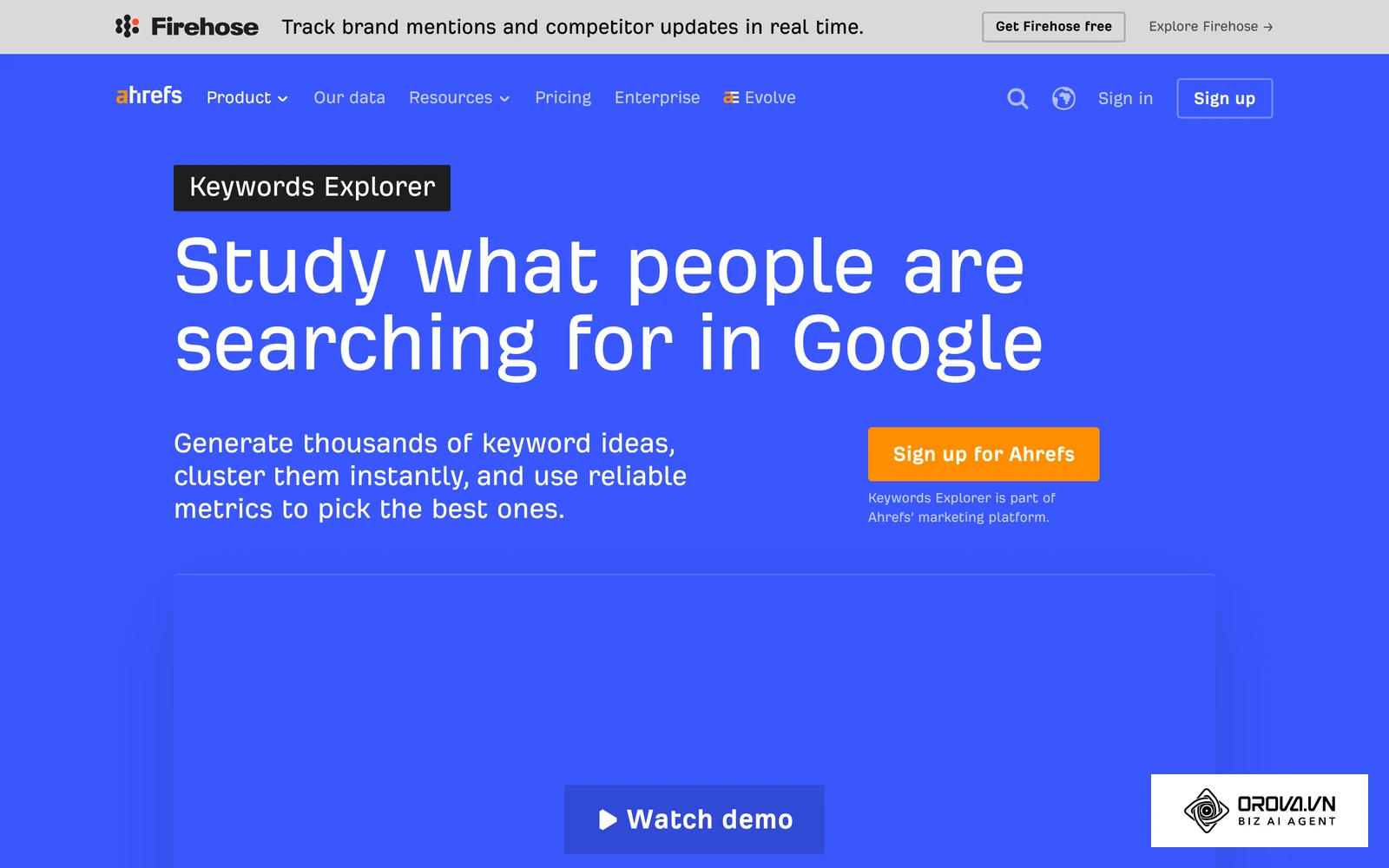
1. Ahrefs: The Industry Standard for Data Quality
Ahrefs has long been considered one of the absolute best keyword research tools in existence. Originally known as a backlink analysis tool, its "Keywords Explorer" feature has become an indispensable asset for SEO professionals.
Key Features:
- Massive Database: Ahrefs boasts one of the largest third-party search query databases in the world, covering over 10 search engines (including Google, YouTube, Amazon, Bing, and Baidu).
- Clicks Data: Unlike tools that only show search volume, Ahrefs shows you how many actual clicks a search result gets. This is vital because SERP features (like featured snippets) often steal clicks away from organic results.
- Parent Topic: It groups keywords by parent topic, helping you understand how to structure pillar pages and cluster content.
- Return Rate (RR): A unique metric showing how often the same person searches for a given keyword within a 30-day period.
Best For: Advanced SEOs, enterprise agencies, and content marketers who need the most accurate difficulty scores and backlink data available.
Pricing: Starts around $99/month.
2. Semrush: The All-in-One Marketing Powerhouse
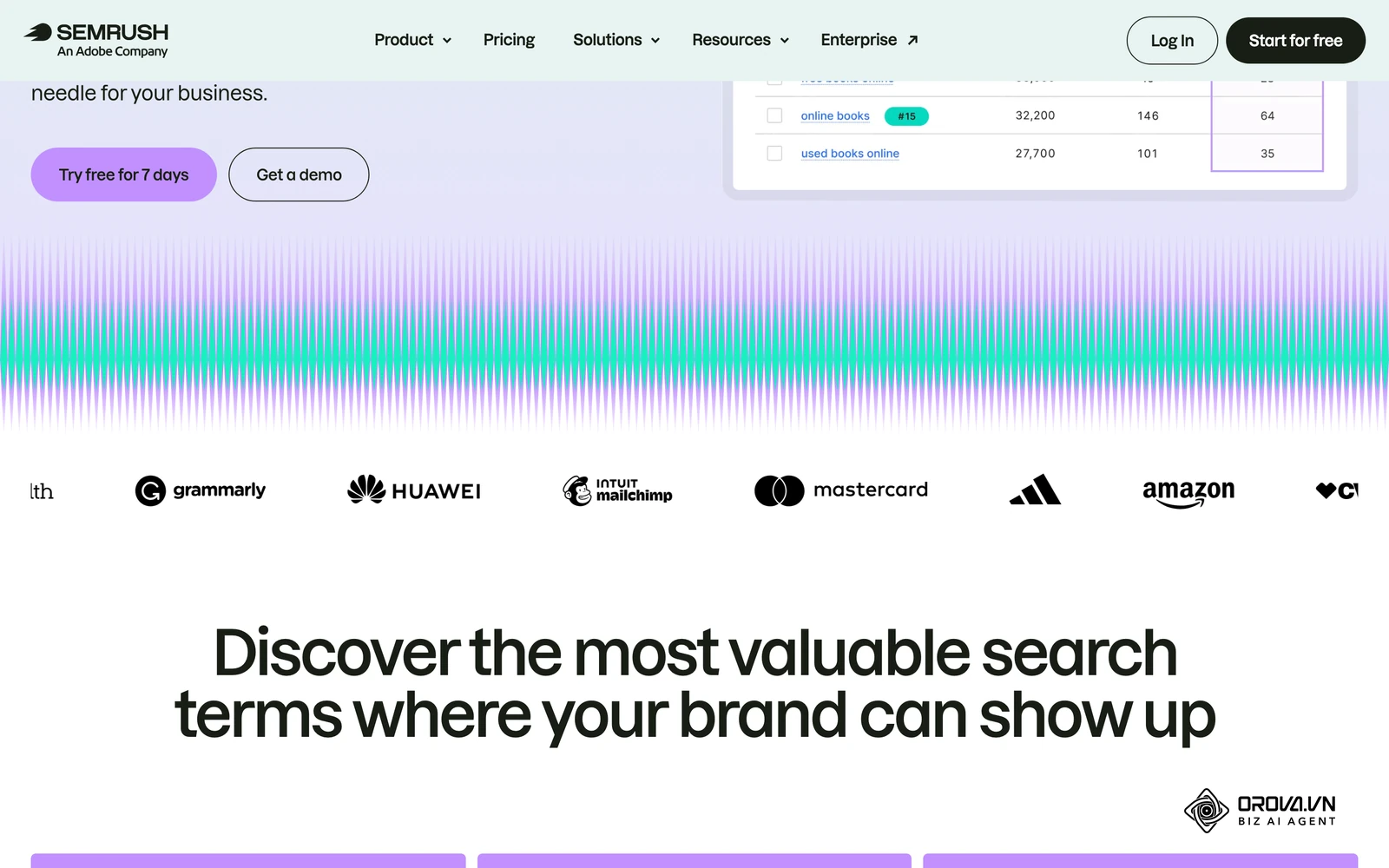
If Ahrefs is a sniper rifle for SEO, Semrush is an entire military base. It is widely regarded as the ultimate all-in-one digital marketing suite, making it a top contender for the title of the best keyword research tool.
Key Features:
- Keyword Magic Tool: Access a database of over 20 billion keywords. You can easily filter by broad match, phrase match, exact match, and related terms.
- Intent Metric: Semrush explicitly labels every keyword with its search intent (Informational, Navigational, Commercial, Transactional) directly in the dashboard, saving hours of manual SERP analysis.
- Competitive Keyword Gap: This feature allows you to input your domain alongside up to four competitors. Semrush will instantly reveal the keywords your competitors rank for, but you do not.
- PPC Integration: Semrush excels at bridging the gap between organic SEO and paid Google Ads data.
Best For: In-house marketing teams, PPC managers, and agencies looking for a unified platform to manage SEO, content, and paid advertising.
Pricing: Starts around $129/month.
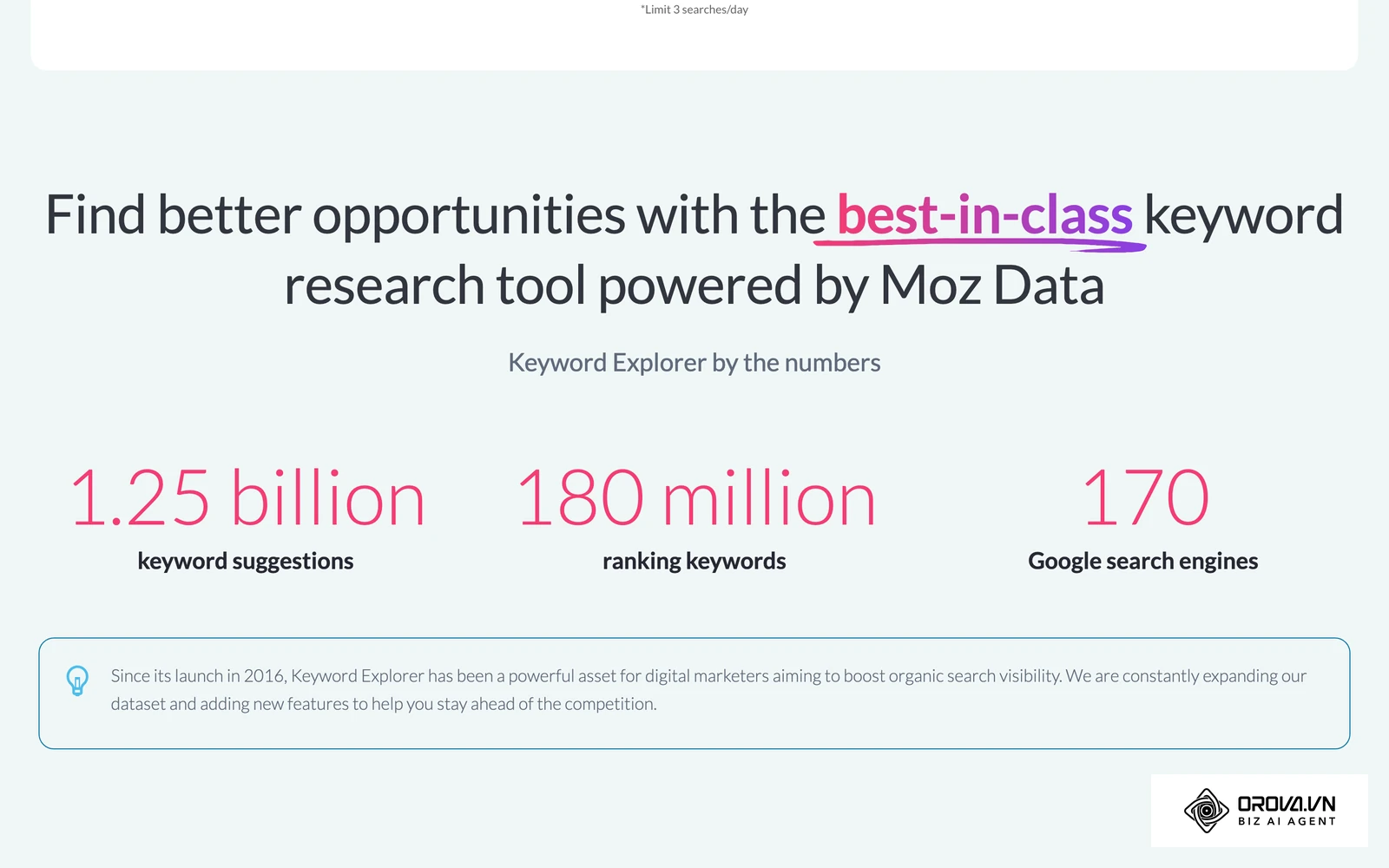
3. Moz Pro: The Pioneer of SEO Metrics
Moz is a legacy name in the SEO industry. They invented Domain Authority (DA), a metric now universally used to gauge website strength. Their "Keyword Explorer" is elegant, user-friendly, and highly effective.
Key Features:
- Priority Score: Moz takes Search Volume, Difficulty, Organic CTR (Click-Through Rate), and your own custom "My Score" to generate a single Priority Score. This instantly tells you whether a keyword is worth pursuing.
- SERP Analysis: A beautifully designed breakdown of the first page of Google, showing exactly why pages are ranking where they are.
- Highly Accurate Volume Ranges: While some tools rely on massive databases, Moz prioritizes extreme accuracy in its search volume estimations, often utilizing clickstream data to refine its numbers.
Best For: Beginners, local businesses, and marketers who prefer a clean, intuitive UI without being overwhelmed by data density.
Pricing: Starts around $99/month.
4. Majestic: The Backlink Specialist's Secret Weapon
While Majestic is renowned for its Trust Flow and Citation Flow backlink metrics, its keyword tools offer a unique perspective.
Key Features:
- Keyword Checker: Analyzes how often a keyword appears in its massive index of URLs and anchor texts.
- Search Explorer: Allows you to find pages that are highly relevant to your keyword based on Majestic's proprietary crawling technology rather than just Google's API.
Best For: Technical SEOs heavily focused on link-building and off-page optimization who need to align their keyword strategy with anchor text distribution.
Discover Orova.vn – a Biz AI Agent platform with OROVA SEO, a complete solution for every website. The system supports search engine optimization from A to Z with features including keyword research, writing new SEO-ready articles, optimizing existing content, rank tracking, plus competitor analysis and in-depth technical analysis. Sign up today to experience OROVA SEO completely free (offer valid through July 7, 2027).
Part 4: The Best Free Keyword Research Tools for Bootstrappers
If you are just starting out, you do not need to spend hundreds of dollars a month to conduct effective keyword research. There is a robust ecosystem of free tools that provide incredible value.
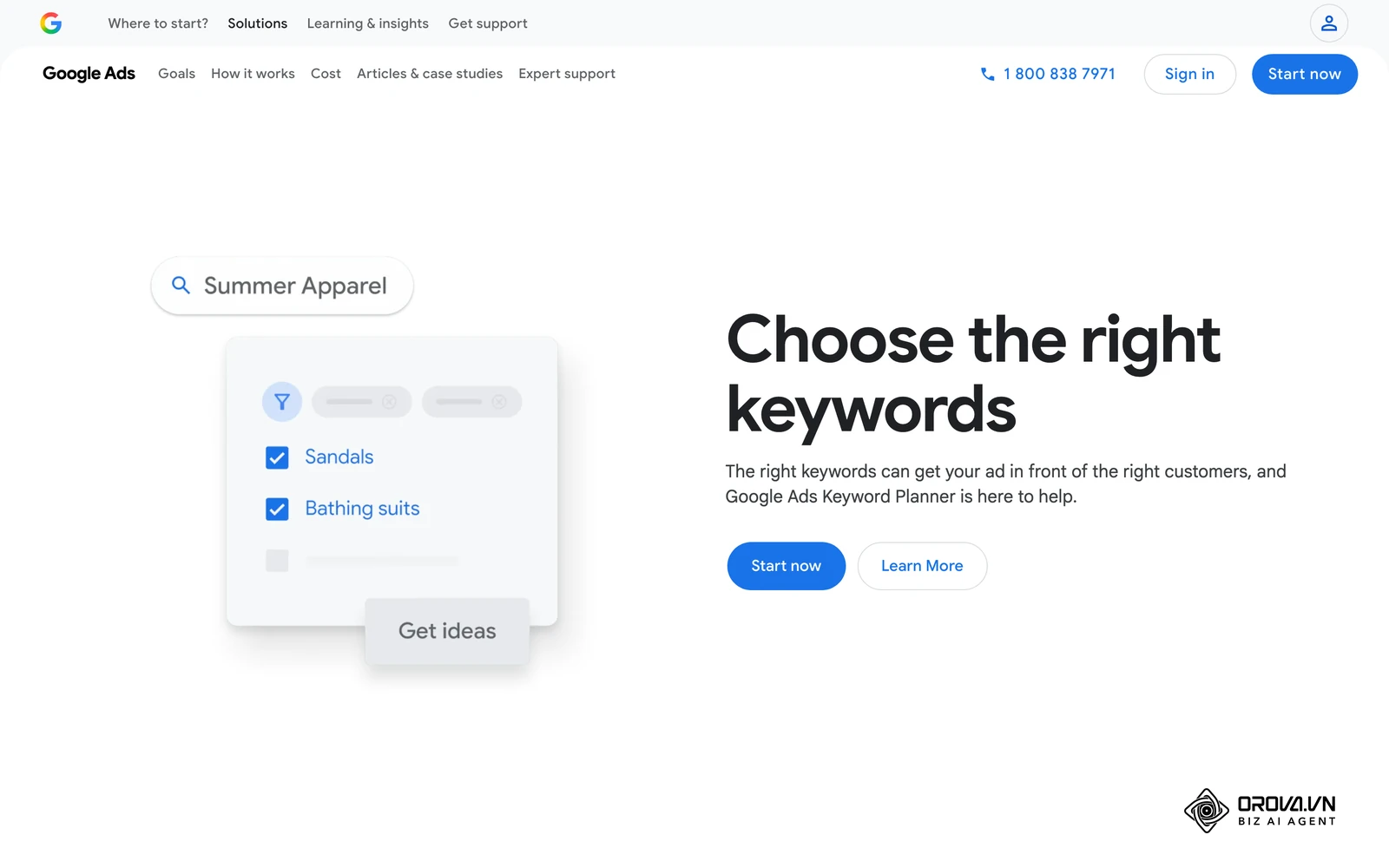
1. Google Keyword Planner
Direct from the source. Built for Google Ads, this remains one of the most reliable tools for generating keyword ideas.
- Pros: Data comes directly from Google. Excellent for discovering commercial intent and estimating bid costs.
- Cons: Unless you are running an active ad campaign, Google hides exact search volumes behind vague ranges (e.g., 10k - 100k).
How to use it for SEO: Ignore the PPC metrics and focus on the "Keyword Ideas" tab to find variations of your seed keywords that you might not have considered.
2. AnswerThePublic (Free Tier)
This tool is a visual goldmine for content creators and is arguably the best keyword research tool for discovering question-based queries.
- How it works: You enter a seed keyword (e.g., "running shoes"), and the tool scrapes Google autocomplete data to generate a massive web of questions containing "who, what, where, when, why, and how."
- SEO Value: Perfect for finding long-tail keywords, structuring FAQ sections, and capturing featured snippets.
3. Google Trends
Keyword search volumes are not static; they fluctuate based on seasons, news cycles, and cultural shifts.
- How it works: Enter a keyword to see its popularity over time (from 2004 to present).
- SEO Value: Google Trends prevents you from investing heavily into a dying trend. It is essential for planning seasonal content (e.g., "tax software" spikes in April) and comparing the rising popularity of related terms (e.g., "Bitcoin" vs "Ethereum").
4. Ubersuggest (Free Chrome Extension / Limited Free Tier)
Acquired by Neil Patel, Ubersuggest started as a simple scraper and evolved into a formidable freemium tool.
- Pros: Provides an easy-to-read dashboard showing search volume, SEO difficulty, and a list of content ideas based on top-ranking pages.
- Cons: The free version is heavily restricted by daily search limits.
Part 5: Specialized and Niche Keyword Research Tools
Sometimes, standard SEO tools aren't enough. You need specialized software to uncover hidden gems.
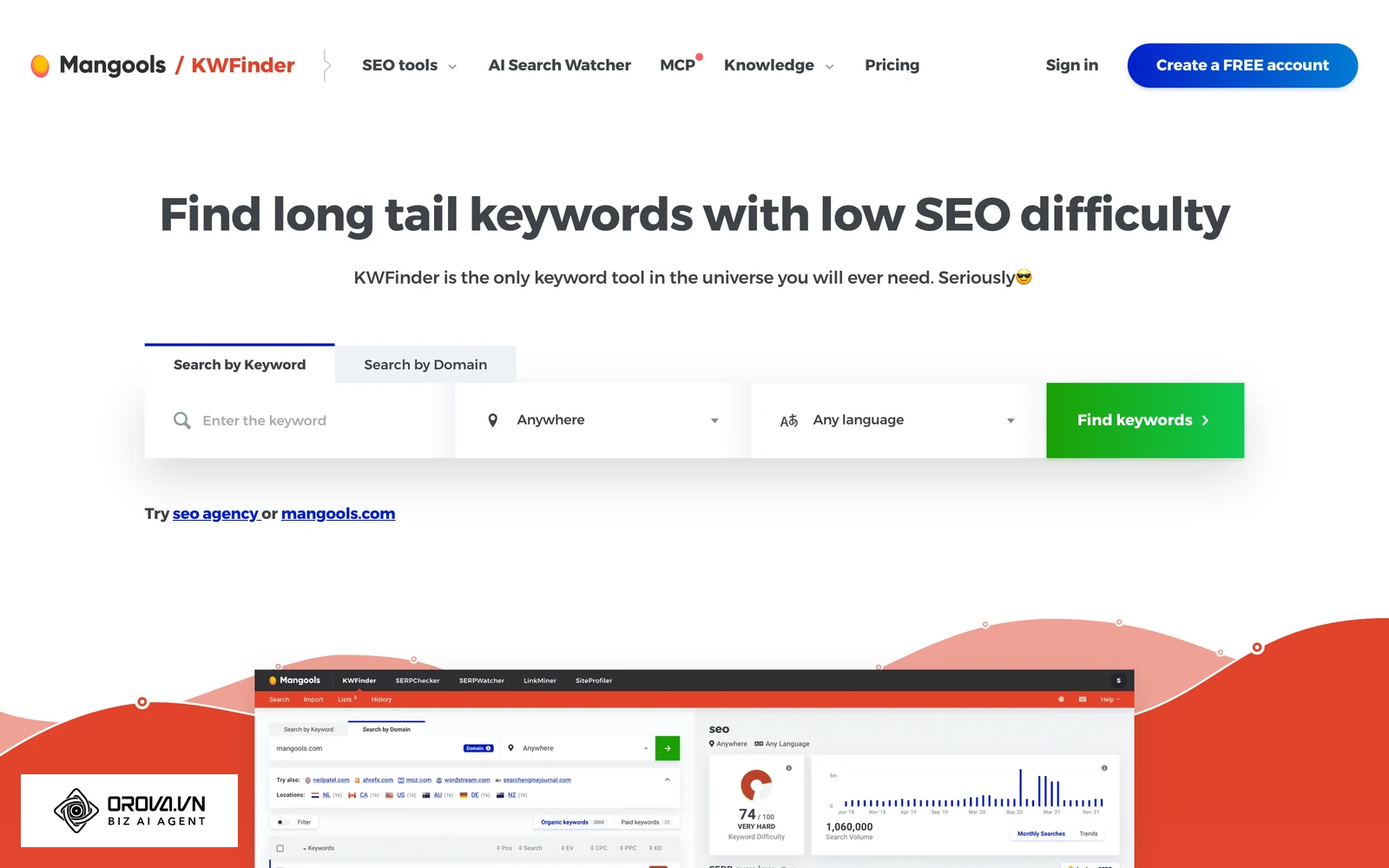
1. KWFinder by Mangools (Best for Long-Tail Keywords)
KWFinder is beloved by niche site builders and affiliate marketers. It specializes in finding long-tail keywords with low SEO difficulty.
- Standout Feature: Its user interface is arguably the best in the industry. It displays a highly accurate keyword difficulty score right next to the search volume, along with a real-time snapshot of the SERP.
2. Keywords Everywhere (Best Browser Extension)
This is a "freemium" browser add-on for Chrome and Firefox.
- Standout Feature: As you browse Google, YouTube, or Amazon normally, Keywords Everywhere injects search volume, CPC, and competition data directly beneath the search bar and alongside the results. It turns everyday browsing into passive keyword research.
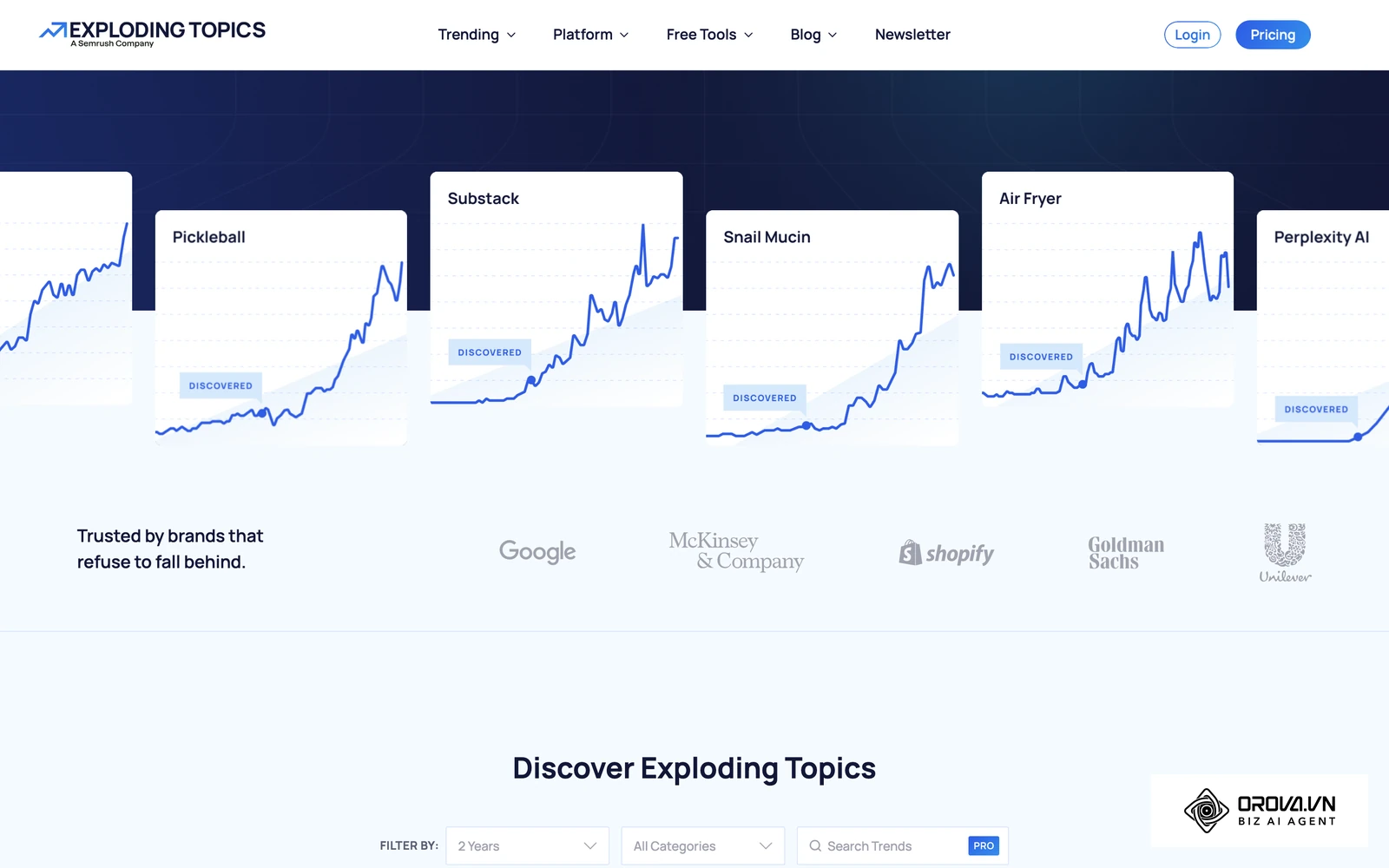
3. Exploding Topics
Created by Brian Dean (founder of Backlinko), this tool is designed to find rapidly growing keywords before they become highly competitive.
- Standout Feature: Instead of looking at historical data, its algorithms scan the internet to identify macro-trends across various industries (Tech, Health, Finance). It is the perfect tool for trend-jacking and establishing early topical authority.
Part 6: A Comprehensive Comparison of Keyword Tool Features
To help you make the best decision, here is a breakdown of how the heavyweights stack up against each other.
| Feature / Metric | Ahrefs | Semrush | Moz Pro | KWFinder | Google Keyword Planner |
|---|---|---|---|---|---|
| Primary Strength | Link data & search volume accuracy | All-in-one suite & PPC | Beginner-friendly UI & DA | Low-competition long-tail keywords | Direct Google data |
| Search Intent Metric | No (Implied through SERPs) | Yes (Explicitly labeled) | No | No | No (Implied by CPC) |
| Historical Data | Excellent | Exceptional | Good | Good | Good |
| Content Gap Analysis | Yes | Yes | Yes | No | No |
| Price Tier | Premium | Premium | Premium | Mid-Tier | Free |
Part 7: The Step-By-Step Keyword Research Methodology
Having access to the best keyword research tools is useless without a proven methodology. Here is a step-by-step workflow to execute an enterprise-grade keyword strategy.
Phase 1: Brainstorming Seed Keywords
Seed keywords are the foundation of your research. These are broad, foundational terms relevant to your business.
Example: If you sell organic coffee, your seed keywords are "coffee," "organic coffee," "coffee beans," and "fair trade coffee."
Phase 2: Expanding into Long-Tail Keywords
Plug your seed keywords into a premium tool like Ahrefs or Semrush. You are looking for long-tail variations. Long-tail keywords are phrases containing 3+ words. They have lower search volume but incredibly high conversion rates because the user's intent is specific.
Example: From the seed "organic coffee," you discover the long-tail keyword "best organic decaf coffee beans for espresso."
Phase 3: Analyzing Search Intent
Look at the current SERP for your chosen long-tail keyword. What is Google currently ranking?
- Are they blog posts? (Informational intent)
- Are they product pages? (Transactional intent)
- Are they listicles and reviews? (Commercial Investigation)
Action: You must match your content format to the prevailing intent. If Google is ranking listicles, writing a 5,000-word philosophical essay on coffee will not rank, regardless of how well-written it is.
Phase 4: Evaluating Keyword Difficulty vs. Domain Authority
Be realistic. If your website is brand new (Domain Rating of 5), you will not outrank Wikipedia or Amazon for a term with a Keyword Difficulty of 80.
Strategy: Use tools like KWFinder to filter for keywords with a difficulty score of under 30. Build your traffic and authority on these "easy wins" before tackling highly competitive terms.
Phase 5: Grouping into Topic Clusters
Do not create a separate page for every single keyword variation. Google prefers comprehensive content. Group semantically related keywords into a single "Topic Cluster."
Example Page: "The Ultimate Guide to Brewing Organic Espresso."
Target Keywords for this single page: "how to brew organic espresso," "best organic espresso beans," "water temp for organic coffee."
Part 8: Common Keyword Research Mistakes to Avoid
Even seasoned marketers make errors. When using your keyword research software, watch out for these pitfalls:
- Chasing Vanity Metrics: Targeting a keyword with 100,000 monthly searches might stroke your ego, but if that traffic doesn't convert into leads or sales, it is a waste of server bandwidth.
- Ignoring Search Intent: The most common mistake in modern SEO. Ranking a sales page for an informational query will result in a 95% bounce rate, which will eventually tank your rankings.
- Overlooking "Zero Volume" Keywords: Many tools under-report search volume for highly niche or emerging topics. If your target audience is asking a highly specific B2B question, write the content. Even if the tool says "0 searches," capturing those 10 highly qualified enterprise leads a month could generate massive revenue.
- Keyword Stuffing: The practice of unnaturally forcing keywords into your text is dead. Write for humans first, engines second. Use natural language and LSI (Latent Semantic Indexing) terms.
Part 9: The Impact of AI on Keyword Research
As we look toward the future, Artificial Intelligence is fundamentally changing how we use the best keyword research tools. Search Generative Experience (SGE), AI Overviews, and Large Language Models (LLMs) like Gemini and ChatGPT are shifting the paradigm.
- Conversational Queries: Users are moving away from robotic, fragmented searches (e.g., "cheap flights london") to conversational, complex queries (e.g., "Plan a 5-day itinerary to London in December under $1000 including flights from NYC"). Keyword tools are adapting to track these highly complex, zero-click searches.
- Topical Authority over Exact Match: AI engines synthesize information from multiple sources. To rank in AI overviews, websites must demonstrate deep topical authority rather than just optimizing for a specific keyword string. Tools are now focusing heavily on semantic entity relationships to help writers cover a topic exhaustively.
Conclusion
Mastering keyword research is the single highest ROI skill you can develop in digital marketing. It is the bridge between what you offer and what the world is actively seeking.
While the algorithms will change and new platforms will emerge, the psychology of human search remains constant. By utilizing the best keyword research tools—whether that means investing in Semrush and Ahrefs for enterprise dominance or bootstrapping with AnswerThePublic and Google Trends—you empower your business to stop guessing and start strategizing. Data-driven SEO removes the friction of content creation and guarantees that when your audience is looking for answers, your website is the first destination they find.
Frequently Asked Questions (FAQ)
Q: Can I do keyword research for free?
A: Absolutely. While premium tools offer deeper insights and faster workflows, you can conduct highly effective keyword research using a combination of Google Keyword Planner, Google Trends, AnswerThePublic, and manual SERP analysis.
Q: What is a "good" keyword search volume?
A: There is no universal "good" volume. For a broad consumer topic (like "best running shoes"), you might want thousands of searches per month. For a highly technical B2B software niche, a keyword with only 50 searches per month could be highly lucrative if the intent is transactional.
Q: How often should I conduct keyword research?
A: Keyword research is not a one-time event. It should be a continuous process. You should review your core keyword map quarterly, and perform targeted research every time you plan a new content campaign, launch a new product, or notice a shift in industry trends.
Q: What is the difference between short-tail and long-tail keywords?
A: Short-tail keywords (or "head terms") are 1-2 words, highly competitive, and have vague intent (e.g., "shoes"). Long-tail keywords are 3+ words, have lower search volume, less competition, and highly specific intent (e.g., "red Nike running shoes for men size 10").
Run your business with AI Agents
Orova is the always-on Biz AI Agent — it plans, runs, and optimizes the work for you.
Save time, unlock productivity.