
Best AI Writing Tools for Website SEO: The Definitive Guide to Organic Visibility and Revenue
Organic search has shifted from brute-force keyword density to entity-based search, intent satisfaction, and demonstrable Information Gain. In this landscape, generic AI content published straight out of a chatbot routinely languishes on page five of search results, while strategically optimized, human-guided content claims featured snippets, organic top spots, and inclusion in AI Overviews.
Achieving sustainable organic rankings requires more than simple text generation. It demands tools capable of reverse-engineering top-ranking Search Engine Results Pages (SERPs), identifying critical natural language processing (NLP) entities, surfacing user intent gaps, and adhering to Google’s Search Essentials and E-E-A-T (Experience, Expertise, Authoritativeness, and Trustworthiness) standards.
Below is an in-depth breakdown of the industry's best AI writing tools for website SEO, an evaluation of Google's algorithms regarding machine-generated copy, and a repeatable framework for producing content that ranks consistently.
1. How to Choose an AI Writing Tool for SEO
Not all AI tools serve the same purpose. A platform engineered for creative copywriting or conversational assistance often lacks the structural and semantic capabilities required to rank on Google. When evaluating an SEO-focused writing tool, prioritize the following core capabilities:
SERP and Competitor Correlation Analysis
The platform must scan the current live SERP for your target keyword, extract the top 10 to 30 ranking URLs, and analyze structural factors: word count, heading hierarchies (H2, H3), image density, and topical coverage depth.
Semantic Coverage and NLP Entity Extraction
Google does not index text simply as strings of characters; it parses concepts and relationships using Knowledge Graphs. The best tools utilize Google’s NLP API or proprietary semantic algorithms to extract salient entities, sentiment, and co-occurring terms (LSI/NLP keywords) that search engines expect to find in an authoritative piece.
Fact-Checking, Source Attribution, and Hallucination Controls
Standard Large Language Models (LLMs) can generate convincing falsehoods ("hallucinations"). For commercial and informational queries, inaccurate data degrades user trust and can trigger quality demotions under Google's Quality Rater Guidelines. Look for platforms equipped with live search integration, automated citation scraping, or Retrieval-Augmented Generation (RAG).
Content Architecture and Internal Linking
SEO requires structural organization. Top-tier tools assist in generating content briefs, cluster recommendations, question-and-answer extraction for FAQ schema, and context-aware internal linking suggestions.
CMS Integration and Workflow Efficiency
If publishing volume is high, manual copy-pasting slows production. Native integrations with WordPress, Webflow, Shopify, Google Docs, and headless CMS environments ensure rapid deployment without formatting errors.
2. In-Depth Reviews: The Best AI Writing Tools for Website SEO
1. Surfer AI
Best For: Fully integrated, SERP-driven end-to-end article generation.
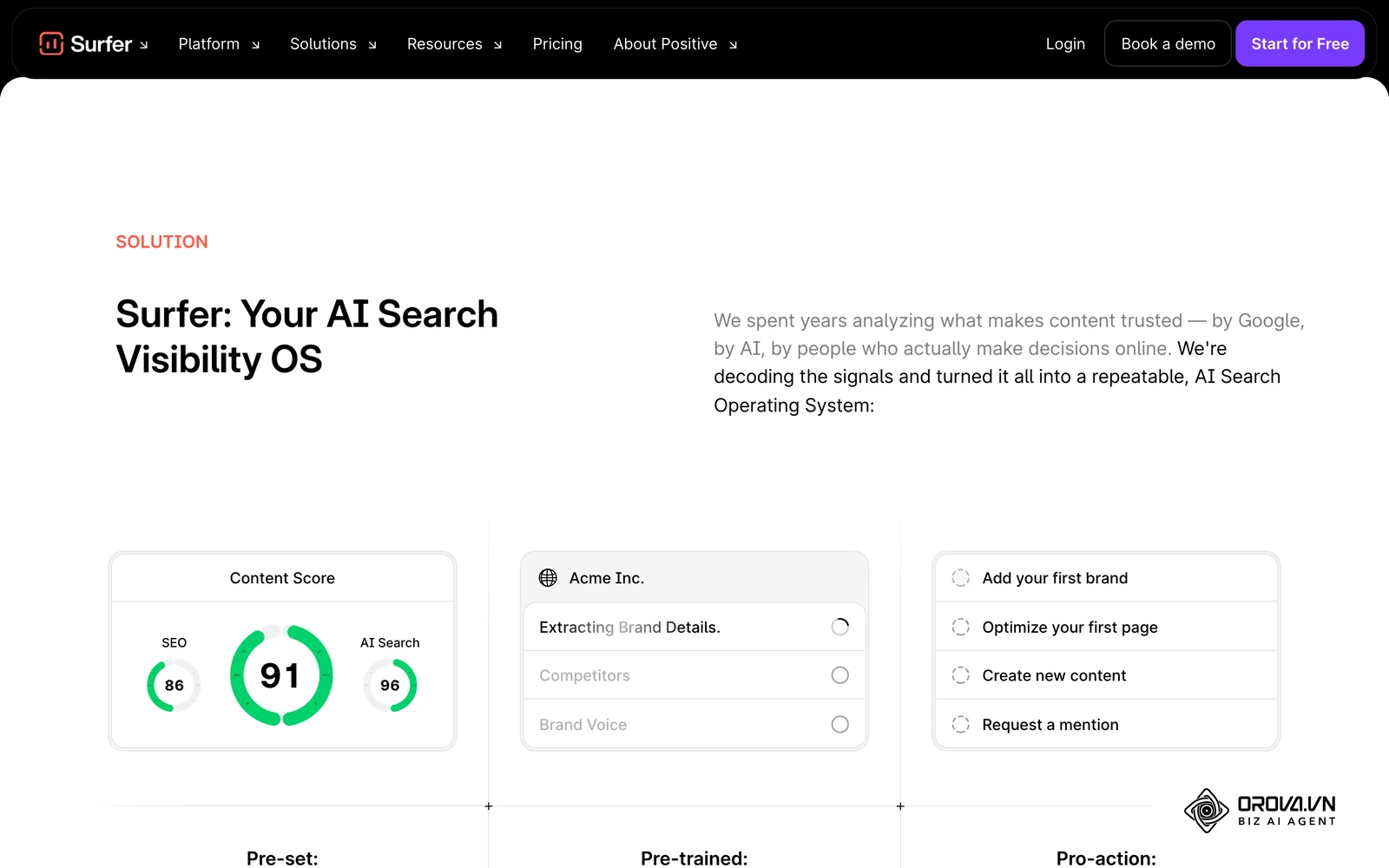
Surfer SEO built its reputation as a leading on-page correlation platform. With Surfer AI, it integrated that analytical engine directly into an automated content generator.
Key SEO Capabilities
- Dynamic Live Scraping: Surfer AI scrapes the top ranking pages at the moment of generation, discounting outliers (e.g., Reddit threads or e-commerce category pages ranking for informational terms) to establish an accurate benchmark.
- Organic NLP Integration: Automatically injects relevant NLP entities into headings, body paragraphs, and meta tags based on statistical frequency in top-ranking content.
- Anti-AI Detection and Formatting: Focuses on human-readable syntax, breaking up walls of text with bold key phrases, bulleted lists, and structured summary blocks.
- Internal Linking Engine: Integrates with your domain’s Google Search Console data to automatically place relevant internal links during the generation phase.
Limitations
- High cost per individual article credit compared to standalone LLM wrappers.
- Content can occasionally feel formulaic if default settings are not adjusted with custom instructions and specific tone parameters.
Pricing: Runs on a credit-based system layered over monthly subscriptions, starting at ~$89/month plus per-article costs.
2. Frase.io
Best For: Deep SERP research, content brief creation, and Answer Engine Optimization (AEO).
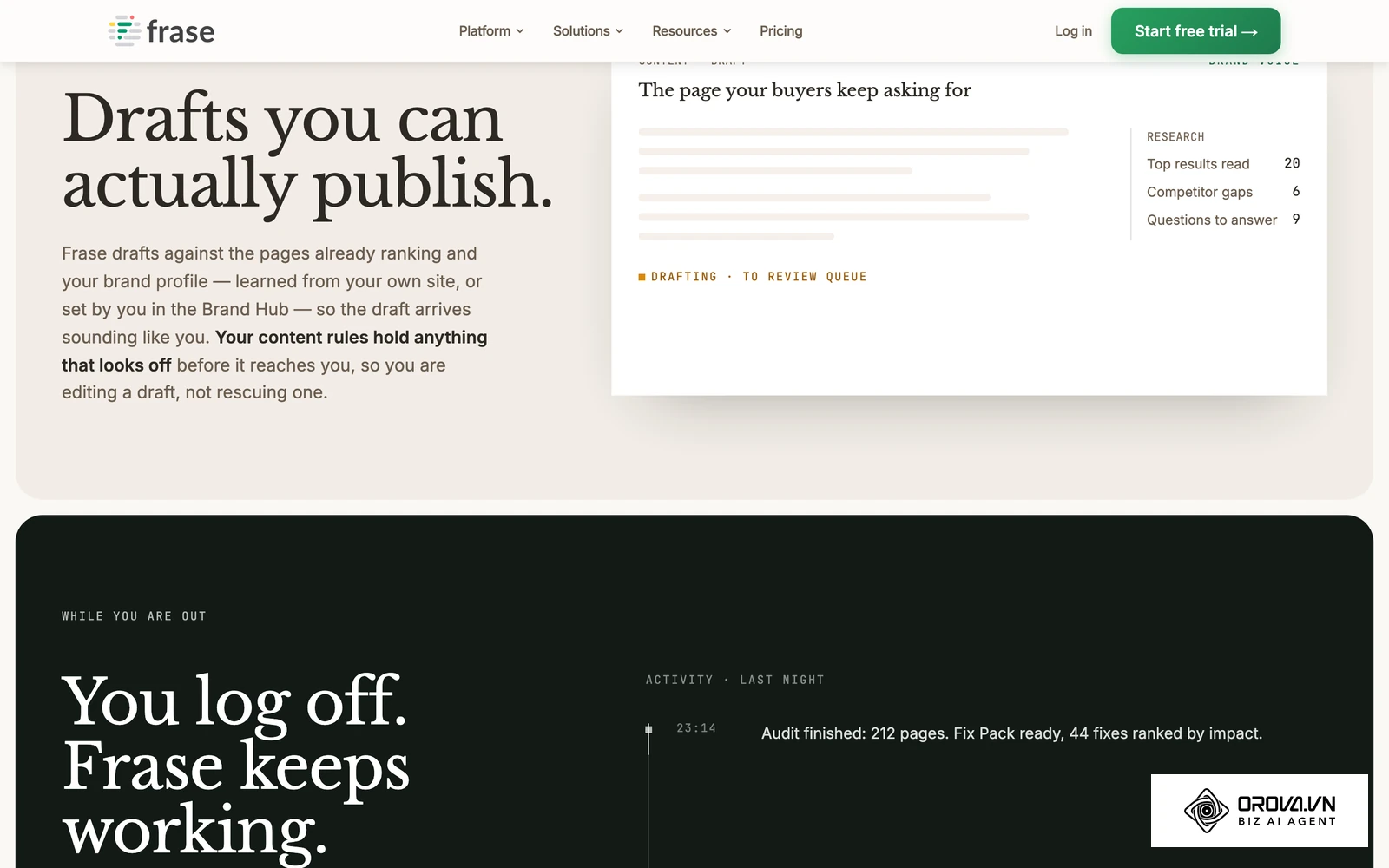
Frase is engineered around the research phase of SEO, making it an exceptional tool for content managers who prioritize research depth before drafting.
Key SEO Capabilities
- Automated SERP Outline Curation: Compiles the headings, questions, and statistics from the top 20 search results into a modular dashboard, allowing users to build a custom outline in minutes.
- Question Extraction Engine: Scrapes "People Also Ask" (PAA), Quora, and Reddit to surface high-intent long-tail queries, making it simple to structure content for featured snippets.
- Entity Scoring: Real-time scoring monitors content coverage against competitive benchmarks while editing.
- Targeted Generation: Allows users to generate text section-by-section using specialized sub-prompts, reducing generic filler.
Limitations
- The native editor's output can require structural editing to match a distinct brand voice.
- Lacks the deep domain-level audit capabilities found in full enterprise suites.
Pricing: Plans range from ~$15/month for solo practitioners up to enterprise team packages.
3. Clearscope
Best For: Enterprise-grade topical authority, entity optimization, and editorial teams.
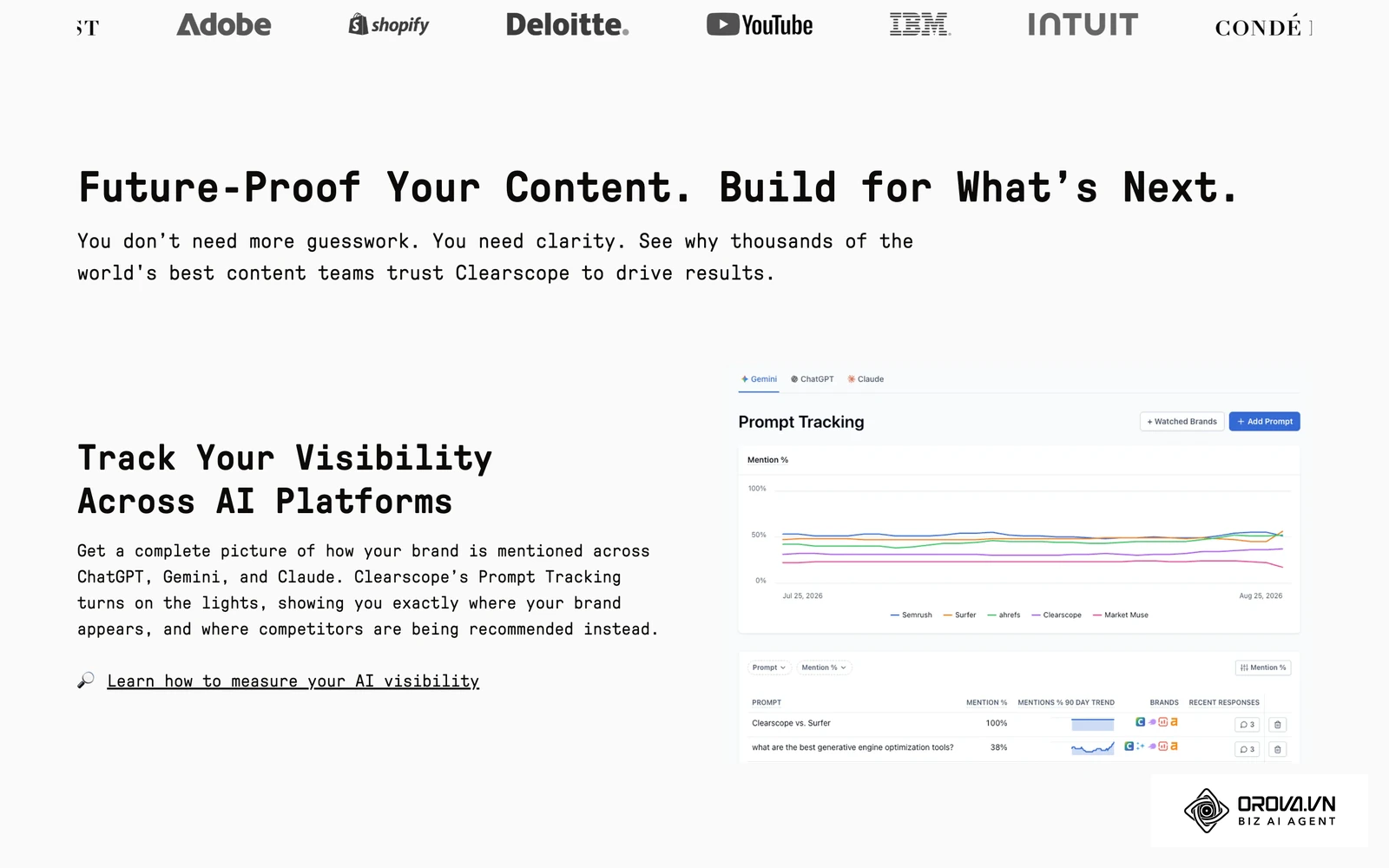
Clearscope remains a premier standard for enterprise content marketing teams, focusing on topical depth, readability, and semantic precision.
The Ultimate Guide to Internal and External Linking Strategies for SEO
Key SEO Capabilities
- Advanced Entity Modeling: Leverages Google Natural Language APIs to provide an accurate breakdown of entity importance and semantic classification.
- Readability and User Experience Benchmarks: Enforces Flesch-Kincaid grade-level monitoring to ensure technical subjects remain digestible for broad audiences.
- Content Inventory Tracking: Continuously monitors published URLs against changing SERP dynamics, alerting teams when content requires a refresh.
- Seamless Workflow Integrations: Robust add-ons for Google Docs and WordPress permit writers to work inside their preferred environments.
Limitations
- Does not position itself as a "one-click long-form generator"; it is an optimization and guidance platform that requires human writers or integrated LLMs.
- Higher price point targeted at established organizations.
Pricing: Starts at $189/month.
4. Jasper AI
Best For: Enterprise marketing teams requiring strict brand voice governance and multi-channel campaigns.
Jasper has grown from a generic copywriting assistant into an enterprise content platform with strong SEO capabilities, powered in part by its integration with Surfer SEO.
Key SEO Capabilities
- Brand Voice & Style Guide Governance: Analyzes brand guidelines, product positioning, and past high-performing copy to maintain consistent voice across hundreds of articles.
- Surfer SEO Integration: Built-in Surfer integration allows users to run real-time semantic audits inside the Jasper editor interface.
- Campaign Workflows: Converts an initial SEO pillar post into supporting social content, newsletter copy, and paid ad variations within a unified workspace.
Limitations
- Native SEO intelligence relies heavily on third-party integration rather than an indigenous SERP-scraping engine.
- Learning curve for configuring custom knowledge bases and team workflows.
Pricing: Creator tiers start at ~$49/month; Pro and Business tiers scale with seat count and feature access.
5. KoalaWriter
Best For: Niche website operators, affiliate marketers, and automated publishing.
Built specifically for SEO practitioners and niche publishers, KoalaWriter runs on OpenAI's advanced models paired with real-time web scraping.
Key SEO Capabilities
- Live Search Results for Real-Time Data: Scrapes current search data prior to writing, allowing it to cite up-to-date facts, product details, and release dates accurately.
- Affiliate-Focused Layouts: Specialized generation modes for Amazon roundups, single-product reviews, and comparison articles, complete with pros/cons boxes and verdict blocks.
- Automatic Internal Linking: Analyzes your sitemap and inserts contextual internal links directly into the generated markdown.
- Direct WordPress and Webflow Publishing: Delivers one-click drafting, category assignment, and featured image integration.
Limitations
- Less suitable for complex B2B thought leadership requiring proprietary methodologies.
- Optimization is centered on SERP volume rather than advanced enterprise entity graphs.
Pricing: Tiered word-pack model starting around $9/month, scaling with generation volume.
6. Writesonic
Best For: Rapid content generation, factual accuracy, and multi-format asset creation.
Writesonic provides an AI Article Writer capable of turning an initial keyword into a fully researched, factual 2,500-word draft in minutes.
Key SEO Capabilities
- Web-Connected Writing Engine: Scrapes up to 20 competitive URLs to extract facts, data points, and statistics before generating content.
- Competitor Content Gap Analysis: Highlights topics covered by competitors that your proposed outline missed.
- Built-in Citation Formatting: Inserts source links automatically, helping fulfill E-E-A-T trust signals.
Limitations
- Tends to produce generic transitional phrasing ("In today's fast-paced world...") that requires manual editorial pruning.
- Credit consumption varies significantly depending on the underlying AI model selected.
Pricing: Freelancer plans start around $20/month; Enterprise options scale by usage.
7. Claude (Anthropic) & ChatGPT Plus (Custom GPTs)
Best For: Technical depth, nuance, and custom programmatic SEO workflows.
While not specialized SEO platforms out of the box, advanced raw LLMs like Anthropic's Claude 3.5 Sonnet and OpenAI's GPT-4o remain foundational components of the most sophisticated SEO operations.
Key SEO Capabilities
- Superior Reasoning and Synthesis: Claude 3.5 Sonnet excels at generating human-like cadence, complex technical analogies, and nuanced arguments that avoid boilerplate phrasing.
- Custom Knowledge Base Integration: Users can upload custom API documentation, proprietary surveys, and corporate whitepapers to generate high-Information-Gain content.
- Custom Automation: Using Python scripts or Zapier/Make connections, these models can run programmatic workflows that generate meta tags, schema markup, and long-tail landing pages at scale.
Limitations
- No built-in SERP scraping, real-time keyword density auditing, or entity correlation out of the box.
- Requires manual prompt engineering or custom API scripting to achieve consistent SEO output.
Pricing: $20/month for web interfaces; pay-per-token models via API.
Discover Orova.vn – a Biz AI Agent platform with OROVA SEO, a complete solution for every website. The system supports search engine optimization from A to Z with features including keyword research, writing new SEO-ready articles, optimizing existing content, rank tracking, plus competitor analysis and in-depth technical analysis. Sign up today to experience OROVA SEO completely free (offer valid through July 7, 2027).
3. Feature Comparison: Top SEO AI Writing Tools
| Tool | Core Strength | Live SERP Scraping | Entity / NLP Analysis | Primary Target Audience |
|---|---|---|---|---|
| Surfer AI | Complete Turnkey Generation | Yes | Yes (Proprietary NLP) | In-house SEOs, Agencies |
| Frase.io | Briefs & AEO Optimization | Yes | Yes (Topic Scoring) | Content Strategists, Editors |
| Clearscope | Entity-Based Optimization | Yes | Yes (Google NLP) | Enterprise Publishers, Brands |
| Jasper AI | Brand Voice & Multi-Channel | Via Surfer Integration | Via Surfer Integration | Enterprise Marketing Teams |
| KoalaWriter | Niche Sites & Affiliate Posts | Yes | Basic | Affiliate Marketers, Bloggers |
| Writesonic | Fast, Researched Drafting | Yes | Moderate | Solopreneurs, Growth Teams |
| Claude / ChatGPT | Nuance, Tone, Technical Reasoning | Variable (Web-Search Models) | Manual Prompting Only | Technical SEOs, Developers |
4. Google, Algorithms, and E-E-A-T: How to Rank AI Content Safely
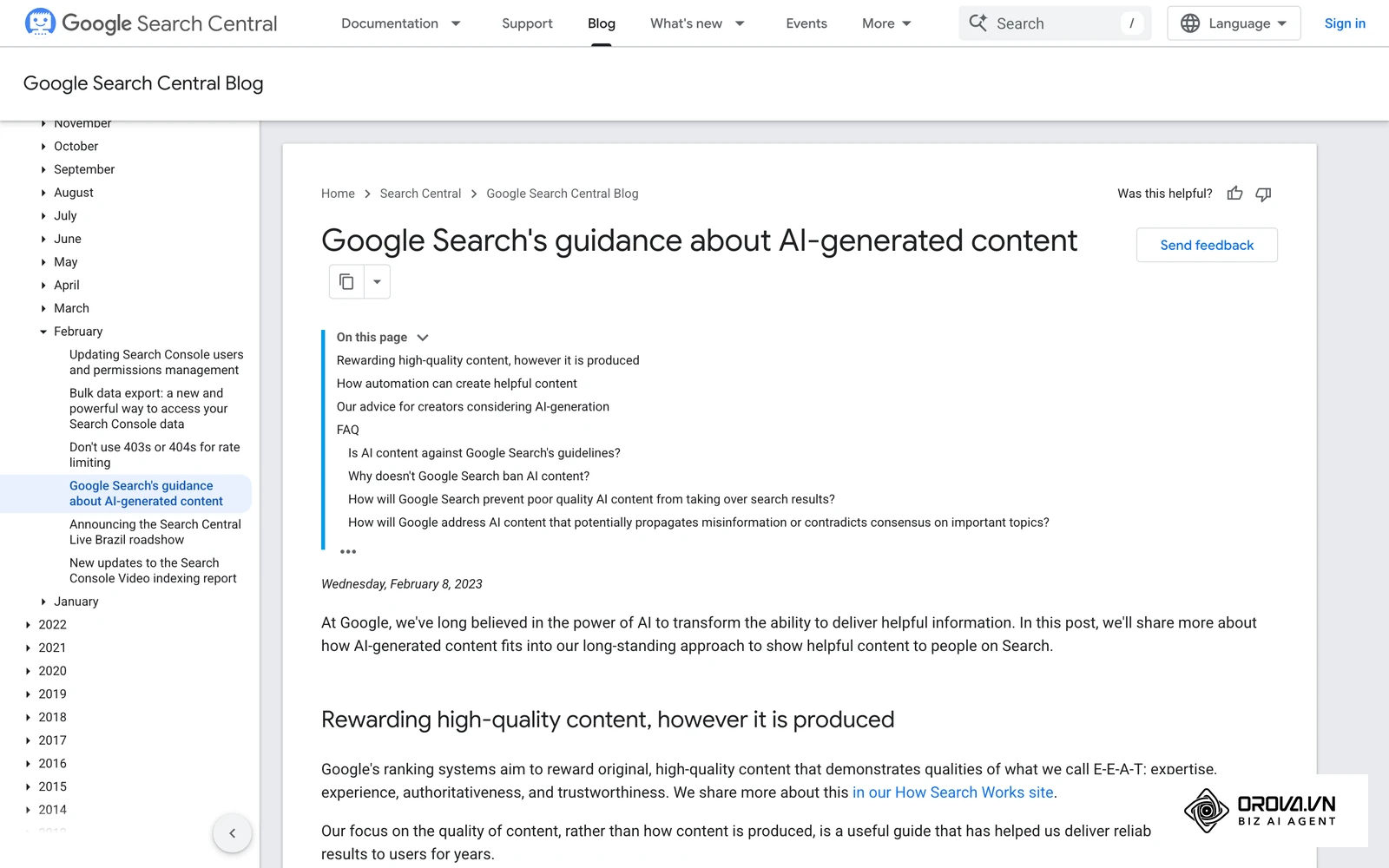
A persistent misconception in digital marketing is that Google penalizes AI-generated text simply because it was written by a machine. Google's Search Central documentation explicitly clarifies its position:
"Google’s ranking systems reward helpful, reliable, people-first content created for users, not for search engines... Our focus on the quality of content, rather than how content is produced, is a useful guide that has informed our efforts for years."
Google evaluates what is produced, not the mechanism used to produce it. However, the operational reality of unedited AI content creates specific failure modes under modern search algorithms.
                    ┌───────────────────────────────────────────────┐
                    │ Raw AI Generation: High Risk of Stagnant SERP │
                    │ (Synthesizes existing average web data)       │
                    └──────────────────────┬────────────────────────┘
                                           │
                                           ▼
                    ┌───────────────────────────────────────────────┐
                    │ The Search Quality Rater & Algorithm Filter:  │
                    │ • Helpful Content System: Value check         │
                    │ • E-E-A-T: Demonstrable firsthand experience  │
                    │ • Information Gain: Novel data points         │
                    └──────────────────────┬────────────────────────┘
                                           │
                                           ▼
                    ┌───────────────────────────────────────────────┐
                    │ Strategic AI + Human-in-the-Loop Optimization:│
                    │ High Rankings, Organic Conversions, Longevity │
                    └───────────────────────────────────────────────┘
The Pitfalls of Pure AI Generation
- Topical Regurgitation (Lack of Information Gain): LLMs are predictive engines trained on existing public data. By definition, a standard prompt asks the model to produce the statistical average of what already exists. Google holds a patent for "Information Gain Score," which measures how much novel information a page provides beyond what a user has already encountered in previous search results. If your article only summarizes existing pages, its Information Gain score is near zero.
- Generic Syntactic Footprints: Pure machine copy often relies on predictable syntax: uniform sentence lengths, passive constructions, and overused transitions ("In the digital landscape," "Delve," "Crucial," "Testament to"). While search engines don't ban this text outright, human users bounce quickly from generic intros, degrading real-world engagement metrics.
- Absence of Real-World Experience: E-E-A-T places heavy emphasis on the first "E": Experience. An AI can describe how to configure an Apache server or what a camera lens looks like, but it cannot share the frustration of a specific error code or test an autofocus motor in low light. Real photos, proprietary screenshots, and first-person anecdotes confirm to search engines that an authentic user stands behind the domain.
With OROVA.VN and the OROVA SEO module, you put an end to the exhausting days of manual work for good. Instead of struggling for hours to write articles and compile reports, the entire process is now optimized and completed in just 5 minutes.
5. The 5-Step Hybrid Workflow for Ranking #1 with AI
To build durable search equity, treat AI writing tools as high-speed drafting assistants rather than autonomous publishing systems. Follow this production workflow:
Step 1: Query Intent and Semantic Mapping
Never feed an AI tool a single keyword and request an entire post immediately. Begin by analyzing the SERP intent:
- Informational: The user wants an explanation, breakdown, or data point.
- Commercial Investigation: The user is comparing tools, looking for alternatives, or reviewing solutions.
- Transactional: The user is ready to sign up, purchase, or download.
Identify the primary entities: core concepts, brands, technologies, and sub-attributes that top results cover. Record these in a centralized content brief.
Step 2: Custom Outline Architecture with Information Gain
Build an outline that addresses competitive topics while introducing at least two unique angles:
- The Baseline: Match the core structural sections that search algorithms expect (definitions, implementation steps, core comparisons).
- The Unique Layer: Add proprietary data, a case study, an internal quote from your team, or an unconventional counter-argument. This establishes positive Information Gain.
Step 3: Modular Generation
Generate your draft section by section rather than running one massive prompt. This method keeps the model focused on specific nuances and prevents context drift.
Prompt Framework for Modular Generation:
"You are a Senior SEO Content Specialist writing a technical breakdown of [Specific Subtopic].
Target Audience: [Define role, e.g., Senior Operations Managers].
Tone: Practical, data-backed, direct. No corporate buzzwords or generic introductions.
Required Entities to Include: [Entity A, Entity B, Entity C].
Constraint: Lead directly with the answer in sentence 1. Avoid introductory throat-clearing."
Step 4: The Editorial & E-E-A-T Pass (Human-in-the-Loop)
Subject every AI-drafted document to a rigorous editorial review:
- Fact Verification: Manually verify every statistic, year, feature, and quote.
- Stylistic Pruning: Strip passive voice, repetitive adjectives, and clichéd transitions.
- Firsthand Validation: Embed screenshots, proprietary workflows, code snippets tested in-house, or original diagrams.
- Internal Anchoring: Manually place contextually relevant internal links to topically related pages within your existing domain architecture.
Step 5: Semantic Entity Auditing and Schema Markup
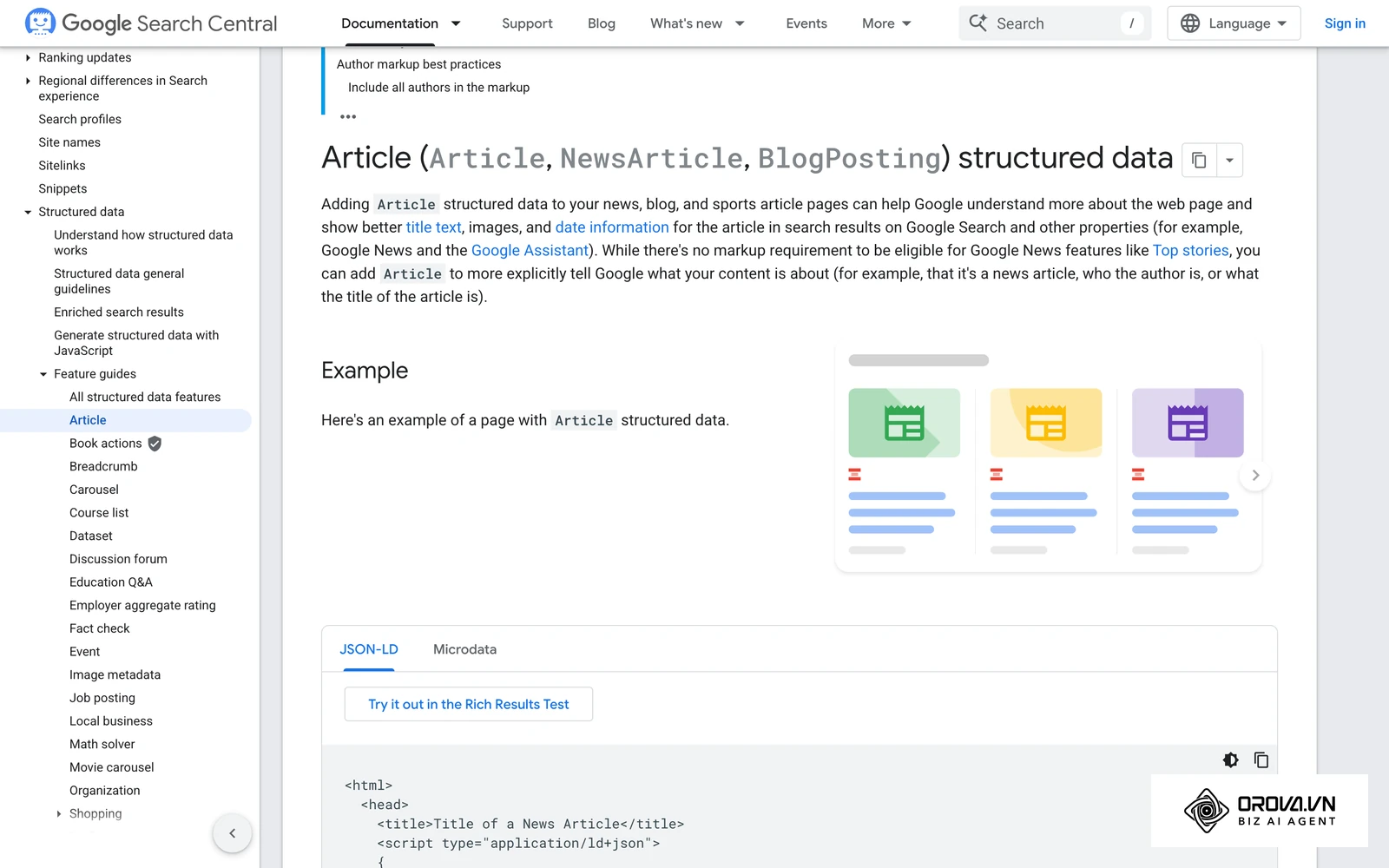
Before publishing, import the edited draft into a semantic audit tool (Clearscope, Surfer, or Frase). Ensure essential entity terms are naturally incorporated. Finally, generate structured JSON-LD Schema (e.g., Article, FAQPage, or Product schema) to help search engine crawlers parse your content hierarchy accurately.
6. Advanced Prompts for High-Performing SEO Content
Use these structured frameworks inside Claude, ChatGPT, or your preferred AI writing platform to produce superior, publication-ready drafts:
1. The Information Gain Outline Prompt
Act as an elite SEO Strategist. I am planning an in-depth, long-form guide targeting the keyword: "[Target Keyword]".

Here are the top 3 ranking competitors' main headings:
[Paste competitor H2s/H3s]

Tasks:
1. Identify the baseline subtopics that are mandatory to satisfy search intent.
2. Identify 3 distinct content gaps or missing perspectives that none of these competitors are addressing.
3. Build a detailed outline featuring H2 and H3 tags. Under each heading, list:
   - Primary user intent.
   - Core entities to mention.
   - A specific idea for original data, an example, or a contrarian angle to maximize Information Gain.
2. The Direct-Answer Section Prompt (Optimized for Featured Snippets)
Write a concise, authoritative answer to the question: "[Insert Question/PUD/PAA Query]".

Formatting Rules:
- Sentence 1 must deliver the direct, definitive answer without preamble.
- Follow immediately with a 3-bullet breakdown explaining the 'Why' or 'How'.
- Maintain an objective, reference-grade tone (similar to Wikipedia or a technical manual).
- Total word count: 45 to 65 words.
3. The Technical Schema Generator Prompt
Analyze the following text from my completed article on [Topic]:
[Paste section with questions and answers]

Generate valid, error-free JSON-LD Schema for an FAQPage markup representing this content. Ensure all keys and values follow Schema.org specifications accurately. Do not include markdown code block explanations; output pure JSON only.
7. The Future of AI Writing Tools: Search Generative Experience (SGE) and Beyond
Search interfaces are transitioning from traditional lists of blue links to multimodal, synthetic answers powered by engines like Google's AI Overviews and Perplexity. In this new paradigm:
- Answer Engine Optimization (AEO) Supersedes Keyword Stuffing: Search engines cite sources that present clear, unambiguous facts, well-structured definitions, and verifiable data.
- Entity Graphs Rule Rankings: Search engines evaluate a site's holistic topical authority. Using AI tools to map out and systematically execute entire topical clusters (hub-and-spoke models) is now required to compete for high-volume head terms.
- Human Taste and Editorial Direction are the Ultimate Moats: Because production costs for basic text have fallen close to zero, the web is flooded with synthesized prose. Brands that stand out will be those that use AI tools to handle structural analysis and initial drafting, while relying on experienced human practitioners to deliver original research, perspective, and voice.
Selecting the right AI writing tool depends on your operating model: use Surfer AI or Frase for analytical, SERP-correlated drafting; deploy Clearscope for enterprise editorial governance; and harness raw models like Claude 3.5 Sonnet when original synthesis and technical accuracy are paramount. Pair any of these tools with a disciplined human review process to build an organic acquisition channel that drives durable rankings and business value.
Run your business with AI Agents
Orova is the always-on Biz AI Agent — it plans, runs, and optimizes the work for you.
Save time, unlock productivity.