
How to write a quotation in 7 steps (2026): win deals & secure cash

Mastering how to write a quotation that converts prospective buyers into signed commercial agreements is one of the highest-leverage operational skills in modern business. When you finish this guide, you will be able to construct a clear, legally sound commercial document featuring itemized line items, tiered volume discounts, milestone payment schedules, and explicit validity terms that clients can approve without friction. Preparing your document requires your corporate registration details, unit pricing models, client scope notes, and a standard office application or billing system, taking roughly thirty minutes from start to finish. If your business model relies on off-the-shelf retail transactions with barcoded cash registers, or if you only offer casual, ballpark telephone estimates without binding fulfillment commitments, this structured commercial quoting methodology is not required for your workflow.
How to write a quotation: core purpose and commercial workflow
Writing a quotation establishes an official, legally binding commitment from a seller to supply specified goods or services at a fixed price within a defined timeframe. The standard workflow spans seven operational steps, requiring approximately thirty minutes to assemble client data, itemize units, structure payment terms, and review legal conditions before transmission.
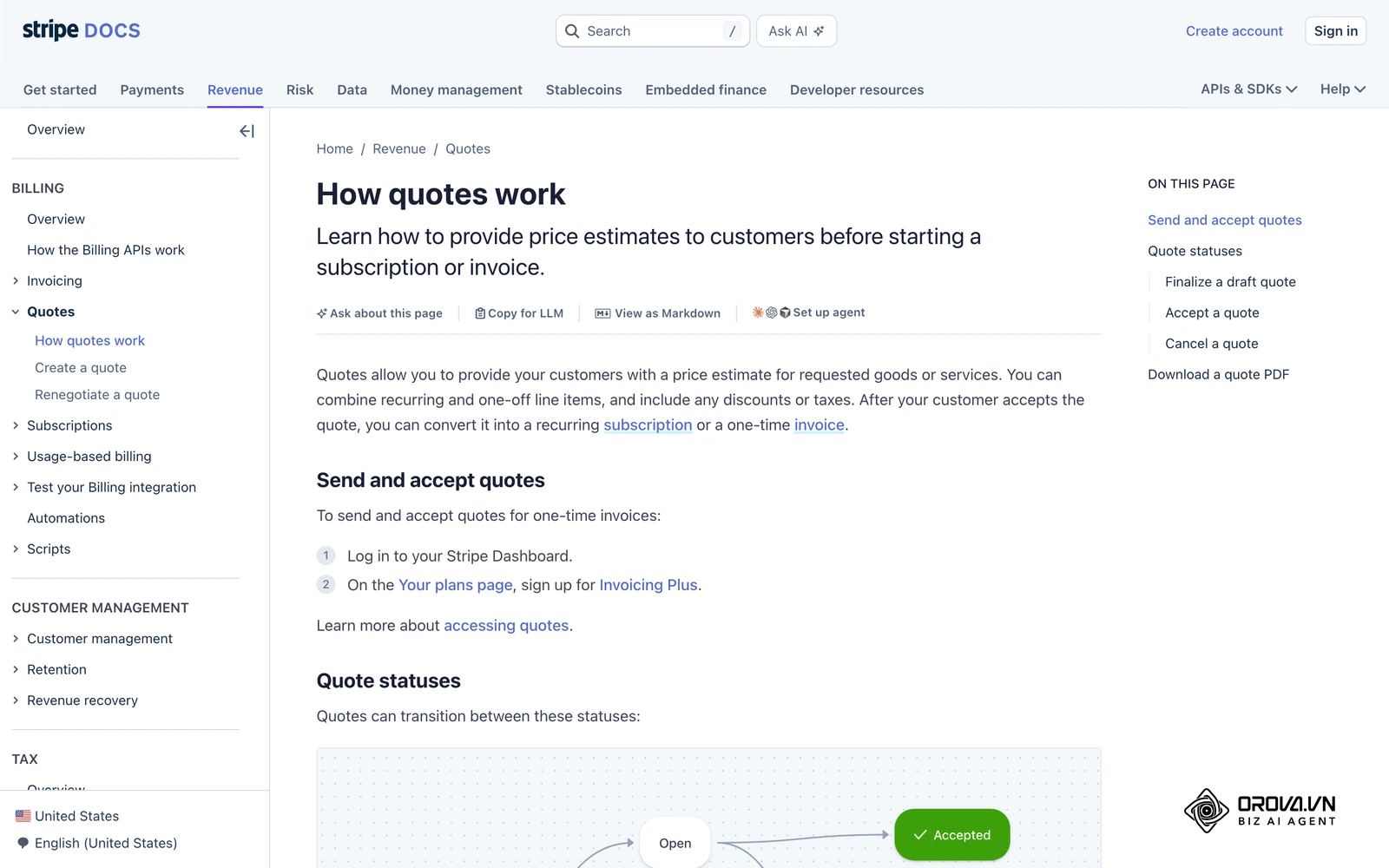
A sales quotation differs fundamentally from an informal estimate and a post-delivery invoice. An estimate represents an educated, non-binding projection of probable costs, often subject to fluctuating material expenses or undefined labor hours. Conversely, a sales quotation represents a firm commercial offer: once signed by the client, it forms an enforceable agreement obligating your business to execute the work at the stated rate. An invoice is issued only after work commences or completes to collect funds. The diagram below illustrates the essential operational phases required to draft an error-free quotation.
Preparation before creating your sales quotation
Drafting a professional quotation without verified inputs leads to arithmetic errors, scope disputes, and unprofitable contracts. Before creating your document, collect the foundational data outlined in the table below to prevent interruptions during calculations.
| Required Asset | Source Location | Estimated Retrieval Time | Operational Risk If Missing |
|---|---|---|---|
| Verified Client Billing Details | Client intake form or CRM profile | 5 minutes | Invoice rejections, tax jurisdiction mismatches, and delayed delivery |
| Accurate Cost & Price Book | Internal financial ledger or inventory sheet | 10 minutes | Underquoting labor hours or eroding required gross profit margins |
| Scoped Deliverables & Specifications | Pre-sales discovery brief or meeting minutes | 10 minutes | Scope creep, disputed revisions, and unbillable rework |
| Standard Terms & Conditions | Corporate legal policy or master services agreement | 5 minutes | Unclear liability limits, unprotected IP, and uncontrolled cancellation terms |
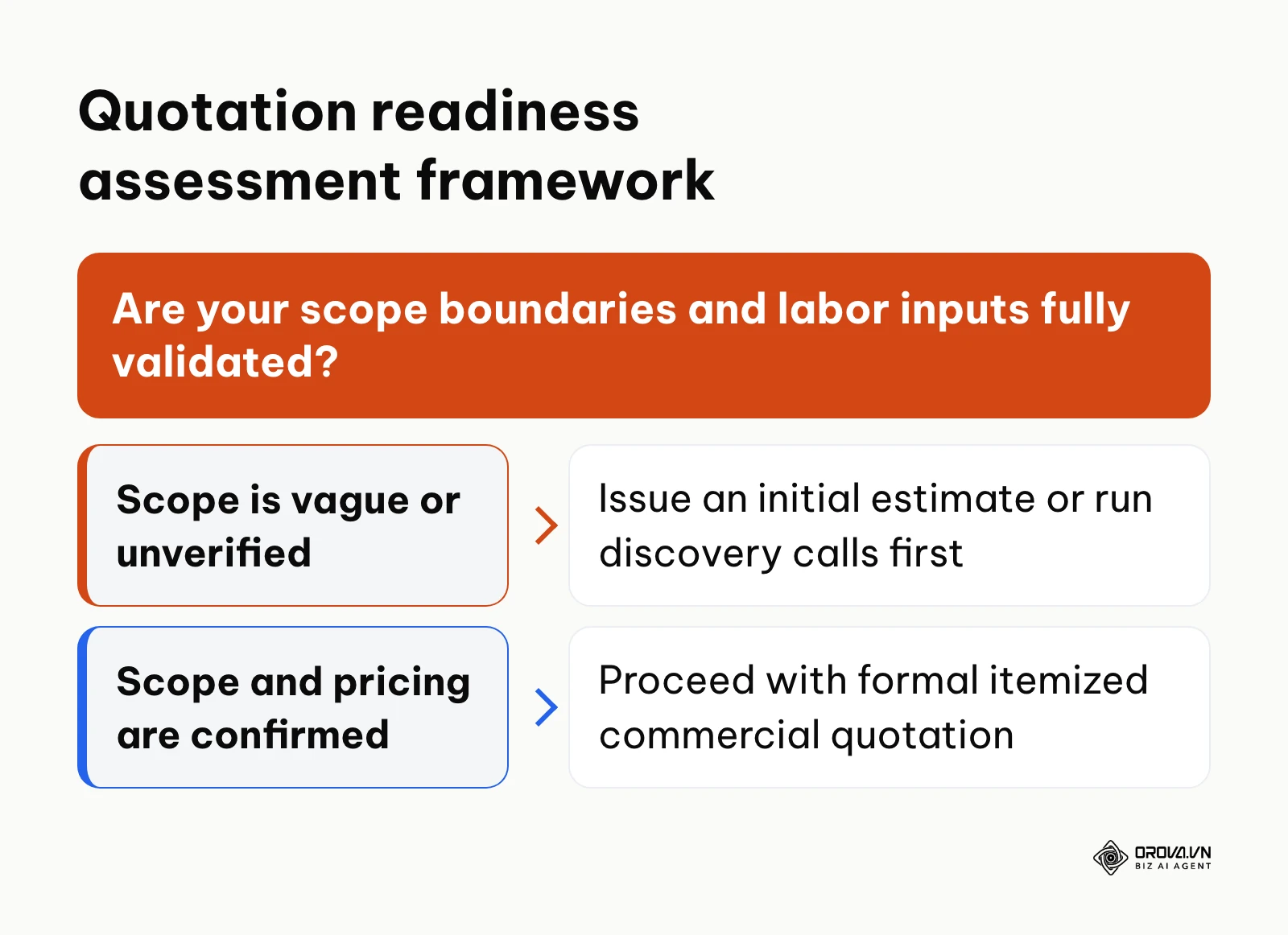
The decision framework below outlines when your project requirements are sufficiently mature to issue a formal quotation versus an exploratory estimate.
Step 1: Gather project requirements and verify client details
The primary objective of this initial step is to define the exact boundaries of what your prospect expects to receive and verify the commercial identity of the paying entity.
To execute this step, open your prospect profile within your database or client management system. Confirm the client's registered legal corporate entity name rather than their informal trading moniker, their official corporate registration or tax identification number, primary physical billing address, and the direct contact information of the designated commercial decision-maker. Cross-reference their project specifications against your scoping notes to verify whether requirements involve one-off product deliveries, recurring service retainers, or milestone-driven project deployments. If you manage high lead volumes, learning how to clean CRM data ensures that incomplete company records or duplicate contacts do not corrupt your billing information.
You will know this step is complete when you can view a clean client profile card showing an authorized signatory name, an active corporate email address, an official billing address, and an unambiguous list of agreed project deliverables.
A common pitfall during client onboarding is capturing informal point-of-contact details rather than corporate billing authority. For instance, addressing a commercial quote to a department specialist who lacks procurement approval creates administrative rejection when the document finally reaches the finance office. To resolve this, always ask your contact during preliminary discovery: "What is the exact legal entity name and purchasing officer email that should appear on the commercial agreement?"
Scenario example: A boutique commercial design studio preparing a branding proposal for an enterprise client discovered during procurement review that the operating brand was a subsidiary of an overseas holding firm. The sales lead paused the draft, requested the parent entity's European VAT identification number, updated the billing profile, and re-aligned the currency denomination. This administrative correction prevented cross-border tax calculation discrepancies before the contract entered formal legal review.
Step 2: Establish the quotation header and administration identifiers
The goal of this step is to establish an indelible audit trail by assigning unique administrative metadata and corporate branding to the document.
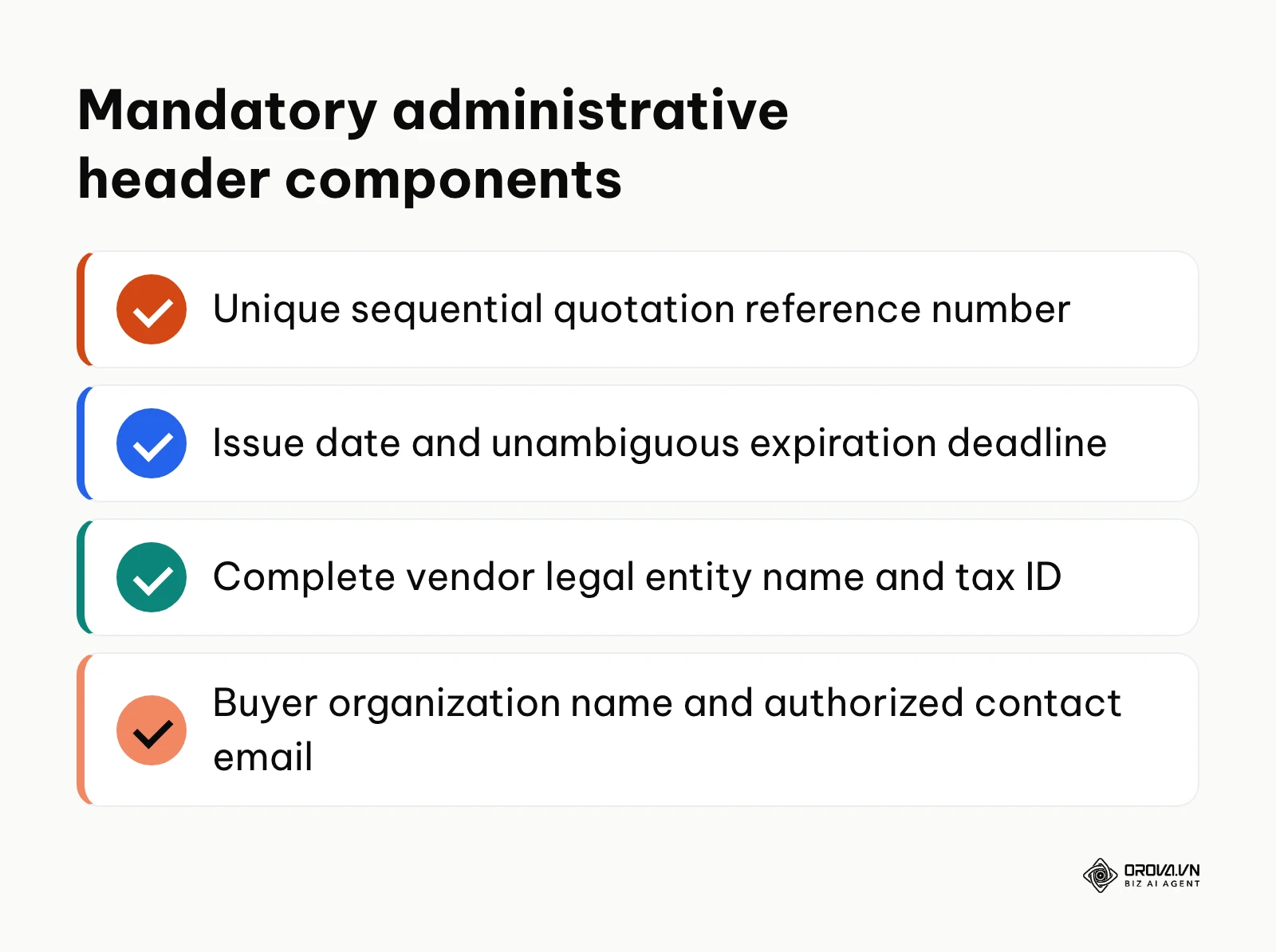
Navigate to the header section of your document layout or sales billing tool. Populate your company's full legal entity name, corporate registration number, physical office address, tax registration code, and direct billing contact email. Immediately beneath your vendor block, generate a unique sequential quotation reference code using a systematic alphanumeric convention such as QT-2026-0842. Enter two vital chronological dates: the date of document issuance and the explicit expiration date. Under Section 2-205 of the Uniform Commercial Code (UCC) Article 2 published by the American Law Institute in 2022, a signed formal quotation submitted by a merchant constitutes a firm offer that cannot be revoked during the stated validity period. Therefore, an unstated expiration date risks legally exposing your business to outdated material or labor costs months after transmission.
You have completed this step correctly when you see your corporate identity aligned opposite the buyer's administrative credentials, bridged by a unique quotation reference number and an explicit validity window.
The most frequent error in quotation headers is employing arbitrary reference numbers or omitting the expiration date entirely. When sales representatives create unindexed filenames like Quote_Draft_Final.pdf, version control collapses if the client requests modifications. Enforce a strict numbering protocol where each revised version appends a minor decimal index (for example, QT-2026-0842-V2).
Step 3: Itemize deliverables with transparent line-item pricing
The objective of this step is to transform project requirements into transparent, quantified financial line items that display quantities, individual unit rates, applied discounts, and extended balances.
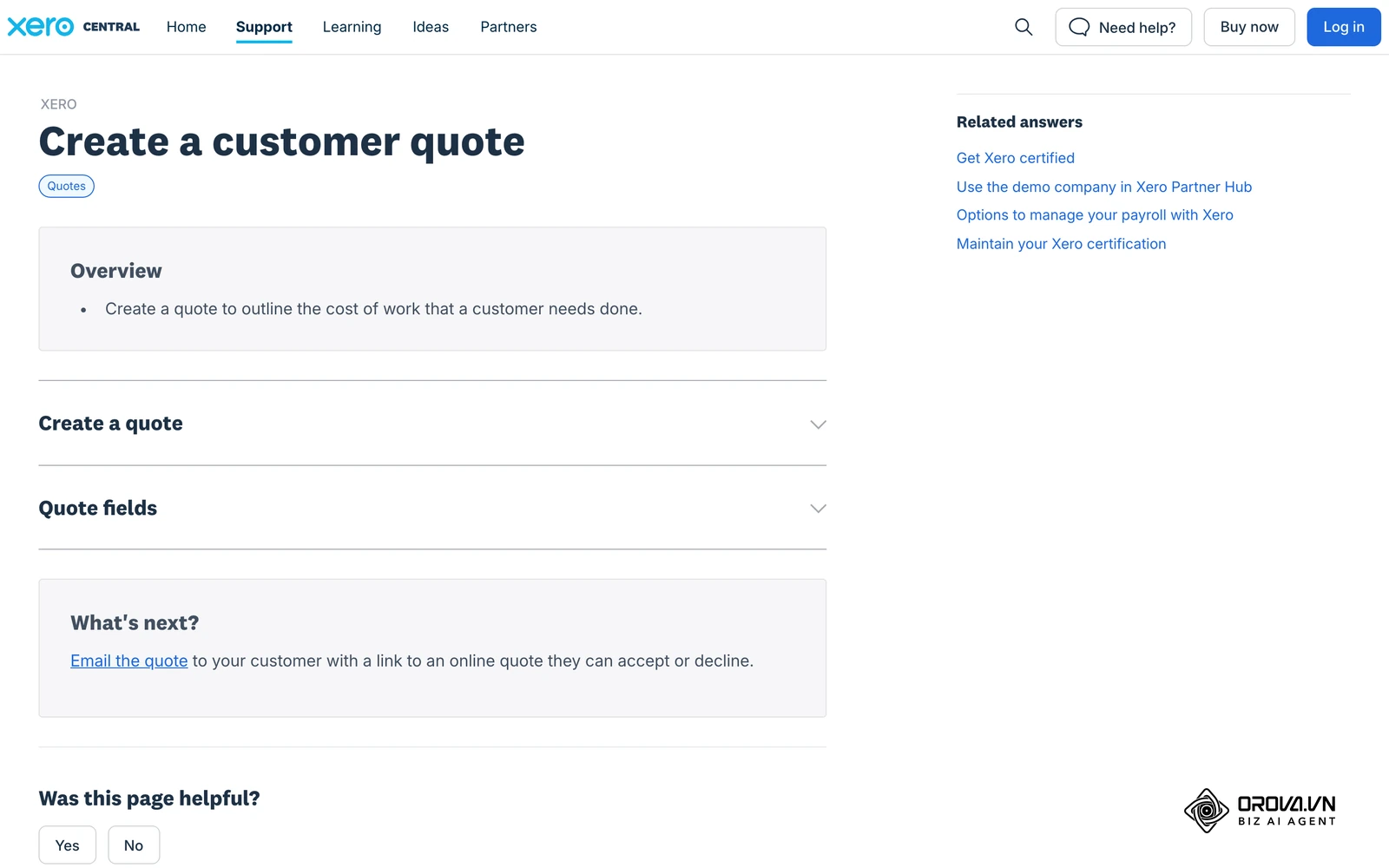
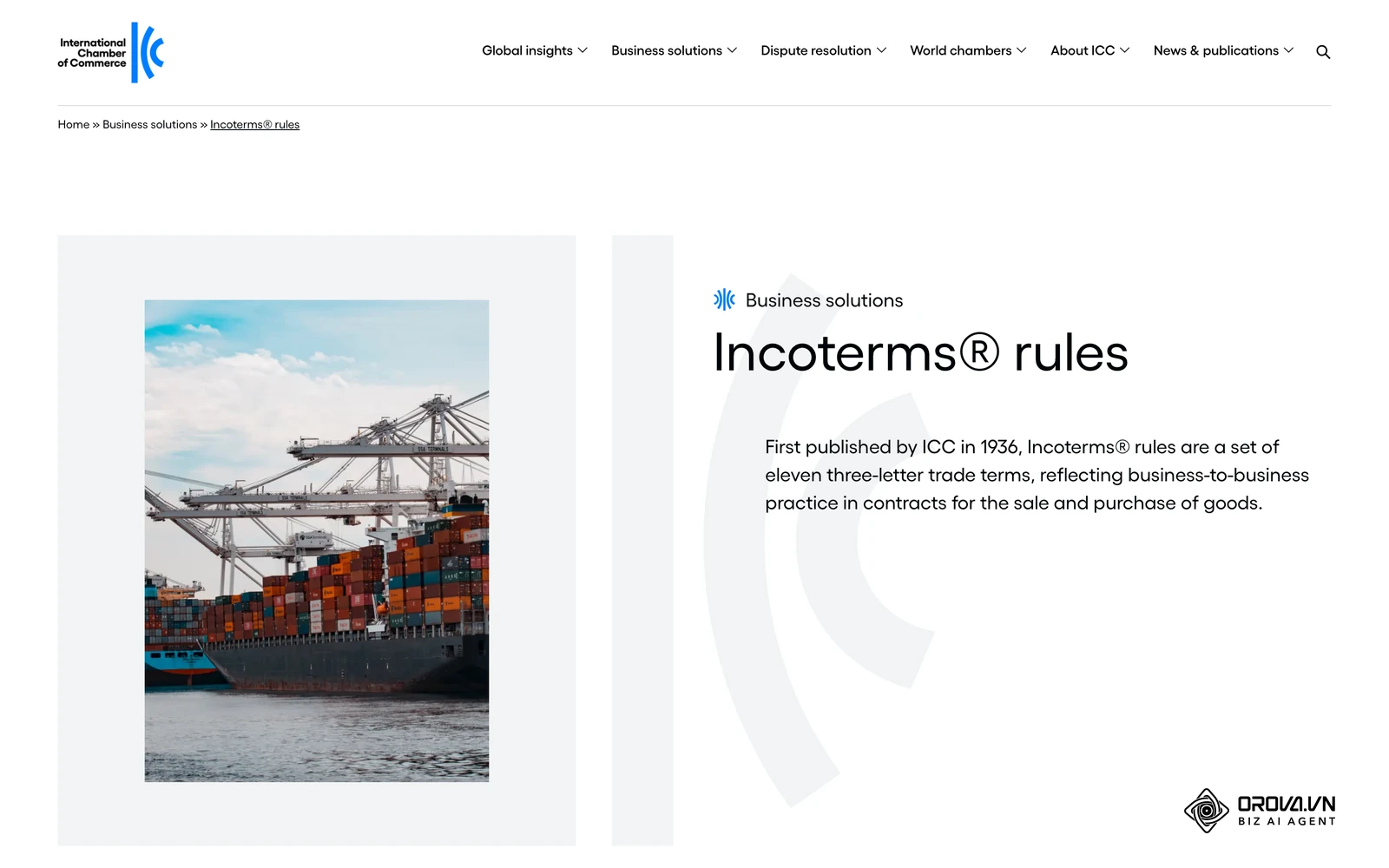
Open the primary body grid of your quotation document. Create a six-column itemization table featuring the following headers: Item Description, Unit Type, Quantity, Unit Price, Applied Discount, and Extended Total. Avoid generic descriptors such as "Consulting Services" or "Hardware Package." Instead, write specific, unambiguous descriptions: "Enterprise Server Migration Phase 1: Database Architecture Setup" or "Ergonomic Mesh Task Chairs (Model X-200, Black Aluminum Base)." For product transactions involving shipping across state or national borders, state the transport terms clearly. According to the Incoterms 2020 Rules published by the International Chamber of Commerce in 2020, omitting explicit freight delivery and risk transfer points exposes vendors to transit liabilities before formal handoff.
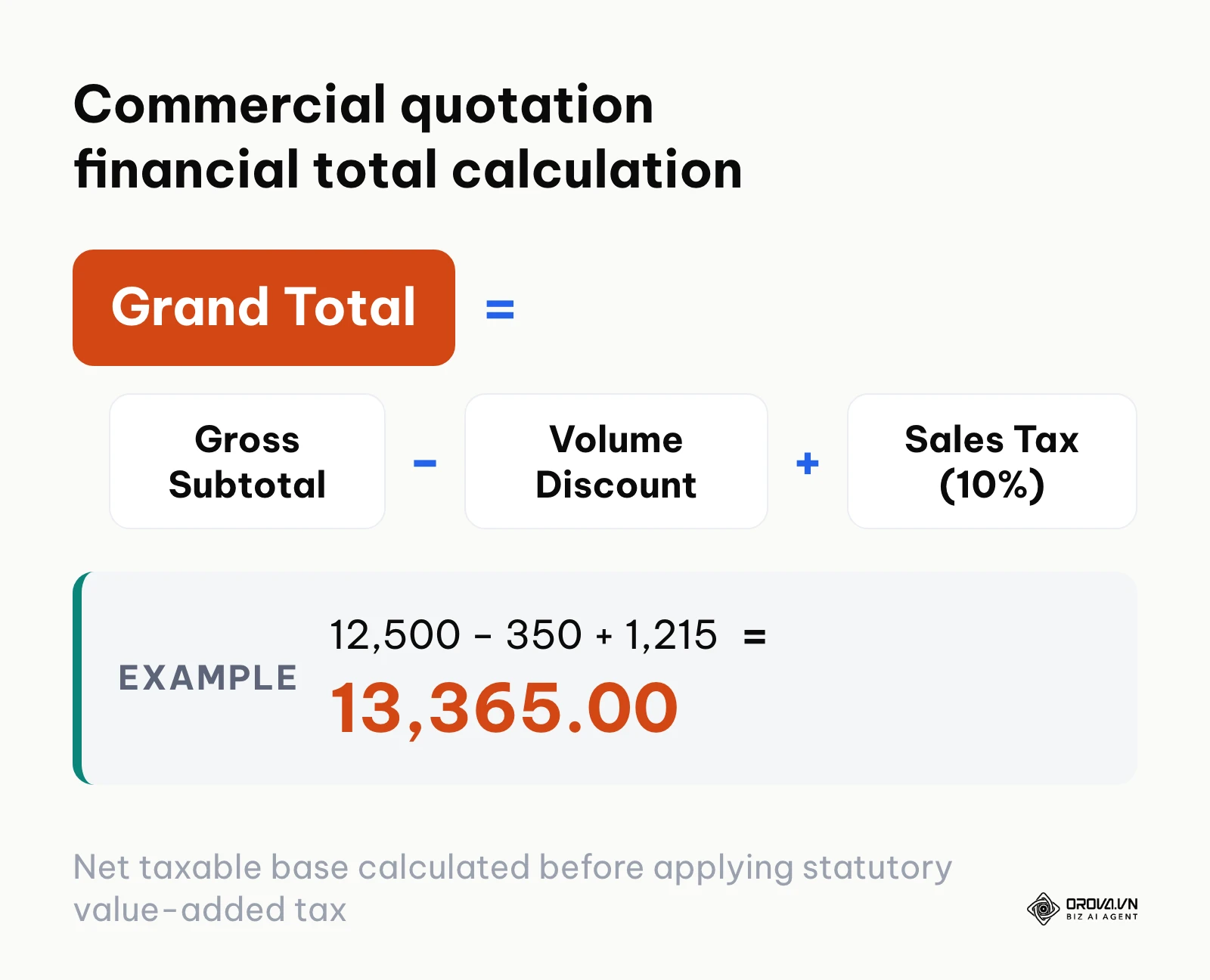
Extended Total = (Quantity × Unit Price) − Applied Discount
Structuring volume discounts and milestone payments on a 12,500 contract
To illustrate professional pricing arithmetic, consider a complete commercial quotation for a technical infrastructure deployment valued at a base contract amount of 12,500.00. In this worked scenario, the buyer receives a 10% volume discount on dedicated user provisioning, and the transaction is subject to a standard 10% statutory tax.
The table below details the exact six-column calculation breakdown for this project.
| Item Description | Unit Type | Quantity | Unit Price | Discount % | Extended Total |
|---|---|---|---|---|---|
| Strategic Architecture Consulting & System Design | Milestone | 1 | 7,000.00 | 0.0% (0.00) | 7,000.00 |
| Team User Provisioning & Workspace Setup | Seat | 50 | 70.00 | 10.0% (350.00) | 3,150.00 |
| Technical Implementation & Administrator Training | Workshop | 4 | 500.00 | 0.0% (0.00) | 2,000.00 |
Beneath your itemized line rows, display the financial summary block clearly to avoid arithmetic confusion:
- Gross Item Subtotal: 12,500.00
- Applied Volume Discount: -350.00
- Net Taxable Subtotal: 12,150.00
- Sales Tax / VAT (10.0%): +1,215.00
- Grand Total: 13,365.00
You know this step is completed accurately when the horizontal sum of each line row equals its extended total, and the vertical summation matches the gross subtotal minus applied deductions plus applicable taxes.
A common calculation flaw involves applying percentage discounts after calculating sales tax. Tax authorities require sales taxes to be assessed on the net taxable consideration received after trade discounts are subtracted. Always calculate unit subtotals, subtract volume discounts, and apply statutory tax rates exclusively to the remaining net figure.
Step 4: Define legal terms, validity periods, and milestone payment schedules
The primary objective of this step is to establish the operational boundaries, cash flow milestones, and legal protections that govern the transaction once approved.
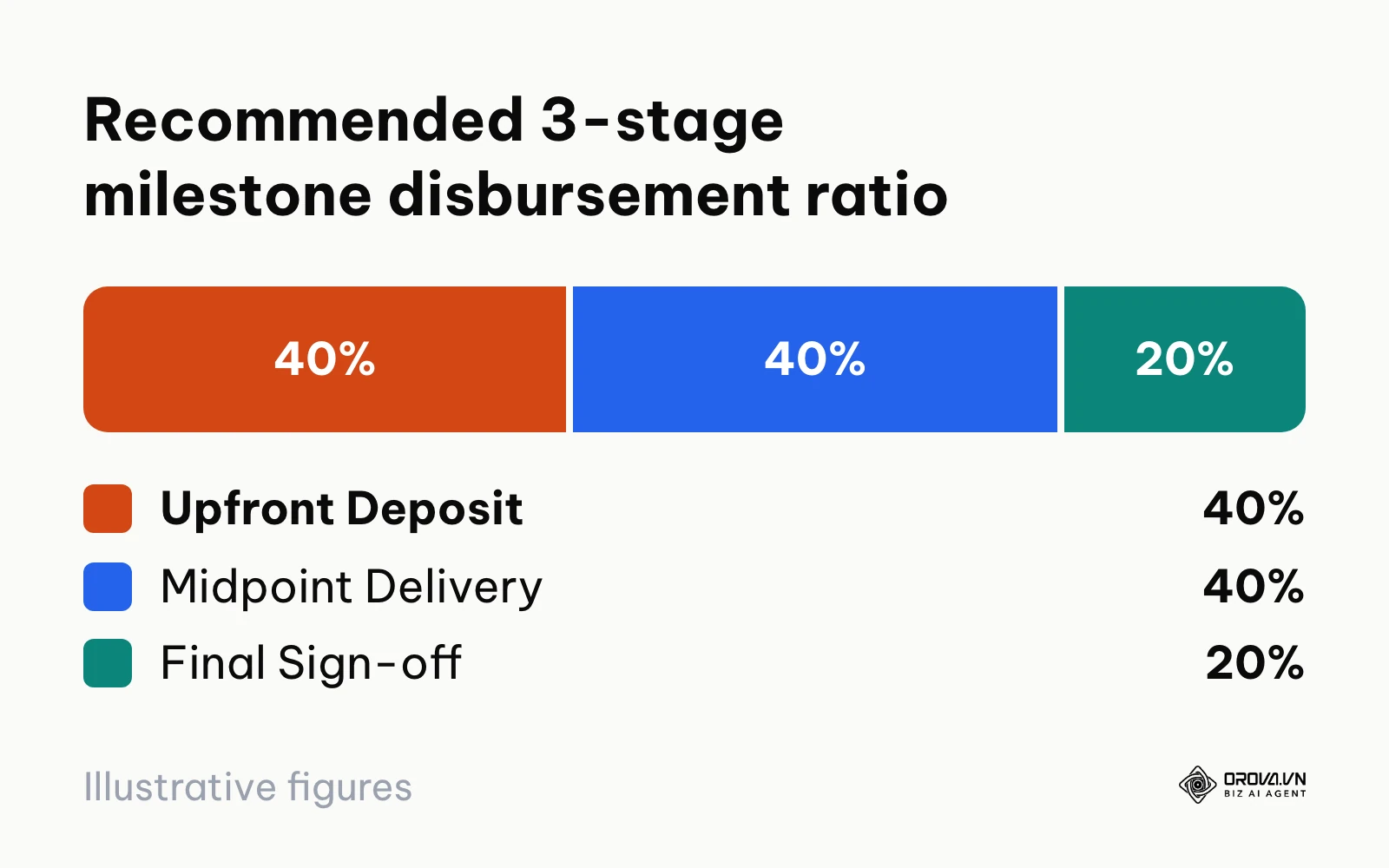
Navigate to the terms and conditions section positioned immediately beneath the pricing totals. First, specify the quotation validity period. In typical economic environments, fourteen to thirty calendar days is standard. However, if your fulfillment costs depend on fluctuating wholesale raw materials or foreign exchange rates, set a seven- to fourteen-day window with an explicit price-adjustment rider. Second, establish the disbursement schedule. Demanding 100% post-delivery payment exposes your balance sheet to severe working capital strain, while demanding 100% upfront creates buyer resistance. As outlined in A Guide to the Project Management Body of Knowledge (PMBOK Guide) - Seventh Edition released by the Project Management Institute in 2021, linking financial disbursements directly to verifiable milestone deliverables mitigates delivery scope creep.
The table below outlines the three-stage milestone payment schedule applied to the 13,365.00 grand total established in the worked calculation example.
| Milestone Phase | Trigger Event & Deliverable | Payment Proportion | Amount Payable | Due Date Terms |
|---|---|---|---|---|
| Phase 1: Mobilization Deposit | Contract execution & project kickoff | 40% of Grand Total | 5,346.00 | Due upon signing |
| Phase 2: Delivery & Deployment | Core architecture deployed to staging | 40% of Grand Total | 5,346.00 | Net 14 days from test notice |
| Phase 3: Final Acceptance Sign-off | User acceptance sign-off & admin training | 20% of Grand Total | 2,673.00 | Net 15 days upon sign-off |
Finally, insert standard contractual terms governing scope creep, revision limits, and late payment interest fees (for example, "Late disbursements incur an annualized finance charge of 1.5% per month or the statutory maximum").
You will know this step is complete when your document contains explicit milestone dates, an unambiguous expiration clause, and payment methods (such as direct ACH, wire transfer, or credit card).
A recurring failure in quotation drafting is treating terms as fine print boilerplate. If you do not explicitly state what happens when a client requests scope expansions, you forfeit the legal right to bill for additional hours. Always include a concise clause stating: "Work requested outside the itemized deliverables listed in Section 3 will be billed at standard hourly engineering rates of 150.00/hour subject to mutual written approval."
Tired of tracking commercial proposals across disjointed spreadsheets and desktop folders? Orova CRM centralizes your entire sales pipeline in one workspace, allowing your team to generate itemized quotations from pre-built templates, share interactive public web links, and log milestone collections as deals cross the finish line.
Step 5: Format the document and choose delivery format: PDF vs interactive web link
The goal of this step is to select an appropriate document architecture and delivery mechanism that minimizes client friction while maintaining complete version control.
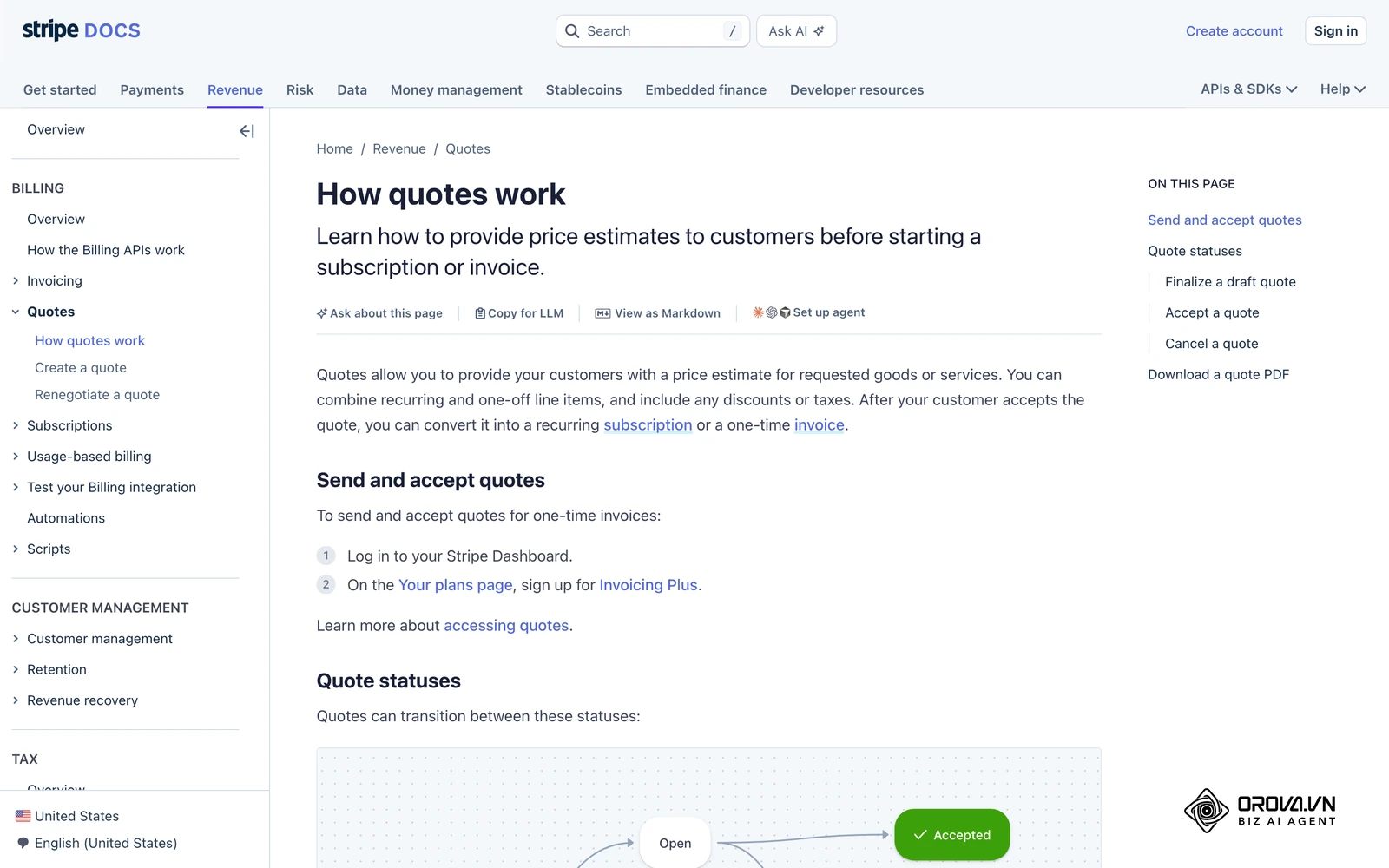
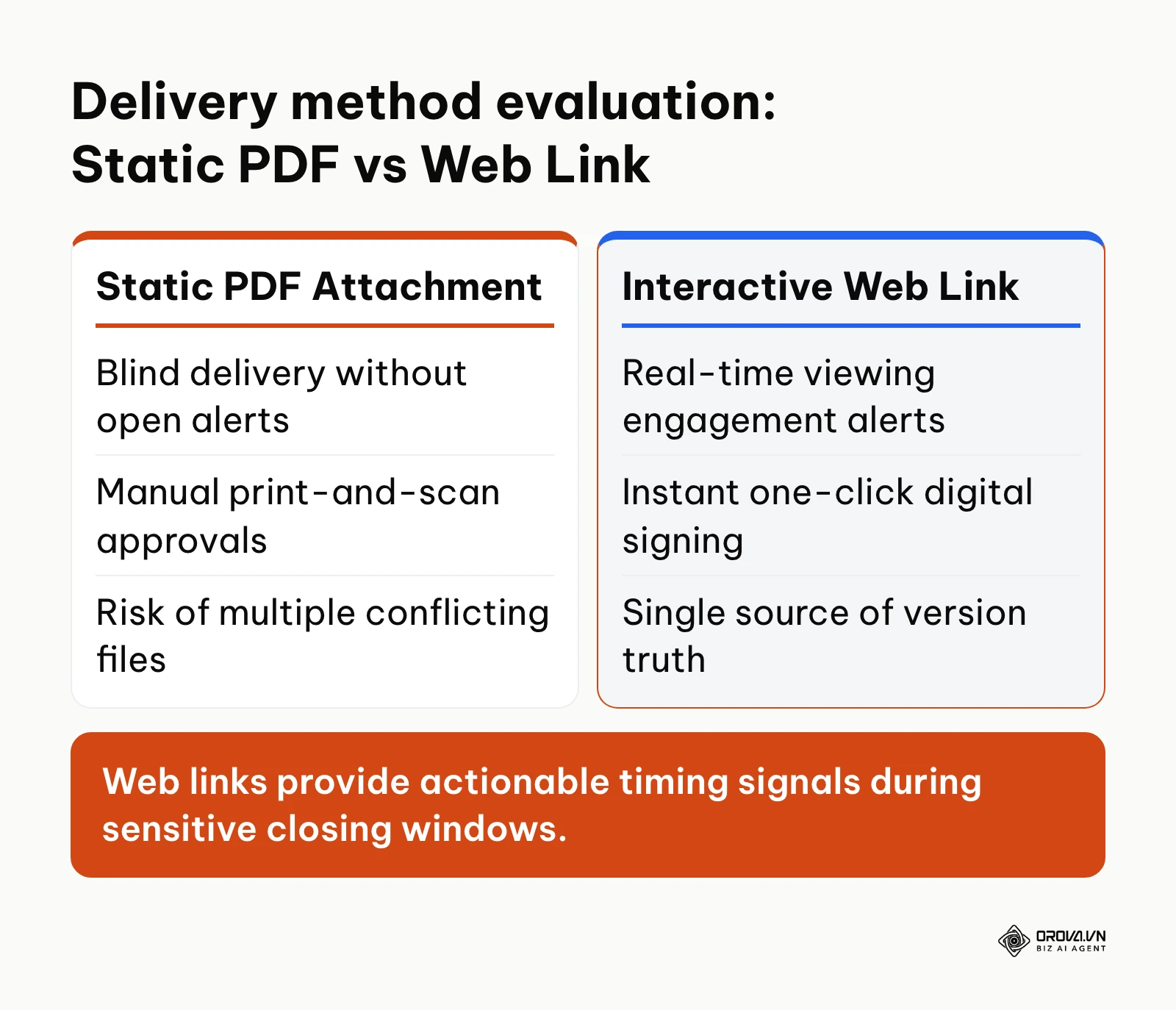
Open your publishing menu or document distribution panel. You must decide whether to send a traditional static PDF attachment or an interactive web link. A static PDF preserves layout formatting across operating systems and remains accessible offline. However, emailing PDF attachments creates operational blind spots: you cannot tell whether the client opened the document, forwarded it to legal, or ignored it entirely. Furthermore, if you need to update a pricing typo, you must email a second file, creating version confusion. In contrast, an interactive web link allows the buyer to view the quotation in any browser, click interactive item options, and execute a digital signature directly on-screen.
The table below contrasts the operational advantages and drawbacks of both distribution channels.
| Evaluation Criteria | Static PDF Attachment | Interactive Quotation Web Link | Operational Impact on Deal Closing |
|---|---|---|---|
| Real-Time Engagement Visibility | None (blind delivery once sent) | Instant tracking alerts on link open | Sales reps can time follow-up calls precisely when interest is highest |
| Version Control & Revisions | Low (creates conflicting files) | Centralized (edits update live link) | Eliminates client signing of outdated or superseded pricing drafts |
| Acceptance & Signing Friction | Moderate (requires print/scan or app) | Low (one-click digital signature) | Reduces sales cycle duration by removing administrative barriers |
| Offline Archival Accessibility | High (stores locally on client drive) | Moderate (requires browser access) | Clients can preserve static copies for internal procurement audits |
If your enterprise relies on broader digital communications, pairing your delivery pipeline with structured email marketing for a small business or outbound customer sequences ensures consistent touchpoints across the customer lifecycle.
You have completed this step when your quotation renders cleanly across desktop and mobile screens, displays crisp corporate logos, and features an unmistakable approval call to action.
A common pitfall during formatting is creating multi-page layouts where the grand total and signature blocks sit orphaned on the final page without item context. Keep your quotation compact. For orders under ten line items, format the document to fit onto a single comprehensive page or two structured pages.
Scenario example: A mid-market industrial equipment supplier previously emailed static spreadsheets to procurement officers, often waiting two weeks without receiving status updates. After adopting interactive web links, the account manager received an automated notification that the chief financial officer had opened the link three times in twenty minutes. The manager placed a timely call, clarified an inquiry regarding shipping charges, and obtained digital sign-off within forty-eight hours.
Step 6: Execute the pre-send quality and legal compliance audit
The objective of this verification step is to conduct a systematic audit of every numerical calculation, contractual term, and contact identifier to prevent costly fulfillment oversights.
Before distributing the document, execute the 12-point quality checklist detailed below. Print or open this inspection table and verify every item systematically across three functional categories: Mathematical Precision, Legal Binding & Terms, and Administrative Accuracy.
| Item # | Verification Criteria | Focus Area | Status | Remediation Action If Failed |
|---|---|---|---|---|
| 1 | Line item extensions match Quantity × Unit Price | Mathematical | Checked | Recalculate horizontal line math |
| 2 | Volume discounts are deducted before tax assessment | Mathematical | Checked | Adjust subtotal before applying tax % |
| 3 | Applicable tax jurisdictions and rates are correct | Mathematical | Checked | Verify buyer location tax requirements |
| 4 | Milestone payment amounts equal 100% of Grand Total | Mathematical | Checked | Rebalance 40/40/20 payment schedule sums |
| 5 | Explicit validity expiration date is stated | Legal Terms | Checked | Add unambiguous date: "Valid until [Date]" |
| 6 | Explicit acceptance signature block is present | Legal Terms | Checked | Insert signature, printed name, and date lines |
| 7 | Payment methods and wire transfer details are listed | Legal Terms | Checked | Provide bank routing, IBAN, or payment link |
| 8 | Scope boundary and change-order clause is included | Legal Terms | Checked | Insert hourly rate terms for extra work |
| 9 | Legal registered corporate entity names are used | Administrative | Checked | Replace trade brands with official names |
| 10 | Direct decision-maker email address is confirmed | Administrative | Checked | Verify recipient has purchasing authority |
| 11 | Sequential quotation reference number is recorded | Administrative | Checked | Assign unique identifier in CRM ledger |
| 12 | Delivery timeline and lead times are clearly stated | Administrative | Checked | Specify weeks to delivery post-deposit |
You know this step is complete when all twelve audit points pass inspection without discrepancy.
The most dangerous error during pre-send review is failing to verify that milestone disbursement percentages sum exactly to the final grand total. If an arithmetic rounding error leaves an unallocated balance, accounting reconciliation stalls when final invoices are issued. Ensure your spreadsheet or billing application validates totals automatically to the exact cent.
Step 7: Send the quotation and execute a 10-day follow-up cadence
The objective of this final execution step is to deliver the quotation professionally and implement a systematic communication sequence that guides the buyer toward formal acceptance.
Transmit the completed document accompanied by a concise, professional cover email. State the quotation reference number in the subject line, summarize the high-level business outcome, and provide a direct link or attachment. Do not abandon the transaction after sending. A majority of commercial proposals stall because sales professionals feel uncomfortable following up without a structured schedule.
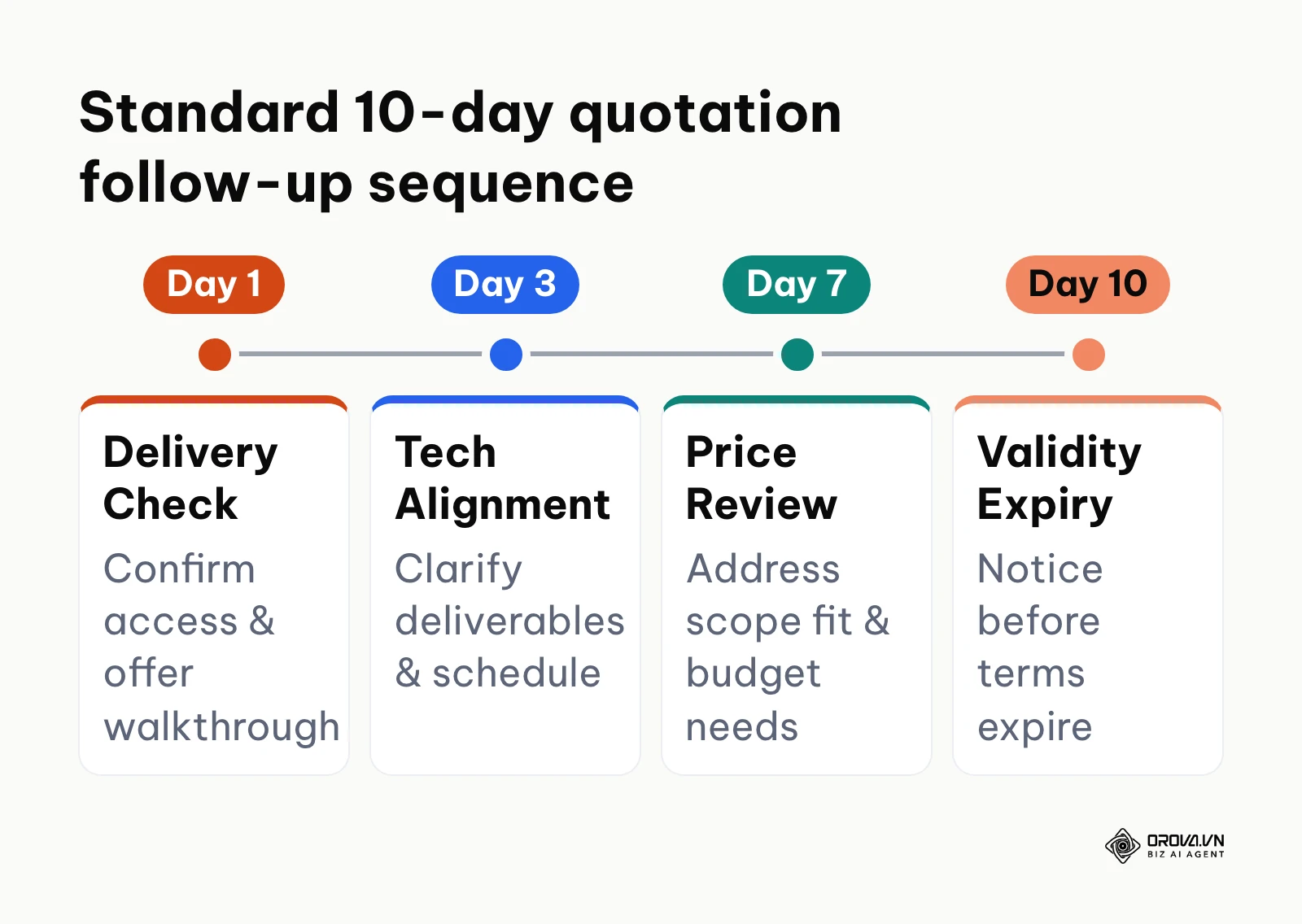
Deploy the standard 10-day follow-up cadence shown below, utilizing the four situational copy-paste templates tailored to specific buyer responses.
Cadence schedule and situational response templates
- Day 1 (Delivery Confirmation): Verify receipt and confirm the document opened cleanly.
- Day 3 (Technical Alignment): Address questions regarding line items or delivery timelines.
- Day 7 (Commercial Review): Explore scope alignment or address budget pushback.
- Day 10 (Validity Expiry Notice): Provide a professional reminder before pricing holds expire.
Template 1: Prospect goes silent (Sent on Day 3 or Day 7)
Subject: Quick check on Quote [QT-2026-0842] for [Project Name]

Hi [Client Name],

I am writing to confirm that you were able to review the quotation we sent on [Date] for [Project Name].

We have reserved the technical delivery team for your projected launch in [Month]. Have you or your team had a chance to evaluate the itemized scope, or would a brief 10-minute call be helpful to address any technical questions?

Best regards,
[Your Name]
Template 2: Prospect pushes back on price (Handling "This exceeds our budget")
Subject: Exploring scope adjustments for [Project Name] - [QT-2026-0842]

Hi [Client Name],

Thank you for your candid feedback regarding our proposed investment total.

We are committed to delivering a solution that matches your financial constraints while achieving your core objectives. Rather than compromising execution quality, we can separate the user training workshops or adopt a phased deployment to lower the initial commitment to [Target Amount].

Are you open to a brief review this Thursday to adjust these line items?

Best regards,
[Your Name]
Template 3: Prospect requests scope adjustment
Subject: Revised scope framework for [Project Name] - [QT-2026-0842-V2]

Hi [Client Name],

Thank you for clarifying your updated requirements regarding [Specific Deliverable].

I have updated our calculations to reflect [Adjusted Feature/Volume], which shifts our revised Net Total to [New Amount]. You can review the updated specifications directly via the revised link below:

[Insert Link to Revised Quotation]

Once approved, our production team will proceed with Milestone 1 immediately.

Best regards,
[Your Name]
Template 4: Prospect compares with a lower-cost competitor
Subject: Comparing implementation approaches for [Project Name]

Hi [Client Name],

It is completely understandable that you are evaluating alternative proposals in the market.

When reviewing lower-priced bids, we recommend confirming whether their pricing includes dedicated post-launch support, full data migration, and guaranteed SLA responses, which represent [X%] of our itemized investment. Without these safeguards, initial cost savings frequently lead to downstream operational expenses.

Would it be helpful to walk through our side-by-side scope breakdown?

Best regards,
[Your Name]
When a prospective buyer demands an immediate price reduction upon receiving a quote, never grant an arbitrary discount without modifying terms. Doing so signals that your initial pricing was inflated and invites ongoing price erosion. Instead, defend your margin by offering to remove secondary line items, extend delivery schedules, or increase upfront deposit ratios in exchange for modest concessions.
Scenario example: A regional IT managed services provider with five sales reps regularly encountered two-week delays after sending network support quotations. The leadership team introduced the 10-day structured follow-up sequence. Using Template 2, an account manager discovered that a school district client was over budget due to unneeded weekend coverage. The rep removed off-hours support from the quote, reducing the grand total by 15% while protecting the core contract margin. The revised quotation was approved forty-eight hours later.
Comprehensive quotation workflow checklist
The table below summarizes the complete end-to-end quotation process. Print or bookmark this reference grid to audit commercial proposals before client distribution.
| Step Number | Core Operational Action | Completion Verification Signal | Estimated Time |
|---|---|---|---|
| Step 1: Requirements & Client Data | Validate legal entity name, tax code, and deliverable boundaries | Clean, verified client profile in database | 5 minutes |
| Step 2: Administrative Header | Assign unique reference number and explicit expiration date | Sequential reference code and validity dates displayed | 5 minutes |
| Step 3: Line Item Pricing | Populate 6-column pricing table with quantities and unit rates | Mathematical subtotal equals item sum minus discounts | 10 minutes |
| Step 4: Terms & Milestones | Establish 40/40/20 disbursement schedule and scope terms | Clear milestone payment amounts and conditions listed | 5 minutes |
| Step 5: Document Formatting | Generate interactive web link or compact, branded PDF | High-resolution layout displaying digital approval button | 5 minutes |
| Step 6: Pre-Send Audit | Run 12-point quality check on math, terms, and contacts | All 12 items verified without discrepancies | 3 minutes |
| Step 7: Delivery & Follow-Up | Transmit quote and execute 10-day, 4-stage communication cadence | Document delivered with follow-up milestones scheduled | Ongoing |
Eliminate manual data entry and keep your sales team aligned from initial inquiry to final settlement. With Orova CRM, you can issue polished proposals, monitor pipeline velocity, and assign departmental quotas in minutes. Sign up today to access every core sales management feature free until the end of July 7, 2027.
Common quotation mistakes and practical solutions
Even experienced sales teams encounter costly errors when preparing commercial documents under tight deadlines. The table below outlines the most frequent quotation mistakes, their root causes, and practical operational fixes.
| Common Mistake | Root Operational Cause | Practical Remediation Strategy |
|---|---|---|
| Uncontrolled Scope Creep | Vague line-item descriptions lacking technical boundaries | Specify exact quantity counts, revision caps, and out-of-scope hourly rates |
| Disputed Final Balances | Relying on verbal agreements without written sign-off blocks | Mandate an explicit digital or physical signature block with date and title |
| Cash Flow Depletion | Agreeing to 100% payment upon final completion | Require a 40% upfront deposit before commencing any fulfillment work |
| Outdated Margin Erosion | Omitting quotation expiration deadlines during inflation | Enforce a strict 14- to 30-day validity window with price adjustment riders |
| Version Control Collapses | Emailing multiple unindexed PDF revisions to the client | Use interactive web links that update dynamically or append -V2 decimals |
| Premature Sales Loss | Ceasing all communication after sending the initial quote | Deploy a structured 10-day follow-up cadence using situational email scripts |
For teams seeking to eliminate these operational errors, utilizing a dedicated platform like Orova CRM streamlines the entire quote-to-cash workflow. Within Orova CRM, sales representatives can generate professional quotations and sales orders directly from pre-built bilingual templates, export clean PDF documents, or share interactive public web links with prospective clients. When buyers approve a proposal, the platform allows businesses to record milestone payment collections stage by stage against the order, preventing unbilled receivables and keeping pipeline stages perfectly organized across your sales team.
Measuring quotation conversion performance and pipeline velocity
Generating professional quotations is effective only if you track how efficiently proposals convert into realized revenue. To monitor your operational performance, evaluate the four primary sales pipeline metrics detailed below:
- Quote-to-Close Ratio: Calculate the percentage of distributed quotations that result in executed commercial agreements. A healthy B2B conversion rate typically ranges between 30% and 50%. If your conversion falls below 20%, inspect your scoping accuracy and competitive price positioning.
- Quotation Turnaround Time: Measure the hours elapsed between an initial client request and quotation delivery. Delivering a quote within twenty-four hours increases deal momentum significantly compared to taking five business days.
- Average Discount Rate: Track the percentage subtracted from list prices across your sales reps. If discounts consistently exceed 15%, analyze whether reps lack negotiation training or if baseline list prices require recalibration.
- Pipeline Velocity: Monitor the average days a quote spends in review before approval. Tracking digital interactions as a conversion event allows operations teams to pinpoint where prospects stall. Integrating analytics with modern marketing automation tools helps identify pipeline bottlenecks across departments.
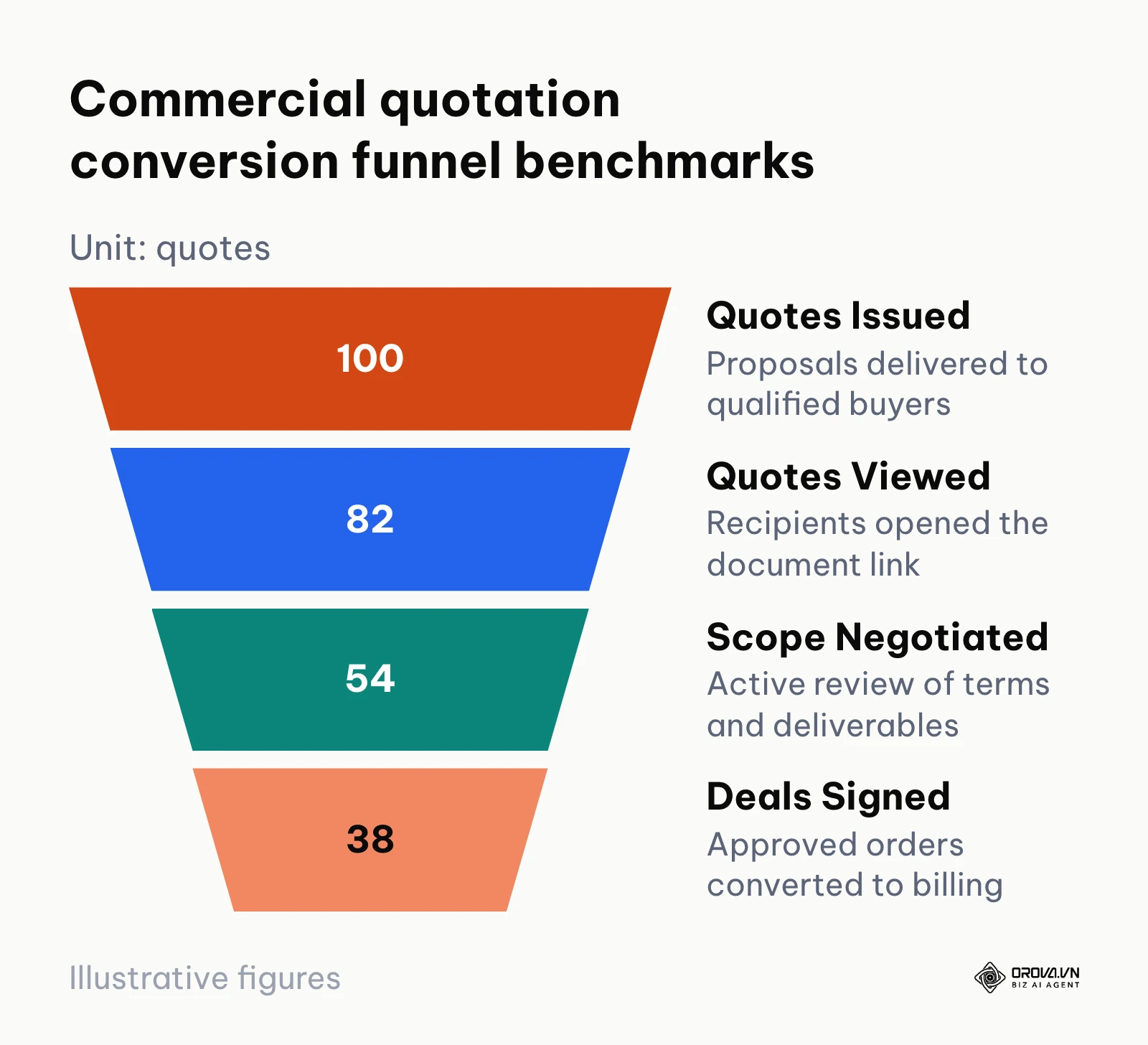
Review these metrics monthly in your sales reporting ledger to ensure quoting practices support healthy cash flow and sustainable commercial margins.
Trends in quotation workflows over the coming years: author perspective
Looking at the enterprise sales environment as of 2026, the traditional practice of attaching static, multi-megabyte PDF files to manual emails is rapidly becoming obsolete. In my view, the commercial quotation process is evolving into an integrated, real-time digital transaction. Here are three major structural shifts I expect over the next two to three years.
First, I believe static document attachments will be largely replaced by interactive, modular commercial proposals. Today, progressive B2B sales teams already issue web-based proposals where clients can toggle optional service tiers, select product quantities, and execute legal sign-offs within a single browser session. Over the coming years, I expect procurement departments to prioritize vendors who offer dynamic digital proposals because they eliminate the administrative delays of manual document editing. To prepare for this shift, organizations should transition their product catalogs and service rate cards into standardized digital pricing components that can be assembled dynamically. However, this transition could slow down if enterprise compliance teams in heavily regulated sectors continue to demand static, locally archived document formats.
Second, I foresee an expanding role for artificial intelligence in sales quotation assembly, specifically in variance analysis and scoping validation. Today, commercial drafting requires manual review to ensure unit rates match historical profit targets. Within two to three years, I expect AI tools to automatically evaluate draft quotations against thousands of past closed-won deals, flagging underpriced labor lines, suggesting optimal volume discounts based on real-time market data, and generating plain-language deliverable descriptions. While AI will automate drafting and margin auditing, commercial accountability will remain firmly with human sales leaders who must authorize binding commitments. Sales professionals should begin auditing their historical deal data today to ensure their pricing models provide clean, structured training data for these analytical tools.
Third, I anticipate a decisive shift from monolithic, all-or-nothing project proposals toward structured milestone-based micro-commitments. As corporate buyers exercise increased scrutiny over operational expenditures, large upfront contract commitments face extended executive review cycles. In my view, successful businesses will increasingly structure quotations with modular pilot phases and clearly gated milestone disbursements that minimize initial buyer risk while securing a path toward long-term enterprise expansion.
Frequently asked questions about sales quotations
What is the difference between an estimate, a quotation, and an invoice?
An estimate is an informal, non-binding projection of potential costs that may fluctuate as project work proceeds. A quotation is a firm, legally binding commercial commitment guaranteeing specific deliverables at a fixed price within a designated validity period. An invoice is a formal demand for payment issued after contractual work commences or deliverables are fulfilled.
How can you ensure a quotation has legally binding contract status?
To establish a legally binding agreement without drafting a separate lengthy contract, your quotation must contain an explicit offer, clear acceptance terms, and lawful consideration. Include complete legal entity names, an itemized scope of work, definitive pricing, standard contractual terms, and an authorized signature block stating: "Acceptance of this quotation constitutes a binding commercial agreement between the parties under governing law."
What validity period should you specify on a sales quotation?
A standard quotation validity period ranges between fourteen and thirty calendar days. However, if your business operates in an industry subject to volatile material costs, rapid supply chain shifts, or fluctuating currency exchange rates, shorten the validity period to seven to fourteen days and include an explicit clause reserving the right to adjust rates if underlying supplier pricing shifts prior to acceptance.
How should you respond when a client immediately requests a discount?
Never offer an arbitrary price reduction without modifying contractual terms or scope. When a client pushes back on price, offer to remove secondary deliverables, extend delivery timelines, or increase the upfront deposit percentage in exchange for a cost adjustment. This approach protects your required gross profit margin while demonstrating respect for your own pricing integrity.
What role does artificial intelligence play in writing modern quotations?
As of 2026, artificial intelligence assists sales teams by parsing meeting transcripts to extract scoping requirements, generating clear deliverable descriptions, and detecting pricing anomalies against historical margin benchmarks. However, AI does not replace human commercial oversight; authorized sales professionals must always review and validate legal obligations and final pricing before sending the document to a prospect.
Where should you start?
Improving your quoting efficiency does not require an immediate, sweeping overhaul of your entire sales technology stack. Your first step depends on your current operational maturity.
If you are a solo consultant or freelance professional managing proposals in unstructured word documents, your immediate afternoon action is to create a standardized single-page calculation template. Establish a permanent six-column table, pre-configure your payment terms with a mandatory 40% upfront deposit, and insert an unambiguous expiration clause into your master file.
If you lead a growing sales team of three to ten representatives operating across disorganized shared folders, your priority today is to establish an indexed quotation numbering protocol and a unified price book. Convene a team session to establish standardized line-item descriptions, define maximum permitted discount thresholds, and implement the 10-day follow-up cadence to stop prospective deals from stalling in review.
If you manage a mature departmental pipeline seeking to eliminate manual re-keying between sales proposals and accounting ledgers, begin by auditing your current quote-to-cash workflow. Map the path a signed quote takes as it transitions into an active order and accounts receivable schedule, eliminating duplicate entry points and adopting interactive web links to track real-time buyer engagement.
By systematizing your pricing models, enforcing strict legal boundaries, and maintaining persistent follow-up discipline, you will establish a repeatable, high-converting process for how to write a quotation.
About the author

Builder of Orova
Nguyễn Đỗ Trọng Ân has 8 years of experience in marketing, including 6 years managing market development across Asia. He builds Orova, a Biz AI Agent that never sleeps: it plans, runs and optimizes work for businesses.
Run your business with AI Agents
Orova is the always-on Biz AI Agent — it plans, runs, and optimizes the work for you.
Save time, unlock productivity.