
What is a keyword in SEO? A beginner's guide with free tools

What is a keyword in SEO? It is the word or phrase people type into a search engine, and the term you deliberately build a page around so that page can appear for them. If you are staring at a blank document, wondering what to write to get consistent traffic to your new website, keywords are where the answer starts. You have likely heard that organic search is highly lucrative, but the entire process often feels like an unpredictable guessing game. The old, outdated way of thinking was simply writing whatever came to mind, arbitrarily stuffing words into a page, and hoping Google would eventually notice your effort. That approach no longer works. To succeed today, you need to understand how keywords shape your entire content roadmap, and how they fit into the bigger picture of search engine optimization. This guide will clarify the modern, AI-assisted approach to finding these terms without spending heavily on expensive software. You will learn how to uncover hidden opportunities, map them correctly to your website architecture, and build a sustainable traffic engine that attracts actual buyers instead of just random visitors.
What is a Keyword in SEO?
A keyword in SEO is a specific word or phrase that a user types into a search engine to find information, products, or services. It serves as the critical bridge connecting your website's content to the exact search queries of your target audience, helping search engines determine page relevance.
The concept originated in the very early days of search engines like AltaVista and Yahoo, where automated crawlers relied heavily on exact text matches to categorize the rapidly expanding internet. Today, the concept has evolved significantly, focusing more on the underlying meaning rather than just the exact spelling.
Beginners often confuse related concepts. Understanding the precise differences will save you from common strategic errors later on.
| Concept | How it differs | Practical Example |
|---|---|---|
| Broad Topic | The overarching subject matter or industry category. It is too vague to target effectively on a single page. | Digital Marketing |
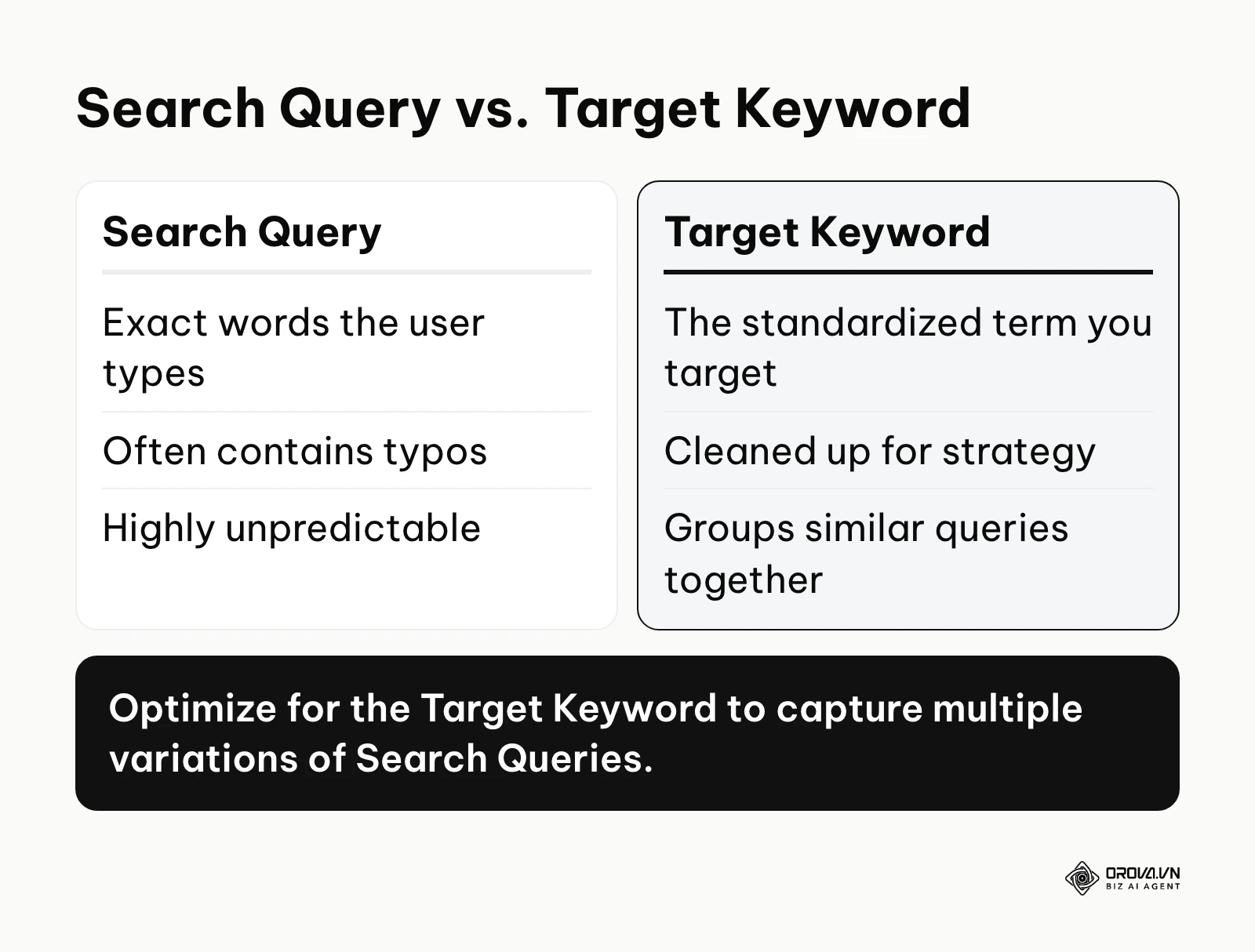
| Search Query | The raw, often messy, exact string of text a real human types into the search bar, including typos. | "digital markiting help for small shop" |
| Target Keyword | The cleaned-up, strategic phrase you choose to optimize a specific page around to capture multiple queries. | Small business digital marketing |
Consider a real-world example. If you run a local coffee shop, your broad topic is "coffee." A user's messy search query might be "where to get good iced latte near me open now." Your strategic target keyword for a specific landing page would be "best iced latte in [Your City]."
The Core Purpose of SEO Keywords
Keywords exist to organize the world's information based on actual human demand. Search engines have a massive index of billions of pages, and they need a reliable filtering mechanism to serve the most relevant result in milliseconds. According to the SEO Starter Guide by Google Search Central (2024), utilizing the exact phrasing your target audience uses is fundamental to search engine discovery.
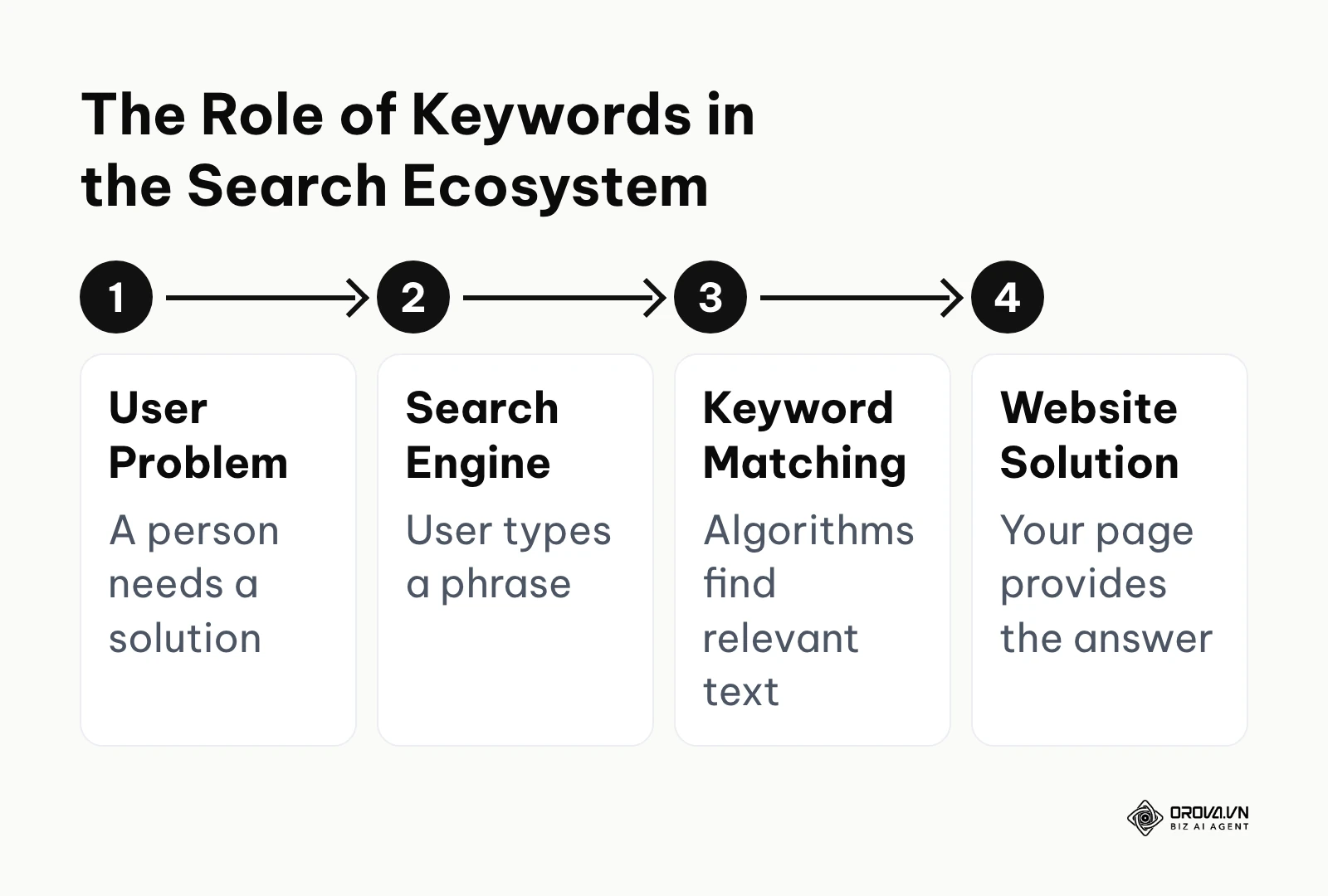
In the big picture of digital marketing, keyword research is the foundational step that comes before any content creation or technical website building. It acts as the blueprint for your entire digital house. First, you discover what people are asking. Second, you analyze how they ask it. Finally, you build a page that answers that specific question better than anyone else.
If you choose to ignore this process, you risk writing into a massive void. You might produce the most brilliantly written, comprehensive article in your industry, but if nobody is actively searching for the concepts you discussed using the words you chose, your traffic will remain flat.
When should you not focus on SEO keywords? If you are publishing internal company announcements, highly viral social media opinion pieces, or brand-building thought leadership meant for algorithmic feeds, obsessing over search terms is counterproductive. In these specific scenarios, prioritizing a strong emotional hook, controversial viewpoints, or proprietary data will drive more engagement than matching a predefined search query. Focus on organic distribution through platforms like LinkedIn or email newsletters instead of search engine ranking.
The True Value and Benefits of Keywords
Implementing a rigorous keyword strategy transforms a website from a static digital brochure into an active customer acquisition channel. The value spans across both high-level business outcomes and the day-to-day workflow of the people executing the strategy.
Business Impact: Revenue, Time, and Risk Mitigation
For business owners, keyword research is fundamentally about risk mitigation and market validation. Before you invest thousands of dollars and hundreds of hours into developing a new product or writing a massive series of blog posts, search data tells you exactly if a viable market exists. It prevents you from creating solutions for problems nobody is actively trying to solve. Furthermore, targeting specific, commercial-intent phrases ensures that the traffic you do acquire has a high probability of converting into revenue.
Illustrative example: Consider a specialized B2B software startup of 15 employees lacking a dedicated marketing director. They initially guessed what their audience wanted, resulting in zero inbound leads from their website. They implemented a focused keyword strategy by identifying specific technical problems their software solved. The primary hurdle was their highly technical internal language did not match the simpler terms their buyers actually used on Google. By interviewing existing clients, they bridged this terminology gap and updated their landing pages. The visible result was a steady flow of qualified prospect emails landing in their sales inbox every week, rather than complete silence.
Practitioner Benefits: Clarity and Content Focus
For the person actually writing the content, a clear list of targeted phrases provides extreme clarity. It eliminates the dreaded writer's block. Instead of wondering what to write about today, you simply look at your prioritized list, pick the next problem your audience is searching for, and begin outlining the solution.
| Benefit | Measured By | Time to See Results |
|---|---|---|
| Content Direction | Number of articles planned in the editorial calendar | Immediate |
| Organic Visibility | Total impressions in Google Search Console | 2 to 4 weeks |
| Qualified Traffic | Non-branded organic sessions in Google Analytics | 3 to 6 months |
Discover Orova.vn – a Biz AI Agent platform with OROVA SEO, a complete solution for every website. The system supports search engine optimization from A to Z with features including keyword research, writing new SEO-ready articles, optimizing existing content, rank tracking, plus competitor analysis and in-depth technical analysis. Sign up today to experience OROVA SEO completely free (offer valid through July 7, 2027).
How Keyword Strategy Works (The Free & AI Approach)
Understanding the mechanics of keyword research is where many beginners get stuck, often assuming they need to purchase complex enterprise software immediately. The reality is that a highly effective strategy can be built entirely using free tools and intelligent AI prompting. Let us break down the anatomy of this process step by step.
The Anatomy of a Search Query
Every phrase typed into Google has three invisible layers that you must dissect. First is the head term, which is the core subject. Second is the modifier, which adds specific conditions like location, price, or quality (e.g., "best," "cheap," "in London"). Third is the underlying intent, which reveals what the user is actually trying to accomplish in the real world. You cannot just look at the raw words; you must deduce the human motivation behind them.
Types of Keywords by Search Intent
Understanding search intent is arguably more important than knowing the exact search volume. Informational queries, where people want to learn something, are generally considered the most common type of search. If you match the wrong intent to a query, Google is unlikely to rank your page, regardless of how well-written it is. For a deeper walk-through of how to read intent from the results page, see this guide to keyword intent.
| Intent Type | User's Goal | Best Content Format to Serve |
|---|---|---|
| Informational | Wants to learn something or solve a specific problem. | Detailed blog posts, step-by-step guides, tutorials, FAQ pages. |
| Navigational | Wants to find a specific website or physical location. | Branded homepage, contact page, specific login portals. |
| Commercial | Investigating options before making a future purchase decision. | Comparison charts, unbiased reviews, "best of" listicles. |
| Transactional | Ready to pull out their credit card and buy right now. | Optimized product pages, clear pricing tiers, secure checkout. |
Short-Tail vs. Long-Tail vs. Zero-Volume Keywords
Keywords are generally categorized by their length and specificity, which directly correlates to how difficult they are to rank for.
Short-tail keywords are brief, usually one or two words, and have massive search volume. Examples include "shoes" or "CRM software." They are fiercely competitive (you can gauge how hard a term is with a keyword difficulty score), dominated by massive brands, and generally have a very low conversion rate because the intent is too broad. A person searching "shoes" might want a picture of shoes, the history of shoes, or to buy a specific Nike sneaker.
Long-tail keywords contain three or more words and are highly specific. Examples include "men's waterproof trail running shoes size 10." While the search volume is lower, the competition drops significantly, and the conversion rate skyrockets because the user knows exactly what they want.
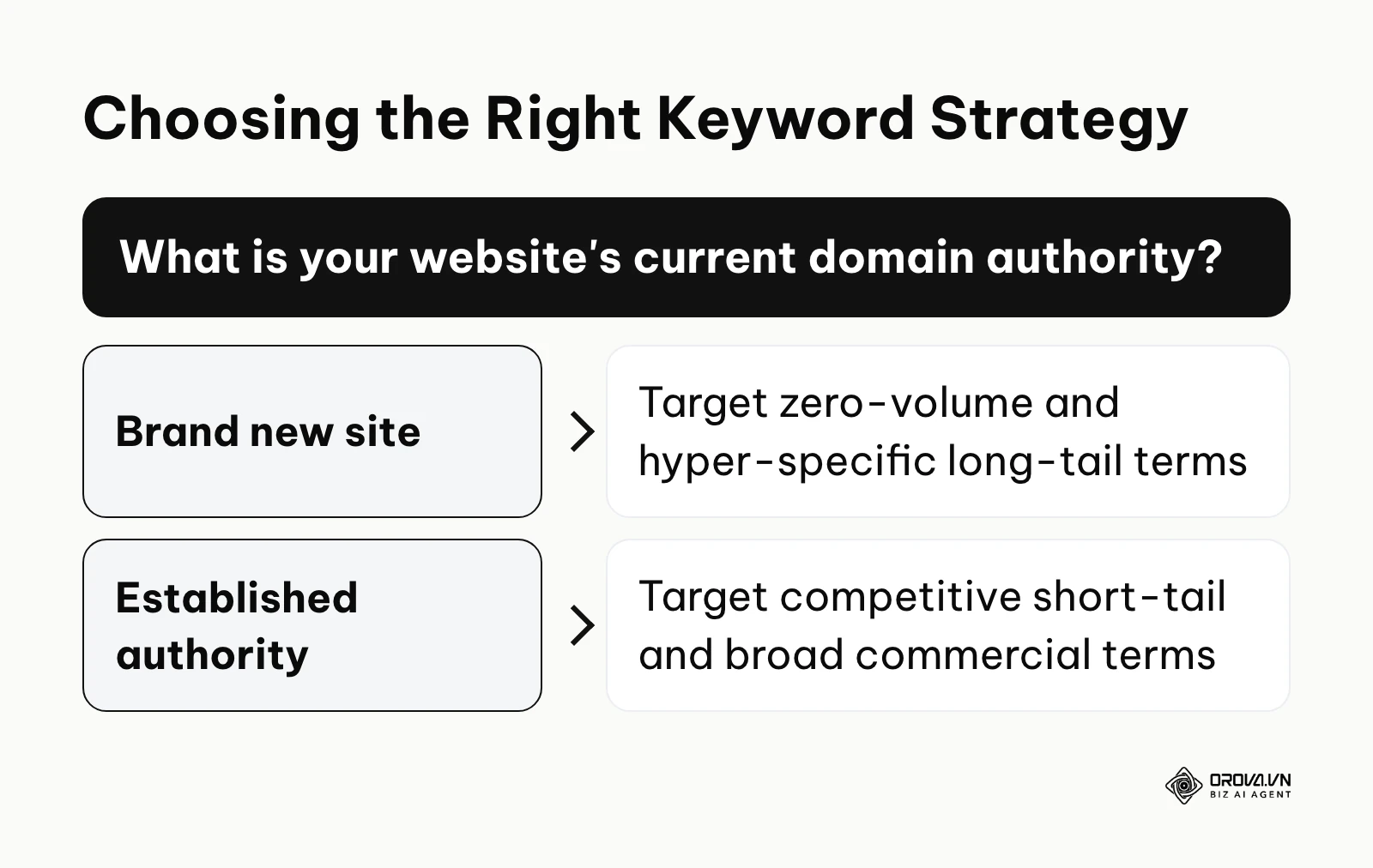
Zero-volume keywords are a secret weapon for new websites. These are hyper-specific phrases that mainstream SEO tools report as having "0 searches per month." However, tools often lack data for very new trends, highly localized searches, or extremely niche B2B problems. Because tools report zero volume, your major competitors will ignore them. If you know your customers ask these questions in real life, write the content anyway. You will often capture highly qualified, uncontested traffic. If you want a step-by-step method for uncovering these phrases, read how to find long-tail keywords.
The 100% Free Tool Research Workflow
You do not need to spend hundreds of dollars a month on premium software to build a robust keyword list. You can achieve professional results using a combination of free resources provided directly by Google. When you are ready to compare paid options, this roundup of keyword research tools explains what each type of tool adds.
- Google Autocomplete and Related Searches: Start typing a broad idea into the Google search bar and see what suggestions drop down. These are real, current phrases people are searching for. Scroll to the bottom of the search results page to find the "Related searches" section for even more variations.
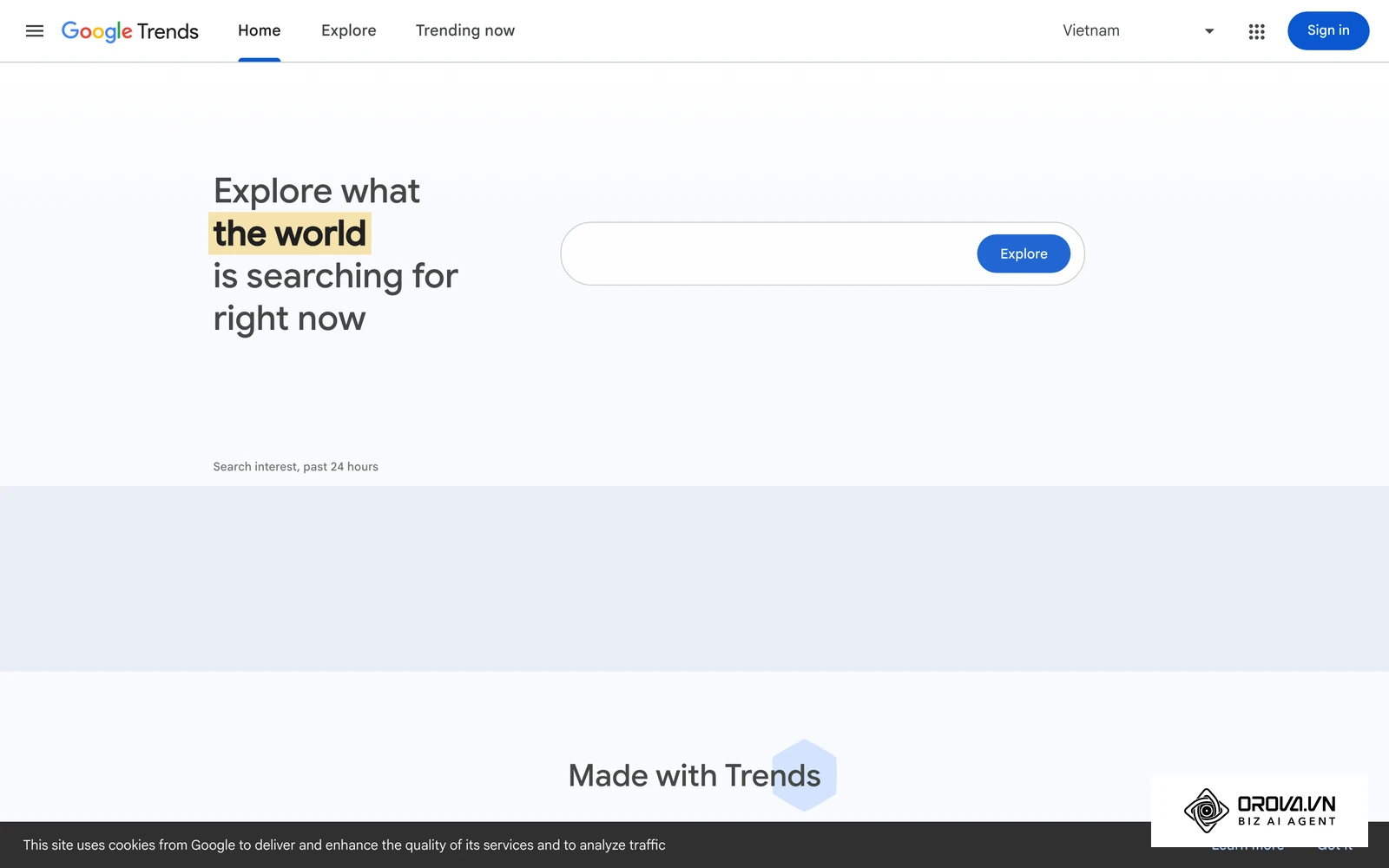
- Google Trends: Use this free tool to check the seasonality and historical interest of your chosen topics. It helps you prioritize whether to write an article now or wait until a specific season when the topic historically spikes in popularity.
- Google Keyword Planner: Originally designed for paid advertising, you can use this tool for free to generate hundreds of related ideas. Simply create a Google Ads account, navigate to the Keyword Planner, enter a few seed terms, and it will return a massive list of variations along with historical search volume ranges. To understand what those monthly numbers really mean, read this keyword search volume guide.
- Google Search Console (GSC): This is your most powerful asset. Once your site is live, GSC tells you exactly which terms you are already ranking for, even if they are on page five. You can then optimize your existing content to push those hidden terms to page one.
Illustrative example: A solo consultant running a management training practice struggled to get online visibility for her new website. She utilized a purely free workflow using Google Search Console and Google Trends. Her major obstacle was competing against massive educational institutions for broad leadership terms like "management training." She solved this by pivoting her focus to zero-search volume, highly specific scenarios she found in online forums, such as "conflict resolution for remote engineering teams." The tangible outcome was her booking calendar filling up with discovery calls from tech companies specifically looking for her precise, niche expertise.
Using AI to Discover and Categorize Keywords
Artificial intelligence has completely transformed the initial brainstorming phase of keyword research. Instead of manually sifting through thousands of rows in a spreadsheet, you can use AI to categorize, cluster, and expand your lists in seconds. If you want to go further, this guide to using ChatGPT for SEO covers more advanced workflows.
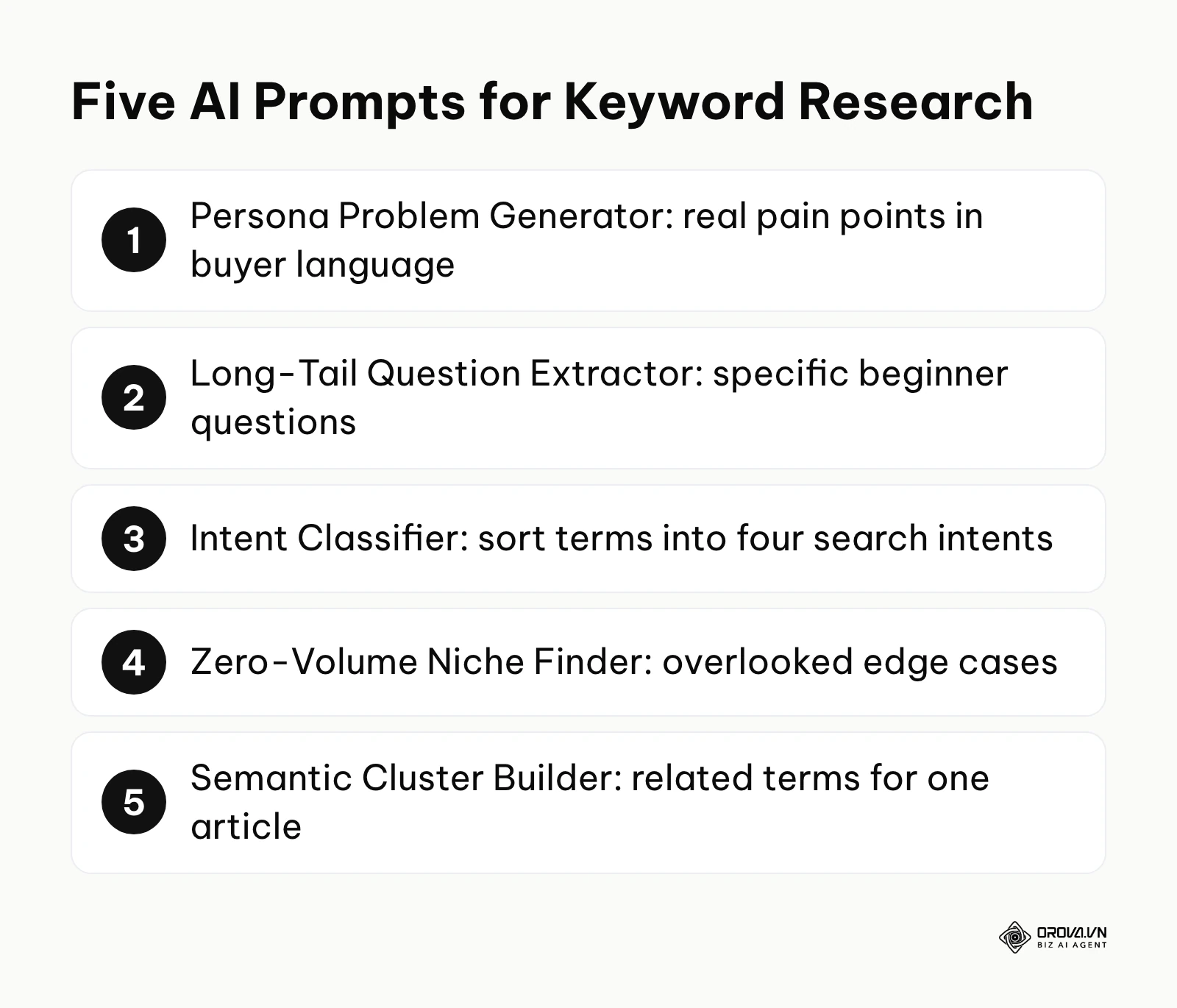
Here is a library of 5 specific prompts you can use with any major AI chatbot to accelerate your research:
Prompt 1: The Persona Problem Generator Prompt: "Act as a leading expert in [Your Industry]. List 20 specific, highly painful problems that a [Target Audience Persona] faces on a daily basis. Do not give me broad topics; give me the exact phrasing they would use when complaining to a colleague." Why it works: It bypasses generic keyword tools and taps into the emotional language of your actual buyers.
Prompt 2: The Long-Tail Question Extractor Prompt: "Take this broad topic: '[Broad Topic]'. Generate a list of 30 highly specific, long-tail questions beginners ask about this topic. Group these questions into logical sub-topics. Ensure they are phrased exactly how someone would type them into Google." Why it works: It instantly generates a month's worth of specific blog post titles targeted at informational intent.
Prompt 3: The Intent Classifier Prompt: "I am going to provide a list of keywords. Categorize each one strictly into one of four search intents: Informational, Navigational, Commercial, or Transactional. Output the result in a clean markdown table. Here is the list: [Paste List]." Why it works: It saves hours of manual analysis, allowing you to instantly see which terms belong on blog posts versus product pages.
Prompt 4: The Zero-Volume Niche Finder Prompt: "Brainstorm 15 highly obscure, hyper-specific situations regarding [Your Topic] that traditional keyword tools might show as having zero search volume, but are real problems experienced by advanced practitioners. Focus on edge cases and complex troubleshooting." Why it works: It uncovers the hidden, low-competition gems that your established competitors are completely ignoring.
Prompt 5: The Semantic Cluster Builder Prompt: "My primary target keyword is '[Primary Keyword]'. Generate a list of 20 semantically related secondary keywords, related terms, and sub-topics that must be covered in a comprehensive 2000-word article to fully satisfy a user's search intent." Why it works: It provides the architectural blueprint for structuring an SEO content outline that Google's algorithm will view as highly authoritative.
Keyword Mapping: Connecting Terms to Pages
A common failure point for beginners is finding a great list of keywords but lacking a system to deploy them. If you randomly assign keywords as you write, you will inevitably end up with keyword cannibalization, a situation where multiple pages on your own site compete against each other for the exact same term, confusing Google and ruining your rankings.
The solution is Keyword Mapping. This is the process of assigning one primary keyword to one specific URL on your website. No two pages should ever target the exact same primary intent.
You can easily manage this using a simple, free Google Sheets document. Below is a representation of the essential columns you need in your mapping template.
| Target URL Slug | Primary Keyword | Search Intent | Secondary Keywords to Include | Page Type | Status |
|---|---|---|---|---|---|
| /best-running-shoes | best running shoes | Commercial | top running shoes, lightweight running shoes | Review List | Draft |
| /how-to-tie-shoes | how to tie running shoes | Informational | heel lock lacing, runner's loop knot | Blog Post | Published |
| /buy-nike-pegasus | buy nike pegasus 40 | Transactional | nike pegasus 40 sale, men's pegasus 40 | Product Page | Live |
By maintaining this map, every time you want to write a new article, you first check the document. If the intent is already covered, you update the existing page rather than writing a competing one.
The 10-Step On-Page Optimization Checklist Using Free Tools
Once you have mapped your target term, you must place it correctly on the page. Beginners frequently ask how many times they should repeat a keyword to rank. The concept of exact "keyword density" is a myth from the early 2000s. Today, forcing a keyword into a paragraph unnaturally will result in algorithmic penalties for keyword stuffing.
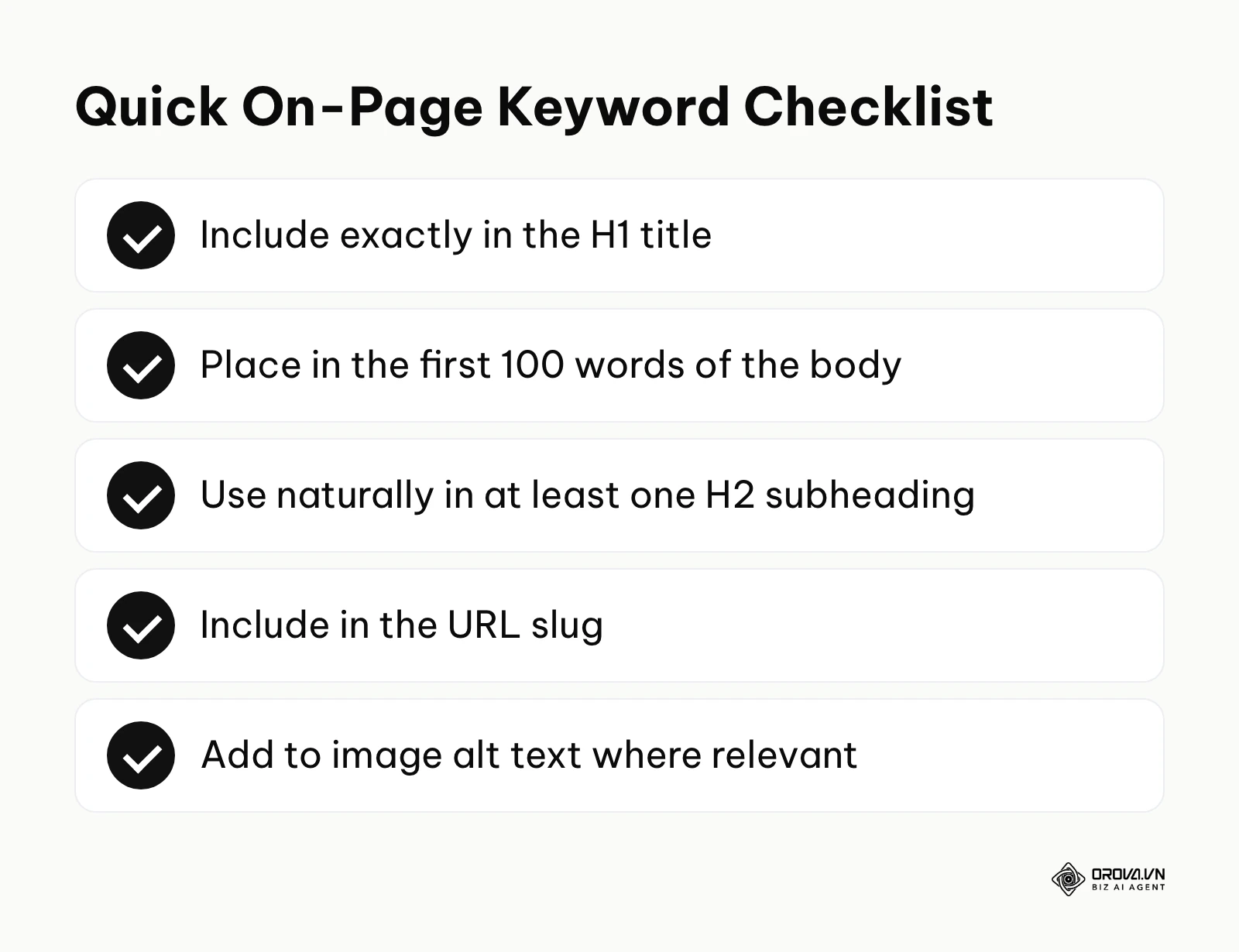
Instead of counting repetitions, focus on strategic placement. Understanding on-page SEO fundamentals ensures you send the right signals without compromising readability. Follow this 10-step checklist for every new page:
- Place the exact primary keyword in the primary Meta Title tag.
- Include a compelling variation of the keyword in the Meta Description to drive clicks.
- Ensure the primary keyword is the H1 Tag at the very top of the page.
- Keep your URL slug short, clean, and containing the main keyword (e.g., /your-keyword).
- Naturally weave the primary keyword into the first 100 words of the introductory paragraph.
- Use the keyword or a close semantic variation in at least one H2 subheading.
- Include the phrase naturally in the Alt Text of the featured image, provided it accurately describes the image.
- Sprinkle related secondary keywords naturally throughout the body content.
- Link out to a highly authoritative external source related to your topic to build trust.
- Ensure the keyword is used in the anchor text of internal links pointing to this new page from other relevant pages on your site.
How to Adapt and Start with Keyword Strategy
Transitioning to a keyword-driven mindset requires different steps depending on your role and resources.
Small Business Owners
If you are a solo founder or small business owner, your time is your most constrained resource. You cannot afford to spend weeks analyzing spreadsheets.
- Talk to your three best customers this week and write down the exact phrases they use to describe their problems.
- Type those phrases into Google Autocomplete to see how the broader market searches for them.
- Pick the three most specific, long-tail phrases and write one detailed, helpful FAQ page for each on your website.
In-house Marketers
If you manage marketing inside an established company, your challenge is often aligning content production with actual search demand, rather than just writing what executives suggest.
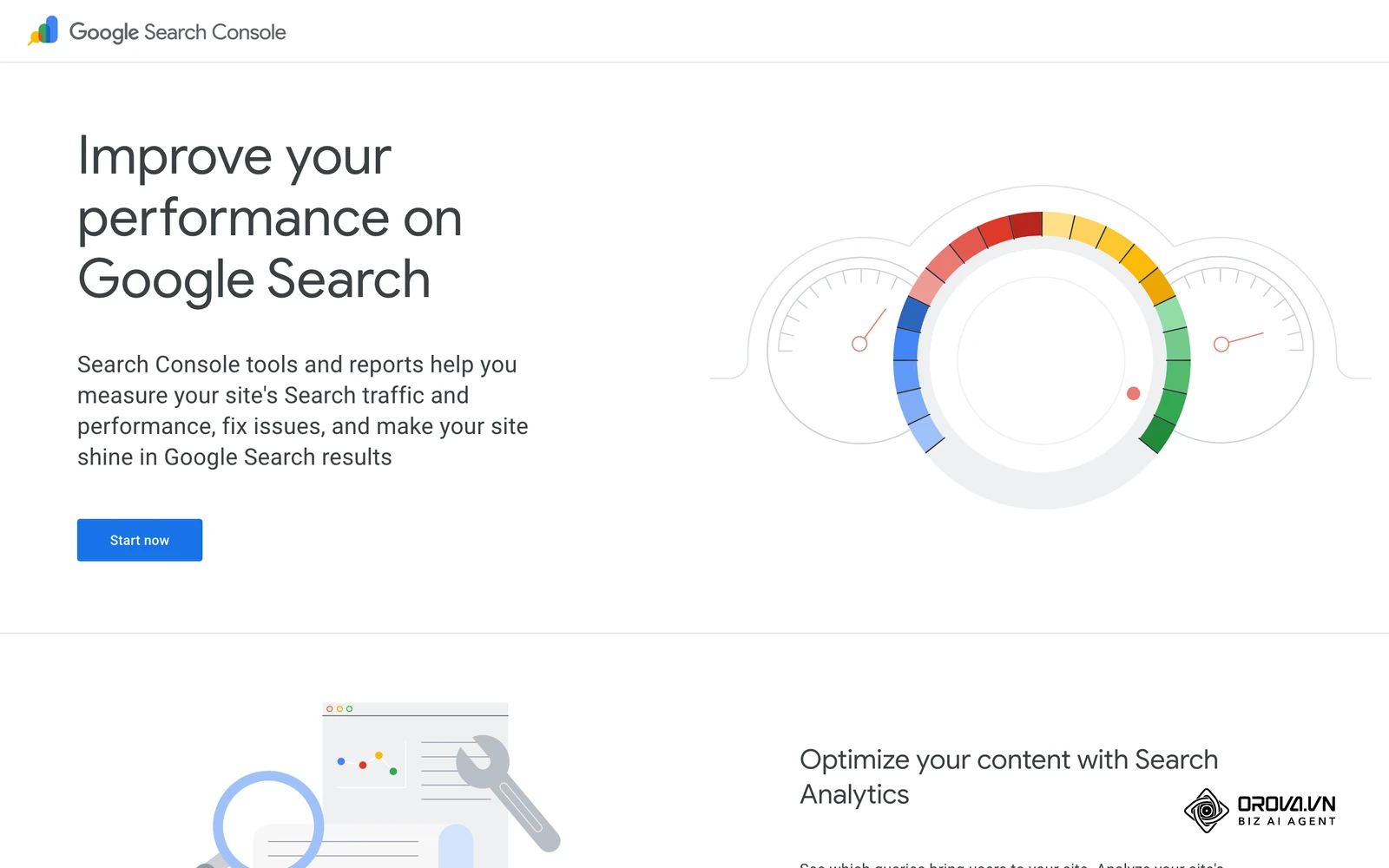
- Export your last six months of website traffic data from Google Search Console.
- Identify pages sitting on page two or three of Google (positions 11 through 30) that already have high impressions.
- Update those specific pages by adding new sections that answer the related queries found in your Search Console data.
- Implement a strict keyword mapping document for all future content requests to prevent cannibalization.
Illustrative example: An in-house marketer at a mid-sized retail company with 200 employees was tasked with increasing online foot traffic. He mapped local search intents and planned dedicated landing pages for specific product categories available in-store. The major challenge arose when the IT department delayed publishing these new pages for three months due to a complex platform migration. He adapted by updating existing, older blog posts with the newly discovered local commercial keywords and adding clear directions to the store. The clear result was customers physically walking into the retail location and showing the updated blog articles on their smartphones to ask staff about specific products.
Freelancers and Agencies
If you manage SEO for clients, your goal is to prove ROI quickly while establishing a long-term strategy.
- Run a gap analysis comparing your client's existing keyword map against three direct competitors using free browser extensions.
- Identify the "low-hanging fruit" – informational keywords the competitors are ranking for with outdated or thin content.
- Create comprehensive, superior content assets targeting those specific gaps.
- Build a reporting dashboard focusing on non-branded organic traffic growth to demonstrate clear value.
When adapting to these strategies, beginners often stumble into predictable traps.
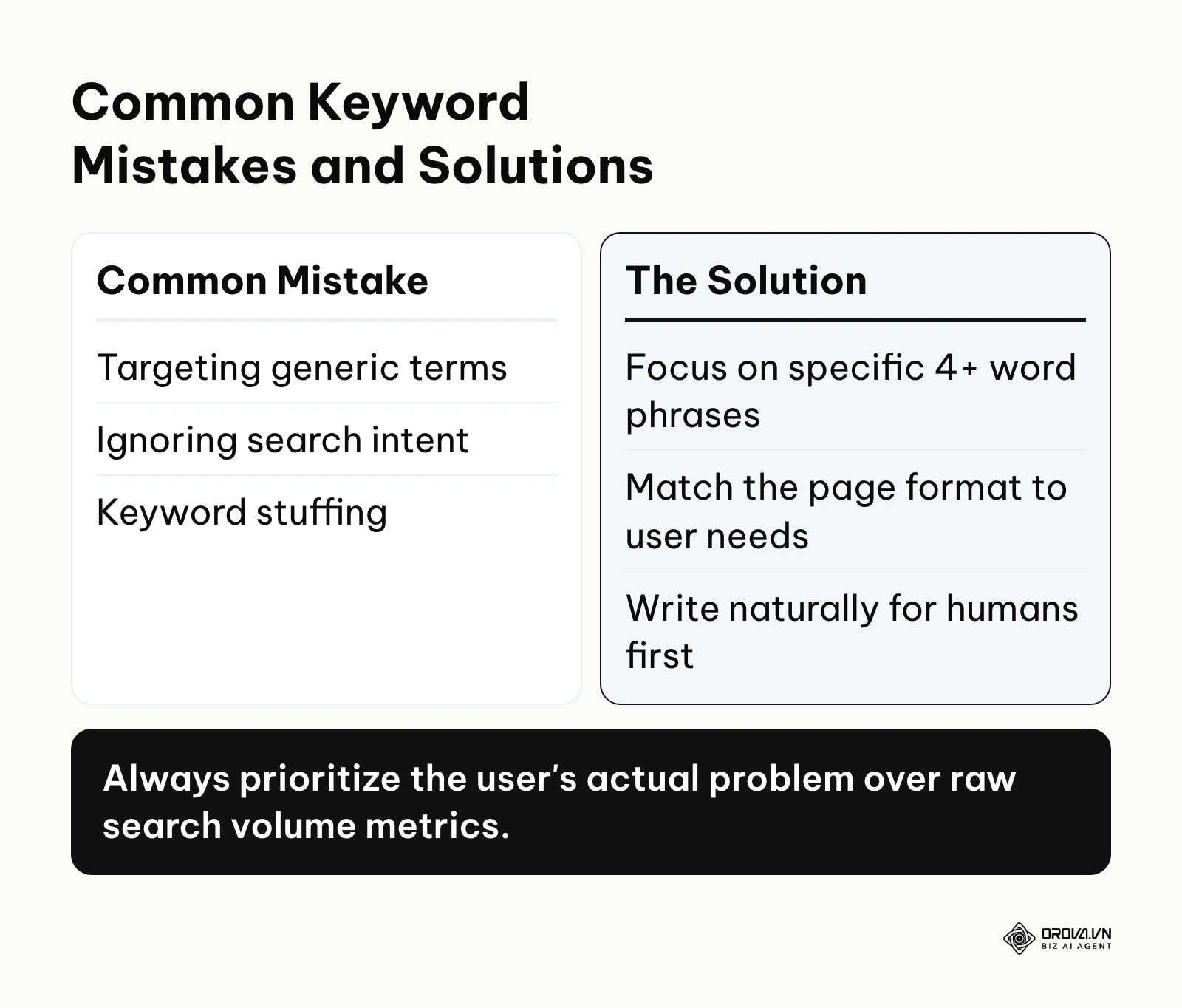
| Common Mistake | The Consequence | How to Avoid It |
|---|---|---|
| Ignoring Search Intent | Page never ranks, regardless of word count or quality. | Always Google the term first. If the top 10 results are videos, you must make a video, not a blog post. |
| Targeting Only High Volume | Years of effort with zero traffic because competition is too fierce. | Filter your initial lists to only target long-tail phrases with 4 or more words. |
| Keyword Stuffing | Algorithmic penalty from Google; users bounce immediately due to poor readability. | Read your draft out loud. If it sounds robotic, delete the forced keywords. |
With OROVA.VN and the OROVA SEO module, you put an end to the exhausting days of manual work for good. Instead of struggling for hours to write articles and compile reports, the entire process is now optimized and completed in just 5 minutes.
Keyword Trends for the Next Few Years: My Perspective
As search algorithms evolve, the way we research and apply keywords is shifting dramatically. Here is how I read the direction of travel, and the trends I am preparing for.
The Shift from Keywords to Entities
I believe that over the next few years, isolated keywords will matter less on their own, and entity-based SEO will matter more. Google is no longer just matching text strings; it is understanding concepts, people, places, and the complex relationships between them. If you only optimize for a specific phrase without demonstrating deep, holistic knowledge of the entire subject area, your content will struggle. You must transition from simply writing an article targeting a keyword to building a comprehensive cluster of content that establishes your website as the definitive entity for a specific topic.
AI-Generated Answers Will Consume Informational Queries
With AI-generated overviews appearing directly in many search results, I suspect that basic informational queries will send fewer clicks to websites. If a user asks "what temperature to bake chicken," the AI will simply tell them. Therefore, I advise moving away from thin, easily answerable informational keywords. Instead, you should pivot your strategy toward complex, nuanced topics that require deep human experience, strong opinions, and original research—things that a generative AI cannot easily summarize in a single paragraph. In my view, this shift may weaken traditional top-of-funnel keyword strategies in some industries.
Hyper-Personalization of Search Results
I am leaning towards a future where a single, objective "page one" ranking matters less for many keywords. As search engines utilize more personal data, location history, and past search behavior, two people typing the exact same keyword may see noticeably different results. Consequently, obsessing over a static ranking position will become a metric of vanity. Instead, I believe we must focus entirely on tracking actual business conversions and engagement metrics from organic traffic, rather than celebrating a number one ranking that only a fraction of our audience actually sees.
Frequently Asked Questions about SEO Keywords
Are keywords still needed when we have AI search?
Yes, absolutely. While AI models process information differently, they still rely on specific terminology to understand the core subject of your content. AI search engines use the underlying concepts of keywords to connect user prompts with relevant source material. The focus has simply shifted from exact-match repetition to comprehensive topical authority.
How many times should I use a keyword in a 1000-word post?
There is no magic number or perfect percentage. If you are writing naturally about a specific topic, you will naturally use the keyword and its variations exactly as many times as necessary. Focus on placing it strategically in the Meta Title, H1, introductory paragraph, and URL, and then simply focus on writing the best possible answer for the reader.
How to do keyword research without a budget?
You can build a solid strategy using only free tools. Start by typing ideas into Google Autocomplete to find long-tail variations. Run those ideas through Google Trends to verify historical interest. Finally, once you have published content, rigorously analyze your Google Search Console data to find hidden terms you are naturally ranking for and optimize further.
Should I write for zero search volume keywords?
If your website is new or lacks domain authority, zero-volume keywords are your best opportunity for initial traffic. Traditional SEO tools often struggle to estimate traffic for hyper-niche, localized, or emerging trends. If you know your actual customers are asking a specific question, write the article regardless of what the third-party tool's volume metric says.
What is the difference between a keyword and a tag?
A keyword is the strategic phrase a user types into Google that you are actively trying to rank a specific page for. A tag is an internal organizational mechanism used within your website's content management system (like WordPress) to group similar articles together for user navigation. While they often share similar words, their functional purpose is entirely different.
Where Should You Start Now?
Feeling overwhelmed is normal when looking at a massive spreadsheet of potential topics. The key to building momentum is to ignore the advanced tactics initially and focus on one single, decisive action based on your current situation.
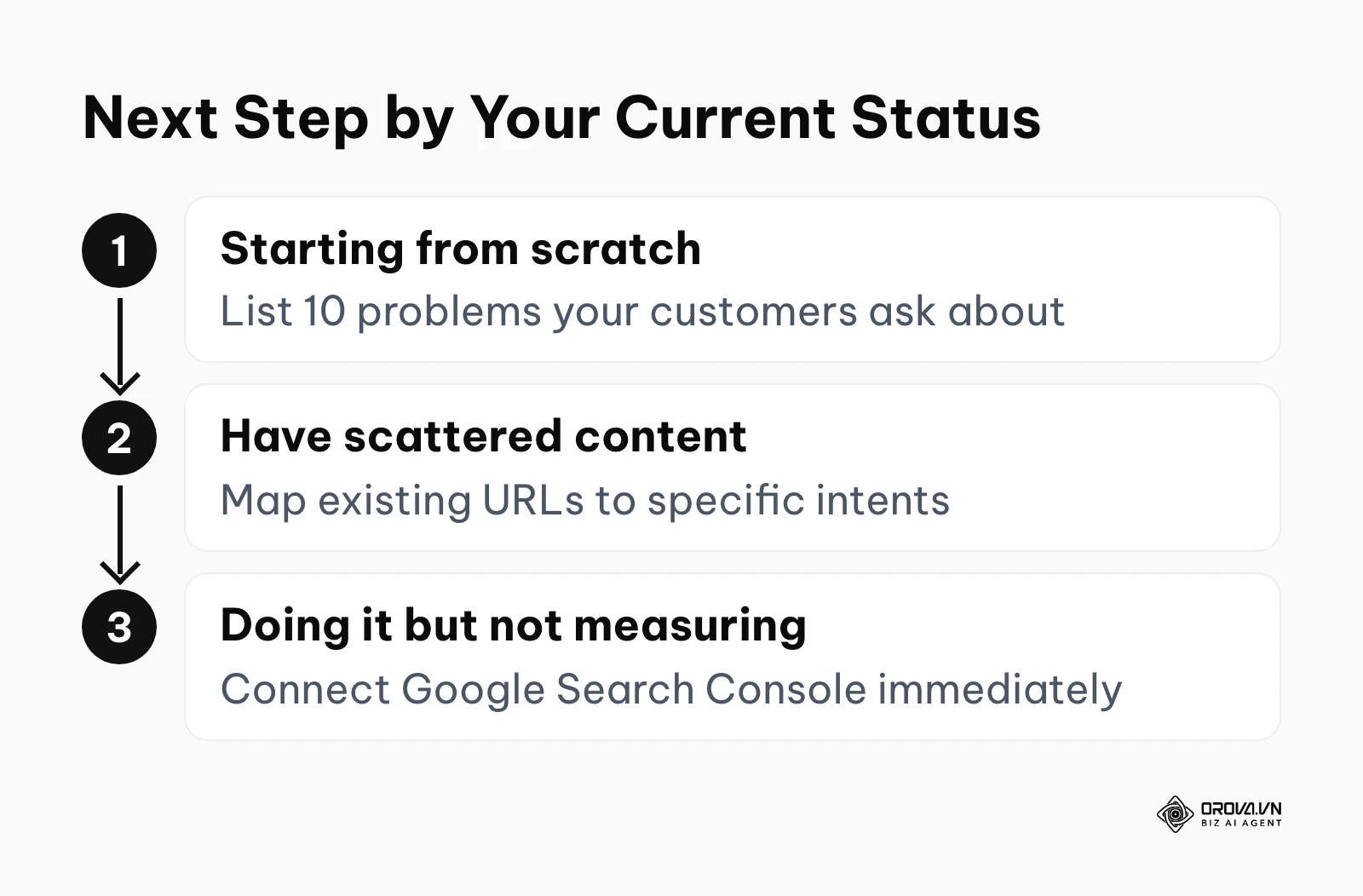
If you are starting entirely from scratch: Do not touch a keyword research tool today. Open a blank document and write down the top 10 questions your customers or prospects ask you during sales calls or support emails. These represent guaranteed, real-world search demand. Pick the single most common question, write a 1500-word guide answering it thoroughly, and publish it.
If you have a website with scattered, existing content: Your immediate priority is organization, not creation. Create a simple Keyword Mapping spreadsheet. Go through your top 20 most visited pages and assign one primary search intent to each URL. If you find three different blog posts on your site trying to answer the exact same question, plan to consolidate them into one definitive master guide this week.
If you are creating content but not measuring the results: Stop writing immediately and ensure your tracking infrastructure is flawless. Verify that Google Search Console is correctly installed and actively collecting data for your domain. Let it run for 14 days. When you return, look at the "Queries" report. Identify one phrase that is ranking on page two, and spend your afternoon updating that specific page to push it to page one.
About the author

Builder of Orova
Nguyễn Đỗ Trọng Ân has 8 years of experience in marketing, including 6 years managing market development across Asia. He builds Orova, a Biz AI Agent that never sleeps: it plans, runs and optimizes work for businesses.
Run your business with AI Agents
Orova is the always-on Biz AI Agent — it plans, runs, and optimizes the work for you.
Save time, unlock productivity.