
What is a good keyword difficulty score? A reality check

You are staring at your SEO software, looking at a promising topic, and wondering what is a good keyword difficulty score to target. A score of 10 might seem incredibly easy, but if you have a brand new website, it can still feel like climbing a mountain. Conversely, a score of 60 can be a reasonable target for a large, long-established publication.
The short answer: a good keyword difficulty score is one at or below the level your own site can realistically win. On the 0 to 100 scales most tools use, newer sites usually do best at the low end, while strong, established sites can aim higher. There is no universal number, because each tool calculates difficulty its own way and every site starts from a different strength.
Blindly trusting a single rank tracker keyword difficulty metric is a common trap that wastes time and resources. Every website has its own unique threshold for competitiveness. If you aim too high, you will write content that never sees the light of day. If you aim too low, you might miss out on valuable traffic.
This article will help you understand the core mechanics behind these numbers. You will learn how to define your own personalized baseline and how to manually verify the search results before writing a single word. By the end of this guide, you will know exactly which topics are worth your investment and which ones you should ignore.
What is a Good Keyword Difficulty Score?
A good keyword difficulty score is a personalized metric indicating how hard it will be for your specific website to rank on the first page of search results for a given query. It is used to prioritize content creation, differing from search volume which only measures popularity rather than true competitiveness.
Keyword difficulty metrics became common as SEO software companies looked for a way to summarize competition. Without them, marketers had to judge how hard a topic was by inspecting the top pages one by one. Today, most major tools show difficulty as a single number, usually on a scale from zero to one hundred.
However, keyword difficulty is frequently confused with other common SEO metrics.
| Concept | How it differs from Keyword Difficulty | Example |
|---|---|---|
| Search Volume | Measures how many times people search for the phrase, not how hard it is to rank. | A term can have high volume but low difficulty if no one has written good content about it yet. |
| Domain Authority | Measures the overall strength of an entire website, not a specific topic. | A high authority site can easily rank for a high difficulty keyword. |
| Search Intent | Explains why the user is searching, while difficulty explains the competition level. | A term might be low difficulty, but if the intent is to buy a product, a blog post will not rank. |
Think of keyword difficulty like choosing a weight at the gym. A fifty-pound dumbbell is not objectively good or bad. For a beginner, it is impossible to lift. For an experienced bodybuilder, it is merely a warm-up. Your goal is to find the heaviest weight you can comfortably lift with your current strength level.
Why Does a Target Keyword Difficulty Score Matter?
Understanding your target keyword difficulty score is crucial because it dictates where you should allocate your marketing budget. This metric exists to solve a massive problem for content creators: the risk of producing high-quality articles that nobody ever reads. Keyword difficulty helps you filter out battles you cannot win and focus your energy on opportunities where you have a structural advantage.
In the broader picture of search engine optimization, keyword difficulty sits right in the middle of your workflow. It comes immediately after you generate a list of topic ideas, but strictly before you start drafting the content. It acts as the final gatekeeper. If you skip this evaluation phase, you risk spending budget and weeks of effort writing about topics dominated by massive industry giants.
When you ignore keyword difficulty, you often end up frustrated. You might write the best guide on the internet, but if the top ten results have millions of inbound links, search engines will not prioritize your new page. This leads to burnout and a false belief that SEO simply does not work for your business.
In competitive niches, the top results are usually held by sources that already have a strong reputation on the topic. A high difficulty score is often a sign that established sites already cover the subject well. If you want to break in, you must find topics where the current answers are weak, outdated, or missing entirely.
When you do not need keyword difficulty: There are a few specific situations where you should ignore keyword difficulty entirely. First, if you are engaging in newsjacking to cover a breaking industry event, speed matters more than historical competition metrics. Second, if you are writing documentation or support articles for your existing customers, they need the information regardless of search competition. Finally, if you operate in a highly specific local niche where you are the only provider, you should create the content simply because your local buyers will look for it on your website directly.
Values and Benefits of Finding the Right Score
Finding the right keyword difficulty score delivers distinct value on two levels. For the business, it reduces financial risk and accelerates the return on investment. For the practitioner executing the work, it provides a clear roadmap and removes the anxiety of unpredictable results.
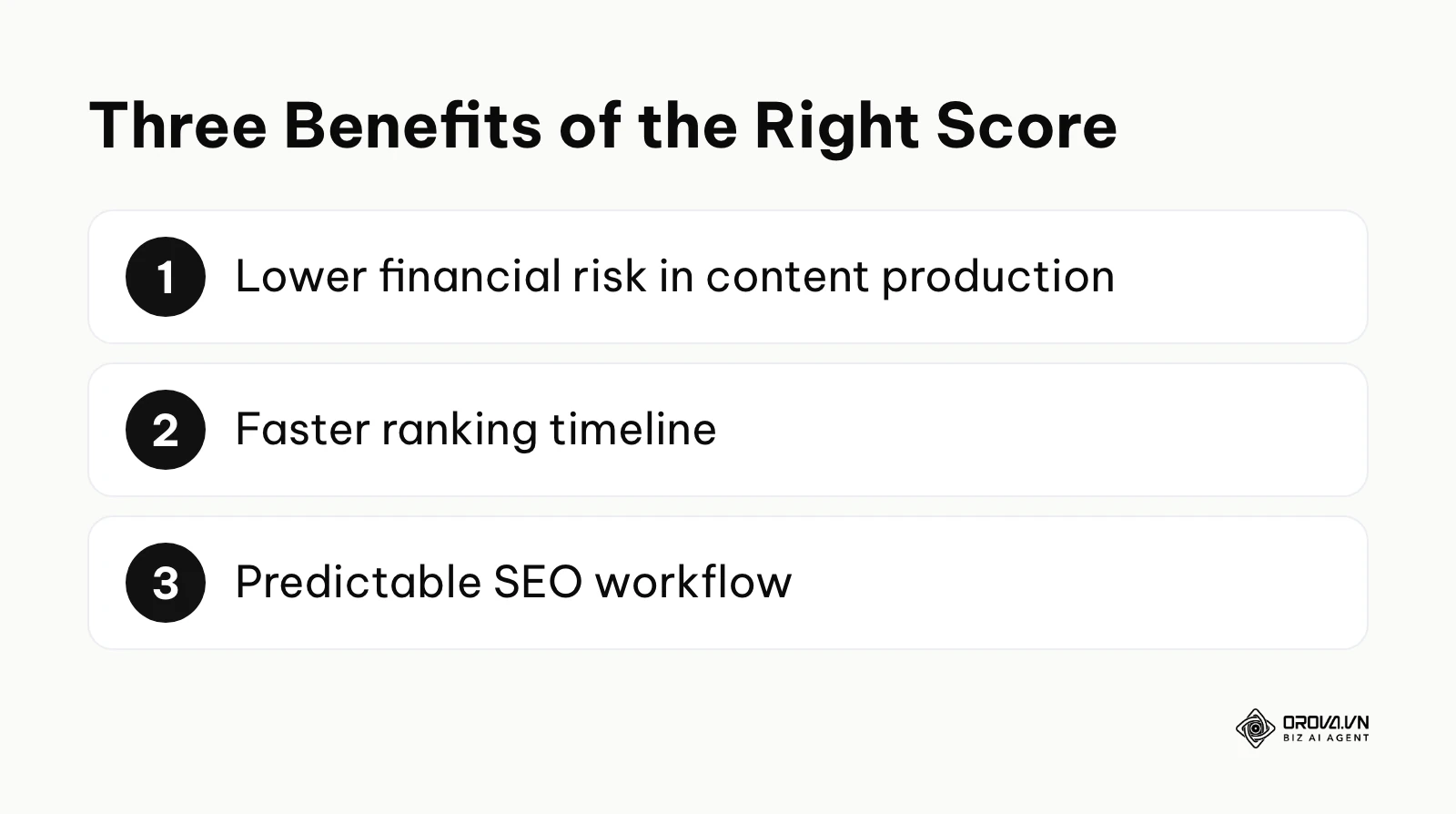
Reducing Financial Risk in Content Production
Producing high-quality content is expensive, requiring time for research, writing, editing, and publishing. When you target a keyword difficulty score that perfectly matches your website strength, you give your investment a realistic chance of generating traffic. This prevents the common scenario of writing dozens of articles that sit in the void. You can measure your marketing ROI more clearly because you are competing in races you are actually qualified to win.
Illustrative example:
- Context: A local landscaping company marketing team of two people needing more inbound leads.
- What they did: They exported a list of 500 keyword ideas, filtered out anything with a keyword difficulty above 20, wrote ten focused articles on local plant care, and tracked their rankings weekly.
- Where they got stuck and the fix: Initial tool data showed zero search volume for these low-difficulty terms, so they manually checked local gardening forums to confirm that homeowners were indeed asking these questions.
- Result: Over the following weeks the articles began to bring in calls from local homeowners looking for seasonal help, showing that low difficulty terms can drive real business actions.
Accelerating the Time to Rank
One of the most frustrating aspects of SEO is the waiting period. High difficulty topics can take years to show movement, even with aggressive link building. By targeting a good keyword difficulty score for your current level, you can shorten this timeline. Pages built for low competition terms tend to move up sooner than pages aimed at crowded terms, providing the early momentum needed to justify further marketing spend.
Building Predictable SEO Workflows
For SEO managers and agencies, predictability is key to retaining clients and securing budgets. Consistently picking the right keyword difficulty allows you to build a reliable pipeline of traffic growth. You can plan traffic growth with more confidence because you know how your website tends to perform against specific competition tiers. This consistency transforms SEO from a guessing game into a predictable business process.
| Benefit | Measured by which metric | When to review it |
|---|---|---|
| Lower financial risk | Cost per acquired visitor | After each content batch |
| Faster ranking timeline | Days to reach the first page | Monthly |
| Predictable workflow | Percentage of published posts ranking in top 10 | Quarterly |
Discover Orova.vn – a Biz AI Agent platform with OROVA SEO, a complete solution for every website. The system supports search engine optimization from A to Z with features including keyword research, writing new SEO-ready articles, optimizing existing content, rank tracking, plus competitor analysis and in-depth technical analysis. Sign up today to experience OROVA SEO completely free (offer valid through July 7, 2027).
How Keyword Difficulty Actually Works
To truly understand what makes a good keyword difficulty score, we need to dissect how this metric is calculated and how it plays out in the real world. A single number on a screen is a summary of several underlying signals.
The Core Components of Keyword Difficulty
Each SEO tool uses its own formula, and the exact details are not always public. In general terms, difficulty comes down to three factors. The first is the backlink profile of the current top-ranking pages. Many tools look at how many unique referring domains point to those pages. If the top pages have a large number of links, the difficulty score rises.
The second factor is content quality and relevance: whether the top pages cover the topic thoroughly or are thin and outdated. Not every tool includes this in its score, so you often have to judge it yourself.
The third factor is user intent, which a difficulty score usually does not capture at all. Understanding keyword intent is critical because if users want to buy a product, an informational blog post will face a massive hidden difficulty barrier, regardless of what the tool says.
| Broad approach to difficulty | What it leans on | Useful for |
|---|---|---|
| Mainly link-based | The links pointing to the top-ranking pages. | Sites planning link-building campaigns. |
| Mainly content-based | How thoroughly the top pages cover the topic. | New sites competing on content quality. |
| Blended | Links plus other signals from the results page. | Long-term content strategy planning. |
Calculating Your Personalized Baseline
Because a rank tracker keyword difficulty score is relative, you must create a personalized baseline. A score of 40 is terrible for a brand-new blog, but excellent for a ten-year-old industry magazine.
To find your baseline, start with your site's authority score in your tool of choice (for example, Moz's Domain Authority, shown below as DA). Then map out your maximum safe target. The ranges below are an illustrative example, not an industry standard: different tools use different scales, so calibrate them against keywords you already rank for.
| Domain Authority Tier | Safe Target KD | Stretch Goal KD | Focus Area Strategy |
|---|---|---|---|
| New Site (DA 0 to 15) | 0 to 10 | 15 | Ultra long-tail, low competition questions. |
| Growing Site (DA 16 to 35) | 11 to 25 | 35 | Niche topics with moderate search volume. |
| Established (DA 36 to 60) | 26 to 45 | 55 | Broad category topics and competitive guides. |
| Authority (DA 61 and above) | 46 to 70 | 80 and above | Highly competitive short-tail industry terms. |
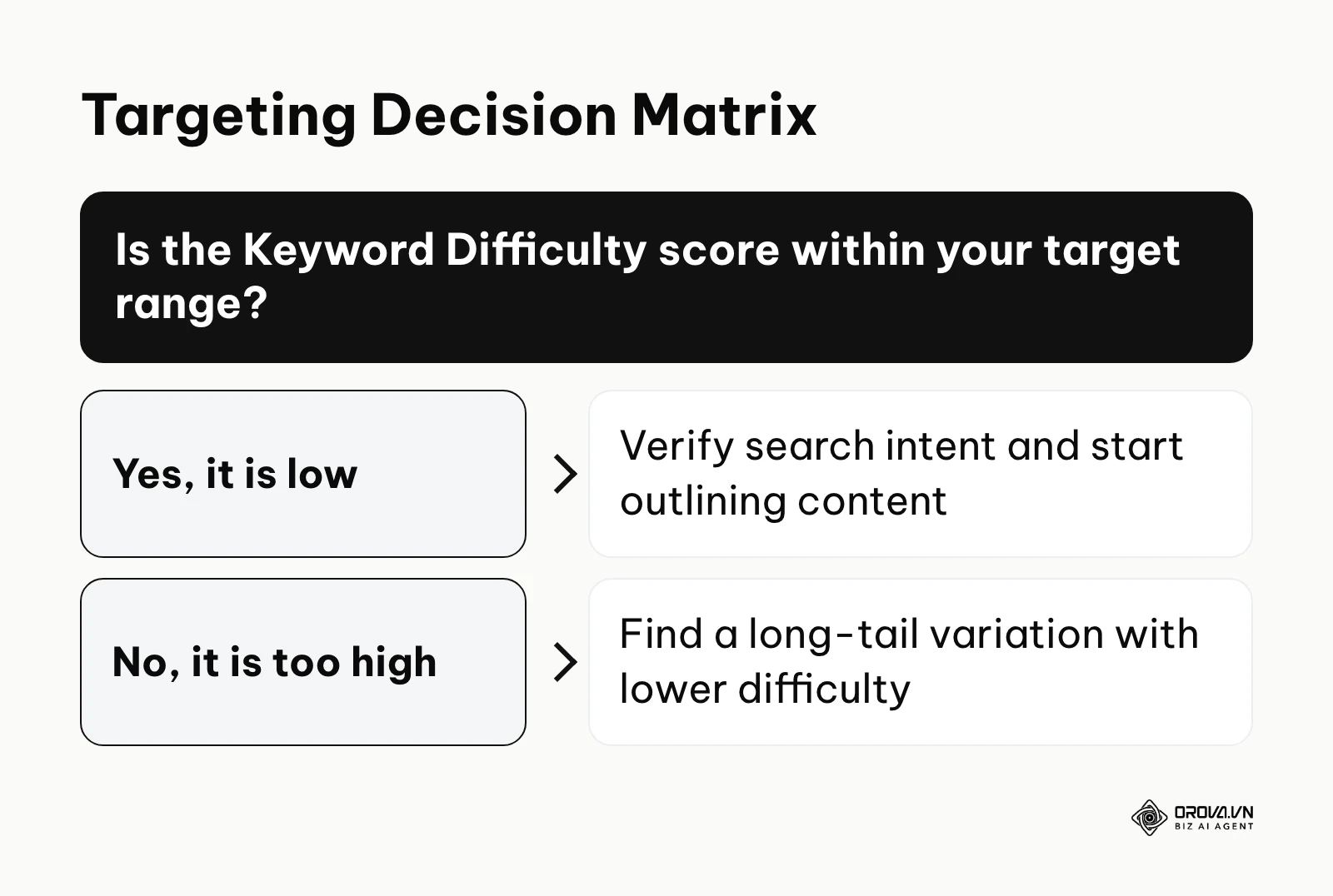
Once calibrated, this matrix serves as your personal rulebook. If your site has a Domain Authority of 20, you should spend the majority of your time writing articles targeting a keyword difficulty of 25 or less.
Step-by-Step Manual SERP Analysis
Software tools frequently get things wrong. You might find a keyword with a difficulty of zero, but when you look at the search engine results page (SERP), it is filled with massive government websites. This is why manual verification is mandatory. You can start by running a Google Search Console SEO audit to see what you already rank for, and then apply this five-step checklist for new terms:
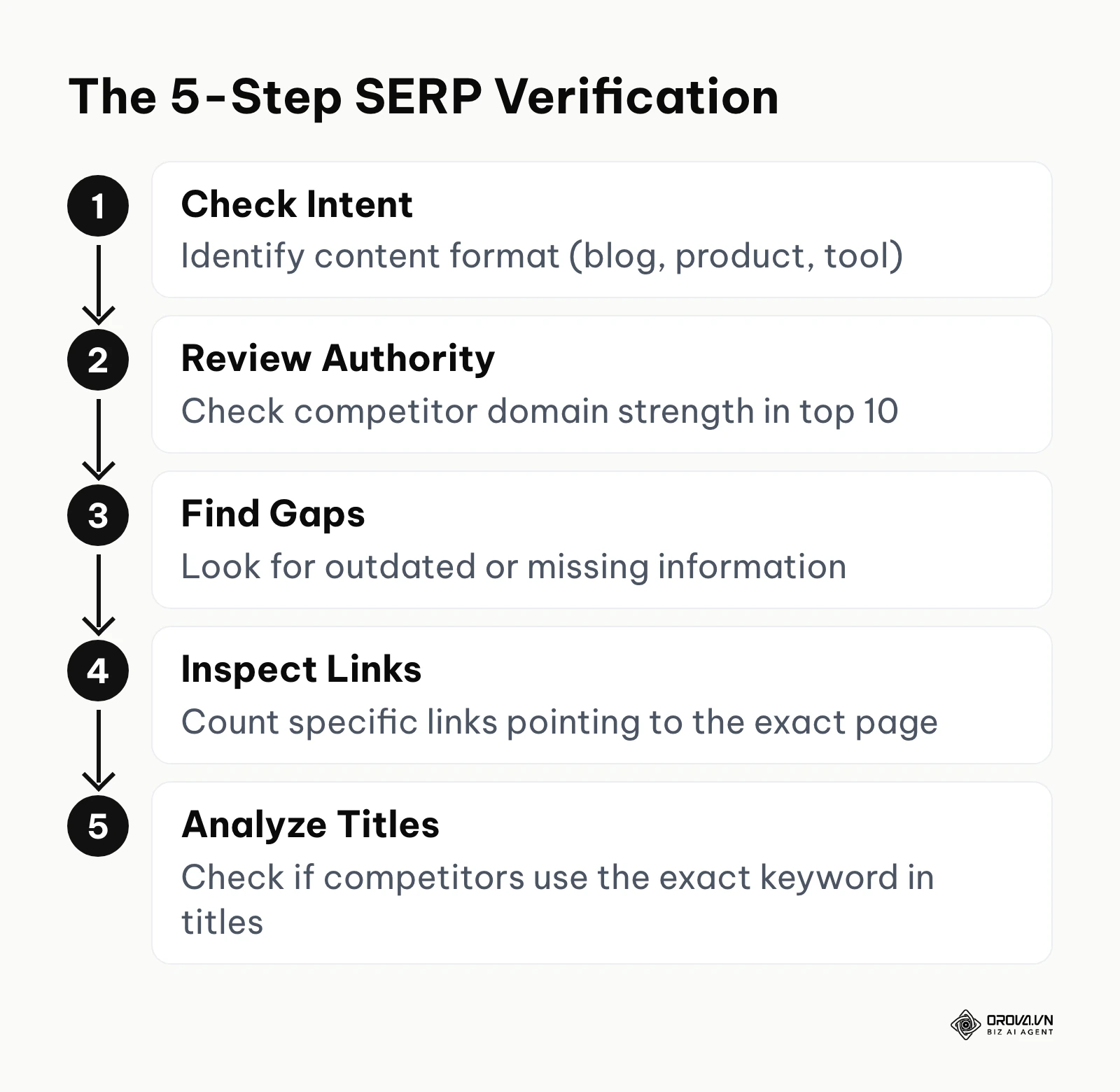
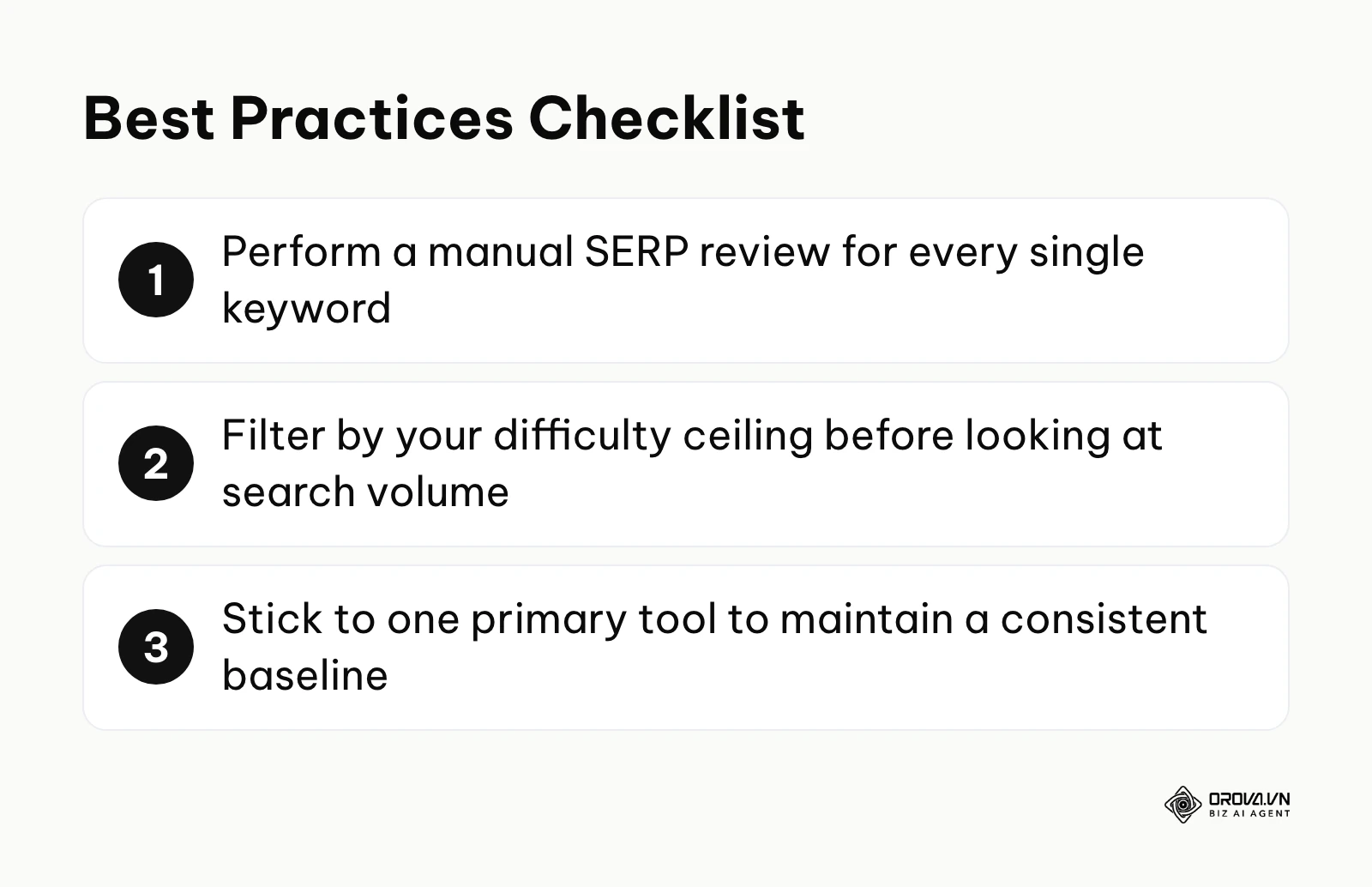
- Check the true intent: Open the top five results. Are they blog posts, product pages, or tools? Your planned content must match this format perfectly.
- Review the competitor authority: Look at the domain strength of the top ranking sites. If they are all household brand names, the keyword difficulty tool is likely underestimating the challenge.
- Identify content gaps: Read the top three articles. Are they outdated? Do they lack specific details or formatting? If yes, you have a real opportunity to create something better.
- Inspect the backlink profile: Check how many links point to the exact page, not just the domain. A strong domain with a page that has zero external links is vulnerable.
- Analyze the title tags: Are the competitors using the exact keyword in their titles? If they are ranking with broad, loosely related titles, a highly targeted page can easily overtake them.
The Zero-Difficulty Trap
Many beginners fall into the trap of blindly trusting a low score without doing the manual checks mentioned above. This often leads to wasted effort on topics that cannot be won with the type of content they are creating.
Illustrative example:
- Context: A new e-commerce store owner selling organic dog food online.
- What they did: The founder found a keyword phrase with a difficulty score of exactly zero. They spent a week writing a long informational guide and published it immediately.
- Where they got stuck and the fix: The search results were entirely populated by product category pages from major retailers, meaning users wanted to shop, not read a guide.
- Result: The informational blog post remained stuck on page four, generating zero clicks because it fundamentally misaligned with what the users actually wanted to see.
Cross-Referencing SEO Tools
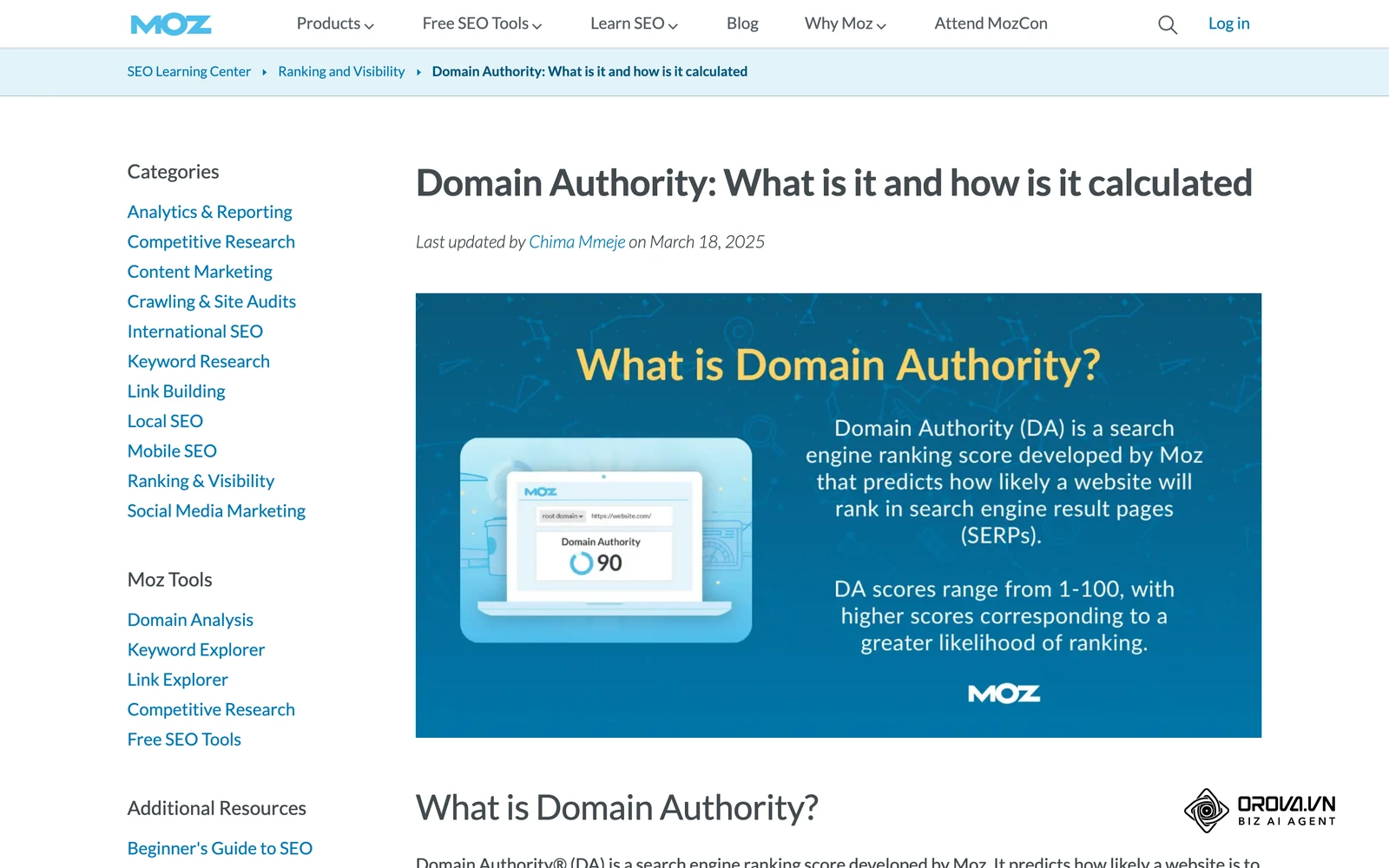
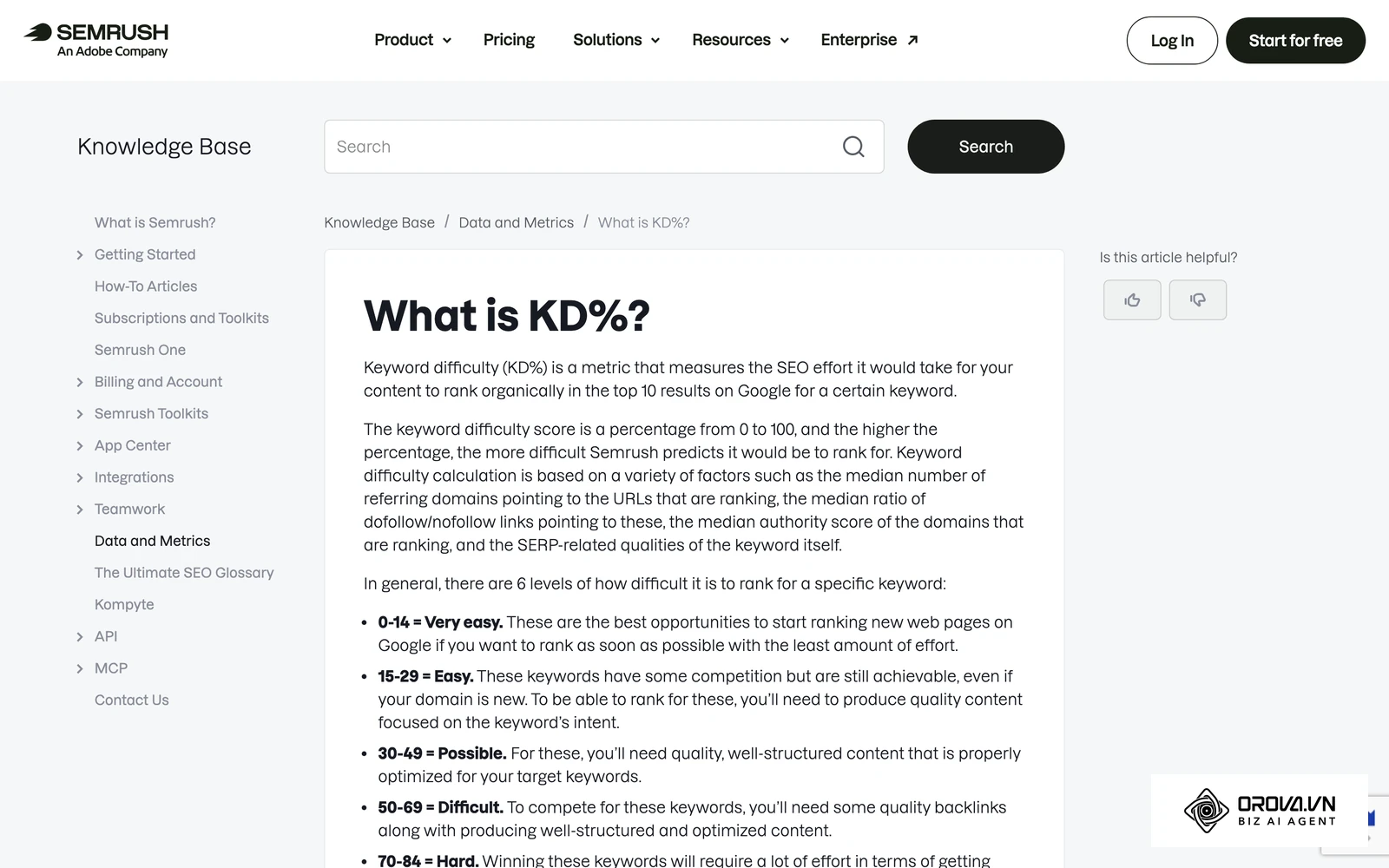
Ahrefs, Semrush, and Moz each publish a keyword difficulty score, and each works from its own data and its own formula. The same keyword can therefore get a low score in one tool and a noticeably higher score in another. Which one should you trust?
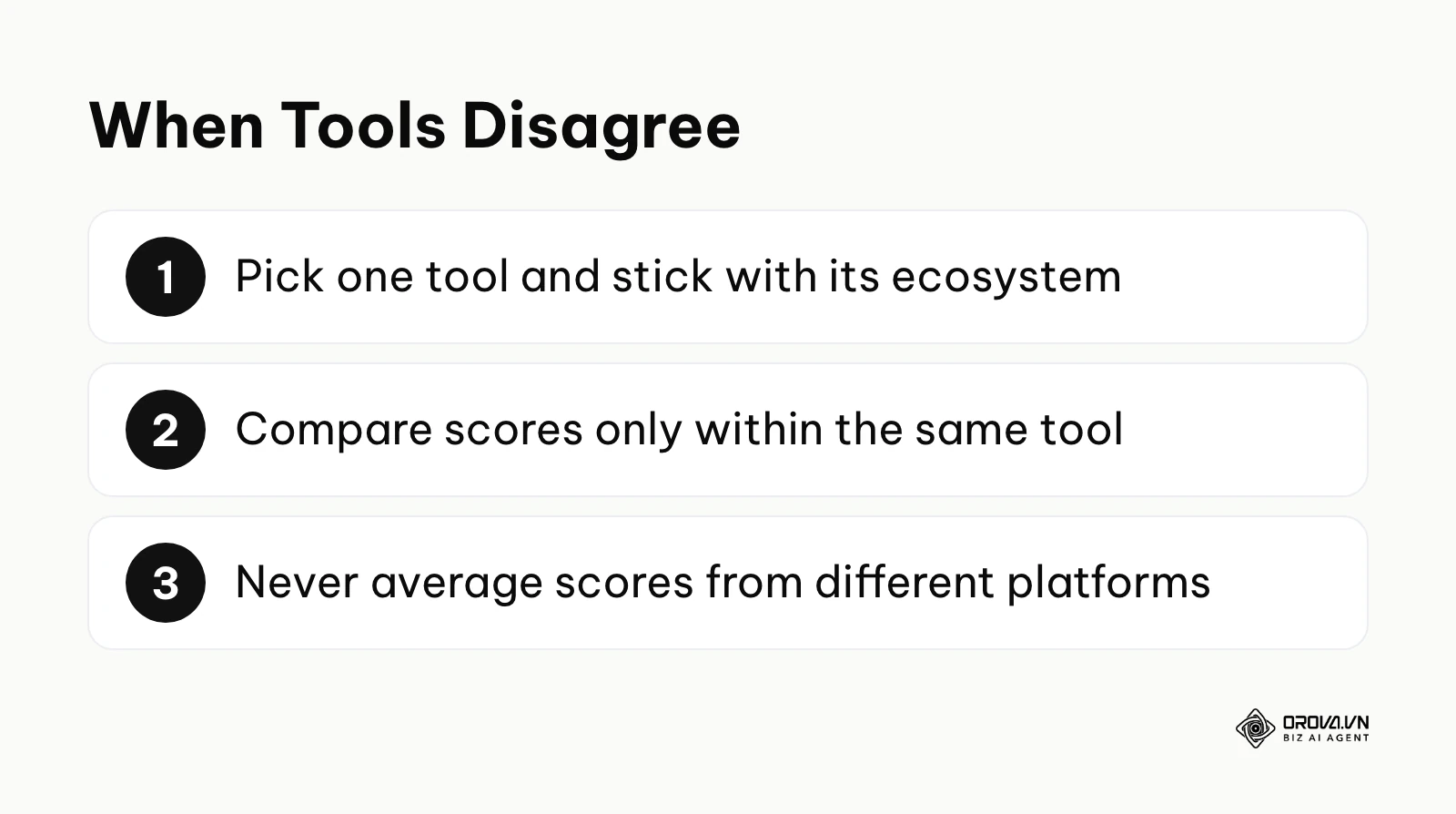
The answer is consistency. Pick one tool (our guide to the best keyword research tools can help you choose) and stick with its ecosystem. If you use Semrush, judge all your opportunities relative to other Semrush scores. Do not mix a rank tracker keyword difficulty score from one platform with a volume metric from another. Each tool has its own internal logic, and crossing them will only confuse your strategy.
The Opportunity Score Framework
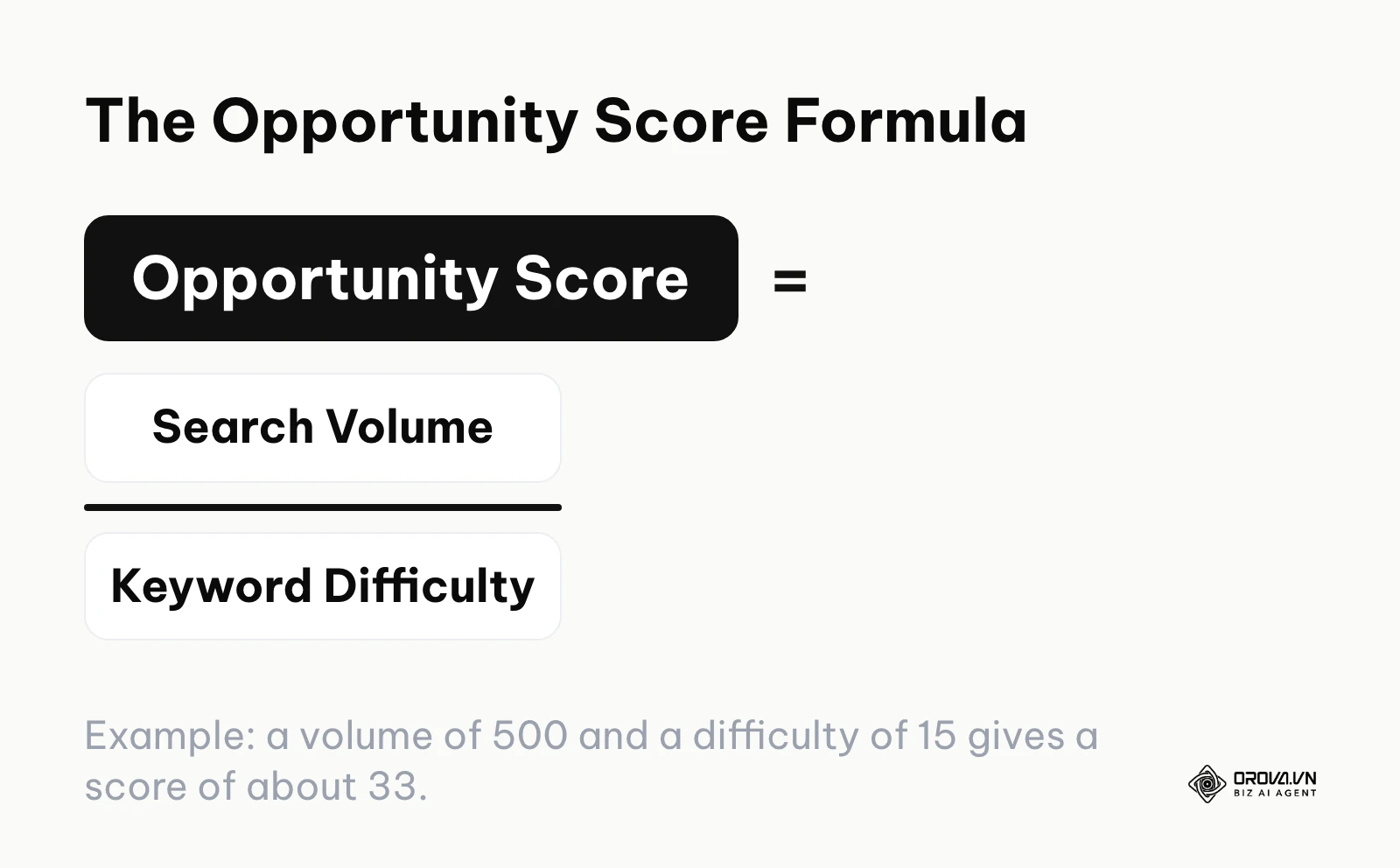
To make better decisions, combine keyword difficulty with search volume to create a custom Opportunity Score. A simple way to do this is to divide the Search Volume by the Keyword Difficulty (treat a score of zero as one to avoid dividing by zero). For example, a keyword with a volume of 500 and a difficulty of 15 scores about 33. This highlights keywords that offer the highest potential traffic for the lowest required effort.
Illustrative example:
- Context: A content manager at a growing business-to-business software startup.
- What they did: They identified a keyword with a difficulty of 15 and a volume of 500. They analyzed the top three results, found they lacked modern examples, and published a comprehensive guide with custom graphics.
- Where they got stuck and the fix: Competitors had significantly higher domain ratings, so the manager actively built internal links from older, highly trafficked blog posts directly to the new guide to boost its authority.
- Result: The new page reached the top three positions within two months, bringing in highly qualified enterprise leads and proving the value of the opportunity score.
How to Start Adapting Your Keyword Strategy
Adapting your approach to keyword difficulty requires different tactics depending on your role and resources. Here is how different groups should tackle this challenge effectively to ensure long-term growth.
For Small Business Owners
As a small business owner, your time is highly limited. You cannot afford to chase keywords that will take years to rank.
- Determine your current authority: Use a free tool to check your domain strength so you know your baseline immediately.
- Find hyper-local or hyper-niche terms: Look for long-tail phrases that big national brands routinely ignore. A quick round of competitor keyword research on smaller local rivals can surface them.
- Verify the search results manually: Before writing, search the term on your phone and ensure the top results are other small businesses, not massive directories. This is an action you can do this week.
- Focus on customer questions: Turn the exact questions your clients ask you into blog posts. These naturally have low keyword difficulty.
For In-House SEO Managers
In-house managers need to build a scalable system that the whole marketing team can follow without constant supervision.
- Document your difficulty thresholds: Create an internal wiki that explicitly states the maximum keyword difficulty your writers are allowed to target.
- Implement the Opportunity Score formula: Require writers to calculate the volume-to-difficulty ratio before pitching a new topic.
- Scale production carefully: Use standardized templates and explore AI-generated content workflows to test low-difficulty topics rapidly.
- Monitor keyword movement weekly: Use a rank tracker keyword difficulty report to see if your predictions hold true in reality.
For Agencies and Freelancers
Agencies must manage expectations carefully. Clients often demand to rank for highly competitive terms immediately, which sets the project up for failure.
- Educate the client on the matrix: Show them the relationship between their current authority and realistic keyword difficulty targets.
- Secure quick wins first: Dedicate the first three months of the campaign entirely to terms with a difficulty score under 20 to build momentum.
- Build a transition plan: Map out exactly how and when you will start targeting harder keywords as the client's domain authority grows over time.
- Report on intent, not just volume: Prove to the client that the low-difficulty terms you selected are actually driving relevant business actions.
| Common Mistakes | Negative Consequences | How to Avoid |
|---|---|---|
| Trusting tools blindly | Writing content that never ranks due to intent mismatch. | Always perform a manual review of the top 10 search results. |
| Chasing high volume only | Competing against industry giants with endless budgets. | Filter your keyword lists by a strict difficulty ceiling first. |
| Changing tools constantly | Losing a consistent baseline for measuring progress. | Commit to one data provider for all difficulty metrics. |
With OROVA.VN and the OROVA SEO module, you put an end to the exhausting days of manual work for good. Instead of struggling for hours to write articles and compile reports, the entire process is now optimized and completed in just 5 minutes.
Future Trends of Keyword Difficulty: Author's Perspective
As we look ahead, the way we calculate and utilize a rank tracker keyword difficulty score is going to change dramatically. Based on current developments in search, I believe the landscape will keep shifting in the coming years.
AI-Driven Intent Will Overshadow Backlink Metrics
Pages with few backlinks can already outrank stronger sites when they match the searcher's intent more closely. I expect difficulty scores based mainly on link counts to matter less over time, as search engines get better at understanding what a user wants. In my view, difficulty will increasingly reflect how hard it is to provide a uniquely valuable answer, not only how hard it is to acquire links. That is a good reason to invest more in content depth and genuine expertise alongside link building.
Hyper-Personalized Difficulty Scores Will Become Standard
Currently, most SEO tools provide a universal difficulty score. A keyword is rated 40 for everyone. However, I believe that future tools will integrate directly with your website analytics to provide a personalized difficulty score. The tool will say, "This keyword is a 40 for the average site, but for you, based on your topical authority in this specific cluster, it is only a 15." This will make generic metrics less relevant. You should prepare for this by building tightly knit content clusters today to establish your topical authority early. While this prediction could be wrong if SEO tool providers fail to access personal analytics data due to privacy changes, the trend heavily favors personalization.
SERP Volatility Will Require Real-Time Monitoring
Search engine results pages are becoming incredibly dynamic, shifting layouts based on location, device, and time of day. I lean toward the idea that keyword difficulty will no longer be a static number you check once. It may move more often, as news cycles or AI summaries change what appears above the standard links. I may be wrong about the pace, but checking key terms regularly is already a sensible habit.
Frequently Asked Questions About What is a Good Keyword Difficulty Score
When navigating the complexities of SEO metrics, several common questions frequently arise. Here are the answers to the most pressing concerns.
Is a good keyword difficulty score still necessary with AI?
Yes, it is still useful. While AI helps search engines understand content better and helps creators write faster, competition for the top spots remains fierce. AI does not eliminate competition; it just shifts the battleground from link building to content quality. You still need a metric to tell you how many other high-quality, AI-assisted pages are fighting for the same user attention. Ignoring difficulty scores means you will still end up fighting unwinnable battles.
What should I do if two tools show different scores?
It is very common for a rank tracker keyword difficulty score to differ between platforms. This happens because each software company works from its own data and its own formula. You should never average them out. Instead, pick one tool that fits your budget and workflow, and stick with it exclusively. Consistency in your baseline is far more important than finding an elusive, objectively perfect number.
Can I rank for a high difficulty keyword with a new site?
Generally, no. It is highly unlikely for a brand new website to rank for a highly competitive term. However, there is a rare exception: if the search intent is purely informational and every single current top-ranking page provides a terrible, outdated user experience, a new site with revolutionary content might break through. But as a sustainable business strategy, you should avoid high difficulty terms until you build your site's authority.
Why am I not ranking for a zero difficulty keyword?
If the tool says the difficulty is zero but your page is nowhere to be found, you have likely failed to match the search intent. If people are searching for a calculator tool and you wrote a 3000-word essay, search engines will not rank you, regardless of the competition level. Additionally, technical issues on your website, such as slow loading speeds or improper indexing, can prevent a page from ranking even when competition is non-existent.
How often should I re-evaluate my target difficulty?
A good rhythm is to review your target keyword difficulty score about every six months, or sooner after a noticeable change in your rankings. As you consistently publish high-quality content and attract natural backlinks, your domain authority will increase. A keyword that was too difficult for you in January might become a perfect target by July. Regular reassessment ensures you are always challenging your site to grow without overreaching.
Where to Begin With Keyword Difficulty?
Knowing all this theory is only useful if you put it into practice. Your next immediate action depends entirely on your current situation.
If you are starting from scratch and have absolutely no SEO strategy in place, your first step is to establish your baseline. Spend one afternoon finding your website's authority score in the SEO tool you plan to use. Write this number down where you will see it. This number will act as your strict ceiling for the next six months. Do not write a single article without verifying that the difficulty score falls within your safe zone.
If you have a fragmented list of keywords but no clear prioritization, your first step is to filter and delete. Open your spreadsheet and ruthlessly delete any keyword that exceeds your target difficulty threshold, regardless of how high the search volume is. This exercise will take less than an hour and will immediately focus your mind on achievable goals rather than distant dreams.
If you are already creating content but not measuring the difficulty, your first step is a retrospective audit. Take the last ten articles you published and look up their rank tracker keyword difficulty scores today. Compare those scores to their actual ranking performance. This will give you instant, hard evidence of exactly what level of competition your website is currently capable of beating. Remember, knowing what is a good keyword difficulty score is only the beginning; executing a disciplined strategy based on that score is what actually drives growth.
About the author

Builder of Orova
Nguyễn Đỗ Trọng Ân has 8 years of experience in marketing, including 6 years managing market development across Asia. He builds Orova, a Biz AI Agent that never sleeps: it plans, runs and optimizes work for businesses.
Run your business with AI Agents
Orova is the always-on Biz AI Agent — it plans, runs, and optimizes the work for you.
Save time, unlock productivity.