
Digital marketing compliance checklist: 8 steps for privacy, AI and ads

A digital marketing compliance checklist is the list of checks every campaign passes before it goes live: consent and data privacy, email and text message rules, AI-generated content, influencer disclosures, opt-in forms, industry-specific rules, a tracker that shows who owns each item, and how ad data is shared with platforms. Marketing teams work under many overlapping regulations, and a single pre-ticked box on an opt-in form or an undisclosed paid endorsement can draw the attention of regulators such as the FTC or EU data protection authorities. A generic privacy policy in the website footer is no longer enough.
This in-depth guide is designed to help you navigate the complexities of data privacy, generative AI transparency, and influencer regulations. By the end of this article, you will have a clear, actionable roadmap to protect your business, build trust with your audience, and maintain high marketing performance without constantly looking over your shoulder for legal threats.
This article is general information for marketers, not legal advice. Laws differ by country and change over time, so confirm how they apply to your business with a qualified lawyer.
What is a Digital Marketing Compliance Checklist?
A digital marketing compliance checklist is a structured, step-by-step framework that ensures every promotional activity your brand executes adheres to local and international laws, industry regulations, and ethical standards. It acts as a mandatory filter before any campaign goes live, covering data collection, advertising claims, content creation, and third-party partnerships. This checklist is essential for marketing directors, compliance officers, and agency owners who need a systematic way to mitigate legal risks while executing aggressive growth strategies.
Preparation: Prerequisites for Marketing Compliance
Before you can actively start ticking off items on a digital marketing compliance checklist, you must establish a strong foundation. Compliance is not something you can just "add on" at the end of a project; it must be baked into your operational DNA from the very beginning. Rushing into campaign execution without these prerequisites is a guaranteed way to overlook critical legal nuances.
You need to know exactly what data you are holding, who has access to it, and what specific legal frameworks apply to your unique business model. Without this baseline, even the best checklist will fail because you will be answering the wrong questions.
The table below outlines the core elements you must prepare before initiating any compliance audit.
| Prerequisite Item | Where to Source It | Estimated Time to Complete |
|---|---|---|
| Comprehensive Data Map | Internal IT department, CRM database, and marketing analytics platforms. | 2–3 weeks depending on company size |
| Current Privacy Policy | Existing website footer, legal counsel, or policy generator tools. | 2–5 days for legal review |
| Risk Tier Assessment | Industry guidelines (e.g., healthcare, finance) and customer demographic data. | 1–2 days |
| List of Third-Party Vendors | Accounting software, marketing stack subscriptions, and agency contracts. | 3–5 days |
| Appointed Compliance Lead | Internal promotion (usually Operations or Marketing Director) or external legal consultant. | 1 week |
Having these elements ready will make the execution of the following steps significantly smoother and much more accurate.
The 8-Step Digital Marketing Compliance Checklist
This is the core engine of your compliance strategy. It is imperative to go through each step methodically. Skipping a section because you believe it "doesn't apply" to your current campaign is exactly how brands find themselves facing unexpected regulatory action.
Step 1: Audit Data Privacy and User Consent (GDPR & CCPA)
The foundation of modern marketing compliance rests heavily on user consent and data protection. If you are collecting email addresses, tracking website behavior via cookies, or running retargeting ads, you are processing personal data.
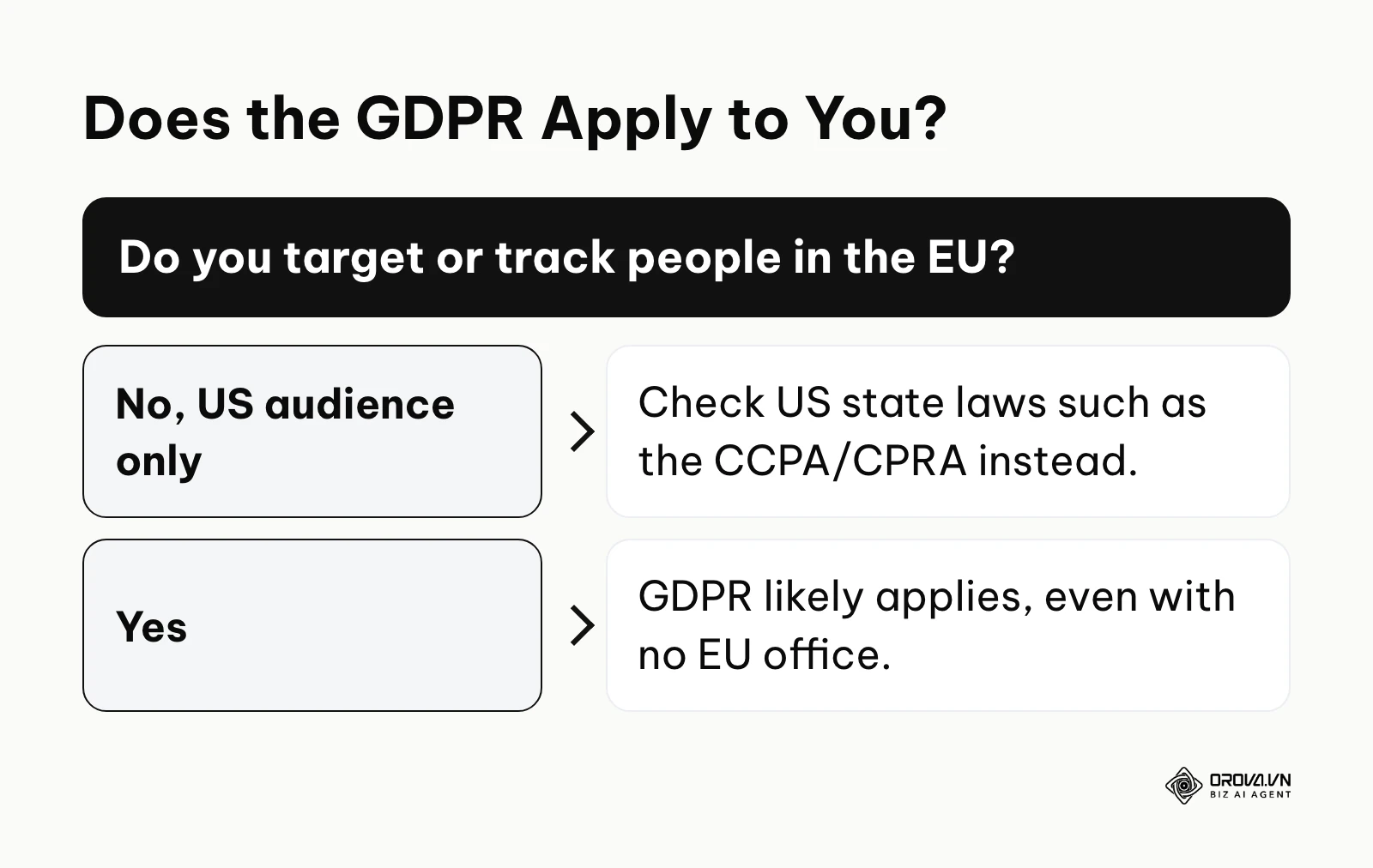
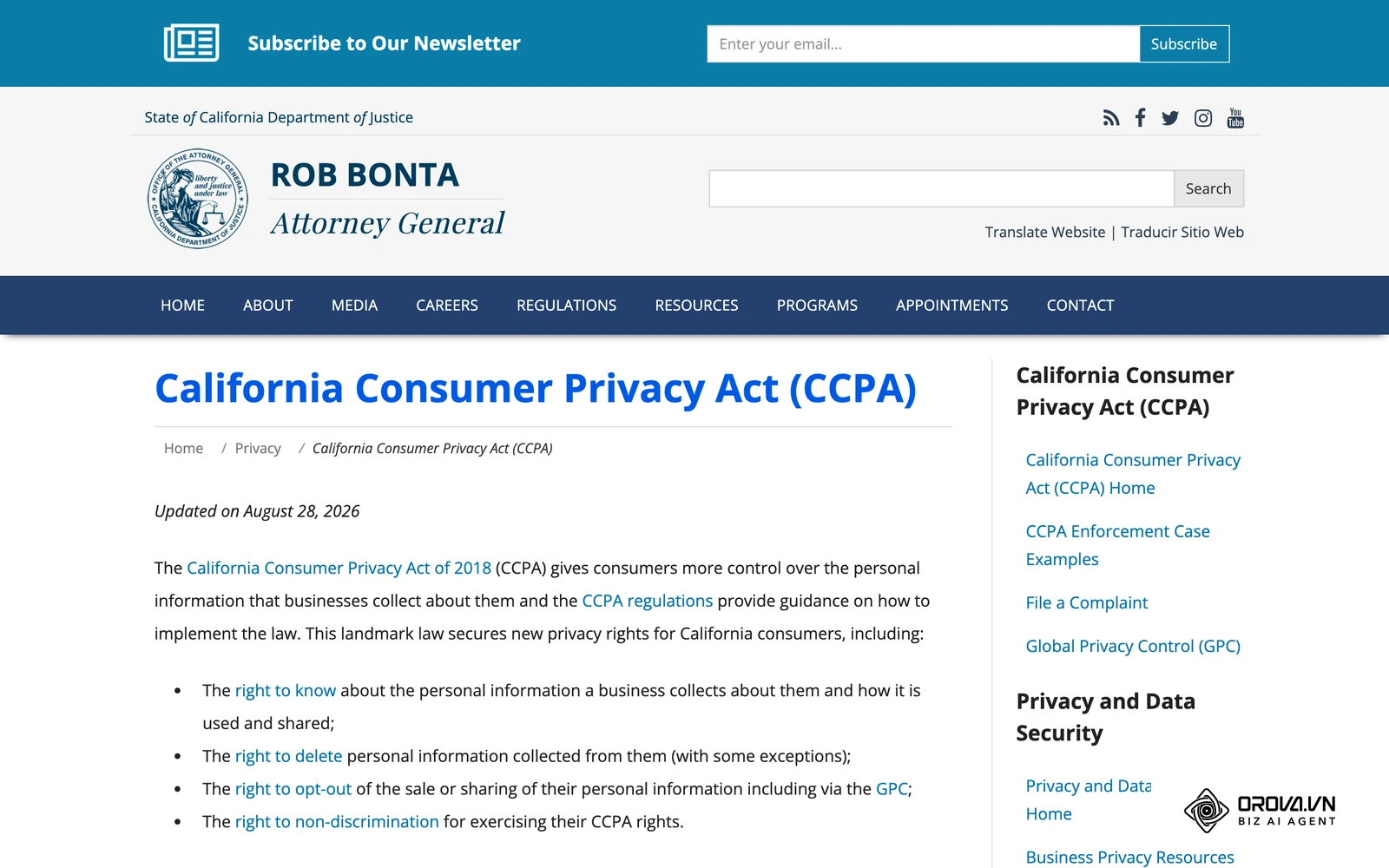
What to do: You must ensure that your data collection practices comply with the General Data Protection Regulation (GDPR) for people in the EU and the California Consumer Privacy Act, as amended by the CPRA, for California residents. Under the GDPR, consent must be freely given, specific, informed, and unambiguous. You need to implement a robust Consent Management Platform (CMP) that captures explicit permission before firing any tracking scripts. Furthermore, you must provide users with an accessible way to request the deletion of their data (the Right to Be Forgotten).
How to do it:
- Install a recognized CMP on your website that blocks non-essential cookies until the user explicitly clicks "Accept."
- If the CCPA applies to you and you sell or share personal information, provide the opt-out link the law requires (often labeled "Do Not Sell or Share My Personal Information") and check the exact wording with your counsel.
- Establish a standard operating procedure (SOP) for handling data deletion requests within the deadline set by each law that applies to you (under the GDPR, generally within one month).
- Map every tracking tag on your site, including your Facebook Pixel tracking setup, so you know which scripts the consent banner must block.
- Regularly audit your CRM to ensure you have a timestamp and source of consent for every single contact.
Signs you are doing it right: Your CMP dashboard clearly logs consent rates, your legal inbox has a documented trail of successfully fulfilled data deletion requests, and your analytics platforms only register sessions from users who have actively opted in.
Common errors: Using pre-ticked consent boxes (which do not count as valid consent under the GDPR), assuming that B2B data is exempt from privacy laws, or failing to realize that GDPR applies to your US-based company simply because you have website visitors from Europe.
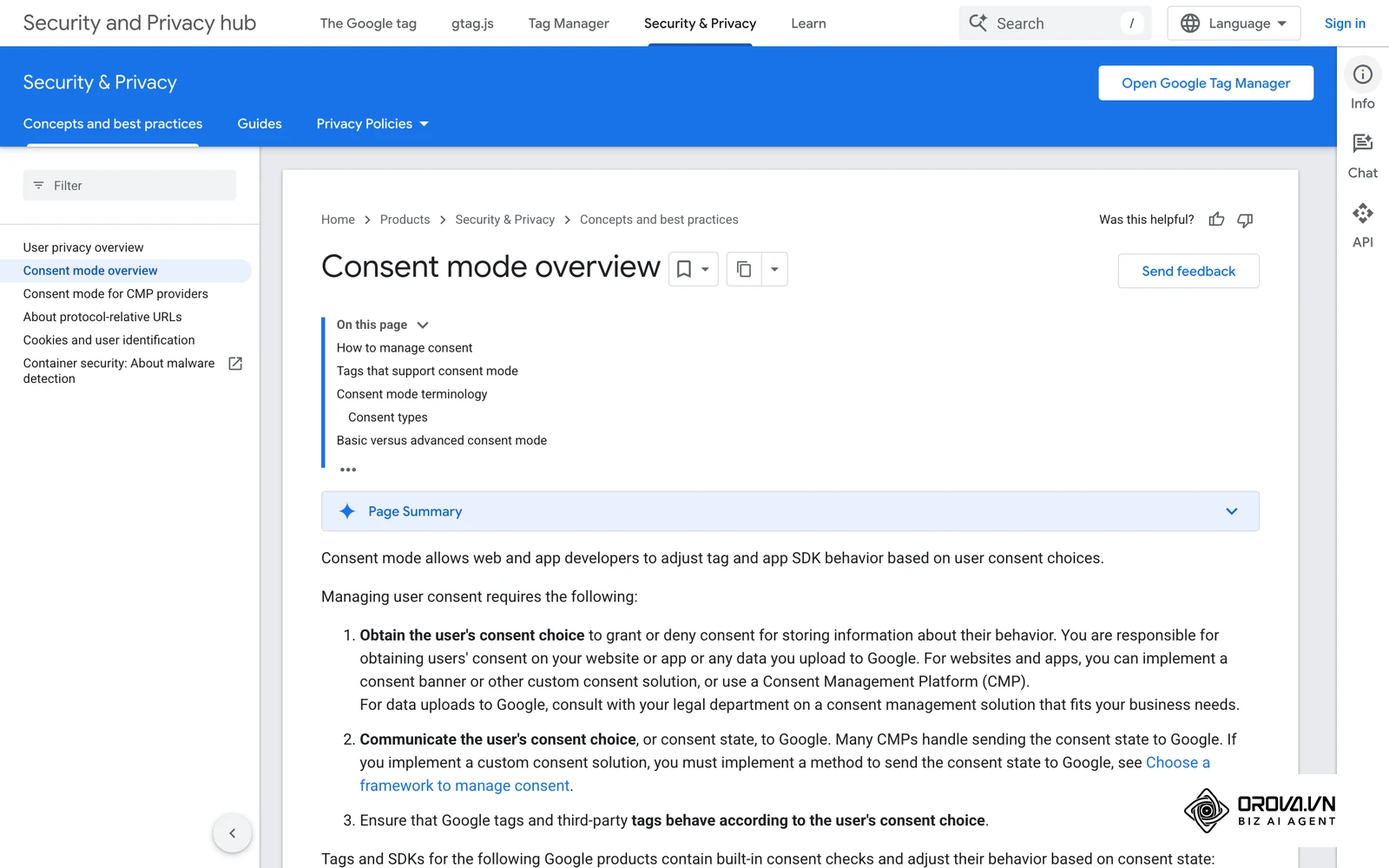
Illustrative example: Consider a mid-sized global e-commerce brand led by a proactive Marketing Manager. The team mapped their entire data flow across various marketing platforms and implemented a strict opt-in cookie banner using a consent management platform. However, they stumbled when a large share of sessions disappeared from their analytics reports, weakening their campaign attribution. To resolve this issue, the team configured Google Consent Mode, which adjusts how Google tags behave based on each visitor's consent choice and can use modeling to fill some of the measurement gaps. The outcome was a clearer, consent-based measurement setup that the legal team could sign off on, while the marketing team still had enough data to compare campaigns.
Step 2: Standardize Email and Text Message Marketing Practices (CAN-SPAM & TCPA)
Email and Text Messages remain two of the most profitable marketing channels, but they are also the most heavily regulated in terms of direct communication. Under the TCPA, liability is typically counted per message, so a careless text message blast can turn into a costly legal problem.
What to do: You must align your outreach strategies with the CAN-SPAM Act for email and the Telephone Consumer Protection Act (TCPA) for text messages. This means you must not use misleading headers or subject lines, you must provide a clear way to opt out, and you must identify your business in every communication. Purchased lists are a poor fit for these rules because you cannot prove the contacts asked to hear from you, and texting without the right consent is a core TCPA risk. When planning any marketing campaign, ensuring your distribution lists are clean is paramount.
How to do it:
- Ensure every single promotional email contains a valid physical postal address.
- Verify that your unsubscribe link is functional and processes opt-outs within 10 business days.
- For text messages, collect clear written consent for marketing texts; many brands add a double opt-in step where the user replies "YES" to confirm, which also gives you a record.
- Clearly state messaging frequency (e.g., "Max 4 msgs/month") and carrier data rates on the signup form.
Signs you are doing it right: Your email deliverability rates are high, your spam complaint rate stays very low (Google's sender guidelines ask bulk senders to keep it under 0.1%), and your texting platform automatically filters out any numbers that have replied "STOP."
Common errors: Hiding the unsubscribe link by making the font color match the background, sending marketing texts at night or outside the calling hours the rules allow, or assuming that an email opt-in automatically grants you permission to send marketing text messages.
Step 3: Implement Generative AI Marketing Compliance
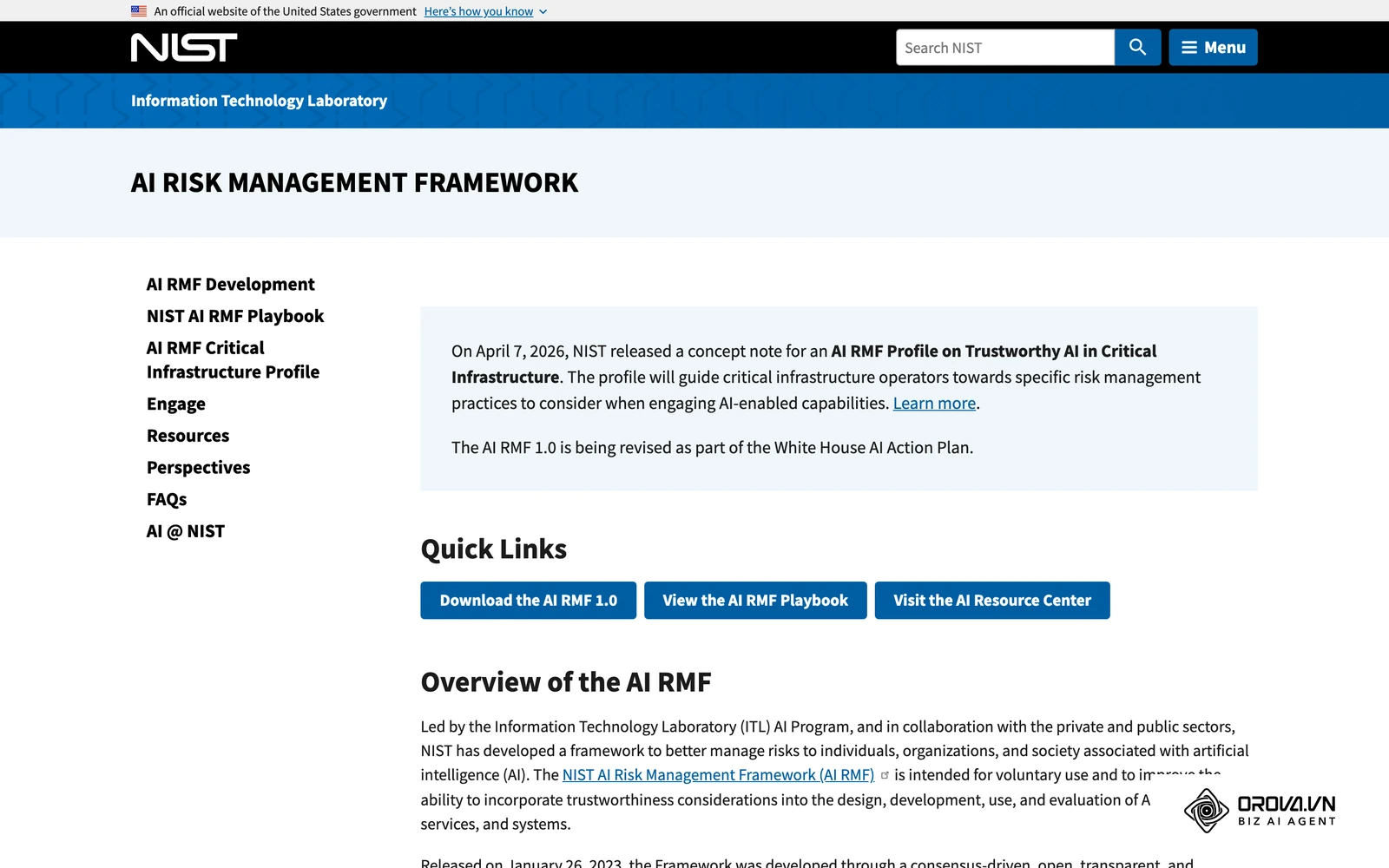
The integration of artificial intelligence into marketing workflows has outpaced the legal frameworks designed to govern it. However, as outlined in the AI Risk Management Framework released by the National Institute of Standards and Technology (NIST) in 2023, transparency and accountability are core qualities of trustworthy AI systems. The framework is voluntary guidance, not a law, but it is a useful checklist for internal AI rules.
What to do: You must establish strict rules for how your team uses AI to write copy, generate images, or analyze data. This involves ensuring you are not accidentally committing copyright infringement, leaking confidential company data into public LLMs, or misleading consumers with hyper-realistic AI-generated endorsements (deepfakes). The tools you choose matter immensely, which is why selecting compliant ai marketing automation tools is a critical step for modern agencies.
How to do it:
- Read the terms of every AI tool (like ChatGPT or Midjourney) and use plans whose terms allow commercial use and protect the data you enter. Keep in mind that whether purely AI-generated output can be protected by copyright is still unsettled in many countries.
- Implement a mandatory "Human-in-the-Loop" policy, requiring a human editor to review all AI-generated text for factual accuracy and plagiarism.
- Add clear disclosure tags (e.g., "Image generated by AI") to visual assets that depict realistic people or events to avoid deceiving consumers.
- Train your team never to input personally identifiable information (PII) or proprietary trade secrets into public AI prompts.
Signs you are doing it right: Your team has a documented list of approved AI tools, every AI-generated asset is logged in a central repository, and your content passes a plagiarism check and a human fact-check before publication.
Common errors: Believing that because an AI generated an image, it is automatically free from copyright claims; using AI to write fake customer reviews (the FTC treats fake reviews and testimonials as deceptive); or failing to disclose AI usage when required by platform policies.
Illustrative example: Picture a B2B SaaS agency where the Content Lead aggressively integrated generative tools into their workflow. The team generated blog drafts using ChatGPT and created feature images via Midjourney, publishing them rapidly to scale their content output. A significant stumble occurred when a client asked whether the images could be used commercially, and nobody had checked the terms of the plans the team was using. To fix this, management moved the team onto plans whose terms covered commercial use, added explicit AI disclosure tags where images showed realistic scenes, and made a plagiarism check and human review mandatory. The result was a documented process the agency could show clients, which made enterprise buyers more comfortable working with them.
Step 4: Regulate Influencer and Third-Party Partnerships (FTC)
Brands often mistakenly believe that once they pay an influencer or an affiliate, the legal liability shifts entirely to that third party. This is fundamentally incorrect. Regulators such as the FTC expect brands to train, monitor, and correct the influencers they hire, and both the brand and the influencer can be held responsible. Paid endorsements are a form of social proof, and that persuasive power is exactly why they must be labeled honestly.
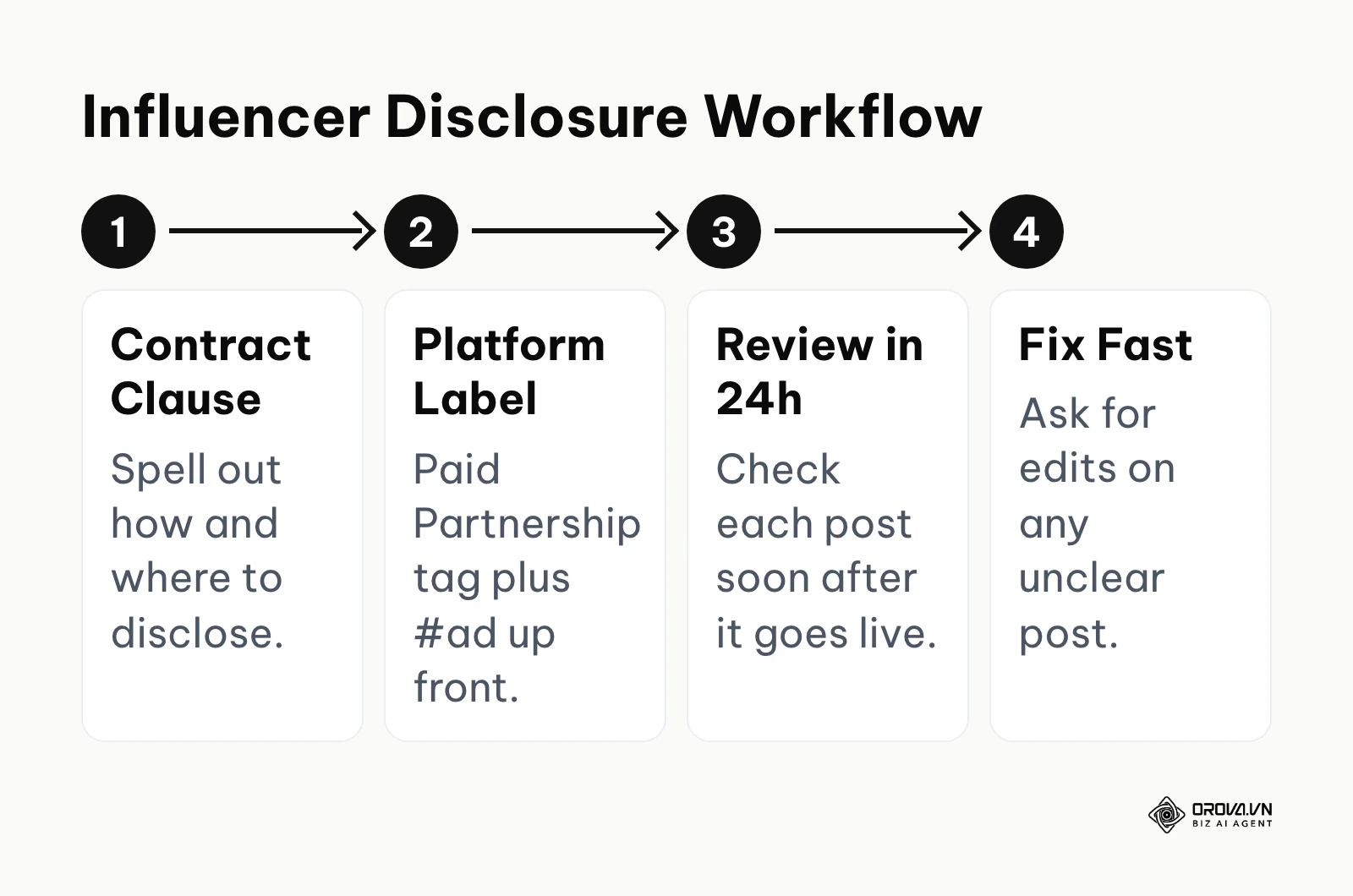
What to do: You must rigorously enforce the FTC guidelines on endorsements and testimonials. Based on the FTC Endorsement Guides updated by the Federal Trade Commission in 2023, any material connection between a brand and an endorser must be clearly and conspicuously disclosed. This means #ad cannot be hidden in a sea of other hashtags or placed "below the fold" in a caption.
How to do it:
- Incorporate a strict compliance clause into every influencer contract, specifying exactly how and where disclosures must be made.
- Require influencers to use platform-specific disclosure tools (like Instagram's Paid Partnership label) together with a clear written disclosure; the FTC does not treat a platform tool alone as automatically sufficient.
- Implement a monitoring system to review influencer posts within 24 hours of going live to ensure compliance.
- Use this Swipe File for your influencer contracts: "I acknowledge that as a brand partner, I must clearly and conspicuously disclose my connection to [Brand Name] in all promotional posts using #ad or #sponsored at the very beginning of the caption, and verbally in video content, as required by FTC guidelines."
Signs you are doing it right: Every piece of sponsored content associated with your brand is instantly recognizable as an advertisement, your influencer onboarding process includes a compliance training document, and you have a track record of asking influencers to edit non-compliant posts.
Common errors: Allowing influencers to use ambiguous hashtags like #partner, #collab, or #sp; assuming that a video shoutout doesn't require a verbal disclosure if there is a hashtag in the description; or failing to actively monitor what affiliates are saying about your product.
Step 5: Secure High-Conversion, Compliant Opt-in Forms
A massive challenge marketers face is balancing the strict requirements of compliance with the need for high conversion rates. Many believe that making a form legally watertight will inherently destroy its ability to generate leads.
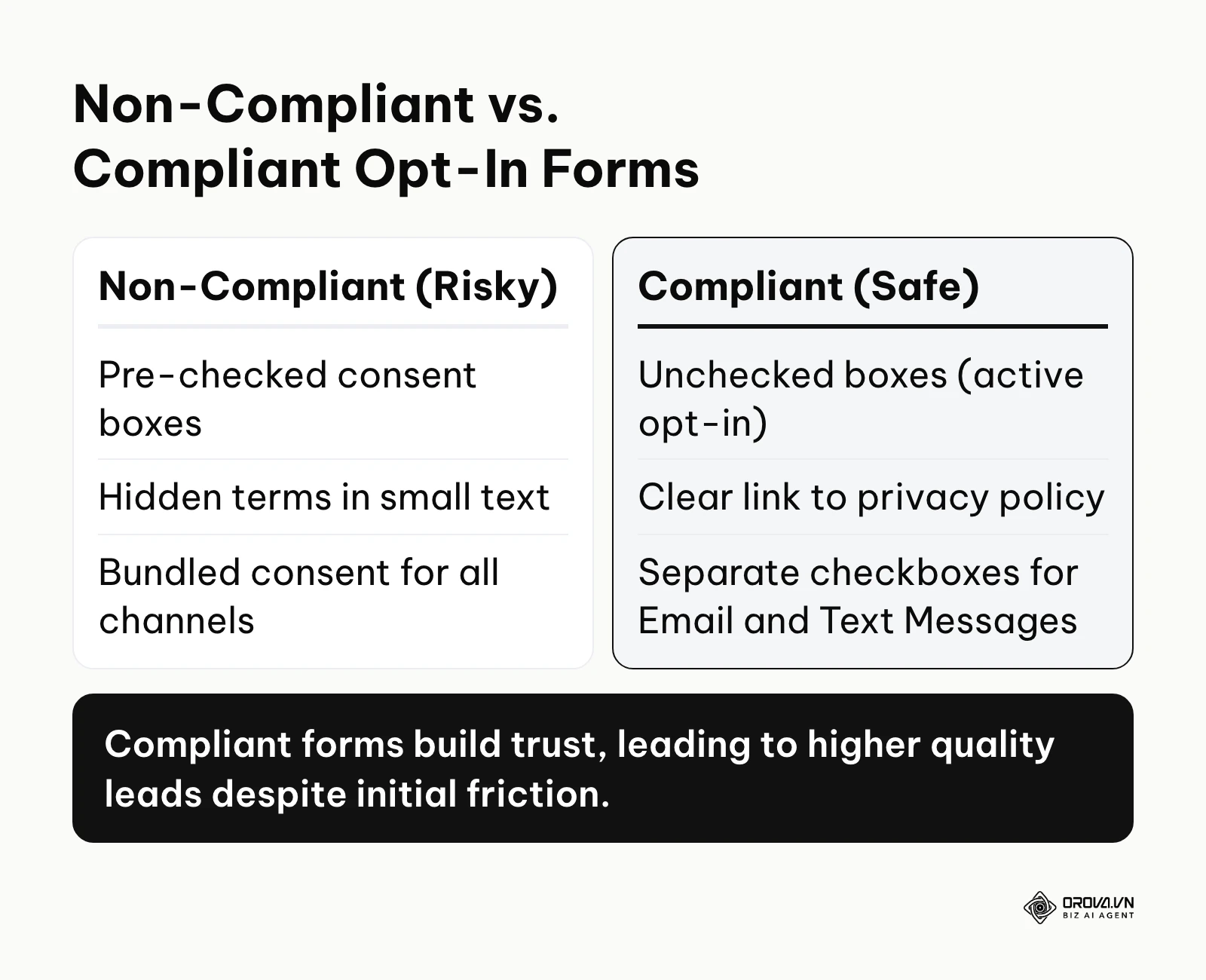
What to do: You must design forms that achieve explicit, unbundled consent without overwhelming the user with legal jargon. The same rule applies to native lead forms on ad platforms; if you run lead form ads, add your own consent checkboxes and privacy link inside the form. This requires an understanding of user experience (UX) design applied to legal frameworks. The goal is to make the act of giving consent feel like a natural, trustworthy part of the transaction rather than a trap.
How to do it:
- Never use pre-checked boxes for marketing communications. The user must actively click the box to signify consent.
- Unbundle your consent requests. Provide one checkbox for "I agree to the Terms of Service" and a completely separate checkbox for "I want to receive promotional emails."
- Place a brief, plain-English summary of your privacy promise directly below the email input field (e.g., "We will never sell your data. Unsubscribe anytime.").
- Utilize a two-step opt-in process where the user first provides their email for a core asset, and is then asked on the next screen if they want to join the newsletter.
Signs you are doing it right: Your lead volume remains stable, the quality of your leads actually improves because they are actively interested, and your legal team is satisfied with the clear audit trail of consent timestamps.
Common errors: Utilizing "dark patterns" (design tricks intended to confuse users into subscribing), hiding the link to the privacy policy, or forcing users to accept marketing emails as a condition of using a free tool or downloading an ebook (under the GDPR, consent that is forced in this way may not be valid).
Illustrative example: Imagine a Lead Generation Specialist working at a heavily regulated financial advisory firm. They designed a landing page featuring a comprehensive 5-field form, adding a mandatory, un-checked box requiring users to agree to both email and text message marketing simultaneously. The immediate stumble was a sharp drop in the conversion rate due to the high friction and demanding layout. To overcome this, the specialist redesigned the interface into a progressive 2-step form, effectively separating the core value proposition (the download) from the marketing opt-in checkboxes, while offering independent toggles for email and text messages. This fix brought the conversion rate back close to its earlier level while ensuring that every new database entry possessed a clean, explicitly documented consent log.
Step 6: Address Industry-Specific Risk Tiers (HIPAA, FINRA)
General marketing compliance is complex enough, but if you operate in specific sectors, you are subject to additional, stricter layers of regulation. A standard digital marketing compliance checklist is insufficient without adjusting for your specific risk tier.
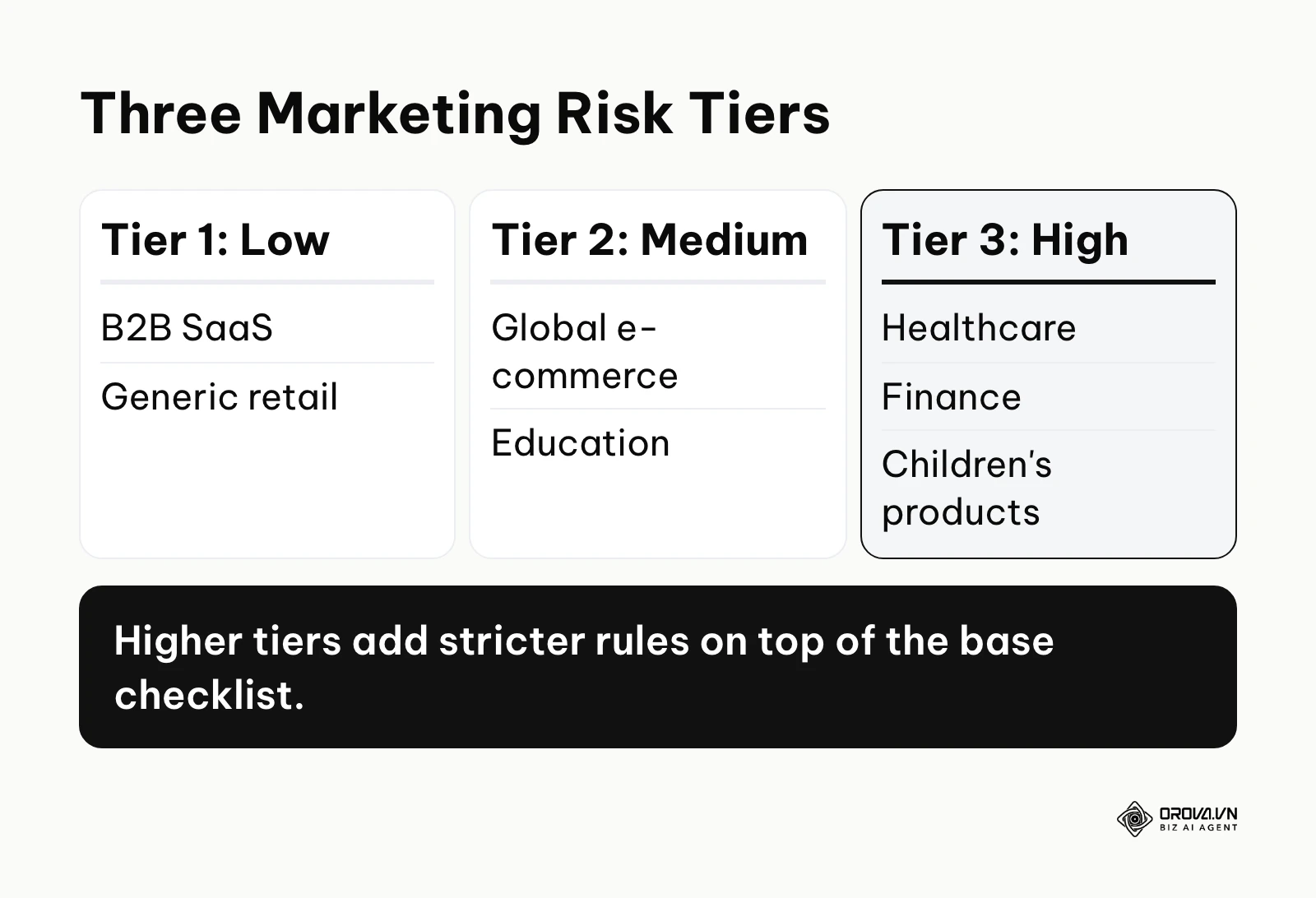
What to do: You must accurately identify your business's Risk Tier and apply the corresponding specialized legal frameworks. For example, US healthcare providers, health plans, and their vendors must follow the Health Insurance Portability and Accountability Act (HIPAA), which restricts how protected health information can be used for marketing, including through tracking technologies on websites. Broker-dealers in the US must follow the rules of the Financial Industry Regulatory Authority (FINRA), which include rules on communications with the public and record-keeping.
How to do it:
- Determine your tier: Tier 1 (Low Risk - B2B SaaS, generic retail), Tier 2 (Medium Risk - Global e-commerce, education), Tier 3 (High Risk - Healthcare, Finance, Children's products).
- If Tier 3 (Healthcare), audit your tracking pixels immediately. Ensure no protected health information (PHI) is being inadvertently sent to platforms like Facebook or Google. Where a vendor handles PHI on your behalf, HIPAA requires a Business Associate Agreement (BAA) with that vendor.
- If Tier 3 (Finance), ensure you have a system to archive business social media posts, comments, and emails for the retention period your rules require.
- Train your marketing team specifically on the language they are legally forbidden from using (e.g., guaranteeing a return on investment in finance, or promising a cure in healthcare).
Signs you are doing it right: You have specialized legal counsel reviewing campaigns, your vendors have signed the agreements your industry requires (e.g., a BAA with your CRM provider), and your team understands the boundaries of acceptable ad copy.
Common errors: Assuming a standard email marketing tool is ready for PHI without a BAA, allowing staff to respond to patient reviews on a Google Business Profile in a way that reveals PHI, or failing to archive edited social media posts in the financial sector.
Step 7: Build the Interactive Compliance Score Tracker
Reading about compliance is useless without a system to enforce it. The most effective way to ensure ongoing adherence is to transform this digital marketing compliance checklist into a living, interactive document that tracks progress across all campaigns.
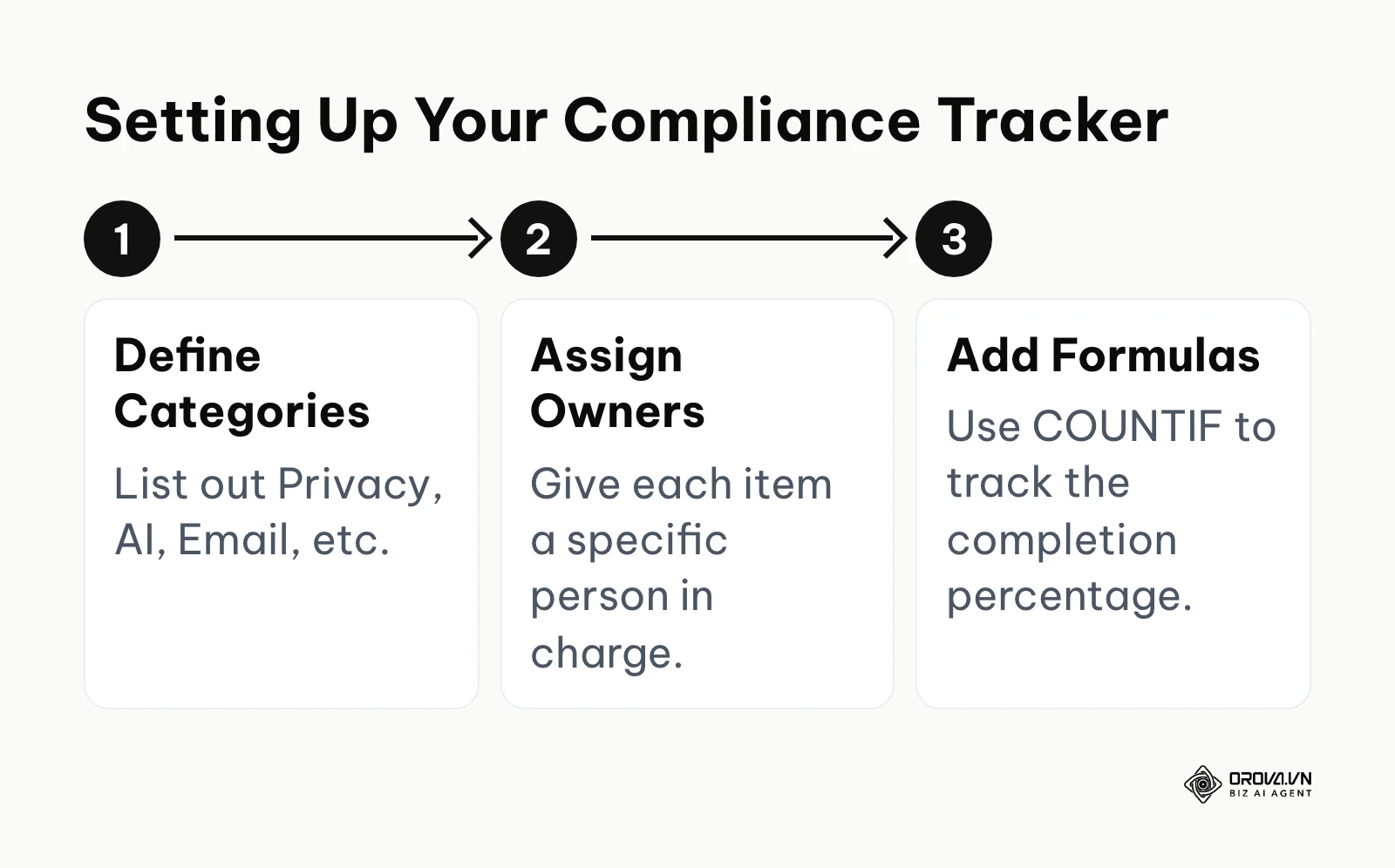
What to do: You need to build a Google Sheets template that acts as a centralized dashboard for your marketing and legal teams. This sheet should not only list the tasks but mathematically calculate your overall "Compliance Score" to quickly highlight areas of vulnerability.
How to do it:
- Create a Google Sheet with the following column headers: A: Category (e.g., AI Content, Privacy), B: Item to Check, C: Status (Dropdown: Done, In Progress, At Risk), D: Owner, E: Evidence Link (URL to policy).
- Populate the "Item to Check" column with the specific actions detailed in steps 1 through 6.
- In a prominent cell at the top, implement this exact formula to calculate your Compliance Score: =COUNTIF(C2:C50, "Done")/COUNTA(C2:C50). Format this cell as a percentage.
- Establish a rule that no campaign can be launched unless the Compliance Score is strictly at 100%.
Signs you are doing it right: The spreadsheet is actively updated by team members every week, the visual progress bar accurately reflects the team's effort, and there is zero ambiguity about who is responsible for which compliance task.
Common errors: Creating the spreadsheet but failing to assign specific owners to each row, allowing the "Evidence Link" column to remain empty, or treating the sheet as a one-time exercise rather than an ongoing operational requirement.
Step 8: Deploy Secure Data Syncing (Conversion APIs)
As web browsers continue to phase out third-party cookies and privacy regulations restrict client-side tracking, browser-only tracking is losing data and is harder to control. A pixel runs in the visitor's browser, so it can pick up more information than you intended to share.
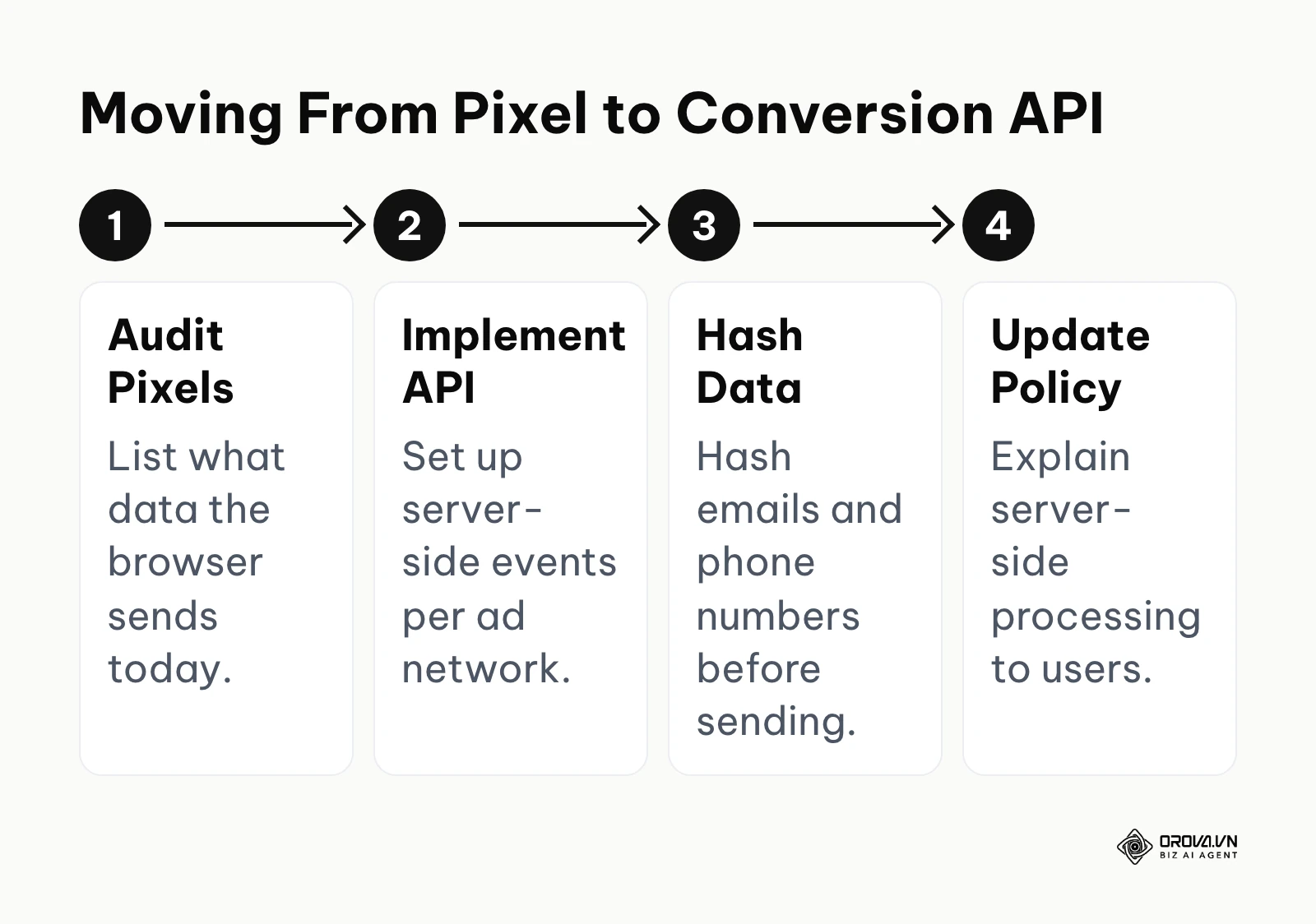
What to do: You must transition your tracking infrastructure from client-side pixels to server-side processing. Understanding what is the Conversion API is essential here. A Conversion API allows your server to communicate directly with an advertising platform's server, giving you more control over exactly which fields are shared. Server-side tracking still needs valid consent and a clear privacy policy; it changes how data travels, not whether you are allowed to send it.
How to do it:
- Audit your current pixel setup to identify what user data is currently being scraped directly from the browser.
- Work with your development team to implement Conversion APIs for your primary advertising networks (Meta, Google, TikTok).
- Configure your server to hash personal data (a one-way transformation, usually SHA-256, which platforms require for matching), such as email addresses and phone numbers, before transmitting it to the ad networks.
- Ensure your privacy policy is updated to explicitly explain to users that their data is being securely processed via server-side syncing.
Signs you are doing it right: Your ad platforms report high event match quality scores, your data flow is resilient against ad blockers, and your legal team approves the precise, limited data payload being sent to external vendors.
Common errors: Sending unhashed data through an API, duplicating events by running both a pixel and an API without proper deduplication logic, or failing to secure the server environment where the data processing occurs.
OROVA ADS applies AI Agent to automate and optimize ad performance on Google, Meta and TikTok. Scale your budget safely, monitor 24/7 and expand your business quickly.
Experience the solution at orova.vn/ads
Deep Analysis: Balancing Personalization and Privacy
The fundamental tension in modern digital marketing is the desire for hyper-personalization versus the legal mandate for strict privacy. Marketers know that personalized ads drive higher ROI, but achieving that personalization often requires aggressive data collection practices that skirt the edges of compliance.
Navigating this trade-off requires strategic thinking. You cannot rely on a single approach; you must evaluate different methodologies based on your company's risk tolerance, technical capabilities, and the specific geographic regions you serve. Choosing the right marketing analytics tools can make or break your ability to balance these conflicting priorities.
The table below breaks down the three primary approaches to balancing personalization with privacy, highlighting when to use them and their inherent weaknesses.
| Method | Best Used When... | Core Weakness |
|---|---|---|
| First-Party Data Strategy | You have a strong brand community, high website traffic, and a robust CRM capable of tracking logged-in user behavior. | Slow to scale; requires significant upfront investment in content to convince users to create accounts. |
| Contextual Advertising | Operating in highly regulated industries (like healthcare) where tracking individual user behavior is legally dangerous. | Lower immediate conversion rates compared to behavioral targeting; difficult to measure precise attribution. |
| Server-Side Tracking (APIs) | You rely heavily on paid media (Meta/Google Ads) and need precise attribution without exposing data in the browser. | Technically complex to set up; requires ongoing developer maintenance to ensure deduplication and data hashing are functioning correctly. |
Ultimately, the most successful brands employ a hybrid approach. They use contextual advertising to cast a wide, compliant net for top-of-funnel traffic, and they rely on robust first-party data strategies secured by server-side APIs to drive high-converting, personalized experiences at the bottom of the funnel.
Measuring Compliance Success: Audits and Metrics
Compliance is not a static state; it is an ongoing process that must be measured and monitored just like any other marketing key performance indicator (KPI). If you cannot quantify your compliance efforts, you cannot prove to stakeholders (or regulators) that your systems are actually working.
To effectively measure success, you must move beyond binary "pass/fail" thinking and implement specific tracking metrics. Monitoring the right marketing dashboard kpis ensures that legal requirements are visibly integrated into your daily performance reviews.
Review the table below to understand the core metrics you should be tracking to gauge your compliance health.
| Compliance Metric | What It Means | Red Flag Threshold |
|---|---|---|
| Consent Opt-in Rate | The percentage of website visitors who explicitly agree to your cookie policy and data tracking. | A sudden drop against your own baseline after a site or banner change, which may mean the banner is broken or confusing. |
| Data Deletion Turnaround | The average time it takes your team to fully process and execute a user's "Right to be Forgotten" request. | Getting close to the legal deadline that applies (under the GDPR, generally one month). |
| Spam Complaint Rate | The percentage of recipients who actively mark your marketing emails as spam or junk. | Anything above 0.1%, the level Google's sender guidelines ask bulk senders to stay under; higher rates can push mail into spam folders. |
| Vendor Audit Completion | The percentage of your third-party tools and agency partners that have signed updated compliance agreements this year. | Less than 100%. A single non-compliant vendor can expose your entire operation to liability. |
By tracking these numbers diligently, you transition your marketing department from a reactive state—waiting for a legal notice to arrive—into a proactive powerhouse that uses transparency as a competitive advantage.
Want to scale your budget but afraid of breaking performance? 📉
Integrate OROVA ADS now - an AI Agent that automatically monitors and optimizes Google, Meta, TikTok ads 24/7. Now, expanding and replicating your Performance Ads team is just one click away.
🚀 Try it now at: orova.vn/ads
Common Compliance Mistakes and How to Fix Them
Even with a robust digital marketing compliance checklist in hand, marketing teams frequently fall into predictable traps. These mistakes often stem from a desire to move quickly or a misunderstanding of how technology interacts with the law.
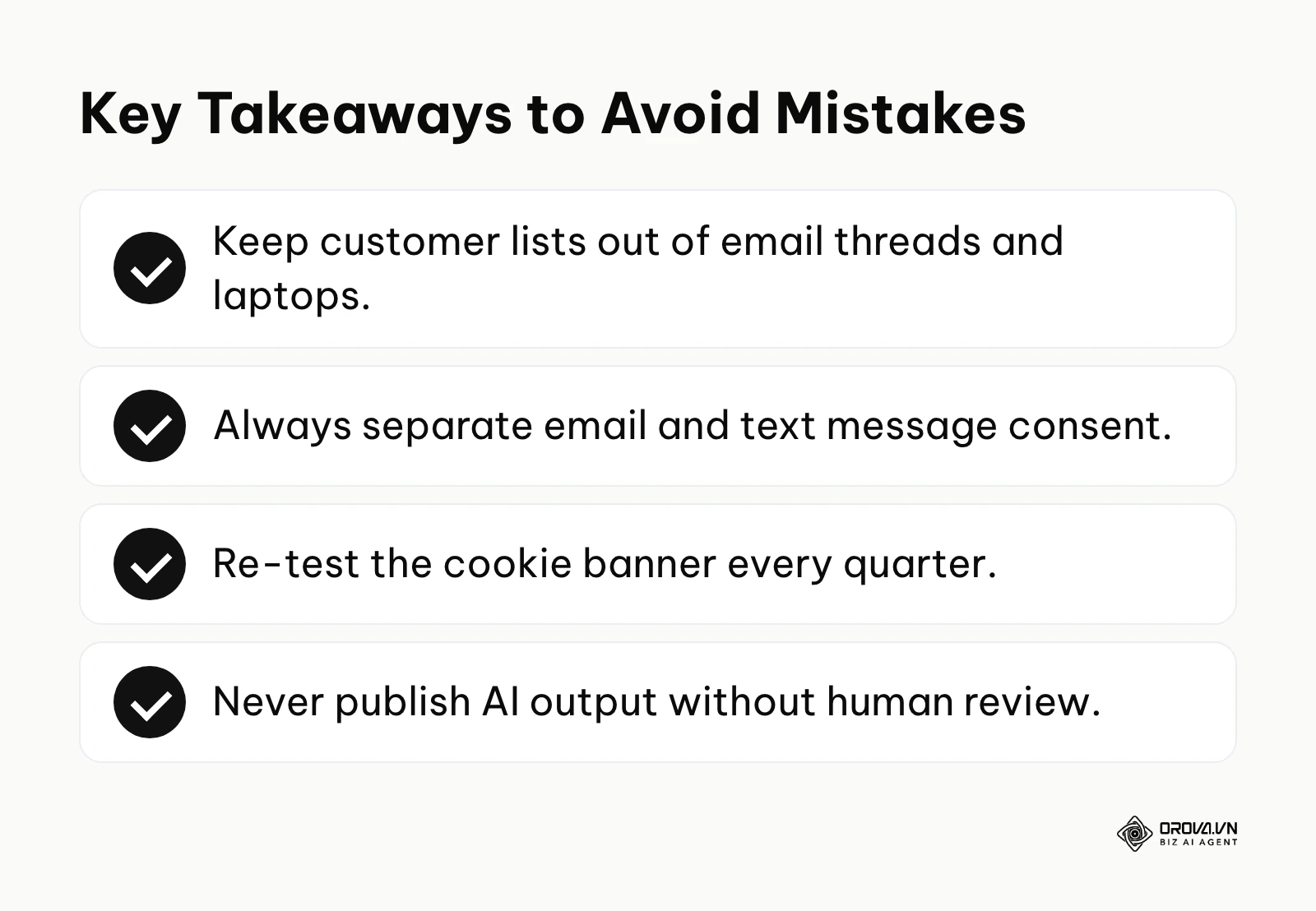
- Customer Lists Passed Around by Hand
Many marketers download customer lists as spreadsheets and upload them to different ad networks, leaving copies on laptops and in email threads. Each copy is a data leak waiting to happen, and nobody can say which contacts gave consent for ad targeting. The Fix: Upload only contacts with a recorded consent basis, delete local exports after upload, and keep a log of which list went to which platform and when.
- The "Set It and Forget It" Cookie Banner
Many brands install a consent banner tool once and never check it again. Website updates, new plugins, or changes in tracking pixels can easily bypass an old banner. The Fix: Schedule a quarterly technical audit. Clear your browser cache, visit your site, and verify that no tracking scripts fire before you click "Accept."
- Ignoring the Extraterritorial Reach of Laws
A common mistake among US-based marketers is believing GDPR doesn't apply to them because they don't have offices in Europe. If your website actively targets or monitors the behavior of EU residents, you are legally bound by GDPR. The Fix: Use analytics to determine your geographic traffic breakdown. If EU traffic is significant, implement global compliance standards rather than trying to geofence your policies.
- Bundled Consent Traps
Forcing users to agree to your privacy policy, email newsletter, and text message alerts with a single checkbox is illegal in many jurisdictions. Consent must be granular. The Fix: Redesign your forms. Provide independent checkboxes for each specific type of communication you wish to send.
- Blind Faith in AI Outputs
Publishing AI-generated content without human oversight can lead to copyright problems, as AI models can sometimes reproduce material close to their training data, and to false claims in ads. The Fix: Mandate a plagiarism check for all text, and require human editors to verify all factual claims and image usage rights before publication.
The Future of Marketing Compliance in 2026 and Beyond: Author's Opinion
Looking closely at the current trajectory of data privacy and technological advancement, I believe the landscape of marketing compliance is about to undergo a radical shift. Here are my three core predictions for where we are heading in the next few years.
AI-Powered Real-Time Auditing
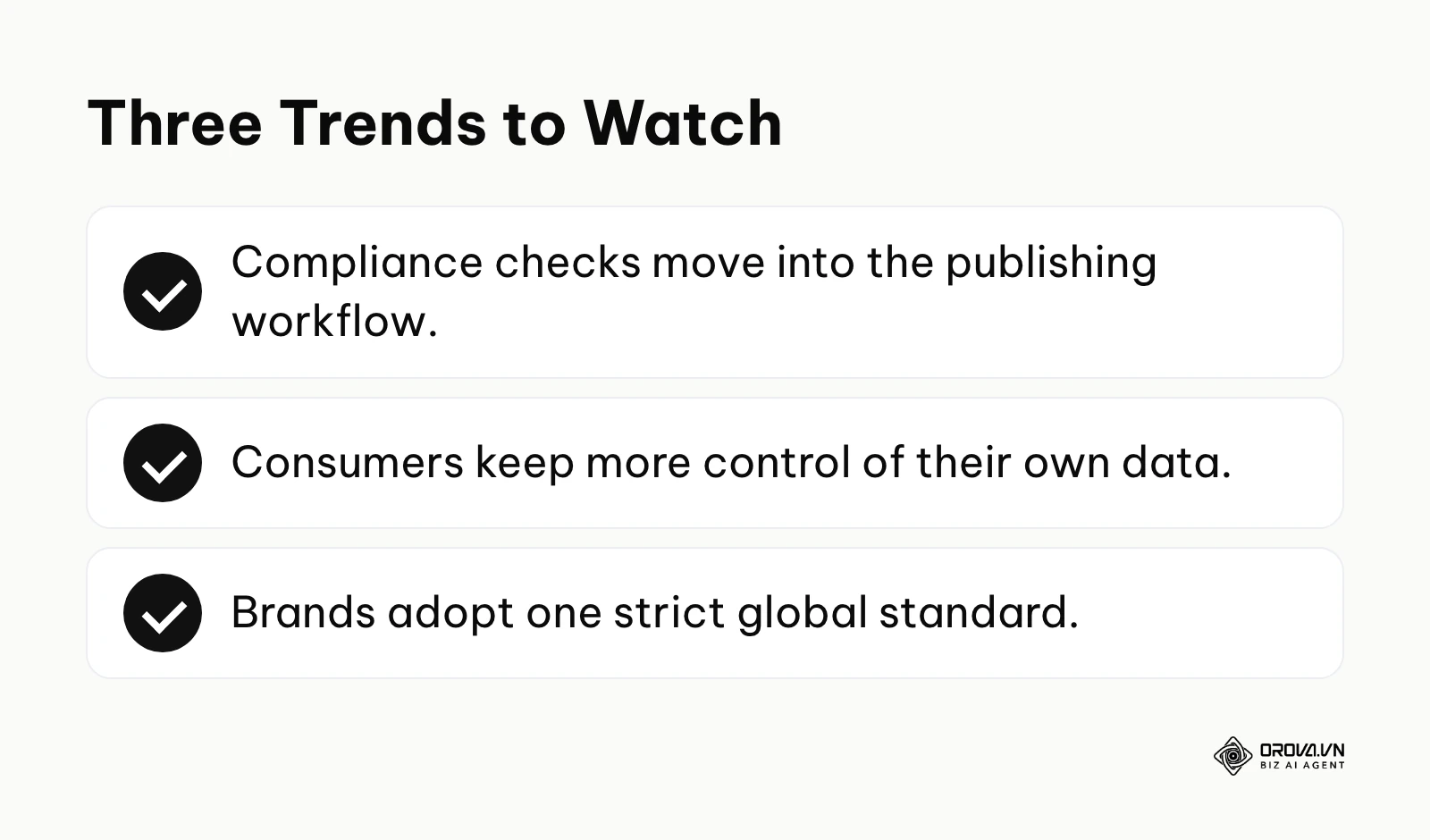
Currently, compliance is largely a retrospective exercise—we audit campaigns after they are built or launched. Given the rapid advancement of AI models that can comprehend complex legal jargon, I expect a growing share of compliance checks to move into the publishing workflow itself. AI assistants inside content management systems and ad platforms will increasingly flag non-compliant language, missing disclosures, or unauthorized image usage before the "Publish" button can even be clicked. To prepare, marketers should start categorizing their historical compliance errors to eventually train these custom AI models. However, this prediction could be invalidated if regulatory bodies decide that automated AI legal checks do not satisfy the requirement for "human oversight."
The Rise of "Zero-Party" Data Portability
We are already seeing the death of the third-party cookie. I strongly believe that the future belongs to "zero-party data"—information that a customer intentionally and proactively shares with a brand. Looking ahead, I would not be surprised to see more rules and tools that strengthen data portability, moving toward a model where consumers keep more of their data under their own control. In that world, marketers would collect less and ask for access more often. You need to prepare by shifting your strategy from data extraction to data exchange—focusing entirely on what tangible value you can offer a user in exchange for a temporary key to their data vault.
Global Standardization Driven by Commerce
Right now, navigating the patchwork of state-level laws in the US (CCPA, VCDPA) alongside global laws (GDPR, PIPEDA) is a nightmare for global brands. I lean toward the opinion that the immense friction this causes to international commerce will push the market toward a de facto global standard. Driven by major tech platforms enforcing the strictest common denominator across their entire ecosystems, marketers will naturally adopt a unified, global compliance posture rather than juggling regional rules. Marketers should stop trying to build localized compliance policies and instead immediately adopt the strictest global standard (usually GDPR) for all users, regardless of geography.
Frequently Asked Questions about Digital Marketing Compliance
Does my small, US-only business really need to worry about GDPR?
If your business explicitly targets European consumers, prices in euros or other EU currencies, or monitors their behavior (e.g., through targeted advertising), GDPR applies to you regardless of your size or location. However, if your website simply happens to be accessible in Europe but you only ship locally within the US and do not target EU users, the risk is significantly lower. Always consult legal counsel to determine your exact exposure.
How do I legally use tools like ChatGPT or Midjourney for my marketing campaigns?
Start with the terms: use plans whose terms allow commercial use and do not use your inputs in ways you have not approved, and check them again when they change. Furthermore, you must never input sensitive customer data or proprietary company information into a public AI prompt. Disclose the use of AI where the content depicts realistic scenarios that could mislead a consumer, or where a platform's policy requires it.
What is the biggest risk when working with influencers?
The most significant risk is the brand being held liable for the influencer's failure to disclose the partnership. The FTC requires clear and conspicuous disclosures (like #ad or #sponsored) on all promotional content. If an influencer hides the hashtag or fails to include it, the FTC can take action against the brand that paid for the campaign, not just the individual influencer.
Are pre-checked email subscription boxes legal?
Under the GDPR, pre-checked boxes do not create valid consent; consent must be an active, affirmative action (the user must click the box themselves). The US CAN-SPAM Act works mainly on an opt-out basis, but relying on pre-checked boxes is widely considered a poor business practice that leads to high spam complaints and damages your domain reputation.
Where to Start?
Implementing a comprehensive digital marketing compliance checklist can feel overwhelming, especially if your current processes are unstructured. Do not attempt to fix everything in a single day. Instead, identify your current situation below and take the single, most impactful step immediately.
If you are a solo marketer overwhelmed by legal jargon: Do not try to interpret the laws yourself. Your very first step, which you can complete in one afternoon, is to audit your opt-in forms. Go to every landing page on your website and ensure that all checkboxes for email or text message marketing are unchecked by default, and that you have a clear, working link to your privacy policy right next to the submit button. This single action drastically reduces your immediate risk of violating basic consent laws.
If you manage a growing agency with multiple client accounts: Your immediate priority is standardizing your third-party vendor relationships. Spend your next working session drafting a universal "Compliance Rider" to attach to all your influencer and contractor agreements. This short document should explicitly state that the partner must use #ad on all sponsored posts and spells out what happens if they fail to follow FTC guidelines (have your lawyer review the wording). Getting this on paper protects your agency from the unpredictable actions of external creators.
If you work in a high-risk industry like healthcare or finance: Stop all new campaign launches and immediately initiate a data flow map. You must spend your next day tracing exactly where user data goes from the moment it hits your website. Identify if any protected health information (PHI) or financial data is accidentally being fed into Facebook or Google tracking pixels. If it is, pause those pixels immediately and bring in your legal counsel and development team; moving to a server-side setup only helps if the data you send is also cut down to what you are allowed to share.
About the author

Builder of Orova
Nguyễn Đỗ Trọng Ân has 8 years of experience in marketing, including 6 years managing market development across Asia. He builds Orova, a Biz AI Agent that never sleeps: it plans, runs and optimizes work for businesses.
Run your business with AI Agents
Orova is the always-on Biz AI Agent — it plans, runs, and optimizes the work for you.
Save time, unlock productivity.