
Marketing campaign guide: 8 steps, a budget template, and KPIs

A marketing campaign is a coordinated set of marketing activities, run for a fixed period with a dedicated budget, that moves one audience toward one measurable business goal. If you are staring at a spreadsheet full of red numbers and wondering why your last initiative did not produce the revenue you expected, the cause is rarely the graphics or the copy alone. Ad-hoc promotions without a shared objective, a budget logic, and working tracking drain money and leave you with fragmented data. This guide walks through an 8-step framework, a budget template you can copy, AI planning prompts, a Plan B for campaigns that underperform, and the KPIs and attribution setup you need to prove whether the campaign actually worked.
What is a marketing campaign?
A marketing campaign is a coordinated, strategic series of activities designed to achieve a specific business goal over a defined timeframe. Unlike general, day-to-day promotional activities, a campaign has a clear start and end date, a dedicated budget, and a central theme or message. The primary purpose is to move a specific target audience to take a desired action, whether that is downloading a whitepaper, purchasing a new product, or registering for a webinar.
Any business looking to scale operations, launch new products, or break into new markets must build campaigns. It forces alignment between your sales, product, and creative teams. However, you should avoid launching a full-scale campaign if your core product is heavily bugged, if your customer support infrastructure cannot handle a sudden influx of inquiries, or if you lack the fundamental tracking tools to measure the outcome. Running a campaign without proper attribution will result in wasted spend and zero actionable insights. Measurability is also what lets you defend the budget for the next campaign.
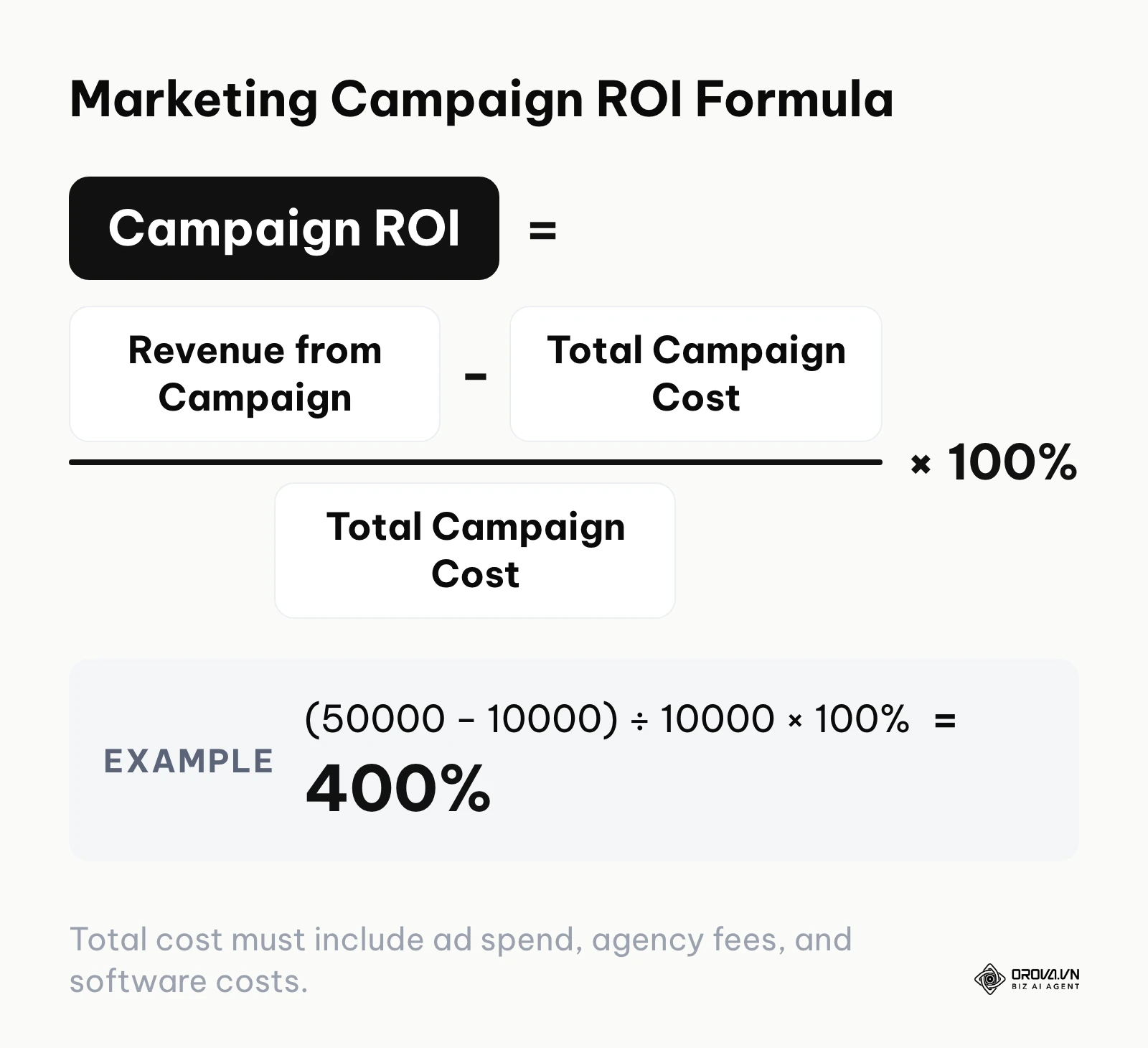
To judge any campaign, start from return on investment: campaign ROI = (revenue from the campaign − total campaign cost) ÷ total campaign cost × 100%. For example, a campaign that costs 10,000 dollars, counting ad spend, agency fees, and software, and brings in 50,000 dollars in revenue returns (50,000 − 10,000) ÷ 10,000 × 100% = 400%. These are illustrative numbers; the chart below shows the formula.
Preparation: What you need before launching
Jumping directly into an ad platform and creating campaigns without a foundation is the fastest way to burn through your cash reserves. You must establish a rock-solid infrastructure before spending a single dollar. This preparation phase is non-negotiable and requires inputs from multiple stakeholders across your organization.
| Required Item | Where to get it | Estimated Time to Complete |
|---|---|---|
| Historical Performance Data | Google Analytics, CRM dashboards | 2 to 3 days |
| Buyer Persona Profiles | Customer interviews, sales team feedback | 1 to 2 weeks |
| Campaign Brief Document | Collaborative sessions with key stakeholders | 3 to 5 days |
| Initial Budget Approval | Finance department or executive team | 1 week |
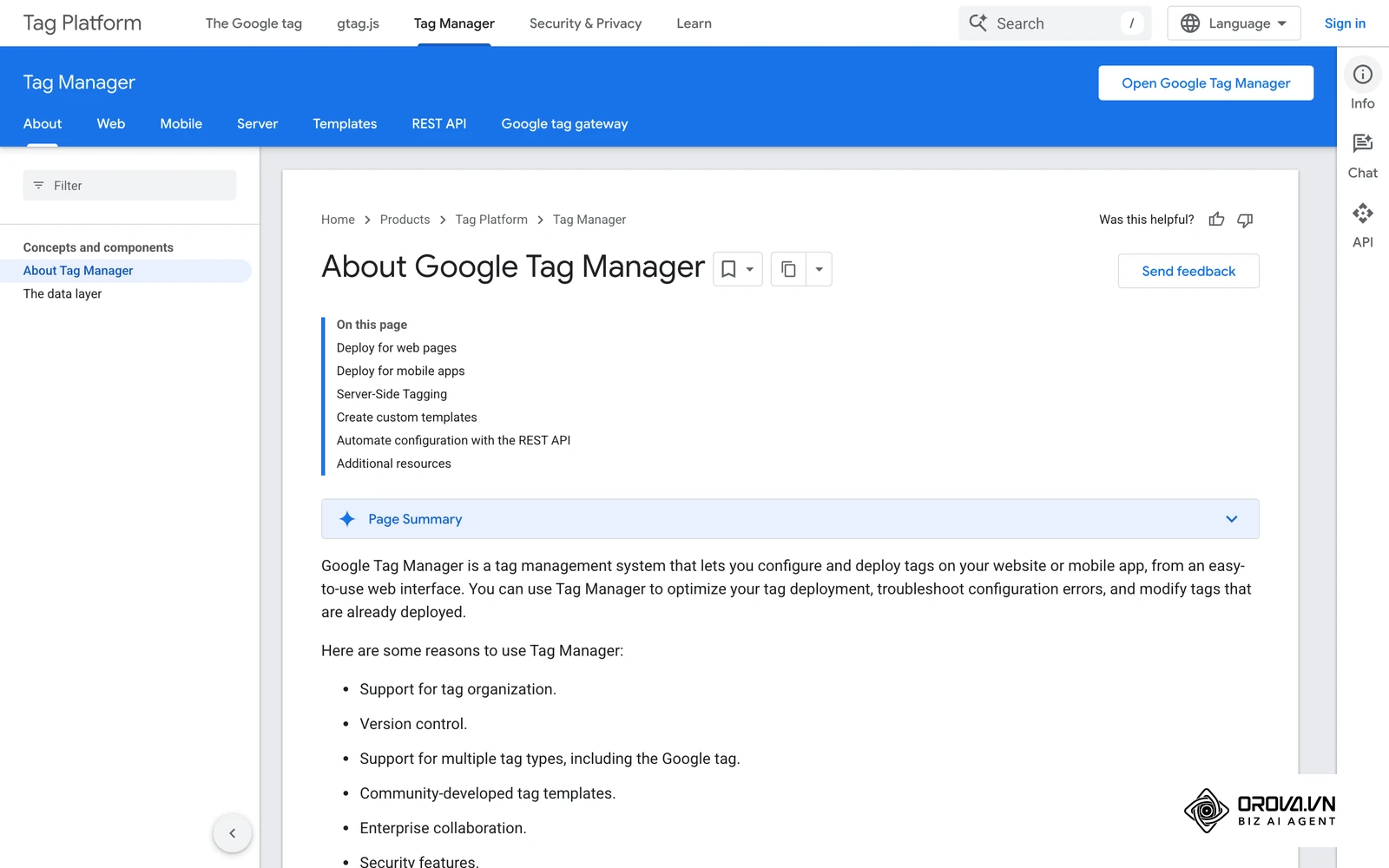
| Tracking Infrastructure | Google Tag Manager, Meta Pixel setup | 2 to 4 days |
A successful launch requires you to gather historical performance data first. You need to know your baseline metrics, such as your average conversion rate, cost per lead, and customer lifetime value. Without these baselines, you have no benchmark to determine if your new initiative is actually successful. Next, you must develop precise buyer persona profiles. You need to understand their pain points, the language they use, and where they spend their time online. Do not rely on assumptions; speak directly to your current customers.
You also need a formalized campaign brief document. This document acts as the single source of truth for everyone involved, detailing the core message, the visual identity, and the exact deliverables required from the design and copywriting teams. Obtaining initial budget approval ensures you have the resources necessary to reach your goals without abruptly halting operations mid-way. Finally, establishing your tracking infrastructure guarantees that every click, view, and form submission is accurately recorded and attributed to the correct source.
Illustrative example: a B2B software company launching a new feature.
- Context: The product marketing lead at a mid-sized SaaS company was tasked with promoting a newly developed feature to enterprise clients.
- Actions taken: They immediately launched LinkedIn Ads and Google Search Ads based on internal assumptions about what enterprise clients wanted. They bypassed customer interviews and did not set up specific conversion tracking for the new feature landing page.
- Hurdles and fixes: After two weeks, the cost per click was exceptionally high, and zero demo requests were generated. The lead paused all ads, conducted ten interviews with existing enterprise clients, and discovered the messaging focused on technical specifications rather than the actual business value. They also properly configured their tag manager.
- Results: By restarting the initiative with value-driven messaging and correct tracking, the company generated 45 qualified enterprise leads within a month, allowing them to clearly track the origin of every single lead.
The 8-step marketing campaign framework
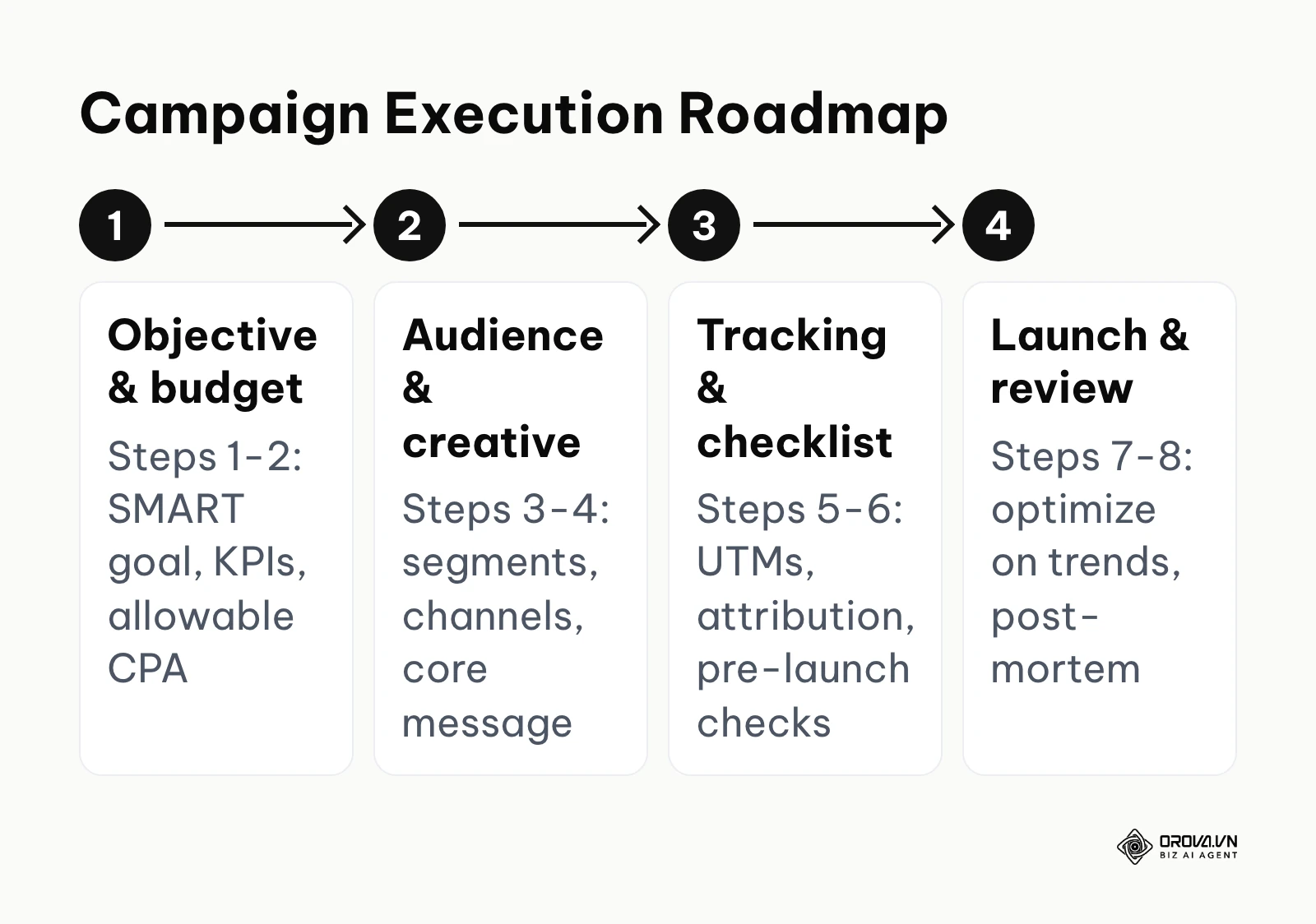
Executing a flawless campaign requires strict adherence to a proven framework. The following eight steps outline exactly what you must do, how to do it, the signs that you are on the right track, and the common pitfalls to avoid at each stage.
Step 1: Define the core objective and KPIs
Every successful initiative starts with a singular, clearly defined objective. You must decide exactly what you want to achieve before making any creative or financial decisions. This objective must be Specific, Measurable, Achievable, Relevant, and Time-bound. Do not settle for vague goals like increasing brand awareness. Instead, aim to generate 500 new marketing qualified leads within the next thirty days.
To do this effectively, align your marketing goals with your company's overarching revenue targets. If the sales team needs to close ten deals this quarter, calculate how many leads marketing must generate to support that goal based on historical conversion rates. Document this objective in your brief. The sign of a properly defined objective is that every team member can recite it clearly and understands exactly how their daily tasks contribute to it. The most common mistake at this stage is setting multiple, conflicting objectives, such as trying to maximize top-of-funnel traffic while simultaneously demanding immediate bottom-of-funnel conversions from the same narrow audience. Then pick one primary KPI that proves the objective (for a lead goal, cost per qualified lead; for a sales goal, return on ad spend) plus two or three supporting metrics, and write down the target value for each. If your team has not agreed on how to calculate marketing ROI, settle that definition with finance now, because your goals dictate your metrics.
Step 2: Formulate the budget and calculate ROI expectations
Once your goal is set, you must determine how much money it will take to achieve it. Budgeting requires you to move away from arbitrary numbers and adopt a mathematical approach based on your required outcomes and historical costs.
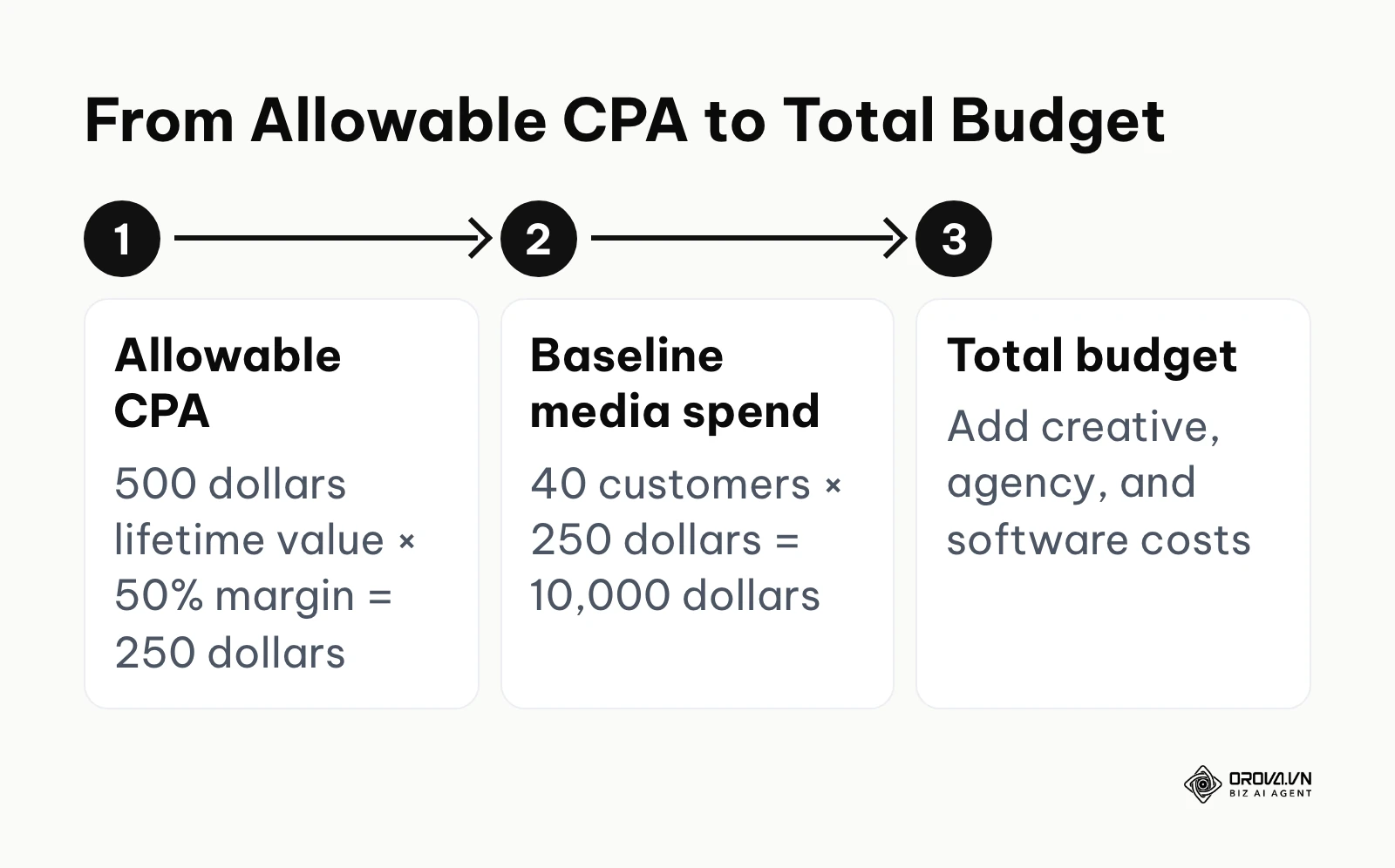
Calculate your budget by determining your maximum allowable cost per acquisition. If a new customer brings in five hundred dollars in lifetime value, and your profit margin is fifty percent, you cannot spend more than two hundred and fifty dollars to acquire them. Multiply your allowable cost per acquisition by the total number of acquisitions you need to reach your goal. This gives you your baseline media spend: if you need 40 new customers at an allowable 250 dollars each, the baseline is 40 × 250 = 10,000 dollars. You must then add the costs of creative production, agency fees, and software tools to determine your total required budget. You know you have done this correctly when finance approves the budget because the projected return on investment is clearly justified. A massive mistake here is failing to account for hidden costs, leading to campaigns that appear profitable on the ad platform but actually lose money for the business. Finance will often also ask how many months it takes to earn the acquisition cost back; your CAC payback period answers that question.
Step 3: Identify the target audience and channels
You cannot sell your product to everyone. You must rigorously narrow down your audience to the specific segment most likely to convert based on your current objective. Once you identify who they are, you must determine exactly which channels they use to consume information.
Start by analyzing your CRM data to identify common traits among your best customers. Look for patterns in job titles, industry sectors, geographic locations, and past purchasing behavior. Use this data to build tight audience segments in your advertising platforms. Next, match your audience to the appropriate channels. If you are targeting procurement managers, LinkedIn and targeted search ads are effective. If you are selling consumer goods, Meta and TikTok will likely yield better results. A strong sign of success in this step is when your audience size is small enough to be highly relevant but large enough to scale. The biggest error marketers make is selecting channels based on personal preference or industry hype rather than actual audience data.
Step 4: Craft the core message and creative assets
Your core message is the singular idea you want your audience to remember after interacting with your campaign. It must address a specific pain point and present your product as the ultimate solution. Your creative assets, including images, videos, and copy, are the delivery vehicles for this message.
Begin by utilizing established copywriting frameworks. The Problem Agitation Solution framework is highly effective. First, clearly state the problem your audience is facing. Second, agitate that problem by explaining the negative consequences of leaving it unresolved. Finally, present your product as the logical solution. Ensure your visual assets maintain a clear hierarchy, drawing the user's eye to your headline and call to action. You are on the right track when your creative team produces variations of the same message tailored to different stages of the buyer's journey. A critical mistake in this step is focusing too heavily on product features rather than the actual benefits and emotional outcomes the customer will experience.
Step 5: Set up tracking, UTMs, and attribution
Without proper tracking, you are flying blind. You must build an infrastructure that allows you to trace every single conversion back to the specific ad, email, or social post that generated it. This requires meticulous attention to detail and a strong grasp of data analytics.
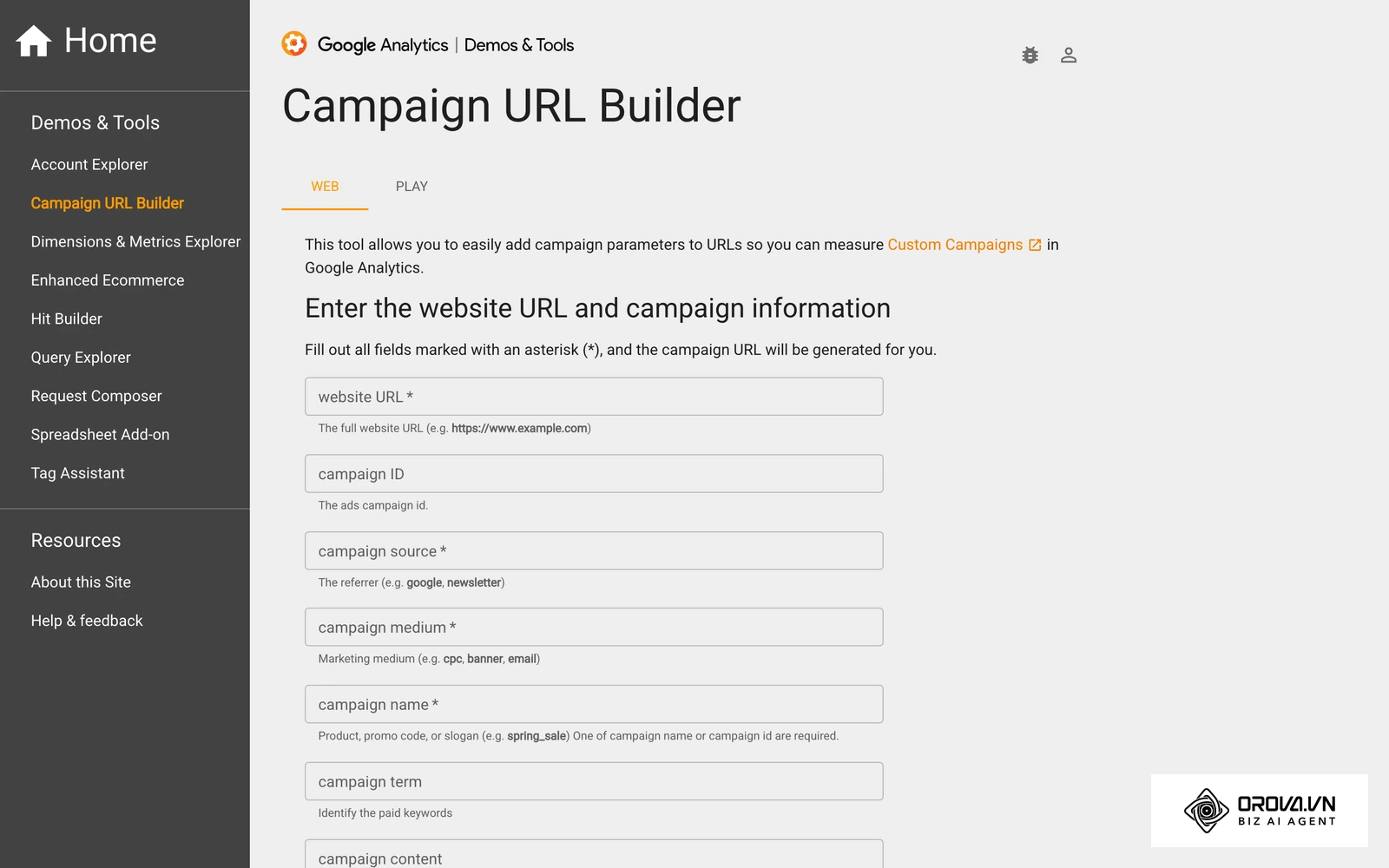
You must implement UTM parameters on every single link you distribute. A UTM parameter is a snippet of code added to the end of a URL that tells your analytics platform exactly where the traffic originated. You must consistently define the source, medium, and campaign name. For example, use utm_source for the platform like facebook, utm_medium for the channel like paid_social, and utm_campaign for your specific initiative. Furthermore, you must define your attribution model within your analytics platform. Will you give all credit to the last click, or will you distribute credit evenly across every touchpoint? A sign of perfect execution is a clean analytics dashboard where traffic is clearly categorized with minimal direct or unassigned sources. The most devastating mistake is launching a campaign with broken conversion tags, resulting in lost data that can never be recovered. For a deeper understanding, explore the data-driven marketing approach to tracking.
Step 6: Build the omnichannel pre-launch checklist
A campaign involves countless moving parts. Relying on memory to ensure everything is ready will inevitably lead to catastrophic errors. You must create an exhaustive pre-launch checklist that forces you and your team to manually verify every single element before going live.
Create a shared document accessible to everyone involved. Your checklist must include verifying that all landing page links are functional, testing form submissions to ensure data flows into the CRM correctly, checking ad copy for grammatical errors, confirming that daily budget limits are set correctly in the ad platforms, and ensuring that all automated email follow-up sequences are turned on. Assign a specific team member to physically check off each item. You know this step is successful when launch day arrives and there are no emergency fixes required. The most common pitfall is treating the checklist as a formality rather than a strict operational requirement.
Step 7: Execute, monitor, and optimize
Launching the campaign is only the beginning. The real work happens in the days and weeks that follow as you monitor performance and make continuous adjustments to improve efficiency. You cannot set it and forget it.
During the first forty-eight hours, your primary focus should be ensuring that the platforms are spending your budget correctly and that tracking tags are firing as expected. Do not make drastic changes to your creative or targeting during this initial learning phase, as algorithms need time to optimize. After the first week, begin aggressively optimizing. Pause underperforming ads, reallocate budget to the best-performing audiences, and launch variations of your winning creative to combat ad fatigue. A healthy sign of optimization is a steadily decreasing cost per acquisition over the campaign's lifecycle. A massive mistake is reacting too quickly to daily fluctuations in data; you must look at trends over several days to make informed decisions. If paid media is new to your team, review how an ad campaign is structured before you start optimizing one.
Step 8: Conduct the post-mortem analysis
When the campaign concludes, your work is still not finished. You must conduct a thorough post-mortem analysis to document what worked, what failed, and what you will do differently next time. This institutional knowledge is your most valuable asset for future growth.
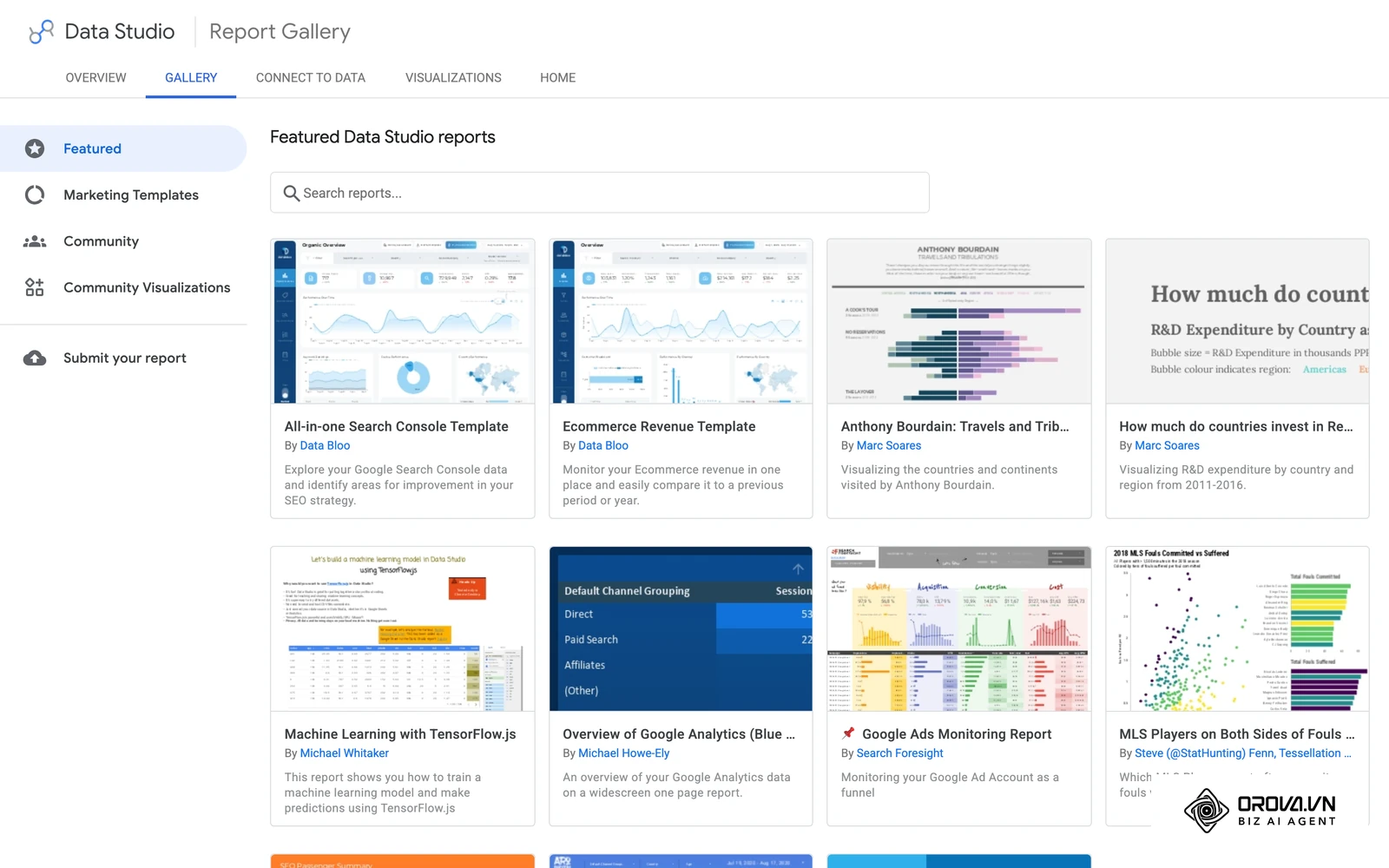
Gather all key stakeholders for a dedicated review meeting. Pull the final data from all platforms and compare the actual results against your initial objective and budget. Ask hard questions. Did we hit our target cost per acquisition? Which channel provided the highest quality leads? Where did the tracking break down? Document the answers in a final report and store it in a central repository for future reference. You have succeeded in this step when the insights gained directly influence the strategy of your next initiative. The biggest mistake marketers make is immediately jumping into the next project without taking the time to learn from the one they just finished.
Struggling to prove which campaign actually paid off? Orova Insight connects GA4, Search Console, Google Ads, Meta Ads, TikTok, YouTube, LinkedIn and more to one drag-and-drop dashboard, and brings in CRM or custom data through API, webhook or Google Sheets, so your campaign KPIs sit in one place.
Deep dive: budgeting, AI planning, and failsafe strategies
To truly master campaign execution, you must move beyond basic frameworks and dive into advanced operational tactics. This section fills the crucial gaps surrounding financial planning, leveraging artificial intelligence, and building contingency plans for when things inevitably go wrong.
Budget template for every business size
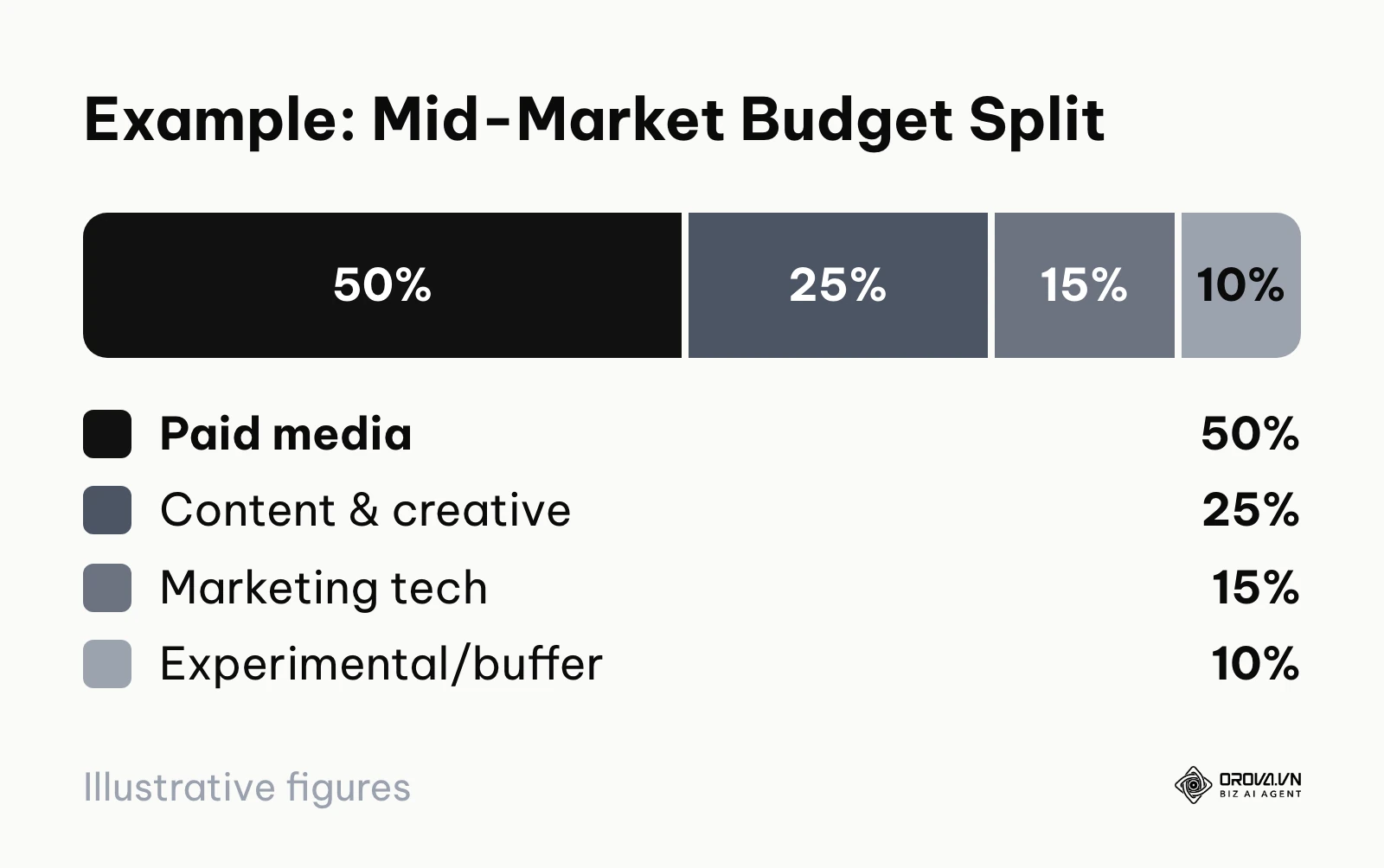
Allocating funds is often the most stressful part of the planning process. Without a clear template, businesses tend to overspend on production and underfund distribution. The template below provides a structured approach to allocating your budget across different business sizes. The percentages are illustrative starting points, not industry benchmarks; adjust them to your own channels and margins.
| Expense category | Small business (2,000 to 5,000 dollars) | Mid-market (10,000 to 30,000 dollars) | Enterprise (50,000 dollars and up) |
|---|---|---|---|
| Paid Media Distribution | 60% (Focus on high-intent search) | 50% (Search, Social, Retargeting) | 45% (Omnichannel, Programmatic) |
| Content & Creative Production | 20% (In-house tools, templates) | 25% (Freelancers, specialized video) | 30% (High-end production agencies) |
| Marketing Technology/Software | 10% (Basic CRM, email automation) | 15% (Advanced tracking, analytics) | 15% (Custom integrations, data modeling) |
| Experimental/Buffer Fund | 10% (Emergency fixes) | 10% (Testing new niche channels) | 10% (High-risk, high-reward tests) |
For a small business, the vast majority of the budget must go directly into paid media distribution, specifically targeting high-intent keywords where users are ready to buy. You cannot afford expensive video production; rely on user-generated content and templates. Mid-market companies have the luxury of diversifying their media spend across multiple platforms and hiring specialized freelancers to elevate their creative quality. Enterprise organizations must dedicate significant funds to high-end production and complex data infrastructure to track massive volumes of traffic across complex buyer journeys. In all scenarios, reserving a ten percent buffer is non-negotiable to handle unexpected platform cost increases or emergency creative changes.
To use the template, pick your column, multiply each percentage by your total budget, and write the amount next to each line item. Example, for illustration only: a mid-market team with a 20,000-dollar campaign budget would plan the following.
| Line item | Share | Example amount | What it pays for |
|---|---|---|---|
| Paid media distribution | 50% | 10,000 dollars | Search, social, and retargeting ads |
| Content and creative production | 25% | 5,000 dollars | Freelance design and short video |
| Marketing technology and software | 15% | 3,000 dollars | Tracking, analytics, and email tools |
| Experimental and buffer fund | 10% | 2,000 dollars | A test on a new channel or emergency fixes |
| Total | 100% | 20,000 dollars | The whole campaign |
Add a column for actual spend and update it every week, so the post-mortem in Step 8 can compare plan against reality line by line.
AI prompt library for campaign planning
Artificial intelligence is rapidly changing how marketing teams plan and execute their strategies. However, most marketers fail to get value from AI because they use generic, unspecific prompts. To leverage AI effectively, you must provide it with deep context, specific constraints, and a clear output format. Here is a framework of advanced prompts you can use to accelerate your planning phase.
Prompt 1: Buyer Persona Generation "Act as an expert market researcher. I am launching a campaign for a B2B SaaS product that helps mid-sized logistics companies optimize their delivery routes. Based on current industry trends as of 2026, generate a highly detailed buyer persona for the Director of Operations. Include their primary daily frustrations, the metrics their boss holds them accountable for, the specific industry publications they read, and the exact objections they will have when considering a new software purchase. Format the output as a structured dossier."
Prompt 2: Ad Copy Framework "Act as a direct response copywriter. Review the following product description [insert description]. Generate five distinct variations of Facebook ad copy using the Problem-Agitation-Solution framework. The target audience is stressed ecommerce founders. The tone should be empathetic but urgent. Each variation must include a primary headline under 40 characters, primary text under 120 words, and a clear call to action directing them to download our benchmark report."
Prompt 3: Data Analysis and Optimization "Act as a senior data analyst. Review this set of campaign data [insert data table showing channel, spend, clicks, conversions, CPA]. Identify the top two performing channels based on the lowest cost per acquisition. Identify the worst-performing channel and provide three specific hypotheses explaining why it might be failing. Finally, suggest a revised budget allocation for the next two weeks to maximize total conversions while staying within the original total budget."
By using these structured prompts, you transform AI from a basic writing assistant into a powerful strategic partner, saving hours of manual brainstorming and analysis.
Troubleshooting: The Plan B for failing campaigns
Not every initiative will be a massive success. Experienced marketers differ from amateurs in their ability to quickly identify a failing campaign and execute a predefined contingency plan. You must know exactly when to pivot and when to kill an initiative entirely.
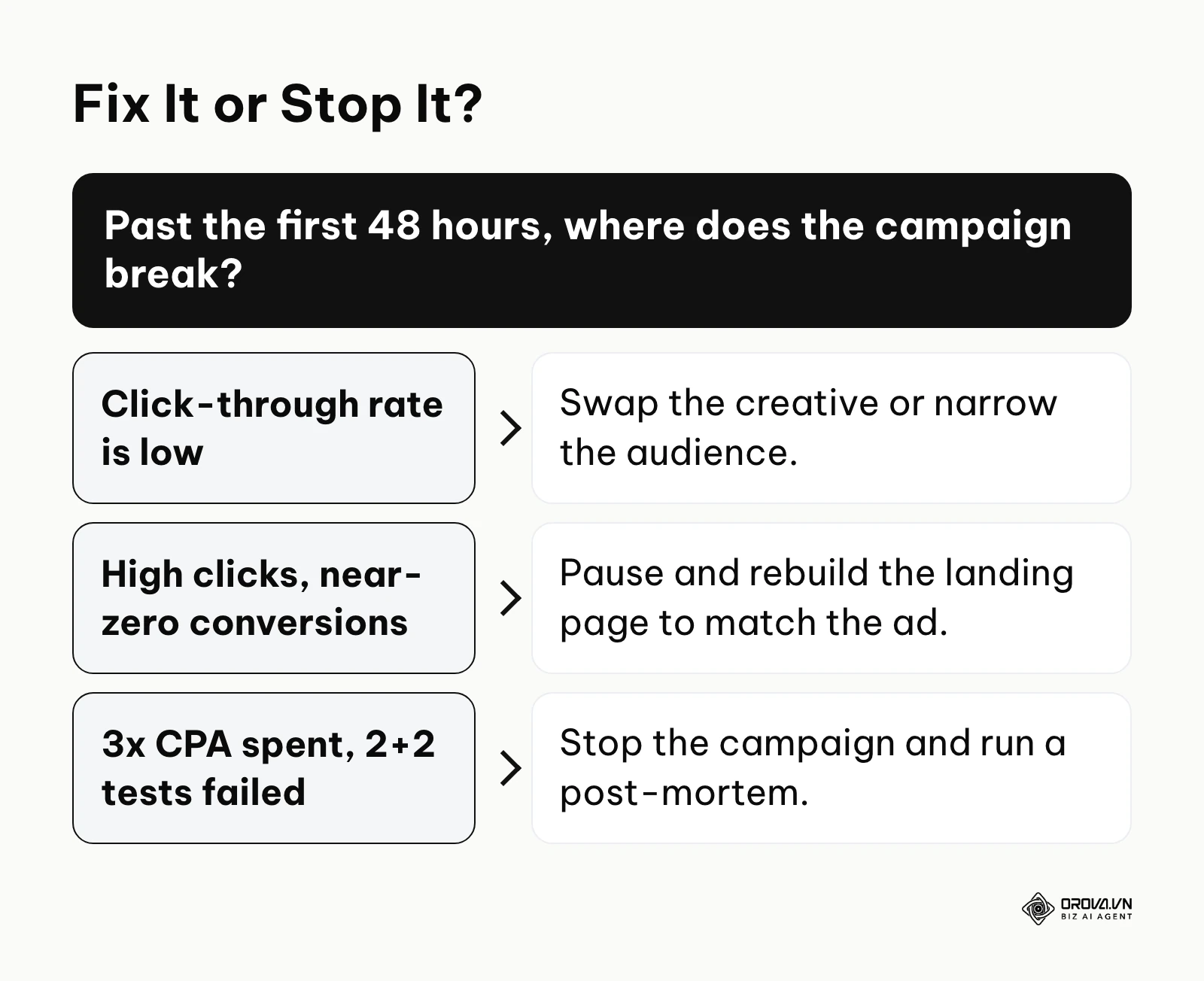
If your Click-Through Rate is incredibly low (well below what the same channel delivered in your past campaigns), the problem is usually your creative or your targeting. Your Plan B should be to immediately swap out the visual assets for something radically different, or significantly narrow your audience parameters. Do not keep spending money hoping the audience will suddenly start clicking.
If your Click-Through Rate is high, but your Conversion Rate is near zero, your ad is making a promise that your landing page is not keeping. Users are clicking, but they bounce immediately upon arrival. Your Plan B in this scenario is to pause the ads, completely redesign the landing page to match the exact messaging of the ad, and ensure the page loads in under three seconds.
The hardest question to answer is when to stop a losing campaign entirely. As a general rule, if you have spent three times your target cost per acquisition without a single conversion, and you have already tested two different creative variations and two different landing pages, you must kill the campaign. Cut your losses, preserve your remaining budget, and conduct a post-mortem to understand fundamental flaws in the offer itself.
The decision framework below outlines this process visually.
Measuring results: KPIs, tracking, and attribution
Data is the lifeblood of modern marketing. If you cannot measure it, you cannot optimize it. You must understand which metrics actually matter and establish a robust infrastructure to track them accurately across multiple touchpoints.
You must look beyond vanity metrics like impressions and social media likes. These metrics look good on a report but do not pay the bills. Instead, focus ruthlessly on your Cost Per Acquisition, Return on Ad Spend, and Customer Lifetime Value. You can view these metrics within the native dashboards of platforms like Google Ads and Meta, but a more accurate picture is built by aggregating this data within Google Analytics 4 or a dedicated business intelligence tool.
| Core metric | What it means | Warning sign |
|---|---|---|
| Cost per acquisition (CPA) | The total cost to acquire one paying customer. | Rises above the allowable CPA you set in Step 2. |
| Return on ad spend (ROAS) | Revenue generated for every dollar spent on ads. | Falls below the break-even ROAS for your profit margin. |
| Click-through rate (CTR) | Percentage of people who click your ad after seeing it. | Falls well below your own past campaigns on the same channel. |
| Landing page conversion rate | Percentage of visitors who take the desired action. | Drops while CTR holds steady, which points to the page rather than the ad. |
| Customer lifetime value (CLV) | Total margin a customer brings over the relationship. | CPA creeps close to it, leaving no profit. |
Break-even ROAS is 1 divided by your profit margin: with a 50% margin, every dollar of ad spend must bring back 2 dollars of revenue before the campaign makes money.
Choosing KPIs by campaign objective
Different objectives need different scorecards. Match the primary KPI to the objective you wrote in Step 1, and read it in the tool where the data is most complete.
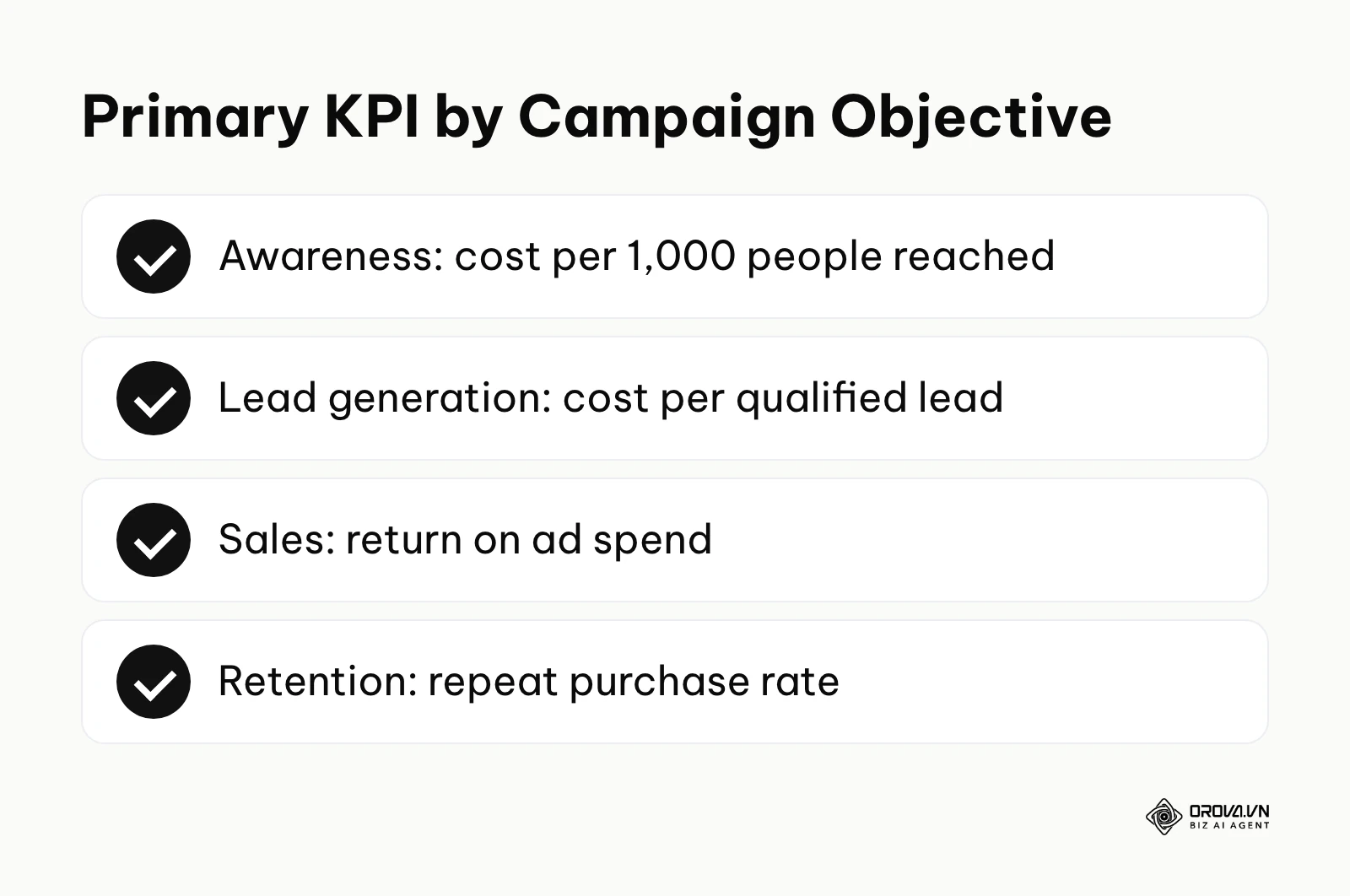
| Campaign objective | Primary KPI | Supporting metrics | Where to read it |
|---|---|---|---|
| Awareness | Cost per 1,000 people reached | Frequency, branded search volume | Ad platform reports, Search Console |
| Lead generation | Cost per qualified lead | Form conversion rate, lead-to-opportunity rate | Analytics plus CRM |
| Sales | Return on ad spend | CPA, average order value | Analytics plus store or CRM data |
| Retention | Repeat purchase rate | Churn, email click rate | CRM or customer database |
Set a reporting rhythm before launch: check delivery and tracking daily in the first week, review KPI trends weekly, and compare the final results against the objective and budget when the campaign ends. Keep one report that combines ad platform, analytics, and CRM numbers, so everyone in the review reads the same figures.
Understanding multi-touch attribution and O2O tracking
The customer journey is rarely linear. A user might discover your brand through a LinkedIn post, search for your company on Google three days later, and finally click a retargeting ad to make a purchase a week after that. If you use a Last-Click attribution model, the retargeting ad gets one hundred percent of the credit, and you might mistakenly turn off your LinkedIn campaigns, destroying your top-of-funnel awareness. You must explore multi-touch attribution models, such as position-based or time-decay, to understand the true value of every channel in your mix.
Tracking Online-to-Offline (O2O) campaigns adds another layer of complexity. If you run a digital campaign to drive foot traffic to a physical retail store, standard pixels will not help you. You must bridge the gap between digital clicks and physical purchases.
Illustrative example: a retail brand running both Facebook ads and in-store promotions.
- Context: The marketing director of a regional furniture retailer needed to prove that their digital ad spend was actually driving people into their physical showrooms to buy sofas.
- Actions taken: Initially, they just ran Facebook ads offering a generic discount and hoped for the best. They had no way to connect a digital click to a physical credit card swipe.
- Hurdles and fixes: Leadership threatened to cut the digital budget because they couldn't see the ROI. The director set up offline conversion uploads through the ad platform's conversions API. When a customer bought a sofa in-store, the CRM hashed their phone number and email and sent the purchase to the ad platform to match against users who had viewed or clicked an ad within the last seven days.
- Results: The integration successfully proved that 40% of their in-store buyers had indeed interacted with a Facebook ad prior to visiting, securing the digital marketing budget for the next fiscal year.
Stop rebuilding the same campaign report every Monday. With Orova Insight you ask a question in plain language and AI builds the chart, define your own metrics, and schedule recurring reports for your team. Sign up and start today, free until July 7, 2027.
7 marketing campaign mistakes that drain budgets
Even with a perfect plan, execution errors can derail your efforts. Avoid these seven common mistakes that drain budgets and ruin data integrity.
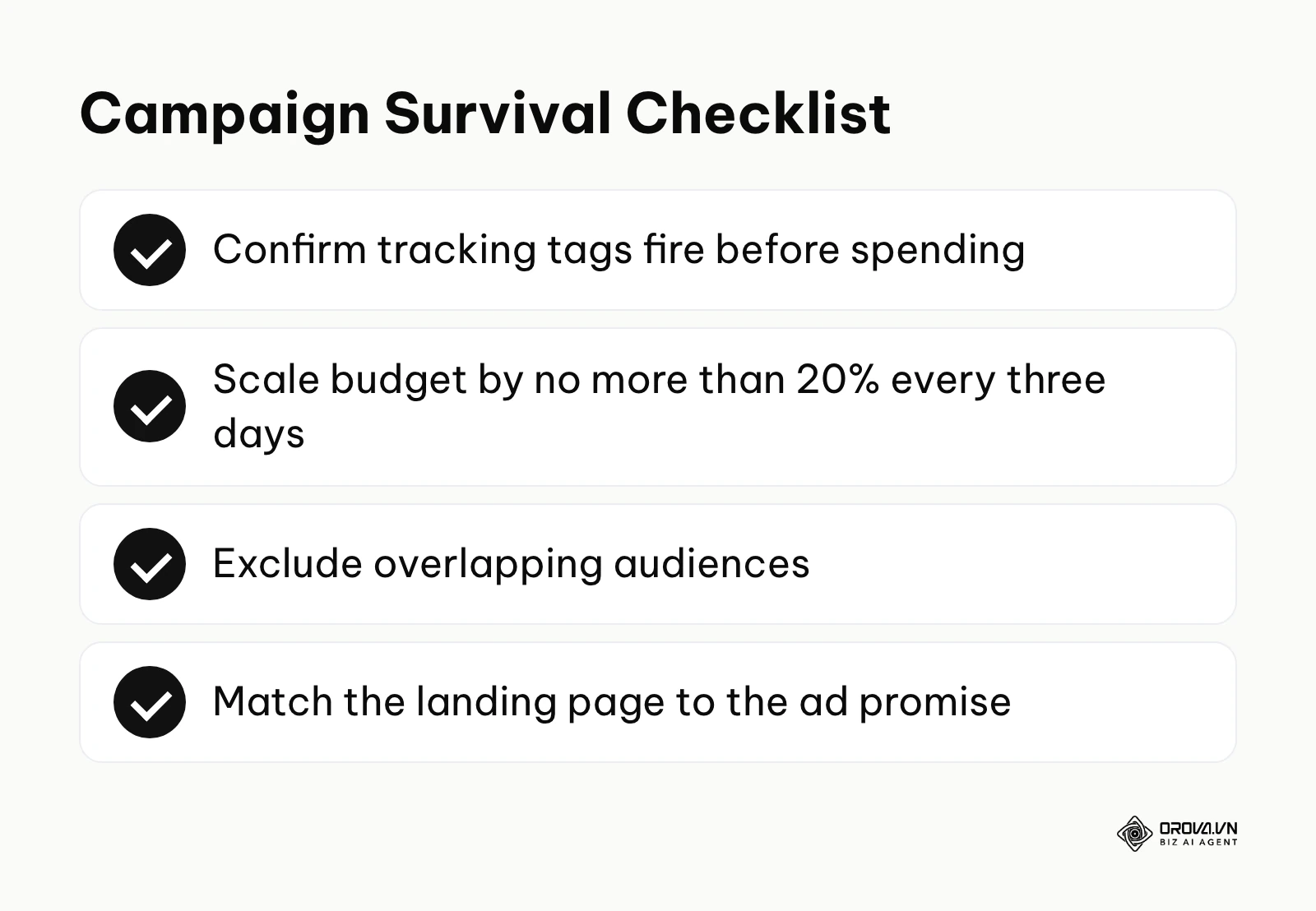
- Ignoring the algorithmic learning phase. When you launch a new ad set, the platform needs time to find the right users. If you change your budget, targeting, or creative within the first forty-eight hours, you reset the learning phase, wasting your initial spend.
- Cannibalizing your own audiences. Running multiple ad sets that target the exact same audience leads to audience overlap. You end up bidding against yourself in the ad auction, artificially driving up your own costs. Ensure audience exclusions are strictly applied.
- Friction in the conversion funnel. You might build the perfect ad, but if your landing page requires a user to fill out a fifteen-field form to download a simple PDF, they will abandon the page. Reduce friction by asking only for essential information.
- Misalignment between ad copy and landing page. This is known as poor message match. If your ad promises a "Free SEO Audit" but the landing page talks about "Enterprise Consulting Services," the user will immediately bounce, signaling to the ad platform that your ad is low quality.
- Scaling budgets too aggressively. If a campaign is highly profitable at fifty dollars a day, many marketers make the mistake of increasing the budget to five hundred dollars the next day. This breaks the algorithm. Scale your budgets by no more than twenty percent every three days to maintain stability.
- Focusing entirely on bottom-of-funnel traffic. While search ads targeting high-intent keywords are profitable, that pool of users is finite. If you do not simultaneously run awareness campaigns to educate new prospects, your bottom-of-funnel campaigns will eventually run dry and costs will skyrocket.
- Operating in data silos. When your Google Ads data, CRM data, and social media data sit in separate, disconnected platforms, you cannot see the full picture. You end up manually downloading CSV files and spending hours trying to merge data in Excel, often leading to critical reporting errors.
Illustrative example: an e-commerce startup scaling too fast.
- Context: The founder of a direct-to-consumer apparel brand was managing their own advertising during the holiday season.
- Actions taken: After seeing an incredible return on ad spend during the first three days of a campaign, they immediately increased the daily budget by 300% to maximize sales.
- Hurdles and fixes: The platform's algorithm panicked at the sudden budget influx, resetting the learning phase and delivering ads to low-quality audiences. The cost per acquisition skyrocketed, wiping out their profit margins. They quickly scaled the budget back down and instituted a strict 20% scaling rule.
- Results: By slowly increasing the budget by a maximum of 20% every three days, they stabilized their acquisition costs and steadily grew their sales volume over the next two quarters.
Where marketing campaigns are heading in the next few years: the author's take
Campaign execution is changing quickly as ad platforms add more automation and privacy rules tighten. Here is my read on three shifts, what signals them today, and how to prepare.
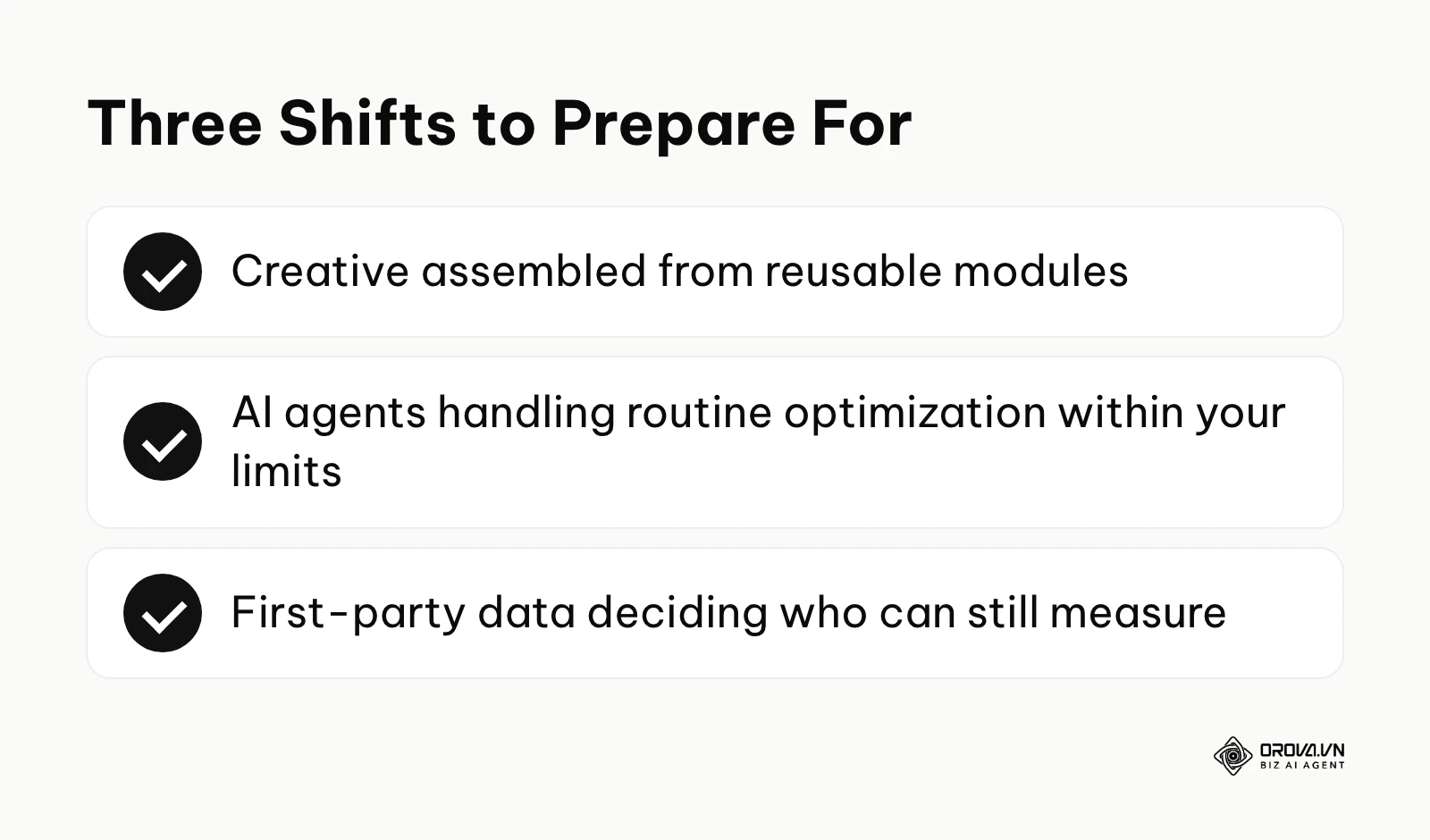
Creative will be assembled from modules, not built ad by ad
Today, most teams still design a handful of ad variations by hand and test them against each other, while the major ad platforms keep expanding their automated creative options. I think that over the next two to three years, platforms will assemble more of the final ad from the pieces you supply: headlines, images, offers, and brand rules. The marketer's job moves toward writing the guardrails and supplying strong raw material. To prepare, start organizing your creative into reusable modules now, with clear rules about what may and may not be combined.
AI agents will handle more of the routine optimization
Right now, AI mostly helps with copy and analysis, and a person still pauses losing ad sets and moves budget between channels. My read is that within a few years, more of that routine work will be delegated to AI agents operating inside limits you set, such as a maximum cost per acquisition and a total budget. I do not expect people to leave the loop; the marketer becomes the one who sets objectives, reviews the decisions, and owns the offer. Prepare by writing down your optimization rules today, because an agent can only follow rules that exist.
First-party data will decide who can still measure
Browser-based tracking keeps losing signal through privacy settings, consent requirements, and ad blockers. I believe the teams that can still measure campaigns well in two or three years will be the ones that own clean first-party data: consented customer records, consistent UTMs, and server-side or conversions API connections to the ad platforms. If you rely only on what each platform reports about itself, your picture will keep getting blurrier. Start by auditing which conversions you can confirm in your own CRM today.
Frequently asked questions about marketing campaigns
When should I stop a losing campaign?
You should stop a campaign when it has spent three times your target cost per acquisition without generating a single conversion, provided that it has passed the initial 48-hour algorithmic learning phase. Additionally, if you have tested completely different creative angles and rebuilt your landing page without seeing any improvement in click-through or conversion rates, it is time to cut your losses and re-evaluate the core offer.
Which campaigns should small businesses prioritize?
Small businesses with limited budgets must prioritize high-intent, bottom-of-funnel campaigns. This usually means search engine marketing (Google Ads) targeting exact match keywords where the user is actively looking to buy your specific product or service. Do not spend limited funds on broad brand awareness campaigns on social media until you have captured all the existing demand in search.
Can AI completely replace a human marketing team?
No. AI is incredibly powerful at processing data, generating variations of copy, and identifying statistical anomalies faster than a human ever could. However, AI lacks genuine empathy, deep industry context, and the ability to understand nuanced human psychology. AI will replace the manual, repetitive tasks of campaign management, but human marketers are required to design the overall strategy, understand the emotional drivers of the customer, and make complex, high-level business decisions.
How long does it take to see results?
The timeline varies drastically depending on the channel and the length of your sales cycle. Search ads can generate conversions within 24 hours of launch because they capture existing demand. Social media campaigns often take a week to optimize and generate consistent leads. Organic content campaigns, like SEO, typically require three to six months to begin showing a measurable return on investment.
What is the difference between a campaign and a strategy?
A marketing strategy is the long-term, overarching blueprint that defines your market positioning, your competitive advantage, and your general approach to reaching your audience over several years. A marketing campaign is a short-term, specific tactical execution designed to achieve a singular goal within the boundaries of that broader strategy. The strategy is the map; the campaign is the vehicle you drive to reach a specific destination.
How to track ROI for O2O (online and offline) campaigns?
To track Online-to-Offline performance, you must implement a system that connects physical sales data to digital ad clicks. This is typically achieved by capturing a unique identifier at the point of sale, such as an email address or phone number via a loyalty program or digital receipt. This data is then securely hashed and uploaded to the advertising platform through its conversions API for offline events, allowing the platform to match the offline purchase with a user who previously interacted with your digital campaign.
Where to start?
If you are starting completely from scratch with no historical data and no tracking in place, your very first step is to implement Google Analytics and your ad platform pixels on your website. Do not launch any paid initiatives until you can verify that traffic is being recorded and basic actions, like page views and button clicks, are firing correctly. Spend one afternoon setting up this foundational infrastructure.
If you have historical data but it is scattered across multiple spreadsheets and platforms, your next step is to standardize your UTM parameters. Create a simple Google Sheet with a UTM builder formula and mandate that your team uses it for every single link shared publicly. This ensures that when you finally consolidate your data, the sources and mediums are uniform and readable.
If you are actively running campaigns but your Return on Ad Spend is steadily dropping, your immediate action is to audit your audience overlap and frequency metrics. Pause your campaigns, log into your ad platform, and check if your ads are being shown to the same small group of people too many times, causing ad fatigue. If frequency is above a four over a seven-day period, immediately launch fresh creative or expand your targeting parameters before turning the marketing campaign back on.
About the author

Builder of Orova
Nguyễn Đỗ Trọng Ân has 8 years of experience in marketing, including 6 years managing market development across Asia. He builds Orova, a Biz AI Agent that never sleeps: it plans, runs and optimizes work for businesses.
Run your business with AI Agents
Orova is the always-on Biz AI Agent — it plans, runs, and optimizes the work for you.
Save time, unlock productivity.