
What is marketing and ROI? A practical measurement guide

Every business leader eventually asks the same question during quarterly reviews: is our promotional budget actually driving profitable growth, or are we just funding expensive vanity projects? Answering it starts with marketing and ROI: measuring how much profit your marketing returns for every dollar you put into it, using the formula (gross profit from marketing − total marketing cost) ÷ total marketing cost × 100%. As channels multiply, from offline networking events to algorithmic social feeds, tracking every dollar spent has become far more complicated.
Simply looking at direct sales from a single advertisement is no longer enough. Today, a customer might listen to a branded podcast on their commute, click a retargeting ad a week later, and finally search for your brand organically before buying. If your team relies on outdated tracking, you are likely cutting the channels that work behind the scenes while overfunding the ones that merely claim the final credit. This guide covers the formula, the hidden costs, the attribution models and the measurement habits you need to see true bottom-line profitability in a multi-touch, dark social world.
What is marketing and ROI?
Marketing and ROI refers to marketing return on investment: a business metric that evaluates the financial efficiency of money spent on promotional activities. It compares the profit generated by marketing against the total cost of that marketing, which separates real business outcomes from surface-level engagement metrics such as likes and impressions.
The idea comes from corporate finance. Return-on-investment analysis was popularized in the early 20th century by the DuPont company to evaluate industrial capital, and direct mail marketers later adapted the same logic to judge whether their catalog mailings paid off. Digital tracking simply made the calculation faster and more granular.
To understand the metric clearly, it helps to separate it from other acronyms that often cause confusion in boardrooms:
| Concept | How it differs | Example |
|---|---|---|
| Marketing ROI | Measures profit against total marketing expenses (including overhead, software and salaries). | A campaign costing 10,000 dollars in total returns 30,000 dollars in gross profit, an ROI of 200%. |
| ROAS (Return on Ad Spend) | Measures gross revenue strictly against the direct cost of the advertising platform. | Spending 1,000 dollars on Google Ads generates 5,000 dollars in sales, a ROAS of 5:1. |
| CAC (Customer Acquisition Cost) | Measures the cost of acquiring one paying customer, rather than an overall percentage return. | Spending 5,000 dollars in total to acquire 50 customers equals a CAC of 100 dollars. |
CAC becomes even more useful when you pair it with time: your CAC payback period shows how many months it takes for a new customer to earn back what you spent to win them.
Illustration: consider a B2B software firm whose marketing manager wants to prove the value of a recent lead generation push. The manager runs LinkedIn ads for a month, tracks incoming leads in the CRM and calculates eventual deal sizes. A wave of spam leads distorts the first numbers, making the campaign look hugely successful on paper but unprofitable in reality. Filtering the data to count only qualified meetings that move past the discovery phase produces a realistic pipeline value, which proves the campaign's worth to the executive team far better than cheap click-through rates.
The significance of marketing ROI in business strategy
At its core, marketing exists to drive business growth. Yet there is often a wide communication gap between the creative marketing department and a financially focused board of directors. Measuring ROI is the bridge that translates campaigns, brand messaging and audience engagement into the universal language of the boardroom: money. Marketing strategy comes first to define the audience, but ROI analysis follows to guide budget reallocation, so that capital flows toward the most efficient growth engines.
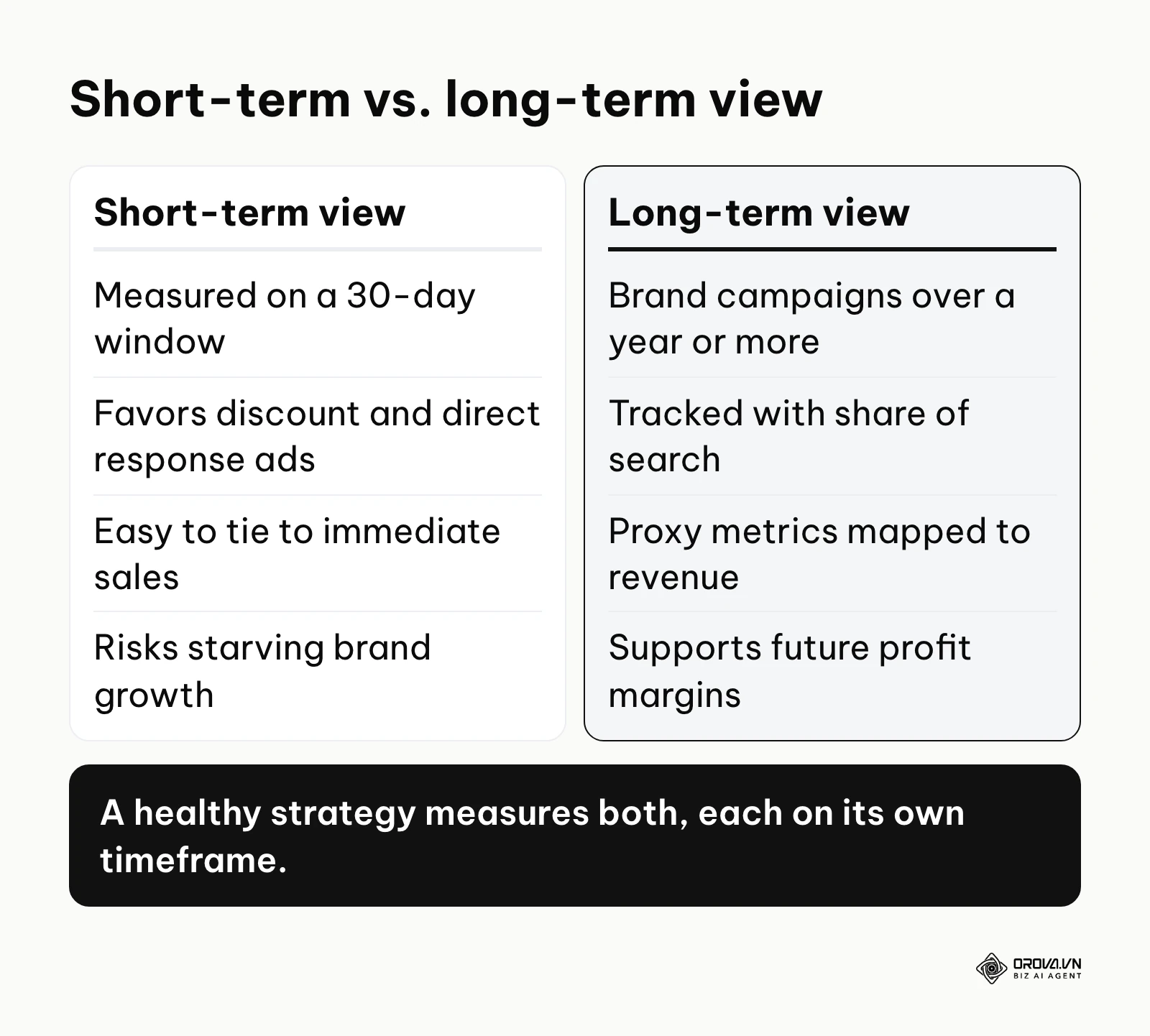
One of the hardest problems in business strategy is the long-term versus short-term dilemma. How do you justify a two-year brand awareness campaign to a board that approves budgets every month? Brand building is notoriously difficult to tie to immediate financial returns. If you only measure ROI on a 30-day window, you will inevitably favor aggressive short-term performance marketing (like discount ads) over sustainable brand growth. To solve this, strategic leaders use proxy metrics such as share of search or branded search volume, and map them against revenue over time to show that today's brand investment supports tomorrow's profit margins.
If an organization ignores this measurement entirely, it risks funding "zombie campaigns": initiatives that look active and generate likes or website visits but quietly drain cash without contributing to the bottom line. Over time, this leads to bloated budgets and, when revenue goals are missed, cuts to the marketing team itself.
When you do not need it yet
If your company is still searching for product-market fit, obsessing over the financial return of every promotional dollar is counterproductive. At this stage your main goals are gathering qualitative feedback, testing messaging and winning your first cohort of users. Building a complex tracking infrastructure now will only slow down your iteration cycles. Focus on direct customer conversations and product usage metrics until your core offering is validated and ready to scale.
Core values and benefits of tracking ROI
Tracking the financial return on your campaigns creates value on two levels: for the business as a whole and for the individual practitioners doing the work.
Value for the business: financial safety and predictable growth
For the executive team, the primary value is financial safety. By knowing which channels are profitable, a business avoids scaling a broken system; a company that grows fast without knowing its returns may simply scale its losses. Reliable tracking also makes growth more predictable. When a CEO knows that every dollar put into a specific channel consistently yields three dollars in return, marketing shifts from an unpredictable expense to a revenue engine the company can plan around. This is closely tied to conversion rate optimization, because improving how well your website converts directly raises the ROI of the traffic you already pay for.
Value for the practitioner: career leverage and focus
For marketing managers, specialists and media buyers, these metrics provide real career leverage. A marketer who can show that their work generated tangible profit has the strongest possible argument for budget increases, team expansion and promotion. They also gain focus: instead of feeling pressure to be active on every new social platform, practitioners can confidently drop unprofitable channels and double down on what works.
Illustration: a media buyer at a mid-sized e-commerce brand allocates a monthly budget of 10,000 dollars across Meta and TikTok, using detailed UTM parameters and daily sales data in an analytics tool. Standard web analytics show almost no direct sales from TikTok, which puts the channel on the chopping block. The buyer adds a post-purchase survey to the checkout page, and the answers reveal that while Meta closes most sales, TikTok is where many new customers first discovered the brand. That evidence keeps the experimental TikTok budget alive for the next quarter.
| Benefit | Measured by | Time to see impact |
|---|---|---|
| Budget justification | Total revenue vs. spend | 1-3 months |
| Channel optimization | Channel-specific profit margin | 2-4 weeks |
| Waste reduction | Customer acquisition cost (CAC) | 1-2 weeks |
| Strategic alignment | Customer lifetime value (CLV) | 6-12 months |
Connecting scattered data sources just to measure your marketing can be exhausting. Orova Insight connects GA4, Search Console, Google Ads, Meta, LinkedIn and more into one drag-and-drop dashboard, so you can see your performance in one place without writing code.
How marketing ROI works: from basic formulas to advanced attribution
Calculating and applying these metrics goes well beyond simple math. It requires a structured approach to data, an honest accounting of hidden costs and the ability to work around modern privacy restrictions.

The core concept: the modern marketing ROI formula
The fundamental equation looks simple: (gross profit from marketing − total marketing cost) ÷ total marketing cost × 100%. For example, if a campaign produces 150,000 dollars in gross profit and costs 50,000 dollars in total, the calculation is (150,000 − 50,000) ÷ 50,000 × 100%, an ROI of 200%. The execution is where most organizations fail, and the biggest mistake is misunderstanding what counts as "total marketing cost." Many marketers only include direct ad spend, such as the money paid to Google or Meta.
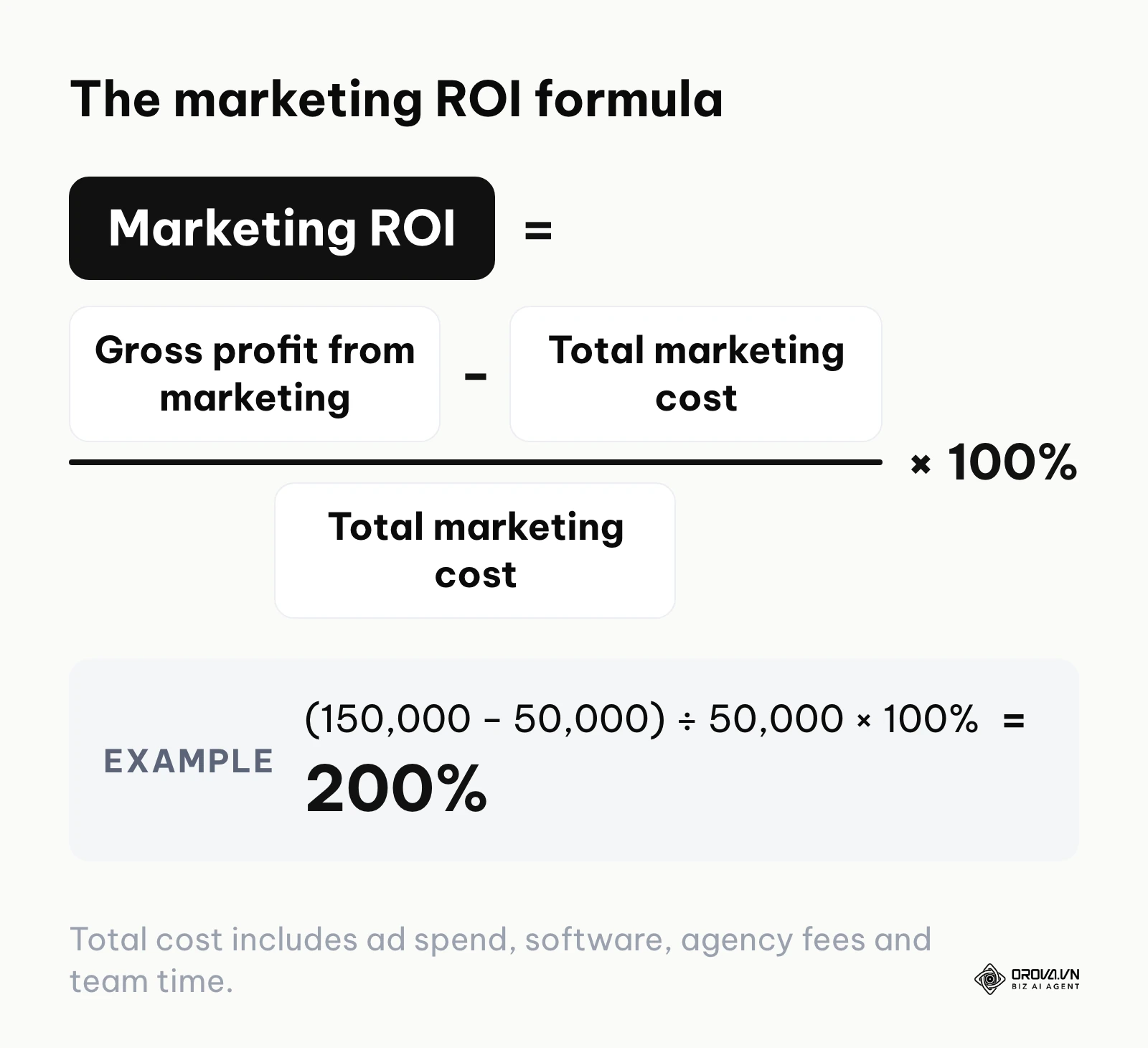
To calculate true ROI, you must include operational overhead: agency retainers, monthly software subscriptions, content production (like hiring a videographer) and the prorated salaries of the in-house team working on the campaign. For example, if a campaign runs for one month, divide your annual marketing software cost by twelve and allocate a share of that monthly figure to the campaign's cost baseline. Teams that account for this overhead get a much more realistic view of their financial efficiency than teams that look at ad spend alone.
Building the framework: a Google Sheets ROI template
Because the variables are complex, calculating returns by hand every month invites errors. A simple, formula-driven spreadsheet is often the most practical solution, and Google Sheets works well because the whole team can update it.
Give your template separate input tabs and a summary dashboard. The input tab needs columns for date, campaign name, direct media spend, sunk costs (like a one-time video shoot) and allocated overhead (your team's time at an hourly rate). On the revenue side, enter gross margin rather than top-line revenue, because marketing should not take credit for the cost of goods sold. More advanced versions add a column for customer lifetime value (CLV). Here is what one row looks like:
| Date | Campaign | Media spend | Sunk costs | Overhead | Gross profit | ROI |
|---|---|---|---|---|---|---|
| March | Spring webinar series | 30,000 | 12,000 | 8,000 | 150,000 | 200% |
In this row, the total cost is 30,000 + 12,000 + 8,000 = 50,000, and the ROI column uses the same formula as above. Once the summary tab pulls these inputs automatically, you move from static, historical numbers to a financial model that updates whenever someone enters a new cost.
Illuminating the shadows: tracking ROI in the dark social era
Today's buyer journey is highly fragmented. A large share of decision-making happens in "dark social": private spaces like Slack communities, WhatsApp groups, personal text messages and native video that is watched without any click. When someone opens a link shared in a private Slack channel, most analytics platforms simply label the visit as "Direct" traffic, stripping away the context of where the user actually came from.
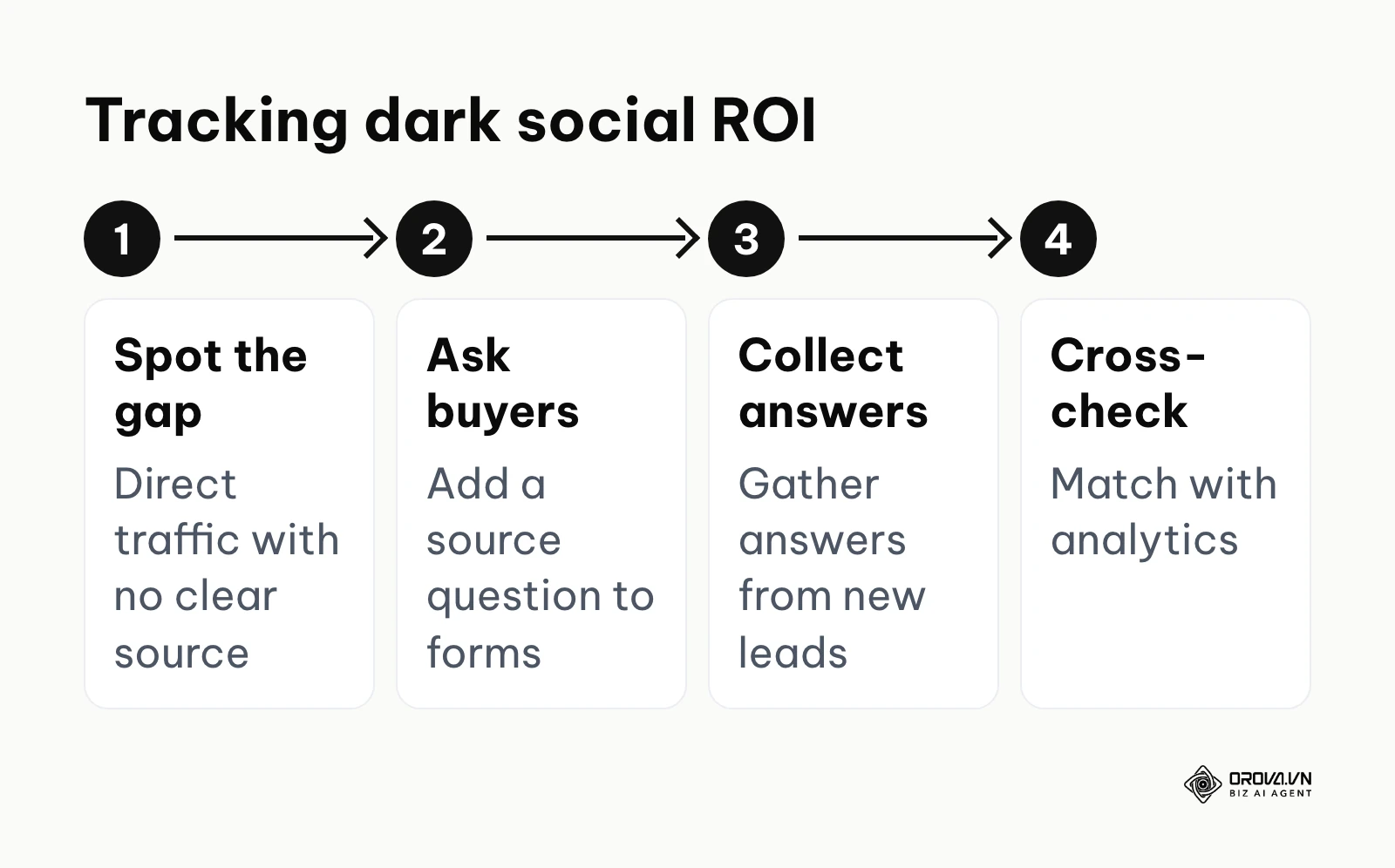
To estimate the return on PR, community building or influencer marketing, you cannot rely on software alone. You need self-reported attribution: a required "How did you hear about us?" drop-down or open-text field on your main lead capture forms. By triangulating what customers say with what your web analytics record, and by feeding both into Marketing Mix Modeling (MMM), you can estimate the true ROI of these hard-to-track, community-driven channels.
Connecting the dots: multi-touch attribution for complex sales
If your business has a long sales cycle, using a basic first-click or last-click model to calculate returns will distort your strategy. Imagine a B2B software company with a nine-month sales cycle. The prospect discovers the company through an SEO blog post, attends a webinar three months later, downloads a whitepaper and finally books a demo after clicking a retargeting ad. If you only measure the last click, the retargeting ad gets 100% of the credit and the SEO team gets its budget cut, even though the sale would never have happened without them.
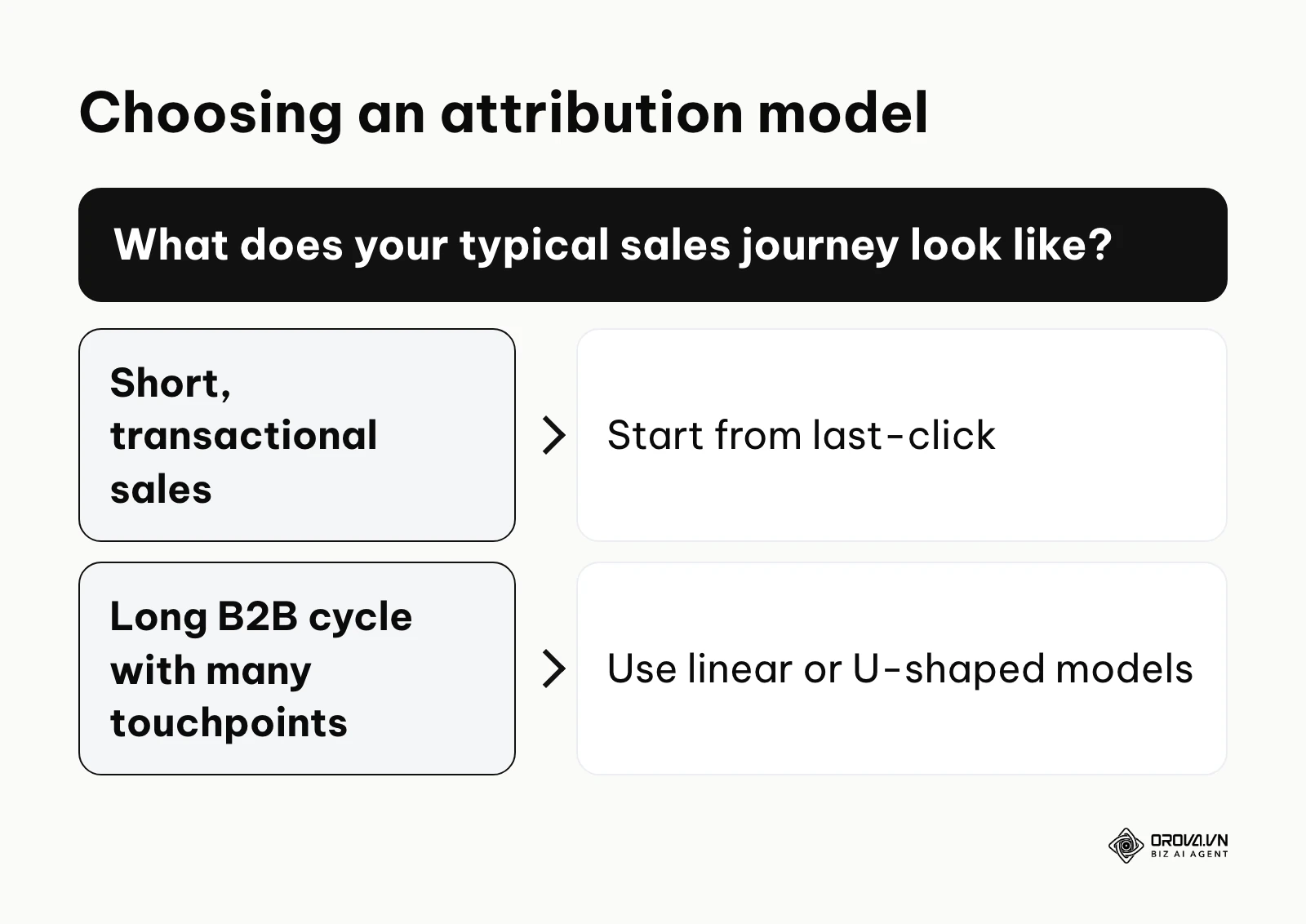
This is where multi-touch attribution becomes essential. By distributing revenue credit across several touchpoints, you make sure every piece of the marketing puzzle is valued fairly. As a rule of thumb, short and transactional purchases can start from last-click, while long B2B journeys with many interactions are better served by linear or U-shaped models.
| Attribution model | How it distributes credit | Best suited for |
|---|---|---|
| Last-click | 100% to the final touchpoint before conversion. | Highly transactional, low-cost e-commerce. |
| First-click | 100% to the initial discovery touchpoint. | Pure brand awareness and top-of-funnel tracking. |
| Linear | Equal credit to every touchpoint. | Long, complex B2B sales with many interactions. |
| U-shaped | 40% to the first touch, 40% to the last, 20% spread across the middle. | Businesses that want to reward both discovery and closing. |
Relying only on last-click data in a multi-channel environment tends to overvalue closing channels and undervalue the ones that start the journey.
Setting the standard: what is good marketing ROI?
A common question from executives is whether current performance is actually good compared with the market. A 5:1 ratio (five dollars of revenue for every dollar spent) is a widely quoted rule of thumb, but what counts as "good" depends heavily on your profit margins, sales cycle and customer retention. Instead of copying a single benchmark, judge your number against your business model:
- B2B SaaS: acquisition is expensive, but low delivery costs and recurring revenue mean the real return shows up over the customer lifetime. Measure ROI on CLV, not on the first invoice.
- E-commerce and retail: product costs, shipping and returns squeeze margins, so a revenue ratio that looks healthy can still lose money. Always calculate on gross profit.
- Manufacturing and heavy industry: sales cycles can run for years and marketing usually supports an outbound sales team, so judge marketing on its contribution to pipeline as well as closed deals.
- Healthcare and education: acquisition costs are often high, but long, stable customer relationships can justify them when you account for lifetime value.
The most reliable benchmark is your own history: track the same formula every month and aim to beat last quarter. That keeps you from holding your team to impossible standards or celebrating mediocre results.
How to start adapting to advanced ROI measurement
Moving from guesswork to advanced measurement works best in phases. Different stakeholders should tackle different parts of the problem so the organization adapts without becoming paralyzed by data.
Small business owners and founders
For smaller operations, the focus must stay on cash flow. Complex attribution is unnecessary and distracting.
- Set a strict monthly budget that you are comfortable losing if experiments fail.
- Calculate your break-even point (how many units you must sell to cover the ad spend and the product cost).
- Focus on immediate return on ad spend before worrying about lifetime value or long-term brand metrics; the ROAS formula is the quickest daily check.
In-house marketing leaders
Directors and managers in mid-sized and large organizations must build the infrastructure and defend the budget.
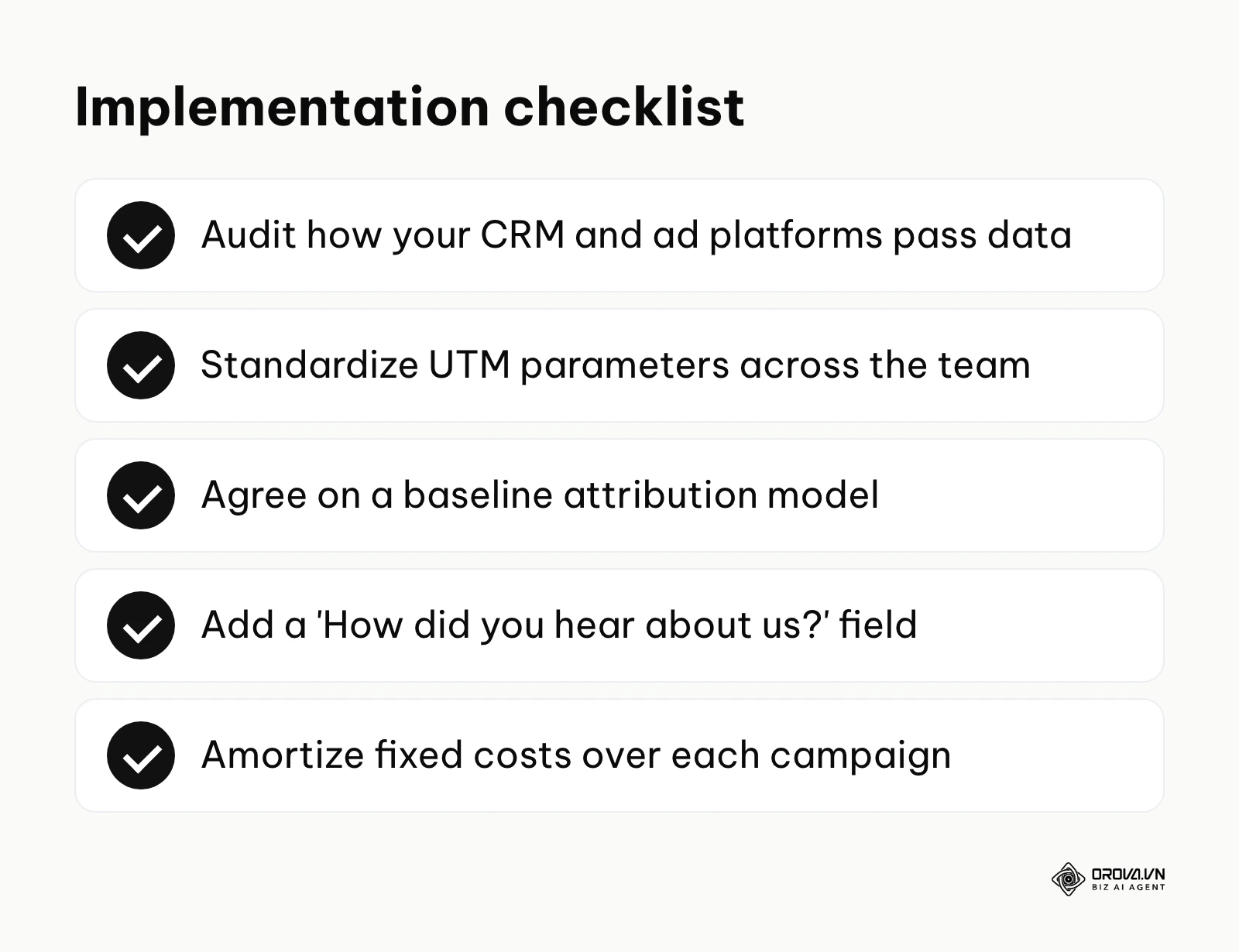
- Audit your data pipeline to confirm your CRM and ad platforms actually pass data to each other correctly. This is the foundation of data-driven marketing.
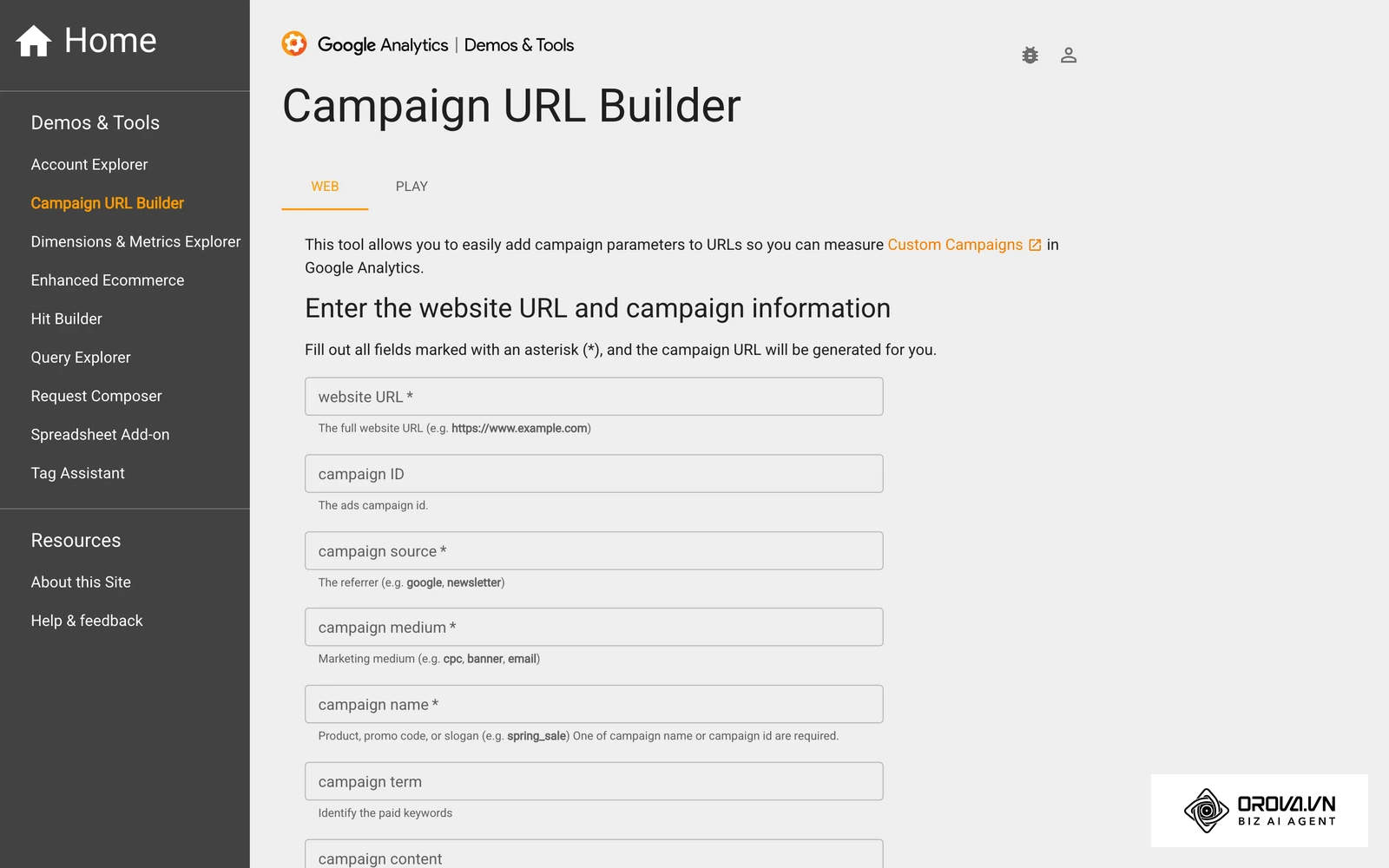
- Standardize UTM parameters across the whole team so every link is identifiable.
- Agree on a baseline attribution model (like U-shaped) and get executive sign-off on it before the next quarter begins.
- Add the "How did you hear about us?" field right away to start capturing dark social insights.
Agency owners and freelancers
If you sell marketing services, proving ROI is your strongest client retention tool.
- Be cautious with clients who have no basic CRM or revenue tracking, because you will struggle to prove your value.
- Include your own agency fee in the ROI calculations you present, which builds trust.
- Shift reporting away from vanity metrics (clicks, impressions) toward qualified leads and pipeline value generated.
| Common mistake | Consequence | How to avoid |
|---|---|---|
| Ignoring sunk costs (like video production). | ROI looks artificially high. | Amortize fixed costs over the life of the campaign. |
| Measuring brand awareness weekly. | Good campaigns get canceled too early. | Set 6-12 month review windows for top-of-funnel work. |
| Relying only on native platform data. | Platforms take credit for each other's sales. | Use a neutral analytics tool as the single source of truth. |
Ready to stop guessing your returns and start proving them? With Orova Insight, you can ask AI in plain language to build charts, define your own metrics and send periodic reports to stakeholders. You can start free until July 7, 2027.
Where marketing ROI is heading in the next few years: the author's take
Measurement is changing quickly. Looking at the direction of privacy rules and analytics tools today, I think the way we calculate and report returns will look quite different in a few years.
From historical reporting to predictive modeling
Right now, most marketing reports are autopsies: they tell us what happened last month. I think that over the next two to three years, AI will push more teams toward predictive ROI. Instead of only asking "What did this campaign return?", marketers will use models to estimate the likely return of a budget split across channels before spending it. These forecasts will never be exact, and they will only be as good as the data behind them, so the best preparation is to clean up your historical cost and revenue data today.
The comeback of marketing mix modeling
Browser privacy changes, tighter limits on third-party cookies and the tracking restrictions built into iOS and Android are steadily weakening pixel-based measurement. My read is that more companies will return to an updated, algorithm-assisted form of Marketing Mix Modeling, which relates changes in overall spend to changes in overall revenue instead of following individual users. If you are not yet comfortable with aggregate data analysis, now is a good time to start, because you may need it to prove value as user-level tracking becomes less complete.
Content ROI will lean on engagement depth
Content marketing ROI has traditionally been judged by traffic that leads to a conversion. I believe that as AI produces more and more average content, genuine human attention will become the scarce resource. The ROI of content will increasingly be judged by depth of engagement: how long someone used an interactive tool, or whether they watched a 40-minute video to the end. If content feeds your pipeline, counting pageviews will not be enough; start tracking active consumption time alongside conversions.
Frequently asked questions about marketing and ROI
How to calculate marketing ROI for offline events?
Offline events like trade shows are notoriously difficult to track. To calculate returns, bridge the physical and digital worlds. Use dedicated QR codes at your booth that lead to a hidden landing page, or offer a promo code mentioned only at the event. Then track the revenue generated through those entry points and subtract the total cost of the booth, travel and printed materials.
Is ROI still needed when AI optimizes campaigns automatically?
Yes. AI bidding inside ad platforms is good at finding cheaper clicks and conversions, but it lacks the wider business context. It does not know your profit margins, your warehouse capacity or your long-term strategic goals. ROI tracking remains essential for leaders who set the overall budget and need to make sure campaigns are optimized for actual profit, not just cheap, low-quality conversions.
How do we account for customer lifetime value (CLV)?
Instead of calculating returns on a customer's first purchase, project the total gross profit they will bring over their whole relationship with your brand. Calculate your historical average CLV and use it as the profit figure in your formula. This often turns a campaign that looks unprofitable on day one into a profitable long-term strategy.
Why does my ROAS look great while my overall ROI is negative?
This is one of the most common pitfalls in modern marketing. ROAS only compares revenue with the ad dollars paid to a platform like Meta. It ignores what you spent on the agency that produced the ad, the monthly fee for your landing page software and the salary of the media buyer. Once you add those operational costs into the true ROI formula, the profit margin often disappears.
Where to begin?
Getting to accurate measurement can feel overwhelming, but your first step depends on where your organization stands today. You do not need a perfect attribution model overnight.
If you have nothing in place: Your first step is a single source of truth for expenses. Spend one afternoon building a simple spreadsheet that records every dollar leaving the marketing department, including subscriptions, freelancer invoices and ad spend. You cannot calculate a return if you do not know exactly how much you are investing.
If your data is fragmented across platforms: If Google reports ten sales, Meta claims fifteen and your CRM shows eight, start by standardizing your tracking links. Use your next working session to write a UTM naming guide for your team, and agree that from today no link goes live without a tag for source, medium and campaign name, so all platforms speak the same language.
If you are measuring but not acting: If you already have good dashboards but nobody looks at them, the next step is process alignment. Schedule a 30-minute monthly meeting with your finance lead and the executive team, and bring one metric: the blended marketing ROI of the previous month. Steer the conversation away from creative preferences and toward financial efficiency, so marketing is treated as a core part of business strategy rather than a cost center. In the end, mastering marketing and ROI is about turning data into decisive action.
About the author

Builder of Orova
Nguyễn Đỗ Trọng Ân has 8 years of experience in marketing, including 6 years managing market development across Asia. He builds Orova, a Biz AI Agent that never sleeps: it plans, runs and optimizes work for businesses.
Run your business with AI Agents
Orova is the always-on Biz AI Agent — it plans, runs, and optimizes the work for you.
Save time, unlock productivity.