
Website ranking in 2026: a 30-day SEO roadmap for AI search

Website ranking is the position your page holds in search results for a given query, and improving it comes down to a few things done in the right order: let Google crawl and understand your pages, match what searchers actually want, answer them better than the pages already ranking, and measure honestly. Many site owners skip that order. They launch a well-designed site, publish a few posts, and wait. Weeks pass and the analytics stay flat. The old playbook of stuffing target phrases into your footer and buying cheap directory links is completely dead.
Today, understanding how to improve your website ranking requires a highly strategic, multi-layered approach. The search landscape is shifting rapidly with the introduction of artificial intelligence in search results. If your strategy relies on outdated advice, your pages will slowly lose visibility. This guide provides a detailed, actionable 30-day roadmap. It is designed to help you audit your technical foundation, align with modern search behaviors, and secure a sustainable position at the top of the search engine results pages.
What is website ranking and why does it matter?
Website ranking refers to the exact position your web page occupies on the search engine results page when a user searches for a specific query. Achieving a high rank means appearing at the very top of the organic, non-paid results.
You should care about this metric because most searchers rarely go past the first page of results, and clicks concentrate heavily on the first few organic positions. If you rank on page two, you are effectively invisible to your potential customers. A strong website ranking acts as a continuous, free source of targeted traffic that builds trust and authority for your brand. You should not worry about ranking for every possible keyword, but rather focus intensely on the terms that directly connect to your business offerings. Understanding how the Google algorithm evaluates pages is what makes that visibility more predictable.
What you need before improving your website ranking
Before you write a single word of content or attempt to build authority, you must prepare your environment. Skipping the preparation phase is the most common reason SEO campaigns fail. You need the right measurement tools, a clear tracking system, and a realistic allocation of resources.
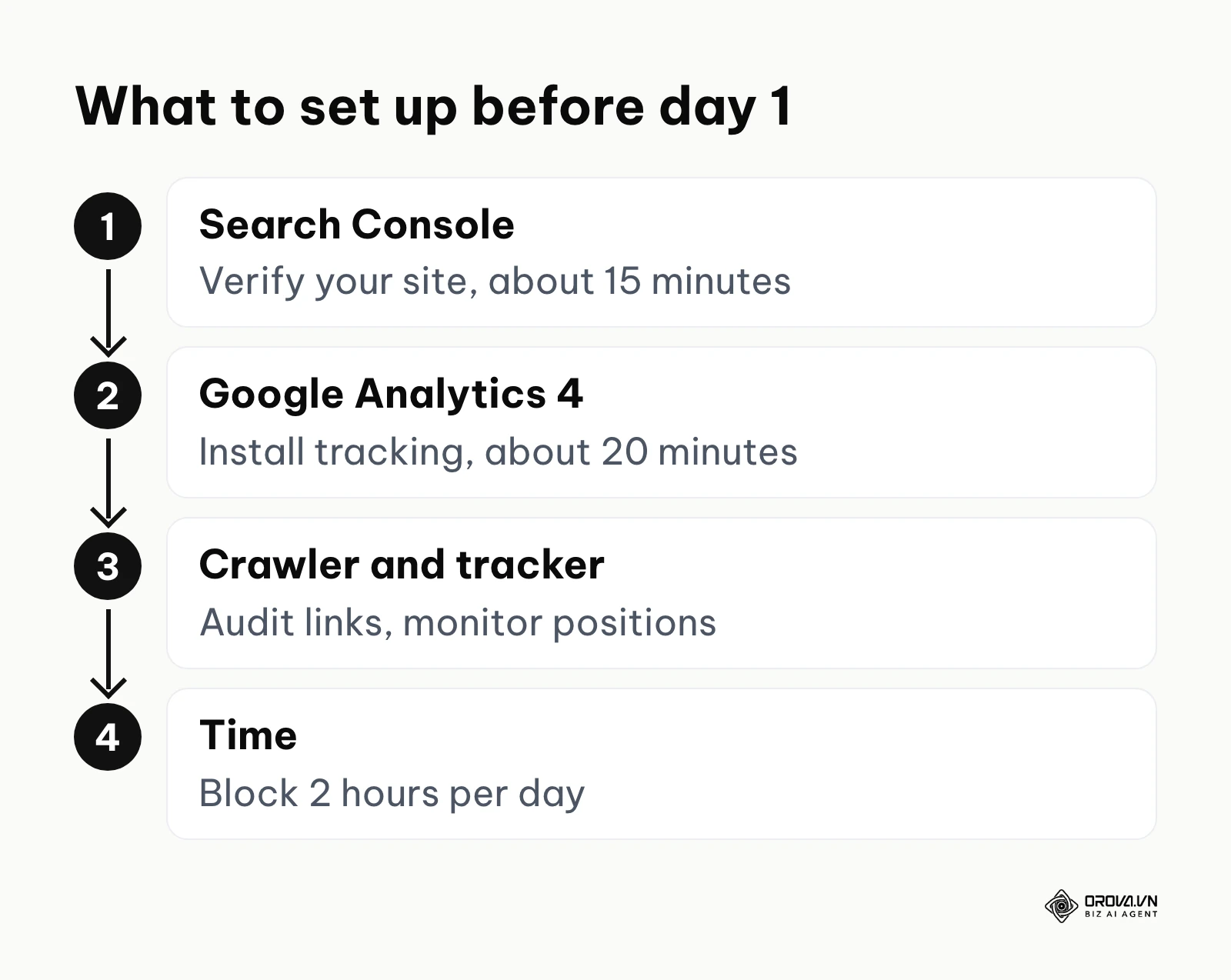
| Required Asset | Purpose | Where to get it | Estimated Time |
|---|---|---|---|
| Google Search Console | Tracks organic impressions, clicks, and indexation errors | Google (Free) | 15 minutes to verify |
| Google Analytics 4 | Measures user behavior, bounce rates, and conversions | Google (Free) | 20 minutes to install |
| Technical Crawler | Audits broken links and structural site issues | Various SEO software providers | 10 minutes to start |
| Keyword Tracker | Monitors your daily ranking positions | Dedicated tracking tools | 15 minutes to setup |
| Time Commitment | Consistent execution of the roadmap steps | Your schedule | 2 hours per day |
You also need a reliable system to track your progress. Instead of paying for expensive software immediately, you can build a highly effective Google Sheets template to monitor your efforts. Set up a spreadsheet with the following columns: Keyword, Current Rank, Target URL, Search Volume, Intent Category, Priority Score, Last Updated Date, and 7-Day Change. Use simple formulas to color-code the 7-Day Change column green if the number improves and red if it drops. This manual tracking forces you to engage with your data regularly and prevents you from ignoring warning signs.
The 30-day website ranking roadmap
This section outlines a structured, 30-day action plan. Do not try to complete all these steps in a single weekend. SEO requires careful execution and testing. Follow this timeline to build a robust, algorithm-proof foundation.
Step 1: Technical and on-page SEO audit (Days 1-5)
The very first step is conducting a thorough technical and on-page audit. You cannot build a successful strategy on a broken foundation. This step ensures that search engine crawlers can actually access, read, and understand your pages without encountering technical roadblocks.
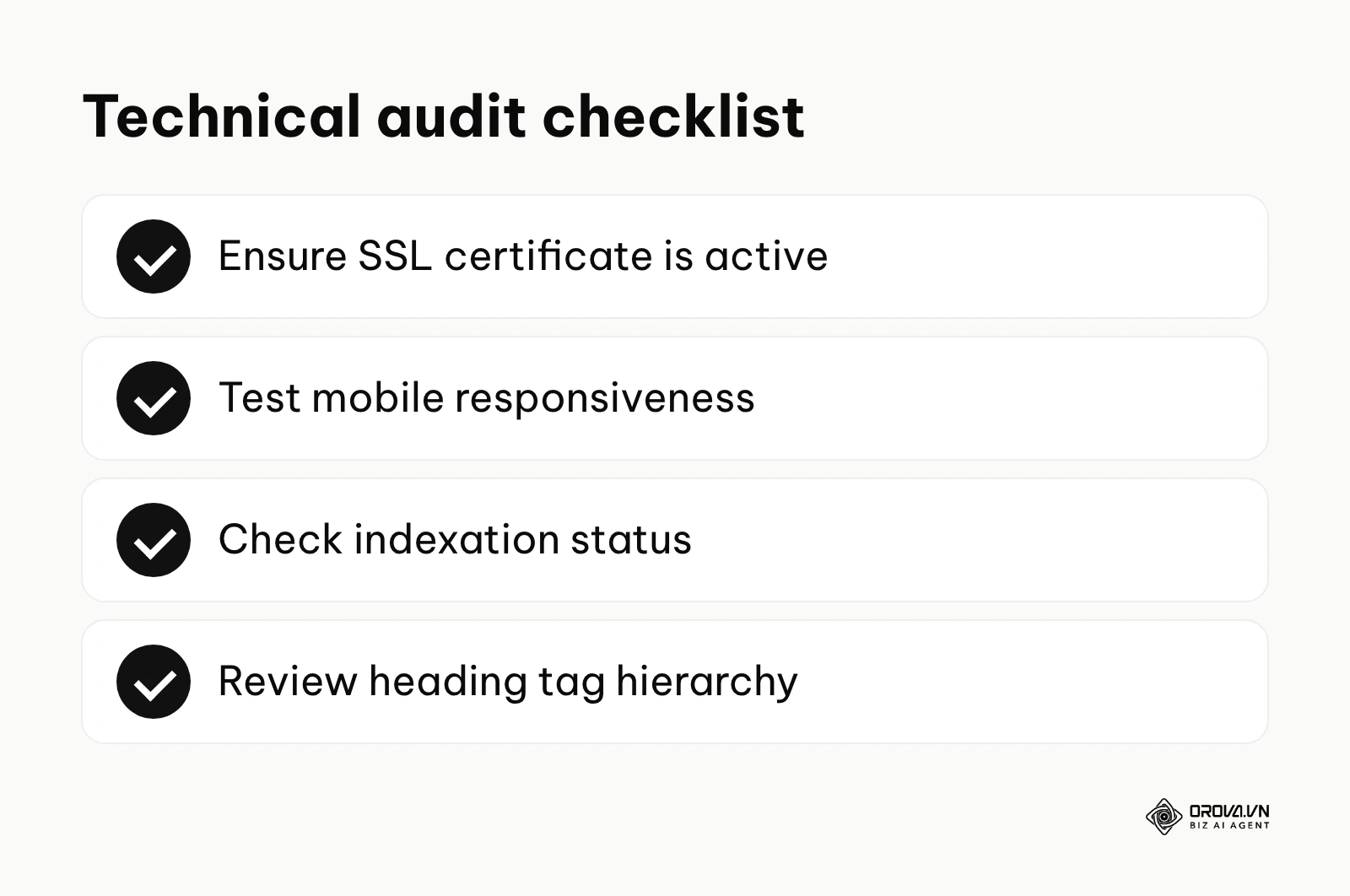
What to do: You need to review your site speed, mobile usability, indexation status, and fundamental on-page elements like headings, meta titles, and URL structures.
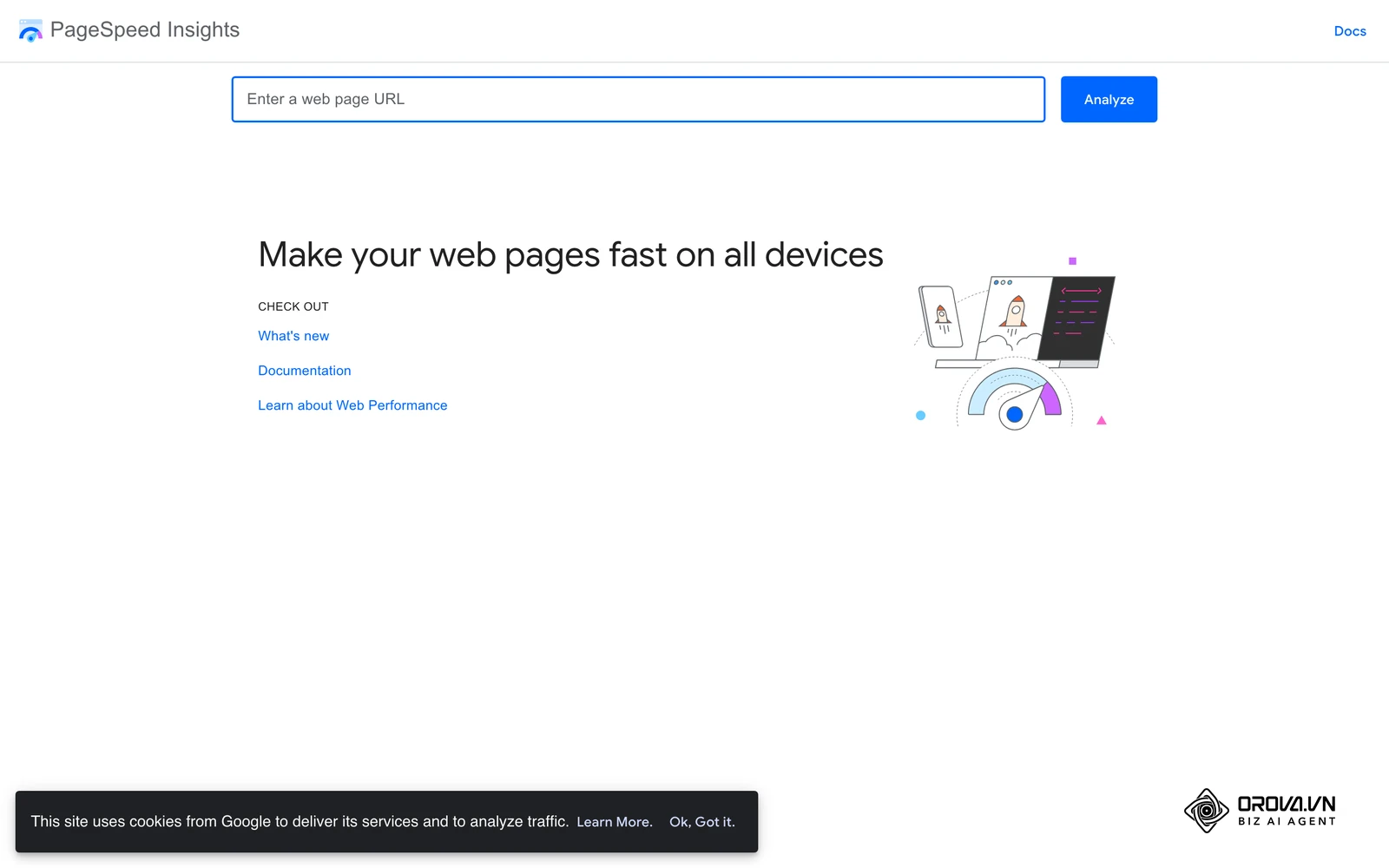
How to do it: Start with Google PageSpeed Insights. Enter your homepage URL and review the Core Web Vitals scores. Pay special attention to the Largest Contentful Paint metric. If it takes longer than 2.5 seconds to load the largest element on your screen, you need to compress your main banner images using modern formats like WebP or upgrade your hosting server. Next, check your indexation. A quick "site:yourdomain.com" search only gives a rough estimate, so open the Page indexing report in Google Search Console instead. If far fewer pages are indexed than you expect, check your robots.txt file and any noindex tags to make sure you are not accidentally blocking search engines.
After checking the server, review your heading structure. Give every page one clear H1 tag describing the main topic of that page. Subtopics should use H2 tags, and further details should use H3 tags. Never skip heading levels just to make the font size look better. Finally, the W3C's Web Content Accessibility Guidelines (WCAG) 2.2, published in 2023, ask for text alternatives for non-text content. Give every informative image descriptive alt text; it helps screen-reader users and helps search engines understand your images.
Signs of doing it right: When you run your site through a technical auditing tool, you will see zero critical errors regarding 404 broken links or server 500 errors. Your pages will load visibly faster on a mobile cellular connection, and Google Search Console will show the important URLs in your sitemap as indexed.
Common errors in this step: A very common mistake is optimizing for desktop speed while completely ignoring the mobile experience. Since search engines use mobile-first indexing, a slow mobile site will destroy your chances of ranking, even if the desktop version is perfectly optimized. Another frequent error is blocking vital CSS and JavaScript files via robots.txt, which prevents the algorithm from rendering the page correctly.
Technical SEO checklist
Use this in-article checklist before publishing any major changes or new content:
- [ ] Verify the SSL certificate is active and forces HTTPS routing.
- [ ] Check key pages on a real phone and in the mobile report of PageSpeed Insights.
- [ ] Confirm each page has one clear H1 tag containing the primary topic.
- [ ] Write a unique meta description under 160 characters for high-value pages.
- [ ] Add descriptive alt text to all images that convey information.
- [ ] Fix any broken internal links pointing to dead 404 pages.
- [ ] Submit a clean, updated XML sitemap to your search console.
Illustrative example:
- Context: A local plumbing business serving five cities had a new site but almost no traffic. One generic services page was trying to rank for dozens of different local searches.
- Actions taken: They split their services into location-specific pages, changed generic H1 tags like "Welcome to our site" to specific targets like "Emergency Plumber in Austin", and compressed oversized background images.
- Obstacles and solutions: The new location pages triggered duplicate content warnings in their audit tool. They wrote unique local descriptions and customer testimonials for each city instead of copying the same text and swapping the city name.
- Results: Over the following weeks, the location pages started appearing for local searches the old generic page never reached, and phone inquiries from new local customers went up.
Step 2: Keyword strategy and search intent mapping (Days 6-10)
Once your technical foundation is solid, you must determine exactly what your audience is searching for. Guessing what people type into Google is a guaranteed way to waste time writing content nobody will ever read.
What to do: You need to research seed keywords, evaluate their monthly search volume, assess the competition difficulty, and rigorously map each keyword to its true search intent.
How to do it: Begin by brainstorming core topics related to your business. Put these seed topics into a keyword research tool to generate thousands of variations. You are looking for "long-tail keywords". These are highly specific phrases containing three or more words. They usually have lower search volume, but they convert at a much higher rate because the user knows exactly what they want.
Once you have a list, you must categorize them by intent. There are four primary types of intent. Informational intent means the user wants to learn something. Navigational intent means they are looking for a specific website. Transactional intent means they are ready to buy right now. Commercial investigation means they are comparing options before buying. You cannot rank a product sales page for an informational keyword because the algorithm knows the user wants an educational article, not a checkout cart. If you want to understand the nuances of how users search, you should read more about keyword intent.
Signs of doing it right: You will have a spreadsheet categorizing at least 50 target keywords. Every keyword will have an assigned intent, a realistic difficulty score, and a designated URL on your website that will target it.
Common errors in this step: The most devastating error is targeting keywords with massive search volume but impossible difficulty scores. If you have a brand new website, you will not outrank Wikipedia for the word "marketing". You must target long-tail, low-difficulty phrases first to build topical authority over time.
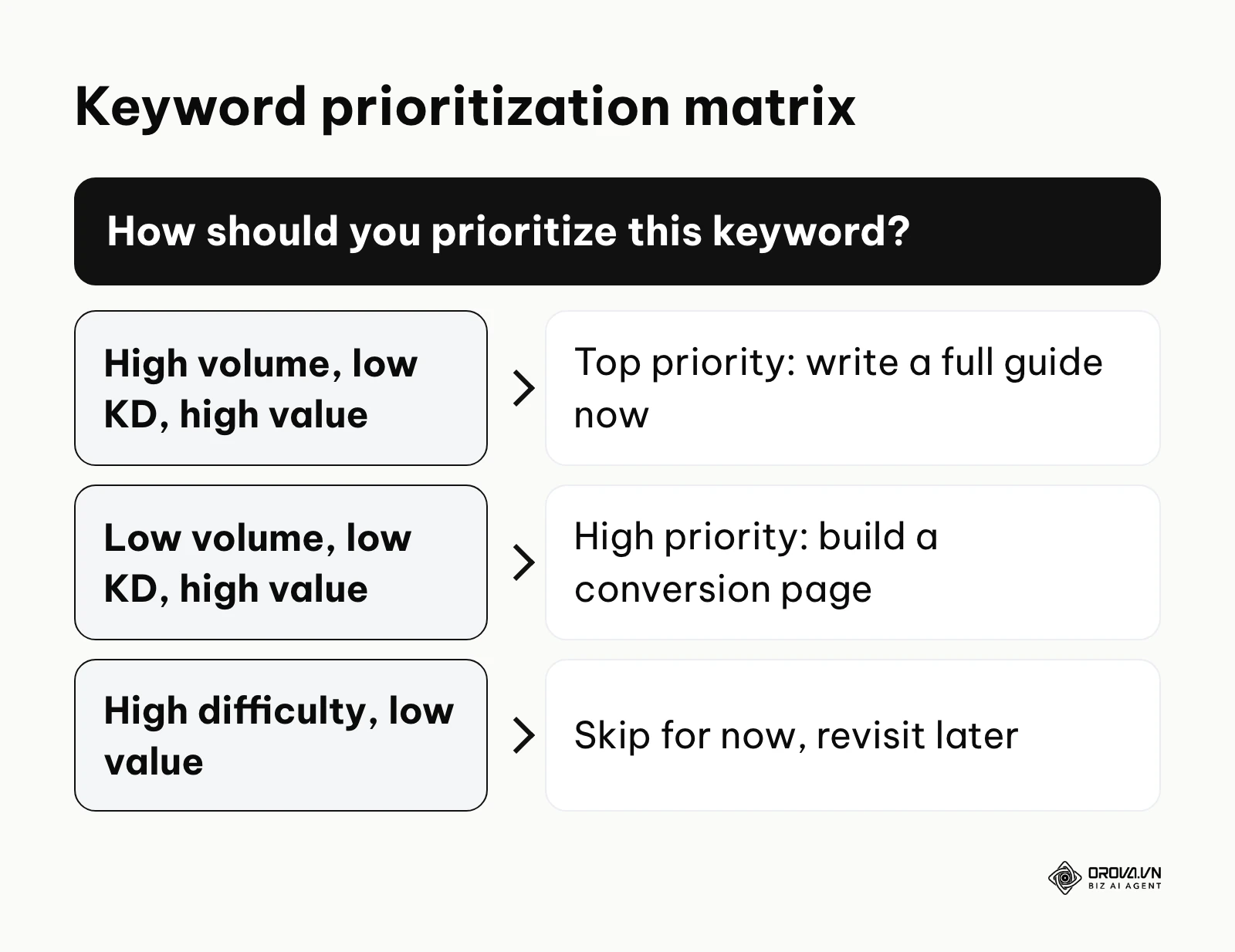
Keyword decision matrix
Use this framework to decide which keywords to pursue first based on your current resources:
| Search Volume | Keyword Difficulty (KD) | Business Value | Action Required |
|---|---|---|---|
| High | Low | High | Top Priority. Write a comprehensive guide immediately. |
| Low | Low | High | High Priority. Create a targeted conversion page. |
| High | High | Low | Low Priority. Skip for now, revisit when authority grows. |
| Low | High | Low | Ignore entirely. Not worth the effort or resources. |
Step 3: Content creation and GEO adaptation (Days 11-18)
Creating content is the core of any ranking strategy. However, the rules of content creation have changed dramatically. You are no longer just writing for human readers or traditional algorithms; you are writing for Generative AI summaries.
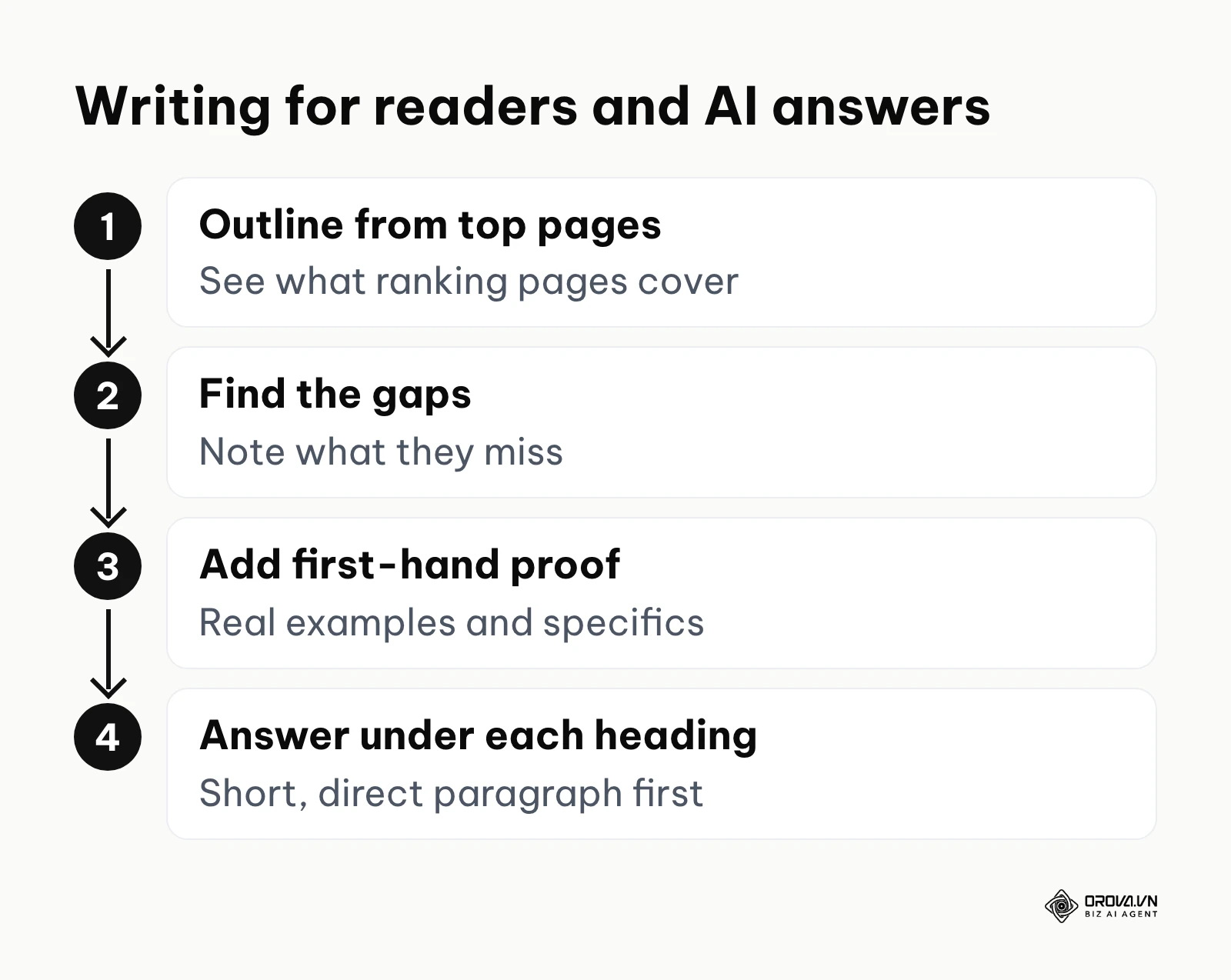
What to do: You need to produce deep, highly valuable content that demonstrates real-world expertise while formatting it in a way that AI language models can easily parse and extract for direct answers.
How to do it: Start by creating a detailed outline based on the top-ranking pages for your target keyword. Look at what they cover and find the missing gaps. Then, apply the principles of E-E-A-T: Experience, Expertise, Authoritativeness, and Trustworthiness. Google's Search Quality Rater Guidelines ask human raters to consider first-hand experience as part of E-E-A-T. Raters do not change rankings directly, but their feedback helps Google check whether its systems reward the right pages. Do not write generic summaries. Share real examples, specific numbers, and unique insights that only an industry practitioner would know.
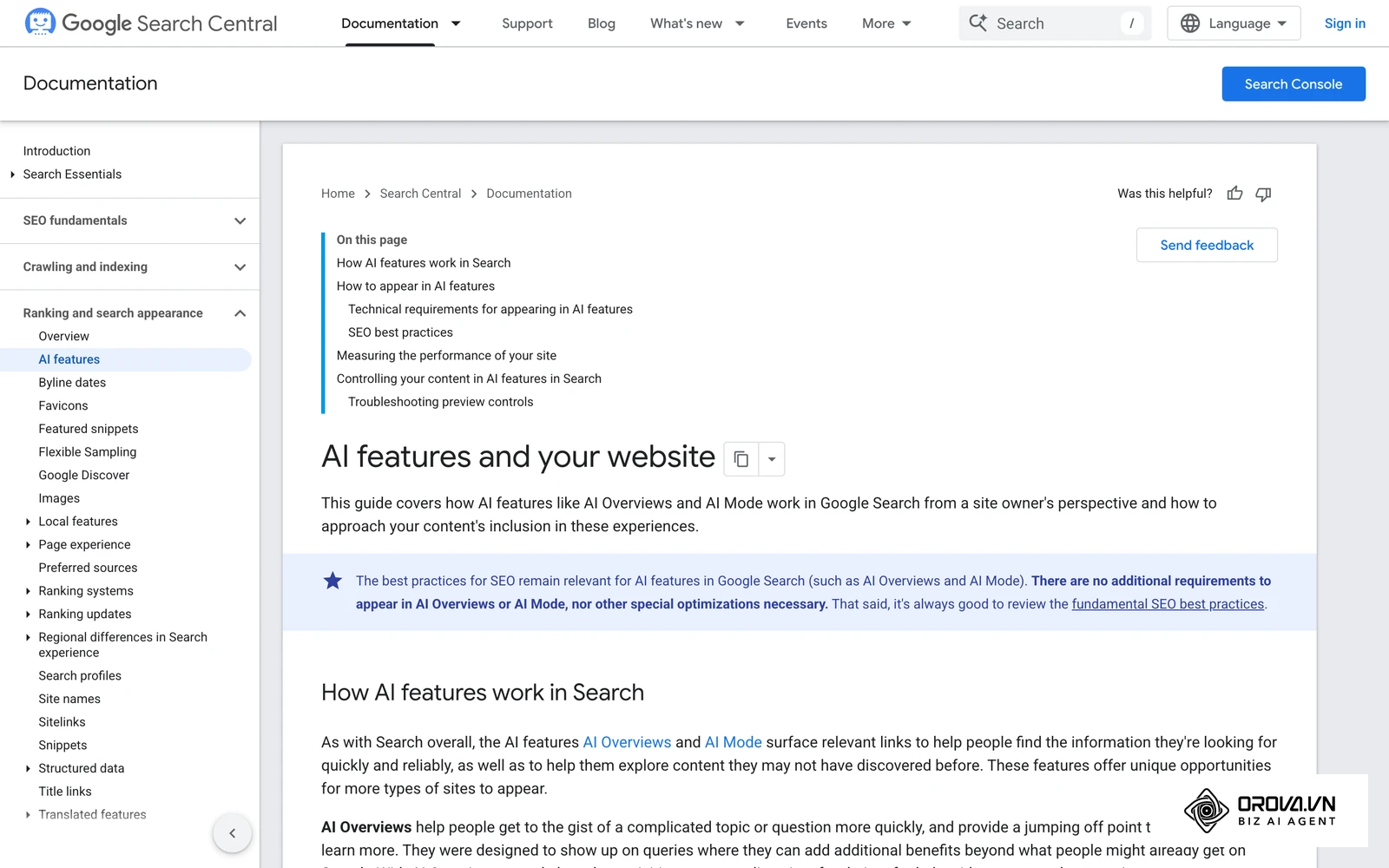
Furthermore, you must adapt to Generative Engine Optimization. Google states that there are no extra technical requirements for appearing in AI Overviews beyond normal SEO best practices, yet AI-generated answers tend to cite pages that give clear, concise, and direct answers. Place a "Key Takeaways" bulleted list at the very top of your long articles. Directly below your main headings, write a bolded, 50-word paragraph that directly answers the specific question posed by the heading. This makes it easier for AI systems to extract your text and cite your page as a source.
Signs of doing it right: Your articles will be comprehensive, visually broken up with short paragraphs and bullet points, and will explicitly answer the core questions of the topic within the first 300 words.
Common errors in this step: A major mistake is writing huge walls of text without subheadings. AI systems struggle to extract specific facts from dense, unstructured paragraphs. Another error is burying the answer to the user's question at the very end of a 2000-word article to artificially increase time-on-page. Users will simply leave immediately.
Illustrative example:
- Context: A B2B software blog lost a noticeable share of its organic traffic after AI Overviews started appearing for its main queries. Its technical articles were long and buried the actual answers in the middle of the text.
- Actions taken: The team restructured its top twenty articles, added a short "Executive Summary" bulleted list at the top, and answered the target query in a bolded, two-sentence paragraph right below the H1 heading.
- Obstacles and solutions: Writers worried that short top sections would reduce time on page. The compromise was to keep the deep technical analysis further down while placing the direct answer at the top.
- Results: Some of the restructured pages began appearing as cited links inside AI Overviews, and part of the lost traffic came back.
Step 4: Internal linking architecture (Days 19-22)
Your website is a web of information. If pages are not connected logically, search engine crawlers will get lost, and authority will not flow properly through your domain.
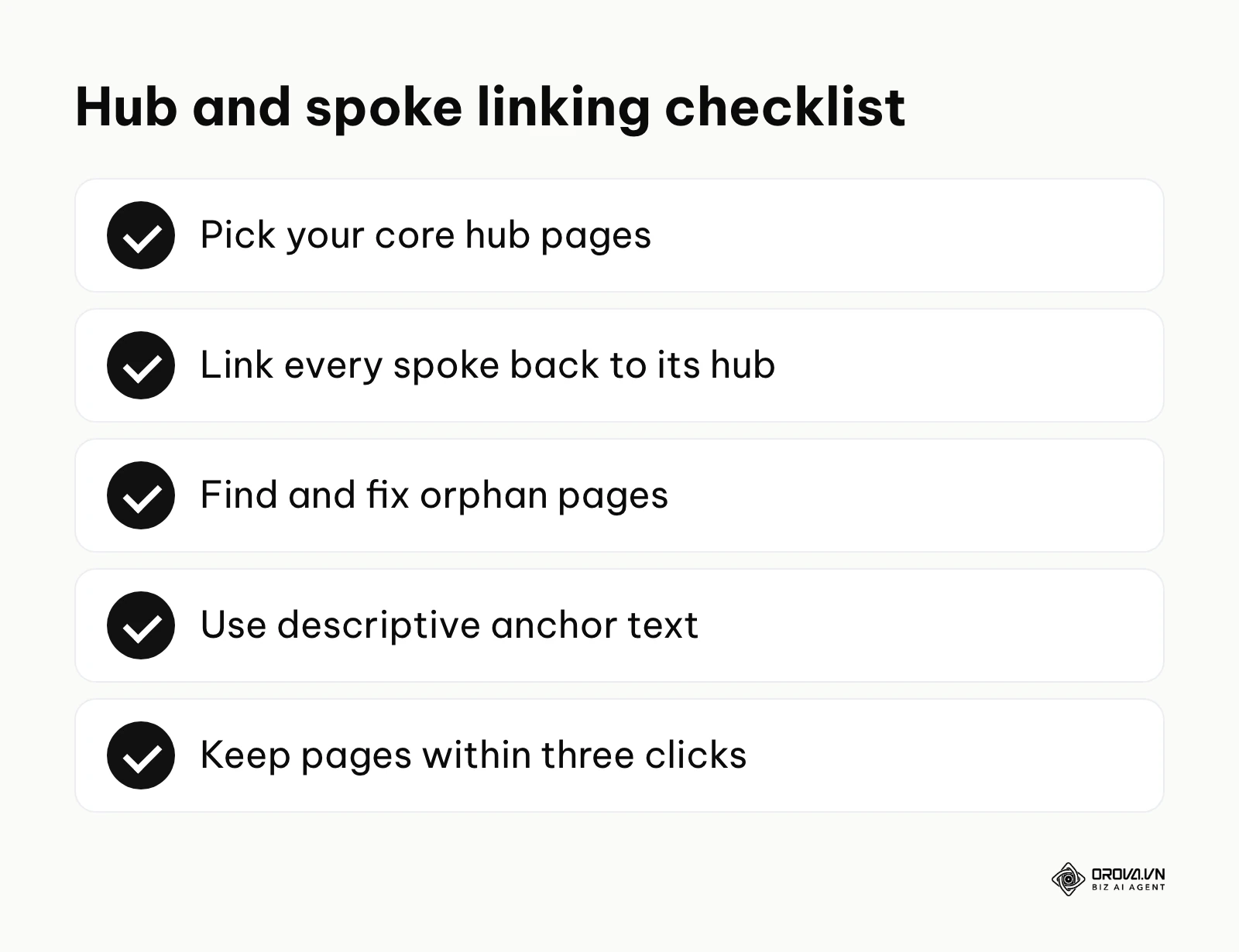
What to do: You need to audit your existing internal links and build a structured "Hub and Spoke" architecture that groups related topics together and passes ranking power to your most important conversion pages.
How to do it: Identify your core "Hub" pages. These are usually your broad, high-level service pages or massive ultimate guides. Then, identify your "Spoke" pages. These are the highly specific, long-tail blog posts that cover subtopics in extreme detail. You must ensure that every single Spoke page links back up to its relevant Hub page using descriptive anchor text. If you want to master this specific structural strategy, studying how to build pillar pages is a good next step.
Additionally, you must hunt down "orphan pages". These are pages on your website that have zero internal links pointing to them. Because there is no path to reach them, search engine crawlers often ignore them entirely. Use your technical crawler tool to identify these orphans and add relevant links to them from older, high-authority blog posts.
Signs of doing it right: Every page on your website can be reached within three clicks from the homepage. Your major service pages receive internal links from dozens of highly relevant, supporting blog articles.
Common errors in this step: Using generic anchor text like "click here" or "read more" is a massive wasted opportunity. The anchor text tells the algorithm what the destination page is about. Always use descriptive phrasing like "our commercial plumbing services". However, avoid using the exact same keyword anchor text hundreds of times, as this looks unnatural and manipulative to the algorithm.
Step 5: Building authority without huge budgets (Days 23-27)
Off-page SEO, primarily building backlinks from other websites to yours, remains a crucial ranking factor. A backlink acts as a vote of confidence. However, buying links is dangerous and expensive. You must earn them through strategic effort.
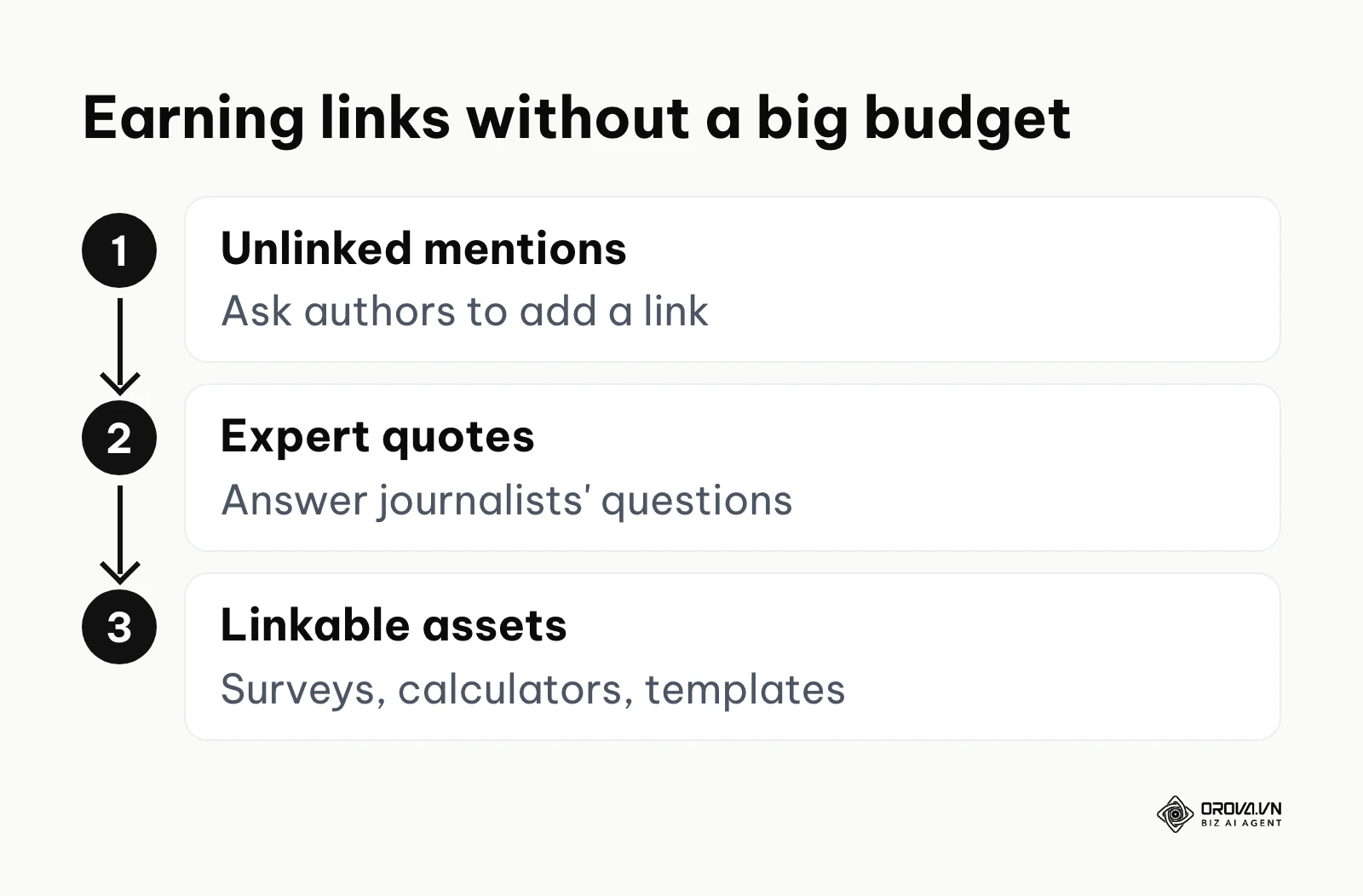
What to do: You need to acquire high-quality mentions and links from relevant websites in your industry without relying on massive paid link-building budgets.
How to do it: Start with unlinked brand mentions. Use a search operator in Google to find websites that have mentioned your brand name but did not actually link to your website. Reach out to the author politely and ask if they would mind turning the mention into a clickable link for their readers' convenience.
Next, utilize platforms that connect journalists with expert sources. Journalists constantly need quotes for their articles. If you provide a highly detailed, expert quote answering their specific question, they will often credit you with a link to your website. Finally, create "linkable assets". This means building something so inherently useful that people naturally want to share it. This could be an original industry survey, a free interactive calculator, or a comprehensive template spreadsheet.
Signs of doing it right: You will see a slow but steady increase in referring domains in your analytics tools. The links will come from websites that are topically relevant to your specific industry, not random general directories.
Common errors in this step: The most dangerous mistake is participating in private blog networks or buying packages of thousands of low-quality links from overseas forums. The Google algorithm is good at identifying artificial link patterns, and Google's spam policies treat link schemes as a violation that can lead to the links being ignored or to a manual action that cuts your visibility.
Illustrative example:
- Context: A new personal finance blog needed authority but had no budget for acquiring mentions. The finance niche is competitive and demands strong trust signals because it involves people's money.
- Actions taken: The owner built a spreadsheet that calculated compound interest for freelancers with irregular income and shared it in financial independence forums instead of cold-emailing large media sites.
- Obstacles and solutions: Early forum posts were removed as self-promotion. The fix was to explain the whole method in the post itself and link to the spreadsheet only at the end as an optional extra.
- Results: The spreadsheet page earned unprompted mentions from several finance blogs and a university resource page, which lifted the blog's website ranking for its core topics without paying for links.
Step 6: Tracking and iterating (Days 28-30)
SEO is never truly finished. The final step of the roadmap is establishing a routine for measuring your performance, identifying decay, and updating your strategy based on hard data.
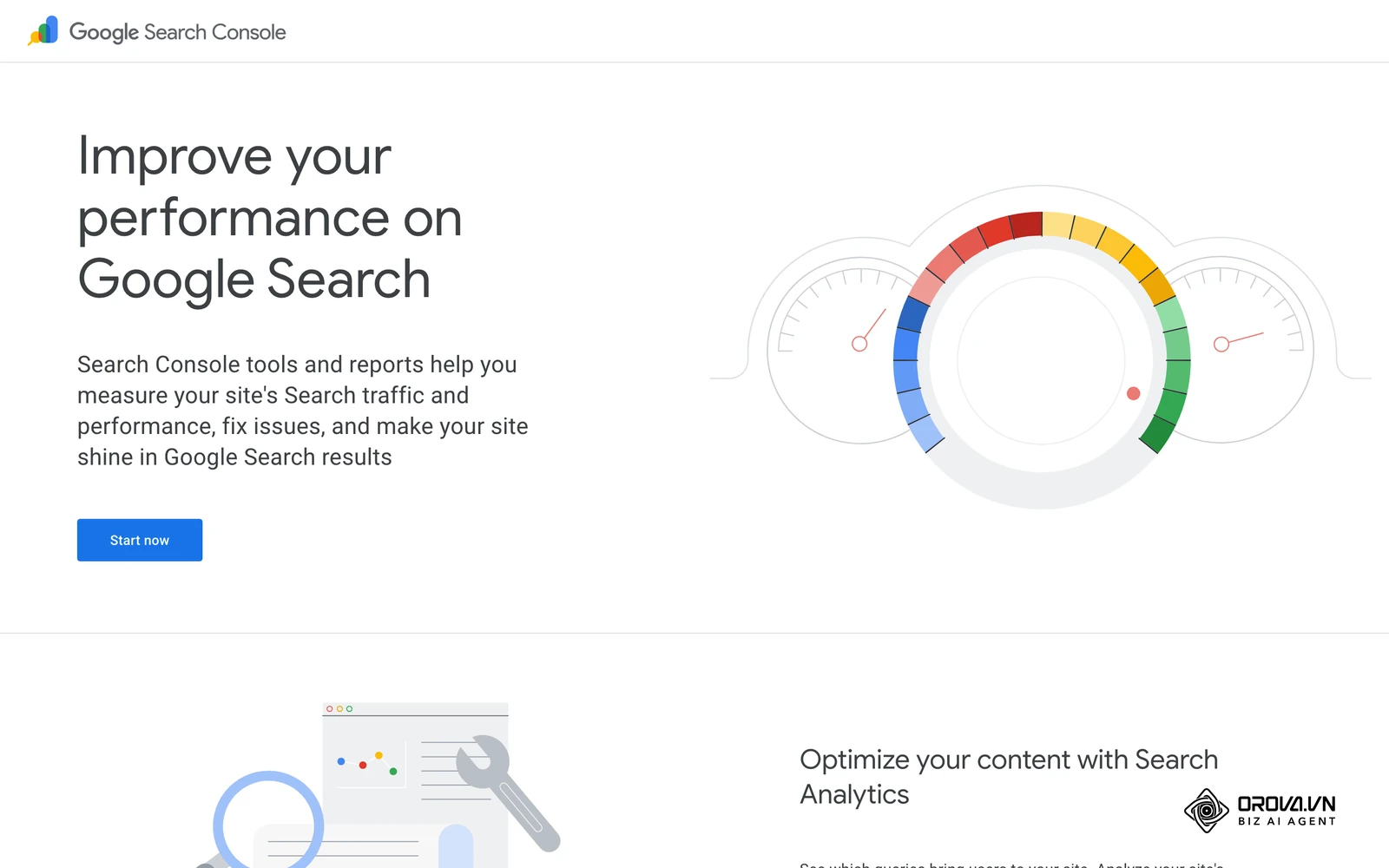
What to do: You need to monitor your organic impressions, track your keyword positions, and implement a schedule for refreshing older content that begins to lose its ranking.
How to do it: Rely heavily on accurate data sources. Third-party tools are helpful for competitor research, but Google Search Console gives you first-party data on how your site performs in Google Search; this guide to Google Search Console for SEO walks through the reports that matter. Check your performance report weekly. Look for queries where you rank between positions 11 and 15. These are your "striking distance" keywords. A slight optimization to the title tag or adding a few new paragraphs of detail can often push these pages onto the first page.
Furthermore, you must fight content decay. Every six months, review your top-performing articles from the previous year. Check if the information is still accurate. Add new information, update the year in the title only when the content has genuinely changed, and ensure the formatting still aligns with modern best practices.
Signs of doing it right: You will have a documented monthly routine for reviewing analytics. You will spend a regular share of your SEO time updating and improving old content rather than constantly churning out new posts.
Common errors in this step: Obsessing over daily ranking fluctuations is a major error. Rankings bounce around naturally due to algorithm testing and personalization. Look at the long-term trend over a three-month period, not the daily ups and downs. Another massive error is launching a redesign without setting up proper 301 redirects, which instantly destroys years of built-up ranking equity.
Discover Orova.vn – a Biz AI Agent platform with OROVA SEO, a complete solution for every website. The system supports search engine optimization from A to Z with features including keyword research, writing new SEO-ready articles, optimizing existing content, rank tracking, plus competitor analysis and in-depth technical analysis. Sign up today to experience OROVA SEO completely free (offer valid through July 7, 2027).
Website ranking factors: Traditional SEO vs Generative Engine Optimization
The mechanisms of search are currently undergoing a massive evolution. Traditional search engines provided a list of ten blue links. Modern search engines are increasingly acting as answer engines, reading the content and summarizing it for the user directly on the results page. This requires a shift from traditional optimization to Generative Engine Optimization.
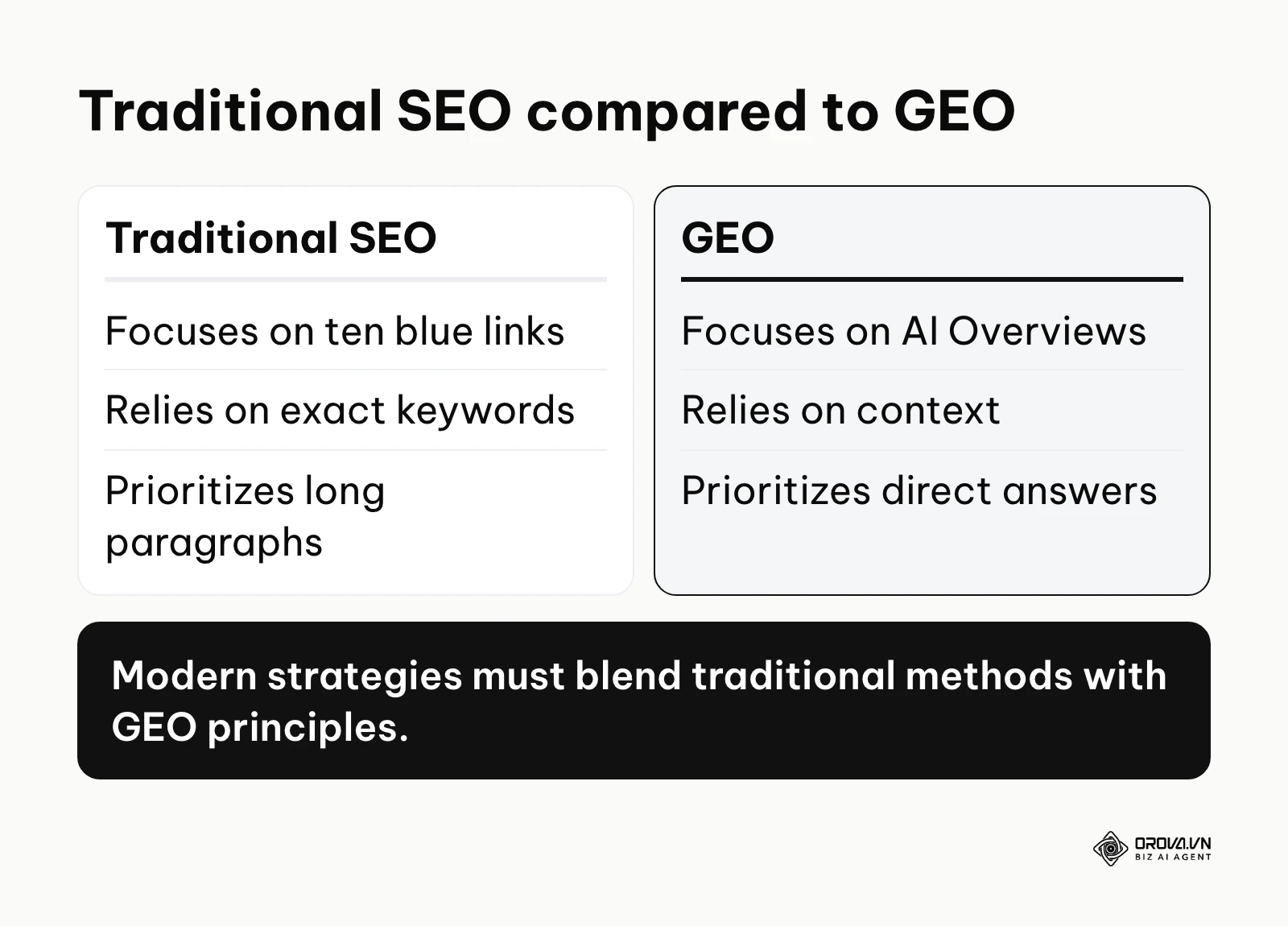
Understanding the difference between these two approaches is critical for survival in the coming years. Traditional methods focused heavily on keyword density, precise meta tag formatting, and long-form content designed to keep users scrolling. Generative optimization focuses on context, brevity, and factual accuracy.
AI models do not care about your keyword density. They care about whether your text logically answers the prompt they are processing. Therefore, writing clear, declarative sentences is far more important than sprinkling a target keyword fifteen times throughout an article.
Google's own guidance page, "Creating helpful, reliable, people-first content", asks whether readers will leave feeling they have learned enough about a topic to help achieve their goal. This means your content must be useful on its own. If you want to dive deeper into blending these methods, a holistic SEO strategy will provide the necessary framework to unify technical, traditional, and generative approaches.
How to measure website ranking success
You cannot improve what you do not measure. However, tracking the wrong metrics will lead you to make terrible strategic decisions. You must look beyond vanity metrics and focus on the numbers that actually impact your business growth.
| Metric | What it indicates | Where to find it | Warning sign |
|---|---|---|---|
| Organic Impressions | How many times your site appeared in search results | Search Console | A sharp drop across many pages at once points to a technical problem or an algorithm update. |
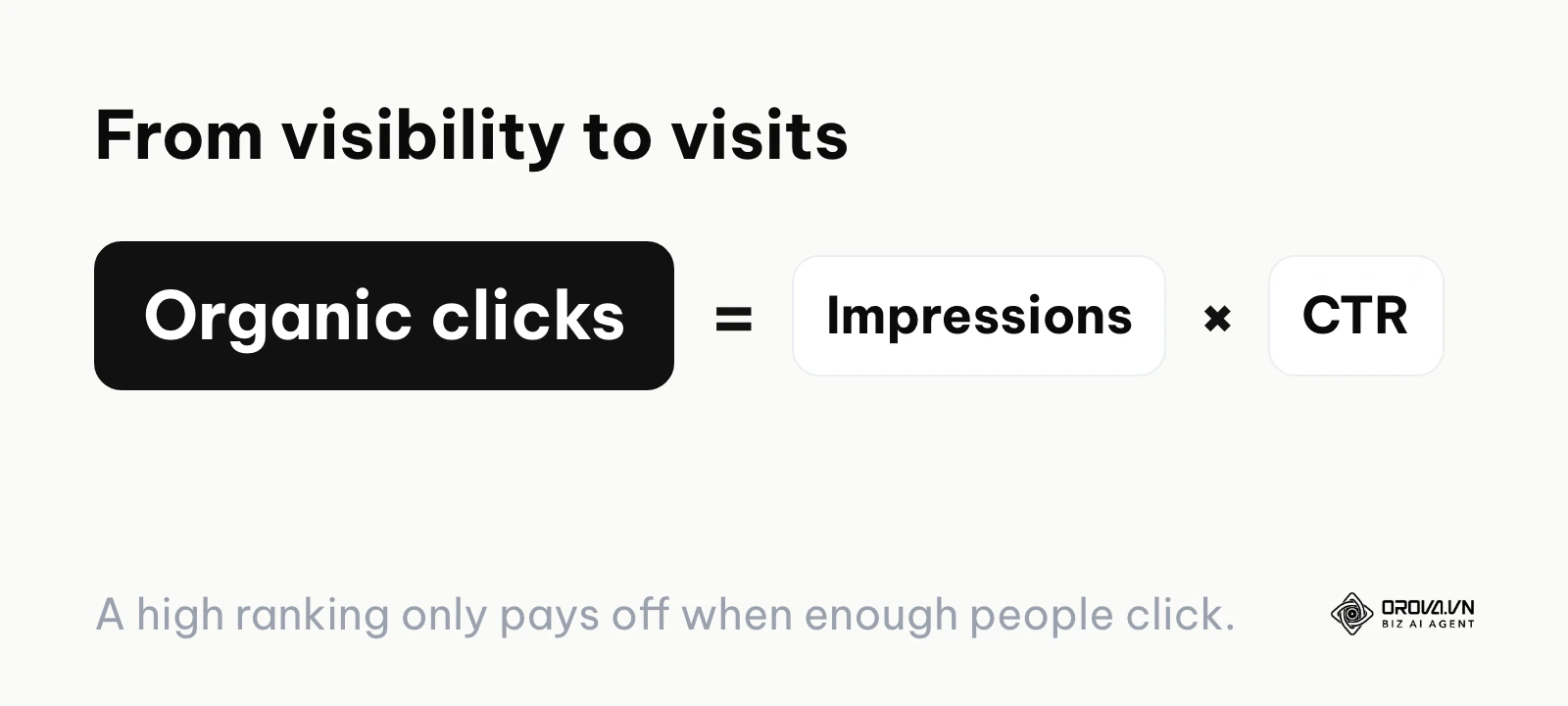
| Click-Through Rate (CTR) | The percentage of people who saw your link and actually clicked it | Search Console | A low CTR on page-one rankings usually means your titles and snippets are not compelling. |
| Non-Branded Traffic | Visitors finding you through topic searches, not your company name | Google Analytics 4 | If almost all traffic is branded, your content is not reaching new audiences. |
| Keyword Positions | Your exact numerical rank for target phrases | Rank tracking tools | A slide from the top three to the bottom of page one usually costs a large share of clicks. |
| Organic Conversions | Visitors from search who actually buy or sign up | Google Analytics 4 | High traffic with zero conversions means you are targeting the wrong search intent. |
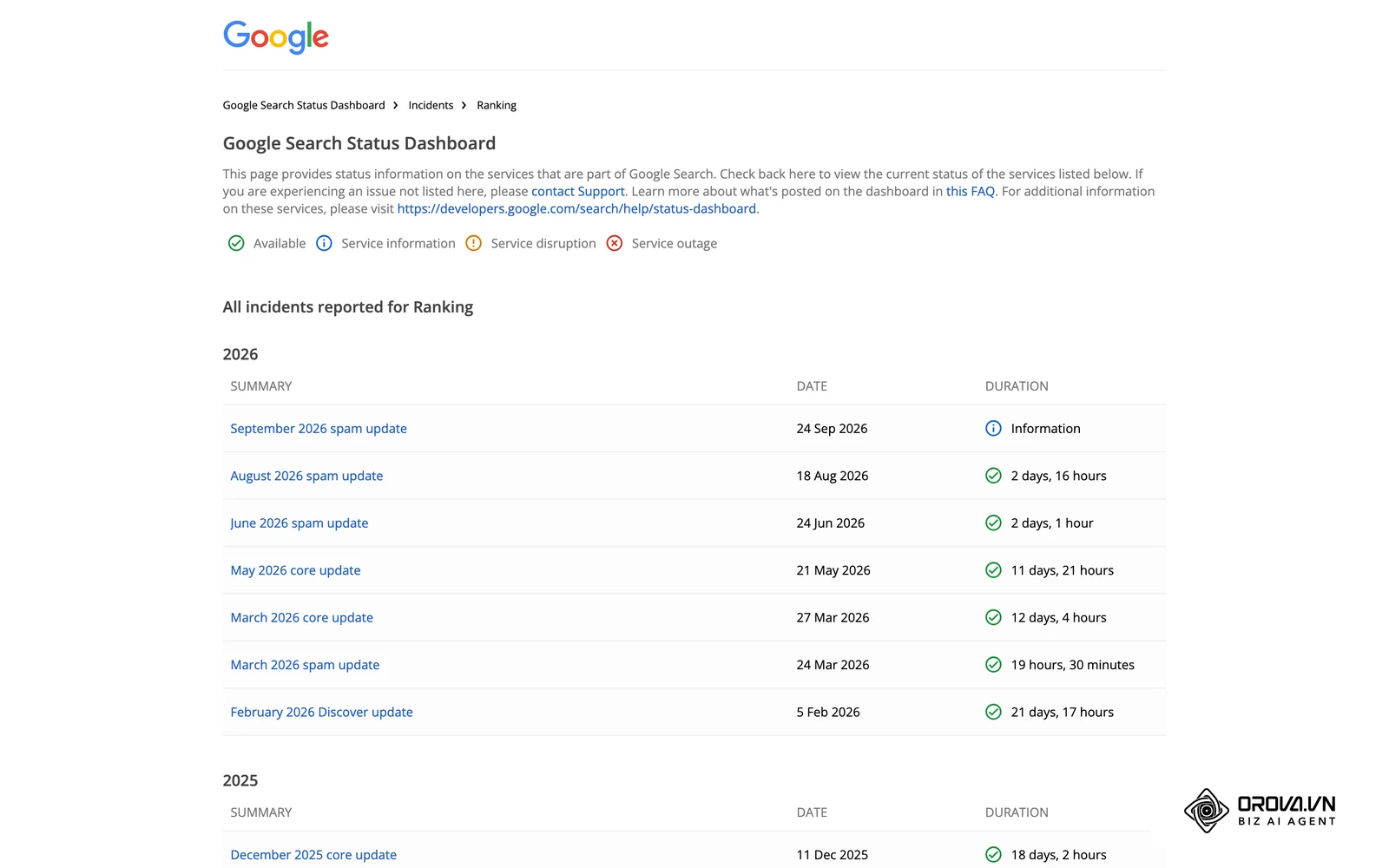
The most critical realization is that a high rank does not automatically equal business success. If you rank number one for a keyword, but your title is unappealing, your click-through rate will be terrible, and you will get no traffic. Even worse, if you get the traffic but the content does not solve the user's problem, they will bounce immediately, and you will get no sales. Measurement must connect visibility to actual revenue.
When rankings drop suddenly, check the timing before you change anything. Google lists confirmed ranking updates, such as core updates and spam updates, on its Search Central updates page and in the Google Search Status Dashboard. If your drop lines up with a confirmed update and affects many pages, review content quality across the site rather than tweaking single pages. If it hits only a few URLs and lines up with a change on your own site, look for technical causes first: redirects, noindex tags, robots.txt rules, or a broken template.
With OROVA.VN and the OROVA SEO module, you put an end to the exhausting days of manual work for good. Instead of struggling for hours to write articles and compile reports, the entire process is now optimized and completed in just 5 minutes.
Common website ranking mistakes
Even experienced marketers frequently stumble into traps that destroy their search visibility. Identifying and avoiding these pitfalls will put you ahead of the majority of your competition.
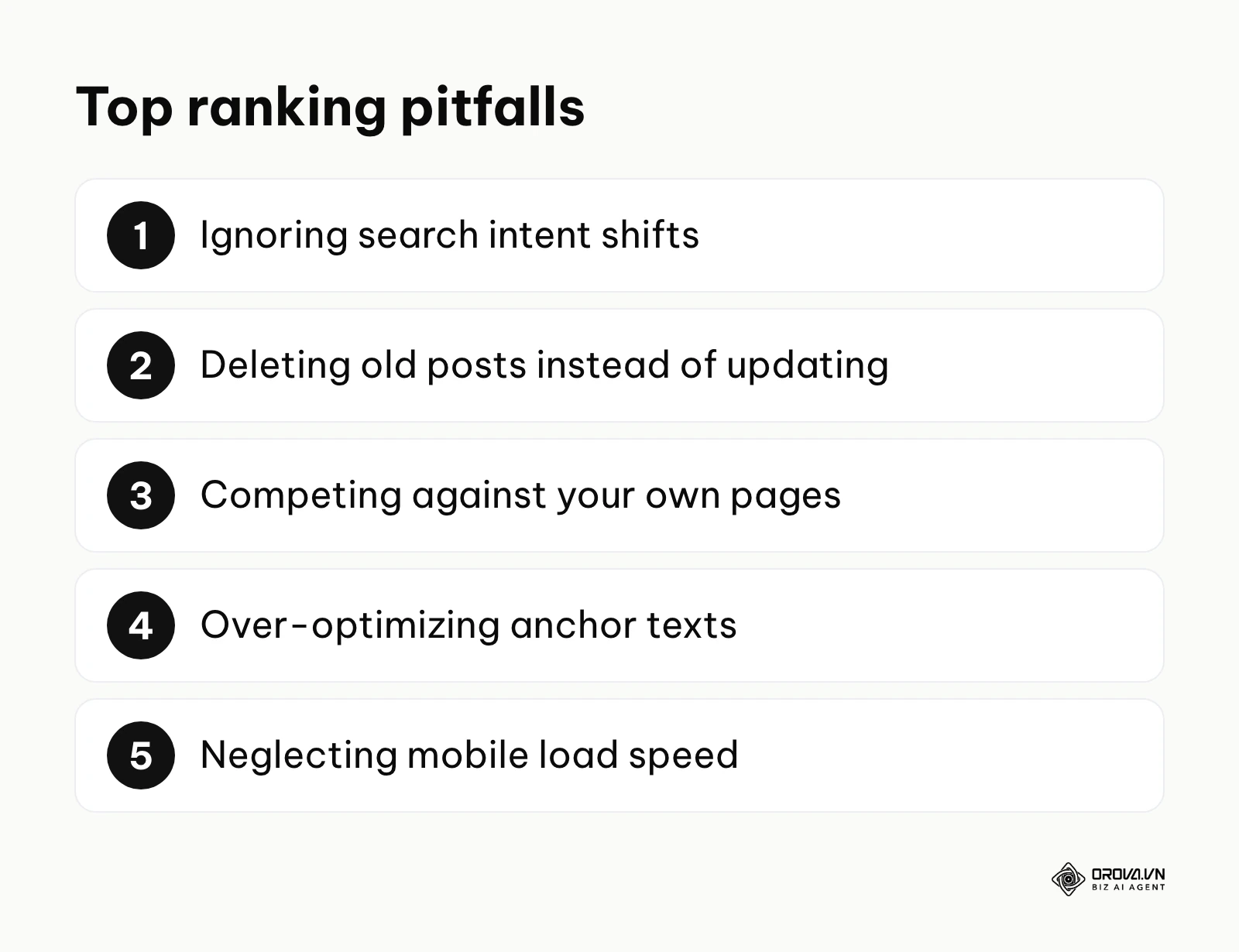
- Ignoring search intent shifts: Search intent changes over time. A keyword that used to trigger informational blog posts might suddenly trigger e-commerce product pages if user behavior shifts. If you notice a steady decline in ranking for a specific page, check the current search results. If the type of content ranking has changed, you must completely rewrite your page to match the new intent.
- Deleting old posts instead of updating: Many site owners clean up their blogs by deleting old, poorly performing posts. This is a massive mistake. Deleting pages creates broken links and removes whatever small amount of authority that page had built. Instead, redirect the old page to a relevant new page, or better yet, rewrite and update the old page to make it valuable again.
- Competing against yourself: This happens when you publish multiple articles about the exact same topic, causing them to fight each other in the search results. Google has to pick one, and often neither page performs as well as a single stronger page would. Understanding how to identify and fix keyword cannibalization is vital to ensure your pages support each other rather than fighting.
- Over-optimizing anchor texts: Building internal or external links using the exact target keyword every single time looks highly unnatural. If a hundred websites link to you using the exact phrase "best cheap shoes", the algorithm will flag it as manipulation. Use natural variations, brand names, and descriptive phrases for your anchor texts.
- Neglecting mobile load speed completely: You might build your website on a fast desktop computer with a massive monitor and fiber internet. Your users are likely viewing it on a three-year-old smartphone with a weak cellular connection. If your site takes ten seconds to render heavy graphics on a mobile device, users will abandon it before it finishes loading.
If handling all of this by hand is too much for a small team, an AI SEO tool such as Orova SEO can take over drafting, publishing, and bulk-updating older posts.
Where website ranking is heading in the next few years: the author's take
The search landscape is moving faster than ever. Based on the current trajectory of technology and user behavior, here is how I think website ranking will evolve over the next few years.
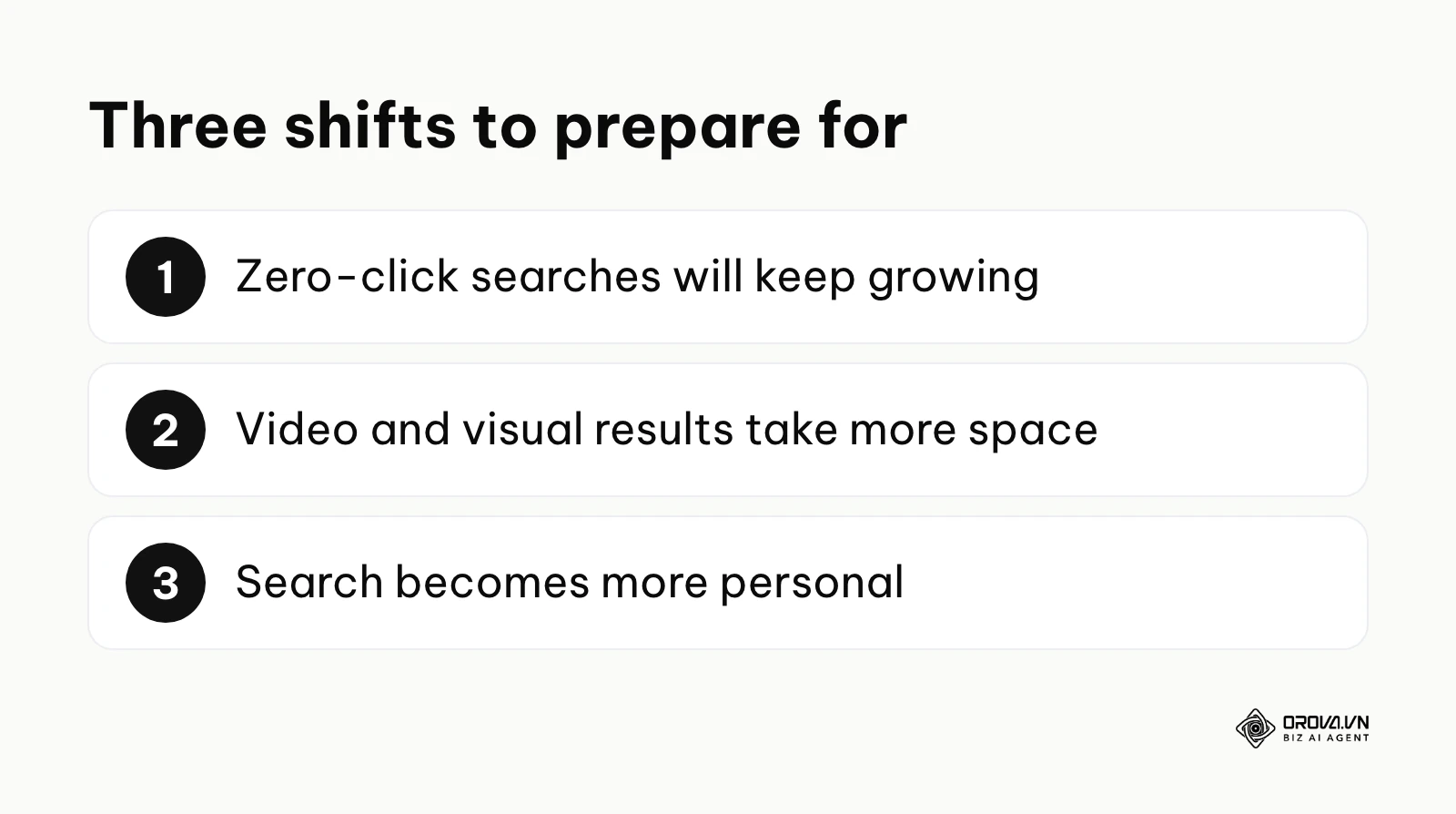
Zero-click searches will keep growing
AI Overviews already answer many simple queries directly on the results page. I think that over the next two to three years, a growing share of informational searches will end without a click to any website, with the results page itself becoming the destination. To prepare for this, you must pivot your strategy away from purely factual information. You need to focus on deep analysis, strong opinions, and proprietary data that an AI cannot easily summarize without losing the core value.
Video and visual results will take more space
Currently, text-based articles still dominate many search verticals. However, my read is that search engines will increasingly prioritize short-form video and highly interactive visual elements directly in the main feed. Users are demanding faster, more engaging ways to consume information. You should start preparing by turning your highest-performing written guides into short, punchy video formats and embedding them directly into the top of your existing articles to capture this visual preference.
The search algorithm will become more personal
Right now, two people searching for the same keyword generally see a relatively similar set of results, perhaps slightly adjusted for local geography. I suspect that soon, the Google algorithm will become hyper-personalized based on the user's specific learning style, previous interaction history, and professional background. A beginner searching for a topic will see a completely different set of websites than an expert searching for the exact same phrase. You must prepare by clearly defining your target persona and writing specifically for their knowledge level, rather than trying to write a generic guide for everyone.
Frequently asked questions about website ranking
How long does it exactly take for a completely new website to rank?
There is no fixed timeline. A brand new domain with little authority usually needs several months of consistent, high-quality work before it holds stable rankings for competitive terms, mostly because Google needs time to crawl the site, understand it, and gather signals about it. Established websites can often rank new content within a few days or weeks.
How can I protect my traffic from AI Overviews?
AI Overviews tend to absorb traffic for simple, factual questions. To protect your traffic, you must shift your content strategy toward complex problem-solving, deep case studies, and highly opinionated thought leadership. AI can tell a user what a concept means, but it cannot share a real-world story about how that concept was successfully implemented in a specific, nuanced business scenario.
Do I absolutely need to buy backlinks to rank on the first page?
No. Buying backlinks violates Google's spam policies and can lead to a manual action against your site. While links remain highly important, you can earn them naturally by creating original research, offering free tools, and providing expert quotes to journalists. Furthermore, for highly specific, long-tail local keywords, you can often rank purely on the strength of exceptional content and perfect technical optimization without massive link profiles.
Does social media activity directly improve the Google algorithm evaluation?
Social media likes, shares, and follower counts are not direct ranking factors for the Google algorithm. However, a strong social media presence drives targeted, real human traffic to your website. This brings real visitors and brand awareness, and often leads to natural backlinks when other creators discover your content, which indirectly boosts your overall SEO performance.
Should I use exact match keywords in every single heading?
No, forcing the exact same keyword into every H2 and H3 tag looks like spam and creates a terrible reading experience. The algorithm is smart enough to understand synonyms and related concepts. Use natural variations and ensure your headings accurately describe the specific section they introduce, focusing on readability rather than mechanical repetition.
Where should you start with your website ranking?
SEO can feel overwhelming, but progress happens one step at a time. Depending on your current situation, here is exactly what you should do in your next working session.
If you have a brand new website with zero traffic: Do not start writing random blog posts. Your very first step is to verify your domain in Google Search Console and submit your XML sitemap. This simple technical action takes less than twenty minutes and officially introduces your website to the search engine, allowing the crawling process to begin.
If you have an older website with traffic that has recently crashed: Do not panic and start deleting pages. Your immediate step is to open your analytics, identify the three specific pages that lost the most traffic, and perform a live search for their target keywords. Compare your old pages to the competitors who just outranked you. Identify if the search intent shifted (e.g., from text guides to video results) and plan a massive update for those three pages to match the new standard.
If you have steady traffic but no actual business sales: Stop focusing on search volume immediately. Your next step is to conduct a harsh audit of your keyword intent. Review the top ten pages driving your traffic. If they are all broad, top-of-funnel informational terms, you need to pivot. Spend your next session researching and mapping out five highly specific, transactional keywords that indicate a user is actively looking to purchase your specific solution, and begin outlining content specifically for those terms. By prioritizing intent, your website ranking efforts will finally start generating real revenue.
About the author

Builder of Orova
Nguyễn Đỗ Trọng Ân has 8 years of experience in marketing, including 6 years managing market development across Asia. He builds Orova, a Biz AI Agent that never sleeps: it plans, runs and optimizes work for businesses.
Run your business with AI Agents
Orova is the always-on Biz AI Agent — it plans, runs, and optimizes the work for you.
Save time, unlock productivity.