
SaaS SEO funnel: What it is and how it drives MRR

Are you driving thousands of visitors to your software website every month, only to see a flatline in new trial signups? A SaaS SEO funnel is the fix: a search framework that maps content to each stage of the software buyer journey, from problem awareness to trial signup and retention, and tracks the recurring revenue each stage produces. Without one, you end up like many software companies that treat search engine optimization strictly as a volume game. They chase broad keywords with high search volumes, celebrate their rising traffic graphs, and then wonder why their monthly recurring revenue remains entirely stagnant.
The traditional approach of simply publishing generic blog posts about industry topics is no longer sufficient to build a sustainable business. To turn casual organic visitors into active, paying users, you need a highly targeted framework that guides them through a logical decision-making process.
In this comprehensive guide, we will explore how to map keywords precisely to the software buyer journey, plug the hidden conversion leaks in your website, and track the exact revenue generated from your organic content efforts.
What is a SaaS SEO funnel?
A SaaS SEO funnel is a structured search optimization framework used to attract visitors, nurture them with educational content, and convert them into software subscribers. It differs from standard e-commerce funnels by prioritizing free trial activations, recurring revenue tracking, and long-term customer retention over one-off purchases.
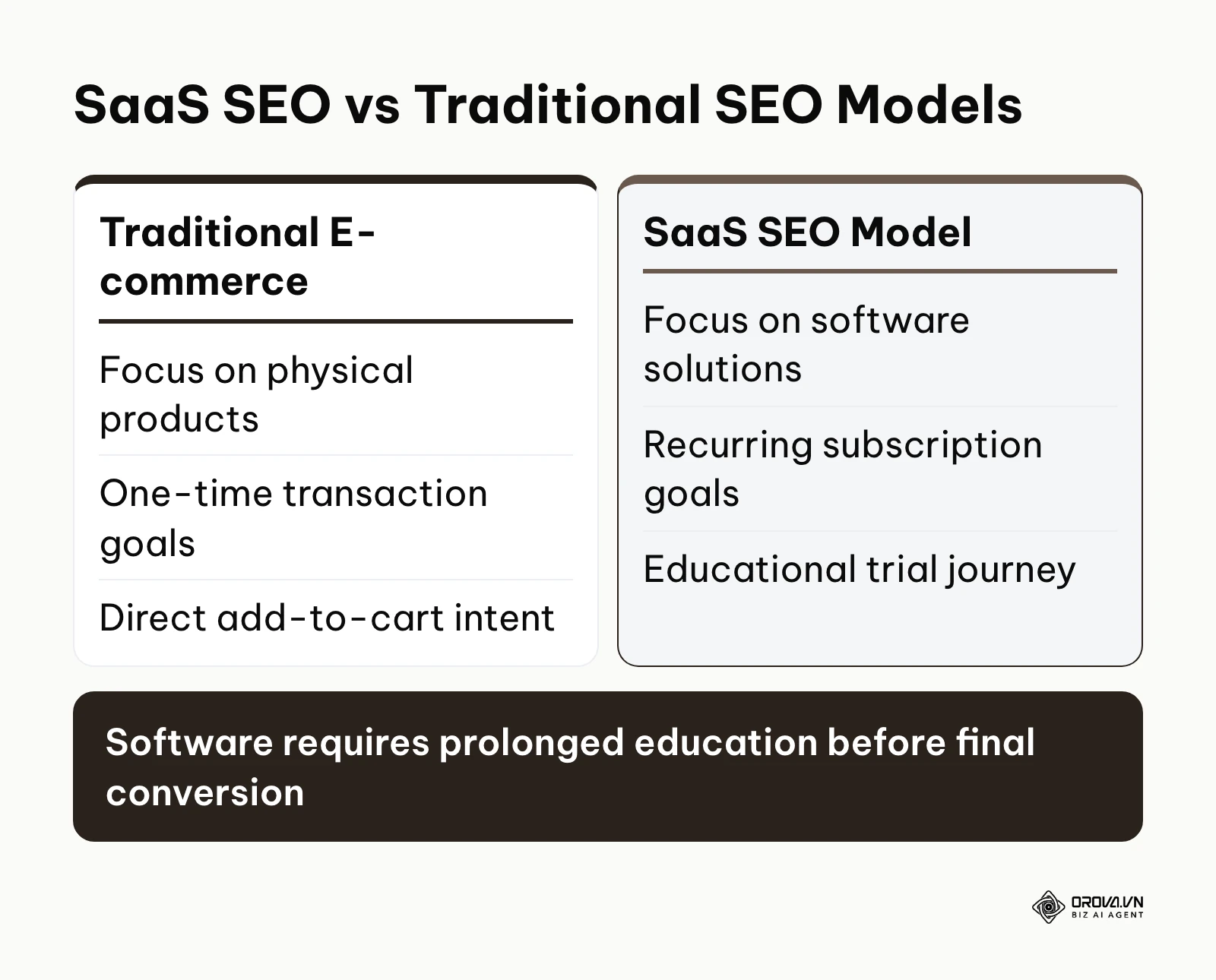
The concept evolved in the early 2010s when cloud software companies realized that inbound marketing required a radically different approach than traditional retail. Instead of a direct and immediate "add to cart" path, business software buyers required extensive education and peer evaluation before committing to a new platform.
Here is how it differs from other common search strategies:
| Concept | Key Differences | Example Goal |
|---|---|---|
| Traditional E-commerce SEO | Focuses on transactional intent and immediate product purchases. | Selling a physical pair of shoes. |
| Publisher SEO | Focuses on maximizing page views and ad impressions. | Getting clicks on a news article. |
| SaaS SEO Funnel | Focuses on educational journeys, product trials, and subscription retention. | Acquiring a long-term software user. |
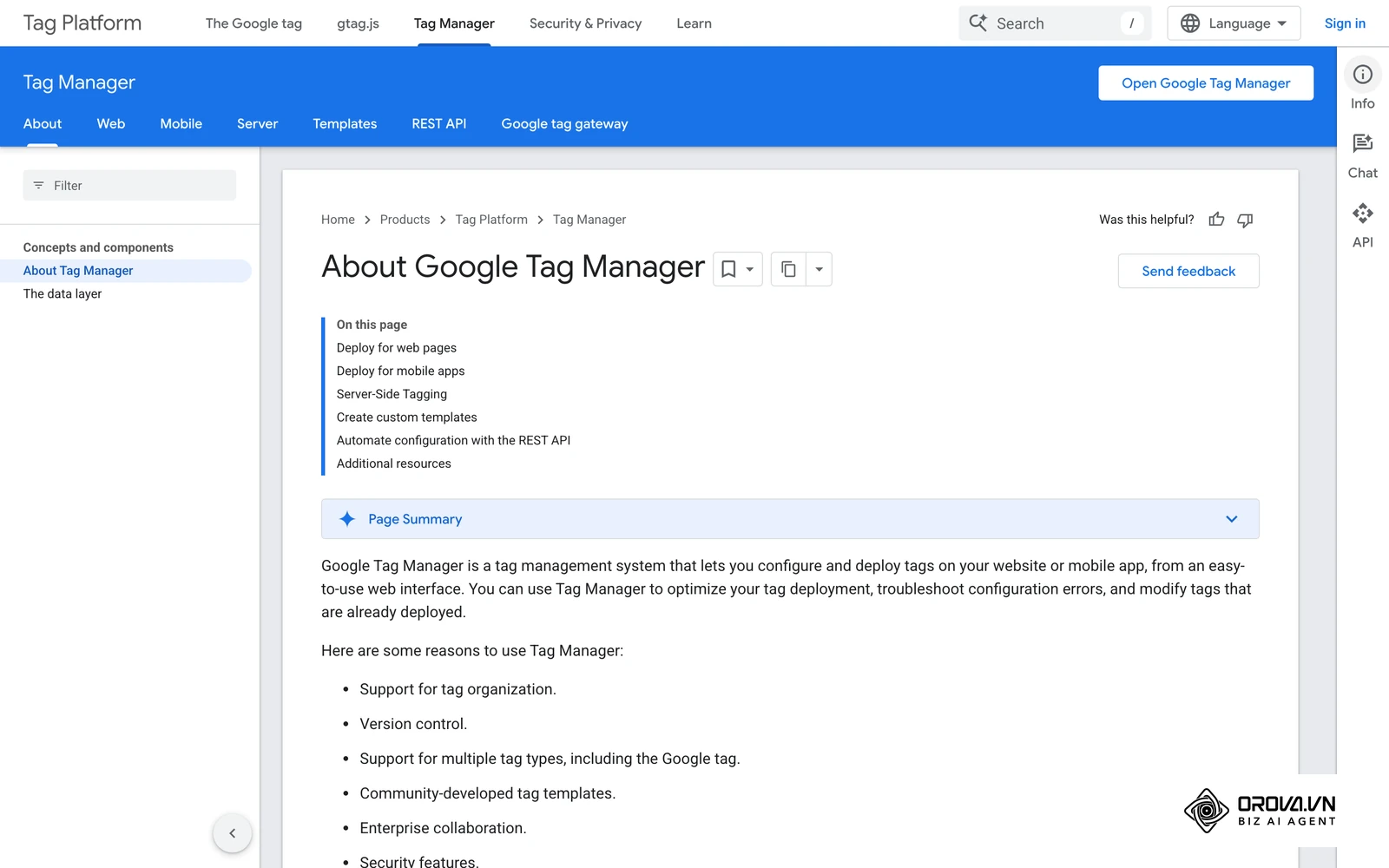
Illustrative example: A mid-sized project management software company struggled with low conversion rates despite high traffic. They audited their existing blog content, mapped each article to a specific buyer stage, and added contextual product call-outs. Initially, they faced issues with the technical implementation of tracking tags, which they resolved by deploying Google Tag Manager to fire events only on successful form submissions. As a result, the team could see which articles actually produced qualified demo requests from organic search.
The Meaning and Purpose of a SaaS SEO Funnel
The fundamental purpose of this framework is to solve the massive disconnect between marketing traffic and sales revenue. Many software companies operate in silos; the marketing team is incentivized to generate traffic, while the product team is focused on user activation. The funnel exists to bridge this gap, ensuring that the traffic generated is actually comprised of individuals who have the problem your software solves.
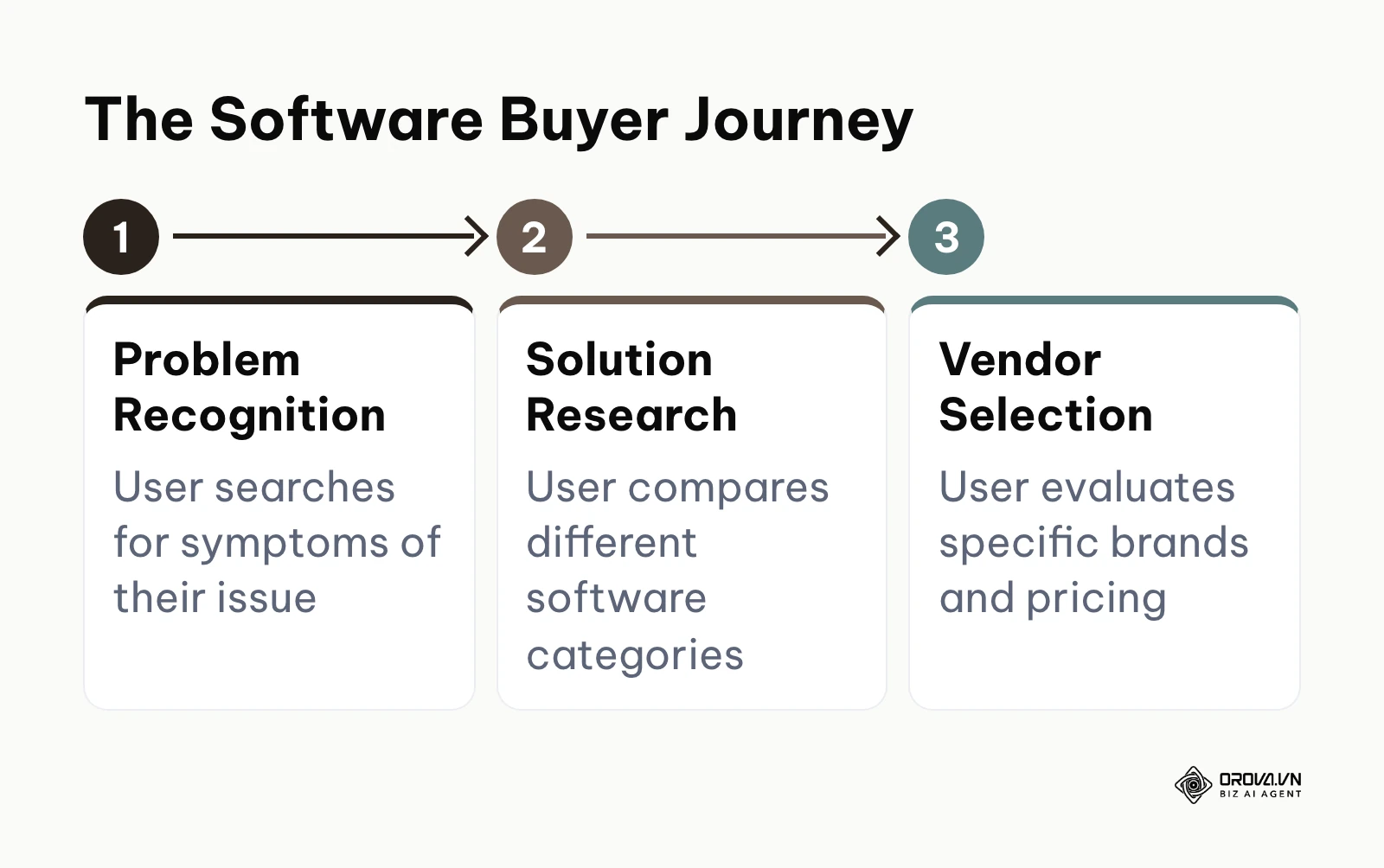
In the broader picture of your business operations, this strategic framework sits squarely between initial brand awareness and the product onboarding experience. It is the engine that captures existing market demand and funnels it toward your specific solution. Many B2B buyers prefer to research on their own through self-serve educational content before they are willing to speak with a sales representative. If you do not provide that content in an organized manner, your competitors certainly will.
If you choose to ignore this structured approach, the consequences are severe. You will attract students, casual researchers, and unqualified leads instead of actual buyers. You will burn financial resources and engineering time on content that never converts, ultimately leading to a reliance on expensive paid advertising to sustain growth.
When you do not need a SaaS SEO funnel yet: This strategy is not universally applicable at every stage of business. If your startup has not yet achieved product-market fit, investing heavily in search content is premature; you should focus on direct sales and user feedback instead. Furthermore, if your software targets an extremely narrow enterprise niche with only fifty potential buyers globally, search volume will be negligible. In these specific cases, account-based marketing or outbound sales will yield faster and more reliable results than waiting for search engines to rank your pages.
Value and Benefits of a SaaS SEO Funnel
The implementation of a structured search strategy delivers distinct advantages that can be categorized into two primary layers: the macroscopic value for the business entity itself, and the microscopic benefits for the marketing practitioners executing the daily work.
Lowering Customer Acquisition Cost (CAC)
For the business, the most critical financial metric is the cost to acquire a new paying customer. Paid advertising channels become increasingly expensive as competition grows, often squeezing profit margins to unsustainable levels. An optimized search funnel creates compounding returns; an article published today can continue to generate trial signups for years without requiring additional budget for each click. This shifts the marketing expense from a variable cost to a long-term asset, fundamentally improving the unit economics of the company. To see how quickly that spend comes back, track your CAC payback period by channel, and weigh it against a profit-based LTV model rather than raw revenue.
Illustrative example: a team spends 12,000 dollars on content and SEO in a quarter and wins 40 new paying customers from organic search. Organic CAC is 12,000 / 40 = 300 dollars. If each customer pays 50 dollars per month at an 80% gross margin, the monthly gross profit per customer is 50 × 0.8 = 40 dollars, so the CAC payback period is 300 / 40 = 7.5 months. These numbers are invented to show the arithmetic, not an industry benchmark.
Creating Predictable Pipeline Generation
Revenue predictability is essential for securing investment and planning product roadmaps. Unlike viral social media campaigns that produce unpredictable traffic spikes, a well-structured search funnel provides a steady, baseline stream of incoming leads based on consistent search volumes. Business leaders can project future growth with much higher accuracy when they understand their baseline organic conversion rates.
Justifying Marketing Budgets
For the marketing practitioner, the primary benefit is the ability to definitively prove return on investment. Marketing teams often struggle to defend their content budgets because they cannot connect blog posts to actual revenue. By implementing proper tracking across the funnel, practitioners can transition from reporting on "page views" to reporting on "influenced MRR," elevating their strategic importance within the organization.
| Key Benefit | Measured By Which Metric | What to Check First |
|---|---|---|
| Lower Acquisition Cost | Blended CAC | Organic signups and content spend per month |
| Predictable Pipeline | Organic Demo Requests | Demo form events tagged by landing page |
| Budget Justification | Organic MRR Contribution | Trial-to-paid matches in your billing data |
Illustrative example: An enterprise cybersecurity vendor wanted to prove the value of their organic efforts to the board of directors. They integrated their CRM data with their website analytics, assigned lead scores based on the specific content consumed, and built a custom reporting dashboard. The sales team initially resisted using the new lead scores, complaining of inaccurate contact data. The marketing team fixed this by refining the scoring model to heavily weight visits to pricing and feature pages over general blog posts. Following this adjustment, sales representatives reported higher quality conversations with inbound leads, leading to shorter average deal cycles.
Discover Orova.vn – a Biz AI Agent platform with OROVA SEO, a complete solution for every website. The system supports search engine optimization from A to Z with features including keyword research, writing new SEO-ready articles, optimizing existing content, rank tracking, plus competitor analysis and in-depth technical analysis. Sign up today to experience OROVA SEO completely free (offer valid through July 7, 2027).
How a SaaS SEO Funnel Works
To understand the mechanics of this system, we must dissect it into its core components. The funnel represents the psychological journey of your buyer, moving from broad awareness of a problem to the specific retention of your software product. It is a continuous loop rather than a definitive endpoint.
Top of Funnel (TOFU) - Attracting the Target Audience
The top of the funnel is focused entirely on problem awareness. At this stage, the user does not know your software exists, nor do they necessarily know that software is the solution to their problem. They are searching for broad, informational queries.
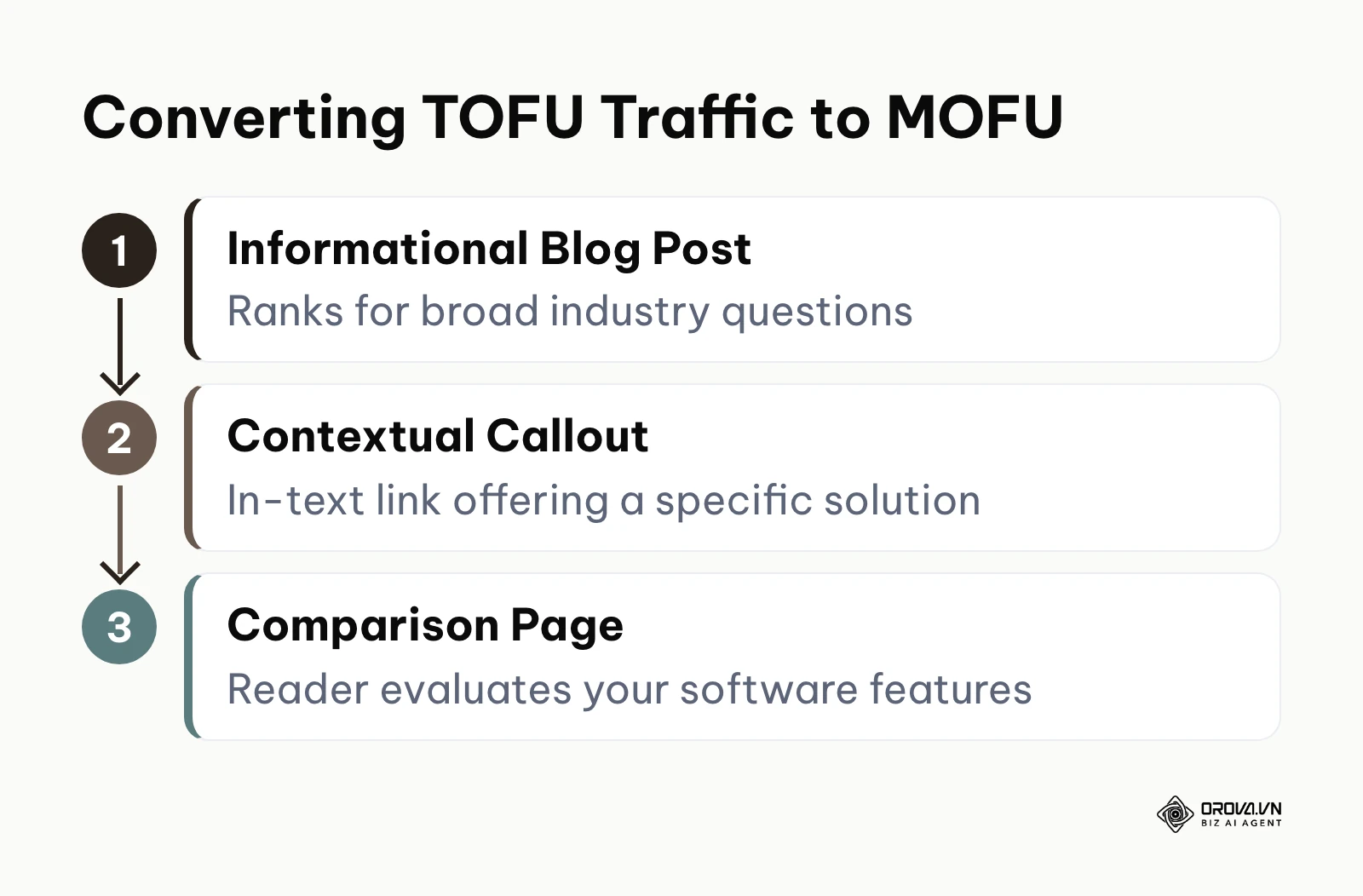
The goal here is not to sell immediately, but to capture attention and establish authority. The content typically takes the form of comprehensive blog posts, ultimate guides, or educational industry reports. For example, a user struggling with team communication might search for "how to manage remote teams effectively." They are looking for advice, not a software subscription.
Your TOFU content must answer their question thoroughly while subtly introducing your worldview. The primary output of a successful TOFU asset is not a direct sale, but a captured email address, a retargeting pixel fire, or a click to the next stage of the funnel. A common point of failure here is creating content that is completely disconnected from the product's core value proposition, resulting in traffic that can never be monetized.
Middle of Funnel (MOFU) - Educating and Comparing
Once the user understands their problem and realizes that software solutions exist, they move into the middle of the funnel. They are now solution-aware and are actively evaluating their options. Search keyword intent shifts from informational to commercial investigation.
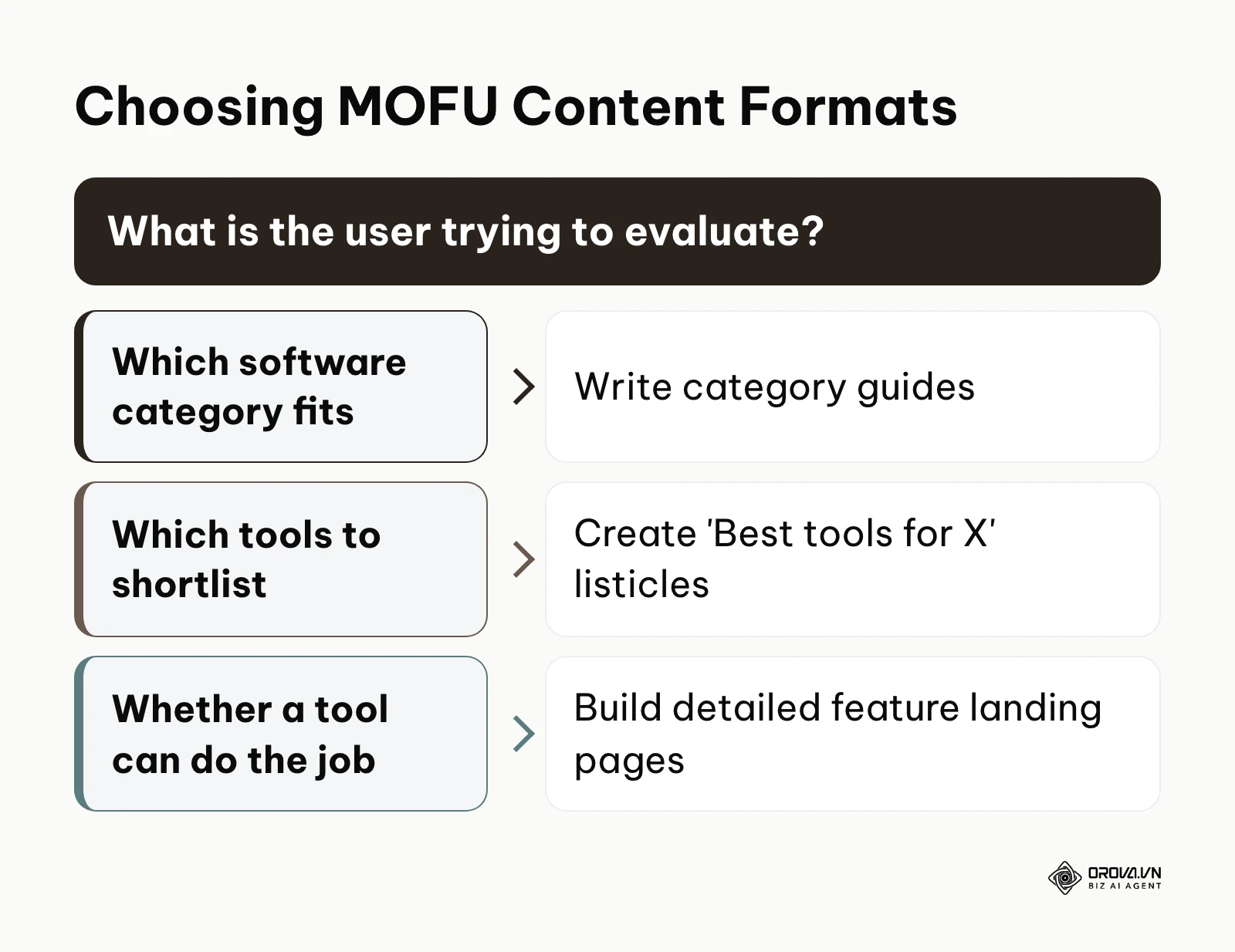
Queries at this stage typically include modifiers like "best," "tools," "software," or specific category names. For instance, the previous user might now search for "best remote team collaboration software." They are looking for lists, feature breakdowns, and expert recommendations.
The content required here includes listicles, detailed feature landing pages, and category guides. The objective is to ensure your product is included in the consideration set and to highlight your unique differentiators. The output is a highly engaged visitor who understands your feature set. A frequent failure in MOFU content is being overly promotional without providing objective value; buyers at this stage are skeptical and require factual comparisons, not pure marketing speak.
Bottom of Funnel (BOFU) - Driving Trial Signups
The bottom of the funnel is where the actual conversion takes place. The user is now product-aware; they know your brand and they know your competitors. They are ready to make a purchasing decision and are simply looking for the final piece of validation. Search intent is highly transactional.
BOFU queries are highly specific, often including brand names, "vs," "alternatives," or "pricing." Examples include "YourBrand vs CompetitorBrand" or "CompetitorBrand alternatives." The user is looking for a reason to choose you over the other option they are considering.
The content formats for BOFU are typically comparison pages, detailed case studies, pricing pages, and direct landing pages. Effective SEO website design on comparison pages directs the user's attention straight to the trial button, minimizing distractions. The output must be a free trial signup, a booked demo, or a direct purchase. If your BOFU pages fail to convert, your entire funnel breaks down, regardless of how much traffic you generated at the top.
Customer Success SEO - Retention and Expansion
Most traditional marketing models stop at the point of sale. However, in the subscription software industry, the initial sale is merely the beginning. The core profitability of a SaaS company lies in monthly recurring revenue (MRR), which requires retaining users for months or years. Therefore, the funnel must include a fourth stage focused on retention and expansion.
Users will inevitably encounter friction when using your product. When they do, their first instinct is often to search Google for a solution rather than navigating complex in-app help menus. They will search for queries like "how to set up automation in [Your Product]" or "[Your Product] API integration."
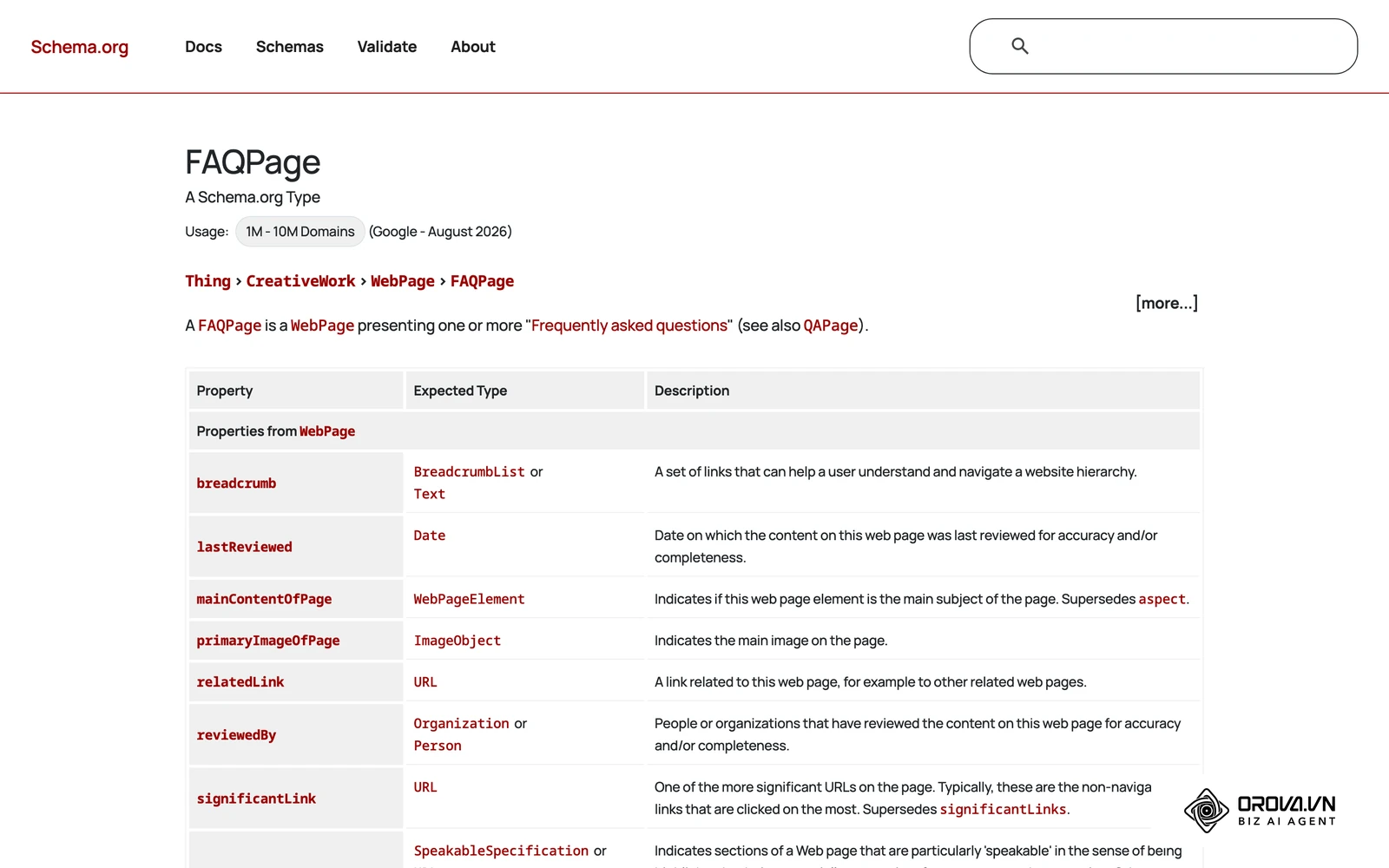
If your help center and documentation are not optimized for search engines, users will become frustrated and churn. By applying rigorous search optimization principles to your customer success documentation, you provide immediate self-service solutions. Proper JSON-LD schema implementation on your help center articles ensures they appear as rich snippets directly in the search results, drastically improving the user experience and reducing the burden on your support team.
Tracking and Analytics - Measuring MRR Impact
A funnel is practically useless if you cannot measure the flow of users through it. One of the most significant gaps in modern marketing is the inability to connect an initial blog visit to a final subscription payment. Marketers often settle for tracking "goals" in analytics platforms without tying those goals to actual dollars.
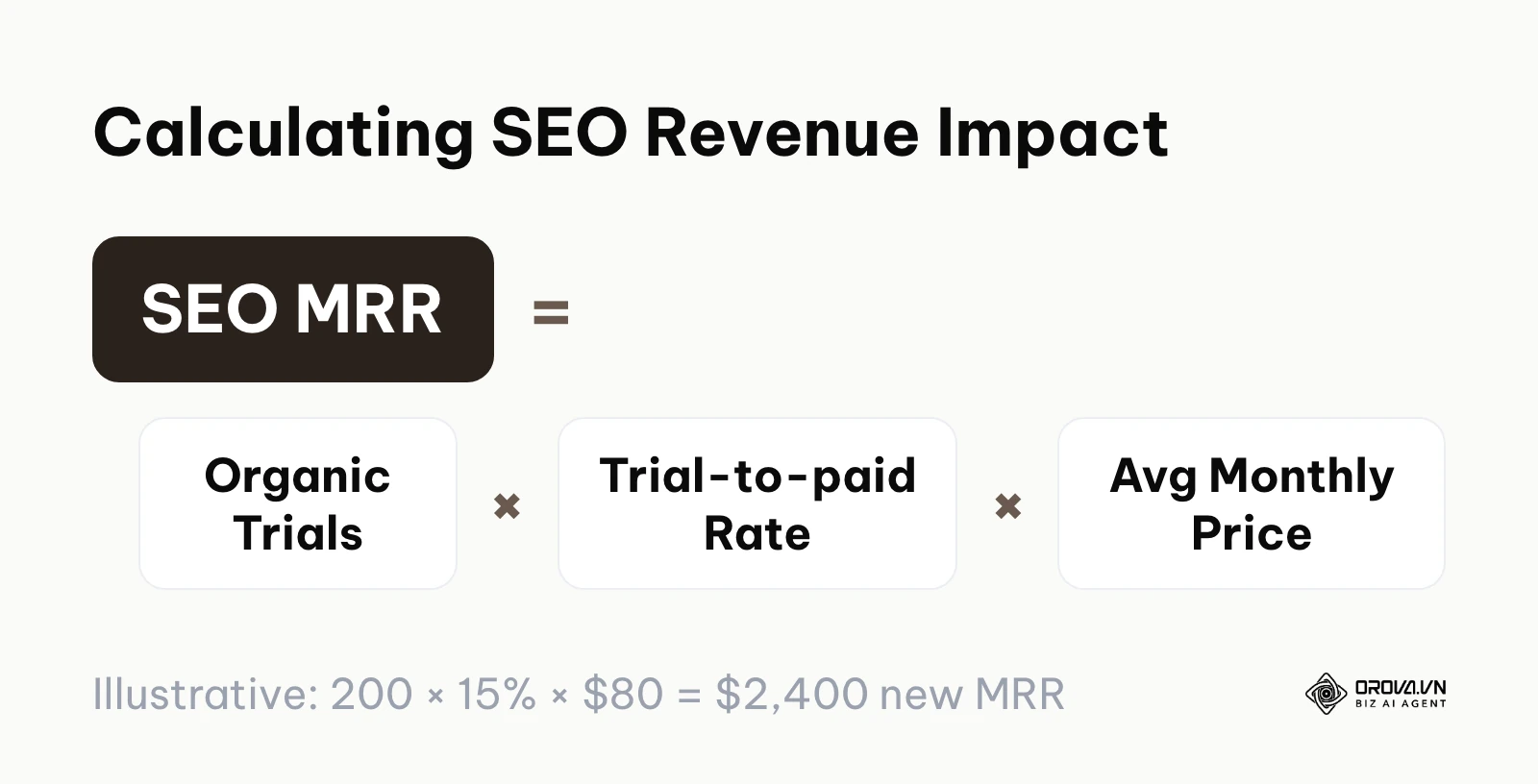
Accurately measuring SEO ROI requires connecting your website analytics to your payment gateway. You must configure custom events in platforms like Google Analytics 4 (GA4) or Mixpanel that fire specifically when a user successfully completes a trial signup form. Deep event tracking is what lets a software company see the exact path from acquisition to long-term retention.
Furthermore, you must pass a unique identifier (often a hashed user ID) from your analytics platform into your product database and ultimately into your billing software (like Stripe). This allows you to utilize attribution models—whether first-touch, last-touch, or multi-touch—to trace a monthly recurring revenue payment back to the specific blog post the user originally landed on. You must establish clear marketing dashboard KPIs that focus on these product activations rather than just raw page views.
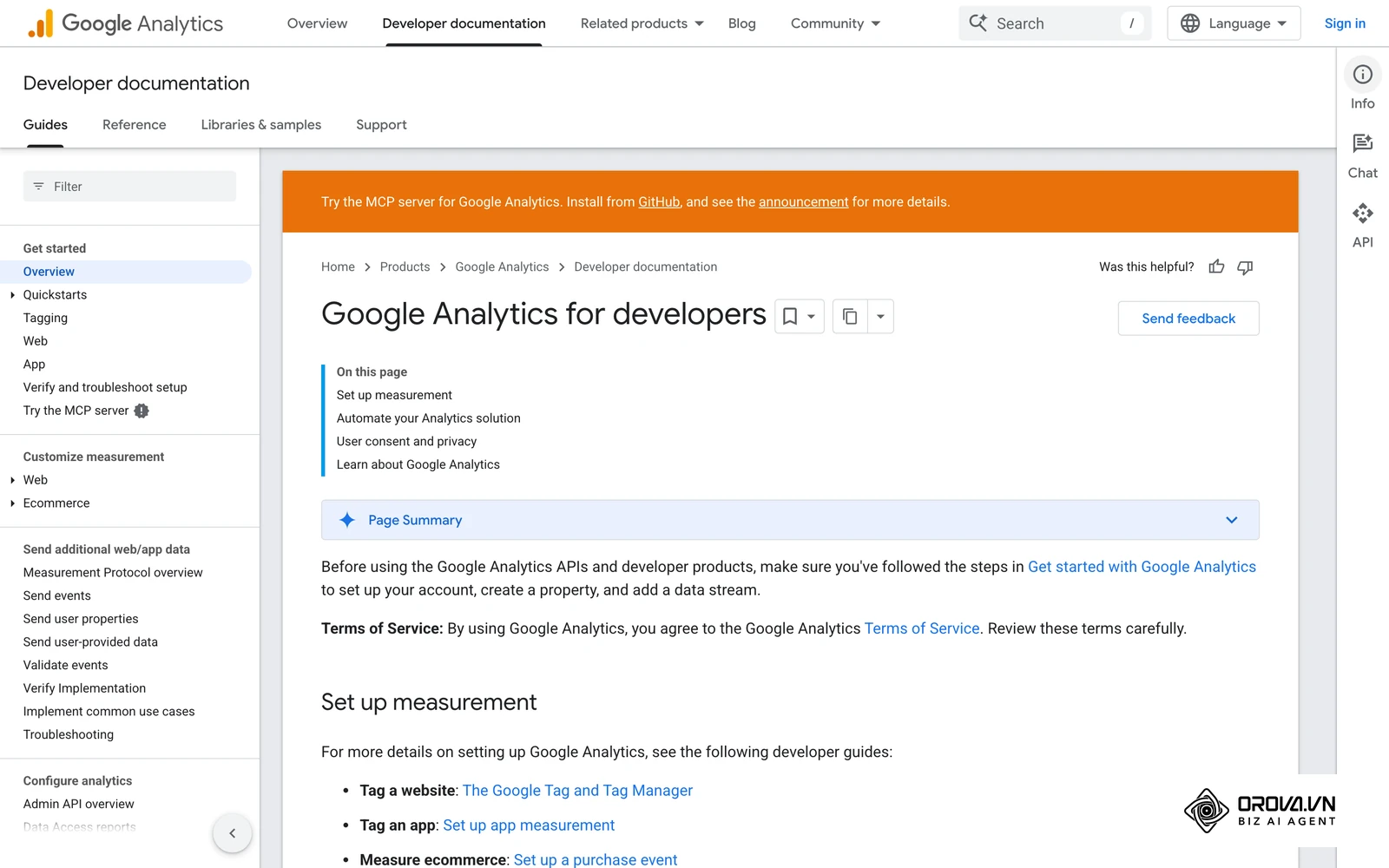
The core calculation is simple: SEO MRR = organic trials × trial-to-paid conversion rate × average monthly subscription price. Illustrative example: 200 organic trials in a month × 15% conversion × 80 dollars per month = 30 new paying customers and 2,400 dollars in new MRR attributed to organic search. The inputs are made up for the example; plug in your own tracked numbers.
To organize this entire strategy, teams often utilize a central framework document. Below is an illustrative keyword mapping matrix (the volumes are invented for the example) that categorizes opportunities by their funnel stage and business potential:
| Target Keyword | Illustrative Monthly Volume | Search Intent | Funnel Stage | Business Potential Score (1-3) |
|---|---|---|---|---|
| "how to manage remote teams" | 2,400 | Informational | TOFU | 1 (Low immediate conversion) |
| "best remote team software" | 1,200 | Commercial Evaluation | MOFU | 2 (Medium, evaluating options) |
| "Asana alternatives for remote work" | 800 | Commercial Comparison | MOFU | 3 (High, looking to switch) |
| "Monday vs our software" | 300 | Transactional | BOFU | 3 (High, ready to decide) |
| "how to set up recurring tasks" | 150 | Navigational / Support | Retention | 2 (Medium, prevents churn) |
How to Build and Adapt Your SaaS SEO Funnel
The practical implementation of this framework varies significantly depending on your role within the organization and the resources at your disposal. The priorities of a bootstrapped founder will differ greatly from those of a well-funded marketing department.
For SaaS Startup Founders
When operating with limited capital and a small team, you do not have the luxury of waiting twelve months for top-of-funnel educational content to slowly mature. You need users immediately to prove traction.
- Invert the funnel: Start by building BOFU content first. Create comparison pages against your biggest competitors. These keywords have lower volume but extremely high conversion intent.
- Optimize your pricing page: Ensure your pricing tiers are clearly structured with semantic HTML so search engines can easily parse your value proposition.
- Capture product-led queries: Write deep, technical use-case pages that explain exactly how your specific features solve niche problems.
- Leverage founder expertise: Write highly opinionated thought leadership pieces that challenge industry norms, rather than generic introductory guides.
For In-House Marketing Leads
If you are managing an established marketing department, your challenge is often one of organization, alignment, and preventing structural leaks.
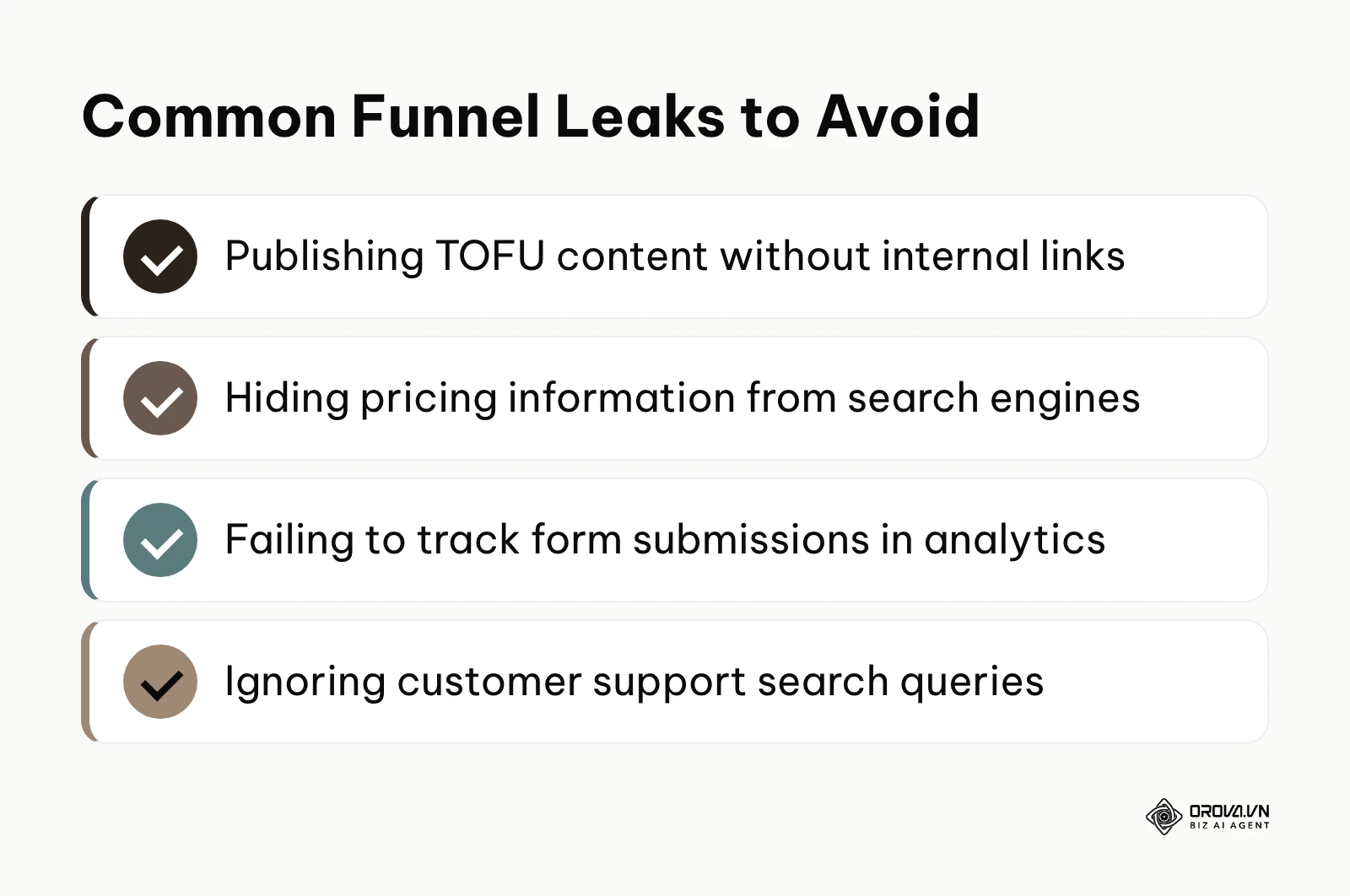
- Audit for structural leaks: Review your highest-traffic blog posts. If they do not contain clear, contextual internal links pointing to relevant feature pages or comparison guides, you are leaking potential buyers.
- Implement cross-functional reporting: Work with your engineering team to ensure marketing analytics are properly communicating with the product database.
- Establish a content update cadence: Search algorithms favor fresh information. Create a recurring schedule to review and update historical content that is slowly losing its ranking position. Running a regular Search Console SEO audit is critical to identify indexing issues before they impact traffic.
- Align with customer success: Meet monthly with the support team to identify the most common user complaints and turn those topics into optimized help center articles.
Illustrative example: A startup providing accounting software invested heavily in content creation, publishing hundreds of informational articles on general finance topics. They generated significant traffic, but their conversion rate was virtually zero because they failed to link these articles to their product pages. They halted new content production to audit their top-traffic posts, carefully inserting contextual text links directing readers to specific feature comparison pages. This internal linking strategy transformed their generic traffic into a steady stream of product signups, demonstrating that traffic without a clear path fails to produce revenue.
For SEO Agencies and Consultants
Agencies must move beyond delivering standard keyword ranking reports and start speaking the language of business impact to retain SaaS clients.
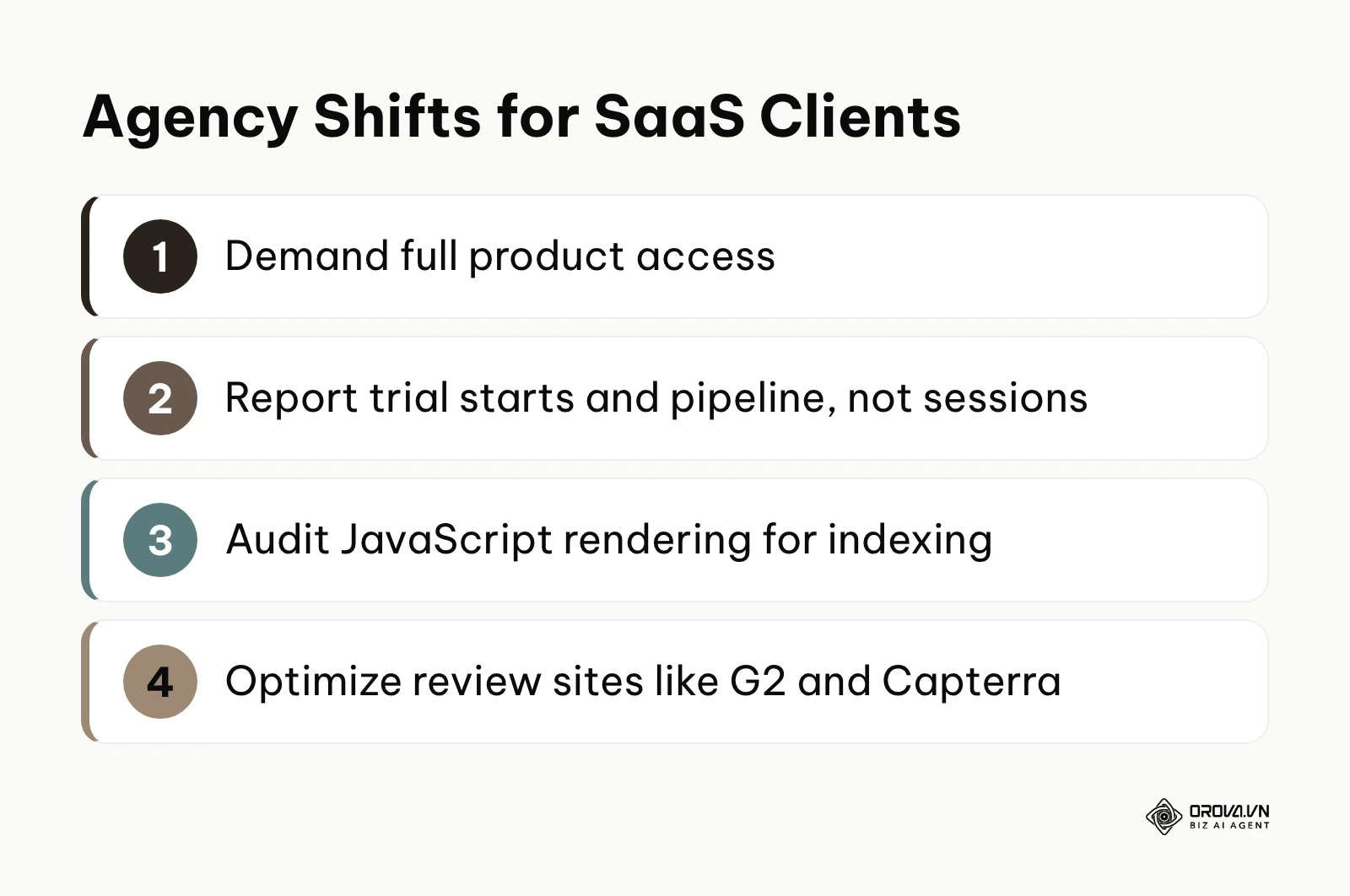
- Demand product access: You cannot effectively market software if you do not know how to use it. Require a fully provisioned account to understand the nuances of the platform.
- Shift reporting to MRR: Transition your client reports from focusing on "organic sessions" to focusing on "organic trial starts" and "influenced pipeline."
- Conduct deep technical audits: Subscription software websites often rely heavily on JavaScript frameworks (like React or Angular) which can cause severe indexing issues if not configured correctly for server-side rendering.
- Map the entire ecosystem: Do not just optimize the main website; ensure you are optimizing the client's presence on third-party review sites like G2 or Capterra, as these dominate BOFU search results.
With OROVA.VN and the OROVA SEO module, you put an end to the exhausting days of manual work for good. Instead of struggling for hours to write articles and compile reports, the entire process is now optimized and completed in just 5 minutes.
The Future of the SaaS SEO Funnel: Author's Perspective
As of 2026, we are already seeing traditional search engine results pages being aggressively disrupted by generative AI summaries and conversational interfaces. The landscape is shifting rapidly, and the strategies that worked five years ago are quickly losing their effectiveness. Based on current technological trajectories, I believe the funnel must evolve in three specific ways over the next few years.
AI Overviews Will Consume Generic TOFU Traffic I am increasingly observing that basic informational queries—the traditional lifeblood of the top-of-funnel—are being answered entirely within the search engine interface. If a user asks "what is a project management tool," AI models provide a comprehensive answer instantly, eliminating the need to click through to a blog post. I believe that relying on generic glossary terms or basic educational content will keep delivering less and less return on investment. I would prepare for this by cutting back on superficial content production and shifting budget toward topics that AI cannot easily synthesize.
Proprietary Data Will Become the Only Defensible Moat Because large language models can endlessly generate generic advice, the only truly valuable content will be based on information that the models do not possess. I think proprietary data is likely to become one of the strongest competitive advantages. Software companies collect a large amount of usage data from their user base. If you can anonymize and analyze this data to publish original industry benchmark reports, you can create assets that tend to attract backlinks and build authority. You should start working with your data science team today to uncover unique insights hidden within your product usage metrics.
Customer Success SEO Will Merge with Product-Led Growth I expect the boundaries between marketing content, support documentation, and the actual software interface to blur considerably. Search engines will increasingly index and evaluate the quality of a product's internal help ecosystem as a signal of brand authority. Therefore, the role of search optimization will expand beyond the marketing department and integrate deeply into product design. You must begin treating your help center not as a cost center, but as a critical extension of your acquisition and retention strategy. However, this prediction assumes that search engines will successfully develop mechanisms to securely crawl permission-gated support environments, which remains a technical challenge.
Frequently Asked Questions about the SaaS SEO funnel
Is a SaaS SEO funnel still necessary with the rise of AI search?
Yes, but its shape is changing. While AI models handle basic informational queries, buyers still require deep, trustworthy evaluations before committing their business processes to a new software platform. The focus is shifting away from top-of-funnel educational articles toward deep product use-cases, proprietary data reports, and direct competitor comparisons.
How long does it take for each funnel stage to generate actual MRR?
The timeline varies significantly based on domain authority and technical foundation. Bottom-of-funnel pages (like comparisons) usually start producing trial signups sooner after indexing because the intent is immediate. Top-of-funnel content generally needs considerably longer to mature, attract backlinks, and begin feeding users reliably into the nurturing stages. Track each stage separately so you can see the real timeline for your own site.
Should a low-budget startup prioritize TOFU or BOFU content first?
A startup with limited resources should strictly prioritize BOFU content. Creating "Alternative to [Competitor]" pages or highly specific use-case landing pages targets users who are already actively looking to purchase. While the search volume is lower, the conversion rate is typically much higher, providing the immediate revenue needed to fund broader marketing efforts later.
How do you insert calls-to-action in TOFU articles without sounding overly promotional?
The key is contextual relevance. Do not interrupt an educational article with a massive banner ad for your software. Instead, use subtle, in-text links that offer your tool as a logical way to implement the advice you just provided. For example, if you explain the theory of sprint planning, naturally mention that your platform has a pre-built template for this specific process.
What is the difference between product-led SEO and traditional content marketing?
Traditional content marketing often focuses on capturing broad industry attention, hoping to eventually filter that audience down to buyers. Product-led SEO directly aligns the search strategy with the core functionality of the software itself. Every piece of content is designed to highlight a specific feature, use case, or technical integration, treating the content as an extension of the product experience.
Where to Start with Your SaaS SEO Funnel?
Implementing this comprehensive framework can feel overwhelming. The most effective approach is to identify your current operational state and execute one specific, high-impact action rather than attempting to rebuild everything simultaneously.
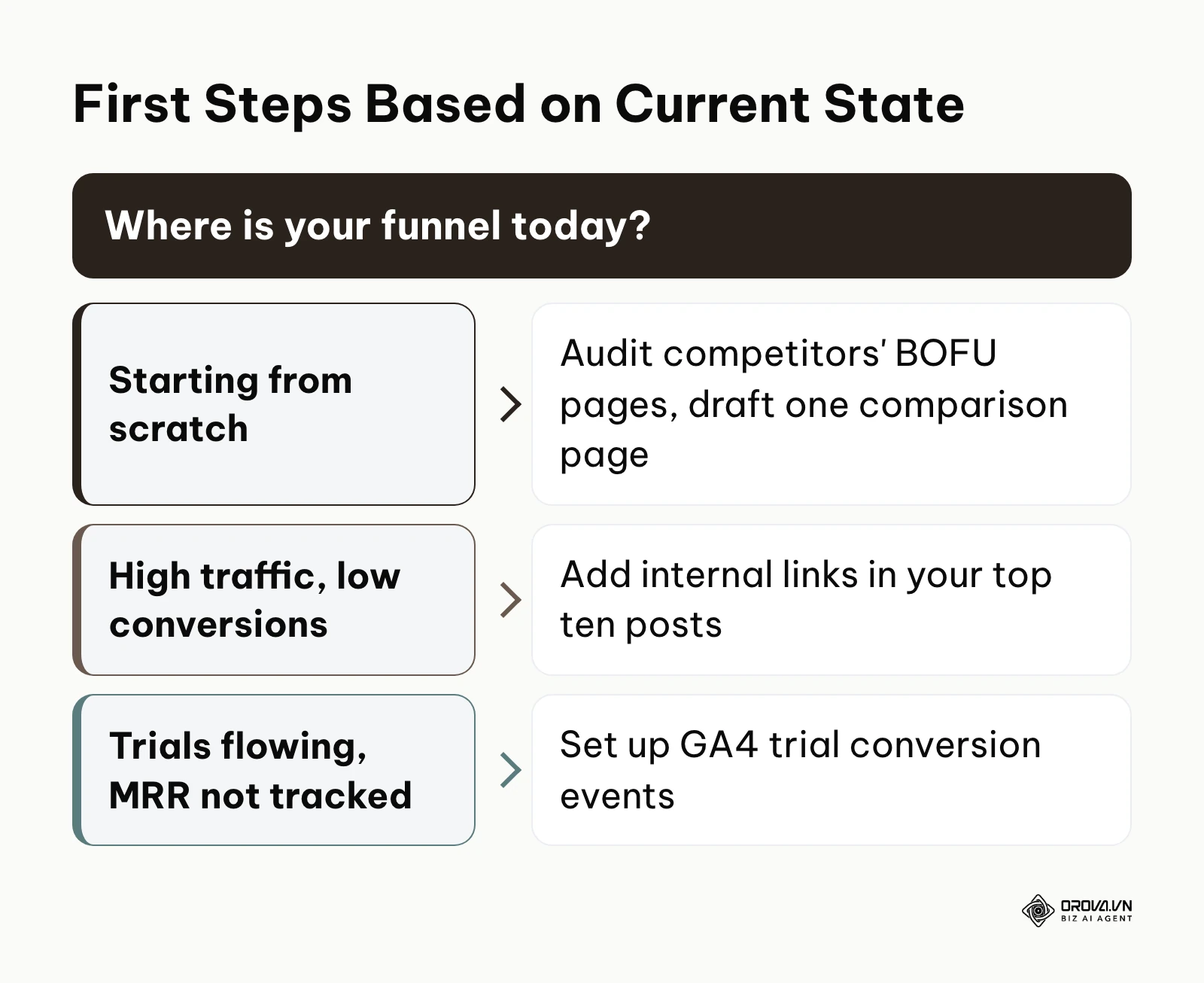
If you are starting completely from scratch: Do not begin by brainstorming generic blog topics. Your first step should be to audit your top three competitors' BOFU pages. Identify which "vs" pages or alternative lists they have created. Your initial action item for this week is to draft a single, highly detailed comparison page that positions your software against the market leader, highlighting the specific features where your product is undeniably superior.
If you have disjointed content with high traffic but low conversions: Your priority is plugging the leaks in your existing structure. Open your analytics platform and identify the ten blog posts that generate the most organic traffic. Your immediate task is to review these pages and build internal link bridges. Manually insert highly contextual text links within these articles that direct readers to your relevant feature pages or comparison guides.
If you are generating traffic and trials, but are not tracking MRR: Your focus must shift entirely to technical infrastructure. You cannot optimize what you cannot measure. Your first action is to coordinate with your development team to set up explicit trial conversion events in GA4. Ensure that the moment a user successfully creates an account, a precise event fires, allowing you to definitively track which organic landing pages are actually responsible for your product activations.
About the author

Builder of Orova
Nguyễn Đỗ Trọng Ân has 8 years of experience in marketing, including 6 years managing market development across Asia. He builds Orova, a Biz AI Agent that never sleeps: it plans, runs and optimizes work for businesses.
Run your business with AI Agents
Orova is the always-on Biz AI Agent — it plans, runs, and optimizes the work for you.
Save time, unlock productivity.