
SEO ROI: what it is, the formula and how to measure it

SEO ROI is the profit your organic search work returns for every dollar you spend on it, calculated as (organic revenue − SEO cost) ÷ SEO cost × 100%. You pour thousands of dollars into content creation, technical fixes, and link acquisition month after month. Your website traffic goes up, and your keyword rankings look impressive on a dashboard. However, when the executive team asks for the exact financial return on that investment, you hesitate. Traffic does not automatically pay the bills. Most marketers struggle to translate search visibility into actual revenue numbers. This gap makes it incredibly difficult to secure budgets or justify the time spent on organic search campaigns. You need a reliable way to calculate seo roi accurately. This guide will provide you with a highly structured approach to measure your organic search profitability. We will move beyond vanity metrics and explore concrete calculation formulas tailored for different business models. You will also get a practical framework to set up tracking in Google Analytics 4, build a convincing forecast for your management team, and accurately measure content marketing roi. By the end, you will be equipped to prove the exact financial value of every organic click your website receives.
What is SEO ROI?
SEO ROI is the financial return on investment generated directly from organic search activities. It is used to evaluate the exact profitability of search engine optimization campaigns. It differs from general marketing metrics because it focuses purely on monetary outcomes rather than intermediate signals like traffic or keyword rankings.
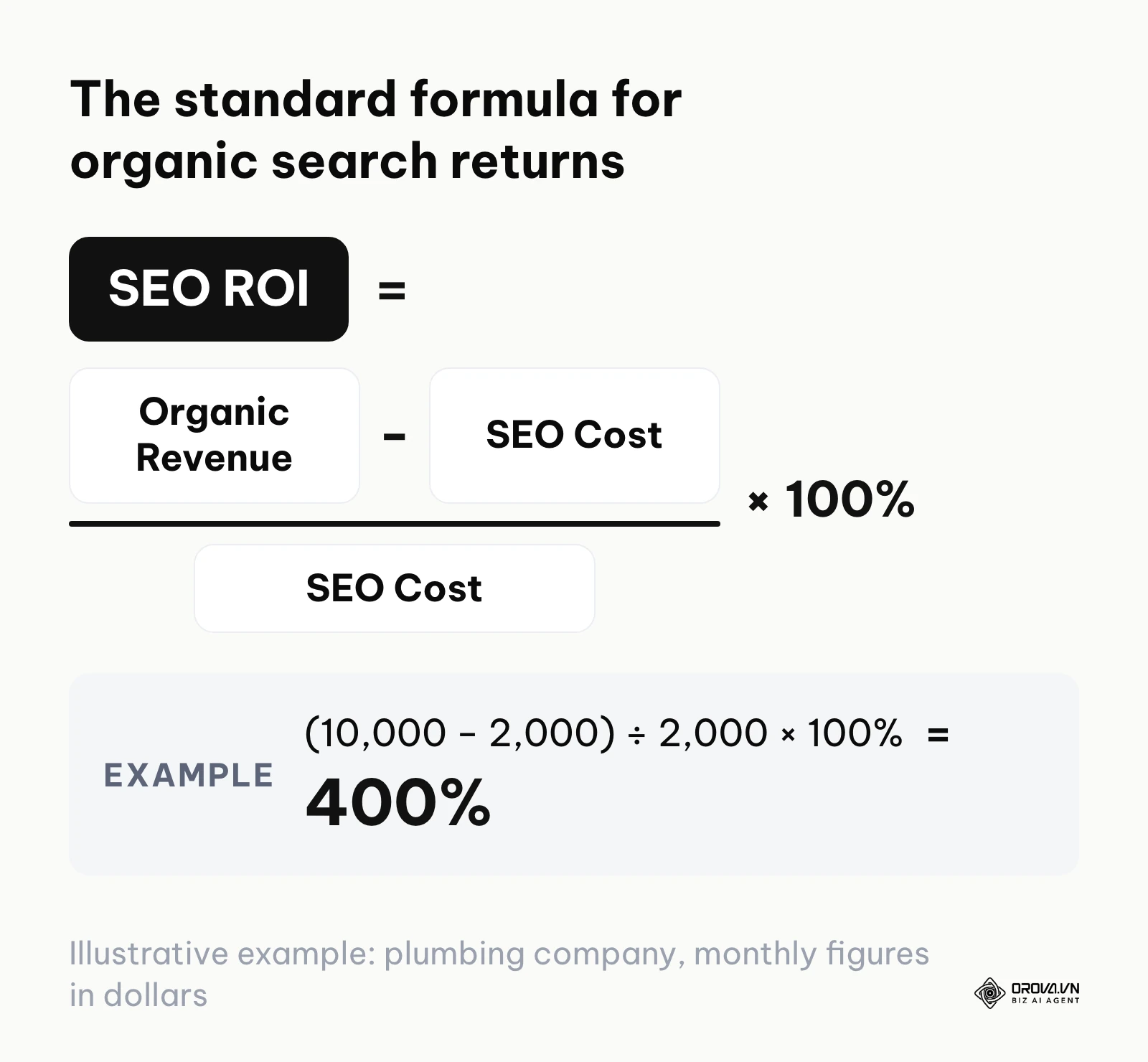
The term originates from traditional corporate finance, adapting the standard return on investment formula to the specific context of organic search visibility.
| Concept | How it differs | Example |
|---|---|---|
| Return on Ad Spend (ROAS) | Measures direct revenue from paid ads, immediate results | Google Ads cost 1,000 dollars, generated 3,000 dollars |
| Organic Traffic Value | Estimates what organic clicks would cost if bought via PPC | Ahrefs traffic value metric |
| Conversion Rate | Measures the percentage of visitors who take action, not monetary return | 2% of organic visitors bought a product |
Illustrative example: Imagine a local plumbing company that spends 2,000 dollars a month to optimize its website. It tracks incoming calls and finds that organic search brings in 10 new high-ticket jobs per month, worth 10,000 dollars in gross profit. Its SEO ROI is (10,000 − 2,000) ÷ 2,000 × 100% = 400%, so the campaign is clearly worth continuing. (These numbers are made up to show the math, not an industry benchmark.)
The significance of measuring search returns
Why does measuring search performance matter so much? It solves the critical problem of blind spending for marketing directors, financial officers, and business owners. In the broader landscape of digital marketing, organic search often sits at the top and middle of the funnel. Before search optimization, you have high-level business goals; after it, you have measurable revenue. Without a strict financial measurement in place, search engine optimization is just guesswork disguised as strategy. If you ignore this metric, you risk cutting highly profitable campaigns simply because their financial value is hidden in the data. Conversely, you might continue pouring money into tactics that generate a massive amount of traffic but yield zero actual sales. Understanding this dynamic helps you align your organic efforts with the broader business strategy. To properly evaluate this alongside other channels, you might explore the marketing and ROI framework.
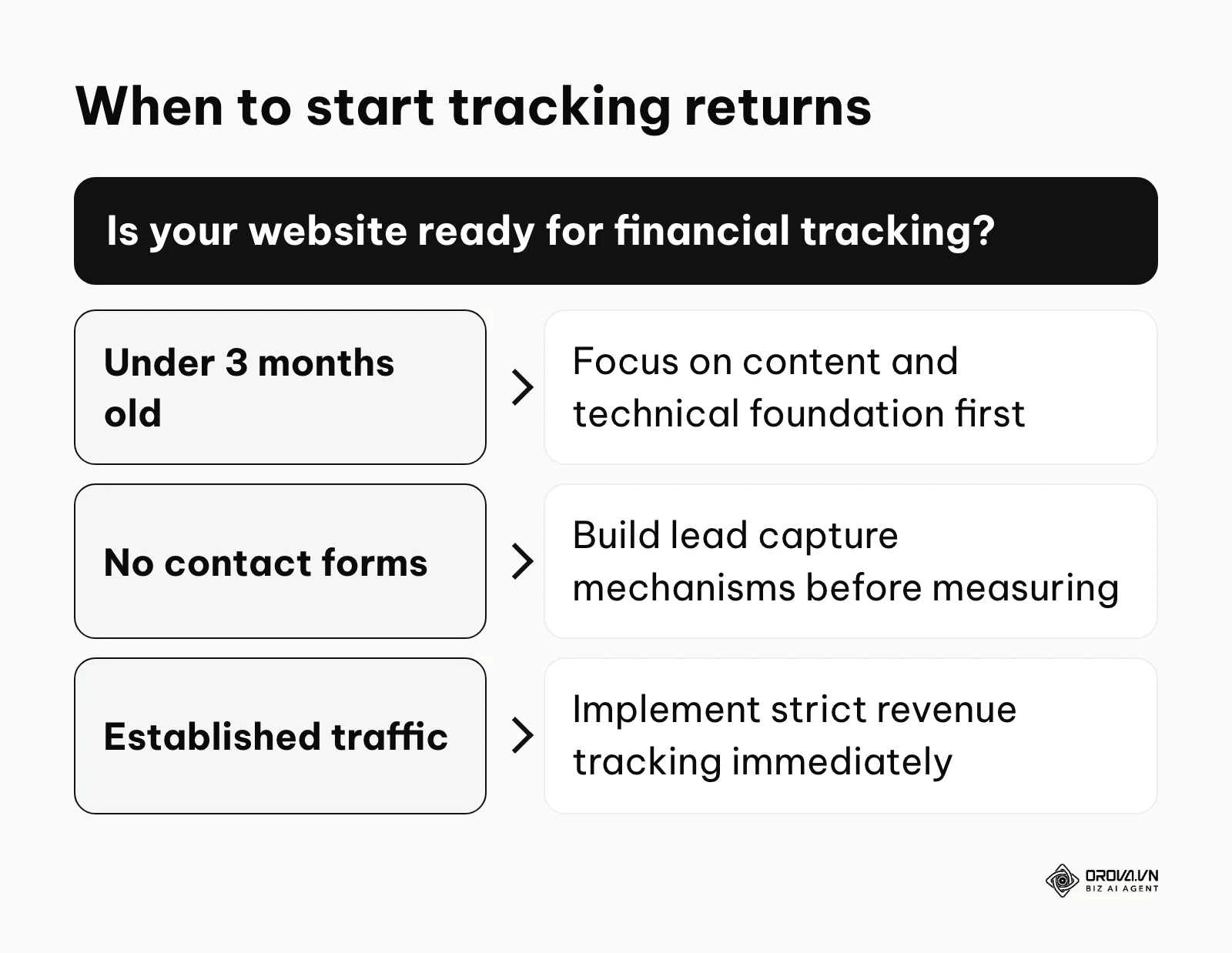
When you do not need to measure it yet: You should not obsess over calculating this metric if your website is brand new and has less than three months of historical data. In this phase, focus on foundational technical fixes and publishing initial content, as there is no reliable revenue data to track. Similarly, if your entire business model relies solely on offline referrals and the website is just a digital business card with no lead capture mechanism, tracking financial returns from search is a waste of time. Instead, focus on setting up basic contact forms and measuring simple lead volume first.
The business value and practical benefits
Measuring your returns provides immense value at two distinct levels. It transforms how the executive board views the marketing department and simultaneously empowers the individual workers executing the daily tasks.
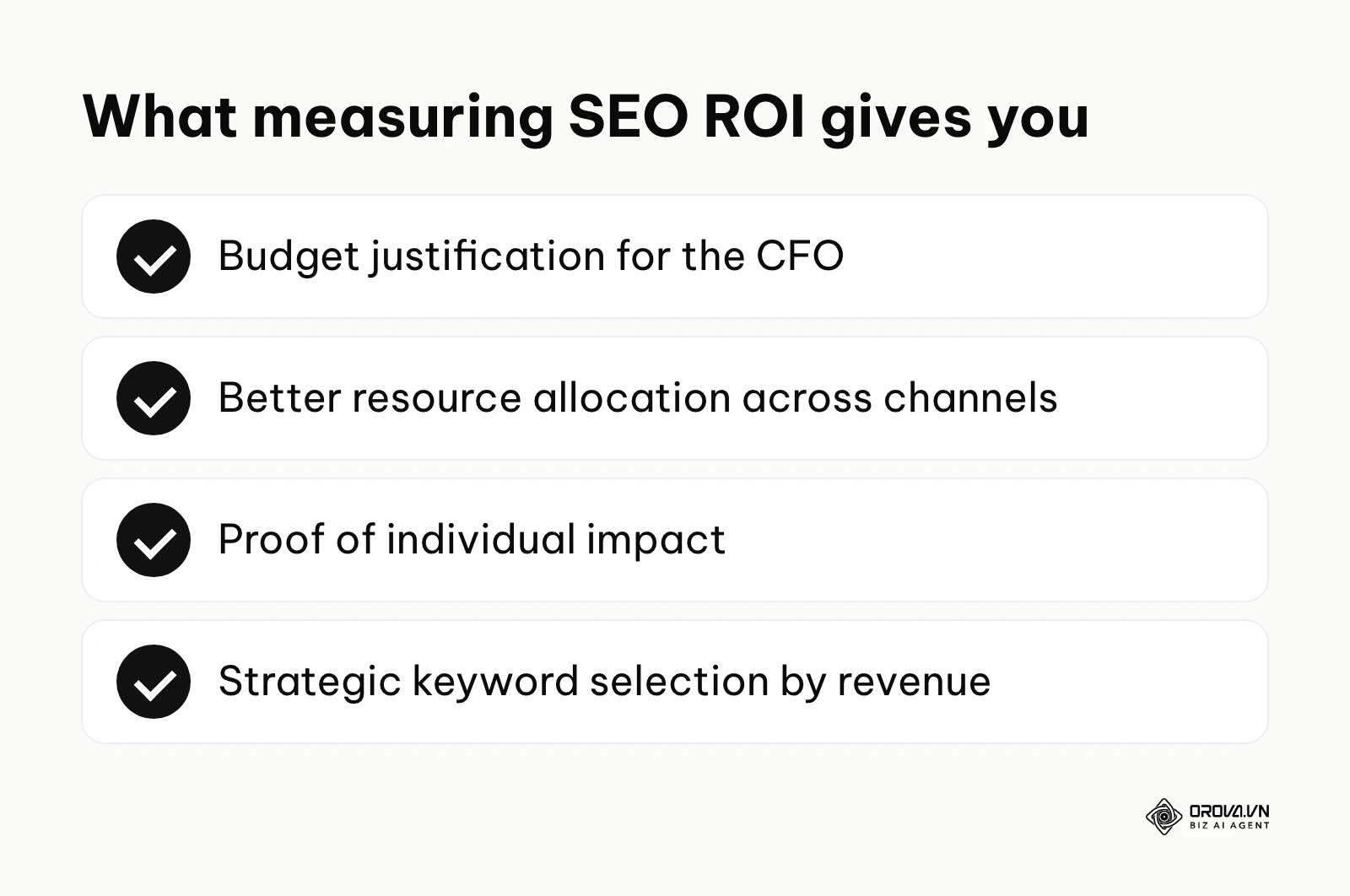
Business Value: Financial clarity and risk reduction
Before measuring financial returns, businesses view organic search as a mysterious black box. You spend money, and maybe revenue goes up eventually, but the connection remains unclear. After implementing strict tracking, the executive team gains absolute financial clarity. They know exactly how much revenue each dollar spent on content and technical updates generates. This drastically reduces the risk of overspending on underperforming campaigns. It also allows for confident budget forecasting. When the Chief Financial Officer sees a positive return verified by data, they are much more likely to approve budget increases for the next fiscal year. They stop seeing search as a necessary evil and start seeing it as a predictable revenue engine.
Business Value: Strategic resource allocation
Before having solid data, companies often allocate marketing budgets based on intuition, industry rumors, or the loudest voice in the boardroom. After establishing clear measurement protocols, you can objectively compare organic search against paid advertising, email marketing, and social media campaigns. This allows you to shift resources away from expensive, low-yielding channels and reinvest them into high-performing organic assets. It ensures that every marketing dollar is working as hard as possible. You can also prioritize specific product lines or service pages that demonstrate the highest profit margins specifically from organic traffic, rather than just pushing whatever the sales team wants to sell.
Worker Benefits: Proving individual impact
Before, SEO specialists and content writers often struggled to prove their true worth to the company. They reported on rising rankings and increasing traffic, which management often dismissed as mere vanity metrics. After mastering these calculations, practitioners can directly tie their daily work to company revenue. A content writer can confidently show that their specific article generated 5,000 dollars in tracked sales. This empowers workers to negotiate better salaries, secure promotions, and gain deep respect within the organization. It transforms them from a replaceable cost center into a recognized, indispensable revenue generator.
Worker Benefits: Confident decision making
Before, daily decisions about what keywords to target or what technical issues to fix were based purely on search volume or arbitrary best practices. After implementing revenue tracking, workers can make strategic decisions based on actual profitability. If a low-volume keyword brings in high-value enterprise leads, the team knows to prioritize it over a massive-volume keyword that only attracts students looking for free information. This makes daily work more focused, less stressful, and significantly more effective.
| Benefit | Measured by which metric | Visible after how long |
|---|---|---|
| Budget justification | Profit margin per channel | 3 to 6 months |
| Better resource allocation | Cost per acquisition (CPA) | 2 to 4 months |
| Proof of individual impact | Attributed revenue per author | 4 to 8 months |
| Strategic keyword selection | Revenue per keyword | 3 to 5 months |
Illustrative example: An in-house marketing manager at a mid-sized software company needed to prove the value of a content campaign. She integrated their analytics platform with their CRM system. Next, she assigned a specific monetary value to every trial signup based on historical close rates. She struggled initially with duplicate data from returning visitors, so she implemented user-ID tracking to unify the sessions. As a result, she produced a dashboard showing the executive team that organic blog posts generated forty qualified enterprise leads, securing budget for three new writers.
Discover Orova.vn – a Biz AI Agent platform with OROVA SEO, a complete solution for every website. The system supports search engine optimization from A to Z with features including keyword research, writing new SEO-ready articles, optimizing existing content, rank tracking, plus competitor analysis and in-depth technical analysis. Sign up today to experience OROVA SEO completely free (offer valid through July 7, 2027).
How measuring search returns works in practice
Understanding how to calculate this requires breaking down the entire process into concrete, manageable components. The fundamental mathematical formula is simple: (Revenue from Organic Search - Cost of Organic Search) / Cost of Organic Search. However, accurately defining and gathering those two variables—revenue and cost—is where the real complexity lies. Let us dissect each component thoroughly.
Component 1: Calculating the total cost of search campaigns
To get an accurate picture, you must track every single expense associated with your organic search efforts.
- What to do: Aggregate all internal and external costs incurred to improve search visibility.
- Input: Agency invoices, payroll data, freelance writer payments, and software subscriptions.
- Output: A single, comprehensive monthly or quarterly cost figure.
- Common failure point: Forgetting to include the hourly cost of internal developers who implement technical fixes, or the monthly cost of the Google SEO optimization tool subscriptions you use daily. For a breakdown of what each line item usually covers, see this guide to SEO optimization cost. Costs typically include agency retainer fees, content creation (writing, editing, graphic design), technical auditing tools, and a calculated percentage of your in-house marketing salaries.
Component 2: Measuring organic search revenue
This is the most critical and mathematically challenging step. You must accurately attribute revenue to organic search interactions without overcounting.
- What to do: Connect your website analytics directly to your actual sales data.
- Input: E-commerce shopping cart data or CRM lead values.
- Output: The total monetary value generated specifically by organic traffic over a set period.
- Common failure point: Relying exclusively on last-click attribution. This fundamentally ignores the immense value of educational content that introduces a user to your brand weeks or months before they actually pull out their credit card to buy. You must look at the entire journey.
Component 3: The E-commerce vs B2B/SaaS calculation models
The method for calculating your revenue variable differs drastically depending on your specific business model. You cannot use a retail framework for a software company.
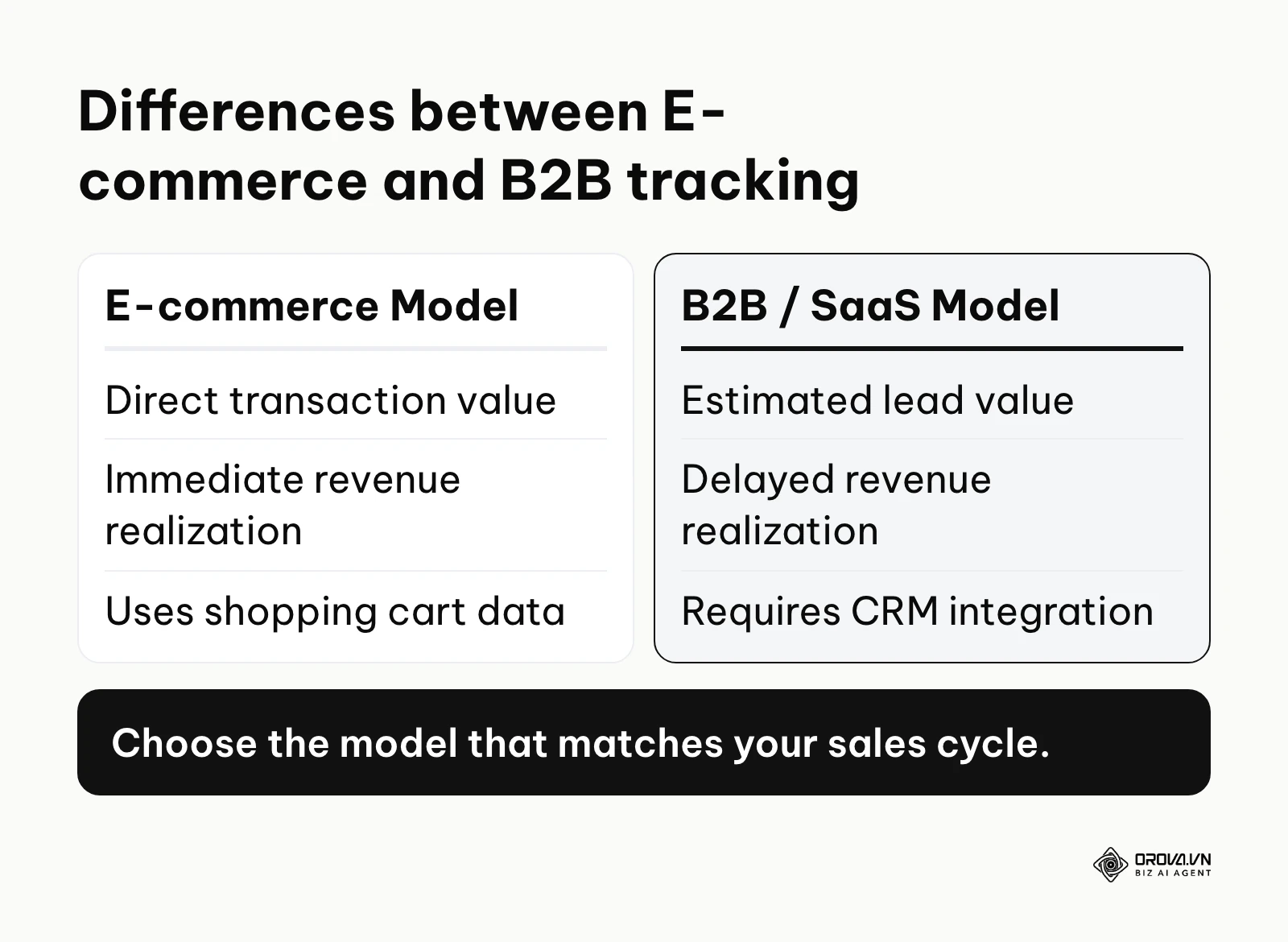
For E-commerce, the calculation is extremely direct and immediate. You track the exact transaction value of an order placed by a user who arrived via organic search. If a user clicks a search result, adds items to their cart, and buys a pair of shoes for 100 dollars, the organic revenue recorded is exactly 100 dollars. This data flows automatically from your store platform into your analytics.
For B2B and SaaS companies, the calculation requires forecasting and historical averages. You do not sell directly on the website. Instead, your website generates leads or trial signups. To calculate the financial value, you need three distinct numbers: the total number of organic leads, your historical lead-to-customer close rate, and your Customer Lifetime Value (CLV). Calculation formula: Total Organic Leads × Close Rate × CLV = Organic Revenue. This requires tight alignment between marketing and sales.
Illustrative example: A SaaS company records 200 organic leads in a quarter. Its historical close rate is 10% and its average CLV is 3,000 dollars, so organic revenue is 200 × 10% × 3,000 = 60,000 dollars. The company spent 15,000 dollars on SEO in the same quarter, so SEO ROI is (60,000 − 15,000) ÷ 15,000 × 100% = 300%. Use your own numbers; these are only there to show the calculation.
Component 4: Google Sheets SEO ROI Calculator Template Structure
To avoid manual calculation errors, you should build a standardized tracking sheet. Here is the exact structure you need to create your own automated template. Create two separate tabs in your spreadsheet: one tailored for E-commerce and one tailored for B2B/SaaS.
Tab 1: E-commerce Structure
- Column A: Month
- Column B: Total Organic Traffic
- Column C: Organic Conversion Rate
- Column D: Average Order Value (AOV)
- Column E: Total Organic Revenue (Calculated automatically: B × C × D)
- Column F: Total SEO Costs (Agency fees + Tools + Content costs)
- Column G: ROI Percentage (Calculated automatically: (E - F) / F)
Tab 2: B2B/SaaS Structure
- Column A: Month
- Column B: Total Organic Leads (Marketing Qualified Leads)
- Column C: Sales Qualified Lead (SQL) Conversion Rate
- Column D: SQL to Won Deal Close Rate
- Column E: Customer Lifetime Value (CLV)
- Column F: Total Estimated Revenue (Calculated automatically: B × C × D × E)
- Column G: Total SEO Costs
- Column H: ROI Percentage (Calculated automatically: (F - G) / G)
This structure allows you to simply plug in the raw numbers at the end of each month and instantly see the financial trend without doing complex math every time.
Component 5: A 5-step checklist for GA4 Data-Driven Attribution
Accurate measurement requires proper tool configuration. Google Analytics 4 (GA4) uses machine learning to distribute credit across multiple touchpoints, but you must set it up correctly to feed your calculator.
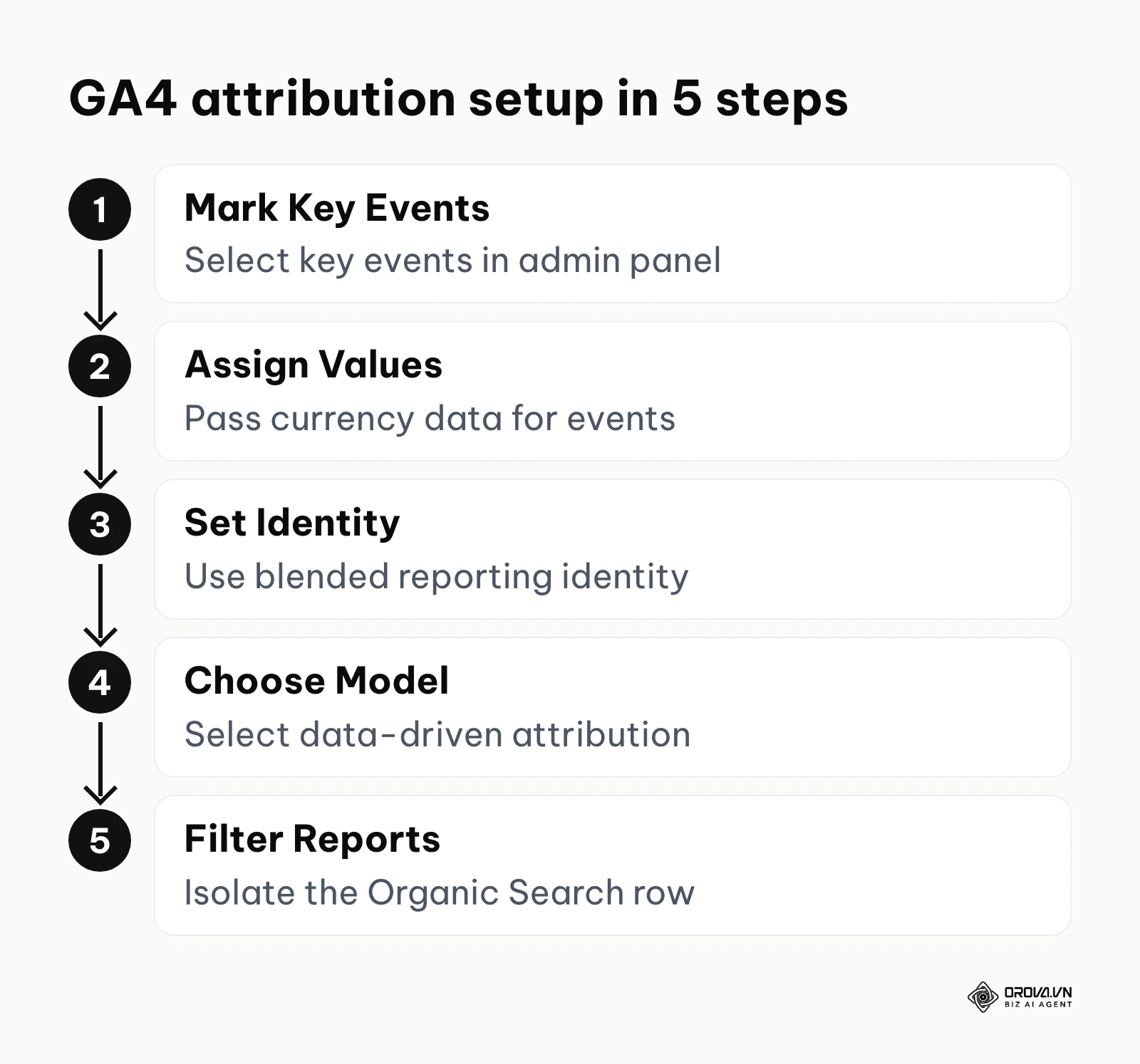
- Define your key events: In the Admin panel, open the events list and mark the specific actions (like 'purchase' or 'generate_lead') as key events (GA4 previously called these conversions). Attribution reports only credit channels for actions you have marked this way.
- Assign monetary values: For every conversion event, ensure you pass a currency value. For B2B, use the average lead value derived directly from your CRM data.
- Verify the reporting identity: Go to "Reporting Identity" in the Admin settings and select "Blended" to ensure GA4 uses device ID, user ID, and Google Signals to track users seamlessly across different devices.
- Select Data-Driven Attribution: In the "Attribution Settings," ensure the reporting model is set to "Data-driven" rather than the outdated "Last click." This ensures organic search gets partial credit even if the user later clicks a retargeting ad to finalize the purchase.
- Filter the Acquisition reports: Navigate to the "Traffic acquisition" report and set the primary dimension to "Session default channel group" to isolate the "Organic Search" row for your monthly data pull.

Component 6: The C-Suite Pitch Deck Template for Forecasting
When requesting a marketing budget, you need a CFO-approved script. Use this concise 3-page presentation structure to secure approval from skeptical finance teams.

- Slide 1: The Historical Baseline. Show your current organic traffic volume and the estimated revenue it currently drives based on existing conversion rates. Highlight the massive missed opportunity cost of not optimizing further.
- Slide 2: The Investment and Timeline. Clearly state the requested budget (for example, 5,000 dollars per month) and explicitly acknowledge the time lag. Framing it the way finance already thinks about acquisition spend, as in a CAC payback period, makes the request easier to approve. State clearly on the slide when you expect to break even, for example: "We expect negative returns for months 1 to 4, breaking even in month 5, and scaling profitably thereafter." Base these months on your own history, not on a generic rule. This manages executive expectations immediately and prevents early cancellation.
- Slide 3: The Conservative Forecast. Present three scenarios: pessimistic, realistic, and optimistic. For the realistic scenario, apply a growth assumption you can defend from your own data (for example, 15% traffic growth month-over-month starting in month 4), multiplied by your historical conversion rate and average order value. Show the exact month the cumulative return turns positive.
| Types of ROI tracking | Characteristics | Best suited for |
|---|---|---|
| Direct Transactional | Tracks exact cart value, immediate attribution | E-commerce stores, retail brands |
| Lead Value Estimation | Uses historical close rates and average deal size | B2B service companies, agencies |
| Customer Lifetime Value (CLV) | Projects long-term revenue from a single sign-up | SaaS platforms, subscription boxes |
| Content Consumption | Assigns arbitrary point values to PDF downloads | Information portals, non-profits |
Illustrative example: A freelance consultant working for a regional logistics firm wanted to demonstrate the profitability of a technical audit. He mapped all organic lead forms directly to the client's sales database. Then, he isolated the traffic improvements strictly on the pages he fixed. The client initially pushed back, claiming the new leads might have come from paid ads, so he configured data-driven attribution in analytics to prove the exact origin point. He ultimately presented a report showing the technical fixes directly resulted in five signed shipping contracts, earning him a long-term retainer.
What to do to adapt and get started
Implementing a strict financial measurement system requires vastly different approaches depending on your specific role within a company.
For the small business owner
Small business owners need simple, actionable data without getting bogged down in complex enterprise software implementations.
- Calculate your break-even point: Determine exactly how many new sales or clients you need per month just to cover your agency or freelancer costs.
- Set up basic conversion tracking: Ensure that every single form submission or phone call generated from your website is recorded as a goal in your analytics platform.
- Demand revenue reports: Stop accepting reports from your marketing agency that only show traffic increases and ranking improvements. Insist that they report on total leads generated and estimated revenue.
- Review profitability quarterly: Do not judge search campaigns week by week. Look at the total spend versus total revenue generated every 90 days to make informed, calm decisions.
For the in-house marketing manager
In-house managers must heavily bridge the gap between daily marketing activities and high-level executive expectations.
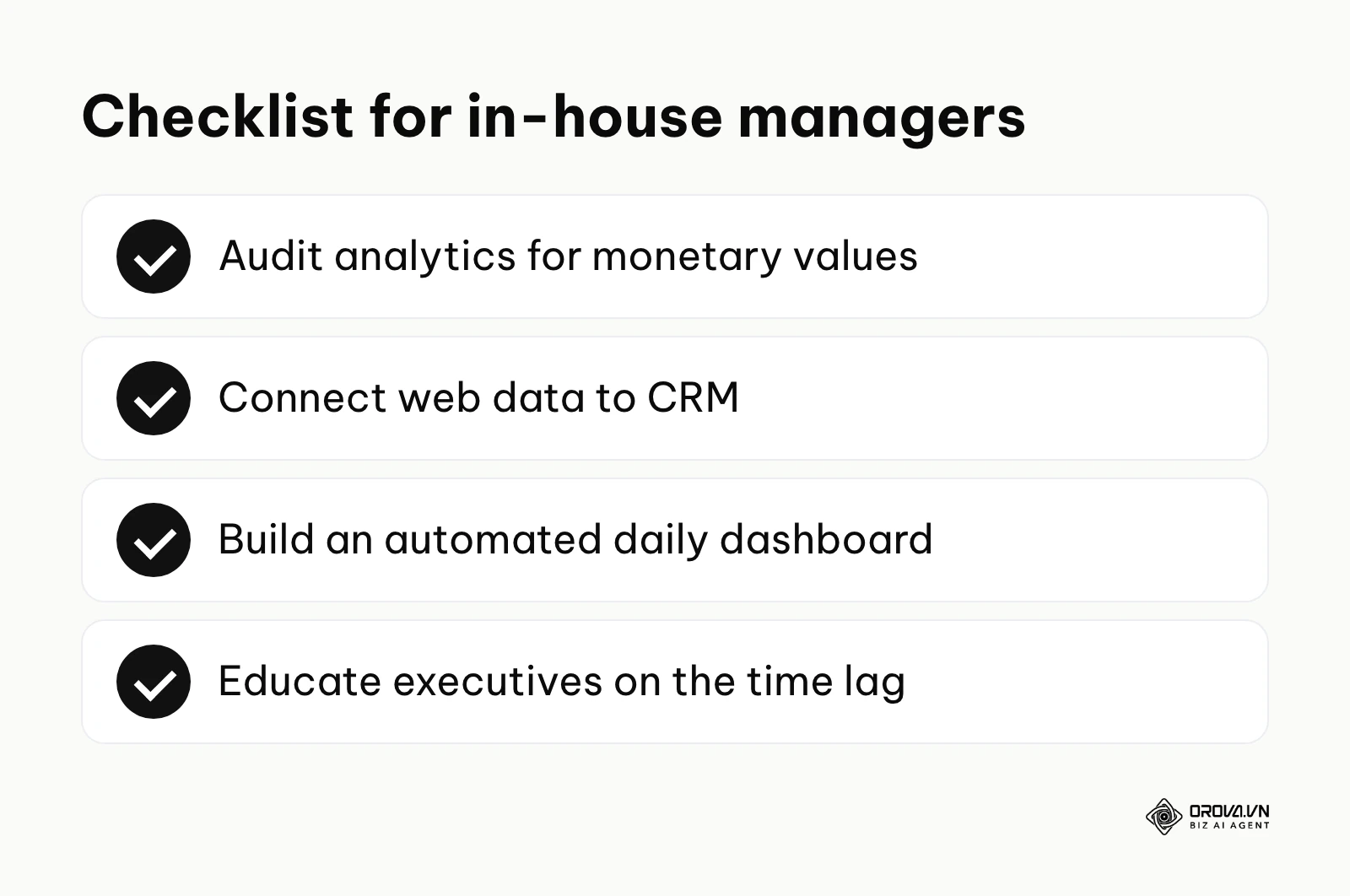
- Audit your current tracking setup: Ensure that your analytics platform is accurately capturing monetary values for all key events, not just counting raw clicks.
- Integrate analytics with your CRM: Connect your marketing data to your sales data so you can track an organic lead all the way to a closed deal.
- Build a standardized dashboard: Create a report that automatically pulls cost and revenue data, updating daily without manual effort. If you need help structuring this, review the measure website traffic guide.
- Educate the executive team: Proactively present the concept of the time lag to your C-suite before launching a new campaign, ensuring they understand that financial returns take time to materialize.
- Implement split testing: Start testing different content formats to see which ones drive higher actual revenue, not just higher traffic numbers.
For the agency or freelancer
Agencies must prove their undeniable financial value to retain clients long-term and avoid being cut during budget reviews.
- Shift client focus to revenue: During your initial onboarding, explicitly ask the client for their average order value or historical lead close rate.
- Build forecasting models: Provide highly realistic projections of exactly when the client can expect to see a positive financial return based on your historical data.
- Include financial metrics in monthly reports: Put the estimated revenue generated from organic search on the very first page of your client reports, before any ranking data. If you need a framework, read the data-driven SEO report guide.
- Offer tracking setup as a service: If the client does not have proper conversion tracking installed, offer to set it up for them as a paid project before starting any optimization work.
| Common Mistakes | The Consequence | How to Avoid It |
|---|---|---|
| Ignoring the time lag | Canceling successful campaigns too early | Agree on an expected break-even month with leadership before launch |
| Using last-click attribution | Undervaluing educational blog content | Switch to data-driven attribution models in analytics |
| Forgetting internal costs | Artificially inflating the profitability numbers | Include software and payroll costs in the main formula |
| Tracking only traffic | Failing to secure budget from the C-suite | Always tie metrics back to pipeline revenue |
With OROVA.VN and the OROVA SEO module, you put an end to the exhausting days of manual work for good. Instead of struggling for hours to write articles and compile reports, the entire process is now optimized and completed in just 5 minutes.
Trends in measuring search returns in the next few years: author's perspective
As of 2026, the landscape of digital measurement is shifting rapidly. Based on current technological advancements and changing user behaviors visible today, I see three major trends shaping how we will measure financial returns from organic search in the coming years.
AI will force a shift from traffic value to conversation value
Currently, we almost exclusively measure clicks to our websites. However, as AI overviews and integrated chat interfaces in search engines increasingly answer user queries directly on the results page, I believe traditional click-through rates for informational queries are likely to keep falling. Therefore, we will need to figure out how to measure the financial value of brand mentions within AI responses themselves. I expect we may see new metrics that estimate the revenue generated when an AI model recommends your product in a natural language conversation, rather than just tracking clicks to your product page. You should start preparing by optimizing your content for entity recognition and ensuring your brand is frequently cited by authoritative sources that feed these massive AI models. Of course, this prediction could be wrong if search engines aggressively restrict their AI interfaces to protect their traditional ad revenue models.
Multi-touch attribution will lean toward prediction
Right now, attribution models look backward to see which channels contributed to a past sale. I think predictive attribution is likely to become much more common. Machine learning models could analyze a user's very first organic interaction and estimate their lifetime value and the likelihood of closing, weeks or even months before they actually convert. This will allow marketers to calculate a projected return on investment instantly upon acquiring a lead, rather than waiting months for the lengthy sales cycle to finish. Marketers should start heavily cleaning their historical CRM data right now, as these predictive models will require massive amounts of flawless data to function accurately.
The cost of content creation will keep falling
Historically, the biggest expense in a search campaign has been the intensive human labor required for writing and editing. I am observing that AI generation tools are drastically driving down the base cost of producing acceptable content. I believe this could change the return formula we rely on today. If the denominator (cost) shrinks, the ROI percentage of successful campaigns can look inflated, so it will matter more to read it alongside absolute profit. The primary challenge will no longer be the cost of creation, but rather the cost of distribution, earning trust, and building brand authority. You must prepare by shifting your budget away from basic copywriting and investing heavily in original research, expert interviews, and fast technical infrastructure, which I expect to become stronger differentiators. To understand how rank tracking fits into this automated future, you can look into search engine rank monitoring in 2026.
Frequently asked questions about SEO ROI
How long does it typically take to see a positive return?
There is no fixed timeline: it depends on your starting authority, competition and sales cycle, so use your own past campaigns to set the break-even month. During the first few months, you incur the heavy costs of technical audits, content creation, and strategy development while search engines slowly discover and rank your updates. The initial return is usually negative before it starts to compound. You must hold your nerve during this early phase.
Is measuring SEO ROI still necessary when AI does the writing?
Yes, it is arguably even more critical when using AI. While AI heavily lowers the upfront cost of content production, it also drastically increases competition and overall content volume across the entire web. You must measure financial returns strictly to determine if your AI-generated content is actually driving real revenue or just artificially cluttering your website without converting any visitors.
How do I calculate returns if I do not sell products online?
If you operate a B2B or complex service business, you must assign a specific monetary value to your incoming leads. You calculate this by multiplying your historical lead-to-sale conversion rate by your average customer lifetime value. You then apply this estimated monetary value to every qualified lead generated through organic search to find your total revenue. Aligning these numbers with your CRM data also makes the result much easier to defend in front of your finance team.
Should I include the cost of my website hosting in the calculation?
Generally, no. Website hosting is a foundational business expense required regardless of whether you actively optimize for search engines or not. You should only include costs specifically incurred to improve organic visibility, such as digital agency fees, specialized SEO software subscriptions, and dedicated content creation time. Keep the calculation strictly focused on marketing efforts.
How does branded search affect the calculation?
Branded search (when users search explicitly for your company name) often has extremely high conversion rates and heavily skews the overall data. To get a truly accurate picture of your optimization efforts, you should segment your reporting to isolate non-branded search traffic. This reveals the true financial value of attracting new customers who did not already know your brand existed.
What is a good ROI percentage for organic search?
There is no universal benchmark worth trusting, because margins, sales cycles and competition differ so much. A more useful test: the ROI must be positive over a rolling 12-month period, higher than what the same budget earns in your other channels, and calculated on profit rather than top-line revenue when your margins are thin. Note that an ROI of 0% means break-even, while 300% means each dollar spent came back as four dollars of attributed value.
Where to start?
Knowing exactly how to measure your financial returns is completely useless without strict implementation. Depending on your current situation, your immediate next steps will vary significantly. Here is exactly what you should do today based on where you currently stand in your measurement journey.
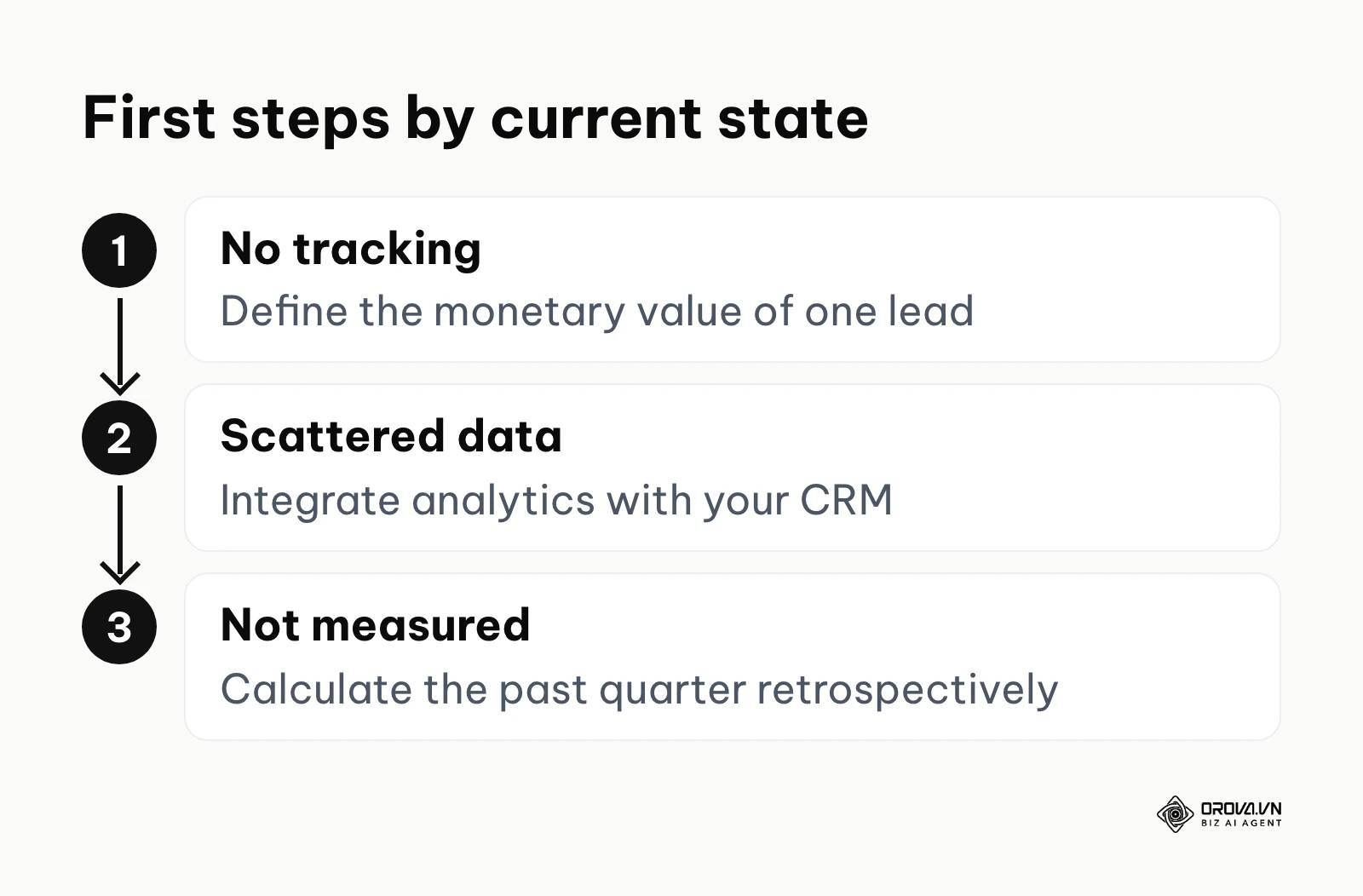
If you have absolutely no tracking in place at all, your very first step is to establish a solid baseline by defining the monetary value of a single conversion. Sit down with your sales team or look closely at your historical e-commerce data to determine exactly how much a raw lead or a checkout is worth to your business. Do not install any new software or build any complex spreadsheets until you have this single, agreed-upon number written down. This number is the foundational anchor of all your future calculations.
If you have tracking tools installed but your data is scattered across several different platforms, your immediate task is to connect your website analytics directly to your customer relationship management (CRM) software. You need to close the feedback loop so that when a lead from organic search eventually signs a major contract three months later, that revenue data flows backward into your marketing reports automatically. Spend one afternoon working with a developer or using integration tools to map the lead source field securely in your CRM to your web analytics.
If you are already running search campaigns but not measuring their financial impact, your first step is to conduct a ruthless retrospective calculation for the last quarter. Gather all the invoices from your agency, freelance writers, and software tools for the past three months to find your total cost. Then, pull the total revenue generated specifically from organic traffic during that exact same period. Run these two numbers through the basic formula to find out if you made money or lost money recently. This raw, undeniable truth will dictate your strategy for the next quarter, helping you finally master your seo roi.
About the author

Builder of Orova
Nguyễn Đỗ Trọng Ân has 8 years of experience in marketing, including 6 years managing market development across Asia. He builds Orova, a Biz AI Agent that never sleeps: it plans, runs and optimizes work for businesses.
Run your business with AI Agents
Orova is the always-on Biz AI Agent — it plans, runs, and optimizes the work for you.
Save time, unlock productivity.