
What is ChatGPT for SEO? A guide to prompts and workflows

Using chatgpt for seo means handing ChatGPT specific, well-defined SEO tasks (clustering a keyword list, drafting an outline, writing meta descriptions, generating schema code) through structured prompts and repeatable workflows, while a human checks every output before it goes live. It speeds up the work; it does not replace keyword data, editorial judgment or fact-checking.
Many digital marketers and content creators feel overwhelmed by the sheer volume of daily tasks required to maintain search visibility. If you are still manually writing meta tags, clustering keywords on massive spreadsheets, and battling writer's block every morning, you are likely falling behind. However, most people only use basic commands, treating advanced language models like simple search engines or copywriters. This superficial approach often leads to generic, robotic content that fails to rank or engage real human readers.
This guide goes task by task: the prompt to use for each SEO job, the workflow around it, and the review step that keeps the output safe to publish. If you want the broader picture of how AI fits into search first, start with our explainer on what AI SEO is.
What is ChatGPT for SEO?
ChatGPT for SEO is the strategic application of large language models to automate and enhance search engine optimization tasks. It is used to process vast amounts of search data, generate structured content, and write technical scripts. It differs from traditional tools by offering semantic understanding rather than just mathematical data extraction.
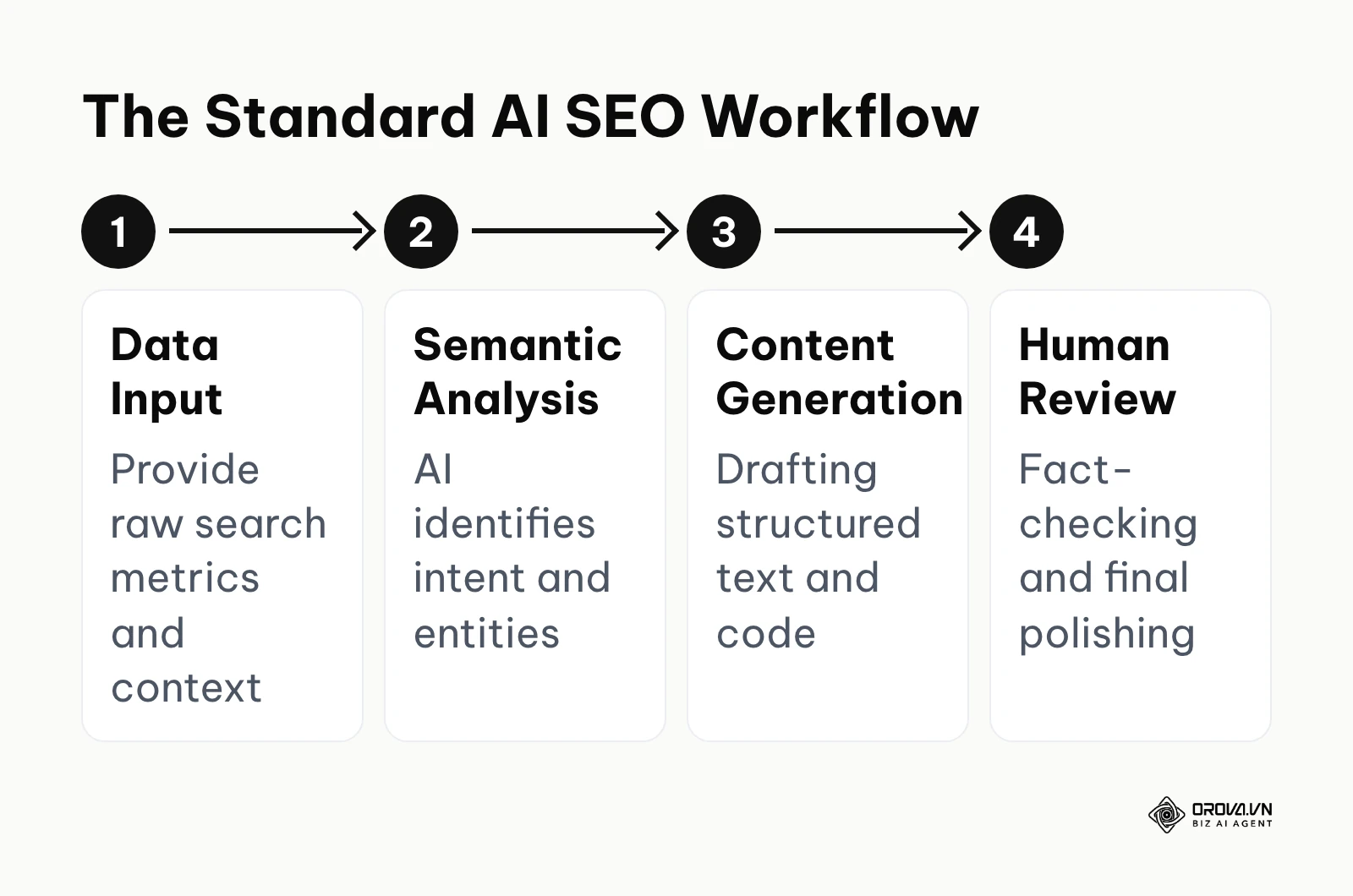
The concept originated from the rapid advancement of generative AI platforms. Marketers quickly realized that these language models could do much more than chat. They could analyze search intent, write complex code snippets, and structure data in ways that previously required hours of human labor.
The diagram below summarizes the standard AI SEO workflow, illustrating the path from data input to final review.
To understand its unique position in the market, we must distinguish it from other common solutions. It is not a magical button that guarantees top rankings, nor is it a replacement for strategic human oversight.
| Concept | Core Difference | Everyday Example |
|---|---|---|
| Traditional SEO Tools | Relies strictly on exact match metrics and historical data databases. | Using a basic calculator to sum up keyword search volumes. |
| Pure AI Writing | Generates text without search context or competitive analysis. | Hiring a junior writer who ignores the target audience data. |
| ChatGPT for SEO | Combines semantic data analysis with intelligent content generation. | Having an expert analyst draft reports based on real metrics. |
Think of it like upgrading your kitchen. Traditional tools are your knives and measuring cups. Pure AI writing is like ordering fast food. Applying AI to your search workflows is like hiring a skilled sous-chef who preps all your ingredients perfectly, leaving you to focus entirely on the final presentation and flavor.
The Meaning and Strategic Role of AI in Search
AI in search optimization exists to solve the fundamental problem of scale and semantic analysis. It acts as a critical bridge between massive datasets and human creativity. For a long time, marketers struggled with a severe bottleneck. We could easily gather thousands of keywords using various tools, but analyzing the hidden intent behind those words took weeks of manual labor.
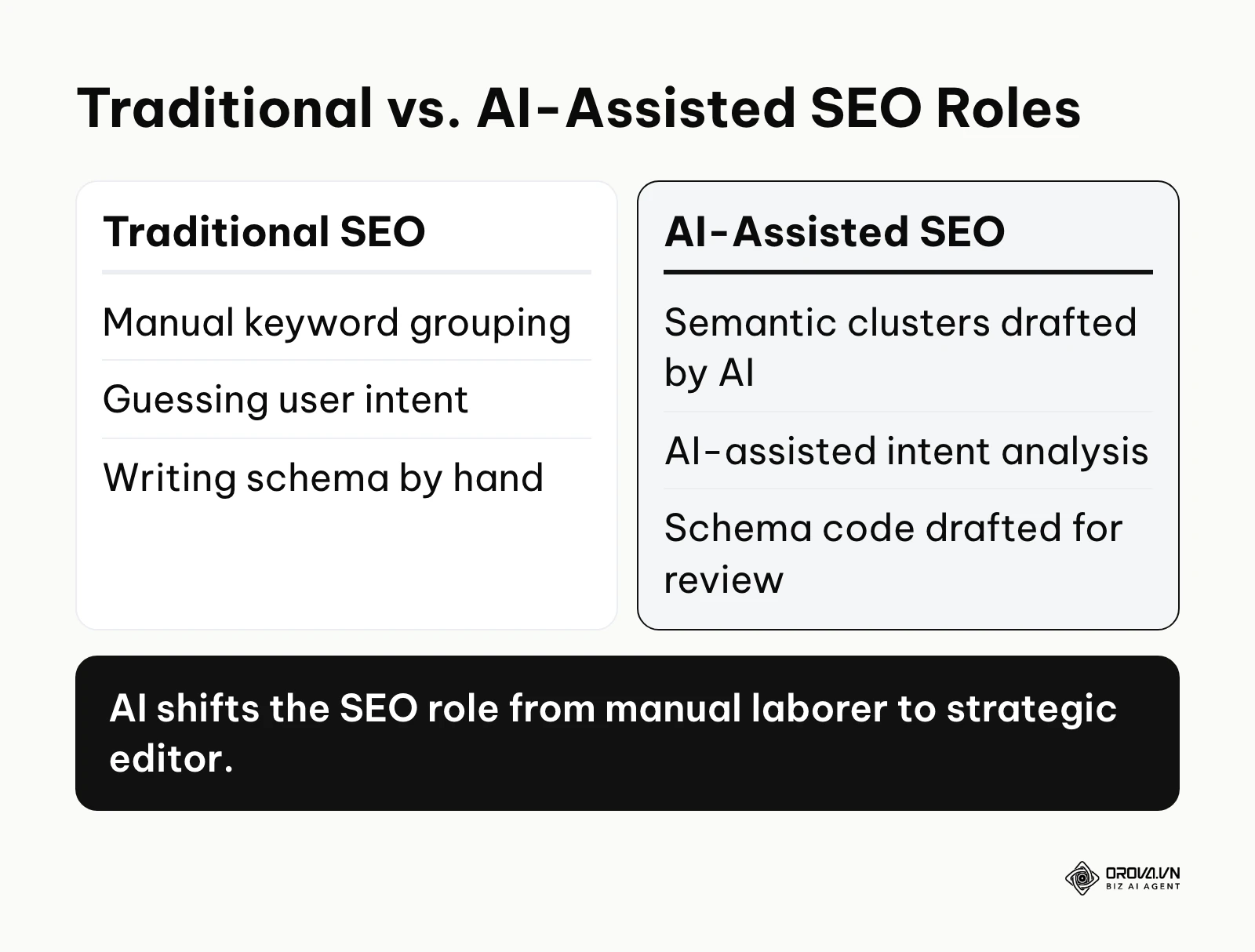
This technology sits precisely at the ideation, structuring, and technical drafting stages of your workflow. It comes after your initial raw data collection but before your final editorial review. It processes the messy, unstructured data and hands you a clean, strategic roadmap.
The diagram below summarizes how AI-assisted SEO replaces manual tasks with automated strategic modeling.
If you choose to ignore these advancements, you will lose your competitive velocity. Your competitors will publish well-structured content much faster than you. They will capture emerging search trends before your human team has even finished formatting the content brief. In modern digital marketing, speed to market with high-quality content is a massive competitive advantage.
When is ChatGPT for SEO not needed yet? There are specific situations where using AI is unnecessary or counterproductive. If you are conducting highly personalized manual outreach for link building, a generic AI email will likely be ignored. Similarly, if you are writing deeply personal thought leadership pieces based on unique life experiences, relying on automated tools will strip away the authentic voice that readers seek. In these cases, you should rely entirely on human relationship building and personal storytelling instead of forcing an automated workflow.
The Tangible Values and Benefits of AI Workflows
The primary value of AI workflows lies in drastically reducing operational costs while simultaneously increasing content output velocity. It transforms SEO from a slow, manual process into a highly scalable, predictable system. This creates distinct layers of benefits, impacting both the broader business goals and the daily lives of the people doing the work.
From a business perspective, the biggest advantage is risk mitigation through better structured data. By automating technical markup and semantic structuring, businesses ensure search engines can easily crawl and understand their websites. This builds a robust digital asset that is less vulnerable to sudden algorithm updates.
For the direct practitioners, the benefits are immediate and highly personal. It eliminates the dreaded writer's block and the tedious formatting of endless spreadsheets. Instead of spending hours staring at a blank page, marketers can focus on refining ideas, adding unique insights, and studying user psychology.
Accelerating the Drafting Process
Before integrating AI, a content writer often spends hours just outlining an article and finding relevant semantic terms. They have to manually search Google, study competitor headings, and guess which subtopics are necessary.
After implementing these systems, the writer provides a detailed prompt and instantly receives a comprehensive outline containing all required entities and structural suggestions. The heavy lifting is done in seconds, allowing the writer to focus purely on adding human expertise and brand voice.
Scaling Meta Data Production
Before automation, an e-commerce manager dealing with thousands of products had to manually write unique title tags and meta descriptions for every single page. This task is soul-crushing and highly prone to human error, often resulting in duplicated or missing tags across the site.
After connecting an AI via API, the manager can draft descriptions for thousands of URLs in a single afternoon. The AI reads the product specifications and writes character-limited meta description drafts for the catalog, which the manager then spot-checks in batches before uploading.
Illustrative example: A mid-sized e-commerce store with 5,000 products struggled with missing meta descriptions. The content manager extracted all blank URLs, wrote a custom AI prompt, and fed batches of product specifications into the model, reviewing each batch before upload. Initially, the AI generated descriptions that were too long and cut off in search results, so the manager updated the prompt to strictly enforce a 150-character limit. The result was a fully populated catalog in three days, leading to a noticeable improvement in click-through rates from search engine results pages.
| Primary Benefit | Measurement Metric | Expected Time to See |
|---|---|---|
| Faster Draft Creation | Hours spent per article | Immediately |
| Scalable Meta Tagging | Percentage of missing tags | Within one week |
| Semantic Relevance | Number of ranked entities | After pages are recrawled and re-evaluated |
Discover Orova.vn – a Biz AI Agent platform with OROVA SEO, a complete solution for every website. The system supports search engine optimization from A to Z with features including keyword research, writing new SEO-ready articles, optimizing existing content, rank tracking, plus competitor analysis and in-depth technical analysis. Sign up today to experience OROVA SEO completely free (offer valid through July 7, 2027).
How ChatGPT for SEO Works: Advanced Workflows and Automation
ChatGPT for SEO works by processing raw search data through structured prompts to output optimized text, code, and analytical insights. The process involves several interconnected steps from keyword clustering to technical schema generation. Most users fail because they treat the interface like a simple chat window, asking basic questions and getting generic answers.
To unlock true value, you must treat the AI as a programmable logic engine. You provide strict parameters, assign specific expert roles, and demand structured outputs. This approach minimizes errors and ensures the generated content aligns perfectly with your marketing strategy.
Advanced Keyword Research and Semantic Clustering
If you want to know how to use ChatGPT for keyword research effectively, you must move past asking it to "give me a list of keywords". ChatGPT does not have a reliable database of monthly search volumes, so any volume it states should be treated as a guess. Always start by exporting a raw list of keywords, with volumes, from a dedicated keyword tool.
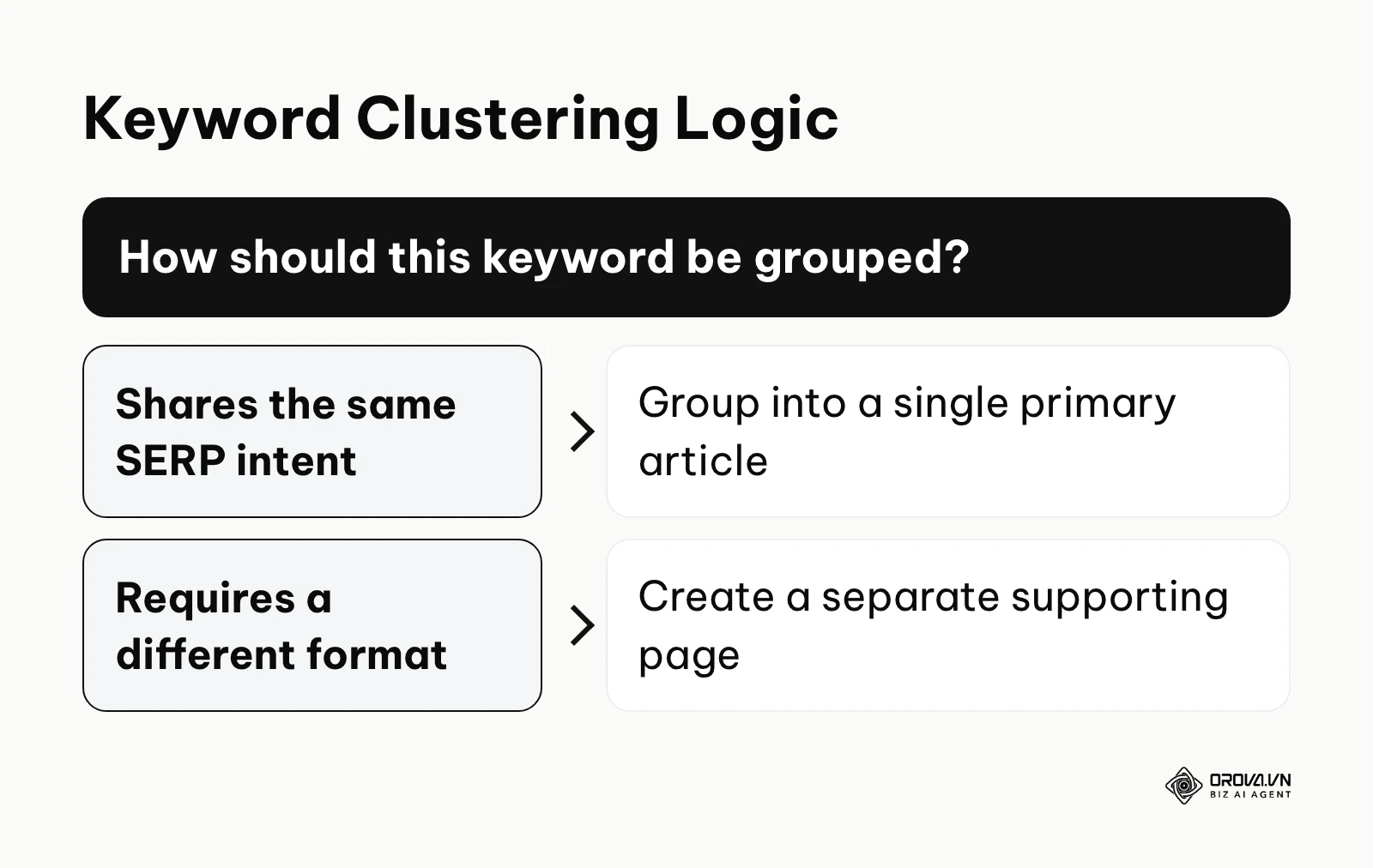
Once you have your raw list, the AI excels at semantic clustering. This means grouping hundreds of keywords based on the actual intent of the user, rather than just matching shared vocabulary. This prevents keyword cannibalization, where multiple pages on your site compete for the exact same search intent.
The diagram below summarizes the decision logic for keyword clustering based on search engine results page intent.
Here is an advanced mega-prompt to execute this task perfectly. You can copy and paste this into your workflow:
[System Role]
You are a senior technical SEO architect with 10 years of experience. You specialize in semantic search and topical authority mapping.

[Context]
I am providing a list of raw keywords related to our industry. These keywords need to be organized to build a logical site structure.

[Task]
Group these keywords into tight semantic clusters based purely on Search Engine Results Page (SERP) intent.

[Rules]
1. Do not group keywords just because they share a root word. Group them only if a single web page could satisfy the search intent for all of them simultaneously.
2. For each cluster, provide a recommended H1 title.
3. Identify the primary search intent (Informational, Transactional, Navigational).
4. List 3-5 secondary entities (concepts or terms) that must be mentioned in the article to establish topical authority.
5. Output the final result strictly as a Markdown table.

[Input Data]
{Paste your 100-300 raw keywords here}
Before diving into complex prompts, you should establish a baseline using the best keyword research tools to gather initial search volume data.
SEO Content Creation with Chain-of-Thought Prompts
Creating high-ranking content requires more than just asking the AI to "write a blog post". When you use simple ChatGPT prompts for SEO, the model often guesses your intent and produces fluffy, repetitive text. To avoid this, you must use Chain-of-Thought prompting.
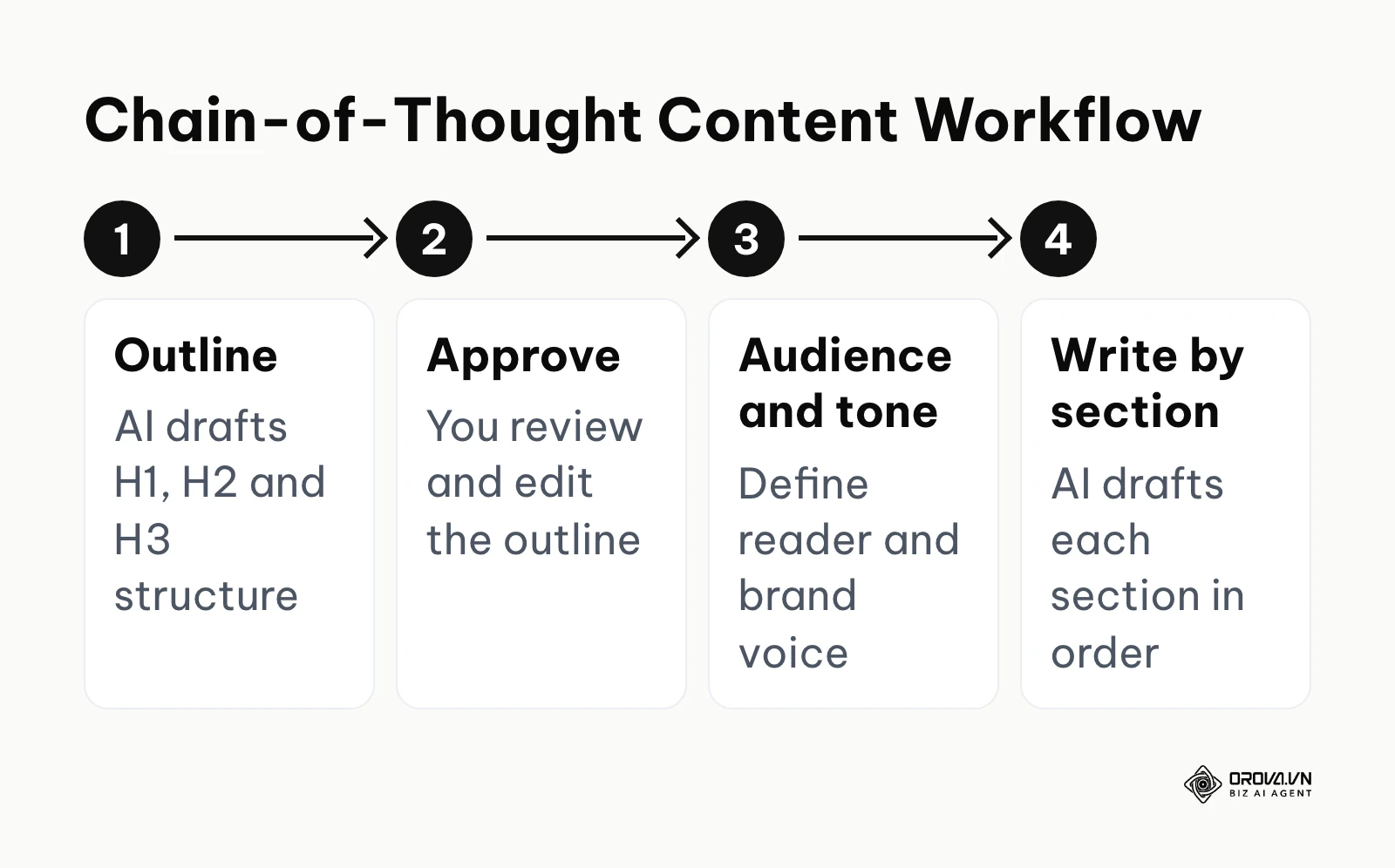
Chain-of-Thought breaks the writing process into distinct, verifiable steps. First, you ask the AI to generate an outline. You review and approve the outline. Next, you ask it to define the target audience and tone of voice. Finally, you ask it to write the content section by section, ensuring it strictly follows the approved outline.
The diagram below summarizes the Chain-of-Thought prompt structure for content creation.
Here is an example of a structural prompt to initiate this process:
[System Role]
You are an expert content strategist and copywriter. You write clear, concise, and highly actionable content that prioritizes user experience over keyword stuffing.

[Task]
Create a comprehensive outline for an article titled "{Your Title}".

[Rules]
1. The outline must contain exactly one H1, followed by logical H2s and H3s.
2. Under each heading, write a brief one-sentence summary of what that section will cover.
3. Identify exactly where we should include a data table, a bulleted list, or a custom graphic to break up the text.
4. Ensure the structure naturally answers the most common questions users have about this topic.
5. Do not write the full article yet. Stop and wait for my approval of the outline.
Mastering these prompts is essential for effective SEO content writing that aligns with Google's helpful content guidelines. If you are weighing dedicated writing assistants against a general chat tool, compare them in our roundup of AI writing tools for website SEO.
Technical SEO and Schema Markup Generation
AI is exceptionally good at writing code. For search engine optimization, this means you can instantly generate complex Schema Markup (JSON-LD), write Regex code for Google Search Console filtering, or create custom robots.txt directives.
Schema Markup helps search engines understand the exact context of your page. If you have a frequently asked questions section, adding FAQ schema allows those questions to appear directly in the search results, taking up more visual space and driving higher click-through rates.
Always validate the generated markup with a structured data testing tool before publishing it, because a single syntax error can make the whole block unusable.
You can feed an entire article into the chat interface and use this prompt:
[Task]
Read the article provided below and generate strict JSON-LD FAQ Schema markup.

[Rules]
1. Extract the 3 most important questions and their exact answers from the text.
2. Format the output as valid JSON-LD script tags ready to be pasted into the <head> of an HTML document.
3. Ensure there are no syntax errors, missing commas, or unescaped characters.
4. Output only the code block, with no additional conversational text.

[Input Data]
{Paste your article text here}
At-Scale Automation with API and Google Sheets
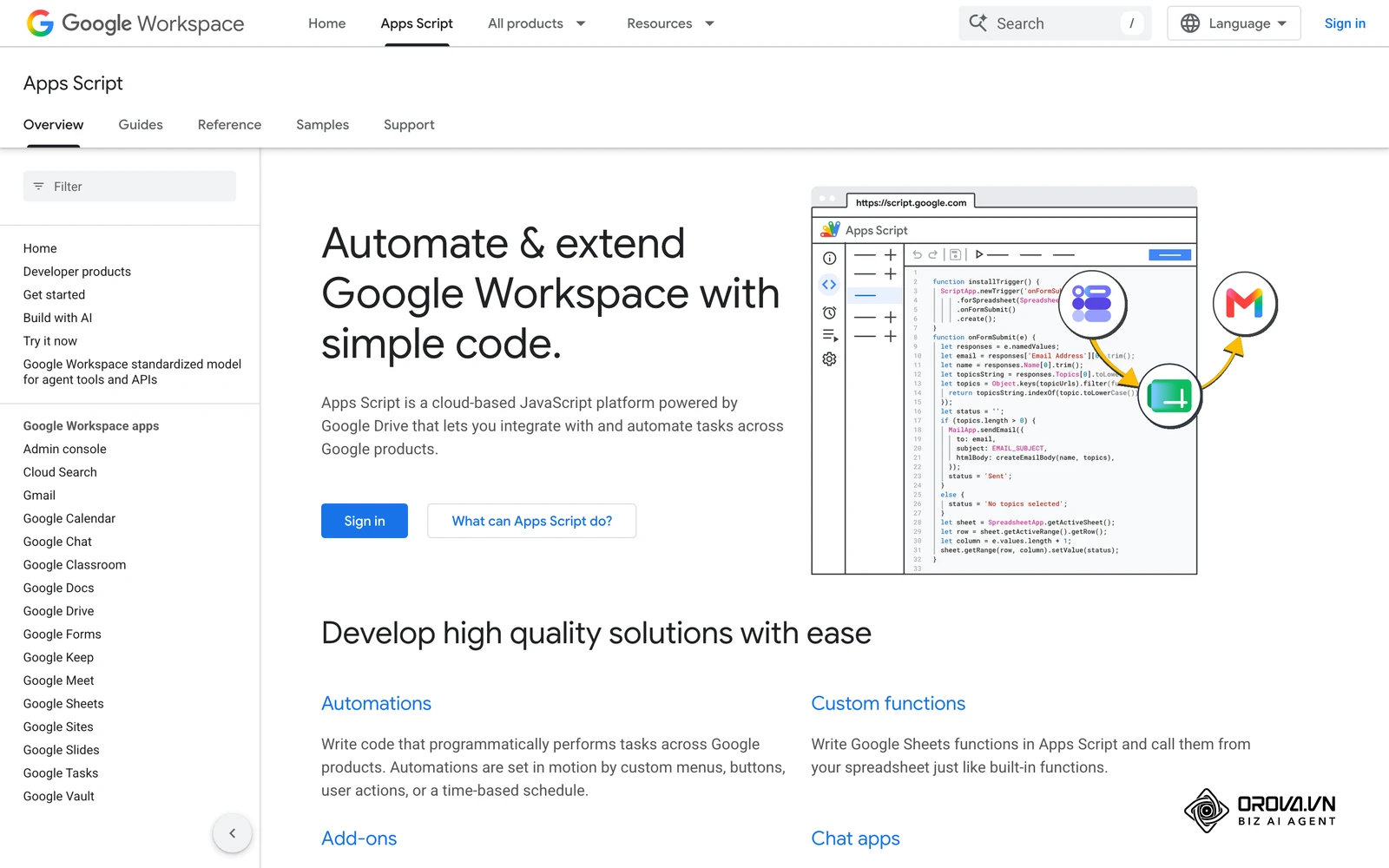
If you manage a large website, copying and pasting prompts into a web interface is not scalable. You need to automate the process. By connecting the OpenAI API directly to Google Sheets using Google Apps Script, you can process thousands of rows of data automatically.
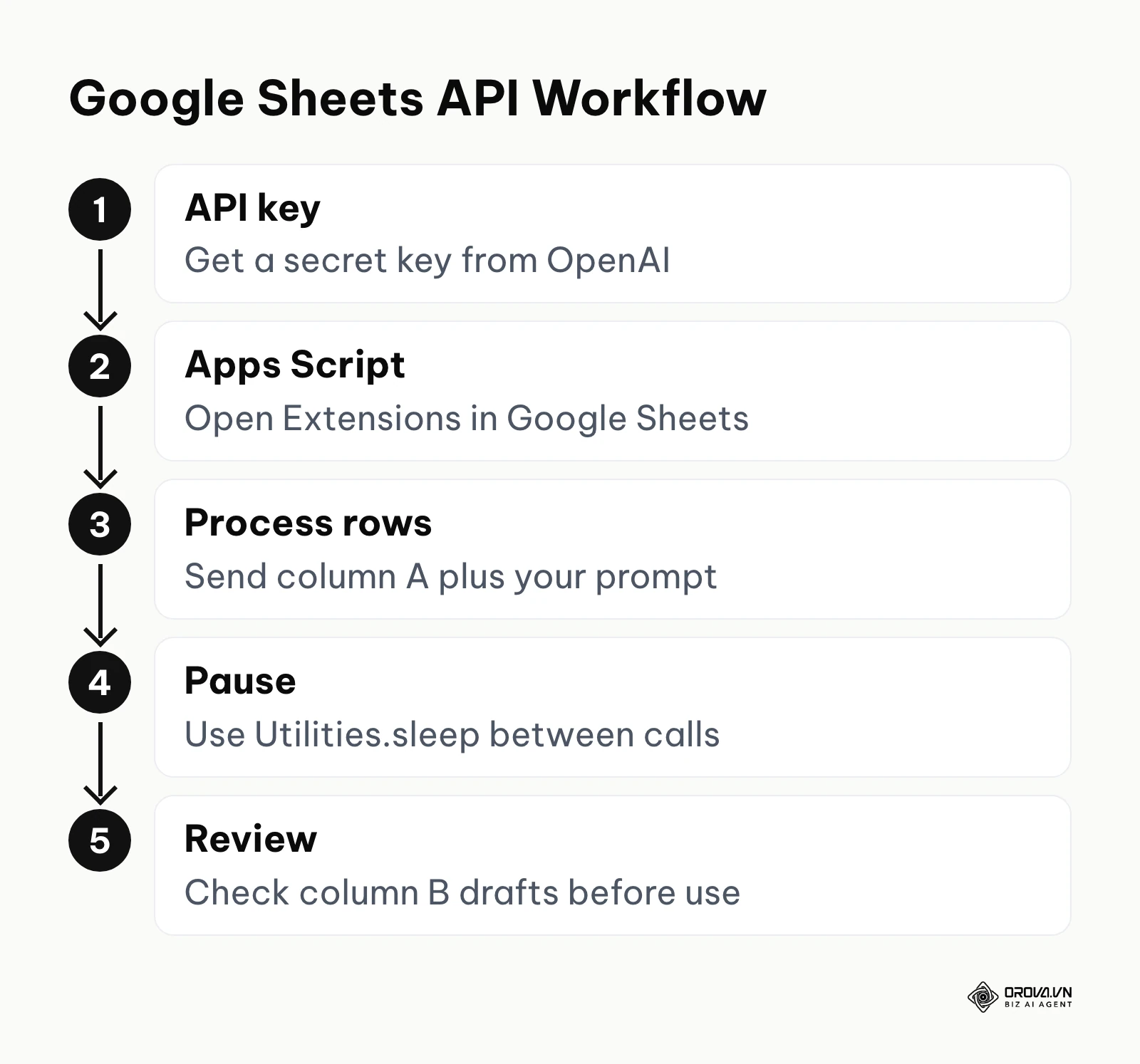
This workflow is transformative for tasks like bulk translating keywords, drafting hundreds of meta descriptions, or categorizing large lists of URLs based on their slugs. Treat column B as a draft column: review and edit it before anything is published.
To set this up, you need a basic understanding of scripting. First, you obtain a secret API key from your OpenAI developer dashboard. Next, you open a Google Sheet, navigate to Extensions, and select Apps Script. You write a custom function that reads the data in column A, sends it to the API along with your specific prompt instructions, and writes the AI's response into column B.
You must include error handling in your script to manage API rate limits. If you send too many requests at once, the API will reject them. A simple Utilities.sleep() command in your loop ensures the script pauses briefly between requests, allowing it to process large datasets smoothly.
Answer Engine Optimization (AEO) Strategies
As search behavior shifts, traditional optimization is no longer enough. You must understand ChatGPT SEO optimization, which falls under the broader category of Answer Engine Optimization (AEO). Answer engines, like AI chatbots, do not provide a list of blue links; they synthesize information to provide a single, direct answer.
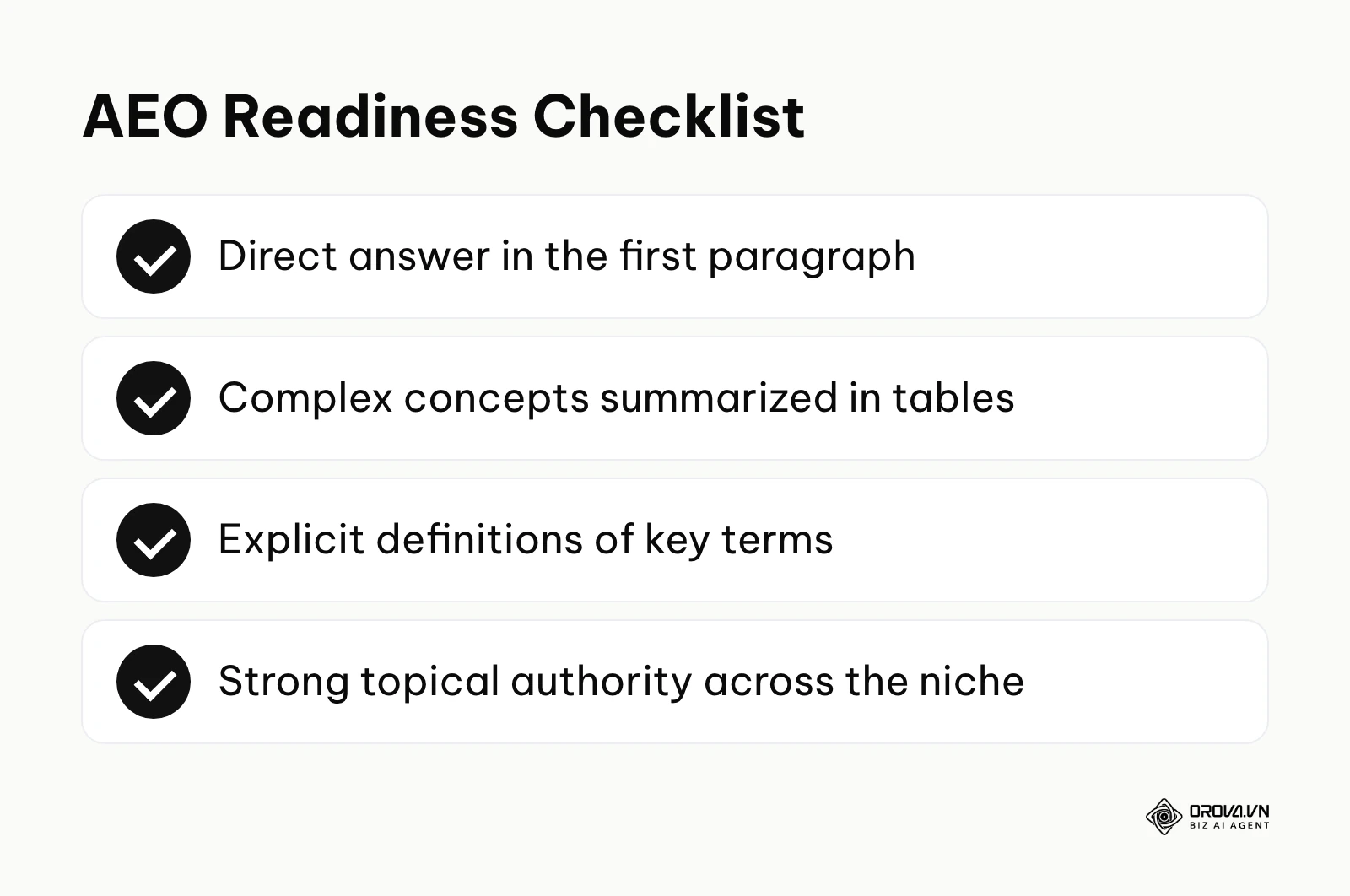
To ensure these AI models cite your website as a primary source, your content must be structured flawlessly. Answer engines prioritize clarity, factual density, and easily extractable data. They look for explicit definitions, well-formatted tables, and strong topical authority.
The diagram below summarizes the Answer Engine Optimization readiness checklist.
If you write a 500-word introduction before answering the main question of the article, an AI crawler will likely abandon your page. You must practice the "Bottom Line Up Front" (BLUF) methodology. Answer the core question directly in the very first paragraph, and use the rest of the article to provide deep context, statistics, and edge cases.
This approach is critical for unifying SEO, AEO, and GEO to ensure your brand remains visible across all new search surfaces.
Case Study: Optimizing Legacy Content with AI
To truly grasp the power of these workflows, we must look at practical application. Updating old, decaying content is often much faster and more effective than writing entirely new articles.
Illustrative example: An enterprise software blog noticed its legacy articles were losing traffic to newer, AI-generated competitor pages. The SEO lead exported performance data, used AI to analyze the semantic gaps between their old posts and the top-ranking competitors, and rewrote the headers to directly answer emerging user questions. At first, the AI hallucinated technical features, requiring the lead to strictly ground the prompt in their own product documentation. The updated pages regained their rankings within 30 days, showing a sustained recovery in organic sessions.
When executing these workflows, choosing the right underlying model is crucial. Different tasks require different levels of reasoning and speed.
| Model Type | Key Characteristic | Best Suited For |
|---|---|---|
| Fast general-purpose model | Quick, low-effort responses | Meta tag drafts and simple rewrites |
| Reasoning model | Works through problems step by step | Schema markup, regex and data analysis |
| Long-context model | Reads long documents in one pass | Content audits and long-form outlines |
Model names and line-ups change often, so check which options your ChatGPT plan currently offers rather than relying on a fixed list.
How to Adapt and Build AI SEO Systems
Adapting to AI SEO requires shifting your team's mindset from manual execution to strategic oversight and editorial review. Different organizational sizes must approach this transition with tailored strategies. You cannot simply hand out software licenses and expect productivity to soar. You must build systems and guidelines.
Small Business Owners
For small business owners, the goal is maximum leverage with minimal technical overhead. You do not have the time to learn complex API scripting.
- Start by building a personal library of 3-5 reliable mega-prompts tailored to your specific niche.
- Focus on using AI to generate comprehensive content outlines rather than final drafts, ensuring your unique voice remains intact.
- Dedicate one hour per week to updating old, underperforming pages using AI to identify missing semantic keywords.
- Always manually review and fact-check every piece of output before publishing it to your live website.
In-house SEO Teams
In-house teams must focus on scaling operations and maintaining strict brand consistency across multiple departments.
- Standardize all prompts across the marketing department to ensure everyone generates content with the same brand voice.
- Implement API integrations with Google Sheets to automate repetitive tasks like meta description generation and bulk keyword categorization.
- Shift the role of junior writers to AI editors, training them to heavily edit and refine generated text rather than starting from scratch.
- Establish a strict governance policy regarding data privacy, ensuring no confidential company data is pasted into public AI models.
Agency Owners and Freelancers
Agencies need to increase their output capacity while maintaining high-quality standards to retain demanding clients.
- Productize your AI workflows into specific service offerings, such as "Semantic Content Audits" or "Bulk Schema Implementation."
- Train your account managers to clearly communicate to clients how AI is used to enhance strategy, not just to cut corners.
- Build proprietary internal tools using APIs to rapidly analyze competitor gaps and generate initial campaign strategies.
Illustrative example: A boutique marketing agency wanted to scale their content offering without hiring more writers immediately. The agency owner created standard operating procedures centered around structured AI prompts for first drafts. Early on, writers felt replaced and morale dropped, so the owner shifted the focus, training them to act as editors and fact-checkers who control the AI output. The agency successfully doubled their monthly output while the writers reported feeling less burnout from staring at blank pages.
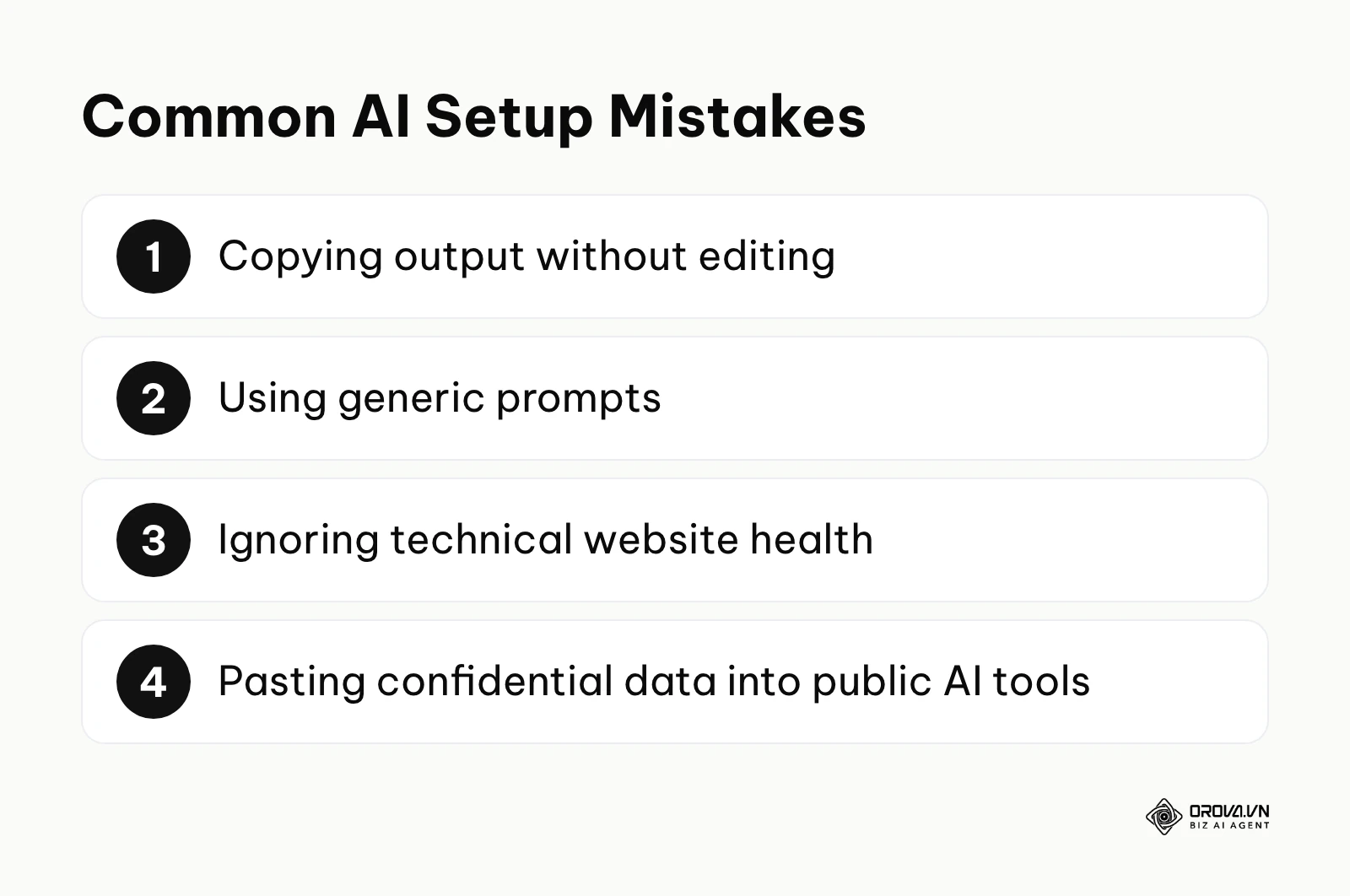
The diagram below summarizes common AI setup mistakes to avoid.
| Common Mistake | Negative Consequence | How to Avoid It |
|---|---|---|
| Copying without editing | Losing brand voice and trust | Implement a mandatory human review step |
| Using generic prompts | Producing shallow content | Build a library of detailed mega-prompts |
| Ignoring website health | Great content fails to rank | Run regular technical site audits |
With OROVA.VN and the OROVA SEO module, you put an end to the exhausting days of manual work for good. Instead of struggling for hours to write articles and compile reports, the entire process is now optimized and completed in just 5 minutes.
Future Trends of Search Automation: An Author's Perspective
The future of search automation points toward a complete integration of conversational AI interfaces with traditional web crawling. As of 2026, the landscape is rapidly shifting away from static blue links. Based on current technological trajectories, I believe we are entering a phase where the mechanics of optimization will change fundamentally.
I believe that AI automation is the new standard, rapidly replacing repetitive consulting tasks.
The Shift from Traditional Search to Conversational Answers
I see signs of a clear migration in user behavior. People no longer want to click through five different websites to find a simple answer. They want a synthesized, conversational response immediately. I believe that in the next two to three years, traditional search volume for informational queries will drop significantly. Marketers need to prepare by optimizing for citations within AI chat interfaces, rather than just fighting for the top organic spot on a traditional results page. However, this shift could be slower if users find AI answers too unreliable for critical financial or medical decisions.
The Rise of Autonomous AI-Agent Crawlers
Today, we optimize for Googlebot. I predict that soon, we will need to optimize for thousands of distinct, autonomous AI-agent crawlers. These agents will be deployed by users to research specific topics, compare prices, or summarize news. To prepare for this, your website architecture must be incredibly clean. Your data must be structured perfectly using JSON-LD, and your API endpoints should ideally be exposed to allow agents to pull data directly without rendering complex HTML.
Quality Threshold Moves from Grammar to Original Data
I strongly suspect that as AI makes grammatically perfect writing a free commodity, the baseline for "quality" will shift entirely to original data and unique insights. Simply summarizing what is already on the internet will yield zero organic traffic. I advise content creators to start investing heavily in proprietary research, running their own surveys, and publishing unique datasets. If an AI cannot easily guess your conclusion, that is the exact content you should be publishing.
Frequently Asked Questions about ChatGPT for SEO
Understanding the nuances of AI in digital marketing often raises complex questions about quality, penalties, and technical setup. Below are the most common inquiries regarding this technological shift.
Do we still need human SEO experts when we have AI?
Yes, absolutely. AI is a powerful execution engine, but it completely lacks strategic business context. It does not know your profit margins, your brand's historical tone, or the nuanced political dynamics of your industry. AI handles the heavy lifting of data processing and drafting, but human experts are essential for setting the strategic direction, verifying factual accuracy, and ensuring the final output resonates with real human emotions.
How to prevent ChatGPT from hallucinating data?
Hallucinations occur when the model confidently invents facts to satisfy a prompt. To prevent this, you must heavily restrict the model's freedom. Always provide the exact source material in your prompt and instruct the AI: "Only use the information provided in the text below. If the answer is not in the text, explicitly state 'I do not know'."
According to OpenAI in the GPT-4 Technical Report (2023), its models can still hallucinate facts and make reasoning errors, which is why human oversight remains critical for technical data.
Will Google penalize purely AI-generated content?
Google's official stance is that they reward high-quality content however it is produced. They do not penalize content simply because it was generated by AI. However, they aggressively penalize "spammy automatically generated content" that is published purely to manipulate rankings without adding value. If your AI content is helpful, original, and rigorously edited, it will not be penalized. If you bulk-publish unedited AI output, your site will suffer. Our guide to AI-generated content covers where the line sits in more detail.
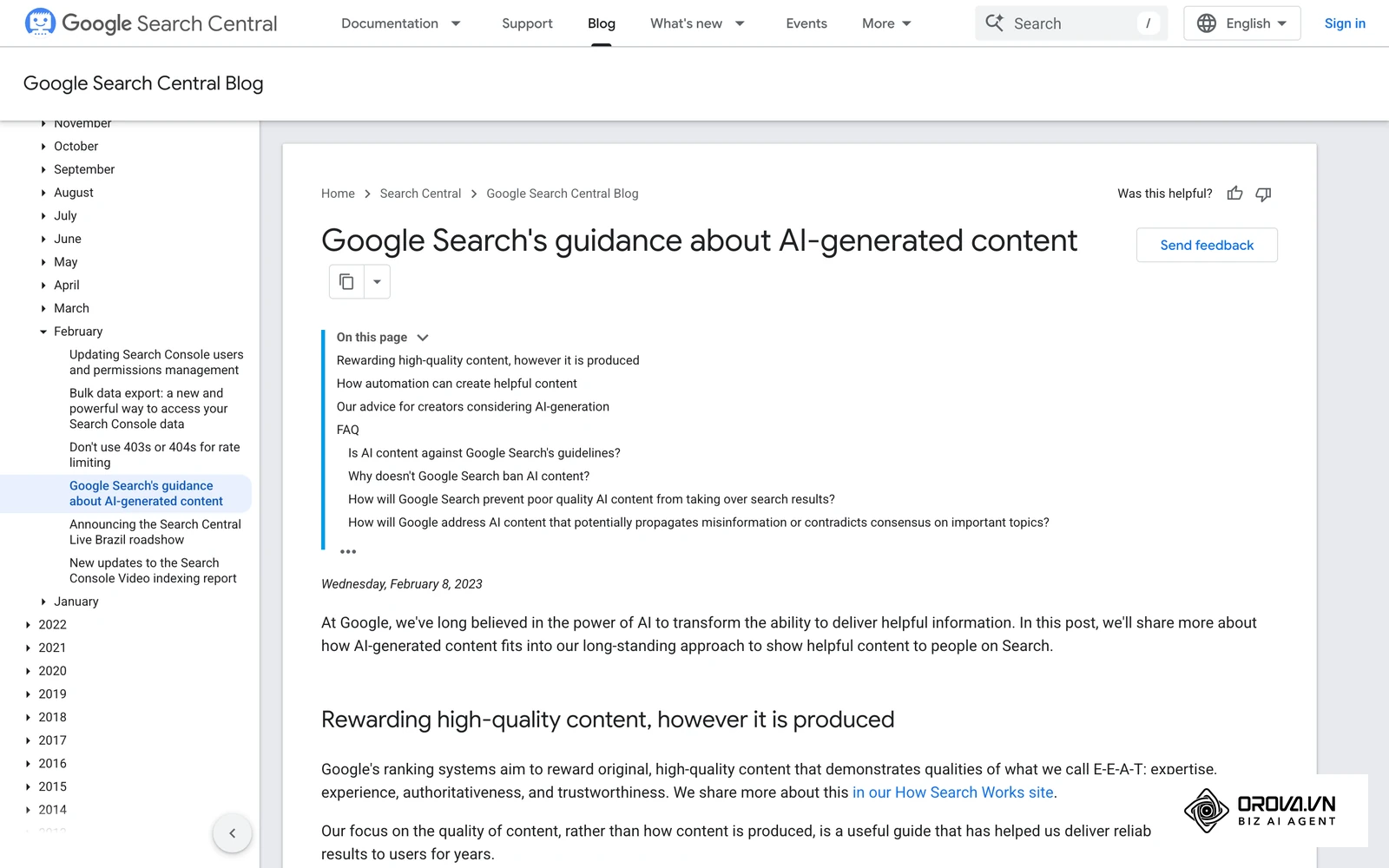
According to Google in its Search Central guidance about AI-generated content (2023), the focus is on the quality of content rather than how it is produced, and it points creators to the principles of experience, expertise, authoritativeness, and trustworthiness.
Which model is best for technical SEO tasks?
For complex technical tasks like writing intricate JSON-LD schema, generating regular expressions, or analyzing large datasets, models with advanced reasoning capabilities are superior. Reasoning-focused models usually handle these tasks better than fast conversational models because they work through the problem before answering. Whichever model you use, always validate the code before deploying it.
How do I get my site cited in ChatGPT Search?
To get cited by AI search features, your content must be highly factual, clearly structured, and easily extractable. Use direct, definitive language in your opening paragraphs. Break complex concepts down into Markdown tables and bulleted lists. Ensure your site covers its niche comprehensively, since sources that answer a topic thoroughly are easier for AI search features to rely on.
Where to Start Your AI SEO Journey?
Starting your AI SEO journey requires accurately assessing your current technical maturity and applying targeted, high-impact fixes. You must address your specific operational bottlenecks first. Do not try to implement massive API automation if you have not yet mastered basic prompt engineering.
If you are starting from zero and have never used AI for marketing, your immediate first step is to completely stop writing first drafts manually. Spend your next working session building a single, highly detailed prompt that defines your target audience and brand voice. Use this prompt to generate your next content outline, and experience the speed difference firsthand.
If you have already experimented with AI but find your tools disconnected and chaotic, your first step is to centralize your operations. Move away from scattergun web interfaces and build a standardized prompt library in a shared company document. This ensures that every team member is generating content that meets the same baseline of quality and consistency.
If you are generating content at scale but failing to measure the results, your immediate action is to integrate your workflows with performance tracking. Connect your generated pages to Google Search Console and monitor the exact impression growth over a 30-day period. By building these workflows step by step and keeping a human review in every one of them, you will get lasting value from chatgpt for seo.
About the author

Builder of Orova
Nguyễn Đỗ Trọng Ân has 8 years of experience in marketing, including 6 years managing market development across Asia. He builds Orova, a Biz AI Agent that never sleeps: it plans, runs and optimizes work for businesses.
Run your business with AI Agents
Orova is the always-on Biz AI Agent — it plans, runs, and optimizes the work for you.
Save time, unlock productivity.