
What is entity SEO? A practical guide to semantic search

Entity SEO is the practice of helping search engines understand the people, places, organizations, and concepts on your site as distinct, connected things rather than loose strings of words. You have likely spent countless hours perfectly placing target phrases in your title tags, meticulously crafting meta descriptions, and aggressively building backlinks. Yet, despite these traditional efforts, your organic traffic has plateaued. The old way of targeting exact-match phrases feels increasingly ineffective because search engines no longer just read strings of text; they understand things. If you are still relying purely on keyword frequency, you are missing out on the fundamental shift in how information is processed today.
Many professionals are now searching for how to do entity seo to transform their content from scattered words into interconnected, authoritative concepts. Search algorithms are currently designed to map the world's information into massive knowledge graphs, connecting people, places, and ideas. By the end of this comprehensive guide, you will learn how to audit your current standing, implement advanced nested schema architectures, and build a semantic foundation that search engines can interpret clearly.
What is Entity SEO?
Entity SEO is the practice of optimizing your website to help search engines understand the people, places, concepts, and organizations mentioned in your content as distinct, interconnected objects rather than just text strings. It focuses on establishing clear relationships and building authority around specific concepts within a knowledge graph to improve semantic search visibility.
The origin of this approach can be traced back to 2012 when Google officially launched its Knowledge Graph. This marked a monumental shift from a purely lexical search engine—one that merely matches the words you type—to a semantic engine that attempts to understand the actual meaning behind a query. As machine learning evolved, algorithms became exceptionally proficient at identifying discrete concepts, paving the way for a new era of optimization.
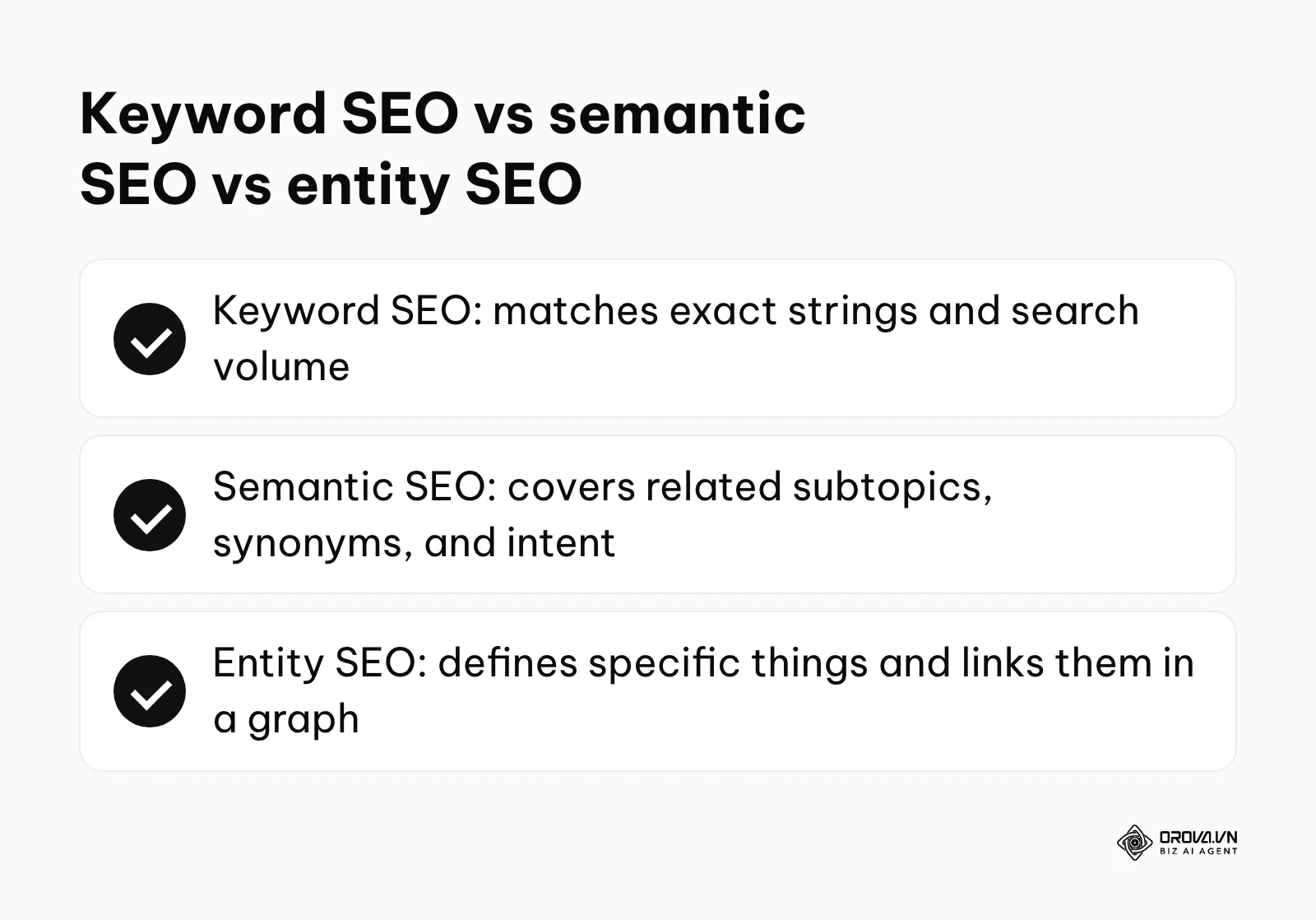
Despite its growing prominence, many practitioners still confuse this practice with older, more traditional optimization methods. The table below clarifies the core distinctions between semantic seo vs entity seo and older keyword strategies.
| Concept | How it differs | Example |
|---|---|---|
| Keyword SEO | Focuses purely on exact string matching and monthly search volume metrics. | Optimizing a page repeatedly for the exact phrase "best running shoes". |
| Semantic SEO | Broadens the scope to include related subtopics, synonyms, and overall search intent. | Grouping topics like "marathon training", "footwear", and "pronation" together. |
| Entity SEO | Focuses on disambiguating specific nodes, defining identities, and building knowledge graphs. | Linking the author "John Doe" to his published book via structured data. |
To understand this better, let's look at an everyday comparison. Imagine a traditional library catalog that only lets you search by the exact title of a book; this represents how traditional keyword matching works. Now, imagine a highly knowledgeable librarian who knows that a specific book was written by an author who also directed a movie, and who understands exactly how that movie relates to a specific historical event. This interconnected, multi-dimensional understanding is exactly how modern search engines treat data when you apply entity optimization correctly.
The Meaning and Purpose of Entities in Search
Entities exist to solve a massive, fundamental problem for search engines: ambiguity. Human language is incredibly ambiguous. The word "apple" could refer to a piece of fruit, a massive multinational technology company, or even a bank. For a search engine trying to provide the best possible answer to a user's query, this ambiguity is a significant technical roadblock. Entities resolve this problem by attaching a unique, machine-readable identifier to a concept, completely stripping away the confusion.
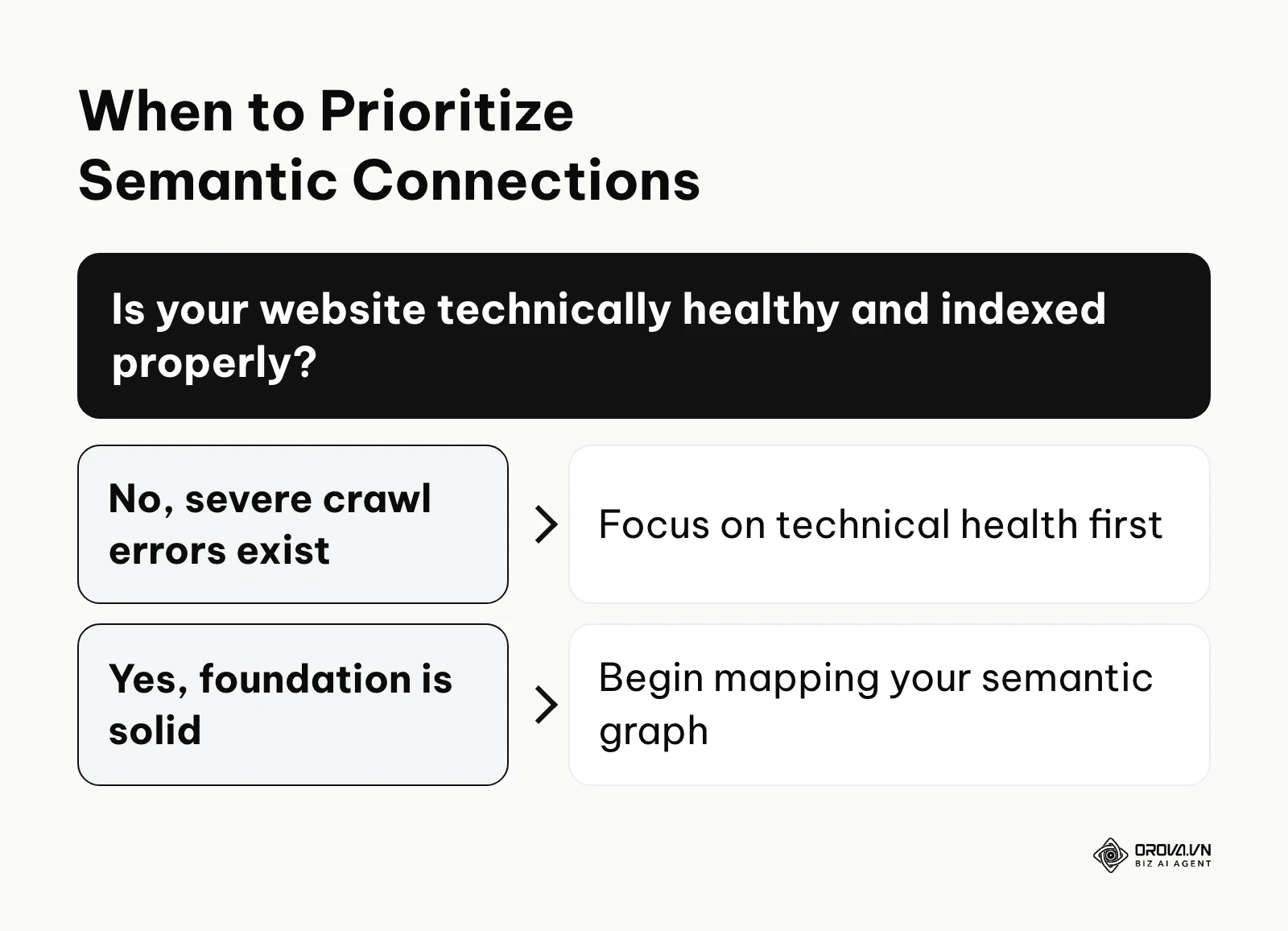
This advanced practice is primarily designed for brands, publishers, and e-commerce platforms that need to establish unwavering topical authority in highly competitive spaces. In the grand scheme of digital marketing architecture, building your semantic graph sits between foundational technical health and advanced content strategy, as one layer of a holistic SEO strategy. You must have a technically sound website first, ensuring crawlers can actually access and render your pages. Once that baseline is established, defining your entities acts as the architectural framework for your content.
Without this framework, your content remains a loosely connected pile of independent documents. Search engines have to work much harder to connect the dots on their own, and often, if the connections aren't explicitly clear, they simply won't bother trying. This leads to missed opportunities where your incredibly well-written article fails to rank because the search engine doesn't recognize your brand as an authority on that specific topic.
If you choose to ignore this shift and stick purely to traditional keyword research, you risk losing your competitive edge entirely. As AI search features and generative engines become standard, clear and consistent signals about who you are and what you cover make it easier for these systems to understand and cite your pages. A website that leaves its concepts vague gives them less to work with, which is why entity work overlaps heavily with generative engine optimization. The risk is losing visibility to competitors who have made their semantic relationships explicit and machine-readable.
When you do not need entity optimization yet: There are specific scenarios where investing heavily in this advanced approach is premature. First, if your website suffers from severe technical issues, such as broken indexing, massive duplicate content, or agonizingly slow server response times, fixing those foundational errors is far more urgent. Second, if you run a temporary event website that will only be live for a few weeks, building a long-term knowledge graph is a waste of resources. Finally, if your content is extremely thin, no amount of schema markup will save it. In these cases, focus on basic technical health first.
The Value and Benefits of Entity SEO
The transition to a semantic approach offers significant advantages that cascade down from broad business metrics to the daily tasks of an optimization professional. These benefits can be broadly categorized into two layers: the overarching business value and the practical benefits for the people executing the strategy.
Business Value: Risk Mitigation and ROI
For a business, the most critical value of this approach is risk mitigation against algorithmic volatility. Search engines constantly update their core algorithms, frequently causing massive traffic swings for sites relying on outdated tactics. When you build a strong, recognizable entity, you create a protective moat. A brand that search engines can identify clearly is less dependent on any single keyword tactic, which tends to make rankings steadier when updates roll out. It can also improve your eligibility for search features such as Knowledge Panels and rich results, which raise brand visibility.
Practitioner Benefits: Efficiency and Clarity
For the SEO practitioner, shifting focus away from agonizing over keyword density frees up immense amounts of time. Instead of building ten slightly different pages to target ten slight variations of a keyword, you can build one comprehensive page that thoroughly covers the core concept. This dramatically streamlines the content creation process. It also provides a much clearer roadmap for internal linking, as you map connections based on logical relationships rather than forced anchor text optimization.
Illustrative example: A mid-sized financial blog covering personal investment strategies struggled with volatile rankings during core algorithm updates. The lead SEO manager decided to shift their focus toward building semantic authority. First, they mapped their top 50 articles to specific financial concepts defined in Wikipedia. Second, they connected author bios to external credible sources using SameAs schema. Third, they rewrote their broad category pages to act as comprehensive hubs for these concepts. They initially stumbled by creating duplicate organization schema on every single post, which caused parsing errors, but they quickly fixed it by centralizing the organization schema on the homepage and referencing it via ID on all other pages. As a result, the site saw a stabilized presence in search engine results pages, with featured snippets consistently appearing for core definitions, significantly reducing the impact of subsequent core updates.
By looking at entity seo examples like the one above, it becomes clear that this methodology is not just theoretical; it drives measurable, long-term stability.
| Benefit | Measured By | Time to See Results |
|---|---|---|
| Reduced Volatility | Fluctuation in Google Search Console impressions during updates | Gradual, compare across several updates |
| Increased Rich Results | Appearance of Knowledge Panels and rich results | Once structured data is crawled and validated |
| Content Efficiency | Number of keywords ranking per single published URL | Over several months of consistent publishing |
Discover Orova.vn – a Biz AI Agent platform with OROVA SEO, a complete solution for every website. The system supports search engine optimization from A to Z with features including keyword research, writing new SEO-ready articles, optimizing existing content, rank tracking, plus competitor analysis and in-depth technical analysis. Sign up today to experience OROVA SEO completely free (offer valid through July 7, 2027).
How Entity SEO Works: The Technical Blueprint
Understanding the theory is only the first step. The true power of this strategy lies in its technical execution. This section breaks down the exact mechanics of how to transform your website from a collection of text documents into a machine-readable knowledge graph.
Step 1: The Entity Audit Process Using NLP
Before you can optimize, you need to understand exactly how search engines currently view your content. This requires stepping away from traditional keyword tools and utilizing Natural Language Processing (NLP) technologies. An NLP audit reveals the underlying concepts a machine extracts from your text, along with their assigned importance (salience score).
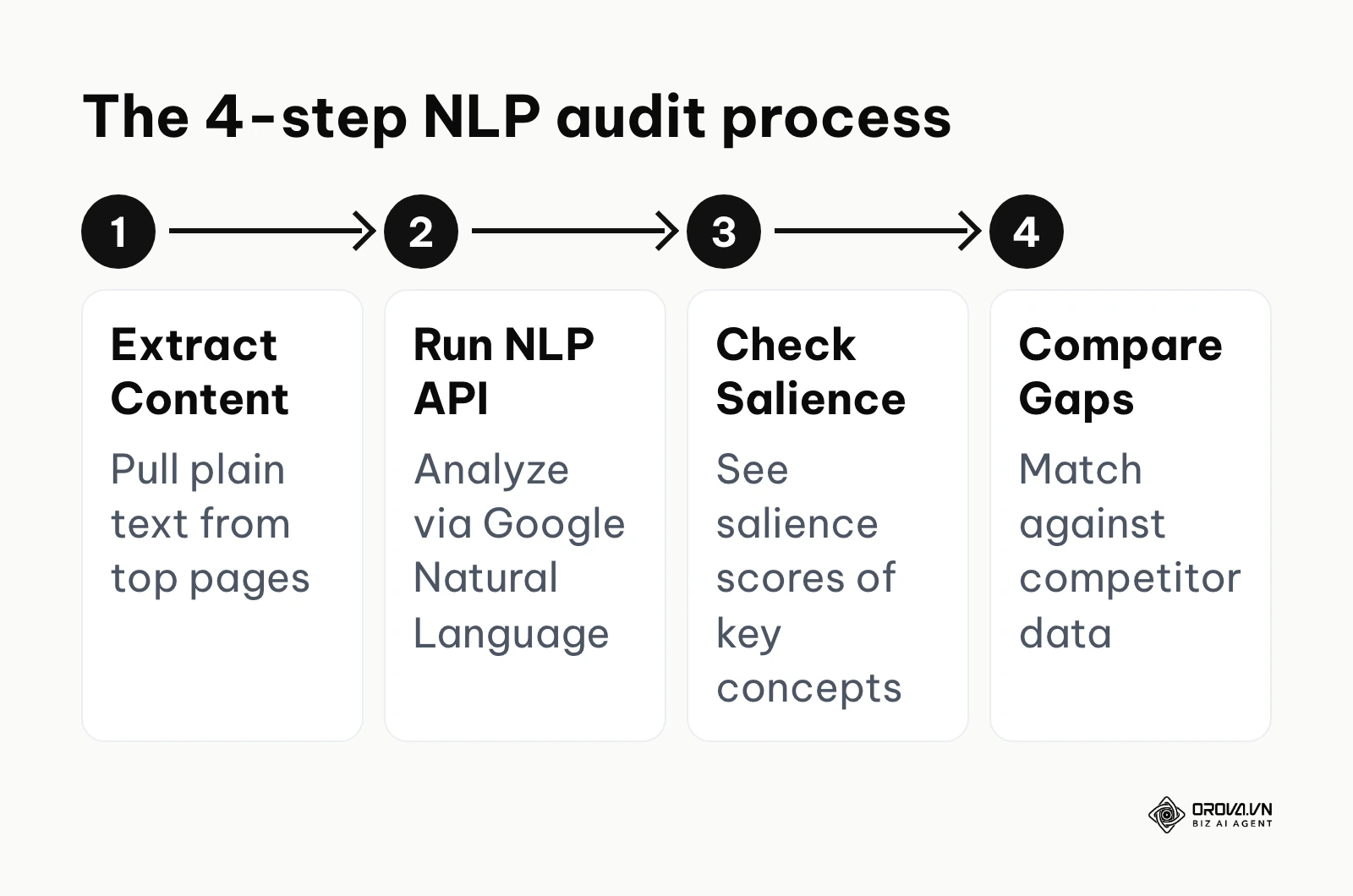
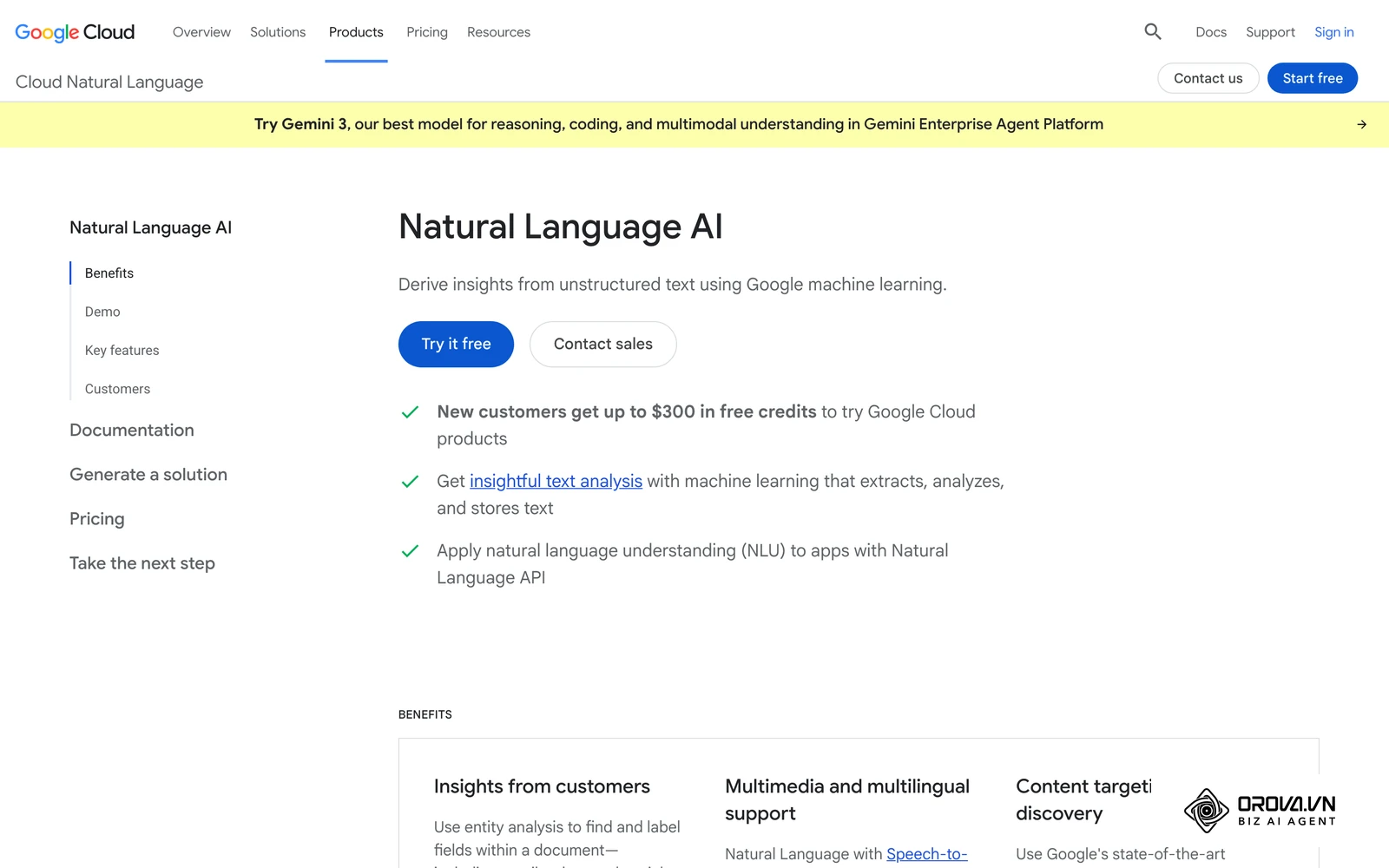
The process begins by extracting the plain text from your most important landing pages. You then process this text through an API, such as the Google Cloud Natural Language API. The output will not be a list of keywords, but rather a list of recognized entities categorized by type (Person, Organization, Location, Concept). Pay close attention to the salience score, which ranges from 0.0 to 1.0; this score indicates how important the algorithm believes that specific concept is to the overall text. Finally, you compare your page's top concepts against the concepts extracted from the top-ranking competitors for your target topic. If a competitor has a high salience score for a critical concept that your page completely lacks, you have found a semantic content gap.
For a deeper dive into evaluating your site's overall health before conducting an NLP audit, refer to this comprehensive SEO audit guide.
Step 2: Structuring Content With Semantic HTML5
While schema markup gets most of the attention, foundational semantic HTML5 plays a crucial role in how machines parse your document's outline. Using the correct HTML tags provides immediate context about the hierarchy and purpose of your content blocks, acting as a secondary layer of structural data.
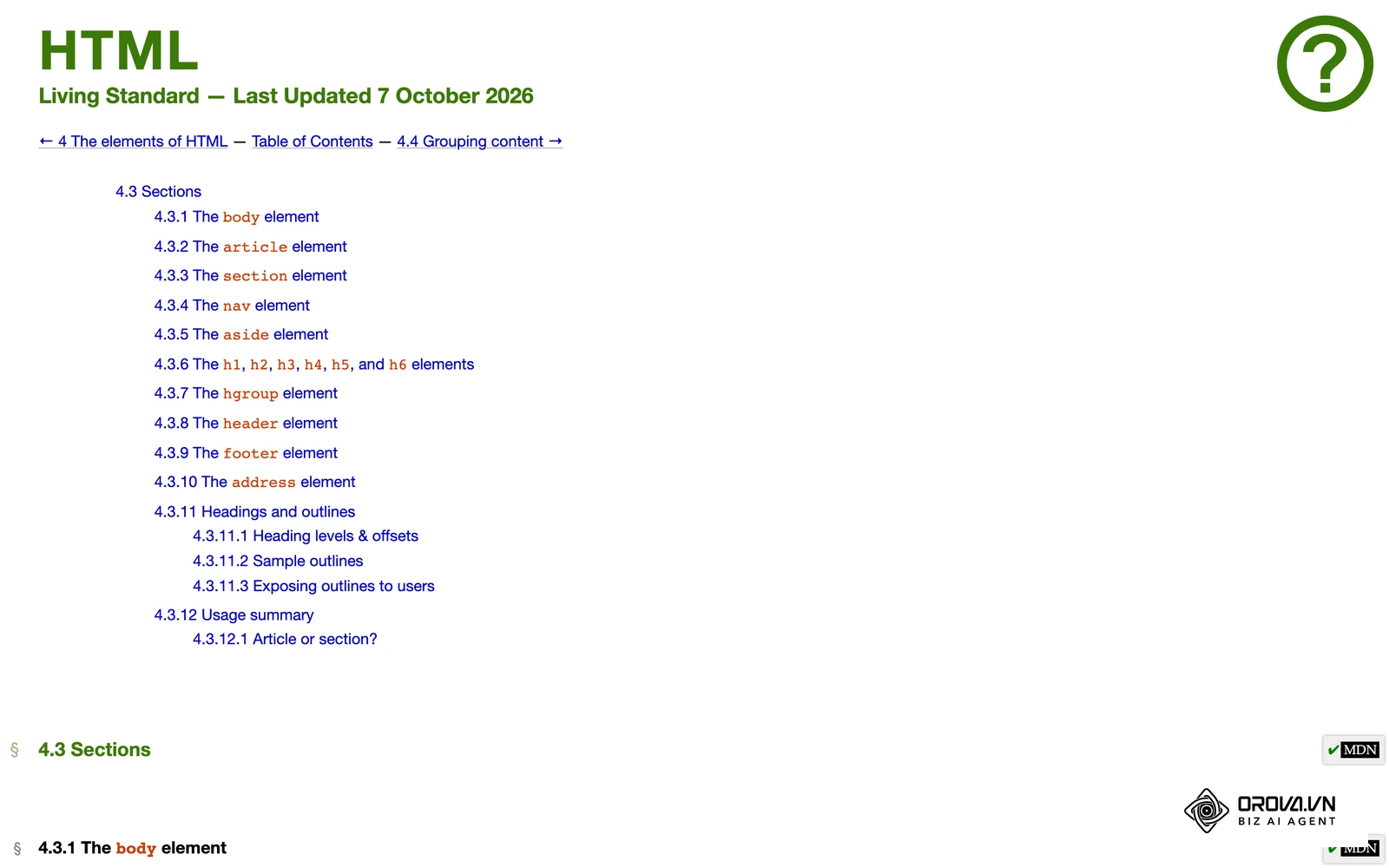
According to the W3C in "HTML5 Specification" (2014), semantic elements like <article> and <aside> carry intrinsic meaning that assists machines in parsing document outlines. Instead of wrapping everything in generic <div> tags, you should construct your pages deliberately. Use the <article> tag to enclose the primary, self-contained content of the page. Use <section> tags to group related thematic blocks within that article. Crucially, use <aside> for tangential information, author bios, or related links. This explicit structure helps the search engine understand that the text within the <article> tag is the core topic, while the text in the <aside> is supplementary. When you combine rigorous HTML5 structure with strong content, your on page SEO efforts become significantly more resilient.
Step 3: Implementing Advanced Nested Schema Markup
Basic schema markup often involves slapping a generic Organization script on the homepage and calling it a day. However, to truly build a knowledge graph, you must implement nested schema. Nesting involves linking multiple structured data objects together to form a cohesive, unbroken chain of relationships.
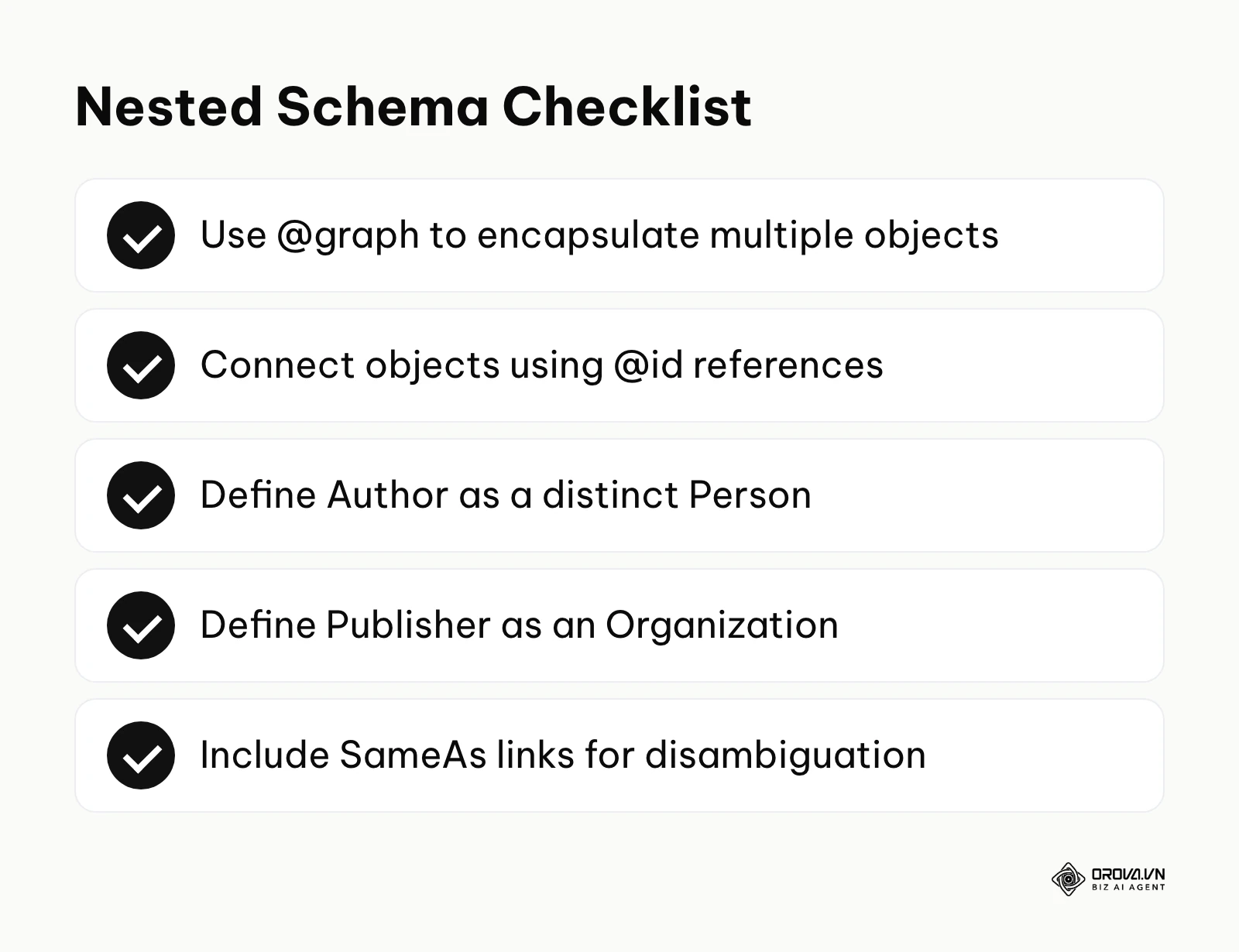
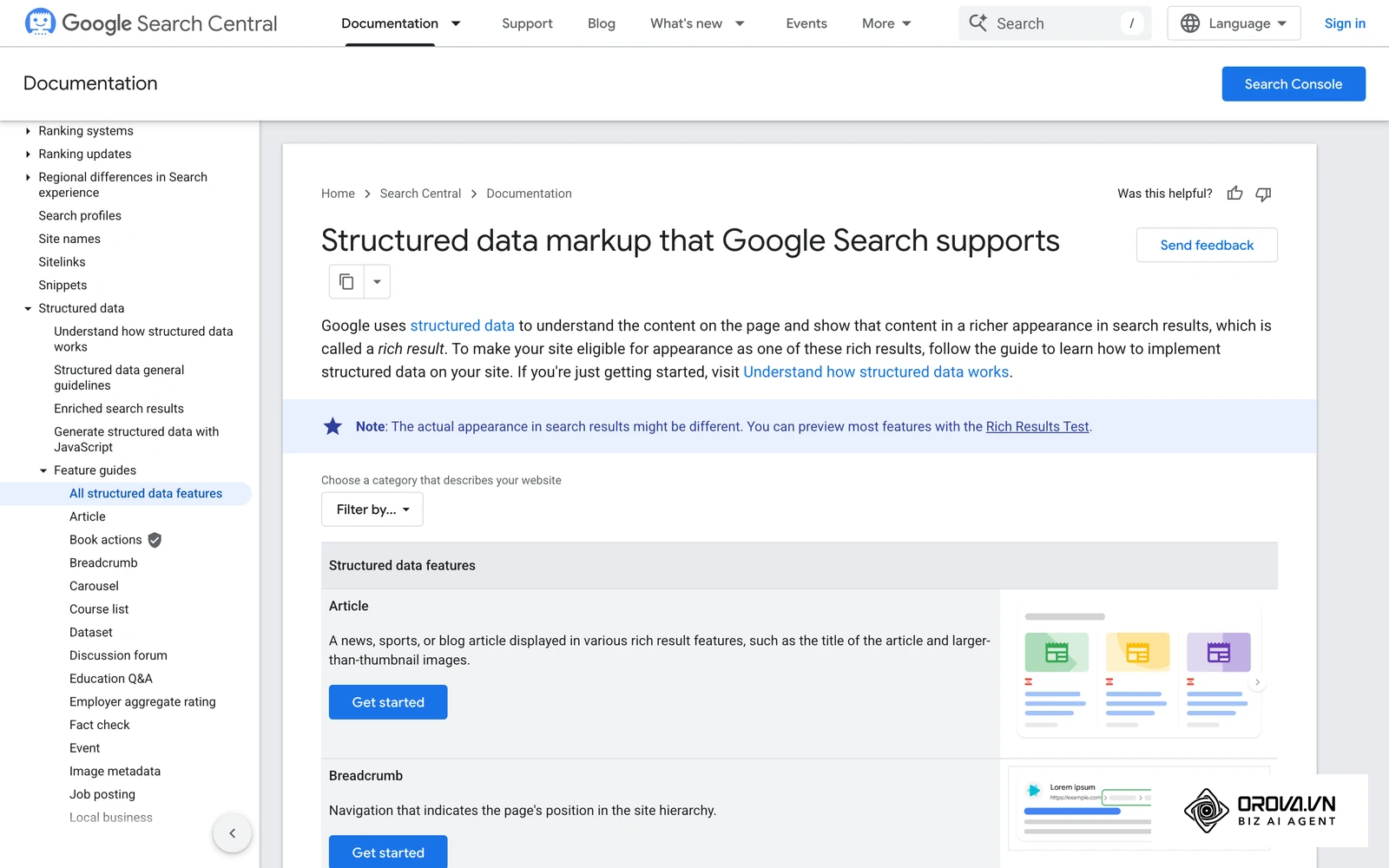
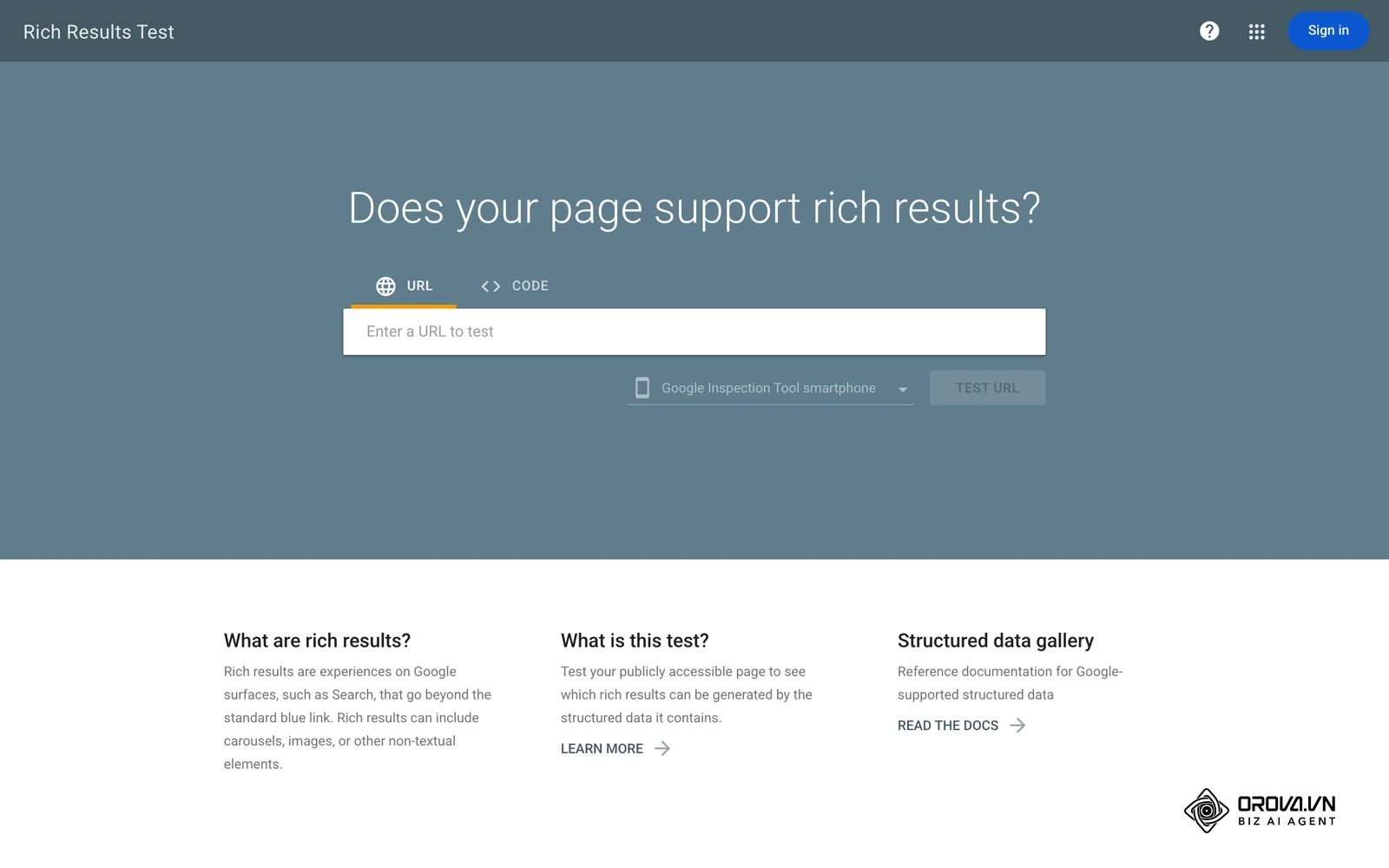
Google's structured data documentation recommends JSON-LD as the format for most sites, and it is also the easiest format for linking objects together. A common failure in schema implementation is creating isolated nodes. For example, a page might have an Article schema, a Person schema (for the author), and an Organization schema (for the publisher), but they are completely disconnected. Search engines view these as three separate, unrelated facts.
To fix this, you must nest them using @id references within a @graph array. The Article schema should explicitly state that its author property points to the @id of the Person schema, and its publisher property points to the @id of the Organization schema. This creates a unified block of data asserting that "This specific person, who works for this specific organization, wrote this specific article."
Here is a simplified example of how this nested structure looks in JSON-LD:
{
  "@context": "https://schema.org",
  "@graph": [
    {
      "@type": "Article",
      "@id": "https://example.com/blog/concept-guide/#article",
      "headline": "The Ultimate Guide to Semantic Architecture",
      "author": {
        "@id": "https://example.com/#author"
      },
      "publisher": {
        "@id": "https://example.com/#organization"
      }
    },
    {
      "@type": "Person",
      "@id": "https://example.com/#author",
      "name": "Jane Doe",
      "jobTitle": "Lead Strategist",
      "sameAs": [
        "https://linkedin.com/in/janedoe"
      ]
    },
    {
      "@type": "Organization",
      "@id": "https://example.com/#organization",
      "name": "Example Corp",
      "url": "https://example.com"
    }
  ]
}
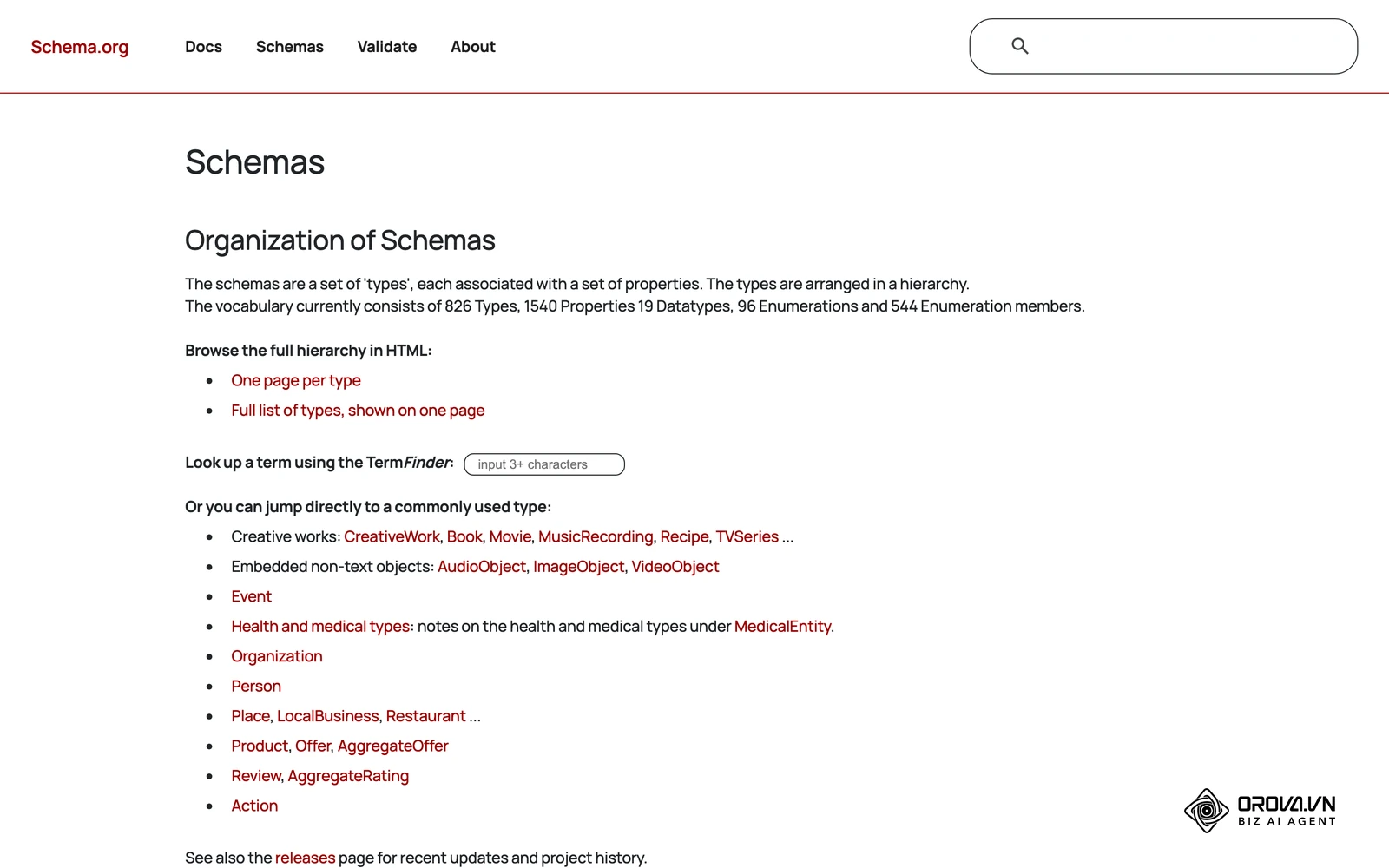
The Schema.org Organization type also offers properties such as founder, alumni, and sameAs, which let you describe a company precisely and separate it from others with a similar name. Implementing this level of detail requires precision; a single misplaced comma will break the entire JSON-LD block.
Step 4: Building Entity Relationships Through Internal Linking
Internal linking is often treated as a way to pass PageRank or manipulate exact-match anchor text. In a semantic framework, internal linking is the mechanism by which you connect related concepts to form a topical cluster.
Instead of linking arbitrarily, you should design a hub-and-spoke model based on entities. Create a comprehensive hub page, often called a pillar page, that serves as the definitive guide for a broad concept. Then, create specific spoke pages that dive deep into the sub-entities related to that broad concept. Every spoke page must link back to the central hub, and the hub should link out to all spokes. This explicit internal linking architecture forcefully demonstrates to search engines exactly how these topics relate to each other within your domain's specific knowledge graph. This architecture is also how you build topical authority around a subject.
Illustrative example: An enterprise e-commerce platform with thousands of product SKUs noticed their category pages were losing impression share to niche competitors. The in-house technical SEO team conducted a deep semantic audit using the Google NLP API. First, they extracted the top concepts Google recognized from their category descriptions. Second, they compared these extracted terms to the top-ranking competitors' data graphs. Third, they updated their product copy to explicitly mention the missing attributes and contextual relationships. They hit a roadblock when the API returned generic terms instead of product-specific concepts, but resolved it by providing more surrounding technical context in the text payload sent for analysis. The visible outcome was a broader range of long-tail queries triggering their category pages, visibly expanding their overall footprint in their performance reports.
| Types of Entities | Characteristics | Best Suited For |
|---|---|---|
| Named Entities | Specific people, places, or organizations (e.g., "Elon Musk", "Paris"). | Brands establishing PR presence and local businesses. |
| Concept Entities | Broad ideas, disciplines, or abstract topics (e.g., "Machine Learning"). | Educational blogs and comprehensive media publishers. |
| Product Entities | Specific items, SKUs, or recognizable models (e.g., "iPhone 15 Pro"). | E-commerce stores managing massive digital catalogs. |
How to Start and Adapt to Entity Optimization
Transitioning to a semantic approach requires different tactics depending on your role and resources. Whether you are running a small local shop or managing an enterprise architecture, there are specific, actionable steps you can take to adapt.
For Small Business Owners
As a small business owner, your primary goal is to establish your local and brand identity definitively. The search engine needs to know exactly who you are, where you are located, and what you sell.
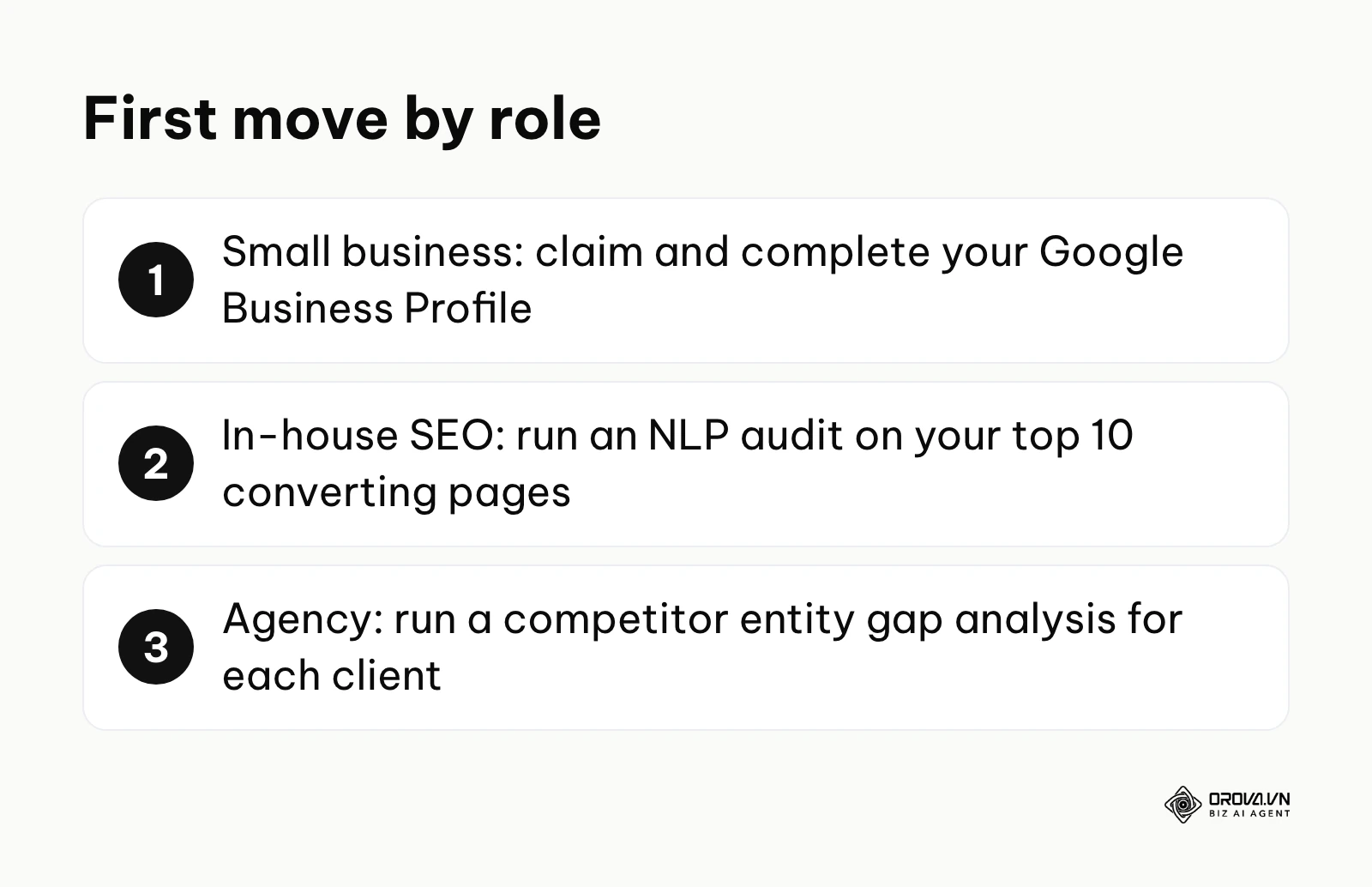
- Claim and comprehensively fill out your Google Business Profile, ensuring every category perfectly matches your services. This is something you can do today.
- Ensure your Name, Address, and Phone number (NAP) are strictly consistent across all local directories.
- Add a basic LocalBusiness schema to your homepage, explicitly detailing your opening hours and physical coordinates.
For In-House SEO Managers
If you manage optimization for a larger company, your focus should shift toward content architecture and technical scaling. You have the resources to build comprehensive topical maps.
- Conduct an NLP audit on your top 10 highest-converting pages to identify critical semantic gaps. You can start this within the week.
- Consolidate your fragmented author and organization schemas into a single, global nested JSON-LD structure using @id references.
- Map out your internal linking structure to ensure all related sub-topics point clearly back to their respective main hub pages.
- Establish a strict editorial guideline that requires writers to define core concepts clearly in the first paragraph of every new article.
For Agency Freelancers
Agencies and freelancers need to demonstrate rapid value while building long-term defensive moats for their clients. Your approach should be highly analytical and comparative.
- Run a competitor entity gap analysis to show clients exactly which concepts their rivals own that they do not. This is a highly persuasive deliverable.
- Implement robust SameAs schema properties to connect your client's website to their verified social media profiles and Wikipedia pages (if applicable).
- Transition client reporting away from singular keyword tracking toward broad topical cluster visibility and overall impression growth.
Illustrative example: A boutique marketing agency managing a local law firm's digital presence needed to establish regional authority quickly. The agency founder implemented a strict semantic framework. First, they claimed and exhaustively verified the firm's Google Business Profile. Second, they embedded a nested schema on the homepage linking the firm's physical address, the lead attorney's profile, and their specific legal services. Third, they secured mentions on highly relevant local government directories. They struggled initially when a prominent third-party directory listed a slightly different suite number, breaking the connection, but fixed it by manually contacting the directory webmaster to align the exact business address perfectly. The result was the law firm's consistent appearance in the local 3-pack for their primary practice areas, dominating the local search map above older, more established competitors.
| Common Mistake | Consequence | How to Avoid |
|---|---|---|
| Creating isolated schema | Search engines fail to connect the author to the publisher. | Always use @graph and @id to nest your schema elements. |
| Ignoring HTML5 tags | The document outline remains flat and hard for machines to parse. | Use <article>, <section>, and <aside> appropriately. |
| Inconsistent brand naming | The knowledge graph fractures into multiple weak, confused profiles. | Enforce strict naming conventions across all platforms and PR. |
With OROVA.VN and the OROVA SEO module, you put an end to the exhausting days of manual work for good. Instead of struggling for hours to write articles and compile reports, the entire process is now optimized and completed in just 5 minutes.
Entity SEO Trends in the Next Few Years: Author's Perspective
As search algorithms continue to evolve at an unprecedented pace, the way we optimize for concepts will inevitably shift. Based on what I see today, I expect three trends reshaping the landscape over the next few years.
The Shift From Text Parsing to Multi-Modal Recognition
Currently, search engines primarily extract semantic meaning from text and structured data. However, multi-modal AI models are advancing quickly. I think search systems are likely to lean more on images, video, and audio to confirm what a site claims to be. If your text claims you are an expert architect, but the images on your site are generic stock photos rather than original project photography, that mismatch could weaken the picture search engines form of you. You need to start ensuring that every piece of media on your site uniquely identifies and reinforces your brand's core concepts.
Personal Knowledge Graphs Dominating AI Search
Right now, optimization focuses on a global knowledge graph—trying to prove to Google that your brand is the definitive answer for everyone. I believe generative AI search may move toward more personalized answers. The AI could synthesize answers based not just on global authority, but on how a specific user's personal data history intersects with your brand's data. If a user frequently interacts with sustainability concepts, the AI may favor brands that have explicitly structured their data around sustainable practices. To prepare, you must ensure your schema markup is incredibly granular, detailing every specific attribute of your products or services so the AI can find the perfect personalized match.
The Decline of Unstructured Content Publishing
The barrier to entry for content creation has dropped to zero due to AI writing tools. Consequently, the internet is flooded with generic, unstructured text. My view is that search engines will give less weight to sites that publish large volumes of content without a clear, machine-readable structure. Simply publishing articles may not be enough; showing how those articles relate, through internal links and connected schema, will matter more. Sites that put off structuring their data risk becoming harder to surface in AI-driven retrieval systems.
Frequently Asked Questions About Entity SEO
As this methodology becomes standard practice, several common questions arise regarding implementation and long-term viability.
Is Entity SEO still needed with AI?
Yes, arguably more than before. AI answer engines (like ChatGPT or Google's AI Overviews) combine retrieved web pages with what their underlying systems already know about people, brands, and topics. If your brand or content is not clearly defined and consistently described, these systems have a harder time connecting you to the topics you want to be cited for. To understand how AI is changing the landscape, review this guide on website ranking in 2026.
How do you fix an incorrect entity in the Knowledge Graph?
Fixing an error requires patience and consistency. First, ensure that all structured data on your own website is perfectly accurate and nested correctly. Second, update all tier-one external properties that you control (such as your Google Business Profile, LinkedIn company page, and official X account) to reflect the exact same correct information. Finally, if a Knowledge Panel displays incorrect information, you can claim the panel through Google's verification process and then suggest changes; point to authoritative sources that already show the correct details.
Which NLP tools should you use besides Google's API?
The Google Cloud Natural Language API is a common starting point, but other tools can help. Text analysis services such as TextRazor and SEO tools such as InLinks extract entities and link them to public knowledge bases, which makes it easier for non-developers to spot semantic gaps without writing API calls.
Does this replace traditional keyword research entirely?
No, it does not replace keyword research; it evolves it. Keyword research is still necessary to understand the specific vocabulary, phrasing, and keyword intent behind what your audience searches. However, you no longer build individual pages for every slight keyword variation. Instead, you use keyword research to understand all the different ways users search for a specific concept, and then you build a single, comprehensive entity hub that comprehensively addresses all those related queries in one structured location.
How long does it take for Google to recognize a new brand entity?
There is no fixed timeline; establishing a brand new entity usually takes months of consistent effort. It requires a sustained combination of technically flawless nested schema on your website, consistent digital PR generating mentions on high-authority external sites, and active, verified social profiles. Being listed in widely used public sources, such as Wikidata or a well-cited Wikipedia page, can help, though a Wikipedia page is notoriously difficult to earn.
Where to Start With Entity Optimization?
The sheer complexity of semantic architecture can cause paralysis. Instead of trying to tackle everything at once, your starting point should be dictated entirely by the current state of your website's technical foundation.
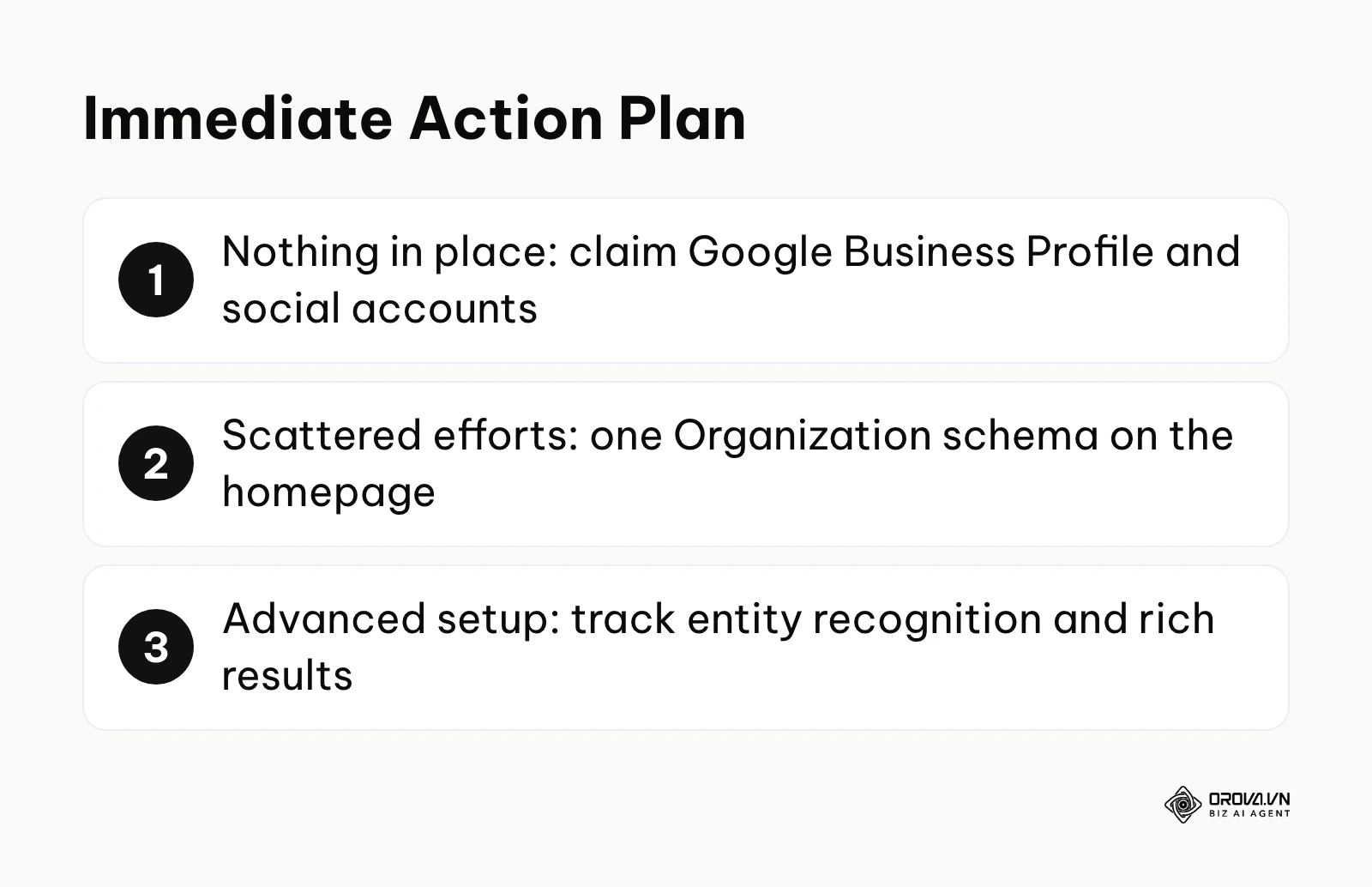
If you currently have absolutely nothing in place, do not attempt to write complex JSON-LD scripts. Your single most important first step is to claim, verify, and exhaustively populate your Google Business Profile and major social media accounts. This establishes the foundational nodes of your brand in the digital ecosystem, providing search engines with a verified baseline identity to reference later.
If you have made scattered efforts—perhaps you installed a basic plugin that generates simple schema, but your internal linking is chaotic—your first step is consolidation. You must audit your homepage to ensure it contains one single, comprehensive Organization schema block. Once that is perfect, you must configure your site so that every subsequent page references that exact homepage organization ID, rather than generating its own redundant publisher data.
If you have already implemented advanced schema and a hub-and-spoke content architecture, but your efforts remain unmeasured, your first step is advanced tracking. You need to transition away from merely tracking keyword ranks. Instead, use the Knowledge Graph Search API to check whether Google returns your brand as an entity, run periodic NLP checks on key pages to see the salience of your target concepts, and track rich result appearances in Google Search Console over time. This data will prove the true ROI of your entity seo strategy.
About the author

Builder of Orova
Nguyễn Đỗ Trọng Ân has 8 years of experience in marketing, including 6 years managing market development across Asia. He builds Orova, a Biz AI Agent that never sleeps: it plans, runs and optimizes work for businesses.
Run your business with AI Agents
Orova is the always-on Biz AI Agent — it plans, runs, and optimizes the work for you.
Save time, unlock productivity.