
Facebook Ad Fatigue: How to Spot It Before Results Drop
You have seen this pattern before: an ad that was winning last week is suddenly costing more per sale, and nobody touched anything. So the instinct is to touch everything — raise the budget, change the bid, swap the audience, duplicate the ad set — and somehow the following week is worse, not better. This is Facebook ad fatigue: the same people have seen the same ad enough times that they have already decided whether to buy, and every dollar spent showing it to them again is close to wasted.
The problem with reaching for bids and budgets first is that those settings are just the easiest things to find, not the actual cause. The account is still auctioning for attention, but the pool of people who were ever going to respond to that specific video or image is already spent. Changing the budget or the audience settings does not put fresh eyes on a tired ad — it just spends faster into the same worn-out response, which is why so many "fixes" make the numbers drop even further the next week.
This article walks through how to actually spot ad fatigue early, using the signals that show up before cost per purchase gets bad, and how to tell it apart from problems that only look similar. By the end you will have a simple weekly check you can run yourself, a way to judge how big your audience needs to be before fatigue becomes a real risk, and a refresh routine that does not depend on remembering to do it — so the fix becomes changing the creative, not the settings.
What Is Facebook Ad Fatigue?
Facebook ad fatigue is the point where extra impressions of the same ad, to the same reachable audience, start returning less than they cost. Your settings have not changed. The audience has, because the people most likely to act already acted. What remains is a pool that has seen the ad and chosen not to respond.
That definition matters because it contains two different mechanisms, and most advice only talks about the first one.
The first mechanism is individual habituation. A person sees your ad, recognises it within about a quarter of a second of it entering the frame, and keeps scrolling because their brain has already filed it as "seen, not for me". This is real, it is what people mean by creative fatigue in casual conversation, and it is why the visual signature of an ad — the first frame, the colour, the face, the caption format — matters more than the arguments inside it. Recognition happens before comprehension.
The second mechanism is pool exhaustion, and it is bigger, quieter and much less discussed. Meta's delivery system does not serve your ad to a random slice of your audience. It serves it, as best it can predict, to the people most likely to produce the optimisation event you asked for. Which means it spends your easiest conversions first, deliberately, on day one. By the time you are two weeks in, the remaining reachable pool is not a fresh sample of your audience — it is the residue, made up of the people the system already judged least likely to convert. Cost per result rises even if not one individual has consciously grown tired of your ad, because the system has run out of the good ones.
Put those together and you get the property that trips up most accounts: fatigue belongs to a pairing, not to a creative. It is a property of this ad against this audience in this market. The same video launched in a country you have never advertised in is brand new. The same audience shown a cosmetically different edit of the video it already ignored is not getting anything new at all. Any refresh plan that treats "new creative" as a checkbox rather than a genuine change in the pairing will produce a refresh that does nothing, followed by a week of confusion about why it did nothing.
One more distinction is worth nailing down early. Fatigue is not the same as a bad ad. A bad ad performs badly from the first impression. A fatigued ad performed well and stopped. The curve tells you which one you have, and the curve is the reason you want to be watching trends rather than snapshots — a single day's cost per result cannot distinguish between the two, and neither can a screenshot posted in a channel.
What Facebook Ad Fatigue Is Not
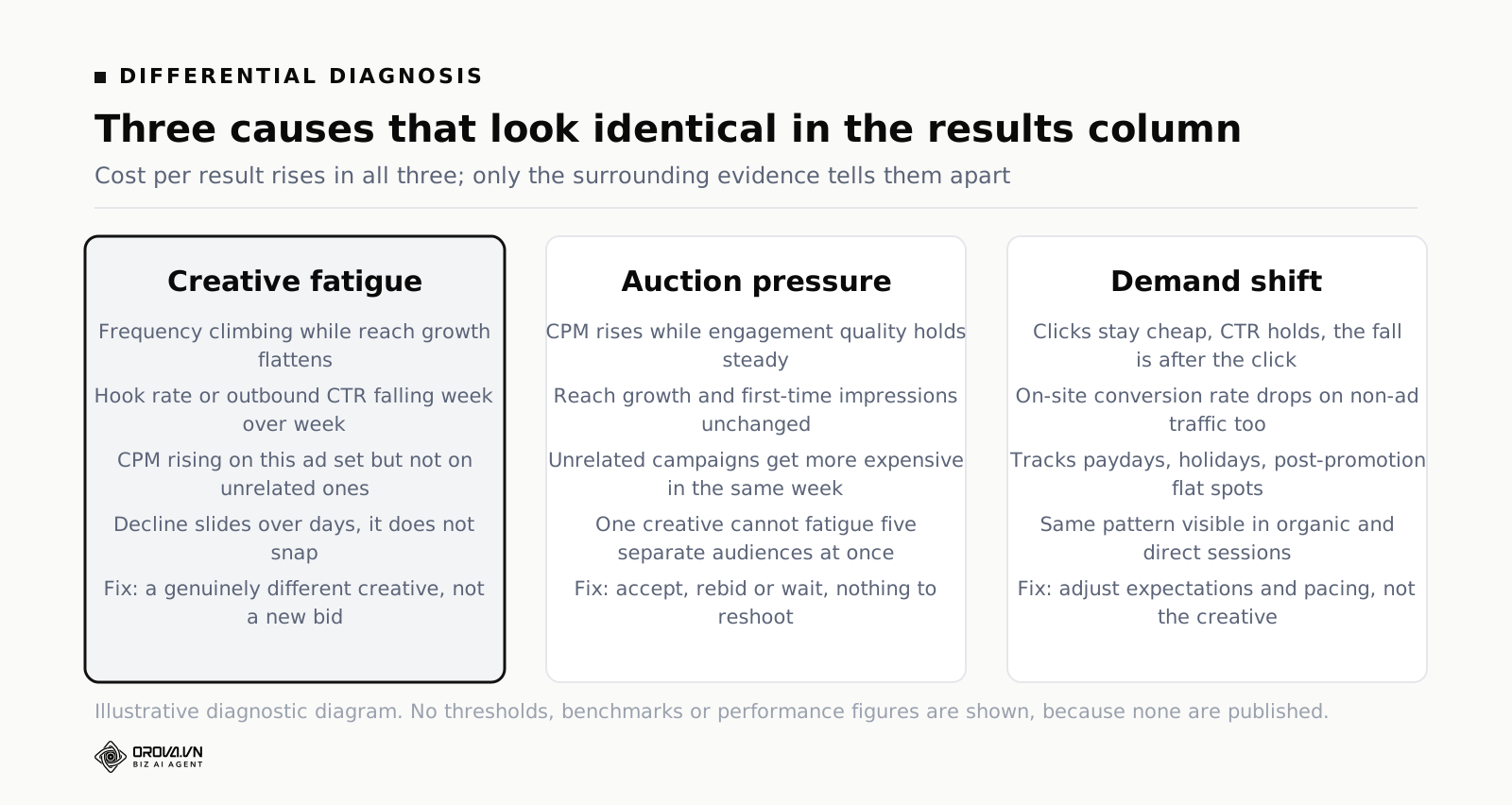
Before you rebuild a creative pipeline, rule out the four things that look identical in a results table and require completely different fixes. Getting this wrong is expensive in both directions: shooting new video because the auction got busy wastes a fortnight, and waiting out "seasonality" that was actually fatigue wastes the same fortnight plus the budget.
Auction pressure
More advertisers wanting the same eyeballs raises the price of those eyeballs for everybody. The signature is a CPM rise that happens without a corresponding drop in your engagement quality. Your click-through rate holds. Your video hold rate holds. The proportion of people seeing the ad for the first time holds. What moves is the cost of reaching them at all. If you run several unrelated campaigns to different audiences and they all get more expensive in the same week, that is the auction, not your creative — one creative cannot fatigue five separate audiences simultaneously.
Demand seasonality
The audience is being reached as efficiently as ever and engaging as much as ever, but fewer of them are buying. Clicks stay cheap, CTR holds, and the fall-off is concentrated after the click. Paydays, holidays, exam weeks, the flat stretch after a big promotion, and the strange gravity of certain months all do this. The tell is that on-site conversion rate drops in step with the ad account, including on traffic that never touched an ad. If your organic and direct traffic converts worse in the same window, your ads are not the problem.
A measurement change
This one causes the most wasted work because the actual performance never changed at all. A tag gets removed in a site deployment, a consent banner is reconfigured, a server-side event stops sending a required parameter, someone changes the attribution setting on the reporting view, or a developer "cleans up" a duplicate event and halves recorded conversions overnight. The signature is a drop with a hard edge — performance falls off a cliff on a specific day rather than sliding over a week — and a discrepancy that opens up between the platform's reported results and what your order system recorded. Fatigue slides. Broken measurement snaps.
Damage you did yourself
Duplicating an ad set creates two ad sets competing for the same people. Restructuring resets learning. Moving budget between ad sets mid-week changes which of them the system favours. A significant edit — Meta's own documentation is explicit that changes to budget, targeting, optimisation event or creative can put an ad set back into the learning phase — restarts the process of finding your buyers from a cold start. Nothing in the market changed; the account was rearranged under the delivery system's feet. This is the failure mode of a Friday afternoon panic, and it is the reason the four changes in the opening story left nobody able to say what went wrong.
The Early Signals, and the Order They Move In
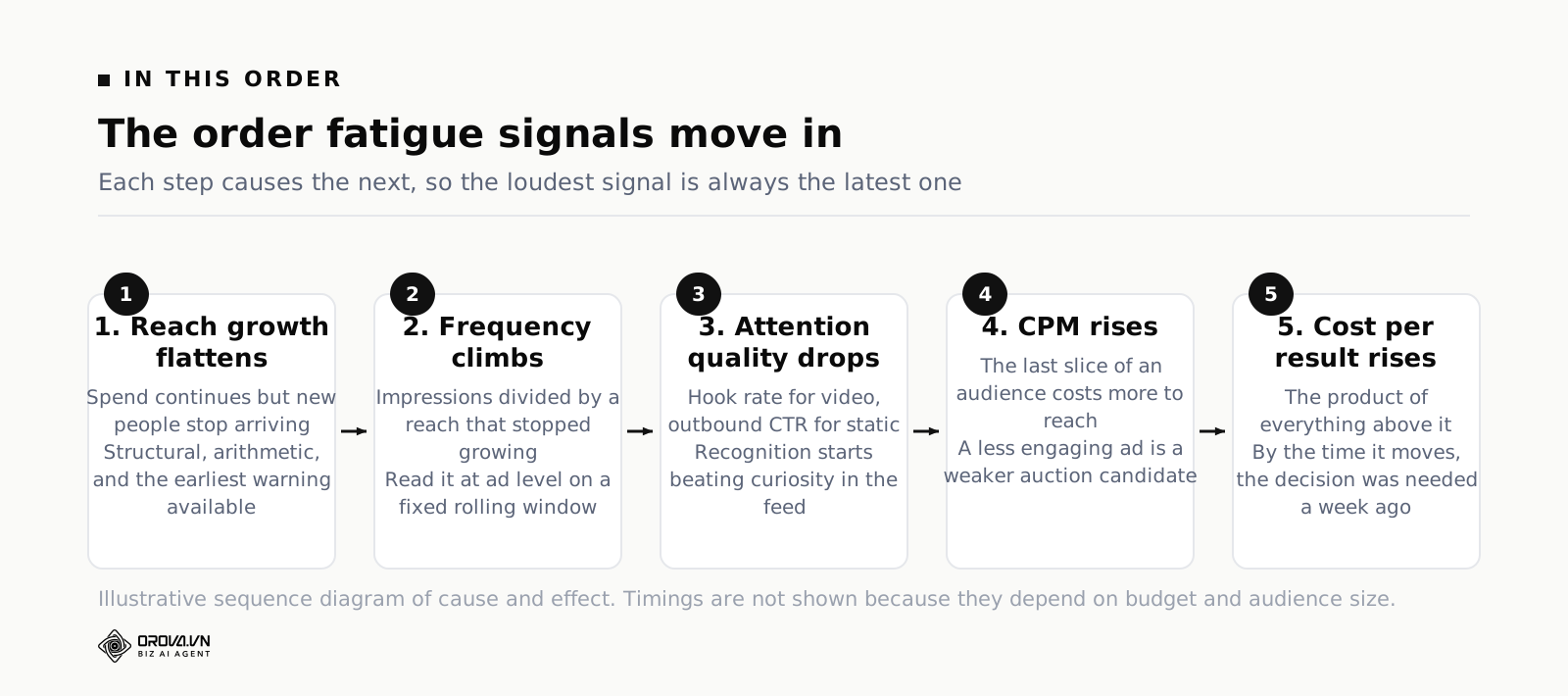
Fatigue does not announce itself in cost per result. By the time cost per result moves, the decision that would have prevented it was needed a week to ten days earlier. The useful signals sit upstream, and they move in a fairly consistent sequence, because each one causes the next.
First: frequency rises and first-time impressions fall. This is arithmetic, not performance. Frequency is impressions divided by reach, so if your reach stops growing while spend continues, frequency has to climb — there is nowhere else for the impressions to go. The complementary signal is the share of your impressions that are going to people who have never seen the ad. If your account exposes a first-time impression ratio in the audience saturation metric group, add it as a column; if it does not, you can watch reach growth flatten week over week and read the same story. This signal is structural and leads everything else, which is exactly what you want from an early warning.
Second: attention quality drops. The people being served now are mostly repeat viewers, so the rate at which they stop scrolling falls. For video, watch the hook — the proportion of impressions that survive the first few seconds — and the hold further in. For static, watch outbound click-through rate rather than the all-inclusive click rate, because the all-inclusive number includes people expanding the caption and clicking your page name, which will happily stay flat while genuine interest collapses.
Third: CPM rises. This one surprises people, who reasonably expect that serving to a saturated audience should be cheap. It is not, for two reasons. Reaching the last, least-interested slice of an audience costs more than reaching the enthusiastic middle, and an ad that people stop engaging with becomes a weaker candidate in an auction that rewards predicted engagement. So the price of the impression goes up at the same time as the value of the impression goes down.
Fourth: cost per result rises. The loudest signal and the last to arrive. It is the product of everything above it, which is why it is such a poor early-warning instrument — it is downstream of three things you could have watched instead.
There is a lesson buried in that sequence about instrumentation generally. The metric that moves first is almost never the metric anyone gets alerted on, and the metric on the dashboard is usually the one that summarises everything else, which is to say the one that arrives last. Deciding in advance which numbers you steer by and which you merely read is the difference between a warning and a post-mortem, and it is worth being deliberate about ad Performance Metrics That Actually Matter before the next quarter starts rather than after.
| Signal | Where you read it | What a move means | What it does not prove |
|---|---|---|---|
| Frequency | Ads Manager, at ad level, over a fixed rolling window | Impressions are recycling through the same people | That performance has suffered yet |
| First-time impression share | Audience saturation metric group, where available | The pool of new people is running out | That the creative is the weak link, rather than the audience being small |
| Hook rate on video | Video play metrics against impressions | Recognition is beating curiosity | That the offer is wrong |
| Outbound CTR | Ad level, outbound clicks only | Fewer people are willing to leave the feed for you | That the landing page changed |
| CPM | Ad set or campaign level | Impressions cost more, from saturation or from competition | That the cause is inside your account |
| Cost per result | The results column everyone watches | Something upstream broke, roughly a week ago | Anything about which upstream thing it was |
Reading Frequency Without Fooling Yourself
Frequency is the most useful number in this whole discussion and also the most misread, because Ads Manager will happily show you four different frequency figures for the same campaign depending on choices you did not realise you were making.
Frequency is relative to the date range you selected
It is not a lifetime counter unless you selected the lifetime range. Look at the last seven days and you will see a modest number; look at the last ninety and you will see a large one. Neither is wrong; they answer different questions. Pick one window, usually a rolling seven or fourteen days, and stay with it, because a trend measured on a shifting window is not a trend.
Campaign frequency is not the sum of its ad sets
Reach deduplicates people. A person reached by three of your ad sets is one reached person at campaign level and three at ad set level. So campaign frequency is always lower than the arithmetic you would do by adding things up, and ad-level frequency inside an overlapping structure understates what any individual is actually experiencing. If you have eleven ad sets pointing at overlapping audiences, no single frequency number in the interface is telling you the truth about a person's exposure.
Frequency counts impressions, not attention
An impression is served, not watched. Some proportion of your frequency is people who technically had the ad in the viewport while scrolling at speed. This is why frequency alone is a poor trigger and why it needs to be read next to hook rate. Frequency tells you the ad was delivered again; hook rate tells you whether anyone noticed.
The chart worth building
Stop hunting for a threshold and plot your own curve instead. For each significant creative, chart cost per result against cumulative frequency. What you are looking for is the turn — the point where the line stops being flat and starts climbing. Every account has one, it differs by offer, by audience and by creative format, and once you have seen your own turn point three or four times you will have something far more useful than any number you can read on the internet: a working expectation for how much exposure your creatives survive before the money starts leaking.
There is no published frequency threshold at which Facebook ads stop working. Every number you have been told is somebody's convention, borrowed from an account that is not yours.
How Audience Size Sets the Clock
Here is the part that turns fatigue from a mystery into a schedule. If frequency is impressions divided by reach, and your budget buys a roughly stable number of impressions per week, then the time it takes to reach any given cumulative frequency scales directly with the size of the audience you can actually reach. Bigger audience, longer clock. Smaller audience, shorter clock. It is division, and you can do it before you launch.
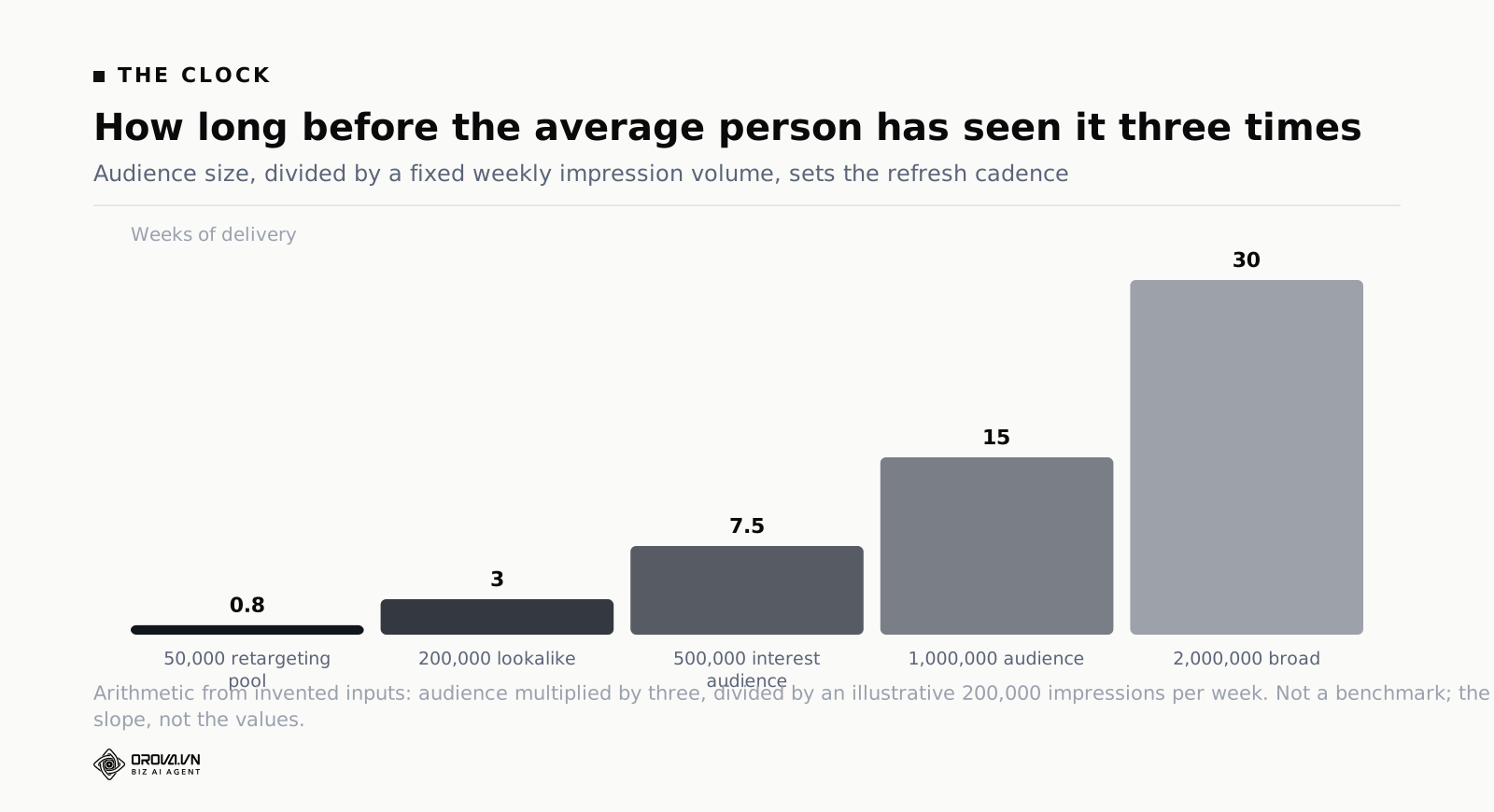
Take an illustrative example, with round invented numbers chosen purely to make the arithmetic readable. Suppose your weekly budget buys about 200,000 impressions. Suppose you want to know how long it takes before the average person in your audience has seen the ad three times. Multiply the reachable audience by three, divide by 200,000, and you have your answer in weeks.
- A retargeting pool of 50,000 people: roughly one week.
- A tight lookalike of 200,000: about three weeks.
- A broader interest audience of 500,000: about seven or eight weeks.
- A one-million-person audience: about fifteen weeks.
- Broad targeting reaching two million: about thirty weeks.
Those are not benchmarks and they are not predictions about your account. They are the output of one division sum with numbers I made up, and the reason to look at them is the shape rather than the values. The shape says that the same creative, the same team and the same production budget produce a completely different refresh cadence depending on one decision — how many people you pointed the ad at. It says that an agency running broad prospecting and a shop running a 40,000-person retargeting pool are not doing the same job on the same clock, even though both of them read the same advice about refreshing creative.
Three refinements make this genuinely usable rather than merely tidy.
Reachable is not the same as targetable. The estimated audience size in Ads Manager is a wide range, not a headcount, and delivery will never reach all of it — a share of any audience is inactive, using the platform in ways your placements do not touch, or simply never surfaced by the auction. Your practical denominator is smaller than the estimate, sometimes considerably, which means your real clock is faster than the sum above suggests. The honest version of this calculation uses the reach your campaign actually accumulated over its first fortnight, not the estimate you saw when you built it.
Retargeting pools refill. A remarketing audience is not a fixed tank being drained; it is a bucket with an inflow. Its clock is set by how fast your top of funnel adds people, not by its size on the day you looked. If prospecting spend drops, your retargeting audience quietly stops refilling and starts fatiguing within days, which is why remarketing performance so often collapses a fortnight after somebody cut the awareness budget — and why the two decisions get blamed on entirely unrelated things.
Spending more shortens the clock proportionally. Doubling the daily budget on a fixed audience does not double your results; it halves the time until saturation. This is the single most important consequence of the arithmetic and the one most often ignored, because scaling a winner feels like the obvious move. Scaling a winner into a small audience is a decision to fatigue it twice as fast, and it needs to be taken deliberately, with the replacement creative already in production.
A Refresh System That Does Not Rely on Anyone Remembering
Once you can estimate your clock, refreshing creative becomes a production schedule instead of a reaction. That is the whole win here. The account that survives fatigue well is not the one with better instincts; it is the one where the next creative was already finished when the current one turned.
Work backwards from the clock
If your arithmetic says a creative has roughly four usable weeks in your main audience, and it takes your team two weeks from brief to live ad, then you start the next brief when the current ad is two weeks old. Write that down as a standing date, not an intention. Most creative pipelines fail not because nobody can make ads but because the brief gets written the week after somebody notices the numbers slipping, which by definition is already three weeks too late.
Rotate, do not replace wholesale
Swapping every ad at once destroys your ability to learn anything and puts the whole ad set through an adjustment at the same moment. Keep the current best performer running as a control. Introduce the challenger alongside it. Prefer adding a new ad inside an existing ad set to building a new ad set, because the smaller change disturbs less of what the delivery system has already learned — new ads still go through their own delivery ramp, but you are not asking the system to relearn the audience from nothing.
Make variants that are genuinely different
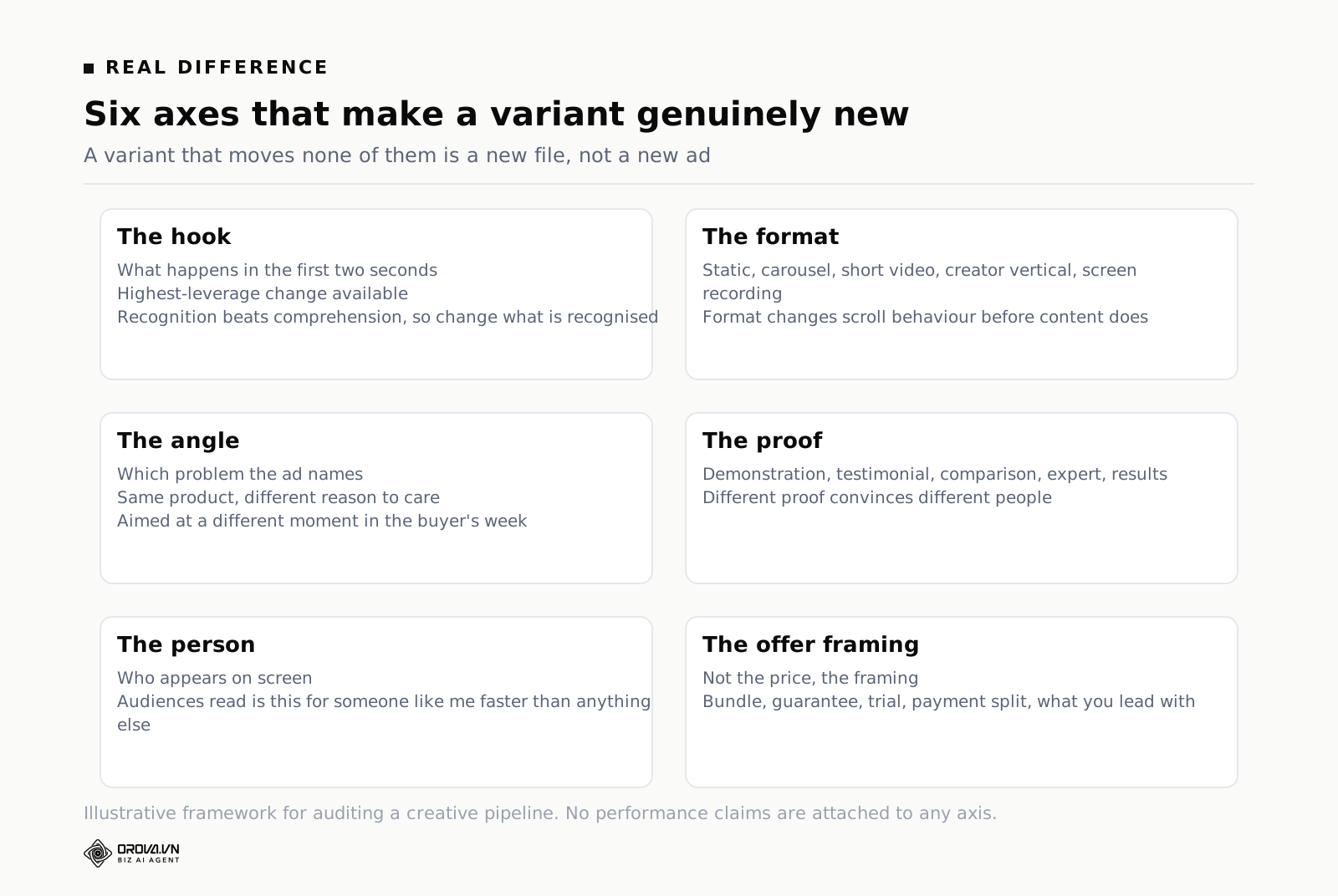
This is where most refresh efforts quietly fail. Recolouring a background, changing the music, cropping to a different aspect ratio and swapping one adjective in the headline produces something that a viewer recognises in the same quarter-second as the original. It is a new asset ID and an old experience. Real difference lives on a small number of axes, and a useful variant moves at least one of them decisively:
- The hook. What happens in the first two seconds. A different opening beat is the single highest-leverage change available.
- The format. Static, carousel, short video, creator-shot vertical, screen recording, before-and-after. Format changes the scroll behaviour before content does.
- The angle. Which problem the ad names. Same product, different reason to care, aimed at a different moment in the buyer's week.
- The proof. Demonstration, testimonial, comparison, unboxing, expert, results screenshot. Different proof convinces different people.
- The person. Who appears on screen. Audiences read "is this for someone like me" faster than they read anything else.
- The offer framing. Not the price, the framing — bundle, guarantee, trial, payment split, what you lead with.
Solve the volume problem before it solves you
The arithmetic above has an uncomfortable implication: a small audience with a healthy budget needs more finished creative per month than most in-house teams can produce at studio quality. That constraint, not a fashion for authenticity, is the real reason creator-made and customer-made content dominates paid social feeds. It is the only production model that scales to the volume the clock demands, and it is worth setting up properly rather than commissioning one video at a time — the operational side of ad Testing Playbook for Scaling UGC Ads is a different job from making a single good advert, and the accounts that never run out of creative treat it that way.
The other supply of genuinely different creative is already sitting in your organic account, and it comes pre-tested. Posts that earned attention without any spend behind them have proven a hook against a real feed, which is a stronger signal than any internal review meeting. Promoting those posts as ads — keeping the original post's engagement and social proof rather than rebuilding it as a clean studio asset — is a cheap way to feed the pipeline, and the mechanics of turning organic posts into paid placements carry across platforms with only minor differences in what the format is called.
Retire, do not delete
Keep a log of what ran, against which audience, for how long, and what its turn point looked like. Fatigued creative is not dead creative. Audiences refresh, new people enter the pool, and a strong ad rested for a couple of months against a partly renewed audience often performs again — not as well as its first run, usually, but well enough to be worth far less than making something from scratch. Teams that delete their history rediscover the same three winning angles every year and pay full production cost each time.
Mistakes That Turn Fatigue Into a Crisis
Raising the budget on a tired creative
The most natural reaction and the most reliably harmful one. More budget against a saturated pool buys more impressions for the people who already declined, at a higher CPM, while shortening the clock on whatever life the creative had left. If cost per result is rising and frequency is climbing, budget is the last lever to touch, not the first.
Narrowing the audience because frequency is high
The instinct is to get more targeted. The effect is a smaller denominator, which by simple division makes frequency rise faster. Narrowing is the correct move for relevance problems and precisely the wrong move for saturation problems, and the two feel identical from inside a results table.
Changing four things on a Friday
Every simultaneous change destroys the attribution of the outcome. If Monday is better, you learned nothing. If Monday is worse, you learned nothing and now have four things to unwind. One change, then wait long enough to read it — which for most conversion campaigns means several days at minimum, not overnight.
Counting cosmetic variants as new creative
A refresh log that says "12 new creatives this month" is meaningless if eleven of them share a first frame. Audit your variants by asking whether someone who ignored the original would experience this one differently in the first two seconds. If the honest answer is no, it does not count towards the pipeline.
Judging a new creative on day one
New ads go through a delivery ramp while the system works out who to show them to, and conversions arrive after a delay that depends on your consideration cycle — which for anything above an impulse purchase can be days. A challenger killed after twenty-four hours was usually killed during the worst part of its life. Decide the evaluation window before you launch, and hold to it unless something is catastrophically wrong.
Killing the control too early
Pausing the ad that is currently paying the bills, in favour of an untested challenger, converts a manageable decline into a hole. Overlap them. Let the challenger earn the budget rather than inherit it.
Duplicating instead of refreshing
Duplicating a fatigued ad set gives you a copy of a fatigued ad, plus a fresh learning period, plus two ad sets bidding for the same people. It feels like a reset because the numbers start from zero. Nothing about the underlying pairing changed.
Reading campaign-level frequency as the truth
Campaign frequency is the diplomatic average. A campaign at a comfortable-looking frequency can easily contain one ad that a slice of the audience has now seen a dozen times. Diagnose at the ad level, in the audience where the ad actually spends.
The Weekly Check That Takes Fifteen Minutes
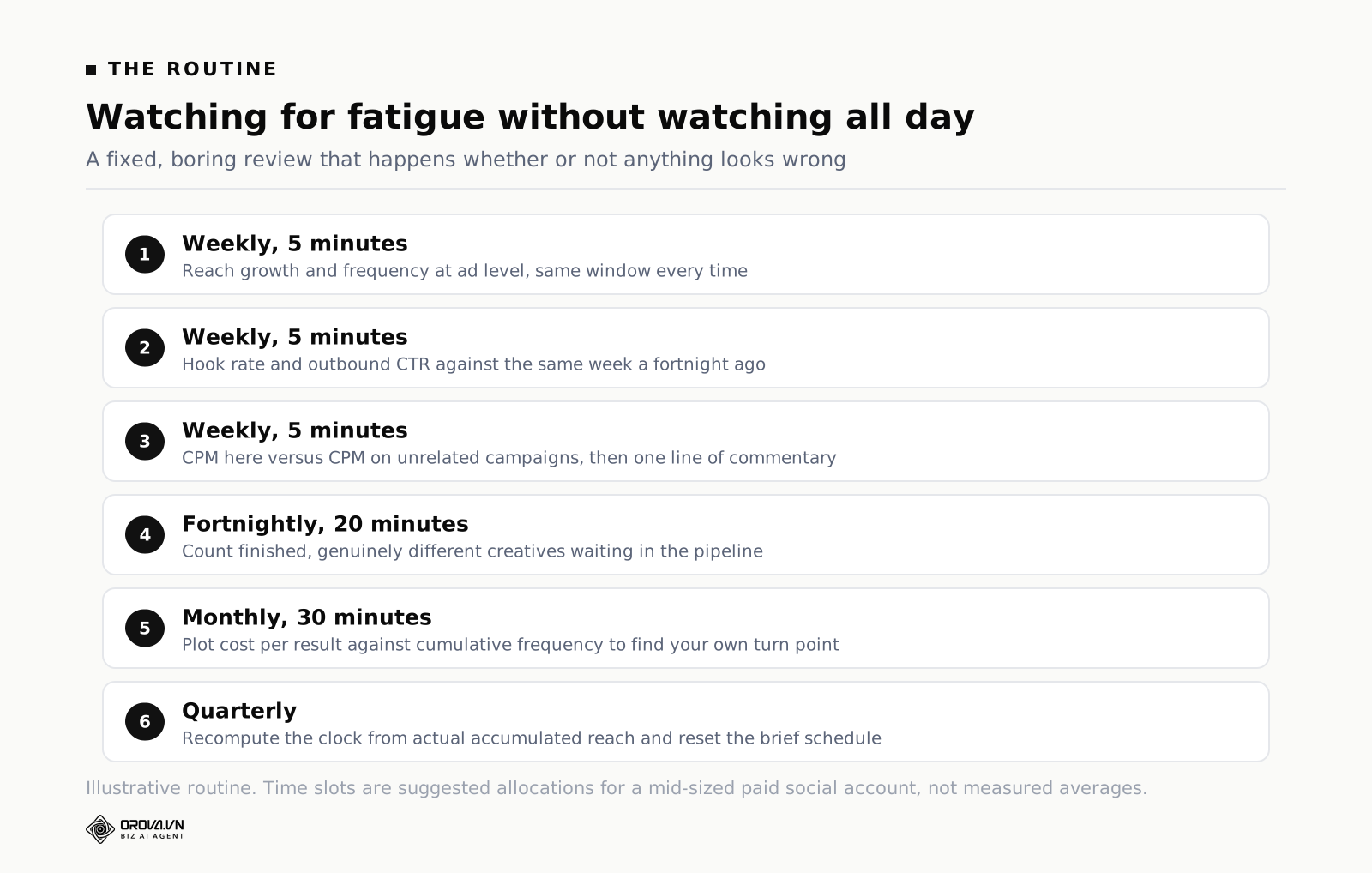
None of the above requires a daily ritual. It requires a short, fixed, boring review that happens whether or not anything looks wrong, because the entire point is to see the turn before it shows up in the number everyone watches.
- Set your window and never change it. A rolling seven or fourteen days, at ad level, sorted by spend. Compare with the same window a week earlier — same length, same level, same sort.
- Read frequency and reach growth first. Is reach still climbing, or has it flattened while spend continued? Flat reach with continued spend is the earliest structural warning you get.
- Read attention quality second. Hook rate for video, outbound CTR for static. Falling attention with flat CPM is the classic fatigue fingerprint.
- Read CPM third, and check it against your other campaigns. If everything rose together, that is the auction. If only this ad set rose, that is yours.
- Read cost per result last. Deliberately last, as confirmation rather than as the alarm. If it is the first thing that told you something, your check is not working.
- Check the pipeline, not just the account. How many finished, genuinely different creatives are ready to go? If the answer is zero, that is this week's most urgent number, regardless of how the campaigns look.
- Write one line. What changed, what you think caused it, what you will do, and what evidence would tell you that you were wrong. Next week's version of you needs this more than you think.
Where Hand Work Stops and a Tool Earns Its Place
Everything described so far is doable by hand, and for a single campaign in a single account it is genuinely fine by hand. The place it breaks is not difficulty; it is repetition. The check is dull, it takes fifteen minutes, it usually finds nothing, and it is the first thing dropped in a busy week — which is precisely the week that matters, because fatigue does not wait for a quiet diary. Add a second platform and the comparison work doubles. Add a client and it doubles again. The failure is never "we could not tell what was happening"; it is "nobody looked on the week it started".
That is the shape of the problem Orova Ads is built for. It connects Google Ads, Meta and TikTok Ads through each platform's own login, pulls campaigns, ad sets, ads and daily metrics into one table, and puts spend, impressions, reach, frequency, clicks, CTR, CPC and results side by side with filters and drill-down — so the frequency-and-reach read that starts this routine takes one screen instead of three interfaces. Its rule sets are written as ordinary sentences with data placeholders, and each set runs on its own schedule, so the weekly check happens whether or not anyone remembers; there are 19 template rule sets to start from and 214 optimisation action codes across the platforms, 58 of them for Meta. By default the AI only advises: every suggestion arrives with its reason and the numbers behind it, logged in a history you approve or reject, and you can move to hybrid or fully automatic for the actions you have come to trust. One detail matters more here than it sounds — an early version treated a threshold of zero as "not set", which meant rules quietly skipped the very cases they were written for, and the fix is why thresholds now behave the way you would expect. Signing up is free with 1,000 quota and no card, and no percentage is taken from your ad spend. Judging whether a creative is genuinely different is still your job. Noticing that reach flattened on Tuesday does not have to be.
Frequently Asked Questions
What frequency is too high for Facebook ads?
There is no published threshold, and any specific number you have been given is a convention borrowed from a different account. What matters is your own turn point: plot cost per result against cumulative frequency for each creative and find where the line starts climbing. A retargeting ad to warm buyers may be fine at a level that would be ruinous in cold prospecting, and a strong brand can carry more repetition than an unknown one.
How often should I refresh ad creative?
Calculate it rather than copy it. Take the reach your campaign actually accumulates per week, divide your reachable audience by it, and you have the number of weeks before the average person has seen the ad a given number of times. Then subtract your production lead time, and that is when the next brief has to be written. Small audiences with healthy budgets can need new creative every couple of weeks; broad prospecting at modest spend can run for months.
Are high frequency Facebook ads always bad?
No. High frequency is a description, not a verdict. It is a problem when it comes with falling attention quality and rising cost per result, and it is entirely acceptable when performance is stable — some offers need repeated exposure before anyone acts, and some audiences are small on purpose. Frequency is the signal that tells you where to look, not the thing you are optimising downward.
Does pausing an ad and turning it back on reset fatigue?
Not in any meaningful way. The people who saw it still remember it, and pausing restarts delivery learning without changing the underlying pairing of creative and audience. What genuinely helps is time plus audience turnover: an ad rested for a few months, run against an audience that has substantially refreshed, is a different pairing and can work again.
Can I fix creative fatigue by widening the audience?
Sometimes, and it is the cheapest thing to try first, because it costs nothing to produce. Widening enlarges the denominator and buys real time — often several weeks — which is worth having. But it postpones rather than solves, and it works only if the wider audience is genuinely relevant. Widening into people who were excluded for good reasons buys time at the cost of every metric after the click.
Do automated or broad-targeting campaign types remove the problem?
They change who manages the audience, not the arithmetic. Automated campaign types generally reach broader pools, which lengthens the clock, and they will rotate towards whichever of your assets performs best, which delays the moment fatigue becomes visible. Neither of those creates new creative. If every asset in the pool has been seen by the same people, the campaign type has nothing left to rotate towards.
Does fatigue happen faster in retargeting?
Almost always, because retargeting audiences are small by definition and the same budget therefore recycles through them much faster. The extra trap is that the size of a retargeting pool depends on the traffic feeding it, so a cut to prospecting spend shows up as a retargeting fatigue problem a week or two later, in a completely different part of the account from where the decision was made.
What to Do This Week
Open Ads Manager, go to ad level, set a rolling fourteen-day window, and add three columns: frequency, reach and CPM. Sort by spend and look at your top five ads. For each one, note whether reach is still growing and whether hook rate or outbound CTR is lower than it was a fortnight ago. That is your ten-minute picture of which pairings are turning.
Then do the division. Take the reach one of your main campaigns has accumulated per week, take a realistic estimate of the audience it can actually reach, and work out how many weeks remain before the average person has seen that ad three times. Compare the answer with how long it takes your team to get a genuinely different creative from brief to live. If the second number is bigger than the first, you do not have a fatigue problem — you have a production scheduling problem, and it will keep producing fatigue problems until it is fixed.
Finally, put the fifteen-minute check in the calendar as a recurring appointment with a name on it, and write down the one line of commentary every time, including the weeks when nothing happened. The value of this routine is not in any single week's reading. It is in having six months of your own turn points written down, so that the next time results are fine on Tuesday and bad by Friday, you already know whether it is the creative, the auction or the calendar — and nobody has to change four things in one afternoon to find out.
Stop Guessing When It's Time to Refresh
Doing this properly by hand means checking frequency and cost trends every week, watching audience size against spend, keeping a running list of which creative needs refreshing and when, and actually remembering to act on it before performance drops — not after. That is a lot of small, repeatable work sitting quietly behind every "why did this campaign die" moment.
Orova Ads is built to handle that kind of ongoing tracking and reminder work automatically, so the weekly check described in this article does not depend on someone's memory or a spreadsheet nobody opens. If keeping ahead of Facebook ad fatigue by hand feels like more upkeep than your week allows, it is worth a look.
Catch fatigue while it is still cheap
Orova Ads reviews frequency and creative performance daily and proposes the swap with the numbers attached.
Start for free