
How to Use a Practice Test Maker for Certification Prep
Twelve field engineers have to pass a manufacturer certification in six weeks. They have read the manual, sat through two days of classroom sessions and told you they feel fine. You run a mock exam on a Friday afternoon and nine of them fail it. A practice test maker is the tool that closes the distance between having read something and being able to pull it out of your head under time pressure, and that distance is almost never closed by sending the manual round again.
What went wrong on that Friday is predictable. Reading produces a feeling of familiarity that people mistake for knowledge. The material looks obvious on the page, so nobody flags a problem, and the first honest signal arrives on exam day when it is too late to do anything about it. Retrieval is a different act from recognition, and the only way to find out whether someone can retrieve is to make them try, repeatedly, in conditions close enough to the real thing that the practice transfers.
The second thing that went wrong is that the mock exam was a single event. One test at the end tells you who failed. It does not tell anyone what to study next, it does not give the weak candidates enough repetitions to improve, and it burns your only realistic set of questions in one sitting. What those twelve engineers needed was not a better mock. They needed forty short sets over six weeks, each one weighted toward what they got wrong last time, each answer explained the moment they submitted it.
This article covers how to build that: what a practice tool has to do that an exam tool does not, how to build a question bank you can reuse for years, which question types actually drill and which only feel like drilling, how flashcards and spaced repetition fit alongside test sets, how to set a retake policy that improves people instead of wearing them down, how to tell when somebody is genuinely ready, the mistakes that quietly waste a six-week run, and a schedule a normal team can keep.
What does a practice test maker actually have to do?
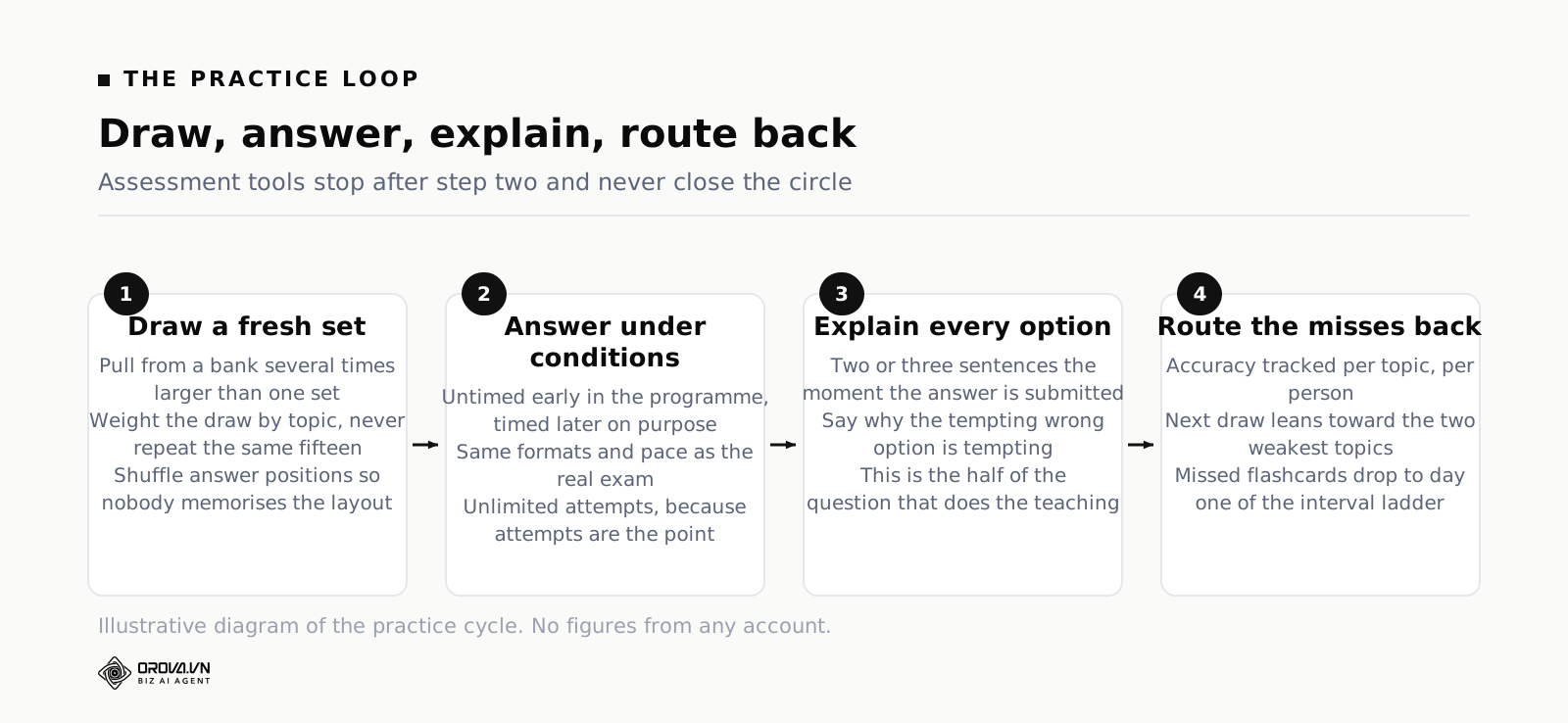
It has to hold a question bank big enough that no two attempts look alike, serve a fresh set on demand, mark it instantly with an explanation attached to every option, and remember what each person keeps missing so the next set leans toward their gaps. Everything else — themes, timers, badges — is secondary to that loop.
The bank is the product, not the test
The most common mental model is wrong from the start. People think of a practice test as a document: fifty questions, an answer key at the back, done. That model collapses on the second attempt, because the person has now seen all fifty questions and their answers, and every subsequent run measures memory of the paper rather than knowledge of the subject.
The working model is a bank plus a rule for drawing from it. You write a hundred and twenty questions tagged by topic, and a set is generated by pulling fifteen of them according to weights you set. Nobody sees the same fifteen twice in a row. The bank is an asset that grows and gets maintained; any individual test is disposable output. Once you think in banks, the questions you write in March are still working in November, and the person who inherits your job gets something worth inheriting.
This also changes how you judge a test maker. The question you should ask a tool is not "how nice does the quiz look" but "can I keep two hundred questions in here, tag them, and generate different sets from the same pool without duplicating anything". A tool where every quiz is a separate island of questions makes bank thinking impossible, and you will notice the cost around week three.
Instant feedback is the whole point
In assessment, feedback is optional and often deliberately withheld. In practice, feedback is the entire mechanism. A person answers, gets it wrong, and in the next four seconds either learns why or learns nothing at all. Delay that by a day and the moment is gone; the question has faded and the correction lands on nothing.
So every question in a practice bank needs an explanation written for the person who got it wrong, not a note for the marker. Two or three sentences: what the right answer is, why the tempting wrong option is tempting, and where in the source material this comes from. Writing those explanations roughly doubles the time it takes to build a bank, and it is the single highest-return thing on this whole list. A practice set without explanations is a scoring machine. A practice set with them is a teaching machine that happens to keep score.
One refinement worth making: explain the distractors, not only the key. If someone chose option C, they need to know why C is wrong, which is usually a different sentence from why B is right. Good exam banks carry a line of explanation per option. That sounds like a lot of writing until you notice you are documenting the four misconceptions your training keeps producing, which is useful in its own right.
What the tool has to remember between sessions
The third job is memory. If every session starts from zero, the learner drills their strong topics because those questions are pleasant, and their weak topics stay weak. The tool should carry forward what each person got wrong and bias the next draw toward it, or at minimum show them a per-topic breakdown clear enough that they can bias it themselves.
You can get most of the benefit without sophisticated software. Tag every question by topic, report accuracy per topic per person, and let people generate a set filtered to their two weakest topics. That covers the majority of the value of adaptive selection with none of the complexity, and it keeps the learner in charge of their own drilling, which matters more for adults than any algorithm.
A practice test and a real exam are different instruments
Teams routinely take an exam maker, point it at practice, and leave the settings identical for both jobs, then wonder why practice feels punitive and the exam feels soft. The two have almost opposite requirements, and the settings that make one good make the other useless.
What changes when nothing is recorded
The defining feature of practice is that the score goes nowhere. Nobody's file, nobody's review, no email to a manager. This is not a soft-touch preference, it is a design requirement: the moment a practice score can be held against somebody, they will avoid the questions they are bad at, and the tool stops surfacing the gaps it exists to surface.
Say this out loud when you launch the thing. People assume that anything logged in a system will eventually be used against them, and that assumption is often correct. State the policy in one sentence in the invitation — practice scores are visible to you and to the training team only, never to line managers, and never used in any assessment of performance — and mean it. If you break that once, the data quality never recovers.
Settings that should be opposite
Line the two up and the differences are stark. An exam wants a capped number of attempts; practice wants unlimited. An exam hides which questions were wrong until everyone has finished; practice reveals the answer the second the question is submitted. An exam runs against the clock; practice runs untimed first and timed later, deliberately, as a separate phase. An exam draws from a locked set so that everyone faces the same difficulty; practice draws randomly and does not care about equivalence.
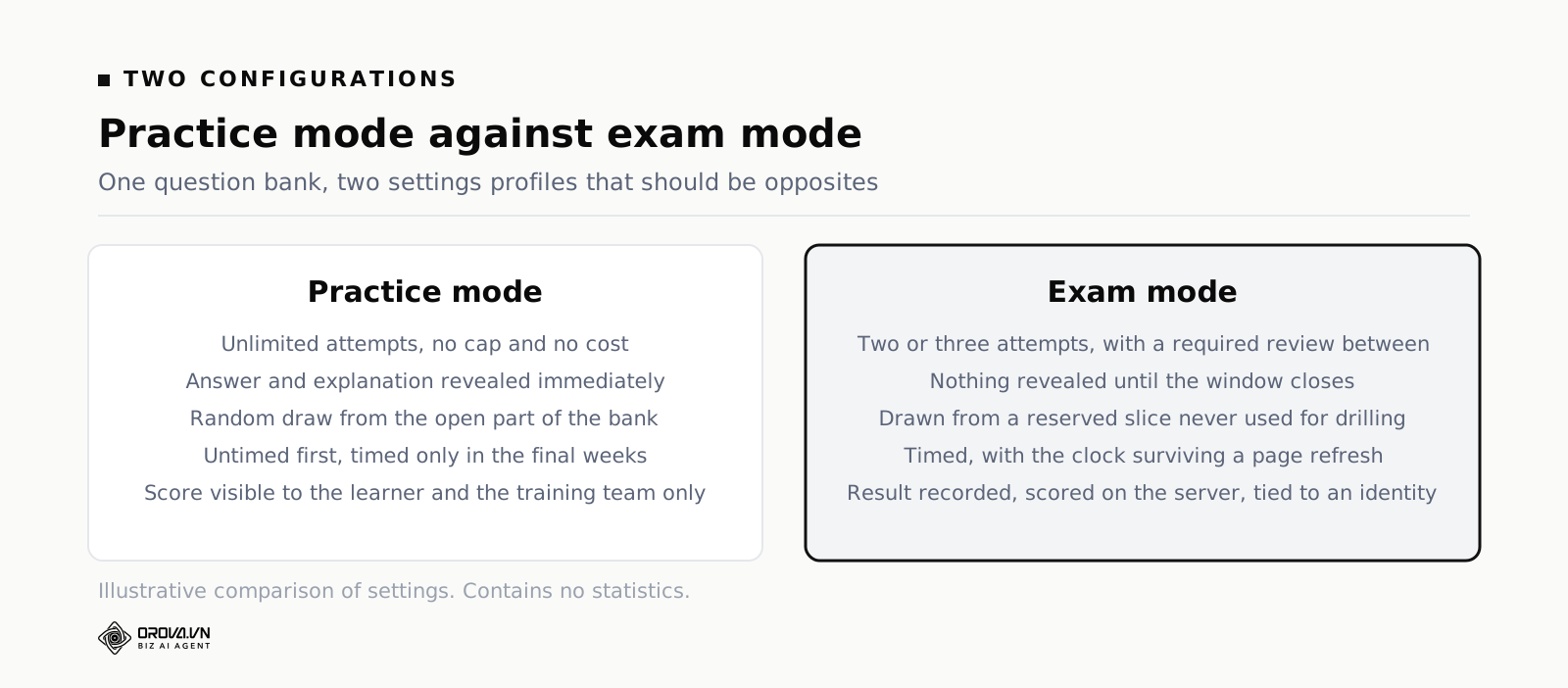
The one setting people get backwards most often is shuffling of answer options. In an exam, shuffling positions stops neighbours copying and stops position bias. In practice, shuffling does something more valuable: it prevents the learner memorising "the answer is the third one" for a question they have now seen five times. Without option shuffling, heavy practice trains position recall rather than content recall, and the effect is invisible until the real exam presents the same question with the options in a different order.
Running both from one bank
The efficient arrangement is one bank, two draws, with a clean separation between them. Reserve a slice of the bank — say a fifth of it — that never appears in practice and is used only in the exam. Everything else is available for drilling. That way practice is genuinely unlimited and the final assessment still contains questions nobody has drilled to death.
Reserving that slice takes discipline because it is tempting to use your best questions for practice, where you can see them working. Resist it. Your best-discriminating questions belong in the assessment, where discrimination is the job. The drilling set can be more forgiving, more repetitive and more explicitly instructional. Choosing which questions do which job is covered in more depth in the companion piece on choosing an online quiz maker for staff training, which goes through server-side scoring and per-question statistics in a way this article assumes you already have in place.
Building a question bank you can draw on for years
Bank building is the unglamorous middle of this work and it determines everything downstream. Two hours spent on structure at the start saves a week of untangling later.
How many questions you actually need
The rule of thumb worth using: you need at least four times as many questions as a single practice set contains, and preferably eight times. A fifteen-question set therefore wants a bank of sixty at absolute minimum and a hundred and twenty comfortably. Below four times, people start recognising questions by the third session and the recognition becomes the thing they are practising.
Sized against content rather than sets, a reasonable target is eight to twelve solid questions per hour of training material, before you throw any away. You will throw away roughly a fifth once you review them, and another tenth after the first run against real people, so plan to write about a third more than you think you need. That sounds heavy, and it is, but it is a one-time cost against a bank that lasts years with light maintenance.
Tagging: the boring work that pays
Tag every question at the moment you write it, never afterwards. Three tags are enough for almost everyone: topic, cognitive level and source. Topic drives the per-person weak-area reports and the filtered draws. Cognitive level — recall, application, judgement — stops your bank drifting into an easy pile of definitions, which is what happens by default because definitions are the fastest questions to write. Source records where the question came from: which manual section, which incident, which exam blueprint line.
The source tag earns its keep on the day a procedure changes. Someone rewrites section four of the operating manual, you filter the bank by that source, and twenty minutes later every affected question is corrected. Without the tag, that same job means reading two hundred questions and hoping you catch them all, which in practice means the bank quietly starts teaching a process nobody follows any more.
Where good questions come from
The weakest banks are written from the training material alone, because they end up testing whether people can recall the slides. The strong ones draw from four sources. The exam blueprint, if you are preparing people for an external certification, gives you the topic weights the real examiner uses — build to those weights, not to the ones your content happens to have. Past failures tell you which specific items people get wrong; every wrong answer in last year's exam is a candidate question this year.
Support tickets and incident reports are the third source and the most underused. Every ticket that starts "I didn't know you had to" is a question waiting to be written, and it comes with a ready-made scenario. The fourth is your experienced people. Ask two senior staff what mistake they see new hires make most often, write the three answers down, and you have the wrong options for a question that will discriminate beautifully.
Versioning and retirement
Banks decay. Set the rules now, in writing, so the decay is managed rather than discovered. A question gets retired when nearly everyone answers it correctly on first sight for two cycles running, because it has stopped separating anyone from anyone. A question gets rewritten immediately when the underlying procedure changes, when the data shows strong candidates failing it, or when someone reports the wording as ambiguous and you agree on reading it.
Keep one line of history per question: date written, date last edited, and why. It takes seconds and it answers the question an auditor or a successor will eventually ask, which is why the bank says what it says. A bank with no history is a bank nobody dares change, and a bank nobody dares change becomes wrong within two years.
Question types that work for drilling
Most tools offer eight or so question types and most teams use one. For drilling specifically, the choice matters more than it does in assessment, because the person is going to meet these formats forty times rather than once, and the format shapes what gets learned.
Recognition is not retrieval
Here is the core tension. Multiple choice is fast to write, fast to answer, fast to mark, and it tests recognition — can you spot the right answer among four. The real world almost never presents four options. It presents a situation and demands that you produce the answer from nothing. So a bank made entirely of multiple choice trains a skill adjacent to the one you want.
The fix is not to abandon multiple choice, which would be impractical. It is to mix in formats that force production: fill in the blank, short written answers, ordering the steps of a procedure, and matching. A useful ratio for a drilling bank is roughly half recognition and half production. The recognition half carries the volume, the production half carries the transfer.
A working map of types
| What you are drilling | Types that fit | Why it works for repetition |
|---|---|---|
| Facts, thresholds, form numbers | Fill in the blank, flashcards, true/false | Fast enough to run twenty in five minutes |
| Sequences and procedures | Ordering, matching | Cannot be passed by recognising one keyword |
| Applying a rule to a messy case | Scenario plus multiple choice, multiple select | Different scenario each time keeps it fresh |
| Explaining to a colleague or customer | Short written answer with a rubric | Forces production, exposes shallow understanding |
| Spotting the exception | Multiple select with partial credit | Punishes the habit of stopping at the first plausible option |
Where a multiple choice test generator helps and where it misleads
Generating options automatically is genuinely useful for volume. Give a tool a fact and it will produce three plausible alternatives, and for straightforward recall items that is fine and saves real time. The trap is that a multiple choice test generator produces distractors that are plausible in general rather than distractors that reflect what your people actually get wrong. Those are not the same thing, and only the second kind teaches you anything.
So use generation for the first draft and then replace at least one option per question with a mistake you have genuinely seen. That single edit converts a generic question into a diagnostic one: now, when somebody picks option C, you know exactly which misconception they still hold, and your report tells you how many people hold it. Ten minutes of editing per twenty questions is the whole cost.
Written answers in practice mode
Short written answers are the most valuable drilling format and the one teams avoid, because of marking load. In practice mode that calculation changes, since nothing is recorded and imperfect marking is tolerable. Two approaches work. Self-marking against a model answer, where the learner writes their response, then sees the model answer and rates their own against three or four stated criteria, is surprisingly effective and costs you nothing to run. The act of comparing is itself instructive.
Automatic marking against a rubric is the other, and it earns its place when volume is high. Two safeguards make it safe to rely on. You need to be able to switch it off for anything where a human should read every word, and when it is unavailable for any reason the submissions must survive intact and fall back to manual marking rather than failing the attempt and losing the person's work. A drilling tool that discards a written answer because a marking service was busy will not be trusted twice.
Flashcards and spaced repetition: the other half of practice
Test sets and flashcards do different jobs and most preparation needs both. Test sets rehearse the format and the reasoning. Flashcards handle the raw material — the terms, thresholds, part numbers and definitions that have to be automatic before the reasoning has anything to work with.
Why the interval matters more than the volume
The finding that should shape your schedule is old and well supported. Cepeda, Pashler and colleagues, reviewing the distributed practice literature in Psychological Bulletin in 2006, found that spreading the same total practice time across separate sessions produced substantially better long-term recall than packing it into one block. Same hours, different arrangement, better result. For a training team that is unusually good news, because it means the improvement is free — you are not asking anyone for more time, only for the same time cut differently.
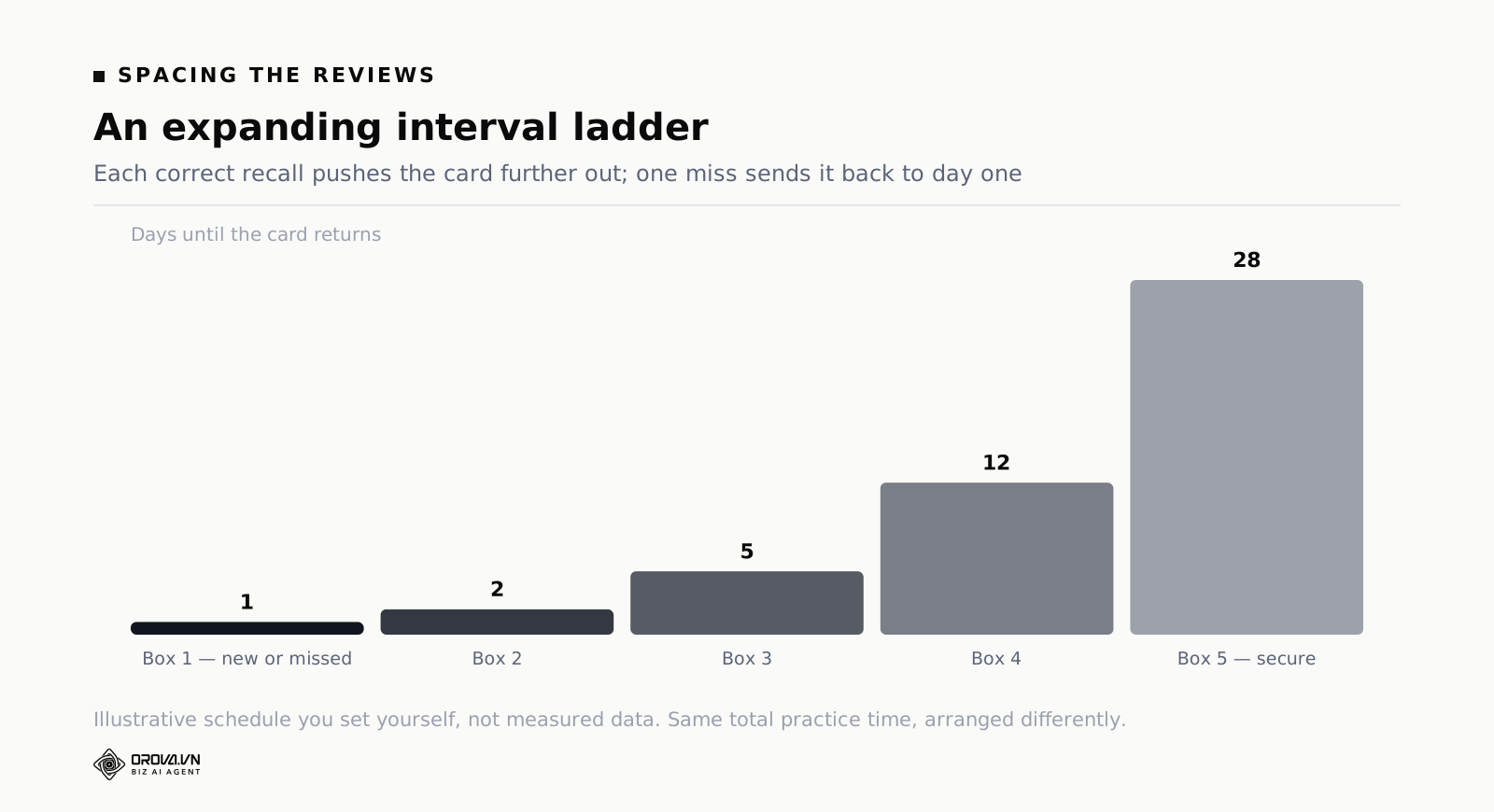
The practical translation: three twenty-minute sessions across a week beat one hour-long session, and the gap between sessions should widen as the material gets more secure. A card answered correctly today comes back in two days, then in five, then in twelve. A card answered wrongly resets to the start of the ladder. That is the whole mechanism, and you can run it on paper if you have to.
A ladder you can run without software
Five boxes, physical or virtual. Everything starts in box one, reviewed every day. Get a card right and it moves up a box; get it wrong and it drops straight back to box one regardless of where it was. Box two is reviewed every second day, box three every fifth day, box four every twelfth, box five every four weeks. Six weeks of that on a hundred and fifty terms puts most of them somewhere in boxes four and five, and your daily review load shrinks as you go, which is what keeps people doing it.
If your tool generates flashcard decks from existing material, the setup cost drops to almost nothing, and the sensible size for a deck is somewhere between a dozen and thirty cards — small enough to complete in one sitting, large enough to be worth opening. Longer decks get abandoned halfway, and a deck abandoned halfway is worse than a short one finished, because the second half never gets reviewed at all.
What flashcards are bad at
Be clear about the limit. Flashcards drill associations: this term means that, this threshold is that number. They are poor at anything requiring judgement between competing considerations, and they are actively misleading for procedures, because a card that says "steps of the shutdown procedure" gets answered with a vague gesture at the right shape and marked correct by a generous self-assessor.
For procedures, use ordering questions instead, where the person has to place five steps in sequence and cannot fudge it. For judgement, use scenarios. Keep flashcards for the vocabulary layer, which is where they are unbeatable, and stop expecting them to carry the rest.
Retake policy: attempts, intervals and what changes in between
Retakes are where practice programmes are won or lost. Handled well, a failure is the most useful event in the whole process. Handled badly, it is the moment someone decides the training is a formality and starts gaming it.
Unlimited in practice, capped in the exam
Start from the asymmetry. Practice attempts should be unlimited and cost nothing socially — the more somebody drills, the better, and any cap teaches people to hoard attempts and avoid practising until they feel ready, which is exactly backwards. Exam attempts should be capped, because an uncapped assessment eventually becomes a random walk to a pass.
Two or three attempts is the usual sensible number for the real thing, with the second attempt conditional on something happening in between. That condition is the part that matters and the part most teams leave out.
Never serve the same set twice
If the retake is the same fifteen questions, you are testing whether they remember the feedback from the first attempt, which they will, and the pass means nothing. Draw the retake from the reserved slice of the bank or from a random draw excluding what they have already seen. If your bank is too small to do this, the bank is too small, and that is the problem to fix rather than something to work around.
There is a softer version worth knowing. Keep a small number of the missed questions in the retake deliberately — three or four — so you can see whether the specific gap closed, and fill the rest with fresh items. That gives you both a valid overall score and a direct answer to the only question you really had, which is whether the review worked.
The required review between attempts
Make something happen between the failure and the retake. A minimum interval of twenty-four hours, plus a required pass through the material covering the topics they missed, converts the retake from a second roll of the dice into an actual learning cycle. Without it, people simply resit immediately and hope for an easier draw, and enough resits will eventually produce one.
Keep the required review targeted. Sending somebody back through the entire four-hour course because they failed two questions on one topic is a punishment, and it feels like one. Send them to the twenty minutes that address their actual gaps. Targeted review gets done; blanket review gets clicked through with the tab in the background.
When to stop
Decide in advance what happens after the final failed attempt, and write it down before anyone fails. Usually the right answer is not "you're out" — it is a change of method. A person who has failed three times with self-directed drilling needs a conversation, a different explanation, or supervised practice, not a fourth attempt at the same instrument. Treat repeated failure as information about your training, not only about the person, because a fair proportion of the time it is.
Building your first practice set, start to finish
Here is the whole build in one pass. For a fifteen-question set backed by a sixty-question bank, budget most of a working day if the source material exists. The order matters more than the speed.
Step 1: get the blueprint and the weights
If people are preparing for an external certification, the awarding body almost always publishes the domain breakdown — the percentage of the exam devoted to each topic. Build your bank to those percentages, not to how much material you happen to have. Teams routinely over-drill the topic they know best and arrive on exam day strong in an area worth a tenth of the marks.
If there is no external exam, write your own blueprint. List the four to six things a competent person must be able to do, assign each a weight reflecting how much damage a failure would cause, and use those weights to size the bank. Ten minutes of work that prevents a month of misdirected effort.
Step 2: draft to the weights, in plain text
Write in a plain document, not in the tool. Typing straight into a question editor makes you stop and fiddle with settings after every item, which destroys the rhythm and roughly halves your output. Draft sixty questions in a file with the topic tag written beside each one, then load them in one session.
Write the wrong options from real mistakes rather than inventing them. If you cannot think of three genuine misconceptions for a question, that is a signal the question may not be worth asking, because the thing it tests is either obvious or unimportant.
Step 3: write the explanation before you finalise the options
This is the step that separates a practice bank from a quiz. For each question, write the two or three sentences the learner sees after answering. Doing this before you lock the options has a useful side effect: about one question in six turns out to have an explanation you cannot write cleanly, which means the question is ambiguous or the underlying material is unclear. Fix it now, at a cost of two minutes, rather than after thirty people have been confused by it.
Step 4: calibrate on two people, then set the schedule
Give the draft to one person who knows the material well and one who does not. The expert should score high and should flag any item where they hesitated for a reason other than difficulty — hesitation from an expert almost always means the question is ambiguous or the marked answer is arguable. The novice tells you whether the wording is comprehensible and how long a set actually takes, which is invariably longer than you estimated.
Then publish the schedule alongside the set: how often people should drill, for how long, and what the checkpoint dates are. A practice bank with no schedule attached gets used enthusiastically for four days and then forgotten, which is the single most common way these projects fail.
Measuring readiness before the real thing
The question you will be asked, usually two days before the exam, is whether someone is ready. A raw practice score is a poor answer to that question and there are better ones available for almost no extra effort.
Why the last score is not readiness
A single practice score is noisy. It reflects which fifteen questions came up, how tired the person was, and whether they happened to have reviewed that topic yesterday. Somebody who scores eighty-five once and sixty-two twice is not an eighty-five-per-cent candidate, but the eighty-five is the number they will quote at you.
There is also a contamination problem specific to practice. Scores rise over a six-week programme partly because knowledge improves and partly because the person has now seen a good share of the bank. If your bank is small, most of the rise is familiarity, and it evaporates the moment they see questions they have not met.
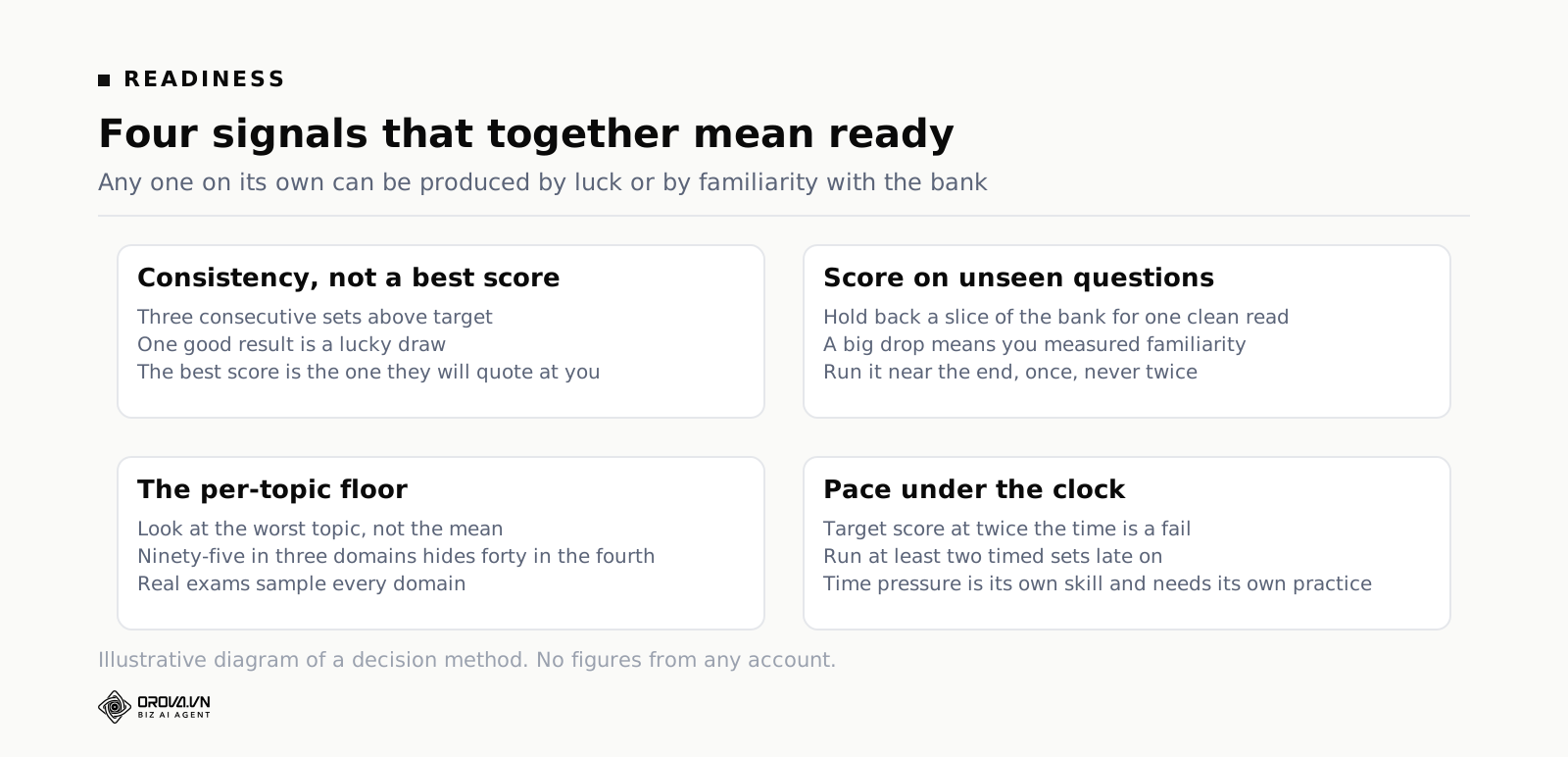
Four signals that together mean ready
Consistency comes first: three consecutive sets above the target, not one. A single good result is a draw; three in a row is a level. Second, performance on unseen questions — hold back a slice of the bank and use it once, near the end, as a clean read. If the score on fresh questions is far below the drilled score, what you have measured all along is memory of the bank.
Third, the per-topic floor. An overall seventy-eight built from ninety-five in three topics and forty in one is a fail waiting to happen, because real exams sample every domain and some certifications require a minimum in each. Look at the worst topic, not the mean. Fourth, pace. Somebody who reaches the target score but needs twice the allotted time will not reach it under exam conditions. Run at least two timed sets late in the programme purely to check this, and treat time pressure as its own skill that needs its own practice.
What to do with somebody who is not ready
Say so early and specifically. "You are at fifty-five on hydraulics, which is the topic worth a quarter of the exam, and we have eleven days" is actionable. "You need to work harder" is not. Attach a concrete plan: which topic, which twenty minutes of material, how many sets before the next checkpoint.
Sometimes the honest answer is to move the exam date. That is cheaper than a failed attempt in almost every certification scheme, once you count the resit fee, the delay and the effect on the person. Making that call two weeks out, calmly, on the basis of four signals rather than a hunch, is one of the concrete benefits of running structured practice at all.
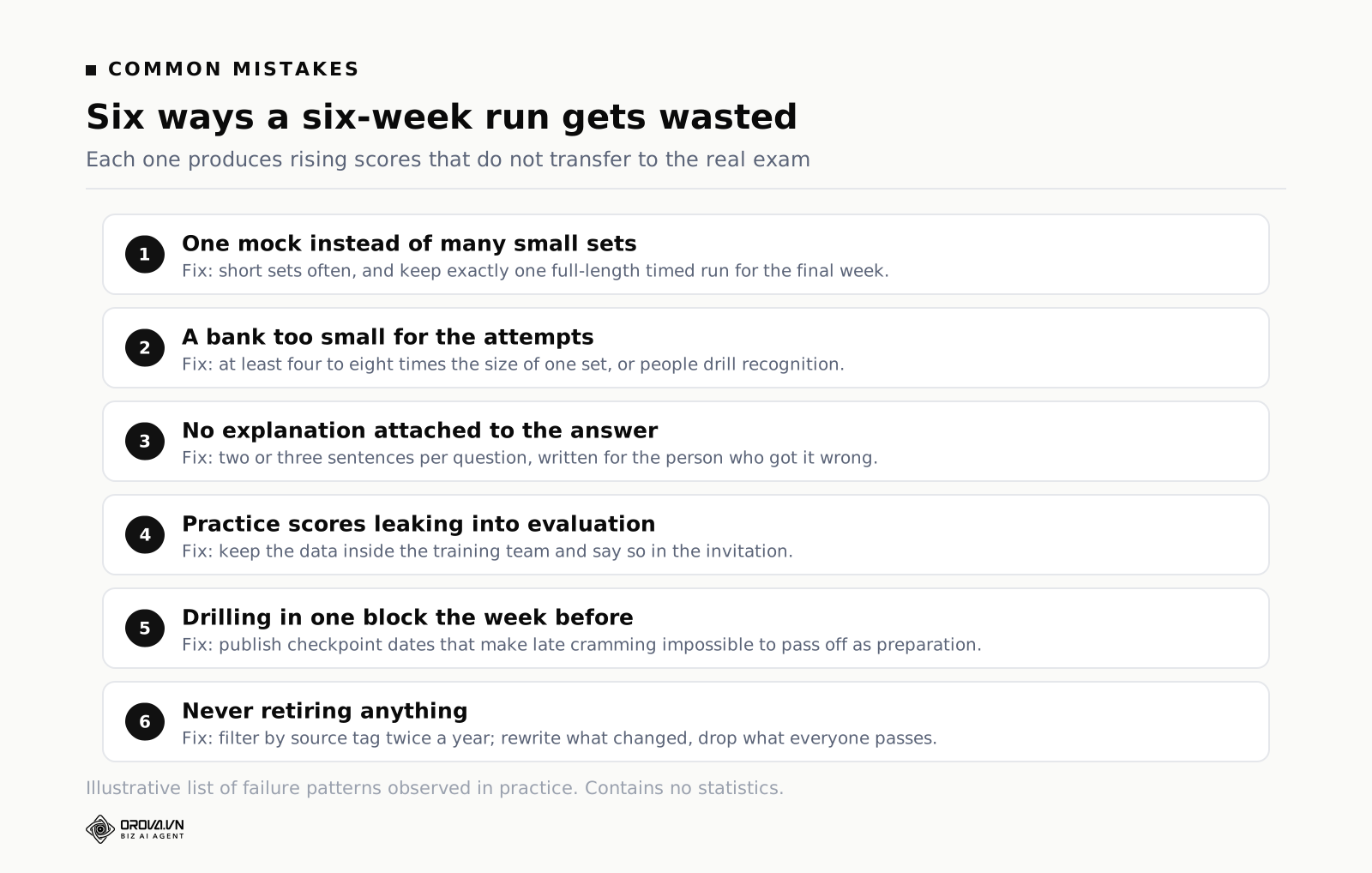
Common mistakes
Mistake 1: one mock exam instead of many small sets
The single full-length mock feels rigorous and does almost no teaching. It burns a large slice of your question bank in one sitting, produces a score with nothing actionable attached, and arrives too late for anyone to change course. Run short sets often and keep exactly one full-length timed run for the final week, where its real job is rehearsing stamina and pacing rather than measuring knowledge.
Mistake 2: a bank too small for the number of attempts
Forty questions drilled ten times each is not practice, it is memorisation of forty specific items. The scores climb, everyone feels good, and the improvement does not transfer to any question phrased differently. If people are recognising questions rather than answering them, your bank needs to be several times larger before any other change is worth making.
Mistake 3: no explanation attached to the answer
A practice set that reports "you scored nine out of fifteen" and nothing else has wasted the most valuable four seconds in the whole process. The person knows they are weak; they still do not know why. Explanations are not a nice extra on top of the question, they are the half of the question that does the teaching.
Mistake 4: practice scores that leak into evaluation
The moment a practice score can affect how somebody is seen, the behaviour changes. People drill the topics they are already good at, delay practising until they feel safe, and stop treating a wrong answer as useful information. Keep practice data inside the training team, say so publicly, and hold the line even when a manager asks nicely.
Mistake 5: drilling in one block the week before
Cramming produces a familiarity that feels exactly like knowledge and fades within days. It is also the default behaviour of every busy adult, so it will happen unless the schedule actively prevents it. Publish checkpoint dates that make late cramming impossible to pass off as preparation, and make the earlier sessions short enough that doing them on time is genuinely easier than catching up.
Mistake 6: never retiring anything
Banks silently rot. Questions describing a form that changed, a threshold that moved or a system that was replaced keep circulating for years, and every person who drills them learns something false with confidence. Put a review in the calendar twice a year, filter by source tag, and fix or retire. It is two hours and it protects everything else you built.
A practice schedule people can actually keep
A programme nobody can sustain is worse than a lighter one they finish. Here is a six-week shape that survives a normal workload, sized for people who have day jobs.
| Week | What the learner does | What you do |
|---|---|---|
| 1 | Two untimed sets of ten, plus daily flashcards on box one | Read per-topic accuracy, spot the two weakest domains for the group |
| 2 | Three untimed sets weighted to their own weak topics | Rewrite any question the expert flagged during calibration |
| 3 | Three sets, first one timed; flashcard boxes now spread to three | Checkpoint one: who is below the topic floor, and on which topic |
| 4 | Three timed sets of fifteen; targeted review of the weakest domain | Send targeted material to anyone below floor, not the whole course |
| 5 | Clean read on the reserved slice, then two timed sets | Checkpoint two: consistency, unseen-question score, pace |
| 6 | One full-length timed run, then light flashcards only | Go or no-go per person; move the date for anyone clearly short |
Keep the weekly load small enough to be boring
Twenty minutes a day is achievable for almost anybody and adds up to ten hours over six weeks, which is more than enough for most certifications. Ninety minutes a day is not achievable for anybody with a job, and a schedule people fall behind on in week two gets abandoned entirely by week three, taking the good parts with it. Set the load low, hold the frequency, and let the interval ladder do the work.
Two checkpoints, not continuous monitoring
Watching a dashboard every day generates anxiety and no decisions. Two checkpoints — end of week three and end of week five — are enough to catch problems while there is still time to act, and they give people a clear rhythm: drill, review, adjust. Between checkpoints, leave them alone apart from one short reminder to anyone who has not opened a set in a week.
Keeping it alive after the deadline
The certification passes and the whole thing goes quiet, which wastes the asset you just built. Two light habits keep it useful. Run one short refresher set per quarter for people who already passed, drawn from the same bank, purely to counter forgetting. And fold the bank into onboarding so the next person to join starts from the accumulated work rather than from a manual. If you are still deciding where a practice bank should live long-term alongside your courses, assignments and records, the platform-level questions are covered in the guide to corporate learning management systems.
Frequently asked questions
How many practice questions do you need for a certification?
Work back from the sets. If each set is fifteen questions and somebody will do twenty sets, that is three hundred question slots. You do not need three hundred distinct questions — repetition is the point — but you do need enough that recognition does not take over, which in practice means at least four to eight times the size of one set, plus a reserved slice for the clean read. For a fifteen-question set, a bank of a hundred to a hundred and fifty is comfortable.
Should practice scores be recorded at all?
Record them for the training team and keep them out of any evaluation of the person. You want the data — per-topic accuracy is how you spot who needs help and which module is failing — but the moment it becomes performance data, the behaviour it measures changes and the data stops being true. State the boundary explicitly when you launch, and keep to it.
Can the practice bank double as the real exam?
Not the same questions, no. Anybody who has drilled the bank forty times will pass an exam drawn from it, and the pass will mean only that they drilled. Keep a reserved slice that never appears in practice and build the assessment from that. Same bank, same authors, same standard — different questions.
How closely should practice mirror the real exam?
Match the things that affect performance and ignore the rest. Match the question formats, the time per question, the topic weights and the device people will use. Do not bother matching the visual design, the branding or the exact wording style of the awarding body. The transferable part is the cognitive load and the pacing; everything else is decoration that costs you build time.
Do flashcards work for practical skills?
Only for the vocabulary underneath them. A card cannot tell you whether somebody can isolate a circuit safely; it can tell you whether they know the isolation sequence by name. Use flashcards for terminology, thresholds and part numbers, ordering questions for procedures, scenarios for judgement, and supervised observation for anything involving hands. Confusing these is how teams end up certifying people who can recite a procedure they cannot perform.
How often should the bank be refreshed?
Rotate roughly a third of the questions annually as routine maintenance, and rewrite immediately whenever the underlying procedure changes or the data shows a question is behaving oddly. If your content is stable, the retirement rule alone keeps it healthy: drop anything nearly everyone gets right on first sight two cycles running, because it has stopped telling you anything you did not already know.
When a folder of documents stops working
What you can genuinely run by hand
For one certification and a handful of people, a document of questions, a shared spreadsheet for scores and a calendar reminder for checkpoints will get you through. It costs nothing, and building the bank by hand teaches you things about your own material that no system would ever show you. Do not buy anything before you have run one cycle this way.
The symptoms that say you have outgrown it
The wall is caused by multiplication rather than complexity. Four certifications, three intakes a year and two retake cycles is a great many small administrative acts, and each one is a chance to lose somebody. The symptoms are recognisable: you cannot answer "who is below the topic floor on hydraulics" without opening several files, nobody can generate a set that excludes what a person already saw, the explanations live in a different document from the questions, and three versions of the bank are circulating with no way to tell which is current.
What a practice test maker inside a training platform changes
Orova Training keeps the whole loop in one place: a question bank across eight question types feeding both individual exams graded on the server and a live ranked mode people join by QR code, AI grading for written answers that you can switch off per quiz and that falls back to manual marking with submissions intact if quota runs out, and flashcard decks of twelve to thirty cards either built by hand or generated from your material. Courses, documents and quizzes are shared by link or QR in three access modes and assigned to the whole workspace, to named people or to groups, with per-person progress including real study time, attempt counts and score per set. Enforcement rules cover mandatory completion, minimum study time counted only while the tab is in focus, and blocked copying. Passing a threshold issues a certificate automatically with a unique code and a public verification page. The interface runs in six languages, courses export to SCORM 1.2, and new accounts get 1,000 quota to try it without a card.
What no platform will do is write your explanations or tell you which misconceptions your people hold. It will serve a weak bank faster, in six languages, with better reporting on how weak it is. The order stays the same as it was on day one: get the blueprint, write questions from real mistakes, explain every option, drill on a widening interval, and only then automate the parts that repeat.
What to do this week
Take the certification or the internal check that matters most and do three things. First, count your questions and divide by the size of one set. If the answer is less than four, stop everything else and write questions until it is at least four — no other change you make will matter while people are recognising items instead of answering them.
Second, open twenty of your existing questions and check whether each one carries an explanation written for the person who got it wrong. Most banks fail this. Writing twenty explanations takes about an hour and will do more for results than any tool you could buy this month. Start with the questions people fail most often, since those are the ones being served to exactly the people who need the explanation.
Third, write the schedule down and publish it: how many sets a week, how long each takes, and the two checkpoint dates. Send it with one sentence stating that practice scores stay inside the training team. That sentence is what makes people willing to be bad at something in front of your reporting, and being willing to be bad at something is the entire mechanism by which practice works.
If you have no bank at all yet, the first week is smaller than you think. Get the exam blueprint or write your own in ten minutes, ask two experienced colleagues for the three mistakes they see most often, and turn those into fifteen questions with explanations. That is an afternoon of work, and it will tell you more about where your people actually stand than another round of sending out the manual.
Drill from one question bank, exam from another slice
Orova Training runs practice sets, server-graded exams, flashcard decks and automatic certificates from the same material, with per-person progress and real study time.
Try it free