
SEO Tools: How to Own Four Instead of Nine
Nobody needs a list of a hundred SEO tools. What most teams need is a way to decide which four or five to actually own, and the confidence to ignore the rest. The category is enormous, heavily marketed, and organised around what vendors sell rather than around what a site needs — which is why so many teams pay for capability they never open.
This is a map of the toolbox: what kinds exist, what each is genuinely for, what a small team can do with free tools alone, and where paying starts to make sense. It ends with a recommended minimum rather than a ranking.
What are SEO tools, sorted usefully?
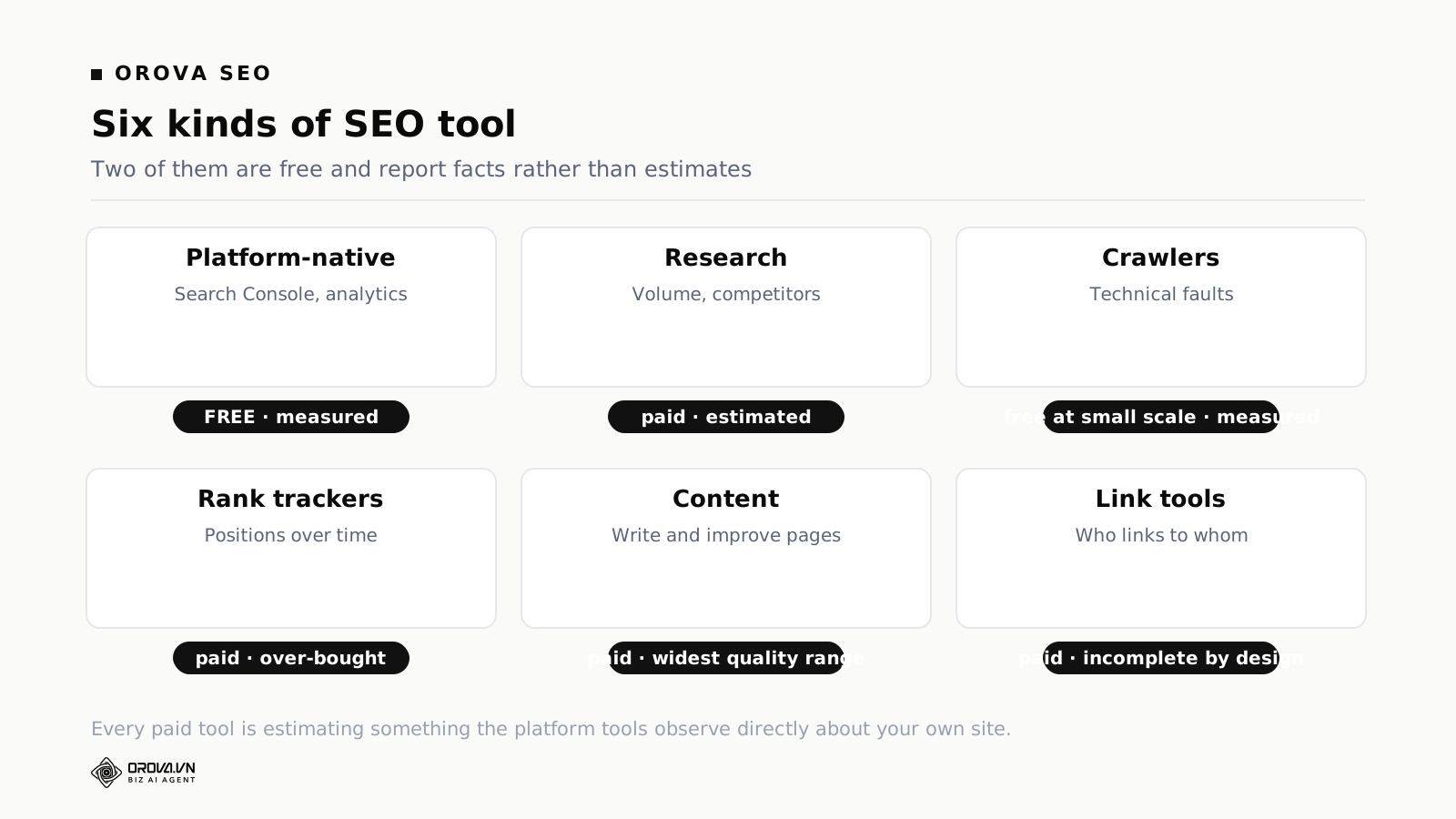
Six kinds. Platform-native tools, provided free by search engines, which tell you what your site is actually doing. Research tools, which estimate what people search and what competitors rank for. Crawlers, which find technical faults. Rank trackers, which watch positions over time. Content tools, which help write and improve pages. And link tools, which map who links to whom.
Almost every product is one or two of these with the others attached shallowly. Knowing which is which prevents most wasted spend.
The free tier is better than people assume
Two free tools cover a surprising share of what a small site needs, and they have one property no paid tool can match: they report what actually happened, rather than estimating it.
Search Console tells you which queries your site appeared for, how often, at what position, and how many people clicked. This is measured data about your own site. Every research tool in the paid tier is estimating what Search Console tells you directly — and estimates for a specific small site are frequently wrong by large factors.
Three things it does better than anything you can buy. It shows queries you did not know you appeared for, which is the cheapest source of content ideas available. It shows pages that get impressions and no clicks, which is a list of titles worth rewriting. And it shows position by query and page, so you can find the pages that nearly rank without paying anyone.
Analytics tells you what happened after the click. Which pages receive search traffic, what visitors do next, and — if configured — whether anything came of it. The gap between an SEO report and a business result usually lives here.
A team using only these two, competently, outperforms a team with four subscriptions and no habit of looking at them. That is not a rhetorical flourish; it is the most common pattern in small-company SEO.
When paying starts to make sense
Four situations where the free tier runs out, each pointing at a different kind of purchase.
You need to know about pages you do not own. Search Console shows your site. Everything about competitors — what they rank for, which of their pages get traffic, what changed — requires a research tool. This is the most defensible reason to pay, and it is the one thing the free tier genuinely cannot do.
Your site is too large to check by hand. Somewhere past a few hundred pages, technical problems become invisible without a crawler. Broken links, redirect chains, orphaned pages, duplicate titles: all trivially findable by a crawler and effectively impossible to audit manually at scale.
You are producing content at volume. Writing and improving pages one at a time is fine at low volume and becomes the constraint quickly. Content tooling earns its price when the batch is large enough that per-page manual work does not fit in the week.
Somebody outside the team needs reporting. A client or a board wants a regular view, and assembling it by hand from free tools is a recurring cost that a subscription removes.
Notice what is not on that list: rank tracking, which most teams buy first and which tells you less than Search Console's position data for a lower price of zero.
The six kinds, and what to expect from each
Research tools
The largest and most expensive category. They maintain an index of search results and estimate volumes, difficulty, and competitor performance.
What they are good for: seeing outside your own site. Which competitors rank for what, which of their pages carry traffic, what a market looks like before you enter it. That view is genuinely unavailable elsewhere.
What to be careful about: the numbers are estimates, and their accuracy varies enormously by market and language. For English-language commercial terms they are usually in the right region. For smaller markets and other languages they can be wrong by a factor that makes planning meaningless. Difficulty scores are the weakest output — a single number attempting to summarise a whole competitive landscape, and different tools disagree wildly about the same term.
The practical habit: use them for direction and relative comparison, not for absolute planning. "This term is bigger than that one" is usually reliable; "this term gets exactly this many searches" is not.
Crawlers
The most honest category in the toolbox. A crawler fetches your pages the way a search engine would and reports what it finds. There is little estimation involved, which makes the output more trustworthy than anything in the research category.
What to expect: a long list of issues, most of which do not matter. Duplicate meta descriptions on paginated archives are technically an issue and practically irrelevant. The value of a crawler is proportional to your ability to ignore most of what it says, and the products that help most are the ones that rank findings by likely impact rather than listing everything with equal weight.
Rank trackers
Watch positions for chosen terms over time. Cheap, and the most over-bought category in SEO.
The problem is not accuracy but relevance. Results are personalised, localised, and volatile, so a tracked position is an average of something that varies by who is searching and where. More importantly, Search Console gives you position data for every query you actually appear for — including the ones you never thought to track — for nothing.
Where trackers earn their place: reporting to someone who wants a consistent series, and watching a small set of terms that genuinely matter commercially. Not as a primary measurement.
Content tools
Help with writing new pages and improving existing ones. The range within this category is wider than in any other, from a checklist of keyword usage to systems that draft in a defined brand voice and publish directly.
The distinction worth making is between tools that grade content and tools that produce or change it. Grading tools give you a score against competitors' pages, which is useful once and becomes something people optimise toward — and optimising toward a score produces pages written for the score. Producing tools change what you can do at volume, which is a different kind of benefit.
Link tools
Map who links to whom. Useful for understanding why a competitor outranks you when their content looks worse, and for finding pages that link to something similar to yours.
Two cautions. Link indexes are incomplete by construction, so absence of data is not evidence. And the tooling makes outreach easy at volume, which is the activity most likely to damage your reputation with exactly the people whose opinion you needed.
Platform-native
Covered above, and worth repeating because it gets skipped: this is the only category reporting measured facts about your own site. Every paid tool is estimating something you can observe directly here.
A word about AI-visibility tools
A newer sub-category has appeared: tools that monitor whether language models mention your brand when answering relevant questions. It belongs in the monitoring kind, and it is worth a paragraph because it is being marketed hard.
What it measures is real and worth knowing. What it cannot yet tell you is what to do about it, because the mechanisms by which a model chooses to mention one source over another are neither documented nor stable. So the output is a measurement without a lever, which is the definition of a metric to watch cheaply rather than to build a programme around.
The advice that does seem defensible is the same advice as the rest of this article: pages containing something specific — original data, a process, an account of what happened when you tried something — get cited, and pages that restate the general position get summarised. That is not a tool purchase; it is an editorial decision.
A recommended minimum
For a company under fifty people with a site of a few hundred pages, this covers it.
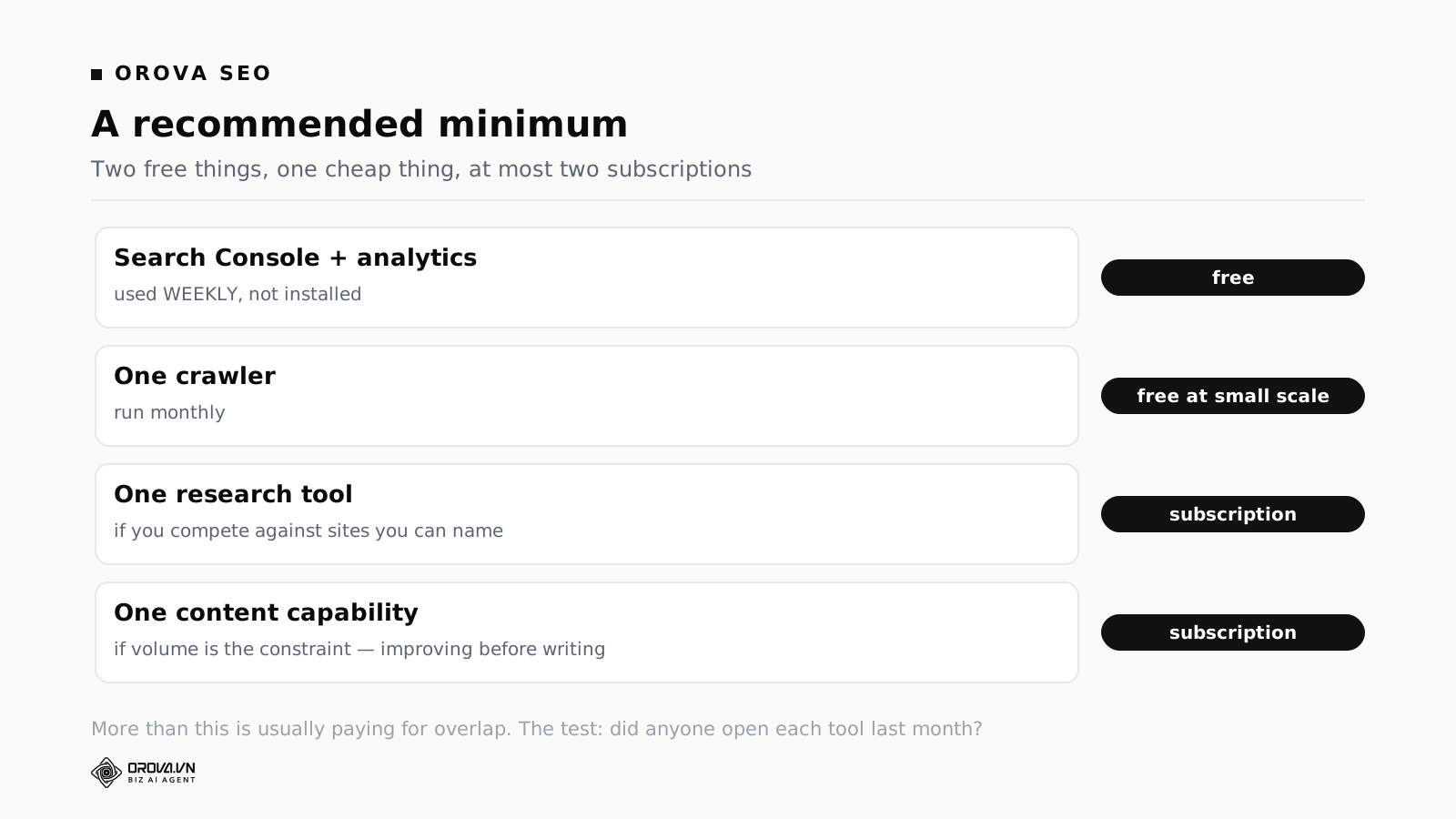
Search Console and analytics, used weekly. Not installed — used. Fifteen minutes looking at queries with impressions and no clicks, and pages sitting between position eleven and twenty. That list is your work queue, and it costs nothing.
One crawler, run monthly. Enough to catch the technical faults that accumulate whenever anyone touches the site. Several good options are free at small scale.
One research tool, if you compete against sites you can name. This is the purchase to make if you make one. Skip it if your market is small enough that you already know who you are competing with and what they publish.
One content capability, if volume is the constraint. Writing and improving pages at a rate the team cannot sustain manually. Buy the improving half before the writing half — the pages that nearly rank are the fastest return available.
That is two free things, one cheap thing, and at most two subscriptions. Teams with more than that are usually paying for overlap, and the honest test is whether anyone opened each tool in the last month.
Five ways teams waste money in this category
Buying a suite for one feature
The all-in-one products are priced for teams using most of the suite. A company that bought one to check competitor keywords is paying suite pricing for a single view, and the rest of the interface is a monthly reminder of unused capability. Check whether a cheaper single-purpose tool covers the actual need.
Optimising toward a tool's score
Content grading tools produce a number, and numbers attract effort. Within a month people are writing to raise the score — adding terms the tool wants, matching a word count derived from competitors' averages. The result is pages assembled to satisfy a heuristic, and heuristics are approximations of what a reader wants rather than the thing itself.
The score is a checklist, useful for catching omissions. It is not a target, and treating it as one produces uniform, forgettable pages that all clear the same bar.
Trusting difficulty scores
A single number summarising how hard a term is to rank for, computed differently by every vendor, with different tools disagreeing sharply about the same term. Useful for coarse sorting; useless for a decision. The better question is what is actually ranking on page one and whether you can produce something better for that specific query — which takes five minutes of looking rather than a subscription.
Measuring with the tool you bought instead of the free one
Paid rank tracking becomes the reported number because it produces a tidy chart, while Search Console holds the measured truth. When the two disagree, the free one is right about your site. Teams reporting tracked positions to stakeholders are reporting an estimate over a measurement, and eventually somebody notices.
Keeping subscriptions nobody opens
The commonest waste and the easiest to fix. Once a year, list every tool and name the last time somebody used it for a decision. Anything without an answer is a cancellation, and cancelling is reversible.
What SEO tools cannot do
Four boundaries, and each accounts for a share of the programmes that produce activity without results.
They cannot tell you whether a topic deserves a page. Volume is not intent. A term searched by students, or by people looking for a definition, or by people looking for free alternatives to what you sell, has volume and no value to you. The judgement about who is searching and what they want next is not in any tool, and it is the decision that determines whether the work pays.
They cannot make a page worth citing. Links and citations follow from usefulness, and usefulness comes from having something specific to say — your own data, your own process, an account of what happened when you tried something. No tool supplies that.
They cannot fix what happens after the click. A page that ranks and converts nobody is a cost. This is the most common quiet failure in SEO: every metric in the tool improves and nothing changes in the business, because nobody asked what the visitor was supposed to do.
They cannot compensate for a site nobody can crawl. Content published into broken architecture exists and is not found. The technical layer is a prerequisite rather than a parallel workstream, which is why the cheap crawler is a better first purchase than the expensive research suite.
Where Orova SEO fits in the toolbox
Worth stating plainly, including the parts it does not cover, because this article's own logic argues against buying a suite for one feature.
Orova SEO is a content capability with a research layer. Keywords load in bulk from a spreadsheet with a provided template. Articles are written in a brand voice defined per project, drawing optionally on Google Drive files you attach as source material, and publish directly to WordPress or to your own API endpoint. Existing URLs are optimised in bulk from a spreadsheet too, individually or all at once, with an automatic mode. Competitors can be scanned and scored, there is a site health check, and an advisor produces downloadable keyword targets. The policy vocabulary is 8 conditions and 12 actions from 19 starter templates, each step consumes 20 quota, and every plan contains every feature with tiers differing only in quota.
What it is not: a research tool in the sense this article means. There is no backlink index, no competitor keyword database of the kind the large suites maintain, and no rank tracking history at that depth. It is not a crawler — the health check does not replace a proper crawl of a large site. And it does not do link acquisition or outreach at all.
So the honest positioning is that it sits in the fourth slot of the recommended minimum above, not the third. If you need to see outside your own site, keep or buy a research tool. If your constraint is that pages are not getting written and old pages are not getting improved, that is the gap this fills.
A weekly routine that uses what you already have
Tools do nothing without a habit attached. This one takes about half an hour and it is the highest-return use of free tooling available.
Queries with impressions and no clicks. Sort Search Console by impressions, filter for low click-through. Each row is a page appearing in results where nobody chose it, which usually means the title does not match what the searcher wanted. Rewriting a title is a five-minute job with a same-week effect, and it is the fastest improvement available anywhere in SEO.
Pages between position eleven and twenty. Page two. These are pages Google already considers relevant, sitting just below the traffic. Improving one is cheaper than writing a new page and returns faster because the history exists. Keep a running list; work through it in order of impressions.
Queries you did not expect. Scan for terms you never targeted. These are the cheapest content ideas you will find, because they are evidence that people looking for that thing already reach you — which is a stronger signal than any volume estimate.
Pages that lost impressions. Compare the last four weeks to the four before. Sudden drops are usually technical or a competitor's new page; gradual drops are usually a page going stale. Both are worth catching early.
Four queries, half an hour, no subscription. Teams who do this consistently outperform teams with better tools and no routine, and the reason is simply that the routine produces a work queue while the tools produce dashboards.
Two things worth more than any tool
Both cost nothing and both outperform a subscription for a small site.
Reading the results page. Before writing anything for a term, search it and look at what is there. Not a difficulty score — the actual page one. Who is ranking, what shape are their pages, is the intent commercial or informational, is there a featured answer occupying the top, are the results dominated by large sites with authority you cannot match on a new page.
Five minutes of that tells you more than any metric, because it shows you what you would have to beat rather than a number estimating how hard that is. It also frequently ends the exercise: some terms are visibly not winnable, and knowing that before writing four thousand words is the cheapest saving available.
Talking to the people who buy from you. Ask five customers what they searched before they found you, and what they were worried about. The answers rarely match your keyword list, and they are the only source of intent information that is not an inference.
This is where the terms that convert come from. Research tools show you volume, which correlates with how many people are curious. Customers show you the phrasing of people who were about to spend money — and those two sets overlap less than most keyword plans assume.
The order to do things in
If you are starting from nothing, the sequence matters more than the tool choices.
One: make sure the site can be crawled and indexed. Free crawler, one afternoon. Everything else is wasted if this is broken, and it is broken more often than teams expect — particularly on sites that have been rebuilt or migrated.
Two: set up the free measurement properly. Search Console verified, analytics configured with a conversion that means something to the business. Not a page view. The thing that indicates money.
Three: run the weekly routine for a month. Titles rewritten, page-two pages improved. This produces results before you have bought anything, and it teaches you where your site actually stands.
Four: now decide what you are missing. After a month of looking at real data about your own site, the gap is obvious and specific — and it is frequently not the gap you would have named at the start.
Five: buy one thing. Use it for two months before considering a second. Overlap is easier to avoid before it exists than to unpick afterwards.
Teams who follow that order tend to end with two subscriptions and a working routine. Teams who start by comparing suites tend to end with four subscriptions and a comparison spreadsheet.
What changes with scale
The right toolbox shifts at three predictable points.
Past a few hundred pages, manual technical checking stops working and a crawler becomes necessary rather than nice. The symptom is discovering a broken section that had been broken for months.
When you compete against sites whose strategy you cannot observe, a research tool becomes the highest-value purchase. Before that point — when you know your three competitors and can read their blogs — you already have most of what the tool would tell you.
When content production becomes a bottleneck rather than a task, content tooling earns its price. The signal is a written plan that is not being executed, month after month, not because anyone disagrees with it but because the hours do not exist.
Below all three thresholds, the free tier plus a routine is genuinely the right answer, and the money is better spent on the page the traffic arrives at.
Free versus paid, honestly compared
The paid tools are not overpriced and the free tools are not a compromise. They answer different questions, and confusing the two is where money goes.
| Question | Free tier | Paid |
|---|---|---|
| What is my site ranking for? | Measured, complete, per query and page | Estimated, sampled, less accurate for your specific site |
| What is a competitor ranking for? | Not available | The main reason to pay |
| How much search volume is there? | Only for terms you already appear for | Estimated for anything, accuracy varies by market |
| Is my site technically broken? | Partly — indexing issues are reported | A crawler finds far more, and free crawlers exist at small scale |
| Did my page improve? | Measured position and clicks over time | A tidier chart of an estimate |
| What should I write next? | Queries you appear for and did not target | Terms you have no connection to yet |
Read down the free column and the pattern is clear: everything about your own site is available for nothing, measured rather than estimated. Read down the paid column and it is equally clear: everything about the world outside your site requires paying somebody.
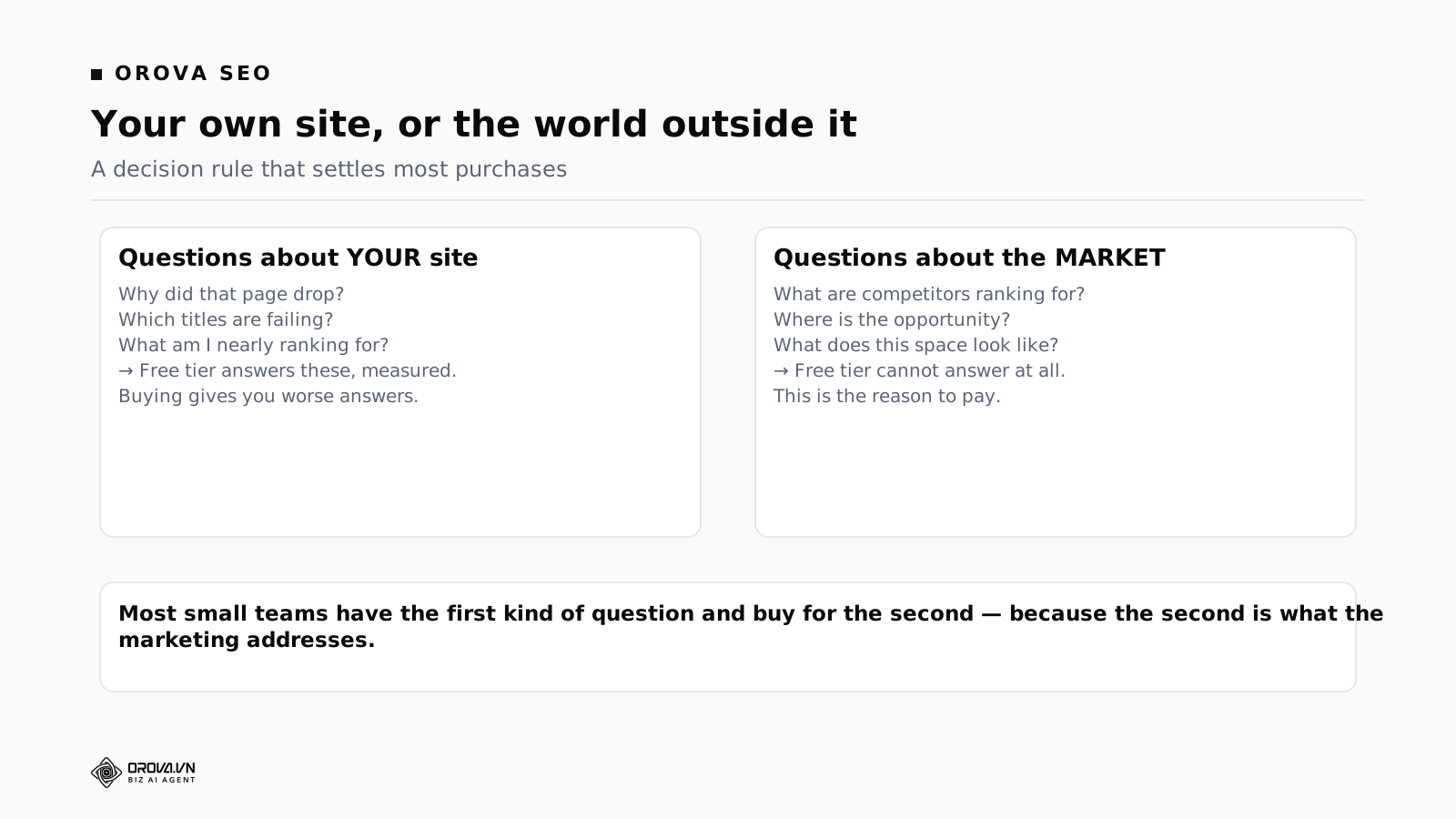
Which gives a simple decision rule. If your questions are about your own site — why did that page drop, which titles are failing, what am I nearly ranking for — you do not need to buy anything, and buying will not give you better answers. If your questions are about the market — what are they doing, where is the opportunity, what does this space look like — the free tier cannot answer them at all.
Most small teams have the first kind of question and buy for the second kind, usually because the second kind is what the marketing addresses.
What good looks like after six months
Four signs, none of which involve owning more tools.
The weekly routine happens without a reminder. Half an hour, same slot, producing a work queue. This is the single strongest predictor of whether a site improves, and it is free.
There is a written list of pages to improve, and it gets shorter. Page-two pages, ranked by impressions, worked through in order. A list that only grows means the routine is producing observations rather than work.
Somebody has cancelled something. Tool spend that only rises means nobody is reviewing it. The annual question — who opened this, to answer what — should produce at least one cancellation.
You can name the terms you decided not to target. Evidence that intent judgement is being applied rather than volume being followed. A team publishing against every high-volume term the tool suggested has outsourced its strategy to an estimate.
If none of those are true after six months, adding a tool will not help. The constraint is the routine, and no purchase supplies one.
Questions worth asking before any purchase
- Which of the six kinds is this, really? If the answer is "all of them", it is one or two with the rest attached shallowly.
- What does it measure versus estimate? Estimates are fine; knowing which is which is not optional.
- How accurate is it in my market and language? Ask for a specific answer. Accuracy in English commercial terms tells you nothing about a smaller market.
- What can this tell me that Search Console cannot? A short answer is a good sign; a long one usually includes things Search Console does tell you.
- Who on my team will open it weekly, and to answer what? If there is no name and no question, the subscription will run unused.
- What happens to my data if I leave? Particularly for content and reporting tools.
The uncomfortable summary for anyone with a budget
If you came here looking for permission to spend, this article probably reads as obstruction. So here is the case for spending, stated fairly.
Tools buy two things reliably: visibility into what you cannot observe yourself, and throughput on work you cannot do at the rate required. Both are real constraints and both are worth money when they bind. A team competing in a crowded market against well-resourced sites, without any view of what those sites are doing, is genuinely handicapped — and that handicap costs more than a subscription.
What tools do not buy is the thing most teams are actually short of, which is a recurring half-hour and someone whose job includes caring about the result. Every failing SEO programme I have looked at was failing at that layer rather than at the tooling layer, and every one of them had at least one subscription nobody had opened in a month.
So the honest sequence is to establish the habit with free tools, notice where it runs out, and then buy the specific thing that removes the specific limit. Done that way, the purchase gets used, because it was bought to answer a question somebody was already asking. Done the other way round — tool first, habit later — the habit usually does not arrive, and the tool becomes evidence of intent rather than a source of results.
A note on trial periods
Almost everything in this category offers a free trial, and trials in SEO tooling are unusually misleading for a structural reason: the thing you want to evaluate takes longer than the trial.
A fourteen-day trial cannot tell you whether a research tool's volume estimates are accurate for your market, because verifying that requires publishing against them and waiting. It cannot tell you whether a content tool's output ranks. It cannot show you whether a crawler's prioritisation was right, because that requires fixing things and observing.
What a trial can tell you, and what to spend it on: whether the data about your own site matches what Search Console says, which is a same-day check and disqualifies more products than people expect. Whether the interface answers a question you actually have, timed. Whether the output — an article, a crawl report, a keyword list — contains anything specific enough to act on. And whether export works.
Four checks, one afternoon, and they are the ones a trial is actually capable of settling. Spending the fortnight exploring features produces a favourable impression and no information, which is what trials are designed to produce.
One more: during any trial, look up three terms you know well and check the tool's numbers against your own experience. If a term you rank for and get steady traffic from is reported as having almost no volume, you have learned something important about the estimates in your market — and you have learned it in ten minutes rather than after a quarter of planning.
What this article deliberately does not include
A ranked list of products, with a winner. That omission is on purpose and worth explaining.
The differences between the leading products within any one of the six kinds are smaller than the difference between owning the right kind and the wrong one. A team that bought a research suite when they needed a crawler has a problem that no amount of choosing well inside the research category solves. And the ranking that would help you depends on your market, your language, your site size and your team's habits — none of which a general article knows.
What is transferable is the decision structure: sort by kind, work out which kind your questions belong to, exhaust the free tier first, then buy one thing and use it for two months. Applied honestly, that produces a smaller and cheaper toolbox than any comparison article recommends, which is the correct outcome for most sites and an unpopular thing to publish.
The short version
SEO tools come in six kinds: platform-native, research, crawlers, rank trackers, content, and link tools. Two of them are free and report measured facts about your own site rather than estimates — and a team using Search Console and analytics competently outperforms a team with four subscriptions and no routine.
Pay when the free tier genuinely runs out: to see outside your own site, to audit a site too large to check by hand, to produce content at a volume manual work cannot sustain, or to report to someone outside the team. Rank tracking is the most over-bought category, because Search Console gives you position data for every query you actually appear for at no cost.
A reasonable minimum for a company under fifty people is Search Console and analytics used weekly, one crawler run monthly, one research tool if you compete against sites you can name, and one content capability if volume is the constraint — buying the improving half before the writing half.
Above all, remember what none of them can do: judge whether a topic deserves a page, make a page worth citing, fix what happens after the click, or compensate for a site search engines cannot crawl. Those four decide whether the work pays, and none of them appears in a comparison table.
And if you take one thing from this, take the free-tier point. The single most under-used asset in small-company SEO is the query report for your own site, sitting there complete and measured, showing exactly which pages appear where and which titles nobody clicks. Most teams look at it monthly at best, and there is no product on the market that would tell them more.
Related reading: GA4 and Search Console for SEO, the zero-click economy and what content is for now, and use-case pages, an underrated SEO asset. If the limit you have reached is the fourth one — a written content plan that is not getting executed, and a list of old pages nobody has time to improve — that is the slot Orova SEO fills, and you can see it at orova.vn. If you have not yet run the weekly routine for a month, do that first; it is free, and it will tell you which slot you actually need better than we can.
Fill the fourth slot, not the third
If your written content plan is not getting executed and old pages are not getting improved, that is the gap Orova SEO fills — bulk writing and bulk optimising, published into your site.
See the gap