
Google Ads Quality Score: What Really Affects the Number
You sort the keyword report by Google Ads Quality Score, ascending, and there it is. The phrase that brings in a third of your leads sits at 4 out of 10, with every sub-metric flashing "below average." So you do what everyone does: open the ad, paste the keyword into every headline you can find, hit publish, and wait. A week later the number hasn't moved. Two weeks after that it drops to 3.
The problem is that people treat this score like a grade on their writing skills, so they keep editing the one thing that's easiest to touch: the ad text. But the number is actually a summary of three separate checks running behind the scenes, and the one pulling your score down is usually not the words in your ad. It's either the exact searches your keyword is catching or what happens once someone lands on your page. Rewriting headlines for the tenth time fixes none of that, and it burns hours you don't have.
This article walks through what actually feeds this score, which of the three checks is likely your real problem, and which common habits (raising bids, pausing embarrassing keywords, keyword-stuffing every headline) do nothing at all. By the end, you'll know exactly where to look first, what to fix, and how to stop treating a diagnostic number like a scoreboard you're losing.
What Is Google Ads Quality Score?
Quality Score is a 1 to 10 diagnostic that Google Ads reports for each Search keyword, estimating how relevant your ad and landing page are to someone searching that term. It combines three components: expected click-through rate, ad relevance, and landing page experience. Google describes it as a diagnostic tool, not a metric to optimise directly.
Three things about that definition matter more than the definition itself.
First, it is a keyword quality score, not a campaign score, not an account score, and not an ad score. Every number you see belongs to one keyword in one ad group. Two identical keywords in two different ad groups can carry two different scores, because they sit beside different ads and point at different pages. If you have ever wondered why the same phrase reads 7 in one campaign and 4 in another, that is why.
Second, the score is built from history on exact matches of that keyword. Google's own documentation is explicit about this: the components are estimated from how the keyword has performed when the search term matched it exactly, regardless of what match type you set. That single sentence explains most of the confusion in this area. If you run a broad match keyword that has picked up nine hundred loosely related queries, the score you see does not average those nine hundred. It reflects the narrow slice of exact matches. Meanwhile the nine hundred loose queries are eating your budget and quietly poisoning the ad group's data in other ways. The score and the waste are two different problems that look like one problem.
Third, it is relative. Your expected click-through rate is not measured against an absolute standard of good writing. It is measured against what Google expects from other advertisers on that same query. Which means your score can fall while your ads get better, if a stronger competitor enters the auction. It also means "Below average" is not an insult. It is a position in a ranking you do not control alone.
The score only exists on the Search Network. Shopping campaigns, Performance Max, Demand Gen and video have no Quality Score column at all, because there is no keyword to attach it to. If your account is mostly Performance Max, you can stop reading the diagnostic entirely and spend that time on feed quality and asset groups. And Quality Score is not Optimization Score. Optimization Score is Google's percentage rating of how closely your account follows Google's recommendations. The two get confused constantly and they measure nothing in common.
One more practical note. A dash instead of a number means the keyword has not collected enough exact-match impressions for Google to estimate anything yet. New keywords, low-volume phrases and long-tail terms often stay at a dash for weeks. That is not a bad score. That is no score. Judging a brand-new ad group by the handful of keywords that happen to have numbers is a reliable way to reach the wrong conclusion.
The Three Quality Score Components and How Each Is Judged
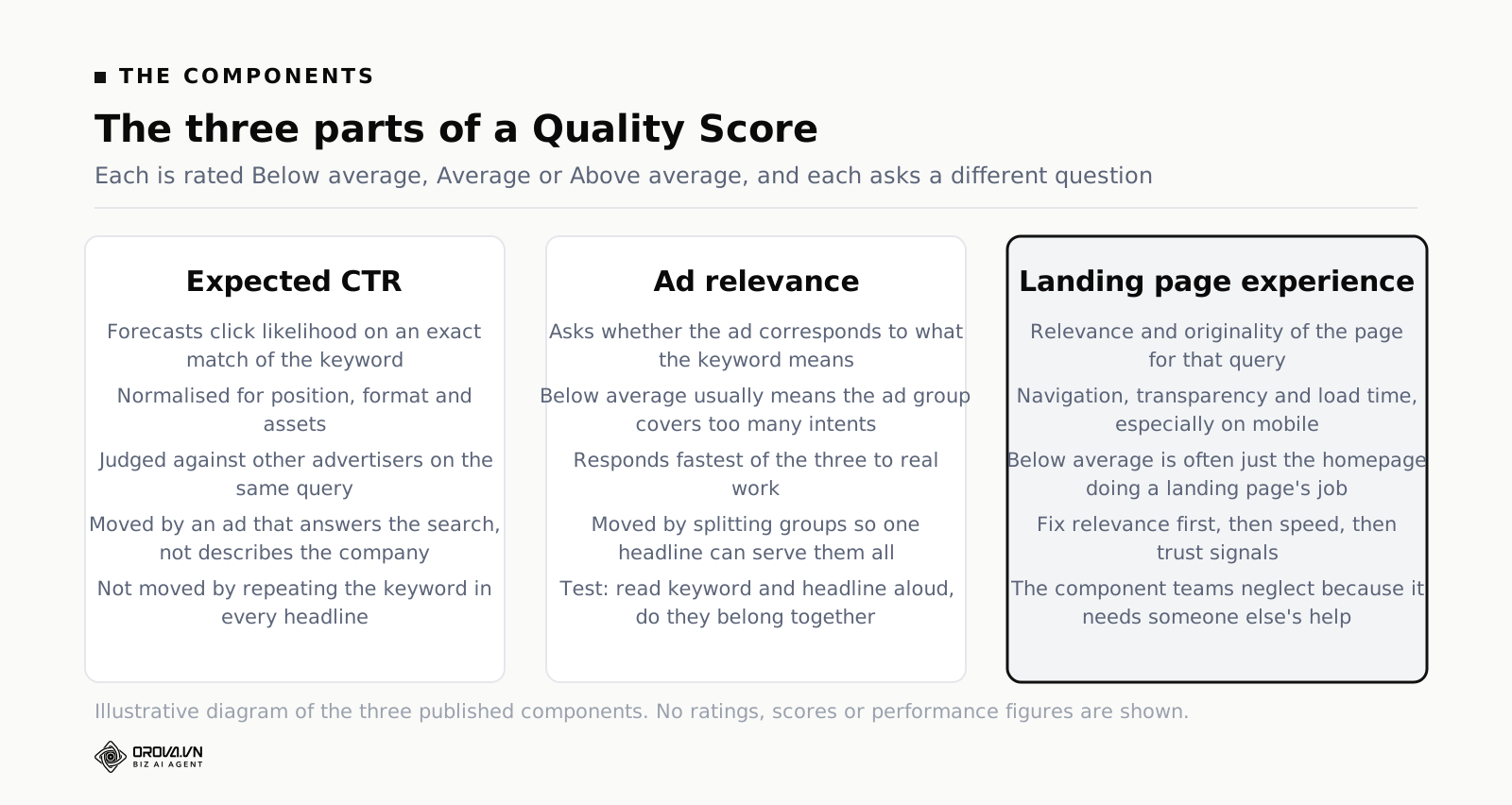
The headline number is almost useless on its own. The three quality score components underneath it are where the diagnosis lives, and each one is reported on a three-point scale: Below average, Average, Above average. Add those three columns to your keyword view and never look at the 1 to 10 figure again without them.
Expected CTR: would someone click this, on this query, against these rivals
Expected CTR is a forecast, not a measurement of your actual click-through rate. Google estimates how likely a person is to click your ad if they searched that exact keyword, and it deliberately strips out the things that would make the comparison unfair. Ad position is normalised out. Format effects and assets are normalised out. The point is to isolate the pull of the ad itself for that query, so that an ad sitting in position four is not punished for sitting in position four.
This is the component people misread most often. Your actual CTR can be excellent while expected CTR reads "Below average", because your good CTR is coming from branded queries or from a position advantage, not from the keyword being judged. It also works in reverse. A keyword with a modest raw CTR can score "Above average" if that query is one where nobody clicks anything much.
What genuinely moves it: an ad that names the thing the person searched for, a headline that answers the query rather than describing your company, and an offer that is legible in eight words. What does not move it: cleverness, exclamation marks, or repeating the keyword four times. Repetition past the first mention adds nothing and costs you a headline slot you could have used for a reason to click.
Ad relevance: does the ad match the intent behind the keyword
Ad relevance asks a narrower question. Not "is this a good ad" but "does this ad correspond to what this keyword means". A "Below average" here is the clearest signal in the whole system, because it usually means one specific thing: the ad group is too broad. You have thirty keywords covering four different intents sharing three responsive search ads, and no single ad can be relevant to all of them.
This is also the component that responds fastest to work, which is exactly why it becomes a trap. You split the ad group, relevance moves from Below average to Average within a couple of weeks, the headline number ticks from 4 to 5, and you conclude that ad group surgery is the answer to everything. Then you do it eleven more times and the numbers stop moving, because relevance was never the binding constraint on the other eleven.
A useful test that takes ten seconds: read the keyword out loud, then read your ad's first headline out loud. If a stranger could not tell they belonged together, relevance is your problem. If they obviously belong together, relevance is not your problem and rewriting the ad again will not help.
Landing page experience: does the page keep the promise
Landing page experience is the component people neglect, partly because fixing it means asking someone else to change a page. Google evaluates whether the page is relevant and original for the query, whether it is easy to navigate, whether it is transparent about who you are and what you do with data, and how quickly it loads, particularly on mobile.
The relevance half is the one that matters more than teams expect. Sending every keyword in a campaign to the homepage is the single most common cause of a "Below average" here. A homepage is by definition about everything, which makes it about nothing in particular. Someone who searched for a specific product or service and lands on a general brand page has to hunt, and the page fails on the exact criterion being judged.
The speed half is real but often over-weighted in advertiser folklore. Load time is one input among several. Shaving four hundred milliseconds off a page that is already reasonably fast rarely changes a component rating, while pointing that keyword at a page actually about that topic often does. Fix relevance first, then speed, then trust signals like clear contact details and a visible privacy policy.
What Quality Score Does and Does Not Affect in the Auction
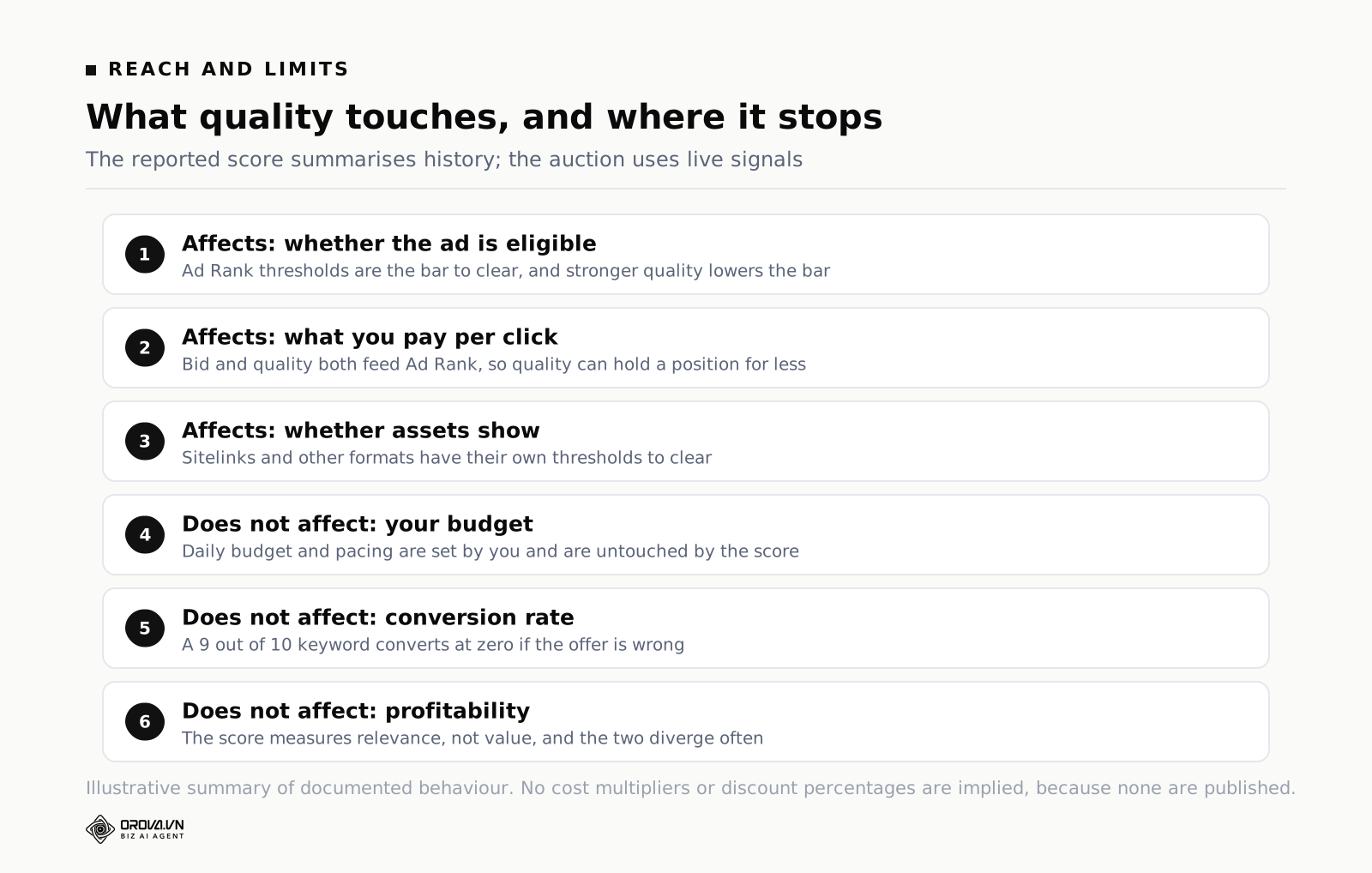
Here is the part that changes how you should treat the number. The 1 to 10 score in your report is not the thing that runs in the auction. Google states plainly that Quality Score is not used at auction time. When someone searches, Google computes Ad Rank fresh, using your bid, real-time quality signals for that specific query and context, the Ad Rank thresholds, the competitiveness of that auction, and the expected impact of your assets and ad formats.
The reported Quality Score is a summary of past performance built for humans to read. The auction uses live signals built for machines. They are related, they move roughly together, and they are not the same object. This distinction matters because it explains why the score can sit still for a month while your actual cost per click drifts, and why two keywords with the same score behave completely differently.
What quality genuinely influences, then:
- Whether your ad shows at all. Ad Rank thresholds are minimum bars an ad has to clear to be eligible. Higher quality lowers the bar you need to clear, which is why a weak keyword can go dark on competitive queries even with a healthy bid.
- What you pay per click. Because Ad Rank is a function of bid and quality together, an advertiser with stronger quality signals can hold a position at a lower cost than a competitor with weaker ones. There is a real economic reward here. There is no published discount table, which is a point we will come back to.
- Where you appear. Position is set by Ad Rank relative to everyone else in that auction, so quality is one of the inputs to whether you sit above the organic results or below them.
- Whether your assets show. Sitelinks, callouts and other formats have their own Ad Rank thresholds. Weak quality can mean a bare text ad against a competitor's full-height one.
What Quality Score does not affect, and this list is the one worth taping to a monitor:
- It does not change your daily budget or the pace at which it is spent.
- It does not change your conversion rate. A 9/10 keyword can convert at zero if the offer is wrong.
- It does not carry across to Shopping, Performance Max or Demand Gen, which have no keyword to attach it to.
- It does not, by itself, tell you whether a keyword is profitable. Plenty of 8/10 keywords lose money and plenty of 5/10 keywords pay the rent.
That last point is the whole reason this article exists. Quality Score measures relevance, not value. Those two things correlate loosely and diverge often.
Why Quality Score Is a Diagnostic and Not a Target
Google's own help documentation calls Quality Score a diagnostic tool and says it is not a key performance indicator to be optimised. That sentence gets quoted a lot and acted on rarely, because a number from one to ten is psychologically irresistible. It looks like a score in a game. Games have high scores. So teams set targets like "get every keyword above 7 this quarter" and then reorganise their work around a number that was designed to point at problems, not to be one.
The failure mode is specific and worth naming. When the score becomes the target, the cheapest way to raise it is to remove the keywords that score badly. That immediately improves the average and changes nothing about the business. It is the same trap as any metric that can be moved by editing the sample instead of improving the work, and it belongs on the same list as the other numbers that best SEO Keyword Research Tools (Free and Paid Compared).
A healthier framing: treat a low score the way you would treat a warning light. The light is not the problem. The light is telling you to open something. Once you have opened it and found a broken match type or a homepage doing a landing page's job, the light has done its work. If you fix the underlying thing and the light stays on, check whether the light is measuring what you assumed.
There is a second reason not to target the number. Because the score is relative to competitors, part of it is genuinely outside your control. A new advertiser with a stronger offer entering your category can push your expected CTR rating down without you touching anything. If your quarterly objective is tied to a number that a stranger can move, you have handed your review to a stranger.
The Levers That Actually Move Google Ads Quality Score
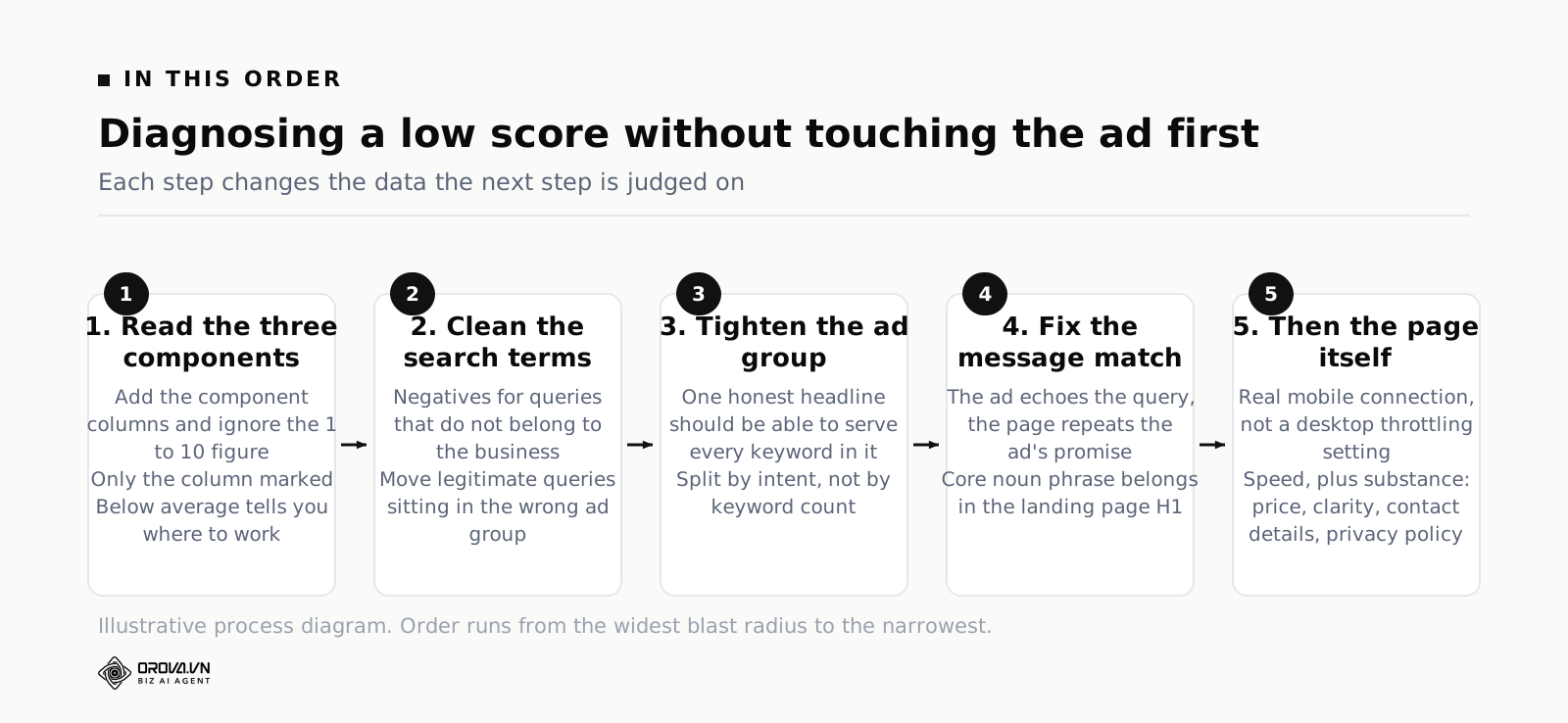
If you want to improve Google Ads Quality Score in a way that also improves the account, work the levers in this order. The order is not arbitrary. It runs from the lever with the widest blast radius to the narrowest, and each step changes the data the next step depends on, so doing them out of order means measuring your own noise.
Lever one: search-term hygiene
Open the search terms report before you touch anything else. You are looking for two things: queries that have nothing to do with your business, and queries that are legitimate but belong to a different ad group than the one they landed in. The first group gets negative keywords. The second group gets moved. Both matter, and most accounts only do the first.
Here is why this is lever one even though the reported score is built from exact matches. Loose matching does two kinds of damage at once. It spends money on people who were never going to buy, and it teaches the ad group's ads to be generic, because you unconsciously write copy that covers the whole messy spread of queries you see coming in. Clean the terms and the ad group's true intent becomes visible. Only then can you write an ad that is genuinely relevant to it.
A worked example, with invented numbers to show the shape rather than to claim a benchmark. Say a business selling commercial coffee machines runs a phrase match keyword for "commercial coffee machine" and, over a month, that keyword picks up 1,400 clicks. You read the search terms and find 380 of those clicks came from queries containing "repair", "parts", "used" or "rental". None of those are things the business sells. Adding four negatives removes roughly a quarter of the keyword's traffic. The ad group's remaining intent is now singular: people who want to buy a new machine. Now an ad written for exactly that intent has a chance at "Above average" relevance, and you have stopped paying for the other quarter. The score improvement is the side effect. The saved spend is the point.
Lever two: ad group tightness
An ad group should contain keywords that could all be answered by the same ad and the same page. That is the only rule. It is not about keyword count, and the old advice about single keyword ad groups has aged badly now that close variants are broad. What matters is intent, not volume.
The test: could you write one headline that would honestly satisfy every keyword in this group? If the group contains "coffee machine for office" and "coffee machine repair near me", you cannot, and no amount of responsive search ad asset shuffling will paper over it. Split. If the group contains "commercial coffee machine", "commercial espresso machine" and "coffee machine for cafe", you can, and splitting further just fragments your data into pieces too small to learn from.
Ad group tightness is where structural decisions pay off or don't, and it is worth getting the wider shape right rather than fixing one group at a time. If your account grew organically over three years and nobody has redrawn the map since, that is a bigger project than a Quality Score cleanup, and the google Ads Account: Setup, Access and Structure Basics is the thing to fix first.
Lever three: message match
Message match is the through-line from query to ad to page. The person typed a set of words. Your ad should echo the substance of those words, not necessarily verbatim, but recognisably. Your landing page headline should then repeat the promise the ad made, in the first screen, before any scrolling.
Broken message match is easy to spot and slightly embarrassing to find. Someone searches "same day pallet delivery", the ad says "Same Day Pallet Delivery", and the page they land on opens with "Logistics Solutions For Modern Business". The ad kept the promise and the page dropped it. Expected CTR looks fine, ad relevance looks fine, landing page experience reads Below average, and every conversation about it is about ad copy.
Three practical rules that cover most cases. Put the keyword's core noun phrase in the landing page H1. Keep the offer in the ad identical to the offer above the fold. Do not send a specific query to a general page just because the general page converts better on average, because the average includes traffic that arrived with a completely different question.
Lever four: landing page speed and substance
Once relevance is right, speed becomes worth your time. Test on a real mobile connection rather than a desktop browser with a throttling setting, because the gap between the two is where most disappointment lives. Look for the usual suspects: uncompressed hero images, third-party scripts loading before content, and chat widgets that block rendering.
Substance matters alongside speed. Google's criteria for landing page experience include original, useful content and transparency about your business. A page that is three lines of copy and a form is fast and empty. A page that answers the question the searcher had, shows a price or a price range, names the company clearly and links to a real privacy policy is doing the job the criteria describe.
Lever five: give it enough impressions to be measured
This is less a lever than a precondition that people skip. Quality signals need data. A keyword with forty exact-match impressions in a month will show a dash or an unstable number that swings with each new week. If you split ad groups so finely that no group accumulates meaningful volume, you will have a beautifully organised account full of keywords nobody can score, including you.
The practical implication: when you restructure, expect a quiet period. Scores go blank, then reappear, then wobble, and the wobble is not a verdict on your work. Give a restructure at least three to four weeks of ordinary traffic before you read anything into the numbers.
Six Myths That Cost Whole Quarters
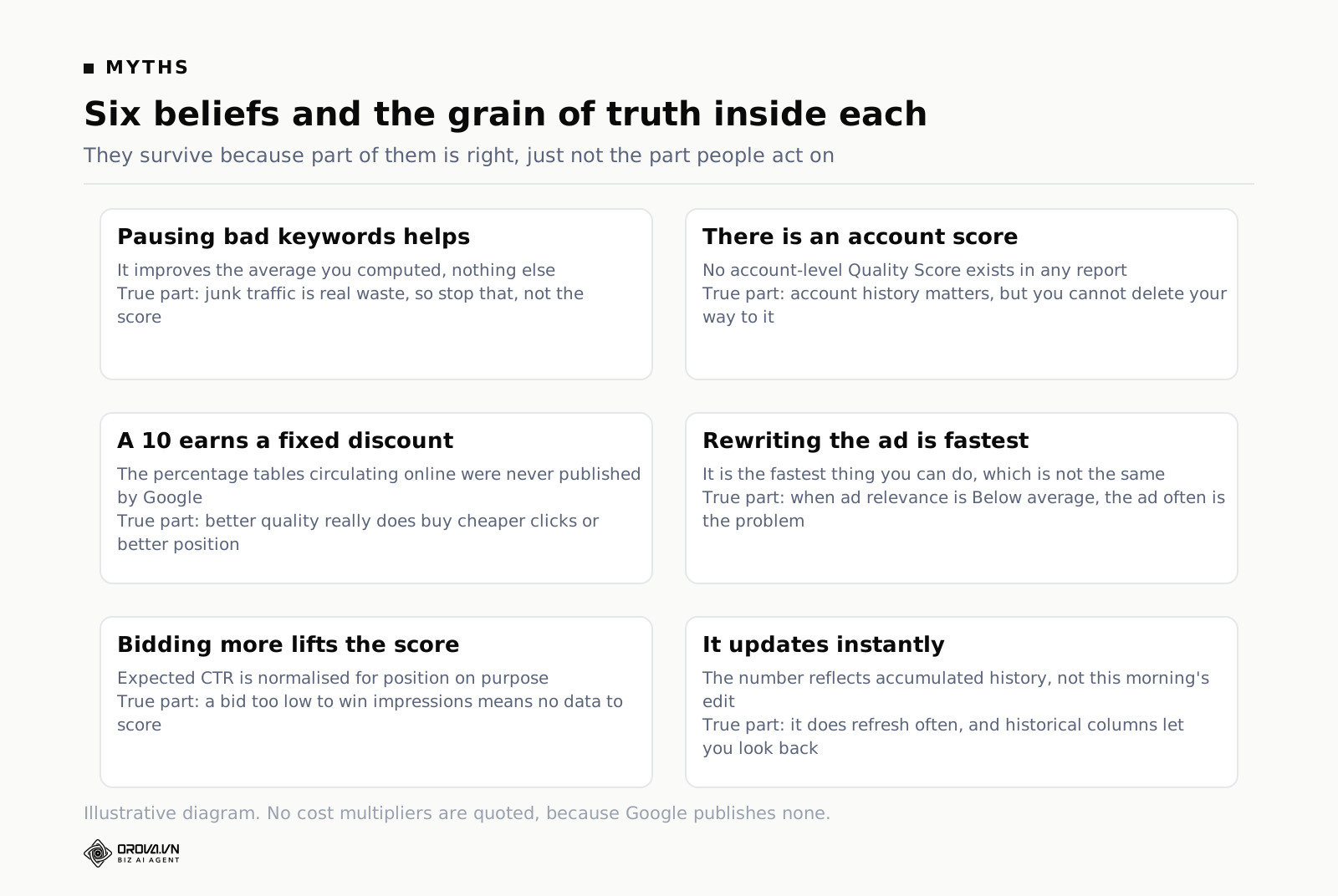
Every one of these is repeated in good faith by people who have run real accounts. They persist because each one contains a grain of something true.
Myth one: pausing low Quality Score keywords improves the account
It improves your average, which is not the same as improving anything. The reported score belongs to a keyword; there is no pooled account grade that a bad keyword contaminates and a pause decontaminates. What pausing actually does is stop that keyword's impressions, which stops its traffic and its conversions along with its embarrassing number.
The grain of truth: a keyword matching junk queries genuinely is harmful, and removing it helps. But the help comes from stopping the wasted spend and the mismatched traffic, not from any scrubbing effect on a score. If the keyword is bringing profitable conversions at 4/10, leave it running and fix the components. A profitable 4 beats a paused 4 every single time.
Myth two: Quality Score is an account-level score
There is no account-level Quality Score. No column, no report, no number. The account-weighted average that some tools and spreadsheets compute is something a human invented for convenience; Google does not publish or use it as a grade.
The grain of truth: your account's history is not irrelevant. New keywords and new ads do not start from nothing, and an account with a long record of relevant advertising in a category behaves differently from a brand-new one. But that is history, not a stored score you can raise by deleting rows. You cannot delete your way to a clean record.
Myth three: a 10/10 keyword gets a fixed discount on clicks
You will find tables online claiming a 10/10 keyword pays fifty percent less than average and a 5/10 pays a certain percentage more. Google has never published any such table. Those figures came from third-party inference on old auction behaviour and get reprinted as if they were documentation.
The grain of truth: better quality really does buy you cheaper clicks or better positions, because bid and quality both feed Ad Rank. The direction is right. The precise multipliers are invented, and planning a budget around invented multipliers gives you a forecast that cannot be wrong in any useful way, because it was never checkable.
Myth four: rewriting the ad is the fastest way to fix a low score
It is the fastest thing you can do, which people experience as the fastest fix. If ad relevance reads Average or Above average, rewriting the ad addresses a component that was not broken. You will get a small, temporary move in expected CTR from novelty and then a return to roughly where you were.
The grain of truth: when ad relevance is genuinely Below average, the ad often is the problem, and rewriting it works. Read the component columns first. That is what they are for.
Myth five: raising your bid raises your Quality Score
Bid is not an input to the quality components. Expected CTR is normalised for position precisely so that buying a higher position does not manufacture a better rating.
The grain of truth: a bid too low to win any impressions means no data, which means no score at all, which feels like a bad score. Bidding enough to be visible is a precondition for being measured. Bidding beyond that buys position, not quality.
Myth six: the score updates the moment you change something
Quality Score refreshes regularly and reflects accumulated history, not your last edit. Change an ad on Tuesday and the number on Wednesday still mostly describes the previous few weeks. Judging a change after two days is reading the past and calling it a result.
The grain of truth: it does update often, and the historical columns let you look back at how it moved. Use those columns to check a change you made a month ago, not the one you made this morning.
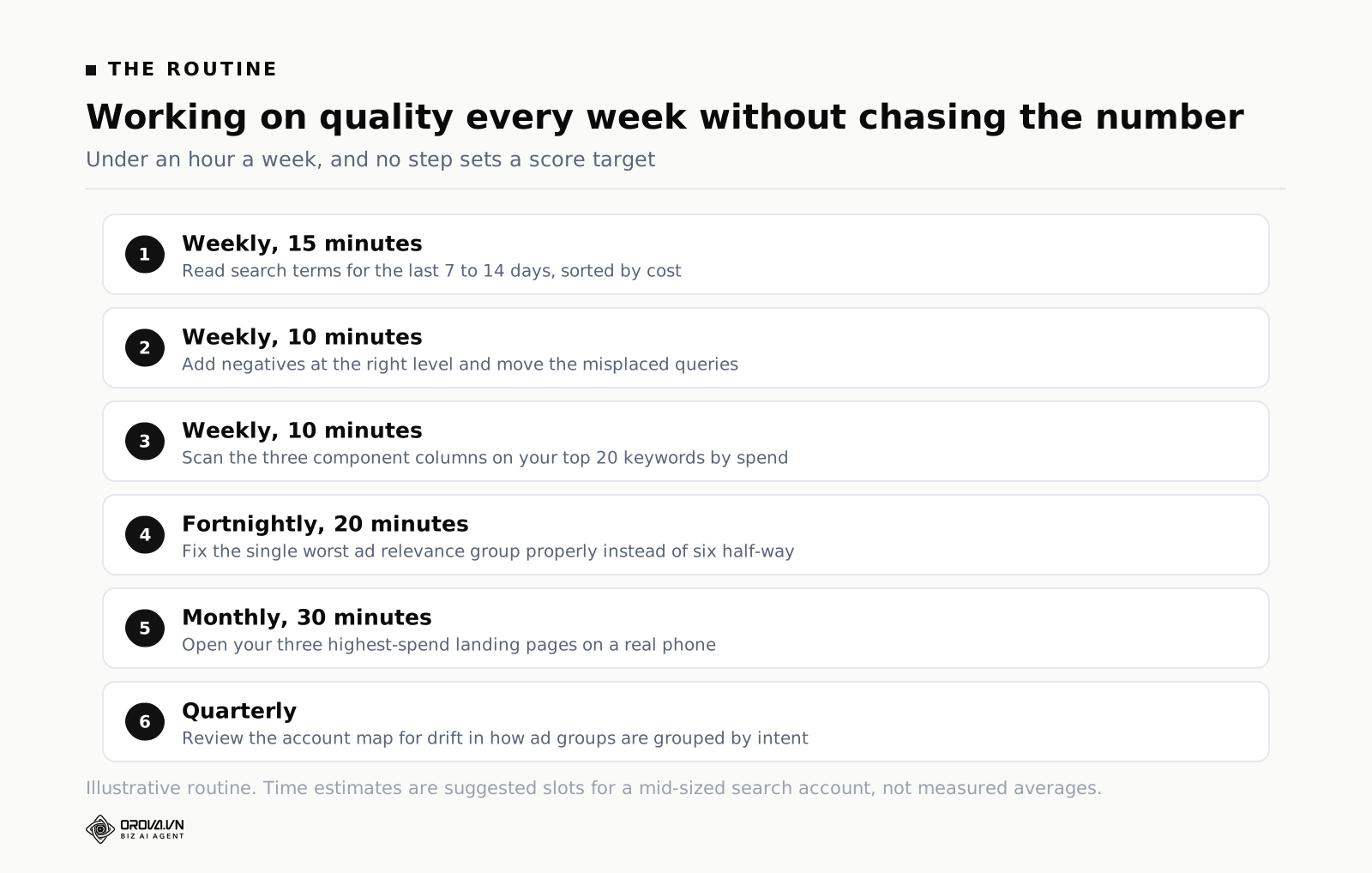
A Weekly Routine That Works On Quality Without Chasing It
The goal of a routine is to keep the work honest when nobody is watching the number. This one takes under an hour a week for a mid-sized search account and never asks you to set a score target.
| Slot | What you do | What you are looking for |
|---|---|---|
| Weekly, 15 minutes | Read the search terms report for the last 7 to 14 days, sorted by cost | Queries that do not belong, and legitimate queries sitting in the wrong ad group |
| Weekly, 10 minutes | Add negatives at the right level, move the misplaced queries onto a list | Whether the same theme of waste keeps returning, which means the keyword itself is wrong |
| Weekly, 10 minutes | Scan the three component columns on your top 20 keywords by spend | Any component that moved from Average to Below average since last week |
| Fortnightly, 20 minutes | Pick the one ad group with the worst ad relevance and split or rewrite it | One group properly fixed, not six groups half-touched |
| Monthly, 30 minutes | Load your three highest-spend landing pages on a real phone | Headline matching the ad promise, load time, and whether a stranger could tell what you sell in five seconds |
| Quarterly | Review the account map: are ad groups still grouped by intent | Drift, which is normal and only visible from a distance |
Two rules make this routine work rather than just exist. First, one fix at a time per ad group, then wait. If you split the group, rewrite the ads and change the landing page in the same afternoon, you will never know which of the three did anything. Second, write down what you changed and when. Quality signals move slowly enough that memory is not a reliable record, and the historical score columns are only useful if you can line them up against a dated list of edits.
Notice that nothing in this table is "check whether Quality Score went up". The score is an input to the first and third rows and an output of everything else. If you have a small set of metrics you actually steer by, this diagnostic is not one of them, and it is worth being deliberate about ad Performance Metrics That Actually Matter versus which ones you simply read.
How Far Manual Work Goes, and Where a Tool Helps
Most of what is described above is genuinely manual and should stay that way. Reading a search terms report is a judgement task. Deciding whether "coffee machine lease" belongs to your buying ad group or a new one is a business decision no tool can make for you. Rewriting a headline so it sounds like a person wrote it is not something to delegate to software either.
What breaks is not the skill. It is the calendar. The weekly slot survives for three weeks, then a launch happens, then a holiday, and two months later the search terms report has grown a layer of dust and three ad groups have drifted. The failure is consistency, not capability, and that is the part worth automating.
That is roughly the shape of what Orova Ads is for. It syncs campaigns, ad groups, ads and daily metrics from Google Ads, Meta and TikTok into one table so you are not reopening three interfaces to see the same week. Its rule sets are written in ordinary sentences with data placeholders and each set runs on its own schedule, so the checks happen whether or not anyone remembers. By default the AI only advises: every suggestion arrives with its reason and the numbers behind it, logged in a history you can approve or reject, and you can move an account to hybrid or fully automatic only for the actions you trust. There are 214 optimisation action codes across the three platforms, 101 of them for Google Ads. Signing up is free and includes 1,000 quota with no card. The reading of intent and the ad group surgery are still yours; the not-forgetting is not.
Frequently Asked Questions
Does Quality Score apply to Performance Max or Shopping campaigns?
No. Quality Score is reported at keyword level and those campaign types do not use keywords, so there is no column and no equivalent diagnostic. For Shopping, the closest analogue is product feed quality: accurate titles, correct categories, real images and complete attributes. For Performance Max, it is asset group quality and audience signal relevance. The underlying principle carries over even though the metric does not.
Why does my keyword show a dash instead of a number?
Not enough exact-match impressions for Google to estimate the components. This is normal for new keywords, seasonal terms and genuinely low-volume long tail. Wait, or accept that some keywords will never accumulate enough volume to be scored. A dash is not a zero and should not be treated as a problem to solve.
Is keyword quality score the same as Optimization Score?
No, and they are unrelated. Keyword quality score is a 1 to 10 relevance diagnostic for a single Search keyword. Optimization Score is a percentage estimating how closely your account follows Google's own recommendations, and it can be raised simply by accepting or dismissing those recommendations. One describes relevance to searchers, the other describes agreement with a recommendation engine.
How long does it take to improve Google Ads Quality Score after a change?
Plan on weeks, not days. The score reflects accumulated exact-match history, so a change needs enough new impressions to outweigh the old record before the rating shifts. For a keyword with steady daily volume, three to four weeks is a reasonable first read. For a low-volume keyword it can take a full quarter, and for some it will never resolve into a stable number at all.
Should I delete keywords scoring 1 or 2?
Check profitability before you check the score. If a 2/10 keyword generates conversions at an acceptable cost, it is doing its job badly on relevance and well on business outcomes, and you should fix the components rather than remove the revenue. If it scores 2 and converts nothing while spending steadily, remove it, but remove it because it wastes money, not because the number is ugly.
Does a low Quality Score on one keyword hurt my other keywords?
Not directly. The diagnostic is keyword-level and there is no pooled score being dragged down. What can genuinely spread is the behaviour behind the low score: an ad group full of mismatched queries produces generic ads, and generic ads weaken every keyword in that group. The contagion is structural, not arithmetic.
What To Do This Week
Pick your single highest-spend keyword with a score of 5 or below. Do not open the ad editor. Open three things instead: the search terms report filtered to that keyword, the ad group it lives in, and the landing page it points at, loaded on your phone.
Then answer three questions in writing. Are the queries this keyword attracts actually the queries you want? Could one honest headline serve every keyword in this ad group? Does the landing page repeat the ad's promise above the fold? Whichever answer is no, that is your work for the next two weeks, and it is the only work. Change one thing, log the date, and leave the number alone until the month is out.
If all three answers are yes and the score is still 5, you have found the situation nobody writes about: the diagnostic is describing a competitive auction rather than a defect on your side. In that case the honest move is to stop working on the score and go look at whether the keyword earns its money. That question has an answer you can act on. The score, at that point, does not.
Stop Guessing, Start Checking the Right Three Things
Doing this properly by hand means pulling search term reports, cross-checking landing pages against ad groups, and reviewing this on a recurring schedule so problems don't quietly pile back up. It's not hard work, but it's the kind of repetitive checking that's easy to skip when the week gets busy, and skipping it is exactly how a score slides from 4 to 3 without anyone noticing why.
Orova Ads is built to handle that recurring checking work for you, keeping an eye on the same signals covered in this article so you're not the one manually re-running the same reports every week. If that sounds like time you'd rather spend elsewhere, it's worth a look.
Put your quality-score rules in writing
Orova Ads lets you write optimisation rules in plain language and have the AI apply them across the account.
Start for free