
Learning Management System for Small Business: Do You Need One?
Most advice about choosing a learning management system for a small business is not written for one. It assumes an organisation with a learning and development team, an IT department to handle the rollout, and a budget line for a consultant to configure it. If you run a company of twenty five people, none of those exist. The person who will administer the system is also doing payroll, and the rollout happens between other things on a Thursday afternoon.
That difference is not a matter of scale. It changes which features matter, which ones are actively harmful, and whether you should buy anything at all this year. A system designed on the assumption that someone will maintain it full time becomes a liability when nobody can.
This guide takes the constraint seriously. It covers the three questions that decide whether you need a system yet, what to deliberately ignore, the failure that closes small deployments down within a quarter, and a plan that assumes the person running it has four hours a week and no help.
Does a learning management system for a small business make sense yet?
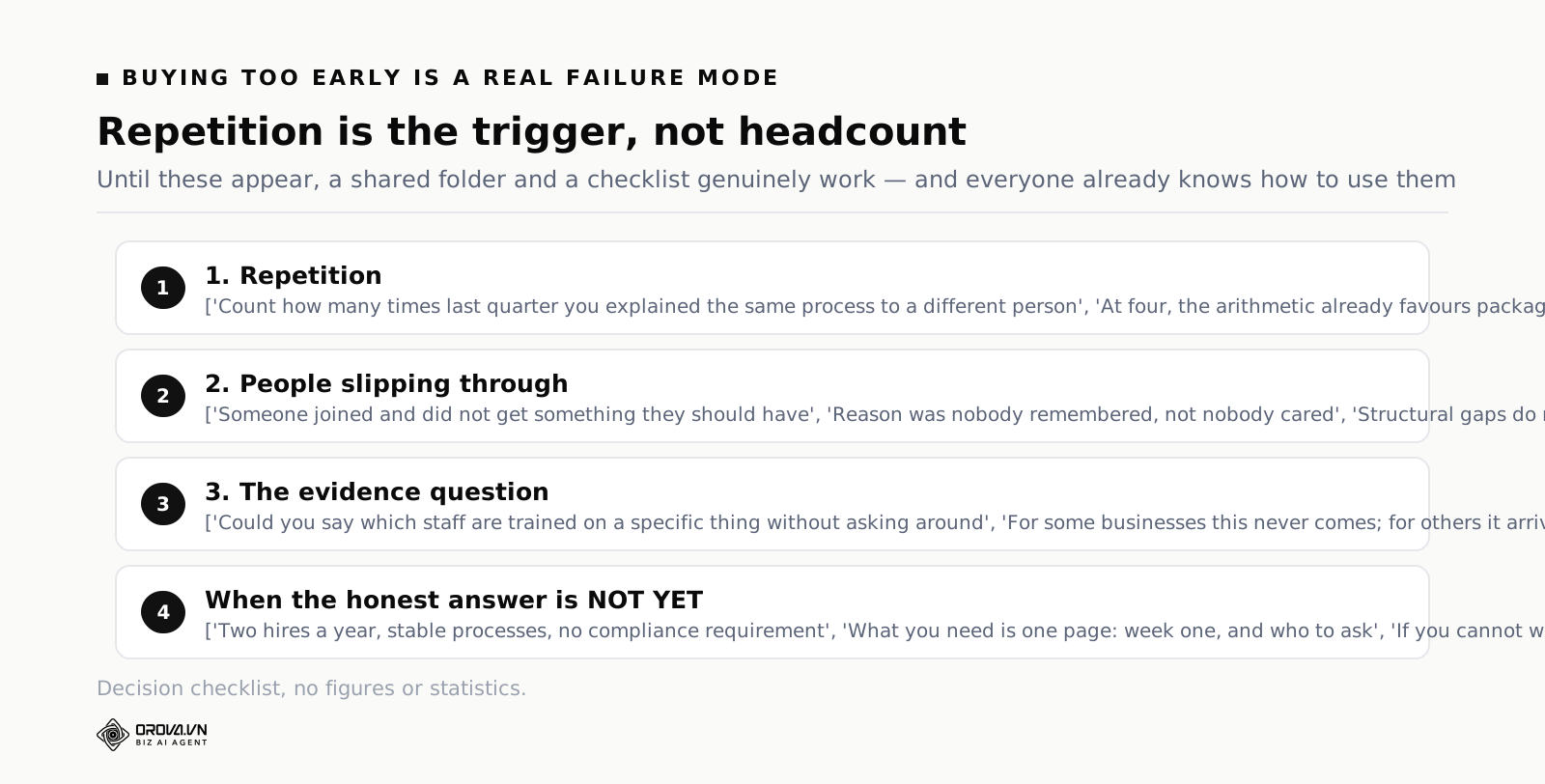
Not until repetition costs you more than the tool. Three signals mean yes: you explain the same thing to a fourth person, new joiners get missed because nothing happens automatically, and you cannot answer who has been trained on what without asking around.
Until those signals appear, a shared folder and a checklist genuinely work, and they have an advantage no system has: everyone already knows how to use them. Buying too early is a real failure mode, not a cautious one — you add a login, a monthly cost and an administration job in exchange for solving a problem you did not have yet.
The three signals, in order of reliability
The first is repetition. Count how many times in the last quarter you explained the same process to a different person. At four, the arithmetic already favours packaging it once.
The second is people slipping through. If someone joined and did not get something they should have, and the reason is that nobody remembered rather than nobody cared, that is a structural gap. Structural gaps do not fix themselves with more diligence.
The third is the evidence question. If a customer, an insurer or an auditor asked which of your staff have been trained on a specific thing, would you know without asking around. For some small businesses that question never comes. For others it arrives with a large contract attached.
When the honest answer is not yet
If you hire twice a year, your processes are stable, and nothing you do carries a compliance requirement, you probably do not need a system this year. What you need is one page: what a new person does in week one, and who they ask.
Writing that page costs an afternoon and delivers most of the benefit people expect from software. If you cannot write it, buying a system will not help — it will give you a place to store a programme that does not exist yet.
What changes when there is no training team
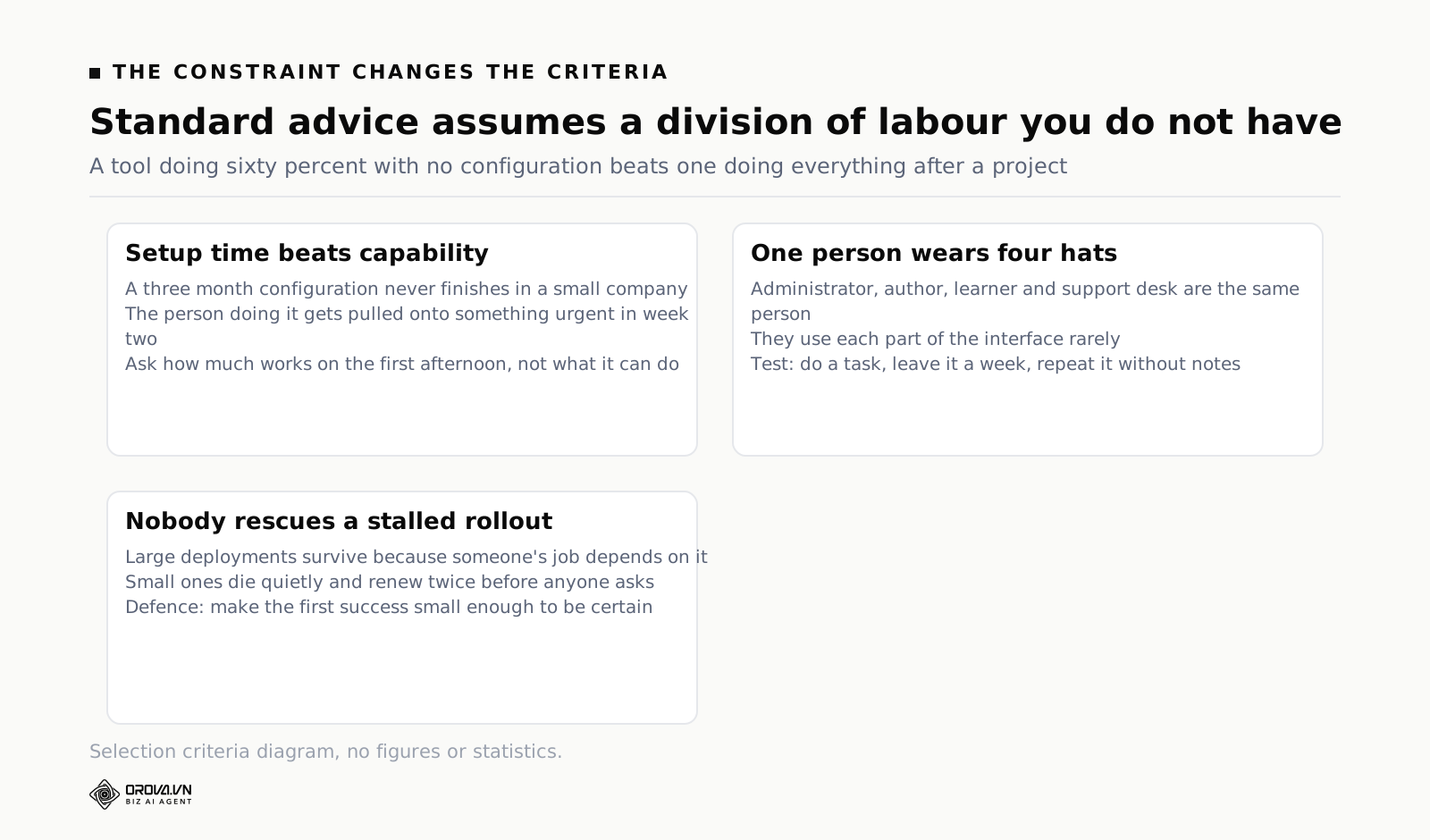
The standard advice assumes a division of labour that does not exist in a small company. Three consequences follow, and each one flips a common recommendation.
Setup time matters more than capability
In a large organisation, a system that takes three months to configure properly is acceptable, because someone is paid to configure it. In a small one, a three month setup means it never finishes: the person doing it gets pulled onto something urgent in week two, and the half-built system sits there accusing everyone.
So the question is not what the software can do but how much of it works on the first afternoon. A tool that does sixty percent of what you want with no configuration beats one that does everything after a project.
The administrator is also the author, the learner and the support desk
In a big company these are four people. In yours they are one, and that person switches roles several times a day. This has a practical consequence that features pages never mention: every interface they touch has to be learnable in passing, because they will use each part of it rarely.
The test that follows is simple. Do something in the trial, leave it a week, then come back and do it again without looking at notes. If you cannot, the tool is too complex for a part-time administrator, regardless of how powerful it is.
Nobody is coming to rescue a stalled rollout
Large deployments survive a bad start because someone's job depends on fixing it. Small ones quietly die: the system stops being mentioned, the subscription renews twice, and eighteen months later someone asks whether we still pay for that.
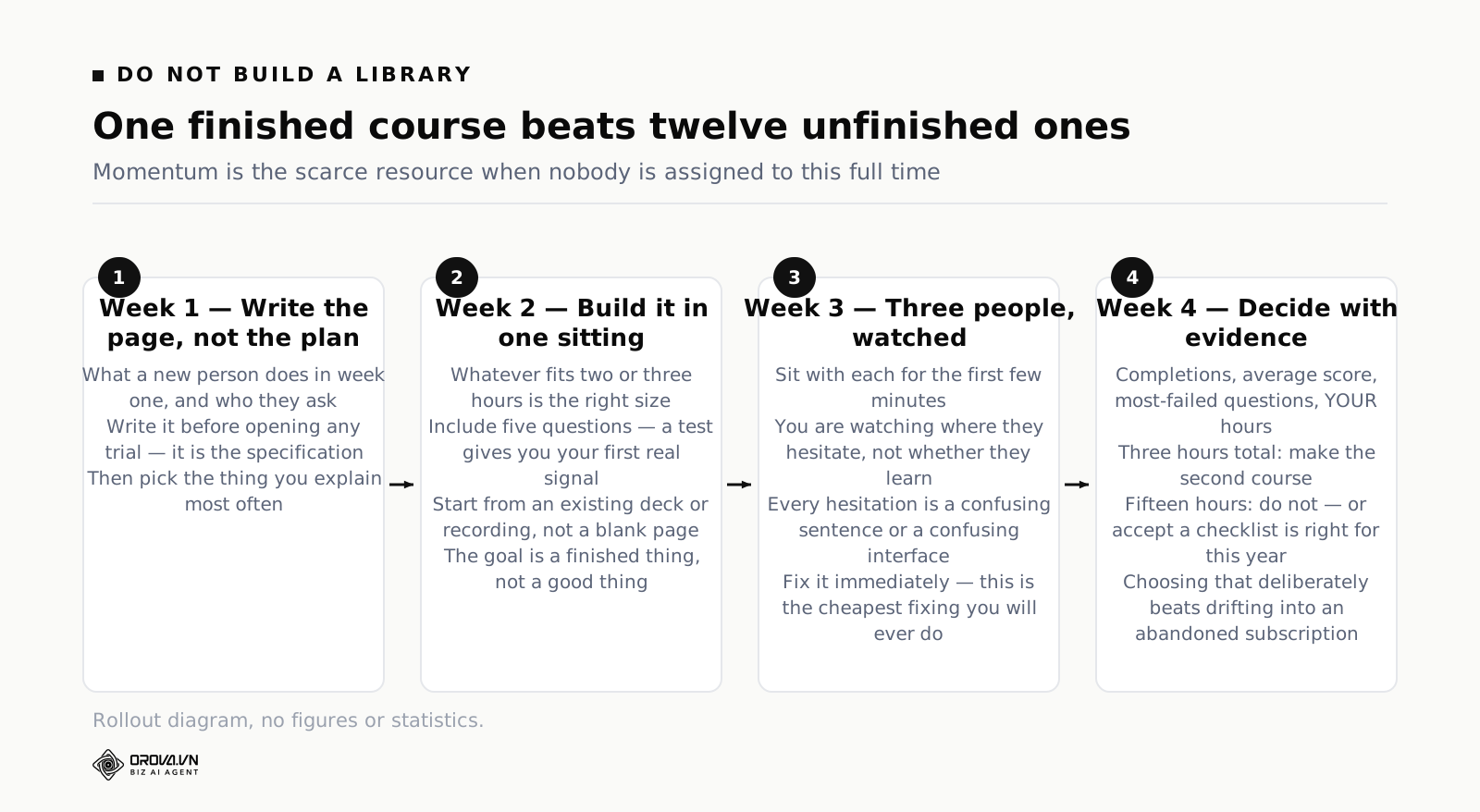
The defence is to make the first success small enough to be certain. Not a library. One course, three people, two weeks. Momentum from a finished thing is the only reliable fuel when nobody is assigned to this full time.
What to deliberately ignore
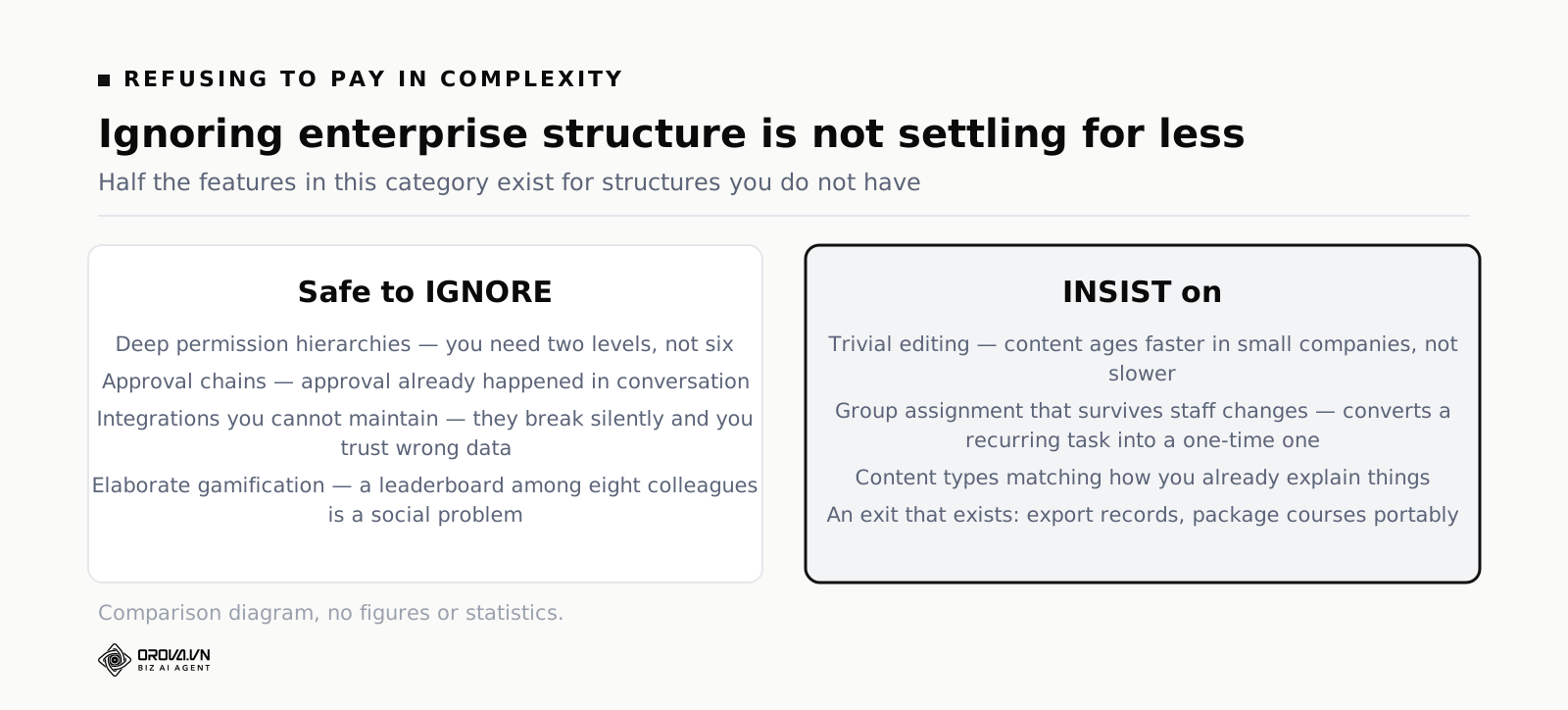
Half the features in this category exist for organisations with structures you do not have. Ignoring them is not settling for less — it is refusing to pay in complexity for something you cannot use.
Deep permission hierarchies
Systems built for enterprises let you define roles, sub-roles, delegated administrators and department-scoped visibility. With twenty five people you need two levels: people who can edit, and people who learn. Building more creates a structure you have to maintain forever in exchange for nothing.
Approval chains
An approval workflow makes sense when a request has to travel through people who do not sit near each other. In a small company, approval is a conversation that already happened before anyone opened the system. Turning it into a workflow adds a step that people will route around.
Integrations you cannot maintain
Connecting the training system to your HR tool sounds efficient and often is, in companies with someone to look after it. Integrations break quietly — a token expires, a field changes name — and the failure mode is silent wrong data. If nobody checks, you end up trusting a sync that stopped working in March.
A monthly manual export and import is less elegant and more honest: when it does not happen, you know.
Elaborate gamification
Points, badges and leaderboards work on large populations where competition finds its level. Among eight people in one team, a leaderboard is a public ranking of colleagues, which is a social problem rather than a motivation feature. Skip it, or keep it to genuinely playful contexts like a live quiz session.
What to insist on instead
Four things carry disproportionate weight when the administrator is part time.
Editing has to be trivial
Small businesses change how they work more often than large ones, not less — you just do it without announcing it. So a course written in March will be wrong by July. If fixing one sentence means re-uploading a file, it will not get fixed, and within a year nobody trusts the content.
Test it directly: change one paragraph in a live course and see how many steps it takes and whether learners see the new version immediately.
Group assignment that survives staff changes
This is the single highest-value feature for a small team, because it converts a recurring task into a one-time one. Assign to a group once, and new members inherit what the group has. Without it, someone has to remember to assign things to every new joiner, and in a company with no dedicated administrator, remembering is exactly what fails.
Content types that match how you already explain things
Small businesses tend to explain by showing and by talking, not by writing formal documents. If a tool only handles polished written modules, you will not use it, because producing polished written modules is a skill and a time cost you do not have.
What helps is being able to turn what you already produce — a recorded walkthrough, an existing slide deck, a voice explanation — into something a new person can follow. The closer the tool sits to your existing habits, the more likely the second course gets made.
An exit that exists
Small businesses change tools more often, because needs shift fast and budgets are reviewed hard. Before subscribing, confirm two things: you can export records as a file, and you can package courses in a standard format another platform can read. With both, a change of mind costs a weekend rather than a rebuild.
The failure that closes small deployments
Almost every abandoned small-business system failed the same way, and it is not a software problem.
Someone buys it with genuine enthusiasm. They begin building the library, because a library feels like the goal. Four courses in, the urgent work returns, and the library sits at four courses — none of them assigned to anyone, because the plan was to launch once it was complete.
Three months later the subscription is a line item nobody defends. The content was never wrong; it simply never reached a learner, so it never produced any evidence of value.
The inversion that prevents it
Do not build a library. Build one course and put it in front of people in the same fortnight. A single finished course that three people completed is worth more than twelve unfinished ones, not because of the content but because it produces the two things that keep a project alive: proof it works, and a reason for someone else to ask for the next one.
Concretely: pick the thing you explain most often, keep it under twenty minutes, add five questions, assign it to three people, and watch them use it. Two weeks. Then stop and decide whether to continue, using what you learned rather than what you hoped.
The second failure, quieter than the first
The other way these end is drift. The system works, courses get assigned, and then the content ages. Nobody owns it, so nobody notices the process changed in May. Learners spot it, stop trusting it, and start asking colleagues again — which is where you were before you bought anything.
The fix costs nothing: write a name and a review date on every course, and keep both visible. In a small company that is genuinely enough, because the person named will actually see it.
A four week plan for one part-time administrator
Week one: write the page, not the plan
One page: what a new person does in week one, and who they ask. If this page does not exist, write it before you open any trial — it is the specification, and writing it often reveals that you need less software than you thought.
Then pick the single thing you explain most often. Write one sentence saying what someone can do after learning it. Both tasks fit in an afternoon.
Week two: build it in one sitting
Deliberately restrict yourself to one sitting. Whatever you can build in two or three hours is the right size for a first course; anything larger will not be finished. Include five questions, because a test is what turns watching into learning and gives you your first real signal.
If you already have a slide deck or a recording that covers most of it, start there rather than from a blank page. The goal this week is a finished thing, not a good thing.
Week three: three people, watched
Assign it to three people and sit with each of them for the first few minutes. You are not checking whether they learn; you are watching where they hesitate. Every hesitation is either a confusing sentence or a confusing interface, and both are worth knowing before anyone else sees it.
Fix what you find immediately. This is the cheapest fixing you will ever do.
Week four: decide with evidence
Write half a page: how many finished, average score, the questions most often wrong, and how many hours you personally spent. The last number decides whether this model scales for you.
If it cost you three hours in total, make the second course. If it cost fifteen, do not — find which part was repetitive and let the tool take it, or accept that a one-page checklist is the right level for your company this year. Both are legitimate answers, and choosing the second deliberately is far better than drifting into an abandoned subscription.
Seasonal and temporary staff
This is the situation where small businesses diverge most sharply from the assumptions built into these tools. A restaurant takes on eight people for summer. A retailer doubles staff in December. An agency brings in contractors for one project. All of them need training, and none of them fit a model designed around permanent employees who join once and stay.
Why it breaks the usual approach
Three things go wrong at once. The training has to work in one shift rather than four weeks, because there is no four weeks. The people involved may never return, so investment in their long-term development makes no sense. And your pricing may be counted per active learner, which means your quiet months subsidise a spike you did not plan for.
The instinct is to shorten the normal programme. That produces something worse than either option: too long to complete in a shift, too shallow to be useful.
Build a separate, deliberately shorter thing
What works is a genuinely different course, not a compressed one. Aim for the shortest content that gets someone to safe and useful — the handful of things where a mistake reaches a customer or hurts someone. Everything else can be learned by asking, because for a two month stint, asking is fine.
This has a pleasant side effect. Writing the short version forces you to identify what actually matters, and that list is usually a better induction for permanent staff too. Several teams find their seasonal course becomes the real week-one course, with the longer material moved to week three where it belongs.
Two things to check on pricing before a busy season
First, how a learner who is active for two months is counted, and whether removing them frees the slot for the next intake. Second, whether their records survive removal — if you rehire the same people next summer, you want to know who already did the induction. Products differ here, and the difference only becomes visible in your second season.
Training people who do not work for you
Small businesses train outsiders more often than large ones, in proportion. Resellers who need to know the product. Contractors who must follow your safety rules on site. Franchisees. Sometimes customers, when the product needs explaining before it gets used properly.
This is worth deciding early, because it changes one requirement substantially and most other things not at all.
The requirement it changes
Outsiders should not need an employee account. If the only way to give someone access is to add them as a member of your workspace, you will either pay for people who are not staff or, more likely, email them a file and lose all tracking.
What you want instead is the ability to share a course by link, with a choice of how open that link is: anyone who has it, only people signed in, or only assigned learners. That single capability covers reseller training, contractor briefings and customer onboarding without any additional structure.
The thing that does not change
The content mostly does not need rewriting, with one exception: material written for staff often contains internal detail — margins, supplier names, escalation contacts — that should not go outside. So the sensible habit is to decide the audience before writing rather than after, and keep external-facing courses free of internal numbers from the start.
Retrofitting this is the expensive path. Reviewing thirty existing courses to find which paragraphs cannot leave the building is a job nobody does, so in practice people either share nothing or share carelessly.
A small case that pays for itself quickly
If you sell through resellers or install on customer sites, the same questions arrive by phone every week. Packaging the answers once and sending a link is the clearest return available in this whole category, because it replaces work you are definitely already doing with something that scales at no extra cost per person.
Cost, honestly
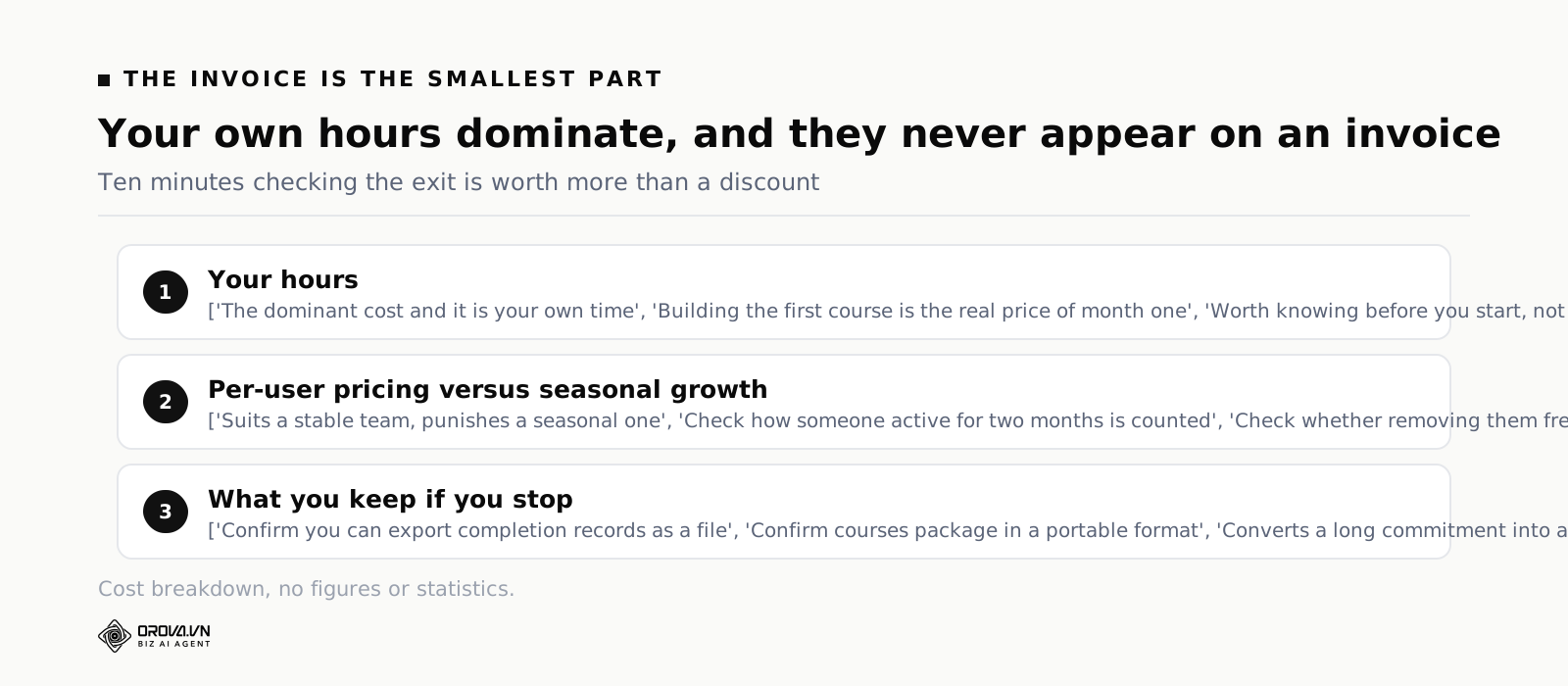
Subscription price is the easiest number to compare and the least useful. Three costs matter more for a small business.
Your hours
The dominant cost, and it is your own time, which never appears on an invoice. If building the first course takes twelve hours of the owner's time, that is the real price of the first month, and it is worth knowing before you start rather than discovering it midway.
The per-user model versus how you actually grow
Most tools price per active learner, which suits a stable team and punishes seasonal ones. If you take on ten temporary staff every summer and train all of them, check how the pricing treats people who are active for two months. This is the sort of detail that turns a comfortable monthly figure into an uncomfortable annual one.
What you keep if you stop
The cost of leaving is easy to ignore and easy to check. Confirm before you subscribe that you can export completion records and package courses in a portable format. Doing that check takes ten minutes and is worth more than a discount, because it converts a long commitment into a reversible one.
When one place for all of it is worth paying for
The threshold is repetition, not headcount. When the same explanation reaches a fourth person, when a new joiner gets missed because nothing happens automatically, and when you cannot answer who has been trained on what without asking around, a tool starts buying back time you cannot otherwise get.
Orova Training is built to be usable by one person without a project. It keeps courses, materials, quizzes, certificates and learners in one place. Materials come in ten types — five you build yourself, including text with a proper editor, uploaded slides, video, podcast and flashcard decks, and five drafted by machine from what you already have: written lessons, slides with per-slide chat editing, podcasts scripted for one or two hosts using thirty previewable voices, three-dimensional flip card decks and slide videos with subtitles. Quizzes run as server-graded exams or as a live ranked mode people join by QR code. Certificates are issued automatically at the pass mark, carry a public verification code and export to PDF. Assignment works three ways — whole workspace, by group, or to named people — so a group assigned once keeps working as people join it, which is the feature that matters most when nobody is watching the system full time. Completion rules and real study time are there when you need them, and courses export as SCORM packages if you outgrow it. The interface runs in six languages and new accounts get a thousand quota to build something real before deciding.
The honest limit: none of this substitutes for the afternoon spent deciding what is worth teaching. The tool removes the repetitive half of the work. The half where you choose what a new person needs in week one is still yours, and it is the half that determines whether any of this was worth doing.
Common questions
How few people is too few
There is no headcount floor, but there is a rhythm floor. Two hires a year with stable processes does not need a system. Two hires a quarter, or one process that changes often, usually does. The question to ask is how often you repeat yourself, not how many people you employ.
Can we just use a shared drive and a checklist
Yes, for a long time, and many should. The point at which it breaks is specific: when two versions of the truth exist, when chasing becomes your main activity, and when nothing happens automatically for a new joiner. Until then a drive plus a checklist is a real system with the advantage that nobody needs training to use it.
What about free tiers
Useful for evaluating, risky as a destination. The two things to check are the limit you will hit first — usually learners or storage — and whether your content and records leave with you if you stop. A free tier you cannot export from is not free; it is a deposit.
What if the person who set it up leaves
In a company of twenty five this is a genuine risk rather than a theoretical one, because the system is usually understood by exactly one person. Two cheap habits remove most of the exposure. First, keep the account owner as a role rather than a personal login, so access does not depend on one mailbox. Second, write half a page describing how it is arranged — which groups exist, which courses are mandatory, who to contact about billing — and keep it somewhere outside the system itself. That page takes twenty minutes and is the difference between a handover and an excavation.
Do we need certificates in a small company
Not for internal pride, but often yes for external reasons. If a customer, insurer or auditor may ask for proof of training, a certificate with a verifiable code is far easier than reconstructing records. If nobody will ever ask, treat certificates as optional and spend the effort on content instead.
How is this different from choosing a corporate system
The criteria genuinely differ: setup time and maintainability outrank capability when there is no dedicated administrator. If you want the enterprise-side requirements for comparison, they are covered in the corporate LMS guide. If your problem is narrower than delivery — you mostly need assessments — start with choosing a quiz tool instead, which is a much smaller commitment.
Should we wait until we are bigger
Waiting for size is the wrong trigger, because the problem this solves is repetition and repetition arrives before headcount does. A ten person company that hires three people a quarter repeats itself more than a fifty person company that hires twice a year. There is also a quieter argument for starting small: the habits are easier to form while there are five courses than while there are forty, and the person who builds the first one while the stakes are low becomes the person who knows how it works. Starting early with something deliberately tiny costs very little and avoids the scramble later.
Who should own it if there is no HR department
Whoever answers questions from new joiners today. That is usually an operations lead or the owner. Formalise it with hours rather than a title — two hours a week that are genuinely protected beats an impressive job description with no time attached. And name a second person who knows how it works, because a single point of knowledge in a small company is a real risk.
What to do this week
Four things, none of them requiring a purchase.
One, count how many times in the last three months you explained the same thing to a different person. If the answer is four or more for any one topic, you have found your first course and your business case in the same number.
Two, write the one page: what a new person does in week one, and who they ask. Do this before opening any trial, because it is the specification and it sometimes shows that a page is all you needed.
Three, name the person who will run this and the hours per week they genuinely have. Two protected hours beats a vague commitment to prioritise learning.
Four, build one course under twenty minutes in a single sitting and assign it to three people within the same fortnight. Do not build a library first. One finished course that three people completed will tell you more about whether this suits your company than any amount of comparing products.
Usable by one person without a project
Orova Training keeps courses, materials, quizzes, certificates and learners in one place. Group assignment keeps working as people join, which matters most when nobody watches the system full time.
Try it free