
Candidate Screening: A 15-Minute Phone Interview Script
Candidate screening is the stage between the CV pile and the real interview: a short, structured check that a shortlisted applicant meets the non-negotiable requirements of the role. It is not there to assess depth, motivation or fit. It exists to answer one question — is this person eligible to go further — consistently, for everybody.
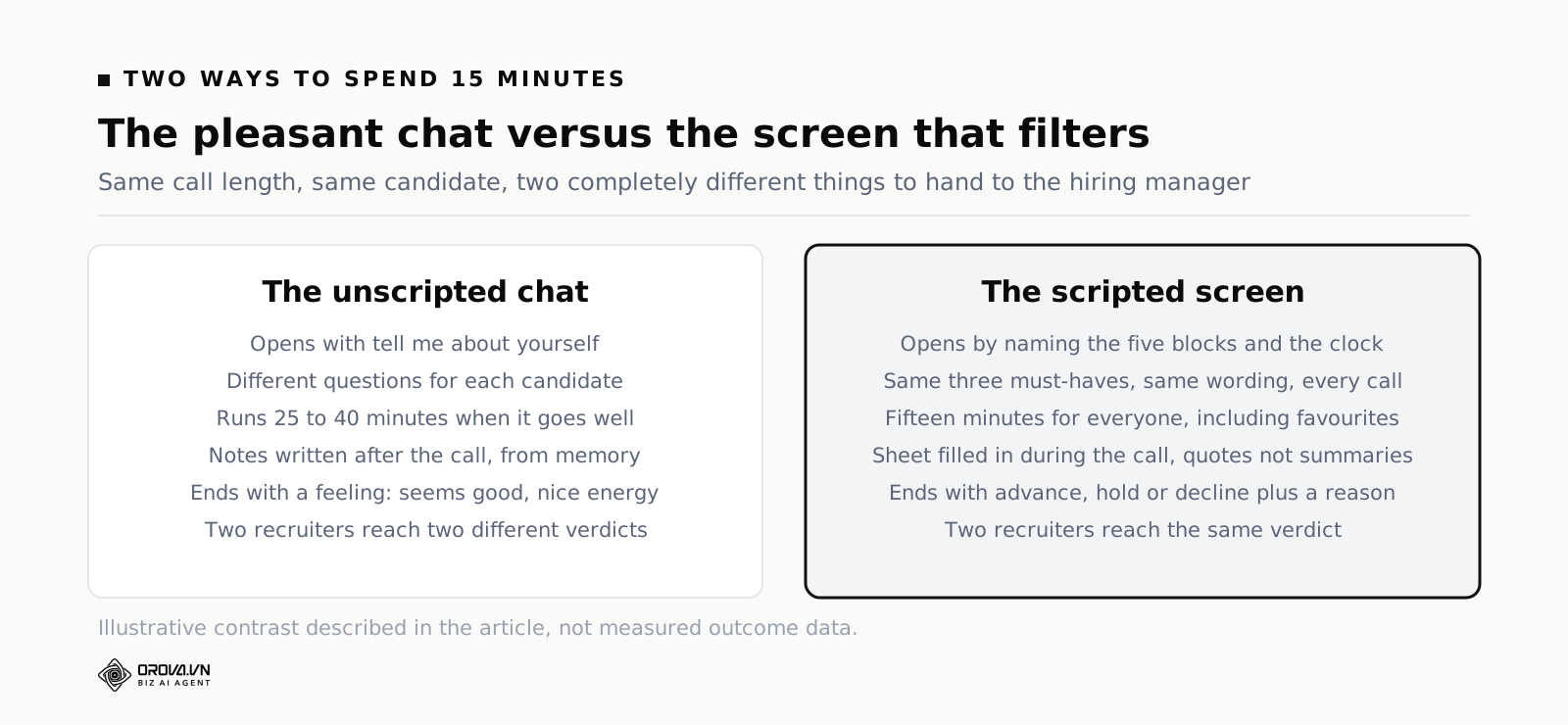
It is 3pm on a Tuesday and you have blocked the afternoon for screening calls. The first goes fine — warm candidate, good story, twenty-six minutes. You hang up feeling positive, open your notes, and find four words: "seems good, nice energy". The second call also goes fine. So does the third. By five o'clock you have talked to five people and you cannot rank any of them against each other, because you asked each one slightly different questions and wrote down slightly different things.
Then the hiring manager asks the only question that matters: which two should I meet? And you answer from memory, from tone of voice, from who happened to be funny. Two of the five advance. Nobody is quite sure why those two. A week later one of them turns out to be unable to work the shift the role requires, which was on the job description in bold, and which nobody actually asked about because the conversation was going so pleasantly that interrupting it felt rude.
That is the normal failure mode, and it is a design problem rather than a rapport problem: no script, so every call is different; no scoring, so the call ends with a feeling instead of a decision. Feelings do not survive a week and they do not transfer to a second recruiter.
Here is the short version. Candidate screening should take fifteen minutes on the phone, follow a fixed script broken into timed blocks, test only the must-have requirements, and end with a written score and one of three outcomes before you hang up. Everything else — depth, motivation, culture, potential — belongs in the interview after it. This article gives you the script line by line, a one-page scoring sheet you fill in during the call, and decision rules tight enough that two different recruiters screening the same candidate reach the same result.
What is candidate screening actually for?
A phone screening interview exists to answer one question: does this person meet the must-have requirements well enough to justify an hour of someone else's time? It is not a mini-interview and not a culture chat. Fifteen minutes, a fixed script, three must-haves confirmed, logistics checked, and a written score before you hang up.
Think about the position of the call in your process. Before it, you have a document — a CV, maybe a cover letter, maybe an application form. After it, you have a structured interview that costs the hiring manager an hour, plus your time, plus the candidate's time and possibly a half-day of leave. The phone screen is the cheapest filter you own. Its job is to protect the expensive step, and to do that it only has to catch a specific kind of error: the candidate whose document looks right but whose reality does not match it.
That error has three flavours, and a well-built candidate screening call catches all three:
- The claim that evaporates. The CV says five years in a ticketing system. On the phone, the candidate has used one for three months as part of a wider role. Not a lie exactly, but not what you screened for.
- The blocker nobody asked about. Shift, location, notice period, right to work, salary expectation. Any one of these can end a process at offer stage, which is the most expensive place to end anything.
- The document that undersells. This one goes the other way. A thin, badly formatted CV that scored low on paper turns out to belong to someone who has done exactly the work. Fifteen minutes rescues them.
Notice what is not on that list. You are not assessing depth of skill, you are not assessing whether they would be good to work with, and you are not selling the role at length. Those are real activities but they belong to a different meeting with a different budget. If your phone screen tries to do them, it will run to forty minutes, you will do four a day instead of ten, and you will still not have a comparable record of any of them.
Why you screen for must-haves only, and not the whole criteria set
If you have already turned your job description into a weighted criteria list — which is the method described in job Posting Template: Write One, Get a Hiring Scorecard Too — you might have twelve or fourteen criteria sitting in front of you. The temptation is to walk the list on the phone. Do not. Three reasons, and they compound.
First, time. Fifteen minutes minus the open, the logistics, their questions and the close leaves you about eight minutes of actual assessment. Eight minutes across fourteen criteria is thirty-four seconds each, which is enough time to hear a yes and nothing else. Eight minutes across three criteria is enough to hear an example.
Second, reliability. A phone call is a bad instrument for measuring most things. It is good at confirming facts ("have you done X, in what tool, for how long") and terrible at measuring quality of work, which needs either evidence you can read or a structured interview with a rubric. Asking a nuanced question badly and scoring it fast is worse than not asking it, because it creates a number you will later treat as real.
Third, the criteria were designed for different instruments. In a weighted criteria set, the groups have natural homes. Must-have criteria are mostly binary or near-binary facts, and facts are exactly what a call confirms. Important and preferred criteria usually need depth, so they belong in the interview stage, where you can build interview Questions to Ask Candidates, Built From Your Own C. Basic criteria were usually already visible in the document. Flexible criteria are tie-breakers you use at the end, not filters you apply at the start.
So the rule is: the phone screen tests the must-have group, and nothing else gets a score. You will still hear things about the other criteria — you should write them down — but they are notes for the next round, not inputs to today's decision.
How many must-haves? Three is the working number. If your must-have group has six items, two things are probably true: some of them are not really must-haves, and you are about to run a call that cannot finish. Take the three with the highest weights. If two must-haves are pure yes/no facts that take ten seconds each — right to work, a specific certification — count them as half a slot and keep the depth for the substantive one.
A worked example you can copy
Everything below uses one invented role so the script has something concrete in it. The role is a Customer Support Specialist at a B2B software company, evening shift, part on site. The must-have criteria, taken from the criteria set with their weights, are:
- M1 (weight 10): at least 18 months handling inbound customer tickets in a ticketing system.
- M2 (weight 9): written English strong enough to send replies to customers without an editor.
- M3 (weight 8): available for the 2pm to 11pm shift, on site three days a week.
These numbers are an example, not a benchmark — your weights come from your own role. What matters is the shape: one substantive must-have that deserves a real probe, one you can test by observation, and one that is a hard yes or no.
The 15-minute candidate screening script, block by block
Five blocks. Each one has a time budget, a thing to say, a thing to listen for, and a thing to write down. Keep the sheet in front of you and fill it in as you go, not after. The clock discipline is the part people skip and it is the part that makes the whole thing work: if you let block two run to nine minutes, you will drop the logistics block, and the logistics block is where the expensive surprises live.
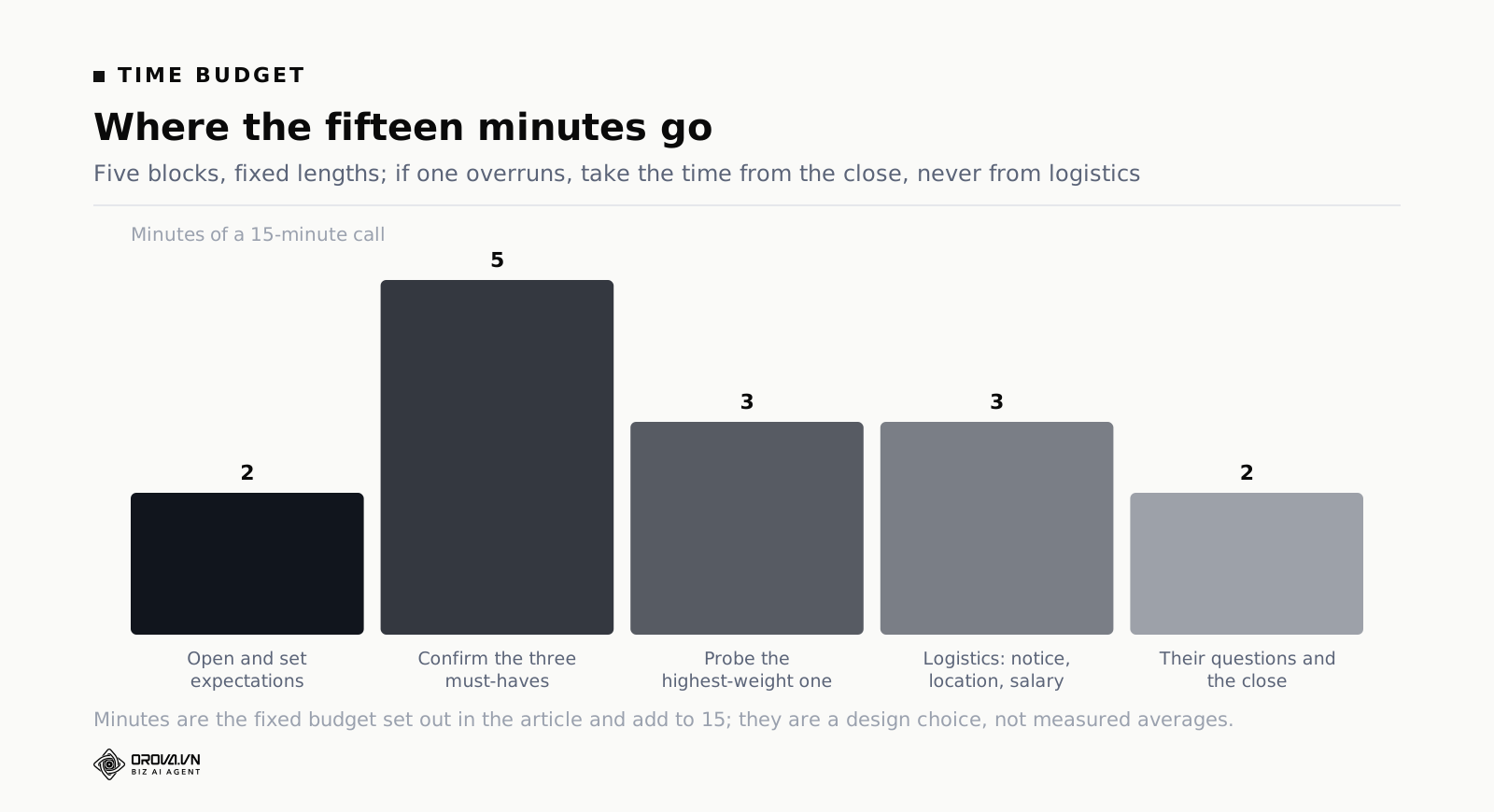
Minutes 0 to 2: open and set expectations
What you say:
"Hi [name], this is [your name] from [company] — thanks for making time. Is now still good for fifteen minutes? Great. Quick shape of the call so you know what to expect: I have three specific things I need to check against the role, then a couple of practical questions about timing and salary, then five minutes for your questions. It is a screening call rather than a full interview, so I will keep us moving and I might cut you off — that is me watching the clock, not me being rude. Sound okay?"
Why it is worded that way. Four jobs get done in thirty seconds. You confirm they are free (people take these calls in car parks and between meetings). You tell them the structure, which stops them from delivering a five-minute life story into the first gap. You pre-authorise the interruption, which is the single most useful sentence in the script, because the reason screening calls overrun is that nobody wants to be the one who cuts a polite person off. And you tell them salary is coming, so it does not land as an ambush later.
What to listen for: whether they can actually do the call now. If there is traffic noise, a crying child, a train announcement — offer to reschedule once, immediately and warmly. A candidate screened badly because of a bad line is a candidate you lost for no reason, and rescheduling costs you ninety seconds.
What to write down: date, time, your name, the role, and the candidate's document score or rank if you have one carried over from CV screening. That last field matters more than it looks — you want to be able to see later whether your phone screens agree with your paper screening or systematically disagree with it.
What not to do: do not open with "so, tell me about yourself". It is the default opener and it is the reason so many screening calls die. It hands the candidate an open microphone with no time limit at the exact moment you have the least information about what you need from them, and strong-but-quiet candidates perform worse on it than fluent-but-average ones. If you want their story, you can read the CV.
Minutes 2 to 7: confirm the three must-haves
Five minutes, three criteria. Ask each one as a closed factual question first, then one follow-up only if the answer is vague. The wording below is deliberately flat — you are collecting facts, not building rapport.
M1, the substantive one. What you say:
"The role is inbound customer tickets, evening shift. In your last job, were you working a ticket queue directly — and roughly how long were you doing that, in months?"
Listen for: a number they give without hesitating, and whether "we" or "I" is doing the work in their sentences. "We handled about a hundred tickets a day" tells you nothing about them. "I was closing thirty to forty a day on the billing queue" tells you a lot. If they answer in "we", ask once: "and your own part of that?"
Write down: the number of months, in figures, and the queue or product they worked on, in their words.
M2, the observable one. What you say:
"Most of this role is written — customer replies go out without anyone editing them. Were your replies going out directly to customers, or did someone review them first?"
Listen for: the answer, obviously, but also the whole call. Written English is not tested well by a phone question. What you are doing here is confirming the working arrangement (unreviewed replies or not), and flagging whether to add a short written task before the interview. Speaking fluency and writing fluency are different skills and people who are strong at one can be weak at the other in both directions. If the role stands or falls on writing, the honest answer is that a fifteen-minute call cannot score it, so score what you can confirm and mark the rest for a written sample.
Write down: reviewed or unreviewed, plus a yes/no on whether you are sending a written task.
M3, the hard filter. What you say:
"Practical one. The shift is 2pm to 11pm, and three of those days are on site at [location]. Does that work for you as a permanent arrangement — not as something to try?"
Listen for: hesitation. "That should be fine" is not "yes". If you hear a conditional, ask the follow-up straight: "is there anything that would make it hard on a specific day?" Commuting, childcare and second jobs are the usual answers and all three are worth knowing now rather than in week two.
Write down: yes, no, or the exact condition in their words. Never write "probably fine".
Binary must-haves like this one take under a minute. That is intentional — it buys the time for the next block.
Minutes 7 to 10: one probing question on the highest-weight criterion
This is the only part of the call that goes below the surface, and it goes there on exactly one criterion: the must-have with the highest weight. In the example that is M1, ticket experience. One question, same wording for every candidate, roughly ninety seconds of answer, then you move on.
What you say:
"Take me to the last normal week you worked the queue. Not the dramatic one — a normal week. Roughly how many tickets were you closing a day, what tool were you in, and what was the single most common issue you were seeing?"
Why this question and not another. It asks for a specific instance rather than a general opinion, which is much harder to bluff. It requests three concrete anchors — a number, a tool name, a recurring issue — so you can score it without judgement calls. It says "normal" explicitly, which stops the rehearsed crisis anecdote everyone has ready. And it is short enough that a good candidate can answer it in ninety seconds.
What to listen for:
- Numbers stated without a pause. People who have done the work know their throughput the way drivers know their commute.
- The tool named naturally and used as a verb: what they did in it, not just that it existed.
- A specific recurring issue rather than a category. "Password resets and failed card payments after the billing migration" beats "mostly account issues".
- Ownership language. "I", "my queue", "I escalated" rather than an unbroken wall of "we".
What to write down: the number, the tool, the issue, and one sentence in quotation marks in their own words. That quote is the thing you will hand to the next interviewer, and it is the reason your note is still useful in ten days when you have done thirty of these.
Scoring it, 0 to 3:
- 3 — all three anchors, plus how they handled the common issue.
- 2 — two of the three anchors, concrete and consistent with the CV.
- 1 — general talk about helping customers, no numbers, no tool, or a tool named but nothing done with it.
- 0 — cannot describe an ordinary week, or the description contradicts the CV and the contradiction is not explained.
If your highest-weight must-have is a different kind of thing, the pattern still holds: ask for the last ordinary instance, request three concrete anchors, and score the anchors rather than the eloquence. For a bookkeeper it might be "walk me through the last month-end close you ran — what system, how many days did it take, what was the thing that always went wrong". For a field sales role, "the last full week of visits — how many, which territory, what were you selling in".
Minutes 10 to 13: logistics, including salary
Four questions, three minutes, no softening. These are the questions that stop a process dying at offer stage, and candidates find them a relief because everybody is thinking about them anyway.
- Notice period. "If we moved to an offer, what is your notice period — and is it contractual or negotiable?" Write the number of weeks. Not "short".
- Availability for the next step. "The next stage is about an hour with the team lead. Any dates in the next two weeks that are impossible for you?" This costs fifteen seconds and saves three days of scheduling email.
- Location and eligibility. Whatever your role genuinely requires — commute, on-site days, right to work in the country. Ask it plainly and record the answer as a fact, not an impression.
- Salary expectation. Covered in its own section below, because it is the one people get wrong.
Everything in this block is a fact with a value. If you find yourself writing a sentence instead of a number, you asked the question in a way that let it slide. Go back and get the number.
Minutes 13 to 15: their questions and the close
What you say:
"That is everything from me. What questions do you have — about the role, the team, the process, anything?"
Listen for: what they ask, verbatim. This is the highest-signal free information in the whole call and most people waste it by treating it as a formality. Candidates who have read the job description ask about the work. Candidates who are applying to everything ask about nothing, or ask only about pay and remote days. Neither is disqualifying on its own — but "asked how the on-call rota is split" is a fact worth having, and so is "asked nothing after being offered twice".
Then close with something specific enough to be checkable:
"Here is what happens next. I am screening candidates until [day]. You will hear from me either way by [day] — that is a yes with interview times, or a no. If you have not heard by then, chase me, it means I dropped it."
Two things are doing work there. A named day, not "soon", which is what candidates actually complain about. And permission to chase, which costs you nothing and quietly makes you the employer people talk about well.
Write down: their questions, and the date you promised.
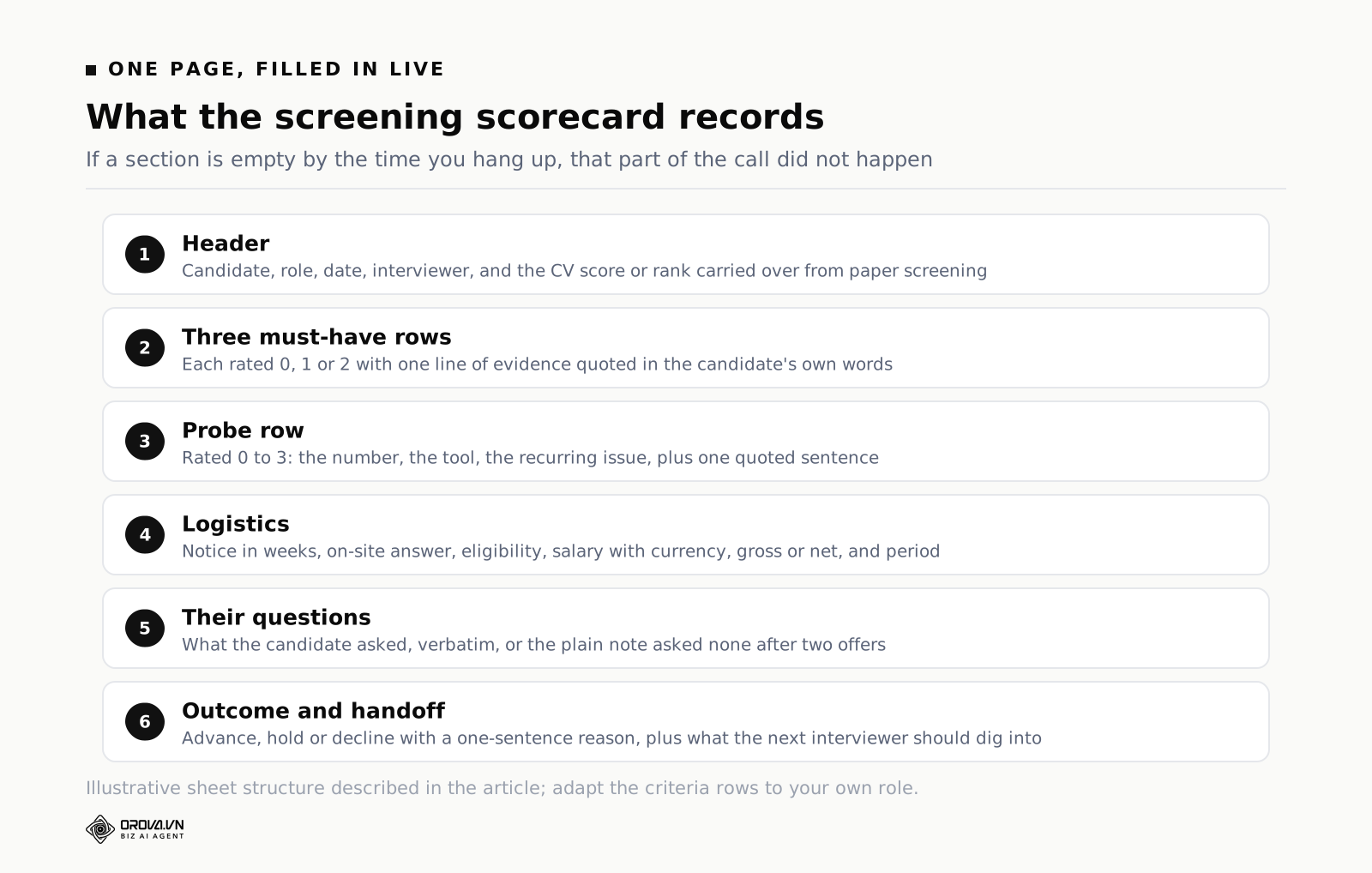
The one-page scoring sheet you fill in during the call
One page, filled in live, finished before you hang up. The rule that makes it work is the boring one: if it is not written by the time the call ends, it does not exist. Memory after a call is not neutral. It compresses toward how the conversation felt, which is exactly the signal you are trying to remove.
| Section | What goes in it | Format |
|---|---|---|
| Header | Candidate, role, date, interviewer, CV score or rank carried over | Fixed fields |
| M1 — highest-weight must-have | Rating plus one line of evidence in their words | 0 / 1 / 2 and a quote |
| M2 — second must-have | Rating plus one line of evidence | 0 / 1 / 2 and a quote |
| M3 — third must-have | Rating plus the exact condition if there is one | 0 / 1 / 2 and a quote |
| Probe | The number, the tool, the issue, plus one quoted sentence | 0 / 1 / 2 / 3 and a quote |
| Logistics | Notice in weeks, on-site answer, eligibility, salary expectation with currency, gross or net, and period | Numbers only |
| Their questions | What they asked, verbatim, or "asked none" | Free text, short |
| Outcome | Advance, hold or decline, plus one sentence of reason | One of three, plus a sentence |
| Handoff | The one thing the next interviewer should dig into, and why | One sentence |
The must-have rating scale has three points on purpose. Five-point scales invite the middle, and a middle rating on a must-have is a decision you have declined to make. Use:
- 2 — meets it, confirmed with something concrete: a number, a tool, a date, a named employer.
- 1 — claims it, but nothing concrete, or meets a partial version of it.
- 0 — does not meet it, or dodged the question twice.
Two details that seem small and are not. Salary goes down as a number with its unit and basis, because "around forty" means four different amounts depending on currency, gross or net, and monthly or annual, and you will not remember which one you meant. And the handoff line is compulsory. If you cannot name one thing worth digging into, you either did not learn anything or you are advancing someone on vibes.
Decision rules: advance, hold or decline
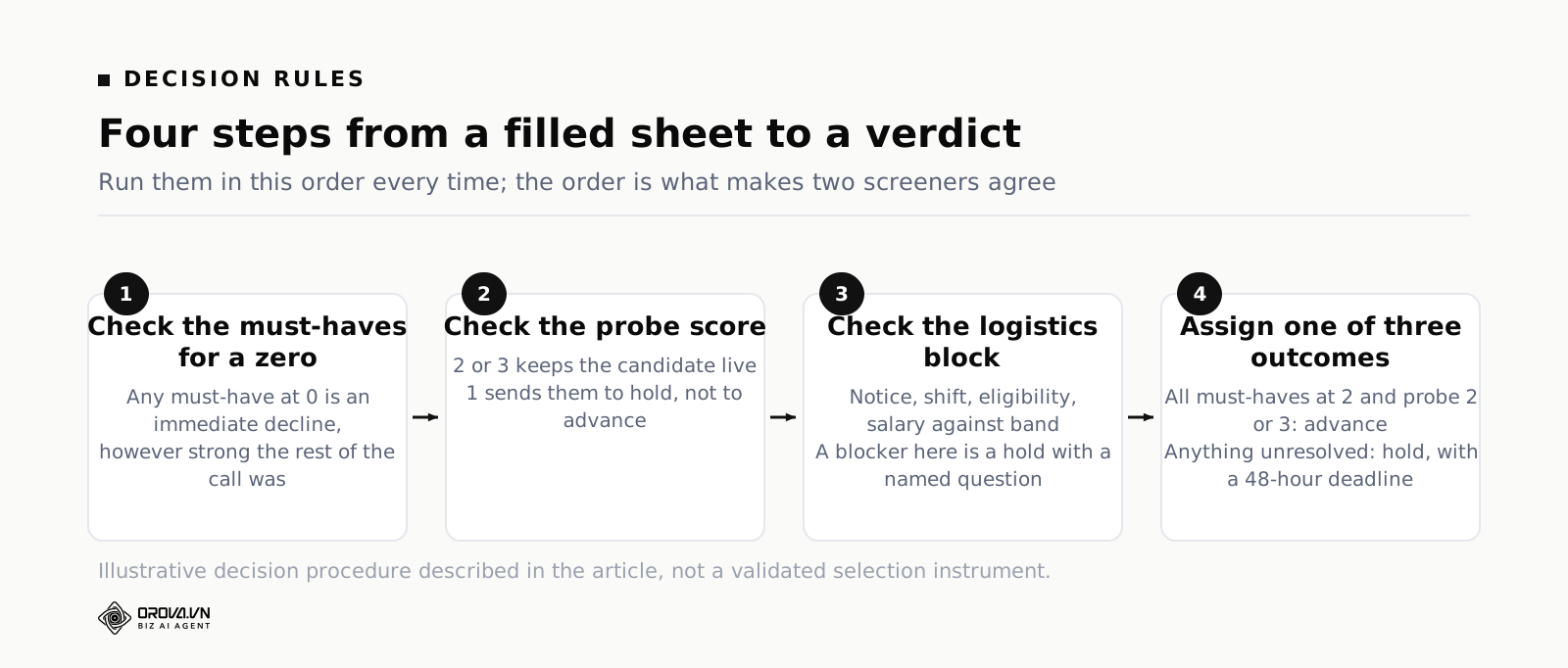
Three outcomes, applied in a fixed order, before you hang up. The order is what makes two recruiters agree. Without it, both are weighing the same evidence in different sequences and arriving at different places, which is exactly how the same candidate gets advanced by one screener and rejected by another.
Step 1 — any must-have at 0 means decline. No exceptions, no averaging, no "but the probe was excellent". This mirrors how a properly built scoring model treats must-have criteria: a must-have below the floor forces a fail no matter how high the total is. A must-have that a strong candidate can override was never a must-have; it was a preference, and it belongs in a different group.
Step 2 — all three must-haves at 2, probe at 2 or 3, logistics workable: advance. Book the interview while you are still on the sheet.
Step 3 — everything else is hold. That covers one must-have at 1, a probe at 1 with strong must-haves, a salary expectation above band, a notice period longer than the role can wait for, a written sample still outstanding. Hold is a real outcome, not a way of avoiding a decision, and it has two rules: it must name what would resolve it, and it must have a deadline. Forty-eight hours is a reasonable default. If the open question is not answered by then, hold becomes decline automatically.
The tie-break rule that keeps two recruiters aligned: anything unresolved is hold, never advance. When you are unsure, the instinct is to advance and let the interview sort it out. That instinct is how the hiring manager's calendar fills up with people whose blockers were visible on the phone.
One thing worth being explicit about: a hold is a bad state for a candidate to sit in, so keep the pool small. If half your screens are ending in hold, your criteria are too loose or your must-haves are not really must-haves. A healthy screen produces mostly clean advances and clean declines, with holds as the exception rather than the parking lot.
How to handle salary expectations early without losing the candidate
Salary belongs in the phone screen, near the end but definitely inside it. Leaving it until after two interviews means both sides can spend hours discovering a gap that was visible in ninety seconds. Candidates dislike the question mostly because of how it is asked, not that it is asked.
The version that works gives your number first:
"Before we finish — the band for this role is [X to Y], and where someone lands in it depends on [the specific thing: shift experience, tooling, years]. Does that work for what you are looking for?"
Three reasons this beats "what are your salary expectations?". It respects the asymmetry — you know the budget and they do not, so going first is simply fair. It converts an open question into a yes/no, which is faster and less stressful for both of you. And it makes the answer far more useful: "that works" is clean data, whereas a number pulled out of the air under pressure gets revised later anyway.
If you genuinely cannot share a band, ask for theirs plainly and take the first number they say without negotiating against it on the call. "Understood, thank you — I will come back to you on whether that fits" is the whole response. Screening calls are not the place to negotiate.
Two boundaries worth keeping. First, ask about expectations, which is forward-looking, rather than current or previous salary, which is backward-looking — several jurisdictions restrict or ban asking for salary history, and the rules differ by country and sometimes by state or city, so check what applies where you hire. Second, write the answer as a number with currency, gross or net, and period. "Around 20" is not a record of anything.
What if their expectation is above your band? That is a hold, not a decline, and the note should say by how much. Sometimes the band moves for the right person, sometimes the candidate moves once they understand the shift pattern or the on-site days, and sometimes it is a genuine no. All three are decisions someone can make later from a number. None of them can be made from "wanted more money".
Red flags that are actually red flags, and the ones that are not
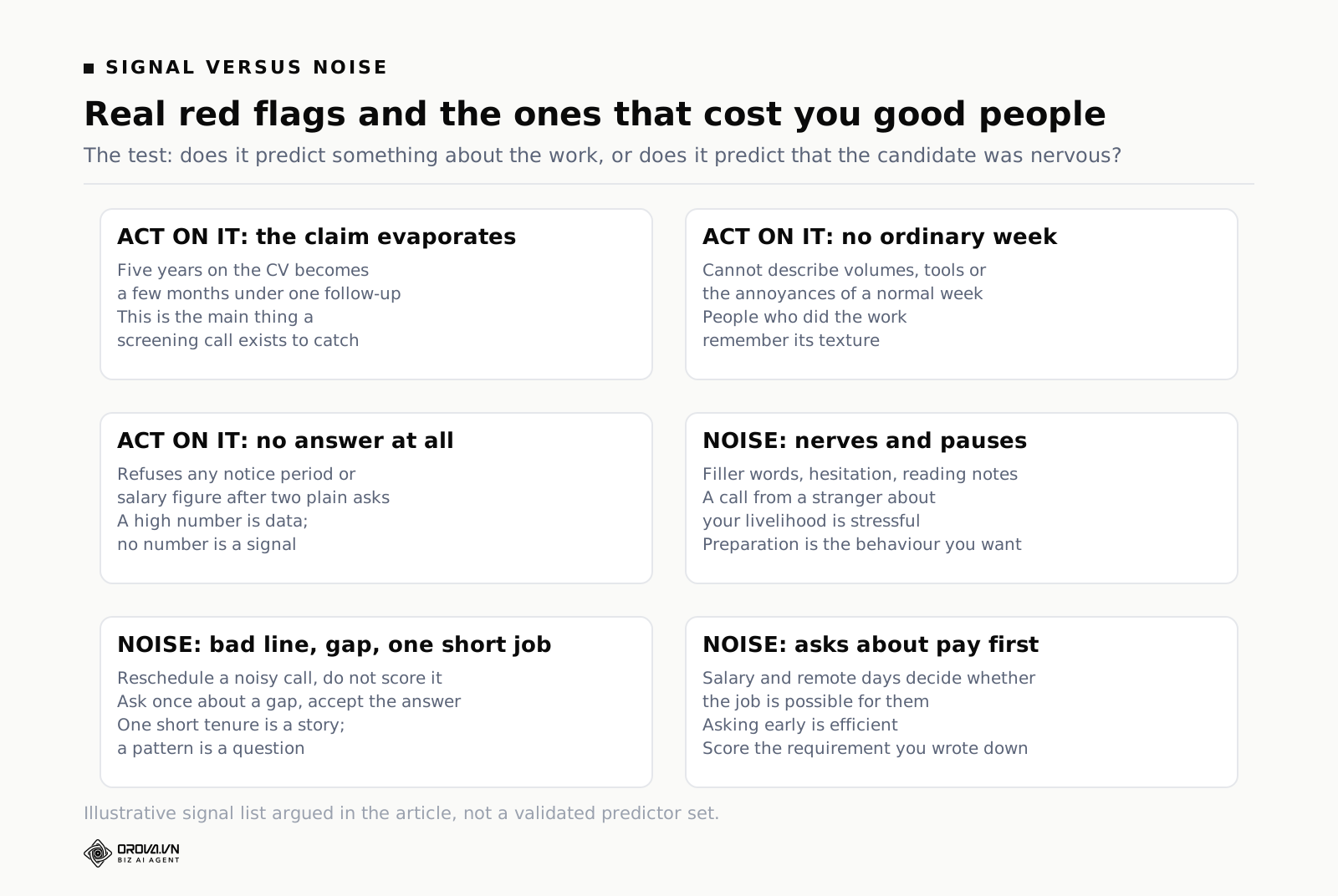
Most screening advice about red flags is a list of things that make an interviewer uncomfortable, which is not the same thing. A red flag is a signal that predicts a problem in the job. Discomfort usually predicts that the candidate is nervous, which predicts nothing at all.
Signals that are worth acting on
- The must-have evaporates under one follow-up. Five years on the CV becomes a few months in practice. This is the single most valuable thing a screening call catches.
- Every answer is "we", and it stays "we" after you ask directly. One clarification is normal. Two failed attempts to locate the person inside their own work is a signal.
- They cannot describe an ordinary week. People who did the work remember the texture of it — the volumes, the annoyances, the tool that was always slow.
- A factual contradiction with the CV that they cannot explain. Dates, titles, employers. Mistakes happen and a candidate who says "yes, that is wrong, it was March not January" has explained it. One who talks past the question has not.
- Refusal to give any answer on notice period or salary after two plain attempts. Not a high number. No number.
- Sustained contempt for a former employer with no specifics. Specific criticism is fine and often accurate. Undirected contempt is a pattern that will arrive with them.
Signals that are noise, and how they cost you good people
- Nervousness, pauses, filler words. A phone call from a stranger about your livelihood is stressful. Unless the role is live client-facing speech, this predicts nothing.
- Reading from notes. They prepared. That is the behaviour you want.
- A bad line, background noise, a child, a bus. Reschedule. Do not score it.
- An employment gap with a plain explanation. Care, illness, study, redundancy, a move. Ask once, accept the answer, move on.
- One short tenure. A pattern of six-month stays is worth a question. A single one is a story, and usually a dull one.
- Asking about salary or remote days first. These are the two things that determine whether the job is possible for them. Asking early is efficient, not mercenary.
- Grammar slips or an unfamiliar accent when the role does not require polished speech. Score the requirement you wrote down, not the one you are feeling.
- Not knowing your company. For a shift-based operational role screened from a job board, this is close to meaningless. For a role where domain knowledge is a stated criterion, it is already in your criteria and gets scored there.
Notes that survive to the next round
The measure of a good screening note is simple. Hand it to a colleague ten days later, with no conversation. Can they book the interview, brief the manager, and ask a better question than you did? If not, the note failed, however long it is.
Six habits get you there.
- Write during the call, not after. Tell the candidate you will be typing. Nobody minds, and it explains the pauses.
- Quote, do not summarise. "Closing 30 to 40 a day on the billing queue" survives. "Good ticket experience" does not, because it is your conclusion with the evidence deleted. This is the same discipline that makes a resume score checkable rather than just confident — a number nobody can trace back to a source is not evidence of anything, which is the argument in what AI in recruitment does well and where it falls over.
- Record the question, not only the answer. "No" means nothing on its own. "Q: unreviewed replies? A: no, team lead checked everything" means something.
- Numbers as numbers. Notice in weeks. Salary with currency, basis and period. Months of experience as a figure.
- One handoff sentence, always. "Dig into the migration project — they mentioned it twice and it is the closest thing to our stack."
- Store it on the candidate record, not in your inbox. A note that lives in a thread is a note that is gone in three weeks. This is the one job an applicant tracking system does genuinely well: keeping the record attached to the person, findable by whoever picks the role up next.
One more rule that matters for fairness as much as for tidiness: do not edit the note after the decision is made. If you learn something later, add a dated line underneath. A record that gets quietly rewritten to match the outcome is worse than no record, because it looks like evidence and is not.
Where phone screens go wrong even with a script
Selling before you have screened
You like the candidate at minute four, so you spend minutes five to twelve describing the team, the roadmap and the office coffee. Now you have no assessment and they have a pitch they did not ask for. Sell in the interview, once you know they can do the job. The two-minute question block at the end is enough sell for a screening call.
Letting the good call run long
The calls that overrun are the enjoyable ones, which means your time gets allocated by how much you liked someone in the first three minutes. That is a bias engine. Fifteen minutes for everyone, including the person you are already sure about.
Deciding at the end of the day
Six screens, then decisions in a batch at five o'clock. By then you are comparing memories, and memory ranks by recency and warmth. Decide on the sheet, on the call, one candidate at a time.
Changing the script mid-batch
You realise after four calls that a better question exists. Tempting to switch immediately. If you do, your first four candidates were measured with a different ruler. Either finish the batch and change it for the next role, or go back and re-ask the new question of the four — but do not pretend the results are comparable when they are not.
Treating the phone screen as a second CV read
If the whole call is "so I see you worked at X, tell me about that", you are reading the document out loud. Everything on the CV is already known. The call exists for what the document cannot tell you: whether the claims hold up, and whether the practical constraints work.
When to keep this manual, and where a tool earns its place
The script and the sheet are pen-and-paper methods and they work at any volume. A shared document with the three must-haves at the top and one row per candidate is a completely legitimate implementation, and for a role with fifteen applicants it is the right one.
The pressure point is upstream, not here. Fifteen minutes times ten calls is two and a half hours, which is fine. Deciding which ten people out of two hundred and eighty applicants get those calls is where the day disappears, and it is the step most likely to be done inconsistently — the first forty CVs get read carefully and the last two hundred get skimmed at nine in the evening. If the shortlist that feeds your phone screens was assembled unevenly, a perfect script cannot repair it, because the people worth calling never made the list.
That is the job worth handing to software: reading every application against the same criteria and quoting the evidence for each score, so that your calling list is built the same way at file 280 as at file 4. Orova Recruit works this way — it turns the job description into weighted criteria, scores each CV against them with the supporting lines quoted from the file, and forces a fail when a must-have criterion falls below the floor.
Two details matter for a screening call specifically. Each round is stored as its own session — the notes, the question set and the recording of the first call stay intact when you run a second one, so a candidate's phone screen and their later interview sit side by side rather than overwriting each other. And every note line carries the time and the person who wrote it, keeping earlier versions when a line is edited, which is what makes a screening note usable as evidence in a debrief three weeks later rather than a paraphrase nobody can source.
It also covers the call itself, which is where a screening script usually stops being followed. The questions sit on screen next to a notes panel, so you tick through the script instead of reconstructing it from memory; pressing the mic lets the browser transcribe what the candidate says while you keep listening, in any of 56 selectable languages; and the call is recorded so a disputed detail can be checked rather than argued about. Afterwards the answers are scored against the same rubric, and anything the script never reached is marked as not covered rather than guessed. The phone screen then does what only a phone screen can do: check whether the claims survive contact with a person, and whether the practical constraints work. The tool builds the list. You still make the call, and you still make the decision.
Taking notes while you are on the call
Every screening script assumes something it never mentions: that you will capture what the candidate says. In practice this is the hardest part of a phone screen, and it is where most of the value leaks out.
Consider what a screener is doing simultaneously. Listening for content. Listening for what is being avoided. Deciding whether to follow up or move on. Watching the clock, because the call is twenty minutes and there are eight questions. And typing. Something has to give, and what usually gives is the typing — which means that by the time you write up the call an hour later, you are working from memory that has already lost most of its detail.
Three failure patterns
Notes that thin out. The first call of the morning gets half a page; the fifth gets three lines. At comparison time the first candidate reads as more substantial. That is a bias produced by fatigue, not by the candidates, and it is present in every screening round of any size.
Conclusions instead of quotes. "Good communicator" is a conclusion. "Explained the pricing change in two sentences without jargon when asked to describe it to a non-technical buyer" is evidence. Only the second can be checked by anyone else, including you next week.
Silent gaps. Question six never got asked because question three ran long. If the notes do not say so, the write-up quietly implies the candidate was weak on question six.
Practical fixes that need no tooling
Print the script with a blank box under each question and write into the boxes rather than down the page — this alone guarantees every question is accounted for, including the ones you skipped. Use quotation marks for the candidate's words and square brackets for your own reactions, so data and interpretation never blur. Reserve the first five minutes after the call for filling gaps, not the end of the day: memory of a conversation decays fastest in the first half hour. And put an explicit "not asked" mark in any empty box before you close the file.
Where transcription changes the job
Writing down what somebody said is mechanical work, and it is the part a machine does better than a person who is simultaneously trying to think. Live browser transcription during the call frees your attention for the two things only you can do: hearing what is not being said, and deciding what to ask next. A recording gives you the option of checking one disputed sentence later instead of relitigating it from memory.
Three cautions. Tell the candidate and get their agreement before recording anything — both because of the law where you operate and because doing otherwise is simply not decent. Treat the transcript as raw material rather than as an assessment; scoring still happens against the rubric, by you. And keep the timestamp and the author on each note, because when two screeners remember the same call differently, a timestamped line settles it and a louder voice should not.
One further benefit rarely gets mentioned. Complete notes let you give a rejected candidate a specific reason. "The role needs hands-on experience with outbound sequencing and your background is inbound" is worth far more to the person receiving it than silence, and people who get that kind of answer frequently apply again for a role that does fit.
Common questions about the screening interview
Should a phone screen be fifteen minutes or thirty?
Fifteen, if you are testing three must-haves. Thirty-minute screens tend to fill the time with material that belongs in the interview, and the extra fifteen minutes rarely changes the outcome. The exception is a senior or specialist role where the must-have itself needs a longer probe — in that case make it twenty and cut the number of criteria to two, rather than keeping three and hoping.
Should you send the questions in advance?
Send the shape, not the questions. Telling candidates "we will check three specific requirements, ask about notice and salary, and leave five minutes for you" lets them prepare in ways that help you: they will have their dates and numbers to hand. Sending the exact probe question turns it into a prepared answer and removes the signal you were looking for.
Phone or video?
Either, and the choice barely matters for screening as long as it is the same for everyone. Phone has one practical advantage: it is easier for candidates who are currently employed to take, and it removes the background-and-lighting layer that has nothing to do with the job. If you use video, do not let it stretch the call — the screen invites a longer conversation, and the time budget is the point.
What do you do when a candidate will not stop talking?
Use the permission you set up in the open. "I am going to jump in because I want to make sure we get to the practical questions" is enough, and you can use it three times without being rude. If you did not set that expectation at the start, you will not use it, which is why block one exists.
Who should run the phone screen: recruiter or hiring manager?
Whoever it is, the same person should run all of them for a given role, or the scores are not comparable. Recruiters are usually the better choice because they run enough of these to hold the clock discipline. The hiring manager's contribution should come earlier, when the must-haves and weights are set, and later, in the structured interview. If two people must split a batch, calibrate first: both screen the same candidate, compare sheets, and reconcile the differences in the wording before splitting the rest.
Can you skip the phone screen if the CV score is high?
Not for the must-haves that a document cannot confirm. Shift availability, notice period, salary expectation and right to work are not reliably in a CV, and they are precisely the things that end processes late and expensively. A high-scoring paper candidate can have a five-minute version of the call, but the logistics block is not optional for anyone.
How do you keep the phone screen fair across candidates?
Same questions, same order, same time budget, same scale, written during the call. That is most of it. The remaining piece is spot-checking yourself: once per round, pick one advance and one decline, reread the sheets, and ask whether the evidence written down actually supports the outcome. If it does not, the script is fine and the scoring drifted.
What to do this week
You do not need a new process to start. You need one page and one hour of preparation before your next batch of calls.
- Open the criteria list for the role you are hiring for now. Pick the three must-haves with the highest weights. If everything looks like a must-have, you have not finished writing the criteria — go back and demote the ones a strong candidate could be hired without.
- Write the probe question for the highest-weight one. Last ordinary instance, three concrete anchors, ninety seconds of answer.
- Build the one-page sheet: header, three must-have rows, probe row, logistics, their questions, outcome, handoff. One page, no more.
- Write the opening paragraph out in full and read it aloud once. Including the sentence about interrupting. That sentence is what keeps the call to fifteen minutes.
- Run the next five calls to the clock and score on the sheet before hanging up. Then read the five sheets side by side and ask whether a colleague could act on them without talking to you.
The point of all of this is not efficiency, although you get that too. It is that a decision built from written evidence can be checked, explained and repeated, and a decision built from a good feeling about a warm conversation can only be defended. Fifteen minutes, a fixed script and one page is the whole intervention. Everything else about your hiring gets better once the shortlist stops being assembled by whoever happened to be charming at 3pm on a Tuesday.
Let AI read and score resumes against your JD
Orova Recruit turns your job description into weighted criteria and scores every CV with evidence quoted from the file.
Try it free