
Thought Leadership Content Without the Ghostwriter
Somebody senior agreed to put their name on an article. Six weeks later it went live, and reading it you could not tell which company published it. Every claim was hedged, every sentence was true, and nothing in it would have caused a disagreement at a conference. It got two hundred views, most of them internal.
This is the normal outcome, and it is not caused by bad writing. Thought leadership content fails at the point where a real position was supposed to enter the piece and did not — because the person with the position had twenty minutes, the writer had a deadline, and the review process rewarded removing things. What gets published is the consensus, which every competitor can also publish, which is why nobody remembers who said it.
What follows is the mechanics of getting a real opinion out of a busy person and onto a page, without hiring anybody to impersonate them. Four interview methods that cost an expert under an hour. How to write a voice down as rules that somebody else can apply. Three article shapes that carry an argument without posturing. The division of labour between AI and a person, stated precisely. And what to measure, since traffic is the wrong measure and measuring it that way teaches the wrong lesson.
What makes content thought leadership rather than a blog post?
A position somebody could disagree with, held by a named person, supported by something they have actually done. If the argument could be published unchanged under a competitor's name, it is an explainer rather than thought leadership. The test is not tone or length — it is whether the piece commits to a claim that costs the author something to make.
That is a high bar and deliberately so, because the alternative definition — anything written by a senior person — is what produces the two-hundred-view article.
Why most of it reads like a press release
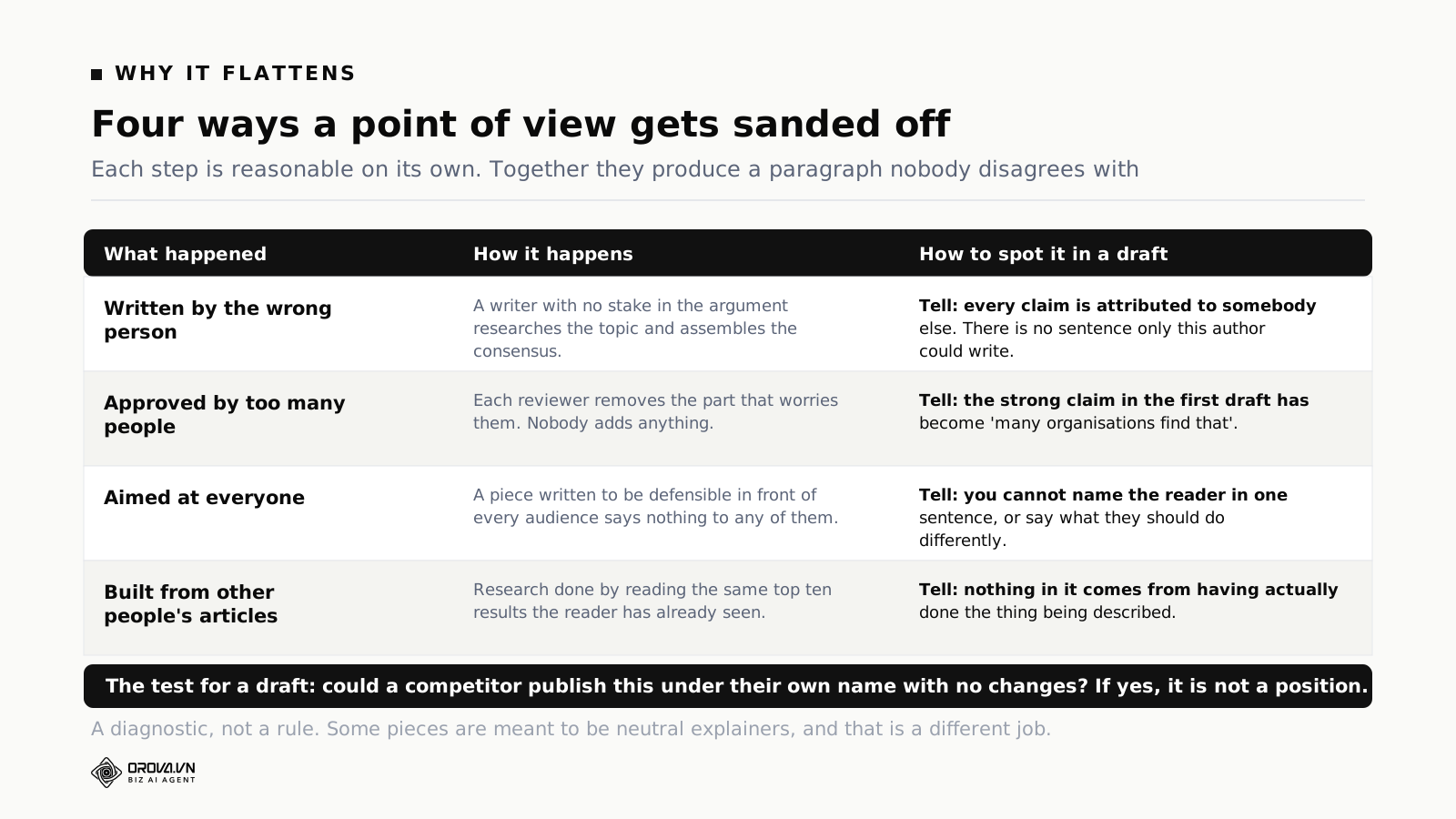
The flattening happens in four places, and each step is individually defensible. That is what makes it hard to stop.
The wrong person writes it
A capable writer with no stake in the argument researches the topic, reads the same ten articles the reader has already read, and assembles what everybody agrees on. The output is competent and empty. The tell is that every claim is attributed to somebody else, and there is no sentence in the piece that only this author could have written.
Too many people approve it
Each reviewer removes the part that makes them uncomfortable. Legal softens the claim, the product team corrects a simplification into an accuracy nobody needed, a senior stakeholder suggests being "a bit less absolute". Nobody adds anything, because adding is not what review processes are for. The strong sentence in the first draft becomes "many organisations find that".
It is aimed at everyone
A piece written to be defensible in front of every possible audience says nothing to any of them. If you cannot name the reader in one sentence — not "marketing leaders" but "the person who has to defend last quarter's content budget in a meeting next week" — the piece will drift toward generality by default.
It is built from other people's articles
This is the deepest one. If the research consisted of reading the current top ten results, the output is necessarily a synthesis of the current top ten results. Nothing in it comes from having done the thing.
Google's own guidance is unusually direct about this. Its self-assessment questions ask whether content provides "original information, reporting, research, or analysis", and whether, if it draws on other sources, it avoids "simply copying or rewriting those sources" and instead provides "substantial additional value and originality". That is a description of the difference between a synthesis and a position — and it is the same distinction our note on experience, expertise and trust works through in more depth.
What the audience — and the search engine — is looking for
It is worth being precise about what "authority" means here, because it is usually discussed as a vibe.
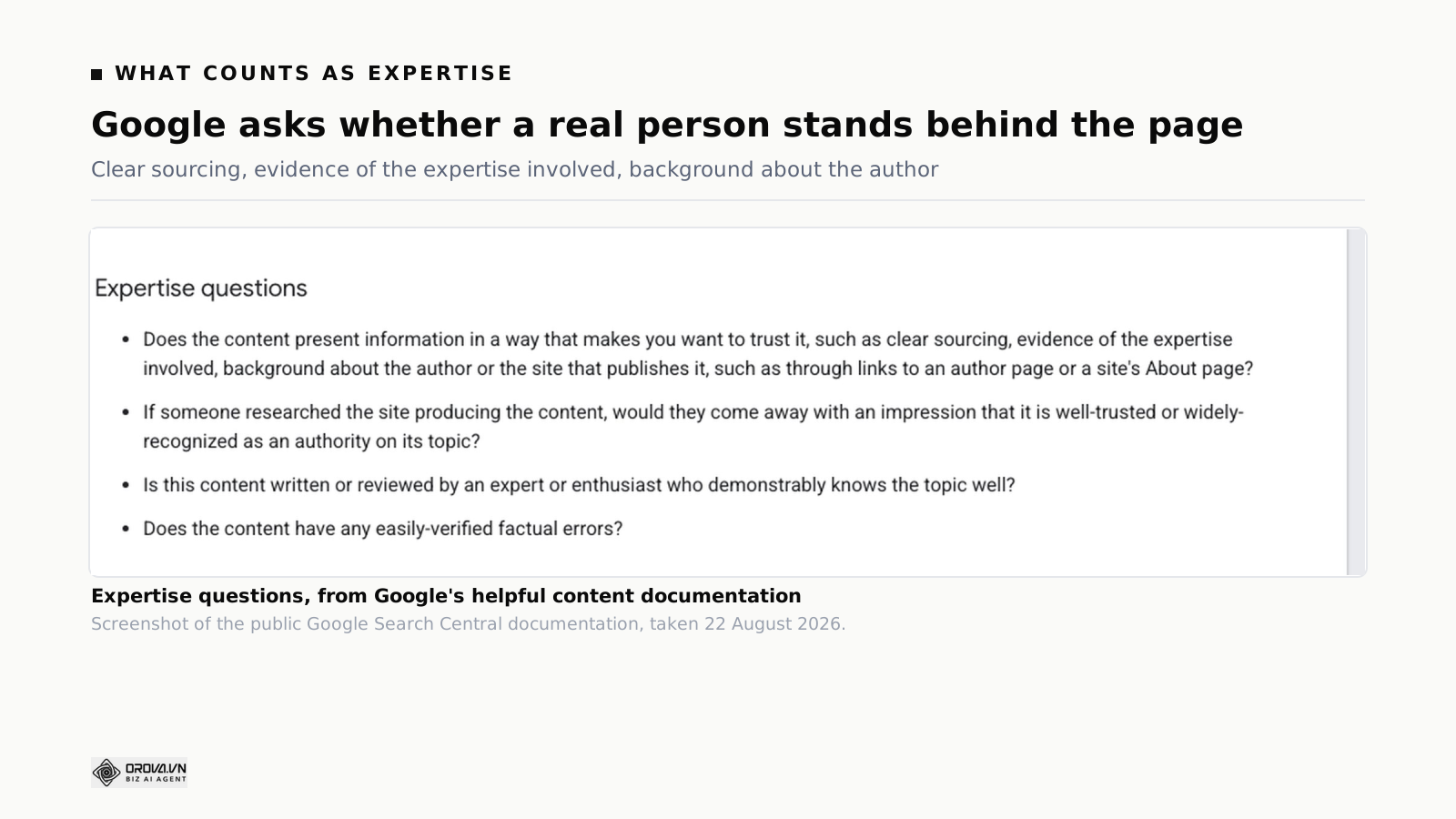
Google's expertise questions ask whether the content presents information "in a way that makes you want to trust it, such as clear sourcing, evidence of the expertise involved, background about the author or the site that publishes it, such as through links to an author page or a site's About page". They ask whether the content is "written or reviewed by an expert or enthusiast who demonstrably knows the topic well". And they ask whether it contains "any easily-verified factual errors".
The same documentation sets out a "Who, How, and Why" framing: make clear who created the content, be transparent about how it was created — particularly where automation or AI was involved — and produce it "primarily to help people" rather than "primarily to attract visits from search engines". Elsewhere it warns against content "made primarily to gain search engine rankings", including "using extensive automation to produce content on many topics".
Two things follow for a thought leadership programme.
The byline is structural, not decorative. A named author with a real page describing what they have actually done is one of the specific things being asked about. Publishing under a company name with no human attached removes a signal you could have had for free.
First-hand experience is the raw material. Google's guidance points at expertise "that comes from having actually used a product or service, or visiting a place". In a business context that means the piece should contain things you learned by doing the work: what broke, what you expected and got wrong, the number you measured yourself. Those are also the parts a reader remembers.
Where a position actually comes from
Before the interview there is a prior question that most programmes skip: what is this piece going to argue. Teams answer it by picking a topic, which is not the same thing. "Data quality in marketing" is a topic. "Most data quality projects fail because they start with the warehouse instead of the definitions" is a position.
Four places to look, in the order they usually pay off.
The advice you give that customers resist. Whatever your team says that makes people push back is, by definition, not the consensus. Resistance is the marker. Ask the customer-facing team which of their recommendations gets argued with most, and you will have three candidate positions in ten minutes.
The thing that surprised you. Every organisation that has done the work for a few years has a result that contradicted its own expectations. The reason it never gets published is that it feels like admitting you were wrong, which is exactly why it is interesting to read.
The question you answer the same way every week. If somebody in your company has explained the same thing forty times, that explanation is refined, tested and free. It also tells you the audience is real, because forty people asked.
The standard advice you no longer follow. Every industry has a practice that everybody recommends and fewer people actually do. Explaining why you stopped — with the reasoning, and the conditions where you would still do it — is a genuine contribution and costs nothing to be honest about.
Write the candidate position as a single sentence before commissioning anything. If the sentence needs a qualifier to be defensible, add the qualifier and check whether anything is left. If the qualified version is still worth arguing about, you have a piece. If it collapses into "it depends", you have a topic, and a topic will produce a topic-shaped article.
Four ways to get an opinion out of a busy expert
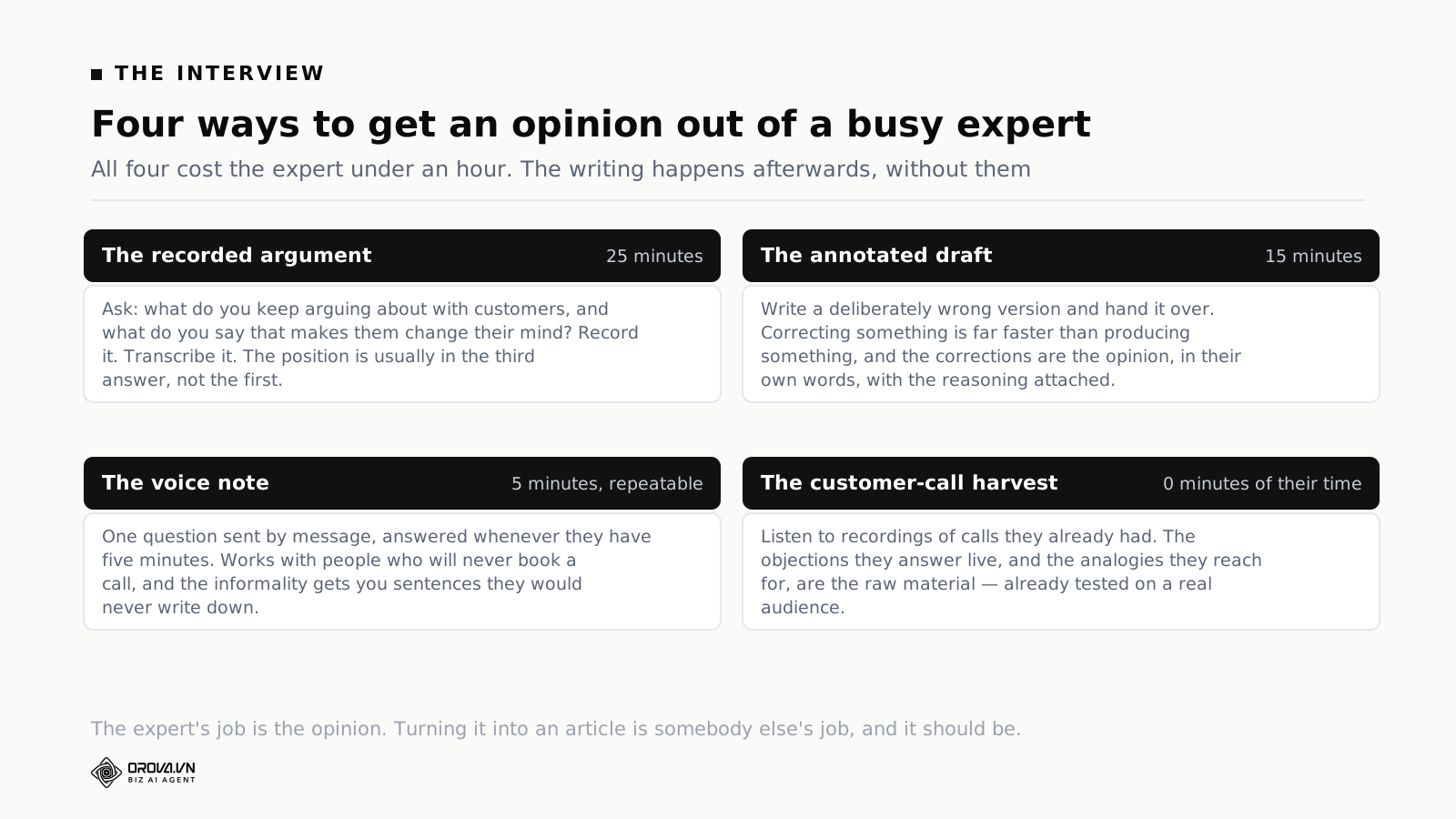
The constraint is always the same. The person with the position has an hour a month at most, and writing is not their job. Every method below respects that, and none of them require them to write anything.
The recorded argument
Twenty-five minutes, recorded, with one opening question: what do you keep arguing about with customers, and what do you say that changes their mind?
That question works because it asks for something they already have rather than something they must invent. People who talk to customers all week have three or four arguments they have refined by repetition, and those arguments are already tested against real objections.
Two techniques inside the call. Ask "why" three times — the first answer is the public version, the second is the reasoning, the third is usually the actual belief. And ask for the case where their own advice is wrong, because a position with a stated limit is far more persuasive than one without, and experts are usually relieved to be allowed to say it.
The annotated draft
Write a version that is deliberately, specifically wrong — not sloppy, but taking the conventional position they disagree with — and hand it over.
Correcting is much faster than producing. Somebody who would take three weeks to write eight hundred words will mark up your draft in fifteen minutes, and the margin notes are the opinion in their own words with the reasoning attached. This is the highest-yield method per minute of expert time, and it works with people who freeze in front of a blank page.
One caution: the wrongness has to be plausible. A straw man produces a correction of the straw man, which is worth nothing.
The voice note
One question sent by message, answered whenever they have five minutes between meetings. Repeat weekly. In two months you have a substantial body of raw material and they have spent under an hour in total.
The informality is the point. People say things in a voice note they would never write down, and the unguarded version is the one worth publishing — after they have approved it, which they usually will, because it sounds like them.
The customer-call harvest
Costs the expert nothing at all. If your organisation records sales or support calls and has the appropriate consent to use them internally, the objections they answer live and the analogies they reach for are already there. So is the language customers actually use, which is worth more than any keyword tool for making a piece land.
Use it as raw material, not as a quote source, and check whether your consent basis covers this use before you start.
Write the voice as rules, not as adjectives
Every brand has a tone-of-voice document, and most of them are lists of adjectives: confident, approachable, expert, human. None of those can be checked. Two writers can both believe they hit "confident" and produce pieces that sound nothing alike.
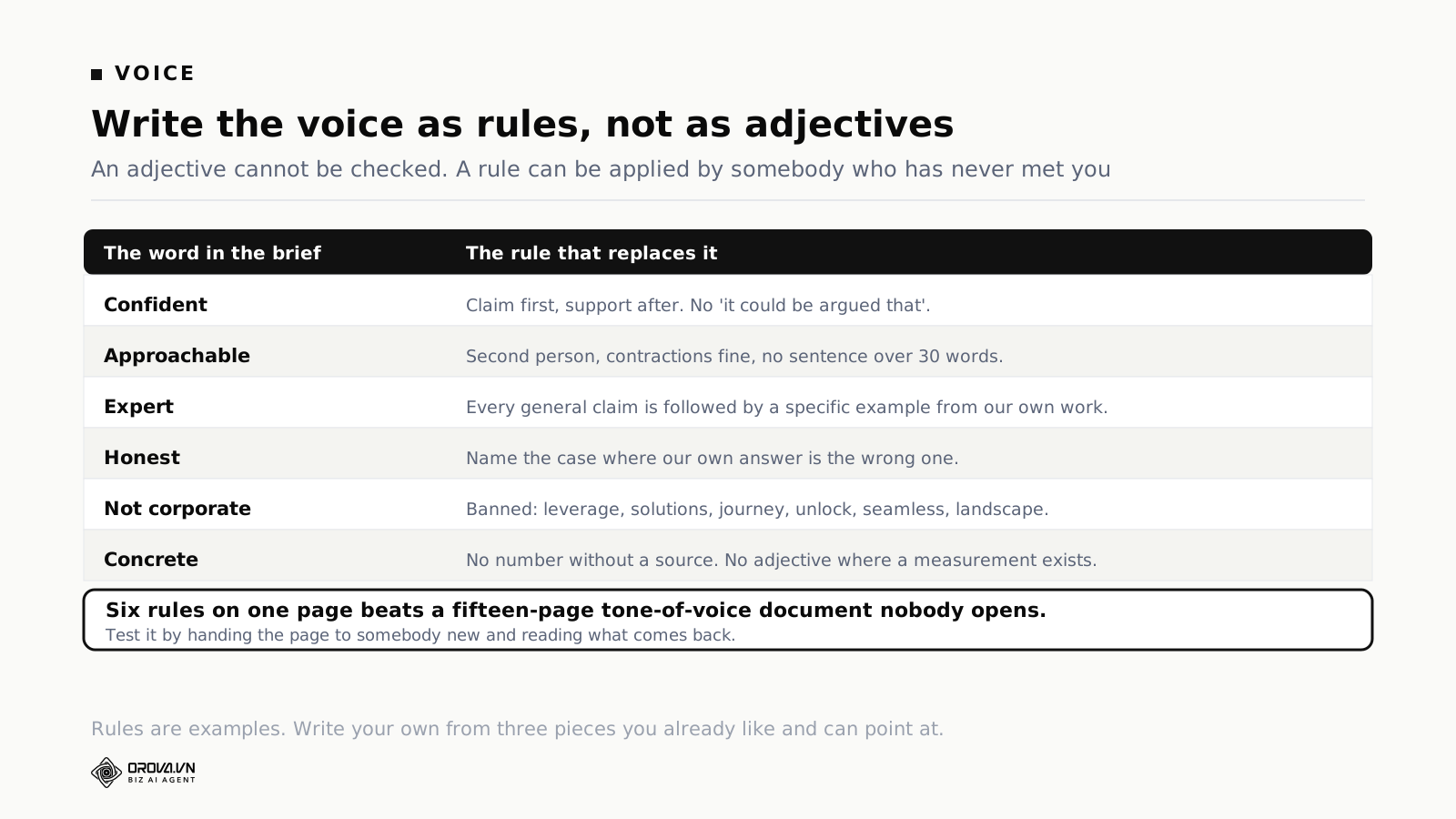
Rules are testable. "Claim first, support after" is either done or not. "No sentence over thirty words unless it is doing something" can be checked. A banned-words list is unambiguous. Six rules on one page beats a fifteen-page document that nobody opens after their first week.
Write yours from evidence rather than aspiration. Take three pieces your organisation has published that people actually liked, read them looking for what they have in common, and write that down. A voice you can point at already exists — the document just makes it repeatable.
The reason this matters for thought leadership specifically: the person supplying the opinion is not the person writing the sentences, and the gap between them is where voice gets lost. Rules close that gap. This is also the part that survives staff changes, which is worth more than it sounds when the writer leaves after eighteen months.
Three shapes that carry an argument
An opinion needs a structure or it becomes a ramble with confidence. Three shapes do most of the work.
The contrarian correction
Everyone believes X. X is true in a narrower case than people think. Here is where it breaks and what to do instead.
This is the most reliable shape because it has a built-in reason to exist. It requires one thing: the correction must be genuine. A manufactured contrarian take on something nobody actually believes is worse than a straightforward explainer, and readers spot it immediately.
The thing we did and what it cost
We tried this. Here is what happened, including the part that went badly. Here is what we would do differently.
The most defensible shape available, because nobody can argue with your own experience, and it is the shape that carries Google's "first-hand expertise" most naturally. It requires an organisation willing to publish something that did not work — which is a cultural question, not an editorial one, and worth resolving before you commission the piece rather than at the approval stage.
The prediction with a mechanism
This will change, and here is the specific reason, and here is what it means for you.
Higher risk and higher reward. The rule is that a prediction without a mechanism is a horoscope — "AI will transform the industry" costs nothing and means nothing. A prediction with a stated cause, a rough timeframe and a falsifiable claim is a real position, and being publicly wrong about one is far less damaging than never having said anything.
What does not carry an argument: the trends round-up, the "five lessons from our journey" listicle, and the piece whose title is a question the article never answers. Those are the default shapes precisely because they require no position, which is the same reason they achieve nothing. If your goal is pipeline rather than reputation, the shapes that actually book calls are a different set, and we covered them in the piece on content that books calls.
Where AI helps, and where it cannot
This has to be specific, because vagueness here is how organisations end up publishing the exact consensus paragraph this article opened by describing.
What AI does well in this workflow. Transcribing the interview. Turning a forty-minute transcript into a structured outline. Producing a first draft from that outline. Suggesting where an argument has a hole. Adapting a finished piece into a shorter version for a different channel. Checking a draft against your written voice rules. All of that is real work, and it is most of the elapsed time.
What it cannot do. Have the opinion. This is not a limitation that will be engineered away, because the source of a position is having done the work and having something at stake in being right. A model trained on published text will reliably produce the average of published text, which is precisely the consensus paragraph you are trying to escape.
There is also a practical point. Google's guidance asks you to be clear about how content was created, particularly where automation is involved, and warns specifically about extensive automation used to produce content across many topics. The risk in a thought leadership programme is not that AI touched the draft — it is running the whole thing on generation, at volume, with no human position underneath. Our note on using AI for content properly and the walkthrough of which SEO jobs it does well both go through where the line sits.
The division that works: the expert supplies the position in twenty-five minutes, AI compresses the six hours of assembly into one, and a person makes the final judgement about what the piece claims. Remove the first step and the last and you have an efficient machine for producing nothing.
This is roughly what Orova SEO is built around. The brand voice is something you set and store rather than something each writer reconstructs, so the tenth article still sounds like the first. You can point it at your own documents in Google Drive so drafts are anchored to material you own rather than to the internet's average. It publishes straight into WordPress or your own API, so the finished piece does not need retyping. What it does not do — and this is the whole argument of this article — is supply the opinion. If nobody has one, the tool will help you publish faster, which is not the problem you had.
A cadence you can actually keep
One good piece a month beats four adequate ones, and it is the only rhythm most organisations sustain past the first quarter.
A workable monthly cycle, with the effort where it belongs:
Week one: the interview. Twenty-five minutes with the expert, recorded. Everything after this happens without them.
Week two: the draft. Transcript to outline to draft. This is the writer's week, and it is where AI removes the most time.
Week three: one review pass. One pass, with named reviewers and a clear rule: you may correct facts and flag legal risk, you may not soften a claim because it is strong. If a claim is wrong, say so and it gets fixed. If it is uncomfortable but true, it stays. Without this rule the review stage will undo the entire process.
Week four: publish and distribute. Publishing is a third of the job. The rest is your own team sending it to people who should read it, which is the distribution channel most organisations own and never use.
What breaks the cadence is almost never writing capacity. It is the expert becoming unavailable, or a review cycle that runs to three weeks. Both are scheduling problems, and both are solved by booking the interview slot as a recurring calendar entry a quarter ahead.
When the expert disagrees with the draft
This happens on most pieces and it is not a failure. How it gets handled decides whether the programme survives.
Three kinds of disagreement, and they need different responses.
"That is not what I meant." A genuine misreading of the transcript. Fix it without argument, and go back to the recording rather than to your notes — the fix is usually one clause, and the fact that it happened means the writer did not fully follow the reasoning, which is worth knowing before the next interview.
"That is right but I would not say it like that." A voice problem, not a substance problem. This is what the written rules are for: if the sentence follows the rules and still sounds wrong, the rules are incomplete and this is the moment to add one. Do not simply rewrite to their preference each time and learn nothing.
"That is too strong." The one that matters. Sometimes the writer overstated the position, in which case fix it. But often the expert said it clearly on a recording and became cautious once it had their name on it in writing, which is a different thing and should be handled differently.
The useful move there is to play the recording back. Hearing themselves say it, confidently, to a person, usually resolves it — and where it does not, the honest fix is to add the condition rather than to remove the claim. "This is true for teams under fifty; above that the maths changes" keeps the position and makes it more useful. Removing the claim keeps nothing.
What to avoid: negotiating each sentence separately until the piece has been softened everywhere without anybody deciding to soften it. If a claim genuinely cannot be made, cut the section and say so. A shorter piece with one real argument beats a longer one with none, and the discipline of cutting rather than diluting is what keeps the next piece worth reading.
Publishing is a third of the job
A piece that nobody sends anywhere gets the traffic your blog gets, which for most companies is not much. The distribution most organisations already own and rarely use is their own people.
Your own team first. Send it internally with one line explaining who it is for and why. Not a broadcast — ask the five people who talk to customers to send it to anybody it is relevant to. That is a handful of highly targeted distributions, and it is the channel most likely to produce a conversation.
The author's own network. The named expert posting it themselves, in their own words, with a sentence about why they wrote it, outperforms the company account by a wide margin. It takes them two minutes and it is part of the deal you made when you asked for their name.
The people you cited or disagreed with. If the piece engages with somebody's public argument, tell them. Done politely and without asking for anything, this is how a piece stops being a monologue — and a disagreement that gets answered is worth more than agreement that gets ignored.
The recurring places your audience already reads. Industry newsletters, community forums, the trade publication somebody in your sector actually opens. Placement takes a relationship rather than a budget, and a single relevant newsletter mention is usually worth more than a month of social posts.
Reuse it, deliberately. One argument supports a shorter version for a different channel, a talk, a section in a sales deck, and an answer somebody sends by email for the next two years. If you built the piece properly, the expensive part was the thinking, and the thinking is reusable.
Budget the distribution time when you commission the piece, not afterwards. If publishing day is the end of the plan, the plan was for a blog post.
What to measure, and what not to
An opinion piece read by four hundred of the right people can change a year. The same piece measured on traffic against a how-to guide loses, and the lesson the organisation learns is "stop doing that", which is the wrong lesson.
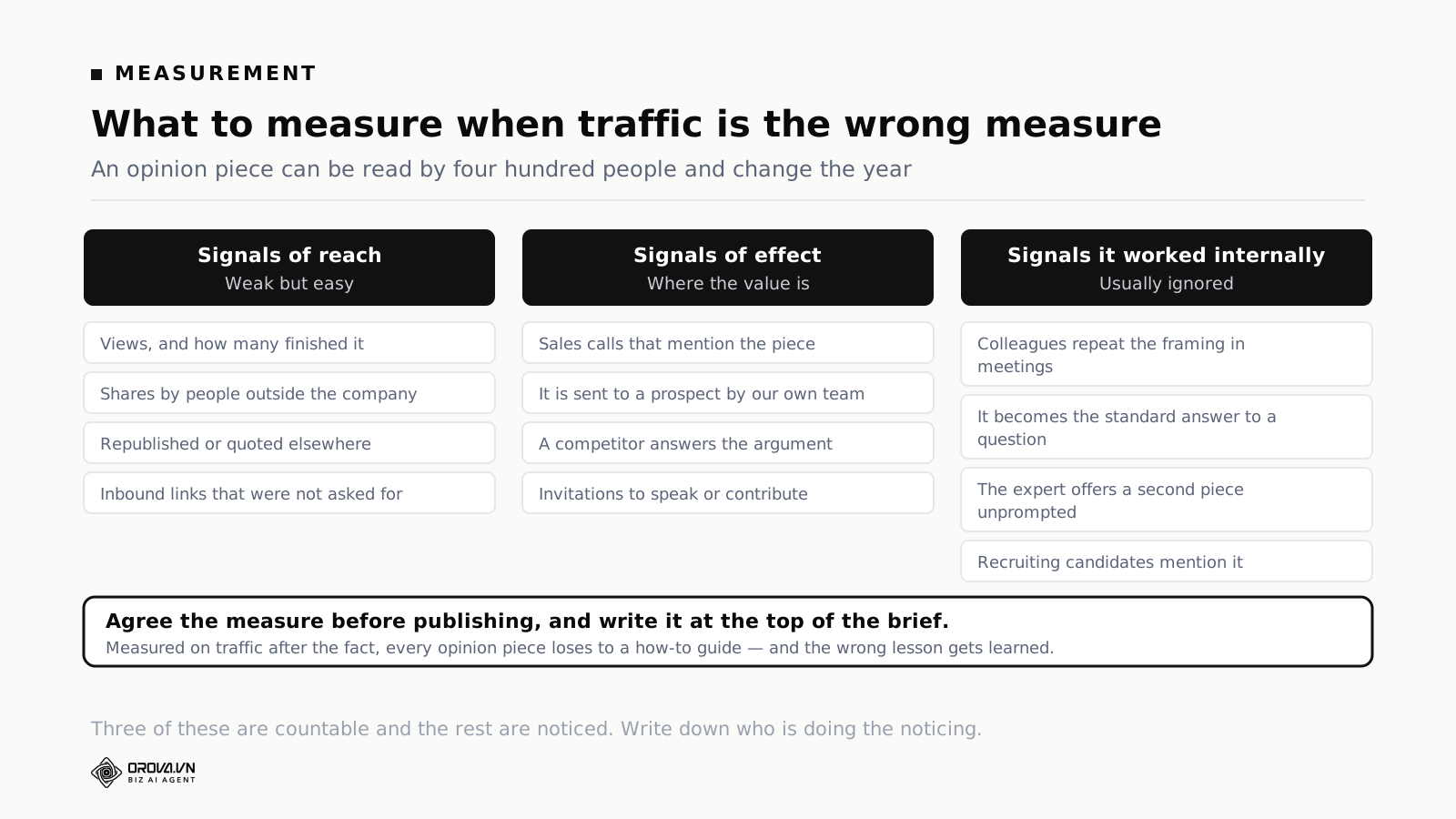
Signals of reach — views, completion, shares from outside the company, unsolicited links, being quoted elsewhere — are easy to count and weak on their own. Use them to compare pieces against each other, not to justify the programme.
Signals of effect are where the value is and they are harder to collect. Sales calls where the prospect mentions it. Your own team choosing to send it to a customer. A competitor publishing an answer to your argument, which is the strongest signal available and never appears in a dashboard. Invitations to speak or contribute.
The practical mechanism for the first of those is a question on the sales call: what did you read before this conversation. It takes ten seconds and it is worth more than any attribution model for this category of content. Our note on measuring content ROI covers the attribution side and its limits.
Signals it worked internally get ignored and shouldn't. When colleagues start using the framing in meetings, when the piece becomes the standard answer to a recurring question, when the expert offers a second one unprompted — those are the compounding effects, and the last of them is the one that determines whether the programme still exists next year.
Whichever set you choose, write it at the top of the brief before the piece is written. A measure chosen after publication will be whichever number happens to look best, and that is not measurement.
What a programme looks like after a year
Twelve pieces in, the useful question is not whether each one performed. It is whether three things have changed.
You have a body of positions rather than a pile of posts. The pieces should reference each other, extend each other, and occasionally correct an earlier one. A programme where piece nine contradicts piece two and says so is healthier than one where all twelve agree, because it means somebody was learning.
People arrive already knowing what you think. The clearest sign is a sales call that starts further along than it used to — the prospect has read the argument, agrees or disagrees with it, and the conversation begins at the second question instead of the first. That shortening is the return, and it is worth measuring even though it is awkward to attribute.
The interviews have got easier. The first one is a favour. By the fourth, the expert has seen what happens to their twenty-five minutes and starts arriving with an argument ready. That shift is the difference between a programme somebody maintains and one that quietly stops, and it is caused by publishing something they were proud of rather than by any process improvement.
If none of the three has happened after a year, the likely diagnosis is that the pieces were never really positions. Go back to a piece from month three and apply the test: could a competitor publish this unchanged? If the answer is yes for most of the library, the programme produced explainers — useful, but not the thing you were paying for, and the fix is upstream at the interview rather than downstream at the writing.
Common questions
Should the expert or the marketing team write it?
Neither, alone. The expert supplies the position and approves the final claim; somebody else does the writing. Waiting for a busy expert to write is how programmes die, and letting marketing write it unsupervised is how you get the consensus paragraph.
Is ghostwriting dishonest?
Not if the ideas are genuinely theirs and they have approved what is published. That is how books, speeches and opinion columns have worked for a very long time. It becomes dishonest when the named person has not read it, or would not defend it if challenged in public.
How long should a thought leadership piece be?
As long as the argument takes and no longer. A tight eight hundred words with one clear claim beats three thousand hedged ones. Length is a consequence of the argument's complexity, not a target.
What if we have nothing controversial to say?
Then you probably have not looked at what you know that others do not. Every organisation that has done the work for a few years has learned something that contradicts the standard advice. It usually sounds too obvious internally to be worth saying, which is the reliable sign that it is worth saying.
How do we get legal comfortable with a strong claim?
Involve them early with the position rather than late with the draft. Most legal objections are to unsupported claims about others or to guarantees about outcomes. A claim about your own experience, stated as your own experience, is usually fine — and asking at the outline stage costs an email rather than a rewrite.
Does it need to be about our product?
No, and it is usually better if it is not. A piece about the problem your customers have builds more credibility than a piece about your solution to it. Mention the product where it is genuinely relevant and let the reader make the connection.
How many pieces before it works?
Reputation compounds, so the honest answer is that one piece rarely does anything and a year of monthly pieces usually does. If you cannot commit to a year, spend the budget on something with a shorter payback — that is a legitimate choice, and a better one than an abandoned programme.
What about industry surveys and original research?
They work, and they are a different budget. A survey of your own customers produces data nobody else has, which is the strongest possible version of "original information, reporting, research, or analysis". It also takes months, needs enough respondents to be meaningful, and fails badly if the sample is small and you report it as though it were not. If you do it, publish the method and the sample size beside the findings — a survey without those looks like the marketing exercise it will be accused of being.
For most teams the cheaper version is the same instinct applied to data you already hold. Whatever your product measures, aggregated and anonymised, is original research nobody can copy, and it does not require a single new respondent.
Can one person be the voice for the whole company?
It works and it carries a risk: the reputation is portable and leaves when they do. Two or three named voices is more robust and gives you a range of positions, which is a more interesting thing to read than one person's opinion repeated.
Start with one interview
Do not build a programme. Build one piece and see what happens.
Pick the person who talks to customers most and has strong opinions about what they get wrong. That is a different person from the most senior one, and usually a better one.
Book twenty-five minutes. Send the question in advance so they arrive with something. Record it, with their agreement.
Ask what they keep arguing about. Then ask why, three times. Then ask when their own advice is the wrong advice. That last answer is frequently the whole article.
Write the six voice rules from three pieces you already like, before drafting rather than after.
Draft, one review pass, publish. Then ask the sales team to mention it to five prospects and tell you what came back.
The whole cycle costs one person half a day and the expert less than half an hour, which is a small enough bet that it does not need approval from anybody. That is the point of starting with one piece rather than a programme: nobody has to be convinced in advance, and the argument for continuing is made by the result rather than by a deck.
If the piece produces one conversation that would not otherwise have happened, you have your answer about whether to do a second. And if it produces nothing at all, the useful diagnosis is usually not the writing — it is that the position was removed somewhere between the interview and the page, and now you know exactly where to look.
Your voice, written down once
Orova SEO keeps the brand voice as something you set and store, so the tenth article still sounds like the first instead of drifting with whoever wrote it. Point it at your own material in Google Drive and the drafts stay anchored to documents you actually own, then publish straight into WordPress or your own API. The opinion still has to come from a person.
See Orova SEO