
Limits to set before automation can change a budget
Before you let any automation change a budget, five numbers have to exist: how big one step may be, what the absolute ceiling is, how many campaigns one run may touch, how long to wait before touching the same campaign again, and which campaigns are off limits entirely. Without those five, "the software can adjust budgets" is a sentence nobody can reason about.
This article is about picking the numbers. Not whether to automate, and not who is allowed to approve what, which is a separate question covered in the article on advise and execute permissions. Here you get a method for each of the five limits, the arithmetic that shows why each one exists, and a ten point audit you can run against whatever you already have switched on.
Every figure below is either arithmetic you can check or a starting point to write down and revise. None of it is a benchmark, because a benchmark from someone else's account is worth nothing on yours.
What twenty-four hours without limits costs, in arithmetic
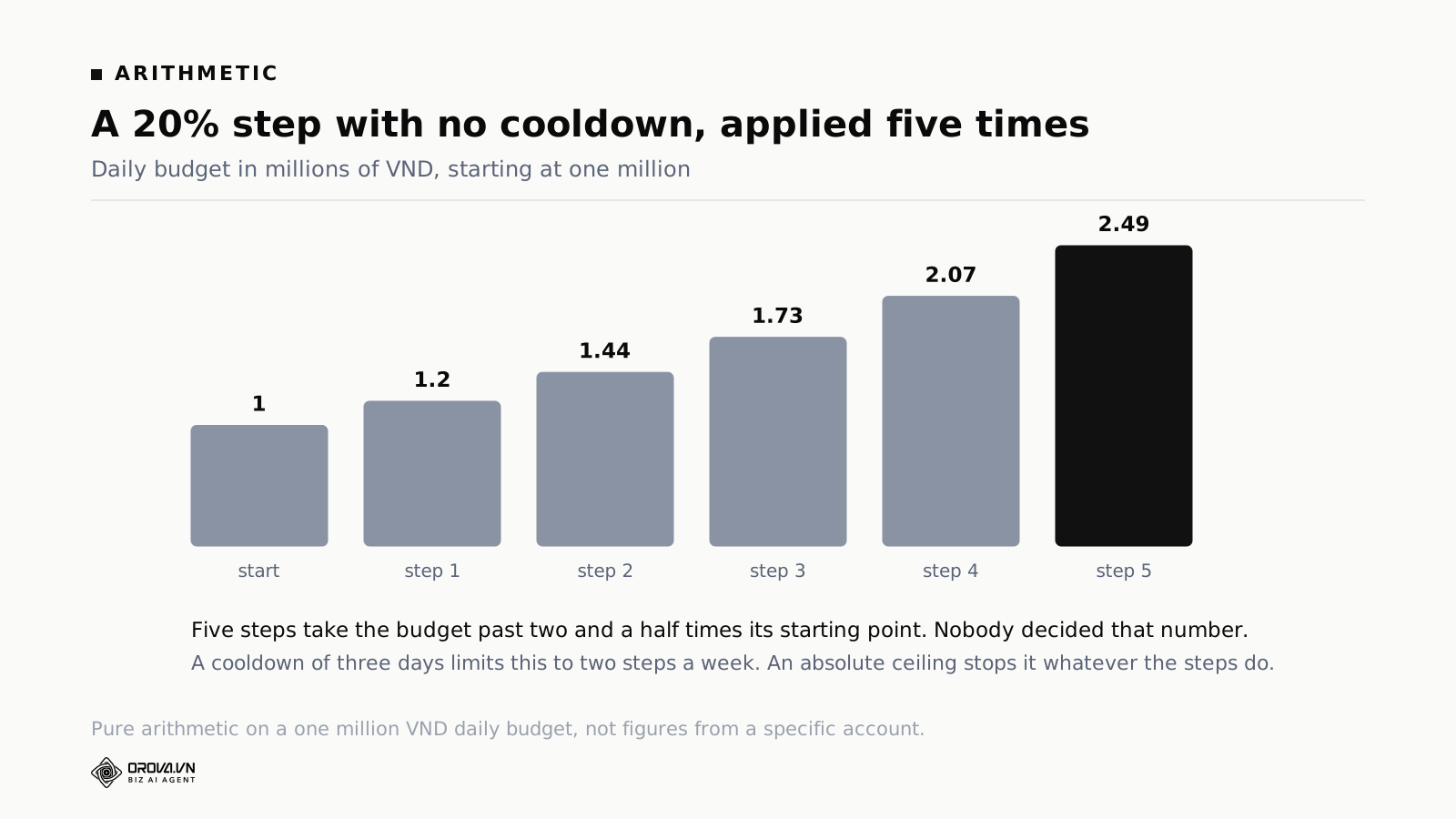
Start with one campaign on a daily budget of one million VND and a rule allowed to raise it by 20% whenever performance looks good. With no cooldown, the rule can fire on every run.
After one step the budget is 1.2 million. After three, 1.73 million. After five, 2.49 million. Nothing went wrong at any single step, and every step was individually defensible. The end number is still one nobody decided.
Now widen it. Suppose the same rule is allowed to touch every campaign in the account, and a reporting delay makes forty campaigns look like they crossed the threshold on the same morning. Forty campaigns, 20% each, on a combined daily budget of forty million VND, adds eight million VND of daily spend in a single run. Over a weekend, before anyone opens the account on Monday, that is twenty-four million VND that no one authorised.
Neither outcome requires the software to be wrong. Both are the arithmetic of a correct rule with no ceiling on it. That is the reason the five limits exist, and the reason they are boring numbers rather than clever ones.
The five limits every setup needs
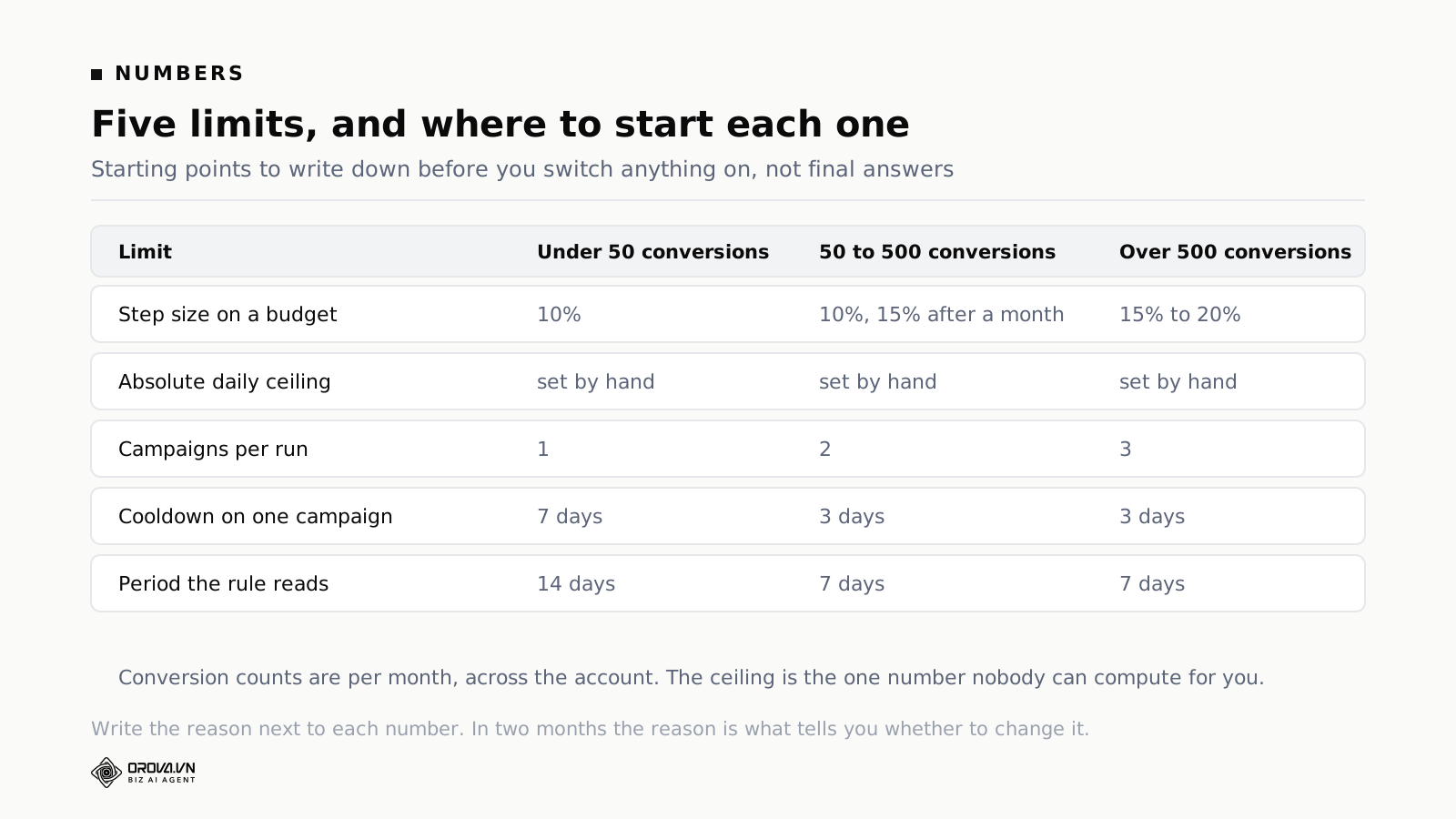
Here they are in one place, in the order they matter.
Step size. The largest single change the rule may make, as a percentage of the current value. Applies to budgets and bids.
Absolute ceiling and floor. The value the rule may never go above or below, in money, per campaign. This is what stops compounding.
Campaigns per run. How many entities one evaluation may touch. This limits how far a wrong threshold spreads before you see it.
Cooldown. The minimum time before the same rule may touch the same campaign again.
Exclusions. Named campaigns, campaign types and age thresholds the rule never applies to.
The sixth number that behaves like a limit
A minimum amount of data before the rule may draw any conclusion: a number of clicks, a number of conversions, a number of days. A campaign live for two days with twelve clicks tells you nothing, even though software can produce a very confident sounding assessment of it.
Set this one first, because it decides whether the other five ever get used correctly. On most accounts a rule that reads cost per result should not evaluate a campaign with fewer than a hundred clicks or fewer than seven days of delivery in the period it reads.
Step size: read it off your own numbers
Two different things decide this, and they get confused with each other constantly. Volatility decides the threshold that triggers the rule. Risk arithmetic decides how big the step is once it triggers.
The threshold comes from your volatility
Export the last ninety days for the campaign in question, weekly, and look at cost per result week over week. Work out the size of the ordinary swing between weeks when you changed nothing.
Say the median week over week movement is 18%, with a couple of weeks at 25%. A rule set to fire when cost per result rises 20% above target will fire constantly on ordinary movement, and you will spend a month arguing with it. A rule set at 40% will only catch real breaks. Somewhere between the top of your ordinary band and roughly double it is the useful range, and for most accounts that lands between 25% and 40% above your ninety day median.
Take your median from actual history, not from the target you wish you were hitting. Setting the trigger against a target you have never met means the rule fires on every campaign, every day, forever.
The step comes from what you can absorb
Once the rule fires, the size of the change is a money question with four inputs, and you can compute it before agreeing to anything:
step size × current daily budget × cooldown in days × campaigns per run = money at risk before the next review
Work an example. A 10% step, a one million VND daily budget, a three day cooldown, two campaigns per run: 0.1 × 1,000,000 × 3 × 2 = 600,000 VND of extra spend before anyone has to look at it. Most owners would shrug at that.
Change the step to 30% and drop the cooldown to one day, and the same rule can fire daily. Now the number to compare is not one step but a week of steps, and the arithmetic in the first section applies.
Start at 10% per step. The instinct is that 10% is too slow to matter. Two things argue against going bigger at the start. Every budget change disturbs delivery, and a campaign that keeps getting large changes never gets a stable week to be judged on. And 10% twice a week compounds faster than one large move that costs you five unstable days. After a month of watching the rule fire correctly, 15% to 20% is defensible on campaigns with steady volume.
Downward steps deserve their own number. A rule that cuts a budget by 30% when results dip does more damage than one that raises it by 30%, because you cannot recover the delivery you did not buy. Keep the decrease at or below the increase.
The absolute ceiling, and which cap actually binds
The ceiling is the only limit on this list that nobody can suggest for you, because it is a business decision rather than an arithmetic one. It is also the one most often left empty, and an empty ceiling means the real ceiling is your card limit.
Set it per campaign, by hand
Write the number the way you would say it out loud: this campaign may reach three million VND a day and no more, because at three million we are buying traffic we do not want. A ceiling derived from a formula is a ceiling nobody owns.
The test of a good ceiling is whether you would be comfortable finding the campaign sitting exactly at it on a Monday morning. If not, the number is too high.
Which of the caps binds first
You usually have several caps in play, and only one of them is doing the work. On the Google side there are three worth knowing about.
The campaign daily budget is an average, not a hard stop. Google may spend up to twice a campaign's average daily budget on a given day when it sees an opportunity, and balances that across the month, with the monthly charge limited to the average daily budget multiplied by 30.4. So a campaign on one million VND a day can bill two million on a Tuesday and stay within its terms. Any ceiling you set on the daily budget field has to be read with that doubling in mind.
A shared budget across several campaigns moves the constraint up a level. If your rule raises the daily budget on one campaign inside a shared budget, it has changed how the pool is divided rather than how much is available. Rules that assume a per-campaign budget behave oddly on shared ones, which is a good reason to exclude shared budget campaigns until you have watched the rule for a while.
If you are billed monthly through a manager account, an account budget sits above everything and stops delivery when it is reached. That is a genuine hard stop, and it is the only one in the stack that is. On Meta, the equivalents are the campaign spending limit and the account spending limit, and the account spending limit is the one that behaves like a real ceiling.
Write down which cap you are relying on. Teams frequently believe a campaign daily budget is protecting them when the only real protection is a card that declines.
How many campaigns one run may touch
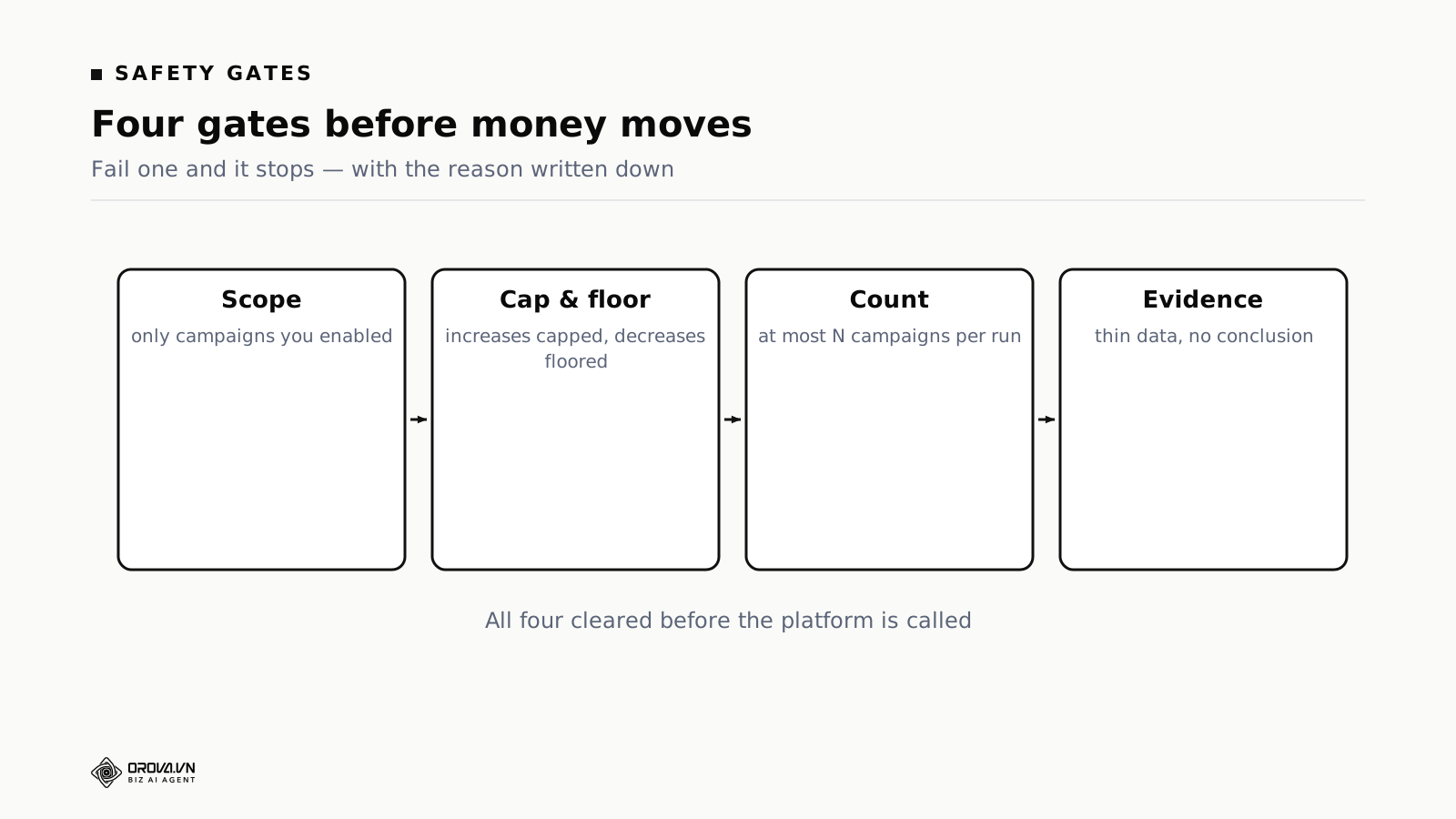
This is the cheapest limit to set and the one that saves you most when something else is wrong.
A rule with a wrong threshold and no cap on campaigns per run does not make one mistake. It makes every mistake it can find, in one pass, in the time it takes the API to accept the calls. One wrong campaign is something you fix on Monday. Forty wrong campaigns at once is a day of work and a conversation with whoever owns the budget.
Two or three is right for most accounts. On accounts under fifty conversions a month, one is enough, because a rule that finds three campaigns worth changing on a small account is usually reading noise.
The most common objection is that a cap makes the automation slow: if six campaigns need attention, only two get it. That is the intended behaviour. The two most extreme cases get handled on this run and the rest on the next one, and in between you get a chance to notice that six campaigns crossed a threshold on the same day, which is itself information. A wave of simultaneous firings is almost always a data problem rather than six independent account problems.
Order matters alongside the cap. If only two campaigns can be touched, the rule should pick the two with the largest deviation from target, not the first two it happens to read.
The cooldown between two changes to the same campaign
Three days is a reasonable default, because it roughly matches how long a delivery change takes to produce a signal you can read.
Without a cooldown, a rule oscillates. It raises a budget, the campaign dips while delivery adjusts, the rule reads the dip and lowers the budget, the campaign recovers, the rule raises it again. Each individual decision follows the threshold correctly. The sequence is worse than either decision on its own, and it leaves a campaign that has been disturbed four times in a week and can no longer be judged on any of them.
Two cases need a longer cooldown. Campaigns with fewer than about thirty conversions a week need seven days, because three days of data on low volume is mostly noise. And any campaign that has just had a structural change, meaning a new bid strategy or a significantly changed target, needs a week regardless of what the numbers do in the meantime.
The cooldown also constrains you, not just the software, and that is deliberate. A common sequence: the rule raises a budget on Thursday, the campaign looks worse on Friday because it is readjusting, and a human pulls the budget back on Friday afternoon. Now the campaign has been disturbed twice in two days by two different parties. Write the cooldown into how the team works, not only into the rule.
The exclusion list
Three exclusions belong in nearly every setup, and they are worth adding before the first rule runs rather than after the first incident.
Brand campaigns. Rules optimise measurable response. A brand campaign's value sits largely outside what the rule can read, so it will always look worse than it is, and a rule left alone with it will slowly starve it.
Campaigns younger than seven to fourteen days. New campaigns are unstable by design while delivery settles. Seven days is the minimum; fourteen is better for budget rules, where the cost of acting early is money rather than a pause.
Campaigns in an unusual period. A launch week, a sale, a campaign with committed partner spend. During those the numbers are abnormal on purpose, and the rule is comparing them against normal. Switch execution off for those campaigns for those weeks rather than loosening a threshold you will forget to tighten again.
Two more that depend on your account
Campaigns on a shared budget, until you have watched how the rule behaves with one. And any campaign whose objective does not produce the result the threshold reads. Applying a cost per purchase threshold to an awareness campaign that was never going to produce purchases is the single most common cause of a wrongly paused campaign.
When a rule does something wrong, the instinct is to loosen the threshold. Fix the scope first. Loosening a threshold to protect one badly matched campaign also stops the rule catching the campaigns that genuinely are burning money, which is the reason you set it up.
What a wrongly set limit looks like
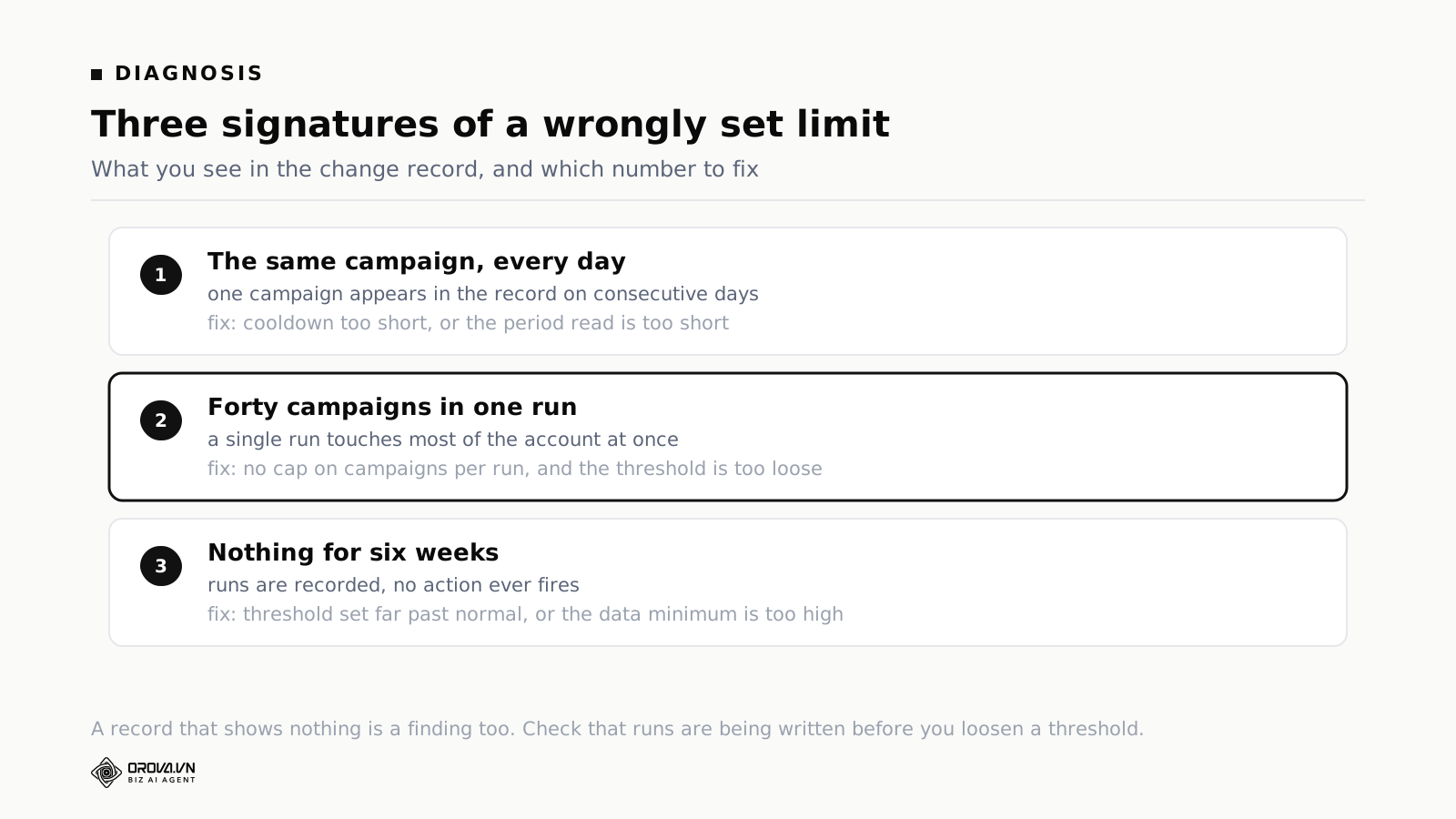
You diagnose these by reading the record of what ran, not by watching performance. Three patterns cover most of it.
The same campaign appears every day. The cooldown is too short, or the period the rule reads is shorter than the time a change takes to show an effect. Lengthen the cooldown before you touch the threshold.
One run touches most of the account. There is no cap on campaigns per run, and the threshold is loose enough to match everything. Set the cap first, because it works even while you are still arguing about the threshold.
Nothing has fired in six weeks. Either the threshold is set so far past normal that only a disaster reaches it, or the data minimum is high enough that no campaign qualifies. Before loosening anything, check that runs are being recorded at all. A rule that is not running looks identical to a rule that finds nothing.
When the limit itself has a bug
Two of ours, because they make the point better than theory does.
Zero read as empty. While checking each part of the automation individually, we found the threshold reader using a common shorthand: if the value is empty, use the default. In most programming languages zero also counts as empty. So anyone setting a return on ad spend threshold of zero, meaning "tell me about every campaign producing no revenue at all", was read as having set nothing. The default applied, and fourteen campaigns matched that should not have. We caught it before it reached live accounts, and the general point stands: the limits are software too, and software has bugs. That is why a cap on campaigns per run matters. It is the layer that holds when the first layer fails.
Currency ambiguity. Our data holds accounts billed in US dollars next to accounts billed in Vietnamese dong. A threshold of "spend above 500" is ambiguous by roughly twenty-five thousand times. Automatic conversion at the live rate was the obvious fix and the wrong one, because rates move daily and a campaign paused because of a rate fetched at an awkward moment is very hard to explain months later. Instead: a currency is required on every threshold, campaigns are filtered to that currency, and a rule refuses to run when the selected campaigns mix currencies. Refusing is more annoying than guessing. With someone else's money, annoying beats wrong.
A ten point audit of what you already have switched on
Run this against your current setup, whether it is Google's automated rules, a script, or outside software. Each item is a yes or no, and any no is a number to go and set.
1. Can you name, without opening anything, every rule that is allowed to change a budget?
2. Does each of those rules have a step size, expressed as a percentage or a fixed amount?
3. Does each have an absolute ceiling in money, set by a person, per campaign?
4. Is there a cap on how many campaigns one run may touch?
5. Is there a cooldown, and is it at least as long as the period the rule reads?
6. Are brand campaigns excluded?
7. Is there a minimum number of clicks or conversions before the rule may conclude anything?
8. Does the record of each change include the previous value, so you can put it back?
9. Does a notification go somewhere a person actually reads within one working day?
10. Do you know which cap binds first: the campaign daily budget, a shared budget, or an account level limit?
Most accounts fail on three, four and seven. Item ten is the one that surprises people, and it is worth ten minutes with the billing settings open.
Which actions to grant first, and which never
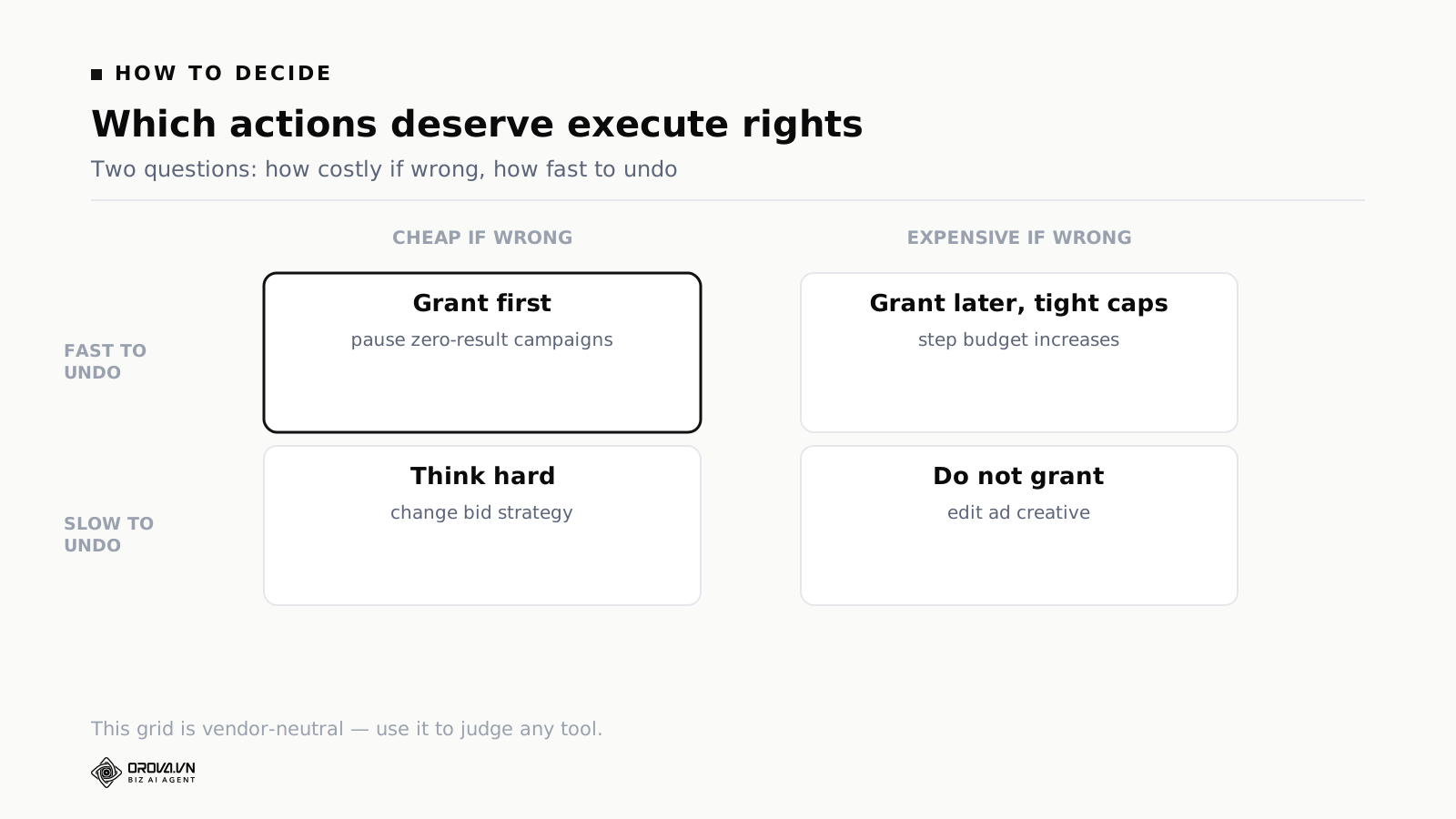
Two questions put the actions in order. How much does it cost if the action is wrong, and how fast can you undo it.
Cheap if wrong, fast to undo. Pausing campaigns that spend without converting. Pause one wrongly and re-enabling costs a click and a few hours of delivery. Fail to pause one and you burn a weekend. This is the first thing to automate on almost every account, and it needs the fewest limits: a data minimum, an exclusion list, and a cap on campaigns per run.
More expensive if wrong, still reversible. Stepped budget increases. This is where all five limits earn their place. Grant it after several weeks of watching the rule identify the right campaigns, and set the ceiling lower than feels reasonable. You can loosen a limit in ten seconds. You cannot unspend money.
Cheap now, expensive later. Changing bid strategy. Switching a strategy costs nothing at the moment of the change and alters delivery for days afterwards, and reversing it means another unstable period. The frequency is low, a few times a month, so the labour saved is small while the risk is not. Keep it as a recommendation you apply by hand.
Expensive if wrong, slow to undo. Editing ad creative. A wrong sentence does not show up in tomorrow's numbers. It shows up three months later in a complaint or a regulator's letter, and no threshold protects against that.
The first thirty days, week by week
Starting from nothing, this sequence works.
Week one, watch only. Connect the account, set up one rule close to your objective, and leave it producing recommendations without acting. Five minutes each morning reading what it says. The only question this week is whether it understands your account. Good signs: it names specific campaigns, carries numbers at both ends, and has days where it says nothing. Bad signs: something every day, phrased generally.
Week two, one action, tightly limited. Pausing campaigns that spend without converting. Set the threshold tighter than feels necessary, cap it at two campaigns per run, exclude brand campaigns and anything younger than seven days. Read the record daily.
Week three, adjust one number. If week two produced no mistakes, loosen one limit, and only one. If it paused something wrongly, do not abandon the approach: check the scope first, then the threshold. A wrong pause almost always traces back to a campaign that should have been excluded rather than to a threshold that was wrong.
Week four, a second action. Usually the budget increase, with the ceiling set by hand and a three day cooldown. By now the rhythm is set: grant one, watch two weeks, decide.
After thirty days most accounts settle at two or three actions running automatically and everything else producing recommendations. That is a stable end state, not a lack of ambition.
Who signs off, and what the handover conversation covers
The decision usually lands on the most junior person in the room, because they understand the tool best. They are also the person with the least authority over the budget, and that mismatch produces one of two outcomes. Either nothing gets automated and the tool becomes a report nobody acts on, or a lot gets automated to reduce their workload and, when something goes wrong, nobody can take responsibility because the manager never knew what had been switched on.
What works: the person running campaigns proposes which actions to automate and with what limits, the person who owns the budget approves the numbers, and both read the record during the first week. That costs about fifteen minutes a week for the first month and then becomes habit.
If you manage ads for someone else, have the conversation before you switch anything on, and cover three things.
What is being delegated, in plain terms. Not "we enabled AI optimisation". Instead: "the software may pause a campaign that spends more than X with zero results for two days, and may raise a daily budget by up to 10% when a campaign is limited by budget and performing under target, never above three million VND a day, never on brand campaigns. Nothing else."
Where they can see it. Show them the change record once, live. Most people relax the moment they see that every change is timestamped, attributed and reversible. The anxiety is rarely about the change. It is about not knowing.
What happens if it is wrong. Say the reversal path out loud: how you would notice, how quickly, and what undoing costs. A prepared answer here is the difference between an incident and a crisis.
Skip that conversation and the first automated change becomes a trust problem even when it was correct. One account owner we worked with found a campaign's daily budget had gone from two million VND to two point four overnight. The increase was right, the campaign was profitable, and it still took fifteen minutes of unpleasant confusion to work out what had happened, because nobody had written down that the rule existed. The fix was a note, not a threshold.
The cost of setting no limits at all, and of automating nothing
Both extremes cost money. They differ in where the loss shows up.
No limits, and the loss appears as a budget nobody chose, a run that touched forty campaigns, or a month-end number with no explanation attached to it.
No automation, and the loss is quieter. A campaign starts burning at ten on a Saturday night. With only people watching, it runs until Monday morning, thirty-four hours, and on an account spending meaningfully per day that gap is real money. There is also a list of small jobs everyone knows they should do and almost nobody does consistently, like excluding existing customers from prospecting campaigns. Not because it is hard, but because it is dull and never urgent. And every account manager's daily check list quietly shrinks to two or three habitual items after a few weeks. That is finite attention, not laziness, and software does not have the problem.
So the question is never whether to automate. It is which actions, and inside what limits, and the numbers in this article are how you answer the second half.
Frequently asked questions
What step size should I start with?
10% of the current value, on both budgets and bids. Move to 15% or 20% after a month of watching the rule fire correctly on campaigns with steady volume. Keep decreases no larger than increases.
How do I choose the absolute ceiling?
By hand, per campaign, as a money figure you would be comfortable seeing the campaign sitting at on a Monday morning. If no number feels comfortable, the action is not ready to run automatically.
Is a cooldown really necessary if the step size is small?
Yes. Small steps with no cooldown compound, and the compounding is invisible because each individual step looks reasonable in the record. The cooldown is also what stops the rule reading the disturbance caused by its own previous change.
What is a reasonable cap on campaigns per run?
Two or three on most accounts, one on accounts under fifty conversions a month. The purpose is not throughput. It is to make a wrong threshold visible while it is still a small problem.
Can automated changes get my account restricted?
Changes go through the platform's own API, which issues the same operations as the web interface. Restrictions come from policy-violating creative or payment problems, not from programmatic budget edits.
Can I take back an automated action after switching it on?
Yes, in seconds. Switch the action back to producing recommendations only. There is no waiting period, and changes already made stay in place until you reverse them yourself.
How long before I know whether my limits are right?
Two weeks of reading what the rule would have done tells you whether the threshold matches your account. The step size and ceiling take longer, because you only learn about them when the rule fires several times on the same campaign.
Should I set limits on a client's account differently?
Tighter, and visible to them. Automate only the actions that stop spend, keep the caps low, and give the client sight of the change record. Delegating on someone else's money without their visibility is a relationship risk before it is a technical one.
Write each number down with the sentence explaining why you chose it. In two months, when you are deciding whether to change it, the reasoning is the only thing that will help you. The number on its own tells you nothing.
Related reading: advisory mode versus automatic execution, budget ceilings that stop spend leaks, why automation has to explain itself, and the optimisation actions software can take on a Google Ads account.
Orova Ads optimises campaigns for you
Connect Google, Meta and TikTok in one place. AI reads the numbers, proposes changes and executes under the rules you set.
Explore Orova Ads