
BambooHR ATS: Where It Fits and Where It Stops
Your company already runs BambooHR. Somebody in the leadership meeting has asked whether the hiring side of it is good enough to carry a real recruiting year, or whether you need to buy something separate. The person asking is not looking for a feature list. They are looking for a number and a decision.
The trouble with answering that question from vendor pages is that the BambooHR ATS is not sold as a product. It is a block inside a plan, and the plan is priced on a completely different axis from the thing that will actually constrain you. You pay by how many employees you have. You are limited by how many jobs you have open. Those two numbers move independently, and nobody at the point of purchase notices, because the person signing is looking at the per-employee figure and the person hiring is looking at the pipeline.
So this piece does the separation properly. What the hiring block contains, read from the plan comparison rather than the brochure. How the pricing and the cap interact, with worked examples. The exact point in a hiring loop where the coverage stops. Three limits that only appear once you are past roughly twenty roles a year. The three ways out when you hit them, and how to tell which one you actually need. Then the questions to ask before signing, and a plain statement of which part of the job our own product covers, because it covers one part and not the rest.
What does the BambooHR ATS actually include?
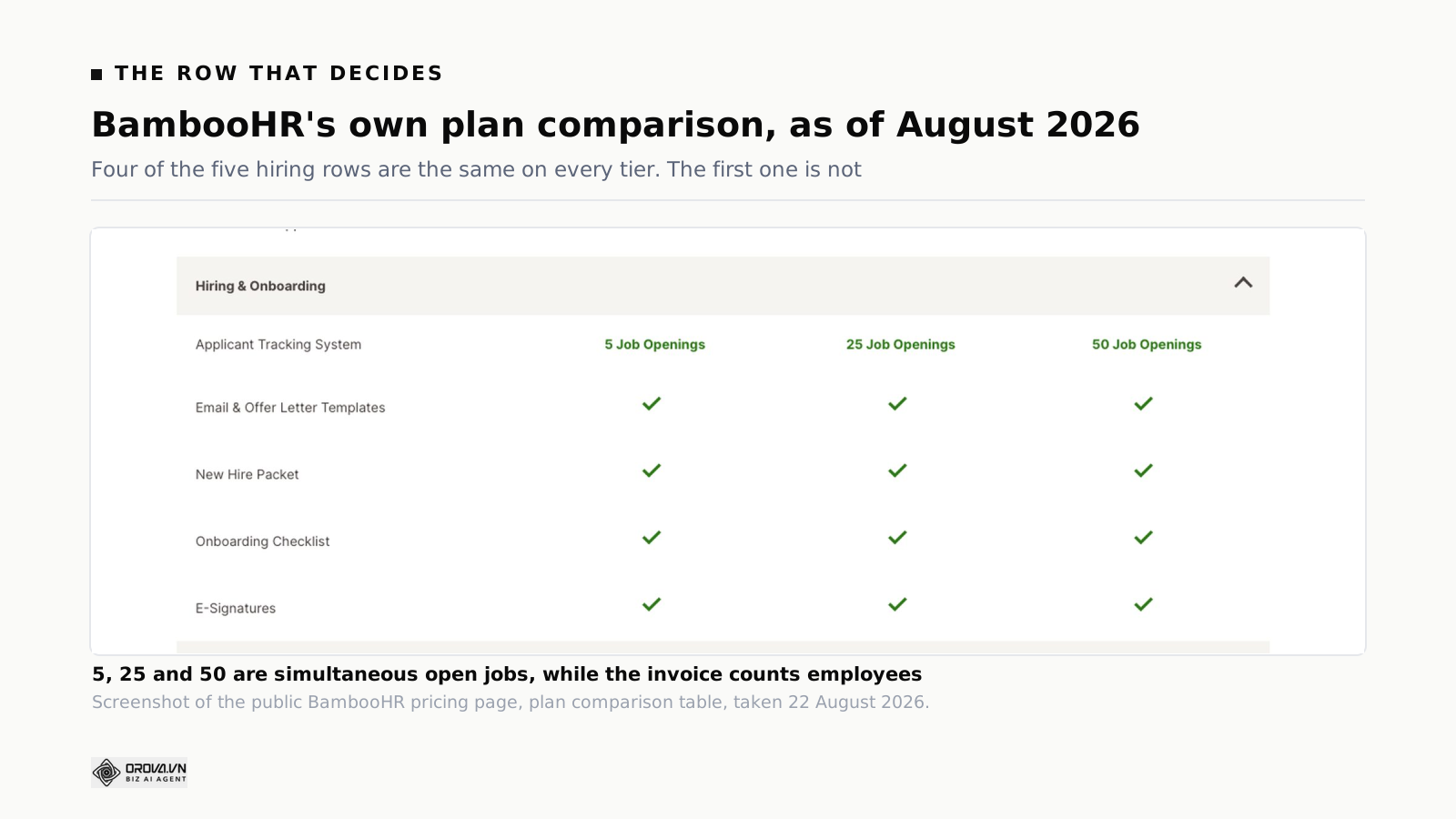
Applicant tracking sits inside every BambooHR plan, not as an add-on. The hiring block is five rows: applicant tracking capped at 5, 25 or 50 open jobs by plan tier, email and offer letter templates, a new hire packet, an onboarding checklist, and e-signatures. Sourcing, assessments and structured interview tooling are not in it.
That is the whole of it, and it is worth sitting with for a second, because it is a smaller list than most people carry in their heads. When a platform says "applicant tracking system" the phrase brings a lot of baggage with it: scorecards, interview kits, assessment integrations, offer approval chains, pipeline analytics. Some vendors ship all of that. BambooHR ships a candidate record, a way to post the job, templates for the emails, and then a very good onboarding handoff.
The onboarding handoff is not a throwaway. It is arguably the strongest thing in the block and the reason the whole design makes sense, which we will come back to. But it is the part that happens after you have decided who to hire, and the question you are trying to answer is about the part before that.
An HRIS first and an ATS second, and the order changes everything
BambooHR's centre of gravity is the employee record. Everything in the product radiates out from a person who works at your company: their data, their time off, their benefits, their reviews, their compensation. The product is very well built around that centre, and the reason so many small and mid-sized companies land on it is that the centre is the correct centre for an HR system.
Applicant tracking, in that architecture, is the on-ramp. It exists so that the person you hire arrives in the employee record with their details already filled in and their paperwork already signed, rather than being retyped by somebody in HR on their first Monday. Read the hiring block again with that framing and it stops looking incomplete and starts looking deliberate: candidate record, job posting, email templates, offer letter, new hire packet, onboarding checklist, e-signatures. That is a clean path from "applied" to "employee number assigned" with no retyping anywhere along it.
What it is not is a path from "we need to hire a backend engineer" to "we have five people worth interviewing". That earlier stretch — sourcing, screening, structured evaluation, comparing candidates against each other rather than against a gut feeling — is a different discipline with different tools, and BambooHR has never really claimed it. The feature names on the pricing page are honest. It is the word "ATS" that carries expectations the rows underneath do not meet.
This matters because of how buying decisions get made. The finance conversation is about consolidating vendors: one platform, one bill, one integration. The hiring conversation is about throughput: how many CVs can we get through, how fast, without three people reading the same pile. Those two conversations reach opposite conclusions from the same feature list, and the finance one usually wins because it happens first and at a higher level.
Paid by headcount, capped by open roles
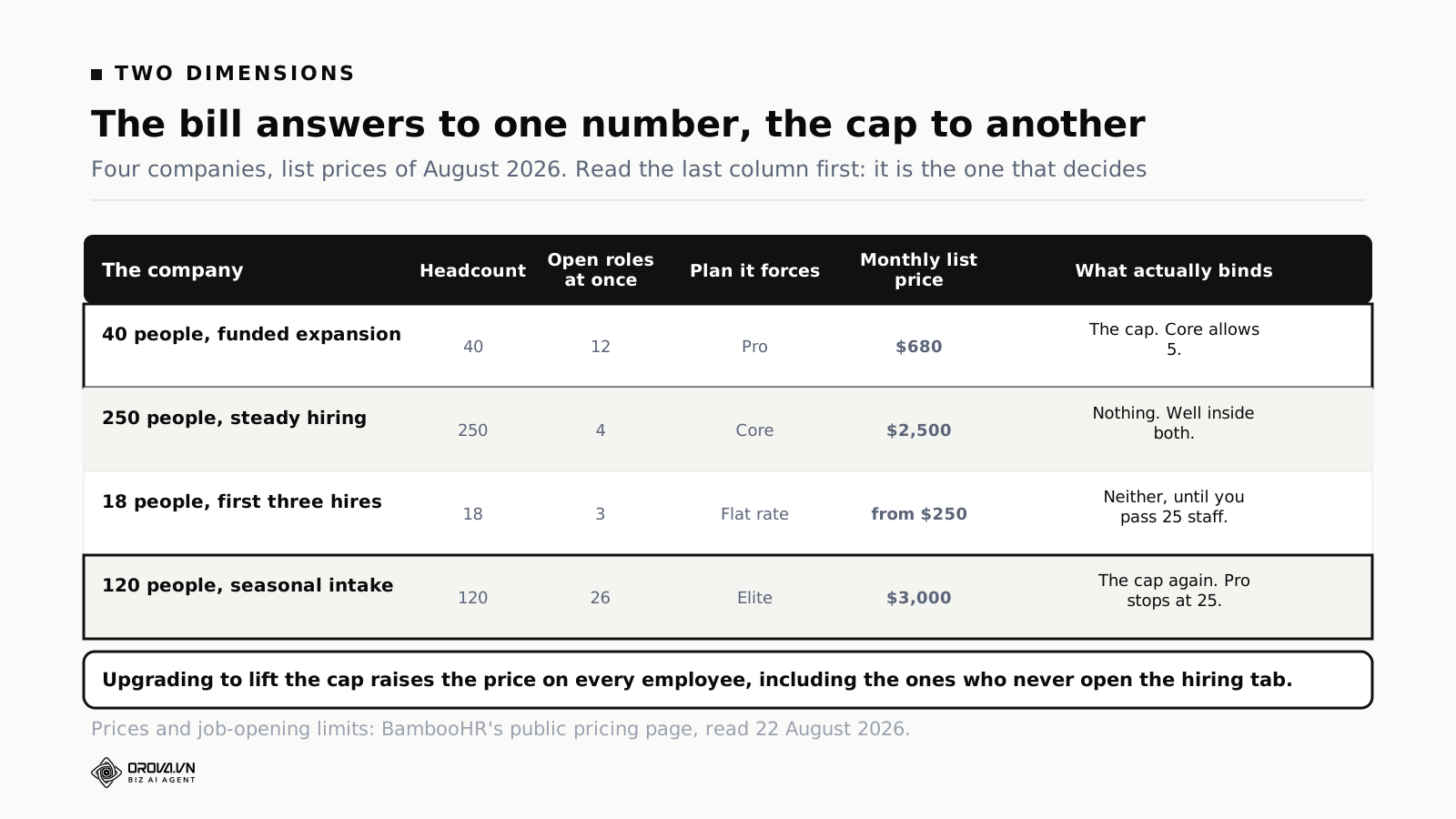
Here is the mechanic that decides most of this. As of the pricing published in August 2026, BambooHR charges $10 per employee per month for Core, $17 for Pro, and $25 for Elite, with a flat rate starting at $250 a month for companies of twenty-five employees or fewer. Volume and non-profit discounts exist.
The applicant tracking row in the plan comparison reads: 5 job openings on Core, 25 on Pro, 50 on Elite.
Put those two facts side by side and the mismatch is obvious. The bill scales with the size of the company. The constraint scales with the shape of the hiring year. A 250-person company that hires steadily and never has more than four roles open at once will never notice the cap on Core, and will pay $2,500 a month. A 40-person company in the middle of a funded expansion, running twelve roles at once, hits the Core cap immediately and has to move to Pro — paying $680 a month instead of $400, for a plan whose other additions are performance reviews, an employee community feed, recognition and rewards, and fifteen compliance courses. None of which they asked for. All of which they are now buying in order to open thirteen jobs instead of five.
There is a second-order effect worth knowing about. Because the cap counts open roles rather than roles filled per year, teams start managing the number rather than the hiring. Roles get closed early so the slot frees up. Two similar positions get merged into one requisition with "multiple hires" in the description. A role that is really open gets kept in draft until an interview slot appears. Every one of these is a small distortion of your own hiring data, and the reporting you later pull out of the system inherits all of them. If your time-to-fill numbers look strange, this is one of the places to look.
The honest summary is not that the cap is unreasonable. Five simultaneous openings is genuinely enough for a large fraction of the companies BambooHR serves. The problem is that it is a hiring constraint attached to an HR price, so the two teams who need to agree on it are looking at different halves of the sentence.
What you get in the box, row by row
Taking the five hiring rows in order, and describing what each one does rather than what it is called.
Candidate record. BambooHR's own description covers contact information, resumes, cover letters, answers to custom application questions, and the candidate's status and rating. Custom application questions are the piece people underestimate — a well-designed question set is the cheapest screening you will ever build, and it runs before a human reads anything. The status field drives the pipeline view. The rating is a simple star-style score, which is useful for sorting and not useful for defending a decision three months later.
Job posting. The description is "post jobs to leading boards and your social networks", which is accurate and worth reading precisely. It is distribution to boards, not sourcing. Distribution pushes your opening outward and waits. Sourcing goes and finds people who are not looking. If your problem is that nobody is applying, distribution helps a little; if your problem is that the right people are not applying, distribution does not help at all, and no ATS in this tier solves it either.
Email and offer letter templates. Templates that auto-populate with candidate information, used for candidate communication, offers and rejections. This is quietly one of the highest-value rows in the block, because the single most common failure in small-company hiring is candidates never hearing back. A template that fires on a status change fixes that with no ongoing effort.
New hire packet and onboarding checklist. The handoff. Documents assigned, tasks assigned to the right people, the new starter filling in their own details before day one. This is the piece that is genuinely better in an HRIS-based ATS than in a standalone one, because there is no integration in the middle of it. The data does not move between systems; it was already in the system.
E-signatures. Included on all three tiers. Not exciting, and the absence of it is the kind of thing that costs a week per hire in companies that print and scan.
Now the list of what is not there, stated as plainly: no candidate sourcing or database search, no structured interview kits or scorecards, no assessment or test integration built into the plan, no interview scheduling tool, no offer approval workflow, no interview recording or notes tooling, and no resume screening beyond reading the record yourself. Some of these can be reached through the integration marketplace, which is a real answer and also a different budget line.
Three limits that only appear past twenty roles a year
Under about twenty hires a year, with two or three roles open at a time, the block above is fine. People who tell you otherwise are usually selling something. The limits are real, but they are volume-triggered, and here is what each one actually feels like when you hit it.
The reading bottleneck. The candidate record is a place to store a CV, not a way to get through a hundred of them. At five applicants per role you read all five. At two hundred applicants per role — which is now normal for any remote-friendly opening posted to a large board — reading is the entire job, and it lands on one or two people who also have other work. What follows is predictable: skim the first thirty, get tired, apply a shortcut ("does the CV mention the exact tool we use"), and let the rest go unread. The shortcut is not a criterion; it is fatigue wearing a criterion's clothes. The decision quality drops without anybody being able to point at the moment it dropped.
Inconsistency across interviewers. Without scorecards or an interview kit, every interviewer runs their own interview. Two candidates for the same role get asked different questions by different people and are then compared on the basis of impressions formed under different conditions. In a small team with one hiring manager this is invisible because the same person does everything. Add a second interviewer and a second hiring manager and it becomes the largest source of noise in your decisions. It is also the part that is hardest to notice from inside, because everyone involved is confident.
No defensible record of why. A star rating and a status field do not reconstruct a decision. Six months later, when somebody asks why a particular candidate was rejected — a manager, a lawyer, a candidate — the honest answer available in the system is "rated two stars". If your jurisdiction expects you to be able to explain a rejection, or if you simply want to learn from your own hiring, you need the reason attached to the evidence, and there is nowhere in the block to put it that anybody will reliably fill in.
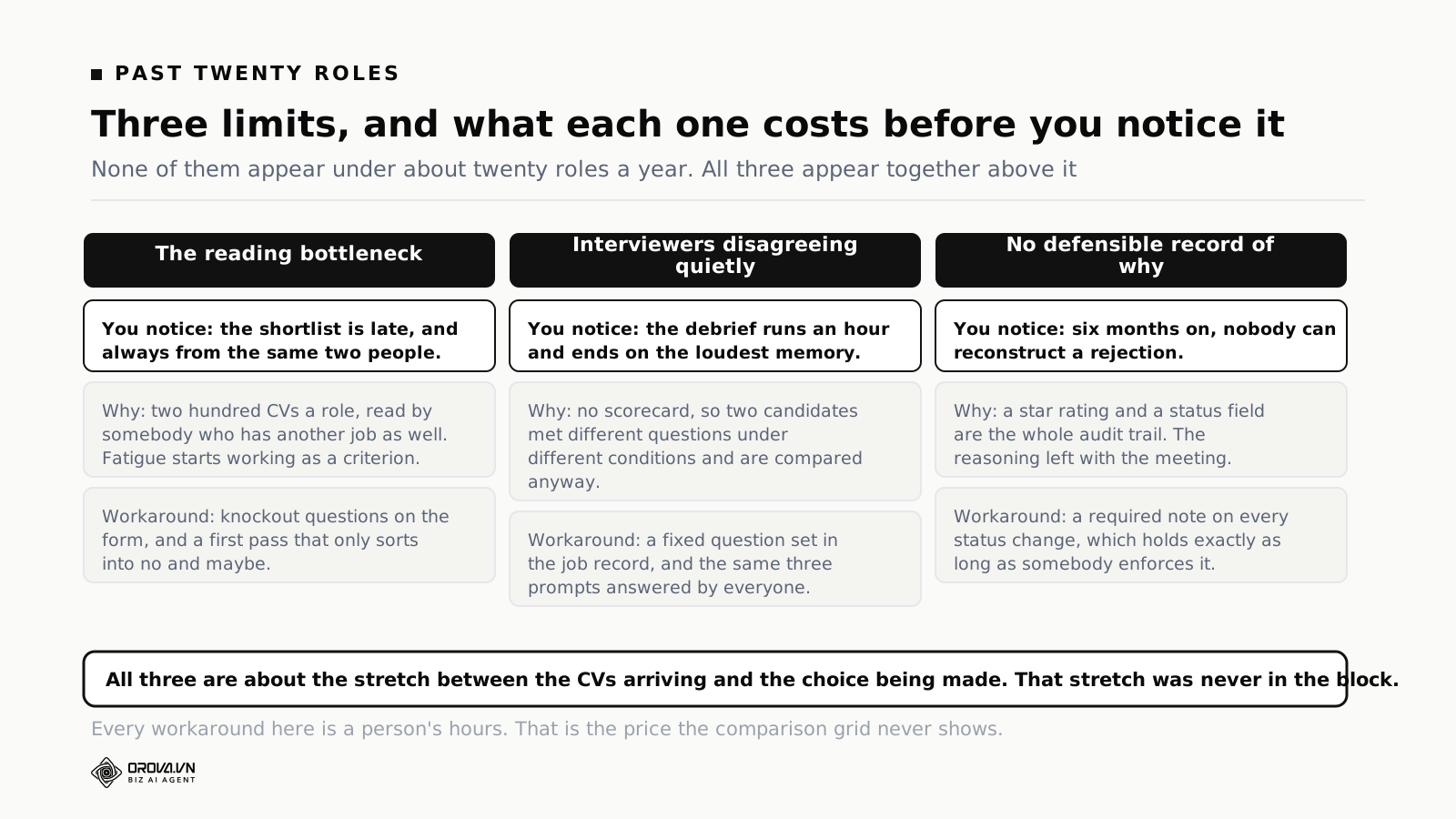
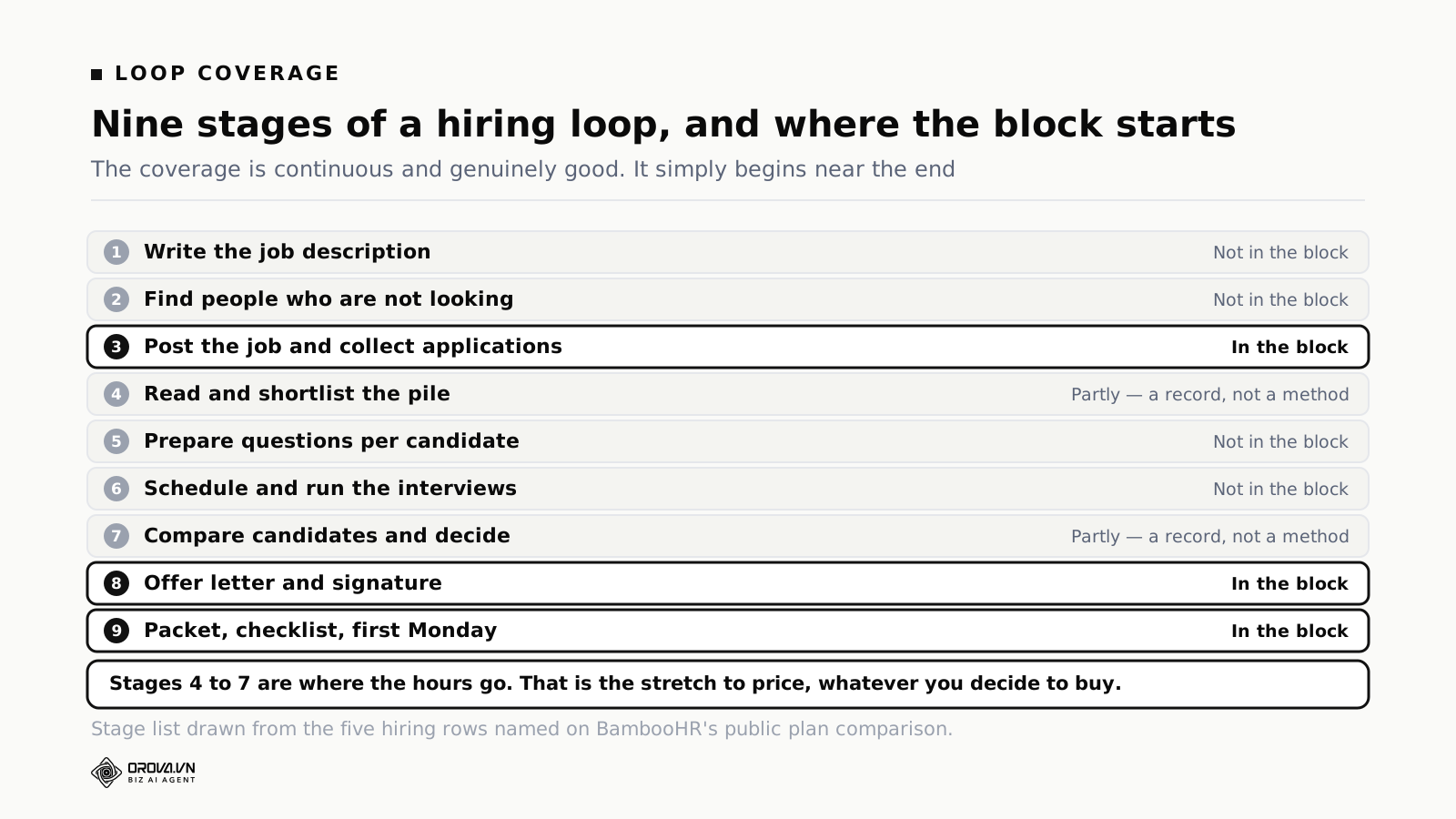
Note what these three have in common: they are all about the stretch between "CVs have arrived" and "we have chosen". That is precisely the stretch the block was never designed to cover, so this is not a defect. It is a boundary, and the useful move is to find it before you plan a hiring year around the wrong side of it. If you have not yet mapped your own loop, the stage-by-stage version for small teams is a faster way to see where your hours actually go than reading another feature grid.
How far the screening really goes
Screening inside BambooHR is: custom application questions on the form, then a human reading. There is no parsing-based ranking in the plan rows, no keyword scoring, no criteria model.
Custom questions deserve more credit than they get. A knockout question that is genuinely knockout — do you have the right to work in this country, are you within this salary band, do you have the certification this role legally requires — removes a slice of the pile before anybody spends a minute on it, and it does so on a rule you wrote down in advance rather than a judgement made while tired. If you take one thing from this section, it is to spend an hour on the application form for every role. It is the cheapest screening in the entire process and most companies leave it at "upload your CV".
Beyond that, you are reading. The realistic ways to make reading survivable at volume are all process changes rather than product features: read in a fixed order rather than newest-first, decide the three criteria before opening the first CV, do a first pass that only sorts into "no" and "maybe" without ranking, and never let one person read the whole pile alone. All four help. None of them scale past a certain volume, and the point at which they stop working is different for every team, which is why nobody can tell you your number.
If you want to understand what the tier above actually adds here, the mechanics of resume parsing and screening is the honest version — including where parsing itself gets things wrong, which matters because a screening tool that parses badly is worse than no screening tool.
The interview stage is where the gap is widest
Sourcing is the gap people talk about. Interviewing is the gap that costs more.
Everything about an interview stage is coordination: choosing who talks to whom, finding a time, making sure the room or the video link exists, giving each interviewer something specific to ask, capturing what was said, and comparing afterwards. The hiring block covers none of it. Scheduling happens in calendars and email threads. Questions happen in whatever the interviewer thought of on the way in. Notes happen in a notebook or in a document nobody else opens. Comparison happens in a meeting where the loudest recollection wins.
The consequence is not usually a bad hire. It is slowness, and slowness loses candidates. A week of back-and-forth to find an hour is a week in which the candidate finishes another process. Two interviewers asking overlapping questions means a third interview gets added to cover what was missed. None of this shows up as a line item; it shows up as roles taking longer than they should and good candidates dropping out late.
Worth saying plainly, because vendors of every size blur it: interview scheduling is not a hard problem to solve with software and it is a very expensive problem to leave unsolved with email. If you are running more than a handful of loops, that is the first thing to fix, regardless of which platform you fix it in.
Keep, upgrade, or bolt on: the three real options
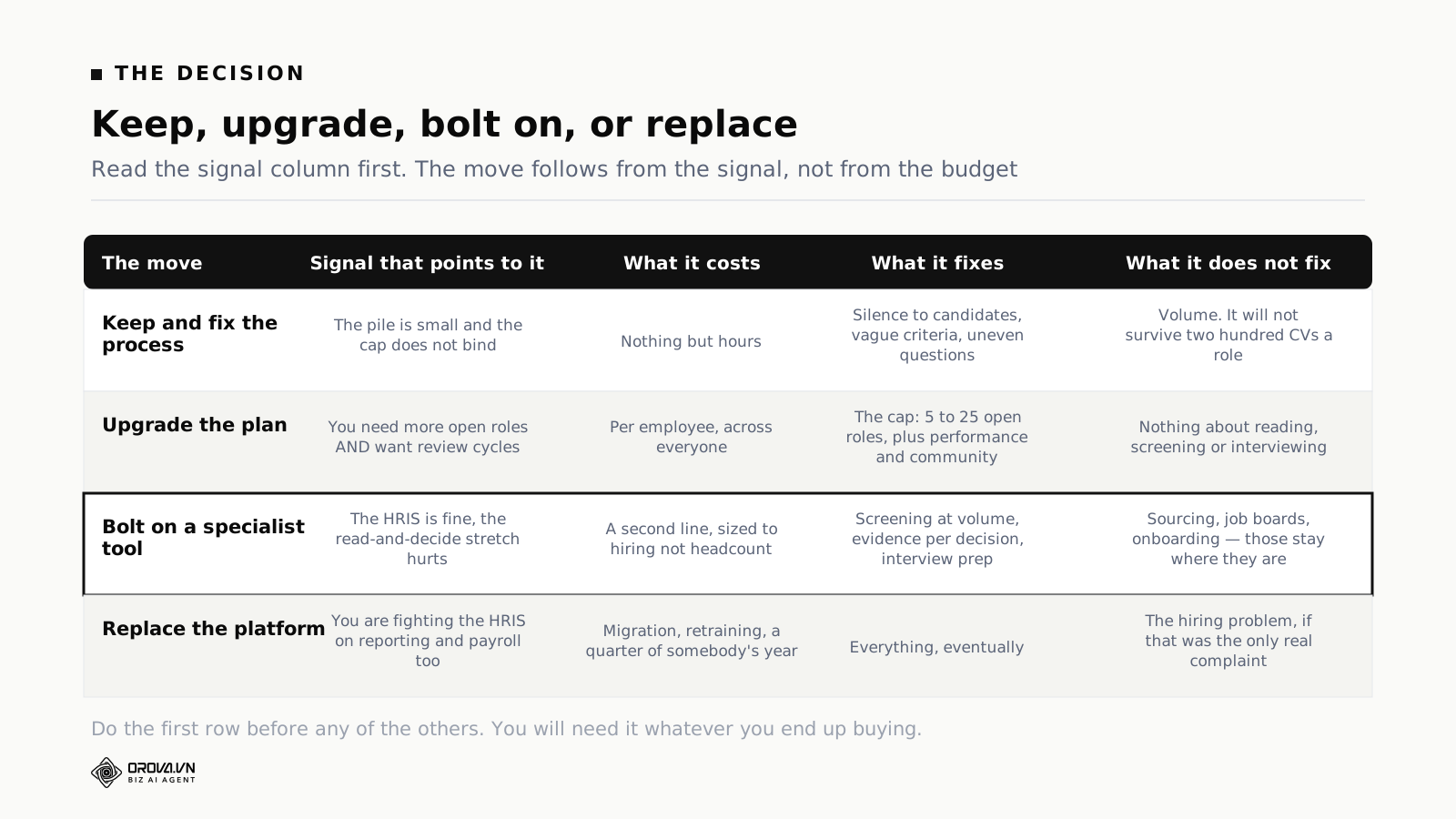
When you decide the block is not enough, there are exactly three moves. They differ enormously in cost and disruption, and companies routinely pick the most expensive one first.
Keep and change the process. The cheapest move and the most often skipped. Tighten the application form. Write the criteria down before the pile arrives. Assign a standard question set per role and put it in the job's description field where interviewers can find it. Use the email templates properly so nobody goes silent. This costs nothing and removes a surprising amount of the pain, and you should always do it first because you will need it anyway whatever you buy afterwards.
Upgrade the plan. Moves the cap from 5 to 25 open roles and adds performance management, employee community and more compliance training. If you genuinely want those things — and performance review cycles are a real need in a growing company — the upgrade is fine value. If you want none of them and are buying purely to lift the cap, you are paying a per-employee premium across your whole headcount to solve a constraint that affects three people. Do the arithmetic on your actual headcount before you agree.
Bolt on a specialist tool. Keep BambooHR as the system of record and add something that covers the read-and-decide stretch. This is the option that most often fits, because the two products do not overlap: one holds employees, the other processes candidates, and the handover point is a single moment — the person you chose. It is also the option people resist hardest, because "another tool" sounds like sprawl. The question to ask is not how many tools you have. It is whether the second tool touches the same data as the first. Two systems that share a boundary are fine. Two systems that both claim to own the employee record are not.
Replace the whole thing is the fourth move and it is almost always wrong at this stage, because you would be tearing out a working HRIS to fix a hiring problem. If you are seriously considering it, you are usually in a different situation — outgrowing the HRIS as well — and the hiring block is not really what is driving the decision.
How candidate data moves between two systems
If you bolt on, the practical question becomes what crosses the boundary and when. There are three sensible designs and one bad one.
Design one: the specialist tool ends at the decision. Candidates arrive in the specialist tool, get read and scored and interviewed there, and only the chosen one is entered into BambooHR — where the offer, the packet and the onboarding checklist run as before. Nothing but the hire crosses. This is the simplest arrangement and the one that breaks least, because the crossing happens once per hire and a human is present for it.
Design two: BambooHR takes the applications, the specialist tool does the reading. Applications land in the ATS as usual, then get exported for scoring, and the outcome is written back as a status change. This keeps the job posting where it is, which matters if your careers page is already wired to BambooHR. It requires an export step, which means somebody has to own it and it will be forgotten during a busy week.
Design three: run them in parallel for one role. The correct way to evaluate a bolt-on before committing to it. Take one live role, run it through both, and compare the shortlists. It costs one duplicated effort and it answers the question with evidence instead of a demo.
The bad design is syncing candidate records both ways continuously. Two systems with two ideas of a candidate's status will disagree, the disagreement will be silent, and you will discover it when somebody gets an automated rejection after being offered the job. Pick a direction and keep it one-way.
One more thing to settle before you connect anything: what happens to candidate data when you stop. Ask both vendors what the export contains, how long records are retained, and whether rejected candidates are purged on a schedule. This is a question with a legal answer in a growing number of places, and it is much easier to ask at purchase than at renewal.
The costs that are not on the pricing page
Three of them, all real, none quoted.
Implementation time. Not the vendor's implementation fee, yours. Somebody has to configure the fields, build the templates, wire the careers page, and decide the statuses. Budget days, not hours, and budget them for a person who already has a job.
The per-employee ratchet. Per-employee pricing rises with headcount, which is fine when headcount rises with revenue and uncomfortable when it does not. Model it at your projected headcount in two years, not today's, and do it for the tier you expect to be on rather than the one you are buying.
The cost of the workaround. Every gap in the block gets covered by a person. The person is not free, they are simply not on the software line of the budget. If a hiring coordinator spends two days a month reconciling a spreadsheet with the ATS, that is the real price of the missing feature, and it is usually larger than the feature would have cost.
None of this is an argument against BambooHR. It is an argument for pricing the whole arrangement rather than the licence. The same arithmetic applies to every platform in this category, which is why the small-business ATS comparison is worth reading with a calculator open rather than as a shortlist.
Six questions to put to the sales team
Ask these before signing, and ask for the answers in writing. Every one of them has cost somebody money by being left unasked.
- What exactly counts as an open job against the cap? A role in draft. A role on hold. A role hiring three people. A role reposted after a candidate fell through. Get the counting rule, not the number.
- What happens when we reach the cap mid-hire? Is a new posting blocked, is it queued, or does it upgrade the account automatically and bill us?
- Which job boards are included, and which cost extra? "Leading boards" is a category, not a list. Ask for the list, and ask which of them are paid placements.
- What does the candidate export contain, in full? Not "you can export candidates" — the field list, including application question answers, ratings, and email history.
- What is the price at our projected headcount in twenty-four months, on the tier we would be on? Ask for it as a number on the quote.
- Which of the things we need are in the integration marketplace rather than in the plan, and what do those partners charge? This is where "it does that" quietly turns into a second invoice.
If you are also evaluating dedicated recruiting platforms alongside this, the same six questions work with the nouns swapped, and the comparisons of Greenhouse and Lever answer them for two of the products you will most likely be shown next. The distinction between an ATS and a candidate relationship system also stops being academic at this point, and the difference between the two categories is the shortest way through it.
What to measure once you have decided
Whichever move you make, measure the same four things before and after, or you will never know whether it worked.
Hours spent reading per role. Nobody tracks this and it is the number that changes most. Ask the two people who do the reading to note it for one role. It is usually double what the manager assumed.
Days from application to first response. The number candidates feel. If it is over a week, you are losing people before anything else in your process matters.
Days from application to decision. The number the business feels. Break it into stages so you can see which stage is the queue rather than the work.
How many of the shortlist were worth interviewing. The quality signal. If four out of five shortlisted candidates are obviously wrong once you speak to them, the screening is not screening, and buying a faster pipeline will just deliver the wrong people sooner.
These four are deliberately cheap to collect. A longer set is worth building later, and the metrics that actually change behaviour covers which ones repay the effort of tracking and which are decoration.
Where Orova Recruit fits, and where it does not
Stated plainly, because the whole point of this article is that vague claims are what cost people money.
Orova Recruit does not do what BambooHR does. It is not an HRIS. It holds no employee records, no time off, no benefits, no payroll, no performance reviews. It does not post jobs to boards and it does not source candidates — it has no candidate database to search and does not go looking for people who have not applied. If you are choosing between BambooHR and Orova Recruit, you are asking the wrong question, because they do not overlap.
What it does is the stretch this article has been circling: the part between the CVs arriving and the decision being made. Up to 500 resumes per role, each file up to 10MB, including photographs and scans. Every one scored from 0 to 100 against criteria you write yourself, and each score has to quote the line in the CV that earned it — so the record of why exists as a by-product rather than as a discipline somebody has to maintain. Mark a criterion as required and a resume that misses it is out however high the total, which is the knockout question idea applied to the CV rather than the application form.
Then the parts around it. Interview questions drafted per candidate, aimed at whatever the CV left unclear. Interview notes taken by voice while you talk, in any of 56 languages, with nothing to install. Candidates lined up side by side with the gaps visible. Interview scheduling that refuses to double-book a room or an hour. Automated candidate emails sent from your own company mailbox, so the candidate sees your name. And an offer letter draft that deliberately leaves the salary and the start date blank for a human to fill in.
Where the boundary sits: at the moment you choose. From that point on — packet, checklist, e-signatures, employee record, first Monday — you are back in the HRIS, and that is the right place for it to happen. Design one from the section above is the arrangement this is built for.
What it will not do, said once more so nobody has to infer it: no job board posting, no sourcing, no HRIS, no payroll, no onboarding after the hire, and no automatic decision. It ranks and shows the evidence; choosing and passing is still a human click.
Common questions
Is the BambooHR ATS included or an add-on?
Included. The Hiring and Onboarding block appears in the Core plan and above, and is not one of the separately sold add-on solutions. What varies by plan is the number of open jobs allowed: 5 on Core, 25 on Pro, 50 on Elite. Four of the five hiring rows are identical across all three tiers.
How many jobs can we have open at once?
Five on Core. That is simultaneous open roles, not hires per year, so a company that fills a role and closes it frees the slot. Confirm the exact counting rule with sales before you plan around it, because how drafts, holds and multi-hire requisitions are counted is the part that varies.
Does BambooHR screen or rank resumes for us?
Not in the plan rows. You get a candidate record with the CV, cover letter and answers to your custom application questions, plus a status and a star rating you set yourself. The reading and the ranking are done by people. Custom application questions are the one genuine screening lever in the box, and they are underused.
Can we schedule interviews inside it?
Interview scheduling is not one of the hiring rows. Teams generally use calendars and email, or connect a scheduling tool from the integration marketplace. If you are running several loops at once this is usually the first gap worth closing, because the cost of leaving it open is measured in candidate drop-off rather than in software.
Should we bolt something on or move to a dedicated ATS?
Bolt on if your HRIS is working and only the read-and-decide stretch hurts. Move if the HRIS itself is straining — if you are also fighting it on reporting, permissions or payroll integration. Replacing a working system of record to fix a hiring bottleneck is the expensive way to solve a cheap problem.
Will we lose candidate history if we add a second system?
Only if you let the two systems both own the same record. Keep the flow one-way, decide which system is the source of truth for candidates and which is the source of truth for employees, and export from both on a schedule you actually run. Ask each vendor for the full export field list before you connect anything.
Is the per-employee price negotiable?
The published page notes that volume and non-profit discounts are available, which means there is a conversation to have. What is more useful than a discount on year one is a written price for the headcount you expect in year three, on the tier you expect to be on by then.
What to do with this
Open your own numbers and answer three questions in order. How many roles will be open at the same time at your busiest point this year — not how many hires, how many simultaneously open. How many CVs arrive per role. And how many hours a week the reading currently eats, from the people who actually do it.
The first number tells you whether the cap binds. The second tells you whether the reading bottleneck is real for you or theoretical. The third tells you what the gap is already costing, which is the figure to compare any purchase against.
If the cap does not bind and the pile is small, keep what you have and spend the hour on your application form instead. If the cap binds but you also want performance reviews, upgrading is honest value. If the cap is fine and the pile is drowning you, the plan tier is not your problem and upgrading will not fix it — the reading is your problem, and it wants a tool built for reading.
Whatever you conclude, get the counting rule for open jobs in writing. It is the single sentence that decides whether the rest of the arithmetic holds, and it is the one thing no comparison article, including this one, can answer for your account.
Bolt the reading job onto the system you already run
Orova Recruit starts where an HRIS hiring module runs out: it takes up to 500 resumes per role and scores every one from 0 to 100 against criteria you write yourself, quoting the line in the CV that earned each point. Mark a criterion as required and a resume that misses it drops out however high the total. Then per-candidate questions, transcription, and an offer letter draft.
See Orova Recruit