
Hiring Process Steps for Small Teams With No Recruiter
You are not a recruiter. You run a fourteen-person company, or you manage the office, or you lead a team of six, and roughly twice a year somebody leaves and you have to replace them. There is no HR department to hand it to. The hiring process steps you need are not the ones in the enterprise playbooks with nine interview rounds and a talent acquisition team behind them. They are the ones one busy person can run alone, in the gaps, without dropping the job you were actually hired to do.
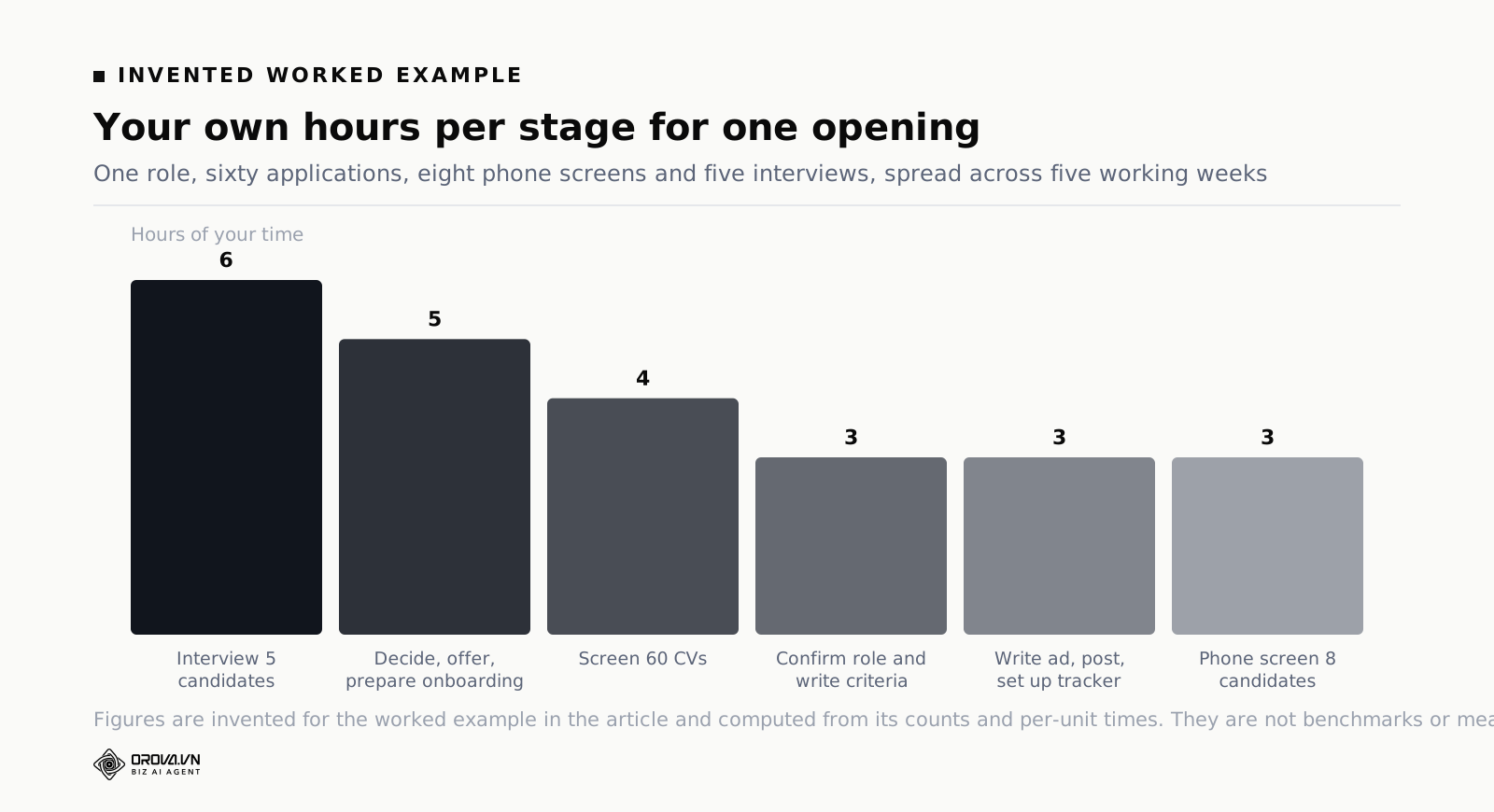
Here is the short version. There are eleven steps, they run in a fixed order, and the whole thing fits in about twenty-five hours of your time spread across five weeks. The two that decide whether the hire works are the first two — being honest about whether the role is real, and writing the requirements as something you can score — and those are the two everybody skips.
What follows is the full sequence with a time estimate against each step, a definition of what "done" looks like so you know when to move on, and a minimum viable version of every step for someone with no software, no budget and no recruiter. Then a week-by-week timeline for a single opening, the three steps small teams most reliably skip and what skipping them costs, a section specifically about hiring your first employee, and a checklist you can copy into a document and tick off.
One framing note before the detail. Nearly every hiring disaster in a small company traces back to the same root cause: the process was invented while it was running. Somebody posted an ad on a Tuesday, applications arrived, and every subsequent decision — who to call, what to ask, whether that person was better than the other one — was made in the moment, under time pressure, with no agreed standard. Deciding the sequence in advance is not bureaucracy. It is the thing that lets one person do this without it eating the month.
What are the hiring process steps for a small team?
Eleven steps in order: confirm the role is needed, write scoreable criteria, write and post the ad, collect applications in one place, screen with a scorecard, phone screen the shortlist, run one structured interview, check a work sample or references, decide by a stated rule, make and close the offer, then onboard week one.
The order matters more than the content of any single step. Each step exists to reduce the number of people the next step has to handle, and each one is cheaper per candidate than the one after it. Reading a CV costs you four minutes. A phone screen costs twenty. An interview costs an hour of your time and an hour of somebody else's. If you let unqualified people through an early stage because you were not paying attention, you pay for that mistake at five times the rate one stage later.
That is the whole logic of a hiring funnel, and it is why the sequence cannot be rearranged for convenience. Interviewing before you have written down what you are looking for feels faster — you are doing something, people are in rooms, progress is visible. It is not faster. It means five interviews producing five sets of impressions that cannot be compared, and a decision made on whoever you happened to meet last.
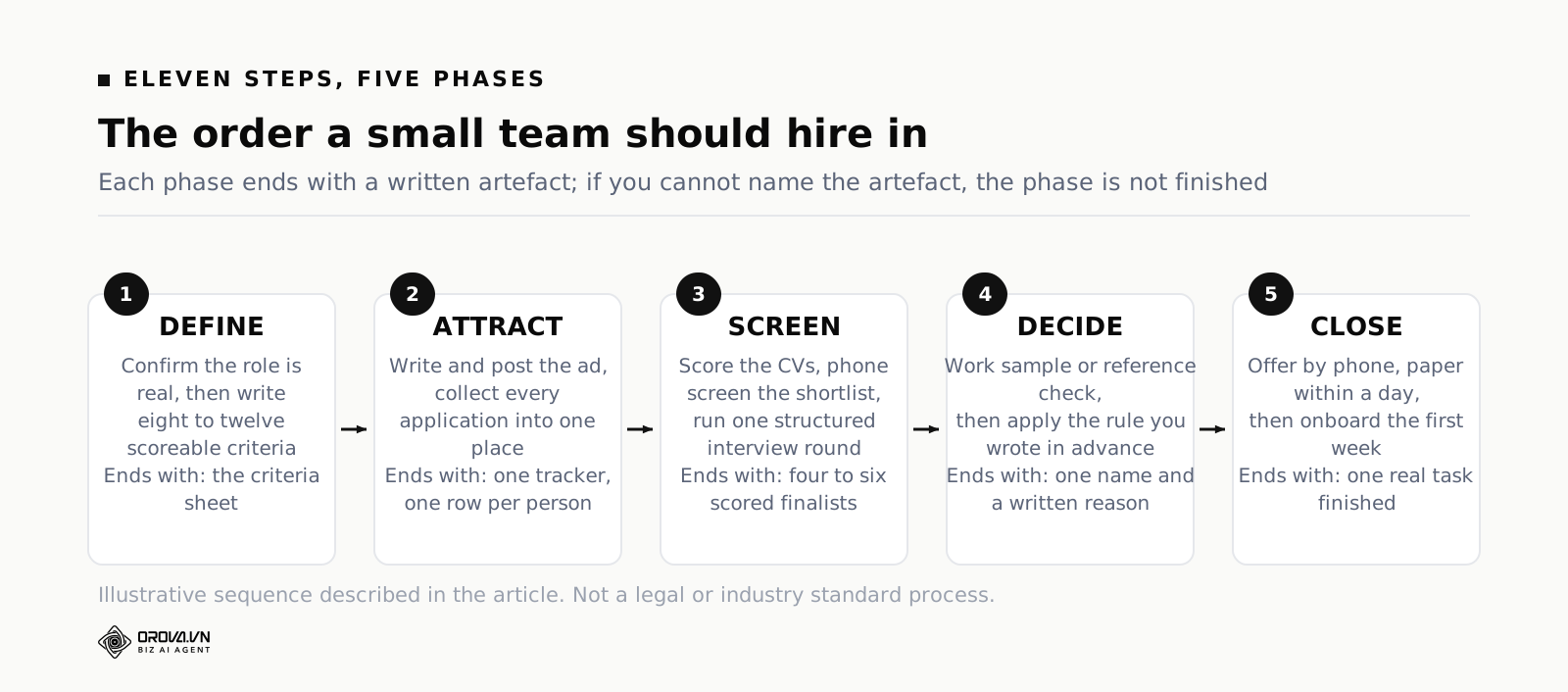
Group the eleven into five phases and the shape gets easier to hold in your head. Define (steps 1 to 2) produces a written criteria list. Attract (steps 3 to 4) produces a pile of applications in one place. Screen (steps 5 to 7) produces a scored shortlist. Decide (steps 8 to 9) produces one name. Close (steps 10 to 11) produces a person doing useful work. If you cannot name the artefact a phase produced, you have not finished the phase, no matter how much activity happened inside it.
The eleven steps: time, definition of done, and the version with no tools
Every step below has three things attached. The time is what it realistically takes one person who is not a recruiter, including the thinking, not just the typing. The done line is the test you apply before moving on — deliberately concrete, so you cannot pass it by feeling finished. The minimum viable line is how to run the step with a free email account, a spreadsheet and nothing else, because that is what most people reading this have.
Step 1: Decide the role is genuinely needed
Time: one to two hours, best spread over a few days rather than done in one sitting.
This is the step that gets skipped hardest, because by the time you are reading a hiring article you have usually already decided. Somebody resigned, or a team is visibly drowning, and the conclusion "we need to hire" arrived before any analysis did. Give it an hour anyway, because the cost of getting this wrong is not a bad hire, it is a whole role that should not exist and now has a person in it.
The exercise is simple. Write down every task the new person will do, in a list, in the order of how much of their week each one takes. Not responsibilities — tasks. "Own the customer onboarding process" is a responsibility and tells you nothing. "Send the welcome pack, run the 30-minute setup call, chase the missing documents, update the tracker" is a task list, and once you have it you can see whether it adds up to a job.
Then ask the two uncomfortable questions. First: if this list adds up to less than about thirty hours a week, is this a full-time role or is it two half-jobs stapled together to justify a headcount? Second: which currently-employed person stops doing which of these tasks the day the new hire starts? If the answer is "nobody, this is all new work", check that the new work is real and funded. If the answer is "everybody a bit", you may have a distribution problem rather than a capacity problem, and hiring will not fix it.
There is a third question worth asking when a person has just left: are you replacing the role, or replacing the person? Those are different. The person who left had grown into a shape defined by their own strengths over three years. The role as written on day one was smaller. Rehiring the shape of the person who left, rather than the shape of the work, is how small teams end up searching for a unicorn who does design, copywriting, paid ads and customer support because the last person happened to be good at all four.
Done looks like: a one-page task list, a stated weekly hours estimate, and a named answer to what changes for existing people on the new hire's first day.
Minimum viable version: a single document with two headings, "what this person does every week" and "what this frees up". Ten minutes of typing, but do it before anything else.
Step 2: Write the requirements as scoreable criteria
Time: ninety minutes, once, for the whole hire.
This is the highest-leverage ninety minutes in the entire process, and it is the step that turns hiring from a taste contest into something you can defend. The output is not a job description yet. It is a list of eight to twelve lines, each one a thing you actually need, each one with a weight and a way of checking it.
The test for whether a line is a criterion: can you say, looking at a CV or listening to an interview answer, how strongly this person meets it, on a scale, without arguing with yourself? "Strong communication skills" fails the test. Everyone claims it, nothing on a CV proves it, and two interviewers will score the same candidate five points apart. "Has written customer-facing documentation or support articles, with examples available" passes. So does "has run a monthly close in an accounting system, not just entered invoices into one".
Sort the lines into groups, because a flat list makes everything feel equally important and nothing is. Three groups is enough for a small team: must-have (no example in the CV or interview means no offer, regardless of how good the rest is), important (heavily weighted, but a strong candidate can be light in one), and preferred (a tiebreaker, never a filter). Then give each line a weight from one to ten, and check the weights against your own instinct: if the thing you would actually fire someone for not doing has a weight of three, your weights are wrong.
Be ruthless about must-haves. Every must-have you add shrinks the pool, and small teams routinely write five or six of them, then wonder why four weeks of advertising produced eleven applications and none of them fit. A useful discipline: you get two must-haves. If you want a third, something has to move down. The detailed mechanics of turning a description into weighted, scoreable lines are covered in job Posting Template: Write One, Get a Hiring Scorecard Too, and the same list you build here feeds every later step — the CV screen, the phone screen, the interview and the final decision all score against it.
Done looks like: eight to twelve criteria, each tagged must-have, important or preferred, each with a weight, each with a note on where the evidence would come from (CV, phone screen, interview, work sample).
Minimum viable version: a spreadsheet with four columns — criterion, group, weight, where I check it. That sheet becomes your scorecard in step 5 without any further work.
Step 3: Write and post the ad
Time: sixty to ninety minutes to write, thirty minutes to post.
Now the criteria become a job ad, which is a different document with a different job. The criteria list is for you. The ad is for a stranger deciding in forty seconds whether to spend twenty minutes applying. Write it in that order: what the job is, what the person will actually do in the first three months, what you genuinely require, what it pays, how to apply, when applications close.
Include the salary range. Small teams resist this, usually because the range is wide or because they fear existing staff comparing. Leaving it out costs you two things: applications from people who would have been a fit but assumed you were below their number, and an entire late-stage rejection when you discover on day thirty that you were forty percent apart. If the range is genuinely wide because the level is flexible, say that in one sentence and give the range anyway.
Cut the requirements list in the ad down to the must-haves plus two or three of the important lines. The full criteria list is for scoring, not for publication — an ad listing twelve requirements reads as a wish list and filters out exactly the pragmatic candidates you want, while barely deterring the ones who apply to everything.
On where to post: pick two or three places where the specific people you want already are, not five general boards. For most small-company roles that means one general board, one niche or community source (a professional group, a local association, a subreddit, a Slack or Discord community that permits job posts), and your own network, which for a small team is usually the highest-yield source and the one people forget to work deliberately. Message ten specific people rather than posting once to your feed.
Done looks like: the ad is live in two to three places, all of them pointing at the same single application route, with a stated closing date.
Minimum viable version: a plain-text ad, one email address to apply to, a closing date fourteen days out, and ten direct messages to individuals.
Step 4: Collect applications in one place
Time: twenty minutes to set up, then a few minutes a day.
This step sounds administrative and is actually the one that saves your sanity. If applications arrive at three different email addresses, plus some via LinkedIn messages, plus two that a colleague forwarded, you will lose people. Not metaphorically — you will genuinely fail to reply to someone good because their CV was in a thread you scrolled past.
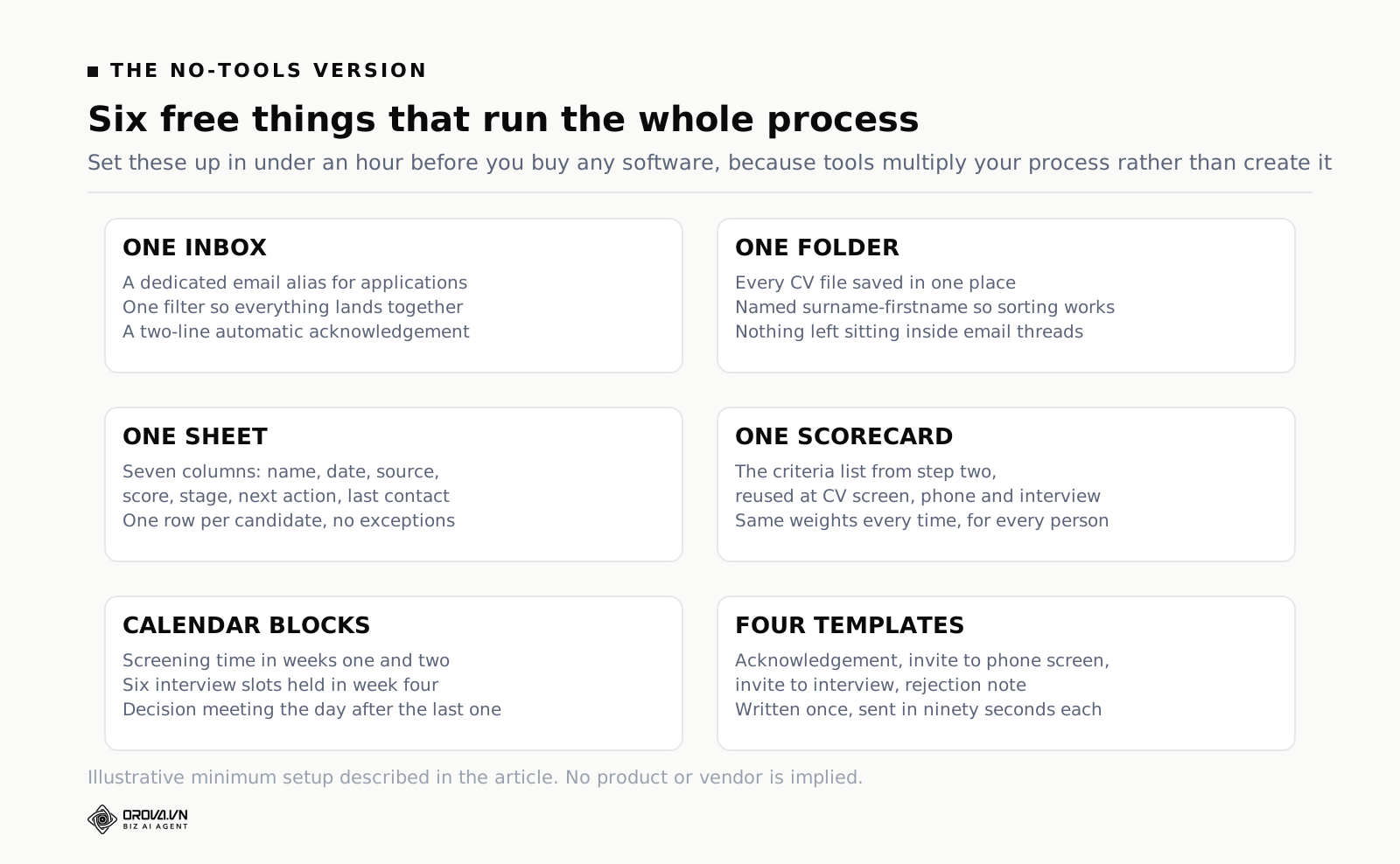
One route in, one folder for the files, one sheet with one row per candidate. The sheet needs seven columns and no more: name, date received, source, score, stage, next action, date of last contact. That last column is the one that catches the failure mode where a candidate has been sitting untouched for eleven days while you assumed somebody had replied.
Set up a filter or label so applications land in one place automatically, and send an acknowledgement — a two-line automatic reply is fine and is better than nothing by a wide margin. It costs you five minutes to configure and it removes a whole category of candidate anxiety and follow-up emails you would otherwise have to answer individually.
Done looks like: every application that exists is a row in one sheet, and you can answer "how many applicants, at what stage" in under thirty seconds without opening your inbox.
Minimum viable version: one dedicated email alias, one cloud folder, one spreadsheet, one auto-reply. If you want to understand what dedicated software adds on top of this, what an applicant tracking system actually does covers it without the sales pitch.
Step 5: Screen with a scorecard
Time: three to five minutes per CV once you are warmed up. Sixty applications is about four hours, which you should book as two blocks, not one.
Open the criteria sheet from step 2. For each CV, score the criteria you can evidence from a CV — usually the concrete ones about tools, domains, scale and years — and leave the rest blank, because a CV cannot tell you about judgement or communication and pretending otherwise is where bias creeps in. Give each candidate a total, a disposition (advance, hold, reject) and one line of reason.
Three rules make this survivable. First, score in one continuous session per batch, because your standard drifts across days and the person you read on Thursday morning gets judged against a different bar than the person you read on Tuesday night. Second, decide the shortlist size before you start — for a single opening, eight to twelve people to phone screen is right — because deciding it afterwards means you cut based on gut feeling once the scores are in front of you. Third, write the one-line reason even for rejections, especially for rejections; it takes eight seconds and it is the only defence you have when someone asks why, including when the someone asking is you, six weeks later, wondering whether you passed on the right person.
What you are not doing at this stage is deep reading. You are answering one question per candidate: is there enough evidence here to justify twenty minutes on the phone? That is a low bar deliberately. The CV screen is a filter for obvious mismatches, not a competition, and treating it as a competition is how you reject the person who was bad at CV writing and excellent at the job.
Done looks like: every applicant has a score, a disposition and a reason line. Nobody is unread. The shortlist for phone screening is named.
Minimum viable version: print or open the criteria sheet next to the CV pile, work through in one sitting, score out of ten on the three or four criteria a CV can actually evidence, sort the column.
Step 6: Phone screen the shortlist
Time: fifteen to twenty minutes per call, plus five minutes to write up. Eight calls is roughly three hours.
The phone screen exists to answer the questions a CV cannot, cheaply, before you spend an hour of two people's time. There are four of them and they are the same for every candidate: does the practical stuff work (salary expectation, notice period, location, hours), do they understand what the job actually is, is there one concrete example behind the biggest claim on their CV, and do they have a real reason for wanting this specific job rather than any job.
Use the same questions in the same order every time, and take notes in the same template. This is not about being robotic on the call — you can be warm and human while following a structure, and the candidate will not notice. It is about being able to compare eight people afterwards. If you improvise the call, you end up comparing what you happened to ask each person, which is not a comparison of the people. There is a full worked script for this in the phone screening interview script, including how to handle the salary question when the candidate asks first.
Cover money in the first five minutes, not the last. It feels blunt and it saves everybody. If their number is outside your range by a distance no negotiation closes, the honest thing is to say so and end the call at minute six, with both of you better off than you would be after three more rounds.
Done looks like: every shortlisted candidate has been called or has declined, each has notes against the same four areas, and four to six people are booked for interview.
Minimum viable version: four written questions on a sticky note, twenty minutes each, notes typed straight into the tracking sheet while the call is still fresh.
Step 7: Run one structured interview round
Time: sixty to seventy-five minutes per candidate, two interviewers, plus fifteen minutes each side for independent scoring.
One round. Not three, not five. Small teams sometimes copy the multi-stage process of a company with two hundred employees and a dedicated recruiting function, and the result is a four-week interview loop for a role that pays a normal salary, during which every good candidate accepts something else. The extra rounds are not adding information; they are adding opinions.
Structure means three specific things. The questions are written before the first interview and are the same for every candidate. Each question maps to a criterion from step 2, so you know why you are asking it. And both interviewers score independently, in writing, before they talk to each other — because the moment one person says "I really liked her", the other person's score has been contaminated and you now have one opinion wearing two coats.
Ask about things the candidate actually did, not what they would do. "Tell me about a time the monthly numbers did not reconcile and you had to find why" produces evidence. "How would you approach a reconciliation problem?" produces a description of best practice they could have read anywhere. Then follow up on the specifics until you can picture the situation: what were the numbers, what did you check first, what did you find, what happened next, what did you change afterwards. Candidates who did the thing can go four questions deep. Candidates who watched somebody else do the thing run out at two. The scoring mechanics — anchors, what a 3 versus a 5 means, how to stop the halo effect — are laid out in scoring behavioural interview questions, and if you want a bank of questions to draw the round from, the interview questions to ask candidates covers the set worth keeping.
Budget the hour properly: five minutes of framing, forty minutes of questions, ten minutes for their questions, five minutes on what happens next and when. Tell them the date they will hear by, and then hear them by that date.
Done looks like: every interviewed candidate has two independent scores against the same criteria, recorded before any discussion, plus a short written note per criterion pointing at the evidence.
Minimum viable version: six written questions, two people, each scoring on paper and turning the paper over before comparing. That single mechanical habit — write before you talk — does more for interview quality than any amount of interviewer training.
Step 8: Check a work sample or references
Time: a work sample is two hours of the candidate's time and thirty minutes of yours to review. References are fifteen to twenty minutes per call, two calls.
By this point you have two or three people you would plausibly hire, and the interview has told you what they say about themselves. This step tells you something they did not choose to tell you.
A work sample beats a reference call when the job has an observable output — writing, design, analysis, code, a customer email, a spreadsheet model. Keep it small and keep it real: a task drawn from actual work, scoped to under two hours, with clear instructions and the same brief for every candidate. Pay for it if it goes beyond two hours or if you will use the output. Score it against the same criteria list, blind to the name if you can manage it.
Reference calls are worth more than their reputation suggests, but only if you ask properly. The candidate picked these people, so you will not get a bad review. What you can get is texture. Ask what the person is best at, what kind of work they should not be given, what they needed from a manager to do their best work, and — the one that actually differentiates — whether the referee would hire them again into the same team, and if the pause before the answer is long, ask what the hesitation is.
Done looks like: at least one independent evidence source per finalist, scored or summarised against the criteria, on file.
Minimum viable version: one reference call per finalist, four questions, fifteen minutes. Even one call catches the occasional serious mismatch between the story and the record.
Step 9: Decide with a simple rule
Time: thirty minutes, in the same week the last interview happened.
Write the decision rule down before the interviews start, not after, because a rule invented after you have met everyone is not a rule, it is a justification. A rule that works for small teams: the offer goes to the highest weighted total, provided no must-have criterion scored below the halfway mark, and provided both interviewers scored the person as hire or strong hire independently. If the top two are within a few points of each other, the tiebreaker is stated in advance too — most teams should use the preferred criteria, or the person who would be productive soonest.
The rule matters because it removes the two ways small-team decisions go wrong. The first is the loudest voice: three people in a room, one of them the founder, and the discussion converges on whoever the founder mentioned first. The second is recency, where the person interviewed on Thursday afternoon beats the better candidate interviewed nine days earlier for no reason except that you remember them more vividly. Independent scores plus a stated rule beat both.
And be willing to use the rule's other output: nobody. If the highest total fails a must-have, the honest answer is that this round did not produce a hire, and reopening is cheaper than a mis-hire in a team of twelve where one wrong person is eight percent of the company and sits two metres from everyone.
Done looks like: one name, one written paragraph explaining the decision against the criteria, and a second-choice name recorded in case the first declines.
Minimum viable version: sort the scoring sheet, apply the must-have veto, write three sentences. Thirty minutes, one sitting, no additional meeting.
Step 10: Make the offer and close
Time: a fifteen-minute call the same day, written offer within twenty-four hours, then three to five working days for their answer.
Call, do not email. Say the number, say why you picked them with one specific reference to something they did in the process, and ask directly whether anything about it gives them pause. That last question is the whole point of the call: it surfaces the competing offer, the notice period problem or the salary hesitation while you can still do something, rather than four days later in a two-line decline.
Then send the written offer the same day or the next morning, with the start date, the number, the terms and a decision deadline that is generous but real. Between the verbal yes and the signed paper is where offers get lost, and the length of that gap is almost entirely under your control.
Stay in contact between acceptance and the start date. In a small team this costs one message a week and prevents the quiet disaster where somebody accepts, hears nothing for five weeks, gets re-approached by their current employer, and does not show up on Monday. Send the onboarding plan, introduce them to one person they will work with, tell them where to be and at what time.
Done looks like: a signed offer, a confirmed start date, and at least one contact per week between the two.
Minimum viable version: the call, a one-page written offer, and a calendar reminder every Friday until they start.
Step 11: Onboard the first week
Time: two to three hours to prepare before they start, then about an hour a day for their first week.
The hire is not finished when they accept. It is finished when they are doing useful work, and the gap between those two points is where small teams lose the value they just spent five weeks buying. Somebody joins, nobody has prepared anything, they spend three days reading old documents and asking permission for accounts, and by Friday they are wondering whether they made a mistake.
Prepare four things before day one: accounts and access working on the morning they arrive, a named person to ask stupid questions to who is not you, a first task that is real, small and finishable inside week one, and a written outline of what good looks like at thirty, sixty and ninety days. That last one does double duty — it orients them, and it gives you the standard against which you will run the probation conversation, which is much harder to have if nothing was written down at the start.
Book three check-ins in the first week, fifteen minutes each, at the end of day one, day three and day five. Short and scheduled beats a vague open door, because a new person will not interrupt you and will instead sit on a blocker for two days.
Done looks like: the new hire completed one real piece of work in week one, knows who to ask, and has seen the written thirty-sixty-ninety expectations.
Minimum viable version: a one-page document with accounts, first task, buddy name and three dates. Written before the offer goes out, not on the morning they arrive.
A realistic week-by-week timeline for one opening
Steps and hours are abstract until they are on a calendar. Here is what one opening looks like across five weeks for a person who has a full-time job that is not hiring. Treat it as a plan you adjust, not a promise — a niche role takes longer to attract applicants, and a role with a large candidate pool can compress the middle weeks.
| Week | What happens | Your hours | Ends with |
|---|---|---|---|
| Week 0 | Confirm the role, write the criteria, write the ad, set up the inbox and sheet | 4 to 5 | Ad live, tracker ready |
| Week 1 | Ad runs. Direct outreach to ten people. Read applications as they arrive, twice this week | 2 to 3 | Half the pile already scored |
| Week 2 | Applications close mid-week. Finish scoring, name the shortlist, book phone screens | 3 to 4 | Eight to twelve people booked |
| Week 3 | Phone screens. Reject the rest with a short note. Book interviews for week 4 | 3 to 4 | Four to six interviews scheduled |
| Week 4 | Interviews, independent scoring, work sample or references for the top two or three | 7 to 9 | Scored finalists |
| Week 5 | Apply the decision rule, offer call, written offer, closing | 2 to 3 | Signed offer and a start date |
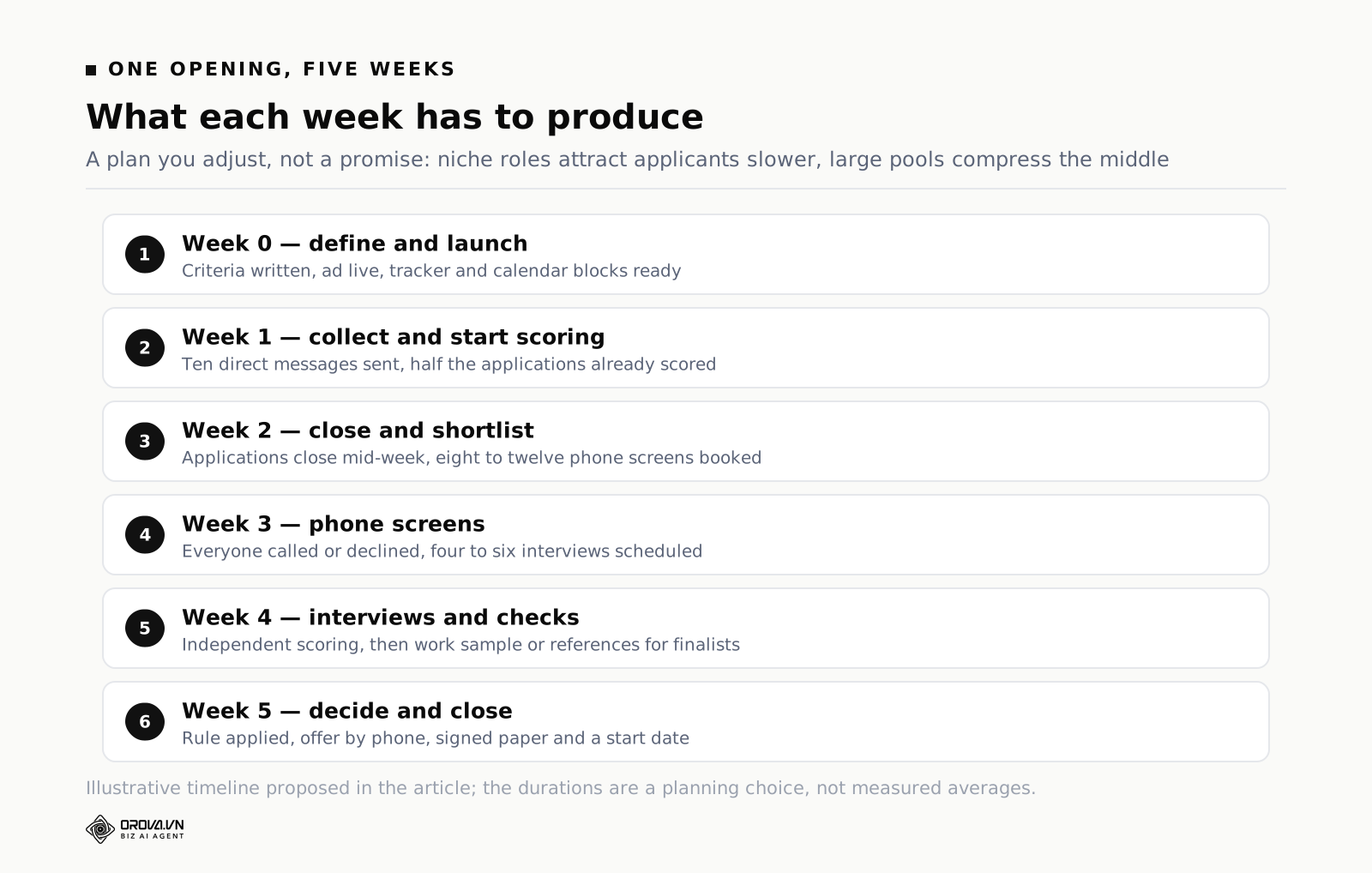
Three things make this timeline hold, and all three are calendar decisions rather than hiring decisions.
Book the interview slots before the ad goes live. Pick a two-day window in week four, block six one-hour slots, and hold them empty. Reactive scheduling — trying to find a mutually free hour for you, a colleague and a candidate who has their own job — is what turns a five-week process into a nine-week process. Blocks you hold and release cost nothing. Blocks you have to find cost days.
Book the screening time too. Two hours on a specific afternoon in week one and two more in week two, in the calendar, defended. CV screening is the step most easily displaced by anything urgent, and the pile sitting unread for eight days is the single most common source of delay in small-team hiring, ahead of anything to do with sourcing.
Set a closing date and honour it. An open-ended ad never forces the next step. A closing date fourteen days out gives you a clean point to stop collecting and start deciding, and it gives candidates a reason to apply this week rather than bookmarking you.
If you want to know where a process like this actually leaks once you have run it a couple of times, the small set of numbers worth tracking — and the ones that only look useful — are covered in the recruiting metrics that matter. For a first hire, do not build a dashboard. Just write down the date the ad went live and the date the first candidate sat in a first interview. That one gap tells you most of what you need.
The three steps small teams skip, and what skipping them costs
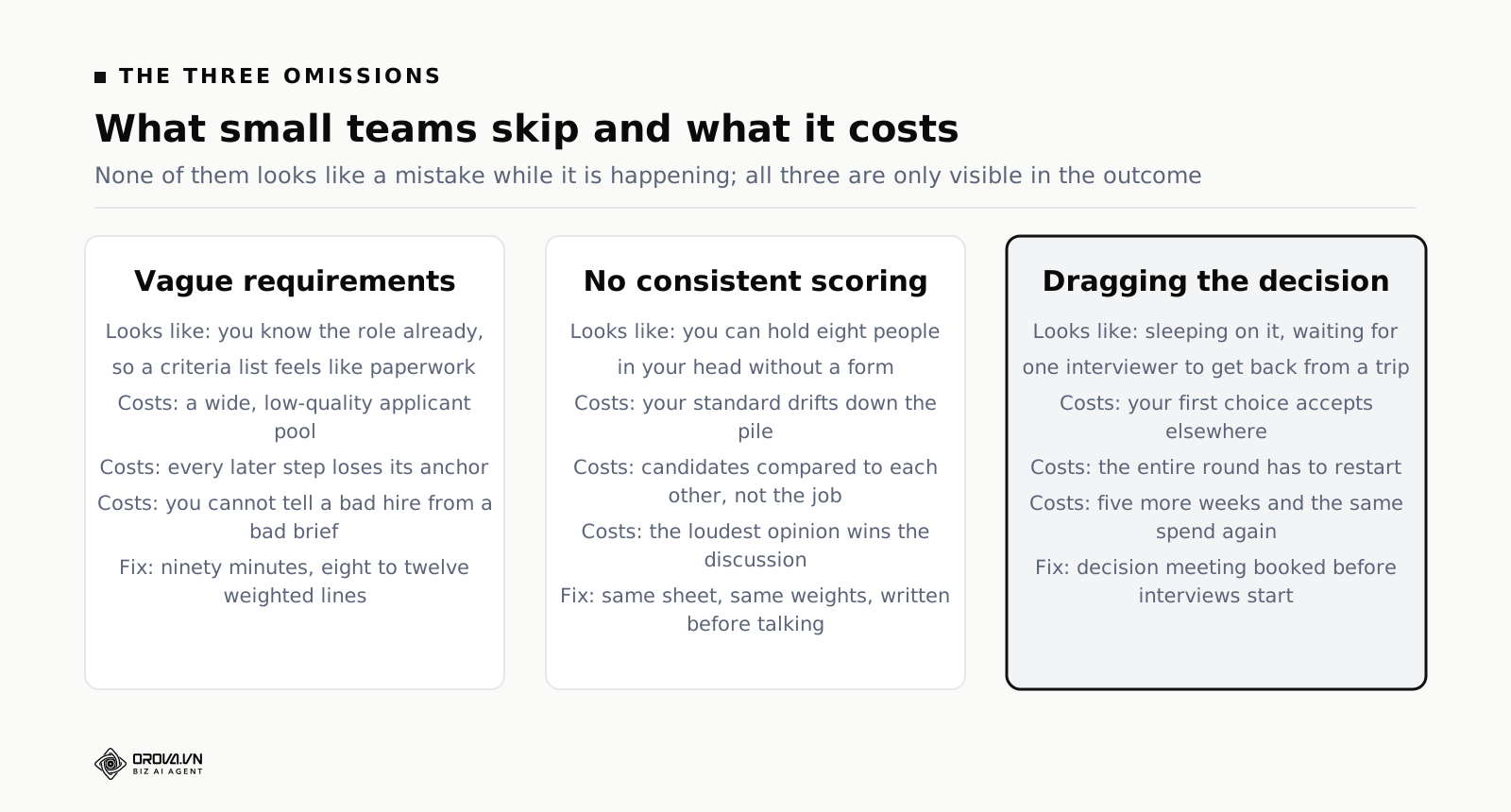
Across small companies the same three omissions come up again and again. None of them looks like a mistake at the time. All three are visible only in the outcome, which is why they keep happening.
Skipped: writing the requirements as something you can score
What it looks like at the time: you know the role, you have run this team for years, and writing a formal criteria list feels like paperwork for its own sake. You post an ad with a paragraph of description and a bulleted wish list, and you start reading CVs.
What it costs: every downstream step loses its anchor. The CV screen becomes a vibe check, and you advance the candidate whose CV was well formatted. The interview questions get invented per candidate, so you cannot compare anybody. The decision comes down to who felt right, which is a polite name for whoever most resembled the people already in the room. And when the hire underperforms at month four, you have no way to tell whether you hired badly or briefed badly, because the standard was never written down.
The cost is also visible earlier and more concretely: vague requirements produce a wide, low-quality applicant pool. You read ninety CVs instead of forty, because the ad did not tell anyone who should not apply. The hours you saved by not writing criteria come back at three times the size in screening time.
Skipped: scoring everyone the same way
What it looks like at the time: you are one person, you can hold eight candidates in your head, and filling in a scoring sheet feels like theatre for a decision you can already make. So you read, form impressions, and keep a mental shortlist.
What it costs: your standard moves. This is not a character flaw, it is how attention works. The first three CVs get read carefully, the next twenty get skimmed, and the last ten get read at speed on a Thursday night. The candidates are not being compared to a standard, they are being compared to whoever you read immediately before them. Similarly in interviews, the second candidate is judged against the first rather than against the job.
It also removes your ability to disagree productively. When two people have impressions, the discussion is a negotiation between personalities and the more senior person wins. When two people have scores against six named criteria, the discussion becomes "we are three points apart on criterion four, why?" — a question with an answer, usually a piece of evidence one person heard and the other missed.
And it costs you the audit trail. A candidate asks why they were rejected, or a colleague asks why you passed on their referral, and "she was not quite right" is the worst possible answer both practically and legally.
Skipped: deciding on time
This is the most expensive of the three and the least discussed. The interviews finish on Thursday. The decision does not happen, because one interviewer is travelling, because you want to "sleep on it", because a colleague suggests meeting the top two again. Ten days pass. On day eleven you email the offer to your first choice and get a reply thanking you and explaining that they accepted something else on Tuesday.
What it costs is not just this hire, it is the whole round. You are now choosing between your second choice, who you were not convinced by, and reopening the role, which means another five weeks and a repeat of the entire cost. The candidate you actually wanted is gone, and no amount of process quality earlier in the funnel recovers that.
The mechanism is always the same: nobody owns the decision date. Fix it structurally rather than by resolving to be faster. Put the decision meeting in the calendar before the interviews start, thirty minutes, the day after the last interview. Give the decision a single owner who can call it. And tell the candidates the date they will hear by, which converts your internal deadline into an external commitment you are much less likely to slide.
Speed is not a favour you do the candidate. In a small team competing for people against companies with recruiters and processes, it is one of the few structural advantages you have. Use it.
Hiring your first employee
The first hire is a different problem from the second and third, and the difference is not size. It is that nothing exists yet — no job description precedent, no interview format, no onboarding, no manager, and often no clear picture of what employment actually involves versus the contractors or freelancers you have used until now.
Start with the question of whether it is an employee you need. If the work is a defined output with a clear end, a contractor is usually right, and it is reversible. If the work is ongoing, requires context that only accumulates by being inside the business, and involves being available on your schedule rather than theirs, it is a job. Small companies often stretch contractors far past the point where the arrangement fits, mostly to avoid the commitment, and then are surprised by the disengagement it produces.
Then handle the four things a first hire needs that a fifth hire does not.
The administrative base. Payroll, the employment contract, tax and social insurance registration, whatever mandatory insurance applies where you operate, and a place to keep employee records. Rules differ by country and change, so this is the one part of the process where you should get the current requirements from your own accountant or a local employment adviser rather than from any article, including this one. Start it early: registration steps often have lead times measured in weeks, and discovering that on the Friday before someone's start date is avoidable pain.
A role scoped for a generalist, honestly advertised. A first hire in a small business does a wide job with vague edges, and that is fine — but say so in the ad. Candidates who need a defined lane will self-select out, which is exactly what you want, and the ones who are energised by a wide role will apply because you were specific about the breadth rather than hiding it behind a tidy job title.
A written picture of the first ninety days. With no existing team to absorb a new person, the risk is that they arrive and wait to be told what to do while you are busy. Write out what they will own in month one, month two and month three. This also forces you to confirm that the role is real, which is step 1 arriving through a different door.
Someone other than you to interview. First-hire decisions made by a single founder are the most bias-prone decisions in hiring, because there is no second score and no one to say "you liked them because they reminded you of you". You do not need an HR professional. A co-founder, an advisor, a friendly business owner or your accountant sitting in on one interview with the same question list and scoring independently gives you the second reading that makes the process work.
Two more things worth doing on a first hire specifically. Set an explicit probation period with written checkpoints, because the first hire teaches you what the role really is and you both need a structured moment to adjust. And pay attention to how you describe the company to candidates: with no employer brand, no reviews and no name recognition, what you say in the ad and the interview is the entire signal. Being concrete about what is good and what is hard beats a generic pitch, and it attracts the person who wants that specific trade rather than the person who will be disappointed by month three.
When to keep doing it by hand and when a tool earns its place
Nothing in this article requires software. A spreadsheet, an email alias and a folder run the whole eleven steps, and for two or three hires a year they run them well. Buy nothing until the manual version is working, because tools do not create process; they multiply whatever process you already have, including the absence of one.
The manual version starts to strain in three specific situations. The first is volume: somewhere above roughly forty or fifty applications for one opening, screening stops being a task you slot into an afternoon and becomes the reason the role is late. The second is multiple simultaneous openings, where one sheet per role becomes four sheets, four inboxes and one person who has lost track of who has been replied to. The third is more than one person screening, where consistency collapses unless the standard lives somewhere outside individual heads.
What is worth automating first is not the interviewing or the deciding — those are the parts where your judgement is the product. It is the mechanical, repetitive, attention-draining middle: getting text out of a hundred files in a dozen formats, applying the same criteria to every one of them at the same standard, and producing a comparable score with the evidence attached. If you are weighing which parts to hand over and in what order, recruitment Automation: Automate the Reading, Not the Decidi works through the sequence, and resume Parser vs Resume Screening: Extracting Text Is Not Ju covers what the parsing layer can and cannot reliably do.
To make it concrete, here is one worked example of a tool built around that split. Orova Recruit takes a job description as a file or as pasted text and drafts eight to sixteen criteria across five groups — must-have, important, preferred, basic and flexible — each with a weight from one to ten and a suggested pass threshold, all of which you edit, reweight or delete before anything is scored. It accepts PDF, DOCX, DOC, TXT, MD, RTF, ODT and image files up to 10MB each, to a limit of 500 CVs per position, and sends scans and photographs straight to the model to read when text extraction is not possible. Each CV gets a 0 to 100 score per criterion with the evidence quoted from the document, plus extracted name, email, phone, years of experience and most recent title. The total is a weighted average computed by the server rather than a number the model produces, any must-have scoring under 50 forces a fail regardless of the total, and a file that cannot be read is marked unreadable without calling the model or spending quota.
For a small team the value is usually in the half after screening, because that is where the process quietly stops being a process. Interview questions are drafted per candidate from the criteria you approved, each carrying a scoring line and a weight. Notes are typed line by line — author and time kept on every line, earlier versions retained when a line is edited — or dictated through the browser's speech engine in one of 56 languages without spending quota, while the call itself is recorded. Scoring is 0 to 5 per question against that same sheet, with anything neither the notes nor the recording covers scored zero and marked not asked. Rooms declare their own hours per weekday so a double booking is refused rather than discovered, invitations go out from the same screen, and access is granted per position — useful when a founder is running three roles and only wants one of them shared with a contractor.
For a small team the parts after the shortlist matter just as much, because there is no coordinator to absorb them: interview questions drafted per candidate, notes captured live with the time and author on each line, interview scoring on the same weights, a room calendar that refuses double bookings, and rejection and invitation emails that fire on status changes from your own mailbox instead of waiting for someone to remember. Access is set per opening, which is how a five-person company hiring for three different departments keeps each shortlist visible only to the people involved. Signing up is free and includes 1,000 quota with no card required, which is enough to run one real opening and check the results against your own reading before you trust any of it.
Whichever way you go, the rule is the same: the tool scores, you decide. A machine can tell you that a candidate has no evidence of the must-have and rank the rest consistently. It cannot tell you whether this person will work out in a team of nine where everyone sits in one room, and you should be suspicious of anything that claims otherwise.
The hiring checklist you can copy
Copy this into a document, one per opening, and tick as you go. It is the eleven steps compressed into the things that are easy to forget.
Before you post
- Task list for the role written, and it adds up to a real week of work
- Named answer to what existing people stop doing on the new hire's start date
- Eight to twelve criteria written, each tagged must-have, important or preferred, each weighted
- No more than two must-haves
- Salary range agreed and approved internally
- Interview slots blocked in the calendar for week four
- Screening time blocked in the calendar for weeks one and two
- Decision meeting booked for the day after the last interview, with a named owner
Posting and collecting
- Ad written: what the job is, first three months, real requirements, salary, how to apply, closing date
- Live in two or three places, all pointing at one application route
- Ten direct messages sent to specific people
- Auto-acknowledgement configured
- Tracking sheet created with seven columns: name, date received, source, score, stage, next action, last contact
Screening and interviewing
- Every applicant scored against the criteria, in as few sittings as possible
- Every applicant has a disposition and a one-line reason, including rejections
- Shortlist size decided before scoring started
- Same four phone screen questions used for everyone, money covered in the first five minutes
- Interview questions written before the first interview and mapped to criteria
- Two interviewers, scoring independently in writing before discussing
- Work sample or two reference calls for the finalists
Deciding and closing
- Decision rule applied as written, including the must-have veto
- One paragraph recorded explaining the choice against the criteria
- Second choice named and recorded
- Offer made by phone the same day, written offer within twenty-four hours
- Everyone else told, within the timeframe you promised them
- Weekly contact maintained between acceptance and start date
First week
- Accounts and access working on the morning of day one
- A named buddy who is not you
- One real task that can be finished inside week one
- Written thirty-sixty-ninety day expectations handed over
- Three fifteen-minute check-ins booked for days one, three and five
Who sees what: access control when the team is small and the roles are not
Access control sounds like a large-company concern, and it is usually skipped in advice aimed at small teams. That is a mistake, and it becomes obvious the first time a ten-person company hires for two roles at once.
Consider the ordinary case. A company of twelve is hiring a salesperson and a bookkeeper. The founder is involved in both. The sales lead is interviewing for the first, and the operations manager for the second. Everything lives in a shared folder, because that is the pragmatic choice at this size. Three problems follow, none of them hypothetical.
Salary expectations travel. The bookkeeping applicants' expectations are visible to the sales lead, who now knows roughly what the company is prepared to pay for a role adjacent to their own team. Nobody did anything wrong; the information simply had nowhere to hide.
Someone applies who should not be seen. Sooner or later a current employee of a partner company applies, or a friend of someone on staff, or an internal candidate. In a shared folder, the application is visible to everyone the moment it lands.
Nobody can be given a job without being given everything. You want the sales lead to help screen sales applications. The only way to do that is to grant access to the whole folder. So either they see all of it, or they help with none of it.
The rule that fixes most of it
Access should attach to the opening, not to the company. Each opening has its own list: who can edit it, who can view it, and who cannot see it at all. The person who created it and the account owner always keep access, so nothing becomes orphaned when someone is on leave.
That single rule handles all three problems above. The sales lead gets edit rights on the sales role and nothing on the bookkeeping role. A sensitive application is contained in the opening it arrived through. And an opening set to hidden simply does not appear for anyone outside its list — no greyed-out row that invites the question of what is behind it.
Four practices to pair with it
Decide access when you open the role, not when a problem occurs. It takes thirty seconds at creation and is awkward to retrofit after twenty people have applied.
Keep candidate files out of general storage. A CV in a shared drive, or worse forwarded as an email attachment, has left your access controls entirely. Attachments are the most common leak, and they are invisible once sent.
Give interviewers the minimum they need. An interviewer needs the CV, the criteria and the questions. They rarely need the whole applicant list, and a shorter view produces better focus as a side effect.
Delete on a schedule. Applications for a role filled eighteen months ago are a liability rather than a resource, and in many jurisdictions keeping them indefinitely without consent is not lawful. Set a retention period, write it in the privacy note candidates see, and honour it.
None of this requires an enterprise system. It requires deciding, once, that a candidate's file belongs to the opening they applied to rather than to whoever happens to have the folder link — a decision that is cheap at twelve people and expensive to make retroactively at forty.
Questions people ask
How long should hiring take for a small business?
Five to six weeks from deciding to hire to a signed offer is realistic for a role with a reasonable candidate pool, and about twenty-five hours of your own time. Longer than eight weeks and something specific is stuck, almost always either unread applications or an undecided decision. Shorter than three weeks usually means a stage got skipped rather than a process being efficient.
Can I run this without any HR person or recruiter?
Yes, for two or three hires a year. The parts that genuinely need experience are the employment paperwork, which your accountant or a local adviser handles, and the second opinion in interviews, which you can get from a co-founder, an advisor or a friendly peer. Everything else is a sequence and a scoring sheet.
How many candidates should I interview for one opening?
Four to six, from a shortlist of eight to twelve phone screens. Fewer than three and you have no comparison, so you will hire the least-bad person you met. More than seven and the later candidates get judged against interviewer fatigue rather than the criteria, and you are usually compensating for a screen you did not do properly.
What if nobody applies?
Check three things in order before spending money on advertising. Are the must-haves too many or too specific, so the ad reads as a wish list? Is the salary absent or below the local range for the work described? Are you posting where these people actually are, or only where it is easy to post? In small companies the fix is more often direct outreach to ten specific people than a bigger job board budget.
Should I still hire if none of the candidates hit the bar?
No, and the decision rule should already say so. A must-have failing means the person cannot do a part of the job you defined as non-negotiable, and hoping they grow into it is a plan, not evidence. In a team of ten, one wrong hire costs more than five more weeks of searching. Reopen, and consider whether the role definition or the ad needs changing first.
Do I need to tell rejected candidates why?
You need to tell them, promptly, and a short honest line is enough. You do not owe a detailed critique and offering one to a stranger can cause more argument than goodwill. But if you scored consistently, you already have the reason written down, which makes the message a ninety-second job rather than something you postpone until it feels too late to send at all.
What to do this week
If you have a role open right now, do three things before Friday, in this order.
Write the criteria list. Eight to twelve lines, three groups, a weight on each, thirty to ninety minutes. If the role is already advertised and you are already reading CVs, write it anyway — every CV you read after it exists gets read against a standard, and you can rescore the ones you already did in a few minutes each.
Open your calendar and block the interview window in four weeks' time, plus the decision meeting the day after it. Six one-hour slots you can release costs you nothing to hold and removes the single most common cause of a hiring process taking twice as long as it should.
Then put every application that currently exists into one sheet, with a date and a stage against each. You will find at least one person who applied eleven days ago and has never been replied to. Reply to them today. That is the whole difference between a process and a pile.
Let AI read and score resumes against your JD
Orova Recruit turns your job description into weighted criteria and scores every CV with evidence quoted from the file.
Try it free