
Hiring process: 8 steps to build a faster, fairer recruitment engine

Building a reliable hiring process is often the most frustrating challenge for growing organizations today. You might find your team constantly scrambling to fill open roles, only to lose top candidates halfway through because of scheduling delays, ambiguous feedback from hiring managers, or a lack of clear communication. The traditional approach of posting a job description, waiting for resumes, and conducting unstructured interviews is no longer sufficient. As the talent market becomes increasingly competitive, candidate ghosting is common, and a bad hire is expensive to undo.
What you need is not just a theoretical workflow, but an engineered system that standardizes evaluation and accelerates decision-making. This article will provide a comprehensive, deep-dive analysis into constructing a modern recruitment engine. We will cover the exact steps, provide the necessary templates, introduce AI prompts to automate manual tasks, and outline a clear RACI matrix to eliminate bottlenecks between HR and hiring managers. By the end of this guide, you will have a practical blueprint to restructure your hiring process and secure the talent your business actually needs.
What is a hiring process and why does it dictate your company's growth?
A hiring process is the structured, repeatable sequence of actions an organization takes to identify, attract, evaluate, and onboard new employees. It serves as the operational bridge between a company's strategic goals and the human capital required to achieve them. The primary objective of standardizing this workflow is to eliminate gut-feeling decisions, replacing them with objective criteria that ensure both high quality and rapid speed of execution.
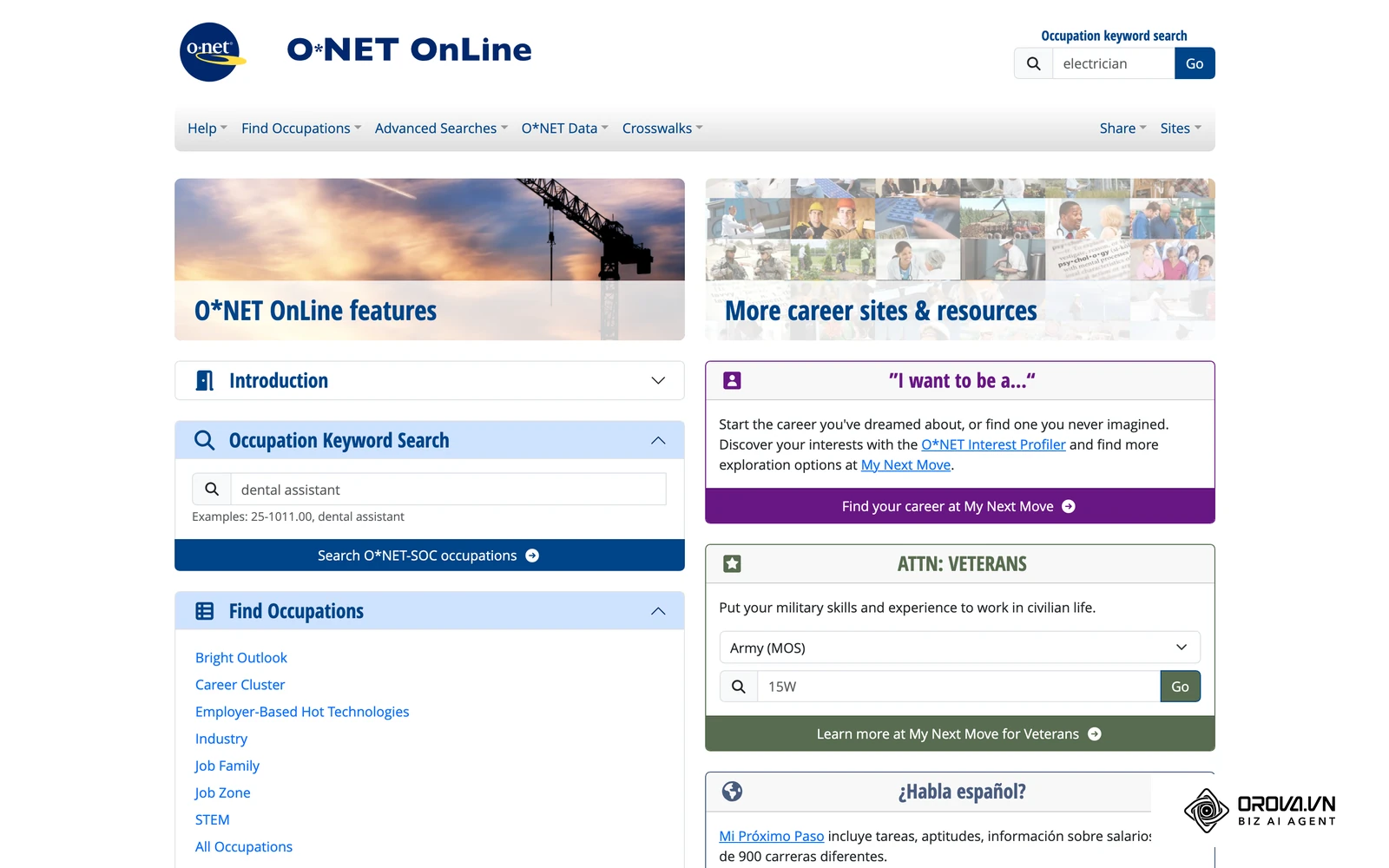
Every organization, from an agile early-stage startup to a sprawling multinational enterprise, needs a codified hiring process. Without one, you are essentially gambling on your most expensive asset: your people. A well-designed workflow protects your employer brand, ensures legal compliance, and guarantees that every candidate is treated fairly and evaluated against the same benchmarks. However, you should avoid applying overly rigid, multi-stage enterprise frameworks when hiring for short-term gig workers or immediate freelance contractors, where rapid deployment and portfolio strength matter far more than deep cultural alignment.
Preparation: What you need before building your hiring process
You cannot simply wake up one morning, decide you need an engineer, and start interviewing people by the afternoon. A modern hiring process requires foundational assets to function effectively. Jumping straight into sourcing without these elements is the leading cause of mis-hires and prolonged vacancies. Before you write a single job description, you must prepare the infrastructure that will support your decision-making.
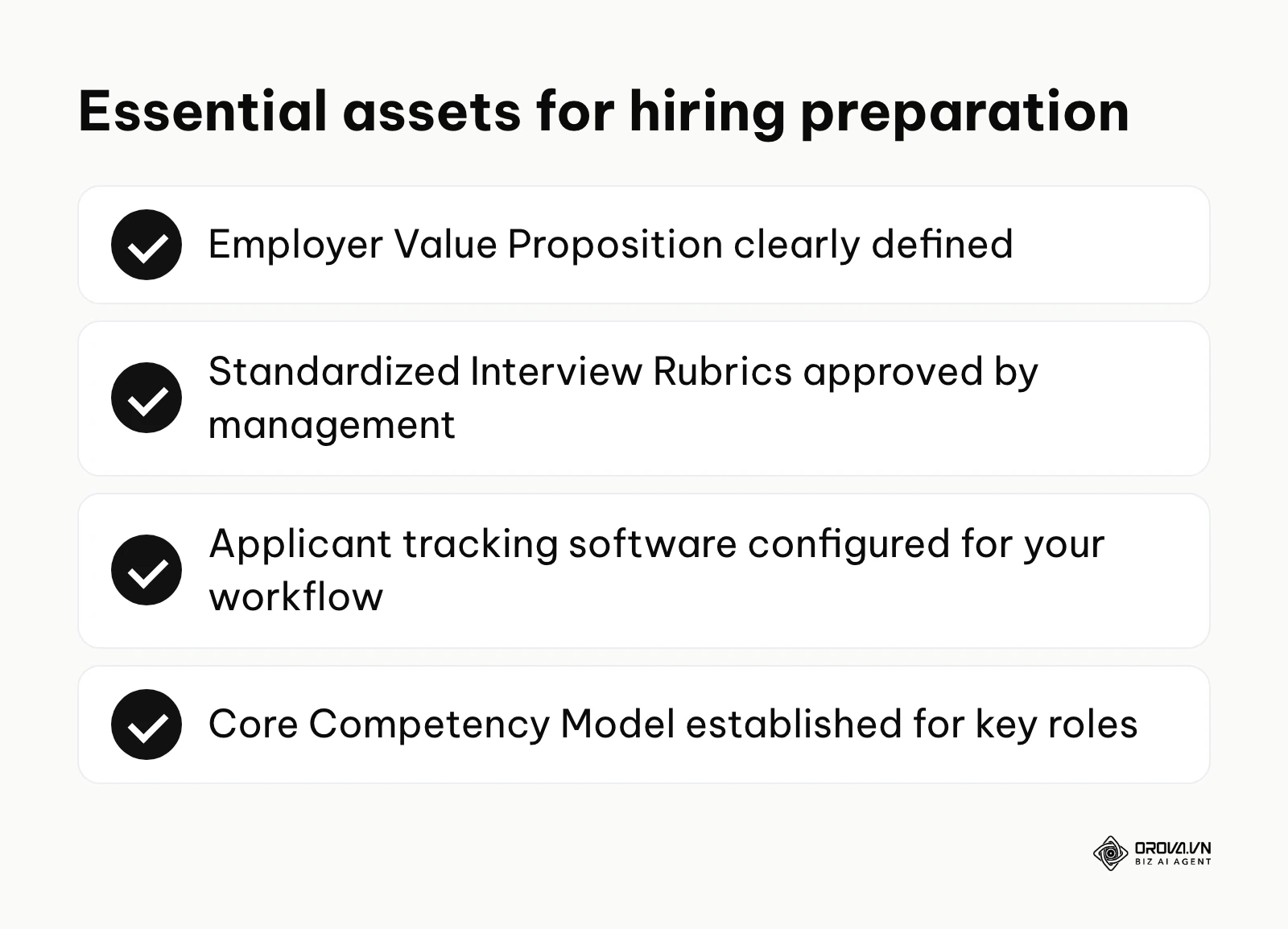
The table below outlines the core assets you must develop, where to source them, and the typical time required to build them properly.
| Foundational Asset | Where to get it or how to build it | Estimated Time Required |
|---|---|---|
| Employer Value Proposition (EVP) | Conduct internal surveys to find out why your best employees stay. | 2 to 3 weeks |
| Standardized Interview Rubrics | Collaborate with department heads to define measurable behaviors. | 1 to 2 weeks |
| Applicant Tracking System | Evaluate and procure software vendors that fit your specific scale. | 2 to 4 weeks |
| Core Competency Model | Work with the executive team to define mandatory hard and soft skills. | 3 to 4 weeks |
Why is this preparation non-negotiable? Without a clear Employer Value Proposition (the unique set of benefits an employee receives in return for their skills), your outreach emails will be ignored by top-tier passive candidates. Without standardized rubrics, your hiring managers will fall back on affinity bias, hiring people who are similar to them rather than people who complement the team's weaknesses. Finally, without proper applicant tracking software to act as your single source of truth, candidate data will inevitably get lost in cluttered email threads, leading to embarrassing logistical failures and a damaged employer brand.
8 essential hiring process steps, from job description to day one
The core of your recruitment engine is divided into eight distinct steps. Executing these steps with precision is the difference between a sluggish, frustrating ordeal and a streamlined talent acquisition machine. We will explore each phase in deep detail, highlighting exactly what to do, how to leverage technology, and how to spot critical errors.
Step 1: Needs analysis and writing an AI-optimized Job Description
Before you look externally, you must look internally. Needs analysis is the process of defining the exact business problem this new role is supposed to solve, rather than simply listing out generic daily tasks. Once the problem is defined, you translate it into a compelling Job Description (JD) that speaks directly to the ambitions of high performers.
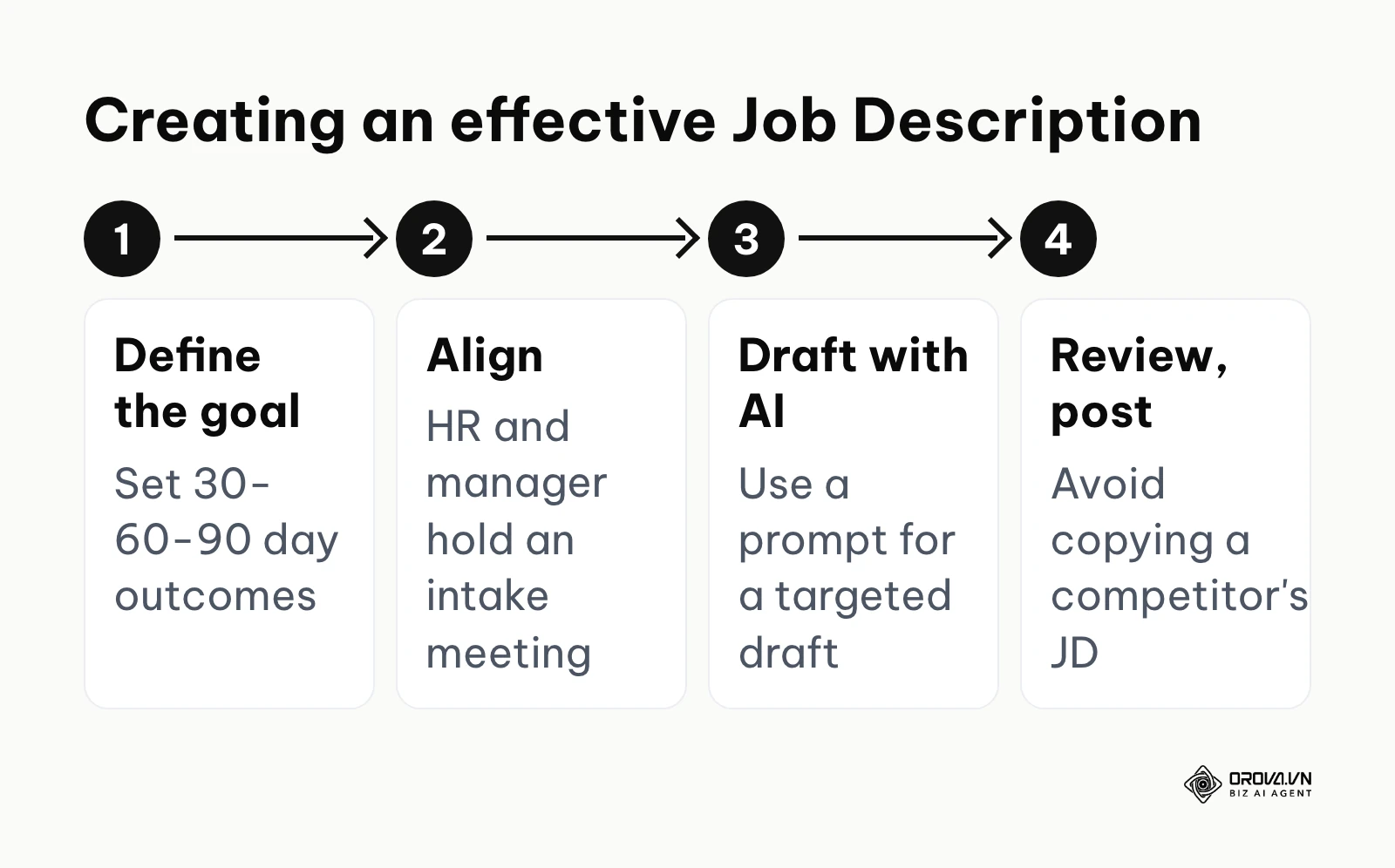
To do this effectively, HR must conduct an intake meeting with the hiring manager. Do not ask, "What skills do you want?" Instead, ask, "What does a successful first 30, 60, and 90 days look like for this person?" Once you have these performance-based outcomes, you can reverse-engineer the required skills.
In today's landscape, you can significantly accelerate this step using AI. Instead of starting from a blank page, use the following ChatGPT prompt to generate a highly targeted draft. If your company already has a defined brand tone of voice, reuse it in the JD so the role sounds like the rest of your employer brand.
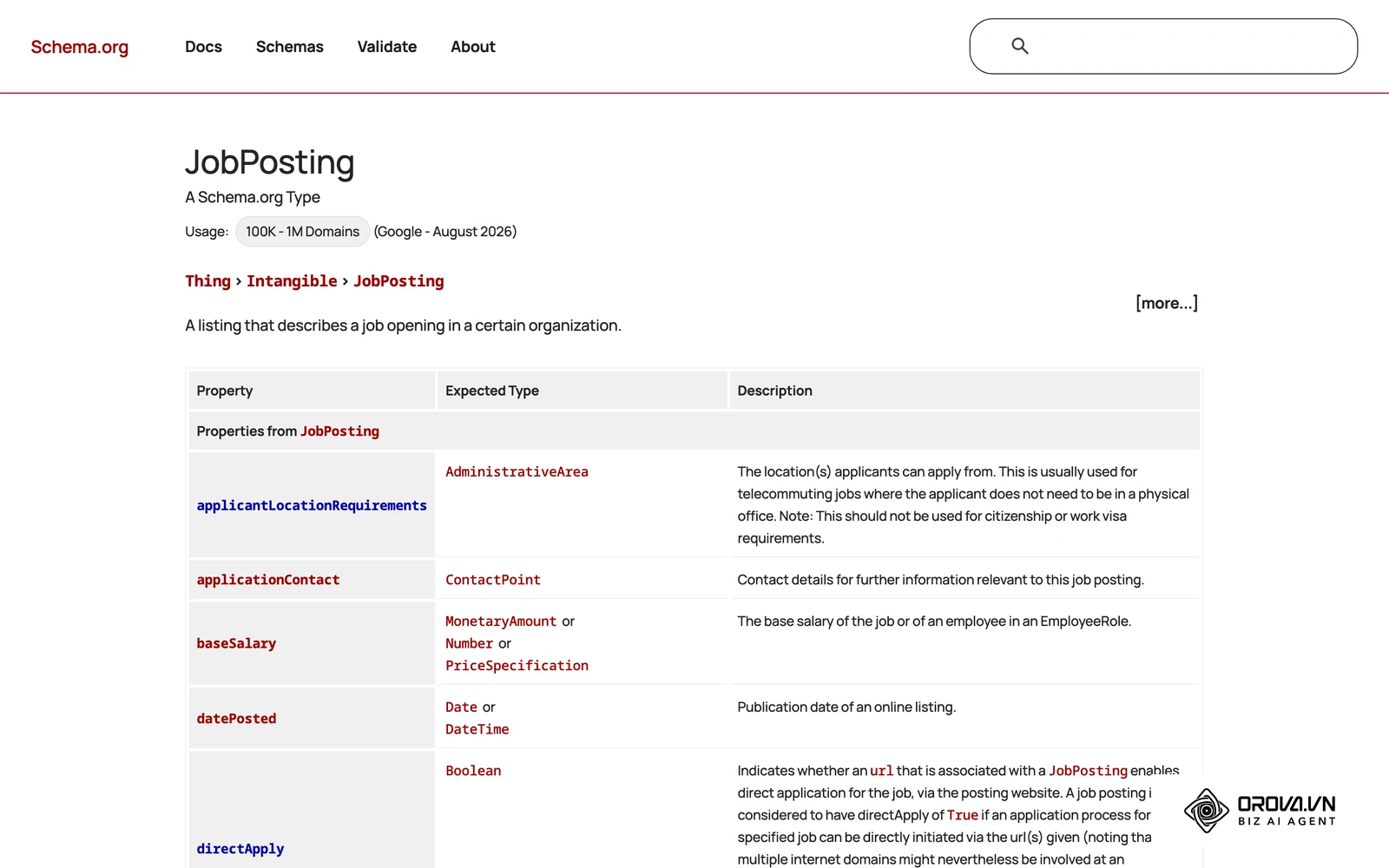
AI Prompt for JD Creation:
"You are an expert technical recruiter. Write a highly engaging job description for a [Job Title] at a [Company Type / Industry] focusing on achieving [Core Business Goal]. Include a specific section outlining expectations for the first 30, 60, and 90 days. Keep the tone [Desired Tone, e.g., professional yet approachable]. Do not use generic corporate buzzwords like 'synergy' or 'dynamic environment'. Format with clear markdown headers."
The clearest sign that you have executed this step correctly is the quality of the inbound applications. If candidates explicitly reference your 30-60-90 day goals in their cover letters or initial screening answers, your JD has successfully resonated. A common mistake at this stage is copy-pasting a competitor's JD. This not only makes your company look unoriginal but also guarantees you will attract the exact same generic talent pool as everyone else, completely neutralizing your competitive advantage.
Step 2: Strategic sourcing and candidate nurturing
Posting a job on a public board and waiting for talent to arrive is no longer a viable strategy for critical roles. Strategic sourcing involves proactively hunting for passive candidates (professionals who are currently employed and not actively looking) and bringing them into your pipeline. Once they are in your orbit, you must deploy candidate nurturing tactics to prevent them from losing interest or ghosting you.
Multi-channel sourcing requires Boolean search strings on LinkedIn, actively participating in niche communities like GitHub or specialized Slack groups, and leveraging employee referrals. Once you identify a prospect, the outreach must be highly personalized. After initial contact, the nurturing phase begins. If a candidate is waiting five days between their first and second interview, send them a recent podcast featuring your CEO, a blog post written by the engineering team, or a quick update on their application status. Just like conversion rate optimization in marketing, optimizing your hiring funnel ensures fewer candidates drop off between the application and interview stages due to sheer boredom or anxiety.
Illustrative example:
- Context: A mid-sized B2B tech company was hiring Enterprise Sales Executives, a notoriously difficult and highly competitive role to fill.
- Steps taken: The HR team shifted from passive job board postings to active sourcing. They implemented a four-touchpoint email nurturing sequence over 14 days for passive leads, sharing deep-dive case studies rather than just asking for a resume right away.
- Hurdle and fix: The initial hurdle was a dismal response rate of under 5 percent. The team audited the process and fixed this by changing the sender alias from a generic HR email address to the actual VP of Sales, making the outreach feel peer-to-peer and highly exclusive.
- Result: The recruitment team visually saw their interview pipeline calendar fill up with highly qualified, passive candidates. This direct approach eventually led to three accepted executive offers in a single month without paying a single cent to external recruitment agencies.
The sign of excellent sourcing and nurturing is when passive candidates reply to your check-in emails expressing genuine excitement about the company's trajectory, even before an offer is made. A catastrophic mistake here is treating sourcing as a one-time mass email blast. Personalization is the currency of modern recruitment.
Step 3: Resume screening and the shortlisting phase
The purpose of the screening phase is to filter out unqualified candidates as rapidly as possible while ensuring that hidden gems—candidates with non-traditional backgrounds but exceptional potential—are not missed due to rigid keyword filters. This is where volume meets precision.
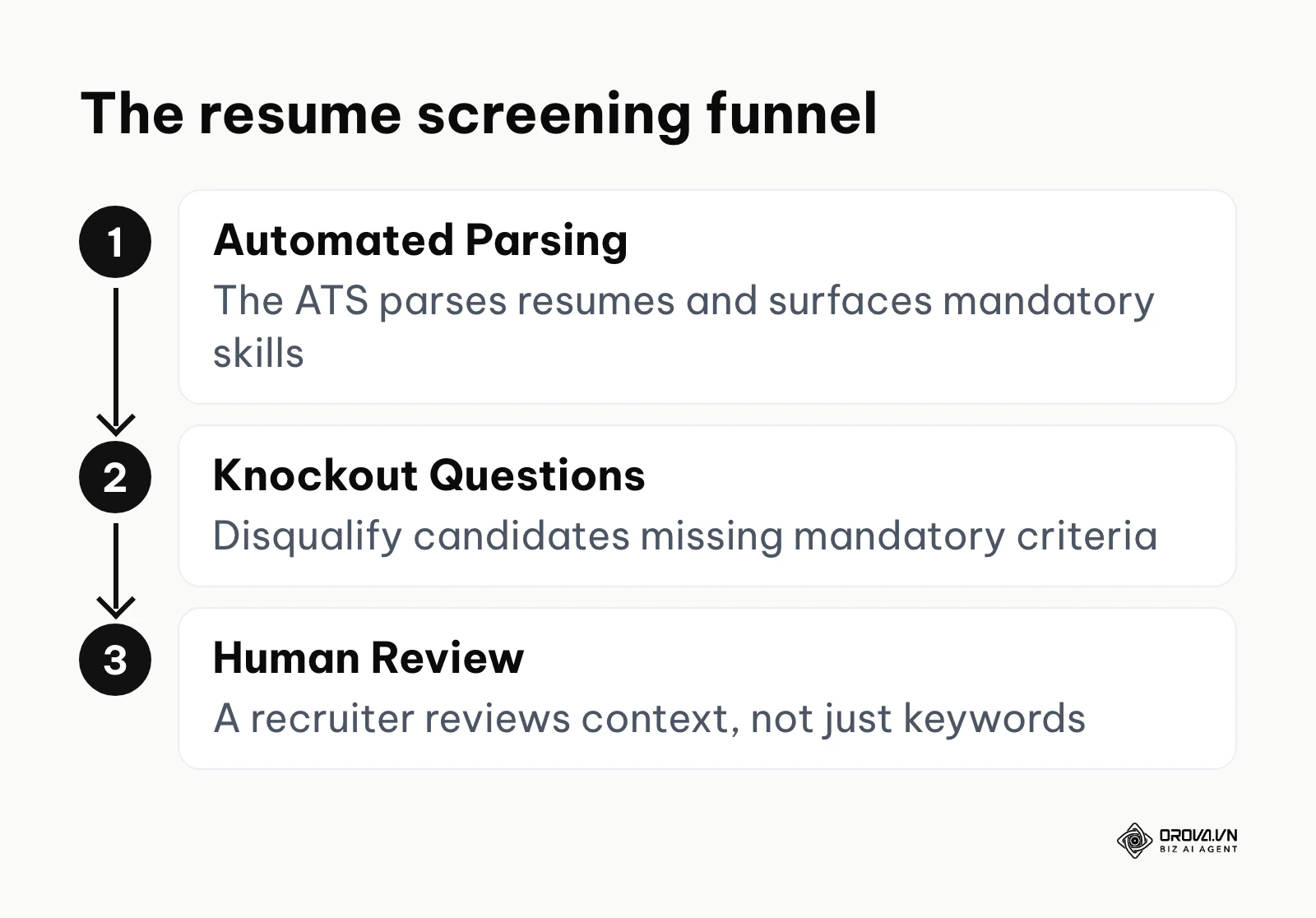
Establish a clear matrix of non-negotiable criteria (for example, must have 3 years of React experience and a portfolio of live web applications) versus nice-to-have attributes. Use your ATS to automatically parse resumes and apply knockout questions during the application process to immediately disqualify candidates who lack mandatory certifications or work authorizations. However, for the candidates who pass the initial automated filter, a human recruiter must review the context of their experience, not just hunt for specific acronyms.
| Screening Element | Purpose | Execution Method |
|---|---|---|
| Knockout Questions | Eliminate absolute mismatches instantly. | Yes/No questions on the application form. |
| Boolean ATS Parsing | Surface resumes with mandatory technical skills. | Automated keyword and semantic search. |
| Contextual Review | Evaluate career trajectory and impact. | Manual review by a trained recruiter. |
You know your screening phase is well-calibrated when exactly 15 to 20 percent of total applicants make it to the initial phone screen. If 80 percent are passing, your filters are too loose, and you will waste time interviewing unqualified people. If only 2 percent pass, your criteria are unrealistically strict. The most common mistake at this stage is relying entirely on exact keyword matches, which inevitably rejects phenomenal candidates who simply use different industry terminology on their resumes.
Step 4: The initial HR screening call
The initial screen is a 15 to 30-minute phone or video call designed to validate basic qualifications, clarify logistical expectations, and assess fundamental communication skills. This step is not meant to test deep technical knowledge; it is a defensive measure to ensure the hiring manager's time is not wasted.
HR professionals should use a standardized script for every call. You must ask the uncomfortable questions upfront: "What is your expected salary range?", "Are you willing to work in a hybrid model three days a week?", and "Why are you looking to transition away from your current role?" Taking detailed notes during this call is critical, as this data will form the baseline for the candidate's entire journey.
A successful screening phase means the hiring manager rarely, if ever, rejects a candidate in the subsequent round for basic logistical reasons, such as a massive misalignment in compensation expectations. A frequent mistake during this step is HR recruiters attempting to assess complex technical skills they do not fully understand, leading to the accidental rejection of highly qualified technical specialists based on superficial misunderstandings.
Step 5: The technical interview and candidate scorecard
This is the most critical stage of the hiring process. The technical or hiring manager interview assesses the candidate's actual ability to perform the daily duties of the role. To do this fairly and accurately, you must use a structured format supported by a Standardized Candidate Scorecard.
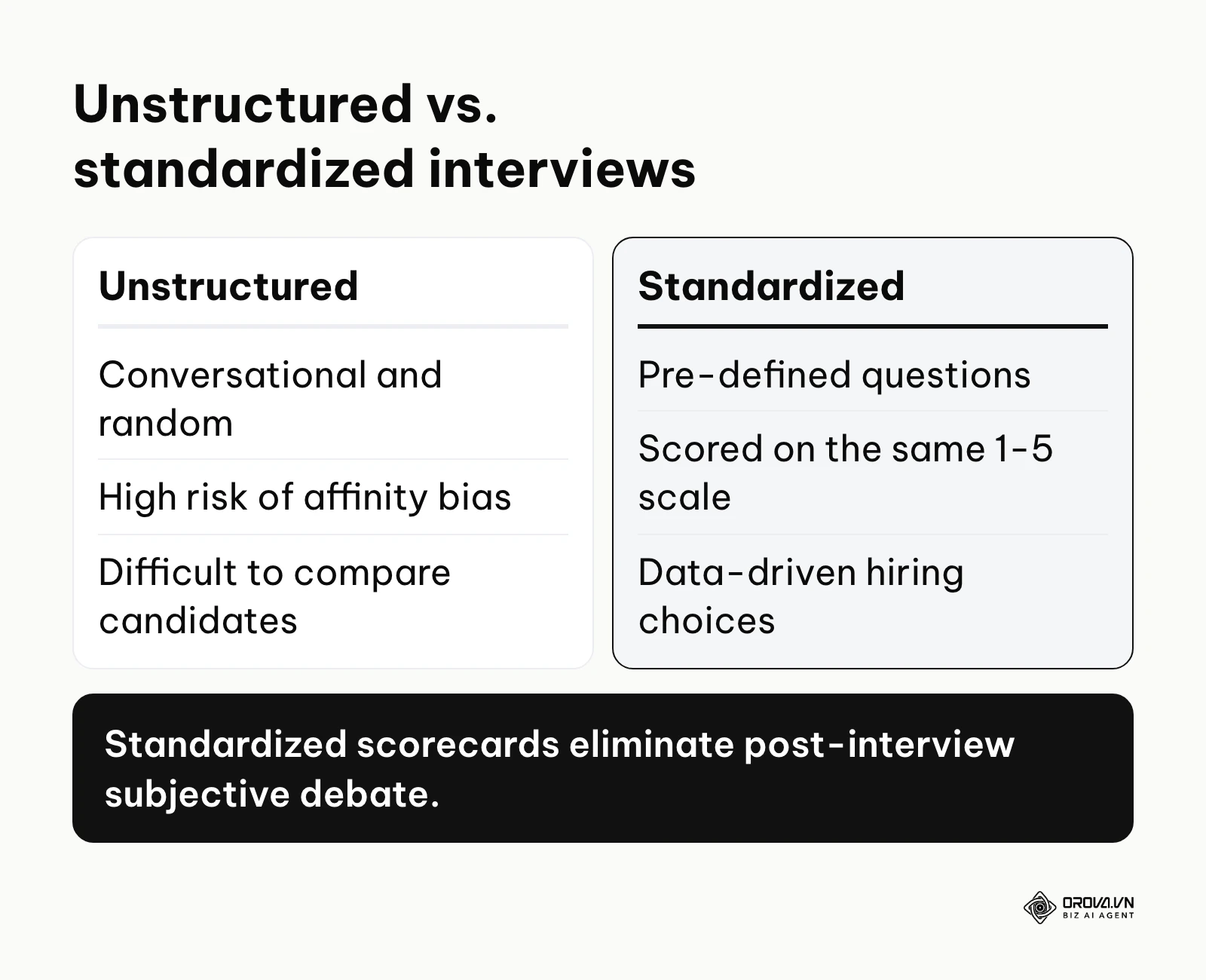
Every candidate interviewing for the same role must be asked the exact same core questions in the exact same order. The interviewers must score the candidate immediately after the interview concludes, using a predetermined scale tied to specific behavioral anchors. This removes the "halo effect," where an interviewer overlooks a candidate's technical flaws simply because they share a common hobby or alma mater.
Below is a simplified example of how a Standardized Candidate Scorecard should be structured:
| Competency Area | Interview Question (Prompt) | Score 1 (Poor) | Score 3 (Average) | Score 5 (Excellent) |
|---|---|---|---|---|
| Problem Solving | "Tell me about a time you solved a critical system failure under pressure." | Blamed others, could not articulate the root cause. | Solved the issue with significant help from peers. | Identified root cause independently, deployed fix, and documented preventive measures. |
| Technical Depth | "Explain how you would architect a scalable database for X." | Superficial knowledge, relies on buzzwords. | Correct standard architecture, but lacks scalability foresight. | Innovative approach, proactively addresses edge cases and load balancing. |
| Stakeholder Comms | "How do you explain technical debt to a non-technical executive?" | Uses extreme jargon, gets frustrated. | Explains the concept but fails to tie it to business value. | Translates technical issues into financial risk and business impact flawlessly. |
Illustrative example:
- Context: A rapidly growing e-commerce company (with over 200 employees) was hiring a cohort of senior backend developers.
- Steps taken: Historically, hiring managers conducted entirely unstructured, conversational interviews. To fix this, HR mandated a Standardized Candidate Scorecard. Every interviewer was required to ask the exact same architectural questions and grade them on a strict 1-5 scale.
- Hurdle and fix: Senior engineers initially rebelled against the scorecard, claiming it made the interview feel like a rigid interrogation. HR compromised by structuring the first 45 minutes strictly to the scorecard, while allowing the final 15 minutes to be completely unstructured and conversational.
- Result: The company eliminated hours of highly subjective debate during post-interview debriefs. Stakeholders could visually point to the generated PDF scorecard reports to justify objectively why one developer was chosen over another, securing faster consensus.
Skipping structured interviews makes it much harder to compare candidates fairly, so make sure your team uses scorecards on every interview.
Step 6: Assessing culture fit without bias
Assessing "culture fit" is notoriously dangerous because it is frequently used as a disguised mechanism to enforce affinity bias—rejecting candidates simply because they do not look, act, or think exactly like the current team. A modern hiring process evaluates "culture add" or value alignment, ensuring the candidate shares the company's work ethic without requiring them to share the exact same personality traits.
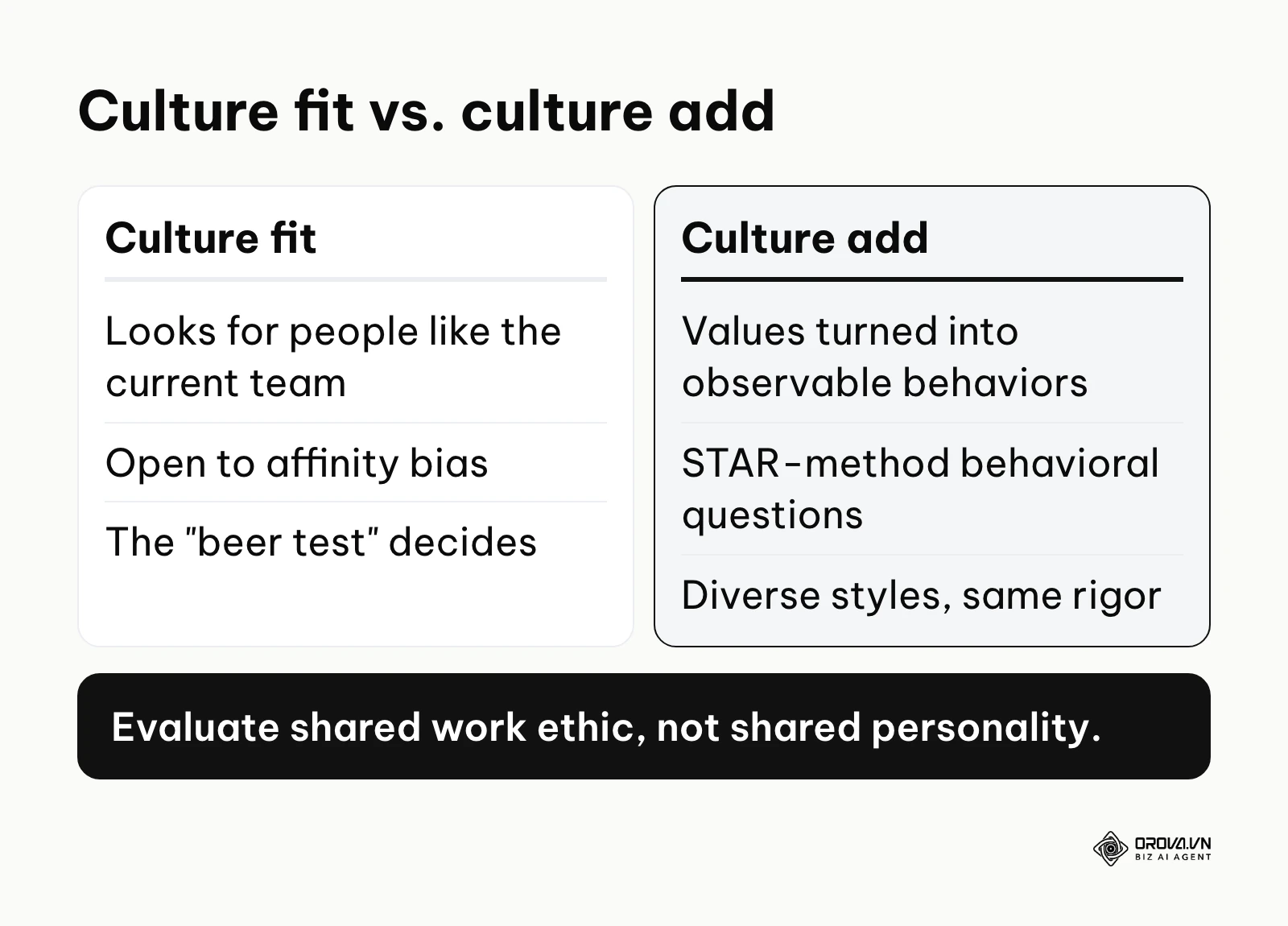
To execute this without bias, you must translate your abstract company values into observable behaviors and use the STAR method (Situation, Task, Action, Result) during behavioral interviews. For example, if your company values "Extreme Ownership," do not ask, "Are you a responsible person?" Instead, ask, "Walk me through a specific instance where a project you led completely failed. How did you handle the immediate fallout, and what was the outcome?"
You know you are assessing culture correctly when your recent hires represent a diverse range of backgrounds, introversion/extroversion levels, and working styles, yet they all approach problem-solving and accountability with the same foundational rigor. The biggest mistake here is the "beer test"—evaluating a candidate based on whether you would enjoy socializing with them outside of work, which has absolutely zero correlation with their professional competence.
Step 7: Reference checks and crafting the offer
Once the final candidate is selected, you must move with extreme urgency while conducting due diligence. Reference checks verify past performance, while the offer presentation secures the talent.
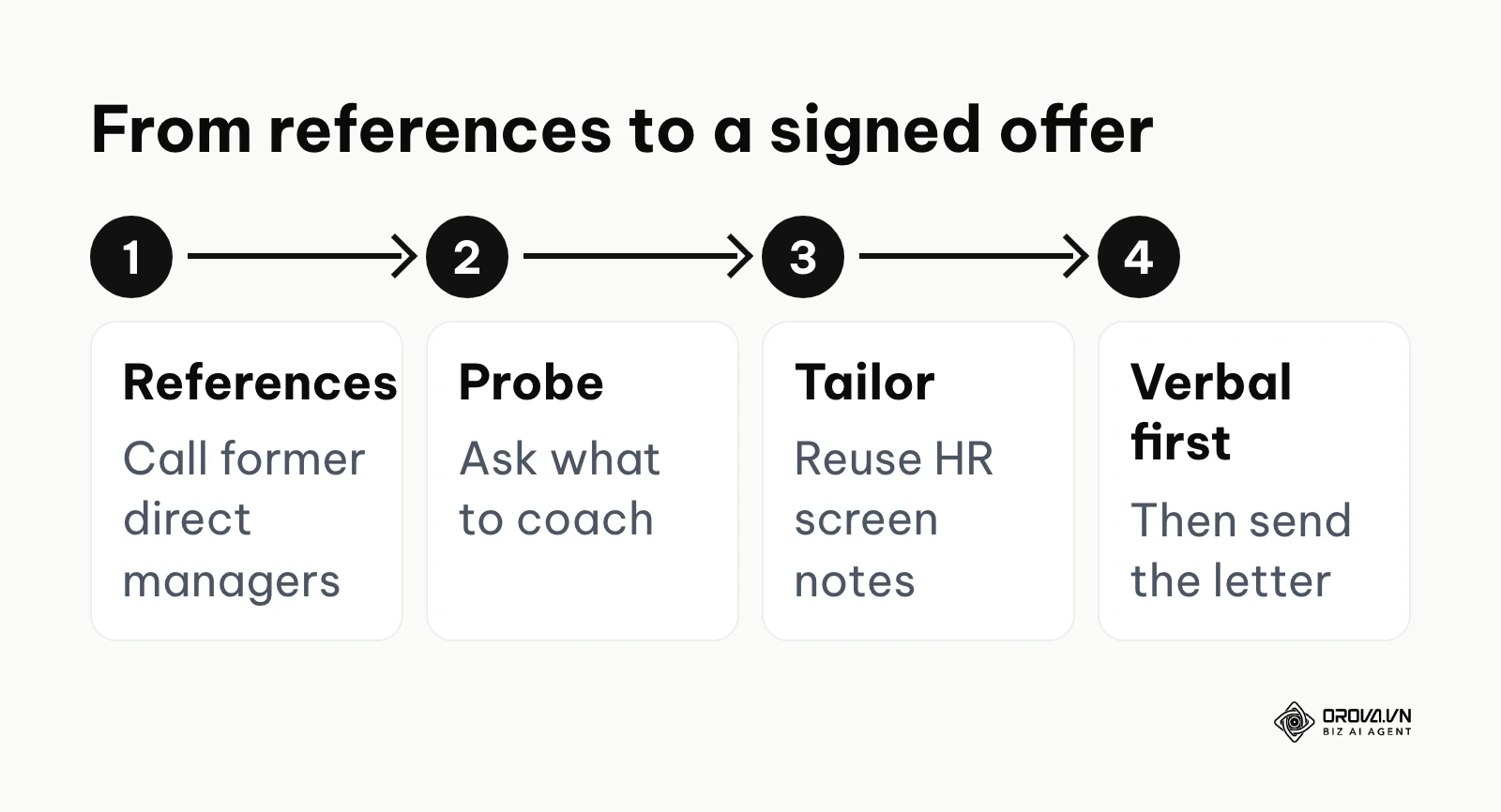
When conducting reference checks, insist on speaking with former direct managers, not just peers hand-picked by the candidate. Ask specific, developmental questions rather than just seeking praise. For example: "If we hire them, what is the one area I will need to coach them on during their first month?"
When crafting the offer, it must be highly personalized. Refer back to the notes from the initial HR screening call. If the candidate mentioned they are leaving their current job for better work-life balance, highlight your flexible working hours prominently in the verbal offer discussion. Never send an offer letter as a cold email without discussing it verbally first.
Offer Acceptance Email Template (Post-Verbal Agreement):
"Hi [Name],
Following our great conversation today, I am thrilled to officially extend this offer for the [Job Title] position at [Company]. We were incredibly impressed by your approach to [Specific skill mentioned in interview], and the entire team agrees you will be a massive driver of our upcoming [Project Name] initiative.
Please find the detailed offer letter and benefits package attached. If everything looks good, please sign by [Date/Time]. We cannot wait to welcome you aboard!"
A healthy process sees an offer acceptance rate of over 85 percent. A critical mistake at this stage is delaying the generation of the offer letter by a week to secure arbitrary executive approvals, giving the candidate ample time to accept a counter-offer from their current employer or a faster competitor.
Step 8: Pre-onboarding and continuous engagement
The hiring process does not end when the candidate signs the offer letter; it ends when they successfully complete their first 90 days. The period between signing the offer and the actual start date is a high-risk zone for candidate drop-off. You must maintain continuous engagement.
Keep the accepted candidate warm by sending them a welcome package, inviting them to a casual team lunch or virtual coffee, and providing them with access to the company handbook. Setting up their initial training modules in your learning management system a few days before they start can help them feel integrated immediately.
Success here is a 100 percent show-up rate on day one. The most common error is total radio silence from the company for three weeks, leaving the new hire anxious and susceptible to second thoughts.
If manual work is slowing down your hiring process, Orova Recruit can take on the heavy lifting: write JDs and set criteria for each role, score up to 500 CVs per role with quoted evidence from each CV, and schedule interviews, so your team can spend more time talking with strong candidates.
Deep dive: The RACI matrix and hidden costs of the hiring process
To truly master talent acquisition, you must look beyond the sequential steps and understand the underlying operational mechanics. Two factors dictate the efficiency of your system: how clearly responsibilities are divided, and how well you manage the invisible financial drains of a prolonged workflow.
The recruitment RACI matrix
Ambiguity regarding who has the authority to make decisions is the number one cause of workflow bottlenecks. A RACI matrix (Responsible, Accountable, Consulted, Informed) eliminates this ambiguity by clearly assigning roles for every major task.
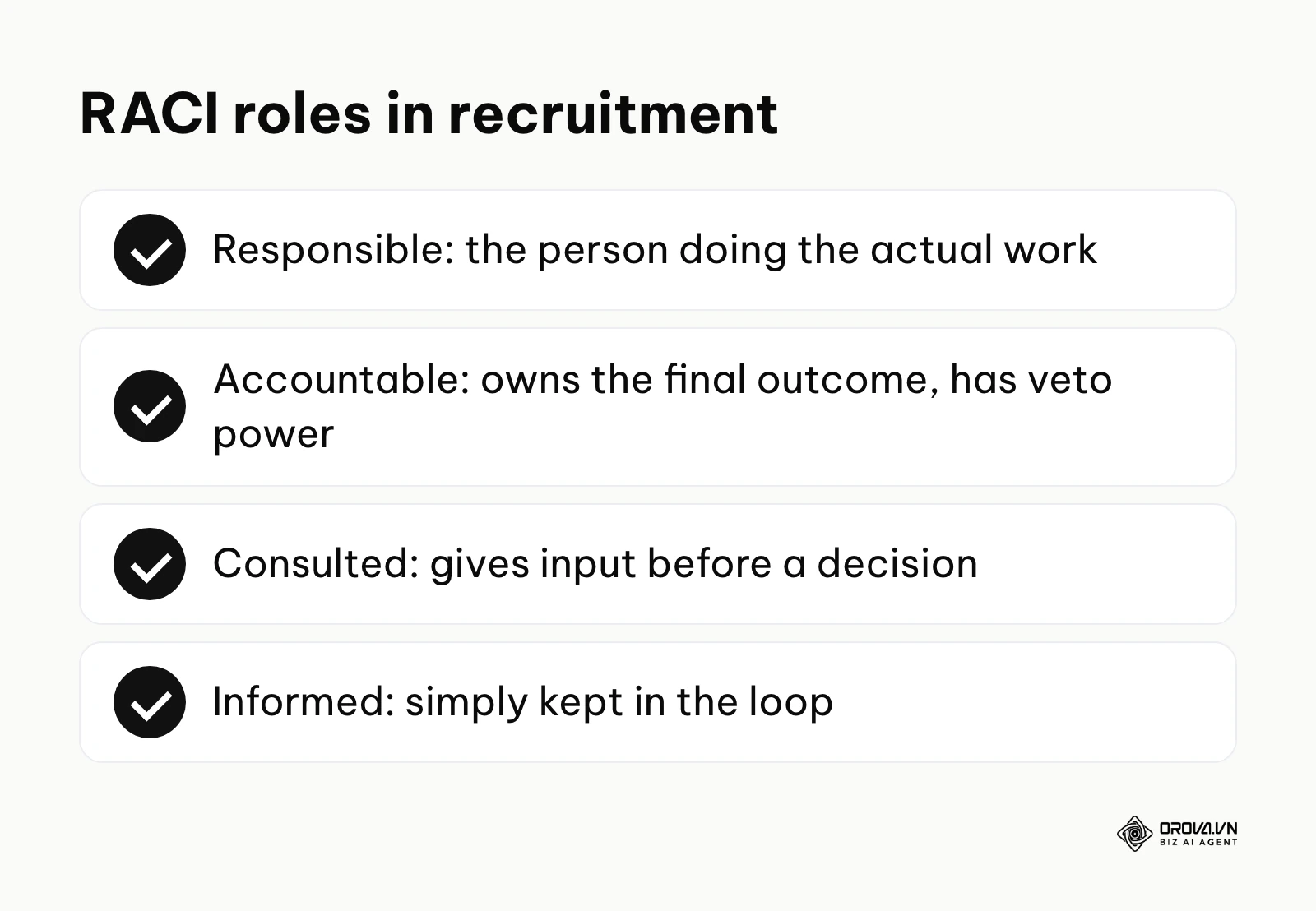
- Responsible (R): The person doing the actual work.
- Accountable (A): The person who owns the final outcome and has veto power.
- Consulted (C): The people whose input is required before a decision is made.
- Informed (I): The people who simply need to be kept in the loop.
| Hiring Task | HR / Recruiter | Hiring Manager | Interview Panel | Executive Team |
|---|---|---|---|---|
| Drafting the Job Description | Responsible | Accountable | Informed | Informed |
| Sourcing & Screening Resumes | Responsible | Consulted | Informed | Informed |
| Conducting Technical Interview | Informed | Accountable | Responsible | Informed |
| Extending the Final Offer | Responsible | Accountable | Consulted | Informed (unless above budget) |
By strictly adhering to this matrix, a hiring manager cannot blame HR for a bad technical hire (because the manager is Accountable for the technical interview), and HR cannot delay an offer waiting for a peer engineer's approval (because the peer is only Consulted, not Accountable).
The hidden costs of a slow hiring process
When a hiring process drags on for months, the financial damage extends far beyond the HR department's budget. These hidden costs erode overall company profitability.
The most severe hidden cost is the loss of team productivity. An empty seat means that remaining team members are forced to absorb the workload, leading to severe burnout, decreased morale, and eventually, secondary turnover. Furthermore, a slow process damages your employer brand. Frustrated candidates will leave negative reviews on platforms like Glassdoor, making it exponentially harder and more expensive to attract talent in the future. Finally, desperation driven by a prolonged vacancy often leads hiring managers to offer premium salaries to mediocre candidates just to finally fill the seat, permanently inflating the department's payroll.
Stop letting a slow hiring process cost you strong candidates. Generate interview questions from the JD and CV, take interview notes by voice or text, score interviews and export candidate comparisons as PDF with Orova Recruit. It is free until July 7, 2027, and no card is needed.
Measuring results: Key metrics and SLAs for hiring
You cannot improve what you do not measure. A highly functioning recruitment engine relies on strict Service Level Agreements (SLAs) and continuous data tracking to identify friction points.
An SLA is a formal agreement between HR and the hiring managers regarding expected turnaround times. For instance, a standard SLA might dictate that HR will present three qualified candidates within 14 days of opening a role, and in return, the hiring manager must provide scorecard feedback within 24 hours of conducting an interview.
| Metric | Business Meaning | Warning Threshold to Audit |
|---|---|---|
| Time-to-Hire | Days from a candidate applying to accepting the offer. | Exceeding 30 to 40 days. |
| Offer Acceptance Rate | The percentage of extended offers that are signed. | Falling below 75 percent. |
| Stage Drop-off Rate | Candidates abandoning the process mid-way. | Greater than 15 percent drop between specific rounds. |
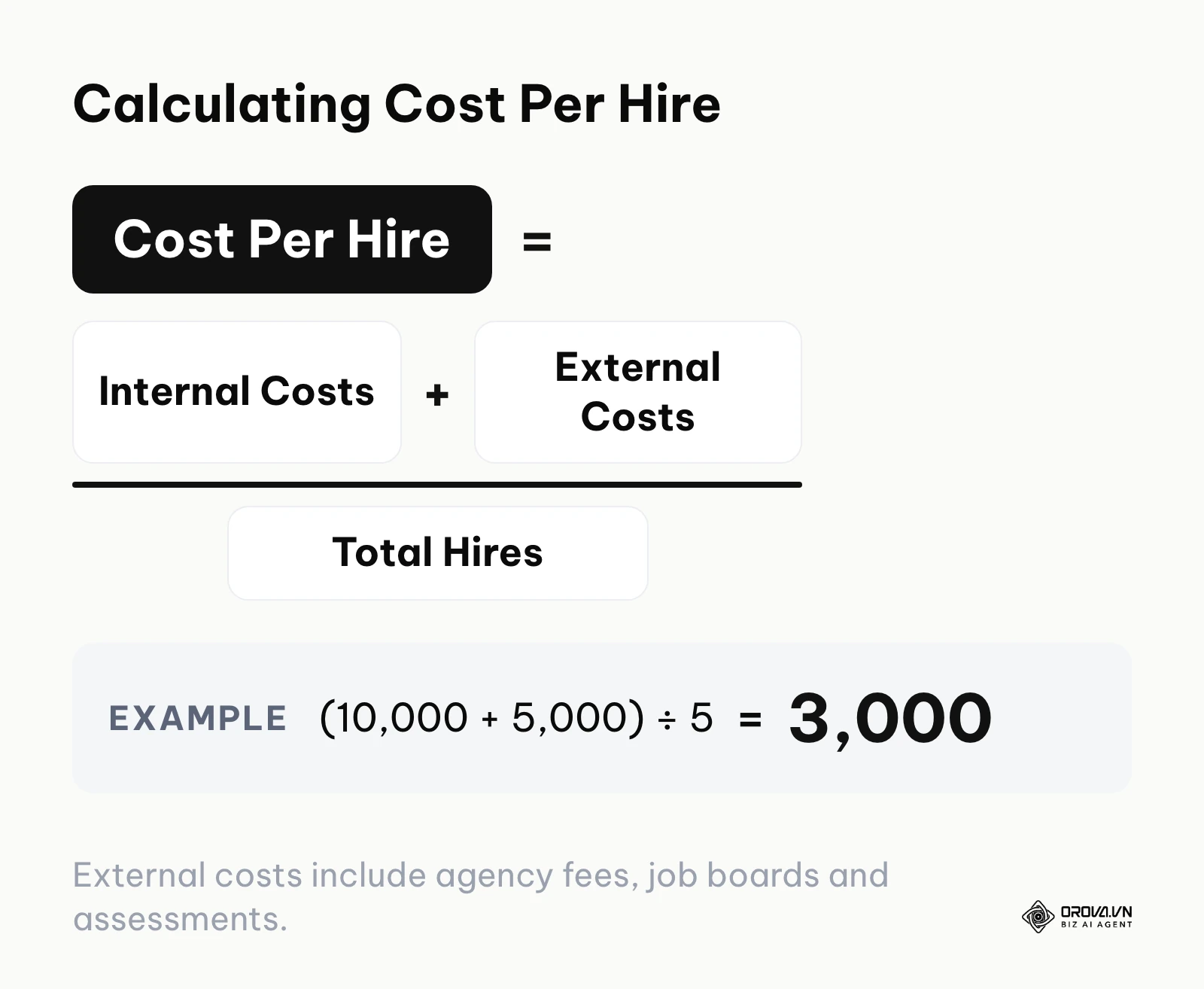
| Cost Per Hire | Total internal and external recruitment spend divided by total hires. | Rising sharply compared with your own previous quarters. |
To calculate cost per hire, add internal costs (recruiter time, interviewer hours) to external costs (agency fees, job boards, assessments), then divide by total hires. For example, 10,000 in internal costs plus 5,000 in external costs across 5 hires gives a cost per hire of 3,000.
Monitoring these metrics allows you to debug your workflow systematically rather than relying on anecdotal complaints from frustrated managers.
Common mistakes in recruitment process steps for startups and enterprises
Even with a defined workflow, organizations frequently stumble into predictable traps that sabotage their talent acquisition efforts. Understanding these pitfalls is the first step toward avoiding them.
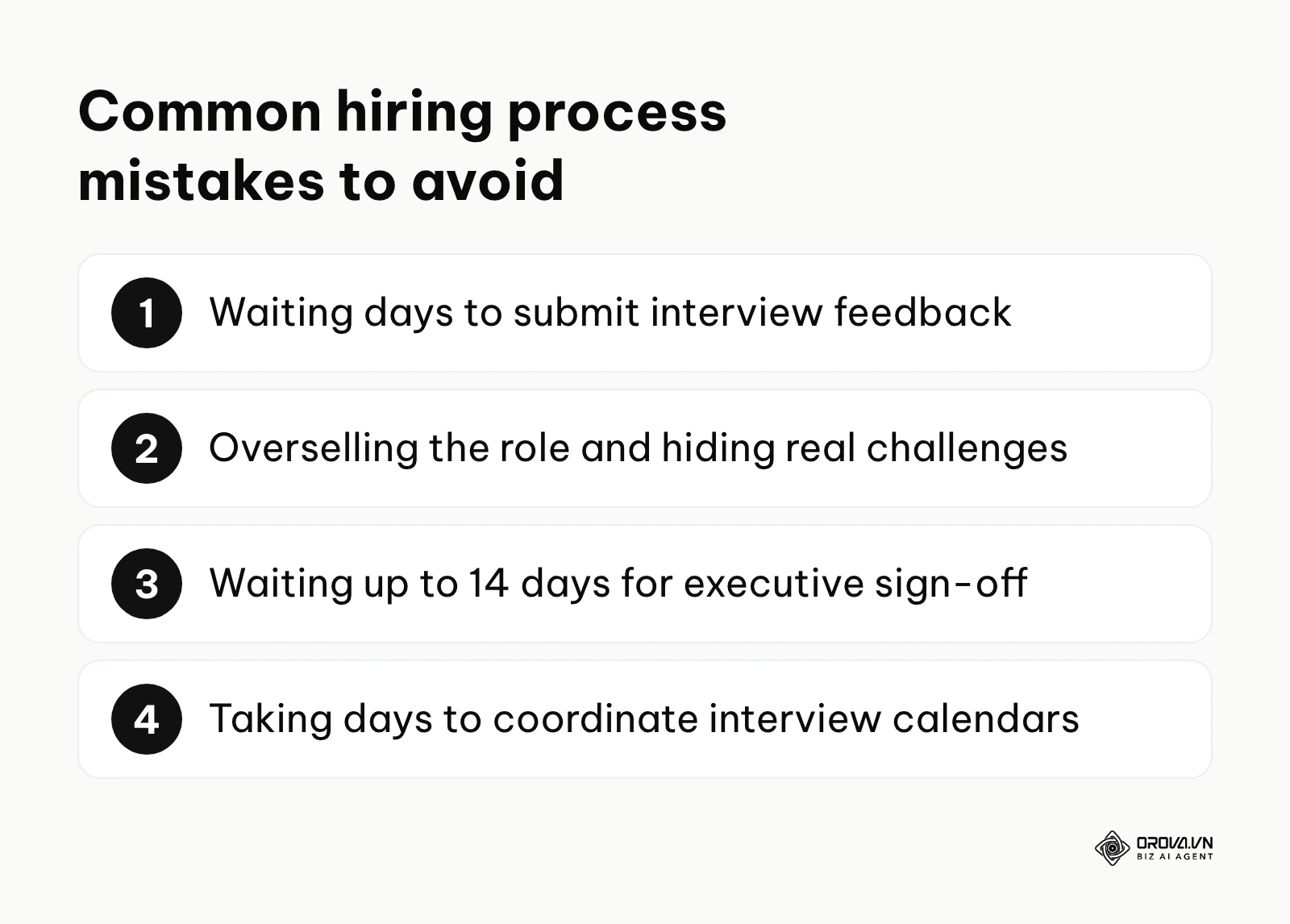
The most prevalent mistake is failing to consolidate feedback immediately. When interviewers wait three days to submit their thoughts, they rely on fuzzy memories and generic impressions rather than specific data points, completely undermining the purpose of the scorecard. Another critical error is overselling the role during the interview. Promising a startup environment with infinite resources, only for the new hire to face extreme budget constraints on day one, guarantees turnover within the first 90 days. Honesty about the challenges of the role acts as a natural filter for resilience.
Illustrative example:
- Context: An international logistics enterprise was struggling with a bloated average time-to-hire of 68 days for regional operations managers.
- Steps taken: The HR operations team mapped their entire workflow and audited the time gaps between each specific stage to identify the primary bottleneck causing candidates to drop out.
- Hurdle and fix: They discovered that the gap between the final interview and the actual offer letter generation was taking up to 14 days solely due to mandatory executive sign-off requirements. They fixed this by establishing pre-approved salary bands, requiring executive sign-off only if the proposed offer exceeded the 75th percentile of that specific band.
- Result: The dead time spent waiting for approvals dropped dramatically. The HR analytics dashboards showed a visual reduction in the overall time-to-hire down to 35 days, entirely preventing agile competitors from poaching their top operational choices.
A final common mistake is allowing logistical friction to dictate the pace of hiring. Taking days to coordinate calendars via email practically invites candidates to look elsewhere.
Where the hiring process is heading in the next few years: the author's take
As we look toward the evolution of talent acquisition, the landscape is shifting rapidly. Based on the signals I see today, here is my take on how recruitment may change over the next two to three years, and what you can do to prepare.
Trend 1: Predictive matching will replace keyword parsing
Currently, most systems rely on basic semantic matching to filter resumes. I believe that within the next two to three years, AI will shift from simple screening to deep predictive matching. Systems may analyze a candidate's past project outcomes, public code repositories, and even problem-solving patterns to predict their success in your specific company culture before an interview even occurs. To prepare for this, companies must start rigorously cleaning their historical employee performance data today, as predictive AI is only as good as the baseline data it learns from.
Trend 2: The death of the traditional PDF resume
My read is that the static resume is losing ground. Candidates increasingly share portfolios, public work samples and verified skill badges alongside their CV. If that continues, employers will spend less time evaluating what a candidate claims they did and more time evaluating proof of their capabilities. Organizations must begin shifting their screening criteria away from "years of experience" and toward verifiable skill assessments and micro-certifications.
Trend 3: Hyper-personalized, automated candidate journeys
I expect that generic rejection emails will look increasingly outdated. Recruitment tools are moving toward more personalized candidate communication, such as short, specific feedback on why an applicant was not selected and which skills to develop. Final decisions should stay with people, but AI can take on more of the routine messaging around them. To stay competitive, HR leaders must map their candidate journeys immediately, identifying every touchpoint where an AI agent could provide a white-glove experience without draining human recruiter bandwidth.
Frequently asked questions about the hiring process
How to improve hiring process efficiency?
To improve efficiency, you must aggressively hunt for bottlenecks. Typically, delays occur during interview scheduling and post-interview feedback collection. Implement strict Service Level Agreements (SLAs) that require hiring managers to submit standardized scorecards within 24 hours of an interview. Additionally, leverage automated scheduling tools that allow candidates to book their own interview slots based on the hiring manager's real-time calendar availability.
What is the ideal hiring process checklist template?
An ideal checklist template should cover eight core phases:
- Conducting the intake needs analysis.
- Generating a performance-based Job Description.
- Executing multi-channel sourcing.
- Implementing automated resume screening.
- Conducting the initial HR logistical screen.
- Executing the structured technical/managerial interview with scorecards.
- Completing behavioral reference checks.
- Crafting and delivering a personalized offer.
Missing any of these steps dramatically increases the risk of a bad hire.
How do we reduce bias in recruitment process steps for startups?
Startups often fall victim to the "culture fit" trap, which frequently masks affinity bias. To reduce this, you must define exactly what your culture is in terms of observable behaviors, not personality traits. Replace unstructured, conversational interviews with standardized rubrics. Ensure every candidate for a specific role is asked the exact same questions and evaluated on the same 1 to 5 numerical scale. A process that feels fair also keeps more candidates engaged, because people who sense a biased evaluation are more likely to drop out or stop responding.
Where should you start?
Redesigning your entire talent acquisition workflow can feel overwhelming, but you do not have to overhaul everything overnight. Depending on your current pain points, focus on taking one decisive action today.
If your time-to-hire is exceeding 45 days: Gather your HR team and hiring managers in a room (or a virtual whiteboard) and map out your current timeline step-by-step. Identify the single longest delay between stages. Usually, this is the gap between the final interview and the offer approval. Implement a 48-hour SLA for this specific bottleneck and watch your overall time-to-hire plummet.
If candidates are consistently rejecting your offers: Your compensation packages or employer branding might be disconnected from reality. Audit your salary bands against current market data. More importantly, swallow your pride and conduct brief "exit interviews" with the candidates who declined your offers. Ask them point-blank what the competing offer had that yours lacked.
If new hires are failing within their first 90 days: Your interview process is likely testing theory rather than practical application. Tear down your current interview script. Rebuild your candidate scorecard to include behavioral questions that directly mirror the actual stressors and daily tasks the employee will face in their first month. A highly structured hiring process is the ultimate competitive advantage in business today.
About the author

Builder of Orova
Nguyễn Đỗ Trọng Ân has 8 years of experience in marketing, including 6 years managing market development across Asia. He builds Orova, a Biz AI Agent that never sleeps: it plans, runs and optimizes work for businesses.
Run your business with AI Agents
Orova is the always-on Biz AI Agent — it plans, runs, and optimizes the work for you.
Save time, unlock productivity.