
Job description template: a copy-ready format, 2 full examples and 7 writing steps

A job description template is a reusable outline with fixed sections (job title, work model, salary range, role summary, why join, responsibilities, must-have and nice-to-have requirements, how to apply, and an equal opportunity statement) that you fill in for each opening. This guide gives you the full template as plain text you can copy straight from the page, plus two complete, filled-in examples: an on-site/hybrid support role and a fully remote marketing role. Nothing to download, nothing to sign up for.
The rest of the guide explains how to fill each section so the posting reads like an offer, not a list of demands. Copying an old posting, changing a few words and hitting publish is the habit that produces thin applicant pools, mismatched interviews and slow hires. A structured template fixes the format; the seven steps below fix the content, including bias-free wording, remote-specific details, AI prompts for drafting, and how to measure whether a posting works. If you are mapping the whole hiring process, the job description is the first document every later stage depends on.
What exactly is a job description template and why do you need one?
A job description template is a standardized, pre-formatted framework used by human resources and hiring managers to consistently document the requirements, responsibilities, and working conditions of a specific role. Rather than starting from scratch every time a vacancy opens, a template provides a structural foundation that ensures no critical information is accidentally omitted.
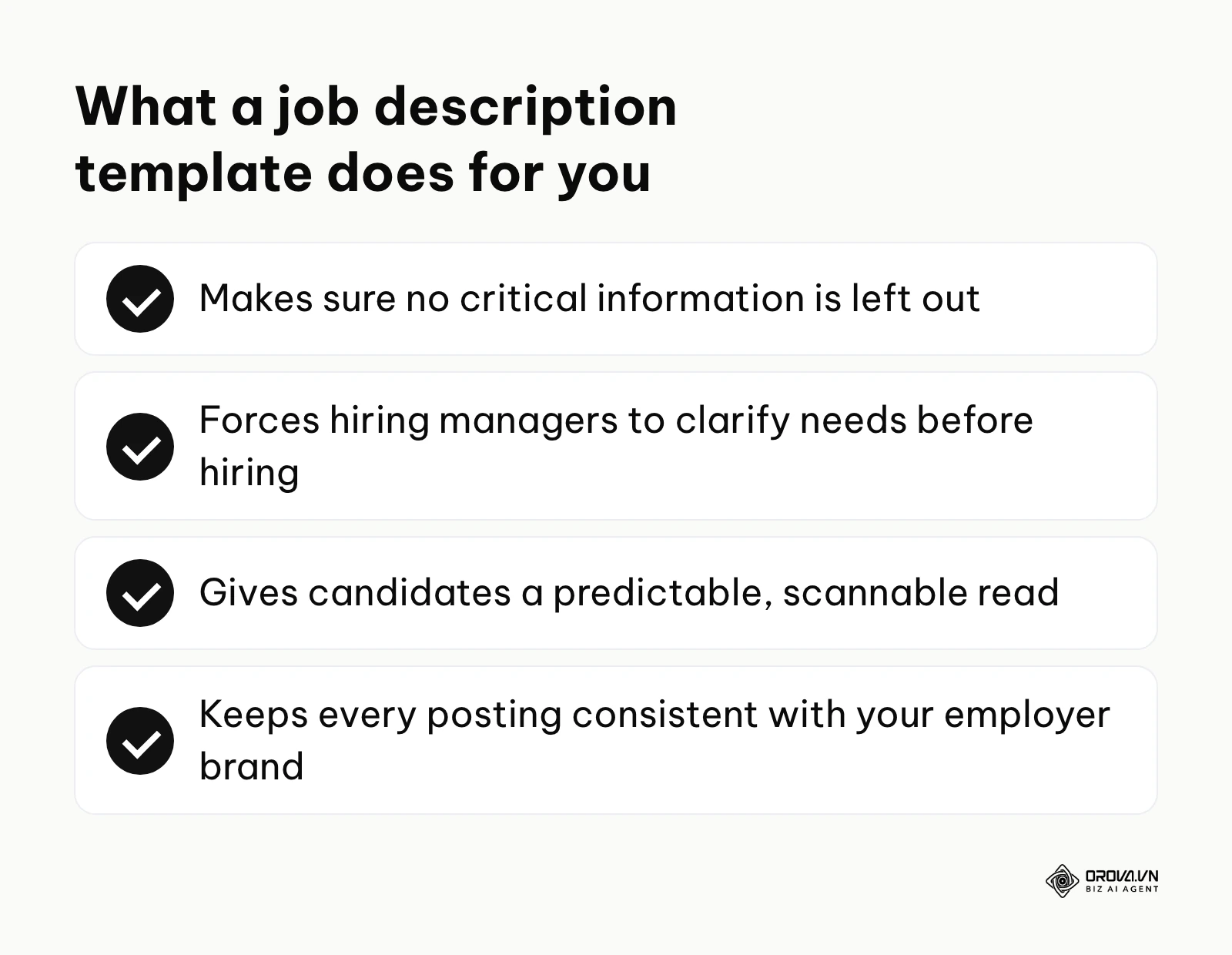
The primary purpose of using a standardized template is to establish extreme clarity. For internal teams, it forces hiring managers to clarify their exact needs before requesting headcount. For external candidates, it provides a predictable, scannable reading experience that quickly answers their most pressing questions. When you use a consistent format across all your job postings, you also build a stronger, more professional employer brand identity.
You should use a job description template for nearly every standard role within your organization, from entry-level administrative positions to senior engineering leads. It is particularly crucial when your company is scaling rapidly and multiple different managers are handling recruitment simultaneously.
However, there are rare instances when a rigid template might not be the best approach. If you are conducting a highly confidential executive search (such as replacing a sitting CEO before it is announced), or if you are hiring for a completely experimental, unproven role where the responsibilities change daily, a traditional template might feel too restrictive. In those specific edge cases, a more fluid narrative brief shared only with executive recruiters might be necessary. For the vast majority of your hiring needs, a structured template is the better choice.
Copy-ready job description template
Copy the block below into your document editor or applicant tracking system. Everything in square brackets is a placeholder; replace it or delete the line. Keep the section order: candidates scan for the title, work model and pay first, then decide whether to read the rest.
The master template
Job title: [Standard industry title, e.g., Customer Support Representative]
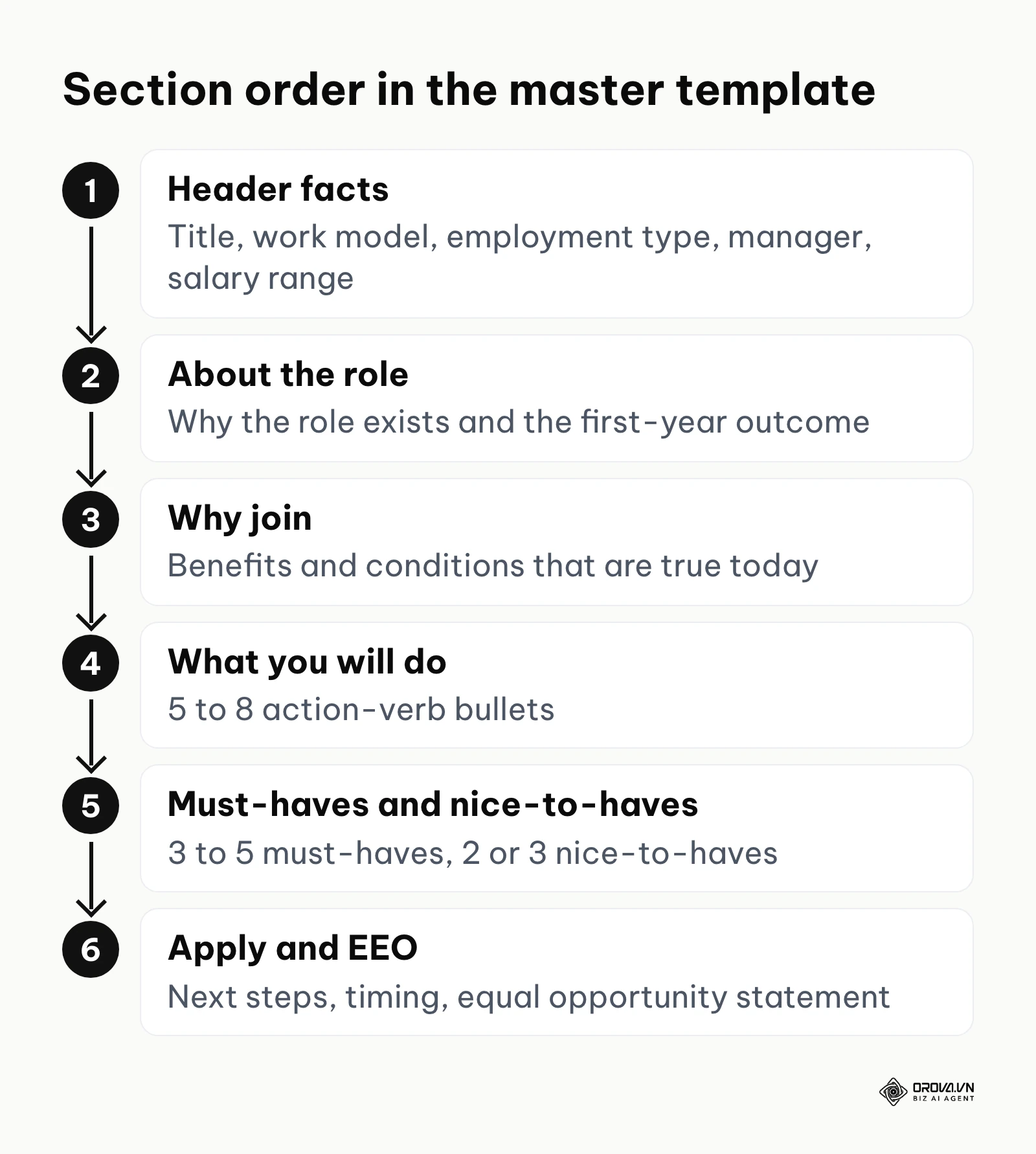
Location and work model: [City, on-site / hybrid with X days in the office / fully remote with required timezone overlap]
Employment type: [Full-time / part-time / fixed-term contract]
Reports to: [Title of the direct manager]
Salary range: [Your approved minimum to maximum for this role, per year or per hour] — or your compensation statement where local rules allow you to omit the range
About the role [Two or three sentences: why this role exists, the main outcome expected in the first year, and the team the person will work with.]
Why you might like working here
- [A benefit or working condition that is true today, not a promise]
- [A concrete growth or learning opportunity]
- [How the team works: schedule, autonomy, collaboration style]
What you will do
- [Action verb + task + expected result]
- [Action verb + task + expected result]
- [Add 5 to 8 bullets in total, only tasks done every week or month]
What you need (must-haves)
- [Skill or experience needed on day one, without training]
- [Keep this list to 3 to 5 bullets]
Nice to have
- [Skill you are willing to teach on the job]
- [Keep this list to 2 or 3 bullets]
How to apply and what happens next [What to send, the stages of the process, and roughly how long each stage takes.]
Equal opportunity statement [Your organization's standard non-discrimination statement, reviewed by HR or legal.]
How to use the template without making it generic
The template only guarantees that nothing important is missing. Three rules keep it from turning into a fill-in-the-blanks exercise. First, every bullet under "What you will do" must be checked by the hiring manager for this specific opening, even when the title is the same as last time. Second, the must-have list is a contract with yourself: if a candidate who meets every must-have would still be rejected, the list is wrong. Third, the "Why you might like working here" block must describe today's reality, because candidates will ask about it in the interview. The two examples later in this guide show what a fully filled-in version looks like.
Preparation checklist: Before you use the template
Writing a great job posting does not start with opening a document; it starts with deep alignment. Before you even touch a job description template, you must gather specific information and reach a consensus with all relevant stakeholders. If you skip this preparation phase, you will end up with a disjointed document that tries to be everything to everyone, which ultimately appeals to no one.
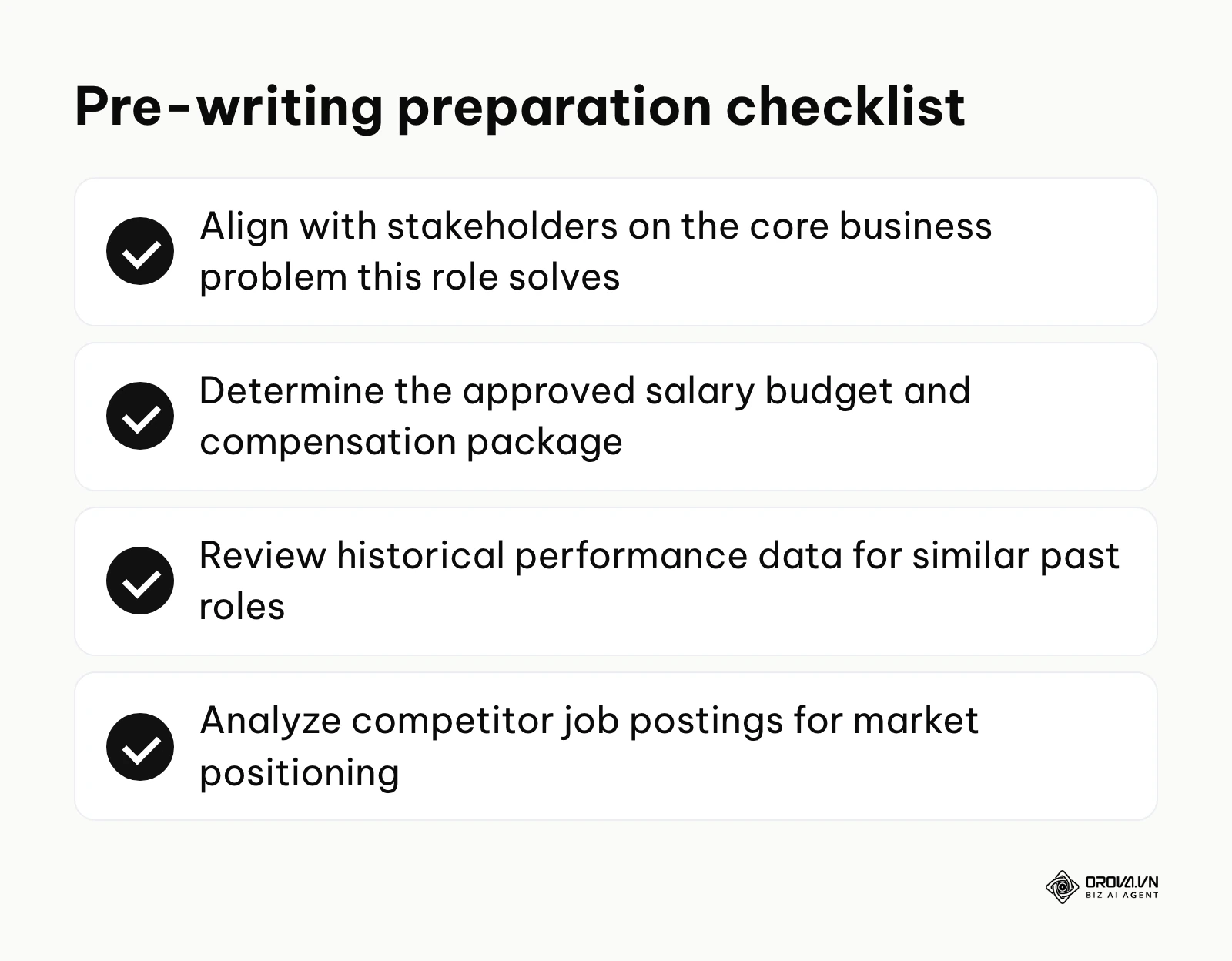
First, you need to define the core business problem this new hire is supposed to solve. Are they being brought in to maintain a stable system, or to build something entirely new from the ground up? Understanding this fundamental objective will dictate the tone and the requirements you set later on. Second, you must secure the approved compensation details. Whether you plan to publish the exact numbers or not, knowing the rigid boundaries of the budget is essential so you do not accidentally write a job description for a senior director when you only have the budget for a mid-level manager.
Finally, consider where the final document will live. If you are currently debating an ATS vs HRIS for your organization, understand that the system you use will dictate how candidates interact with your posting. Ensure your format is compatible with the platform you intend to use.
| What to prepare | Where to get it | Estimated time |
|---|---|---|
| Core business objective | Department head / Hiring manager | 30 minutes |
| Approved salary budget | Finance / HR department | 15 minutes |
| Historical performance data | Past reviews of similar roles | 45 minutes |
| Market keyword research | Industry job boards / LinkedIn | 30 minutes |
Illustrative example 1:
- Context: A mid-sized SaaS company was looking for a Senior Product Manager. The HR manager, Sarah, realized the hiring manager and the product director had completely different, unspoken expectations for the role.
- Steps taken: First, Sarah paused the drafting process and scheduled a 45-minute alignment meeting with both stakeholders. Second, she asked them to independently rank a list of 15 potential responsibilities. Third, they compared the lists on a screen and debated the discrepancies until they agreed on the top five core duties.
- Hurdles and fixes: The main hurdle was the product director wanting a technical systems architect while the hiring manager wanted a customer-facing strategist. Sarah fixed this by showing market compensation data for both profiles, proving they could not afford a unicorn who did both. This forced them to split the technical requirements into a separate future role.
- Result: When they finally used their job description template, they attracted candidates who perfectly fit the aligned, realistic vision. Far fewer interviews were spent on mismatched profiles, and they made an offer within four weeks.
How to write a job description: 7 steps to attract top talent
Creating the best job description for hiring requires a systematic approach. You must view the document not as a list of demands, but as a persuasive piece of copywriting designed to attract the specific persona you need.
Step 1: Define the core purpose and job title
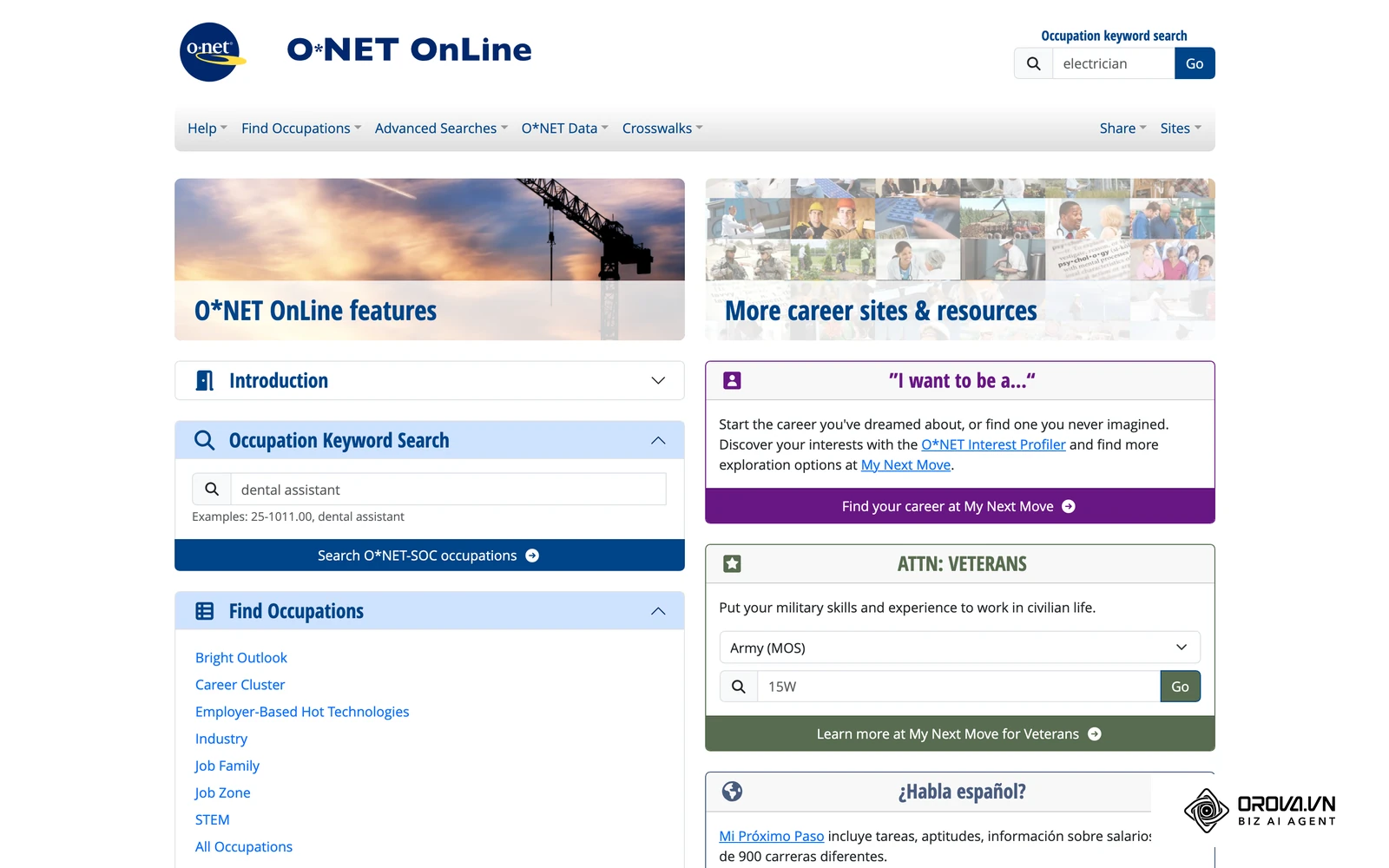
The title of your job posting is the single most important factor for search engine optimization (SEO) on job boards. If candidates cannot find your posting, the quality of the content inside does not matter. You must resist the urge to be overly creative. Titles like "Code Ninja," "Marketing Rockstar," or "Customer Success Guru" might sound fun internally, but nobody types those words into a search bar when looking for a job.
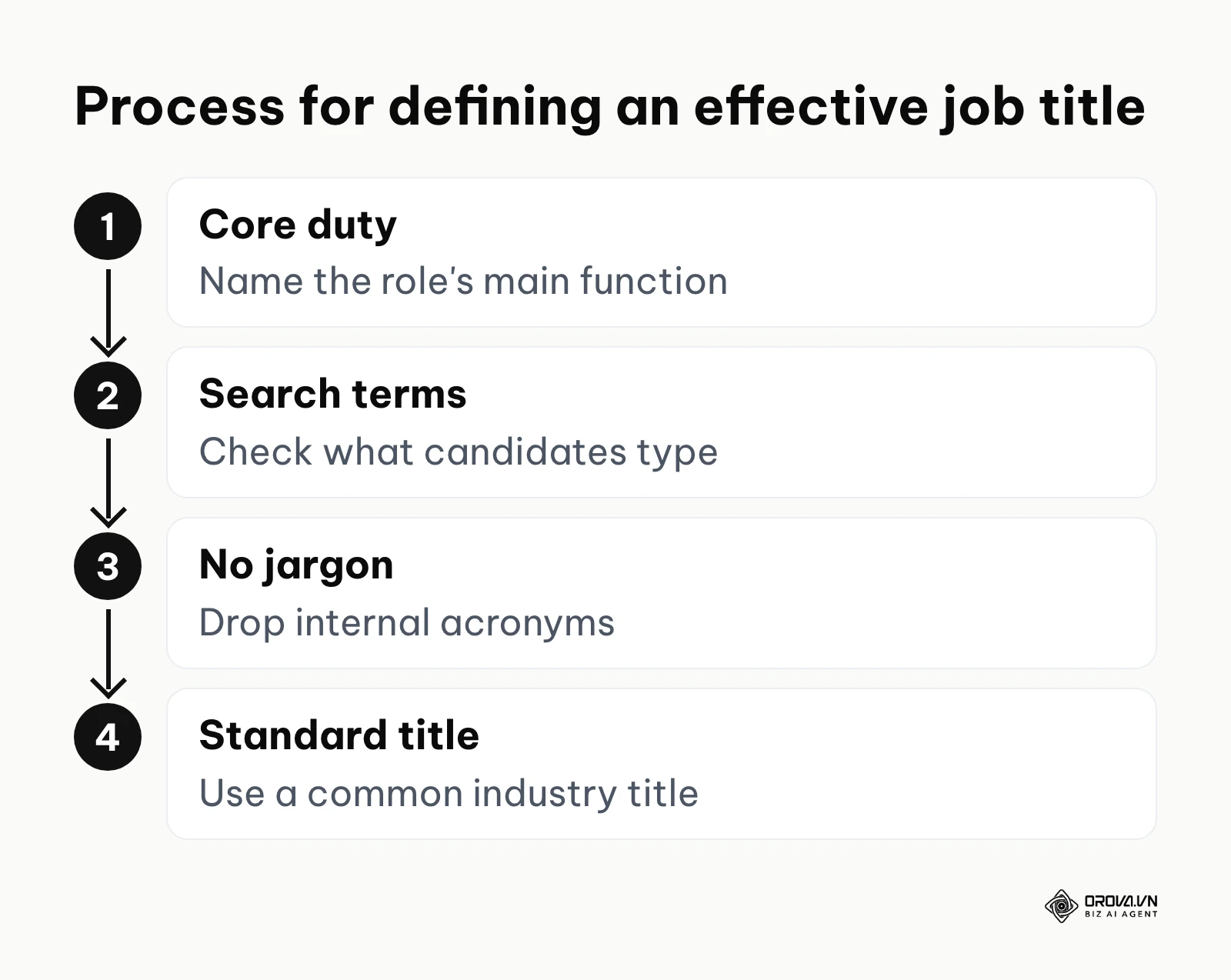
Instead, stick to industry-standard titles. If you are looking for someone to manage your social media accounts and write blog posts, title the role "Content Marketing Manager." Once you have the standard title, write a concise two-to-three sentence summary of the role's core purpose. This summary should clearly state who the person will report to, what their primary objective is, and how their work directly impacts the company's broader mission. This immediate context hooks the reader and encourages them to read further.
Step 2: Craft a compelling Employee Value Proposition (EVP)
In a highly competitive labor market, candidates are always asking one fundamental question: "What is in it for me?" Your job description template must answer this immediately. The Employee Value Proposition (EVP) is the unique set of benefits, culture, and career growth opportunities that your company offers in exchange for the employee's skills and time.
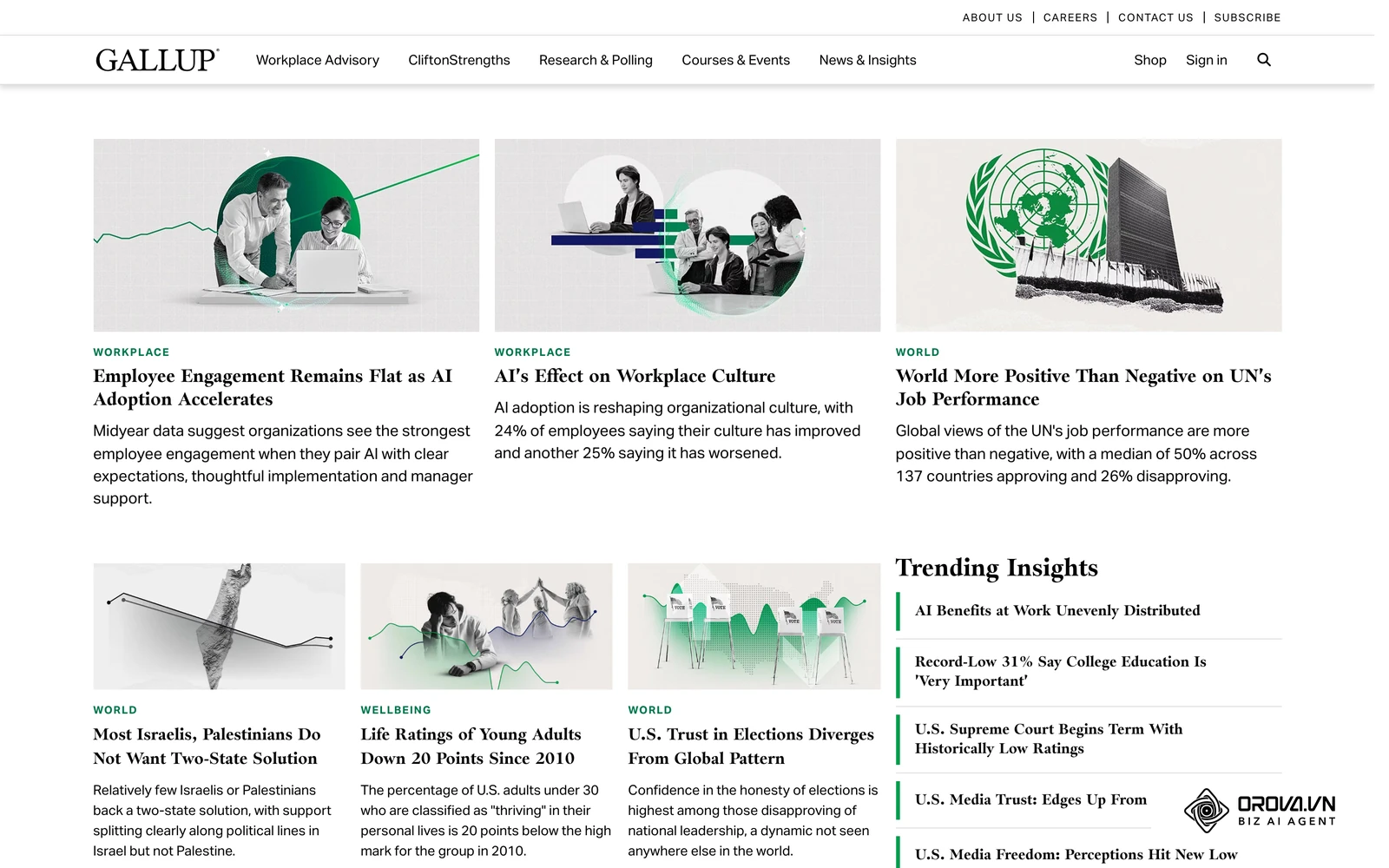
Do not bury your EVP at the very bottom of the document under a generic "Benefits" header. Bring it to the top. Explain the reality of working at your company. If you offer intense, fast-paced growth, say that. If you offer unparalleled work-life balance and a strictly 9-to-5 culture, highlight it. Establishing the right tone of voice in this section is crucial for attracting candidates who will naturally thrive in your environment. Gallup's long-running employee engagement research puts "I know what is expected of me at work" first among its basic engagement needs, and a job posting is the first place those expectations are set.
Illustrative example 2:
- Context: A boutique digital marketing agency struggled to attract senior software engineers. Their job postings listed standard technical requirements but offered little insight into why an experienced engineer would want to leave their current stable job to work there.
- Steps taken: The recruitment lead decided to rewrite the EVP section entirely. First, they surveyed current engineers anonymously about what they genuinely loved most about the job. Second, they identified "autonomy in technology choices" and "highly flexible working hours" as the true core benefits, rather than the ping-pong table. Third, they updated the job description template to highlight these specific points in a bold paragraph right below the job title.
- Hurdles and fixes: Initially, the agency founder was hesitant to emphasize flexibility in print, fearing a loss of managerial control. The recruitment lead fixed this by proposing a three-month trial period for the new messaging to strictly measure the impact on applicant quality.
- Result: The new job postings saw a visible shift in the applicant pool. While they received slightly fewer total applications, the number of highly qualified, senior-level engineers applying doubled within the first month.
Step 3: Outline responsibilities with action verbs
When detailing the day-to-day responsibilities, clarity and brevity are your best friends. Avoid long, meandering paragraphs. Instead, use a bulleted list of 5 to 8 core duties. More importantly, start every single bullet point with a strong, present-tense action verb.
Instead of writing "Responsible for the management of the monthly budget," write "Manage the monthly paid advertising budget and report spend against plan." Instead of "Will be involved in the creation of reports," write "Design and present weekly performance reports to the executive team." This active voice makes the expectations concrete and measurable. Group similar tasks together so the candidate can easily conceptualize their daily workflow. If a task only happens once a year, do not include it in the core responsibilities list; reserve this space for what the employee will actually be doing on a typical Tuesday.
Step 4: Categorize requirements using a Decision Matrix
One of the fastest ways to ruin a job posting is to create an unrealistic wishlist of requirements, often referred to in HR as hunting for a "purple squirrel." When you ask for ten years of experience in a software language that has only existed for five years, you immediately lose credibility. Furthermore, excessively long requirement lists discourage capable people who meet most, but not all, of the criteria from applying at all.
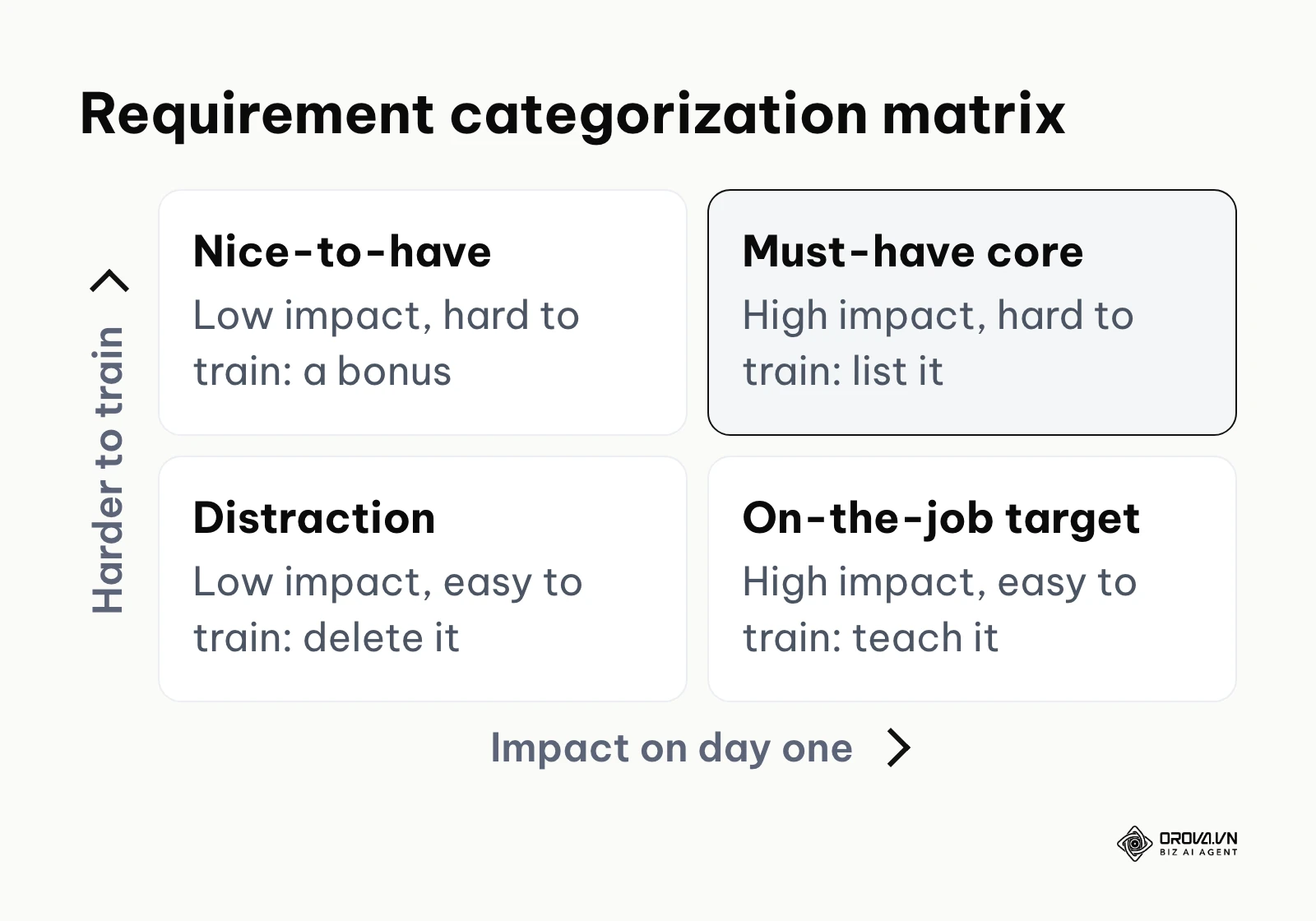
To solve this, you must ruthlessly categorize your requirements. A helpful framework is the Decision Matrix, dividing skills into "Must-have" and "Nice-to-have." Must-have skills are those required to perform the job on day one with zero training. Nice-to-have skills are bonuses that you are willing to teach on the job. To make the split concrete, score each requirement on two questions: how much impact it has on day one, and how easy it is to train. High impact and hard to train is a Must-have core skill. High impact but easy to train is an on-the-job target: mention it as something the person will learn. Low impact and hard to train is a Nice-to-have. Low impact and easy to train is a distraction; delete it from the posting. Be extremely protective of the Must-have category. If you are serious about improving your candidate screening process, reducing the mandatory requirements to the absolute bare minimum will dramatically widen your talent pool without sacrificing quality.
Step 5: Incorporate Diversity, Equity, and Inclusion (DEI) language
The language you use in your job description template sends a powerful, often subconscious signal about your company culture. Words carry weight and history. Certain phrases can inadvertently signal that a particular demographic is preferred, discouraging diverse candidates from applying.
A 2011 study by Gaucher, Friesen and Kay in the Journal of Personality and Social Psychology found that job advertisements written with masculine-coded wording were rated as less appealing by women, which makes gender-coded terminology one of the first things to remove. Words like "aggressive," "dominant," "fearless," or "ninja" are commonly treated as masculine-coded and can discourage some women from applying. Conversely, words like "nurturing" or "sympathetic" are often coded as feminine.
Your goal is to use neutral, inclusive language that focuses strictly on the work itself. Before publishing, run your draft through a bias-free language checklist.
| Biased / Coded Term | Inclusive Alternative | Reason for Change |
|---|---|---|
| Sales Ninja / Rockstar | Sales Specialist / Expert | Removes exclusionary tech-bro jargon |
| Aggressive closer | Highly motivated negotiator | Focuses on professional skill, not hostility |
| Digital Native | Deeply familiar with digital platforms | Avoids ageism (implies only young people qualify) |
| Native English Speaker | Fluent in English | Focuses on proficiency, not national origin |
| Must be able to walk/stand | Must be able to remain stationary / move about | Accommodates candidates with physical disabilities |
Step 6: Adapt the format for remote and hybrid roles
The shift toward remote and hybrid work environments requires a fundamental update to the standard job description template. You can no longer rely on vague assumptions about office hours and physical presence. Remote candidates need to know exactly how your distributed team operates before they apply.
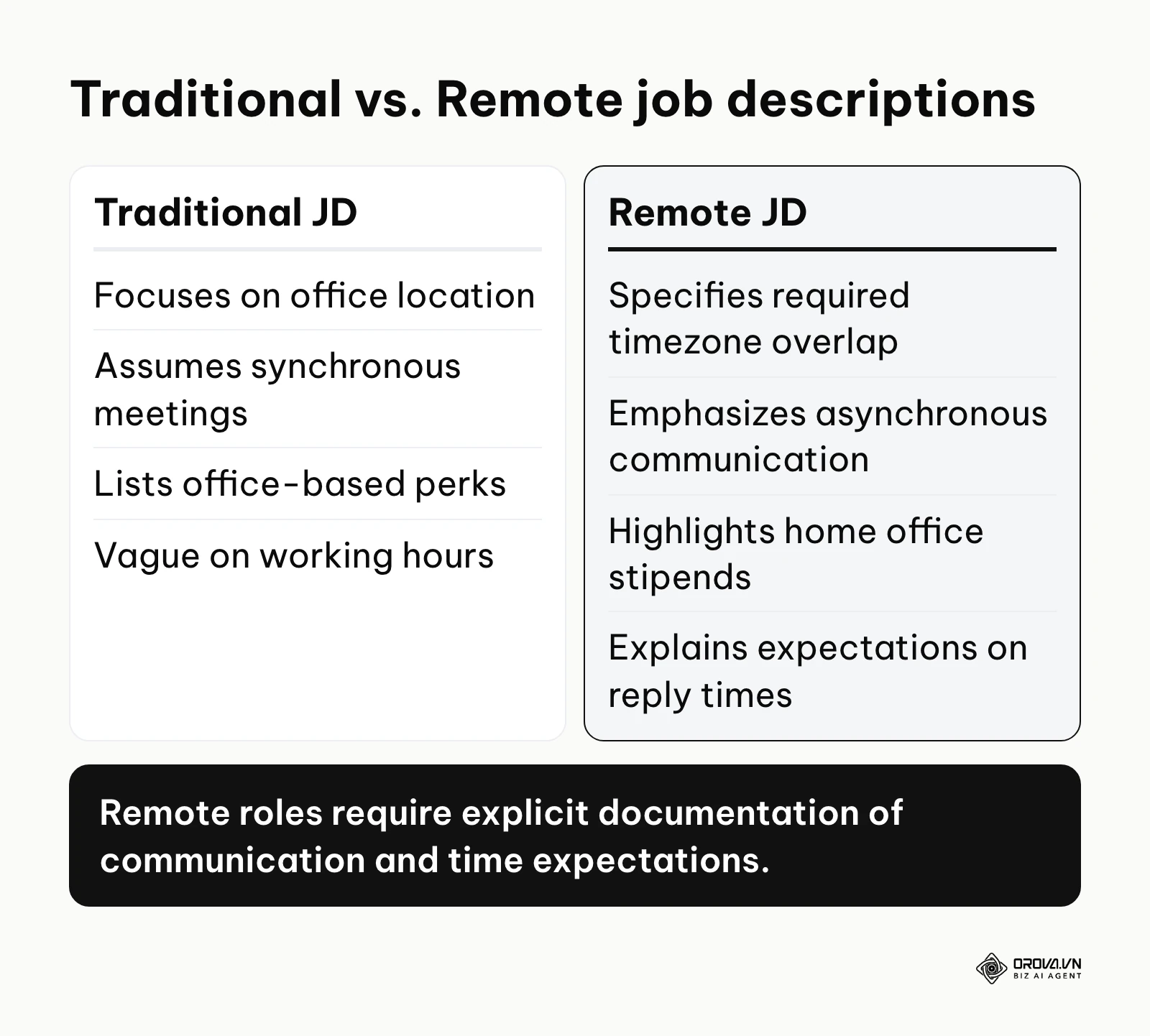
Distributed teams that work well tend to rely on clear documentation and asynchronous communication, so both belong in any remote job description template. You must explicitly state the expected timezone overlap. For example, instead of saying "Remote," say "Remote (at least 4 working hours overlap with your core team's timezone)." You also need to clarify the company's stance on asynchronous work—do you expect immediate replies on Slack, or do you prioritize deep work? Finally, clearly list any stipends provided for home office setups or co-working spaces, as this is a major selling point for remote talent.
Step 7: Leverage AI and ChatGPT prompts for drafting
If you understand the structural rules outlined above, you can significantly accelerate the writing process using AI tools like ChatGPT or Claude. However, you cannot simply ask the AI to "write a job description for a marketer" and expect a good result. The output will be generic, bloated, and full of the exact clichés we are trying to avoid.
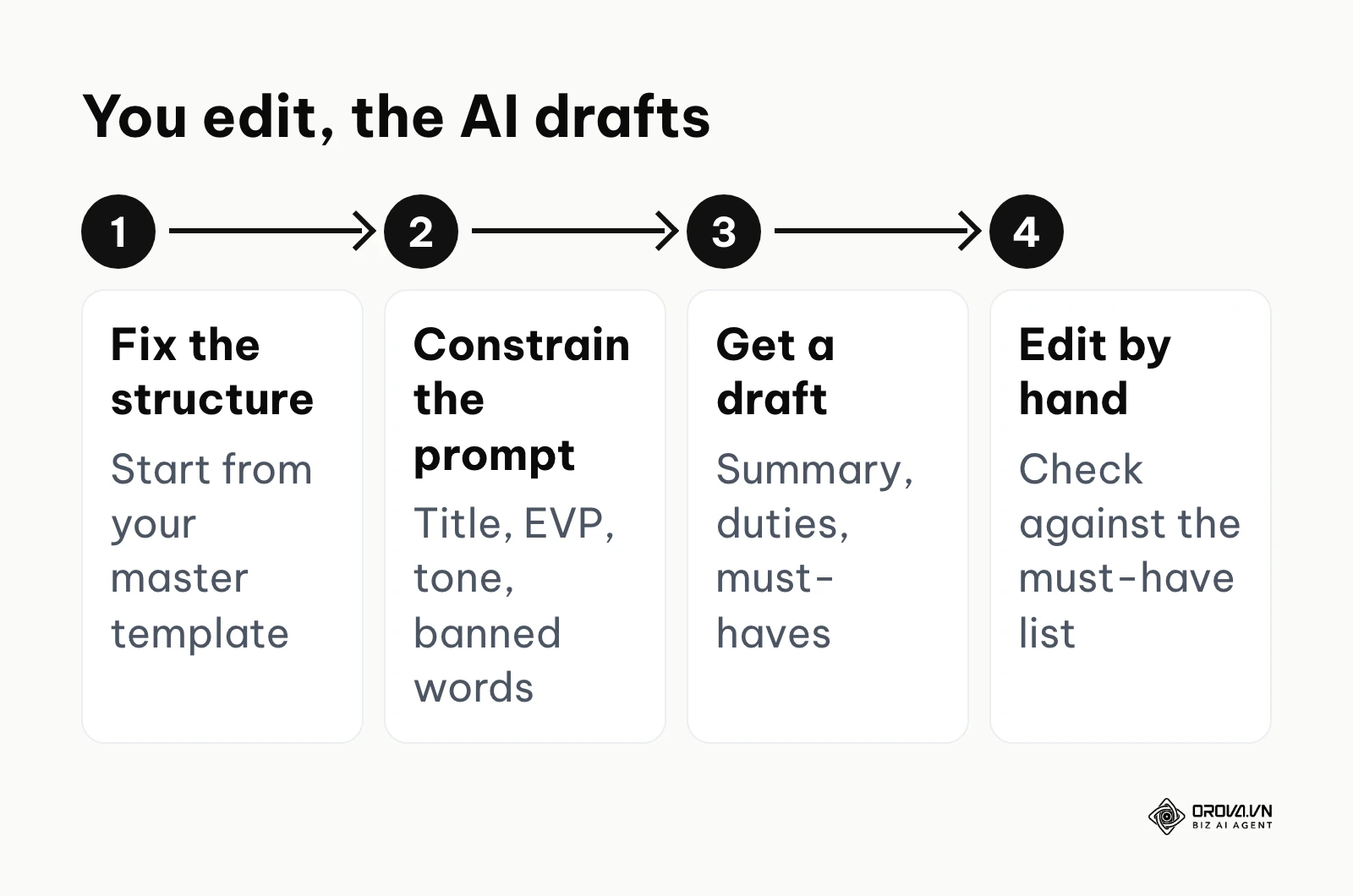
To get the best job description format examples out of an AI, you must provide it with a highly structured prompt that includes your specific constraints. You act as the editor, while the AI acts as the drafter.
Here is a highly effective prompt template you can use: Prompt: Act as an expert senior recruiter. I need to write a job description for a [Job Title] at our [Industry] company. Our core Employee Value Proposition is [Benefit 1] and [Benefit 2]. The tone should be [Tone, e.g., professional but approachable]. Please generate a draft using this exact structure: 1. A 2-sentence summary of the role's impact. 2. 6 bullet points of daily responsibilities starting with strong action verbs. 3. 4 absolutely essential 'must-have' requirements. 4. 2 'nice-to-have' skills. Do not use words like ninja, rockstar, or aggressive. Keep the formatting clean and scannable.
By using a constrained prompt like this, you get a focused draft that you can then check line by line against the master template and the must-have list.
Once your job description template is ready, Orova Recruit lets you write the JD and set clear criteria for each position, then scores every CV against those criteria and quotes the exact sentences from the CV as evidence. It reads Word, PDF and scanned files, up to 500 CVs per position, so you spend your time on the shortlist instead of the pile.
Two complete job description examples
Both examples below use the master template from the top of this guide, filled in for two very different roles. Both companies are fictional. Salary lines are left as placeholders on purpose: put in the range your finance team has actually approved for the role and location, never a number copied from another posting.
Example 1: Customer Support Representative (hybrid)
Job title: Customer Support Representative
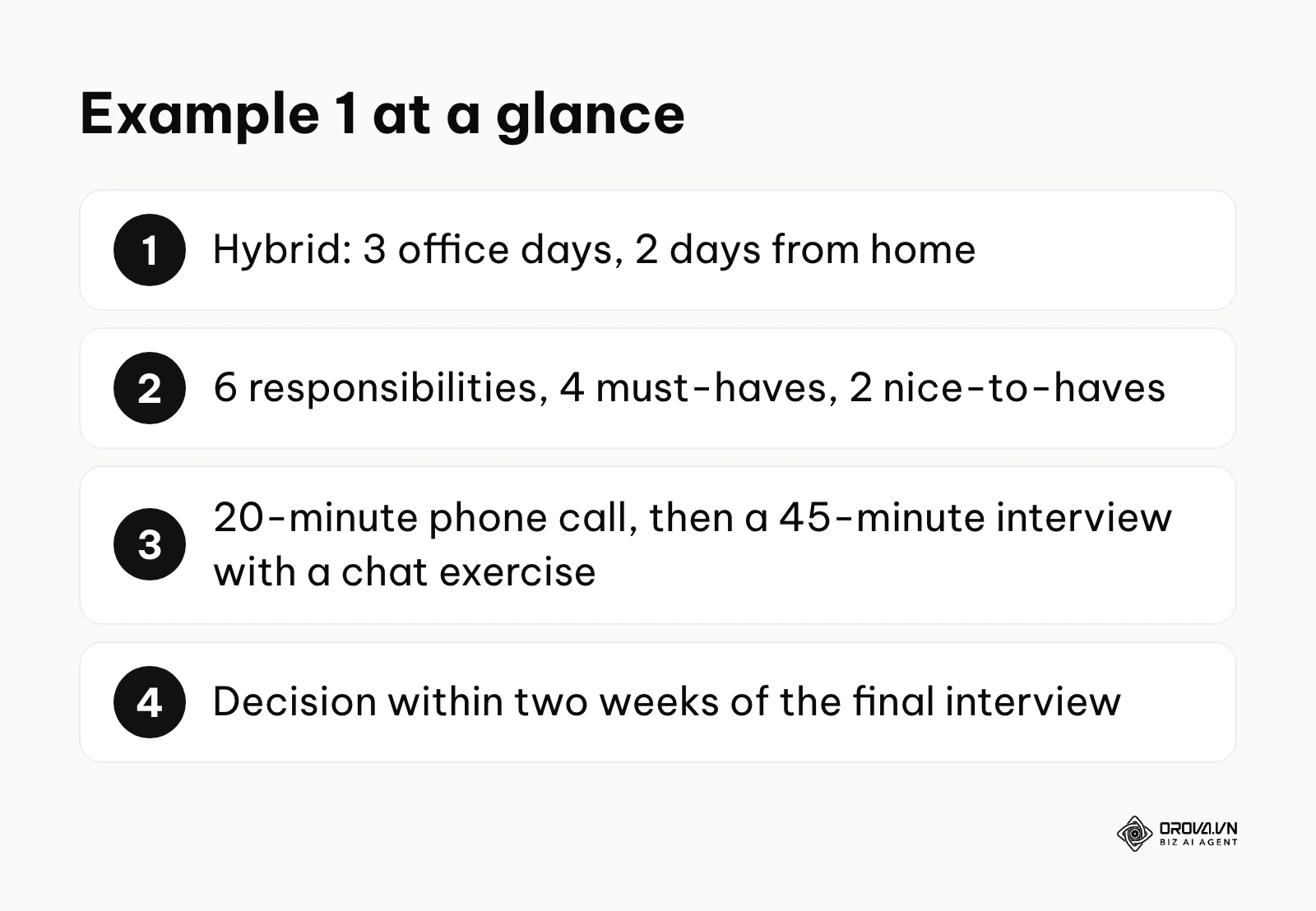
Location and work model: Hybrid, 3 days a week at the [city] office, 2 days from home
Employment type: Full-time
Reports to: Customer Support Team Lead
Salary range: [Your approved range for this role and city], plus [your overtime or shift allowance policy, if any]
About the role Northwind Home Goods sells furniture and kitchenware online. You will be one of the first people our customers talk to when an order is late, damaged or not what they expected, and your job is to solve the problem in the first conversation whenever possible. You will work in a team of eight agents and share feedback with the warehouse and product teams every week.
Why you might like working here
- Fixed shift schedule published four weeks in advance, no surprise weekend shifts
- Paid product and systems training in your first two weeks before you take live chats
- A clear path to Senior Representative or Quality Reviewer once you have consistently met your goals
What you will do
- Answer customer emails, chats and calls about orders, deliveries, returns and refunds
- Resolve common issues directly in the order system, including reschedules, replacements and refunds within your approval limit
- Escalate complex cases to the Team Lead with a clear summary of what has already been tried
- Log the reason for every contact so the team can spot recurring problems
- Share a short weekly note with the warehouse team on damage and delay patterns
- Update help center answers when you notice customers asking the same question repeatedly
What you need (must-haves)
- At least one year of customer-facing experience in support, retail, hospitality or a call center
- Clear, polite written English and the ability to explain a policy without sounding defensive
- Comfort working in two or three software tools at the same time
- Availability for the published shift pattern, including one evening shift per week
Nice to have
- Experience with any help desk or ticketing tool
- A second language spoken by our customers
How to apply and what happens next Send your CV and a short answer to this question: "Describe a time you turned around an unhappy customer." Shortlisted candidates have a 20-minute phone call, then a 45-minute interview with a written chat exercise. We aim to make a decision within two weeks of the final interview.
Equal opportunity statement Northwind Home Goods is an equal opportunity employer. We welcome applications from people of all backgrounds and will provide reasonable adjustments during the hiring process on request.
Example 2: Content Marketing Manager (fully remote)
Job title: Content Marketing Manager
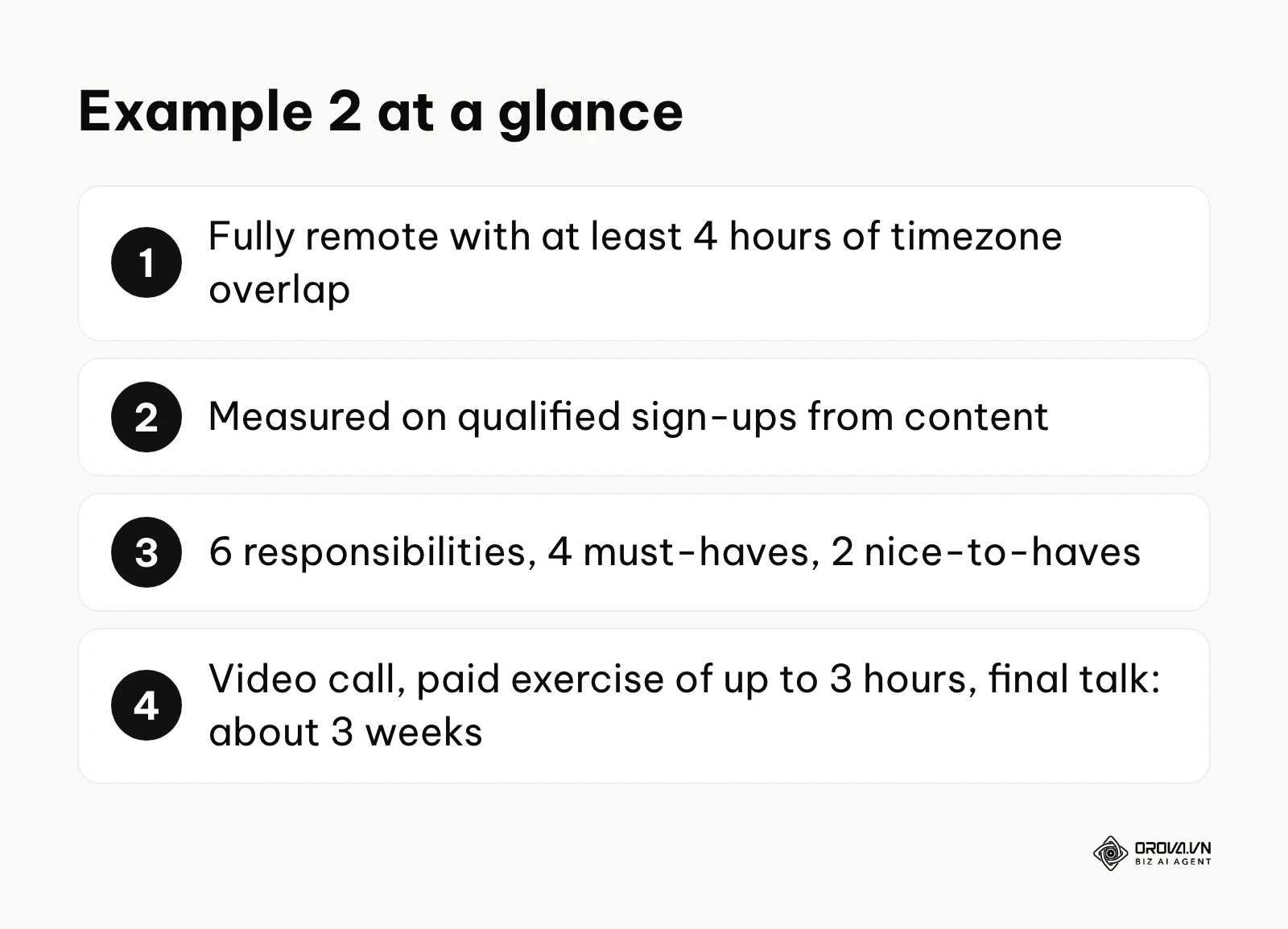
Location and work model: Fully remote; at least 4 working hours of overlap with [your core team timezone]
Employment type: Full-time
Reports to: Head of Marketing
Salary range: [Your approved range for this level, stated per year], same range for every location we hire in
About the role Fernvale Software builds inventory tools for small online retailers. We want our blog and email newsletter to become the place where store owners learn to manage stock without spreadsheets. You will own the content plan from topic research to publishing, working with two freelance writers and one designer, and you will be measured on qualified sign-ups from content, not on the number of articles.
Why you might like working here
- Async-first team: most decisions happen in written documents, with two scheduled video calls per week
- [Your home office or co-working allowance, as currently offered]
- Full ownership of the content calendar and the freelance budget from your first quarter
What you will do
- Build and maintain a quarterly content plan based on keyword research and customer interviews
- Write long-form guides yourself and edit drafts from freelance writers
- Brief the designer on diagrams and cover images for each article
- Publish and update articles in the website CMS, including on-page SEO basics
- Run a monthly email newsletter and report open, click and sign-up results to the Head of Marketing
- Interview at least two customers a month to find new topics and real examples
What you need (must-haves)
- A portfolio of at least five long-form articles you wrote or edited, with your role in each explained
- Hands-on experience planning content around search intent and keyword research
- Strong written English and a habit of documenting your decisions in writing
- Experience working remotely with a team spread across timezones
Nice to have
- Experience with an email marketing platform
- Basic knowledge of web analytics dashboards
How to apply and what happens next Send your CV, two writing samples and a one-paragraph answer to: "Which of our existing blog posts would you update first, and why?" Next steps are a 30-minute video call, a paid written exercise of up to three hours, and a final conversation with the Head of Marketing. The full process usually takes three weeks.
Equal opportunity statement Fernvale Software is an equal opportunity employer. We hire based on skills and results and do not discriminate on any basis protected by applicable law.
What the two examples have in common
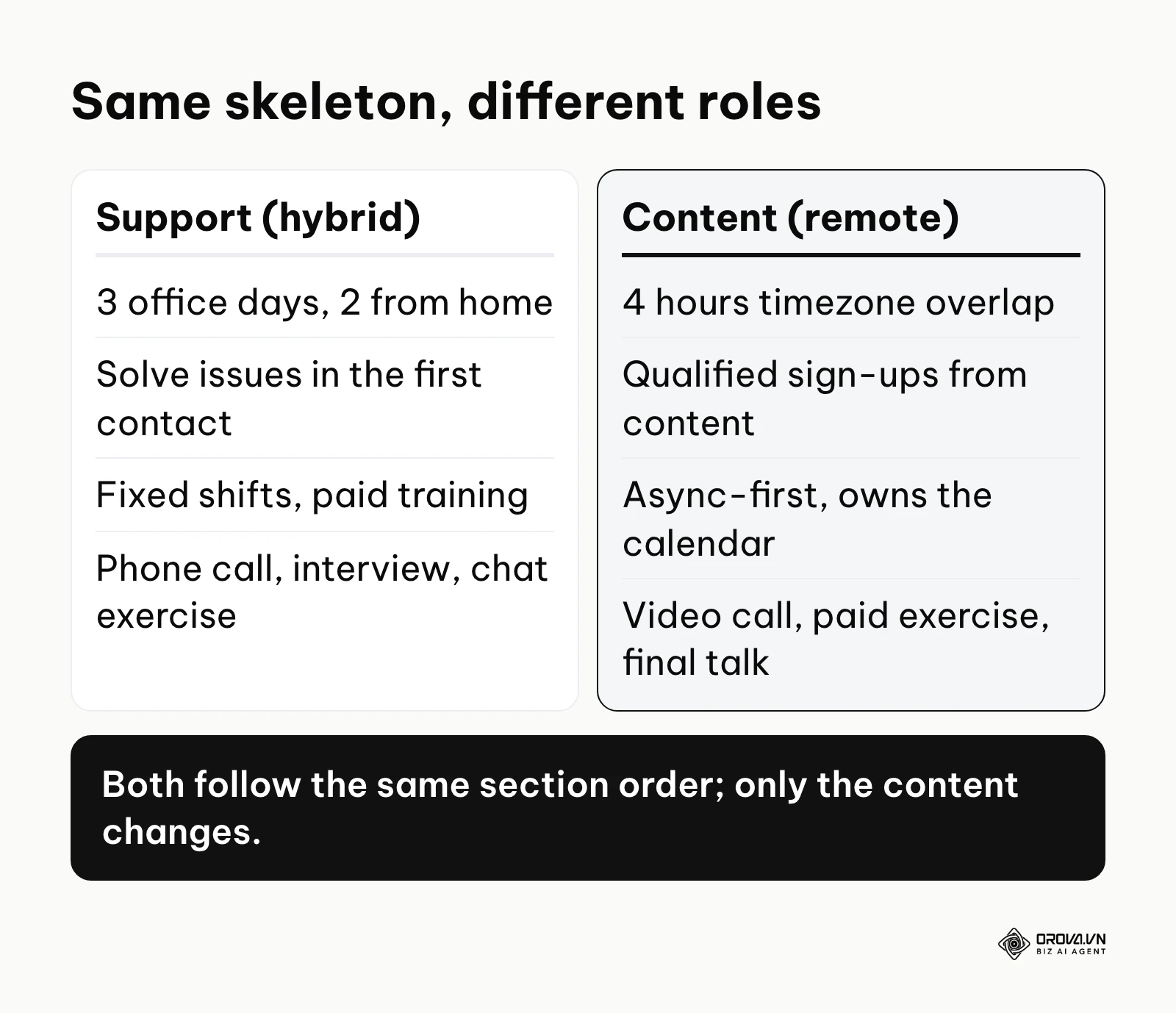
Put side by side, the examples differ in almost every detail, yet they follow the same skeleton: a searchable title, the work model and pay first, a short role summary tied to a business outcome, a "why join" block that only states what is true today, action-verb responsibilities, a short must-have list, and a transparent next-steps paragraph. That shared skeleton is what makes postings consistent across departments while still sounding specific. Notice also what is missing: no "rockstar", no "fast-paced environment", no list of ten tools the person might use once a year.
Deep dive: Manual drafting vs. templates vs. AI generation
When it comes to actually producing the document, organizations generally fall into three camps: manual drafting from scratch, utilizing static templates, or relying heavily on AI generation. Each approach has significant trade-offs regarding time, quality, and consistency.
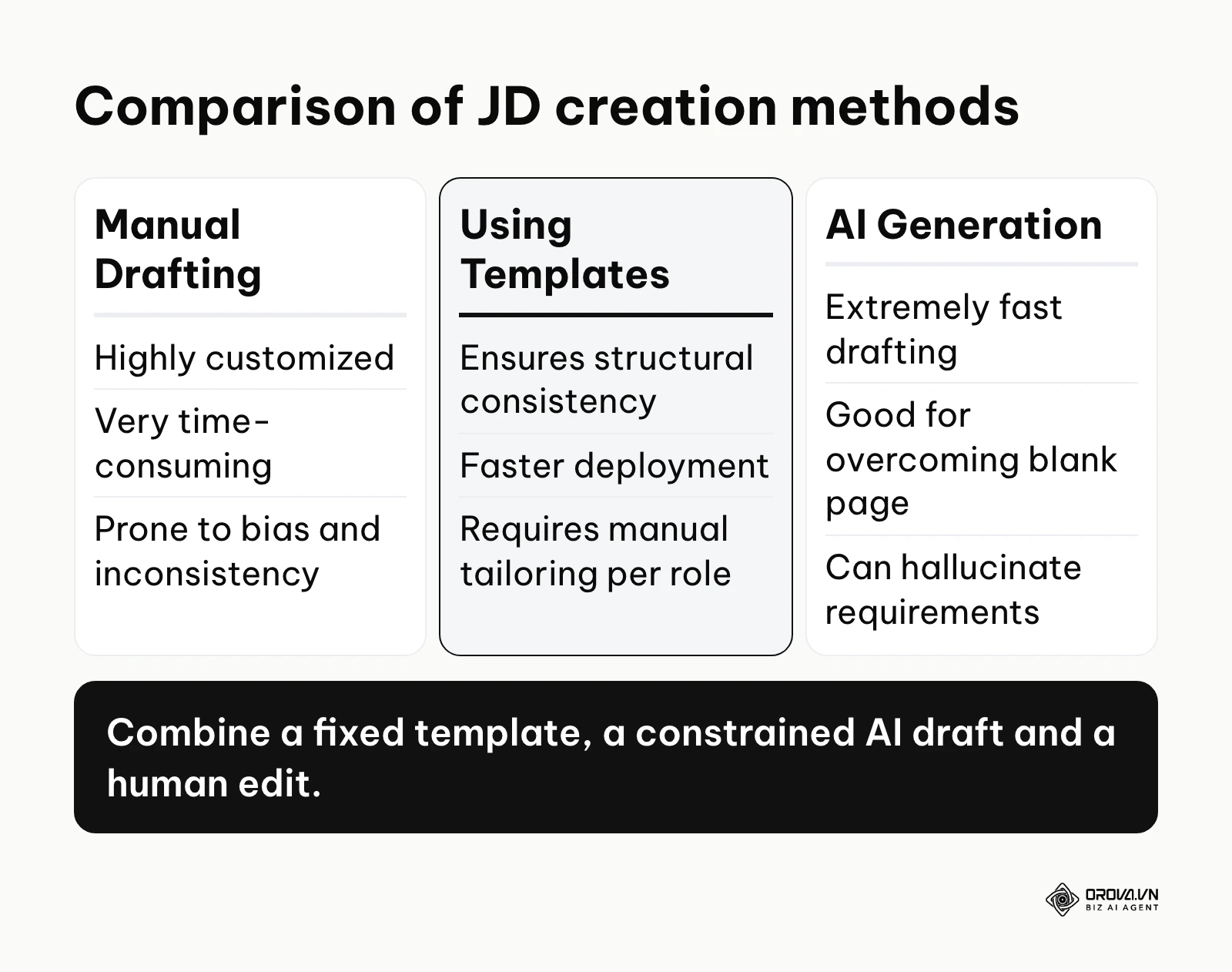
Writing from scratch allows for the highest level of customization. A hiring manager can pour their exact vision onto the page. However, this method is extraordinarily time-consuming. It also introduces massive inconsistency across the organization. The marketing department might write vibrant, engaging posts, while the finance department writes dry, intimidating walls of text. This inconsistency damages the overall employer brand and makes it difficult for recruiters to standardize their screening processes.
Using a standardized job description template solves the consistency problem. It ensures every posting has the same look, feel, and structure, guaranteeing that legal requirements (like EEO statements) are always included. The weakness of a static template is that it can become a crutch. If managers simply fill in the blanks without thinking deeply about the specific role, the resulting document can feel robotic and fail to capture the unique nuances of the team.
AI generation is the newest frontier. It effectively eliminates the "blank page syndrome" and can produce a draft in seconds. However, if unguided, AI tends to hallucinate requirements, adding skills that sound relevant but are actually unnecessary, thereby artificially shrinking your talent pool.
| Approach | Best used when | Primary weakness |
|---|---|---|
| Manual Drafting | Hiring for a one-of-a-kind executive role | Extremely slow, highly inconsistent across teams |
| Static Templates | Scaling up standard roles across multiple departments | Can become rigid, leading to boring, generic text |
| AI Generation | You have a clear prompt and need a fast first draft | Prone to hallucinations and inserting clichéd jargon |
The most effective strategy is a hybrid approach. Establish a firm organizational template to enforce structure and compliance, use AI (with strict prompts) to generate the initial rough draft of responsibilities and requirements, and then have the hiring manager manually edit the text to inject authenticity and precise context.
Want the rest of the process to stay as structured as your job descriptions? With Orova Recruit you can generate interview questions from the JD and each CV, take interview notes by voice or text, score interviews, compare candidates side by side, schedule interviews and send candidate emails from your company mailbox. Free until July 7, 2027, no card required.
Measuring success: How to know if your job description template works
You have researched, drafted, and published your new job posting. But how do you actually know if your effort was successful? A job description is fundamentally a marketing landing page, and just like any marketing asset, its performance must be measured with hard data. If you publish a posting and simply wait for resumes to appear, you are flying blind.
The first metric to track is the View-to-Application Conversion Rate. This measures how many people clicked on your job posting compared to how many actually completed the application form. If you have 2,000 views but only 10 applications, your conversion rate is a dismal 0.5 percent. This usually indicates that your title was good enough to get clicks, but the content of the job description template was either too intimidating, overly long, or failed to communicate the value proposition clearly.
The second crucial metric is the Qualified Applicant Rate. It does not matter if you receive 500 applications if 490 of them do not meet the basic criteria. If your qualified rate is low compared with your own earlier postings for similar roles, it is a strong signal that your Must-have requirements in the job description are either buried in text, vaguely worded, or entirely missing. You need to rewrite the requirements section to be more explicit about what is non-negotiable.
| Metric | What it means | Example alert level (set your own baseline) |
|---|---|---|
| View-to-Application Rate | The percentage of readers who apply | Clearly below your average for similar roles: check readability and EVP |
| Qualified Applicant Rate | Percentage of applicants meeting basic criteria | Most applicants miss a must-have: requirements are vague or buried |
| Time to Fill | Days from publishing to accepted offer | Much longer than your usual time for this role: review the posting and pay |
| Diversity of Pool | Variety of backgrounds in the applicant pool | Skewed demographics indicate biased language |
Illustrative example 3:
- Context: A regional retail chain noticed a massive drop-off rate on the application page for their store manager positions. Thousands of people viewed the job posting on various job boards, but very few completed the application process.
- Steps taken: The talent acquisition team analyzed the sourcing metrics. First, they looked at the device breakdown and saw that 80 percent of traffic came from mobile phones. Second, they reviewed the existing job description format on a small mobile screen and found it was a massive, unreadable wall of text. Third, they restructured the job description template entirely, using short bullet points, bold text for key terms, and reducing the overall word count by half.
- Hurdles and fixes: The hiring managers initially pushed back hard, insisting that every single minor daily duty needed to be listed in the posting for legal compliance reasons. The HR team fixed this by moving the exhaustive list of minor duties to an internal onboarding document, keeping only the top five core responsibilities in the public posting.
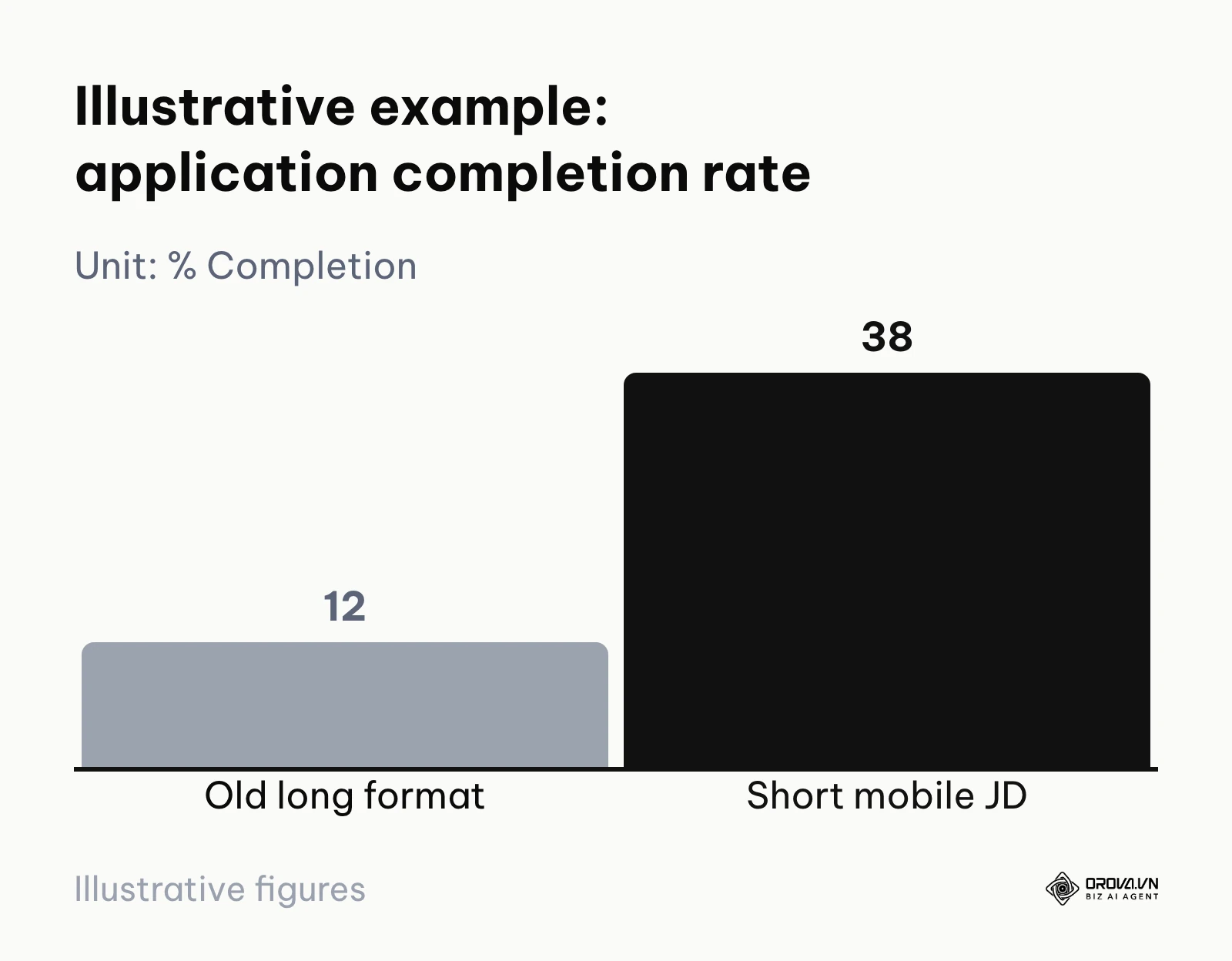
- Result: Within two weeks of implementing the shorter, mobile-friendly template, the application completion rate increased from 12 percent to 38 percent, significantly speeding up the hiring timeline.
Common mistakes when using a job description template
Even with a solid framework, it is easy to fall into bad habits. A job description template is only as good as the content you put into it. Recognizing and avoiding these common pitfalls will instantly elevate the quality of your recruitment marketing.
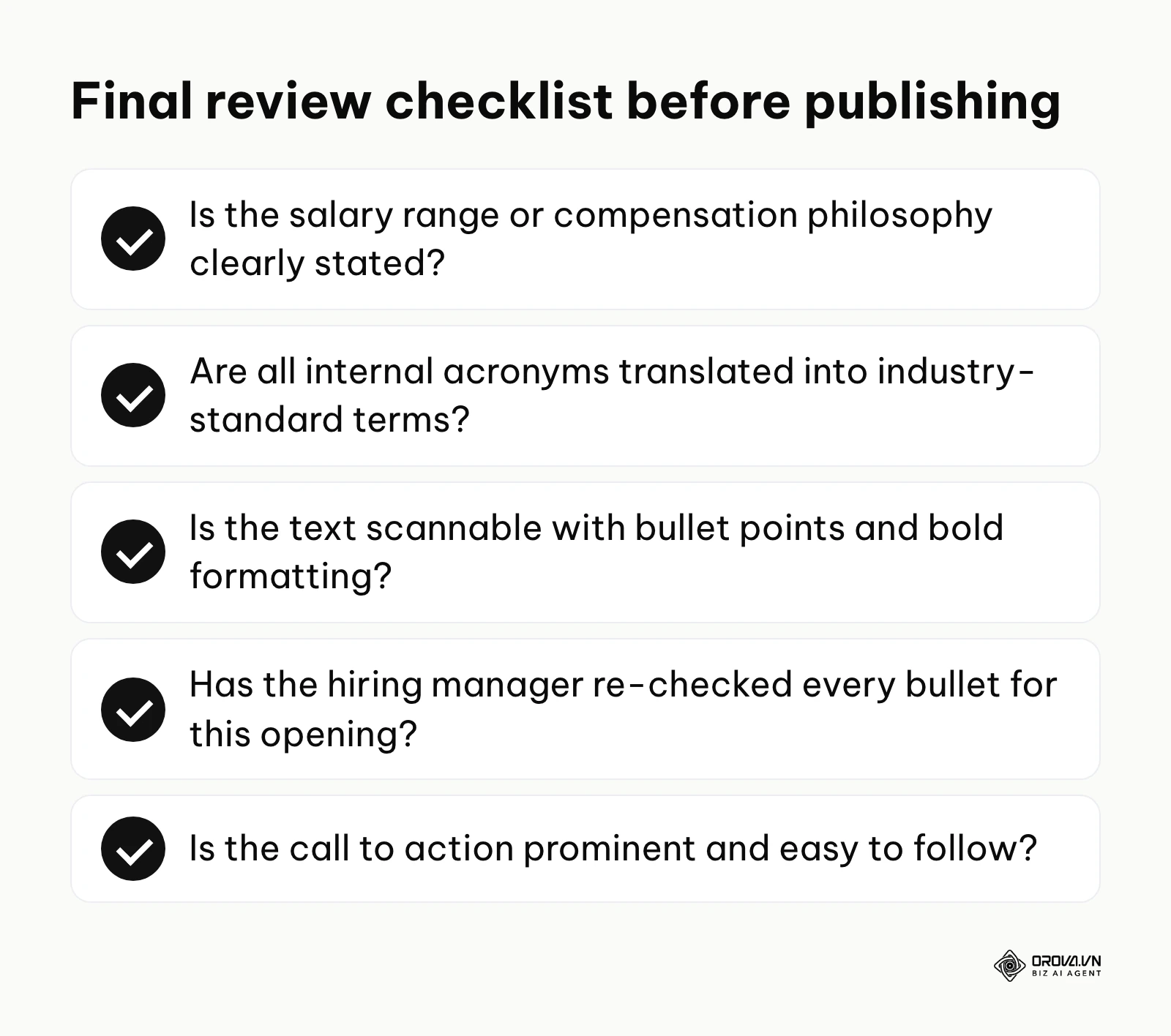
1. The copy-paste trap The most frequent mistake is taking a template that was used three years ago and simply updating the date. Roles evolve quickly. The tools, methodologies, and market expectations for a graphic designer today are vastly different than they were a few years ago. Consequence: You attract candidates suited for the past, not the future. Fix: Always force a brief review meeting with the hiring manager to validate every single bullet point before reusing old content.
2. Hiding the salary range Many companies still believe that withholding the salary range gives them an advantage in negotiation. In reality, it simply frustrates candidates. Top talent often will not even bother applying if they cannot verify that the role meets their financial baseline. Consequence: You waste hours interviewing candidates who eventually reject the offer because the pay is too low. Fix: Always include a realistic salary range or a clear statement about your compensation philosophy within the template.
3. Ignoring mobile readability As the retail example shows, a large share of candidates read job postings on their phones. If your job description template utilizes long, blocky paragraphs, it will look like an impenetrable wall of text on a smartphone screen. Consequence: High drop-off rates from candidates who get tired of scrolling. Fix: Limit paragraphs to three sentences maximum, use bullet points liberally, and utilize ample white space.
4. Using internal corporate jargon Every company has its own internal acronyms and naming conventions. If you ask for experience with "Project Alpha processes," external candidates will have no idea what that means. Consequence: Qualified applicants assume they lack the necessary experience and bounce. Fix: Translate all internal jargon into universally understood industry terms.
5. Forgetting the call to action You have written a beautiful description, but the candidate reaches the bottom and there is no clear instruction on what to do next. Consequence: Loss of momentum and potential applicants. Fix: End the template with a clear, encouraging call to action, explaining exactly what the next steps are and how long the interview process typically takes.
Future trends in hiring and job descriptions: The author's perspective
As we look toward the evolution of recruitment, the way we communicate job opportunities is undergoing a radical shift. Based on current technological advancements and changing workforce demographics as of 2026, here are my three core predictions for how job descriptions will change in the next few years.
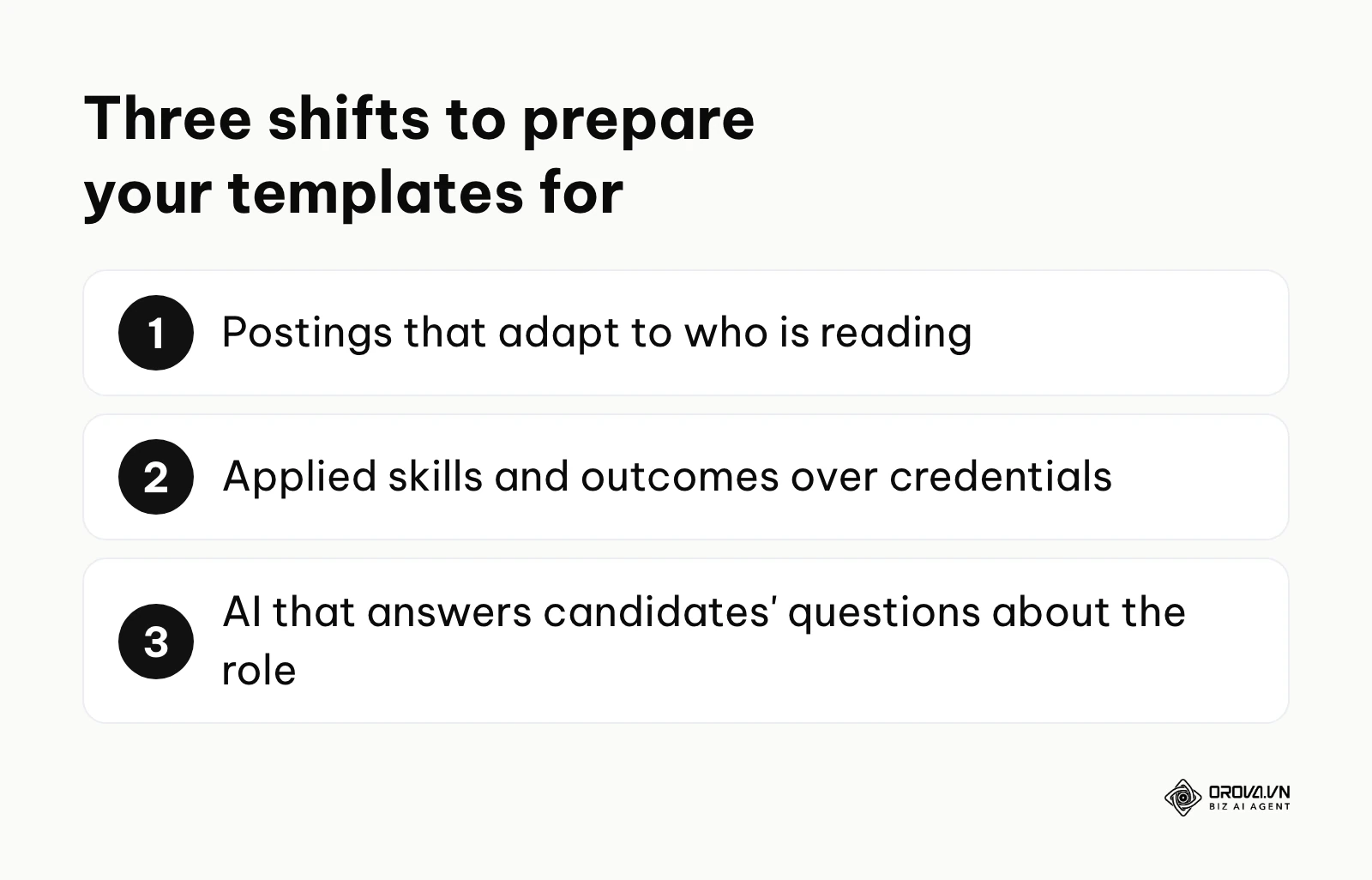
The rise of hyper-personalized dynamic postings Currently, we write one static job description and present it to every candidate. I believe that job postings will gradually become dynamic landing pages that adapt based on the viewer's profile. If an applicant arrives via a link targeting junior developers, the page will automatically highlight mentorship programs and training. If a senior developer clicks the same link, the page will dynamically shift to emphasize technical autonomy and leadership opportunities. To prepare for this, recruitment teams need to start writing modular content—breaking their EVP down into distinct blocks that appeal to different personas.
A definitive shift from credentials to verified skills For decades, the "Requirements" section of a job description template has been dominated by proxy credentials: four-year degrees, specific years of experience, and brand-name past employers. I expect a steady move away from this model. Instead of asking for "five years of experience in Python," postings will ask for the ability to "refactor legacy Python code so that it runs measurably faster." The focus will shift toward applied skills and outcomes. You should begin auditing your current templates today to ruthlessly eliminate arbitrary degree requirements that do not actually correlate with on-the-job success.
AI transitioning from drafter to interactive co-pilot Right now, we use AI to generate the text of the job posting. I lean toward a future where AI handles the entire top-of-funnel interaction. The job posting will not just be a document to read; it will be an interactive chat interface where candidates can ask, "What does a typical Tuesday look like in this role?" and the AI, trained on your internal documentation, will answer in real-time. While this technology matures, you must ensure your underlying job description templates are highly structured and accurate, as they will serve as the foundational training data for these future conversational agents.
Frequently asked questions about job descriptions
How should we disclose the salary range without losing negotiation power? The fear of losing leverage is common, but transparency actually builds trust. To maintain flexibility, provide a realistic range rather than a single fixed number (a minimum and a maximum that are both genuinely on the table, "depending on verified experience"). Ensure the range is genuinely achievable; do not post a range so wide that the top is several times the bottom just to cast a wide net, as candidates view this as disingenuous and evasive.
What is the ideal length for a job description to read well on mobile devices? There is no official standard, but a practical target is a posting that a candidate can read in two or three minutes on a phone. Much shorter usually lacks context; much longer pushes the must-haves and the apply button too far down the screen. Focus on formatting: use bullet points for responsibilities and requirements, keeping each point under two lines of text.
How can we adjust our tone to attract Gen Z candidates? Gen Z candidates prioritize authenticity, transparency, and clear boundaries over corporate loyalty and grind culture. To attract this demographic, strip away buzzwords like "work hard, play hard" which are often interpreted as code for burnout. Instead, explicitly detail your mental health benefits, your commitment to work-life balance, and provide a clear, transparent view of the expected career progression path.
How is AI changing the way we structure job postings? AI is forcing companies to be much more structured in their data input. Because AI tools perform best when given clear frameworks, organizations are moving away from narrative-heavy postings toward highly categorized, data-rich templates. Furthermore, as candidates increasingly use AI to write their resumes, recruiters must ensure their job descriptions contain highly specific, unique criteria that generic AI resume builders cannot easily fake.
Where to start?
Moving from your current hiring practices to a fully optimized, modern job description format can feel overwhelming. The best approach is to identify your current state and take one decisive action.
If you are starting from scratch without any formal templates: Do not attempt to write templates for every single role in the company at once. Pick your most frequently hired position (for example, a customer support representative or a standard sales role); if you hire for it in large batches, the high-volume recruiting playbook shows how one strong template scales across many openings. Sit down with the hiring manager and build one perfect, standardized template for that specific role using the Decision Matrix method to define the absolute must-haves.
If you have existing templates but they yield poor candidates: Your immediate first step is to run a bias and jargon audit. Take your three most frequently used templates and run them through a bias-free language checker, or manually review them against the checklist provided earlier. Strip out all internal corporate acronyms and replace them with standard industry terms. Often, simply clarifying the language will drastically improve the quality of your applicant pool.
If your company is scaling rapidly and multiple managers are hiring: Your priority must be establishing central control over the employer brand. Create a locked "Master Job Description Template" document. This master template should have the Employee Value Proposition, the company overview, and the EEO statement permanently fixed. Managers should only be allowed to edit the specific responsibilities and requirements sections, ensuring that no matter who is hiring, the core company message remains completely consistent.
About the author

Builder of Orova
Nguyễn Đỗ Trọng Ân has 8 years of experience in marketing, including 6 years managing market development across Asia. He builds Orova, a Biz AI Agent that never sleeps: it plans, runs and optimizes work for businesses.
Run your business with AI Agents
Orova is the always-on Biz AI Agent — it plans, runs, and optimizes the work for you.
Save time, unlock productivity.