
Workplace safety training topics: OSHA checklist and 52-week plan

Many human resources professionals treat compliance education as a frustrating box to check. You herd your employees into a cramped breakroom, play a generic video from a decade ago, and pass around a paper sign-in sheet. But when an unexpected inspector arrives or a severe incident occurs on the floor, that wrinkled sign-in sheet will not protect your company if the employees did not actually absorb the material. Selecting the right workplace safety training topics is the absolute foundation of a program that changes daily behavior and prevents serious injuries.
If you are struggling to build a curriculum that keeps your team safe without putting them entirely to sleep, this guide is built for you. We will break down exactly what topics are required by industry standards, provide practical word-for-word scripts for quick floor talks, and give you a comprehensive scheduling template. A robust employee onboarding training plan often crams safety into a single overwhelming first day, but true safety requires ongoing effort. Let us build a better system.
The short answer: most employers cover hazard communication, emergency action and fire safety, personal protective equipment (PPE), slips, trips and falls, and ergonomics, then add industry-specific topics such as fall protection, scaffolding and trenching in construction, or lockout/tagout, machine guarding, forklifts and confined spaces in manufacturing.
What are workplace safety training topics and why do they matter?
Workplace safety training topics are specific instructional subjects designed to teach your employees how to identify, mitigate, and completely avoid hazards in their daily tasks. These topics range from operating heavy machinery safely to setting up an office chair ergonomically.
You must cover these topics because regulatory bodies mandate them to ensure baseline legal compliance. However, their true value lies much deeper than avoiding fines. Delivering the right topics effectively reduces workplace accidents, lowers expensive insurance premiums, and builds a company culture where employees genuinely feel their well-being is protected by management.
The Ultimate OSHA Required Safety Training Topics Lookup Table
Navigating regulatory requirements can be overwhelming. Before you start drafting materials, you must understand which topics are legally mandated for your specific environment and which are highly recommended best practices.
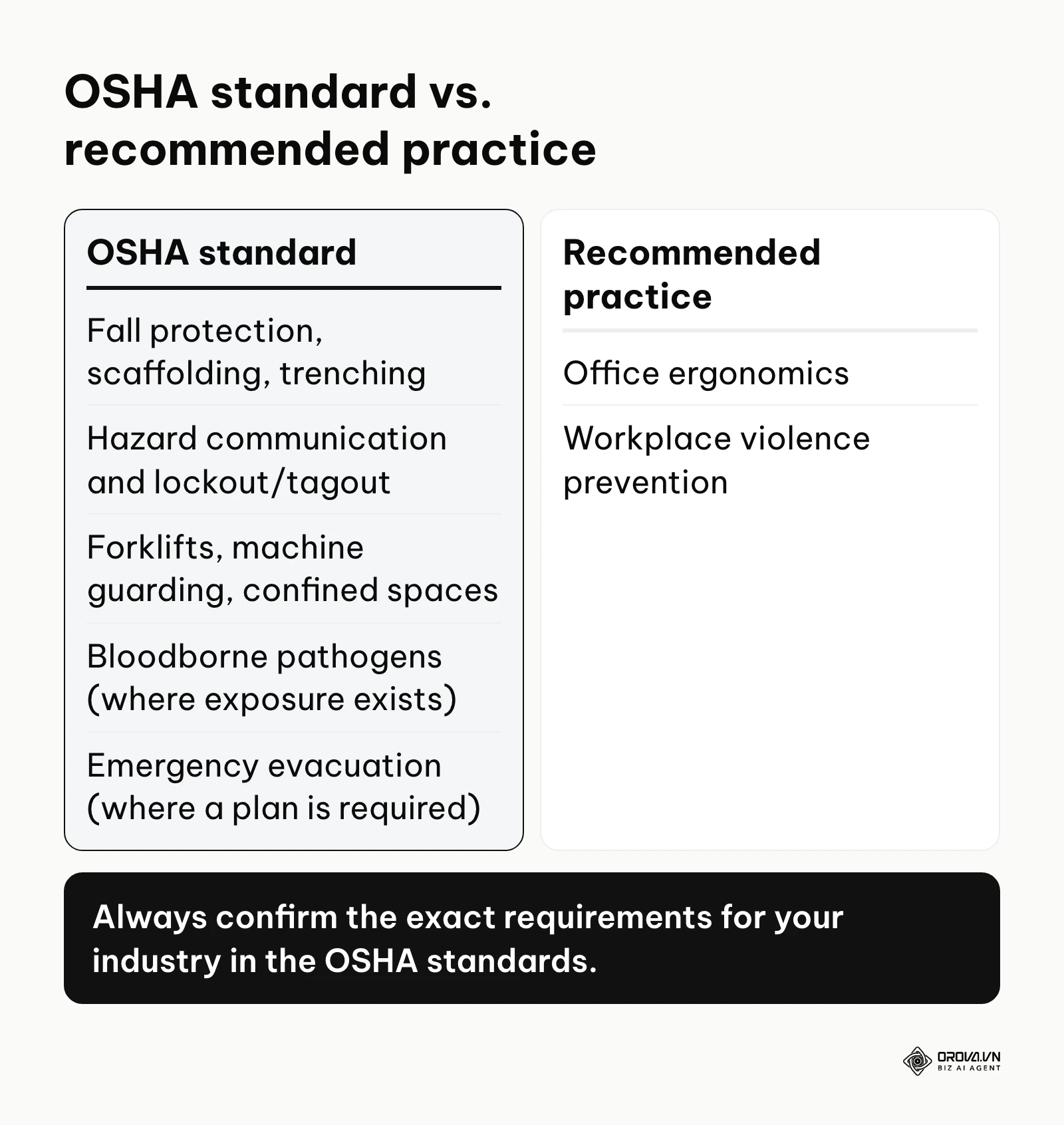
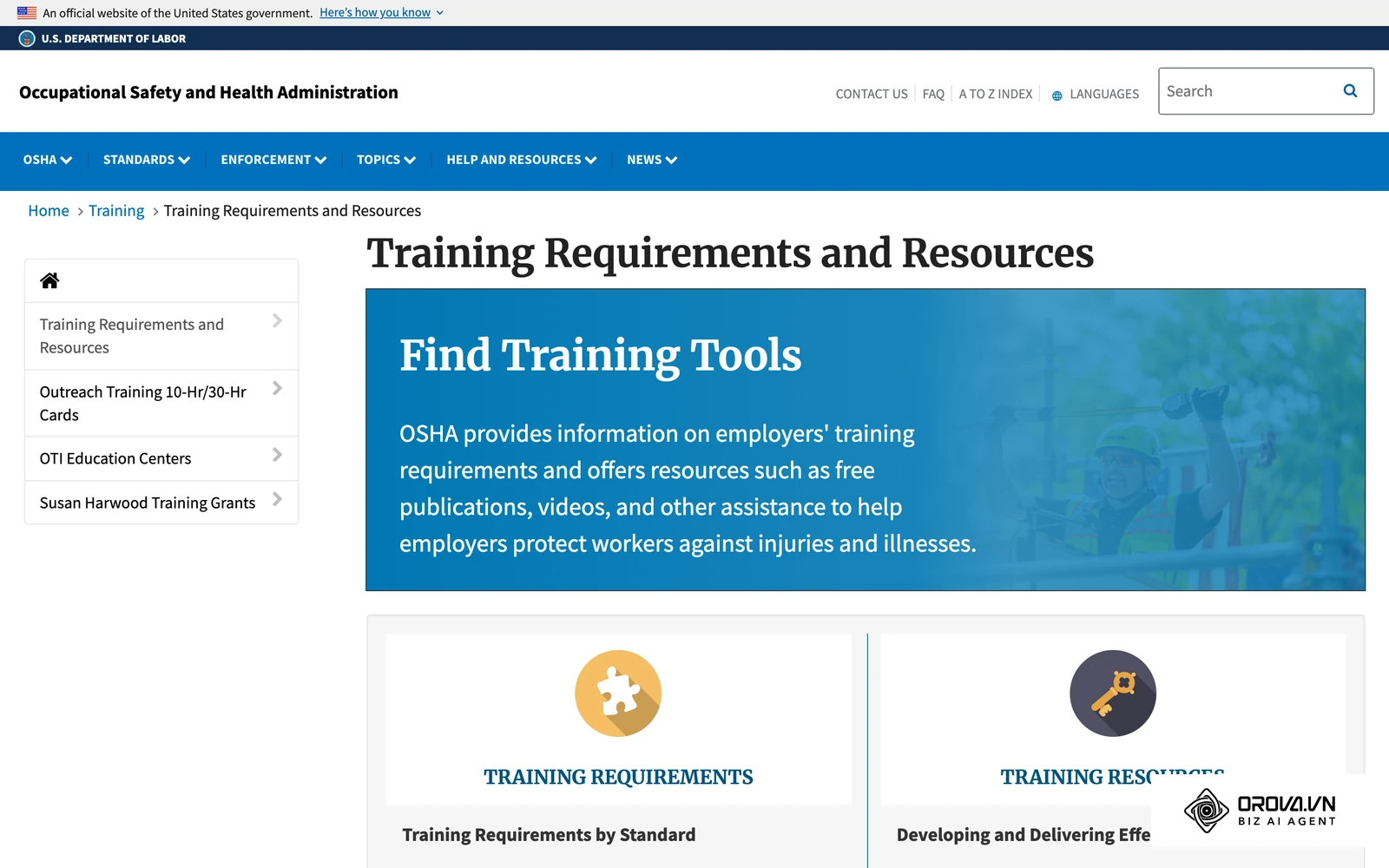
According to the Occupational Safety and Health Administration publication Training Requirements in OSHA Standards (2015), many individual OSHA standards contain explicit training requirements that employers must fulfill. To simplify this, the table below categorizes the most critical safety training topics by the hazard they address, their core action, the industry scale they fit best, and whether a specific OSHA standard covers them or they are a recommended practice. Always confirm the exact requirements for your industry in the OSHA standards themselves.
| Topic Name | Hazard Category | Core Action Required | Value for Worker | Best for (Industry/Scale) | Status |
|---|---|---|---|---|---|
| Fall Protection | Working at Heights | Inspecting harnesses and anchors | Prevents fatal drops | Construction / All scales | OSHA standard |
| Hazard Communication | Chemical Safety | Reading labels and data sheets | Prevents acute poisoning | Manufacturing / All scales | OSHA standard |
| Lockout/Tagout (LOTO) | Energy Control | Isolating power sources | Prevents unexpected machine start-up | Manufacturing / Mid-Large | OSHA standard |
| Office Ergonomics | Physical Stress | Adjusting desk workstations | Reduces chronic back pain | Office / All scales | Recommended practice |
| Bloodborne Pathogens | Biohazards | Executing safe cleanup | Prevents viral infection | Healthcare, Office / All scales | OSHA standard (where exposure exists) |
| Emergency Evacuation | Fire & Life Safety | Finding primary exit routes | Surviving facility disasters | All Industries / All scales | OSHA standard (where a plan is required) |
| Scaffolding Safety | Working at Heights | Checking load capacities | Prevents structural collapse | Construction / All scales | OSHA standard |
| Forklift Operation | Vehicle Safety | Performing pre-shift inspections | Prevents crush injuries | Warehouse / All scales | OSHA standard |
| Machine Guarding | Equipment Safety | Keeping hands entirely clear | Prevents limb amputations | Factory / All scales | OSHA standard |
| Trenching Safety | Earthworks | Installing required shoring | Prevents soil cave-ins | Construction / Mid-Large | OSHA standard |
| Confined Spaces | Environment | Testing internal air quality | Prevents rapid asphyxiation | Industrial / All scales | OSHA standard |
| Workplace Violence | Security | De-escalating tense conflicts | Ensures physical safety | Retail, Office / All scales | Recommended practice |
This table serves as your master checklist. If you operate a warehouse, you must prioritize forklift operation and hazard communication. If you manage a software agency, ergonomics and emergency evacuation are your primary focus areas.
Essential Workplace Safety Training Topics for Construction
Construction is widely recognized as one of the most hazardous industries, largely because the work environment changes every day. Training in this sector cannot rely solely on classroom theory; it requires rigorous, hands-on demonstration. Here is a deep dive into the mandatory topics every construction firm must cover extensively.
Fall Protection: The ABCs of Working at Heights
Falls are one of the most serious hazards on any construction site. OSHA's construction standards require fall protection training for workers exposed to fall hazards, so this is not a topic you can skim over with a quick video.
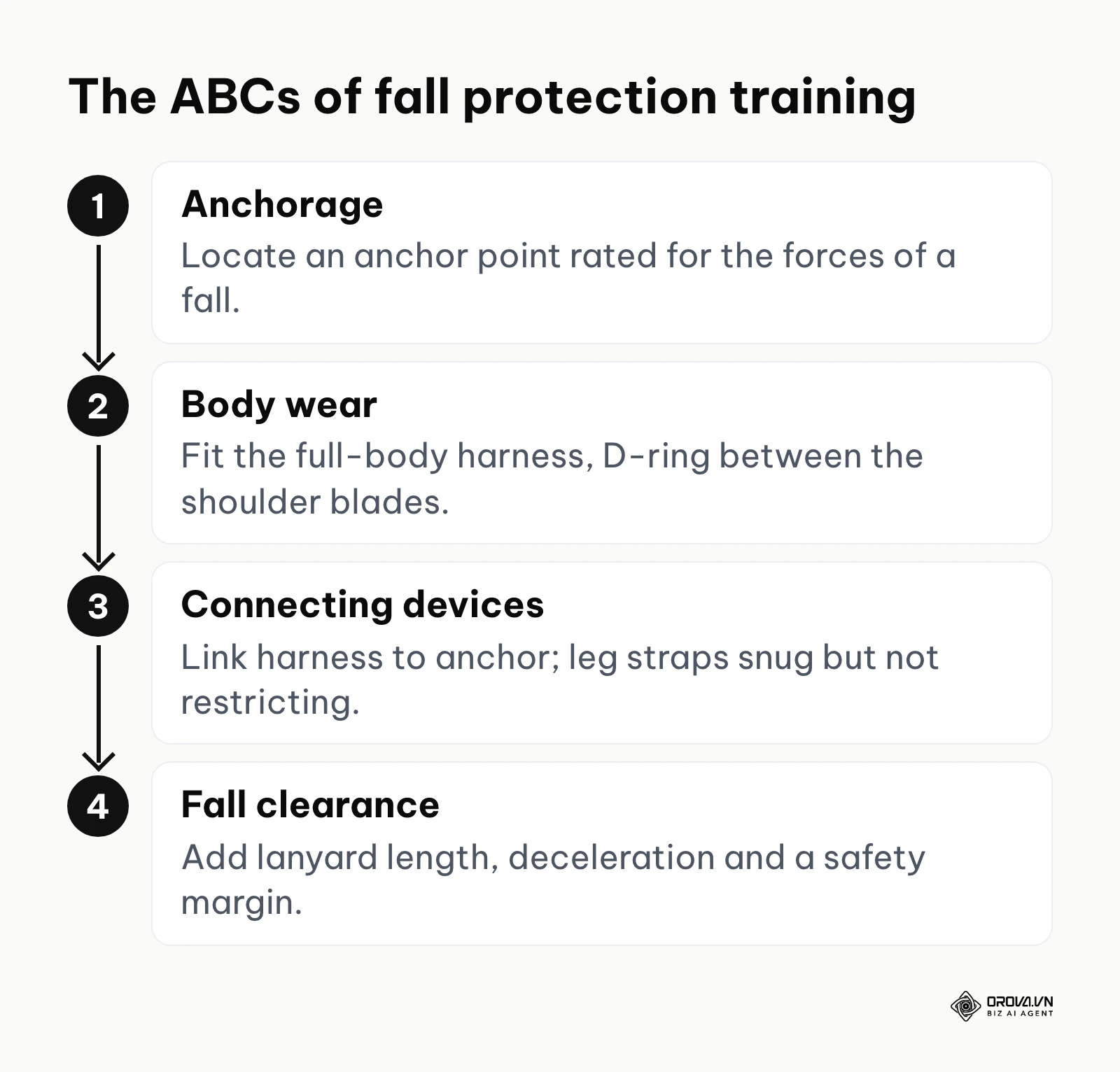
The curriculum must thoroughly explain the ABCs of fall protection: Anchorage, Body wear, and Connecting devices. Workers need to know how to locate an anchor point rated for the forces of a fall. They must physically practice putting on a full-body harness, ensuring the D-ring sits squarely between their shoulder blades, and adjusting the leg straps so they are snug but not restricting blood flow.
A common pitfall during this training is failing to teach fall clearance calculation. Workers often use a six-foot lanyard while working only ten feet above the ground, meaning they would hit the floor before the safety device fully deploys. You must teach them how to calculate total fall distance, accounting for lanyard length, deceleration device expansion, and a safety factor margin.
Scaffolding Safety and Inspection Protocols
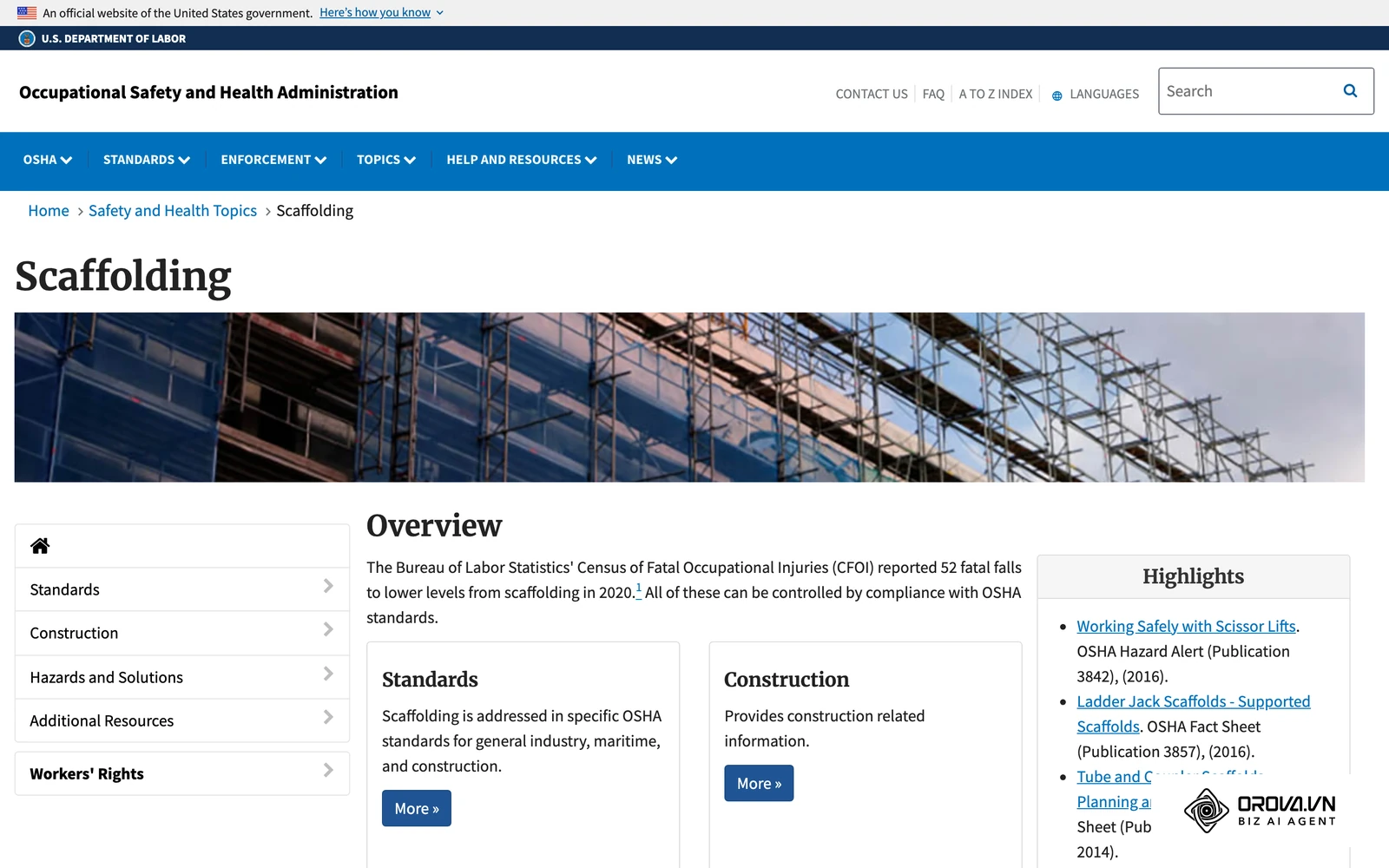
Scaffolding deserves dedicated training time. When scaffolding fails, it usually results in multiple severe injuries simultaneously. Training on this topic is critical for anyone erecting, dismantling, moving, or simply working on a scaffold structure.
The core of this training revolves around load capacities and structural integrity. Workers must learn the difference between light-duty, medium-duty, and heavy-duty scaffolds, and precisely how much weight each can safely support per square foot. They must understand the absolute necessity of base plates and mudsills to prevent the structure from sinking into soft ground.
Delivery of this training should ideally take place right next to a safely erected scaffold. Have the competent person point out the cross-bracing, the guardrail heights, and the toe boards. Show the workers what a damaged plank looks like compared to a safe one. Teaching this entirely in a classroom completely removes the crucial physical context workers need to spot hazards in the real world.
Trenching and Excavation: Preventing Cave-ins
Trenching is arguably one of the most hazardous operations on any construction site. A single cubic yard of soil can weigh as much as a small car, meaning a sudden cave-in provides almost zero chance of survival without immediate, specialized rescue.
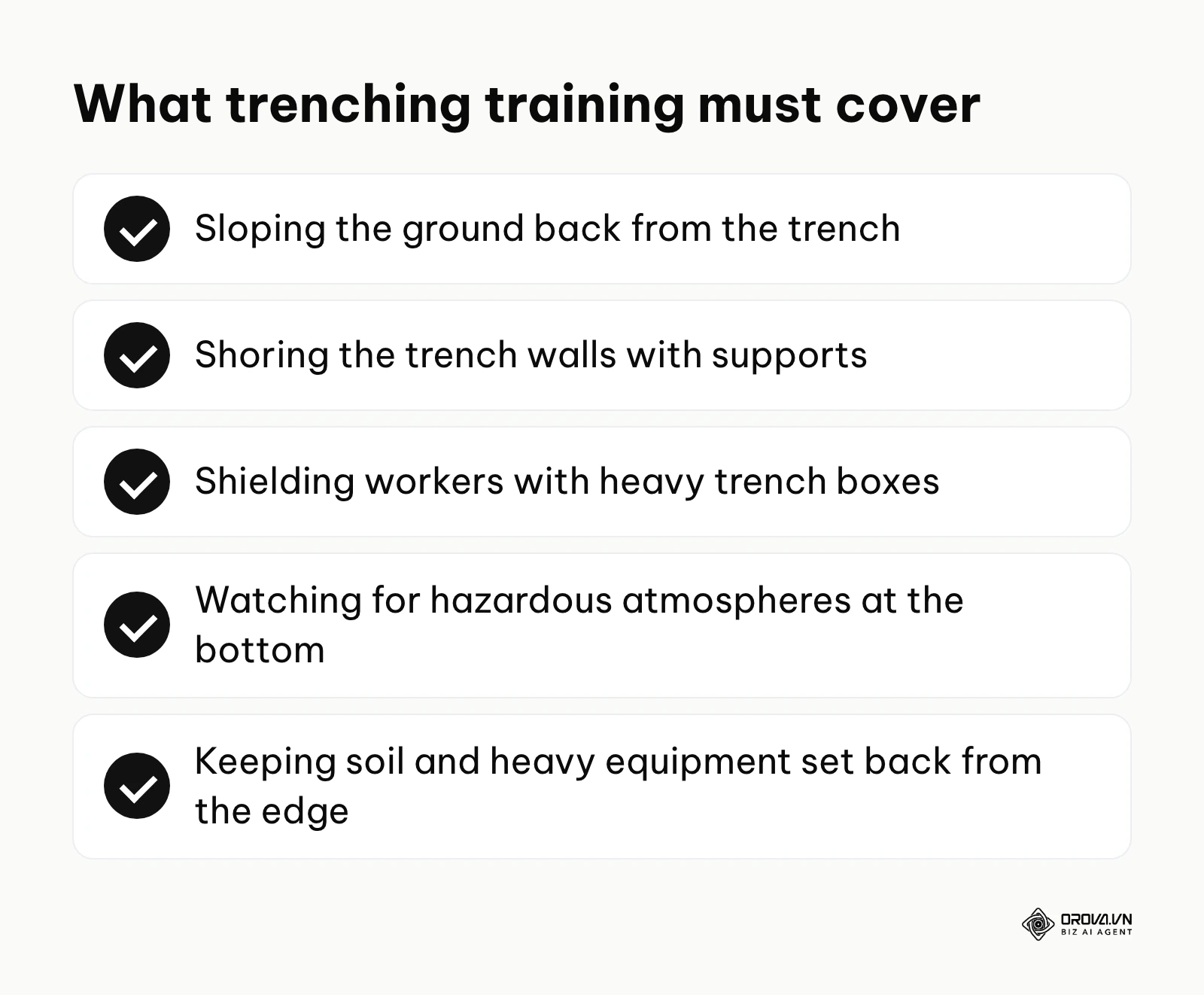
Training must cover the rule in OSHA's excavation standard that trenches beyond a set depth need a protective system unless they are dug entirely in stable rock. Workers need to understand the three main protective methods: sloping the ground, shoring the trench walls with supports, or shielding the workers using heavy trench boxes.
They also must be trained on the secondary hazards of excavation, such as hazardous atmospheres settling at the bottom of the trench and the rule of keeping excavated soil and heavy equipment set back from the trench edge to prevent added stress on the soil walls.
Illustrative example:
- Context: A mid-sized commercial roofing contractor with 45 employees noticed severe non-compliance with fall arrest systems during spontaneous site visits. Workers were wearing harnesses but not tying off.
- What they did: First, the safety manager halted production for a 45-minute practical demonstration focused solely on harness inspection and anchor selection. Second, they replaced complex double-lanyards with simpler self-retracting lifelines based on direct worker feedback. Third, they instituted a mandatory peer-check system before anyone stepped near the roof edge.
- Obstacle and fix: Veteran workers strongly resisted the peer-check system, claiming it wasted valuable production time. The safety manager timed the new process, proving it took only 40 seconds per pair, and tied compliance directly to the monthly team safety bonus pool.
- Result: Workers were seen tied off at every spot check over the following three months, and edge-related near misses stopped appearing in reports.
Crane Operation and Safe Rigging Practices
Cranes introduce massive kinetic energy onto a job site. Dropped loads or crane tip-overs cause catastrophic damage. Training in this area is highly specialized and generally divided into operator certification and basic rigging safety for the ground crew.
For the general ground crew, training must focus heavily on recognizing the crane's swing radius and understanding standard hand signals. A worker must know never to walk under a suspended load, regardless of how secure it looks. They must be taught how to inspect basic rigging equipment, looking for stretched links in chains or broken wires in synthetic slings, and know how to properly remove damaged gear from service immediately.
Electrical Safety and the NFPA 70E Standard
Temporary power setups on construction sites present unique electrocution risks. Extension cords drag through water, temporary panels are left open, and heavy equipment frequently operates near overhead power lines.
Training must cover the minimum approach distances for overhead lines set out in the applicable standards. Workers must learn how to perform visual inspections of all cords and power tools before plugging them in, actively looking for missing ground prongs or frayed insulation. The concept of Ground Fault Circuit Interrupters (GFCIs) must be explained clearly, ensuring workers know why they matter on temporary power circuits and how to test them daily.
Core Workplace Safety Training Topics for Manufacturing and Factories
The manufacturing environment is highly controlled compared to construction, but it contains dense concentrations of heavy machinery, hazardous chemicals, and fast-moving industrial vehicles. Training here focuses heavily on strict procedural compliance and process standardization.
Hazard Communication (HazCom) and Chemical Safety
Hazard Communication, often called the "right-to-know" standard, dictates that employees have an absolute right to know about the hazardous chemicals they work with or around. Programs often fall out of date when companies introduce new cleaning agents or industrial solvents without updating their documentation.
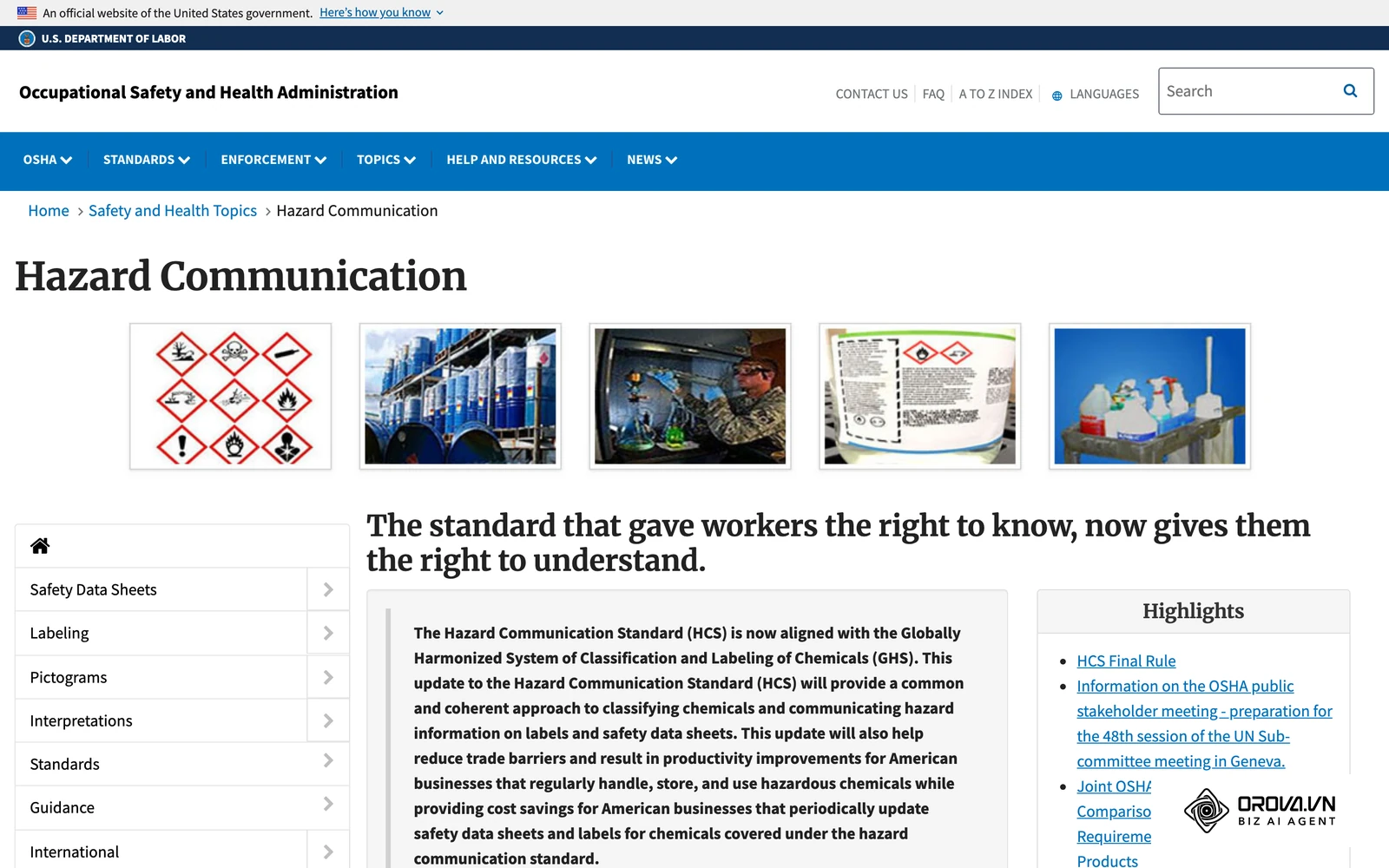
Training must teach employees how to read and interpret the standard chemical warning labels, specifically understanding the pictograms that indicate flammability, toxicity, or environmental hazards. More importantly, they must be trained on how to locate and read a Safety Data Sheet (SDS) within the facility. They need to know exactly which section of the SDS tells them what specific personal protective equipment to wear and which section dictates the first aid procedures if the chemical splashes into their eyes.
Lockout/Tagout (LOTO) for Hazardous Energy
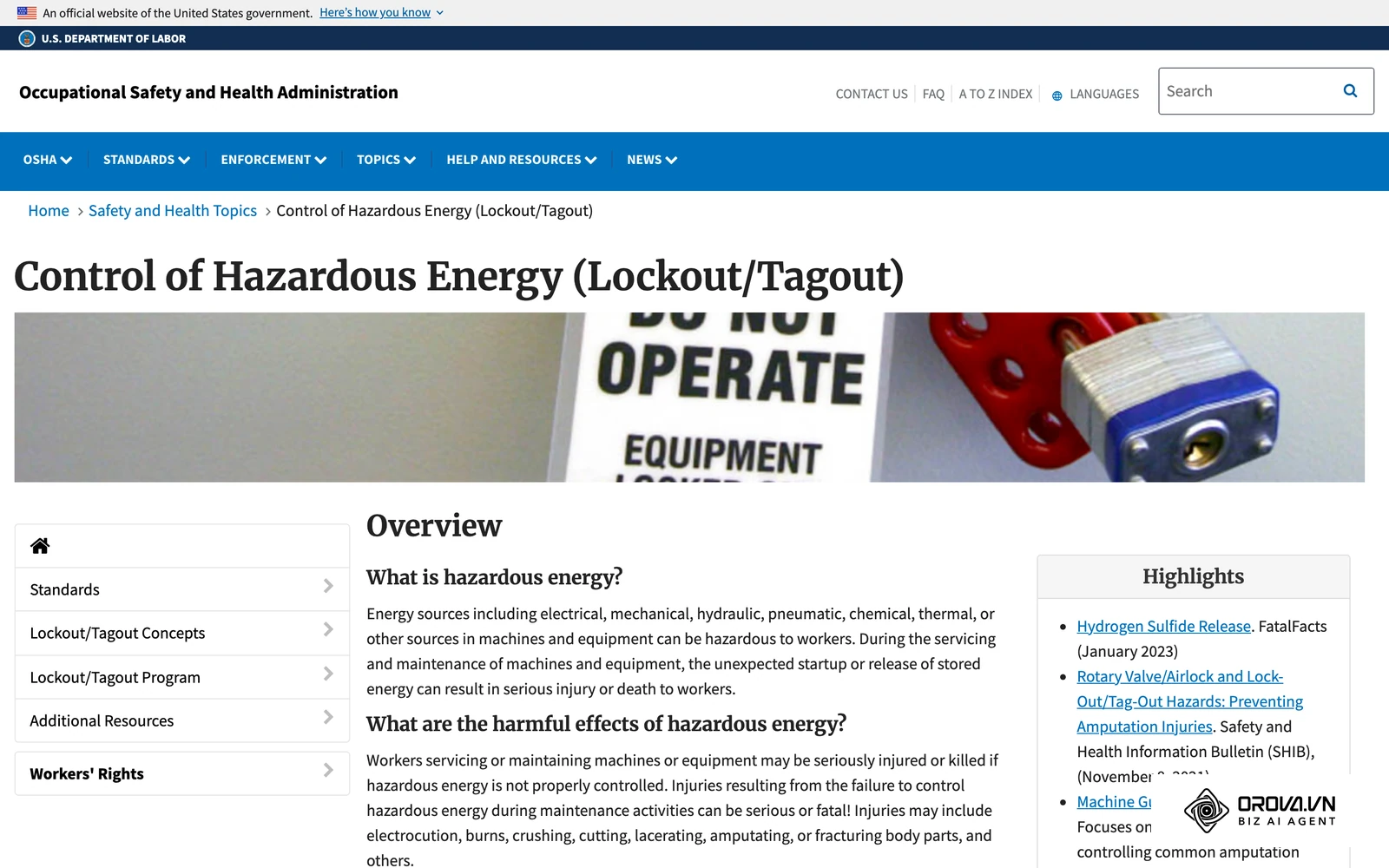
Machinery must be completely de-energized before any maintenance or clearing of jams can occur. Lockout/Tagout training is the process of teaching workers how to isolate these energy sources so a machine cannot unexpectedly start up while someone has their hands inside it.
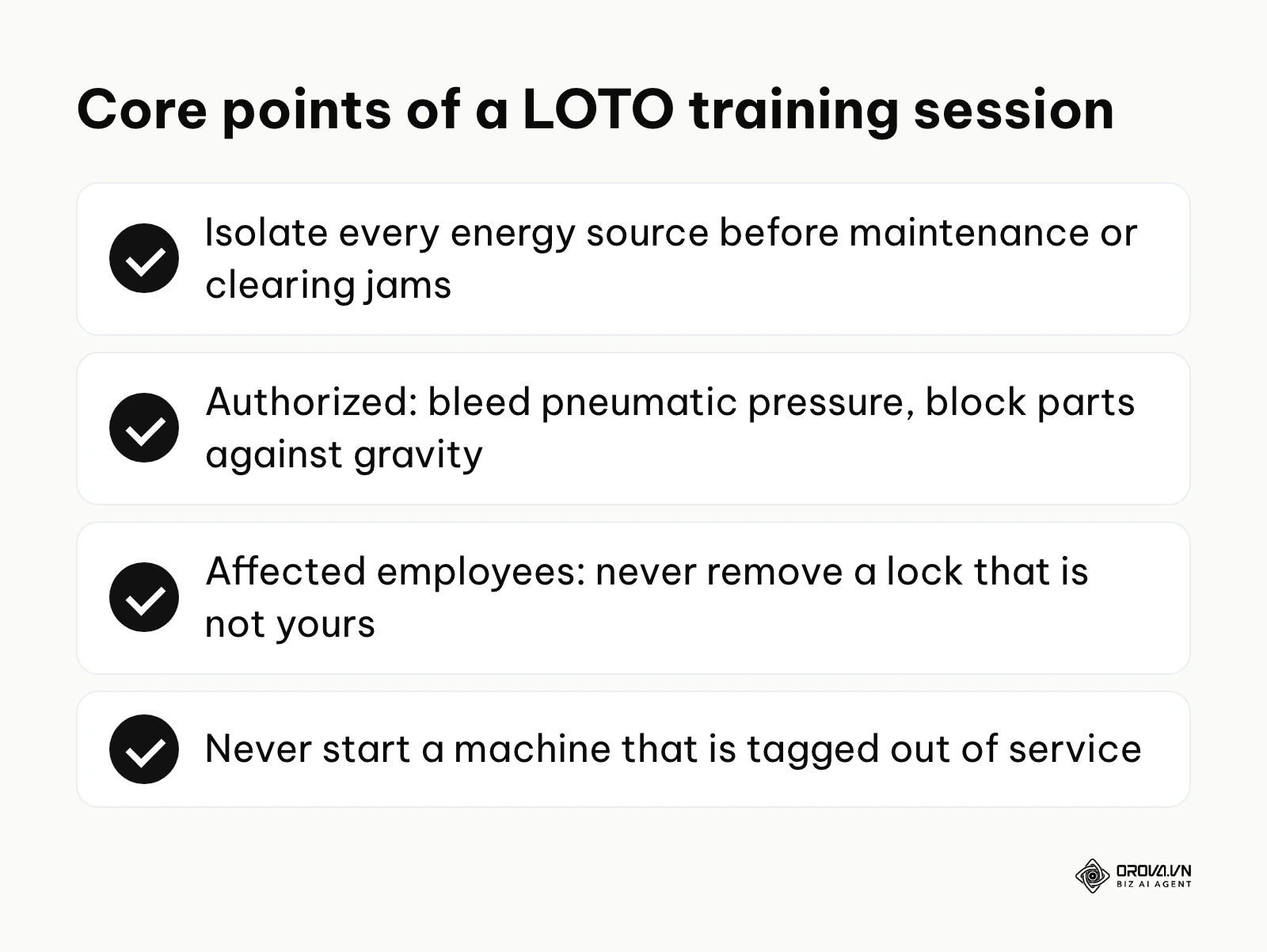
You must train two distinct groups here. "Authorized" employees are the maintenance workers who physically apply the locks; their training must be highly detailed, covering how to bleed off pneumatic pressure and block mechanical parts from falling due to gravity. "Affected" employees are the standard machine operators; their training is simpler but equally vital. They must be taught never to attempt to remove a lock that does not belong to them and never to attempt to start a machine that is currently tagged out of service.
Machine Guarding and Amputation Prevention
Modern manufacturing equipment moves faster than human reflexes. Machine guarding training focuses on keeping human body parts away from the points of operation, pinch points, and rotating shafts.
Workers must be trained to recognize when a guard is missing, damaged, or completely bypassed. A common and dangerous habit on factory floors is operators intentionally removing safety interlocks to clear jams faster and speed up production. Training must explicitly address this behavior, explaining that the few seconds saved are never worth the lifelong impact of an amputation. They must understand that operating a machine without its manufacturer-designed guards is a severe violation of company policy.
Illustrative example:
- Context: A regional packaging facility operating three distinct shifts struggled with maintenance staff routinely bypassing LOTO procedures to clear minor machine jams quickly.
- What they did: First, the safety team rewrote the dense, text-heavy LOTO manual into highly visual, color-coded placards attached directly to every single machine. Second, they issued personalized, photo-ID padlocks to every authorized employee so ownership was visually obvious. Third, they conducted hands-on shift audits where employees had to physically demonstrate isolating the power source to the auditor.
- Obstacle and fix: Night shift supervisors were actively encouraging the bypassing of the system to meet tight production quotas. The plant manager intervened immediately, explicitly stating in an all-hands meeting that safety always overrides production, and replaced the offending shift supervisor to set a firm, undeniable precedent.
- Result: Machine-related lacerations decreased steadily over a six-month period, and internal audit scores for hazardous energy control improved drastically across all three shifts.
Powered Industrial Trucks and Forklift Safety
Forklifts are incredibly heavy, steer from the rear, and often carry loads that obscure the driver's forward vision. They are entirely different from driving a standard car, and training must reflect that reality.
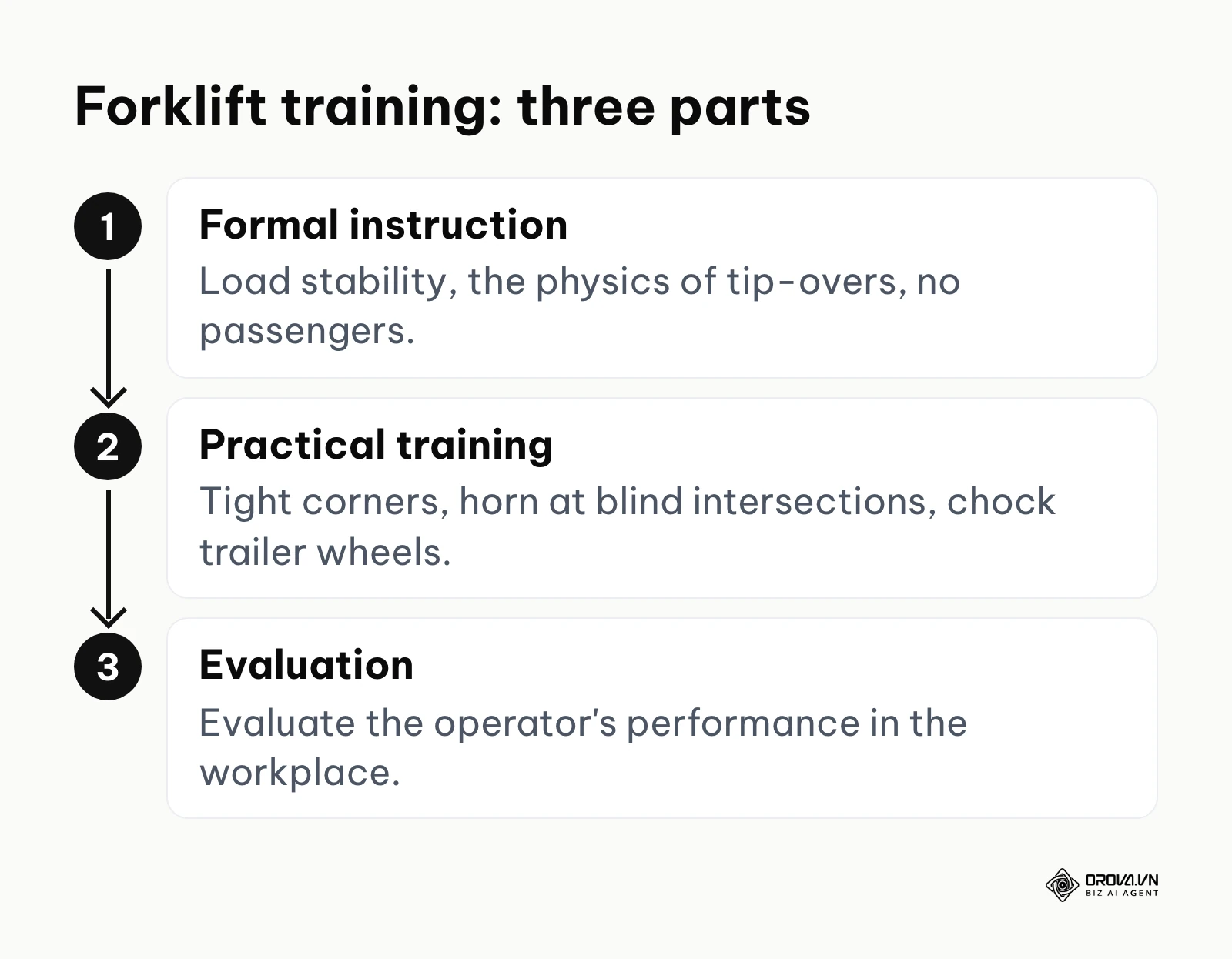
OSHA's powered industrial truck standard expects formal instruction, practical training, and an evaluation of the operator's performance in the workplace. Classroom training must cover load stability triangles, the physics of tip-overs, and the strict rule against carrying passengers. However, the practical driving test is where the real learning happens. Operators must navigate tight corners, practice sounding their horn at blind intersections, and demonstrate the correct procedure for chocking the wheels of a trailer before driving inside it.
Furthermore, pedestrians working around the forklifts need their own brief training on maintaining eye contact with operators and staying within designated walking aisles.
Confined Space Entry Procedures
Many factories contain vats, silos, storage tanks, or underground vaults. These are considered confined spaces. They are large enough for a person to enter, have limited means of entry or exit, and are not designed for continuous human occupancy.
Training for confined spaces is intense. It covers atmospheric testing, specifically looking for low oxygen levels, explosive gases, or toxic fumes. Workers must learn the roles of the entry supervisor, the entrant, and crucially, the attendant who stands entirely outside the space and monitors the situation. The attendant must be explicitly trained that they are never, under any circumstances, allowed to enter the space to perform a rescue, because a would-be rescuer can be overcome by the same atmosphere.
Are you spending too much time building safety slides from scratch? Orova Training uses AI to draft lessons, slides, podcasts and flashcards for each safety topic. You can assign courses to your whole workspace, groups or individuals, block skipping, and follow each person's progress.
Top Workplace Safety Training Topics for the Office Environment
While office workers do not face the immediate, visceral dangers of a construction site, chronic injuries and emergency preparedness are highly relevant. Neglecting office safety can lead to costly long-term workers' compensation claims related to repetitive strain.
Emergency Action Plans and Fire Extinguisher Use
Every office building must have a clear, well-communicated emergency action plan. During a fire or severe weather event, panic is the primary enemy.
Training should cover the primary and secondary evacuation routes from every major area of the office. Employees need to know exactly where the designated outdoor assembly point is located so headcount can be taken accurately.
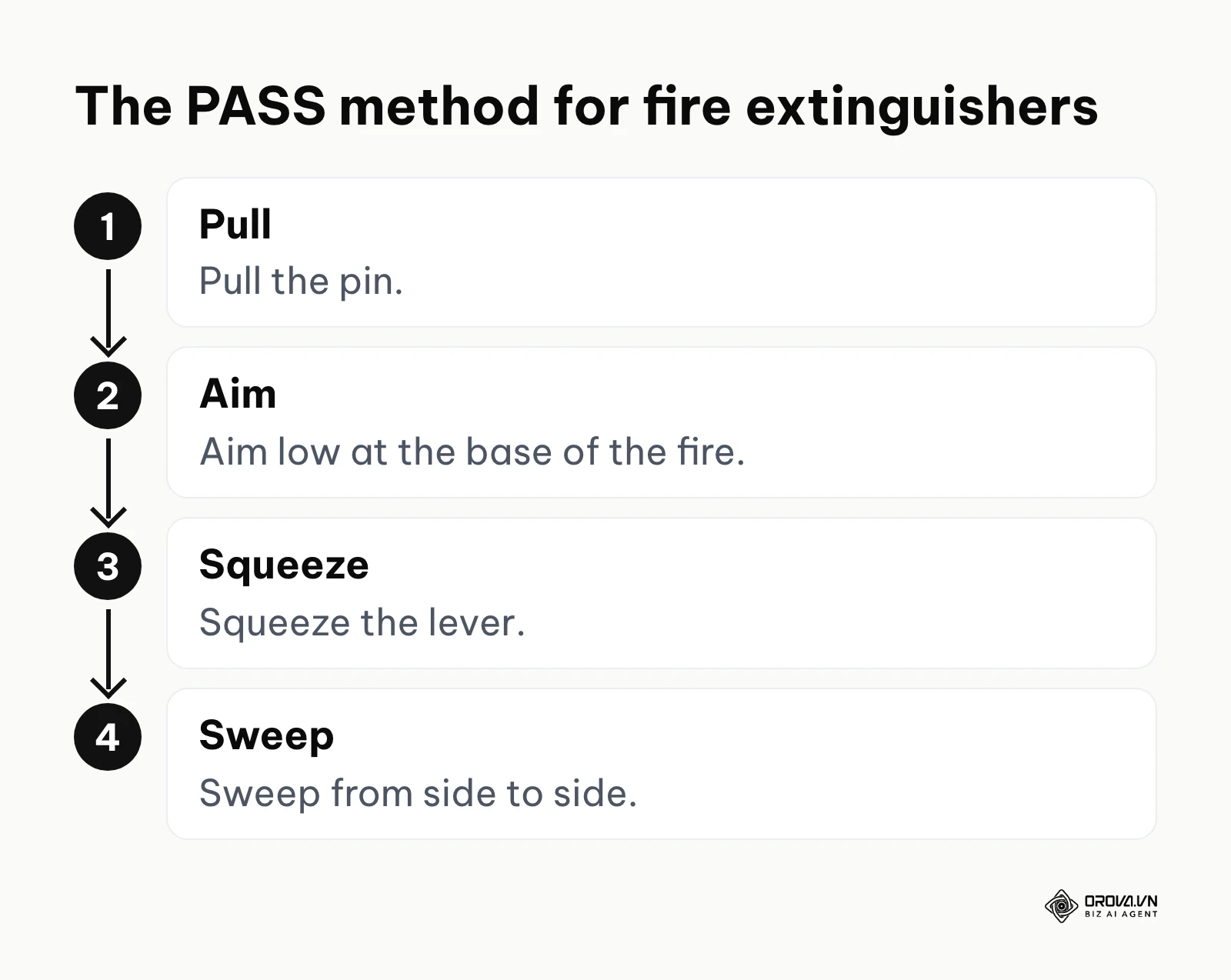
If you expect employees to use fire extinguishers, you must train them on the PASS method: Pull the pin, Aim low at the base of the fire, Squeeze the lever, and Sweep from side to side. You must also train them on the most important rule of fire extinguishers: knowing when the fire is too large and the only correct action is immediate evacuation.
Office Ergonomics and Repetitive Strain Injury Prevention
Ergonomics is the science of fitting the workspace to the worker, rather than forcing the worker to contort to the workspace. Poor ergonomics lead to carpal tunnel syndrome, chronic lower back pain, and tension headaches.
Effective training empowers employees to adjust their own workstations. They should learn the 90-90-90 rule: elbows, hips, and knees should all be positioned at roughly 90-degree angles. Monitors should be placed approximately an arm's length away, with the top third of the screen precisely at eye level to prevent neck strain. You should also teach the 20-20-20 rule for eye strain: every 20 minutes, look at something 20 feet away for 20 seconds.
Illustrative example:
- Context: A fast-growing software agency with 150 remote and hybrid workers saw a sudden spike in complaints to HR regarding wrist pain and severe lower back discomfort.
- What they did: First, the HR department deployed an anonymous survey to pinpoint the most common physical complaints across the remote workforce. Second, they hosted a mandatory virtual ergonomics workshop demonstrating exactly how to use common household items to elevate laptops to eye level. Third, they allocated a small stipend for employees to purchase approved lumbar supports or external keyboards.
- Obstacle and fix: Employees bought the expensive ergonomic equipment but did not know how to set it up correctly at home. The HR team followed up by scheduling optional 10-minute video calls with an ergonomics consultant to adjust camera and chair heights individually for those who requested it.
- Result: Musculoskeletal complaints dropped significantly within the following quarter, and overall employee satisfaction scores regarding workplace wellness benefits increased measurably.
Preventing Slips, Trips, and Falls on Level Ground
While falls from height dominate construction, falls on the same level are a massive issue in office environments. Loose carpeting, trailing power cords across walkways, and wet floors near the entrance during rainstorms are constant hazards.
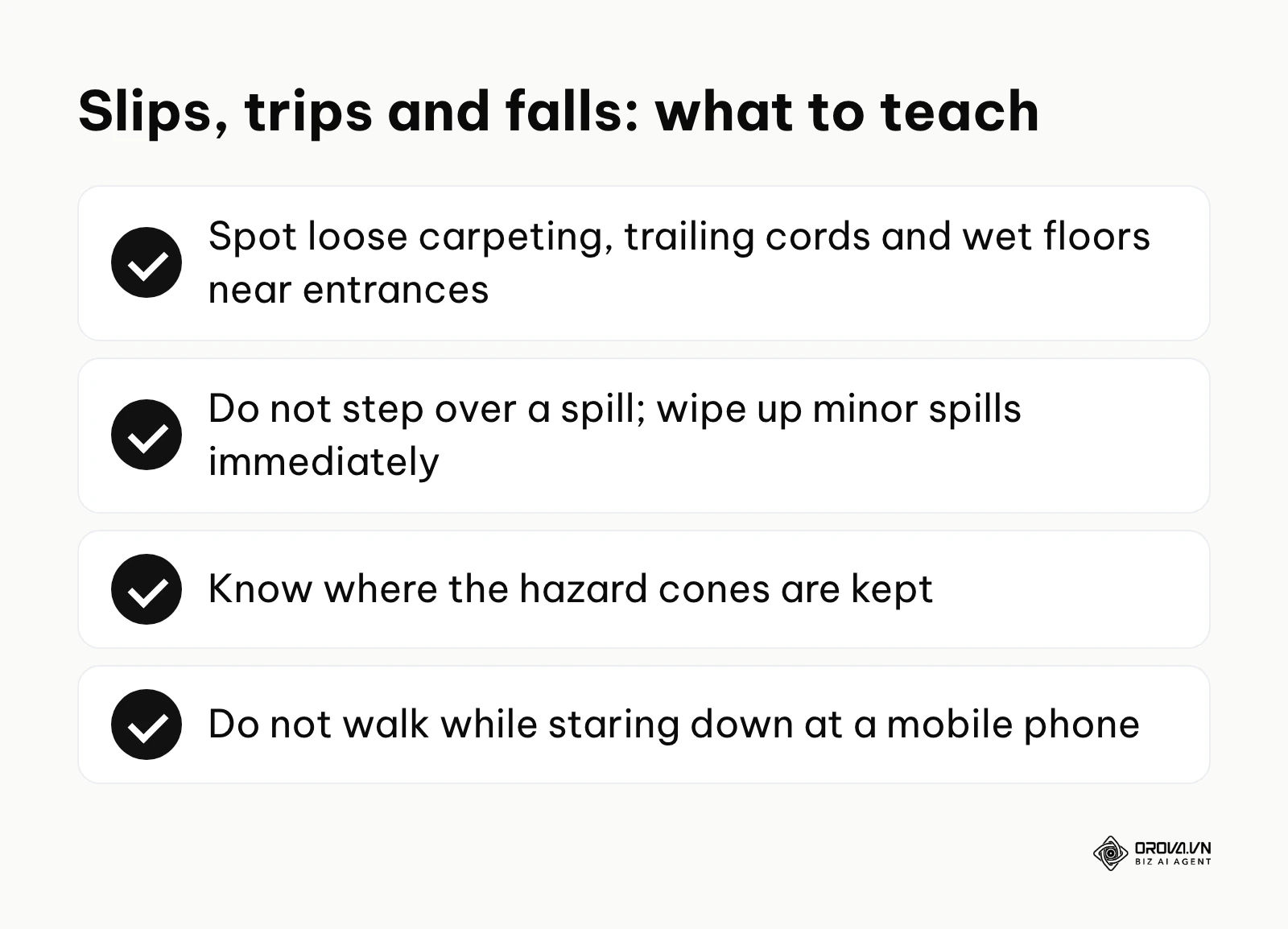
Training should focus on creating a culture of immediate correction. If a worker sees a spill in the breakroom, they should be trained not to step over it and assume the janitorial staff will handle it eventually. They should know where the hazard cones are located and how to wipe up minor spills immediately. Furthermore, training should address the danger of walking while staring entirely down at a mobile phone, a leading cause of stairwell accidents in modern offices.
Workplace Violence Prevention and De-escalation
Unfortunately, workplace violence is a reality that offices must prepare for, especially those with public-facing customer service desks. Training in this area focuses heavily on prevention and early recognition.
Employees should be taught how to recognize the early warning signs of escalating agitation in a client or a coworker, such as raised voices, clenched fists, or pacing. They must learn verbal de-escalation techniques, focusing on keeping a calm tone, actively listening, and avoiding confrontational body language. Crucially, they must know exactly how to trigger a silent alarm or contact security without escalating the situation further.
Safety Toolbox Talk Topics: 3 Ready-to-Use 5-Minute Scripts
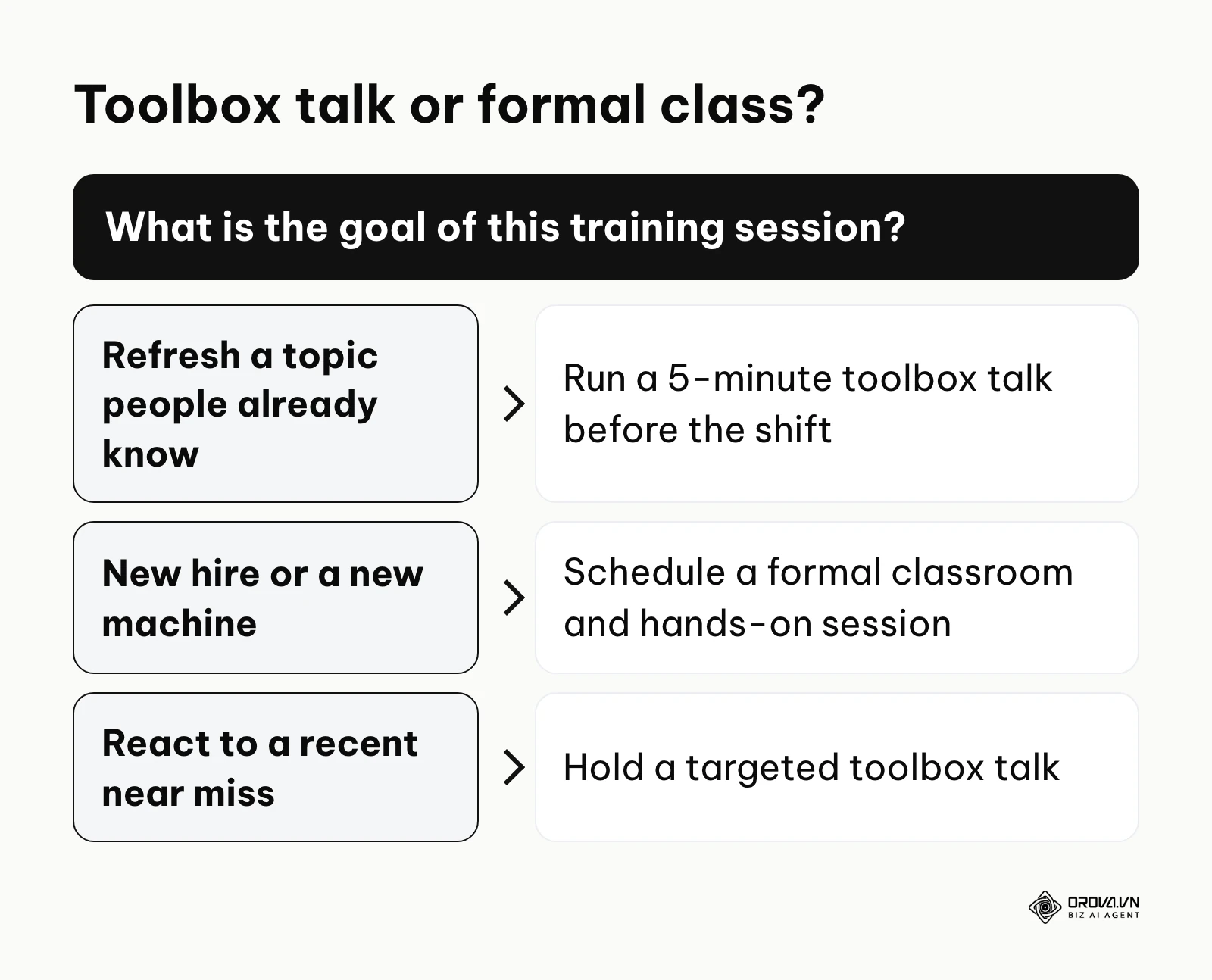
Long classroom sessions are necessary for initial onboarding, but retention drops quickly over time. Toolbox talks are short, 5-minute refresher training sessions delivered directly on the floor or job site before a shift begins. They are a practical way to keep safety at the forefront of the daily routine. Use a formal classroom and hands-on session when a topic is new to the worker, such as onboarding or a new machine, and a toolbox talk when you are refreshing something they already learned or reacting to a recent near miss.
Here are three complete, word-for-word scripts you can use tomorrow.
Script 1: Proper Lifting Techniques to Save Your Back
The Hook: "Good morning everyone. Back injuries from lifting are painful, slow to heal, and almost always preventable. Today, we are going to make sure nobody in this circle goes home with one."
The Core Message: "Your spine is a highly complex structure, and it is not designed to act like a crane. When you bend entirely at the waist to pick up a box, you put massive leverage and stress on your lower back. The correct way to lift is simple:
- Get close to the load. Do not reach out for it.
- Keep a wide stance for balance.
- Bend at your knees, keeping your back naturally straight.
- Let your strong leg muscles do the actual lifting work.
- And most importantly, never twist your torso while carrying a load. If you need to turn, move your feet."
The Interactive Question: "Look around your immediate work area right now. What is the heaviest or most awkward item you routinely have to lift, and how can we get a mechanical aid like a cart to help you move it?"
The Closing Action: "Today, I want everyone to consciously think about their knees when they pick something up. If the load is over 50 pounds, do not be a hero—ask a partner for a team lift. Let's get to work safely."
Script 2: Preventing Heat Stress in Summer Months
The Hook: "It is going to hit 95 degrees by noon today. Working in this kind of heat isn't just uncomfortable; if we aren't paying attention, it can literally be deadly. Heat stroke sneaks up on you quickly."
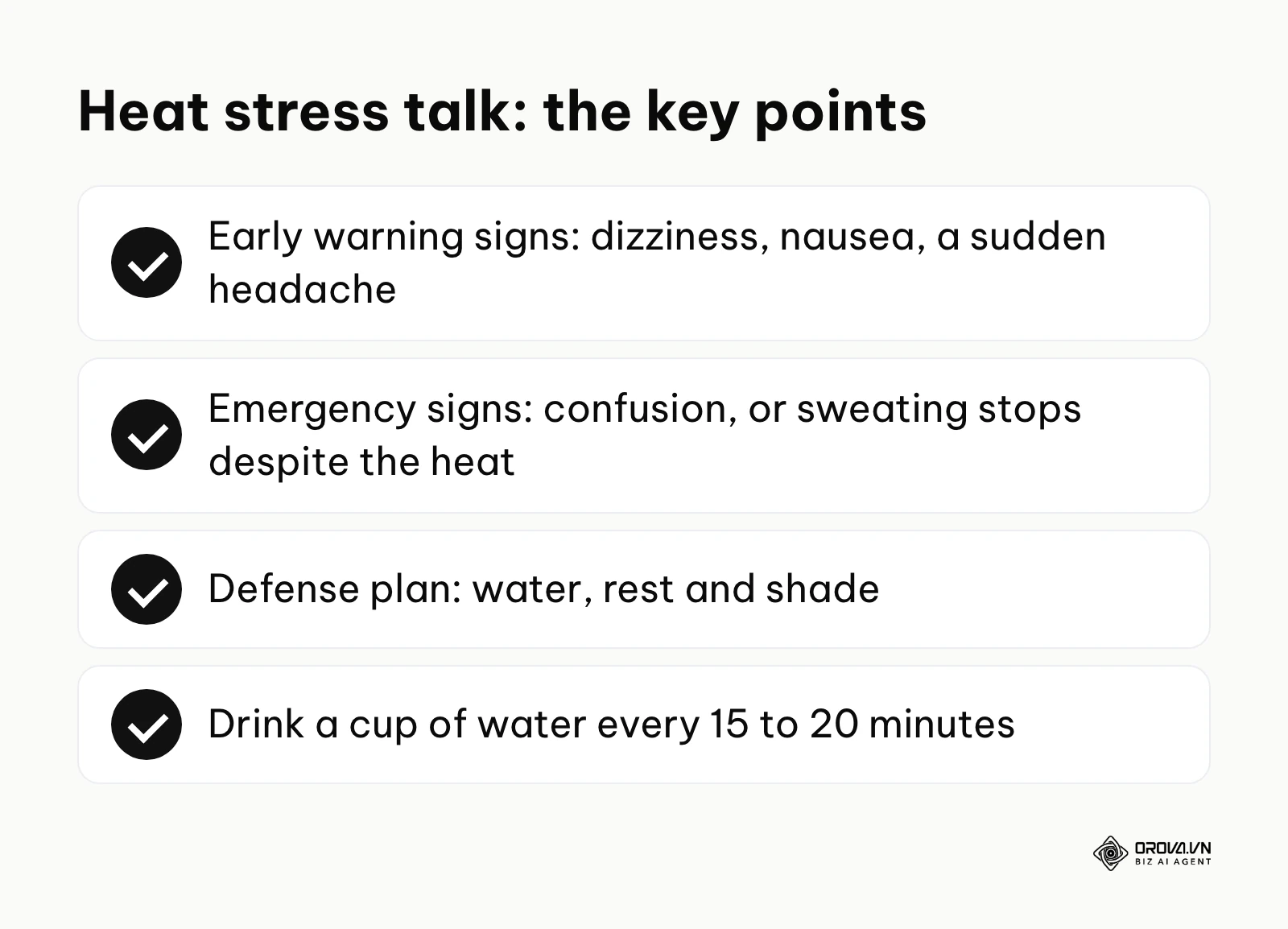
The Core Message: "Your body cools itself entirely by sweating. When it gets this hot and humid, sweat doesn't evaporate effectively, and your internal engine starts to overheat. You need to watch out for the early signs of heat exhaustion in yourself and your partners. If you feel dizzy, nauseous, or suddenly get a massive headache, your body is flashing a warning light. If you notice your partner is sweating profusely, acting confused, or suddenly stops sweating entirely despite the heat, that is a medical emergency. Our defense plan is simple: Water, Rest, and Shade. You should be drinking a cup of water every 15 to 20 minutes, even if you do not feel thirsty yet."
The Interactive Question: "Where are our three designated shaded cooling stations located on the site today, and who is checking the water coolers?"
The Closing Action: "Keep a close eye on the person working next to you today. If they look flushed or start stumbling, pull them into the shade immediately. Drink water now before you start your shift."
Script 3: Recognizing PPE Wear and Tear Before It Fails
The Hook: "Your Personal Protective Equipment is your absolute last line of defense. If a hazard gets past all our engineering controls, your hard hat or your glasses are the only things standing between you and an emergency room."
The Core Message: "But PPE only works if it is actually in good condition. A cracked hard hat will not absorb an impact. Scratched safety glasses create dangerous glare and limit your vision. Gloves with holes in the fingertips will not stop a chemical burn. Before you put anything on today, you must inspect it. Look for stress lines in the plastic of your helmet. Check the elasticity of your respirator straps. Look closely at the treads on your steel-toed boots; if they are worn completely smooth, you are a slip hazard waiting to happen."
The Interactive Question: "If you find a deep cut in your safety harness right now, exactly what is the procedure for getting a replacement from the supply room?"
The Closing Action: "Take 30 seconds right now, before we break this huddle, to inspect the gear you are currently wearing. If it is broken, throw it away and get a new one. Do not trust your life to damaged equipment."
Stop passing around paper sign-in sheets for your monthly safety training. With Orova Training, your team takes online quizzes graded by AI and receives a certificate with a public verification code and PDF download when they pass. Try it free until July 7, 2027.
Building Your Monthly Safety Topics for Workplace: A Scale-Based Guide
You cannot randomly select topics each week and expect a cohesive program. You need a structured, planned curriculum that ensures all regulatory bases are covered annually. However, how you execute this plan depends entirely on your company's size.
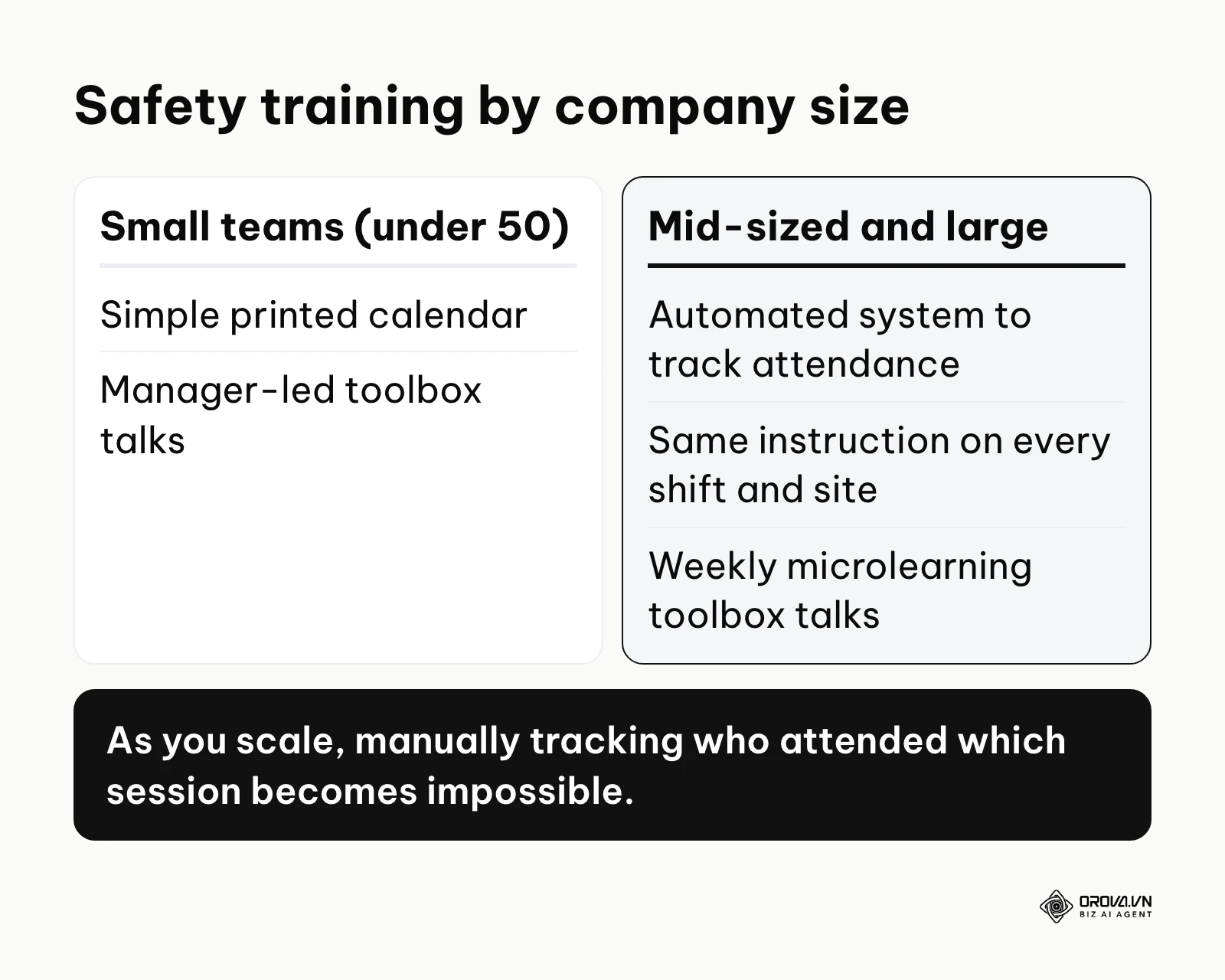
For small teams under 50 people, a simple printed calendar and manager-led toolbox talks might suffice. But as you scale into a mid-sized or large enterprise, manually tracking who attended which session becomes impossible. You will need an automated system. Implementing a solid corporate elearning implementation strategy ensures that whether an employee works the day shift in Boston or the night shift in Chicago, they receive the exact same quality of safety instruction.
The Free 52-Week Safety Training Calendar Template
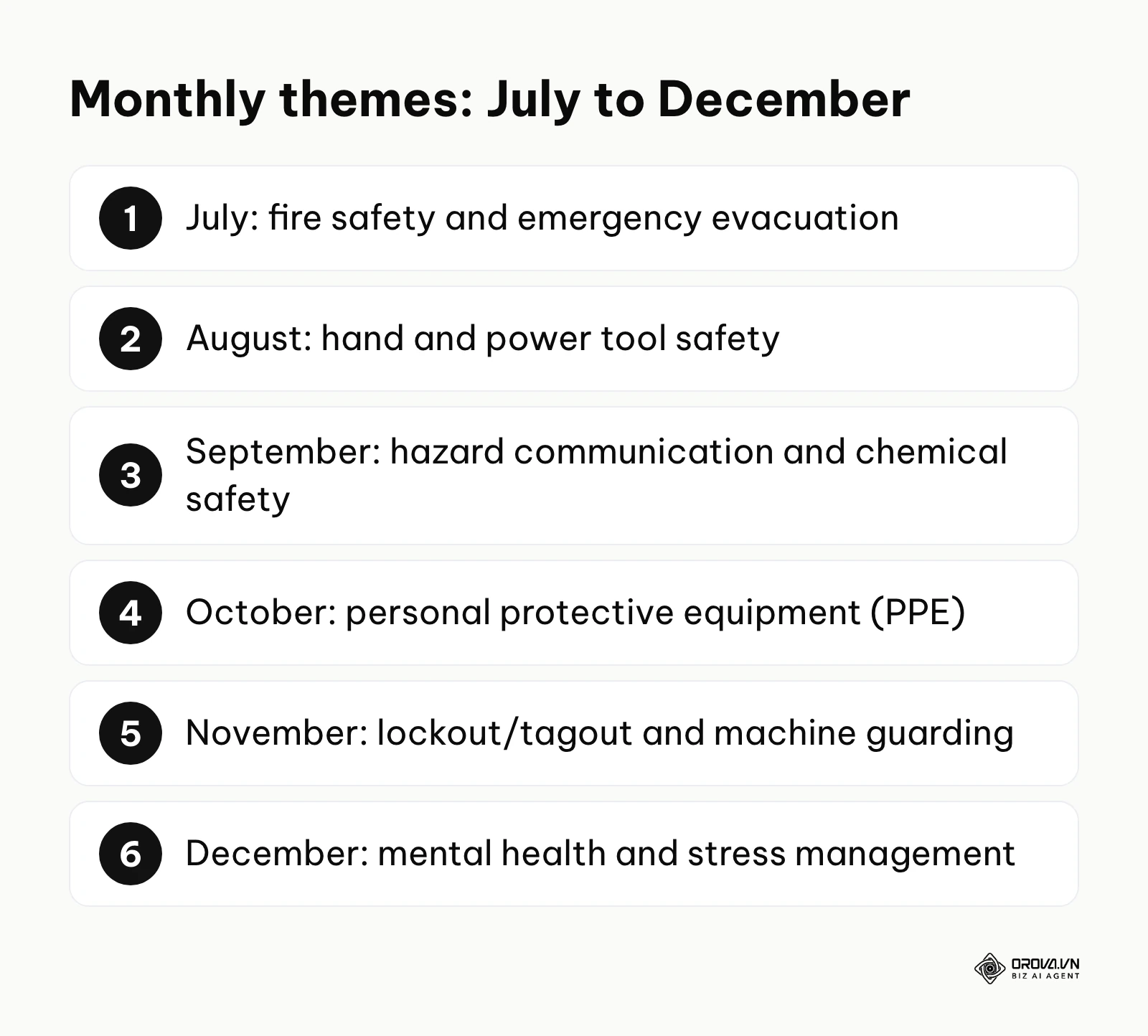
This template provides a framework. Each month focuses on a core theme, broken down into four weekly microlearning toolbox talks to reinforce the subject. Twelve months of four talks give you 48 sessions; use the four remaining weeks of the year (the fifth week that falls in some months) as quarterly review weeks, where you revisit recent near misses and inspection findings.
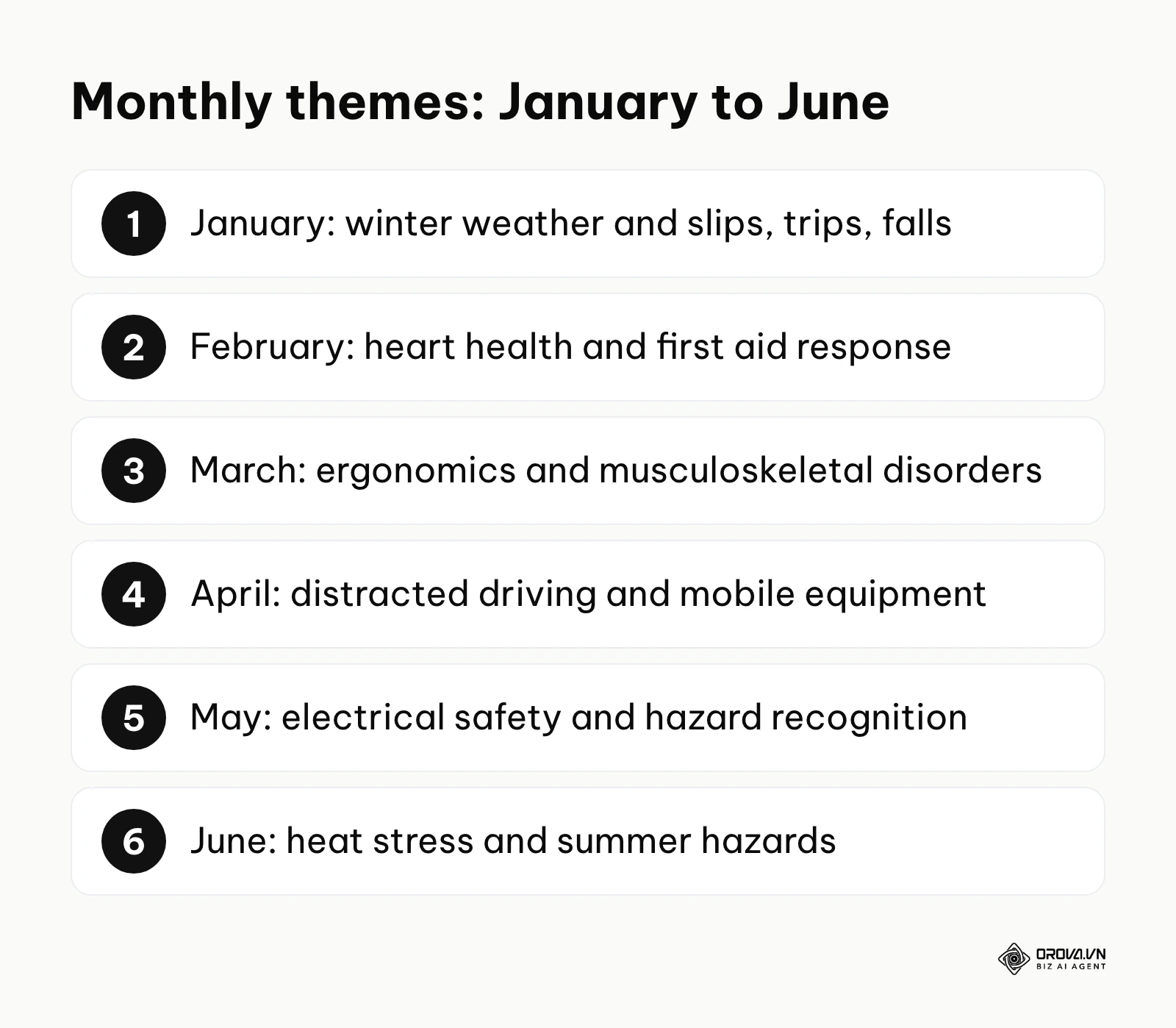
January: Winter Weather & Slips/Trips/Falls The focus is on icy conditions and indoor hazards caused by wet footwear.
- Week 1: Recognizing black ice in the parking lot.
- Week 2: Proper footwear and walking like a penguin on ice.
- Week 3: Keeping indoor walkways completely clear of debris.
- Week 4: Three points of contact when exiting vehicles.
February: Heart Health & First Aid Response
- Week 1: Recognizing the early signs of a heart attack.
- Week 2: Where the AEDs are located and who is trained to use them.
- Week 3: Basic first aid kit inventory and location.
- Week 4: How to effectively call emergency services and direct them to the scene.
March: Ergonomics & Musculoskeletal Disorders
- Week 1: The 90-90-90 rule for seated workstations.
- Week 2: Safe lifting techniques for heavy materials.
- Week 3: Stretching routines before starting physical labor.
- Week 4: Recognizing the early signs of repetitive strain.
April: Distracted Driving & Mobile Equipment Safety
- Week 1: The strict ban on texting while driving company vehicles.
- Week 2: Forklift pedestrian safety and blind spots.
- Week 3: Performing rigorous pre-trip vehicle inspections.
- Week 4: Securing loose loads properly in truck beds.
May: Electrical Safety & Hazard Recognition
- Week 1: Spotting frayed cords and damaged power tools.
- Week 2: The importance of Ground Fault Circuit Interrupters (GFCIs).
- Week 3: Minimum approach distances for overhead power lines.
- Week 4: Why we never daisy-chain power strips.
June: Heat Stress & Summer Environmental Hazards
- Week 1: The critical difference between heat exhaustion and heat stroke.
- Week 2: Hydration strategies for long shifts.
- Week 3: Recognizing dangerous stinging insects on the job site.
- Week 4: Sunscreen use and UV protection basics.
July: Fire Safety & Emergency Evacuation
- Week 1: Understanding the PASS method for extinguishers.
- Week 2: Keeping fire doors completely unblocked.
- Week 3: Reviewing the primary assembly point locations.
- Week 4: Combustible dust and housekeeping practices.
August: Hand & Power Tool Safety
- Week 1: Never bypassing built-in tool safety guards.
- Week 2: Choosing the correct type of glove for the specific tool.
- Week 3: Inspecting pneumatic hoses and fittings.
- Week 4: The danger of using the wrong tool for the job.
September: Hazard Communication & Chemical Safety
- Week 1: Reading and understanding new SDS formats.
- Week 2: Proper labeling of secondary chemical containers.
- Week 3: What to do in the event of a chemical splash to the eyes.
- Week 4: Safe storage of flammable liquids.
October: Personal Protective Equipment (PPE) Deep Dive
- Week 1: Inspecting hard hats for UV degradation and cracks.
- Week 2: Selecting the right hearing protection for the decibel level.
- Week 3: Cleaning and storing safety glasses to prevent scratches.
- Week 4: Proper fit-testing concepts for tight-fitting respirators.
November: Lockout/Tagout (LOTO) & Machine Guarding
- Week 1: The absolute rule of one lock, one key, one person.
- Week 2: Identifying hidden kinetic or pneumatic stored energy.
- Week 3: Never reaching past a machine guard.
- Week 4: Shift change procedures for locked-out equipment.
December: Mental Health & Workplace Stress Management
- Week 1: Managing fatigue during the busy holiday rush.
- Week 2: Recognizing signs of severe stress in coworkers.
- Week 3: Accessing the Employee Assistance Program (EAP).
- Week 4: Staying entirely focused on the task at hand.
How to Measure Training Effectiveness and ROI
Running the training sessions is only half the battle. If you cannot prove that the training actually worked, you cannot justify the budget for next year. Relying entirely on attendance sheets is a massive mistake.
Moving Beyond Attendance Tracking
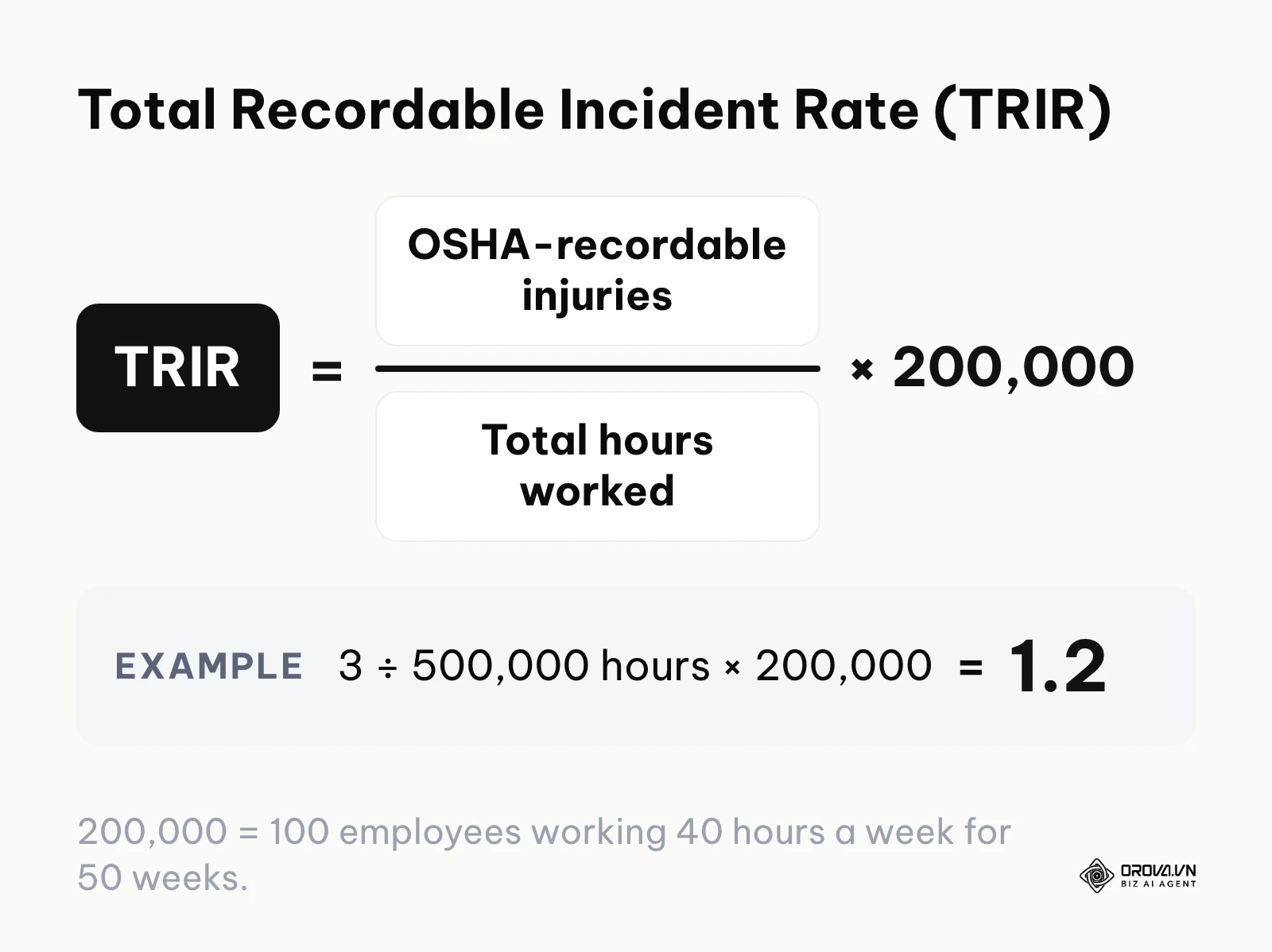
To truly understand if your program is working, you must embrace proper training evaluation methodologies, often based on the Kirkpatrick model. First, measure reaction: Did the employees find the toolbox talk engaging or boring? Second, measure learning: Did they pass the post-training quiz? Third, measure behavior: Are supervisors observing better lifting techniques on the floor? Finally, measure results: Has your Total Recordable Incident Rate (TRIR) actually decreased over the last six months?
TRIR is calculated by multiplying the number of OSHA-recordable injuries by 200,000 and dividing by the total hours worked by all employees. The 200,000 figure represents 100 employees working 40 hours a week for 50 weeks. For example, 3 recordable injuries across 500,000 hours worked gives a TRIR of 1.2.
According to the American Society of Safety Professionals document ANSI/ASSP Z490.1 Criteria for Accepted Practices in Safety, Health and Environmental Training (2016), effective training must include both theoretical knowledge instruction and a practical application assessment. You cannot just assume they learned it; you must verify it.
Choosing the Right Hosting Platform
If you are transitioning from paper to digital tracking, you need a system that can reliably host your content and generate audit-ready reports. Utilizing a robust SCORM compliant LMS ensures that any safety course you purchase or build will properly report quiz scores and completion statuses back to your central dashboard. This removes the human error of manual data entry and ensures that when an OSHA inspector asks for training records, you can produce them in three clicks instead of three days.
The future of workplace safety training topics: my predictions
The landscape of corporate education is shifting rapidly. Based on current technological trajectories, here is what I believe safety managers must prepare for.
Microlearning will replace the annual compliance marathon
I see more and more safety managers questioning the traditional four-hour safety class. I believe the balance will keep shifting toward microlearning: short, targeted safety modules that employees can review on a mobile phone right before they touch a machine. This steady drip of information fits how many workers prefer to learn, and I expect it to help people remember the material longer.
AI will dynamically adapt safety topics to incident reports
I believe AI will gradually act as a proactive safety assistant rather than just a content generator. If a factory sees a spike in near-miss reports about forklift speeding, a training system could suggest a targeted forklift speed-limit module for all operators that week. That would move training from a static annual calendar toward a more responsive one, with a person still approving what goes out. If digital delivery is new to you, start with the basics of what eLearning is and how it differs from classroom sessions.
Virtual reality (VR) simulations will become standard for hazardous tasks
I think that for high-risk topics like confined space entry or working at extreme heights, VR simulation will become a common part of training. A classroom explanation of a trench cave-in can only go so far. VR lets employees feel the pressure of an emergency and practice their response in a safe, controlled environment. As headsets become more affordable, I expect mid-sized firms to start experimenting with it too.
Frequently asked questions about workplace safety training topics
What are the absolute mandatory OSHA training topics?
Mandatory topics depend on your specific industry and the hazards present. Topics that apply across many sectors include Hazard Communication wherever hazardous chemicals are present, emergency action and fire prevention plans where OSHA standards call for them, and PPE training wherever PPE is required. Check the OSHA standards for your industry to confirm your exact list.
How much time should we dedicate to safety training each month?
OSHA standards generally focus on whether employees understand the training rather than on a fixed number of hours. A practical habit is dedicating at least 15 to 30 minutes per month to formal safety education, broken down into weekly 5-minute toolbox talks, plus an annual review of major policies.
Can AI generate accurate workplace safety training topics?
Yes, AI is highly effective at generating the structure, quiz questions, and presentation scripts for safety topics. However, a qualified human safety professional must always review the final output to ensure it perfectly aligns with your specific company policies, local state regulations, and exact machinery models.
How do we prove employees understood the material?
Attendance sheets only prove a body was in the room. To prove understanding, you must use documented post-training quizzes, conduct documented practical field evaluations where the employee physically demonstrates the skill, and maintain records of routine behavioral audits on the floor.
Where to start?
Building a comprehensive safety curriculum from scratch is daunting. Do not try to implement the entire 52-week calendar tomorrow. Identify your current situation and take one targeted step.
Situation 1: You have no formal safety program at all. Start with the absolute highest-risk hazards in your facility. If you run a warehouse, schedule a single 15-minute training session on forklift pedestrian safety for next Tuesday. Do not worry about certificates or LMS platforms yet; focus purely on addressing the hazard that is most likely to cause a severe injury this week.
Situation 2: Your safety training is too long and people are bored. Take your longest, most text-heavy PowerPoint presentation and slice it up. Break a 60-minute class into twelve 5-minute toolbox talks. Deliver one small piece of that presentation every single week directly on the floor. You will immediately notice higher engagement and better retention.
Situation 3: You have the topics but no way to track compliance. If your training is solid but your paperwork is a mess, your first step is digitizing the sign-in process. Stop using paper. Find a digital tool that allows employees to scan a QR code after a toolbox talk, answer a three-question quiz on their phone, and automatically log their name and timestamp into a central database.
About the author

Builder of Orova
Nguyễn Đỗ Trọng Ân has 8 years of experience in marketing, including 6 years managing market development across Asia. He builds Orova, a Biz AI Agent that never sleeps: it plans, runs and optimizes work for businesses.
Run your business with AI Agents
Orova is the always-on Biz AI Agent — it plans, runs, and optimizes the work for you.
Save time, unlock productivity.