
Training evaluation: a practical guide to measuring real ROI

Training evaluation is the process of measuring whether a learning program changed what people know, how they work and the business results it was meant to move. Many companies spend heavily on employee development, but when the executive board asks about the actual return on investment, human resources managers often fall silent. If you are struggling to prove that your recent sales workshop or leadership seminar actually improved performance, you need a structured approach to training evaluation. Relying purely on completion rates or post-course "smile sheets" (basic satisfaction surveys) is no longer sufficient in a data-driven business landscape. You must connect your learning outcomes directly to tangible business metrics. This in-depth guide will walk you through exactly how to measure success, from foundational theories to practical, day-to-day implementation. We will explore advanced techniques to isolate the impact of your courses from volatile market fluctuations, and provide you with ready-to-use, actionable templates. By the end of this comprehensive article, you will have a clear blueprint to build a measurement system that proves the undeniable true value of your educational initiatives.
What is training evaluation and when should you skip it?
Training evaluation is the systematic, objective process of collecting and analyzing data to determine whether an educational program met its specific objectives and delivered measurable value to the organization. You do this to justify learning budgets, improve future course designs, and ensure that employees actually apply their new skills in their daily routines.
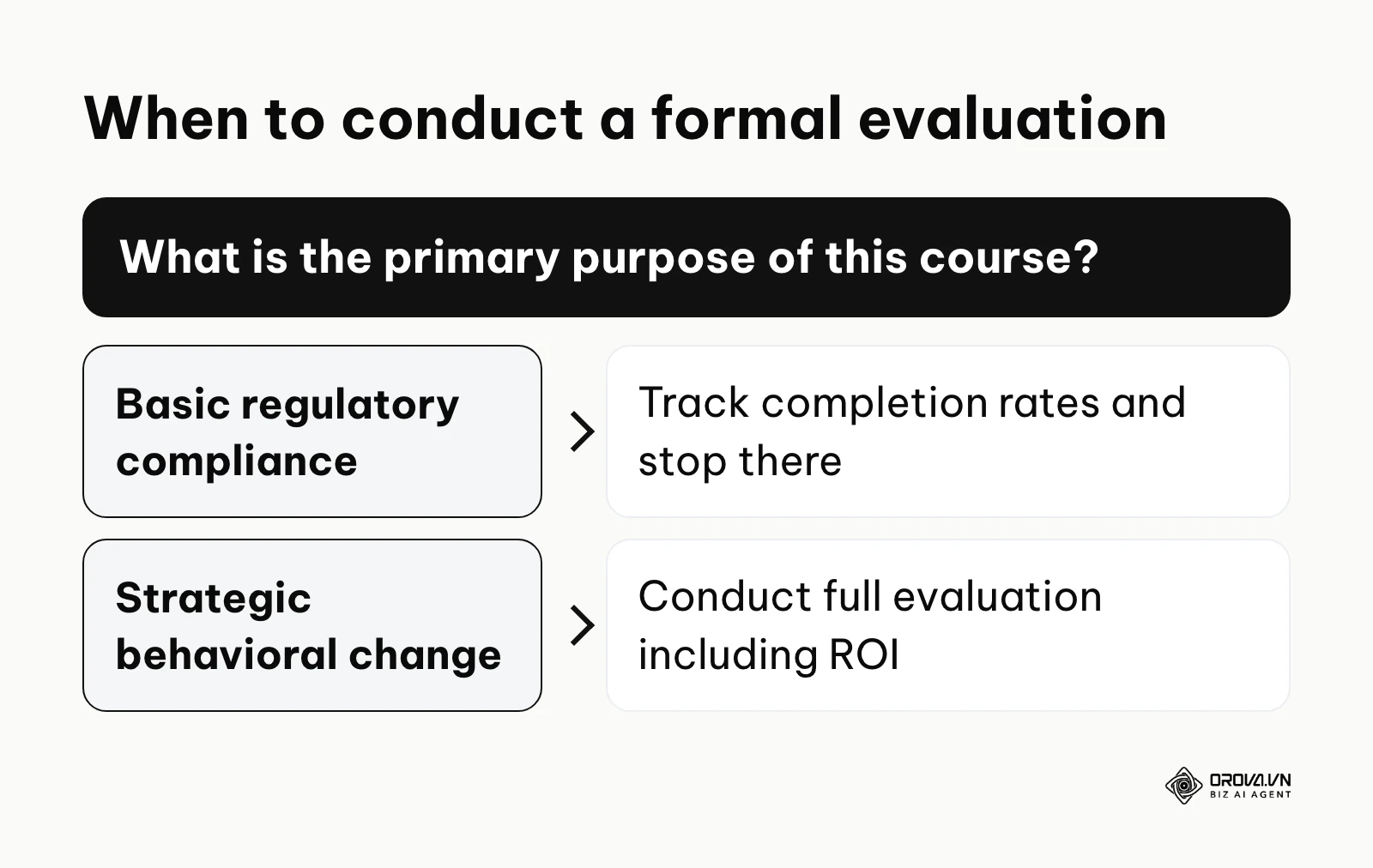
You should perform an evaluation for any high-stakes, expensive, or highly strategic program that aims to change employee behavior. However, you should completely skip formal, deep evaluation if the course is purely for checking a legal compliance box with no expectation of behavioral change. You should also skip it if the financial cost and time required to measure the results exceed the cost of the program itself, or if leadership has explicitly stated they have no intention of acting on the findings regardless of what the data shows. In those specific scenarios, merely tracking completion rates is sufficient.
Preparation: What to prepare before a training evaluation
Before you begin assessing any educational program, you need a highly solid foundation. Attempting to measure results without first establishing baseline data is a guaranteed path to confusing, useless analytics. You must define exactly what success looks like in mathematical terms before the very first learner logs into the learning management system. This preparation phase ensures you have the necessary reporting tools and historical benchmarks to compare post-training performance against accurately.
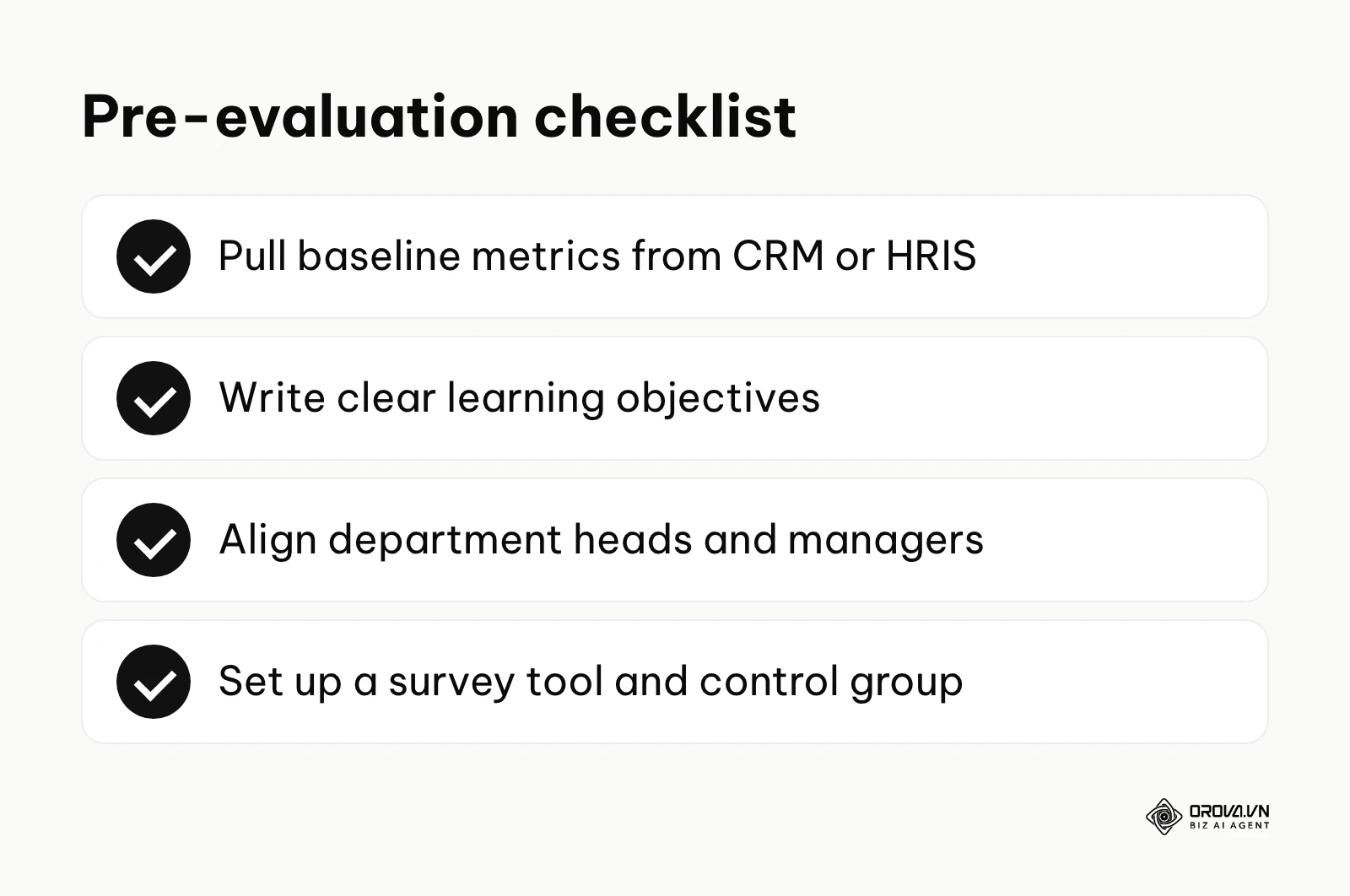
| Asset needed | Where to get it | Estimated time to prepare |
|---|---|---|
| Baseline performance metrics | CRM, HRIS, or departmental dashboard reports | 3 to 5 days |
| Clear learning objectives | Instructional designers or subject matter experts | 1 to 2 days |
| Stakeholder alignment document | Meetings with relevant department heads | 1 to 2 weeks |
| Survey distribution tool | Internal portal or dedicated survey software | 1 day |
| Data analysis framework | Spreadsheet templates or analytics software | 2 to 3 days |
| Control group selection | HR data and direct manager consultation | 1 week |
You simply cannot evaluate what you do not deeply understand. If you are currently building a program for new hire training, for instance, you absolutely need to know the historical average time it takes for a new employee to reach full productivity. Gathering this granular data requires intense collaboration across multiple departments. Do not rush this preparation phase; the integrity of your final ROI calculation depends entirely on the accuracy of the baseline data you collect right now.
How to evaluate training effectiveness: A 6-step process
This comprehensive process will guide you through the entire lifecycle of measurement. It covers everything from setting the initial business goals to leveraging modern artificial intelligence for rapid data analysis.
Step 1: Aligning learning objectives with business KPIs
What to do: You must definitively link every single module of your course to a specific, measurable business outcome. If a module or a slide deck does not directly serve a predetermined business Key Performance Indicator (KPI), it should be ruthlessly removed from the curriculum.
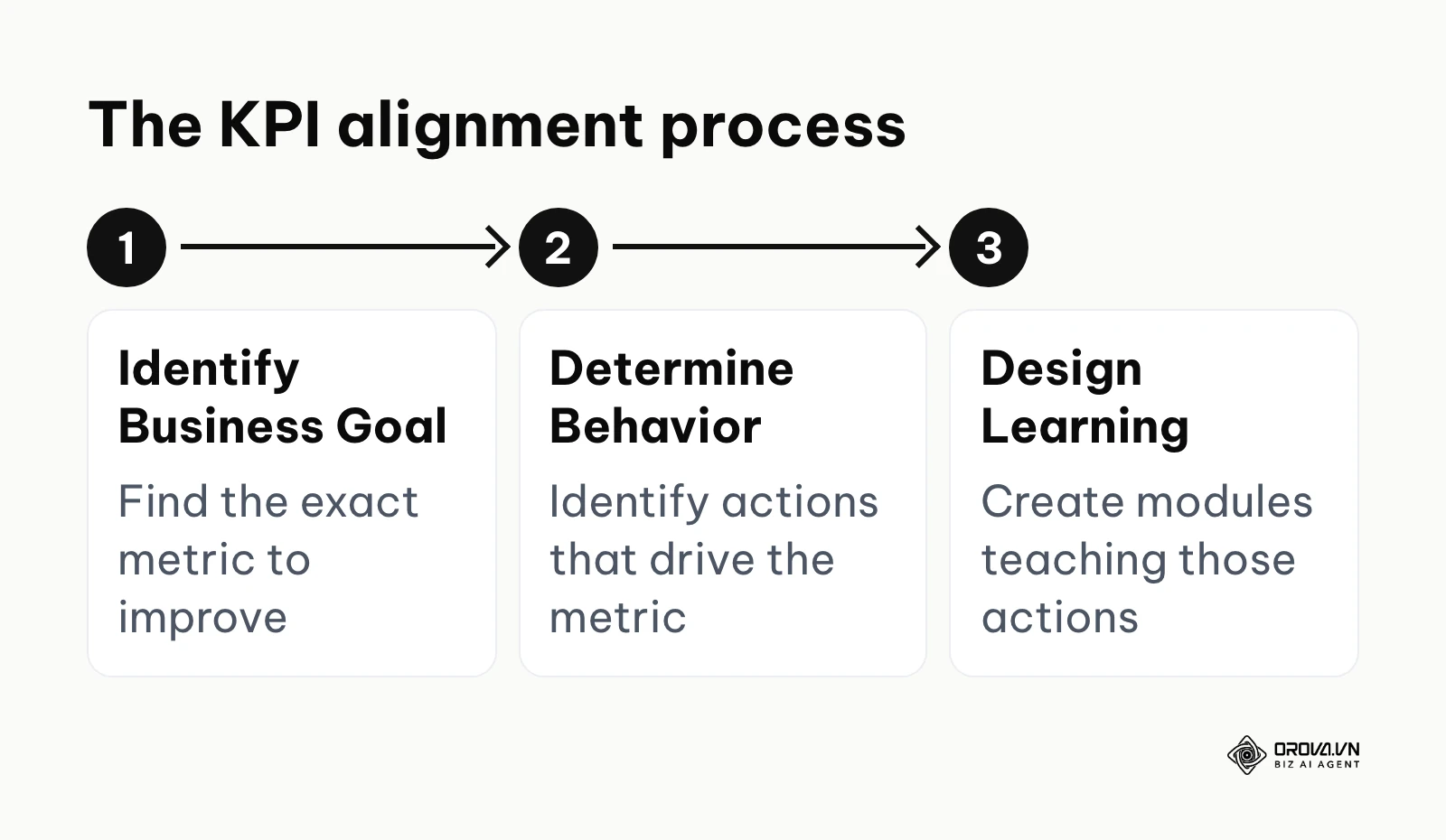
How to do it: Start by interviewing the relevant department head. Ask them exactly what business metric they are failing to hit right now. If it is customer service, the KPI might be First Contact Resolution (FCR) rate. Next, work backward from that metric to identify the specific human behaviors needed to improve FCR (e.g., using a specific troubleshooting script). Finally, design the learning objectives to teach those exact behaviors.
Signs you are doing it right: Every learning objective you write starts with a concrete action verb and connects directly to a number that lives on a managerial dashboard.
Common errors: Writing vague, unmeasurable objectives like "employees will understand the new product." Understanding cannot be objectively measured; however, "employees can demonstrate three features of the new product" can be tested and verified.
Step 2: Selecting the right training evaluation methods and framework
What to do: Decide which theoretical model will guide your data collection strategy. You need to know exactly how deep your measurement efforts will go before you launch the program.
How to do it: Review the available training evaluation methods. Will you stop at measuring basic knowledge retention through a quiz, or will you commit to tracking behavioral changes on the job floor over six months? Decide early if the board requires you to calculate financial ROI. Match the rigor of your chosen model to the strategic importance of the course. A simple password security update tutorial might only need a short five-question quiz, while a massive, six-month executive leadership program requires intense, long-term performance tracking.
Signs you are doing it right: You possess a formally documented measurement plan detailing exactly what data points will be collected at 30, 60, and 90 days post-course.
Common errors: Choosing an overly complex, highly academic model for a very simple, low-stakes course, thereby wasting organizational resources on unnecessary data collection.
Step 3: Designing questionnaires and collecting data (The 50-Question Bank)
What to do: Create the actual surveys, quizzes, and manager observation checklists needed to gather qualitative and quantitative information from your workforce.
How to do it: Avoid leading questions that force a positive answer. Use a balanced mix of Likert scale (1-5 ratings) and open-ended text questions. To help you start immediately without staring at a blank page, here is a bank of 50 sample questions divided by measurement depth. You can use these to build your own Google Forms or Excel templates right now.
Reactions (Immediate feedback right after the session):
| # | Question |
|---|---|
| 1 | Did the course content accurately meet your professional expectations? |
| 2 | Was the instructor engaging and deeply knowledgeable about the subject? |
| 3 | Was the pacing of the overall session appropriate for your learning style? |
| 4 | Were the practice exercises highly relevant to your daily work tasks? |
| 5 | Did the digital platform function smoothly without any technical issues? |
| 6 | Was the provided reading material easy to read and conceptually understand? |
| 7 | Did you feel you had enough dedicated time to complete the modules? |
| 8 | Would you actively recommend this program to a close colleague? |
| 9 | What was the single most valuable part of the entire session? |
| 10 | What is one specific thing we absolutely should change for the next group? |
Learning (Knowledge retention testing):
| # | Question |
|---|---|
| 11 | Can you list the three core structural features of the new software product? |
| 12 | What is the strictly correct sequence for handling an angry customer complaint? |
| 13 | Which specific compliance rule applies directly to this hypothetical scenario? |
| 14 | How do you accurately access the new HR portal from your home network? |
| 15 | What are the exact penalty fees the company faces for missing a regulatory deadline? |
| 16 | Describe the main technical difference between product version A and version B. |
| 17 | Identify the critical syntax error in this provided sample code snippet. |
| 18 | What is the mandated standard response time for critical IT tickets? |
| 19 | Which specific department handles Tier 3 escalation procedures? |
| 20 | Calculate the correct discount rate for a premium client using the new formula. |
Behavior (Application on the job - Ask the manager or peer 30 days later):
| # | Question |
|---|---|
| 21 | Has the employee used the new software consistently and correctly this week? |
| 22 | Have you observed a tangible decrease in errors on their daily submission reports? |
| 23 | Does the employee currently resolve interpersonal conflicts using the new framework? |
| 24 | Are they strictly following the updated physical safety protocols on the factory floor? |
| 25 | How often do they still ask for basic help regarding the newly trained process? |
| 26 | Have they actively shared their new knowledge with untrained team members? |
| 27 | Is their communication style noticeably more assertive since attending the workshop? |
| 28 | Do they handle complex client objections smoothly during live sales calls? |
| 29 | Are their project deliverables consistently meeting the newly established quality standards? |
| 30 | Please rate their overall visible confidence in applying the new skills under pressure. |
Results (Business impact - Tracked via internal systems):
| # | Question |
|---|---|
| 31 | Has the department's total sales volume measurably increased this quarter? |
| 32 | What is the current, exact customer satisfaction score (CSAT) for the trained team? |
| 33 | How many seconds did the average call handling time decrease by? |
| 34 | Has the voluntary employee turnover rate dropped within the targeted team? |
| 35 | What is the exact percentage reduction in physical manufacturing defects? |
| 36 | How many net new accounts were opened specifically by the trained cohort? |
| 37 | Did the average financial deal size increase compared to last year? |
| 38 | What is the total dollar value reduction in regulatory compliance fines? |
| 39 | How much faster (in hours) are standard tasks currently being completed? |
| 40 | Has the daily volume of internal IT support tickets decreased? |
ROI & Systemic Feedback (For executive reporting):
| # | Question |
|---|---|
| 41 | What was the total, fully loaded financial cost of developing this program? |
| 42 | Exactly how many hours were spent by employees away from production? |
| 43 | What is the agreed-upon financial value to the company of one successfully closed ticket? |
| 44 | How much total revenue is directly attributed to the observed performance increase? |
| 45 | Did the program inadvertently cause any unexpected negative side effects in other departments? |
| 46 | Is the newly taught behavior sustainable without constant manager reminders? |
| 47 | Do the frontline managers actively support the ongoing use of these new skills? |
| 48 | What specific environmental workplace barriers prevent immediate skill application? |
| 49 | Do employees actually have the physical tools and software needed to use what they learned? |
| 50 | What is the mathematically estimated financial return compared to the initial cost? |
Signs you are doing it right: Your questions are highly specific enough that you can act on the answers immediately to change organizational policy or course design.
Common errors: Using generic, lazy "rate this course from 1 to 10" questions that provide absolutely no actionable insights into why a course succeeded or failed.
Step 4: Isolating the impact of training from environment factors
What to do: You must statistically prove that the performance improvement you observed was actually caused by the education provided, and not by other massive factors like a booming national economy or a brilliant new marketing campaign.
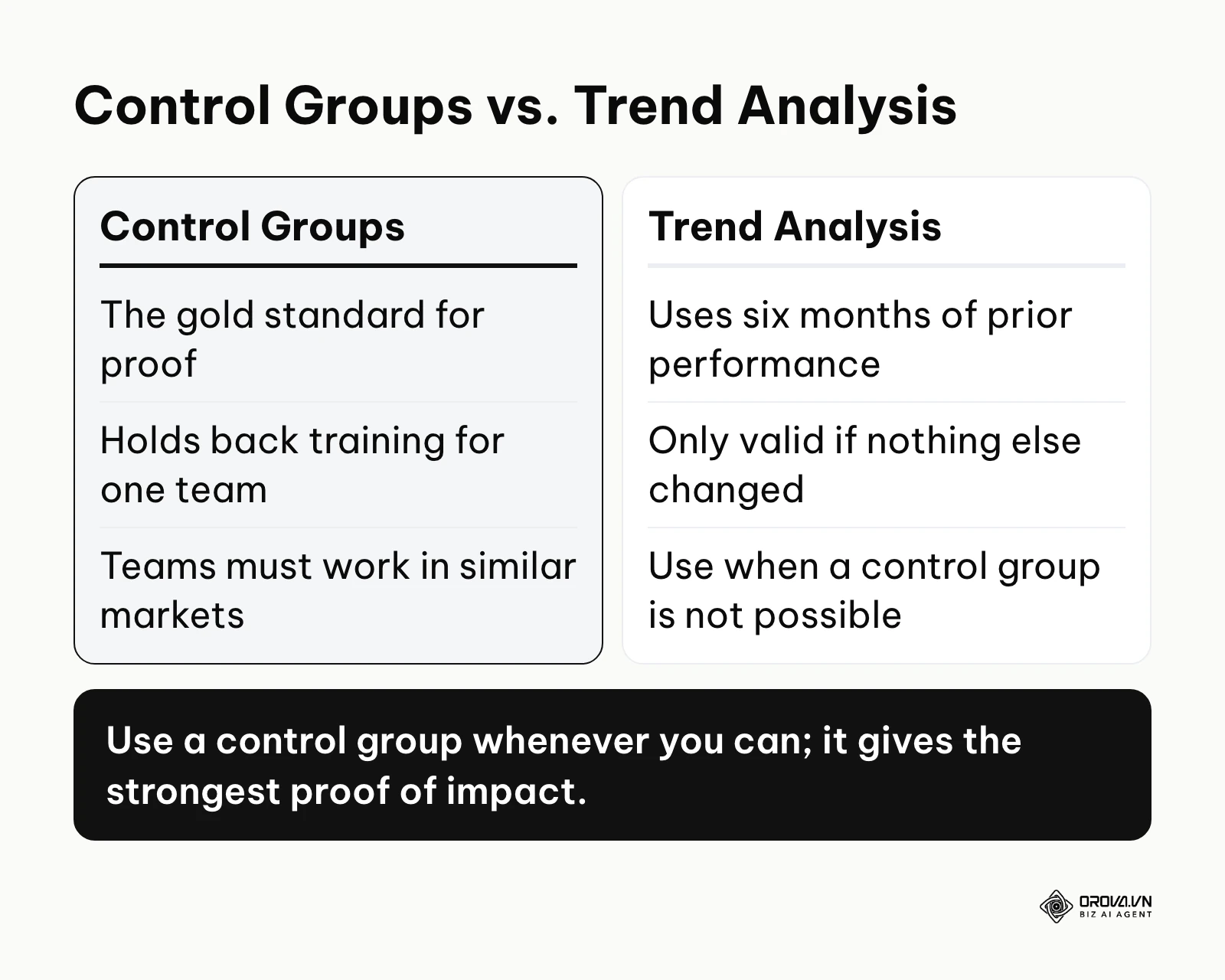
How to do it: This is the most critical and most frequently ignored step in the entire industry. The gold standard is to use a control group. Train Team A, but intentionally do not train Team B (yet). Ensure both teams operate in similar markets with very similar historical performance data. Track both groups rigorously over 90 days. If Team A's sales increase by 20% and Team B's naturally increase by 5% due to market trends, you can reasonably attribute the 15-percentage-point difference to your program.
If corporate politics mean you cannot use a control group, you must use trend line analysis. Look deeply at the performance trajectory for six months before the intervention. If the line suddenly and sharply spikes upward exactly when the program finishes, and no other variables changed, you have a strong correlation. Finally, as a last resort, use expert manager estimation. Ask supervisors: "Sales went up 20% overall. Based on your daily observation, what exact percentage of that increase do you believe is directly due to the new skills?"
Signs you are doing it right: You can confidently defend your numbers in a hostile board meeting because you have proactively accounted for and neutralized external variables.
Common errors: Naively claiming 100% of a massive revenue increase was due to your communication workshop when the company also happened to launch a 50% off discount promotion at the exact same time.
Step 5: Leveraging AI for qualitative sentiment analysis
What to do: Process hundreds or even thousands of open-ended survey text responses incredibly quickly to find hidden themes and emotional undertones without a human having to read every single line manually.
How to do it: Export your survey data from your platform into a standard spreadsheet. Copy the entire column containing the text feedback. Open a generative AI tool (like ChatGPT or Claude). Use this exact, highly effective prompt: "You are an expert HR data analyst. I am pasting raw text feedback from a recent corporate leadership workshop. Please thoroughly analyze this text and provide: 1) The overall sentiment breakdown (Positive, Neutral, Negative percentages). 2) The top 3 recurring complaints or structural barriers to learning. 3) The top 3 most intensely appreciated aspects. 4) A bulleted summary of highly actionable recommendations to improve the next session. Here is the data: [Paste Data]"
Signs you are doing it right: The AI rapidly highlights systemic, hidden issues (e.g., "The software simulation was consistently too slow on older laptops") that you might have easily missed when skimming individual, disjointed answers.
Common errors: Irresponsibly pasting sensitive, personally identifiable employee information (names, employee IDs, specific grievances against named managers) into public AI tools. Always carefully anonymize your data first or use secure, internal enterprise AI solutions.
Step 6: Calculate ROI and present findings to stakeholders
What to do: Translate your isolated, raw performance data into a compelling financial figure and create a powerful narrative for the executive leadership team.
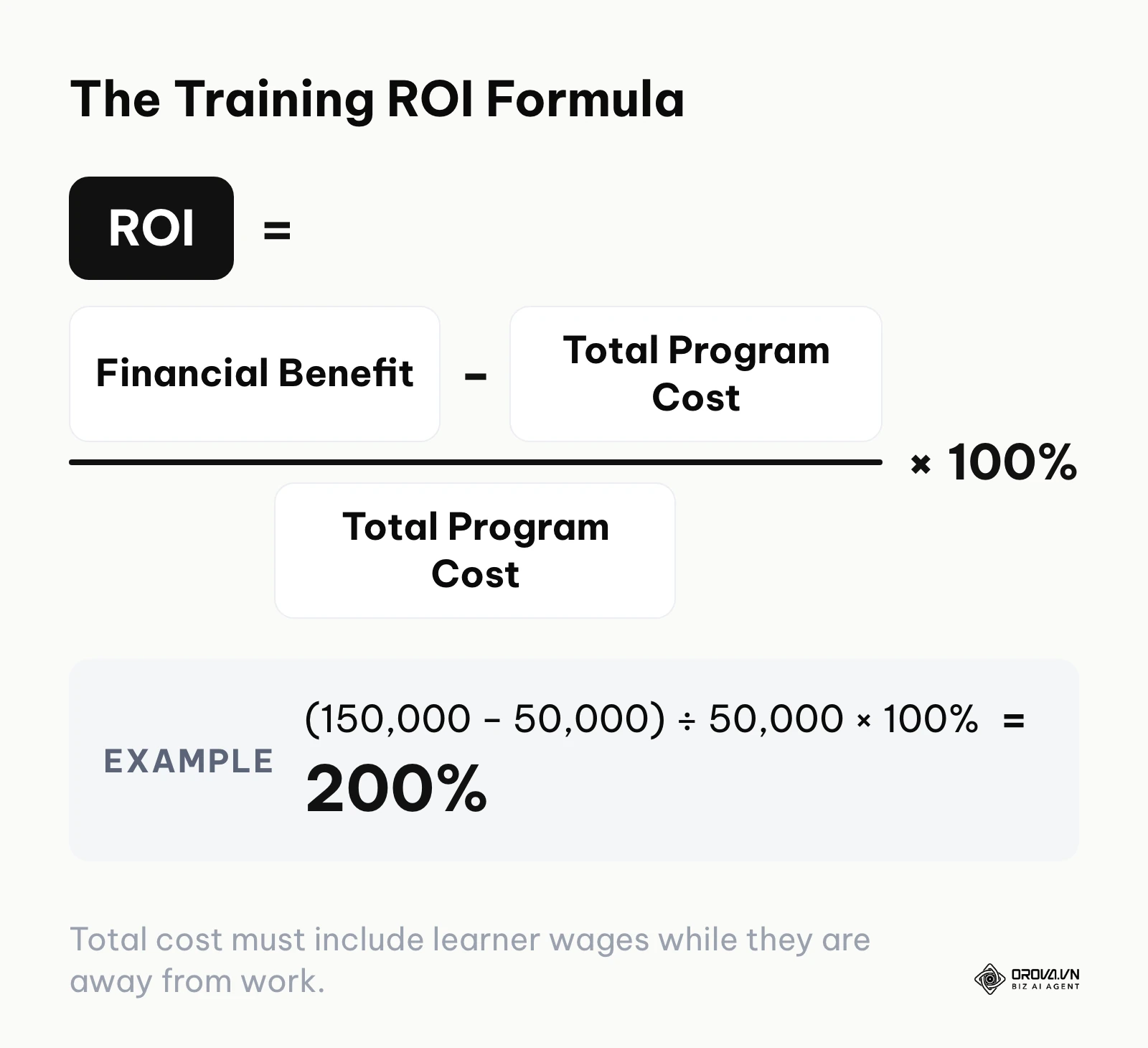
How to do it: First, meticulously gather your total costs (content development, external instructor fees, software licenses, and crucially, the hourly wage of all learners while they were sitting in a classroom away from productive work). Next, quantify the financial benefits based solely on your isolated data from Step 4. If the course saved 10 hours per week for 50 employees, calculate the exact financial payroll value of those saved hours. Subtract the total cost from the total financial benefit to find the net profit of the program. Divide the net profit by the total cost, and multiply by 100 to get the ROI percentage. For example, if the isolated benefit is worth 150,000 and the fully loaded cost is 50,000 (in whatever currency you report in), the ROI is (150,000 − 50,000) ÷ 50,000 × 100% = 200%. Present this data in a clean, highly visual dashboard, not a dense spreadsheet.
Signs you are doing it right: The executives stop asking defensively "What did the L&D team do all year?" and start asking proactively "How can we allocate more budget to scale this successful program?"
Common errors: Presenting raw, contextless data without a narrative. Numbers do not speak for themselves; you must clearly tell the story of the data and explain the human behavior behind the financial shift.
Struggling to track who has actually learned what? Orova Training lets you build courses, grade and certify with AI. Assign a course to a whole workspace, a group or individual people, then follow each person's progress, so you have solid baseline data before you evaluate.
Deep analysis: The Kirkpatrick model of training evaluation vs. ROI approaches
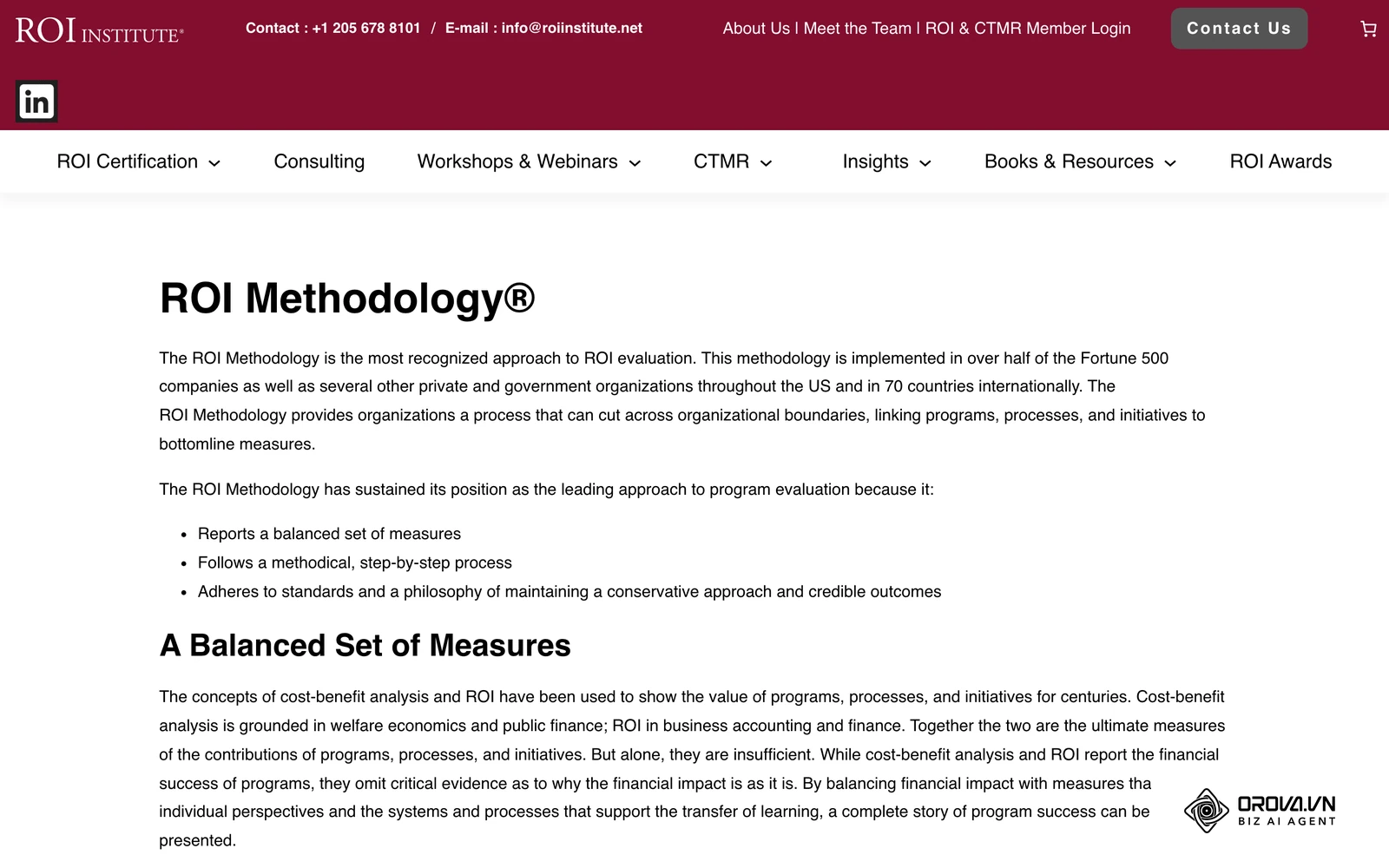
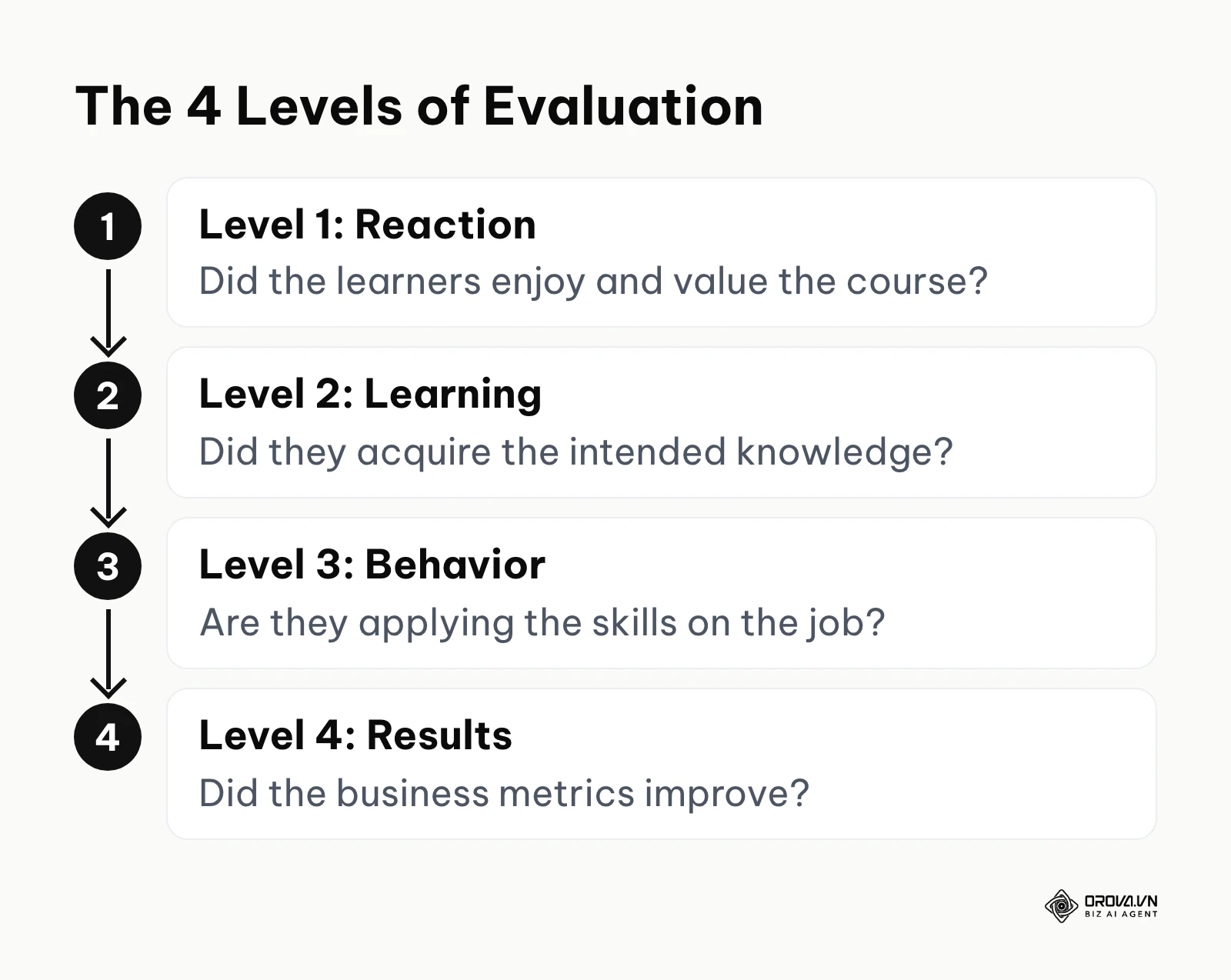
When you dive deep into the theory of training evaluation, you will inevitably encounter several established academic frameworks. The most famous and widely utilized is the Kirkpatrick model of training evaluation, originally developed in the 1950s. It neatly breaks the evaluation process into four chronological levels: Reaction, Learning, Behavior, and Results. While it remains highly foundational, modern, data-obsessed businesses often require significantly more financial rigor than Kirkpatrick natively provides.
| Framework / Approach | Best used for | Key weaknesses |
|---|---|---|
| Kirkpatrick 4 Levels | Standard corporate workshops, onboarding, and basic compliance | Does not explicitly measure financial return; notoriously difficult to isolate variables at Level 4. |
| Phillips ROI Methodology | High-cost, highly strategic executive initiatives | Exceptionally time-consuming; requires complex financial calculations and sometimes subjective estimations. |
| Kaufman's Five Levels | Programs intentionally impacting external societal stakeholders | Exceedingly hard to gather reliable data from external clients; deals with highly abstract societal concepts at the highest level. |
The constant trade-off in this field is always between statistical accuracy and human effort. Measuring learner reactions (Level 1) takes a few minutes via a web link. Calculating true, unarguable financial ROI takes months of dedicated observation, data cleaning, and statistical isolation. You must strategically decide which method perfectly fits your organizational maturity and the specific budget of the project. Teams that can show measured learning outcomes are usually in a stronger position when L&D budgets are reviewed.
Illustrative example (hypothetical numbers): Measuring customer service soft skills. Context: A mid-sized, regional retail chain (with 500 frontline employees) urgently wanted to improve their declining in-store customer experience scores. The HR director needed to heavily justify the requested budget of 20,000 (in local currency) for a new communication skills program. Steps taken: They actively deployed the Kirkpatrick model. For Level 1, they used mobile digital surveys immediately after the training session. For Level 2, managers role-played scenarios and scored them on a rubric. For Level 3, they hired mystery shoppers to evaluate the staff one month later without warning. For Level 4, they closely tracked the average transaction value at the cash register. Hurdles and fixes: The initial mystery shopper data was completely inconsistent because the external shoppers interpreted the scoring rubric very differently. The HR team quickly fixed this by providing a strict, binary behavioral checklist (e.g., "Did the employee verbally offer an upsell? Yes/No") instead of a highly subjective 1-5 rating scale. Visible results: The refined data showed a clear, undeniable behavioral change. Stores where staff scored exceptionally high on the mystery shopper checklist saw a sustained 12% increase in average transaction value compared to stores that had not yet received the program.
To further illustrate the intense financial aspect, let us look at calculating the ROI for a highly specialized, technical course.
Illustrative example (hypothetical numbers): Technical support troubleshooting program. Context: A large B2B IT services firm noticed their Tier 1 support agents were improperly escalating far too many tickets to Tier 2 engineers, whose time is highly expensive and limited. They built an intensive, custom troubleshooting workshop to stop this bleed. Steps taken: First, they firmly established the baseline: 40% of all incoming tickets were being escalated. They calculated with the finance team that every unnecessarily escalated ticket cost the company an extra 50 (in local currency) in wasted labor time. The custom workshop cost 10,000 to develop and deliver. After tracking a control group and the trained group for two full months, they found the trained group reduced escalations to 25%, while the control group stayed close to 40%. Hurdles and fixes: During the measurement period, a completely unrelated, major software bug caused a massive spike in the raw volume of all tickets. To properly isolate the program's effect, they compared the ratio of escalations (the percentage), not the raw volume, ensuring the external software bug did not skew the final results. Visible results: On a volume of roughly 3,300 tickets a month, the 15-percentage-point drop in the escalation ratio meant about 500 fewer escalations per month. At 50 saved each, that is 25,000 saved per month, or a projected 300,000 a year against the initial 10,000 investment. Treat a figure like this as a projection to be re-checked after a full year, not as a final result.
Measuring results: Indicators of a successful training program
Once you have successfully deployed your training evaluation methods, you need to track highly specific indicators. Knowing exactly where to look for this data within your corporate systems is just as important as knowing what to measure in the first place.
| Metric | Meaning and Value | Worrying Threshold |
|---|---|---|
| Knowledge Retention Rate | The percentage of crucial information correctly remembered 30 days later during a surprise quiz. | A low rate (set your own threshold up front, for example 60%) points to weak instructional design or missing post-course reinforcement. |
| Application Rate | How frequently the new skill is actually observed being used on the active job floor. | A low rate (for example, under 30% against your own target) usually means managers are not supporting the new behavior or the work environment blocks it. |
| Time to Proficiency | How quickly a brand new hire reaches standard, acceptable productivity levels compared to the past. | If it takes longer than the historical average, the current onboarding program is actively failing the business. |
| Net Promoter Score (eNPS) | The employee's stated likelihood to enthusiastically recommend the program to their peers. | A negative or consistently low score means the program is actively frustrating your workforce and wasting their time. |
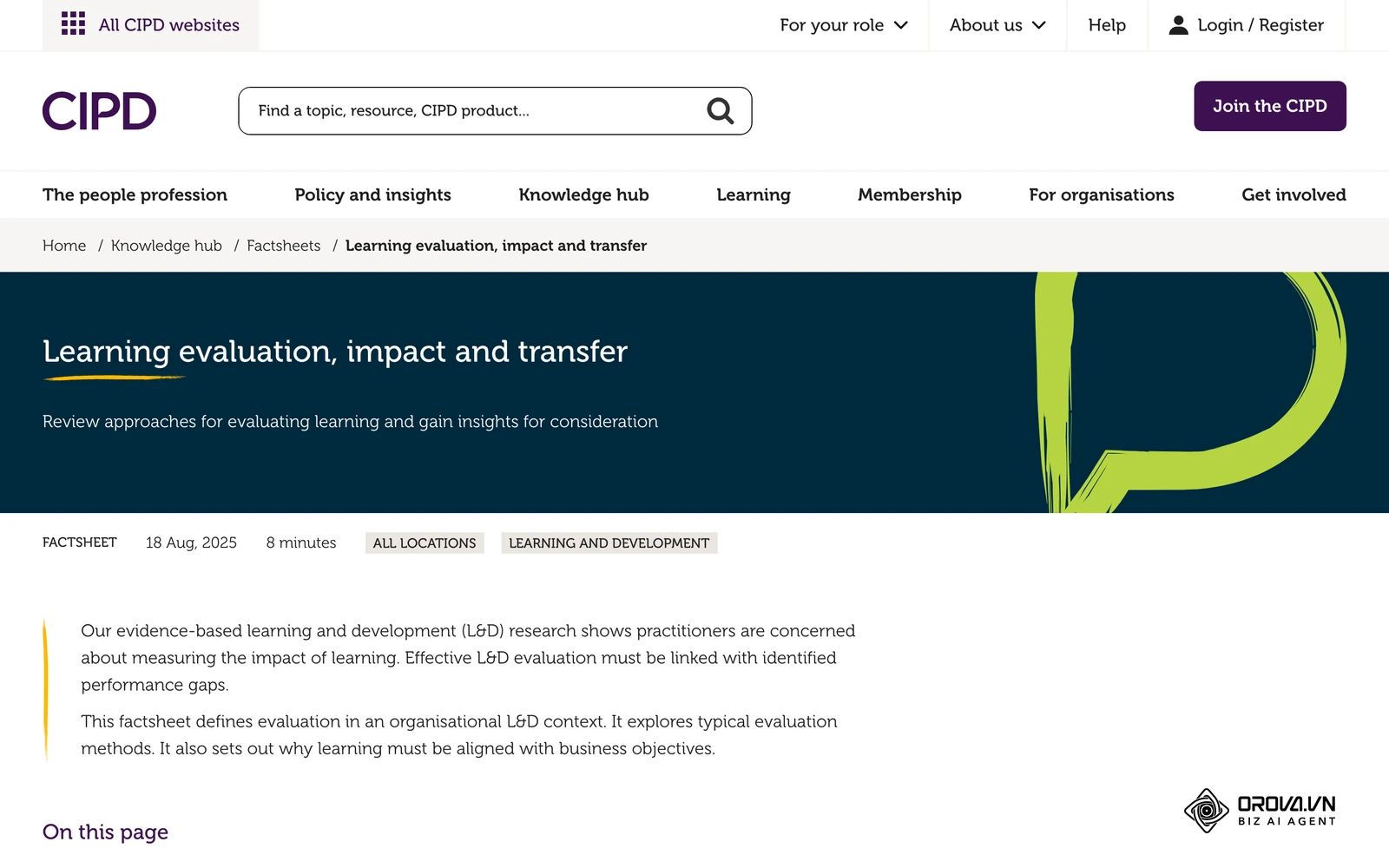
Illustrative example (hypothetical numbers): new sales reps historically needed 90 days to reach full productivity. An untrained comparison group of new hires still needs 85 days, while the trained cohort gets there in 45 days. Because the comparison group barely moved, most of the improvement can be credited to the program rather than to the market.
These diverse metrics give you a highly holistic view of success. Just like measuring marketing ROI requires a careful blend of qualitative brand sentiment and hard financial conversion numbers, thoroughly evaluating your educational efforts requires balancing learner satisfaction with bottom-line performance metrics.
Ready to measure learning instead of guessing? Orova Training runs online quizzes graded by AI (you can still adjust scores by hand) and awards a certificate automatically when a learner passes. Sign up today; it is free until July 7, 2027.
Common mistakes in training evaluation and how to avoid them
Even experienced HR professionals stumble when trying to prove the value of their work. Here are the most frequent pitfalls in training evaluation and how to avoid them.
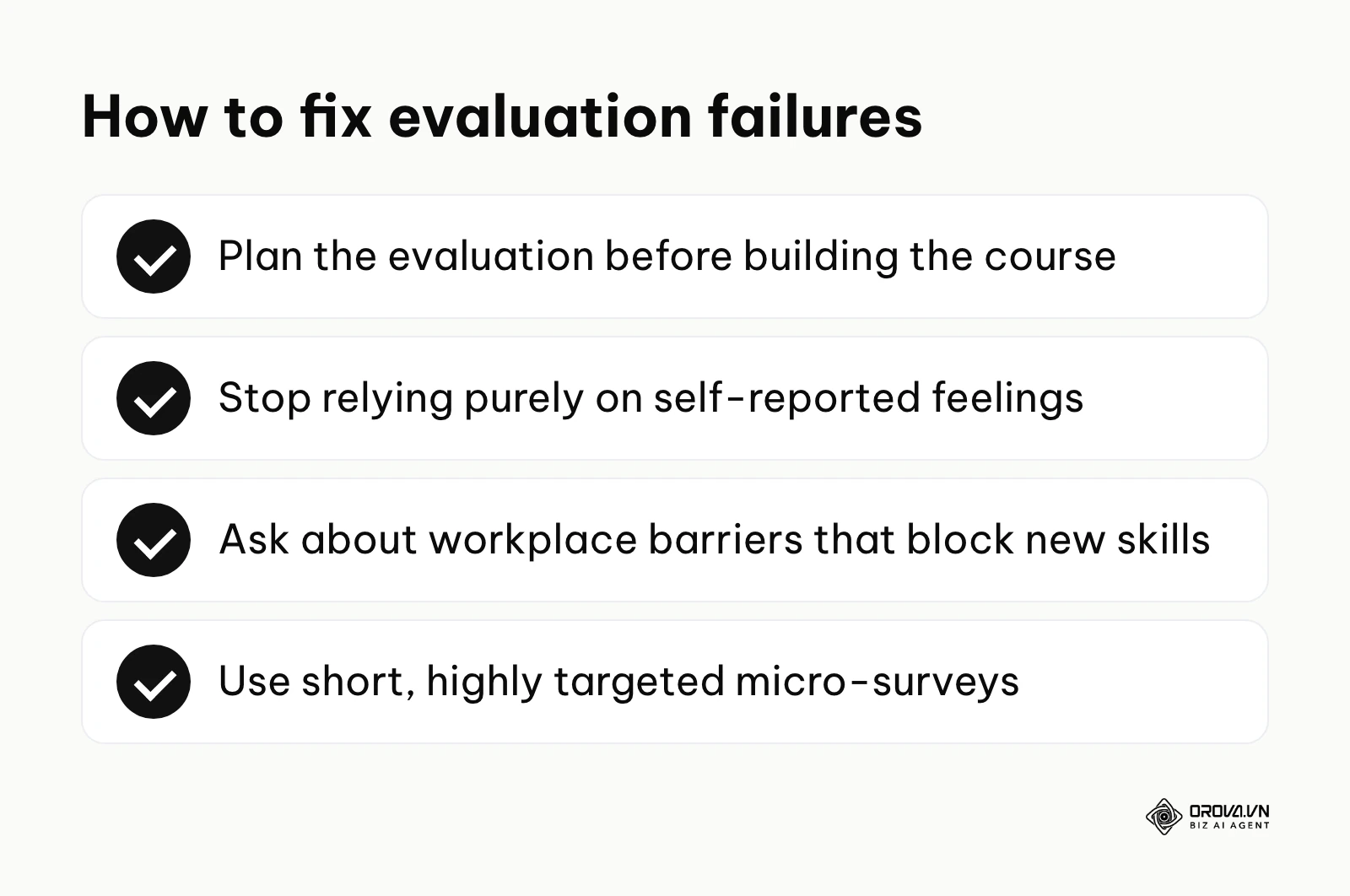
First, evaluating far too late in the process. If you wait until the course is finished to think about measurement, you have already lost the battle. You simply cannot establish a baseline retroactively. Always define your metrics during the initial design phase. Consequence: You cannot prove any growth because there is no "before" picture to compare against. Fix: Require every course proposal to include an evaluation plan before budget approval.
Second, relying solely on self-reported data. Asking an employee directly, "Did you improve your sales skills?" will almost always yield a positive answer due to natural human bias and the desire to please the boss. Satisfaction surveys on their own often paint a far rosier picture than the actual business results. Consequence: Inflated success metrics that do not match real performance on the sales floor. Fix: Always triangulate your data. Combine the employee's self-assessment with direct manager observation and hard system data (like CRM activity logs).
Third, completely ignoring the realities of the work environment. You can teach excellent leadership skills in a classroom, but if the company culture punishes risk-taking, the new skills will not be used. Consequence: Unfairly blaming the course curriculum for a failure that was actually caused by a toxic management culture or broken software tools. Fix: Always include explicit questions in your surveys about environmental barriers (e.g., "Do you currently have the software tools needed to apply this new skill today?").
Fourth, surveying everyone, everywhere, all at once. Survey fatigue is a very real corporate phenomenon. If you send a 50-question survey after a 10-minute video, people will click randomly just to make it go away. Consequence: Unreliable data that ruins your analysis and misleads the executive team. Fix: Strictly match the length of the survey to the length and importance of the program. Keep micro-learning surveys to a maximum of one or two highly targeted questions.
Fifth, fearing negative feedback from learners. Some learning coordinators actively hide bad reviews or skew the data because they fear budget cuts or personal reprimand. Consequence: The program never improves, the flaws compound, and the company wastes money year after year on ineffective, hated content. Fix: Treat negative data as a design problem, not a personal failure, and use it to improve the next version of the curriculum.
Illustrative example (hypothetical numbers): Attempting to measure the impact of compliance training. Context: A large financial institution rolled out mandatory, highly dry anti-money laundering (AML) modules. To prove it worked, they measured the raw number of AML reports filed by staff before and after the rollout. Steps taken: They tracked the HR dashboard for course completion and the legal department's dashboard for submitted reports. They noticed a sharp drop in reports and immediately assumed the program failed to teach employees how to spot fraud. Hurdles and fixes: The evaluation method itself was fundamentally flawed. The drop in reports was actually because the firm had quietly stopped accepting high-risk international clients at the exact same time. They fixed the evaluation strategy by actively testing the staff with simulated, fake transactions injected into their workflow, rather than relying on live, unpredictable market data. Visible results: The simulated tests definitively proved that 95% of staff could accurately identify the subtle markers of money laundering, completely validating the course's effectiveness despite the confusing, skewed real-world data.
Training evaluation trends in the next few years: my perspective
Based on the rapid current trajectory of workplace technology up to 2026, I believe the way we assess corporate learning will fundamentally shift. The traditional days of manual spreadsheets and delayed, generic surveys are rapidly ending.
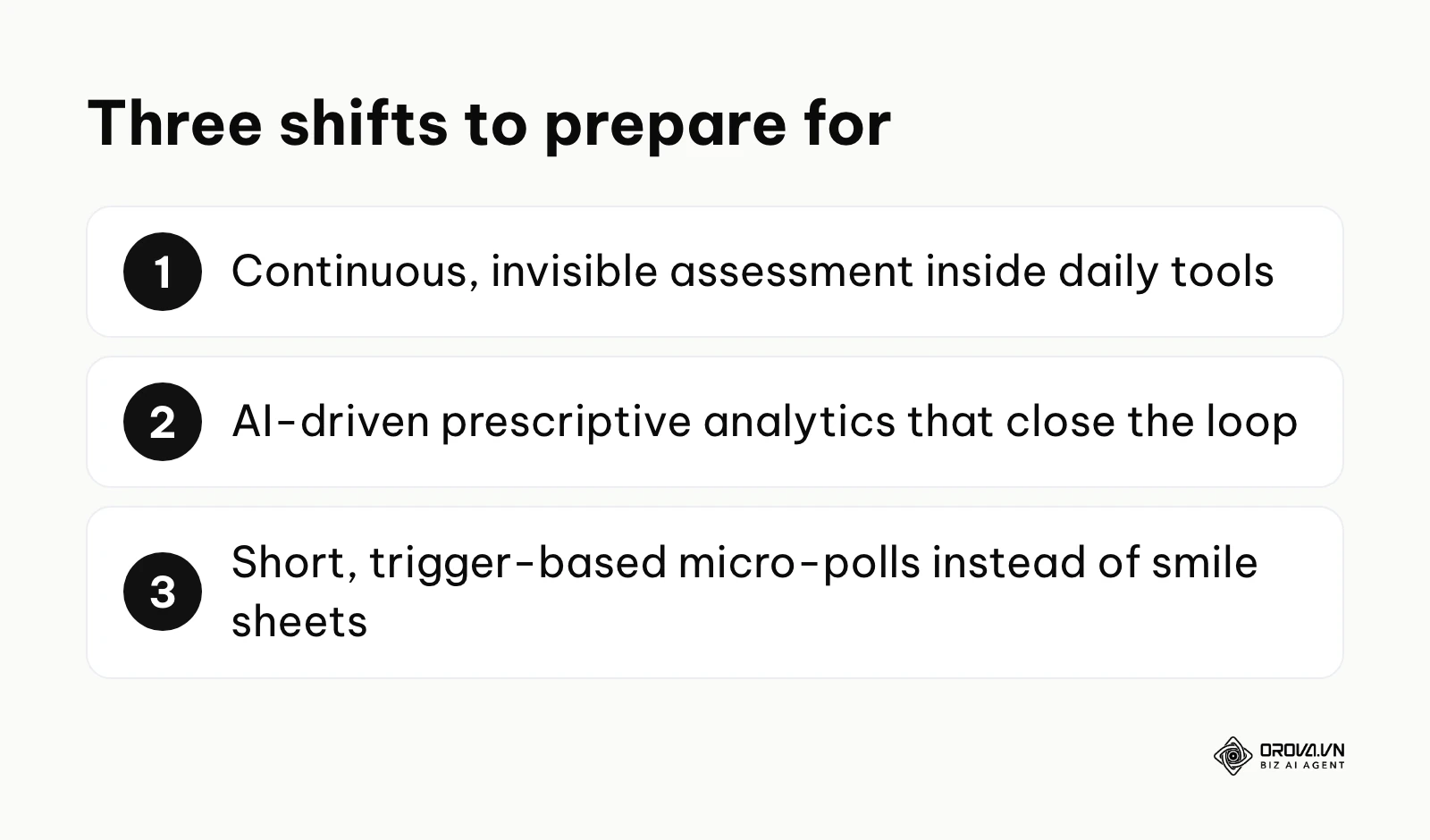
Continuous, invisible assessment The first major shift I see is the aggressive move away from formal, stop-work testing toward continuous, invisible assessment. Right now, we force people to stop working to take a test. In the next few years, I believe enterprise systems will evaluate competence passively by directly observing work within digital platforms. For example, an AI embedded directly in a CRM will analyze a salesperson's daily emails and automatically score their negotiation skills, feeding that data directly into the learning management system without a single quiz being administered. You should thoroughly prepare by integrating your learning platforms deeply into your daily operational software.
AI-driven prescriptive analytics Currently, we mostly use data to look backward—asking "did the program work?" I think AI is likely to push this toward a more prescriptive model. AI will automatically analyze a sudden, unexplained dip in a specific team's performance, instantly identify the exact skill gap causing the issue, draft a custom micro-learning module using AI-generated content, and then check its effect as performance recovers. This could turn training evaluation into a much tighter loop rather than a massive annual HR project. You need to start familiarizing yourself with advanced AI data analysis tools today to stay relevant in the field.
The death of the generic survey I expect the generic "smile sheet" to lose much of its weight. Many employees skim through them or answer to please. Instead, I expect companies to adopt highly contextual, trigger-based micro-polling. Imagine a software developer finishing a secure coding module, and three days later, exactly when they are about to push a risky piece of code to the server, a one-question prompt appears natively in their IDE asking a specific behavioral question. This approach is likely to improve both response rates and accuracy. You should start breaking your long, tedious surveys into tiny, highly contextual questions triggered by actual workplace events.
Frequently asked questions about training evaluation
What is the most common model for training evaluation?
The Kirkpatrick model of training evaluation is the most widely used starting point. It neatly breaks the evaluation process into four distinct levels: Reaction (did they like the experience?), Learning (did they acquire the new knowledge?), Behavior (are they actively applying it at work?), and Results (did it tangibly impact the business metrics?). While most organizations easily achieve the first two levels, they consistently struggle with the latter two due to statistical complexity.
How can AI help in evaluating training programs?
AI drastically reduces the enormous time required to process messy qualitative data. Instead of a human reading hundreds of survey comments, you can easily use generative AI to perform instant sentiment analysis, accurately extract the most common complaints, and summarize actionable suggestions. Furthermore, AI can help automatically correlate learning completion data with massive business performance datasets much faster and more accurately than a human using standard spreadsheets.
Why is calculating ROI so incredibly difficult?
Calculating the true financial return requires strictly isolating the impact of the education from every single other variable operating in the business. If regional sales increase, it is statistically very difficult to definitively prove that the increase was solely due to a recent workshop and not a brilliant new marketing campaign, a major competitor going out of business, or simple seasonal trends. This requires highly rigorous control groups and complex data analysis, which many HR departments severely lack the resources to execute.
What should I do if the survey response rate is consistently below 20%?
If fewer than 20% of your employees are bothering to respond to post-course surveys, you have a severe design problem. First, make the surveys significantly shorter. Second, ensure they are perfectly mobile-friendly. Third, embed them directly into the daily workflow or use modern tools like an online quiz maker that offers gamified, engaging interfaces. Finally, communicate clearly and loudly to employees that their feedback directly shapes future courses; people ignore surveys when they feel their opinions simply disappear into a corporate black hole.
Does every single course need to be evaluated at Level 4 (Results)?
Absolutely not. It is a massive waste of corporate time and money to try and calculate the strict business impact of a generic time-management webinar or a legally required annual harassment training video. Reserve deep Level 4 evaluation exclusively for highly strategic, highly expensive programs that are directly tied to core, vital business objectives, such as a massive leadership development overhaul or a total restructuring of the sales process.
Where to start?
You absolutely do not need to completely overhaul your entire HR department or buy expensive software overnight. The best approach to mastering training evaluation is highly incremental. Depending on where your organization is right now, here is the immediate, practical next step you should take.
If you are currently only tracking basic completion rates and nothing else: Your immediate next step is to implement a standardized Level 1 and Level 2 assessment framework. Do not worry about business impact or ROI yet. Spend just one afternoon creating a tight, 5-question survey focused purely on job relevance, and add a short, 3-question knowledge check at the very end of your most important, high-traffic course.
If you are actively collecting feedback but nobody ever reads it or acts on it: Your next step is to force a regular data review rhythm. Schedule a hard, 30-minute meeting every single month with key departmental stakeholders to review the evaluation data of the past 30 days. Force the uncomfortable conversation by asking: "Here is what the data clearly says; what exactly are we going to change next month based on this?"
If you want to start measuring business impact but lack technical tools: Your next step is to pick just one high-profile upcoming program and define its sole success metric with the department manager today. You do not need fancy analytics software; a shared online spreadsheet tracking one specific KPI (like customer error rate) for a small control group versus a trained group is more than enough to start proving real value to the board. If you build courses in-house with elearning authoring tools, add the knowledge check and the KPI tracking plan to your course template so every new course ships with its own measurement plan.
About the author

Builder of Orova
Nguyễn Đỗ Trọng Ân has 8 years of experience in marketing, including 6 years managing market development across Asia. He builds Orova, a Biz AI Agent that never sleeps: it plans, runs and optimizes work for businesses.
Run your business with AI Agents
Orova is the always-on Biz AI Agent — it plans, runs, and optimizes the work for you.
Save time, unlock productivity.