
What is a SCORM compliant LMS? A practical testing guide

Many organizations struggle when migrating training programs to a new platform, only to realize their expensive interactive courses are entirely broken. You might have spent months building an intricate onboarding module, but the new software refuses to track completions. This is the exact nightmare a scorm compliant lms is designed to prevent: it is a learning platform that can import, play and track any course packaged to the SCORM standard, no matter which authoring tool built it. If you are evaluating a new platform, understanding how to test a scorm package in lms and ensuring true compatibility is critical to protecting your long-term investment.
The e-learning industry is notorious for dense technical jargon, misleading vendor claims, and hidden migration costs. When a vendor promises their system can handle any file you upload, the reality is often much more complicated. This comprehensive guide breaks down the technical mechanics of interoperability, provides a clear testing framework, and helps you evaluate the best systems for your learning ecosystem without relying blindly on marketing materials.
What is a SCORM Compliant LMS?
A SCORM compliant LMS is a learning management system designed to properly read, play, and track educational content packaged according to the Sharable Content Object Reference Model standard. It functions as a universal player, enabling e-learning modules from various authoring tools to run smoothly without requiring custom developer integration.
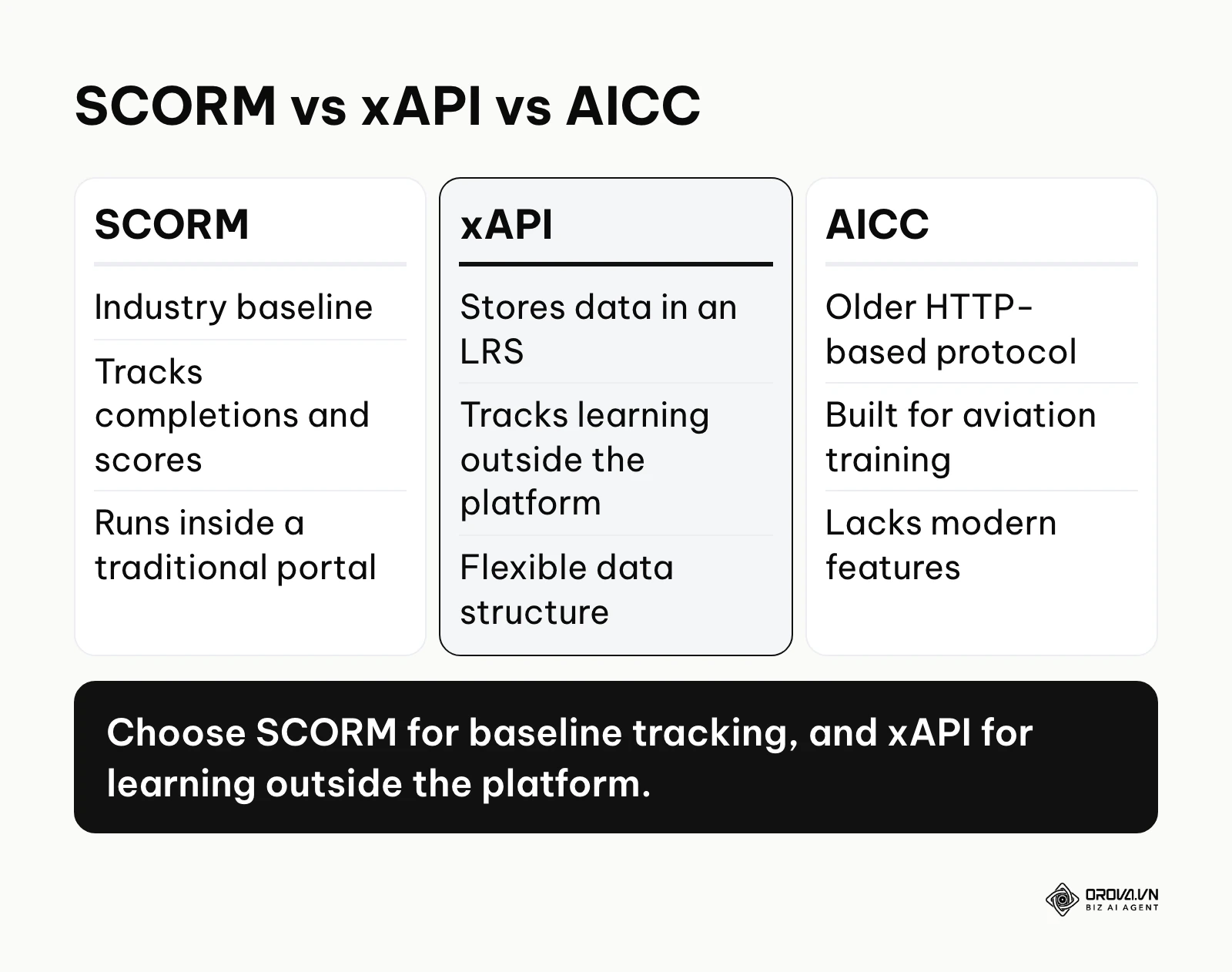
The standard came out of the Advanced Distributed Learning (ADL) Initiative, which the United States Department of Defense set up in 1997, and its first version was released in 2000. Its goal was interoperability: courses that could move between platforms across defense and corporate environments. Before this standard existed, if a company built a course using one software, it was permanently locked into that specific hosting platform.
It is crucial to understand the difference between being "compliant" and being "conformant." Many vendors market their platforms as "compliant," which is generally a self-assessed claim meaning their software can usually handle standard ZIP files without crashing. In contrast, a "conformant" claim should mean the system has passed the ADL conformance test suite for a specific SCORM version and edition. When dealing with complex enterprise deployments, ask vendors exactly which version and edition they tested against, and ask to see your own package run on their platform rather than accepting a generic compliance claim.
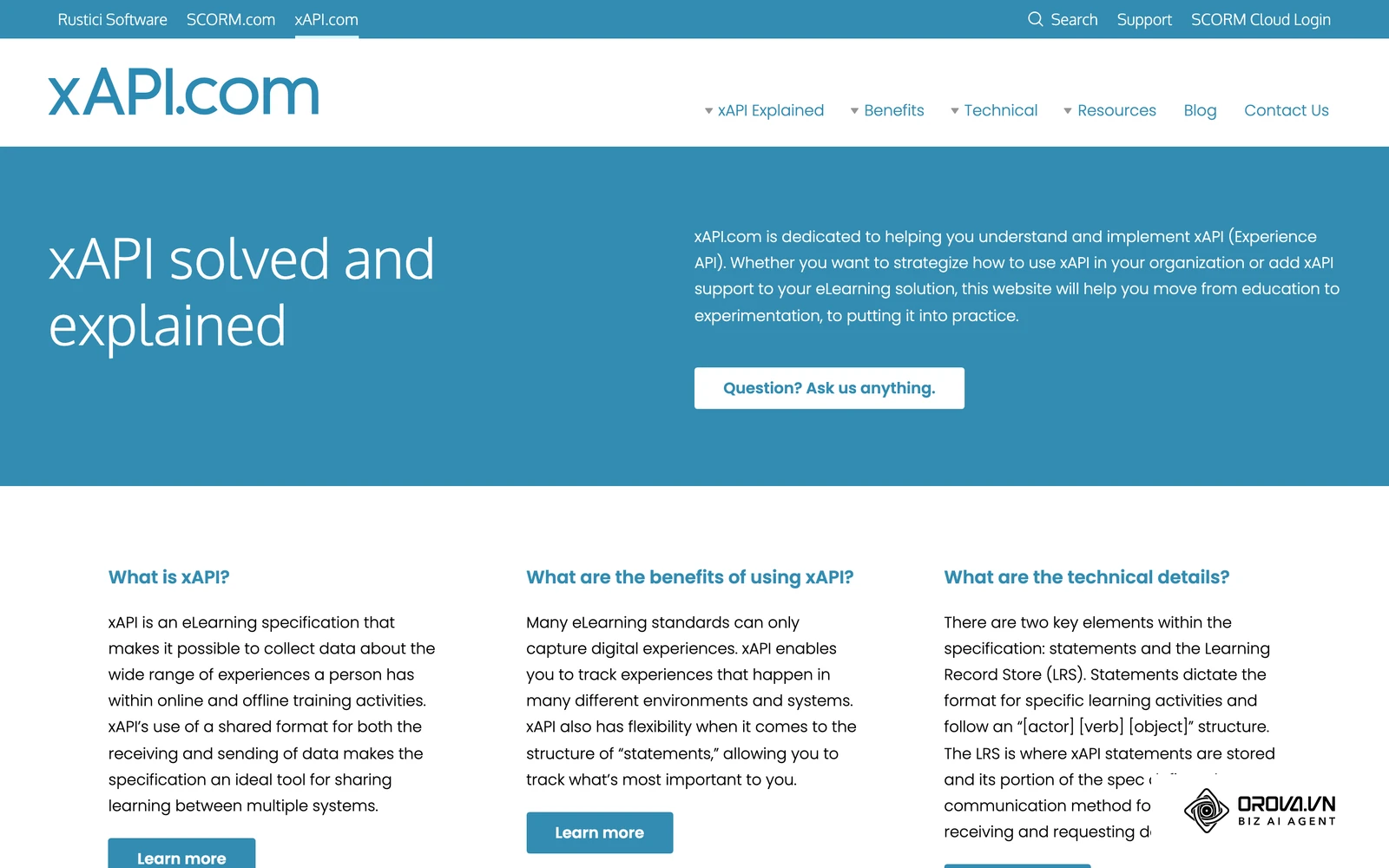
To better understand where this standard fits, it helps to compare it to other prominent industry protocols.
| Concept | Difference | Example |
|---|---|---|
| SCORM | The industry baseline for tracking completions, time spent, and basic quiz scores within a traditional portal. | A desktop compliance course that records a final score of 85%. |
| xAPI (Tin Can) | A flexible protocol that tracks learning experiences anywhere, even outside the platform, storing data in a Learning Record Store (LRS). | Tracking that an employee watched a YouTube video or attended a live seminar. |
| AICC | An older HTTP-based protocol originally built for the aviation industry, known for high security but lacking modern features. | A legacy aviation safety module hosted on an external server. |
To put it in everyday terms, think of the standard like a DVD and the platform as the DVD player. It does not matter if the movie was produced by Universal Studios or Warner Bros; as long as the movie is burned onto a standard DVD, you can insert it into any brand of DVD player (Sony, LG, Panasonic) and it will play perfectly.
The Core Purpose of a SCORM Compliant LMS
The primary purpose of a SCORM compliant LMS is to eliminate vendor lock-in by standardizing how e-learning content communicates with the hosting platform. It ensures that any course authored in any tool can be seamlessly imported, played, and tracked.
In the broader picture of enterprise learning architecture, the ecosystem consists of three distinct layers. First, the authoring tool (where instructional designers create the content). Second, the packaging standard (the ZIP file that acts as the bridge). Third, the delivery platform (where learners access the material and administrators track the data). The standard exists purely as the middleman, standardizing the language so the first layer can talk to the third layer.
If you choose to ignore this standardization and rely entirely on native course builders provided by a specific vendor, you risk massive data loss and administrative rework. If that vendor raises their prices or goes out of business, you cannot easily extract your interactive courses. You would have to rebuild years of training material from scratch in a new system.
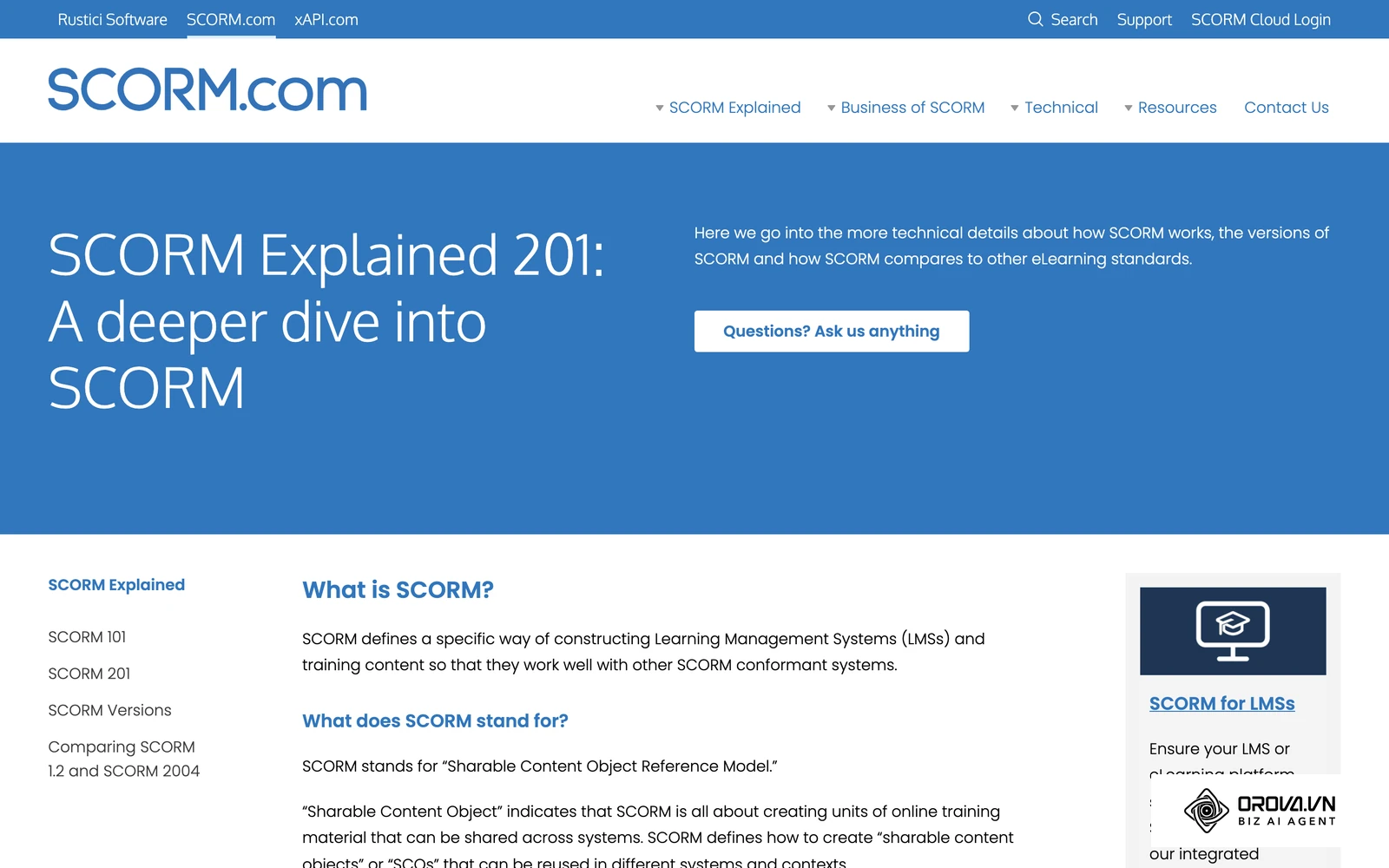
If you are still mapping out what e-learning can do for your organization, treat support for universal standards as a critical protective measure from day one.
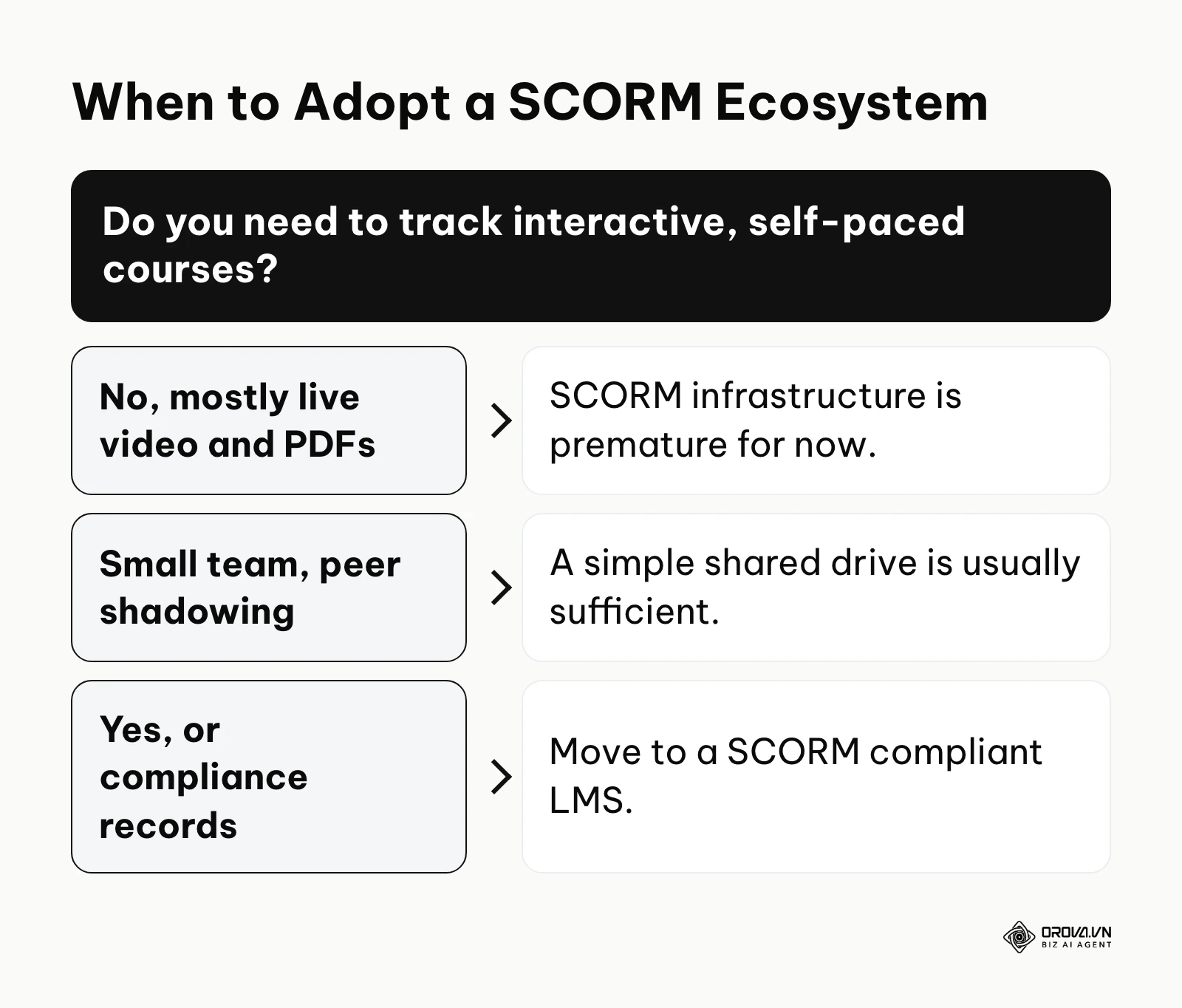
When you do not need a SCORM compliant LMS yet: If your organization primarily conducts live training via video conferencing and shares static PDF documents, investing in complex SCORM infrastructure is often premature and wastes resources. Similarly, if you are a small startup with only a handful of employees learning through unstructured peer shadowing, a simple shared drive is usually sufficient. You should generally transition to a standard environment only when you need to automate tracking for interactive, self-paced courses across a growing workforce, or when regulatory compliance mandates strict completion records.
Value and Business Benefits of SCORM Implementation
Implementing a standardized learning ecosystem delivers distinct layers of value, impacting both the overarching business strategy and the daily operations of the learning and development team.
Risk Mitigation and Vendor Independence
For the business, the most significant value is risk mitigation. When your training assets are standardized, they become portable. You are never held hostage by a single software vendor. This portability drastically reduces the long-term total cost of ownership. If a better, more cost-effective platform enters the market, you can move your library of interactive courses far faster than rebuilding it.
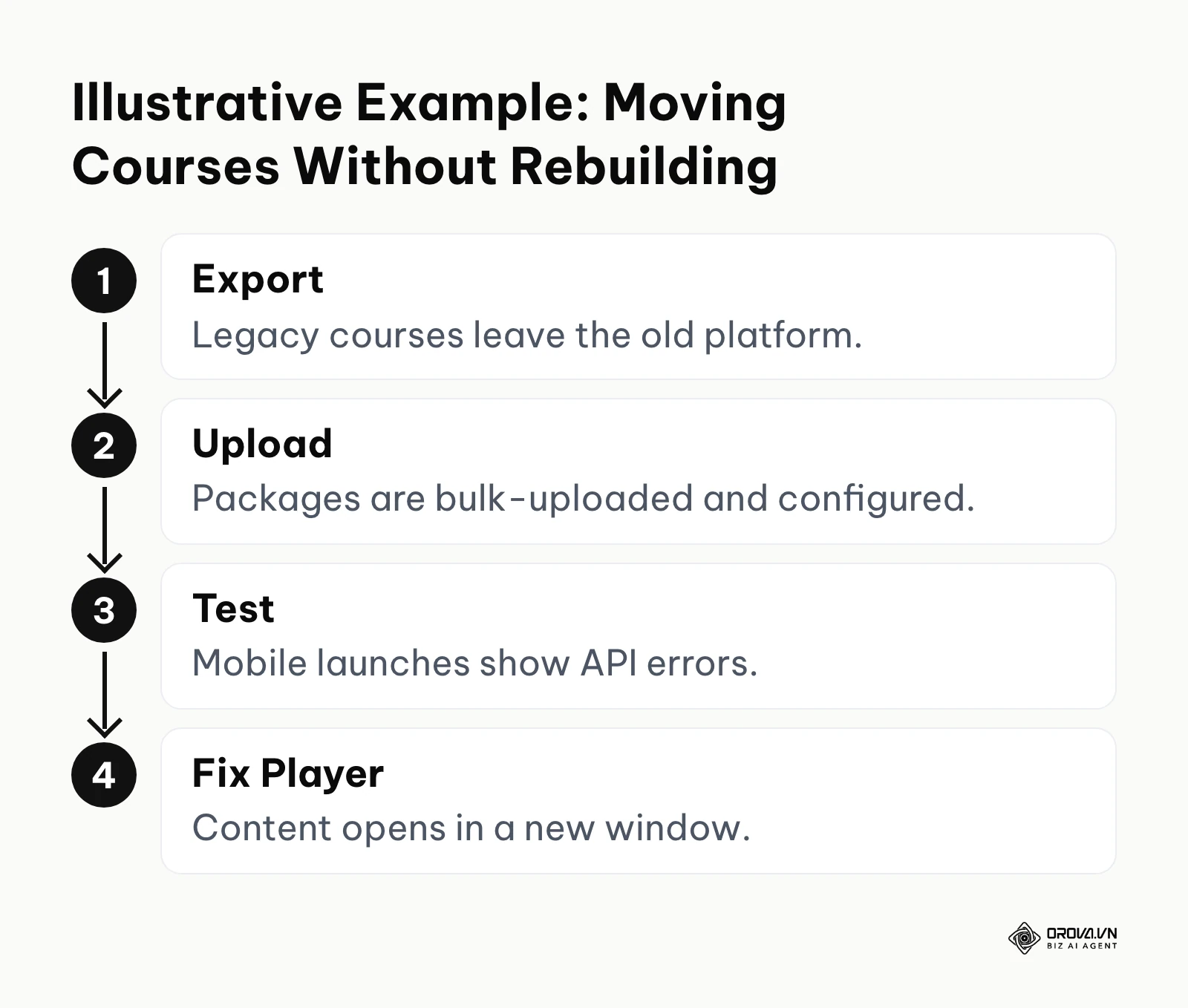
Illustrative example: A large healthcare network needed to deploy annual compliance training to 5,000 nurses.
- They exported their legacy courses, bulk-uploaded them to a newly purchased platform, and configured the runtime settings.
- During initial testing, the old packages threw API connection errors on mobile devices, preventing data logging.
- They quickly adjusted the platform's player settings to launch the content in a new responsive window instead of a constrained iframe.
- The network achieved fully auditable completion logs within a week, preventing costly compliance fines without having to rebuild the source files.
Content Reusability and Modular Design
For the direct practitioner, the standard enables true content reusability. Instructional designers can build a highly interactive module—like a communication skills simulation—and reuse that exact same module across multiple different courses or learning paths. This modular approach saves significant development time. The same logic applies to game-style modules: a gamified LMS still needs a reliable way to record scores and completions.
Illustrative example: A financial services firm wanted to transition from live workshops to asynchronous onboarding for tellers.
- The team authored interactive simulations, tested the ZIP files in a sandbox, and deployed them regionally.
- They encountered a hurdle when the system failed to record bookmarking data because the course exceeded the 4096-character limit of the standard's older version.
- They simply republished the content using a newer standard edition to increase the data limit.
- Learners could successfully resume training after interruptions, leading to a smoother onboarding experience and higher completion rates.
Deep Data Tracking and Reporting
Beyond portability, the standard provides a highly structured framework for data collection. Instead of just knowing if someone clicked a link, administrators can track exactly how much time was spent on a module, which specific quiz questions were answered incorrectly, and where learners are dropping off. If you are focused on measuring real ROI from your training programs, this granular data is absolutely essential.
Illustrative example: A global tech enterprise needed to train external partners on a complex new software release.
- They created modular lessons, assigned them via a multi-tenant portal, and set up automated reporting dashboards.
- The native reporting engine initially only showed pass/fail metrics instead of detailed question analysis.
- They utilized a specialized data extraction integration to pull the exact interaction logs from the API.
- The team identified exactly which software concepts confused partners, allowing them to issue targeted content revisions quickly.
| Benefit | Measured by Metric | When It Pays Off |
|---|---|---|
| Vendor Independence | Reduced migration hours | During your next platform migration |
| Content Reusability | Decreased course development time | When a module is reused in a second course |
| Advanced Tracking | Granularity of extracted reports | From the first completed course |
Want courses that are easy to build and track? With Orova Training you can build courses, grade and certify with AI, assign them by workspace, person or group, follow each learner's progress, and export SCORM 1.2 packages to Moodle or Canvas.
How a SCORM Compliant LMS Works Under the Hood
To truly evaluate a platform, you must understand the mechanical processes that occur when a course is launched. The architecture consists of several interconnected components, each responsible for a specific phase of the learning experience.
The Package Parser
When you upload a ZIP file, the platform does not simply store it like a regular document. It utilizes a parser to read a specific file located at the root of the ZIP, called imsmanifest.xml.
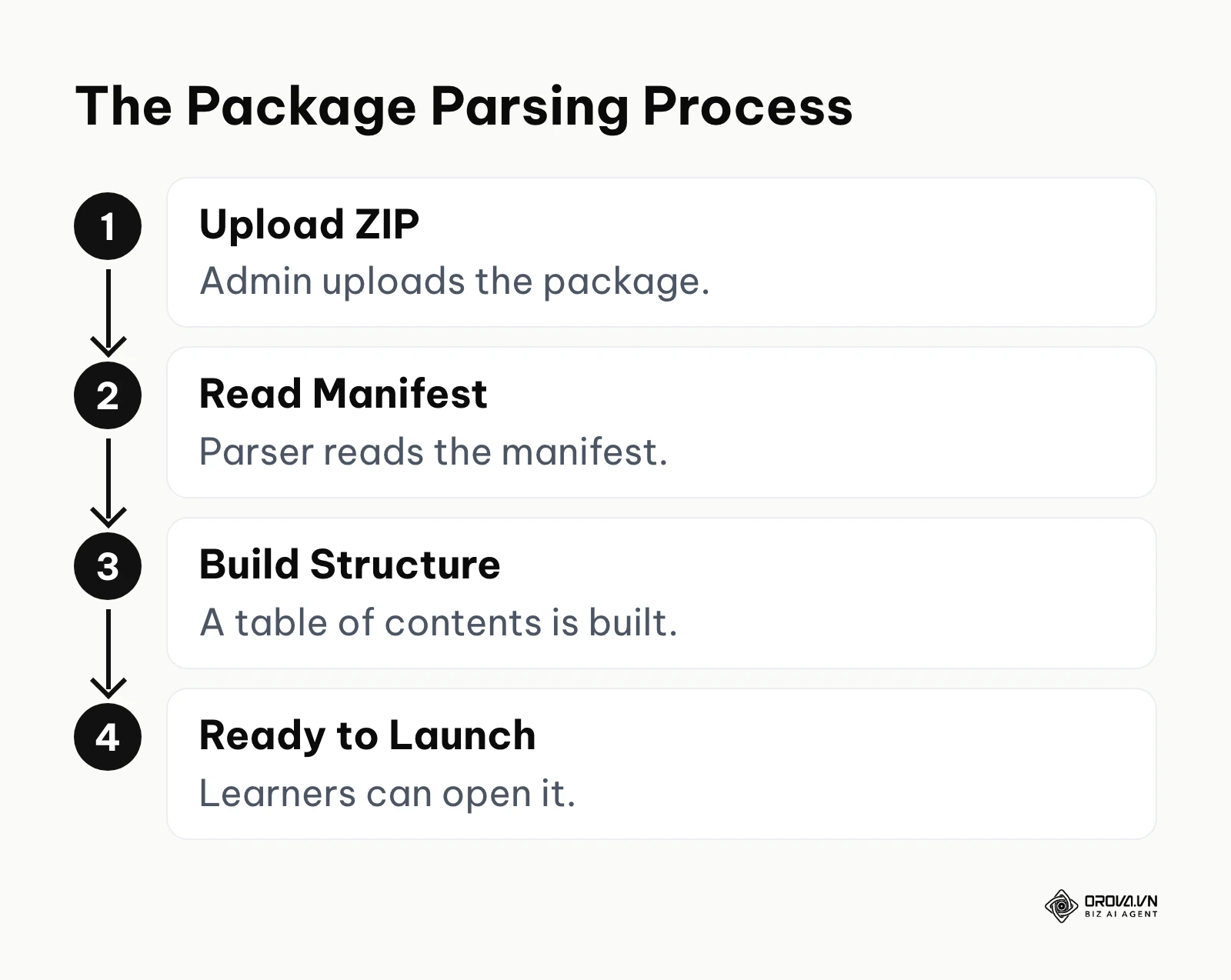
- What it does: It reads the XML code to understand the structure of the course, identifying the title, the sequence of modules, and the location of the media assets.
- Input: A compressed ZIP file containing HTML, JavaScript, images, and the XML manifest.
- Output: A structured table of contents displayed in the learner portal.
- Common failure point: Syntax errors in the XML file (like a missing closing tag) will cause the upload to fail entirely.
The API Runtime Environment (Player)
Once the course is launched, the platform generates a dynamic environment often called the player.
- What it does: It opens the course content (usually in an iframe or a popup window) and injects a JavaScript API adapter that the course uses to communicate.
- Input: The learner's click to launch the course.
- Output: The visual display of the interactive slides and videos.
- Common failure point: Responsive design conflicts. If the platform forces the course into a rigid iframe, mobile users often experience cut-off screens or frozen navigation buttons.
The Tracking Database Integration
As the learner interacts with the content, the course sends constant data signals back to the server.
- What it does: It processes API calls such as LMSSetValue to record specific data points like cmi.core.lesson_status (passed, failed, incomplete) and cmi.core.session_time.
- Input: JavaScript signals triggered by the learner's actions (e.g., clicking 'Next' or submitting a quiz).
- Output: Database records updating the learner's transcript in real time.
- Common failure point: Network interruptions. If the learner loses internet connection, the API calls fail silently, resulting in lost progress.
SCORM 1.2 vs 2004 LMS Compatibility
A major source of confusion in the market is the difference between versions. Many platforms and authoring tools still default to the 1.2 version because of its simplicity and wide adoption.
The 1.2 version is excellent for basic tracking, but it has a severe limitation: it can only store 4,096 characters of suspend data (the memory used to remember where a learner left off). If a course is highly complex with hundreds of variables, it can exceed this limit, and the learner's progress may not be saved. SCORM 2004 4th Edition raises the limit to 64,000 characters. Furthermore, 2004 introduces complex sequencing and navigation, allowing course designers to build branching scenarios (e.g., if the learner fails module A, force them to review module B). Understanding this difference is vital when assessing scorm 1.2 vs 2004 lms compatibility, as many platforms claim 2004 support but only support the basic tracking, not the advanced sequencing rules.
How to Test SCORM Package in LMS Before Buying
Never purchase a platform without testing your own files first, and make this test a fixed step in your LMS selection process. Vendors will often run their own optimized files during demos. You need a rigorous testing protocol to determine if an error originates from your authoring tool or the vendor's platform.
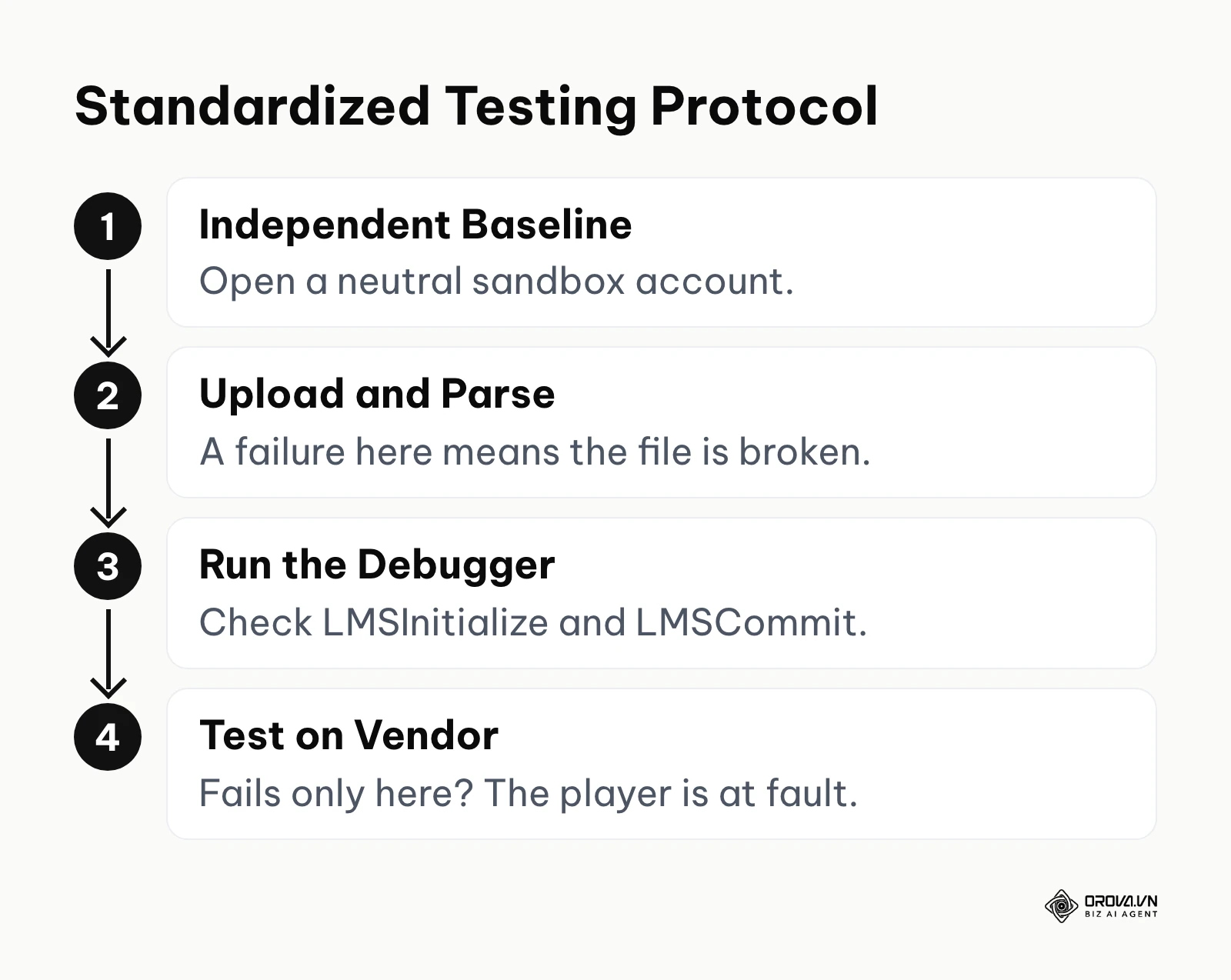
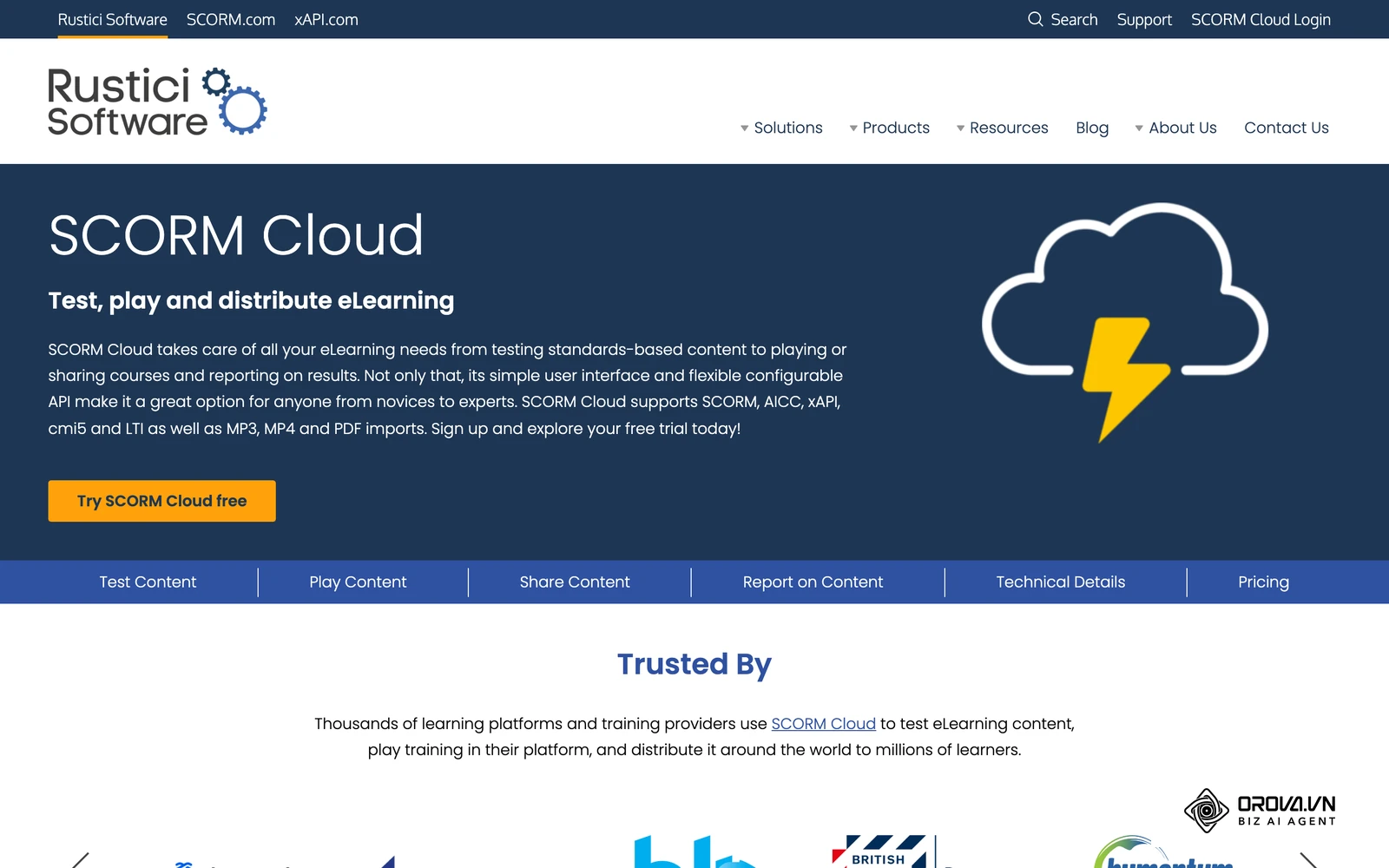
- Create an independent baseline: Register for a free trial of SCORM Cloud, Rustici Software's hosted testing service, or use another neutral SCORM player you trust.
- Upload and parse: Upload your ZIP file to the sandbox. If it fails here, your authoring tool exported a corrupted manifest, and you must fix the file itself.
- Run the debugger: Launch the course and complete a few slides. Open the debug logs and verify that the LMSInitialize and LMSCommit calls are registering successfully.
- Test on the vendor platform: If the file works perfectly in the sandbox but fails during your vendor trial, the issue is definitively caused by the vendor's player implementation. Do not let them blame your file.
Best LMS for SCORM Reporting
The true test of a system's capability is not just playing the file, but extracting the data. The best platforms for reporting go beyond simple pass/fail metrics. They allow administrators to query cmi.interactions, which reveals exactly which multiple-choice option a learner selected, how long they lingered on a specific scenario, and where the common drop-off points occur. If reporting is your main reason for buying, you must evaluate the reporting engine deeply.
Use the matrix below on every shortlisted platform. It turns vendor claims into checks you can run yourself during a trial.
| What to Check | How to Test It | Pass Sign |
|---|---|---|
| SCORM 1.2 runtime | Upload a 1.2 package, complete it, then relaunch it | Status shows completed or passed and the score matches |
| SCORM 2004 edition | Ask which edition (2nd, 3rd or 4th) is supported, then run a package that uses sequencing | Navigation rules behave exactly as authored |
| Resume (suspend data) | Exit halfway through a long course and relaunch | The learner returns to the same slide |
| Question-level data | Answer several quiz items, then open the course report | Each response from cmi.interactions is visible per learner |
| Report export | Export the course report to a spreadsheet | The file lists status, score and time for every learner |
| Mobile player | Launch the course in a phone browser | No cut-off screens or frozen navigation buttons |
| Types of Standard Platforms | Characteristics | Best Suited For |
|---|---|---|
| Open Source (e.g., Moodle) | Highly customizable, requires IT overhead to manage servers and updates. | Universities and tech-heavy organizations on a budget. |
| Corporate SaaS (e.g., Docebo) | Hosted by the vendor, no servers to manage, reporting built in. | Large enterprises needing rapid deployment and scale. |
| Headless Architecture | API-first design where the backend tracking is separated from the frontend UI. | Tech companies building custom learning portals. |
How to Transition to a SCORM Compliant Ecosystem
Transitioning to a standardized ecosystem requires a methodical approach, and the required tasks vary significantly depending on your role within the organization.
For Corporate L&D Managers
If you manage a large team, your focus should be on infrastructure alignment and vendor vetting.
- Audit your library: Catalog all existing courses and identify which authoring tools were used to build them.
- Define data requirements: Clearly outline whether you need basic completion tracking (1.2) or complex interaction data (2004/xAPI).
- Execute sandbox testing: Require any potential vendor to provide a sandbox environment, and test your five most complex courses before signing a contract.
- Establish upload protocols: Create a standard naming convention and testing checklist for your team to follow when deploying new content.
For Small Business Owners
If you are a business owner operating with limited resources, your goal is simplicity and speed.
- Avoid overbuying: Do not purchase an enterprise system with complex sequencing if you only need to track simple onboarding videos.
- Use cloud sandboxes: Utilize free testing tools to ensure your purchased content works before trying to install a heavy infrastructure.
- Focus on mobile: Ensure that whatever system you choose has a responsive player, as most of your employees will likely learn on their phones.
For Freelance Instructional Designers
If you build content for clients, your priority is ensuring your deliverables work flawlessly on their systems.
- Clarify specifications early: Ask the client for their exact platform version and standard requirements before you begin authoring.
- Provide testing proof: Always deliver a debug log from a standardized testing engine alongside your ZIP file to prove the file is uncorrupted.
- Build defensively: Avoid using overly complex branching logic that relies on 2004 sequencing unless the client explicitly confirms their platform supports it fully.
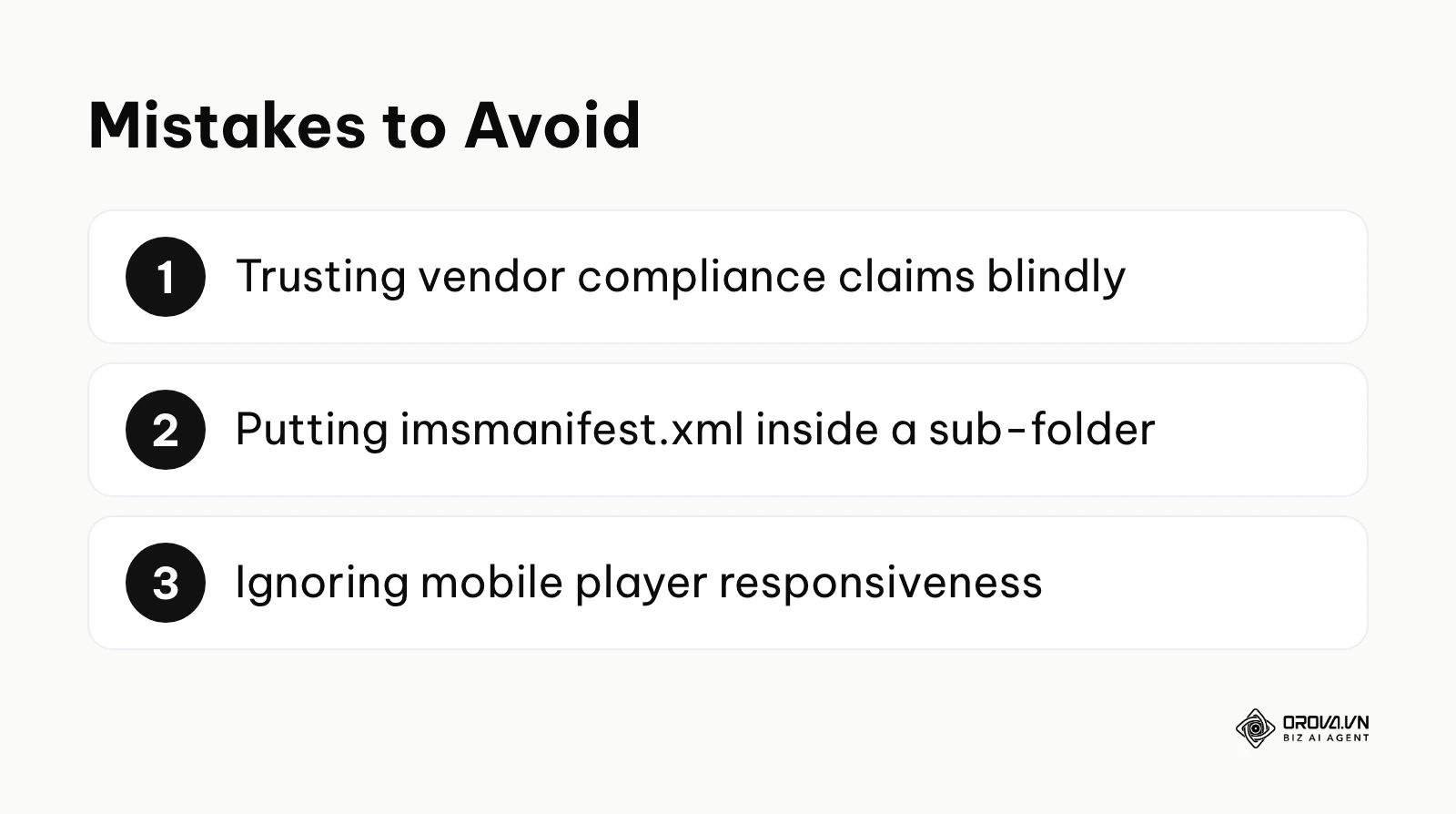
| Common Mistake | Consequence | How to Avoid |
|---|---|---|
| Trusting vendor "compliance" claims blindly | Courses fail to track data after a costly migration. | Test your own files in each vendor's trial environment before signing. |
| Using complex folder structures in the ZIP | The parser fails to locate the manifest file, blocking uploads. | Ensure the imsmanifest.xml is placed exactly at the root level of the ZIP file, not inside a sub-folder. |
| Ignoring mobile player responsiveness | Mobile users experience frozen screens and cannot complete training. | Test the published package on actual mobile devices, ensuring the platform's player iframe scales correctly. |
Let AI draft lessons, slides and podcasts in 30 voices, run online quizzes with AI grading, and issue certificates automatically when learners pass. Orova Training is free until July 7, 2027, no card required. Sign up and try it today.
SCORM Trends in the Next Few Years: My Perspective
As we look toward the future of learning infrastructure, the technology landscape is shifting rapidly. Based on the current trajectory of authoring tools and platform architecture, I foresee three major changes that will impact how organizations manage their data.
AI-Driven Dynamic Content Generation
Static authoring is already being challenged by AI drafting tools. I believe that in the next few years, AI will not just help write courses; it will dynamically generate standard-compliant packages on the fly based on a learner's real-time performance. Instead of an instructional designer manually exporting a ZIP file, the system will construct the XML manifest and asset structure automatically, tailoring the difficulty of the interactions to the user's specific skill gaps. You should prepare by ensuring your chosen platform has robust API endpoints capable of receiving dynamic content updates.
The Slow Decline of Older Versions
I anticipate that older versions of the standard will slowly be phased out in favor of more robust data protocols like cmi5. While the 1.2 version will stubbornly remain due to the sheer volume of legacy content, modern platforms will begin penalizing its use by restricting advanced reporting features. I think cmi5 will eventually become the true successor, bridging the gap by combining the structural rules of traditional packages with the flexible data tracking of xAPI. You should begin familiarizing your team with LRS architecture now, as the transition will require a fundamental shift in how data is stored.
The Rise of Headless Architecture
I think the traditional, monolithic learning platform will gradually lose ground. Over time, more large organizations may adopt headless architectures, where the backend tracking engine is completely separated from the frontend user interface. This means companies will use a robust standard-compliant engine merely as a database, while building completely custom, branded interfaces for their learners using modern web frameworks. If you are planning a massive enterprise deployment, you should prioritize platforms that offer extensive, well-documented REST APIs to future-proof your investment.
Frequently Asked Questions About SCORM Compliant LMS
When evaluating technical infrastructure, buyers frequently encounter confusing scenarios regarding compatibility and data tracking. Here are straightforward answers to the most common questions.
Is a SCORM compliant LMS still needed with AI?
Yes, it is still needed. While AI accelerates the creation of content (writing text, generating videos, and building quizzes), that content still needs a standardized protocol to communicate tracking data (like scores and completions) to a central database. AI improves the authoring speed, but standard protocols ensure the resulting data is universally readable and auditable.
What is the difference between SCORM 1.2 vs 2004 LMS compatibility?
The primary difference lies in data limits and sequencing. Version 1.2 is highly common but limits bookmarking data to 4,096 characters, which can cause complex courses to forget learner progress. SCORM 2004 4th Edition raises this limit to 64,000 characters and allows instructional designers to set complex navigation rules, such as forcing a learner to retake a specific module if they fail a quiz.
What are the hidden costs of migrating standard courses?
The biggest hidden cost is usually manual reconfiguration. Even if your files are perfectly standard, moving them to a new platform often requires administrators to manually re-assign user permissions, rebuild learning paths, and re-establish reporting dashboards. Additionally, some vendors charge hidden storage fees if your archived ZIP files contain massive, uncompressed video assets.
Why is my uploaded file not tracking completion status?
If a file plays visually but fails to track completion, the issue is typically a breakdown in the API communication. The course might be sending a cmi.score.raw signal, but the platform might be configured to only mark completion based on a cmi.core.lesson_status signal of "passed." You should run the file through a debugging sandbox to see exactly which JavaScript signals are being transmitted.
Where to Start Your SCORM Journey?
The best starting point depends entirely on your current infrastructure and data maturity. Attempting to overhaul everything at once usually leads to technical paralysis. Instead, focus on one immediate, practical step to build momentum.
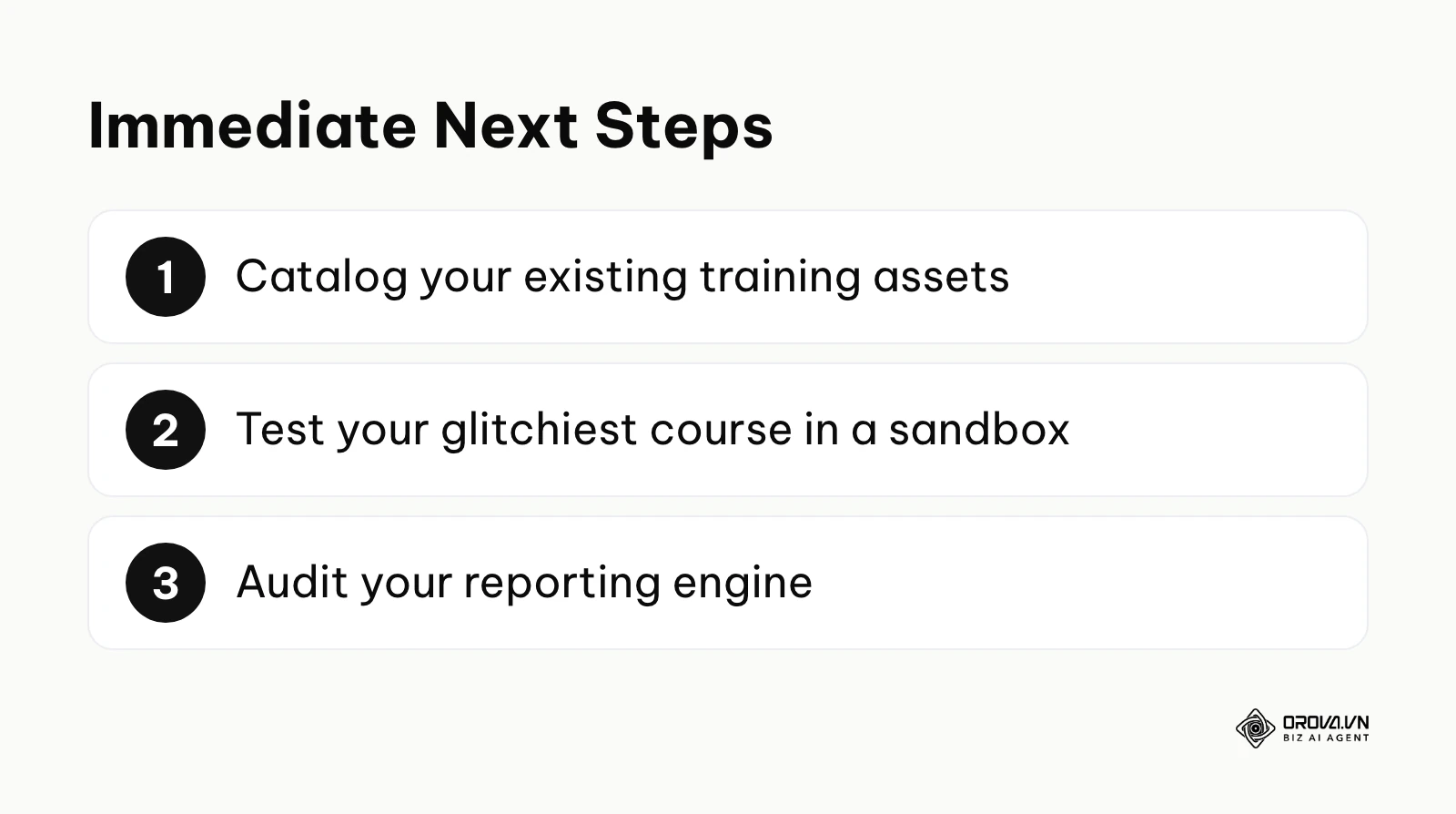
If you have nothing yet: Start by cataloging your existing training assets. Before you buy any software, create a simple spreadsheet listing all your videos, slide decks, and documents. Identify which specific training programs actually require formal completion tracking for compliance reasons. You only need to purchase a complex platform if you have interactive content that demands auditable data; otherwise, simpler tools may suffice.
If you have a system but it is disconnected: Set up a free, independent sandbox testing account today. Take your most problematic, glitchy course file and upload it to the sandbox. By running the debugger, you will immediately determine whether your authoring tool is exporting broken code, or if your current vendor's player is technically deficient. This isolates the variable and dictates your next move.
If you are running courses but not measuring properly: Audit your platform's reporting engine capabilities. Attempt to extract an interaction report that shows exactly which quiz questions learners are failing most frequently. If your current software can only provide a binary pass/fail spreadsheet, you need to begin evaluating vendors that specialize in deep data extraction and xAPI compatibility to gain true insights into your training effectiveness.
About the author

Builder of Orova
Nguyễn Đỗ Trọng Ân has 8 years of experience in marketing, including 6 years managing market development across Asia. He builds Orova, a Biz AI Agent that never sleeps: it plans, runs and optimizes work for businesses.
Run your business with AI Agents
Orova is the always-on Biz AI Agent — it plans, runs, and optimizes the work for you.
Save time, unlock productivity.