
Gamified LMS explained: the blueprint for corporate training success

You know the frustration well. You spend weeks developing a comprehensive onboarding program or a crucial sales training module, only to watch the completion rates stagnate at twenty percent. Employees view the training portal as a chore, logging in only when HR sends the final, stern reminder email. The traditional approach of simply uploading slide decks and hoping for the best is no longer sufficient for modern workforces.
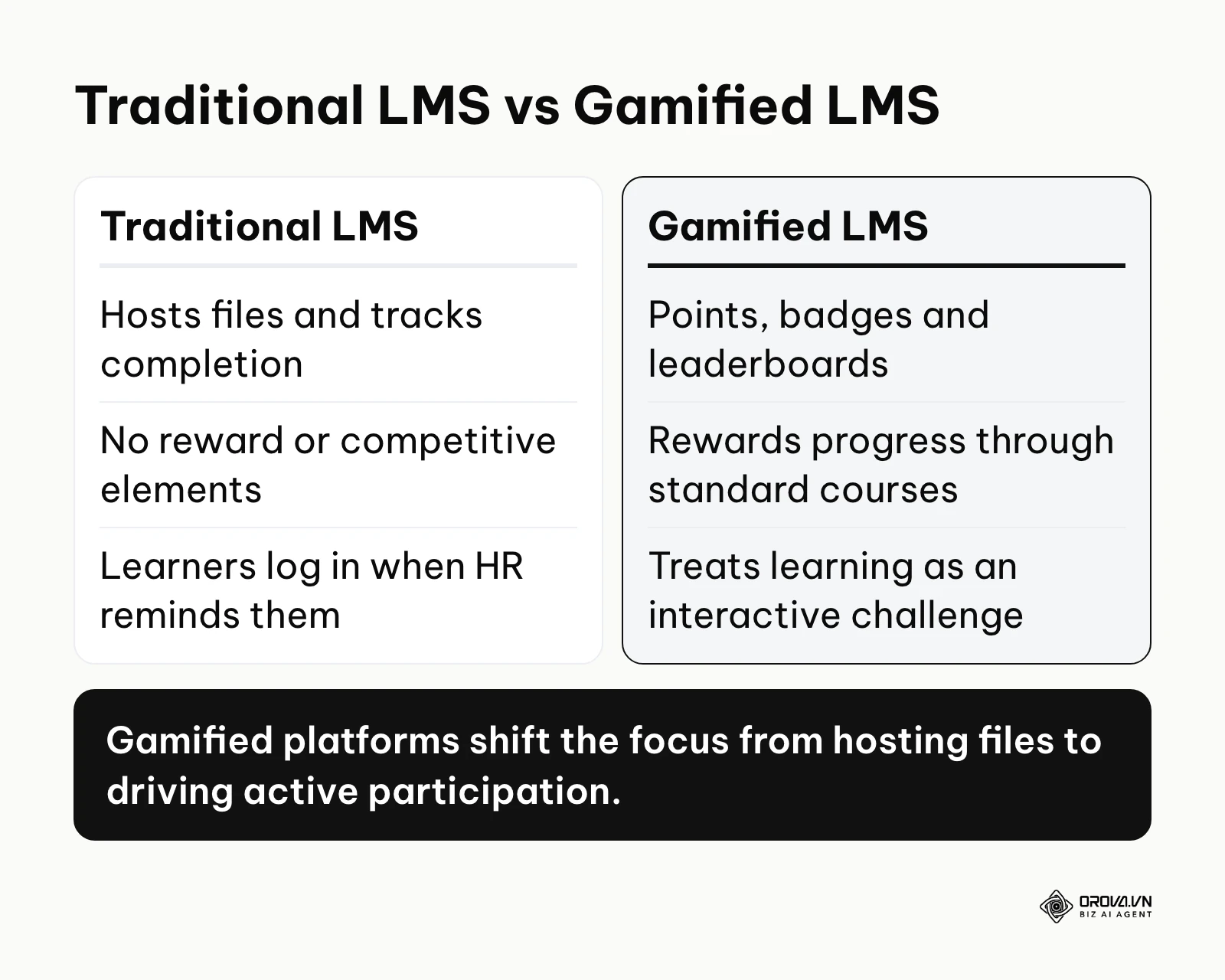
This is where a gamified LMS enters the picture: a learning management system that adds points, badges and leaderboards to ordinary courses, so learners are rewarded for progress instead of chased for it. It changes the dynamic from mandatory compliance to active participation. However, navigating the landscape of digital education requires more than just turning on a points system and hoping for the best. You need a structured approach. This article serves as your comprehensive blueprint. We will dissect exactly what these systems are, how to build a balanced internal reward economy, and provide actionable frameworks to ensure your investment actually changes employee behavior.
What is a Gamified LMS?
A gamified LMS is a learning management system that integrates game design elements, such as point scoring, digital badges, and competitive leaderboards, into professional training environments. It is used to drive learner motivation and track progress automatically, differentiating itself from standard platforms by treating education as an engaging, interactive challenge.
The concept stems from the broader behavioral science theory of "gamification," which involves taking the psychological hooks that make video games addictive and applying them to non-game contexts. If you are new to digital training as a whole, our guide on what eLearning is covers the basics; this article focuses only on the game layer. It is important to distinguish this specific software from other similar-sounding concepts.
| Concept | The Main Difference | Real-world Example |
|---|---|---|
| Gamified LMS | Uses game mechanics to track and reward progress through standard courses. | Earning 50 points for finishing a video on safety policies. |
| Game-Based Learning | The actual learning content itself is built entirely as a playable video game. | Playing a 3D flight simulator to learn how to fly a plane. |
| Traditional LMS | Hosts files and tracks completion without any reward or competitive elements. | Reading a PDF and clicking a button that says "I have read this." |
To put it in everyday terms, think about your daily habits. Reading a medical textbook about cardiovascular health is like a traditional LMS; it is informative but dry. Using a smartwatch app that tracks your daily steps, gives you a digital fireworks display when you hit ten thousand steps, and ranks you against your friends is a gamified experience. A gamified LMS brings that exact smartwatch energy to your corporate training materials.
Why Gamification in Corporate Training Matters
To understand why this software category exists, we must look at the core problem of corporate education: adult learners are exceptionally busy and naturally prioritize their immediate daily tasks over long-term skill development. A gamified LMS exists to solve the problem of intrinsic motivation for employees, and the problem of administrative enforcement for L&D (Learning and Development) professionals.
In the broader technology landscape, this software sits firmly at the intersection of human resources, employee experience, and operations. It usually integrates tightly with your core HR database. If you are currently evaluating your overall HR infrastructure, you might be wondering how different systems communicate. Understanding the flow of employee data is crucial, which is why working through an ATS vs HRIS decision framework helps clarify where training records should permanently reside. The LMS takes the employee data from the HRIS and applies a layer of behavioral psychology on top of it.
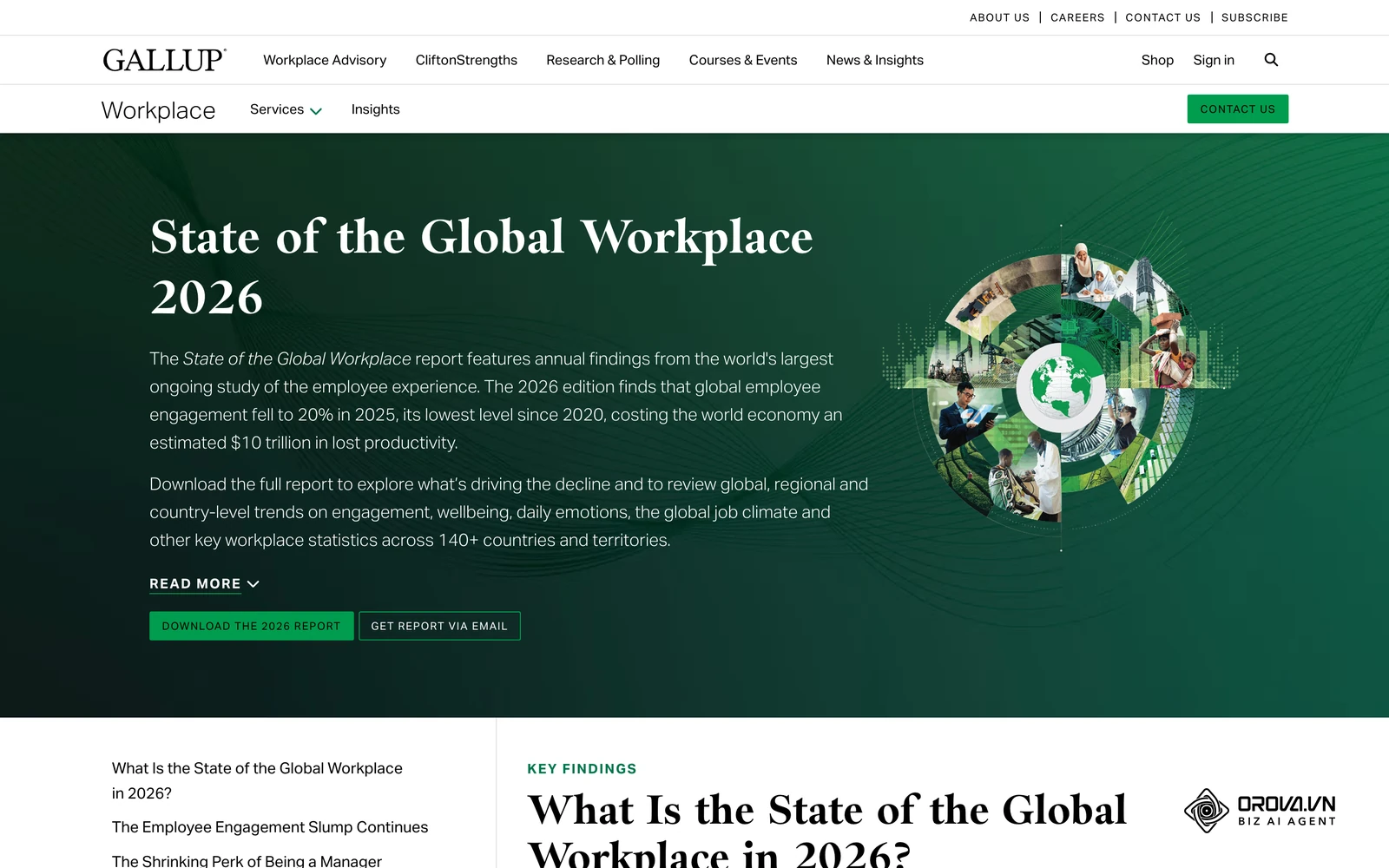
If you choose to ignore gamification in corporate training entirely, you risk losing the substantial capital invested in course creation. An unplayed course yields zero return on investment. Furthermore, according to the State of the Global Workplace report published by Gallup in 2023, low engagement costs the global economy trillions, highlighting why interactive training interventions are critical.
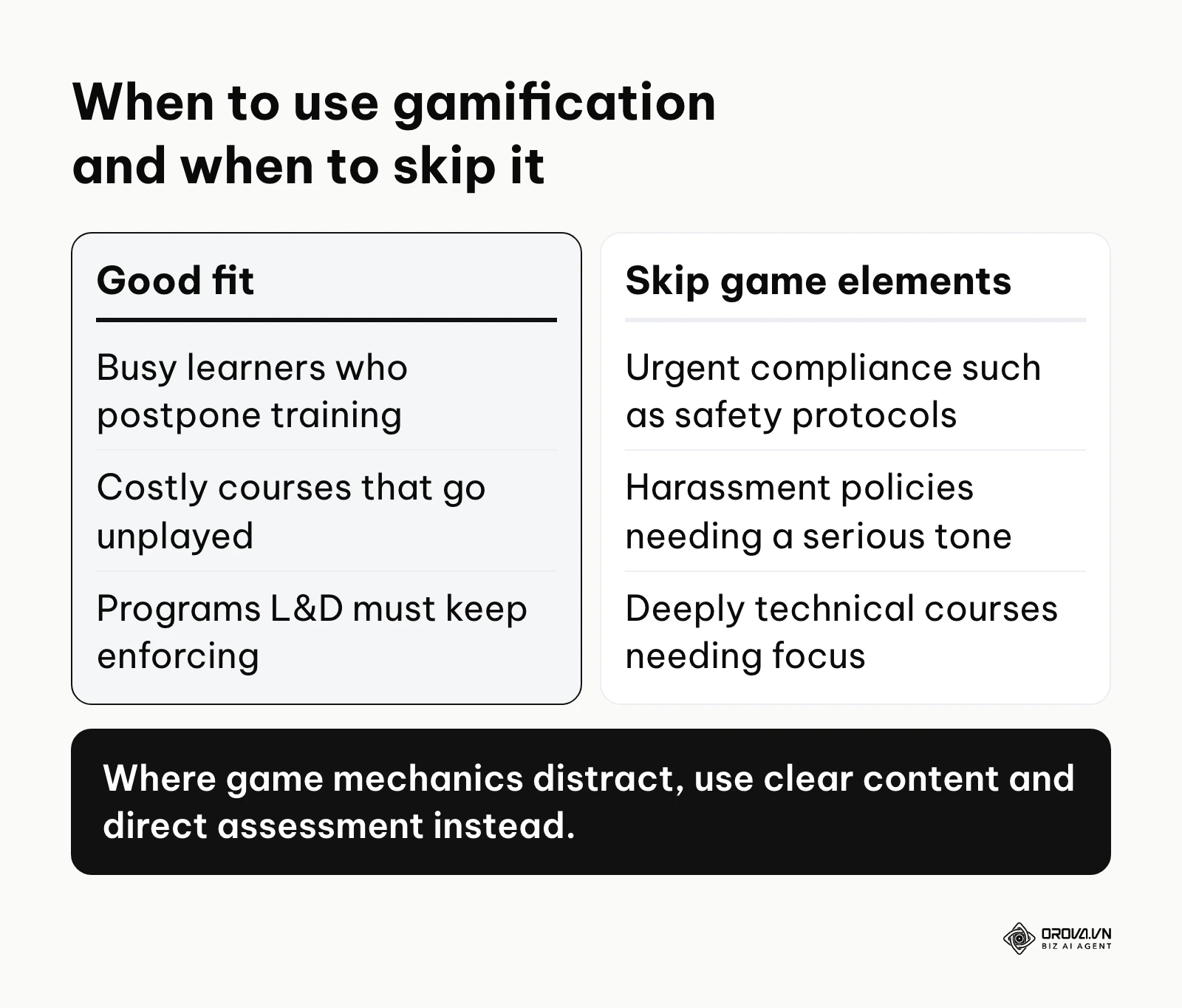
When you should not use gamification: You should avoid game elements during urgent compliance training, such as workplace safety protocols or sexual harassment policies, where the tone must remain strictly professional. Furthermore, highly complex, deeply technical engineering courses often require intense, uninterrupted focus. In these specific scenarios, flashy badges or competitive timers become distracting rather than helpful. Instead, prioritize clear, straightforward content delivery and direct assessment without any gamified mechanics.
The Value and Benefits of a Gamified LMS
When executed correctly, adding game mechanics to your learning platform delivers value across two distinct layers: the macro business level and the daily operational level for the L&D team.
Tangible Business Value
At the executive level, gamification translates directly into time saved, risks mitigated, and revenue increased. When employees complete product knowledge training voluntarily and rapidly, they are ready to sell faster. When compliance training is finished ahead of schedule, the company reduces its liability footprint.
Illustrative example: A regional supermarket chain with five hundred cashiers. Context: The cashiers were consistently ignoring the mandatory customer service modules, leading to an increase in customer complaints. Action: The HR director mapped specific point values to module completion and created a 'Store Champion' badge that appeared on the employee's internal profile. Issue: Initially, the points were too easy to obtain just by clicking through slides, leading to point inflation without real learning. Fix: They adjusted the economy to only reward high assessment scores, forcing employees to actually read the material. Result: Voluntary completion rates rose dramatically, and management saw a clear improvement in customer satisfaction scores at the branches heavily populated with 'Champions'.
Benefits for the L&D Practitioner
For the individuals actually running the programs, the benefits are intensely practical. The primary benefit is the reduction of manual follow-ups. Instead of acting like a persistent debt collector sending reminder emails, the system's inherent mechanics do the nagging for you.
Structured rewards are meant to reduce training abandonment, but you should not take that on faith. To truly understand if these benefits are materializing in your organization, you must measure the outcomes rigorously. Implementing a proper training evaluation and ROI methodology ensures you can prove the financial worth of your gamified initiatives to stakeholders.
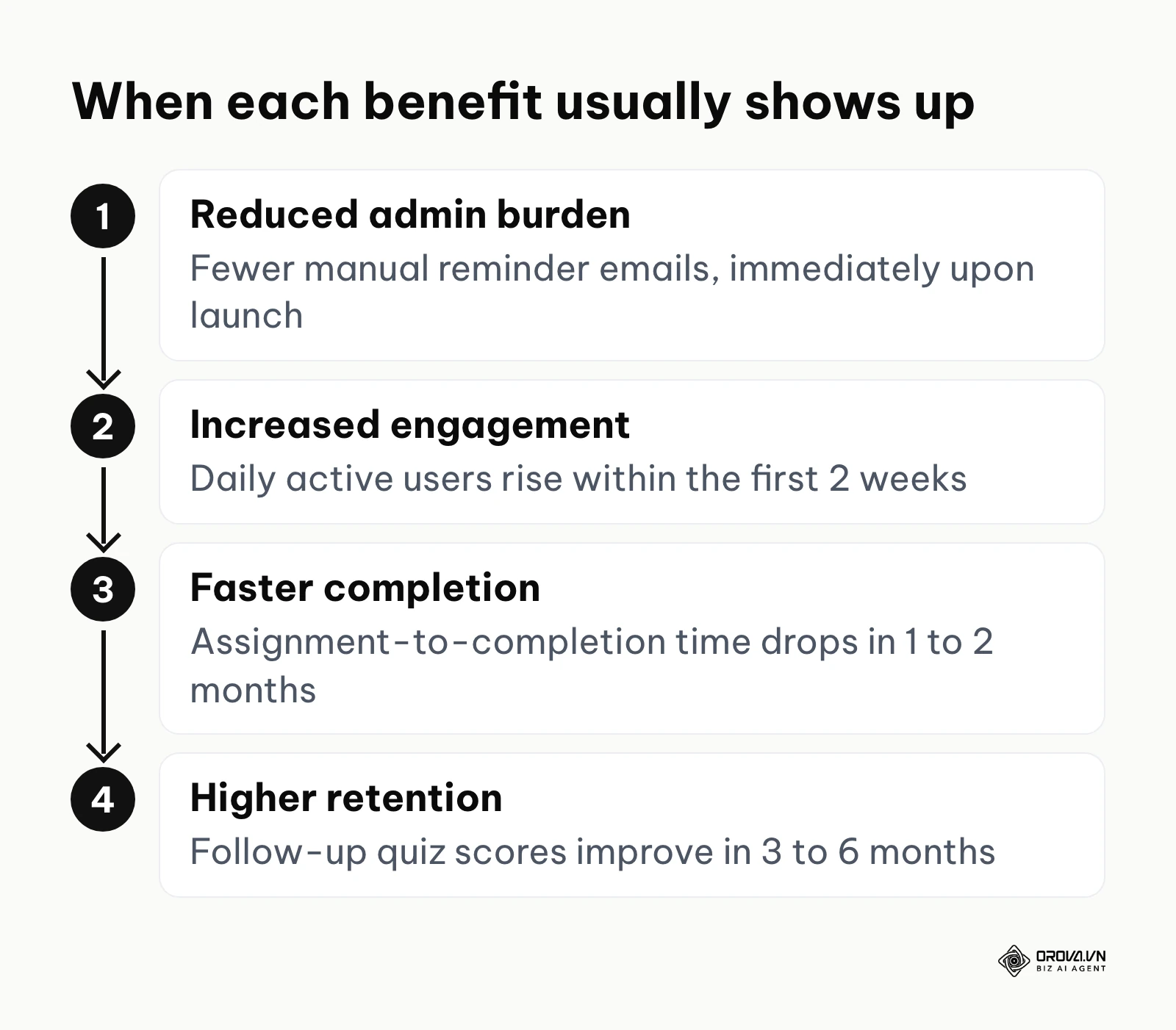
| The Benefit | Measured By Which Metric | Time to See Results |
|---|---|---|
| Increased Engagement | Daily Active Users (DAU) on the learning portal. | Within the first 2 weeks. |
| Faster Completion | Average time taken from course assignment to completion. | 1 to 2 months. |
| Higher Knowledge Retention | Average scores on unannounced follow-up quizzes. | 3 to 6 months. |
| Reduced Admin Burden | Hours spent sending manual reminder emails per week. | Immediately upon launch. |
If your training lives in scattered tools, it helps to start from one place. Orova Training lets you build courses, run online quizzes graded by AI, and host live ranked quiz rooms that feel like a game, while tracking each learner's progress.
How a Gamified LMS Works: The Core Anatomy
This is the most critical section of this guide. Understanding how to gamify an LMS requires breaking the system down into its functional components. It is not magic; it is a series of well-defined technical and psychological triggers.
In fact, according to the SCORM 2004 specification document published by ADL in 2004, the ability to track granular learner interactions was a foundational goal for digital learning, which gamification now builds upon.
The Core Mechanics: Breaking Down the Features
Most platforms rely on a foundational trio of features often referred to as PBL (Points, Badges, Leaderboards). Let us examine how each works, its inputs, outputs, and common failure points.
The Points Economy
- What it does: Acts as the currency of your learning platform.
- Inputs: Learner behaviors (logging in, watching a video, passing a test, replying in a forum).
- Outputs: A numerical balance attached to the user's profile.
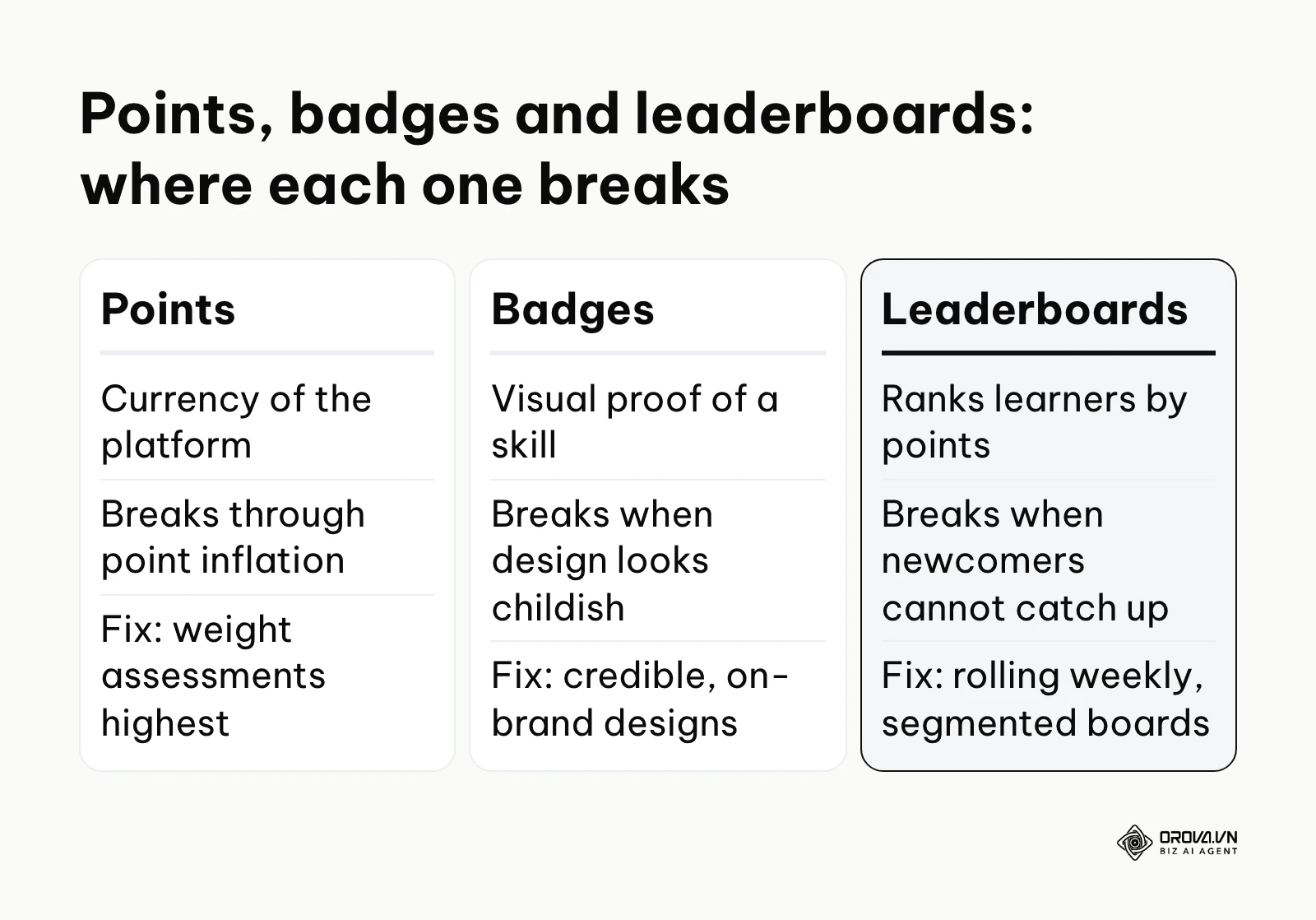
- Where it breaks: Point inflation. If you give one hundred points for simply logging in and only fifty points for passing a difficult one-hour exam, the economy is broken. Learners will "farm" points by logging in repeatedly without actually learning anything.
The Points Economy Spreadsheet Framework: To prevent inflation, you must build a structured economy before you launch. Here is a baseline model you can adapt:
| Learner Action | Suggested Point Value | Rationale |
|---|---|---|
| Daily Login | 5 points (Cap at 1/day) | Encourages habit formation without breaking the bank. |
| Start a Course | 10 points | Rewards the initial activation energy. |
| Complete a Module | 50 points | The standard unit of progression. |
| Score 90%+ on Quiz | 150 points | Highly rewards actual knowledge retention, not just participation. |
| Help a Peer in Forum | 30 points | Promotes a culture of social learning and collaboration. |
Because the heaviest weight sits on assessments, the quality of your quizzes decides whether the economy holds. When you pick an online quiz maker for this job, look for randomized questions and timed attempts, which make the question bank much harder to game.
Professional Badges
- What it does: Provides a visual representation of a specific achievement or acquired skill.
- Inputs: The accumulation of specific points, or the completion of a targeted learning path (e.g., finishing all five modules on cybersecurity).
- Outputs: A digital image displayed on a profile, and often a downloadable certificate.
- Where it breaks: Childish design. If the badges look like cartoon stickers, senior executives and seasoned professionals will feel patronized. Badges in a corporate environment must look like credible credentials, utilizing clean geometry and corporate color palettes.
Dynamic Leaderboards
- What it does: Ranks learners against each other based on their accumulated points or badges.
- Inputs: The real-time point totals of all users within a defined group.
- Outputs: A sorted list displaying the top performers.
- Where it breaks: The demotivation trap. If a new employee joins the company in November, and the leaderboard has been running since January, they will be at the bottom with zero chance of catching the leaders. This causes instant disengagement.
Illustrative example: A mid-sized logistics company with two hundred drivers. Context: The L&D manager implemented a global leaderboard for safety training to spark competition. Action: Drivers earned points for watching safety videos and passing quizzes. Issue: New drivers were constantly at the bottom with zero chance of catching up to the veterans, causing severe demotivation among the new hires. Fix: The manager switched from a lifetime global leaderboard to a rolling weekly leaderboard and segmented the drivers by their specific regions. Result: Engagement spiked immediately as everyone had a fair, localized chance to win the weekly regional safety title.
The Three Tiers of Gamification Architecture
Not all systems are created equal. As your organization matures, your use of game mechanics should evolve through these three tiers.
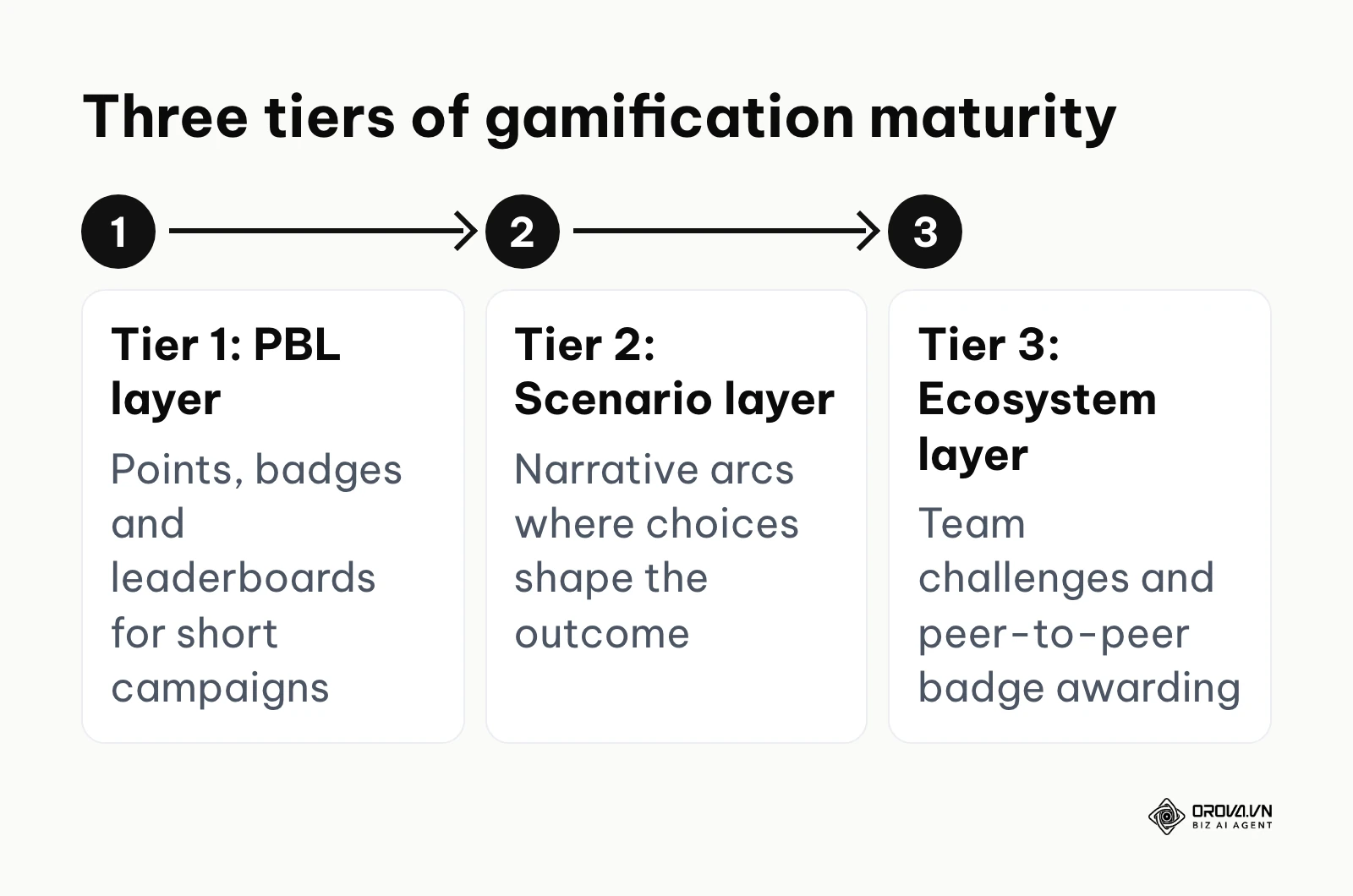
Tier 1: Basic Extrinsic Motivation (The PBL Layer) This is where most companies start. It relies entirely on the Points, Badges, and Leaderboards discussed above. It is easy to set up and highly effective for short-term campaigns or initial onboarding pushes. However, if this is all you have, users will eventually experience fatigue. The novelty of earning a digital gold star wears off after a few months.
Tier 2: Narrative and Storytelling (The Scenario Layer) At this level, the LMS introduces narrative arcs. Instead of taking "Customer Service Course 101," the learner enters a scenario where they are the manager of a failing retail store, and their choices in the module dictate the survival of the business. Points are tied to the narrative outcomes. This creates intrinsic motivation because the learner wants to see how the story resolves.
Tier 3: Social Battles and Collaboration (The Ecosystem Layer) The highest tier moves away from solitary learning. Here, the gamified LMS facilitates team-based challenges. The marketing department might battle the sales department to see who can accumulate the most training points in a month. It includes peer-to-peer badge awarding, where employees can give each other points for real-world application of learned skills.
Categorizing the Best Gamification LMS Platforms
When you are actively looking for the best gamification lms platforms, you will find that vendors generally fall into three categories. Making the wrong choice here will lead to massive technical debt. If you are struggling to navigate the vendor landscape, reviewing a comprehensive guide on how to choose an LMS is an essential prerequisite before signing any software contracts.
| Type of Platform | Key Characteristics | Best Suited For |
|---|---|---|
| The Bolt-on Solutions | Traditional corporate LMS platforms that added basic point systems as an afterthought to check a feature box. | Companies that strictly need compliance tracking and view gamification as a minor bonus. |
| The Native Game Engines | Platforms built from day one around behavioral psychology. They offer branching narratives, team battles, and complex economies. | Forward-thinking tech companies or highly competitive sales organizations looking for deep engagement. |
| The Hybrid Ecosystems | Modern platforms that balance serious administrative controls with highly customizable reward triggers. | Mid-to-large enterprises that need serious reporting but want the flexibility to run engaging, localized campaigns. |
The Decision Matrix: Choosing Based on Scale To help you narrow down the field, consider this simple framework based on your organizational size and goals.
If your company has under one hundred employees, your priority should be speed of deployment. You need a platform where the gamification rules are pre-configured. Attempting to build a complex points economy from scratch with a small team will drain your resources.
If your company has between one hundred and one thousand employees, your priority shifts to segmentation. You must choose a platform that allows you to create different leaderboards for different departments. A unified leaderboard across a mid-sized enterprise is a recipe for demotivation.
If you represent an enterprise with over one thousand employees, your absolute priority is API connectivity and custom rule engines. The LMS must be able to trigger badge awards based on actions taken in other software systems (like closing a deal in your CRM).
What You Must Do to Start or Adapt
Moving from theory to execution requires different steps depending on your role within the organization. Here is how different professionals should approach implementation.
For Small Business Owners
Your primary constraint is time. You cannot afford to spend months designing a complex game economy.
- Start by identifying the single most critical knowledge gap in your company (e.g., basic product knowledge).
- Choose a lightweight platform and activate only the points and a single leaderboard.
- Tie the digital points to a real-world, low-cost reward, such as a prime parking spot or a free lunch for the monthly winner.
- Announce the program clearly, framing it as a fun experiment rather than a mandatory new corporate policy.
Illustrative example: A boutique digital marketing agency with thirty employees. Context: The founder wanted to upskill the team on new analytics software without forcing weekend classes. Action: They selected a basic platform, assigned point values to specific software certifications, and promised an extra day off for the first person to reach one thousand points. Issue: Employees focused only on easy, low-value generic courses to farm points quickly. Fix: The founder recalibrated the system, assigning zero points to basic courses and high points only to the advanced, highly relevant certifications. Result: The team acquired the exact advanced skills the agency needed to pitch larger clients, and the founder learned to strictly control the points economy.
For Dedicated L&D Managers
Your challenge is scale and long-term sustainability. You need to build a system that outlasts the initial launch hype.
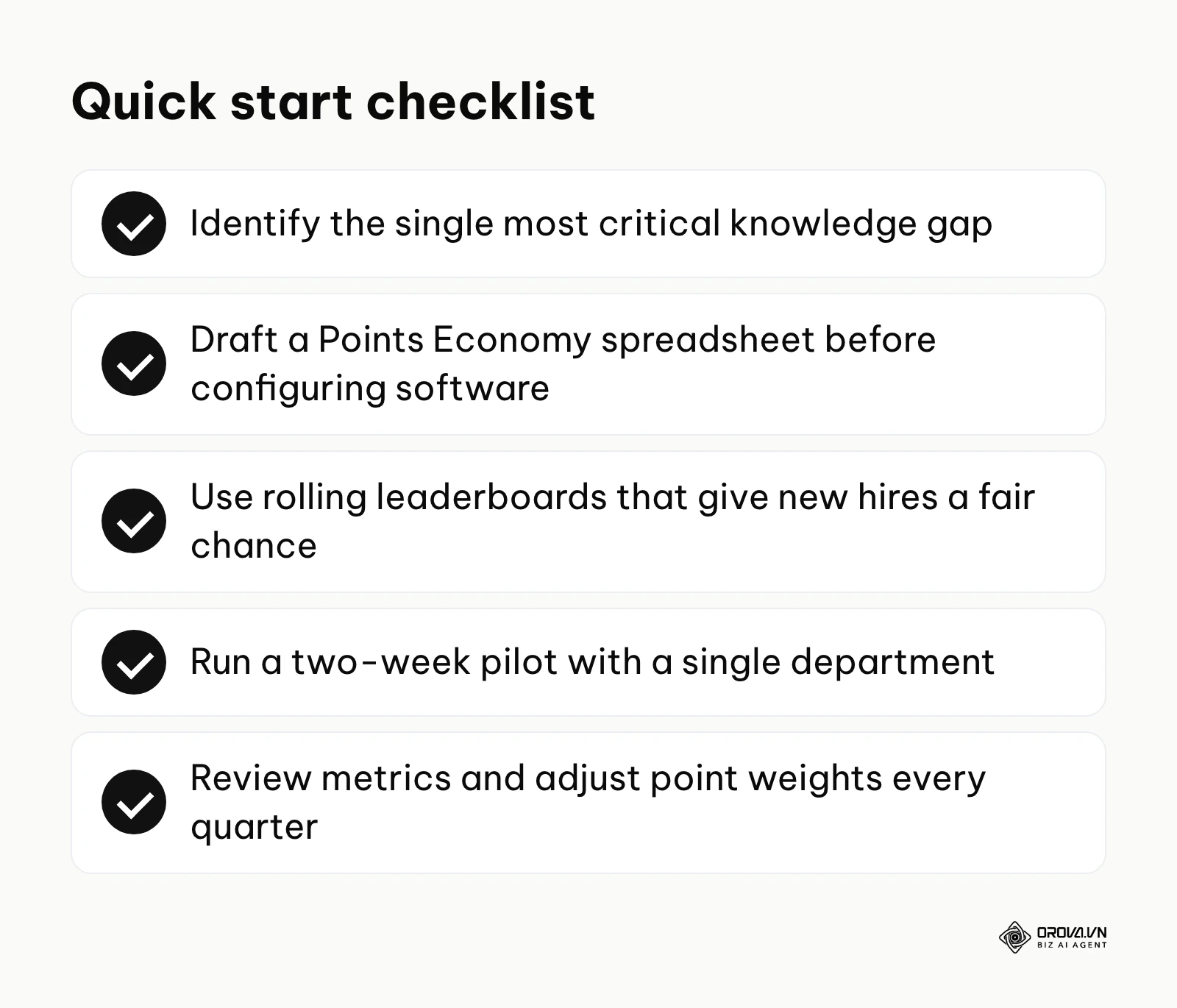
- Draft a comprehensive 'Points Economy' spreadsheet before touching the software settings.
- Design a series of professional, tiered badges (e.g., Bronze, Silver, Gold levels of a specific skill).
- Configure rolling leaderboards that reset monthly to give new hires a fair chance.
- Run a two-week pilot program with a single, vocal department (often the sales team) to iron out any bugs in the point logic.
- Establish a quarterly review cycle to analyze metrics and adjust point weights as needed.
For HR Consultants and Agencies
Your goal is to demonstrate clear ROI to your clients and ensure a smooth handover.
- Conduct an audit of the client's existing training materials to ensure they are high enough quality to warrant gamification.
- Build a customized decision matrix to help the client select the right software vendor based on their specific technical constraints.
- Document the entire game logic and rule set in a comprehensive handover manual.
- Train the client's internal administrators on how to spot and fix 'point farming' behavior.
Common Implementation Mistakes and How to Avoid Them
| The Common Mistake | The Inevitable Consequence | The Practical Solution |
|---|---|---|
| Treating Gamification as a Band-Aid | Users will play for a week and then abandon the poorly designed, boring content. | Fix the underlying course material first. Good game mechanics cannot save terrible content. |
| Overcomplicating the Rules | Employees will ignore the system because they do not understand how to win. | Keep the initial launch simple. Introduce complex rules and team battles only in phase two. |
| Forgetting the Real World | Digital points lose their appeal if they never translate to tangible recognition. | Connect digital achievements to performance reviews or small, real-world perks. |
Ready to put these ideas into practice? With Orova Training you get AI-drafted lessons, slides and quizzes, certificates issued automatically when learners pass, each with a public verification code, and per-learner progress tracking with skip blocking. Sign up and try it free until July 7, 2027, no card needed.
Gamified LMS Trends in the Next Few Years: My Predictions
Looking ahead, the landscape of corporate training is shifting rapidly. Based on the current trajectory of workplace technology up to 2026, I have several strong opinions on where gamification is heading.
The End of Generic Badges
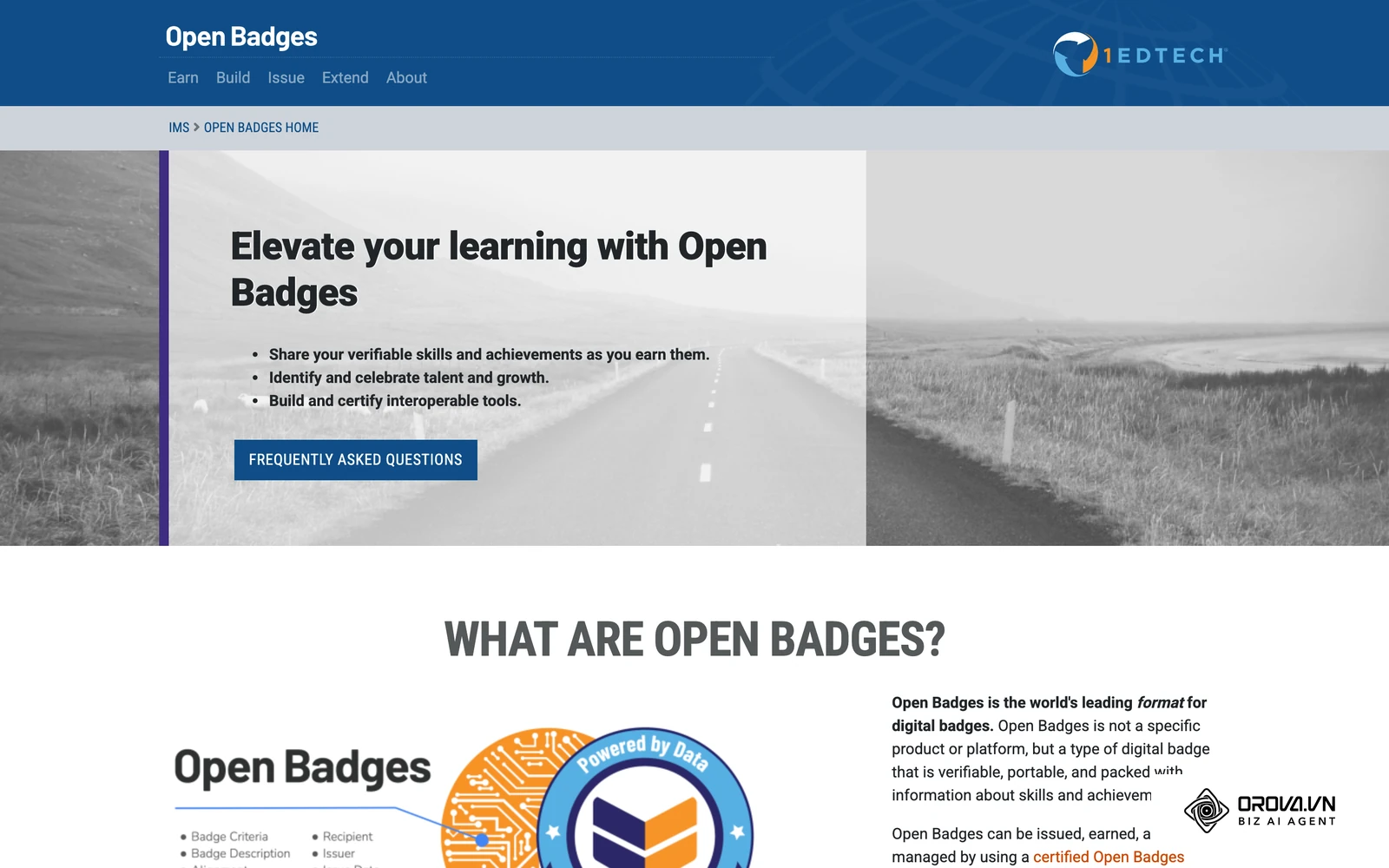
I believe the generic "Good Job" badge will steadily lose its value. Many employees already treat these generic awards as empty corporate gestures. I expect gamified systems to shift toward verifiable, skill-specific micro-credentials. These won't just be images on an internal profile; they will be portable digital assets that an employee can take with them, securely verifying that they mastered a specific proprietary process or software. L&D teams need to start mapping their training directly to highly specific, verifiable skills rather than broad participation metrics.
AI-Driven Scenario Generation
Currently, building Tier 2 gamification—the narrative scenarios—is incredibly expensive and time-consuming for instructional designers. I expect artificial intelligence to make this process far cheaper. Over time, an LMS may be able to ingest a dry PDF manual and automatically generate a branching, interactive text-based game tailored to the specific learner's department. This is still an opinion rather than a certainty, but the foundational text-generation models already exist. You should prepare for this by ensuring your foundational training documents are clean, well-structured, and ready to be processed by AI agents.
Hyper-Personalized Reward Economies
I suspect the single, unified points economy will gradually give way to something more personal. Right now, a point is a point, regardless of who earns it. I anticipate systems that dynamically adjust point values based on the individual learner's historical weaknesses. If the system knows an employee struggles with compliance, it will automatically increase the point bounty on compliance courses specifically for that user. This creates a deeply personalized behavioral nudge. However, this level of tracking could easily cross into invasive surveillance, which means HR leaders will need to aggressively manage employee privacy and transparency regarding how these algorithms function.
Frequently Asked Questions About Gamified LMS
When organizations begin exploring how to gamify an lms, the same practical questions consistently arise.
How much time does it take to maintain the system?
This is the hidden cost that many vendors downplay. Setting up the initial points economy takes significant effort, but maintaining it is an ongoing operational requirement. If you launch a leaderboard, you must be prepared to monitor it weekly to resolve disputes, adjust point weights to prevent inflation, and update the rewards to prevent stagnation. Plan for your L&D administrator to dedicate at least a few hours a week strictly to "economy management."
Will our senior executives think the badges are childish?
They absolutely will, if you use standard, colorful clip-art. The key to executive buy-in is the visual design and the nomenclature. Do not use words like "Player," "Quest," or "Level Up." Use terms like "Practitioner," "Certification Pathway," and "Milestone." Furthermore, ensure the visual design of the badges aligns with your corporate brand guidelines—think minimalist icons and sleek typography, not cartoon trophies.
Does a gamified LMS still matter if we use AI to answer questions directly?
This is a critical consideration. If an employee can just ask an AI chatbot for the answer to a procedural question, why force them through a gamified course? The reality is that gamification is still necessary, but its purpose shifts. AI is excellent for retrieving information at the moment of need. However, gamification is required to build foundational mental models and muscle memory. You cannot just "look up" how to de-escalate an angry client; you need to practice it through interactive, gamified scenarios to build the actual skill. The LMS will evolve to test application, while AI handles simple knowledge retrieval.
How do we stop employees from "hacking" the leaderboard?
Employees are smart; if there is a loophole in your points economy, they will find it. The most common hack is rapidly clicking through video courses without watching them just to trigger the completion points. To prevent this, you must tie the vast majority of points to the successful completion of randomized assessments, not just the consumption of content. Additionally, implement rate limits—for example, capping the maximum number of points a user can earn in a single 24-hour period.
Where Should You Start?
The best next step depends entirely on your current state of technological maturity. Do not try to skip steps, or your gamification efforts will collapse under their own weight.
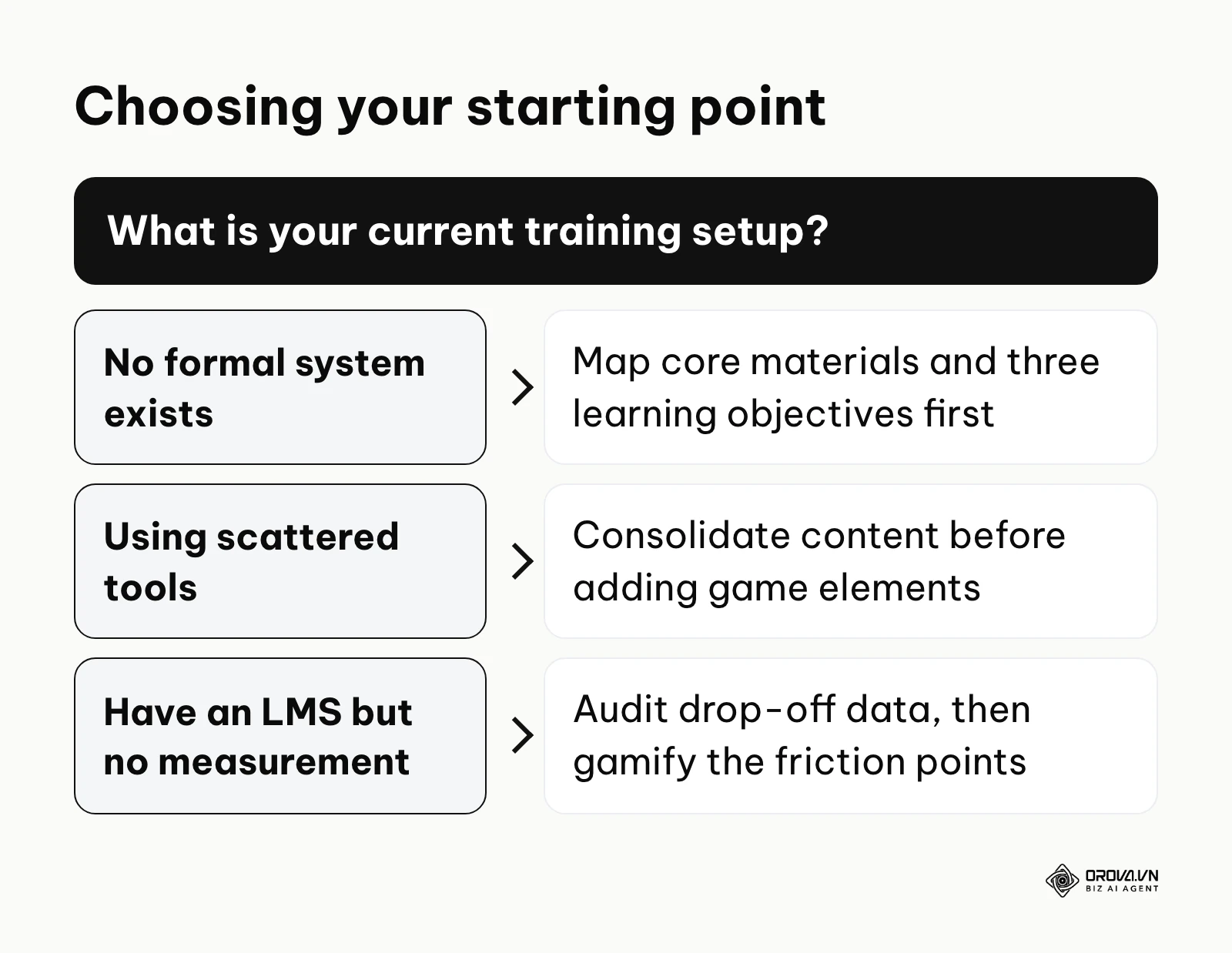
If you have no formal system in place: Do not start by buying the most complex platform available. Your first step should be to map out your core training materials on a simple spreadsheet. Identify what actually needs to be taught before you worry about how to gamify it. Your goal for this week is simply to define the three most important learning objectives for your team.
If you are using scattered, disjointed tools: Perhaps you have videos on a shared drive, quizzes in a survey tool, and progress tracked in an email thread. You cannot gamify chaos. Your immediate first step must be consolidation. You need to migrate all your materials into a single, centralized repository. Only when the content is in one place can you begin to track user behavior and assign points accurately.
If you have an LMS but are not measuring anything: If you already have a platform but the completion rates are abysmal, do not immediately turn on all the gamification features. Your first step is to audit your existing data. Look at the analytics to find exactly where learners are dropping off. Are they quitting after the first video? Are they failing a specific quiz? Use this data to strategically apply game mechanics only to the specific friction points, rather than blanketing the entire system in meaningless points.
About the author

Builder of Orova
Nguyễn Đỗ Trọng Ân has 8 years of experience in marketing, including 6 years managing market development across Asia. He builds Orova, a Biz AI Agent that never sleeps: it plans, runs and optimizes work for businesses.
Run your business with AI Agents
Orova is the always-on Biz AI Agent — it plans, runs, and optimizes the work for you.
Save time, unlock productivity.