
Google Ads optimization SOP (2026): a diagnostic blueprint to fix high CPA

You log into your account on a Monday morning, and the numbers are alarming. Your cost per acquisition has spiked severely over the weekend, while conversion volume has flatlined entirely. You aggressively check the change history, but no one has touched the settings. The system simply went off track. In the current era of automated machine learning, standard google ads optimization advice—like rewriting a single headline or pausing one ad group—no longer solves the root problem.
The advertising platforms operate as complex black boxes. When performance drops suddenly, you need a highly systematic way to diagnose the mathematical model rather than blindly tweaking basic interface settings. This comprehensive article provides a clinical, engineering-level diagnostic blueprint. You will learn exactly how to troubleshoot failing automated campaigns, force smart campaigns to respect your strict brand boundaries, and feed accurate revenue data back into the system so the algorithms learn what a paying customer actually looks like.
Google ads optimization: A diagnostic blueprint for 2026
Google ads optimization is the systematic, data-driven process of adjusting campaign parameters, structural inputs, and targeting constraints to reduce wasted advertising spend and improve your return on ad spend (ROAS). This diagnostic approach is mandatory for marketers who need to regain control over highly automated advertising algorithms when they underperform.
Prerequisites: The 15-minute account audit checklist
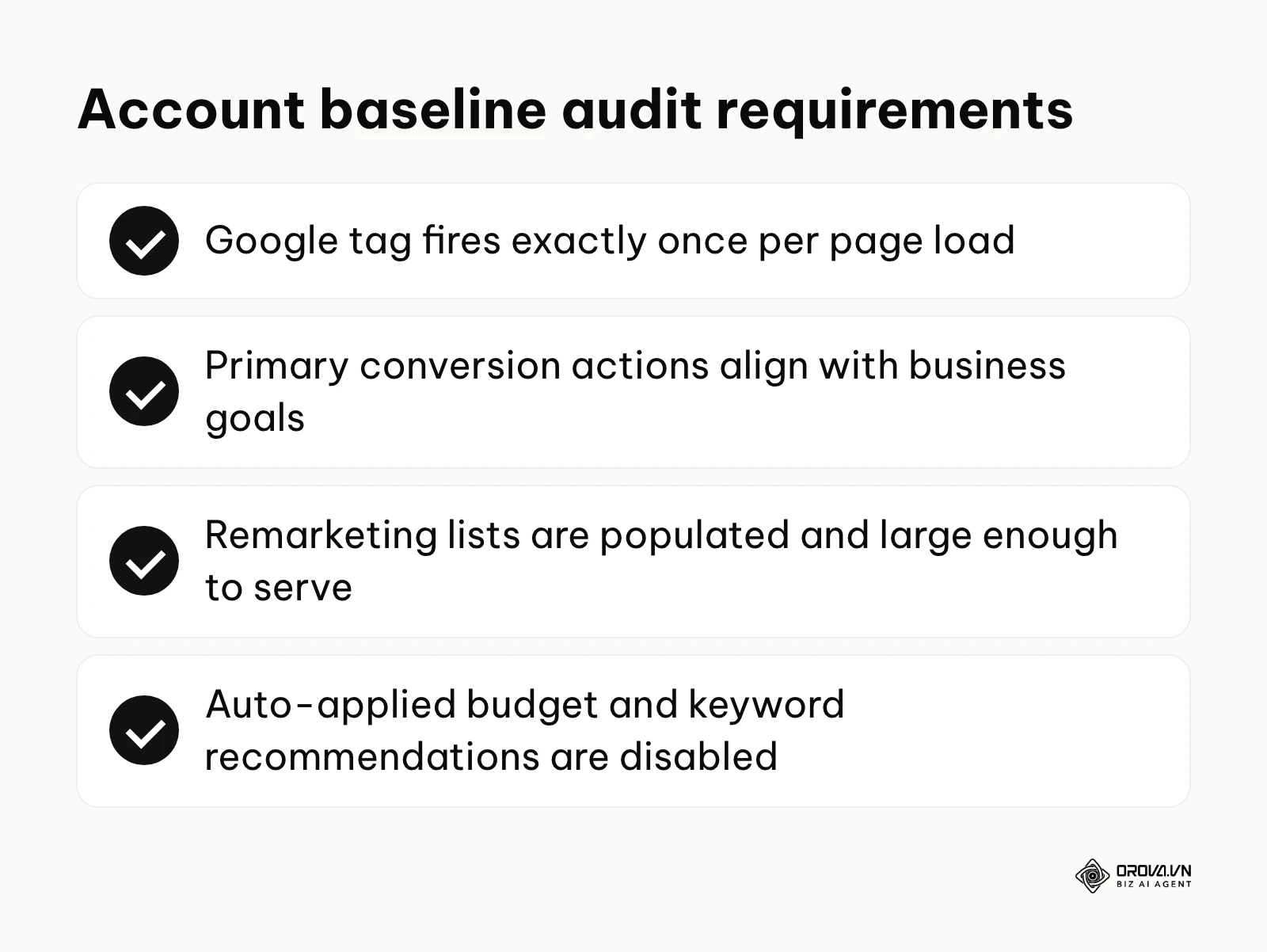
Before you begin implementing any advanced optimization techniques, you must ensure your foundational tracking and structure are flawless. A skewed foundation will only train the algorithm to optimize aggressively for the exact wrong signals, wasting thousands of dollars in a matter of days. Here is the strict preparation checklist you need to audit before making any major structural changes to your account.
| Foundation Item | Where to Audit | Time Required | Critical Success Factor |
|---|---|---|---|
| Google tag | Tag diagnostics in Google Ads, or Tag Assistant | 3 minutes | Tag must be active on every page without duplicate firing. |
| Conversion Actions | Google Ads > Goals > Conversions | 4 minutes | Ensure "Primary" vs "Secondary" actions are correctly mapped. |
| Audience Lists | Audience manager | 2 minutes | Verify remarketing lists are populated and large enough to serve. |
| Payment Methods | Billing > Settings | 1 minute | Ensure a backup payment method is present to prevent sudden campaign pauses. |
| Account Links | Admin > Linked accounts | 2 minutes | Verify Google Analytics 4 (GA4) is linked, plus Merchant Center if you run Shopping. |
| Auto-applied Recommendations | Recommendations > Auto-apply | 3 minutes | Turn off all automated changes related to budget and keyword addition. |
To make this process seamless, you should utilize a standardized account audit template. A proper audit highlights anomalies automatically. Your audit should scan for ad groups with excessive keywords, campaigns restricted by budget, and conversion tracking tags that have not fired in the last 7 days. If any of these prerequisite items fail, stop your optimization process immediately and fix the tracking architecture. Feeding bad data into a smart bidding algorithm is the fastest way to ruin account performance.
6 steps to execute an advanced Google ads optimization strategy
This section breaks down the exact methodologies used by technical marketers. These are not basic tips; they are structural workflows designed to control and steer machine learning models when they deviate from your goals.
Step 1: Deploy a troubleshooting workflow for sudden CPA spikes
When your cost per acquisition spikes dramatically, your first instinct might be to lower bids or pause keywords. This is a mistake. You need a sequential troubleshooting workflow to identify the root cause before reacting. Start by analyzing the timeframe of the drop. Compare the poor-performing period strictly to the preceding period of the exact same length.
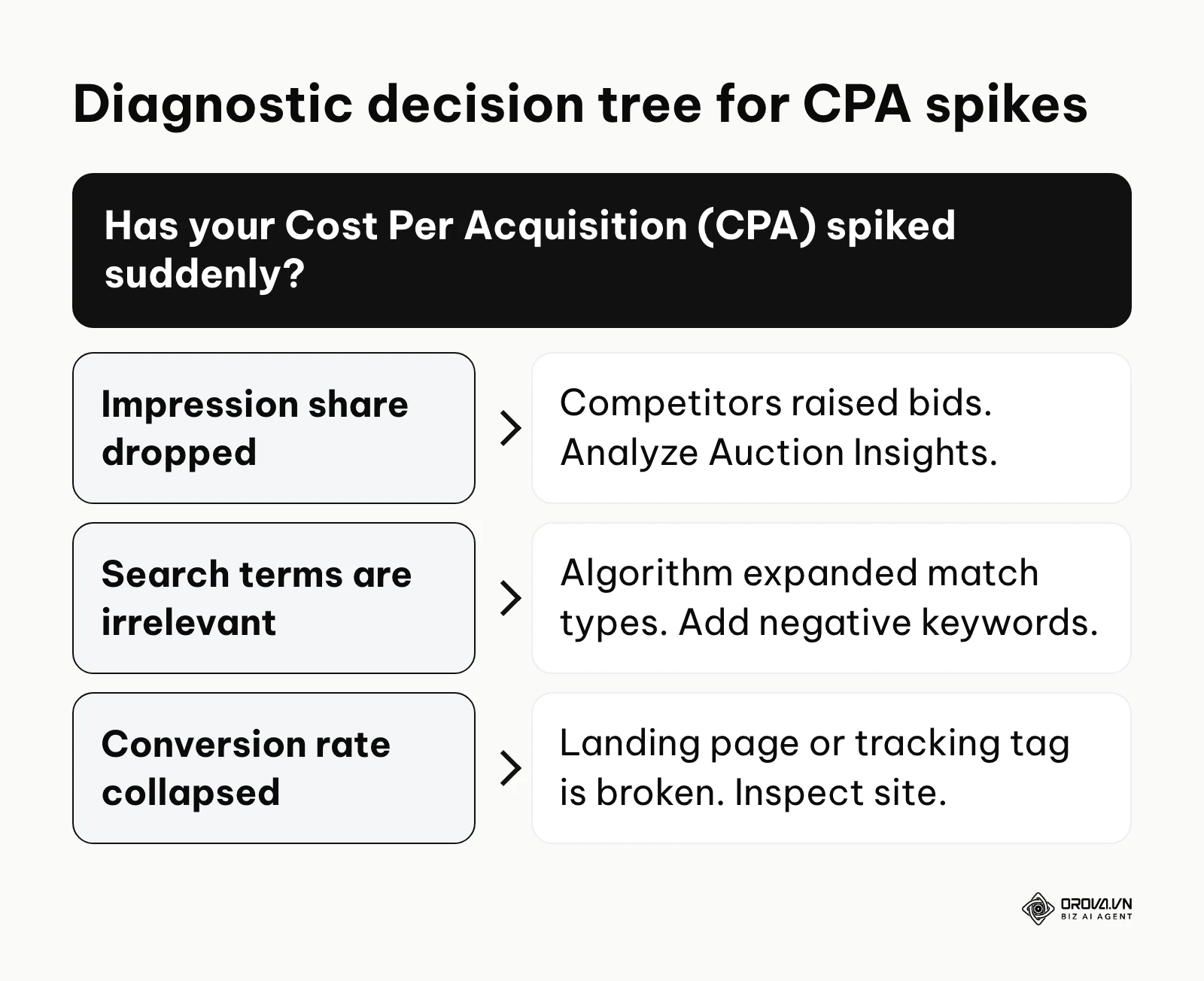
The specific actions require a strict sequence. First, check the Auction Insights report. Look at your Impression Share and Outranking Share. If a new aggressive competitor has entered the market and is driving up the floor cost per click, your CPA will rise even if your conversion rate remains stable. Second, evaluate the Search Terms report. Sort by spend and look for broad match keywords that have suddenly mapped to irrelevant queries. Third, analyze the landing page performance.
Illustrative example:
- Context: A B2B software company spending 50,000 dollars monthly saw their lead acquisition cost jump from 150 dollars to 320 dollars in just four days. They needed to execute a google ads troubleshooting guide protocol immediately.
- Steps taken: They did not touch the budget. They checked the Search Terms report and found a new consumer software product had launched with a similar name, causing thousands of irrelevant clicks. They immediately added the competitor's exact product name as a negative keyword. They also reviewed their conversion rate optimization logs and found a recent website update had severely slowed down the mobile page load time.
- Stumble and fix: The initial fix of adding the negative keyword did not drop the CPA fast enough because the algorithm was still bidding high. They temporarily pointed mobile ads to a lighter, faster-loading page variant while the developers fixed the site architecture.
- Result: The dashboard showed the CPA stabilizing back to 160 dollars within five days, preventing a massive budget waste without completely resetting the campaign learning phase.
If the auction environment and search terms look normal, the issue is almost always a broken tracking tag or a significant drop in landing page conversion rate due to technical errors.
Step 2: Force Performance Max campaigns to follow your rules
If you are wondering how to optimize pmax campaigns, you must understand that Performance Max is designed to remove manual control. However, you can still impose strict boundaries on the algorithm to stop it from wasting money on low-quality inventory. The biggest issue with PMax is the limited visibility into where your budget goes across the Display and Video networks. If you are still building asset groups from scratch, the setup itself is covered in our PPC ad management guide; this section focuses on diagnosing a PMax campaign that is already leaking spend.
To regain control, you must segment your Asset Groups meticulously. Do not group all your products or services into one massive Asset Group. Segment them strictly by profit margin or search intent. This allows you to pause low-performing segments seamlessly. Next, you must implement Brand Exclusions. PMax loves to claim credit for branded searches, which makes the campaign look successful while cannibalizing your organic traffic. Create a brand list that contains all variations of your company name and apply it as a brand exclusion in each Performance Max campaign.
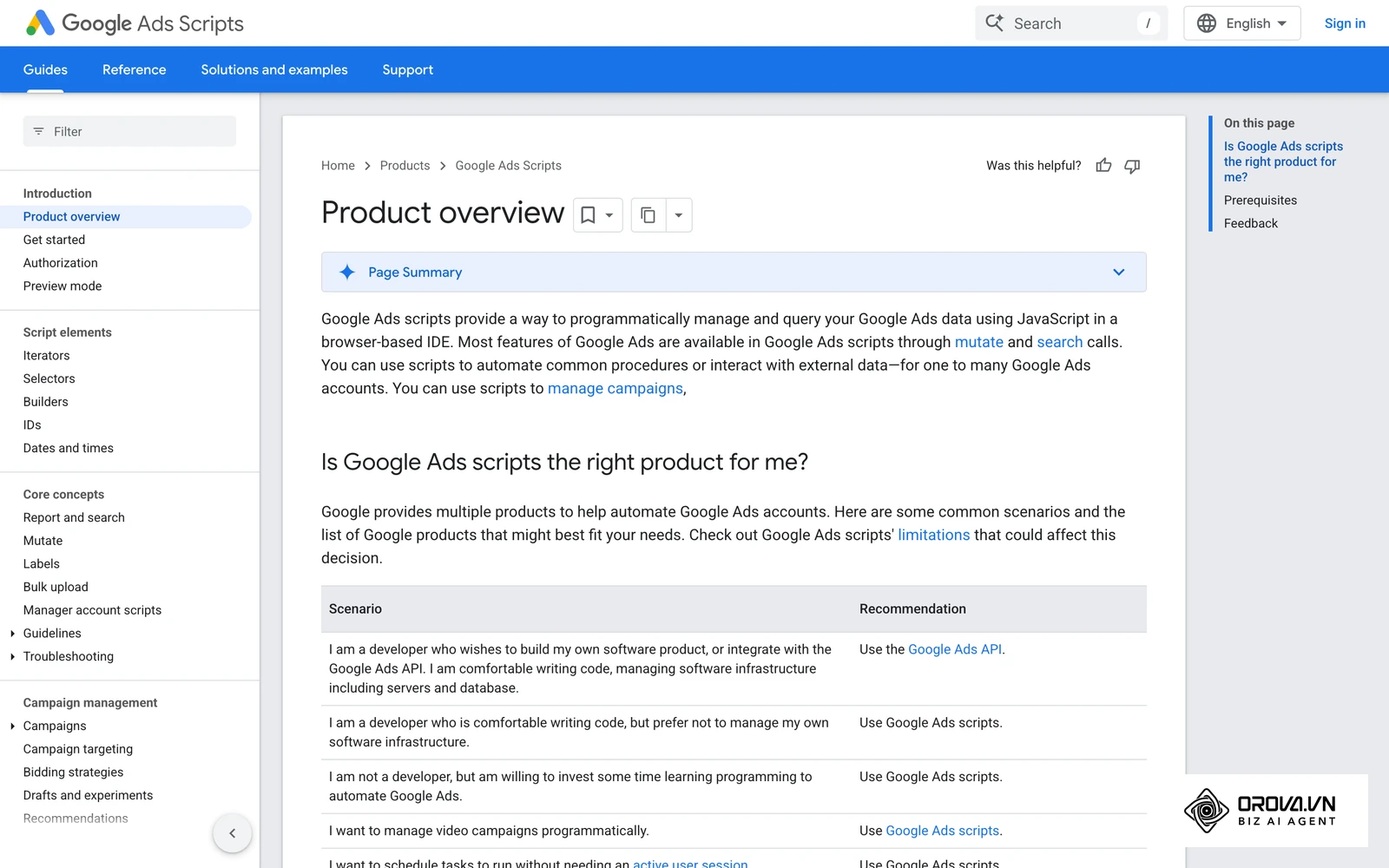
Furthermore, use Google Ads scripts to extract data the default views do not surface. While native reporting gives limited placement detail, community-built scripts can pull reporting data to show you how much budget PMax spends on mobile apps or low-quality sites. Once identified, add those placements to an account-level placement exclusion list to tighten the algorithm's focus.
Step 3: Retrain Smart Bidding when the algorithm fails
Smart bidding optimization tactics require immense patience and precision. Algorithms like Target CPA and Target ROAS rely heavily on historical data. When a tracking error occurs, or a website goes down for 24 hours, the algorithm consumes bad data and begins making erratic bidding decisions. You cannot just wait for it to fix itself.
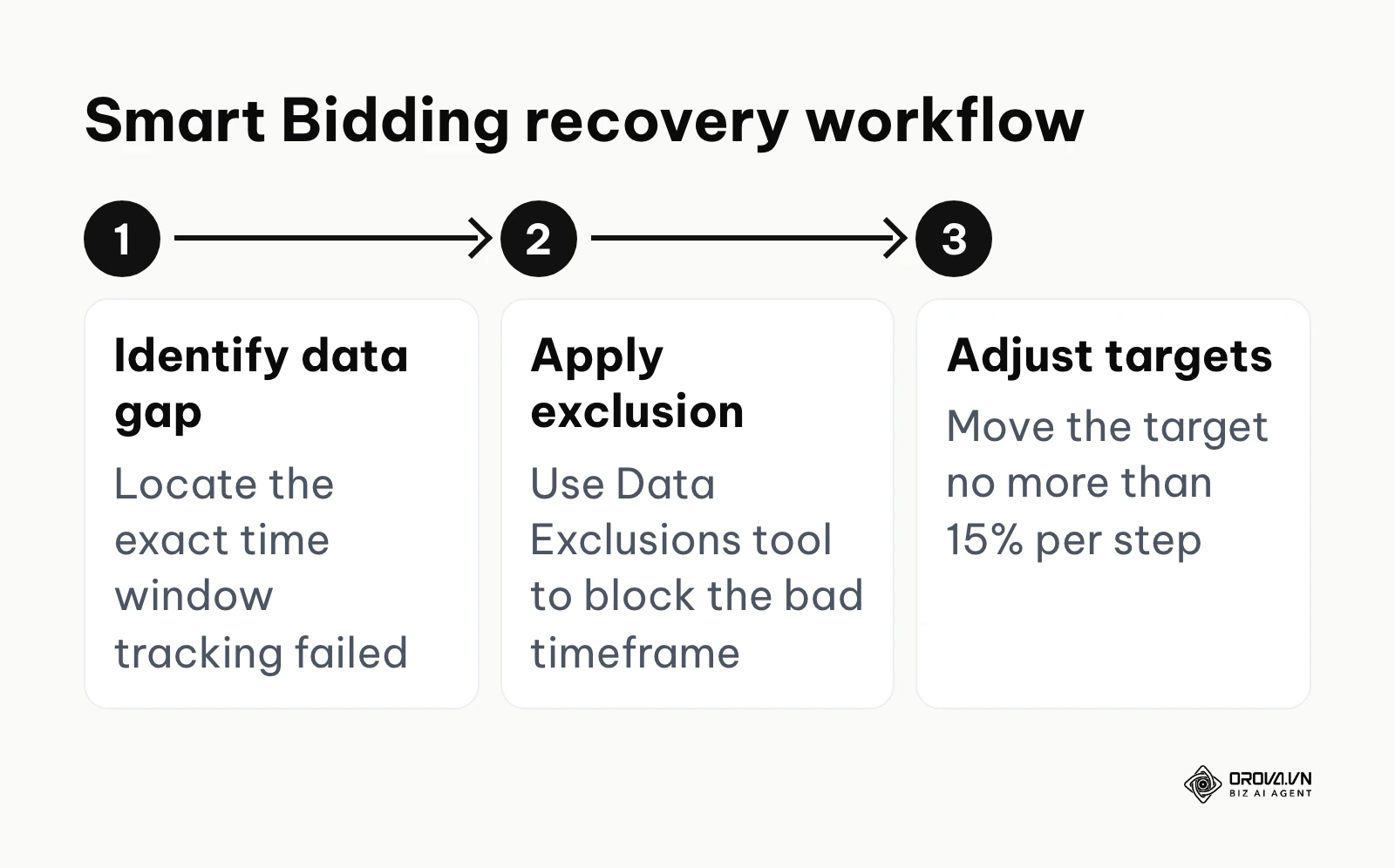
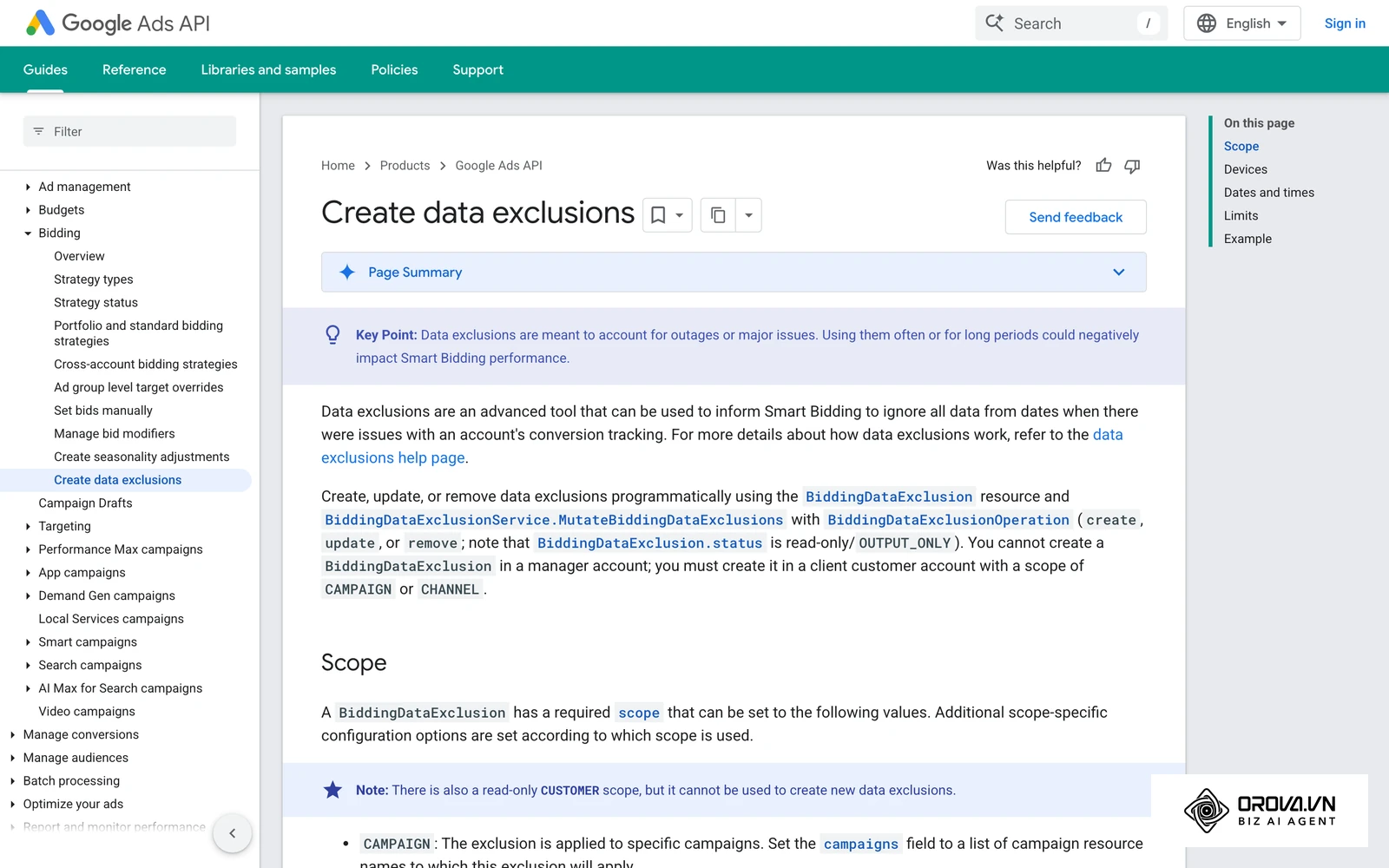
When bad data enters the system, you must immediately use the Data Exclusions tool. In the Bid strategies area of the Tools menu, open Advanced controls and choose Data exclusions. Enter the exact date and time the tracking failed. This explicit command tells the algorithm to ignore the performance data during that window when calculating future bids.
If the algorithm is simply underperforming due to market shifts, you need to retrain it through micro-adjustments. As a practical rule of thumb, never change your Target CPA or Target ROAS by more than 15% at a time. If your Target CPA is 100 dollars and you are currently hitting 150 dollars, do not lower the target to 100 dollars immediately. The algorithm will panic, drop your bids too low, and you will lose all volume. Instead, lower the target to 135 dollars, wait five days for the algorithm to adapt, then lower it again to 120 dollars.
Illustrative example:
- Context: A local service business spending 15,000 dollars monthly transitioned from manual bidding to an automated Target CPA strategy to scale operations.
- Steps taken: They set their initial Target CPA to 80 dollars based on historical averages. They let the system run, but after three days, impression volume collapsed entirely.
- Stumble and fix: They had set the initial tCPA too aggressively, starving the algorithm of the data it needed to learn. They fixed this by raising the tCPA target by 15% to force the system to enter more auctions and gather data. After a week of data collection, they slowly lowered the target by 10% every four days.
- Result: By the third week, the campaign stabilized at a 75-dollar CPA, and the service calendar was booked solid for two consecutive weeks.
Additionally, feed the algorithm strict Audience Signals. Even if you use broad match keywords, attaching a custom segment of your highest-value past purchasers as an audience signal provides the machine with a definitive starting point for pattern recognition, significantly shortening the initial learning phase.
Step 4: Implement Offline Conversion Tracking (OCT) for profit-driven bidding
Optimizing strictly for front-end conversions like form submissions or phone calls is extremely dangerous for your bottom line. A campaign might generate 100 leads at a brilliant CPA, but if none of those leads actually buy your product, the campaign is a complete failure. To scale successfully, you must implement Offline Conversion Tracking (OCT).
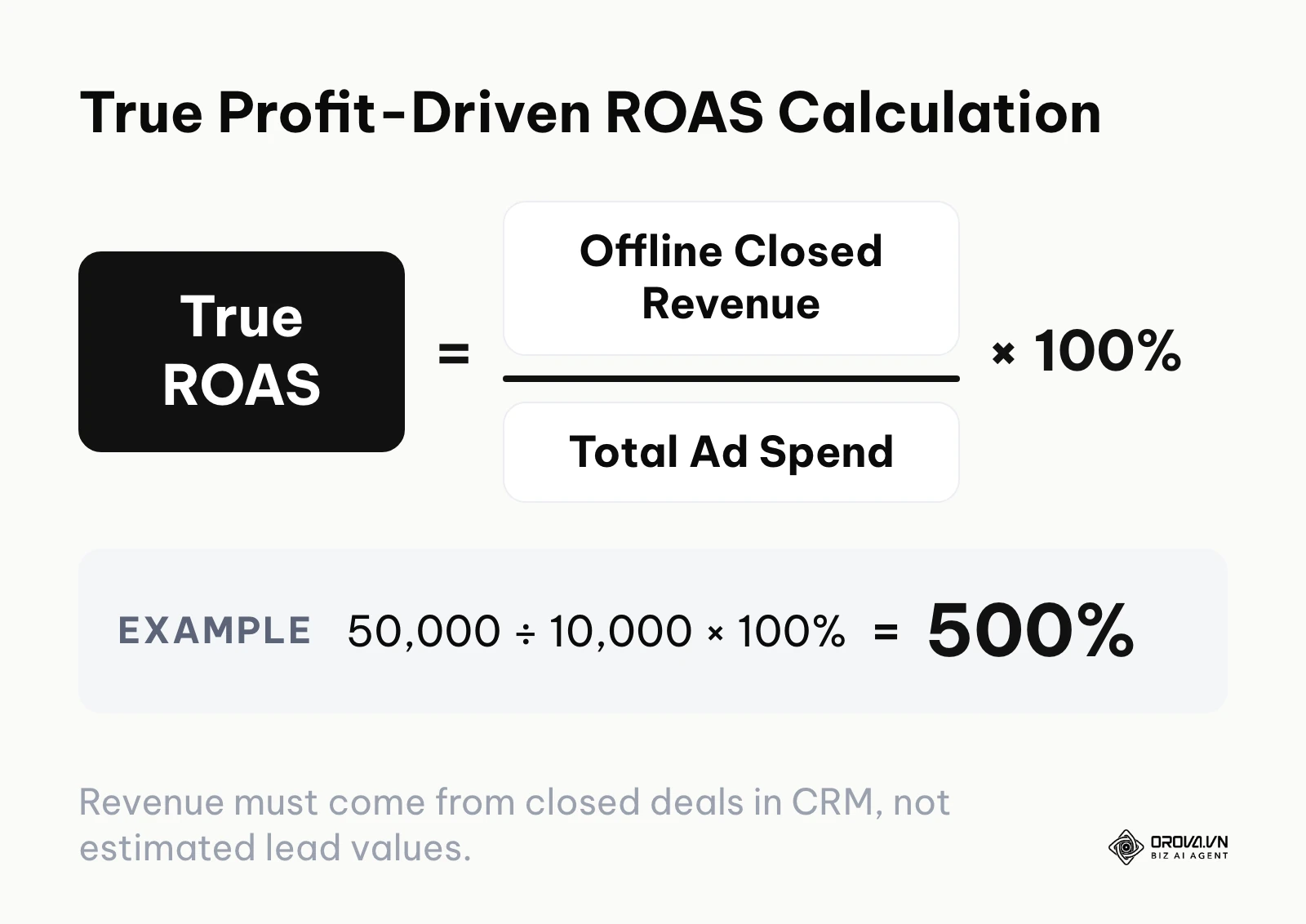
OCT bridges the critical gap between the Google Ads platform and your customer relationship management (CRM) software. Google's conversion documentation describes how offline conversion imports use the click identifier to tie downstream revenue back to the original ad click. When a user clicks your ad, Google generates a unique Google Click Identifier (GCLID). You capture this GCLID in a hidden field on your website form and store it securely in your CRM alongside the lead's contact information.
When your sales team eventually closes the deal—whether it takes two days or two months—your CRM sends that GCLID back to Google Ads along with the actual revenue amount. This fundamentally shifts the algorithm's focus. Instead of finding generic users who like filling out forms, it starts searching specifically for users who share deep behavioral patterns with actual paying customers.
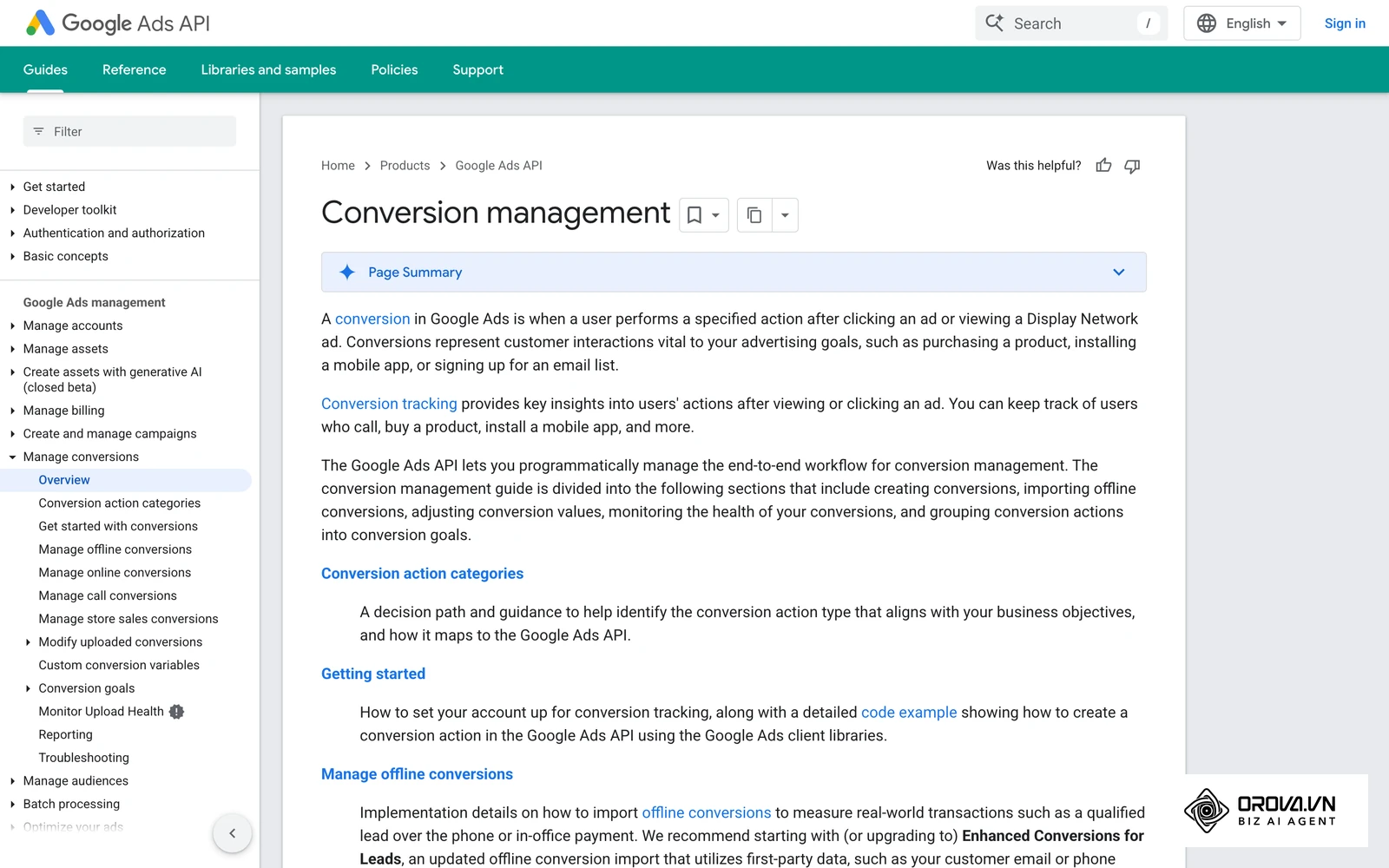
This also changes how you read profitability. True ROAS uses offline closed revenue instead of estimated lead values: if closed deals attributed to your ads bring in 50,000 dollars on 10,000 dollars of ad spend, true ROAS is 50,000 ÷ 10,000 × 100% = 500%. For the full calculation and its variants, see our ROAS formula guide.
Illustrative example:
- Context: A high-ticket B2B consulting firm spending 80,000 dollars a month generated thousands of leads, but the sales team constantly complained that 80% were unqualified students or micro-businesses without budget.
- Steps taken: The team implemented OCT by mapping the GCLID directly to their Salesforce instance. They configured an automated webhook to push the exact signed contract value back to Google Ads only when a lead moved to the "Closed Won" stage. They then switched their bidding strategy from Maximize Conversions to a strict Target ROAS.
- Stumble and fix: Initially, the total conversion volume dropped by 60% because the new feedback loop was extremely strict, and the algorithm struggled with severe data scarcity. They fixed this by importing an intermediate conversion stage—"Sales Qualified Lead"—and assigning it a static proxy value of 500 dollars, giving the algorithm more frequent daily data points to learn from.
- Result: The CRM dashboard demonstrated that while raw lead volume decreased, the cost per actual acquired client dropped by 45%, and the overall pipeline revenue value doubled over the quarter.
Step 5: Build a defensive negative keyword vault for B2B and B2C
Negative keywords are your primary defense mechanism against irrelevant broad match traffic. You should never wait for bad search terms to appear in your report before acting. You must build a comprehensive, proactive negative keyword vault before launching your campaigns.
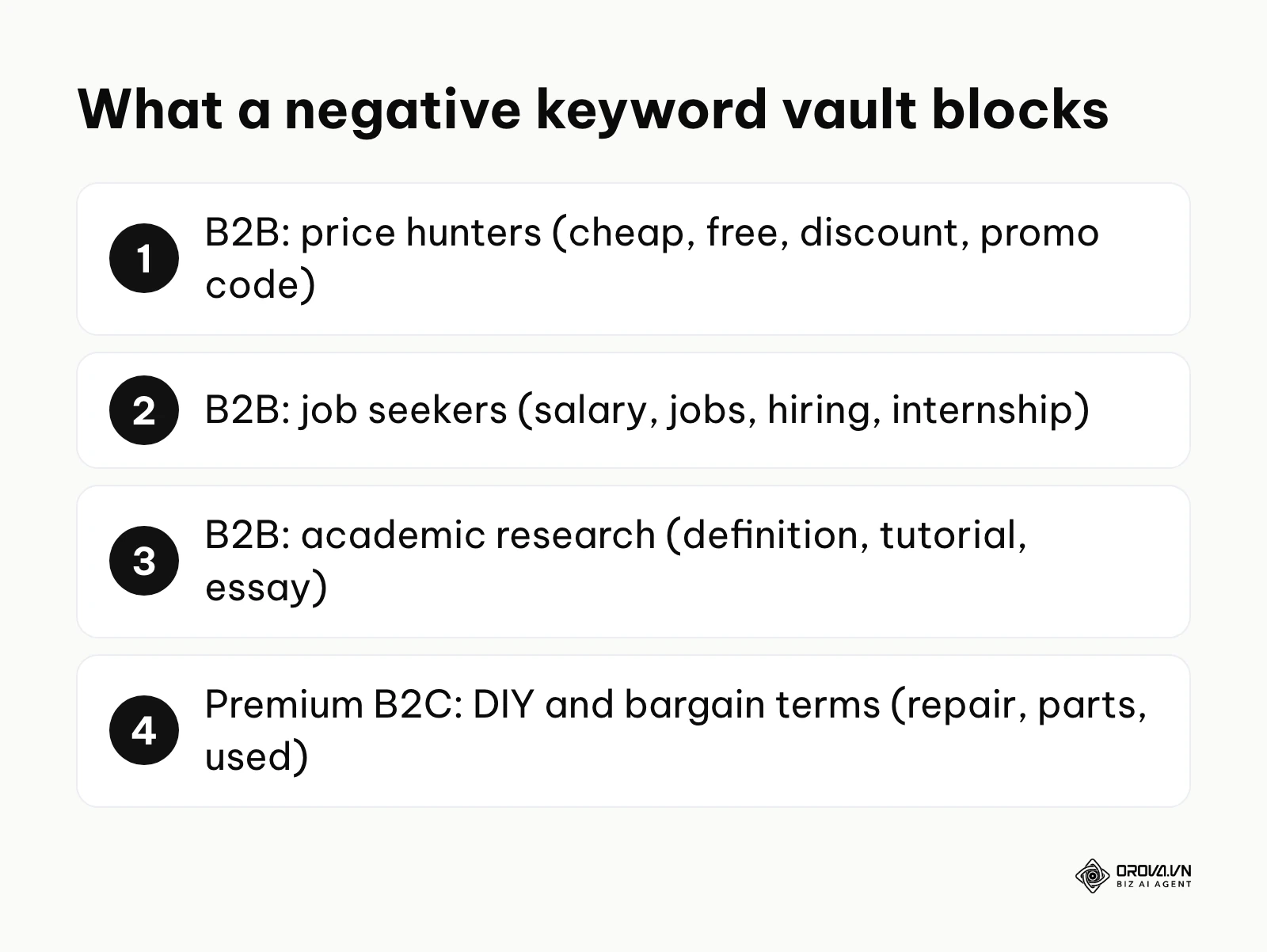
If you operate in the B2B sector, your vault must instantly exclude consumer-focused terms. Your list should aggressively target pricing hunting (cheap, free, discount, wholesale, promo code). It must exclude job seekers (salary, jobs, hiring, resume, cover letter, internship). It must categorically exclude academic research (definition, what is, tutorial, examples, template, essay).
If you are a premium B2C brand, your negative keyword strategy must filter out bargain hunters and DIY enthusiasts. Exclude terms like "how to make," "materials," "parts," "repair," and "used." Create these extensive negative keyword lists at the Account Level or in the Shared Library. Do not manage negatives manually at the ad group level unless the term is specifically conflicting with another active ad group in your account structure.
A robust negative keyword vault cuts a visible share of wasted spend from day one. You should still review your search terms report weekly, but a strong initial vault ensures that the most egregious semantic mismatches are blocked before a single cent is wasted.
Step 6: Scale budget safely without breaking the learning phase
A highly common challenge is how to increase campaign budgets without destroying current performance. Many marketers double their daily budget enthusiastically, only to watch their CPA skyrocket while total conversion volume barely moves. This happens because sudden, massive budget increases force the Smart Bidding algorithm into a frantic, destabilizing learning phase.
The algorithm calculates bids based on expected daily constraints. When you double the budget instantly, you remove that constraint entirely, and the system starts entering much higher-priced auctions it previously ignored, bidding aggressively just to spend the newly allocated daily limit.
To scale safely, utilize the strict 20% rule. Never increase your daily budget by more than 20% in a single 48-hour period. If your campaign is spending 100 dollars a day and performing exceptionally well, increase it to 120 dollars. Wait two to three full days for performance to stabilize, then increase it by another 20% to 144 dollars.
If you need to scale rapidly and cannot wait weeks, consider launching a duplicate campaign. This is risky, but it isolates the new budget away from your stable performer. Alternatively, you can run a strict Google Ads Experiment. Allocate 50% of the traffic to a version of the campaign with a massively expanded budget and monitor how the algorithm handles the scale in a controlled environment. To understand how budgets, bids and cost per click interact in the auction, see our breakdown of Google Ads pricing.
OROVA ADS applies AI Agent to automate and optimize ad performance on Google, Meta and TikTok. Scale your budget safely, monitor 24/7 and expand your business quickly.
Experience the solution at orova.vn/ads
Deep analysis: Manual vs automated Google ads optimization tactics
The industry has fundamentally shifted from manual, granular control to broad, automated execution. Understanding the technical trade-offs between these two approaches is critical for deciding how to construct your account infrastructure.
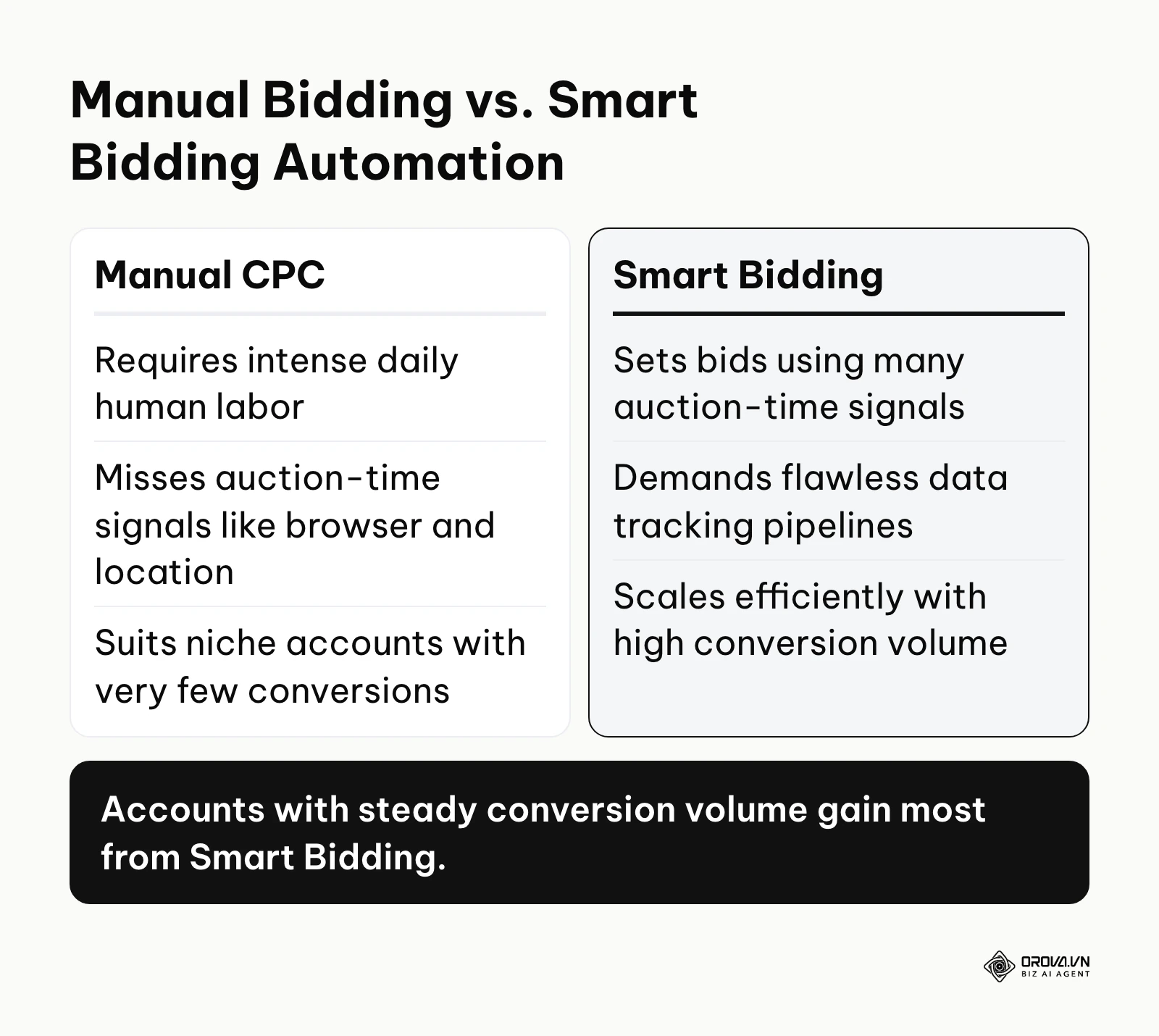
Manual optimization relies on human intuition, pivot tables, and rigid bidding adjustments. You manually increase bids by 10% for mobile devices on Tuesdays based on past performance. Automated optimization, powered by machine learning, calculates auction-time bids using a wide range of contextual signals that human managers cannot access. Consolidated account structures help here, because they give the algorithm more data per campaign to learn from.
| Optimization Approach | Ideal Use Case Environment | Technical Vulnerabilities and Weaknesses |
|---|---|---|
| Manual Cost Per Click (CPC) | Brand new accounts with zero historical data, strict budget limits, or hyper-niche B2B campaigns with very few conversions per month. | Requires immense daily human labor. Fails to account for auction-time variables like user browser, exact location, or past purchase history. Cannot scale efficiently. |
| Target CPA (Automated) | Lead generation accounts with steady, consistent monthly conversion volume. | Prone to severe performance drops if tracking breaks. Can drastically reduce impression share if the target is set unrealistically low. |
| Target ROAS (Automated) | E-commerce or CRM-integrated B2B accounts passing variable revenue data back to the platform. | Requires flawless data pipelines. Demands high data volume to function correctly. Often struggles during massive seasonal shifts without manual intervention. |
| Performance Max (Fully Automated) | Accounts focused purely on maximizing total conversion volume across all Google networks simultaneously. | Complete loss of placement visibility. High risk of cannibalizing branded search terms. Difficult to troubleshoot when performance declines suddenly. |
For most accounts with steady conversion volume, manual bidding now struggles to keep up. The automated systems process far more auction signals than a person can. However, the role of the marketer has not disappeared; it has simply shifted up the funnel. Instead of changing micro-bids, you now optimize the macro-inputs: refining the data pipeline, improving ad creative, and structuring the account to feed the machine the clearest possible signals.
Measuring success: Core metrics to track and thresholds to watch
You cannot optimize what you do not measure accurately. Focusing intensely on vanity metrics like raw clicks or total impression volume will inevitably lead you astray. You must monitor core business metrics and understand the specific technical thresholds that indicate a failing algorithmic campaign.
| Core Metric | Technical Meaning and Business Impact | Critical Thresholds to Watch |
|---|---|---|
| Cost Per Acquisition (CPA) | The total spend divided by total conversions. Indicates the true cost of acquiring a lead or customer. | A sharp spike versus your own trailing 14-day average, sustained for several days, points to a tracking failure, new competitor pressure, or a bidding breakdown. |
| Return on Ad Spend (ROAS) | Total conversion value divided by total cost. Measures the direct profitability of your campaigns. | Depends on your own margin. If ROAS drops below your break-even point for 7 consecutive days, pause scaling initiatives immediately. |
| Search Impression Share | The exact percentage of eligible auctions your ad actually appeared in. | A falling share tells you something is capping delivery; check whether "lost to budget" or "lost to rank" is growing to see which lever to pull. |
| Conversion Rate | The percentage of ad clicks that result in a defined primary conversion action. | A sudden drop versus your own baseline, while click volume holds steady, points to the landing page or the tracking tag rather than the ads. |
| Cost Per Click (CPC) | The actual price paid for a user click. Influenced heavily by Quality Score and competitor bids. | A sustained rise in average CPC while your Quality Score holds steady often signals new competitor pressure; confirm it in Auction Insights. |
When reviewing these metrics, always look at a statistically significant timeframe. Reacting emotionally to a single bad day will cause you to over-optimize and disrupt the system unnecessarily. Look at rolling 14-day or 30-day averages to identify true behavioral trends in the data. Furthermore, monitoring the Google Ads Quality Score metric at the keyword level can provide vital early warnings about declining ad relevance before your CPC skyrockets out of control.
Want to scale your budget but afraid of breaking performance? 📉
Integrate OROVA ADS now - an AI Agent that automatically monitors and optimizes Google, Meta, TikTok ads 24/7. Now, expanding and replicating your Performance Ads team is just one click away.
🚀 Try it now at: orova.vn/ads
Common mistakes that derail your google ads optimization efforts
Even seasoned marketers make structural errors that severely confuse machine learning algorithms. Avoiding these critical missteps is just as important as implementing advanced technical tactics.
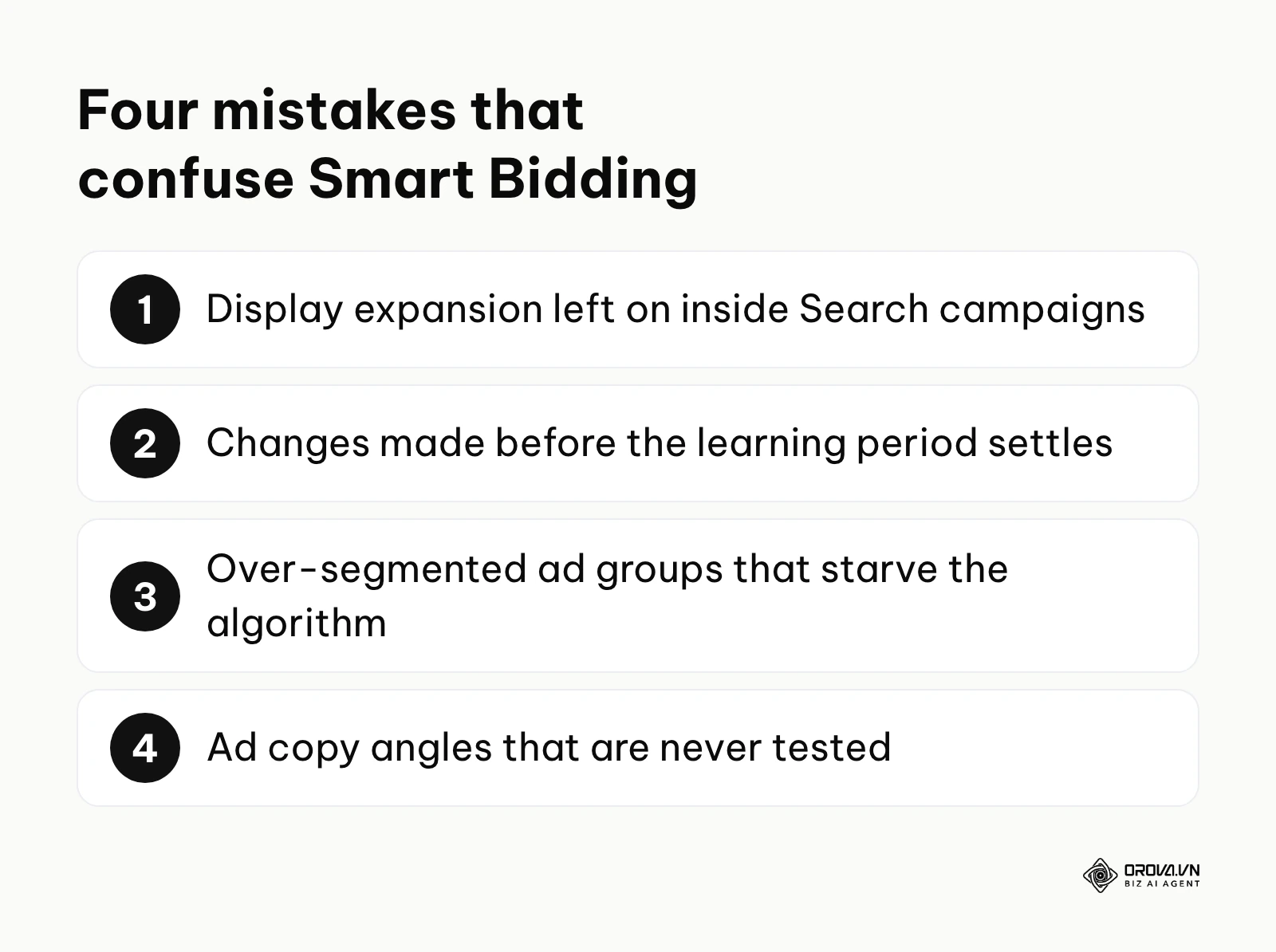
The first major mistake is relying on the default display network expansion setting inside your search campaigns. When you build a search campaign, Google automatically opts you into the Display Network to "expand your reach." You must uncheck this box immediately. Search intent is completely different from passive display context. Mixing these two fundamentally different networks into one budget pool allows the algorithm to aggressively waste money on cheap, low-converting display clicks when search volume drops slightly. If you genuinely want to run display ads, build a dedicated campaign specifically for it.
The second critical mistake is making structural changes too frequently. Smart Bidding goes through a "learning period" after significant changes; it usually lasts several days and can run longer for campaigns with low conversion volume. If you change your Target CPA, add 50 new broad match keywords, and swap out ad copy every three days, the algorithm constantly resets its statistical confidence. It never officially exits the learning phase. You must implement a change, and then sit on your hands for at least a full week to let the math settle.
The third mistake is over-segmentation. In the past, marketers painstakingly built Single Keyword Ad Groups (SKAGs) to maximize specific bid control. Today, this practice completely starves the AI algorithm. Smart bidding requires immense data density to function. If you split your monthly budget across 50 tiny ad groups, none of them will generate enough isolated conversions for the AI to recognize meaningful patterns. You must consolidate your account structure into broader, theme-based ad groups to pool data together effectively.
The final common error is ignoring the actual psychological ad copy. Automation handles the bid pricing, but human beings still read the ads on the screen. Failing to test different psychological angles and emotional hooks in your Responsive Search Ads directly leads to poor click-through rates, which tanks your Quality Score.
Future trends in advertising: My predictions for 2026 and beyond
The advertising landscape is evolving rapidly due to advanced machine learning models and strict privacy regulations. Based on the technological trajectory up to 2026, here is how I expect digital advertising optimization to change over the next few years.
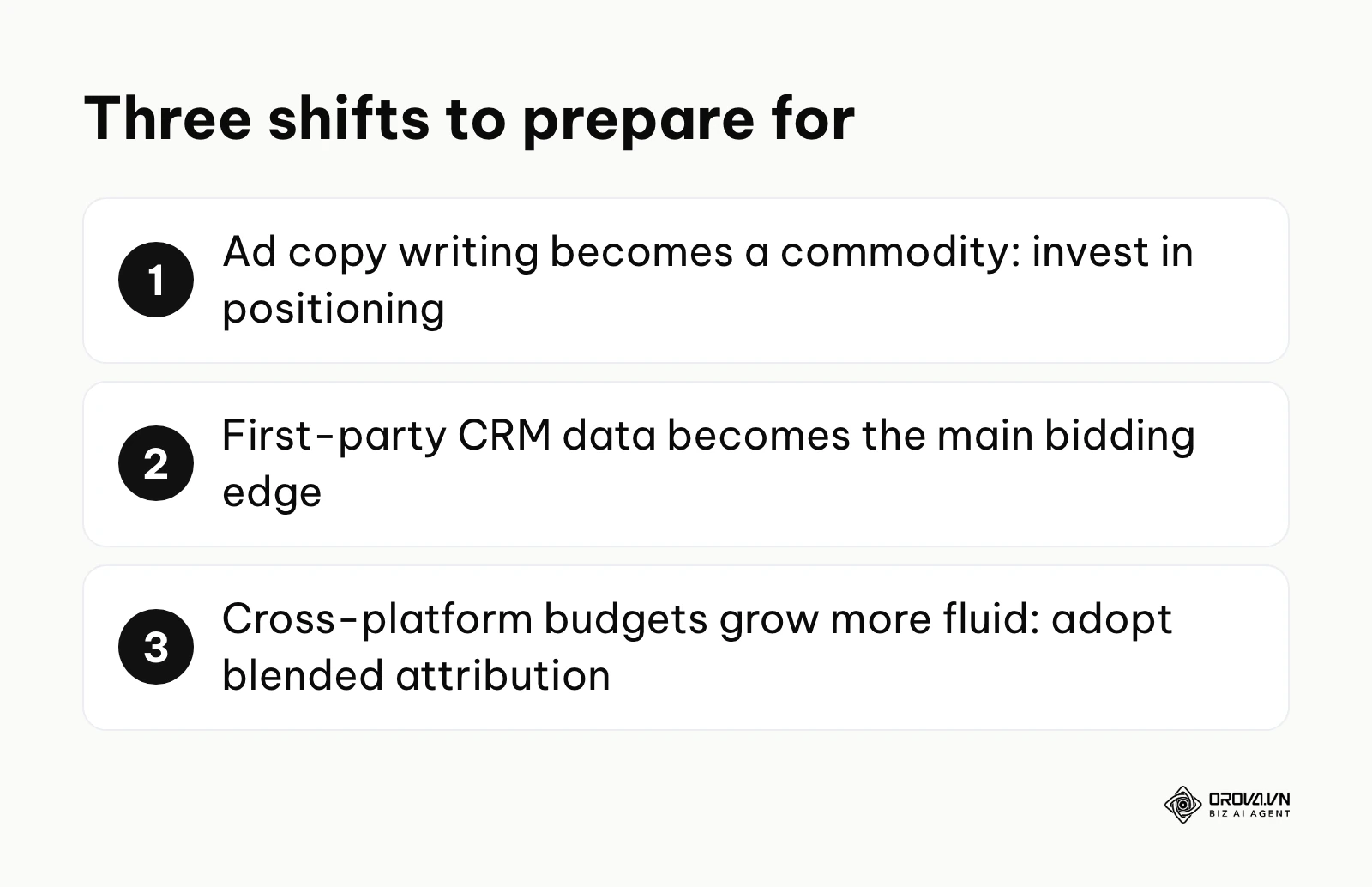
Basic ad copy generation will become a commodity
I believe that within a few years, manually writing standard ad copy will matter far less than it does today. The platforms' native AI tools will likely generate many personalized text variations on the fly based on the user's immediate search context, past web behavior, and specific demographic profile. Therefore, the marketer's core job will shift from writing clever headlines to orchestrating broad messaging frameworks and providing high-quality visual assets. You must start focusing deeply on your core value proposition and brand positioning today, because the algorithm will increasingly handle the specific syntax of the ad text.
First-party data will become the main bidding advantage
As browsers and privacy frameworks keep restricting third-party tracking, I think the strongest competitive advantage left in the auction will be proprietary first-party data. If two direct competitors use the exact same Smart Bidding algorithm, the one consistently feeding the algorithm superior CRM data, exact lifetime value metrics, and highly accurate offline conversion feedback will usually have the edge. You should begin heavily investing in your secure CRM infrastructure and data pipelines right now to ensure your offline conversion tracking is flawless.
Cross-platform budgets will become far more fluid
I expect that managing strict, siloed budgets for individual advertising platforms will gradually give way to something more fluid. Future AI agents may operate with far more budget flexibility across Google, Meta, and TikTok. Such a system could shift your dollars hour-by-hour to whichever specific platform offers the cheapest marginal conversion at that exact moment. To prepare, you must immediately stop looking at isolated platform metrics and adopt a unified attribution model that accurately evaluates the overall business impact of your blended advertising spend. You can explore how to integrate complex strategies across these channels comprehensively in this AI Ads guide. Of course, these predictions rely on the critical assumption that future global privacy legislation does not fundamentally block cross-platform data sharing, which remains a significant regulatory risk.
Frequently asked questions about google ads optimization
What should I do when increasing my budget only increases the CPA?
This usually means you have completely hit the ceiling of profitable demand in your current targeting parameters. When you aggressively increase the budget, the algorithm starts forcibly entering lower-quality, more expensive auctions simply to spend the allocated money. To fix this, you must pause budget increases and expand your reach laterally. Add new relevant broad match keywords, test completely new audience segments, or expand your geographic targeting before attempting to push more budget into a deeply saturated audience pool.
How often should I log into the account to make optimization changes?
You should monitor performance metrics visually daily, but you should only execute structural changes (like adjusting bid targets, changing budgets, or restructuring ad groups) every 10 to 14 days. Making major changes more frequently heavily disrupts the algorithmic learning phase. The machine learning models need unbothered time to test different auction environments and gather statistically significant data before stabilizing.
How do I detect if my campaigns are wasting spend on the Display network?
For standard Search campaigns, you must verify in the campaign settings that the "Display Network" checkbox is strictly disabled. For Performance Max campaigns, the default views give limited placement detail. Start with the channel-level and placement reporting Google provides for PMax, then use Google Ads scripts that pull reporting data to break impressions and cost down by Display and Video placements versus Search.
Does AI completely replace the need for human optimization?
No. Advanced AI and Smart Bidding algorithms are exceptionally good at executing rapid calculations at the individual auction level, but they are entirely blind to outside business context. An algorithm does not inherently know if a generated lead is high-quality or if your company is facing sudden supply chain issues. Human optimization is absolutely required to set strict boundaries, input accurate business data, and define the strategic goals that the AI will then tirelessly execute against.
Where should you begin today?
Reading about advanced optimization strategies is entirely different from executing them in a live account environment. Depending on your current operational situation, here is the singular action you should take today to begin visibly improving your performance.
If your cost per acquisition is wildly unstable and fluctuates heavily day by day: Do not touch your bids or your ad copy. Your first critical step is to execute the 15-minute account audit checklist provided in the prerequisites section. Focus intensely on verifying your conversion tracking tags. A highly volatile CPA is almost always the direct symptom of a broken data pipeline feeding erratic signals to the bidding algorithm.
If your campaigns are relatively stable but you are struggling to scale volume profitably: Your next concrete action must be implementing Offline Conversion Tracking (OCT). Coordinate directly with your web development team to capture the GCLID on your lead forms and map it seamlessly to your CRM. Shifting the algorithm's focus from cheap front-end leads to actual closed revenue is the most impactful technical upgrade you can make to a mature advertising account.
If you are spending heavily on Performance Max but feel completely out of control: Your immediate task is to apply brand exclusions. Build a brand list with every spelling variation of your company name and apply it as an exclusion in each Performance Max campaign. This forces the PMax algorithm to go out and find net-new customers instead of safely claiming easy credit for people who were already searching for your brand.
Mastering google ads optimization requires moving past simple manual tweaks and fully embracing a diagnostic, data-driven approach to algorithmic management.
About the author

Builder of Orova
Nguyễn Đỗ Trọng Ân has 8 years of experience in marketing, including 6 years managing market development across Asia. He builds Orova, a Biz AI Agent that never sleeps: it plans, runs and optimizes work for businesses.
Run your business with AI Agents
Orova is the always-on Biz AI Agent — it plans, runs, and optimizes the work for you.
Save time, unlock productivity.