
PPC ad management in 2026: The deep-dive execution guide

Many businesses pour thousands of dollars into digital advertising every month only to see their budgets evaporate with near-zero return. The root cause usually is not a bad product or a terrible website, but fundamentally flawed ppc ad management. If you rely solely on default platform settings, accept Google’s automated recommendations blindly, or treat search campaigns like a set-and-forget task, you are essentially subsidizing the ad networks. The rapid shift toward fully automated bidding algorithms and black-box campaign types like Performance Max has rendered old-school keyword tactics largely obsolete. This guide provides a deeply analytical, step-by-step framework to regain control of your ad spend. We will explore advanced bidding strategies, provide specific blueprints for both enterprise software and retail consumer goods, and detail exact auditing routines to protect your profit margins.
PPC ad management: What it is and who needs it
PPC ad management is the continuous process of strategically allocating budget, optimizing bids, structuring accounts, and refining ad creatives across pay-per-click platforms to maximize return on investment. It is an essential discipline for marketers and business owners who require predictable, scalable revenue streams. You should not engage in this process if you lack the initial budget to survive the algorithmic learning phase.
Preparing your foundation: What you need before starting
Before you launch any campaigns or write a single line of ad copy, you must establish a rigid technical infrastructure. The single biggest mistake you can make in advertising is funding a campaign before your tracking mechanisms are absolutely airtight. In an environment driven by artificial intelligence, the algorithm only optimizes toward the data you feed it. If you feed it bad data, it will optimize for bad results efficiently.
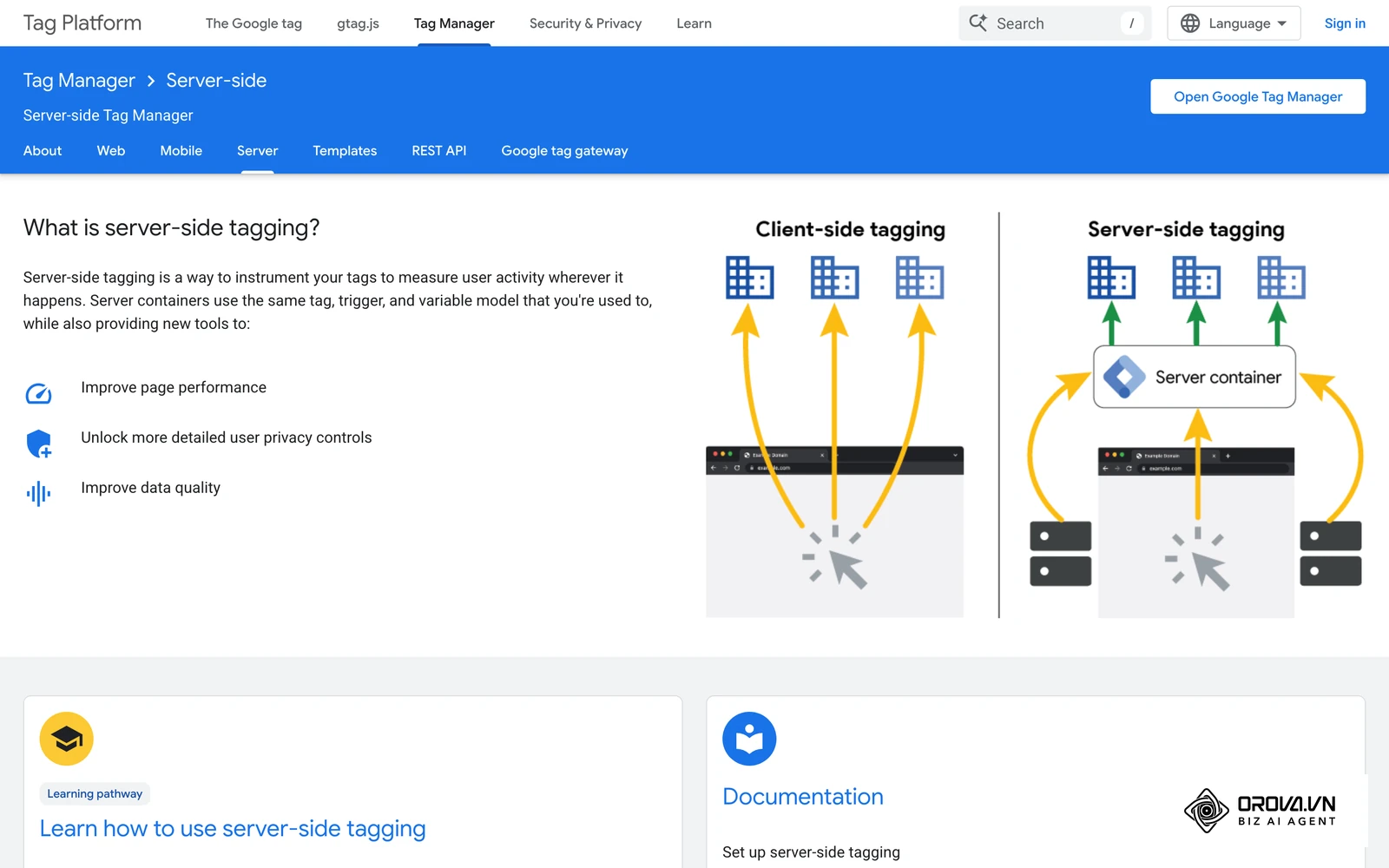
You must ensure that your conversion tracking does not merely count clicks or page views, but tracks actual business value. This means moving beyond pixel-based tracking and implementing server-side tracking or API integrations to capture offline conversions.
| Necessary Preparation Item | Where to Acquire or Configure It | Estimated Time to Complete |
|---|---|---|
| Server-Side Conversion Tracking | Google Tag Manager Server Container, Facebook Conversions API | 3 to 5 days with a developer |
| CRM Integration pipeline | HubSpot, Salesforce, or custom webhooks connecting to ad platforms | 2 to 4 days |
| Historical Data Audit | Previous ad account performance reports (Search Terms, Placements) | 1 to 2 days |
| First-Party Audience Lists | Exported customer lists from your email marketing software | 4 to 8 hours |
| Profit Margin Documentation | Financial department or e-commerce platform backend | 4 to 8 hours |
| Creative Asset Library | Organized cloud folder containing high-resolution images and videos | Ongoing process |
You must also establish clear communication between your sales team and your marketing team. If a lead generated by a PPC campaign is disqualified by sales, that feedback loop must find its way back into the ad platform so the algorithm learns to stop bidding on similar users.
The step-by-step execution: A modern PPC playbook
The traditional method of managing pay-per-click accounts involved spending hours manually adjusting bids by a few cents on thousands of individual keywords. That era is over. The modern execution playbook is about data architecture, feeding the correct signals to machine learning systems, and aggressive creative testing. Each PPC campaign should also serve a clearly defined goal inside your wider marketing campaign plan.
Step 1: Designing an account structure built for ROAS tracking
Historically, advertisers used a strategy called Single Keyword Ad Groups (SKAGs) to achieve a perfect correlation between the search term and the ad copy. Today, this hyper-segmentation starves the machine learning algorithms of the data density they need to function. The algorithmic learning phase heavily dictates initial performance, and Google's own help pages on Smart Bidding explain that significant changes to a bid strategy, its targets or its budget can send it back into a learning period.
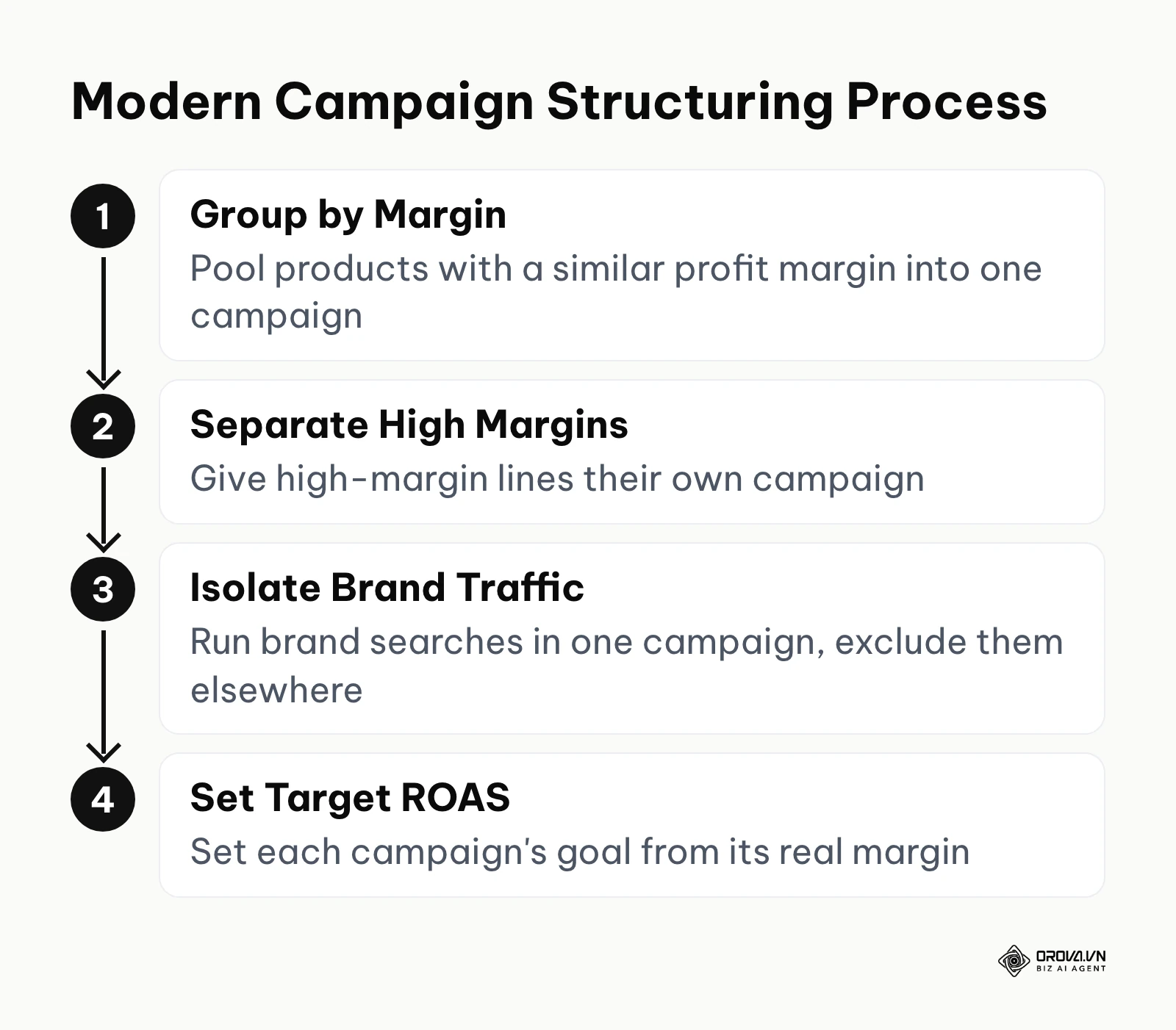
Instead, you must structure your account by intent and profit margin. If you sell shoes, do not create one campaign for "running shoes" and another for "basketball shoes" if both have a 20% margin. Group them into a single campaign called "High-Volume Shoes (20% Margin)" to pool the data. Conversely, if you sell custom leather boots with an 80% margin, they must reside in a separate campaign. This structure allows you to set different Target ROAS goals based on actual financial viability rather than arbitrary product categories.
You must also strictly isolate brand traffic. Create a campaign exclusively for people searching for your company name, and rigorously exclude your brand name from all other campaigns. If you mix brand and non-brand traffic, the platform will claim an inflated ROAS by taking credit for users who already intended to buy from you anyway.
Step 2: Defining specialized B2B versus B2C frameworks
The strategic approach you take must diverge significantly depending on your business model. You cannot manage a SaaS account the same way you manage an apparel store.
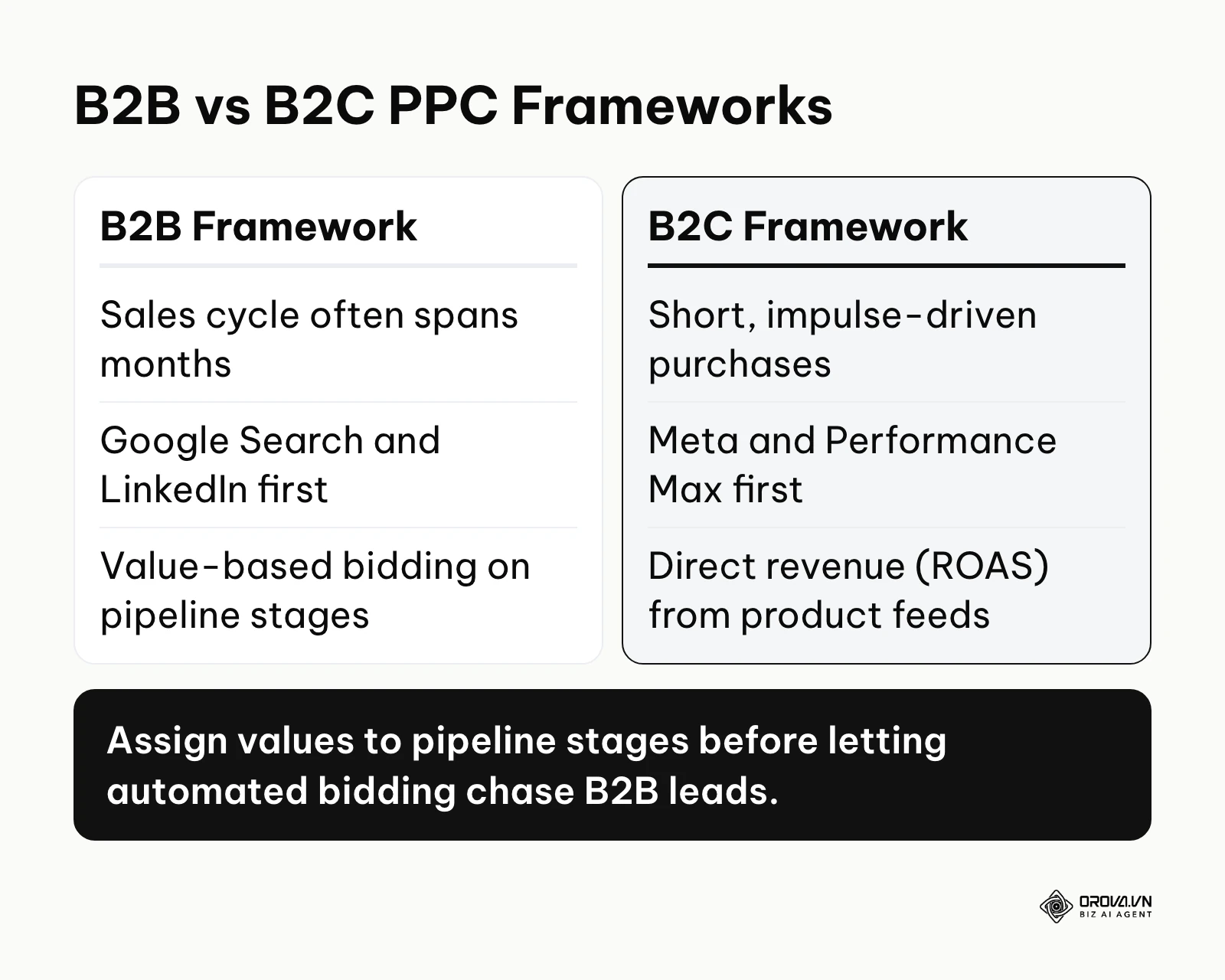
For a B2B framework, the sales cycle is long, often spanning months. Your primary platforms are Google Search and LinkedIn. The goal is lead generation, but not all leads are equal. Therefore, you must implement value-based bidding by assigning predictive values to pipeline stages. For example, if a qualified opportunity is worth 100 value points, a booked demo might be worth 15 and a downloaded whitepaper just 1. This trains the AI to hunt for quality, not just volume. You must rely heavily on custom intent audiences and firmographic targeting (job titles, company size).
For a B2C framework, the purchase cycle is often short and impulse-driven. Your primary focus will be on visual platforms like Meta (Facebook/Instagram) and Google's Performance Max. The optimization goal is direct revenue (ROAS). The strategy relies heavily on dynamic product feeds, aggressive remarketing, and continuous creative testing to reduce the cost per acquisition. Because intent is lower on social platforms than on search, your ad creative must interrupt the user and generate desire instantly.
Step 3: Transitioning from manual keywords to audience signals
Google has continually broadened how match types work. What used to be an "exact match" now includes synonyms, implied intent, and plural variations. Consequently, obsessing over keyword lists is less effective than obsessing over the audience querying those keywords.
You need to shift your management focus toward building robust audience signals. Upload your existing customer lists (segmented by lifetime value) into the platform. Create custom intent segments based on users who browse your competitors' websites. Layer these audiences onto your search campaigns as "Observation" to gather data, and use them as core signals in automated campaigns to steer the AI toward your ideal demographic faster.
Step 4: Structuring Performance Max (PMax) asset groups correctly
Performance Max is currently the most powerful, yet most dangerous, campaign type available. It automates your ads across Search, Display, YouTube, Gmail, and Maps simultaneously. The fatal error most managers make is treating the "Asset Group" like an old ad group and throwing in random images and text.
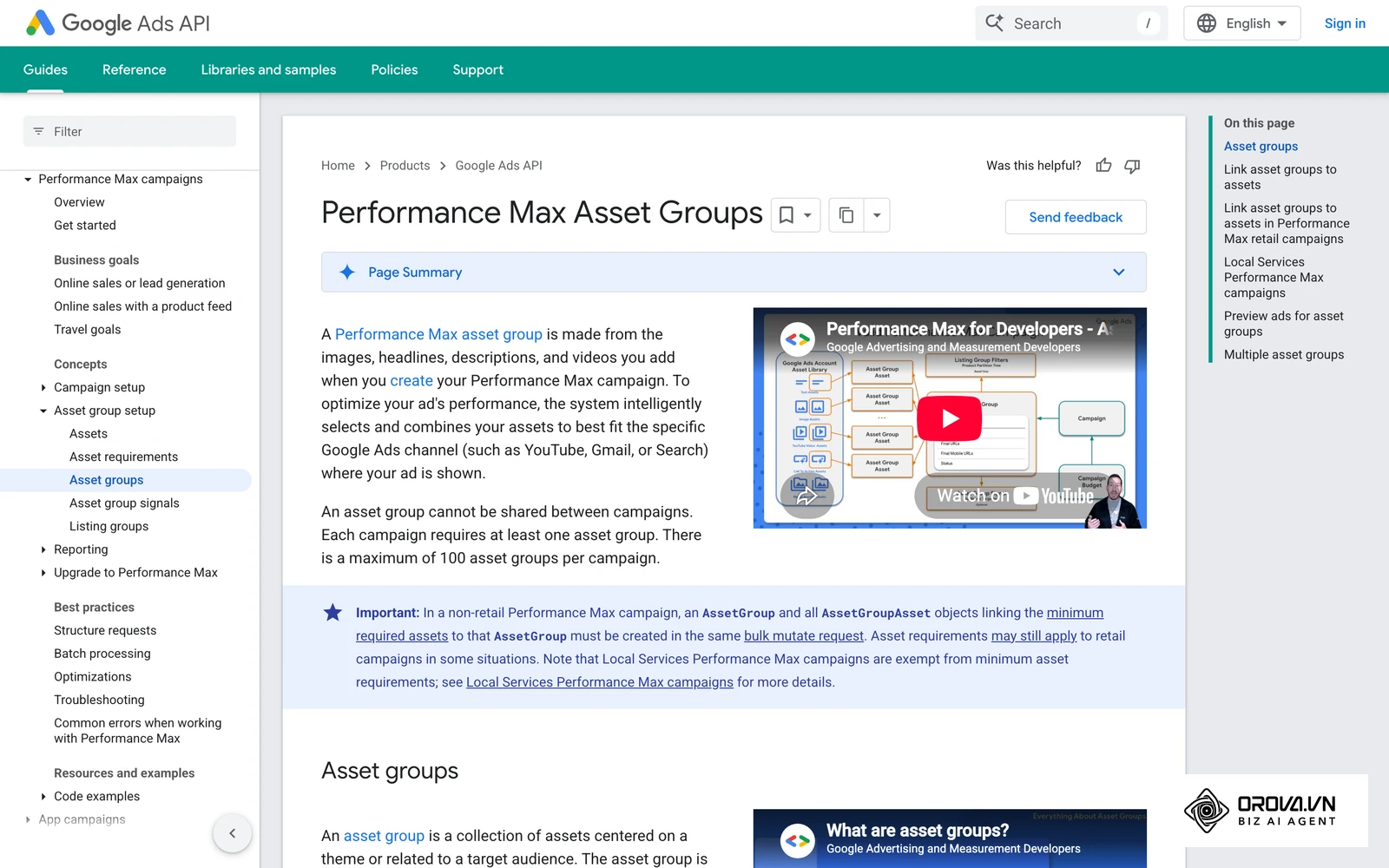
You must structure Asset Groups thematically. If you sell outdoor gear, create one Asset Group entirely dedicated to "Tents," featuring images of tents, videos of people camping, and text exclusively about tent durability. Supply video assets in more than one aspect ratio (horizontal, square and vertical) so they render correctly across mobile placements without cropping crucial text.
Fill every asset slot the platform offers for the group: images in each required aspect ratio, logos, your own videos, short and long headlines, and descriptions. Check the current limits in Google's asset specifications, because they change. If you leave the video slots empty, Google may generate videos from your other assets, and these rarely represent your brand as well as footage you produced yourself.
Step 5: Regaining control when Google hides search term data
One of the most frustrating aspects of modern ppc ad management is that platforms, especially within PMax, hide a significant portion of the search terms that triggered your ads. They label it as "Other search terms" or group them into vague insight categories.
To regain control, you must proactively manage exclusions. You cannot wait to see bad traffic; you must block it before it happens. Build extensive negative keyword lists covering competitors you do not want to appear against, cheap descriptive words (like "free", "cheap", "diy"), and irrelevant informational queries. For Performance Max, check what your account currently supports: Google offers account-level negative keywords and has been adding negative keyword controls to Performance Max campaigns, and these options keep changing. Furthermore, review where your ads appear and use account-level placement exclusions to block low-quality apps and sites where accidental clicks drain your budget.
Step 6: Building your budget pacing spreadsheet
A professional manager does not log in daily and guess if the budget is on track. You must utilize a formalized budget pacing system. This is typically managed in a Google Sheet or Excel document that tracks cumulative spend against the days elapsed in the month.
The sheet should contain columns for: Date, Daily Budget, Actual Spend, Cumulative Spend, Target Cumulative Spend, and Pacing Status (Percentage).
| Date | Daily Budget | Actual Spend | Cumulative Spend | Target Cumulative Spend | Pacing Status |
|---|---|---|---|---|---|
| Day 1 | 100 | 120 | 120 | 100 | 120% |
| Day 2 | 100 | 95 | 215 | 200 | 108% |
| Day 3 | 100 | 110 | 325 | 300 | 108% |
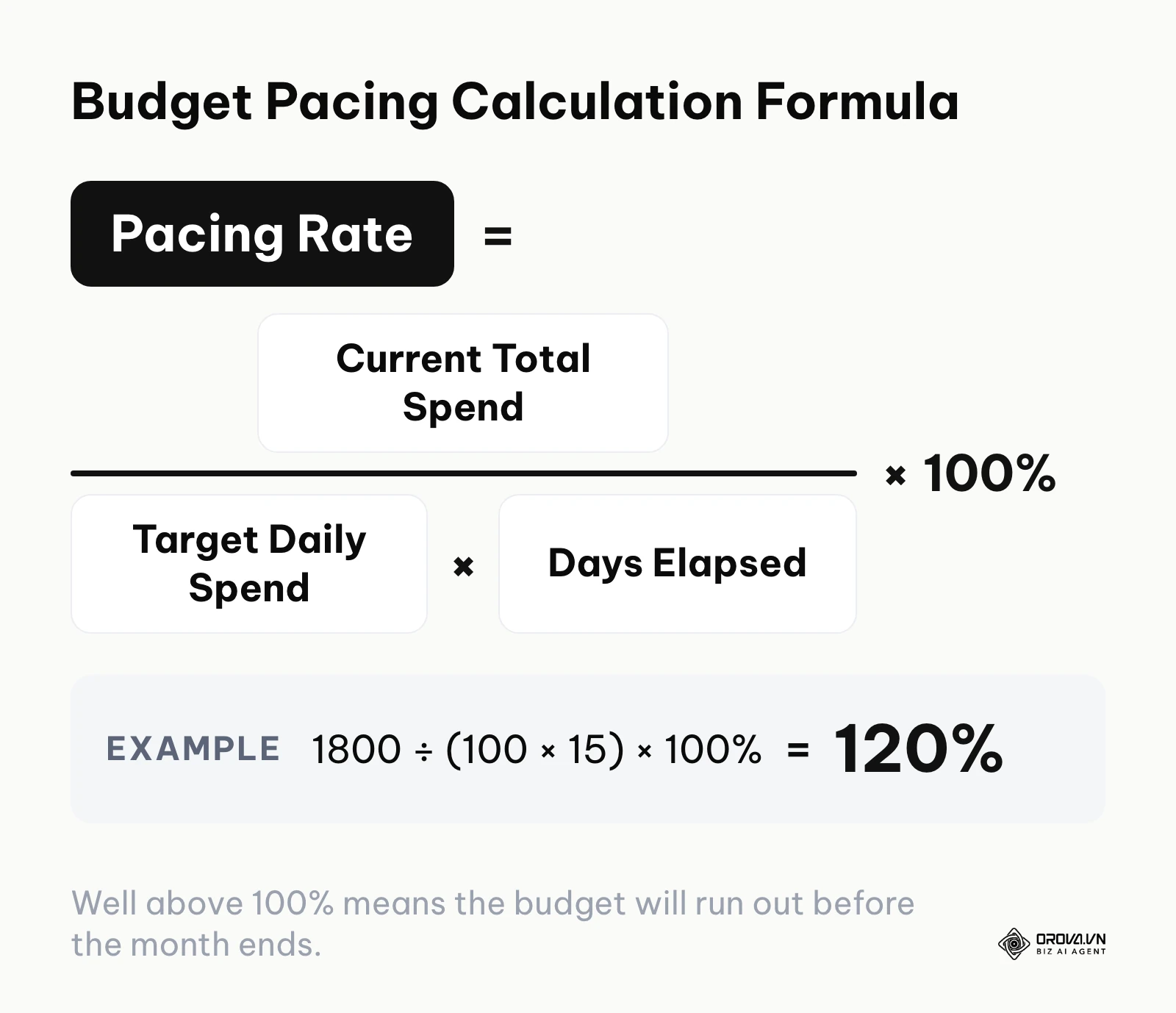
In the sheet, Cumulative Spend is the running total of Actual Spend, Target Cumulative Spend is the Daily Budget multiplied by the day number, and Pacing Status is Cumulative Spend divided by Target Cumulative Spend.
To calculate the Pacing Status, divide your current cumulative spend by the amount you should have spent by this date. For example, if your monthly budget is 3,000 in your account currency, your target daily spend is roughly 100. By day 15, your target cumulative spend is 1,500. If your actual spend is 1,800, your pacing rate is (1,800 / 1,500) * 100 = 120%. This indicates you are significantly overspending and will run out of budget before the month ends, requiring immediate downward bid adjustments.
Step 7: Executing routine technical audits
Account rot happens when you stop paying attention to the details. You must execute a structured audit routine.
Your weekly audit checklist should include:
- Reviewing the Search Terms report for new negative keyword opportunities.
- Checking the budget pacing spreadsheet to ensure you are within 5% of the target trajectory.
- Analyzing the Asset detail report in PMax to replace "Low" performing assets with new variations.
- Checking for any disapproved ads or policy violations that may have triggered automatically.
- Reviewing the Change History to ensure no unauthorized automated recommendations were applied by the platform.
Your monthly audit checklist should be deeper:
- Analyzing the ROAS by device type (Mobile vs Desktop) and applying bid modifiers if necessary.
- Reviewing location performance to exclude unprofitable zip codes or regions.
- Assessing the overall conversion lag (how long it takes a user to buy after clicking) to understand if a recent performance drop is real or just delayed reporting.
- Comparing performance year-over-year to account for seasonality.
Step 8: Validating creatives through systematic testing
Creative is now the primary lever for targeting. You cannot just guess what image or video will resonate; you must test it rigorously. When testing, you must isolate variables. Do not test a new video with a new headline and a new landing page simultaneously. You will not know which element caused the change in performance.
Start by testing broad concepts (e.g., a logical appeal vs an emotional appeal). Once you identify the winning concept, test variations of the execution (e.g., the emotional appeal with a red background vs a blue background). To learn the precise methodologies for running these tests without wasting budget, review this comprehensive ad testing framework. You must maintain a log of every test run, the hypothesis, and the statistical outcome to build institutional knowledge over time.
OROVA ADS applies AI Agent to automate and optimize ad performance on Google, Meta and TikTok. Scale your budget safely, monitor 24/7 and expand your business quickly.
Experience the solution at orova.vn/ads
Deep analysis: Navigating AI bidding strategies
The transition from manual bidding to automated Smart Bidding is the most significant shift in PPC history. Smart Bidding relies on machine learning to optimize for conversions in every auction, evaluating thousands of signals (time of day, device, operating system, historical behavior) that a human could never process in real-time. However, choosing the wrong strategy will devastate your account.
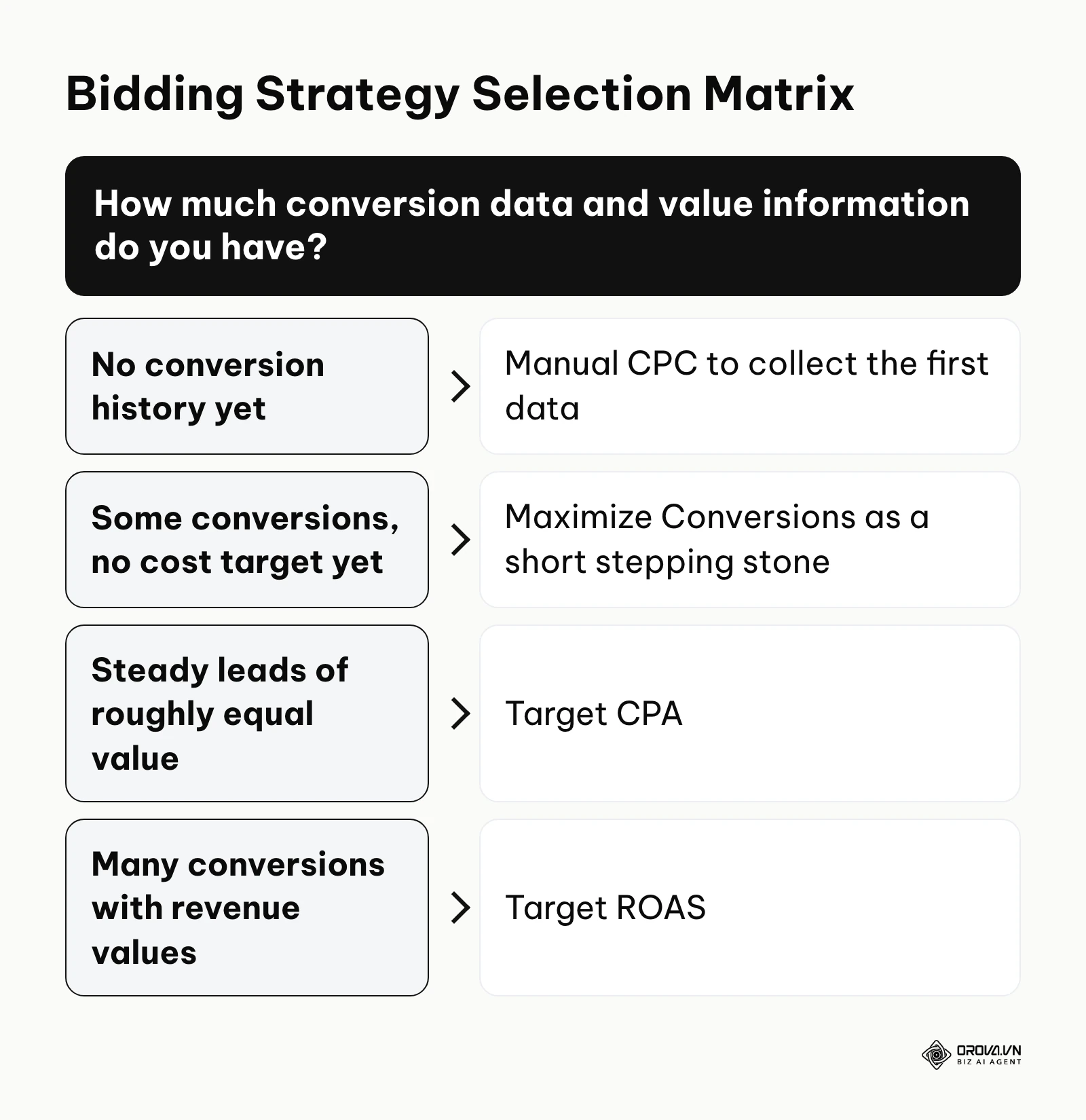
Manual Cost Per Click (CPC) allows you to set the exact maximum amount you are willing to pay for a click. This is incredibly safe but highly inefficient for scaling. You should only use Manual CPC when launching a brand new account with zero historical conversion data, just to generate the initial traffic required to train the algorithm.
Maximize Conversions tells the system to get as many conversions as possible within your daily budget, regardless of the cost per conversion. This is dangerous because the algorithm will happily spend your entire budget on a few expensive clicks if it thinks they will convert. It should only be used as a stepping stone.
Target CPA (tCPA) allows you to set a specific cost you are willing to pay for an acquisition. The algorithm will adjust bids to hit this average over a 30-day period. This is excellent for lead generation where every lead has roughly the same value.
Target ROAS (tROAS) requires the system to achieve a specific return on ad spend. If you set a 300% tROAS, the algorithm aims to generate three units of revenue for every unit of ad spend. This is the ultimate goal for e-commerce and B2B accounts utilizing value-based bidding. However, tROAS requires a massive amount of consistent, high-quality conversion data to function correctly.
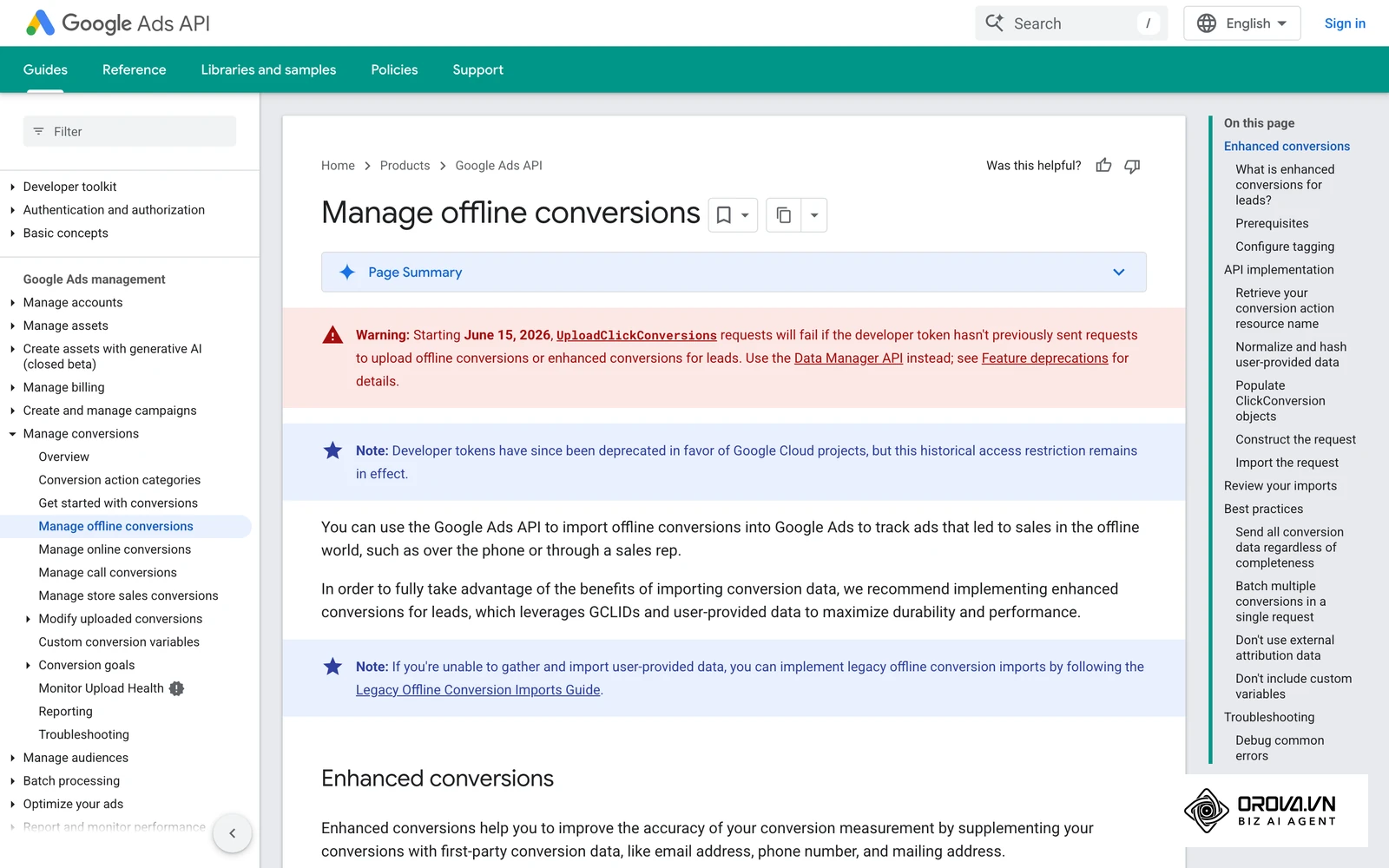
Illustrative example: Shifting from manual to value-based bidding. Context: A mid-sized B2B software company managing a sizeable monthly ad spend struggled with high lead volume but exceptionally low lead quality from their search campaigns. Steps taken: The marketing operations team implemented offline conversion tracking by connecting their Customer Relationship Management software directly back to the advertising platform. They then switched the primary campaigns from 'Maximize Conversions' to 'Target ROAS' (tROAS), feeding back the actual projected contract value of closed deals rather than just counting initial lead form submissions. Hurdles and fixes: The campaign initially stalled entirely because the algorithm lacked enough conversion data to optimize (fewer than 15 closed won deals per month). The fix involved assigning predictive micro-values to earlier funnel stages (like assigning a small value to a 'demo booked' and a much larger one to a 'contract sent') to give the artificial intelligence sufficient daily signals to learn from. Visible result: The cost per qualified sales opportunity dropped significantly, and the sales pipeline reflected a noticeable increase in enterprise-tier prospects successfully entering the system, while the volume of junk leads dropped to near zero.
Measuring success: Metrics that actually impact revenue
The advertising platforms provide hundreds of different metrics, but most of them are vanity metrics that distract you from what matters. You must learn to ignore metrics that do not directly correlate with profitability.
Click-Through Rate (CTR) and Cost Per Click (CPC) are diagnostic metrics. They tell you if your ad is appealing and if the auction is expensive. However, a high CTR is completely worthless if the users do not convert on the landing page. Never optimize solely for a high CTR, as you might inadvertently write clickbait ads that attract unqualified traffic.
| Crucial Metric | What It Means | Danger Threshold |
|---|---|---|
| Customer Acquisition Cost (CAC) | Total cost to acquire a paying customer | When CAC exceeds your gross margin on the first purchase |
| Return on Ad Spend (ROAS) | Revenue generated directly from ad spend | Below your break-even ROAS point |
| Conversion Rate (CVR) | Percentage of clicks that take the desired action | Below the rate your break-even math requires |
| Search Impression Share | Percentage of times your ad showed when eligible | A sustained drop, with budget or ad rank listed as the cause |
| Cost Per Qualified Lead (CPQL) | Cost to acquire a lead approved by sales | Consistently rising month-over-month |
Proper attribution mapping is essential because relying solely on last-click models tends to undervalue the top-of-funnel discovery campaigns that started the customer journey. To see how ad results roll up into business returns, compare them with your overall marketing ROI.
Illustrative example: Uncovering wasted spend in PMax. Context: A boutique e-commerce brand with a steady monthly budget heavily relied on a single Performance Max campaign that was slowly losing profitability over three months. Steps taken: The account manager utilized the 'Insights' tab to review search categories and audience affinities. They also ran a custom script to isolate placement data across the display network. Hurdles and fixes: The manager discovered that a large share of the budget was being drained by low-quality mobile app placements (specifically in-game ads where users accidentally clicked). The manager compiled an account-level placement exclusion list for those apps and added negative keywords for irrelevant query themes. Visible result: Over the following weeks, campaign ROAS recovered as the algorithm was forced to reallocate the budget toward high-intent search and shopping placements rather than accidental mobile clicks.
To ensure your measurement aligns with your financial goals, you must calculate your targets precisely. If you are unsure how to determine your break-even point, you must learn how to apply the ROAS formula accurately.
Common mistakes that drain your advertising budget
Even experienced marketers make critical errors when managing accounts in an automated environment. These mistakes often stem from applying old logic to new systems.
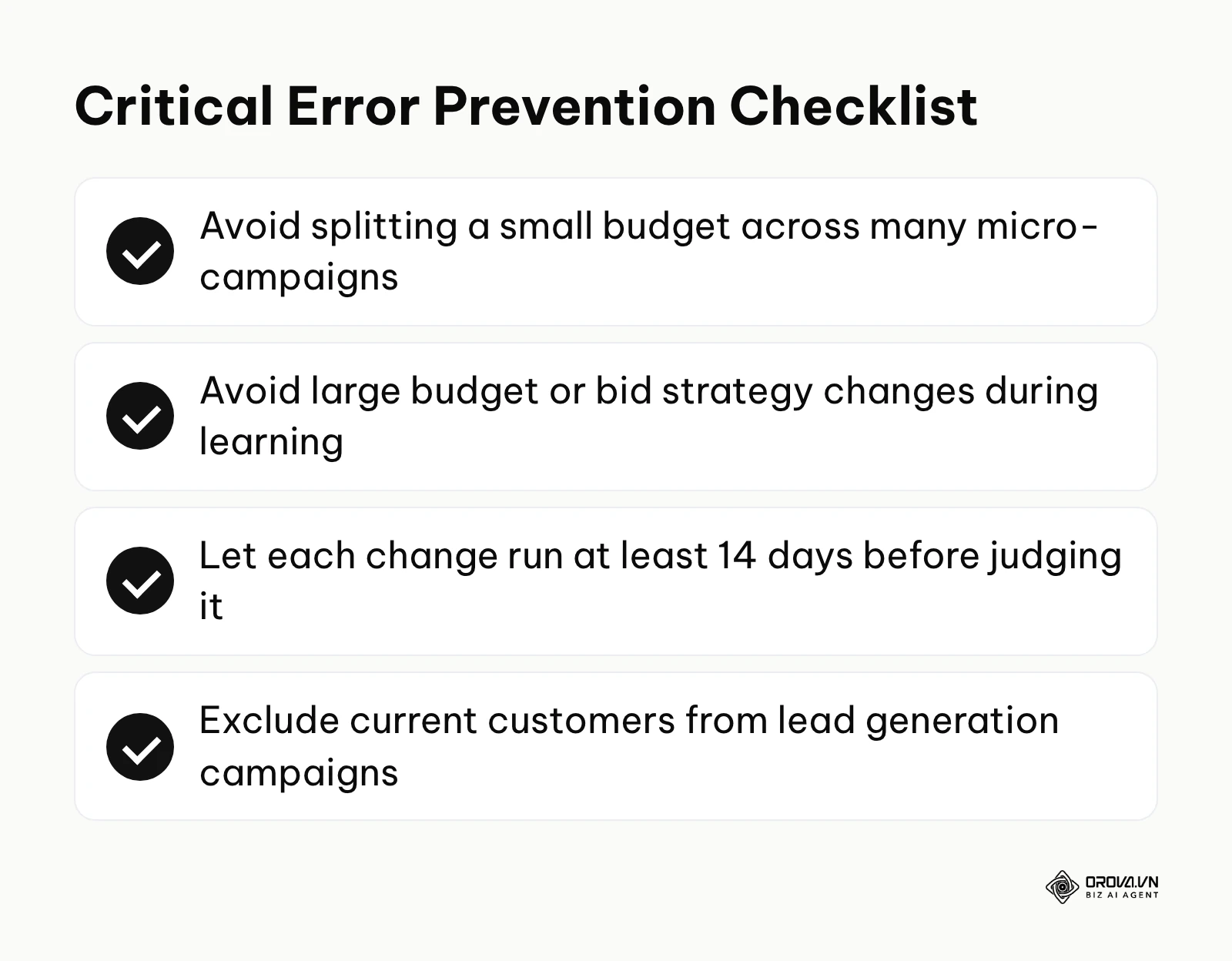
The first major mistake is over-segmentation. As mentioned earlier, creating dozens of hyper-specific campaigns splits your budget too thin. If you spread a daily budget of 50 across 10 campaigns, each campaign only gets 5 a day. The algorithm will never gather enough data to optimize efficiently.
The second mistake is making adjustments too frequently. When you change a bidding strategy, make a large change to the budget, or swap out significant creative assets, you push the campaign back into the learning phase. The learning phase is a period where performance is highly volatile as the AI tests new variables. If you make a change every three days, your campaign will perpetually live in the learning phase and never achieve stability. You must practice patience and let changes run for at least 14 days before evaluating the results.
The third mistake is ignoring the power of negative audiences. Everyone focuses on who they want to target, but few focus on who they want to exclude. If you are running a lead generation campaign, you must exclude a list of your current customers so you do not pay for clicks from people who already use your service and are just trying to find the login page.
Illustrative example: The over-segmentation trap. Context: A regional home services company attempted to run 40 different micro-campaigns for every small city they served, splitting a relatively small monthly budget across all of them. Steps taken: The new management team audited the account structure and immediately paused 35 of the low-volume, data-starved campaigns. They consolidated the remaining budget into just three broad, theme-based campaigns (Plumbing, HVAC, Electrical) covering the entire region, and used dynamic location insertion in the ad copy to maintain local relevance. Hurdles and fixes: The business owner was initially highly resistant, fearing they would lose local visibility in specific key markets. To mitigate this fear safely, the team set up specific location bid adjustments within the consolidated campaigns to ensure higher bid multipliers were applied whenever a user searched from their most profitable zip codes. Visible result: By pooling the budget, the consolidated campaigns exited the learning phase rapidly. The overall cost per acquisition stabilized at a noticeably lower level, and the volume of booked service calls increased significantly without requiring an increase in the total monthly budget.
Want to scale your budget but afraid of breaking performance? 📉
Integrate OROVA ADS now - an AI Agent that automatically monitors and optimizes Google, Meta, TikTok ads 24/7. Now, expanding and replicating your Performance Ads team is just one click away.
🚀 Try it now at: orova.vn/ads
PPC trends in the coming years: my perspective
The dominance of AI creative generation
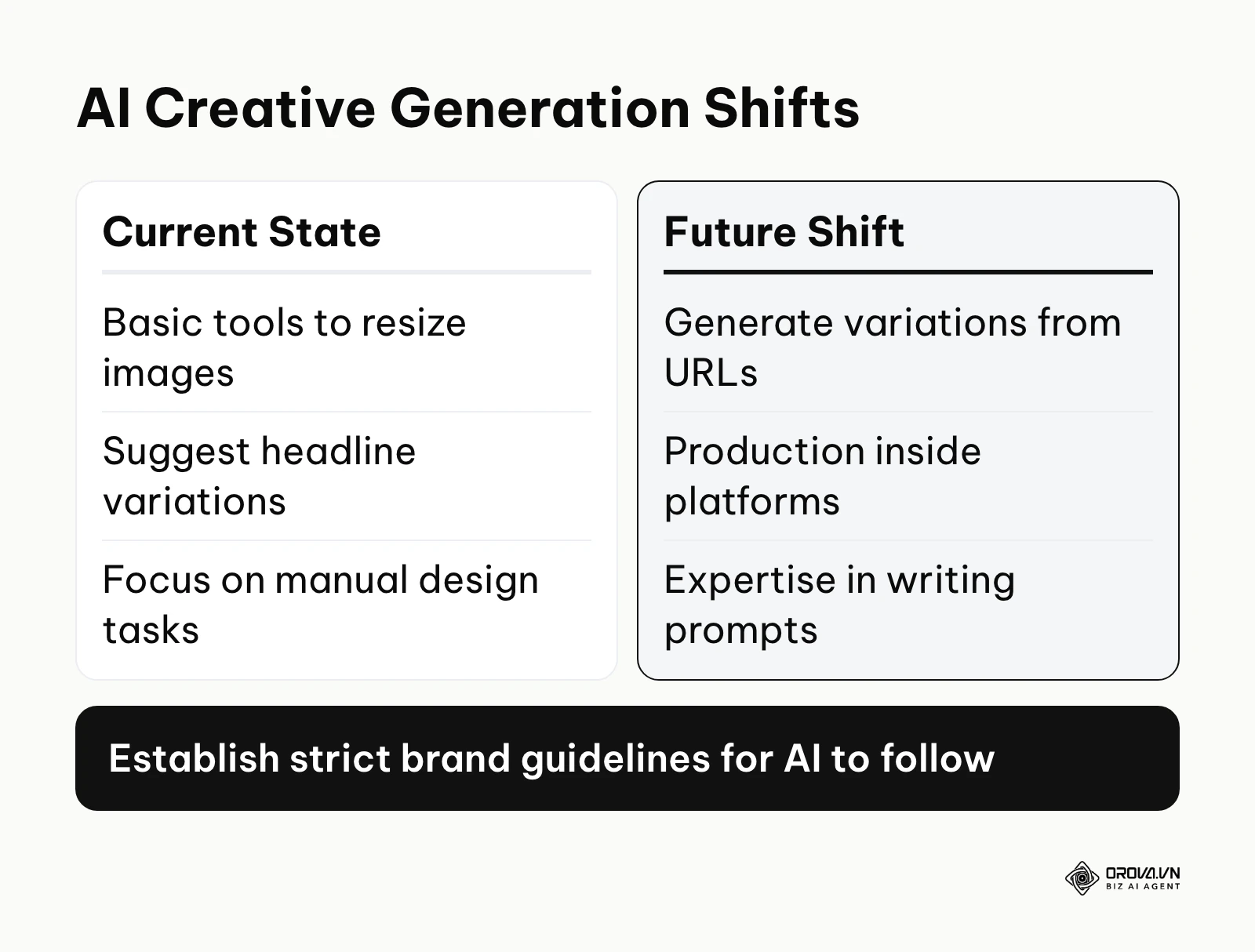
Currently, we see platforms introducing basic generative AI tools to resize images or suggest headline variations. I believe a growing share of creative production for digital ads will move inside the ad platforms themselves. It seems likely that you will provide a product URL and brand assets, and the platform will generate image and video variations for different audiences. To prepare, you must shift your focus from manual design tasks to becoming an expert at writing prompts and establishing strict brand guidelines that the AI must follow.
The decline of browser-based tracking
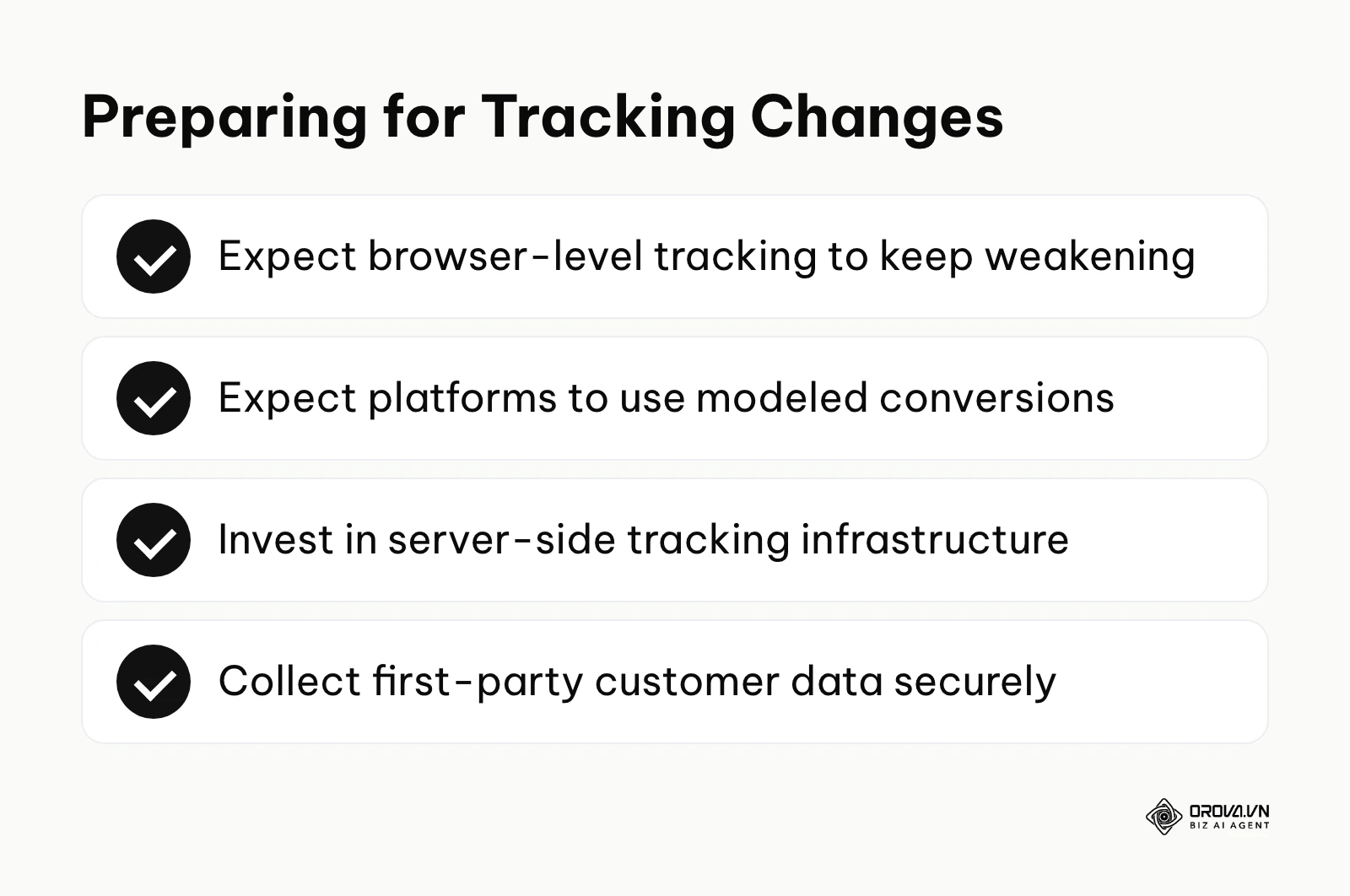
The phase-out of third-party cookies has been an on-and-off saga, and browser privacy controls already make browser-level tracking less reliable. I believe ad platforms will lean more and more on modeled conversions and the first-party data you send them through server-side connections and APIs. A browser pixel on its own is becoming a weaker foundation. You must prepare now by investing heavily in server-side tracking infrastructure and building robust mechanisms to collect first-party customer data legally and securely.
The consolidation of campaign types
Right now, you can still choose between Search, Display, Video, and Performance Max. I expect platforms to keep nudging advertisers toward unified, automated campaign types similar to PMax, with fewer manual levers left in the specialized ones. The platform will demand your budget, your assets, and your goals, and will decide the placements automatically. To prepare for this loss of manual control, you must master the art of feeding the algorithm with pristine conversion data and highly specific audience signals, as these are likely to remain your strongest levers to influence performance.
Frequently asked questions about PPC ad management
What is the minimum budget required to hire an agency?
There is no universal minimum, so start from how agencies charge. The common fee models are a percentage of ad spend, a fixed monthly fee, a performance-based fee tied to agreed results, or a hybrid of these. Whatever the model, compare the total management cost with the margin your ads generate: if the fee would eat most of the profit your campaigns produce, you are better off managing the account internally or with automation software until you scale. With a percentage-of-spend model, also ask how the agency is rewarded for cutting wasted spend, since its fee falls when your spend falls.
How do I manage Performance Max when the search data is hidden?
Google shows only part of the query data for Performance Max, mainly through search term insights and categories in the Insights area, although this reporting has been expanding. You can still glean useful patterns there. More importantly, you must be proactive with exclusions. Use account-level negative keywords plus any campaign-level negative controls your account offers, and use account-level placement exclusions to block low-quality mobile apps and irrelevant websites.
What is the role of AI in modern advertising?
AI is no longer just an optional feature; it is the core engine of modern ad platforms. AI handles bidding in real-time, predicts conversion likelihood, and dynamically assembles ad creatives. Your role as a manager is no longer to manually adjust bids, but to act as a data engineer—ensuring the AI receives clean, accurate, and high-value conversion signals so it can optimize toward your business goals effectively. Before diving into advanced platforms, you must understand the basics of what is an ad campaign and how it fits into your broader strategy.
Should I use Google Ads or Meta Ads first?
If your product solves an immediate, highly specific problem that people actively search for (e.g., emergency plumbing, specific B2B software), start with Google Search. If your product is highly visual, requires demonstration, or relies on impulse buying (e.g., apparel, lifestyle products), start with Meta. Before committing, compare the main paid ad platforms by intent, format and audience. Understanding the nuances of Facebook Ads Manager is critical if you choose the latter.
How long does the learning phase actually take?
The learning phase usually lasts around one to two weeks, but it depends far more on conversion volume than on time. Meta, for example, says an ad set generally needs about 50 optimization events within a week to leave the learning phase, and Google's bid strategies likewise calibrate faster with more conversions and shorter conversion delays. If you have a small budget and only get 2 conversions a week, your campaign may never truly exit the learning phase and performance will remain volatile.
Where to start your optimization journey?
If you are currently running old-school SKAG campaigns with manual bidding, your first step is structural consolidation. Spend your next working session pausing micro-campaigns and grouping your keywords into broader, intent-based ad groups. Do not change the bidding strategy yet; just consolidate the structure to pool your data, allowing you to build the foundation required for future automation.
If you are spending heavily on Performance Max but seeing poor lead quality, your immediate focus must be on data integrity. Stop optimizing the platform and start working with your developer to implement offline conversion tracking. Your first step is to map out how to pass CRM data (like closed-won deals) back into the ad platform as the primary conversion action, rather than relying on basic form submissions.
If you have all tracking in place but your costs are slowly rising, your focus must shift to creative testing. Build a testing matrix. Your first step is to launch an A/B test focusing purely on two radically different visual concepts for your best-performing audience segment. Let it run for 14 days without touching the budget or bids, and document the results rigorously to inform your next iteration.
About the author

Builder of Orova
Nguyễn Đỗ Trọng Ân has 8 years of experience in marketing, including 6 years managing market development across Asia. He builds Orova, a Biz AI Agent that never sleeps: it plans, runs and optimizes work for businesses.
Run your business with AI Agents
Orova is the always-on Biz AI Agent — it plans, runs, and optimizes the work for you.
Save time, unlock productivity.