
Ad testing framework: how to validate creative before you spend your budget

Imagine launching a highly anticipated campaign, pouring thousands of dollars into a creative concept your team spent weeks perfecting, only to watch the budget drain with zero conversions. The panic sets in, the dashboard flashes red, and you realize you have no idea why it failed. Was it the image? The headline? The audience? This scenario plays out daily for marketers who rely on intuition rather than data.
To avoid this costly trap, you need ad testing: running controlled comparisons of ad variations (images, hooks, headlines, offers) to learn which one performs best before you commit your main budget. This is not merely about changing a button color; it is a systematic approach to risk mitigation. By deploying controlled experiments before committing your main budget, you transition from gambling to investing. This guide will dismantle the guesswork, providing you with a concrete framework to evaluate creatives, allocate budget intelligently, and troubleshoot effectively, ensuring your campaigns scale profitably.
What is Ad Testing and Why It Determines Your Campaign's Fate
Ad testing is the scientific process of comparing different variations of an advertisement to determine which version performs best against a specific objective, such as click-through rate, cost per acquisition, or overall return on investment. It involves isolating variables—like the primary image, the call-to-action, or the headline—and presenting these variations to segments of your target audience to gather statistically significant performance data.
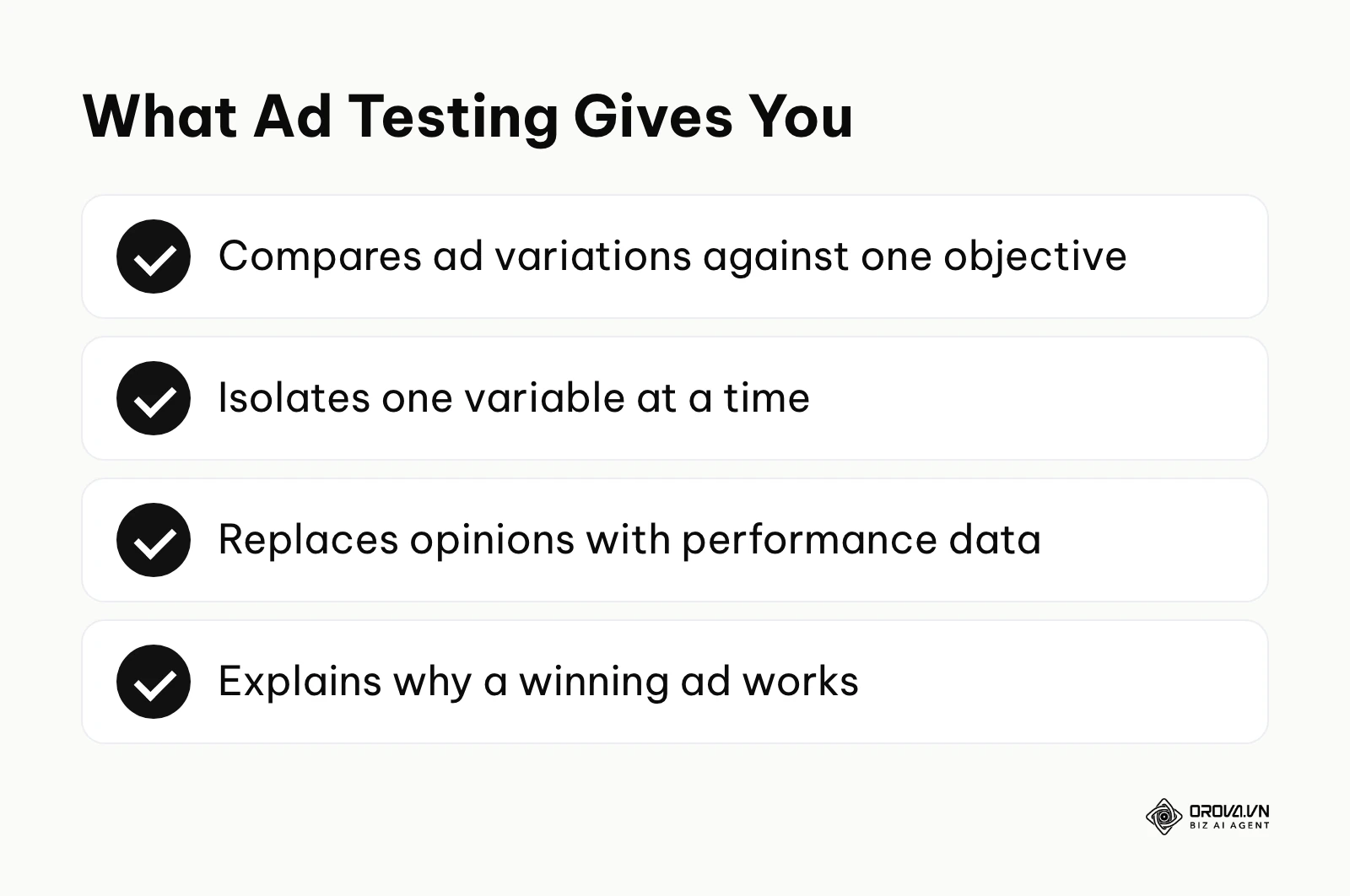
The primary goal is not just to find a "winner," but to understand the underlying psychology of your audience. When you know why an ad works, you can replicate that success across future campaigns. Ad testing removes subjective opinions from the marketing department. It doesn't matter if the CEO loves a specific video; if the data shows that a simple, static image drives cheaper leads, the data dictates the strategy.
You should implement testing when you are preparing to scale your budget. If you plan to spend heavily over a quarter, spending a fraction of that budget upfront to identify the highest-converting assets is simply good business sense. It is the ultimate insurance policy against creative fatigue and audience blindness.
However, there are times when you should not prioritize complex testing. If you are operating on a microscopic budget (e.g., 50 dollars total for a weekend flash sale) and need immediate revenue to keep the lights on, allocating budget to learn rather than to sell might be fatal. In such extreme bootstrapping scenarios, your best bet is to deploy your single strongest educated guess and focus entirely on the offer itself. Testing requires enough budget liquidity to "buy data" before expecting a return.
Preparation: The Foundational Assets for Ad Creative Testing Best Practices
Before you ever touch the Facebook Ads Manager or any other platform interface, the battle is either won or lost in the preparation phase. Launching a test without a structured foundation will result in chaotic data that cannot guide your decisions. You cannot simply throw five completely different videos at an audience and hope to learn something meaningful; you will only learn which specific video won, not the underlying element that caused the victory.
To execute ad creative testing best practices, you must treat your campaigns like clinical trials. This requires documentation, clear hypotheses, and a repository of distinct assets.
The Asset Preparation Matrix
| Required Asset | Where to Source It | Estimated Time to Prepare |
|---|---|---|
| Documented Hypothesis | Internal brainstorming; based on past data or customer feedback. (e.g., "UGC video will lower CPA by 15% compared to high-production video because it feels more native"). | 2–4 hours |
| Primary Visuals (Control & Variants) | Graphic design team, user-generated content creators, or stock libraries. Must have at least one control (your current best) and distinct variants. | 1–3 days |
| Ad Copy Matrix | Copywriters. Create a spreadsheet mapping out Primary Text, Headlines, and Descriptions. | 3–5 hours |
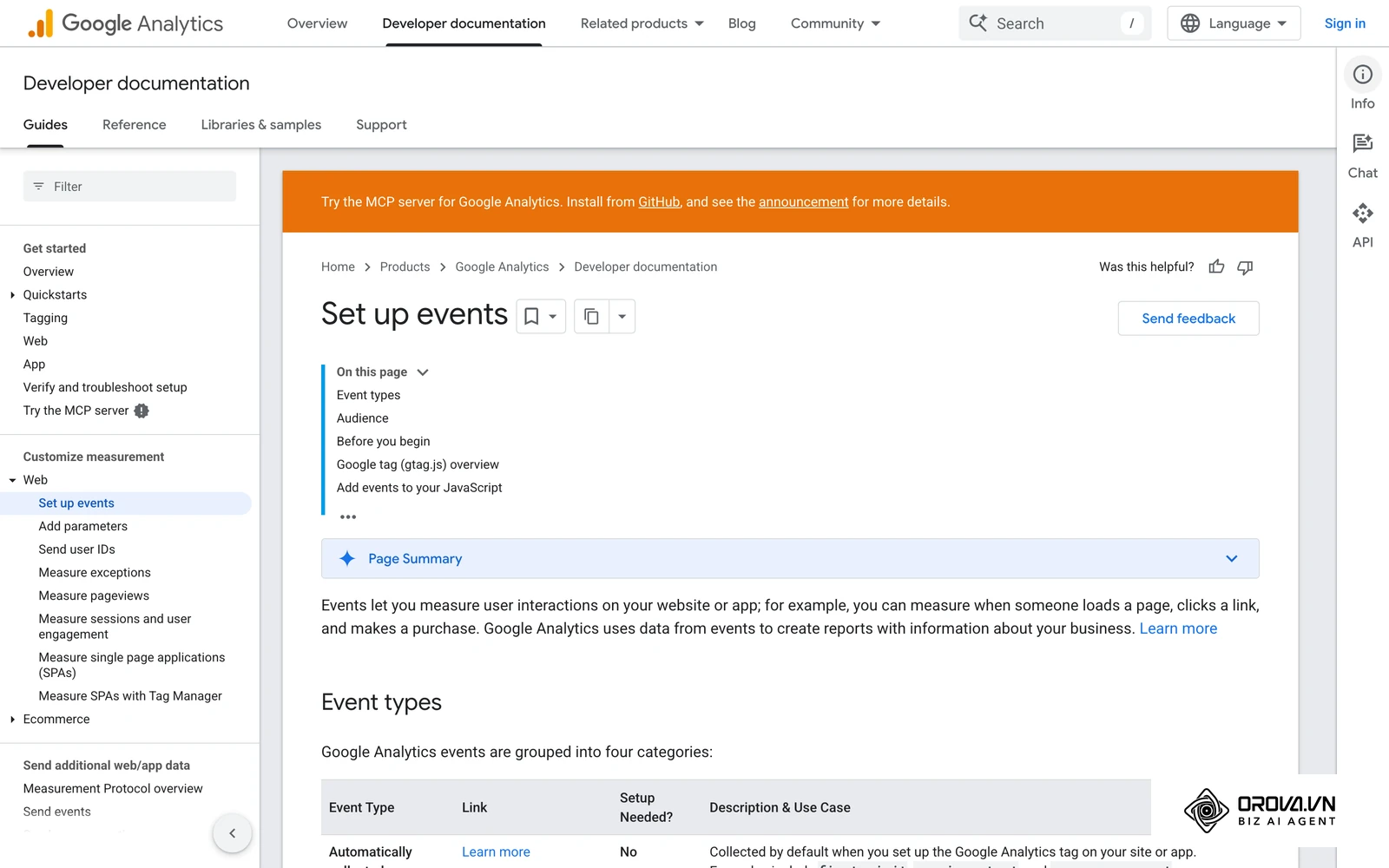
| Clean Tracking Architecture | Web development team or agency. Ensure Meta Pixel, Conversions API, or Google Tags are firing correctly on all funnel steps. | 2–5 days |
| Sufficient Budget Allocation | Finance/Management. Secure a dedicated testing budget separated from the core performance budget. | 1–2 days |
Without a documented hypothesis, you are just throwing spaghetti at the wall. A good hypothesis follows the "If [Variable], then [Result], because [Rationale]" structure.
Furthermore, your tracking architecture must be flawless. If your pixel is double-counting conversions, or if your server-side tracking is broken, you might end up scaling a losing ad because the platform is being fed garbage data. Proper preparation ensures that when the test concludes, you have unassailable confidence in the numbers.
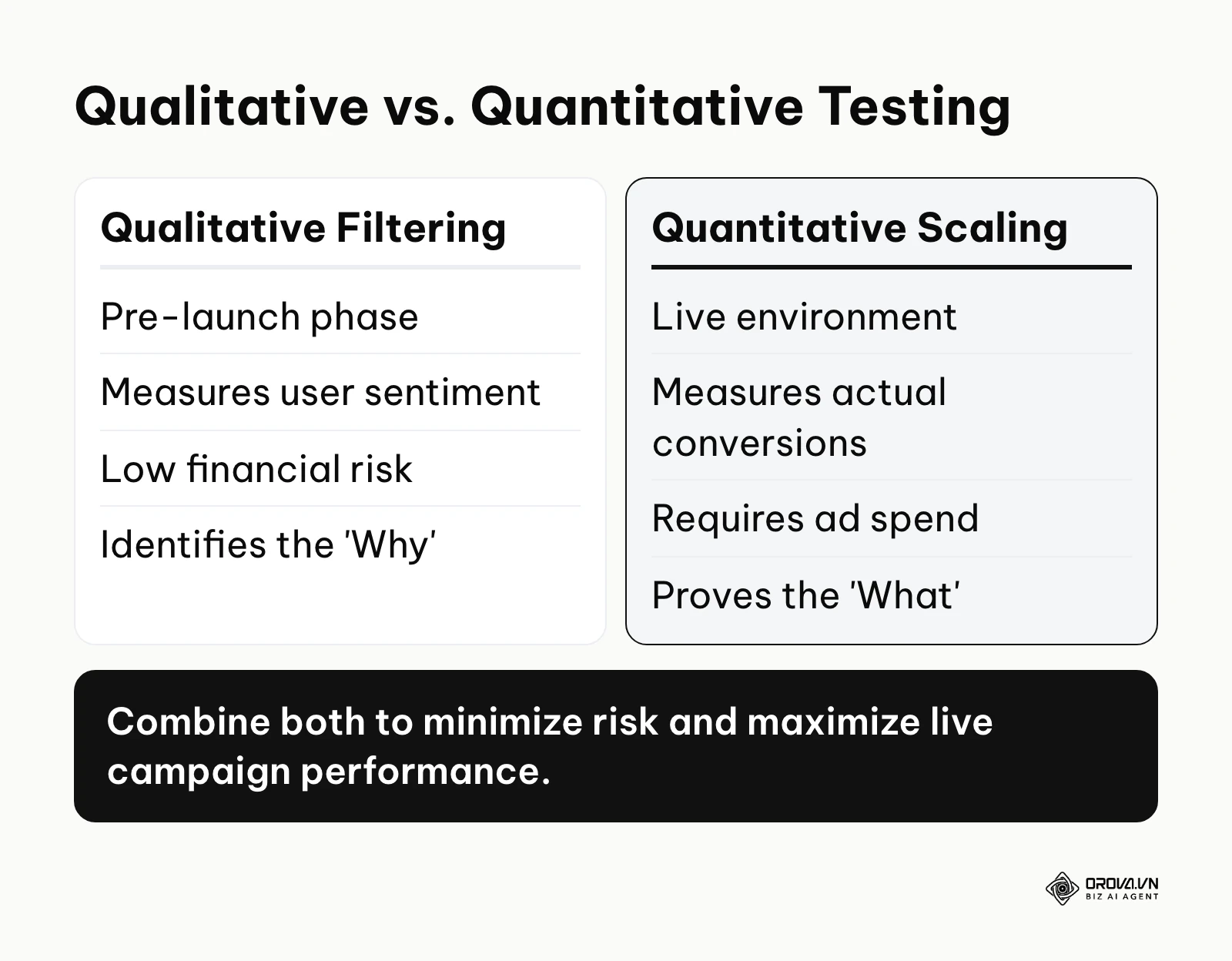
The 2-Step Ad Testing Framework: Qualitative Filtering and Quantitative Scaling
The biggest mistake marketers make is jumping straight into platform A/B testing with untested, raw concepts. This is incredibly expensive. If you test five wildly different, unvalidated concepts on Meta, you are paying the platform a premium just to find out that four of them are terrible.
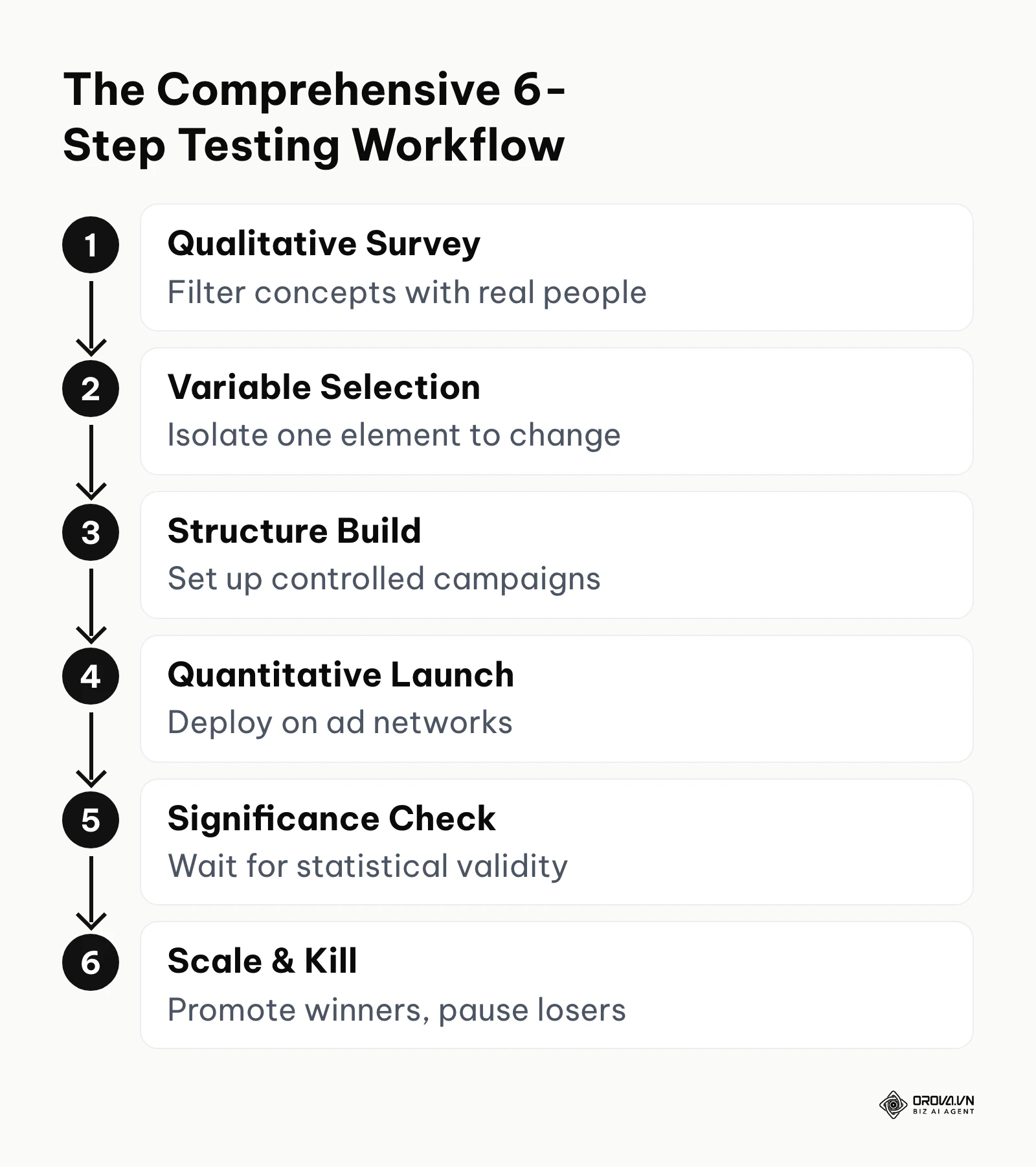
The modern, cost-efficient approach relies on a two-step framework: filtering ideas cheaply with qualitative data, then scaling the survivors with quantitative data.
Step 1: Qualitative Concept Validation (The Pre-Test)
Before spending advertising dollars, you need to know how real humans react to your concepts. This is where qualitative testing comes in. You can use survey tools, focus groups, or even organic social media posts to gauge sentiment.
- What to do: Take your top 5 creative concepts (just the images or storyboards) and present them to a panel of users matching your demographic.
- How to do it: Use a consumer survey panel tool or a simple Google Forms questionnaire. Ask simple questions: "Which image makes you want to learn more?" or "What is the main message you take away from this graphic?"
- Signs of doing it right: You identify glaring flaws—like confusing messaging or unappealing colors—before spending ad budget. You narrow your 5 concepts down to the 2 strongest contenders.
- Common mistakes: Asking leading questions (e.g., "Don't you love this new design?"). Asking colleagues instead of actual target customers.
Step 2: Defining the Single Variable
Once you have your strong concepts, you must isolate what you are testing.
- What to do: Choose exactly one element to change between your Control (Ad A) and your Variant (Ad B).
- How to do it: If you want to know how to test facebook ads effectively, you must learn restraint. If Ad A features a blue background with a short headline, Ad B must feature a red background with the exact same short headline.
- Signs of doing it right: When Ad B wins, you can definitively state, "The red background caused the improvement."
- Common mistakes: Changing the image, the headline, and the call-to-action all at once. This creates a "Frankenstein test" where the results are meaningless.
Step 3: Building the Testing Structure in Platform
You must configure the ad platform to ensure a fair fight.
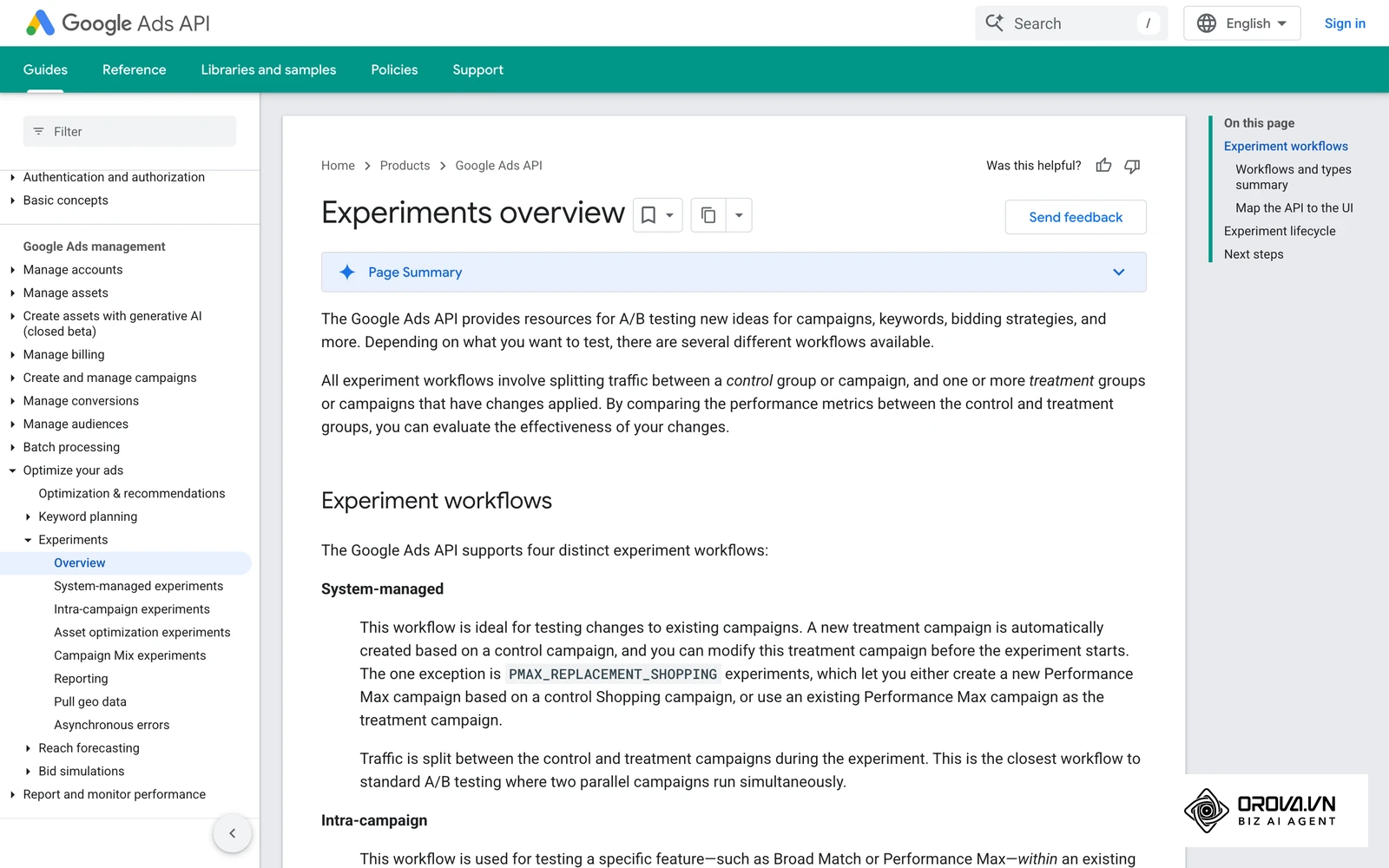
- What to do: Create a dedicated sandbox environment within your ad account.
- How to do it: Use the platform's native A/B testing tool (like Meta's A/B Test feature or Google's Experiments). Alternatively, set budgets at the ad set level (often called ABO) so you can force roughly equal spend across different ad sets. Avoid campaign-level budget optimization (often called CBO; Meta now labels it Advantage campaign budget) for pure testing, as the algorithm tends to favor one ad before statistical significance is reached.
- Signs of doing it right: Budget is distributed relatively evenly across your variations during the initial phase.
- Common mistakes: Putting multiple new ads into an existing, mature ad set. The platform will just push all the budget to the ad with historical data.
Step 4: Launching the Quantitative A/B Test
Deploy your refined creatives into the live environment.
- What to do: Push the campaign live and resist the urge to tinker.
- How to do it: Double-check all URLs, UTM parameters, and targeting settings. Hit publish.
- Signs of doing it right: Impressions begin to accrue evenly. Tracking fires perfectly in your analytics dashboard.
- Common mistakes: Refreshing the dashboard every hour and turning off an ad because it had a high CPC in the first 12 hours.
Step 5: Monitoring for Statistical Significance
Data is meaningless without volume.
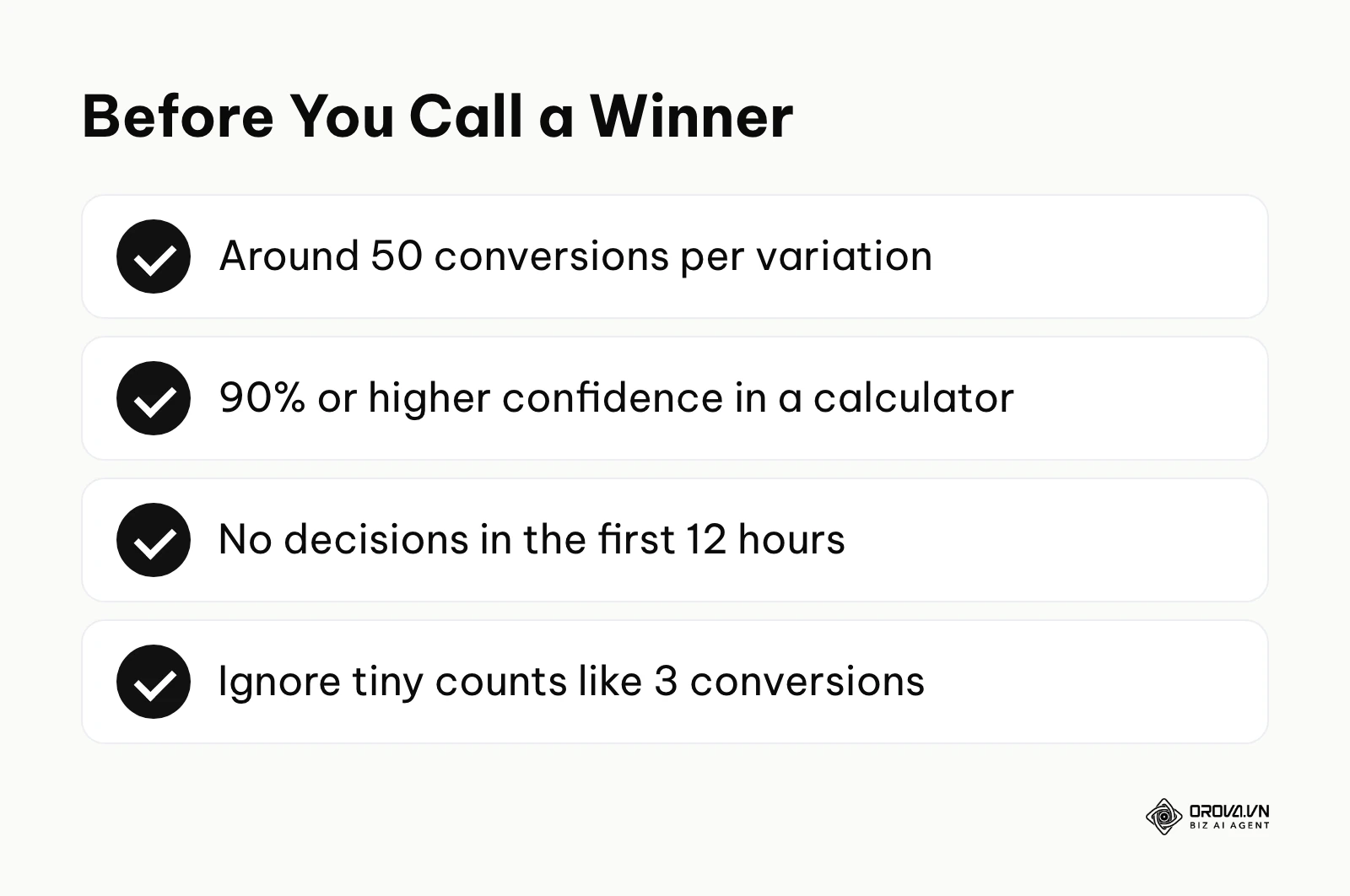
- What to do: Wait until the results are mathematically reliable.
- How to do it: Use a statistical significance calculator. As a general rule in performance marketing, do not make a decision until a variation has achieved around 50 conversions (purchases, leads, etc.). If you are optimizing for top-of-funnel metrics, you need thousands of impressions and hundreds of clicks.
- Signs of doing it right: You achieve a 90% or higher confidence level in your calculator before declaring a winner.
- Common mistakes: Calling a test based on 3 conversions. This is statistically irrelevant and highly susceptible to random variance.
Step 6: Scaling the Winners and Killing the Losers
The final step is action.
- What to do: Transition the winning elements into your evergreen campaigns.
- How to do it: Take the winning ad and duplicate it into your main scaling campaigns (often campaign-budget structures). Turn off the losing variations in the test campaign.
- Signs of doing it right: Your main campaign's overall CPA decreases as you inject proven, highly-converting creatives.
- Common mistakes: Leaving test campaigns running indefinitely, wasting budget on the losing variations long after the test is concluded.
Illustrative example of the framework in action:
- Context: A B2B software company needed to increase demo requests for their new feature, but their historical ads were suffering from severe creative fatigue, resulting in sky-high CPAs.
- Steps taken: First, they ran a quick qualitative poll on LinkedIn (Step 1) asking their followers which pain point resonated most. "Time wasted" won overwhelmingly. They then created two ads: Ad A featured an image of a stressed worker (Control), and Ad B featured a UI screenshot showing time saved (Variant). They launched this as a strict A/B test on Meta using ABO to force equal spend (Steps 2-4).
- Hurdles and solutions: In the first 48 hours, Ad A was getting cheaper clicks, and the team wanted to pause Ad B. The manager intervened, enforcing the rule to wait for 50 conversions (Step 5).
- Visible result: By day seven, while Ad A had cheaper clicks, Ad B generated 65 completed demo requests at a 40% lower cost per lead, proving that UI visuals drove higher-intent traffic. They scaled Ad B, significantly dropping their overall acquisition costs.
OROVA ADS applies AI Agent to automate and optimize ad performance on Google, Meta and TikTok. Scale your budget safely, monitor 24/7 and expand your business quickly.
Experience the solution at orova.vn/ads
Ad Testing Budget Allocation and Strategies for Tight Budgets
One of the most paralyzing questions marketers face is: "How much should I spend on testing?" If you spend too little, you never exit the learning phase and gather useless data. If you spend too much, you compromise your overall profitability.
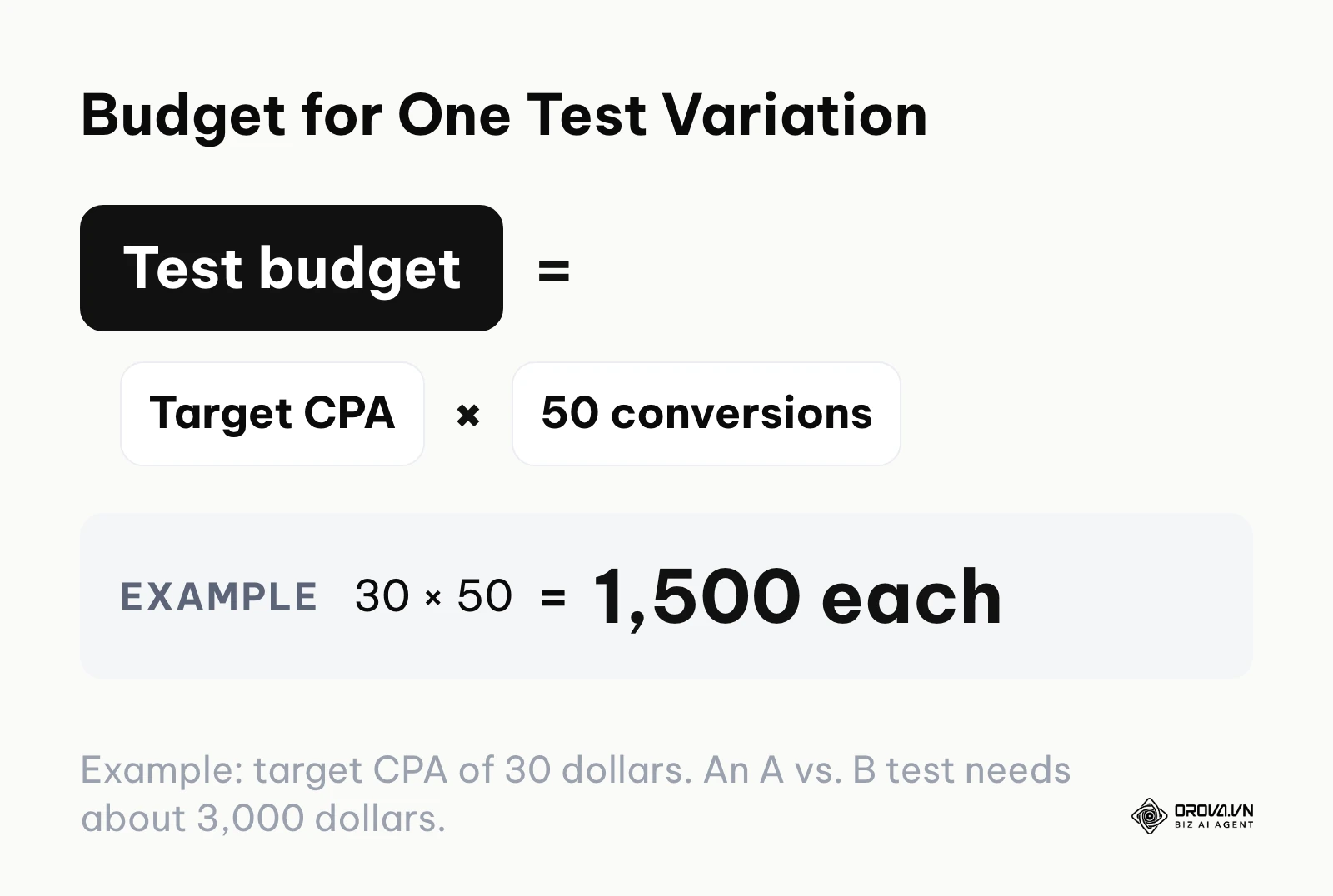
A common rule of thumb is the 80/20 rule (or 70/20/10 for larger accounts).
- 70-80% of your budget goes to your Evergreen, proven campaigns. This is the engine that drives reliable, day-to-day revenue.
- 15-20% is dedicated to Iterative Testing. This is where you test new headlines, different color palettes, or fresh UGC videos against your current winners.
- 5-10% is reserved for Wildcard Testing. These are radical, out-of-the-box concepts that might fail entirely but have the potential to become massive runaway successes.
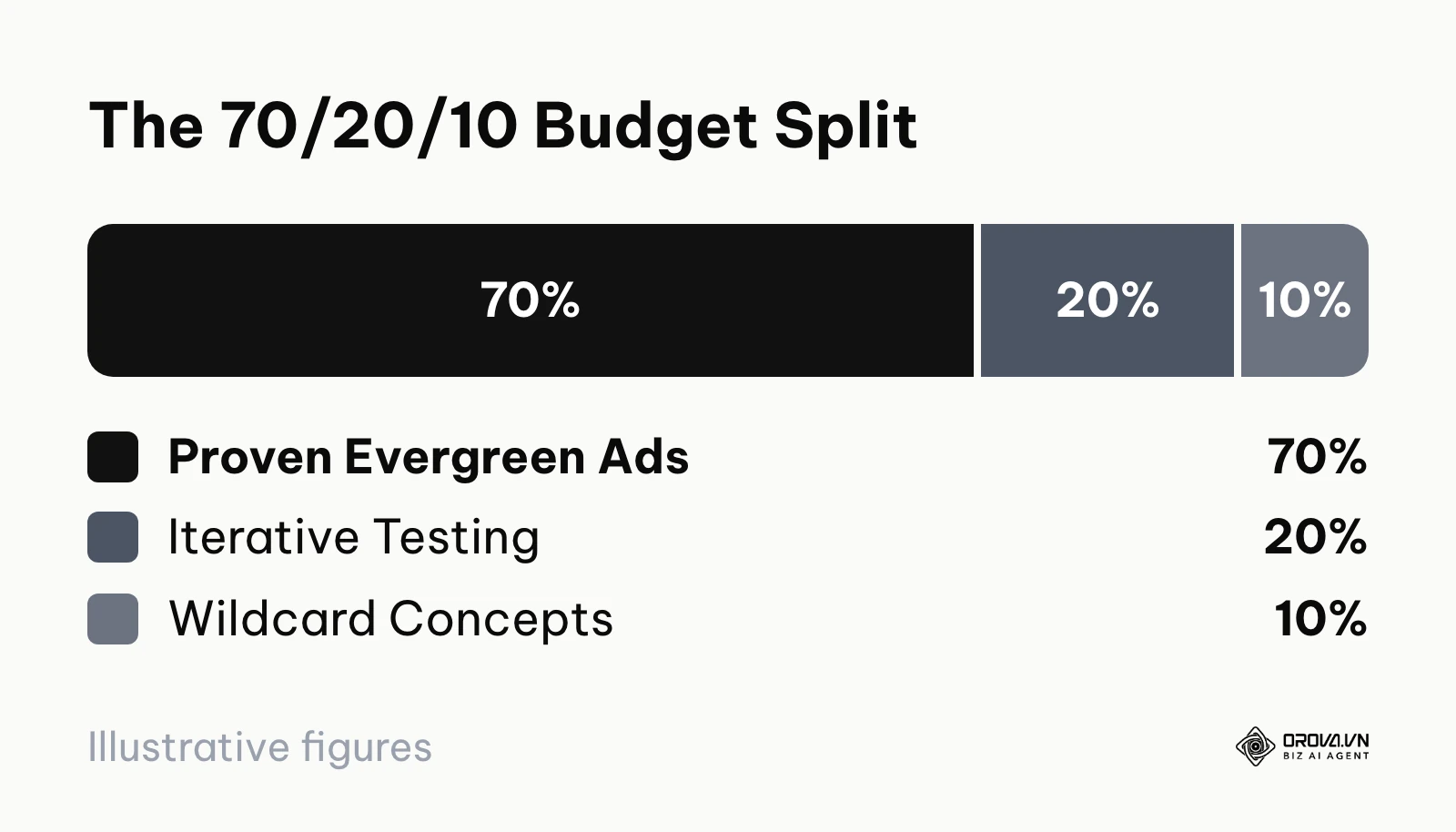
How to Calculate Your Specific Test Budget: You must calculate backwards from your target Cost Per Acquisition (CPA). If your target CPA for a purchase is 30 dollars, and you need about 50 conversions to achieve statistical significance, a single test variation requires a budget of 1,500 dollars (30 x 50). If you are testing an A vs. B setup, you need 3,000 dollars for that specific experiment.
If your total monthly budget is 5,000 dollars, you cannot afford to test for purchases. The math simply does not support it. This leads us to strategies for tight budgets.
Strategies When Budget is Restricted
| Budget Strategy | When to use it | Weaknesses |
|---|---|---|
| Micro-Conversion Testing | When total budget is under 3,000 dollars a month. Instead of optimizing for purchases, optimize for 'Add to Cart' or 'Link Clicks'. | High CTR doesn't always guarantee high ROAS. You might find an ad that gets cheap clicks but zero buyers. |
| Sequential Testing | When daily budget is tiny. Run Concept A for 7 days, pause it, then run Concept B for 7 days. | Vulnerable to external factors (e.g., Concept B ran during a holiday weekend, skewing results). |
| High-Contrast Testing | When you can only afford one test a month. Test wildly different concepts (e.g., a meme vs. a professional testimonial) rather than button colors. | You learn broad strokes but miss out on granular, compounding optimizations. |
If you are a startup operating on a shoestring, you must leverage micro-conversions. You cannot wait for 50 purchases at 100 dollars each. Instead, test which image drives the cheapest "Landing Page View." Once you identify the visual that stops the scroll efficiently, you can trust that it will act as a better funnel-filler for your main campaigns.
Illustrative example of a budget strategy:
- Context: A local boutique bakery wanted to run ads for custom wedding cakes but only had 400 dollars for the entire month's advertising budget. They could not afford to run a standard A/B test optimizing for booked consultations, which historically cost 50 dollars each.
- Steps taken: They adopted a Micro-Conversion strategy. They created one campaign optimizing for "Link Clicks" to their gallery page. They tested two vastly different images: a highly polished macro shot of fondant details versus a candid smartphone photo of a bride cutting the cake.
- Hurdles and solutions: The polished photo was getting a terrible CTR. They realized it looked too much like a stock photo. They paused it after spending just 50 dollars and reallocated the remaining budget to the candid photo, which was driving clicks for pennies.
- Visible result: By focusing the limited budget on the proven scroll-stopping image, they drove a massive influx of local traffic to the site, resulting in 4 booked consultations within the month, maximizing their small investment.
Measuring Results: Metrics That Actually Dictate Ad Performance
Testing is pointless if you cannot interpret the results. While the ultimate goal is always revenue, focusing solely on the final CPA can obscure important insights about why an ad is performing the way it is. You must analyze the full journey from the initial impression to the final checkout.
The metrics you analyze must align with your conversion rate optimization goals.
The Diagnostic Metric Table
| Metric | What it Means in Testing | Warning Threshold |
|---|---|---|
| Thumb-Stop Ratio (3-sec views / Impressions) | Specifically for video. Measures if your opening hook is compelling enough to stop a user from scrolling past. | Clearly below your account's usual rate. If it drops, your video hook is failing, regardless of how good the rest of the video is. |
| Outbound CTR (Click-Through Rate) | Measures the percentage of people who saw the ad and clicked the link to leave the platform. A strong indicator of creative resonance. | Roughly below 1% on cold traffic often signals a weak creative or audience mismatch, but this varies heavily by industry and placement. |
| Cost Per Outbound Click (CPC) | How much you are paying for traffic. A high CTR usually drives down CPC. | Highly variable, but sudden spikes compared to historical account averages indicate creative fatigue. |
| Conversion Rate (Conversions / Clicks) | Measures the alignment between your ad promise and the landing page experience. | Significant drops indicate your ad is clickbaity or your landing page is broken. |
| Cost Per Acquisition (CPA) | The ultimate arbiter of success. How much it costs to acquire a lead or sale. | Exceeding your break-even point. |
When evaluating a test, do not just declare the ad with the lowest CPA the winner without investigating. For instance, Ad A might have a CPA of 20 dollars and Ad B a CPA of 25 dollars. However, if you look deeper, Ad A might have a terrible CTR but a phenomenal conversion rate, while Ad B has an amazing CTR but a terrible conversion rate.
This tells you that Ad A's messaging is highly qualified but its visual is boring, while Ad B's visual is engaging but its messaging is misleading. The true "winner" is the insight: combine Ad B's visual with Ad A's copy for your next iteration.
To understand the financial impact, you must also be comfortable with the roas formula. A test variation might have a higher CPA, but if it attracts customers who buy higher-ticket items, its ROAS will be superior. Always align your testing metrics with your ultimate business objectives.
Common Mistakes and a Troubleshooting Checklist for When Tests Fail
Even with perfect preparation, tests will fail. The difference between an amateur and a professional is how they react to failure. Amateurs panic and change everything; professionals diagnose and iterate.
The 5 Fatal Ad Testing Mistakes:
- The Frankenstein Test: Changing the image, the headline, the primary text, and the audience all at the same time. If it succeeds, you don't know why. If it fails, you don't know what to fix.
- Premature Evacuation: Pausing an ad after 24 hours because the CPA looks high. Advertising algorithms, especially Meta's, require a "learning phase." By pausing early, you are reacting to incomplete, volatile data.
- Ignoring Statistical Significance: Deciding Ad A is the winner because it got 4 sales while Ad B got 2. This is random noise. You need substantial volume before calling a winner.
- Testing Trivialities: Spending two weeks testing whether a button should say "Buy Now" or "Shop Now." Focus on high-impact variables first: the primary visual offer, and the core angle/hook.
- Confirmation Bias: Leaving a test running far beyond statistical significance because your personal favorite creative is losing, and you are hoping it will eventually catch up.
Troubleshooting checklist (when all variations fail) What happens when you run a rigorous A/B test, and both variations generate zero conversions or abysmal CPAs? Do not throw away the creatives immediately. Walk through this diagnostic checklist:
- Level 1: The Technical Audit
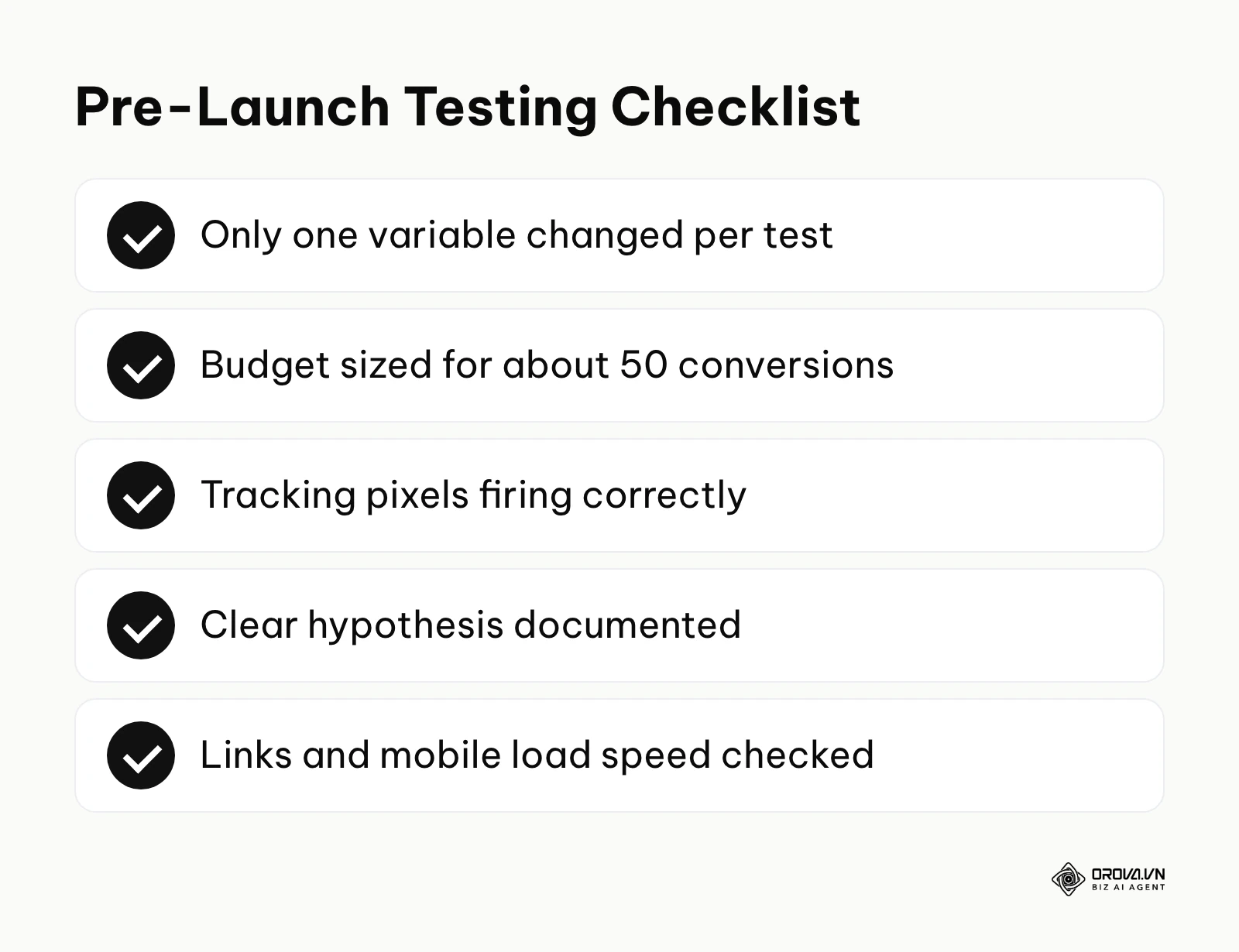
- Are pixels tracking correctly? Use browser extensions (like Meta Pixel Helper) to ensure the conversion event is actually firing upon success.
- Are links broken? Check every single URL. Is a typo sending users to a 404 page?
- Is the site loading fast on mobile? A slow page loses a large share of paid visitors before they even see your offer.
- Level 2: The Funnel Drop-off Analysis
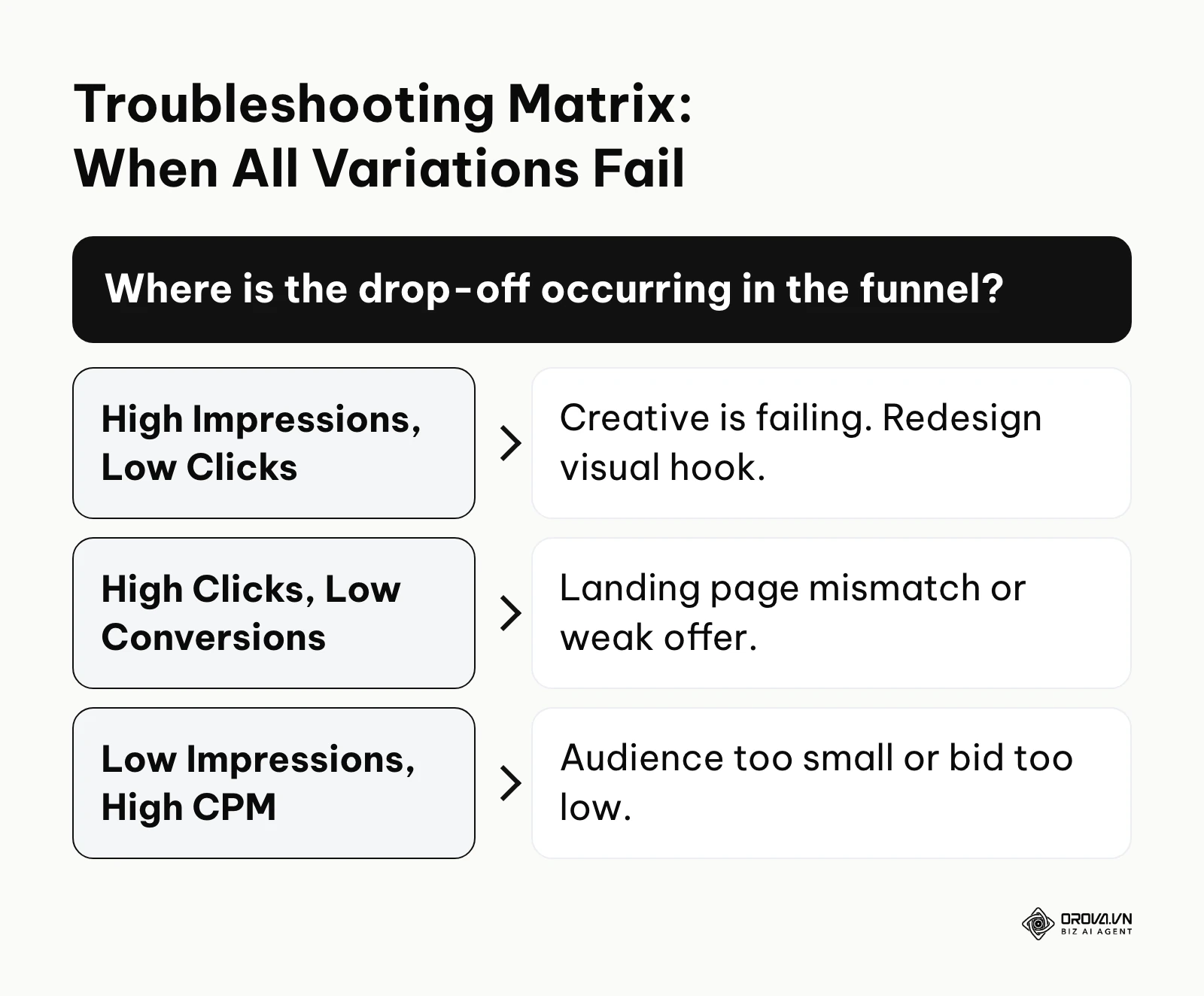
- High Impressions, Low Clicks (Low CTR): The problem is the ad. Your creative is boring, your headline is weak, or you are targeting the completely wrong audience.
- High Clicks, Low Conversions: The problem is the post-click experience. The ad did its job, but the landing page failed. Is there a message mismatch? Is the offer too expensive? Is the checkout process clunky?
- Low Impressions, High CPM: The platform doesn't like your setup. Your audience is too small, your bid is too low, or your ad quality ranking has been penalized.
- Level 3: The Offer Reality Check
- Is the product actually desirable? Sometimes, no amount of brilliant ad testing can sell a product that the market simply does not want at the price you are offering.
Illustrative example of troubleshooting in action:
- Context: A SaaS company launched a major test for a new whitepaper download. They tested three different graphic designs. After spending 1,000 dollars, all three ads had zero downloads. The team was ready to fire the designer.
- Steps taken: The media buyer initiated the troubleshooting checklist. They moved past Level 1 (tracking was fine). At Level 2, they noticed the CTR was actually phenomenal (above 2.5%), meaning people wanted the whitepaper. The drop-off was entirely post-click.
- Hurdles and solutions: They investigated the landing page and realized the form required 12 different fields, including a mandatory phone number. They hypothesized the friction was too high. They created a new landing page requiring only an email address.
- Visible result: Without changing a single thing about the ad creatives, the campaign resumed, and leads began pouring in at 15 dollars each. The ads were always good; the funnel was broken.
Want to scale your budget but afraid of breaking performance? 📉
Integrate OROVA ADS now - an AI Agent that automatically monitors and optimizes Google, Meta, TikTok ads 24/7. Now, expanding and replicating your Performance Ads team is just one click away.
🚀 Try it now at: orova.vn/ads
Where ad testing is heading in the next few years: the author's take
As I look toward the future of digital advertising, I expect the way we test ads to keep shifting. Some habits that worked a few years ago are already losing value because of new technology and privacy changes. These are three personal opinions, not forecasts, on how ad testing may evolve over the next few years.
Predictive AI pre-testing may become a first filter
We are already seeing early AI tools that score creative assets before they launch. I think that over the next 2-3 years, more teams will use this kind of prediction as a first filter, so less live budget goes into finding obvious losers. Live tests will still be needed to prove what actually converts, but the shortlist may arrive faster. Marketers should prepare by organizing their historical creative data now, as these future models will require robust localized training data to be accurate for specific brands.
Privacy changes push toward fewer, bigger variables
Privacy changes (browser limits on third-party cookies and app tracking permission prompts) are making granular tracking harder, as of 2026. Because platforms have less deterministic data, their algorithms require broader audiences to find conversions. My read is that hyper-granular A/B testing (dozens of tiny audience variations) will keep losing value. I expect more advertisers to shift toward consolidated, broad structures where they feed the platform a handful of clearly different creative themes and let the machine learning sort it out. You must prepare by learning how to develop distinct creative angles rather than just tweaking button colors.
Synthetic audiences could speed up qualitative research
Currently, qualitative testing requires recruiting real humans, which takes time and money. I lean towards a future where marketers also test early concepts against AI-generated "synthetic personas" modeled on their target market. You might ask a language model, acting as a "suburban millennial mother," how she feels about an ad concept and get quick directional feedback, which you would still confirm with real people. To prepare, marketers should deeply document their customer personas, focusing on psychological drivers rather than just demographic data, so they can accurately prompt these synthetic audiences in the near future.
Frequently Asked Questions about Ad Testing
How long should I run an A/B test?
You should not run a test based on a strict timeframe (like "for 3 days"); you should run it based on statistical significance. Generally, you want around 50 conversions per variation to exit the platform's learning phase and gather reliable data. Depending on your budget and CPA, getting 50 conversions could take 2 days or 2 weeks. Be patient and trust the math, not the calendar.
Which variable should I test first?
Always test the variable that has the highest visual impact and takes up the most real estate on the screen. For most platforms, this means the primary image or video hook. Once you find a winning visual, then test the primary text, followed by the headline, and finally the call-to-action button.
How is AI changing the ad testing process?
AI is fundamentally shifting testing from a manual, rules-based process to an automated, predictive one. Platforms use machine learning to automatically mix and match headlines, images, and descriptions (like Google's Responsive Search Ads). AI ad management tools can also monitor live campaigns around the clock, proposing or applying rules such as pausing underperforming assets and scaling winners, while a human still sets the rules.
What is a "good" Click-Through Rate (CTR)?
There is no universal "good" CTR, as it varies wildly by industry, platform, and placement. A 1% CTR might be terrible for a retargeting campaign but excellent for a cold top-of-funnel campaign. The only benchmark that matters is your own historical account average. Your goal in testing is to beat your own baseline.
Where to Start?
If your current ad account is a disorganized mess of overlapping campaigns and untested creatives, the thought of implementing a rigorous framework can be overwhelming. Do not try to fix everything at once. Depending on your current situation, here is the single best action you can take in the next few hours.
If you are feeling overwhelmed by constant creative failures: Stop building new campaigns in the platform. Spend your next working session entirely on qualitative research. Take your two worst-performing ads from last month and send them to five people who fit your customer profile. Ask them one question: "What is confusing about this?" The brutal, honest feedback you receive will provide more direction for your next test than staring at a dashboard ever could.
If you are currently scaling but CPAs are creeping up: Audit your account structure immediately. Log into your ad manager and look for "Frankenstein" setups—ad sets where you have 15 different active creatives battling each other. Pause the bottom 12 performers. Consolidate your budget around the top 3 and let the algorithm stabilize. Proper testing requires clean architecture, and cleaning house is step one.
If you have no testing framework and a tight budget: Set up a pure tracking audit. If your budget is tight, every data point is precious. Spend an afternoon ensuring your Meta Pixel and Conversions API setup are firing correctly for 'View Content', 'Add to Cart', and 'Purchase'. If you are going to spend money to buy data, you must guarantee the data you are collecting is mathematically accurate before you launch your first controlled experiment.
[CTA_2]
About the author

Builder of Orova
Nguyễn Đỗ Trọng Ân has 8 years of experience in marketing, including 6 years managing market development across Asia. He builds Orova, a Biz AI Agent that never sleeps: it plans, runs and optimizes work for businesses.
Run your business with AI Agents
Orova is the always-on Biz AI Agent — it plans, runs, and optimizes the work for you.
Save time, unlock productivity.