
ATS vs HRIS: A practical framework to decide which you need first

When evaluating your HR technology stack, the debate of ats vs hris is often the first major roadblock business leaders face. The short answer: an ATS runs hiring up to the signed offer, while an HRIS manages people from their first day onward, so the right first purchase depends on whether your bigger pain is hiring or administration. You know your company is growing, the spreadsheets are breaking, and manual data entry is causing critical errors. However, when you start researching solutions, software vendors constantly blur the lines. Some claim their ATS does everything, while others promise their HRIS has a built-in recruiting tool that is all you will ever need. This conflicting information leaves you guessing, risking a massive investment in a system that ultimately fails to solve your specific operational bottlenecks.
This guide is designed to cut through the marketing noise. Instead of just listing basic definitions, we will provide a comprehensive, deep-dive analysis into the exact feature differences, expose the hidden costs of integrating these systems, and deliver a practical decision framework so you know exactly which tool to buy based on your current headcount and budget constraints.
ATS vs HRIS: The Core Difference You Need to Know
An ATS (Applicant Tracking System) handles everything related to recruiting candidates before they are hired, acting essentially as a marketing and sales pipeline for talent. An HRIS (Human Resources Information System) handles everything after the candidate accepts the offer, serving as your company’s central database for employee compliance, payroll, and performance tracking. If your biggest problem is finding people, you need an ATS; if your biggest problem is managing the people you already have, you need an HRIS.
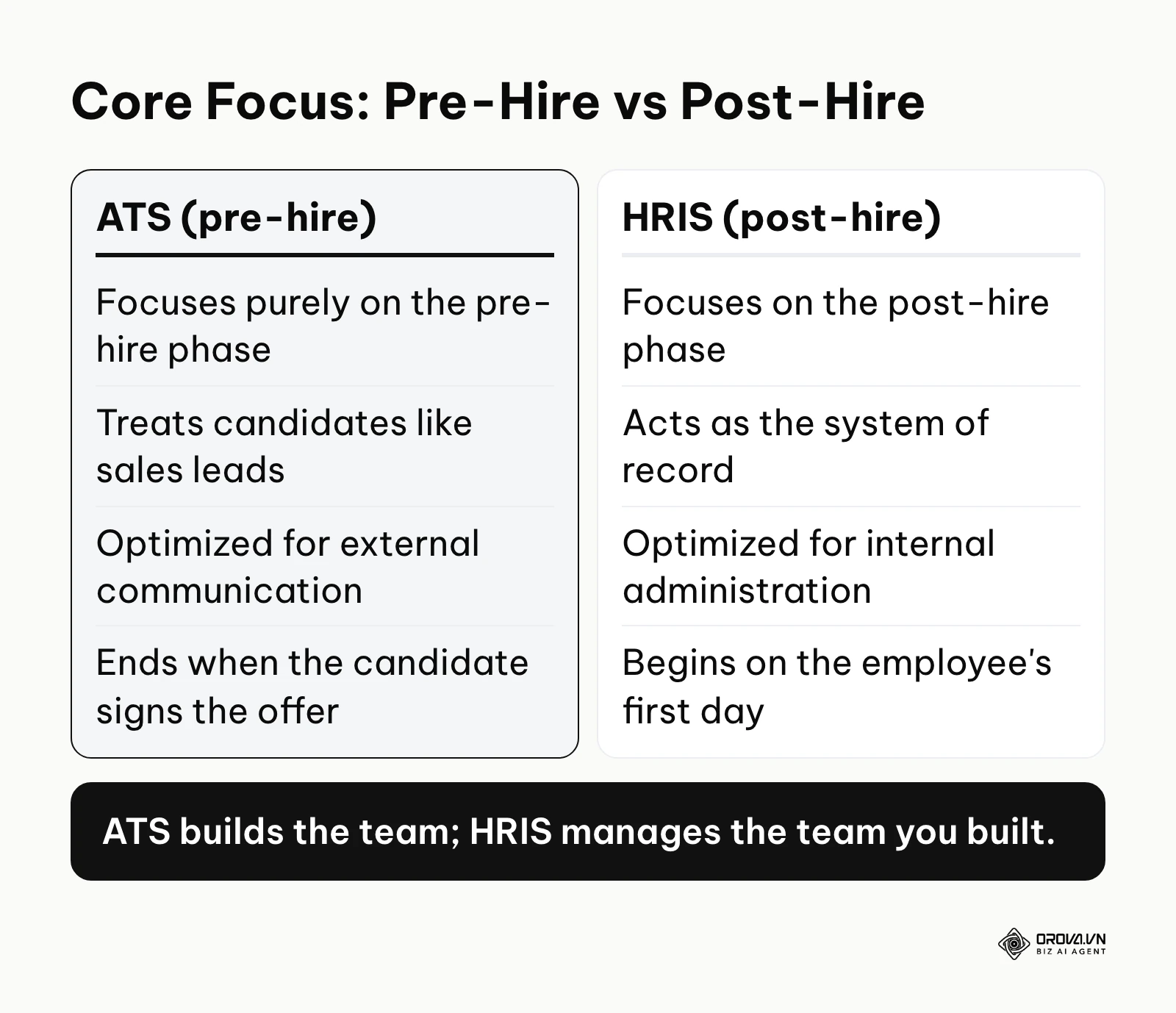
What Exactly Is an ATS (Applicant Tracking System)?
An Applicant Tracking System is a specialized software application designed specifically to manage the entire recruitment process. You can think of it as a highly specialized Customer Relationship Management (CRM) platform, but instead of tracking potential buyers, it tracks potential employees. The primary goal of an ATS is to reduce the time it takes to fill an open role while simultaneously improving the quality of the hire and the experience of the candidate. It achieves this by organizing a chaotic influx of resumes into a structured, easily navigable pipeline.
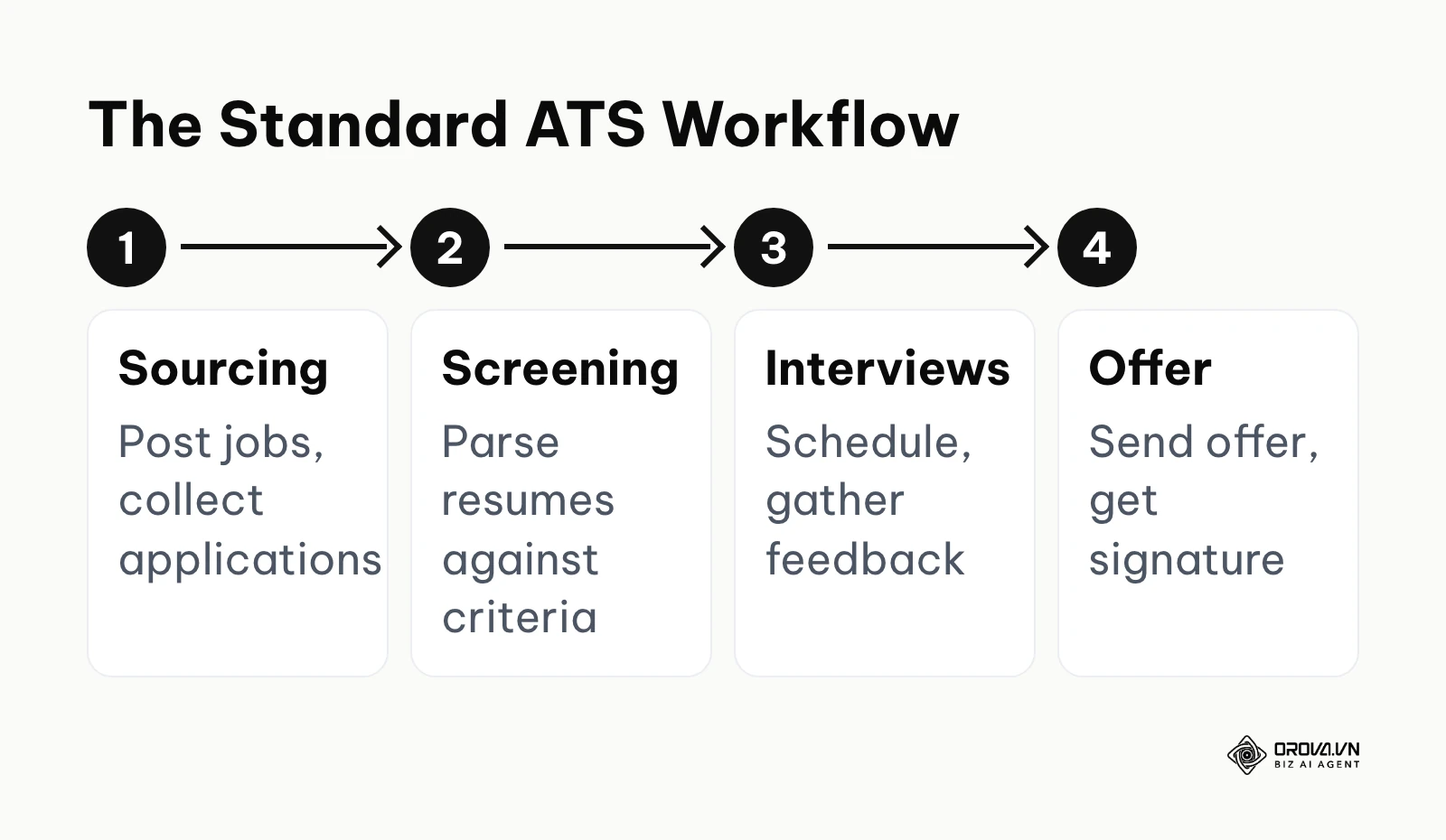
The standard workflow of an ATS begins with sourcing. When a recruiter needs to fill a position, they create a job requisition within the platform. The ATS then acts as a centralized broadcasting hub, pushing that single job description out to dozens of external job boards, professional networks, and the company's internal career page simultaneously. Without this capability, a recruiter would spend hours logging into individual sites, pasting text, and managing distinct inboxes. This level of recruitment automation is fundamental to operating at scale in a competitive job market.
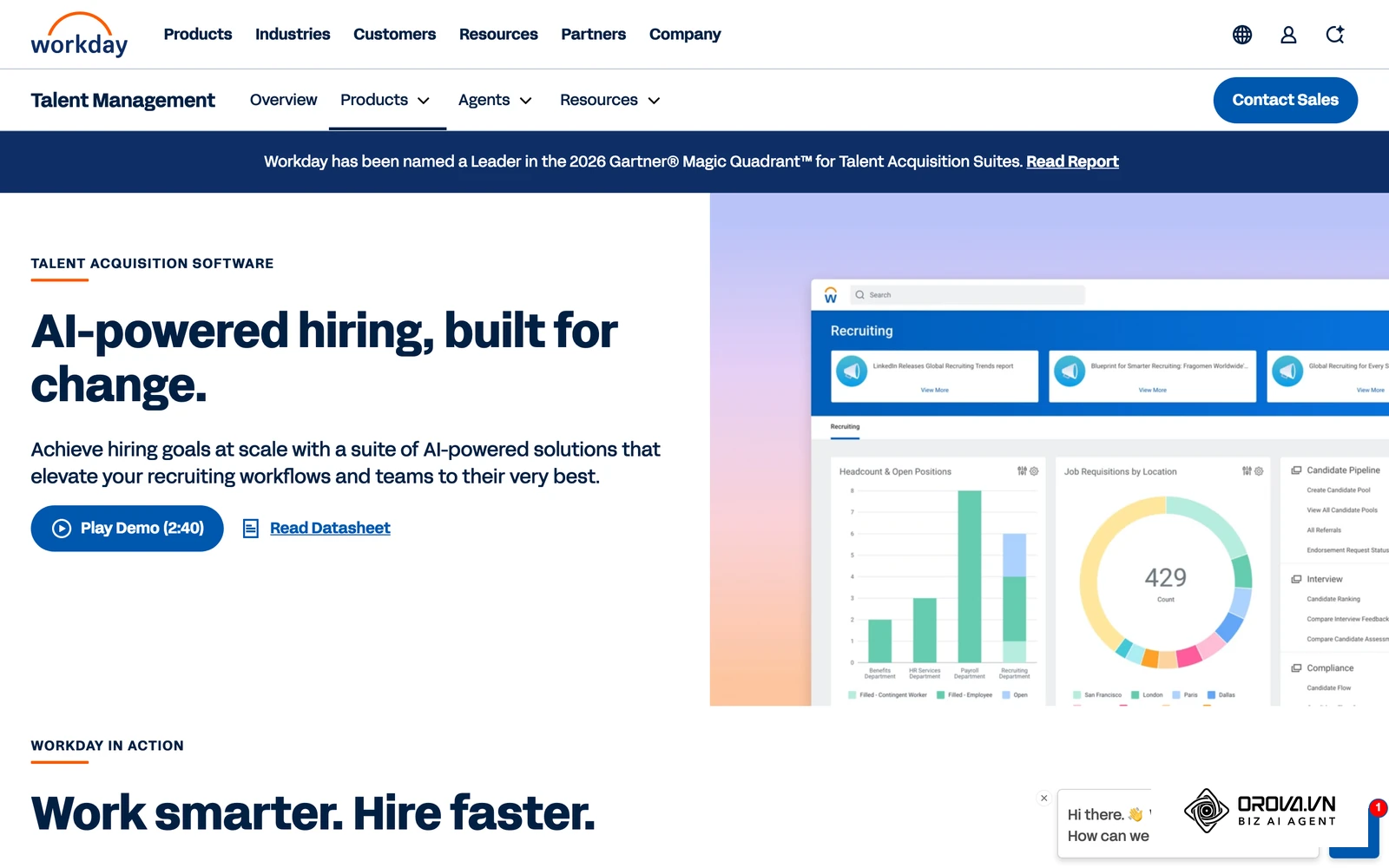
Once candidates begin applying, the ATS transitions into its screening phase. It collects all incoming data, regardless of the source, and standardizes it into a single format. Advanced parsing technology reads resumes, extracting key details like work history, education, and specific skills, allowing recruiters to search through thousands of applicants using precise keyword queries. This eliminates the need to manually open and read every single PDF attachment. Furthermore, the ATS manages the interview phase, offering bi-directional calendar syncing so candidates can self-schedule their interviews based on the hiring manager's real-time availability.
Finally, the ATS facilitates the critical collaboration aspect of hiring. It provides structured scorecards, ensuring every interviewer evaluates the candidate against the same standardized criteria, which helps mitigate unconscious bias. Once a decision is made, the ATS generates the offer letter, captures the digital signature, and securely stores the employment contract. At this exact moment—when the candidate transitions from an applicant to a hired employee—the primary job of the ATS is complete, and the data must be handed off to the next system in the chain.
What Exactly Is an HRIS (Human Resources Information System)?
A Human Resources Information System is the foundational technological infrastructure for any established business. It is the definitive system of record, or the "single source of truth," for all employee data within an organization. While an ATS is focused entirely on the external market and the future potential of a candidate, the HRIS is focused entirely on internal operations, historical records, and legal compliance. It is the engine that ensures your company operates smoothly, legally, and efficiently on a day-to-day basis.
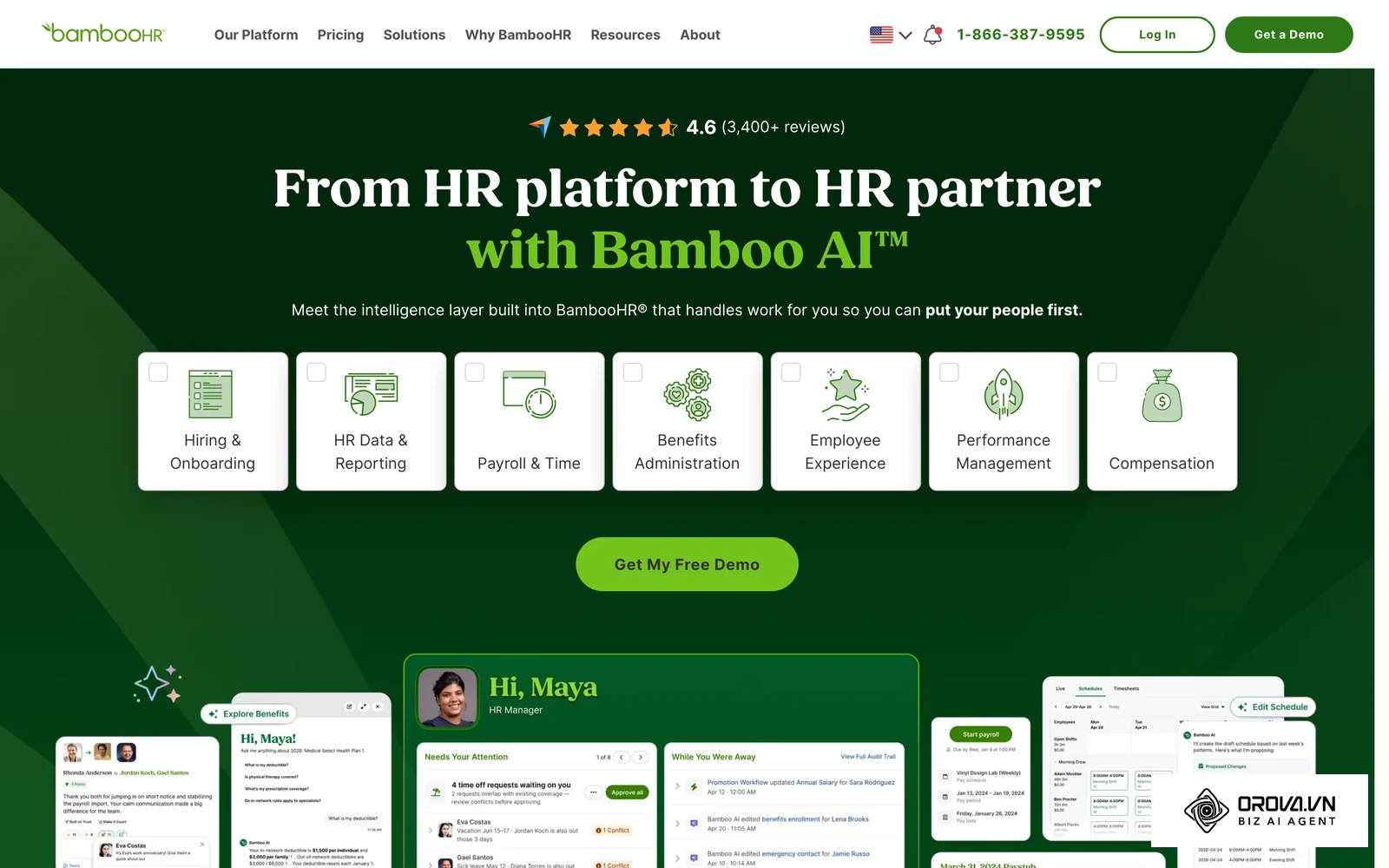
At its core, the HRIS houses the central employee database. This includes highly sensitive, legally protected information such as social security numbers, banking details, tax withholding forms, emergency contacts, and demographic data. Because it holds this critical information, the security architecture of an HRIS is typically much more rigid than that of an ATS. It dictates organizational charts, reporting structures, and role-based access permissions across the entire company network. If an employee changes departments or receives a promotion, that change is executed within the HRIS, which then cascades the update to IT, finance, and operations.
Beyond basic record-keeping, the HRIS usually encompasses payroll processing and benefits administration. It tracks the exact hours worked, calculates complex tax deductions across different jurisdictions, manages paid time off (PTO) accruals, and ensures that employees are correctly enrolled in health insurance and retirement plans. The complexity of these calculations cannot be overstated, and a failure in this module directly impacts employee livelihood and opens the company to severe legal penalties. This is why many organizations prioritize buying an HRIS before any other piece of HR technology.
Furthermore, a modern HRIS extends into performance management and compliance tracking. It houses annual review documents, tracks professional development goals, and monitors mandatory training completions. From a legal standpoint, the HRIS generates the necessary reports for government audits, ensuring the company complies with labor laws regarding equal opportunity employment, workplace safety, and wage regulations. It is a dense, highly administrative platform designed for stability and accuracy over speed and marketing flair.
Standalone ATS vs All-in-One HRIS: The Ultimate Feature Showdown
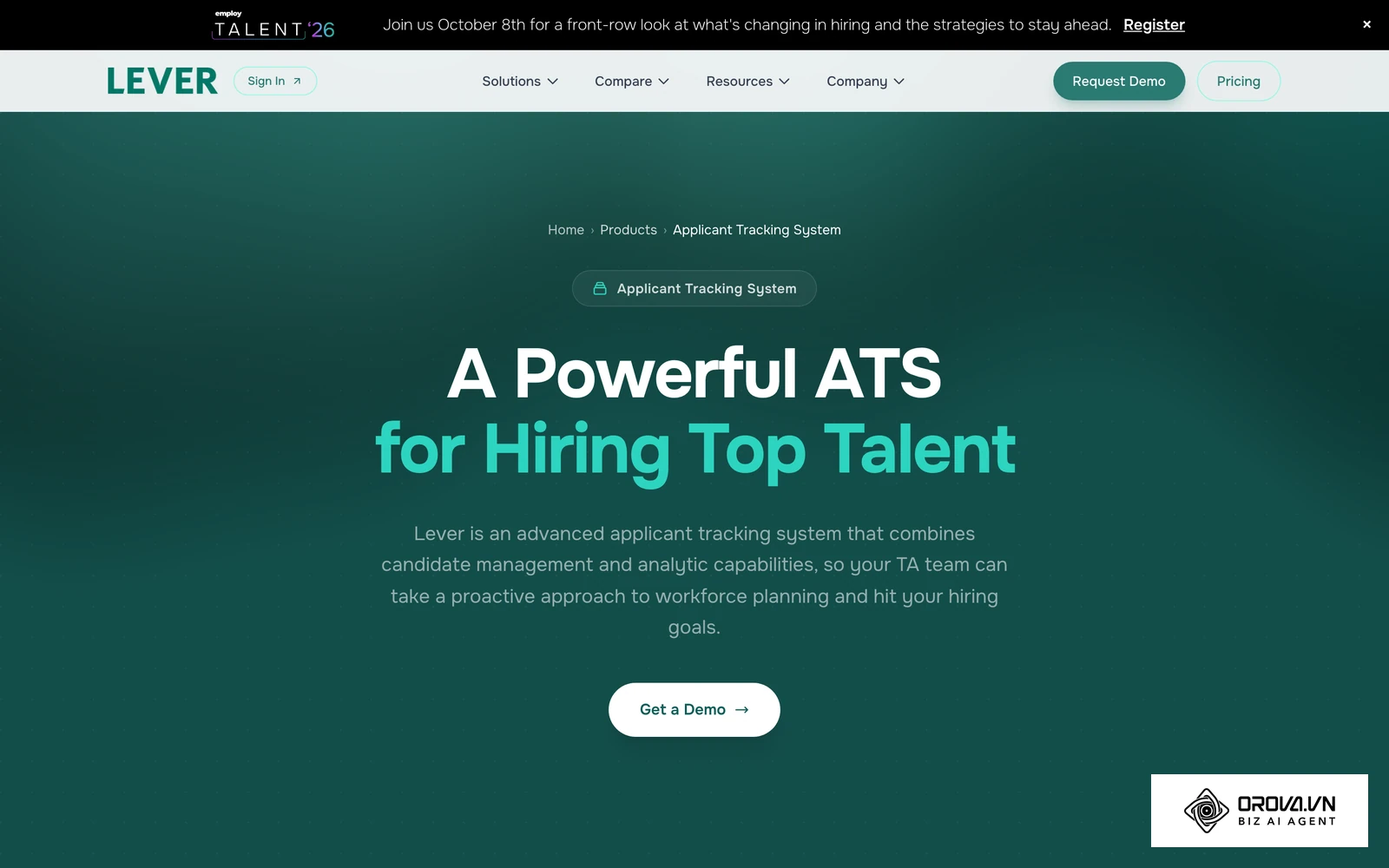
The most difficult decision business leaders face is whether to purchase a highly specialized, standalone ATS or to rely on the built-in recruiting module that comes packaged inside a massive, all-in-one HRIS suite. Vendors selling all-in-one suites will argue that having a single database eliminates integration headaches. Conversely, standalone vendors will argue that the built-in modules are clunky, outdated, and lack the sophisticated features needed to win top talent.
To resolve this debate, we must break down the comparison across the most critical stages of the recruitment lifecycle.
| Feature Area | Standalone ATS | Built-in HRIS Module | Winner & Rationale |
|---|---|---|---|
| Candidate Sourcing | Deep integrations with niche job boards, AI sourcing, and robust CRM tools for passive talent. | Basic posting to major boards (Indeed, LinkedIn). Lacks CRM capabilities for passive candidates. | Standalone ATS. Many add CRM-style tools for proactively nurturing talent. |
| Resume Parsing | High accuracy, uses semantic AI to understand context, reads complex PDFs and scanned images. | Basic keyword matching. Often fails on complex formatting, forcing manual data entry. | Standalone ATS. Superior technology reduces manual screening time drastically. |
| Interview Scheduling | Bi-directional calendar sync, automated reminders, self-scheduling links for candidates. | Often requires manual email back-and-forth; calendar sync is frequently delayed or buggy. | Standalone ATS. Speed in scheduling is critical to preventing candidate drop-off. |
| Hiring Team Collaboration | Structured scorecards, blind feedback to prevent bias, Slack/Teams integration for quick approvals. | Basic text boxes for notes. Feedback is often visible to everyone, causing groupthink bias. | Standalone ATS. Built specifically for team-based hiring decisions. |
| Internal Data Flow | Requires API configuration to push new hire data into the payroll system. | Seamless native transition. The applicant record simply converts into an employee record instantly. | All-in-One HRIS. Zero integration required; it is inherently the same database. |
| Compliance & Reporting | Advanced EEO reporting, detailed time-to-fill analytics by specific pipeline stage. | Basic reporting, often difficult to extract granular pipeline analytics without custom builds. | Tie. HRIS wins on post-hire compliance, ATS wins on recruiting analytics. |
Candidate Experience and Sourcing Capabilities
The experience a candidate has while applying directly impacts your employer brand. Standalone ATS platforms excel here because they allow companies to build highly customized, white-labeled career pages that reflect their unique culture. They support one-click apply features via LinkedIn or Google, significantly reducing the application abandonment rate. If a candidate faces a multi-page, mandatory-field form that requires creating an account—a common trait of legacy HRIS recruiting modules—they will simply abandon the process. In a tight labor market, friction is the enemy of acquisition. Furthermore, standalone systems provide advanced sourcing extensions, allowing recruiters to clip candidate profiles from across the web and drop them directly into targeted nurture campaigns. That nurturing work is really recruitment CRM territory; if your actual choice is between an ATS and a CRM rather than an ATS and an HRIS, our guide to recruitment CRM systems vs ATS covers that separate decision.
Resume Parsing and Screening Accuracy
The ability to accurately ingest candidate data without manual intervention is a massive differentiator. Basic modules often rely on outdated keyword matching. If the resume says "UX Designer" but the system is looking for "User Experience Designer," the candidate might be rejected.
Ví dụ minh hoạ: You are a recruiting manager at a 150-person tech startup hiring for five senior engineering roles simultaneously. You first define the exact skill requirements and feed them into your built-in HRIS module. Next, you bulk-upload over 400 resumes received from various channels. The hurdle arises when the basic parser fails to read complex PDF portfolios and misinterprets the data, jumbling names and experience levels. You are forced to manually open and read 400 files. Conversely, switching to a dedicated resume parser extracts specific context accurately. As a result, your team sees a clean dashboard highlighting the top 20 candidates based on precise criteria matching, saving dozens of administrative hours.
Interview Scheduling and Hiring Team Collaboration
Scheduling is traditionally the most administratively heavy part of recruiting. Standalone ATS platforms have perfected this by integrating deeply with Google Workspace and Microsoft 365. They allow recruiters to send candidates a localized link where they can choose a time block that automatically aligns with the hiring panel's availability. This prevents the endless email ping-pong that frustrates candidates. Moreover, when it comes to gathering feedback, a dedicated ATS enforces structured scorecards. Interviewers must rate specific competencies independently before seeing what their colleagues thought, actively preventing the "halo effect" where one senior leader's opinion sways the entire panel. Most all-in-one suites treat interview feedback as a simple, unstructured text field.
Compliance, Offer Management, and Handoff
When a candidate reaches the final stage, precision is required. An HRIS inherently excels at compliance because it is built for it. However, modern ATS platforms have closed this gap by offering highly dynamic offer letter templates that automatically pull in approved salary bands and connect with e-signature tools. The critical moment of failure, however, lies in the handoff. If you use an all-in-one system, clicking "Hire" immediately provisions the employee in payroll. If you use a standalone ATS, this data must travel across an API bridge. If that bridge is poorly constructed, data is lost, and the new hire might not get paid on their first cycle.
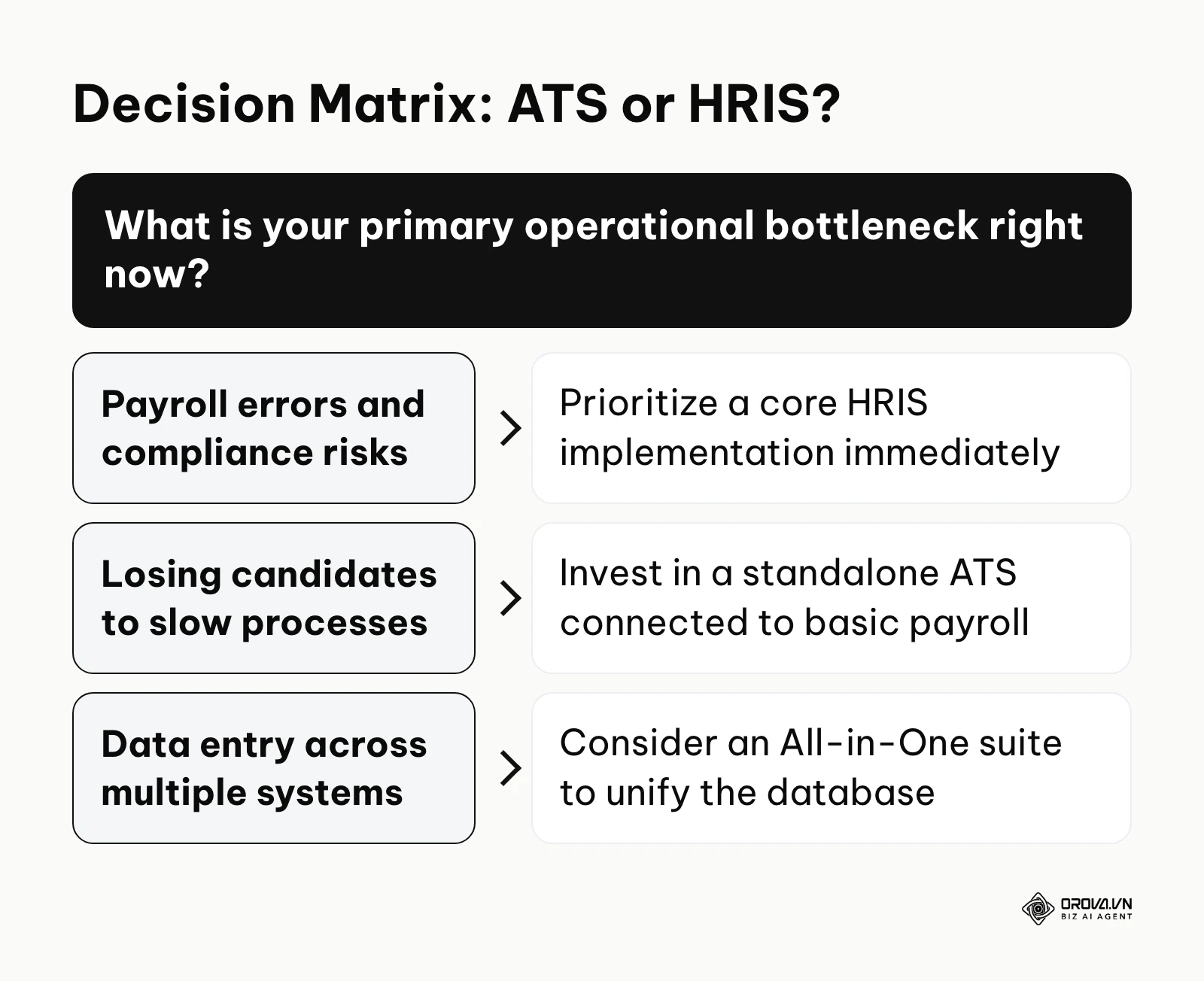
If screening is where your hiring slows down, Orova Recruit helps with that part of the process: set criteria for each role, score CVs against them with sentences quoted from each CV as evidence, and generate interview questions based on the JD and the CV. It covers recruiting work only, not payroll or employee records.
The Hidden Costs of ATS and HRIS Integration
The most common advice given by software consultants is to "buy the best ATS and integrate it with your HRIS via API." While this sounds simple in theory, the reality of connecting two complex, disparate database architectures is fraught with hidden financial costs and operational risks that software salespeople rarely disclose during the demo phase. Understanding these hidden layers is crucial before committing to a multi-vendor technology stack.
API Setup Fees and Middleware Subscriptions
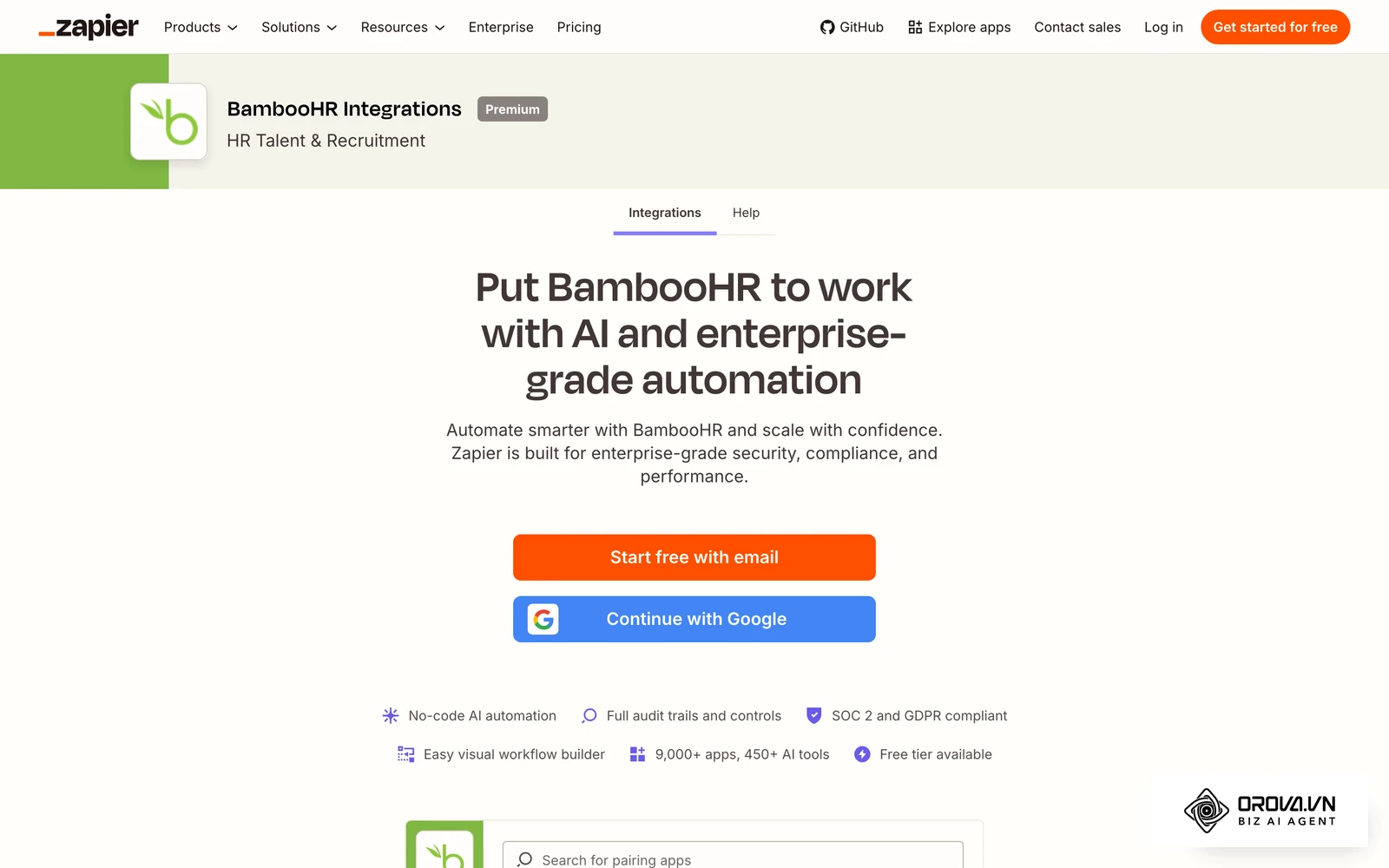
An API (Application Programming Interface) allows two software programs to communicate. However, just because both your ATS and HRIS have APIs does not mean they speak the exact same language out of the box. Unless the two vendors have a pre-built, native integration, you will have to pay to build a custom bridge.
Ví dụ minh hoạ: You serve as the HR operations director at a 300-person logistics company transitioning from spreadsheets to a digital stack. You decide to connect a standalone ATS with a legacy HRIS. First, you secure API keys from both vendors. Second, you attempt to map the candidate data fields to the employee record fields. The major hurdle arises when you realize the HRIS requires a specific date format that the ATS cannot output natively, causing complete synchronization failures. You resolve this by purchasing a subscription to a middleware platform (like Zapier or Workato) to catch, reformat, and push the data payloads in transit. The visible result is that newly hired employees finally appear in the payroll system by the next morning without any data entry clerks retyping their information, but your annual software budget has increased significantly.
Data Mapping and Custom Field Headaches
Data mapping is the process of telling the integration exactly which field in the ATS corresponds to which field in the HRIS. Standard fields like "First Name" and "Email Address" usually map easily. The nightmare begins with custom fields and drop-down menus. If your ATS lists the department as "Marketing & Comm" but the HRIS requires it to be strictly "Marketing," the API call will fail, and the candidate record will not transfer. Poorly documented custom field mapping between different vendor architectures is a frequent cause of implementation delays. Every time you add a new office location or change a department name, you must remember to update it in both systems simultaneously, or the integration will break.
Ongoing Maintenance and Vendor Finger-Pointing
Integrations are not a "set it and forget it" endeavor; they require continuous maintenance. Software vendors regularly update their platforms, deprecate old API endpoints, and change security protocols. When this happens, a previously stable integration will suddenly stop working. The most frustrating aspect of a broken custom integration is the vendor finger-pointing. When you submit a support ticket to the ATS vendor, they will often claim their payload fired successfully and blame the HRIS for rejecting it. When you contact the HRIS vendor, they will claim the payload was formatted incorrectly by the ATS. You, the customer, are left stuck in the middle, paying your IT team to diagnose a problem across two proprietary systems they do not control.
How to Choose Based on Your Size and Budget
Deciding whether to buy an ATS, an HRIS, or both should not be based on the features you want; it must be based on the operational realities of your company size and your available budget. Software that is highly effective for a global enterprise will utterly crush a small startup with administrative bloat. The following framework provides concrete guidance on how to sequence your software purchases based on organizational maturity.
| Company Stage | Primary Operational Focus | Recommended Software Strategy | Rationale for this Strategy |
|---|---|---|---|
| Under 50 Employees | Basic payroll compliance and establishing core benefits. | Core HRIS Only. Use spreadsheets or a free, basic ATS for hiring. | Volume is too low to justify ATS costs; legal compliance is the paramount risk. |
| 50 to 250 Employees | Managing rapid growth, standardizing policies, and scaling hiring. | All-in-One HRIS. Utilize the built-in recruiting module heavily. | Budget constraints demand a unified system; the built-in ATS is "good enough" for moderate volume. |
| Over 250 Employees | Specialized workflows, advanced reporting, and winning top-tier talent. | Integrated Best-of-Breed Stack. A dedicated HRIS connected to a dedicated ATS via API. | Complexity demands specialization; a built-in module can slow time-to-hire once a dedicated recruiting team runs many roles at once. |
Under 50 Employees: The Scrappy Setup
At this stage, your company is focused on survival, product-market fit, and establishing basic operations. You likely do not have a dedicated HR person; these duties are handled by the founders, an office manager, or an external accountant. The primary risk at this stage is failing to comply with local labor laws, miscalculating payroll taxes, or failing to secure foundational benefits like health insurance. Therefore, your first purchase must be a foundational HRIS or a PEO (Professional Employer Organization).
Attempting to implement a complex, standalone ATS at this stage is a waste of capital. You are likely hiring only a handful of people a year, often through personal networks and referrals. A simple Kanban board, an organized email inbox, or a totally free, stripped-down ATS is perfectly sufficient to track applicants. Do not buy a Ferrari to drive to the grocery store.
50 to 250 Employees: The Tipping Point
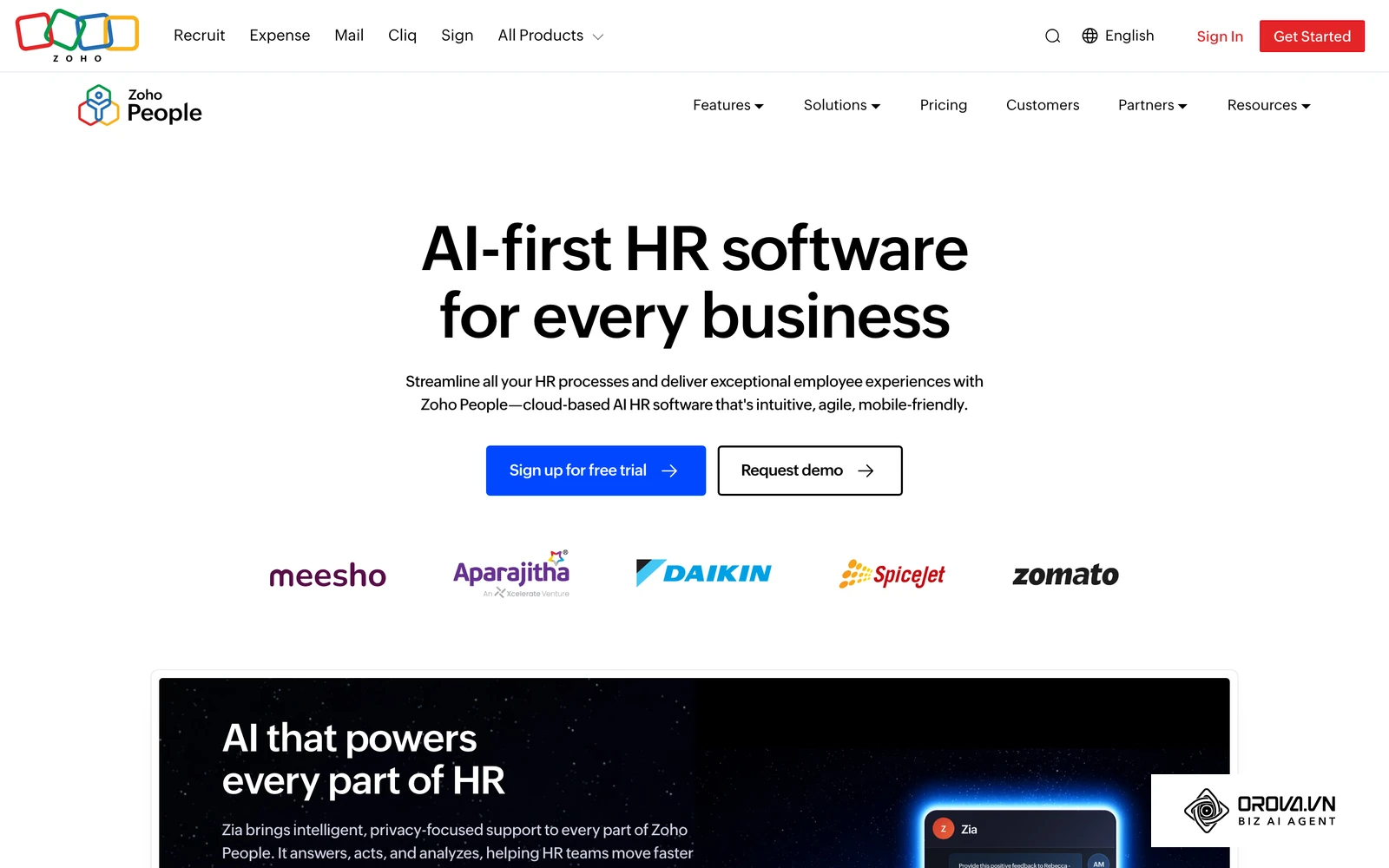
This is the most difficult stage of organizational growth. You are expanding rapidly, standardizing departments, and manual data entry is beginning to cause critical failures. This is the prime market for the All-in-One HRIS suite. Because you are hiring more frequently, the spreadsheet method for tracking candidates is breaking down, but you likely do not have the massive budget required to maintain multiple enterprise software subscriptions.
Ví dụ minh hoạ: You are the sole HR generalist at an 80-person marketing agency experiencing rapid growth. You start by purchasing an all-in-one HRIS to handle payroll, benefits, and performance reviews. Next, you attempt to use its built-in recruiting module to hire 20 new account managers. The hurdle hits when you realize the built-in module lacks automated interview scheduling and native job board syndication, causing you to lose top candidates to faster competitors while you drown in administrative tasks. You convince leadership to invest in a standalone ATS, prioritizing one that has a pre-built, native connector to your specific HRIS. The result is your time-to-hire drops visually on your dashboard, and candidates move through the interview stages smoothly without your inbox overflowing.
Over 250 Employees: The Enterprise Stack
Once an organization crosses the 250-employee threshold, complexity scales exponentially. You now have specialized departments, complex reporting hierarchies, multi-state or international compliance requirements, and a dedicated Talent Acquisition team separate from the core HR team. At this level of maturity, relying on the built-in recruiting module of an HRIS becomes a competitive disadvantage. The recruiting team needs advanced sourcing algorithms, dynamic offer workflows, and sophisticated pipeline analytics to compete for top talent.
Here, the strategy shifts decisively to a "best-of-breed" approach. The HRIS remains the foundational system of record, acting as the central hub for all employee data. However, the company will purchase a top-tier, standalone ATS and invest the necessary resources to build a robust, secure API integration between the two systems. The cost of maintaining this integration is easily justified by the sheer volume of hiring and the strategic necessity of acquiring the best possible talent efficiently.
The 10-Question Vendor Questionnaire You Must Use
When you enter negotiations with software sales representatives, they will naturally highlight their system's strengths and gloss over its technical limitations. It is your responsibility to ask the hard, technical questions before signing a multi-year contract. If you are planning to integrate an ATS with an HRIS, take this exact questionnaire to your next vendor meeting. If the sales rep cannot answer these questions clearly, or if they try to deflect to an implementation team "after you sign," consider it a massive red flag.
| Question to Ask the Vendor | Why This Matters | Warning Signs to Look For |
|---|---|---|
| 1. Is this integration native, or does it require third-party middleware? | Native integrations are maintained by the vendors; custom requires you to pay for middleware. | Vendor suggests you "just use Zapier" for an enterprise-level data sync. |
| 2. Are there one-time setup fees or recurring API access costs? | Uncovers hidden budget items that hit after the contract is signed. | "We will scope the API costs during implementation." |
| 3. What specific standard fields are passed, and can we map custom fields? | Ensures the data you actually care about will transfer automatically. | Vendor cannot produce standard data schema documentation on the call. |
| 4. How often does the data sync? Is it real-time webhooks or daily batches? | Real-time ensures payroll isn't delayed; batches can cause a 24-hour lag. | Vendor relies entirely on flat-file SFTP transfers overnight. |
| 5. If the sync fails, how are admins notified and is there an error log? | You need to know immediately if a new hire didn't reach the HRIS. | "Our system rarely fails, so you don't need to worry about that." |
| 6. Can the integration handle bi-directional data flow? | If an employee updates their address in the HRIS, does it update the ATS? | Integration only pushes data one way (from ATS to HRIS). |
| 7. How does the system handle duplicate records for rehired employees? | Prevents creating two distinct profiles for the same human being. | The system relies solely on matching email addresses, which often change. |
| 8. What is your API rate limit, and will our hiring volume exceed it? | API throttling will cause integrations to pause during peak hiring seasons. | Vendor refuses to specify the exact number of calls allowed per minute. |
| 9. When you release updates, how do you ensure the API doesn't break? | Protects your custom integration from vendor-side code changes. | Lack of a formal deprecation policy or a sandbox testing environment. |
| 10. Who owns the support ticket if the data fails to sync? | Prevents the inevitable vendor finger-pointing when things go wrong. | Vendor states they only support "their side of the bridge." |
Want fewer candidates lost to slow follow-up? With Orova Recruit you can schedule interviews, score them, compare candidates side by side, and send step-based candidate emails from your company inbox. Sign up free until the end of July 7, 2027 (7/7/2027), no card required.
Where ATS and HRIS Are Heading in the Next Few Years: The Author's Take
The landscape of HR technology is shifting rapidly, driven by economic pressures and massive leaps in technical capabilities. Looking at how these platforms have moved from on-premise servers to cloud ecosystems, I believe the next few years will change how we decide between ATS and HRIS solutions.
AI will take on more of first-pass screening
Currently, as of 2026, we are seeing the widespread injection of generative AI into HR workflows. However, most of it is superficial—writing job descriptions or summarizing notes. I expect AI to take on a much larger share of first-pass screening work, while people still make the hiring decisions. The focus is likely to shift away from basic keyword matching to deep, semantic understanding of a candidate's transferable skills and potential. To prepare for this, companies must stop relying on legacy ATS modules that cannot parse complex data structures, as the quality of AI output is entirely dependent on the cleanliness of the ingested data.
Smaller, connected stacks may win back ground from suites
For the last decade, the trend has been consolidation—buying the biggest all-in-one suite to solve every problem. I think this pendulum may start swinging back. As API standards mature and middleware becomes cheaper, I believe more companies will consider replacing parts of large suites with specialized tools that connect cleanly. You should start demanding open API architecture as a non-negotiable requirement in every software RFP you issue today.
Candidate data privacy will weigh more in the decision
The regulatory environment surrounding data privacy (like GDPR and CCPA) is tightening aggressively. Currently, companies hoard candidate data indefinitely in their ATS, hoping to build a talent pool. I believe regulators are likely to push harder on how long candidate profiles can be kept without renewed consent, which would make automatic anonymization or deletion a practical requirement. Therefore, when choosing a system today, you must evaluate its automated compliance triggers and its ability to definitively purge data across both the ATS and the integrated HRIS simultaneously.
Frequently Asked Questions about ATS vs HRIS
Do I need an ATS or HRIS first?
For most companies with employees, an HRIS comes first. The HRIS handles payroll, taxes, and legal compliance, which are foundational to keeping the business running and avoiding legal penalties. An ATS can come first when payroll is already handled elsewhere (for example by an accountant or payroll provider) and losing candidates to a slow process is the bigger problem, or when you are a recruiting agency whose business is placing candidates rather than managing internal employees.
Can an HRIS replace an ATS?
Yes, but usually only for simple, low-volume hiring needs. Most modern HRIS platforms include a basic recruiting module that can post jobs and track applicants through a simple pipeline. However, if your company relies on proactive sourcing, complex interview scoring, or high-volume automated screening, an HRIS will eventually choke your process and frustrate your hiring managers.
How does AI affect ATS vs HRIS decisions?
AI is forcing companies to look closer at data quality. A system that uses AI for screening and matching needs structured, clean data to produce reliable results. Currently, standalone ATS platforms generally possess much deeper, more specialized AI capabilities for parsing and matching candidates than the broader, generalized AI tools hastily bolted onto legacy HRIS suites.
At what company size should we buy a standalone ATS?
There is no universal headcount rule. In the framework above, the shift usually happens somewhere in the 50 to 250 employee stage, when the built-in module starts losing candidates. A better signal than headcount is workload: once open roles overlap and recruiters spend more time chasing schedules than talking to candidates, the administrative friction of manual scheduling, parsing, and pipeline management begins to cost more in wasted labor hours and lost talent than the cost of a dedicated ATS subscription.
What is the average cost of an ATS and HRIS API integration?
There is no reliable average, because it depends on whether the two vendors already have a native, pre-built connector. A native connector is often included or carries a small activation fee. A custom integration usually adds three cost layers: one-time setup work by a technical consultant, a recurring middleware subscription, and internal hours to maintain field mappings when either system changes. Ask each vendor for a written quote that covers all three before you sign.
Where Should You Start Today?
Reading about feature comparisons is only helpful if you translate it into immediate action. Depending on your current operational reality, do not try to boil the ocean. Pick the single action below that matches your state and execute it this afternoon.
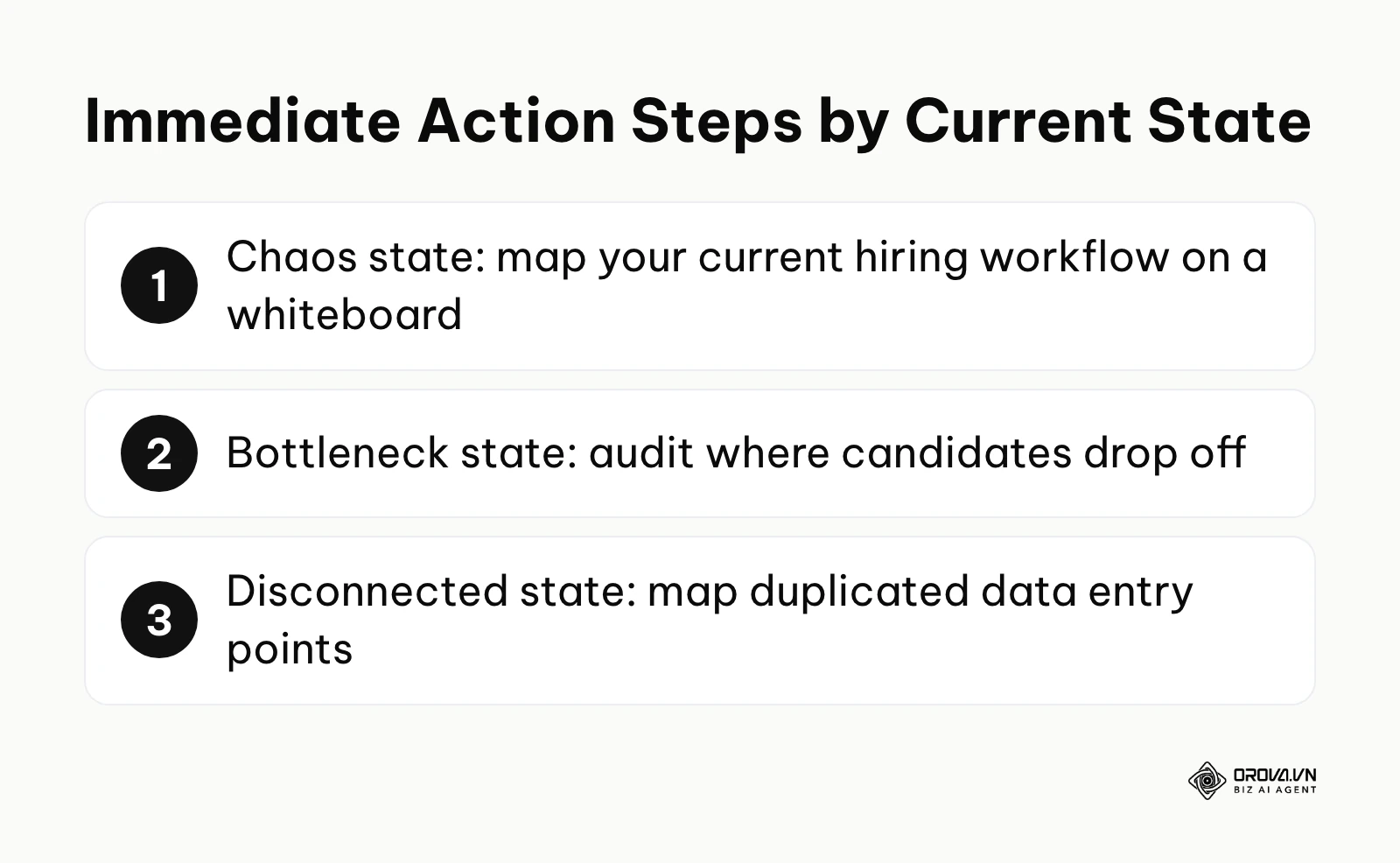
The Chaos State (Using Spreadsheets and Email): If you have no systems in place, your first step is to map your reality. Spend one hour drawing your current hiring process and onboarding workflow on a physical whiteboard. Identify exactly who touches the data, where they manually type it, and where the biggest delays occur. You cannot automate a broken process; you must visualize the chaos before you can evaluate which system will actually fix it.
The Bottleneck State (Using an HRIS but failing to hire): If you have an All-in-One system but are losing candidates to competitors, you need to audit your drop-off points. Create a test candidate profile and apply for your own open job using a mobile phone. Document exactly how many clicks it takes, what mandatory fields cause friction, and how long it takes for a recruiter to respond. This audit will definitively prove if your built-in module is costing you talent.
The Disconnected State (Using both but data is a mess): If you have a standalone ATS and an HRIS that refuse to talk to each other, you must define your data architecture immediately. Export a CSV of your candidate data and a CSV of your employee data. Sit down with IT and map exactly which column in spreadsheet A belongs to which column in spreadsheet B. Until this mapping is perfect on paper, no API integration will ever work in practice.
By taking a methodical approach to evaluating your current bottlenecks, you can finally resolve the ats vs hris dilemma and build a technology stack that truly supports your company's growth.
About the author

Builder of Orova
Nguyễn Đỗ Trọng Ân has 8 years of experience in marketing, including 6 years managing market development across Asia. He builds Orova, a Biz AI Agent that never sleeps: it plans, runs and optimizes work for businesses.
Run your business with AI Agents
Orova is the always-on Biz AI Agent — it plans, runs, and optimizes the work for you.
Save time, unlock productivity.