
What is competitor site analysis? The framework to outrank rivals

You sit down to plan your next quarter's content calendar, staring at a blank spreadsheet. You know your rivals are pulling in consistent traffic, but you are not entirely sure exactly which pages are doing the heavy lifting or how they are acquiring those visitors. Guessing their strategy based on a quick glance at their blog is no longer enough. To truly capture market share, you need a structured competitor site analysis.
Historically, marketing teams would simply look at keyword overlap and try to write a longer article. Today, the landscape is far more complex. Search intent is shifting rapidly, user attention spans are shrinking, and artificial intelligence is reshaping how information is delivered. If you only look at traditional search volumes, you are missing half the picture. This guide will walk you through exactly how to dissect a rival's digital presence, uncover hidden vulnerabilities in their strategy, and build a concrete action plan to outpace them.
What is competitor site analysis?
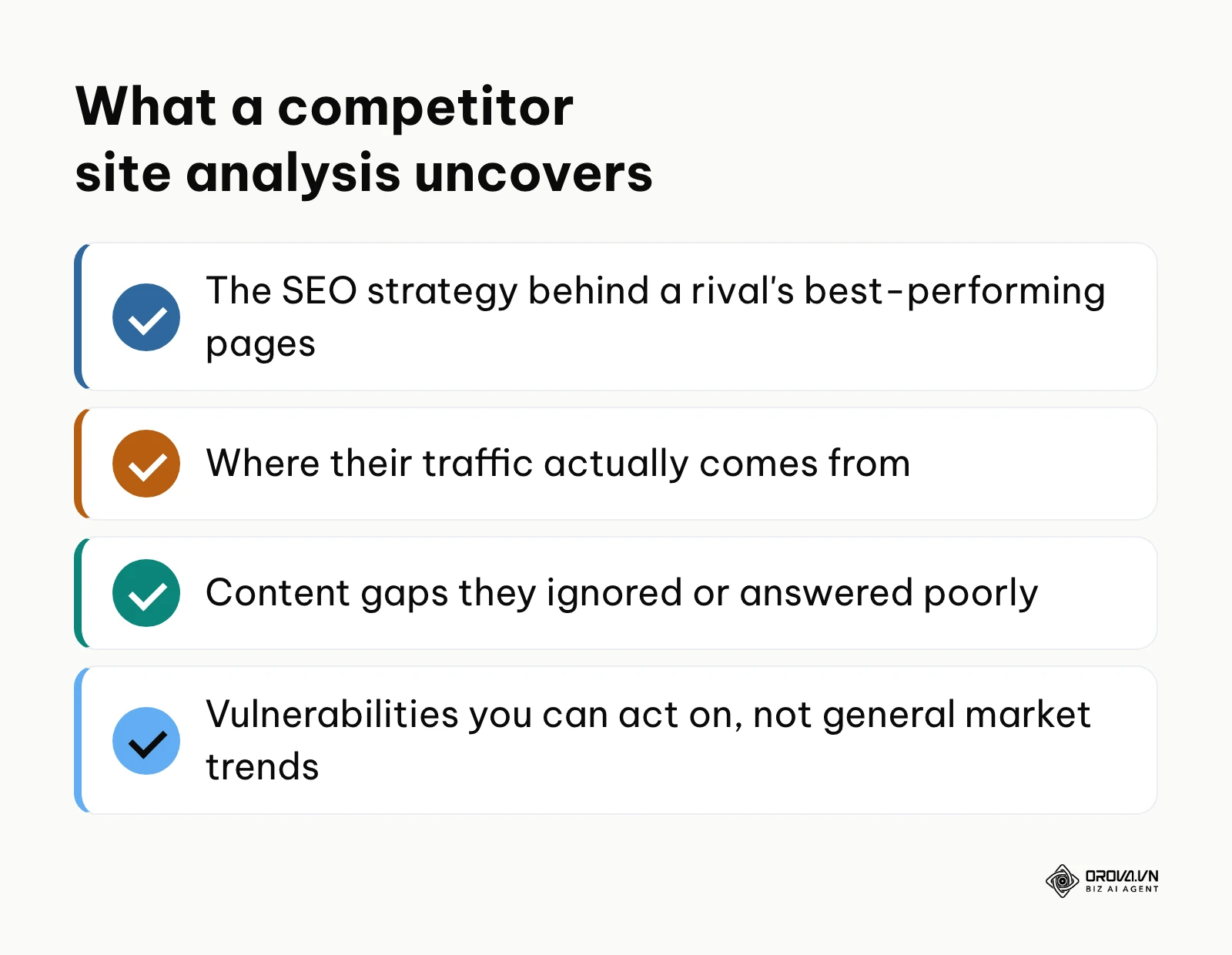
Competitor site analysis is the systematic process of evaluating rival websites to uncover their search engine optimization strategies, traffic sources, and content gaps. It is used to identify vulnerabilities in their approach, differing from a general market analysis by focusing strictly on actionable digital performance metrics and web infrastructure.
The concept originated from traditional business competitive intelligence but evolved rapidly with the advent of search engines. In the early days, it meant checking how many times a competitor used a specific keyword on a page. Now, it encompasses a holistic review of their entire digital footprint.
To clarify how it differs from related concepts, consider the following distinctions:
| Concept | How it differs | Example |
|---|---|---|
| Competitor site analysis | Focuses exclusively on external rival websites and their digital metrics. | Reverse-engineering a competitor's highest-traffic blog post. |
| Content audit | Focuses entirely on your own website's existing pages to improve or delete them. | Finding your own outdated articles that need to be rewritten. |
| Market research | Focuses on broader industry trends, customer demographics, and product pricing. | Surveying one thousand consumers about their software preferences. |
Think of it like studying footage of an opposing sports team before a big game. You are not watching them to copy their exact plays, but rather to understand their habitual patterns, spot the weaknesses in their defense, and figure out exactly where you should direct your offense to score.
The significance of competitor site analysis
Competitor site analysis exists to solve a fundamental problem for digital marketers and business owners: resource allocation. Creating high-quality content, optimizing technical infrastructure, and building a brand presence takes significant time and money. Without analyzing competitors, you are essentially flying blind, guessing what topics your audience might care about. This process provides a map of the digital terrain, showing you exactly where demand exists and where current supply is lacking in quality.
This analysis sits at the very beginning of the digital marketing lifecycle. It comes after you have defined your core product and target audience, but strictly before you start writing articles, launching campaigns, or restructuring your website architecture. It acts as the foundational research layer that dictates your subsequent actions. If you skip this step, you risk investing thousands of dollars into highly competitive topics where established giants already dominate, leading to negligible returns and wasted effort. Many teams also struggle to show a return on competitive research, largely because they execute campaigns without this foundational step.
When you don't need competitor site analysis yet:
- You lack basic tracking: If you haven't set up your own analytics platform or configured essential measurement tools, analyzing others is premature. Focus on establishing your own baseline first.
- You haven't defined your core product offering: If your business model is still pivoting weekly, competitor data will only distract you. Solidify your unique value proposition before looking outward.
- You have zero resources to execute: If your team cannot produce any new content or make technical changes for the next six months, gathering competitive intelligence is a waste of time. Instead, focus on maximizing the resources you currently have.
The value and benefits of competitor site analysis
The advantages of conducting a thorough evaluation of rival websites can be broken down into broad business value and specific benefits for the marketing practitioner. For the business, this process directly mitigates financial risk. It prevents teams from creating redundant content that nobody is searching for. Furthermore, it accelerates the timeline to profitability by identifying the paths of least resistance to acquire customers.
For the practitioner, it removes the anxiety of the blank page. Instead of brainstorming ideas from scratch, you have a data-backed list of proven topics. Below are the specific benefits experienced by the team executing the strategy.
Protecting market share against established rivals
A major benefit is defensive strategy. By monitoring what competitors are publishing, you can ensure they do not quietly steal your most valuable audience segments.
- Before: You notice a sudden dip in traffic to your core product pages but have no idea why, leading to panicked, disjointed updates.
- After: You proactively see a competitor launching a new hub of articles targeting your exact niche, allowing you to quickly refresh your own pages and maintain your search dominance.
Discovering high-converting, low-difficulty content topics
The most lucrative aspect of this research is finding the gaps. These are specific problems your audience is searching for that your competitors have either ignored completely or answered poorly.
- Before: You spend weeks writing a massive guide on a broad topic, only to rank on the fifth page because the competition is too fierce.
- After: You identify a highly specific, long-tail question that competitors glossed over, giving you a realistic chance to rank on the first page sooner and capture highly qualified leads.
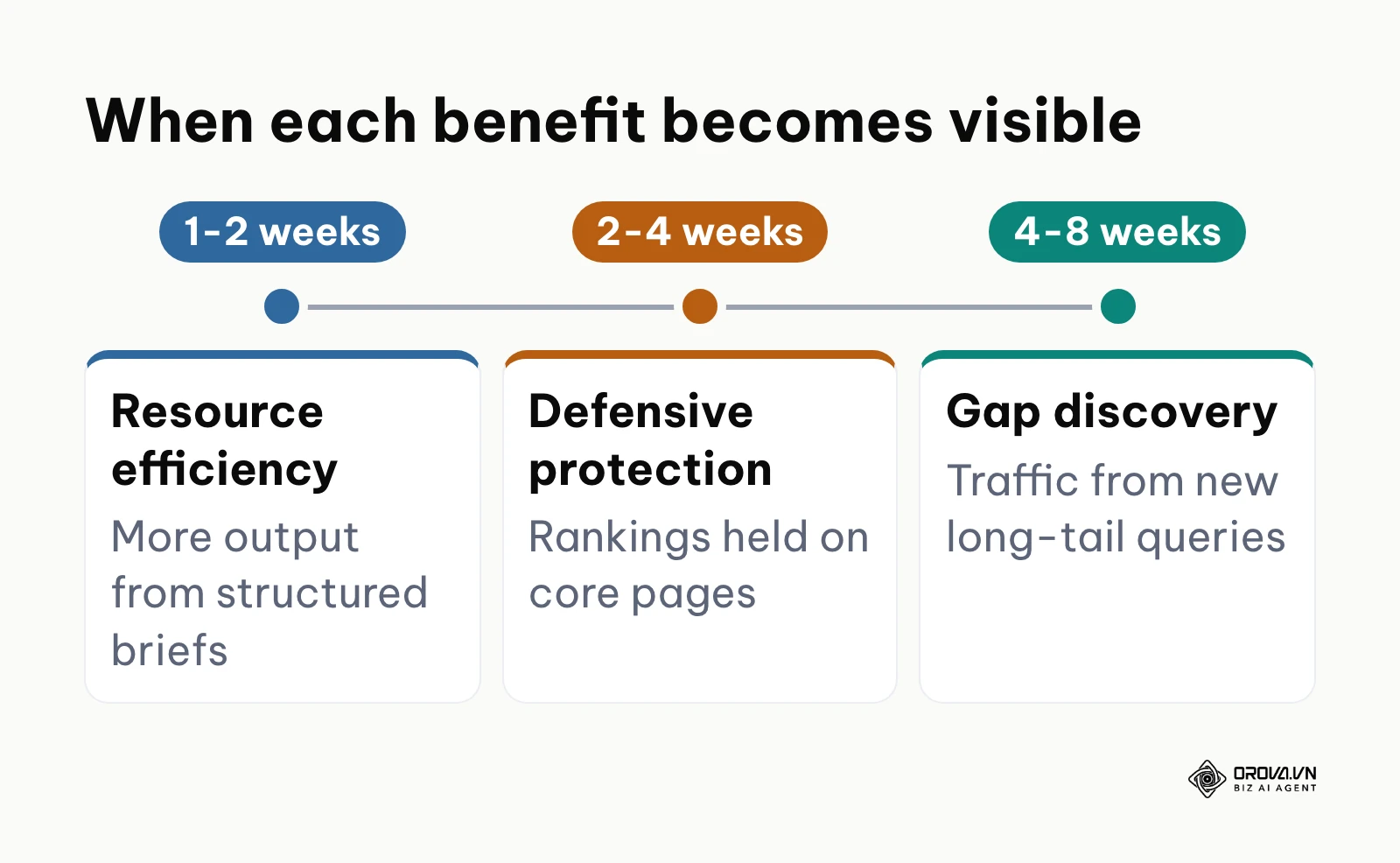
Here is how you can measure these benefits over time:
| Benefit | Measured by | Seen after how long |
|---|---|---|
| Defensive protection | Retention of keyword rankings on core pages | 2 to 4 weeks |
| Gap discovery | Organic traffic growth from newly targeted long-tail queries | 4 to 8 weeks |
| Resource efficiency | Increased publishing output due to structured briefs | 1 to 2 weeks |
By consistently measuring these outcomes, you ensure the research directly impacts the bottom line, rather than just producing interesting but useless reports.
Discover Orova.vn – a Biz AI Agent platform with OROVA SEO, a complete solution for every website. The system supports search engine optimization from A to Z with features including keyword research, writing new SEO-ready articles, optimizing existing content, rank tracking, plus competitor analysis and in-depth technical analysis. Sign up today to experience OROVA SEO completely free (offer valid through July 7, 2027).
How competitor site analysis works in practice
Executing a competitor site analysis involves breaking down a rival's digital presence into specific, measurable components. This is not a single task, but rather a structured investigation across multiple dimensions of their marketing strategy. Below is a detailed breakdown of each critical component, exploring what you need to do, the inputs required, the expected outputs, and where the process often breaks down.
Traditional Traffic and Keyword Discovery
This is the foundational layer. You need to understand exactly which pages are bringing the most visitors to your competitor's website.
- What to do: You map out their highest-performing URLs and identify the specific search terms driving traffic to those pages. You look for patterns in their URL structure to understand their content silos.
- Input: The competitor's root domain and an understanding of your shared target audience.
- Output: A prioritized spreadsheet listing their top articles, the estimated monthly traffic for each, and the primary keywords they target.
- Where it fails: People often look at total domain traffic rather than page-level traffic. Knowing a competitor gets ten thousand visitors a month is useless; knowing that eight thousand of those visitors come from a single glossary page is highly actionable.
Illustrative example:
- Context: A mid-sized B2B SaaS company was struggling to rank against enterprise giants, and the marketing manager needed to find low-competition entry points for their blog.
- Steps taken: The team extracted the top fifty ranking pages of three main rivals, deliberately filtered out all brand-name search terms, and isolated informational queries where the competitors had outdated content. They relied heavily on competitor keyword research techniques to find these hidden gems.
- Hurdles and fixes: Initially, they found the competitor's overall domain authority overshadowed everything, making them hesitant to compete. They fixed this by pivoting their focus entirely to long-tail comparison queries that the big players ignored because the search volume seemed too low.
- Visible results: Within three months, they secured the featured snippet for five highly specific technical questions, resulting in a steady stream of qualified demo requests directly from search engines.
AI Visibility Assessment
As of 2026, relying solely on traditional search engine results pages is a critical mistake. Users are increasingly turning to AI tools for direct answers. A competitor's visibility in AI-generated answers is becoming an important signal alongside their traditional search ranking.
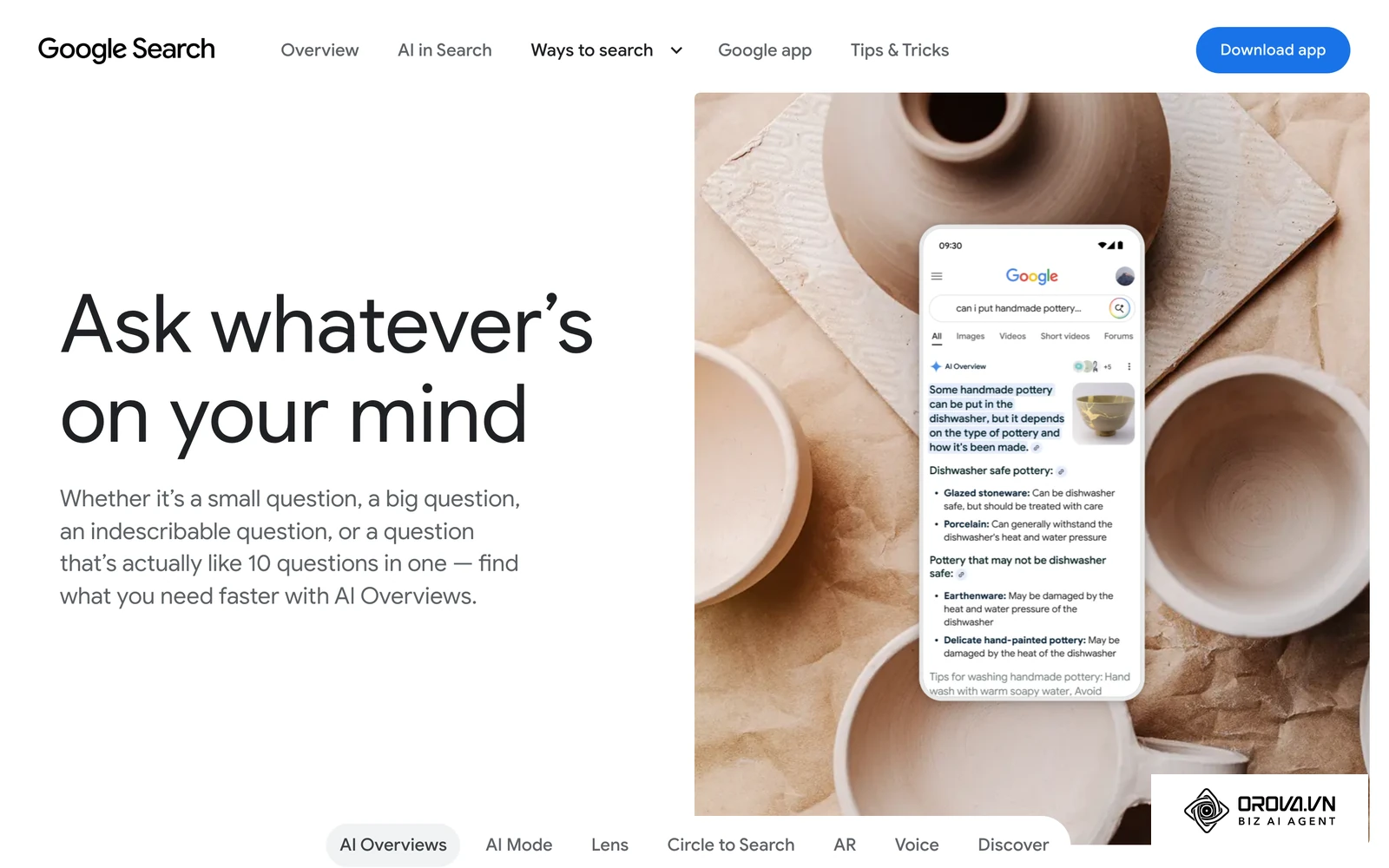
- What to do: You must test how major Large Language Models perceive your competitors. This involves prompting major AI chat assistants and Google's AI Overviews with industry questions to see which brands are cited as authoritative sources.
- Input: A list of informational queries your audience asks when researching a purchase.
- Output: A qualitative mapping of which competitors are embedded in the training data or retrieved during live web searches by AI engines.
- Where it fails: Teams treat AI engines like traditional search bars. Asking an AI "What is the best software" yields different results than asking "Compare the technical features of software A and B." You must use complex, conversational prompts to truly test visibility.
The 15-minute AI Visibility Checklist:
- Open three different AI chat interfaces in separate private windows.
- Ask a broad category question (e.g., "What are the leading solutions for inventory management?"). Note which competitors are listed first.
- Ask a specific troubleshooting question related to your industry. Note whose documentation is cited in the footnotes.
- Ask the AI to compare your brand directly against a top competitor. Note what weaknesses the AI attributes to your brand.
- Document these citations in a central spreadsheet to track changes over time.
For a deeper understanding of the platforms involved, you can review the best ai search engine options to prioritize your testing.
Content Strategy and Short-Form Video Integration
The consumption of information has shifted rapidly toward video, even within text-heavy blog posts. A modern analysis must account for how competitors are using multimedia to retain attention.
- What to do: You audit their top-performing pages to see if they are embedding YouTube Shorts, TikToks, or custom video players directly into the text. You evaluate how these videos are structured to keep users on the page longer.
- Input: The list of top pages identified in the traditional traffic discovery phase.
- Output: An understanding of their multimedia strategy, specifically how video is used to explain complex topics or break up long walls of text.
- Where it fails: Analysts often just count the number of words on a page and ignore the embedded media. A competitor with a five-hundred-word article might outrank your two-thousand-word guide simply because they included a highly engaging, two-minute video that satisfies the user intent faster.
Illustrative example:
- Context: An e-commerce retailer selling specialized outdoor gear wanted to understand why their comprehensive buying guides were losing rank to a smaller, newer blog.
- Steps taken: The content lead analyzed the competitor's guides page by page. They discovered that the competitor was embedding thirty-second demonstration videos under every major product heading, showing the gear in action.
- Hurdles and fixes: The retailer initially lacked the budget for high-end video production. They fixed this by encouraging their retail staff to shoot simple, vertical videos on their phones demonstrating product features, which they then embedded into their own articles.
- Visible results: The average time on page for their buying guides increased by two minutes, and the bounce rate dropped significantly, leading to a recovery in their organic rankings within six weeks.
The Zero-Budget Analysis Process
A common misconception is that you need expensive enterprise software to conduct this research. While tools save time, you can uncover massive insights with zero budget if you know how to look.
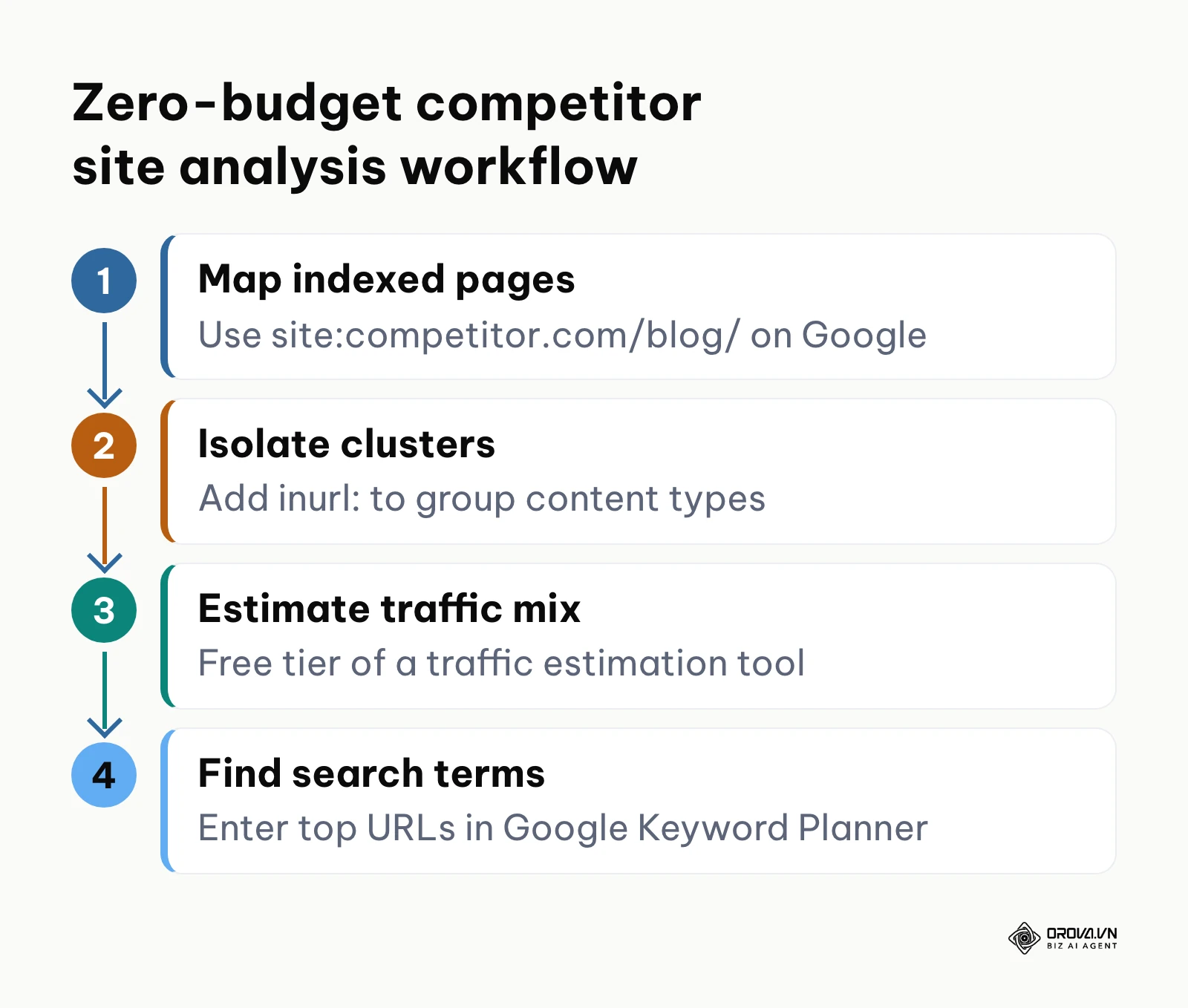
- What to do: You use advanced search operators on Google and leverage the free tiers of various data platforms to piece together a competitor's strategy manually.
- Input: Time, patience, and a basic spreadsheet.
- Output: A structural map of the competitor's website and an estimation of their content velocity.
- Where it fails: This process is highly manual and prone to human error if not documented meticulously.
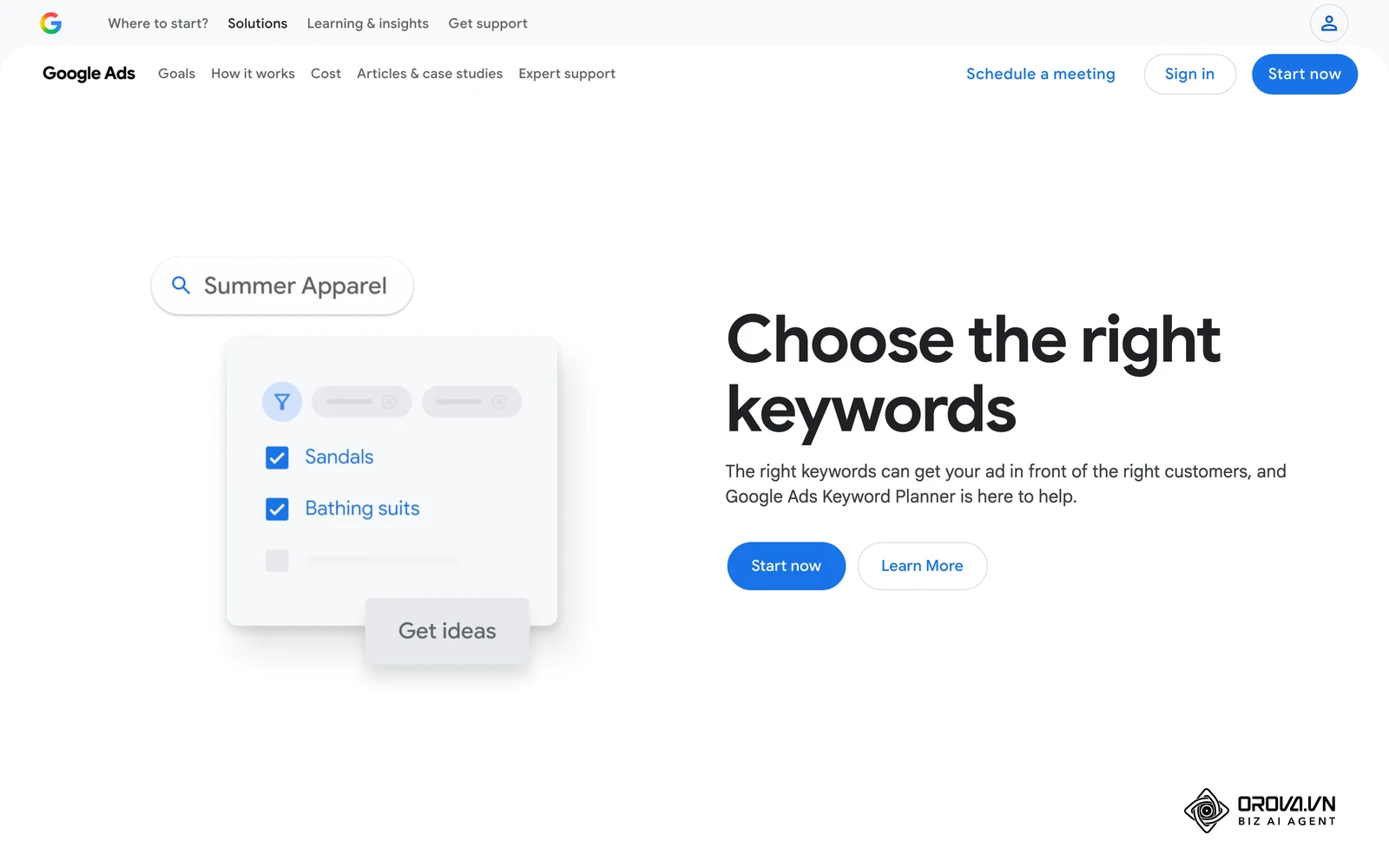
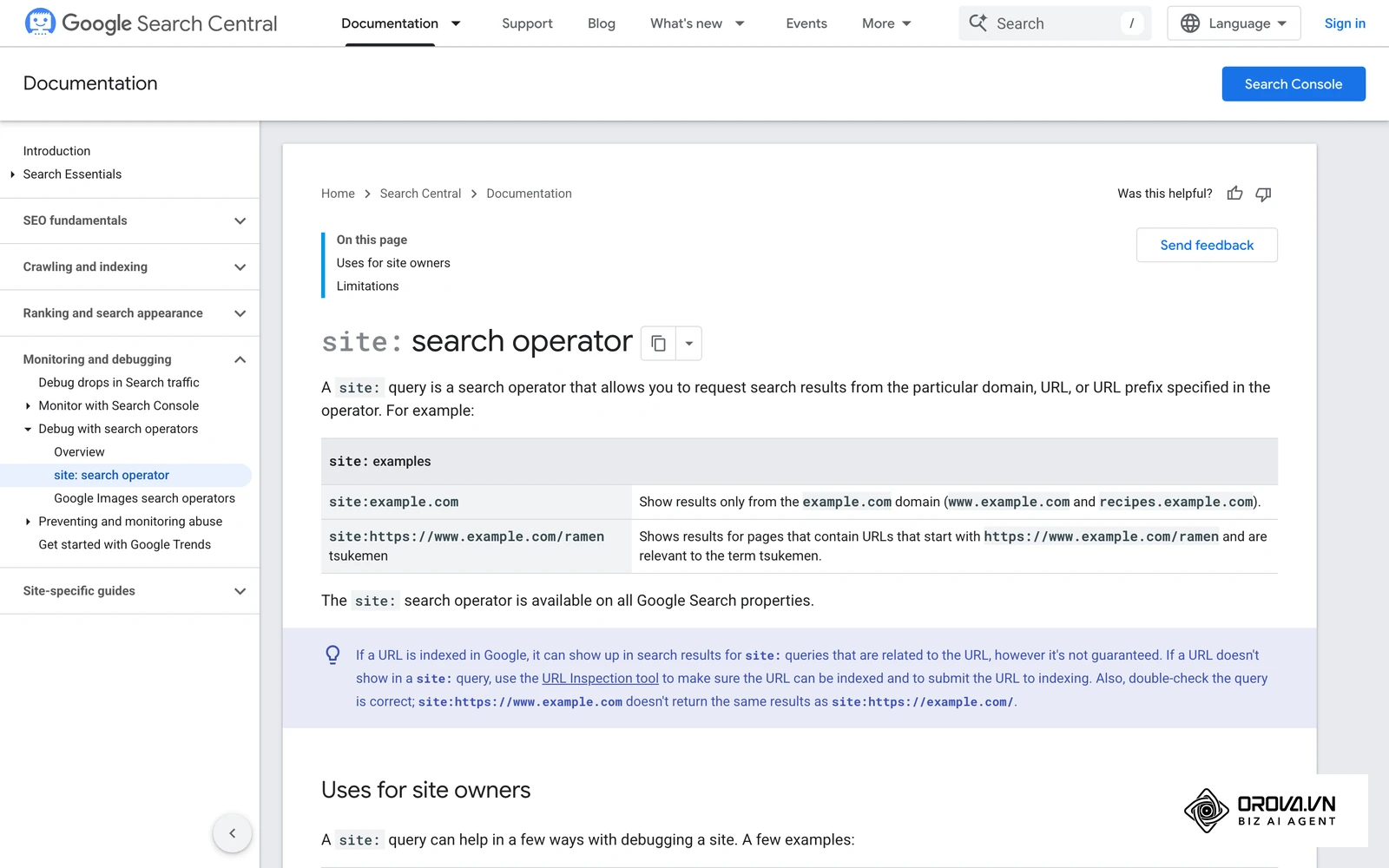
To execute a zero-budget strategy, start by using the site: operator on Google. Searching site:competitor.com/blog/ will reveal exactly how many blog posts they have indexed. By combining this with inurl:, such as site:competitor.com/blog/ inurl:guide, you can isolate specific clusters of content. Next, you can use the free tier of tools like Similarweb to get a rough estimate of their total traffic distribution (search versus direct versus social). Finally, you can plug their top URLs into Google Keyword Planner, which is free to use with a basic account, to see what search terms Google associates with those pages. This manual workflow gives a useful, if approximate, picture of their priorities without spending a dime.
Building the Action Plan and Decision Matrix
Data is useless without a plan. The final step is translating everything you have found into a prioritized execution list. For newer websites, unaddressed content gaps are usually the most realistic place to start.
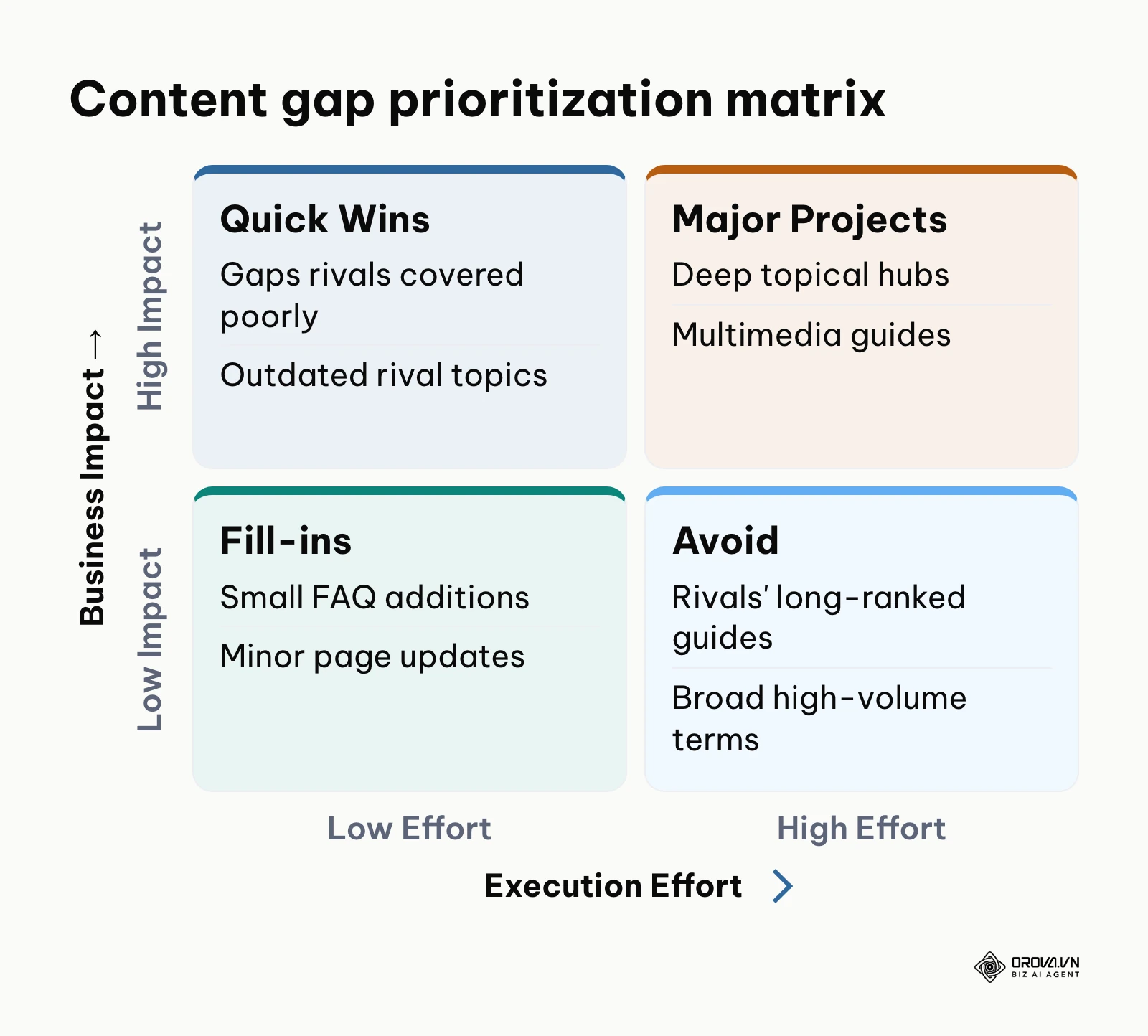
- What to do: You organize the opportunities you found by expected business impact versus the effort required to execute them. You then create a clear Start, Stop, and Continue directive for your team.
- Input: All the raw data from the previous steps.
- Output: A strict, chronological content calendar and technical task list.
- Where it fails: Teams try to attack the competitor's biggest strengths first. If a rival has a massive, highly authoritative guide that has ranked for years, trying to build a slightly better version is a high-effort, low-probability task. You must focus on their weaknesses.
To automate the translation of raw data into strategy, you can use a structured AI prompt. Here is a competitor content gap analysis template prompt you can use with any major LLM:
Act as a senior SEO strategist. I will provide you with a list of my competitor's top-performing URLs and their primary topics. Your task is to identify three distinct content gaps where their articles are likely superficial, outdated, or missing crucial context. Format your response as a Start/Stop/Continue action plan for my own website, prioritizing low-effort, high-impact tasks.
Understanding the different approaches is vital. Here are the types of analysis you can choose based on your current resources:
| Type of Analysis | Characteristics | Best suited for |
|---|---|---|
| Deep Technical Audit | Focuses on site speed, architecture, and core web vitals. | Sites facing sudden traffic drops or indexation issues. |
| Content Gap Analysis | Focuses entirely on finding missing topics and keywords. | Teams looking to rapidly expand their editorial calendar. |
| Multimedia & Format Review | Analyzes the use of video, audio, and interactive elements. | Brands competing in visually driven or complex industries. |
What you need to do to start your competitor site analysis
Adapting this framework to your daily workflow depends entirely on your role and available resources. A solo founder will approach this very differently than an enterprise team. Below is a breakdown of immediate actions tailored to different professionals.
Small Business Owners
As an owner, your time is extremely limited. You cannot afford to spend days digging into spreadsheets. You need actionable intelligence fast.
- Identify your three most direct local or niche competitors, ignoring massive national brands.
- Visit their websites and manually review their main navigation menu to see how they categorize their services.
- Search for your core service on Google and see which of those three competitors shows up, noting the exact title they use on their webpage.
- Compare their service page to yours and identify one specific piece of information they included that you missed, such as pricing tables or specific guarantees.
In-house Marketing Managers
You have more resources but often struggle with aligning content strategy with broader company goals. Your focus should be on building a sustainable monitoring system.
- Set up automated alerts for your top five competitors' brand names to track their new product launches or major PR pushes.
- Establish a monthly routine to review the top organic pages of your main rival to spot emerging topic clusters.
- Create comparison pages that directly contrast your software or service with the competitor's offerings, focusing on your unique strengths.
- Implement strict seo kpis to track the performance of the new content you create based on this competitive research.
Freelance SEO Consultants
Your value lies in providing deep insights that clients cannot easily find themselves. You must go beyond surface-level keyword overlap.
- Conduct a rigorous AI visibility check for the client's brand versus their competitors across three different LLMs.
- Map out the internal linking structure of the competitor's top performing topic cluster to reverse-engineer their topical authority.
- Deliver a prioritized decision matrix to the client, clearly separating high-effort technical fixes from quick-win content updates.
Illustrative example:
- Context: A freelance SEO consultant was hired by a regional logistics company to improve their lead generation, which was lagging behind a newer, more aggressive competitor.
- Steps taken: The consultant ignored standard keyword tools and instead analyzed the competitor's conversion paths. They realized the competitor was utilizing clear, highly specific calls-to-action on every page, while the client had generic "Contact Us" buttons.
- Hurdles and fixes: The client was hesitant to change their website design. The consultant fixed this by presenting a detailed audit highlighting severe cta mistakes on the client's site compared to the competitor's streamlined approach.
- Visible results: By rewriting the calls-to-action to match the specific intent of each page based on the competitor's model, the client's conversion rate rose noticeably within a few weeks without needing to increase overall traffic.
Here are common pitfalls to avoid when starting out:
| Common Mistake | Consequence | How to Avoid |
|---|---|---|
| Copying strategy blindly | You inherit their flaws and fail to stand out. | Always look for the gap or the unique angle they missed. |
| Focusing on vanity metrics | You waste time chasing domain authority instead of traffic. | Focus strictly on page-level performance and user intent. |
| Analyzing once a year | Your data becomes outdated rapidly as search evolves. | Schedule a brief review of top competitors every single quarter. |
With OROVA.VN and the OROVA SEO module, you put an end to the exhausting days of manual work for good. Instead of struggling for hours to write articles and compile reports, the entire process is now optimized and completed in just 5 minutes.
Future trends in competitor site analysis: the author's perspective
Looking ahead, the mechanics of how we evaluate rivals are changing fundamentally. The days of simply extracting a list of keywords and writing a longer article are over. Based on the current trajectory of search technology, here are three major shifts I believe will redefine competitive intelligence.
The shift from keyword overlap to entity authority
Currently, we see a heavy reliance on finding overlapping keywords. I believe the focus will gradually shift toward entity authority. Search engines are getting better at understanding the relationships between concepts. Instead of asking "Does my competitor use this phrase?", we will be asking "Is my competitor recognized as the definitive source for this broader concept?" You should prepare now by building comprehensive topical hubs that thoroughly cover an entire subject area, rather than chasing individual high-volume terms.
Real-time AI agent monitoring
We are already seeing the emergence of autonomous AI agents browsing the web. I anticipate that competitive analysis will soon involve deploying our own automated agents to continuously monitor competitors' websites for subtle changes in pricing, technical architecture, and content updates in real-time. This means the advantage will go to teams that can process and react to data fastest. To prepare, begin standardizing how you document your competitors' current states so that future automated tools have a clean baseline to compare against.
The rise of predictive content gap analysis
Today, gap analysis is largely reactive; we look at what a competitor has already published. I strongly suspect that the next generation of tools will use predictive modeling to forecast what topics a competitor is likely to cover next, based on their hiring patterns, social media sentiment, and historical publishing velocity. This will allow teams to preemptively publish content before the competitor even drafts their version. While you cannot buy these predictive tools yet, you can start preparing by closely monitoring your rivals' job postings and executive interviews to guess their next strategic move.
Frequently asked questions about competitor site analysis
Is competitor site analysis still necessary now that we have AI?
Yes, it is more necessary than ever. While AI can help generate content rapidly, it cannot formulate a unique strategy based on real-world market dynamics. AI relies on existing data; if you do not analyze what your competitors are doing, your AI tools will simply produce generic content that blends in with the noise. The analysis provides the unique constraints and direction that make AI output valuable.
How can we estimate a competitor's SEO and content budget?
While you cannot see their bank statements, you can make highly educated guesses. Look at their publishing velocity (e.g., twenty articles a month) and estimate the cost of freelance writing or in-house salaries. Check their job boards to see how many marketing roles they are hiring for. Finally, look at the production quality of their multimedia assets; high-end custom graphics and videos indicate a significant, dedicated budget.
What should you do when a competitor's Domain Authority is too high?
Never attack a high-authority competitor on broad, high-volume keywords. They will win based on historical trust. Instead, pivot your strategy to hyper-specific, long-tail queries that require deep niche expertise. High-authority sites often publish broad, generalized content; your advantage is the ability to publish deep, highly tactical guides that perfectly answer a very narrow user intent.
Should you attack a competitor's strengths or exploit their weaknesses?
Always exploit their weaknesses first. Attacking a competitor's strength—such as a piece of content that has ranked number one for three years and has hundreds of backlinks—requires immense effort and carries a high risk of failure. Finding a topic they have covered poorly, or ignored completely, allows you to capture traffic quickly with significantly less effort and risk.
What are the best competitor website analysis tools 2026?
The landscape of competitor website analysis tools 2026 is divided into traditional crawlers and modern AI-driven platforms. For zero-budget analysis, manual search operators, the free tiers of traffic estimation tools such as Similarweb, and Google Keyword Planner cover the basics; keep Google Search Console for measuring your own site, since it does not show competitor data. For deep technical audits, desktop crawlers are standard. Whatever you choose, favor tools that let you move from gap discovery to a written brief without retyping data between platforms.
Where to start your competitor site analysis?
The hardest part of this process is simply avoiding analysis paralysis. You do not need to audit ten competitors across fifty metrics on day one. Your starting point depends entirely on your current state of readiness.
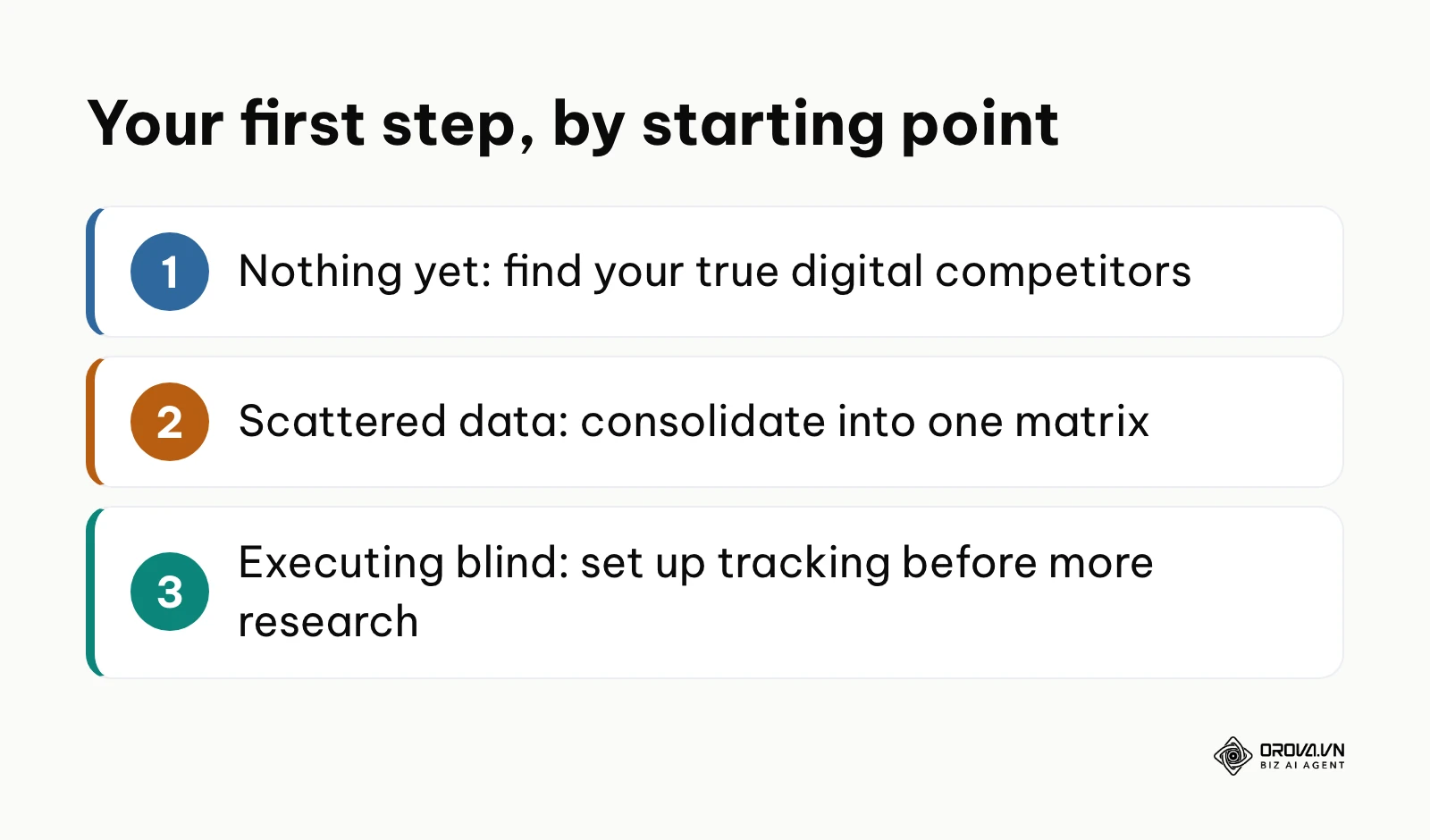
If you have done nothing yet: Do not buy any tools. Spend one afternoon opening an incognito browser window and searching for the top three questions your customers ask during a sales call. Note down the top three websites that appear for each question. Your only goal is to accurately identify who your true digital competitors are, which often differ from your physical business competitors.
If you have data but it is disjointed: If you have a folder full of random keyword exports and half-finished audits, your first step is consolidation. Create a single, centralized document or matrix. Map out the top ten pages of your most aggressive competitor and place them against your own top ten pages. Identify the single biggest topic they cover that you do not. This becomes your priority for the next sprint.
If you have executed strategies but are not measuring: If you are already writing content based on competitor research but have no idea if it is working, stop researching immediately. Your next step is purely operational. Go into your analytics platform and set up specific tracking for the pages you built to attack competitor gaps. Until you know whether your previous efforts yielded traffic or conversions, gathering more competitive intelligence will only compound your wasted effort. Build the measurement loop first, then return to the analysis.
About the author

Builder of Orova
Nguyễn Đỗ Trọng Ân has 8 years of experience in marketing, including 6 years managing market development across Asia. He builds Orova, a Biz AI Agent that never sleeps: it plans, runs and optimizes work for businesses.
Run your business with AI Agents
Orova is the always-on Biz AI Agent — it plans, runs, and optimizes the work for you.
Save time, unlock productivity.