
What is an SEO content outline? A practical framework with templates

An SEO content outline is the planning document that maps the search intent, headings, keywords and proof points of an article before anyone writes a word, and it is the strategic foundation of high-ranking content. Many creators experience the frustration of spending hours crafting a long article, only to see it languish on page five of search results. The old approach of handing a writer a keyword and hoping for the best is no longer sufficient. This unstructured method often leads to generic content that misses the user intent. This guide shows you how a structured approach solves this problem, and it includes three outline templates plus a complete sample outline you can copy. By utilizing modern frameworks, incorporating artificial intelligence for deep research, and integrating experience signals directly into the planning phase, you will learn how to engineer articles that naturally attract organic traffic and satisfy readers.
What is an SEO content outline?
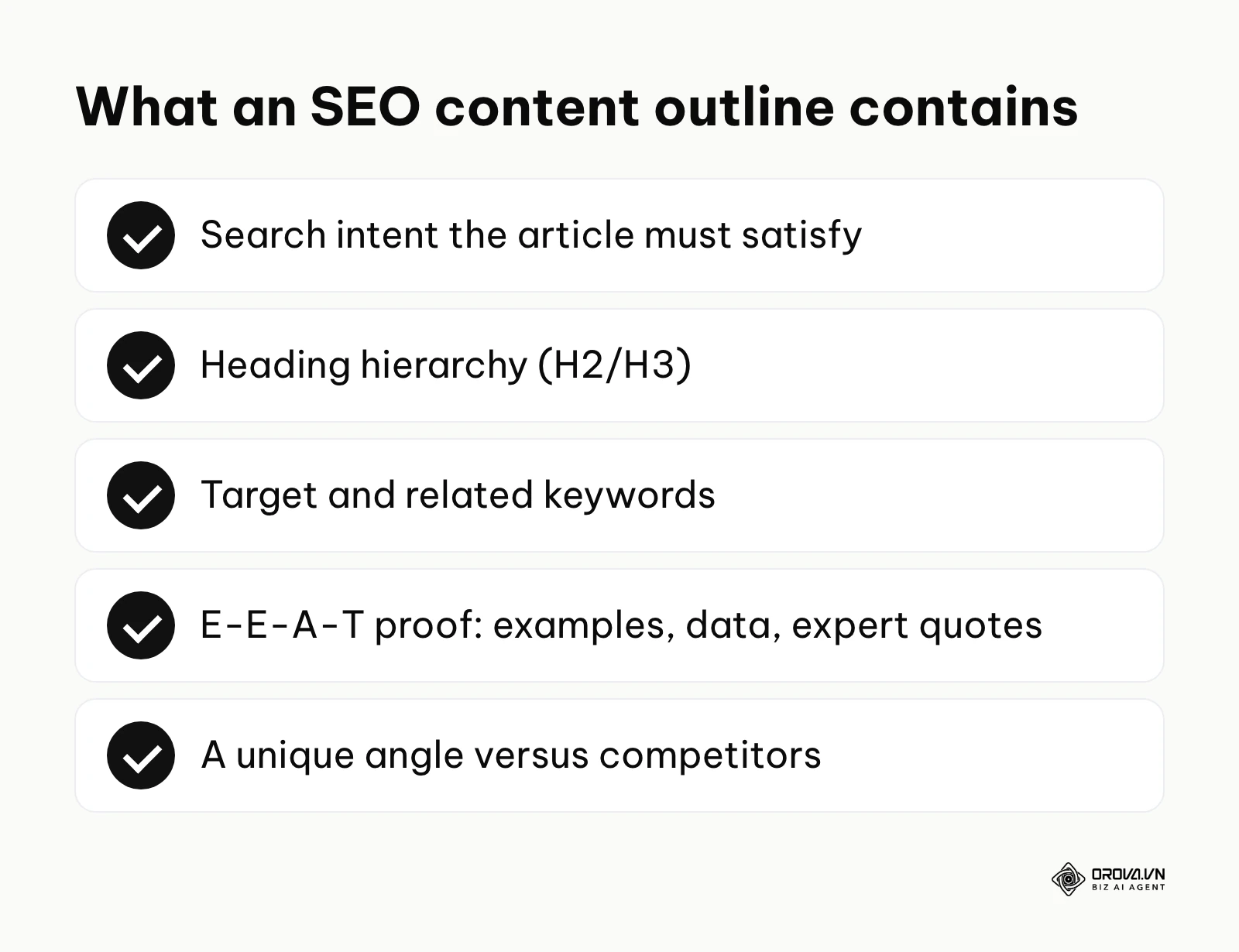
An SEO content outline is a strategic document that organizes the headings, target keywords, user intent, and E-E-A-T elements of a web article before writing begins. It serves as a blueprint to guide writers, differentiate your perspective from competitors, and ensure the final content aligns with search engine ranking factors.
The concept of outlining is not new; authors and journalists have used structural plans for centuries. However, the specific adaptation of outlining for search engine optimization emerged as search algorithms became sophisticated enough to understand topical depth and semantic relationships. Instead of just organizing thoughts, modern outlines are engineered to satisfy both human curiosity and algorithmic requirements simultaneously.
To clearly understand this concept, it helps to distinguish it from similar documents used in content marketing. The table below illustrates these differences.
| Concept | How it differs | Example use case |
|---|---|---|
| SEO Content Outline | Focuses on search intent, heading tags (H2/H3), and specific keywords to rank organically. | Planning a comprehensive guide to email marketing software. |
| Creative Brief | Focuses on brand voice, visual aesthetics, and emotional resonance rather than search data. | Designing a landing page for a new luxury product launch. |
| Academic Outline | Focuses on logical argumentation, thesis statements, and literature review without considering search volume. | Structuring a university research paper on consumer behavior. |
Think of this process like constructing a house. You would never ask a builder to just start laying bricks without a detailed architectural blueprint. The blueprint tells the builder where the walls go, where the plumbing is routed, and how the roof is supported. Similarly, an outline tells the writer where the core arguments belong, where the keywords should naturally fit, and how the information flows to keep the reader engaged.
The diagram below summarizes the core components of an effective outline.
Why an SEO content outline matters in your content strategy
An SEO content outline exists to solve a very specific and costly problem: the misalignment between what a writer creates and what a search engine user actually wants to read. Content creators, particularly those managing teams or working with external freelancers, often struggle with receiving drafts that are beautifully written but topically irrelevant. This misalignment wastes money, delays publishing schedules, and ultimately results in poor organic performance.
In the broader picture of your digital marketing strategy, the outlining phase acts as the critical bridge between data analysis and creative execution. It sits exactly in the middle of your workflow. First, you conduct keyword research to identify opportunities. Then, you build the outline to interpret those keywords into a narrative structure. Finally, the actual writing takes place. If you skip the middle step, the data from your research is easily lost during the creative drafting phase. If you want to understand more about the full drafting process, reading a comprehensive SEO content writing guide can provide further context on how the outline transforms into a final article.
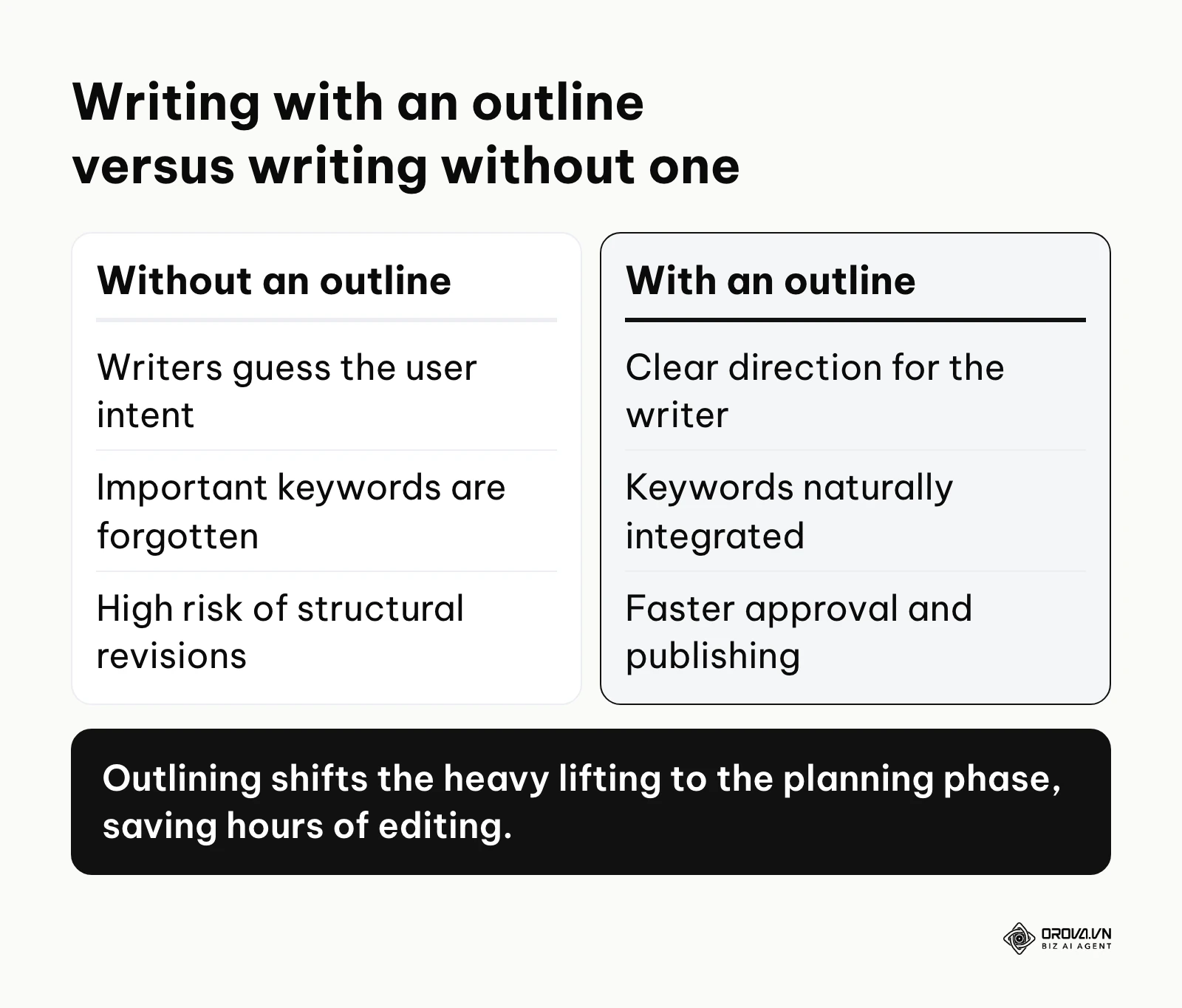
If a marketing team chooses to bypass this planning stage, the consequences are predictable. Writers will inevitably stray off-topic, producing tangential paragraphs that dilute the core message. Important secondary keywords will be forgotten, reducing the article's chances of ranking for long-tail variations. Most importantly, without a structured plan, the resulting article will likely look exactly like every other generic piece of content on the internet, offering no unique value to the reader.
When you do not need an outline: There are specific scenarios where investing time in a deep structural plan is unnecessary and wasteful. If you are writing a brief, timely news update (under 300 words) about a company event, an outline will slow you down. Similarly, if you are composing a deeply personal opinion piece for a personal blog where search traffic is completely irrelevant, rigid SEO structures might stifle your natural voice. In these cases, it is better to simply write freely or use a basic bulleted list of main points to guide your thoughts.
The comparison table below summarizes the difference between writing with and without a plan.
The business and practitioner value of structured outlining
The value of implementing a strict outlining protocol extends across multiple layers of an organization. It provides distinct, measurable benefits for the business leaders managing the budget and the practitioners who are actually creating the content day by day.
Business value: Risk mitigation and scalability
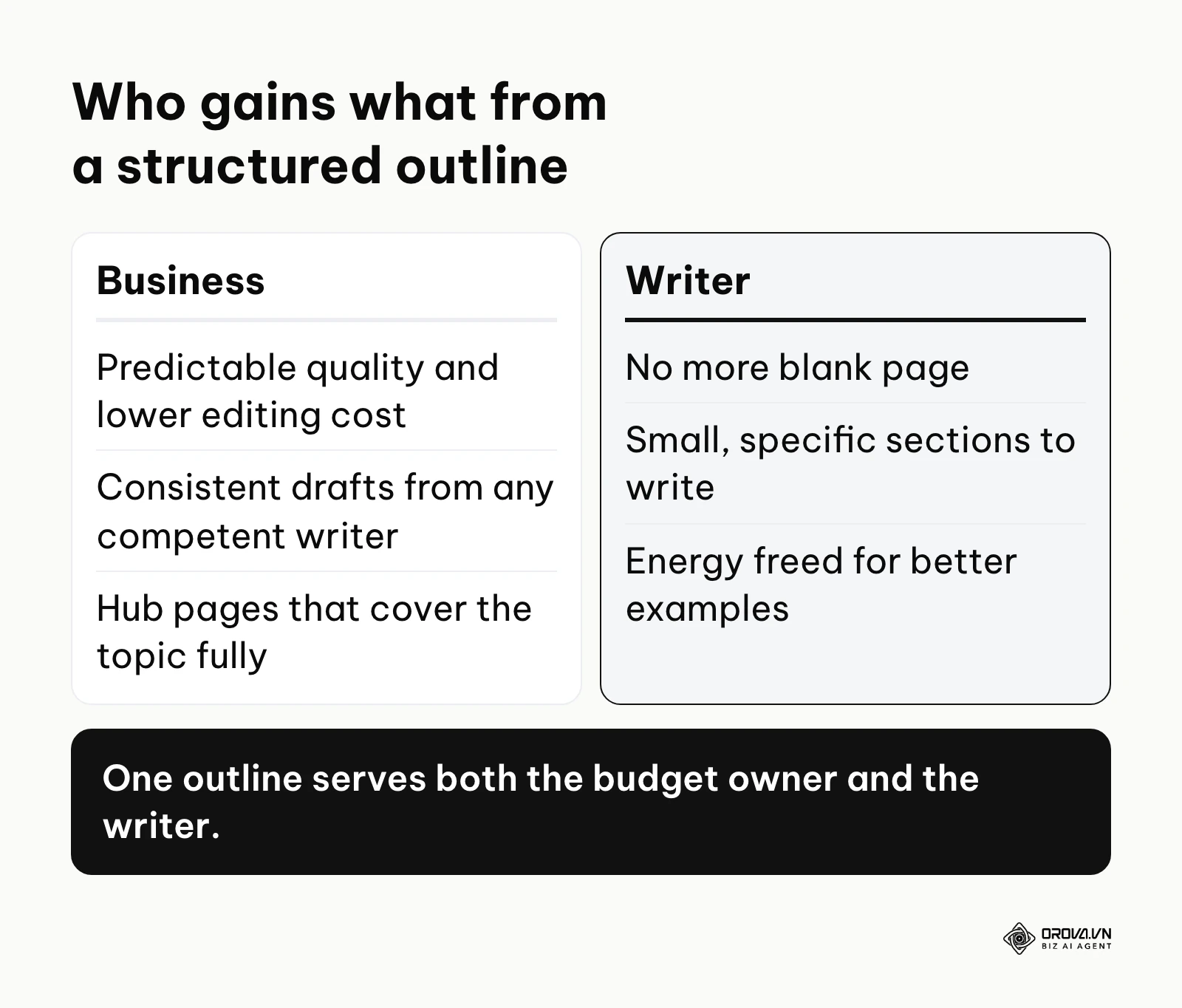
For businesses, the primary value lies in predictability and cost control. When you hire external writers, you are paying for their time and expertise. If they deliver a draft that misses the mark, you incur the hidden costs of extensive developmental editing, rewriting, and delayed publication. A robust outline acts as an insurance policy against poor quality. It sets clear boundaries and expectations, drastically reducing the risk of unusable drafts. Furthermore, it allows businesses to scale their content operations easily; an agency can hand a well-crafted outline to almost any competent writer and expect a consistent, on-brand result.
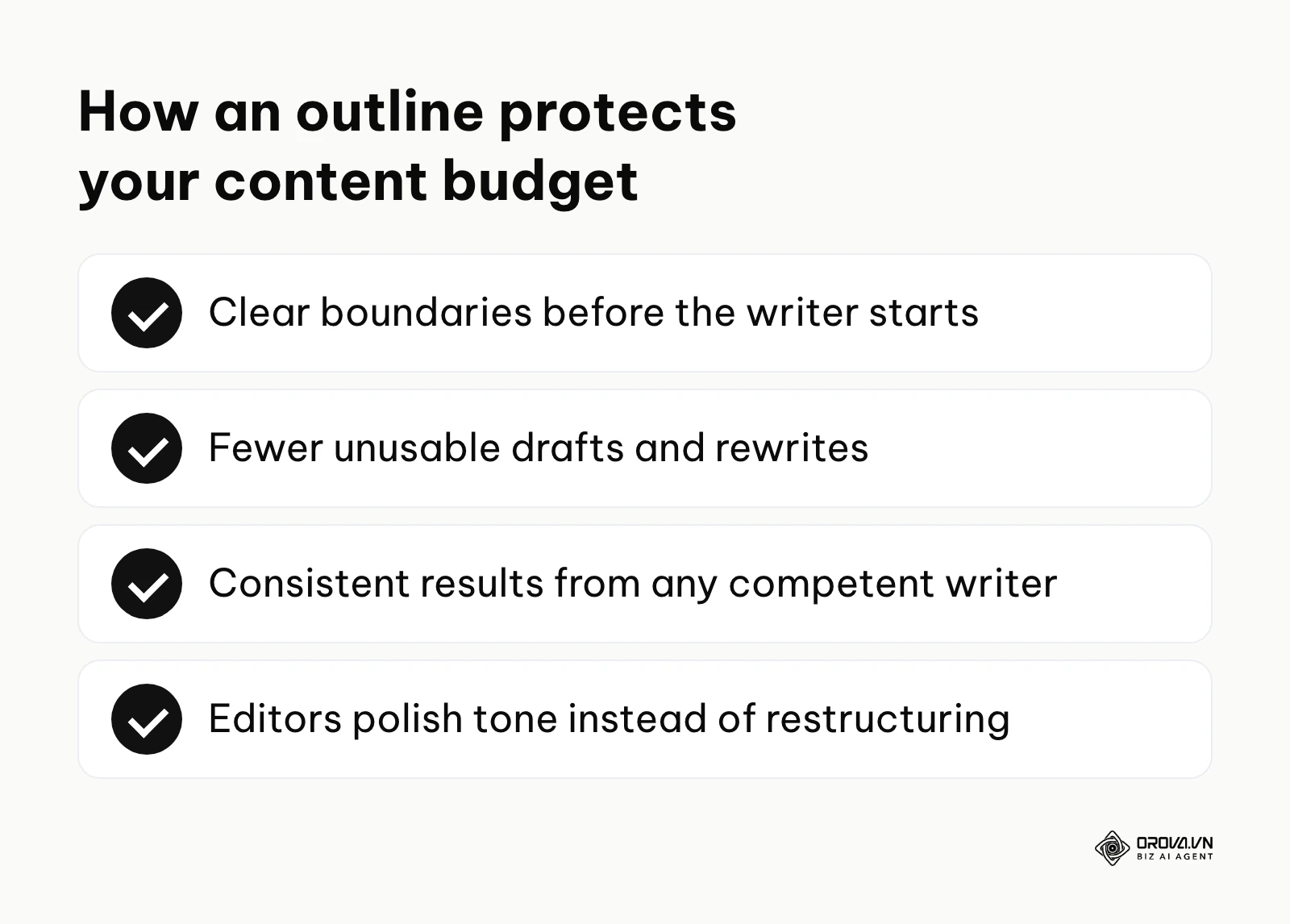
Illustrative example: The context is a medium-sized marketing agency managing a team of five freelance writers. They previously sent writers a primary keyword and a required word count. The steps they took involved receiving drafts, realizing the writers missed the target audience's pain points entirely, and spending hours rewriting the core arguments. The stumbling block was that writers had different interpretations of what the keyword meant. They fixed this by implementing a mandatory one-page outline for every assignment. The visible result was a dramatic decrease in editing time; editors stopped rewriting structural flow and only needed to polish grammar and tone.
Business value: Faster time-to-ranking
Search engines favor content that comprehensively covers a topic and satisfies the user's query immediately. Outlines ensure that all necessary subtopics are addressed systematically. By mapping out the entire knowledge graph of a topic beforehand, businesses create authoritative hub pages that rank faster and attract more qualified traffic, directly impacting the return on investment for their content marketing efforts.
Practitioner value: Overcoming writer's block
For the individual writer or content specialist, the most immediate benefit is the elimination of the blank page syndrome. Staring at an empty document is intimidating. An outline breaks a massive, daunting task (writing three thousand words) into small, manageable, and highly specific sections. Writers no longer have to worry about what to say next; they only need to focus on executing the specific instruction for the current section.
Practitioner value: Maintaining creative focus
While some argue that outlines restrict creativity, experienced writers know that constraints actually breed innovation. When the structure is already defined, the writer's mental energy is freed from organizational tasks. They can redirect that energy toward crafting better metaphors, finding stronger examples, and refining their prose. The outline provides a safe sandbox where the writer can be highly creative within defined boundaries.
| Benefit | Measured by which metric | Time to see results |
|---|---|---|
| Reduced editing time | Hours spent revising drafts per article | Immediately upon next draft |
| Scalable production | Number of articles published per month | Within 4 to 6 weeks |
| Improved topical authority | Increase in total ranking keywords per URL | Typically 3 to 6 months |
| Elimination of writer's block | Time taken to complete the first draft | Immediately upon next draft |
Discover Orova.vn – a Biz AI Agent platform with OROVA SEO, a complete solution for every website. The system supports search engine optimization from A to Z with features including keyword research, writing new SEO-ready articles, optimizing existing content, rank tracking, plus competitor analysis and in-depth technical analysis. Sign up today to experience OROVA SEO completely free (offer valid through July 7, 2027).
How it works: Building an SEO content outline that ranks
Creating a document that reliably ranks requires a methodical, step-by-step approach. You cannot simply look at the first page of Google, copy their headings, and expect to win. You must dissect the search intent, leverage technology for deep analysis, and manually inject human experience into the structure. This section breaks down the anatomy of a winning outline into four distinct components.
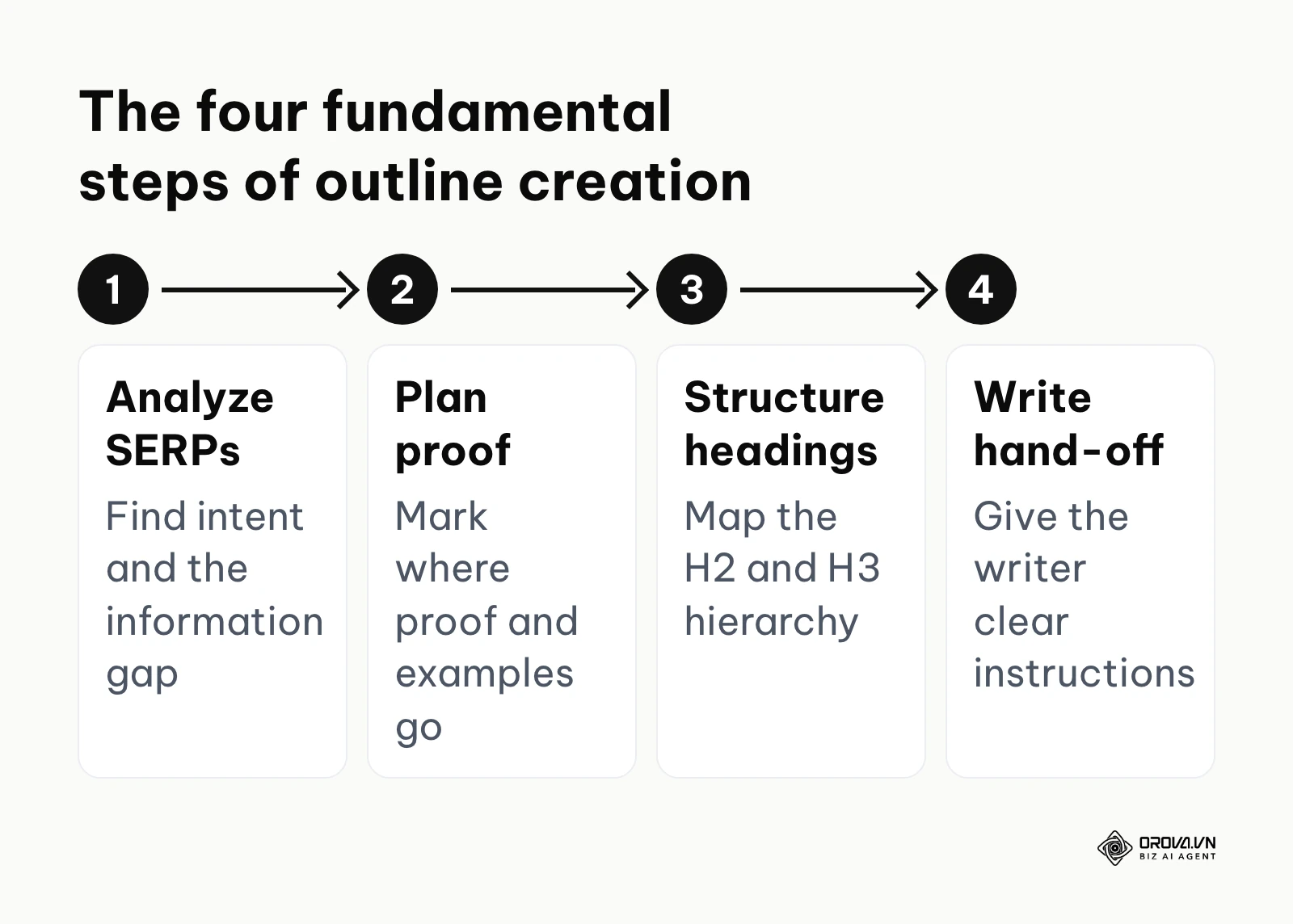
The following process diagram outlines the fundamental steps.
Component 1: SERP analysis and AI prompting for unique angles
What it does: This initial phase involves analyzing the Search Engine Results Pages (SERPs) to understand exactly what Google believes the user wants. It goes beyond identifying the topic; it involves discovering the "information gap"—the specific questions or angles that competitors have ignored.
Input: Your primary target keyword, a clear read of its keyword intent, and access to an artificial intelligence tool like Claude or ChatGPT. Using AI drastically accelerates the research phase. If you are unfamiliar with how to interact with these tools effectively for search marketing, reviewing a guide on ChatGPT for SEO can help refine your prompt engineering skills.
Output: A clearly defined, unique content angle that differentiates your upcoming article from everything currently ranking.
Failure point: The most common failure here is AI hallucination or accepting generic AI outputs. If you ask an AI to "give me an outline," it will produce an average synthesis of existing content. You must command the AI to find what is missing.
To achieve a unique angle, use this specific AI Prompt for gap analysis: "Act as a senior SEO strategist. I am targeting the keyword [Insert Keyword]. Review the typical content found in the top 5 ranking articles for this term. Identify the primary search intent. Then, list 3 specific sub-topics, advanced questions, or contrary opinions that these competitor articles likely mention briefly but fail to explore in depth. These gaps will form the unique angle of our new outline."
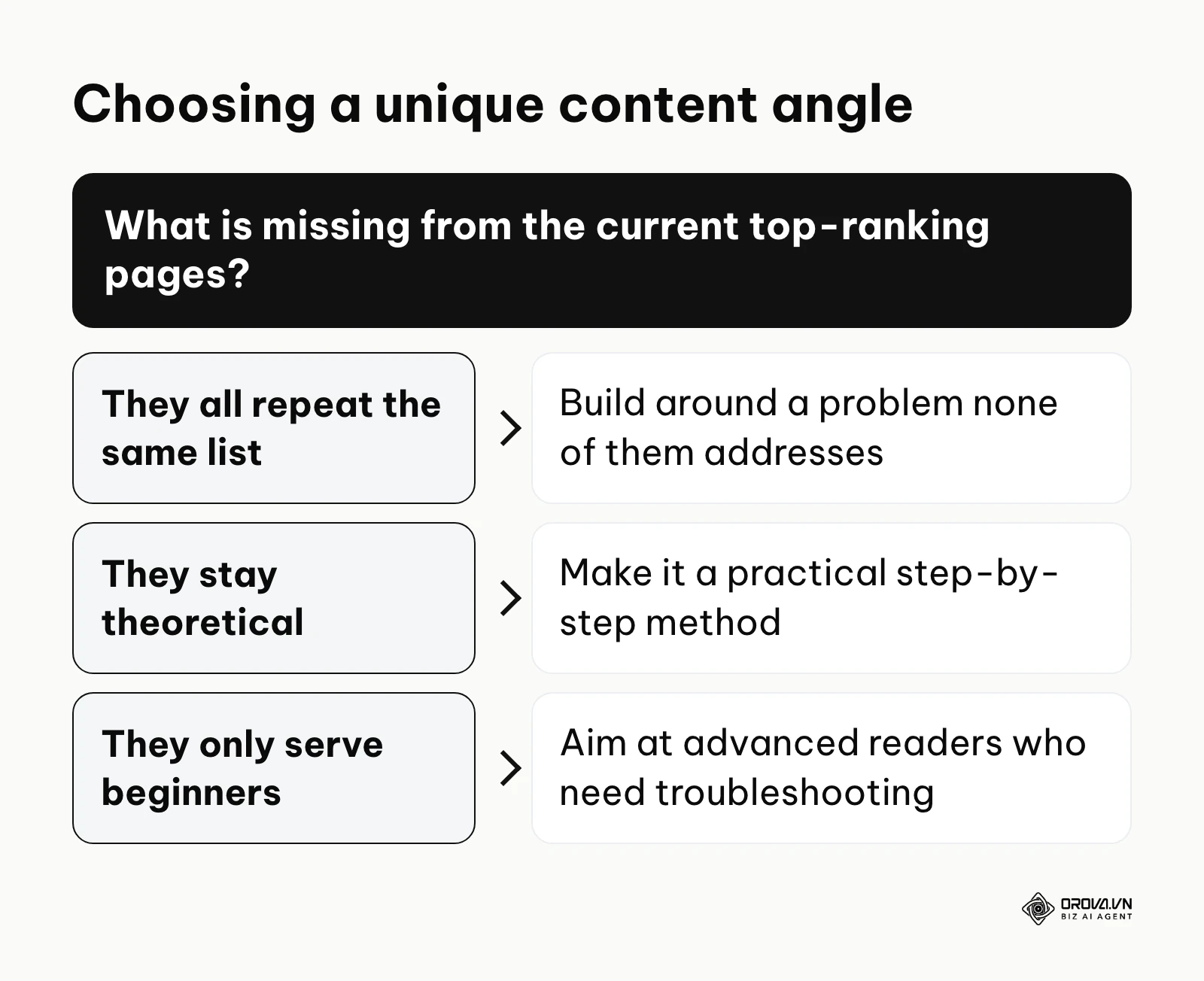
Typical gaps fall into three patterns. When competitors all repeat the same list, build the outline around a problem none of them addresses. When they stay theoretical, turn the angle into a practical step-by-step method with real examples. When they only serve beginners, aim the outline at advanced readers who need troubleshooting help.
Illustrative example: The context is an in-house marketer for a software company writing about "project management tools." The steps taken involved searching the keyword and realizing every competitor simply listed the same ten software platforms. The stumbling block was that writing an eleventh listicle would offer no new value and fail to attract backlinks. They fixed this by using the AI prompt to analyze the gaps. The AI suggested that no one was discussing the psychological resistance teams face when adopting new tools. The visible result was a new outline focused on "Change Management and Software Adoption," which successfully differentiated the piece and attracted links from industry forums.
Component 2: Discovering the information gap and E-E-A-T signals
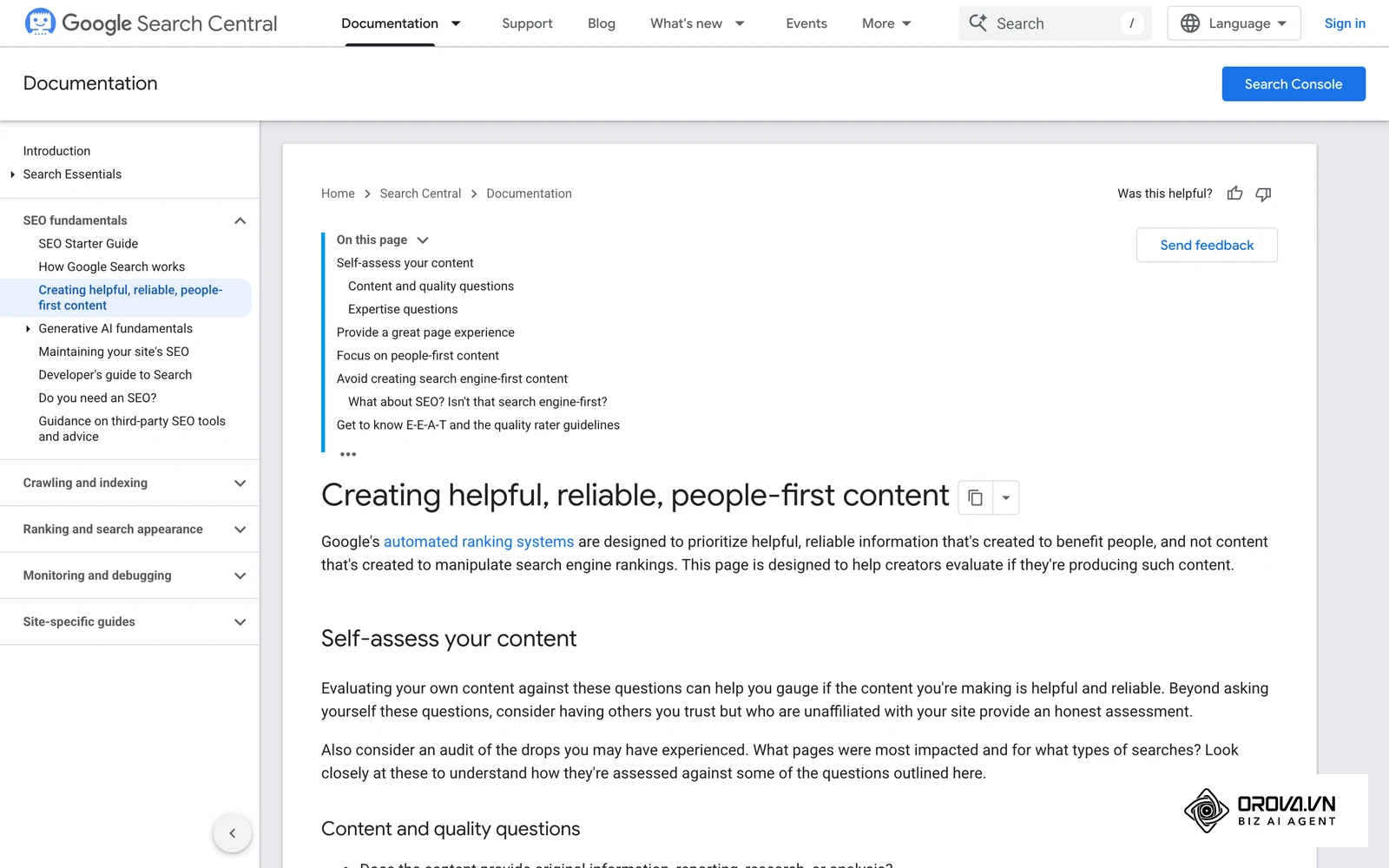
What it does: Once you have your angle, you must integrate Experience, Expertise, Authoritativeness, and Trustworthiness (E-E-A-T) directly into the skeleton of your article. Google Search Central's guidance on creating helpful, reliable, people-first content asks creators to show first-hand experience and deep knowledge of the subject matter. You cannot wait until the drafting phase to add experience; it must be planned.
Input: Subject matter expert (SME) interviews, proprietary data, personal case studies, and industry reports.
Output: Specific bullet points within the outline that explicitly dictate where the writer must insert a real-world example, a specific data point, or a quote from an expert.
Failure point: Creating a purely theoretical outline. If your structure only contains generic definitions and standard advice, it will lack the depth required to demonstrate true expertise.
To ensure E-E-A-T is embedded, use this AI Prompt for experience integration: "I am building an outline about [Topic] for [Target Audience]. Based on the principles of E-E-A-T, suggest 3 specific sections in this article where I must inject first-hand experience. Tell me exactly what kind of raw data, personal anecdote, or expert quote I should prepare to make those specific sections highly authoritative and trustworthy."
Component 3: Structuring the hierarchy and E-E-A-T signals
What it does: This is the mechanical construction phase. You translate your angle and your E-E-A-T elements into a logical hierarchy of HTML tags (H1, H2, H3, H4). This structure guides both the human reader's eye and the search engine's crawler, ensuring they understand the relative importance of each concept. The structure will vary drastically depending on the format of the article.
Input: Your unique angle, your E-E-A-T elements, and your list of secondary semantic keywords.
Output: A fully formatted markdown document representing the skeleton of the article.
Failure point: Keyword stuffing the headings. Forcing exact-match keywords into every single H2 makes the article read unnaturally and works against Google's people-first guidance. Headings should be descriptive and user-focused first.
Below are three distinct outline templates tailored for different formats.
Template 1: The Ultimate Guide / How-To Framework This format is designed for educational content aimed at beginners or intermediates looking to solve a complex problem.
- H1: [Primary Keyword]: The Complete Guide to [Achieving a specific result]
- Introduction: Hook the reader, state the problem, and clearly promise a solution.
- H2: What is [Primary Concept]?
- Keep this brief and definitional. Answer the core question immediately for potential featured snippet capture.
- H2: Why [Concept] is critical for [Target Audience]
- Discuss the stakes. What happens if they ignore this?
- H2: The step-by-step process to [Achieve Goal] (This is the core of the piece).
- H3: Step 1: [Actionable task]
- E-E-A-T Injection: Require the writer to include a screenshot of the tool being used or a quote from an expert who performed this step.
- H3: Step 2: [Actionable task]
- Detail the specific inputs and outputs of this phase.
- H3: Step 3: [Actionable task]
- Discuss common pitfalls during this specific step.
- H2: Common mistakes when implementing [Concept]
- Share lessons learned from actual failures (Experience signal).
- H2: Frequently asked questions
- Address semantic variations and long-tail queries. The questions in Google's People Also Ask box are a good source for these headings.
Template 2: The Listicle Framework This format is best for curating options, tools, or ideas where the user wants to browse multiple solutions quickly.
- H1: [Number] Best [Primary Keyword] for [Specific Audience] in [Year]
- Introduction: Explain the methodology. How were these items chosen? (Trust signal).
- H2: Quick summary: Our top picks
- Provide a table or bulleted list for users who want immediate answers.
- H2: Detailed reviews of the top [Items]
- H3: 1. [Brand/Item Name] - Best for [Specific Use Case]
- Structure required: Key features, Pros & Cons, and a crucial "Our Experience" section detailing what it was actually like to use the item.
- H3: 2. [Brand/Item Name] - Best for [Specific Use Case]
- Ensure formatting remains consistent across all items.
- H2: How to choose the right [Item] for your needs
- Provide a buying guide or decision matrix.
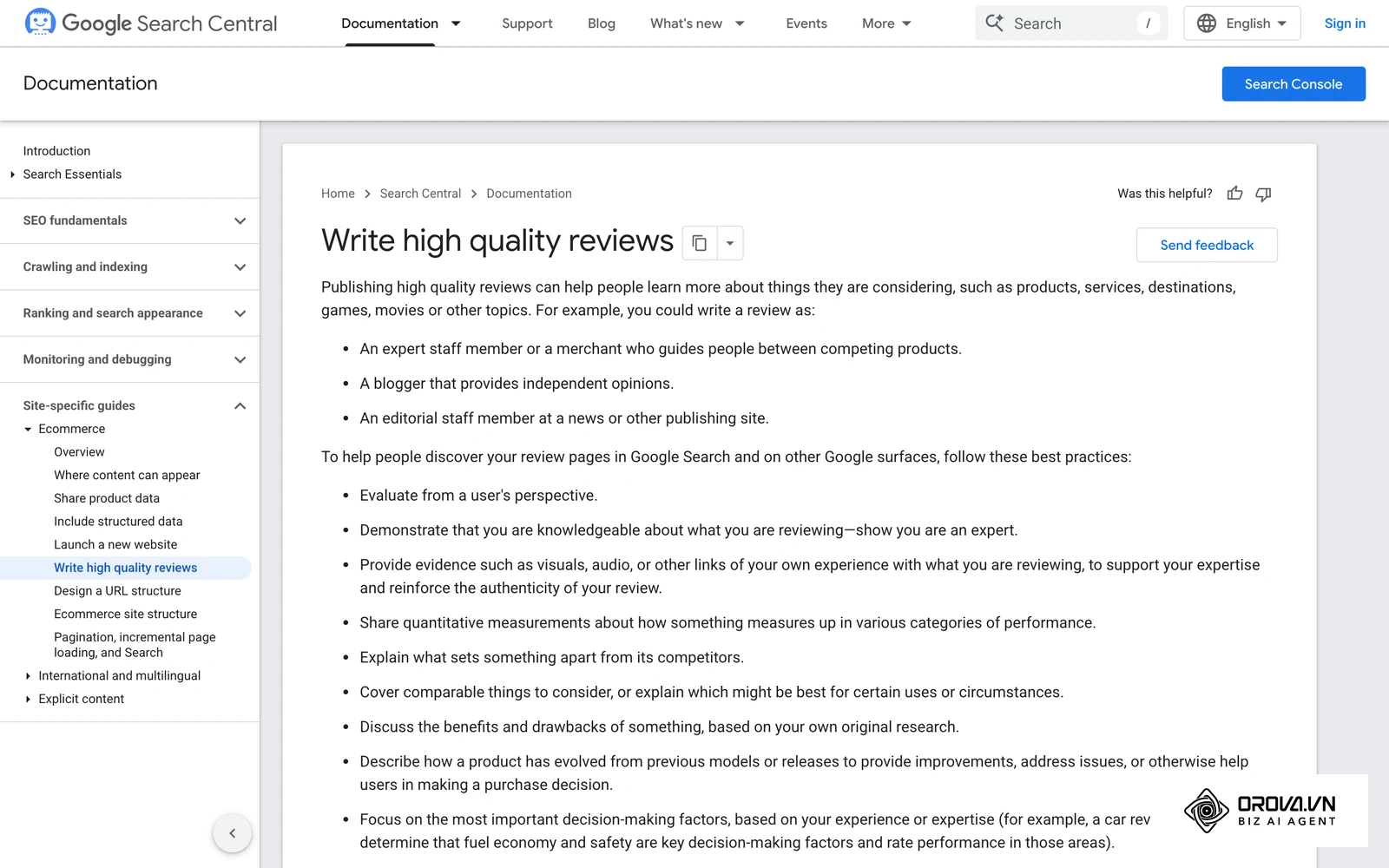
Template 3: The Product Review Framework This format requires deep, hands-on experience and must comply strictly with search engine guidelines for reviews.
- H1: [Product Name] Review: Is it worth the investment?
- Introduction: State clearly how long you tested the product and in what environment.
- H2: Who is [Product] actually for?
- Define the ideal customer profile to save the reader time.
- H2: Deep dive into core features and performance
- H3: Feature 1 evaluation
- Include original performance data, not just marketing claims.
- H3: Feature 2 evaluation
- Compare this specific feature against a known competitor.
- H2: Pricing and value for money
- Break down the tiers and hidden costs.
- H2: Final verdict: Should you buy [Product]?
- Summarize the strongest reason to buy and the strongest reason to avoid.
Component 4: The writer hand-off instructions and checklist
What it does: A structure alone is often not enough context for an external writer. The hand-off instructions provide the vital guardrails regarding tone, formatting, and administrative requirements.
Input: The finalized markdown outline, brand guidelines, and target word counts.
Output: A comprehensive brief document that leaves zero room for misinterpretation.
Failure point: Assuming the writer knows your brand voice or understands the technical jargon of your industry without explicit instruction.
Illustrative example: The context is a freelance writer receiving a brief from a new client. The steps taken involved opening the document to find only a list of H2s and a high search volume keyword. The stumbling block was that the writer had no idea if the tone should be formal corporate or casual conversational, leading to a paralyzing lack of direction. They fixed this by requesting a discovery call to build a proper hand-off checklist detailing the audience's technical proficiency and providing specific links to include. The visible result was that the first draft submitted was accepted by the client with zero structural or tonal revisions.
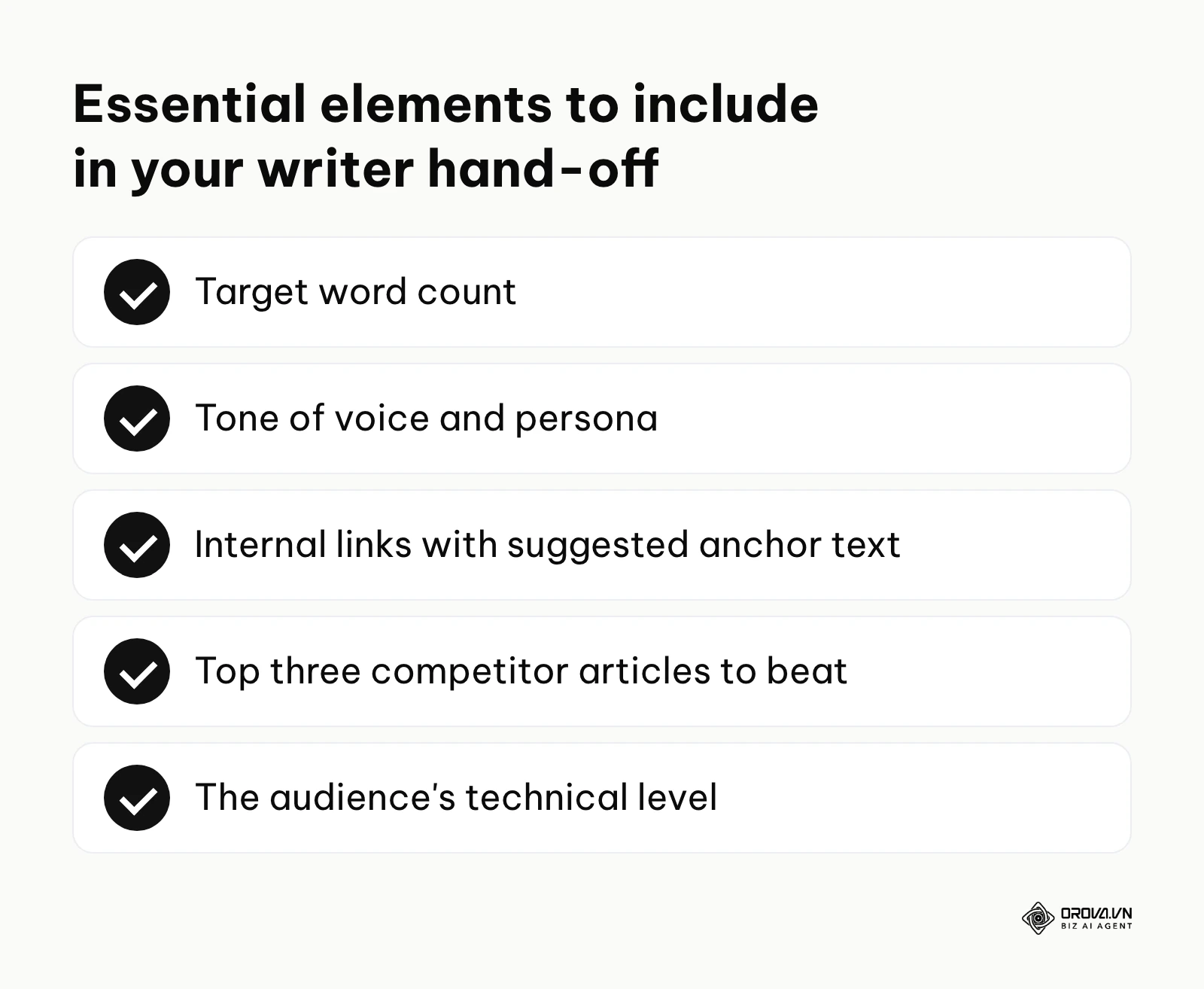
A strong hand-off checklist includes:
- Target word count: Establish a minimum threshold to ensure depth.
- Tone of voice: Describe the persona (e.g., "Helpful expert," "Casual peer," "Strict academic").
- Internal linking strategy: Provide exact URLs and suggested anchor texts. Utilizing proper SEO anchor text within the draft connects the new piece to your existing content ecosystem.
- Competitor references: List the top three articles and explicitly state what the writer should do better than them.
The checklist below summarizes these hand-off elements.
Putting it together: a complete sample SEO content outline
The sample below shows what a finished outline looks like when all four components are combined. The topic is illustrative: a dental clinic blog targeting "how to whiten teeth safely at home".
| Brief field | Sample entry |
|---|---|
| Primary keyword | how to whiten teeth safely at home |
| Search intent | Informational: readers want safe methods and want to avoid damage |
| Audience | Adults considering whitening for the first time |
| Unique angle | A dentist explains which home methods are safe and which harm enamel |
| Word count | 1,800 to 2,200 words |
| Tone | Calm, expert, reassuring; no hard selling |
| E-E-A-T proof | Quote from the clinic's dentist; before/after photo from a real patient with consent |
| Internal links | Clinic whitening service page; enamel care article |
- H1: How to whiten teeth safely at home: a dentist's guide
- Introduction: Name the worry (sensitivity, enamel damage) and promise a safe plan.
- H2: Is home teeth whitening safe?
- Direct two-sentence answer for the snippet, then the dentist's quote.
- H2: Home whitening methods ranked from safest to riskiest
- H3: Whitening toothpaste
- H3: Over-the-counter strips and trays
- H3: DIY remedies to avoid
- E-E-A-T injection: The dentist explains what each remedy does to enamel.
- H2: How to whiten without sensitivity: a step-by-step routine
- H2: When home whitening is not enough
- Signs a professional treatment is the better choice; link to the service page.
- H2: Frequently asked questions
- Pull three to five questions from People Also Ask.
Writer notes: avoid promising a specific number of shades, do not name competing clinics, and send the draft to the dentist for a fact check before publishing.
With OROVA.VN and the OROVA SEO module, you put an end to the exhausting days of manual work for good. Instead of struggling for hours to write articles and compile reports, the entire process is now optimized and completed in just 5 minutes.
How to adapt to the new SEO content outline standards
Adapting to a highly structured, E-E-A-T-focused outlining process requires different adjustments depending on your role within the organization. The transition from chaotic drafting to disciplined planning will encounter friction, but the long-term benefits are substantial.
For small business owners
As a business owner, your primary focus is usually on operations, not content marketing. However, if you are driving your own digital strategy, you must shift your mindset from "writing articles" to "answering customer questions."
- Stop copying large competitors. You cannot out-publish massive media sites.
- Focus on your unique perspective. Your daily interactions with customers provide insights that massive generic sites lack. Inject those stories into your outlines.
- Build one master template. Do not try to invent a new structure every time. Choose the "Ultimate Guide" framework and use it consistently for all your core services.
For content managers
Content managers sit at the intersection of strategy and execution. Your job is to build systems that scale without losing quality. When integrating outlining with other technical departments, understanding the SEO website design workflow can help ensure your written structures fit perfectly within the site's architecture.
- Create a Standard Operating Procedure (SOP). Document exactly how an outline is generated, what tools are used, and who approves it before writing begins.
- Standardize the hand-off document. Ensure every freelancer receives the exact same checklist format, reducing onboarding time for new writers.
- Enforce the E-E-A-T requirement. Reject any outline from your strategists that does not explicitly list where proprietary data or expert quotes will be placed.
For freelance writers and agencies
For external creators, the shift toward structured outlining is an opportunity to provide higher-value services. Clients are increasingly frustrated with generic text and are willing to pay for strategic thinking.
- Demand an outline before you write. If a client hands you just a keyword, offer to build the outline for an additional fee. This protects you from endless revisions.
- Learn prompt engineering. Master the AI tools required to analyze SERPs quickly, so you can build data-driven structures faster than your peers.
- Ask for the raw materials. When reviewing an outline, explicitly ask the client for their internal data, customer quotes, or personal anecdotes to flesh out the E-E-A-T sections.
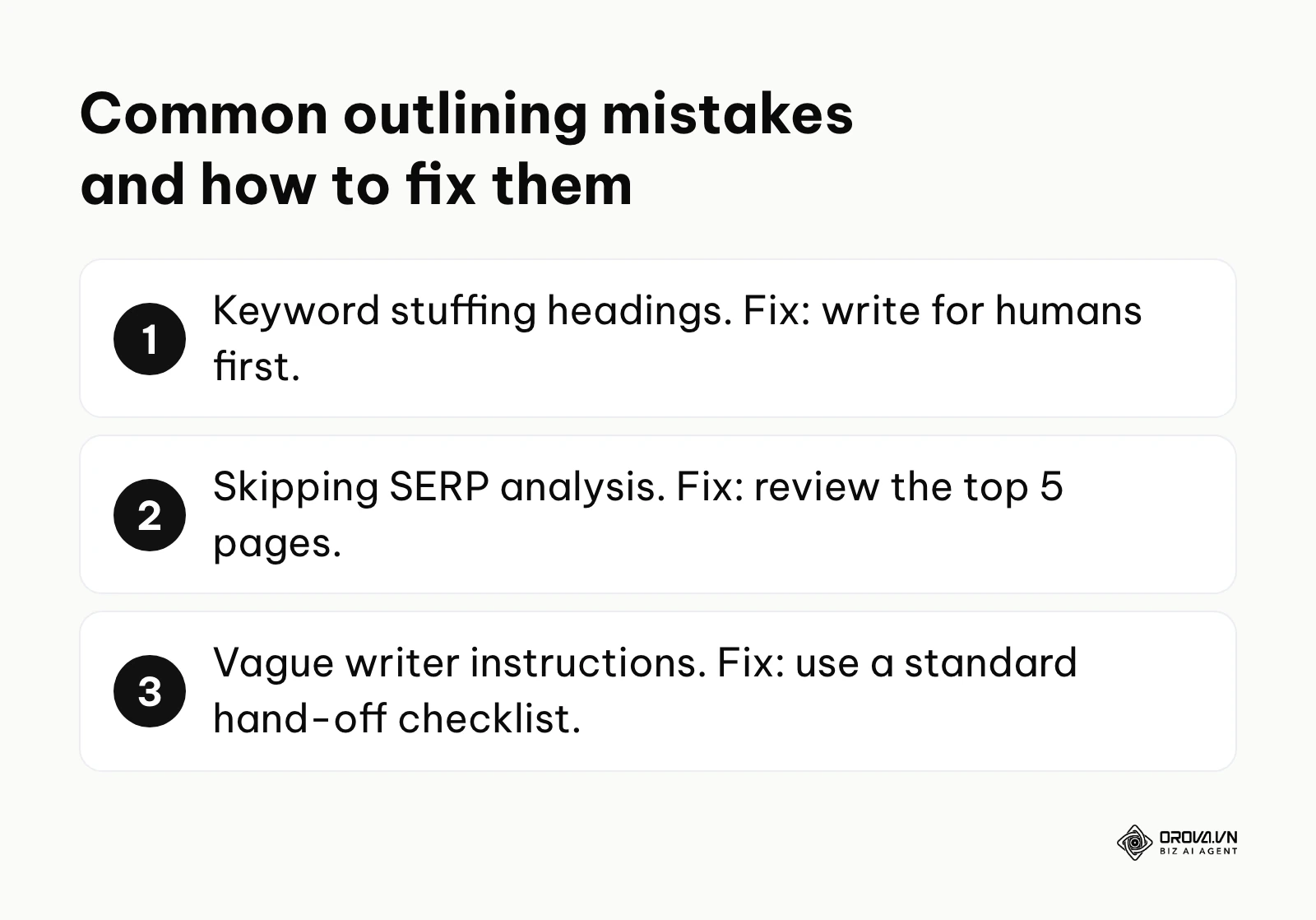
| Common mistake | Consequence | How to avoid it |
|---|---|---|
| Keyword stuffing the headings | Content reads poorly and risks algorithmic demotion | Write headings as natural questions or clear statements first. |
| Skipping the SERP analysis | Creating content that does not answer the user's actual query | Always review the top 5 ranking pages to understand the required intent. |
| Vague writer instructions | Receiving drafts that miss the brand voice or target audience | Use a standardized, detailed hand-off checklist for every assignment. |
The summary below highlights the common mistakes to avoid.
SEO content outline trends for the next few years: an author's perspective
The discipline of content planning is evolving rapidly as search algorithms become more sophisticated at understanding human language and context. Based on the current trajectory of search technology, I anticipate significant shifts in how we approach the outlining phase.
AI agents will automate the baseline structure
As of 2026, we already use artificial intelligence to assist with brainstorming and analyzing search results. However, I believe AI agents will take over most of the baseline structural work. Instead of a human spending a long session analyzing headings, an AI will likely draft a solid H2/H3 hierarchy from competitor gaps in minutes. The human role will shift away from formatting tags and focus more on injecting unique, un-simulatable human experiences into those AI-generated frameworks.
E-E-A-T verification will become a mandatory gatekeeper
Currently, many content teams treat experience and expertise as optional enhancements—something nice to have if time permits. I expect outlining tools and internal workflows to move toward making E-E-A-T verification a firm requirement. Before a writer is allowed to begin drafting, the outline will need to contain specific, verified "proof of experience" slots, such as linked internal data sets or recorded expert interviews. Outlines lacking these verified human elements may be sent back before drafting starts.
The transition from keyword lists to knowledge graphs
For years, outlines have been driven by lists of primary and secondary keywords. I believe flat keyword lists will gradually give way to entity relationship mapping. Outlines will visually represent knowledge graphs, demonstrating how the core topic connects to related sub-entities. The focus will not be on ensuring a specific word appears three times, but on ensuring the logical relationship between concepts is explicitly clear to the search engine crawler. You should prepare for this by learning how semantic search evaluates topical depth rather than just exact phrase matching.
Frequently asked questions about SEO content outlines
Is an SEO content outline still needed when you have AI?
Yes, it is arguably more important now. While tools can generate massive amounts of text instantly, a strategic plan ensures that the output is actually useful. If you want to understand the mechanics of auto-generation, reading about AI generated content shows that without a strict, human-directed outline focusing on unique angles and E-E-A-T, AI simply produces average, synthesized summaries of existing information that struggle to rank.
How detailed should an outline be to avoid limiting creativity?
An outline should prescribe the destination, not the exact path. It must dictate the core arguments, the necessary headings, and the specific data points required to prove expertise. However, it should leave the sentence structure, the transitional phrasing, and the specific analogies up to the writer. Providing a highly detailed structure actually frees the writer's creative energy to focus on engaging prose rather than structural logic.
How do you find a unique content angle when competitors cover everything?
When the top results all look identical, you must change the dimension of the topic. If everyone is writing a beginner's guide, write an advanced troubleshooting manual. If everyone is listing features, focus entirely on the psychology of implementation. You find unique angles by talking to sales teams and customer support representatives to discover the specific, nuanced questions that basic overview articles ignore.
Should LSI or semantic keywords be forced into the outline?
No, you should never force keywords into a structure if they break the natural flow of information. Semantic keywords should be provided to the writer as a thematic guide, a list of related concepts that should naturally arise when discussing the topic comprehensively. If a writer covers the subject deeply, the necessary semantic variations will usually appear organically without needing to be strictly mandated in every heading.
How long does it take to create a proper outline?
A professional, data-driven outline typically takes between 45 minutes to two hours to create, depending on the complexity of the topic and the depth of the required SERP analysis. While this seems like a significant upfront investment, it consistently saves multiple hours of frustrating revisions and editing during the later stages of production.
Where to start with your outlining process?
Implementing a rigorous outlining methodology does not require pausing your entire marketing operation. The best approach depends heavily on the current maturity of your content processes.
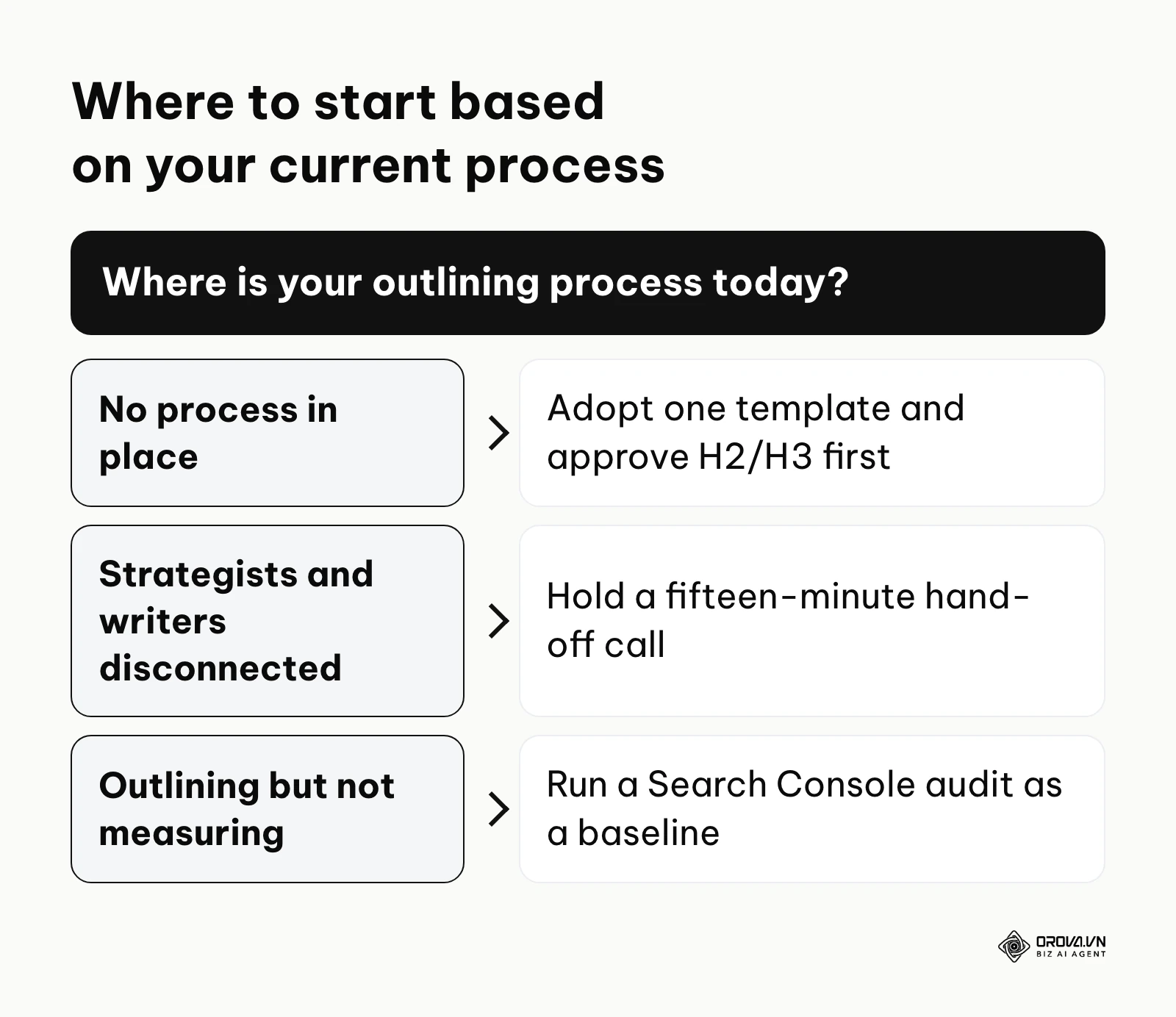
If you have no process in place: Do not attempt to build complex, multi-page briefs immediately. Your very first step should be to adopt a simple, standardized template—like the Ultimate Guide framework provided earlier. Mandate that for the next four articles, writers must submit their H2 and H3 structures for approval before drafting any body paragraphs. This single change builds the habit of structural thinking.
If your processes are currently disconnected: Many teams have strategists who research keywords and writers who create content, but they rarely communicate effectively. If this is your situation, your first step is to establish a mandatory hand-off meeting. Do not just email the outline document. Schedule a fifteen-minute call to talk through the intended angle, clarify the target audience, and ensure the writer understands exactly why specific headings were chosen.
If you are outlining but not measuring results: If you are already building detailed structures but cannot prove their value, your immediate next step is to connect your efforts to performance data. Before outlining your next major piece, perform a baseline measurement of your current visibility. Conducting a Google Search Console SEO audit will help you identify which of your existing, unstructured pages are decaying. You can then use your new outlining process to methodically rewrite and restructure those specific decaying pages, allowing you to clearly measure the traffic uplift generated by proper planning.
The decision guide below matches each situation to its first step. By mastering the art of the SEO content outline, you build a sustainable foundation for long-term organic growth.
About the author

Builder of Orova
Nguyễn Đỗ Trọng Ân has 8 years of experience in marketing, including 6 years managing market development across Asia. He builds Orova, a Biz AI Agent that never sleeps: it plans, runs and optimizes work for businesses.
Run your business with AI Agents
Orova is the always-on Biz AI Agent — it plans, runs, and optimizes the work for you.
Save time, unlock productivity.