
Content strategy framework: Goals, audience, pillars, process and measurement

You invest thousands of dollars and hundreds of hours into drafting blog posts, recording technical videos, and posting daily updates on social media platforms. Despite this massive operational effort, your website traffic remains stagnant and your sales team complains about low-quality leads. The root problem usually is not the quality of your individual written pieces. The core issue is the lack of a content strategy framework: a cohesive system tying those individual pieces together. Producing random articles without a governing structure inevitably leads to wasted resources, confusing brand messaging, and a severe disconnect from your revenue targets. You need a centralized system to govern exactly how you plan, create, and distribute every piece of information. A robust content strategy framework acts as your operational blueprint in this chaotic digital landscape. It rigidly aligns your creative output with tangible business objectives. This deep-dive guide will walk you through exactly how to build a modern infrastructure for your publication efforts. You will learn how to integrate artificial intelligence into your ideation process, customize your approach for different industries, and mathematically validate your plan before spending any of your budget.
What is a content strategy framework?
A content strategy framework is a structured methodology that dictates how an organization plans, produces, distributes, and measures its media assets. It serves as the foundational logic behind every single creative decision your marketing department makes. While a simple editorial plan only lists what specific topics you will publish next month, a framework defines the underlying purpose, the exact target audience, and the operational workflows behind those topics. It establishes the non-negotiable rules of engagement for your entire team.
You should build this framework the moment your marketing team scales beyond a single creator, or when you need to formally justify budget requests to executive stakeholders. It forces strict alignment between creative output and your company's revenue targets. Conversely, you should not waste time building a complex, multi-page framework if you are just launching a minimum viable product and need to test basic market assumptions quickly. In those very early startup stages, rapid execution and immediate customer feedback matter significantly more than rigid documentation.
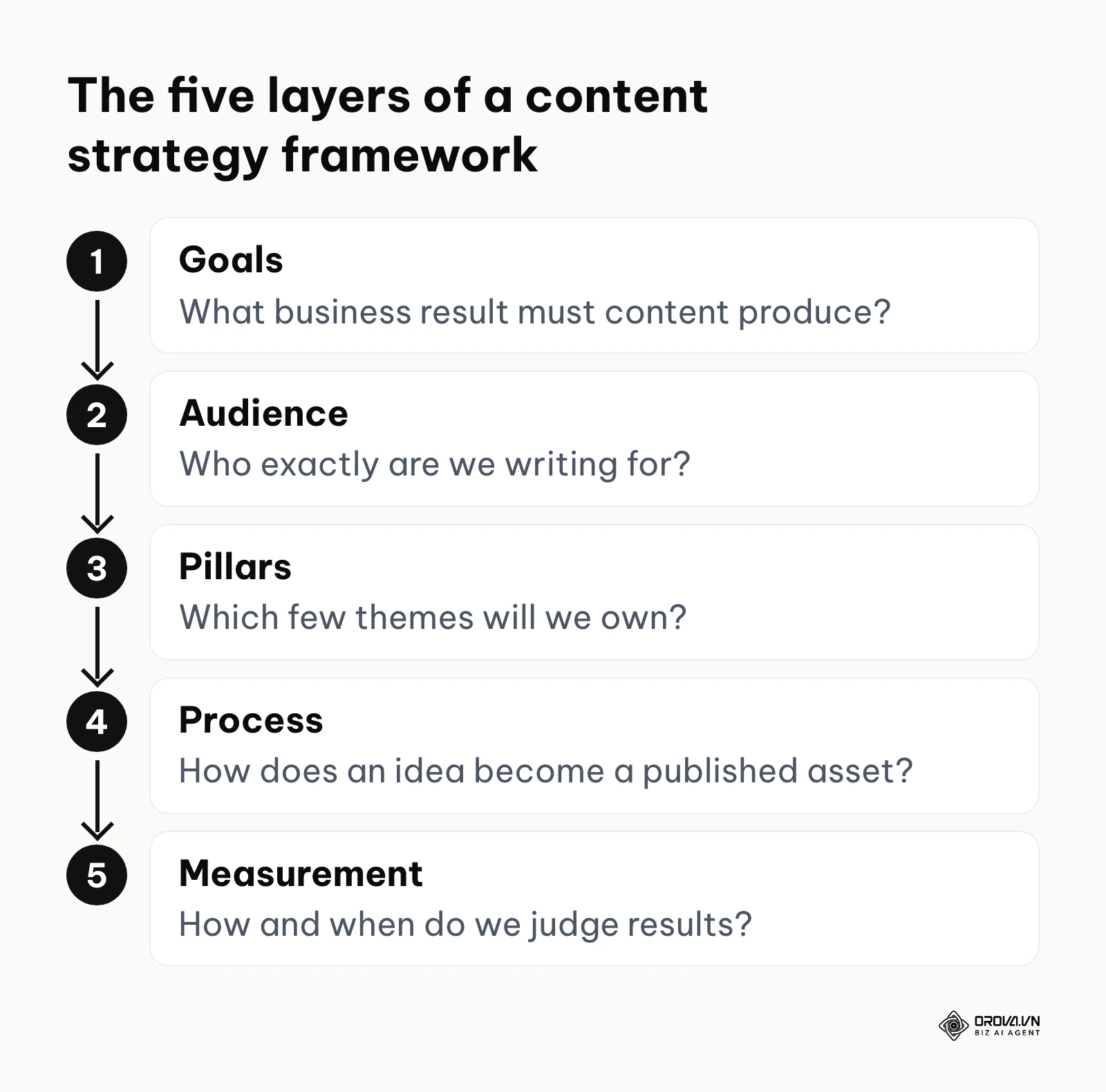
The simplest way to picture a working framework is as five layers that each answer one question. Goals: what business result must this content produce? Audience: who exactly are we writing for, and what do they need at each stage? Pillars: which few themes will we own? Process: how does an idea move from brief to published asset, and who signs off? Measurement: how will we know it worked, and when do we review it? Every step in this guide fills in one of those layers.
Preparation: Prerequisites before building your content strategy framework
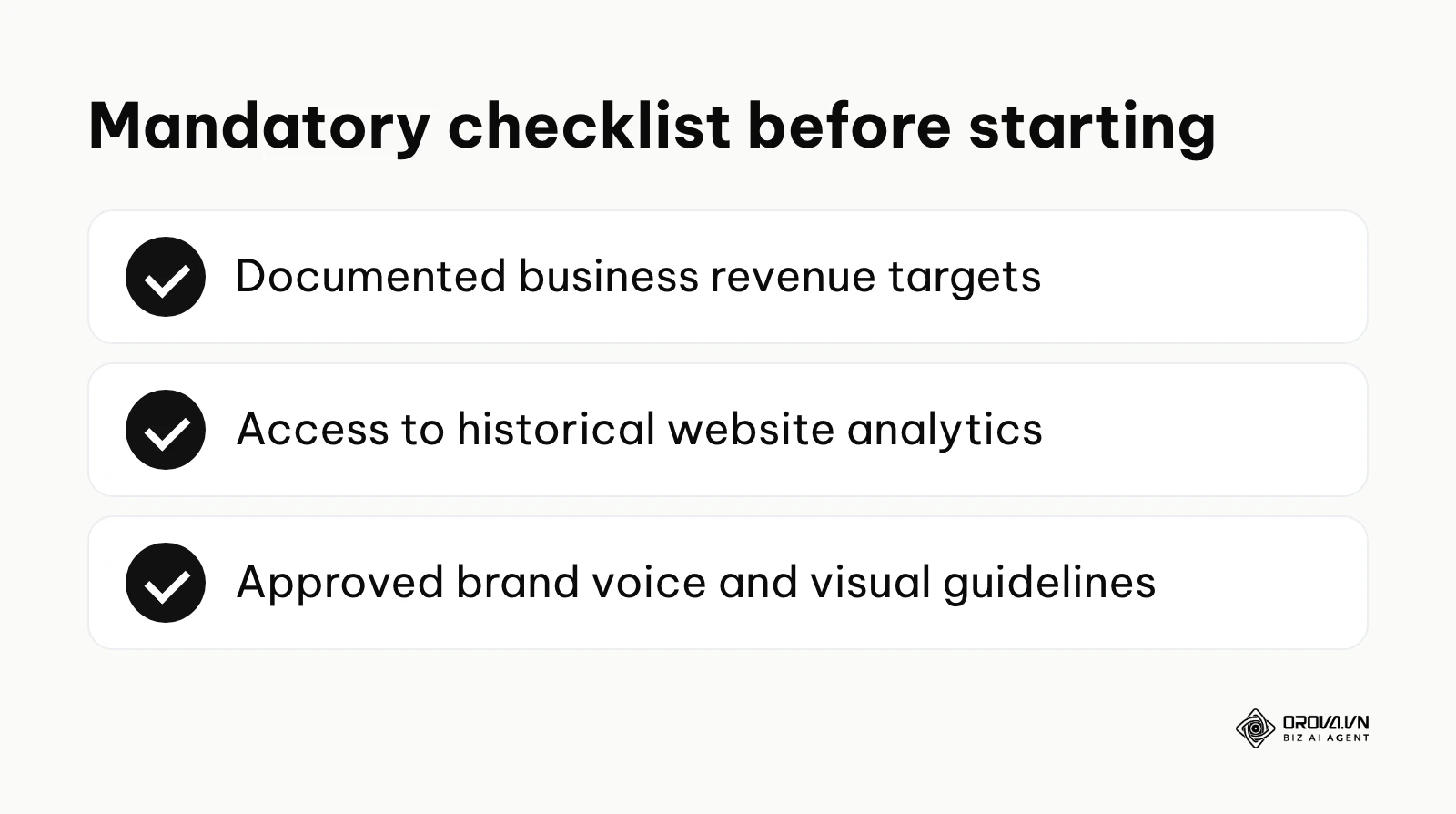
Before you start mapping out complex topic clusters, designing graphics, and selecting distribution channels, you must gather foundational business data. Building a communication structure without this critical information leads to a strategy based on internal assumptions rather than harsh market reality. You need to secure formal alignment from key stakeholders, audit your historical performance metrics, and clearly define your brand constraints. Jumping straight into execution without these prerequisites guarantees operational failure within the first quarter.
| Prerequisite Item | Where to Source the Information | Estimated Time to Complete |
|---|---|---|
| Documented business objectives | Executive board or CEO | 1 to 2 weeks |
| Historical performance data | Analytics software and CRM | 3 to 5 days |
| Approved brand guidelines | Design team or external agency | 2 to 4 weeks |
| Internal resource capacity | Department heads and HR | 2 to 3 days |
| Competitive landscape overview | SEO tools and market research | 1 to 2 weeks |
First, you need documented business objectives directly from your executive team. A marketing strategy cannot exist in a vacuum. You must know definitively whether the company prioritizes rapid customer acquisition, high-ticket enterprise lead generation, or existing customer retention for the upcoming fiscal year. Without this absolute clarity, the metrics you track will not align with leadership expectations, making it impossible to prove a return on investment later. If the CEO wants to focus on reducing churn, but your framework is entirely built around viral top-of-funnel acquisition, your efforts will be deemed a failure regardless of the traffic you generate.
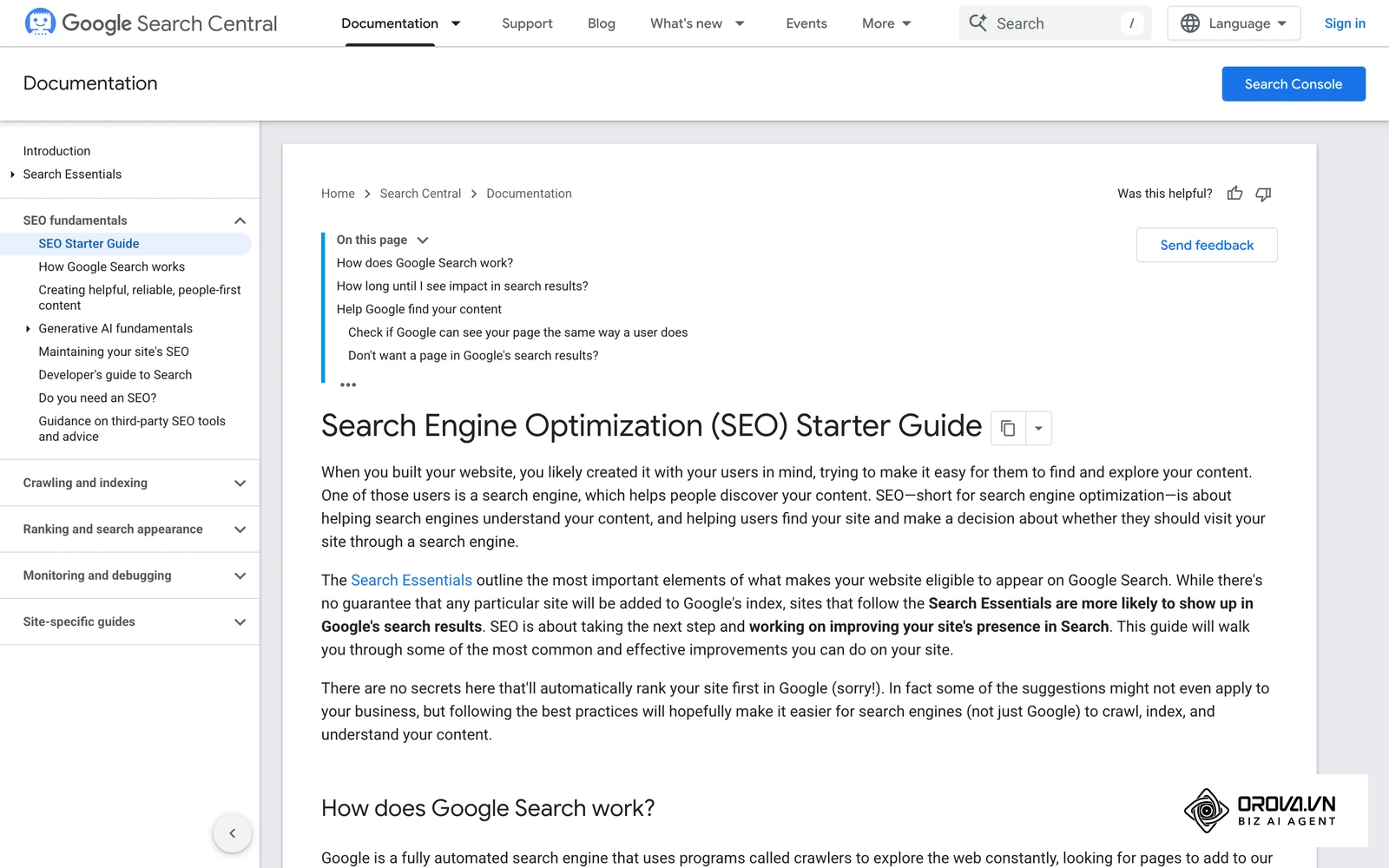
Second, you must gather historical performance data. You need comprehensive access to your web analytics platforms, your customer relationship management software, and past advertising campaign reports. This raw data tells you exactly what formats previously resonated with your audience and which distribution channels yielded the lowest customer acquisition costs. You cannot plan the future without understanding the past. Understanding how users currently interact with your site is the fundamental first step before making broad strategic changes.
Third, you need to consolidate your brand guidelines and tone of voice documents. Your entire team must have a unified, documented understanding of how the company speaks to the market. This includes strict visual identity rules, preferred industry terminology, and restricted topics that your brand must never discuss. If you plan to scale production using external freelance writers or artificial intelligence generation tools, these guidelines serve as the absolute guardrails for quality control. Without them, your brand identity will fracture within weeks.
How to build a content strategy: A 6-step modern framework
Creating a functional system that drives revenue requires breaking down the complex creative process into actionable, measurable phases. This step-by-step approach ensures you cover all operational requirements, moving logically from initial research to final validation. Skipping any of these steps will create structural weaknesses that compromise your entire marketing operation.
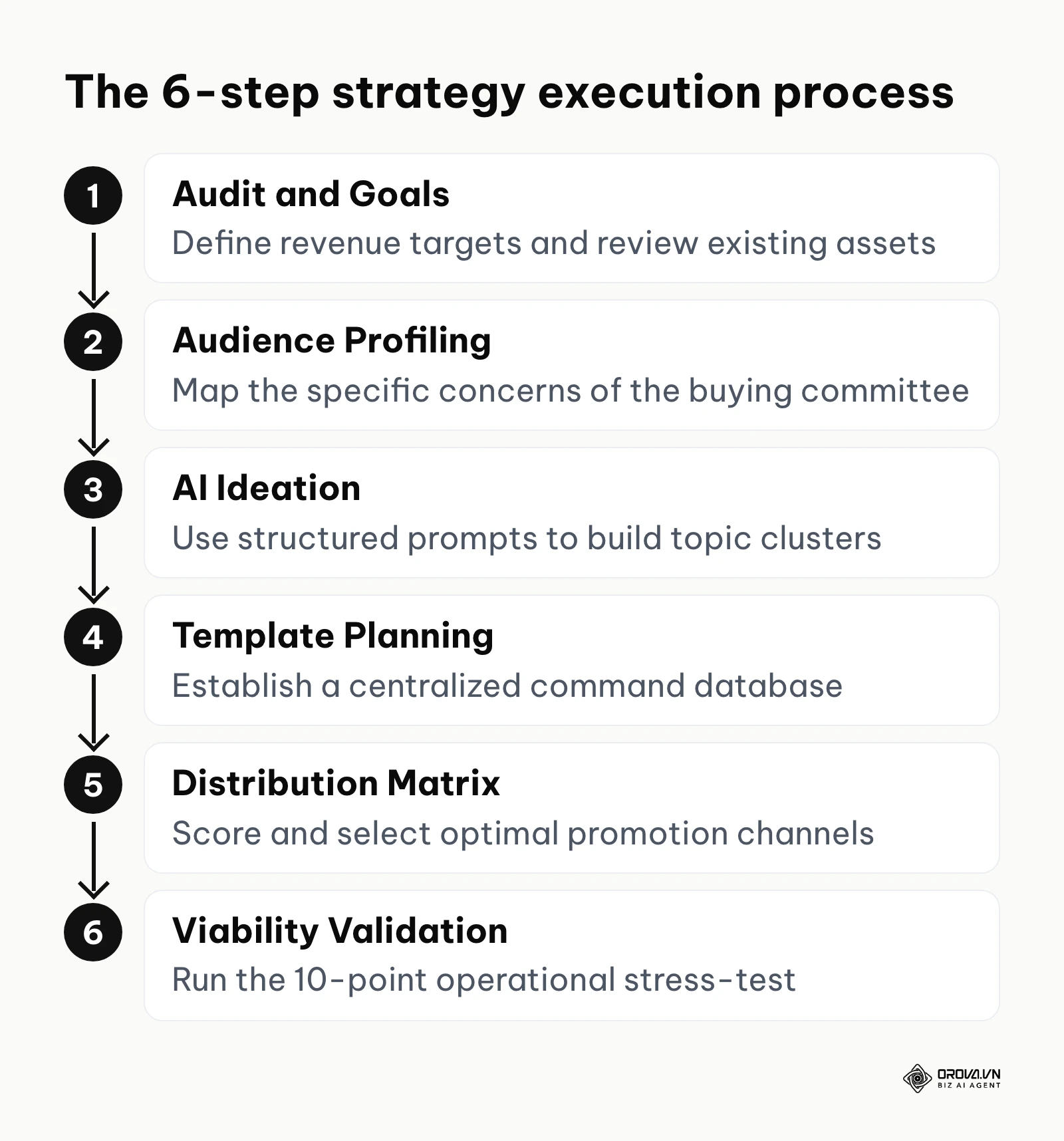
Step 1: Define business goals and conduct a thorough baseline audit
You must anchor your entire operation to specific commercial outcomes. Start by interviewing your sales directors, customer success managers, and product leads to understand their exact revenue targets and daily friction points. Translate those broad business goals into highly specific marketing objectives. If the business needs to increase enterprise software sales by twenty percent in the next two quarters, your marketing objective might involve increasing marketing qualified leads from companies with over five hundred employees by thirty percent. You must write these goals down and get them formally approved.
Before creating any new assets to reach these goals, you must run a thorough content audit to evaluate your existing inventory. Catalog every single blog post, technical whitepaper, webinar recording, and video your company has published. Analyze their performance using historical traffic metrics, on-page engagement rates, and most importantly, conversion data.
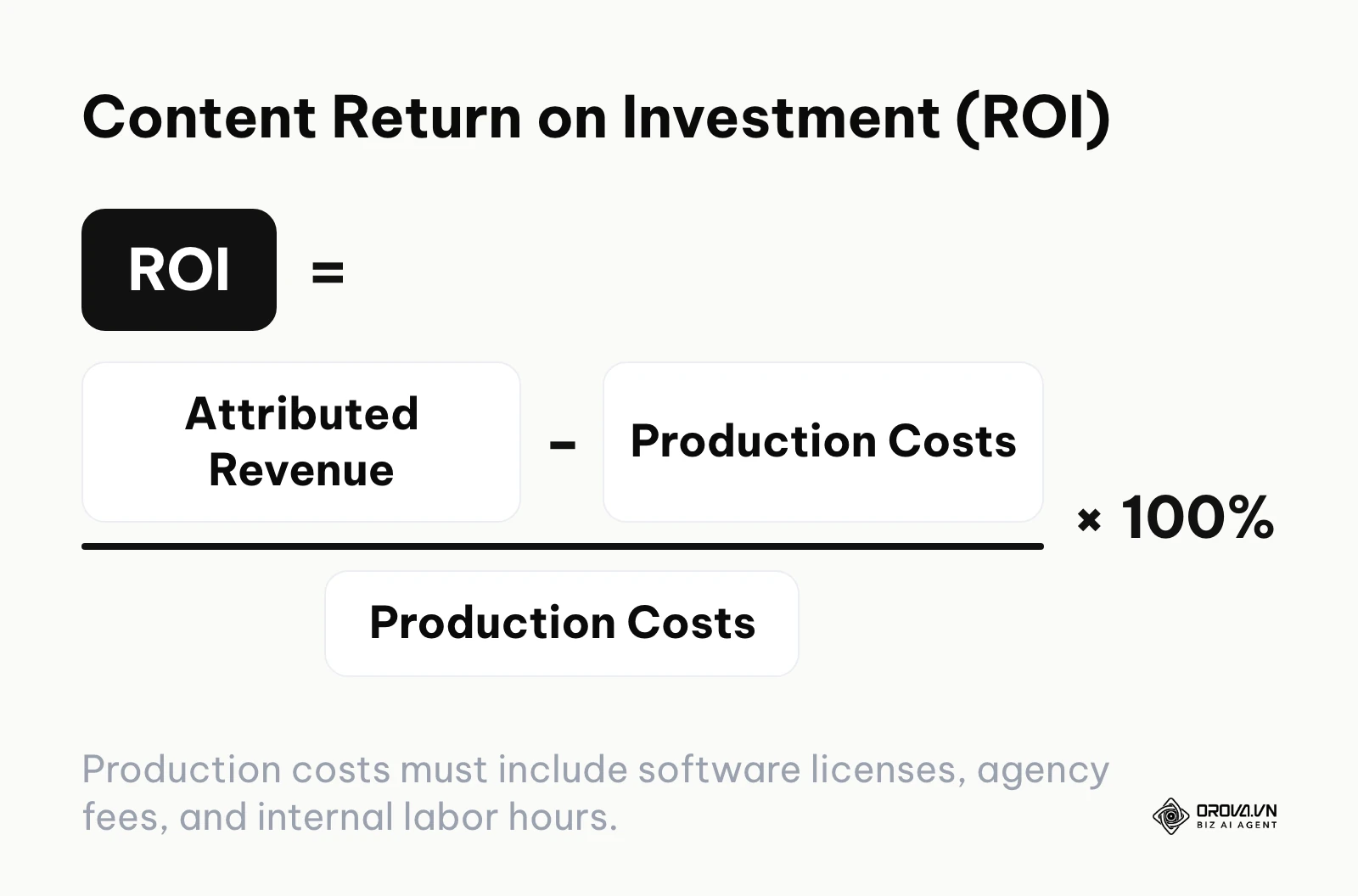
To execute this properly, export your website analytics data into a master spreadsheet. Categorize each URL by topic, format, and target buyer stage. Identify pages that attract incredibly high traffic but fail to convert visitors into subscribers or leads. Flag outdated articles that require complete rewriting, consolidation, or permanent removal. For each format you keep, calculate a simple return on investment: attributed revenue minus production costs, divided by production costs, multiplied by 100%. Production costs must include software licenses, agency fees, and internal labor hours. A clear sign of a successful audit is possessing a prioritized list of existing assets that you can update immediately for quick wins without writing anything from scratch. A common error at this stage is focusing purely on raw traffic volume while completely ignoring whether that traffic actually generates pipeline revenue for the business.
Step 2: Develop a b2b content strategy framework or b2c target audience profile
Your communication system must speak directly to the specific individuals who hold purchasing power or influence within an organization. You cannot create generic profiles like "small business owners." You must build granular buyer personas based on real customer interviews, sales call recordings, and demographic data.
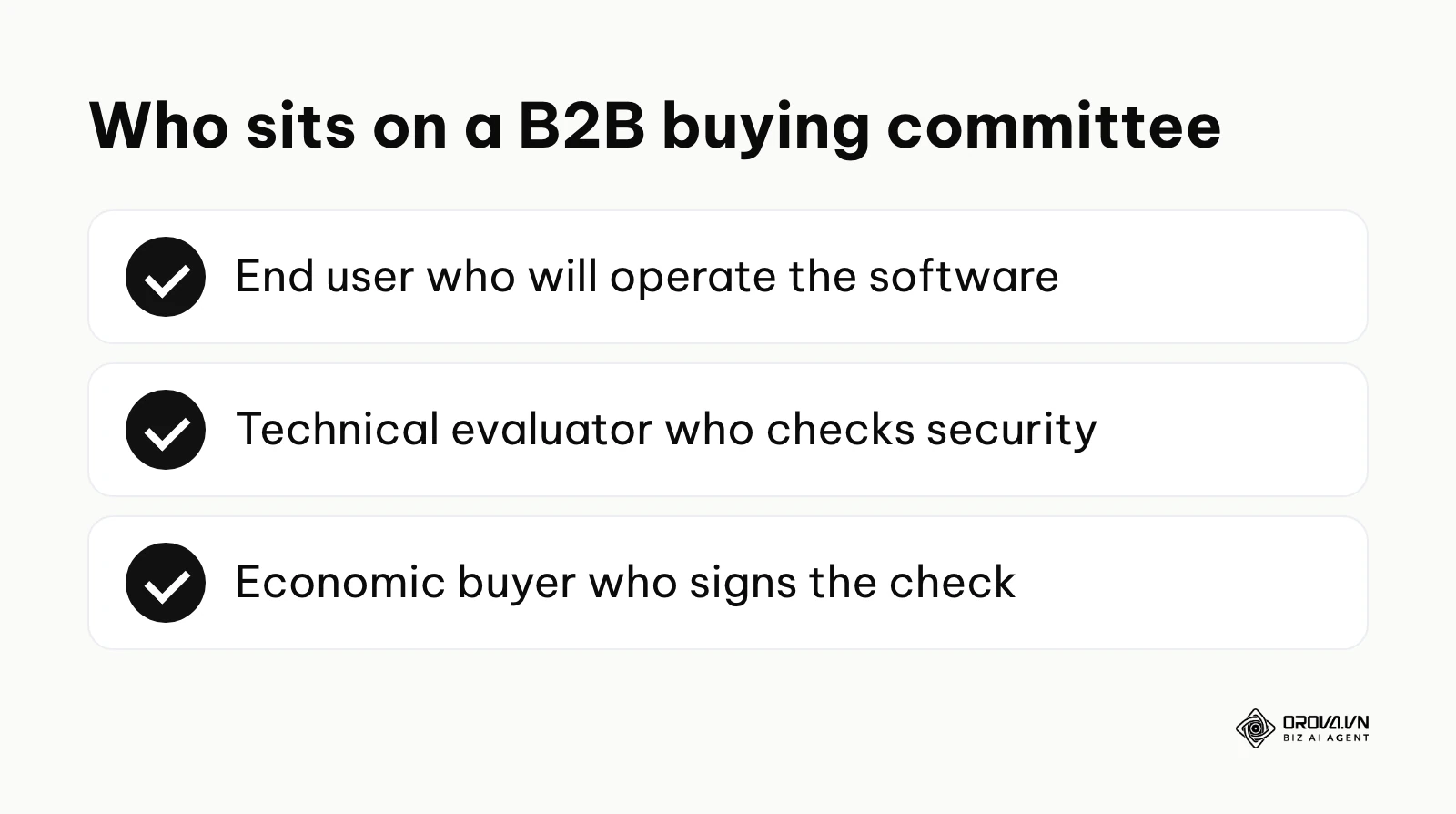
For a highly effective b2b content strategy framework, you must focus heavily on the complex buying committee. In enterprise sales, you are rarely speaking to a single, unilateral decision maker. You must map out the distinct concerns of the end user who will operate the software, the technical evaluator who checks security protocols, and the economic buyer who signs the check. Document their daily workflow challenges, their departmental key performance indicators, and the professional risks they face when buying an unproven solution. Identify topic gaps by conducting systematic competitor keyword research to see what rivals rank for and where they fail to provide deep, actionable value to these specific committee members.
For a consumer-focused approach, emphasize emotional triggers, lifestyle aspirations, and immediate pain points. B2C profiles must capture where the user spends their free time, which influencers they trust, and what specific aesthetic appeals to them.
Illustrative example: A marketing manager at a mid-sized B2B software company needed to document their buyer personas to launch a new product line. The team previously relied on generic assumptions about "IT Directors wanting efficiency." The manager systematically interviewed fifteen current customers over Zoom, specifically asking about the internal political friction they faced before purchasing. They discovered the biggest hurdle was not the software price, but the intense fear of implementation downtime causing missed departmental targets. The manager updated the persona documentation to reflect this highly specific fear. The team then shifted their messaging to focus heavily on seamless integration guides and strict uptime guarantees. This direct alignment resulted in subsequent sales calls moving past the technical evaluation stage much faster, significantly shortening the sales cycle.
The indicator of a correct audience profile is that your senior sales representatives agree it accurately represents the people they speak with daily. A frequent mistake here is relying entirely on third-party industry reports instead of actually talking to your paying customers.
Step 3: Integrate AI for ideation and topic clustering
Modern marketing workflows demand unprecedented speed and scale during the brainstorming phase. You can drastically reduce the time spent generating ideas by properly incorporating artificial intelligence into your methodology. Transitioning from manual, slow brainstorming sessions to efficient ai generated content workflows requires mastering specific prompting techniques.
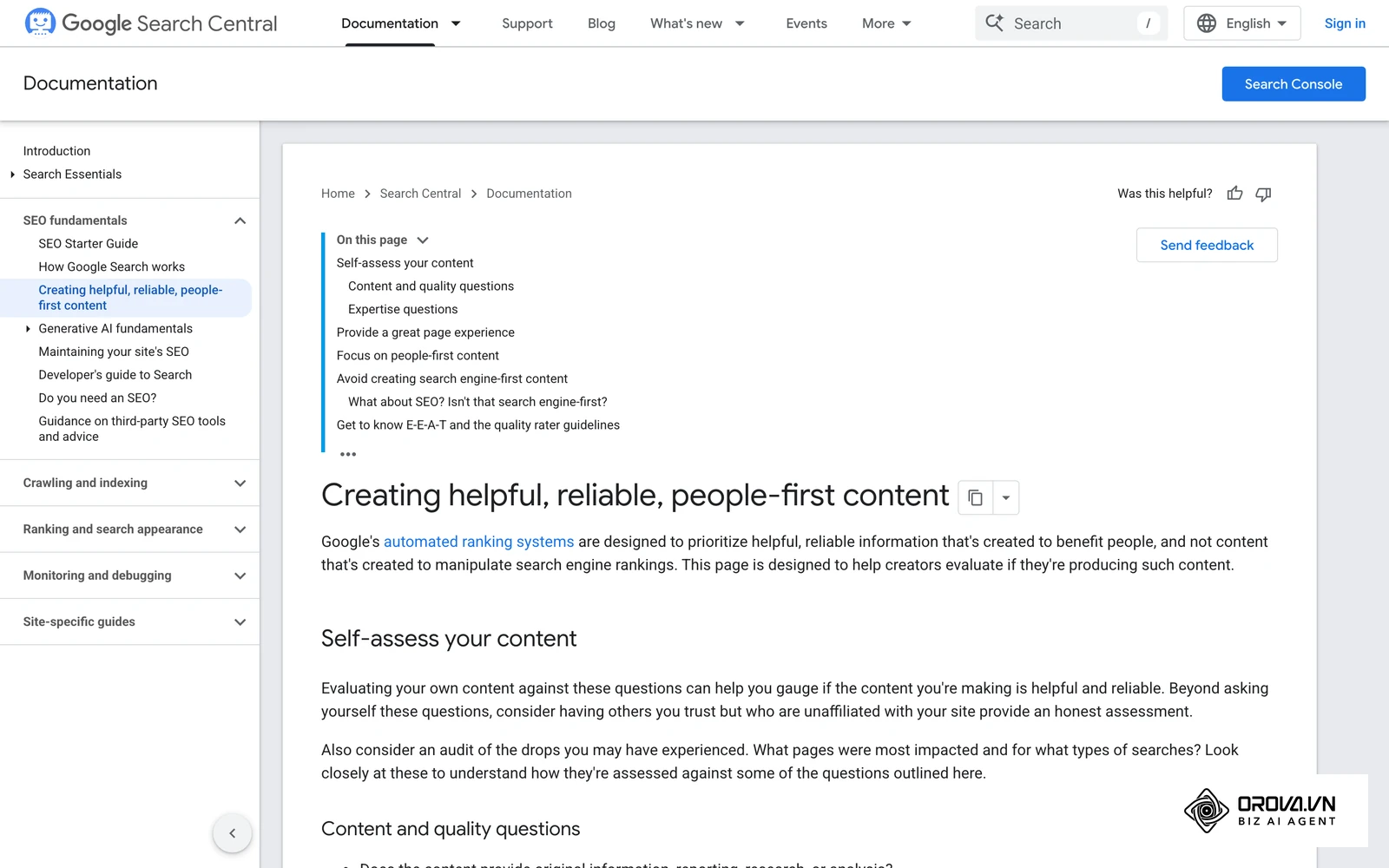
Instead of opening a chatbot and asking it to simply "give me ten blog ideas about marketing," you must feed the system your detailed business context and ask for highly structured topical maps. You want the AI to generate core pillar topics and deeply interconnected supporting subtopics that demonstrate topical authority to search engines and users alike. Each pillar usually becomes one of the pillar pages that anchors a cluster of supporting articles.
You should use highly structured, multi-step prompts to guide the AI. For example, use this exact prompt sequence to begin: "Act as a senior SEO strategist for a cybersecurity company targeting Chief Information Security Officers. Our main product is cloud workload protection. Generate a comprehensive topic cluster visualization. The pillar topic should be 'Cloud Security Posture Management'. Provide ten highly specific supporting article titles. For each title, identify the primary search intent, list three semantically related keywords, and suggest one proprietary data point we should include."
Execute this by inputting your freshly created persona data and product feature lists into the language model. Review the output critically, as AI often hallucinates or suggests generic topics. Discard irrelevant suggestions immediately. Keep the final list to three to five pillars; more than that usually spreads a small team too thin. You know you have done this correctly when you have a cohesive web of interconnected topics that cover every stage of the buyer's journey, rather than a random list of disconnected articles. The most common error in this step is copying the AI output directly into your editorial calendar without filtering it through your unique brand perspective and proprietary company data.
Step 4: Utilize a content strategy framework template for planning
You need a centralized command center to track production statuses, assign responsibilities, and monitor strict deadlines. Attempting to manage a complex publishing schedule through scattered email threads and instant messaging channels will inevitably lead to missed deadlines, inconsistent quality, and severe team burnout.
You must set up a dynamic content strategy framework template using a powerful relational database tool like Notion, Airtable, or a highly structured Google Sheet. Your templates must prioritize formats that actively support lead generation content marketing efforts, ensuring every piece has a defined conversion path.
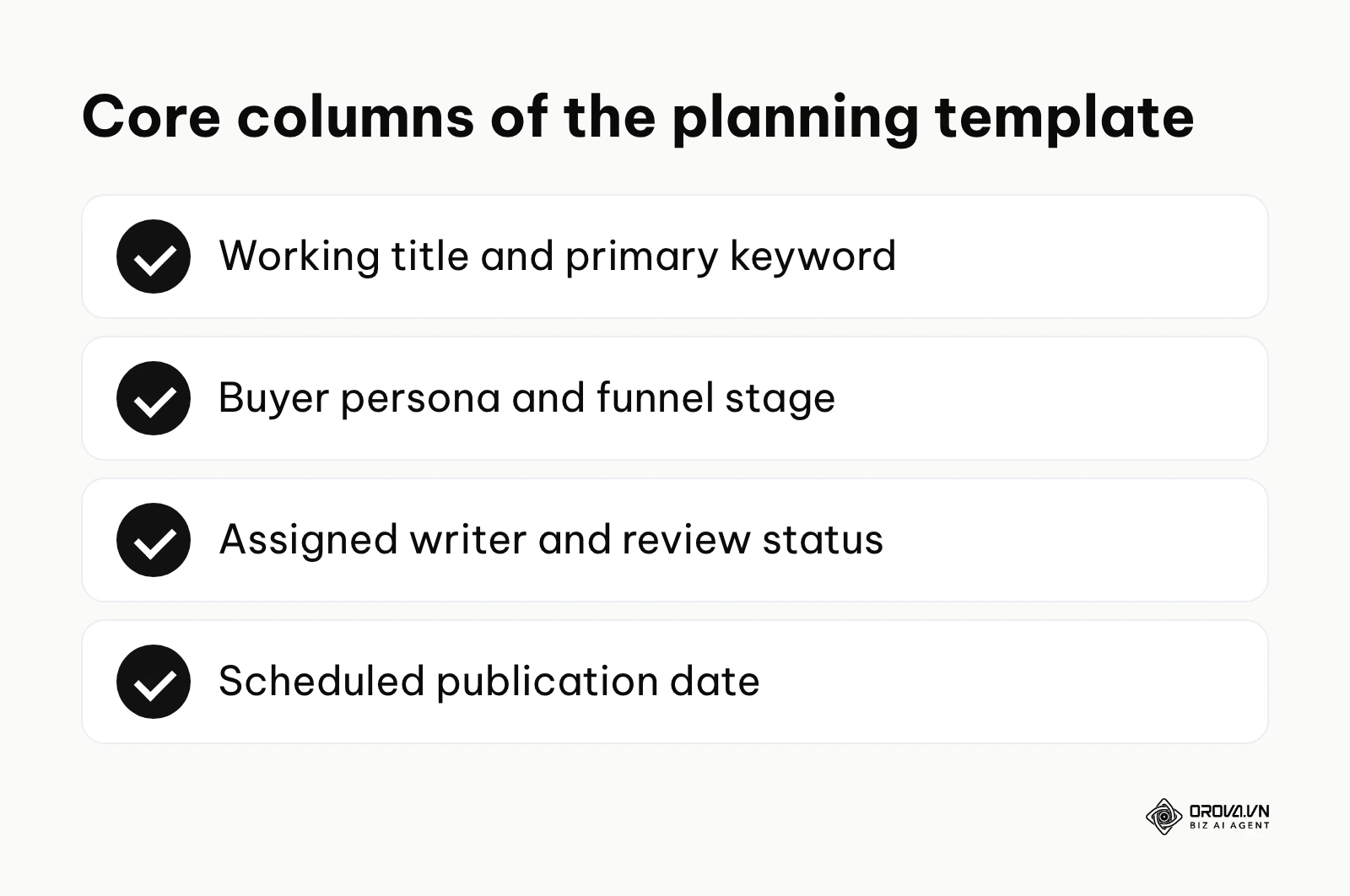
To build this template properly, you must create custom fields for every critical production variable. Your columns should include the working title, target primary keyword, designated buyer persona, marketing funnel stage, assigned writer, current review status, and the scheduled publication date. The scheduling view of this board is effectively your content calendar; the framework decides what goes onto it and why. Furthermore, you should embed your approved AI prompts directly into the template documentation. Create a dedicated reference tab containing the exact prompts your writers and editors should use for outlining, drafting, and proofreading.
A clear sign of operational success is when any executive team member can look at the board and instantly understand the current bottleneck in the production pipeline without asking the marketing manager. A typical failure point is creating a template that is far too complex, demanding writers to fill out twenty different mandatory fields before they can start drafting. This over-engineering ultimately leads to poor team adoption and abandoned tracking boards.
Step 5: Select distribution channels using a decision matrix
Creating exceptional material is only half the battle. You must build a systematic, aggressive approach to distribution to ensure your target audience actually sees your work. You cannot afford to publish everywhere simultaneously; stretching your resources too thin guarantees mediocre results across all platforms. You must ruthlessly prioritize channels based on your specific industry constraints and actual audience behavior.
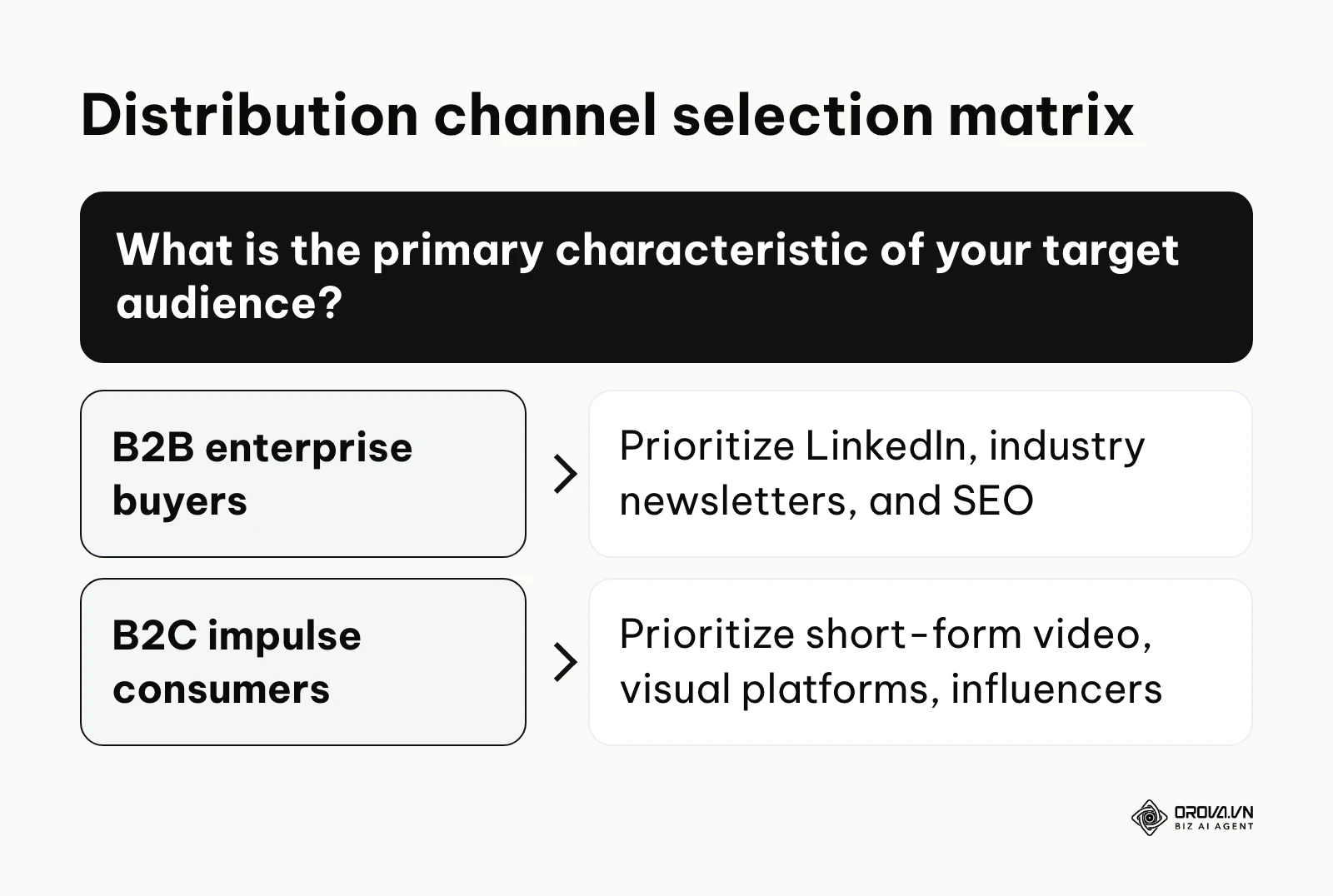
You should utilize a formal decision matrix to evaluate potential distribution channels before committing any budget. Score each potential channel from one to ten based on total potential reach, estimated cost of acquisition, required format adaptation effort, and historical conversion rates for your specific industry.
If you operate in the business-to-business sector, your matrix will likely prioritize LinkedIn organic posts, highly targeted industry-specific newsletters, and long-term search engine optimization. If you operate in consumer retail, your matrix should heavily weight short-form video platforms, visual discovery engines, and direct influencer partnerships.
Illustrative example: An in-house content lead at a rapidly growing consumer retail startup wanted to expand distribution beyond their corporate blog to drive more immediate sales. They were attempting to post on five different social media platforms every single day, leading to severe team burnout and extremely low engagement across the board. The lead stopped all production and implemented a formal decision matrix, scoring channels based strictly on where their specific demographic of young professionals spent their highest-intent browsing time. The data clearly showed massive engagement potential on highly visual platforms but absolutely zero traction on professional networking sites. They immediately paused operations on three platforms and redirected all financial resources to producing high-quality, short-form video for just two selected channels. This heavily focused approach led to a noticeable and sustained increase in direct website referrals and attributed sales within just two months.
You are executing this step correctly when you can confidently explain to your CEO exactly why you deliberately chose not to invest time in a specific popular platform. The mistake most teams make is adopting a new social channel simply because it is trending in the tech news, regardless of whether their actual paying buyers are active there.
Step 6: Validate viability with the 10-point stress-test checklist
Before you finalize your strategy and present it to the executive board for annual budget approval, you must rigorously validate its operational feasibility. A strategy that looks highly impressive in a presentation deck but requires impossible production velocity will fail catastrophically in reality.
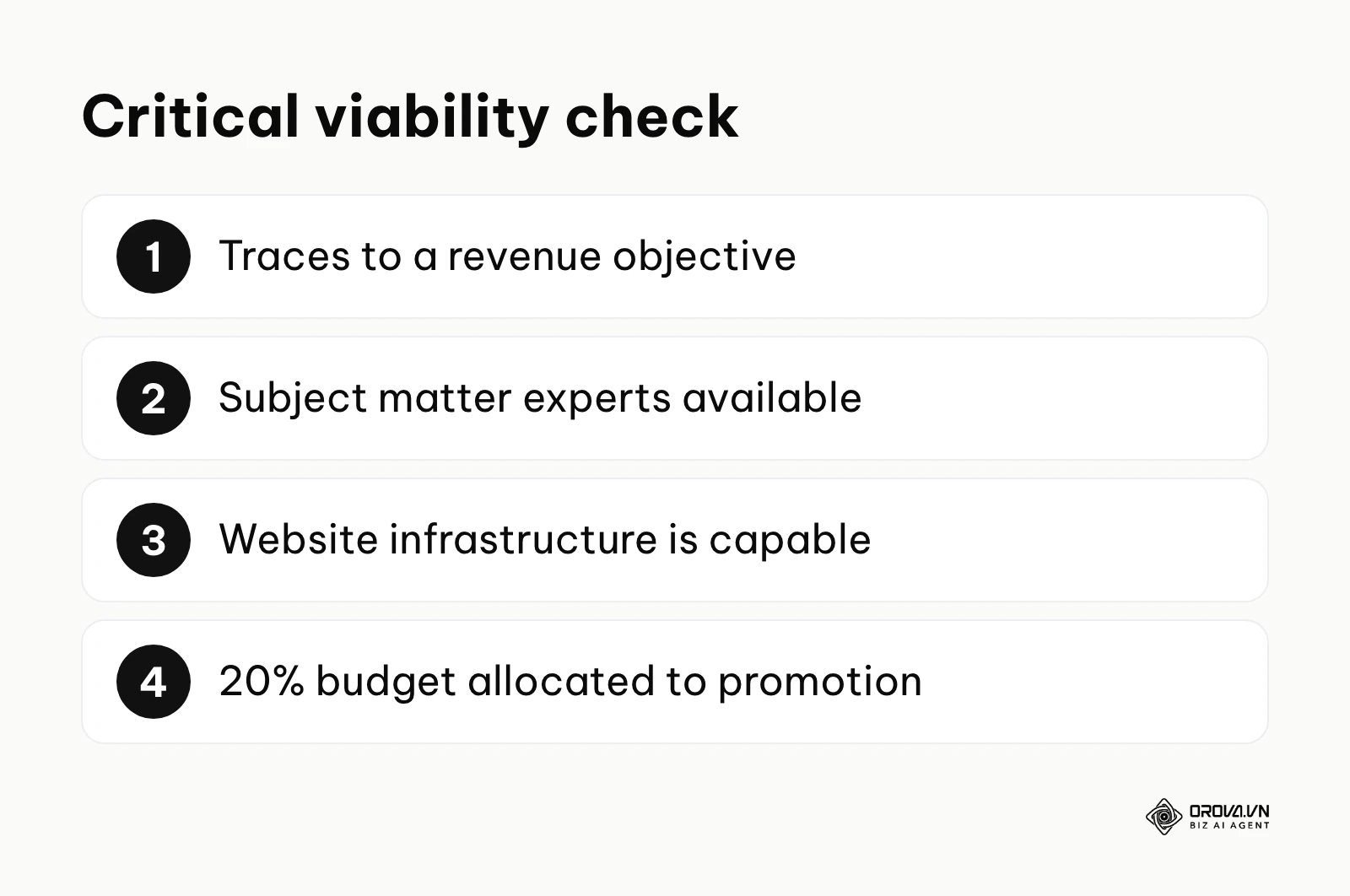
You must apply a strict stress-test to your framework. This involves asking hard, uncomfortable questions about your currently available resources, your technical infrastructure limits, and your risk mitigation plans.
Evaluate your comprehensive plan against this exact 10-point checklist:
- Does every single planned asset trace directly back to a specific revenue objective?
- Do we have the internal subject matter experts available and willing to review technical accuracy?
- Is our current website hosting infrastructure capable of handling the projected publishing volume and traffic spikes?
- Have we allocated at least twenty percent of the total budget specifically for paid distribution and promotion?
- Do we have a defined, documented protocol for updating or deprecating outdated information next year?
- Are our measurement tools and pixels correctly configured to track conversions from specific assets?
- Have we established clear editorial bottlenecks to ensure quality, and who owns the final approval workflow?
- Does the overarching plan account for known seasonal fluctuations in search demand within our specific industry?
- Do we have contingency plans prepared if our primary social distribution channel drastically changes its algorithm?
- Is the projected return on investment timeline realistic based on our average sales cycle length?
You execute this critical step by scheduling a dedicated, two-hour meeting with your core marketing team and technical leads to review these exact questions objectively. If you answer "no" or "maybe" to more than two questions, you must revise the plan, adjust your timelines, or request more resources before seeking executive approval. The classic error is completely ignoring resource constraints and committing to a daily publishing schedule with only one junior part-time writer on staff.
Discover Orova.vn – a Biz AI Agent platform with OROVA SEO, a complete solution for every website. The system supports search engine optimization from A to Z with features including keyword research, writing new SEO-ready articles, optimizing existing content, rank tracking, plus competitor analysis and in-depth technical analysis. Sign up today to experience OROVA SEO completely free (offer valid through July 7, 2027).
Deep dive analysis: Structuring your framework by industry and scale
The fundamental architecture of your system must adapt dynamically to your specific operating environment. A generic, one-size-fits-all approach fails because the buying psychology in complex enterprise software fundamentally differs from consumer retail, and the operational capacity of a solo founder drastically differs from a twenty-person agency.
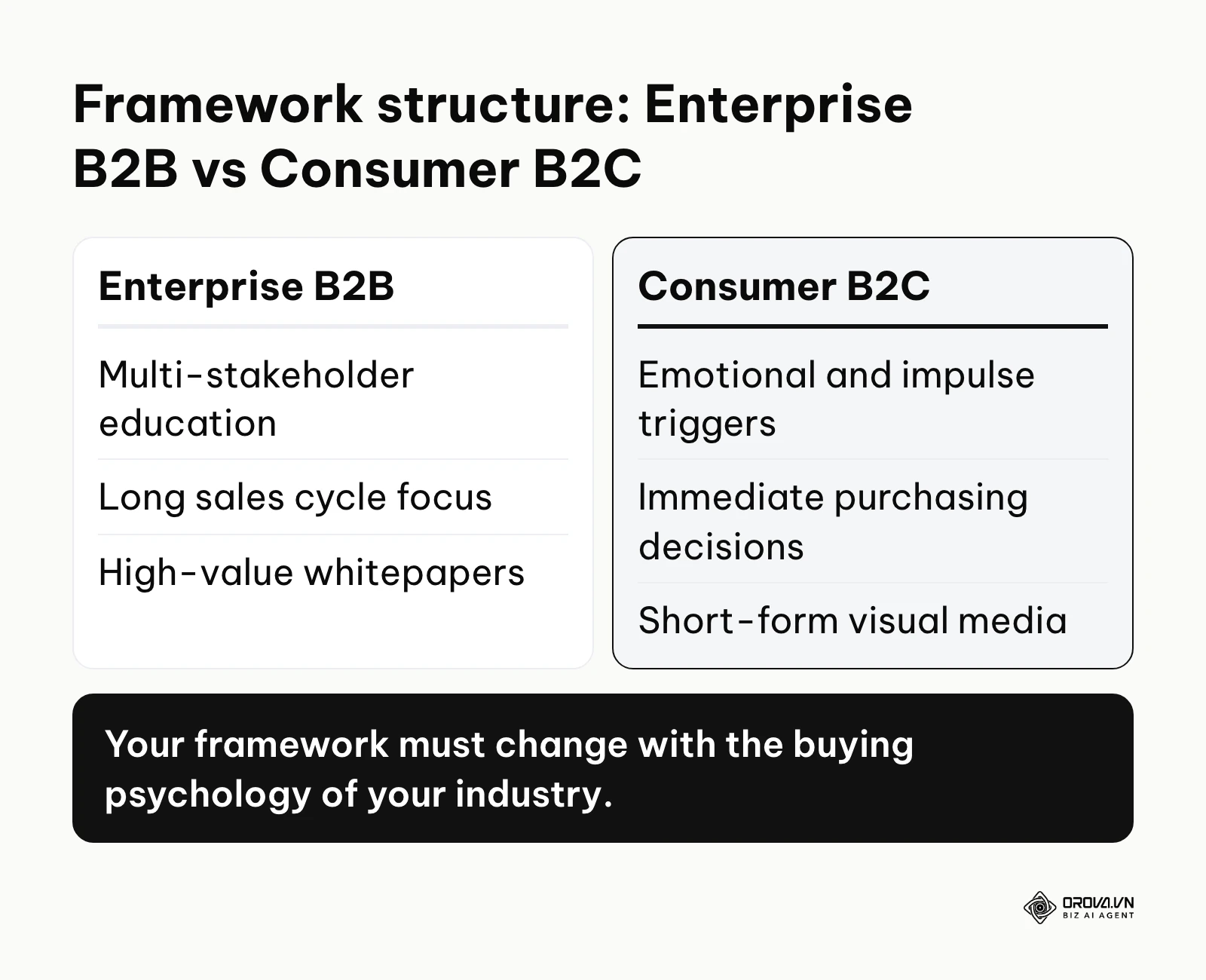
When building a structure for enterprise business-to-business environments, your primary focus must be on sales enablement and long-term buyer education. In this environment, relationship building matters more than quick sales. The sales cycle often spans several quarters and involves multiple highly skeptical stakeholders. Therefore, your framework must prioritize high-value, deeply researched formats like proprietary data reports, highly technical whitepapers, and detailed ROI case studies. The distribution strategy relies heavily on account-based marketing tactics, where assets are customized heavily for specific high-value target accounts rather than blasted to the general public.
Conversely, consumer-focused frameworks demand extreme high velocity, immediate emotional resonance, and stunning visual appeal. The buying decision is often immediate and driven primarily by impulse, social proof, or direct lifestyle desires. Your system must support the rapid daily production of short-form videos, user-generated content curation, and interactive visual formats. The distribution mechanism focuses heavily on algorithmic discovery platforms, influencer collaborations, and viral sharing loops.
Team scale also dictates structural complexity. A solo entrepreneur needs a highly lightweight system heavily reliant on artificial intelligence for initial drafting and software automation for distribution scheduling. The primary focus is on maintaining consistency and avoiding creative burnout. A large enterprise marketing team requires a heavy emphasis on governance and compliance. Their framework must include strict legal approval routing, multi-language localization protocols, and distinct separation of duties between strategists, creators, and data analysts.
| Operating Environment | Primary Goal Focus | Ideal Content Formats | Distribution Strategy | Weakness of this approach |
|---|---|---|---|---|
| Enterprise B2B | Educate complex buying committees | Whitepapers, case studies, webinars | Account-based marketing, LinkedIn | Extremely slow production cycle |
| Consumer B2C | Drive immediate impulse purchases | Short videos, interactive quizzes | Influencers, visual platforms | Requires constant high velocity |
| Solo Entrepreneur | Build personal brand authority | Opinionated newsletters, podcasts | Organic social media, SEO | Highly vulnerable to burnout |
| Large Agency | Scale production for multiple clients | Standardized blog posts, reports | Multi-channel programmatic ads | High risk of generic messaging |
Measuring results: Key performance indicators for your strategy
You cannot manage what you do not accurately measure. A framework without a rigorous, documented measurement protocol is merely a hopeful publishing schedule. You must define exactly which metrics signify actual business success and establish a regular, unbreakable cadence for reviewing that specific data.
Organic visibility is rapidly evolving, requiring you to carefully balance SEO, AEO, and GEO metrics simultaneously to ensure your brand appears across traditional search engine results, AI-generated summaries, and localized maps. However, you must quickly move beyond tracking vanity metrics like raw page views and superficial social media likes. While those indicators provide early directional feedback, they absolutely do not justify your marketing budget to the finance department when it comes time for annual reviews.
You need to focus relentlessly on pipeline impact and revenue attribution. Key performance indicators should include the exact number of marketing qualified leads generated directly from your downloadable assets, the percentage conversion rate from casual reader to engaged email subscriber, and the specific customer acquisition cost associated with different topic clusters.
You should monitor these critical metrics through a tight integration of your website analytics platform and your customer relationship management software. Set up custom dashboards that track the multi-touch attribution path of closed-won deals to see exactly which articles influenced the final signature.
| Performance Metric | Business Meaning | Warning Threshold to Take Action |
|---|---|---|
| Customer Acquisition Cost (CAC) | Total spend required to acquire one paying customer | CAC exceeds customer lifetime value |
| Marketing Qualified Leads (MQLs) | Number of prospects showing high purchase intent | Sustained decline for two or more months |
| Subscriber Conversion Rate | Percentage of visitors exchanging email for value | Falls below your own historical baseline |
| Organic Traffic Growth | Health of your long-term search engine visibility | Stagnant growth after 6 months of publishing |
You must establish a non-negotiable review schedule. Review leading indicators like traffic, search rankings, and social engagement weekly. Review lagging indicators like pipeline generation, sales cycle length, and closed revenue quarterly. Adjust your production priorities and budget allocation based strictly on this quantitative feedback, not on internal opinions.
With OROVA.VN and the OROVA SEO module, you put an end to the exhausting days of manual work for good. Instead of struggling for hours to write articles and compile reports, the entire process is now optimized and completed in just 5 minutes.
Common mistakes when executing your content strategy framework
Even with a thoroughly researched plan, execution often falters due to predictable operational traps. Recognizing these pitfalls early prevents wasted budget, protects your brand reputation, and prevents severe team frustration.
Strategy and budget mistakes
First, teams often treat the framework as a static, permanent document. They spend weeks building the perfect theoretical system, present it once to the board, and never update it again. The market shifts constantly, new competitors launch aggressive campaigns, and search algorithms update frequently. A framework is considered outdated the moment it stops reflecting the current market reality. You must schedule formal quarterly reviews to recalibrate your baseline assumptions and adjust your topic clusters based on recent performance data.
Second, marketing leaders frequently fail to secure proper executive buy-in because they pitch activities instead of business impact. When you present your framework to the board, you cannot focus on the sheer number of blog posts you intend to publish. The board does not care about blog posts. You must explicitly demonstrate how those posts will mathematically reduce customer acquisition costs or shorten the average sales cycle. Speak the language of finance, not the language of publishing.
Third, teams consistently underinvest in distribution mechanisms. They spend almost the entire budget on creation and leave only a sliver for promotion. They publish brilliant, highly expensive research reports that nobody ever sees. You must drastically shift this ratio. A strong framework dictates that you spend as much time and budget distributing a piece of collateral as you did creating it.
Illustrative example: A marketing director at a mid-sized digital agency pitched an ambitious annual strategy to the executive board, requesting a significant budget increase for the new fiscal year. The director focused the presentation entirely on the creative vision, showcasing beautiful design mockups, complex video storyboards, and an extensive list of planned podcast episodes. The board rejected the proposal immediately because they could not see the financial return on investment. The director regrouped and revised the presentation entirely. The second time, they mapped the exact historical conversion rates of past campaigns, projected the tangible pipeline value the new strategy would generate, and showed exactly how the framework aligned with the company's aggressive revenue growth targets. The board approved the revised, financially grounded proposal on the spot.
Execution and quality mistakes
Fourth, creators often ignore search intent entirely. They write articles based on what they want to say or what they think sounds clever, rather than what the audience is actively searching for online. This results in high-quality writing that generates absolutely zero organic traffic. You must rigorously validate every topic against actual search volume and deeply analyze the top-ranking pages to understand the exact format the audience expects.
Fifth, organizations fail to maintain a consistent brand voice when rapidly scaling production. As you add more freelance writers or rely heavier on generative AI tools, the tone can easily become fragmented. Readers get confused when an authoritative, highly professional blog suddenly publishes a slang-filled, casual article. You must strictly enforce your brand guidelines during a mandatory editorial review phase.
Sixth, teams try to measure everything and end up analyzing nothing. They build dashboards with fifty different metrics, leading to analysis paralysis. When every metric is a priority, nothing is a priority. You must narrow your focus to the three or four metrics that actually move the needle for your specific business goals.
Seventh, failing to align the marketing schedule with the product release cycle causes immense internal friction. Publishing a massive guide on a feature that the engineering team just deprecated makes the marketing department look incompetent. Your editorial calendar must be tightly integrated with the product roadmap.
Content strategy framework trends in the coming years: Author's perspective
The landscape of digital publishing and search engine discovery is undergoing a massive, irreversible structural shift. The tactics that generated predictable returns five years ago are rapidly losing effectiveness today. Based on the technological developments and algorithmic updates visible as of 2026, I anticipate several major changes in how successful organizations structure their strategic frameworks moving forward.
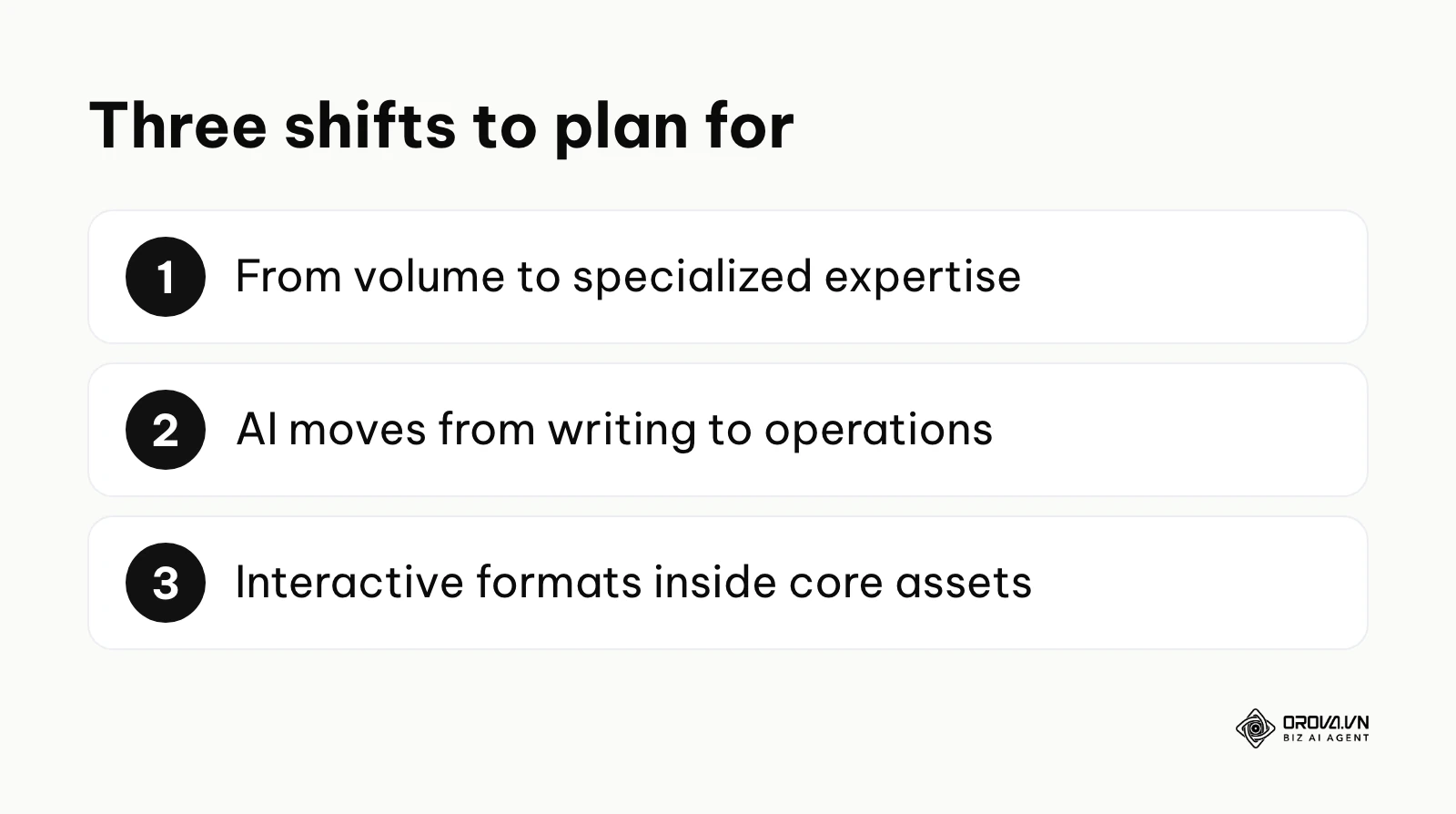
The shift from volume to hyper-specialized expertise
Currently, we are seeing a massive influx of commoditized, generic articles flooding search engines and social feeds. Because generative tools have reduced the cost of writing to near zero, basic informational queries are entirely saturated. I believe that in the next two to three years, frameworks that rely on publishing high volumes of generic "what is X" articles will collapse completely. Search engines and AI chat interfaces will prioritize direct, unique expertise that cannot be easily synthesized from existing web pages. You should prepare for this by shifting your framework to focus entirely on proprietary data, deeply technical insights, and strong, opinionated perspectives drawn directly from your internal subject matter experts. Stop competing on volume and start competing on depth.
AI will manage operations, not just creation
Today, most teams use AI primarily as a basic writing assistant to draft outlines, generate paragraphs, or brainstorm titles. I anticipate that the true value of AI within a framework will shift heavily toward operational management and complex data analysis. We will see AI agents taking over the tedious aspects of the system: automatically auditing old pages for broken links, actively monitoring competitor keyword movements daily, and dynamically suggesting updates to your editorial calendar based on fresh search trend data. You need to start building workflows that treat AI as a strategic operational analyst rather than just a junior copywriter.
The rise of interactive and dynamic formats
We are observing a severe decline in user patience for massive walls of static text. As content consumption habits become more fragmented and visually driven, I project that successful frameworks will mandate the inclusion of dynamic, interactive elements within core assets. This means moving beyond simple blog posts to embedding custom ROI calculators, interactive diagnostic quizzes, and personalized video summaries directly into the reading experience. To prepare, you must ensure your technical infrastructure and budget allocations can support the development of these higher-effort, interactive formats. Be aware that this prediction heavily depends on the continued evolution of web standards; if browser security protocols severely restrict interactive scripts, this shift could be delayed or require different technical solutions.
Frequently asked questions about content strategy framework
How to build a content strategy with limited internal resources?
You must aggressively narrow your focus. Do not attempt to conquer five distribution channels simultaneously with a team of two. Identify the single platform where your core audience is most active and direct all your energy there. Focus on creating high-quality, long-form assets that you can later slice into dozens of smaller, highly specific pieces for localized social media distribution.
What percentage of this framework can be automated by AI?
AI can take over a meaningful share of the operational heavy lifting. It excels at the initial research phase, complex topic clustering, detailed outlining, and basic drafting. However, you absolutely cannot automate the strategic alignment with your business goals, the injection of proprietary company data, or the final editorial review for brand voice nuance. The strategic decision-making must remain strictly human.
How often should we update our content strategy framework template?
Your daily operational tracking template should evolve constantly as your team discovers friction points in the workflow. However, the foundational strategy framework dictating your core goals and audience personas should undergo a rigorous review every single quarter. If your company launches a major new product line or pivots its target market, you must overhaul the framework immediately to reflect that new reality.
What is the exact difference between a framework and a campaign?
A framework is the permanent, ongoing operating system for your entire marketing department. It dictates the overarching rules, quality standards, and approval processes for everything you produce globally. A campaign is a temporary, highly focused, tactical effort designed to promote a specific initiative, like a new software product launch or an annual industry conference. Campaigns operate strictly within the boundaries established by your framework.
How do you prove the ROI of a new framework to leadership?
You prove it by establishing baseline metrics before you implement the new system. Document your current customer acquisition cost and lead volume. After implementing the framework, track the delta. You must tie the outputs of the framework directly to closed revenue using multi-touch attribution modeling in your CRM, rather than presenting them with a report on increased page views.
Where to start?
Building an entire strategic infrastructure from scratch feels incredibly overwhelming, especially if your team is already operating at maximum capacity. You do not need to implement every single step simultaneously to see improvements. The best approach is to identify your most pressing current problem and deploy a targeted solution this week.
If your team is producing material consistently but generating absolutely zero qualified leads, your immediate problem is a severe lack of commercial alignment. You should spend your next working session interviewing your top three sales representatives. Ask them what specific, technical questions prospects always ask right before signing a contract. Your first action step is to document those exact questions and strictly mandate that your next five published articles address them directly and comprehensively.
If your writers are constantly missing deadlines and the publishing schedule feels chaotic and stressful, your core problem is operational friction. You should dedicate a morning to building a vastly simplified tracking board. Set up a basic kanban board in your preferred project management tool with just four simple columns: Ideas, Drafting, Review, and Published. Force all team members to log their current assignments on this board before taking on any new work.
If you have a massive archive of older articles that are slowly losing traffic month over month, your problem is content decay. You should schedule a two-hour block to export your website analytics data for the past twelve months. Sort the data to find high-value pages that previously ranked well but have dropped significantly in traffic over the last quarter. Your immediate action step is to flag the top ten declining pages and assign them to your best writer for a comprehensive rewrite and update.
About the author

Builder of Orova
Nguyễn Đỗ Trọng Ân has 8 years of experience in marketing, including 6 years managing market development across Asia. He builds Orova, a Biz AI Agent that never sleeps: it plans, runs and optimizes work for businesses.
Run your business with AI Agents
Orova is the always-on Biz AI Agent — it plans, runs, and optimizes the work for you.
Save time, unlock productivity.