
What is short form video content? A complete conversion strategy

Short form video content is vertical video, usually under 90 seconds, made for mobile feeds such as TikTok, Instagram Reels and YouTube Shorts. If you are struggling to get attention online, this is the format your audience already scrolls every day. You post long tutorials, but no one watches them through. You try static graphics, but engagement remains dead. You might think the algorithm is just against your business, but the real issue is that audience behavior has shifted drastically over the last few years. To survive this shift, you need a short form video content strategy that actually works in the real world.
This guide will walk you through exactly how to create short form video content that not only gets views but converts those viewers into actual leads. We will cover a comprehensive batch-creation workflow to produce thirty videos a month without facing burnout. We will provide plug-and-play short form video script templates that you can use immediately. We will also show you how to build a zero-budget faceless setup. If you want to stop guessing and start building a predictable traffic engine, you are in the right place.
What is short form video content?
Short form video content is any vertical video, usually under sixty to ninety seconds (some platforms now allow a few minutes), designed for rapid consumption on mobile platforms like TikTok, Instagram Reels, and YouTube Shorts. It is used to quickly capture attention and drive immediate engagement. Unlike traditional long-form videos, it prioritizes fast pacing over high production value.
The origin of this format can be traced back to Vine, which popularized the six-second loop. It was later dominated and reshaped by TikTok, forcing all other major platforms to adapt to shrinking mobile attention spans. People no longer want to scrub through a ten-minute video to find one piece of advice.
This format is frequently confused with other visual media. The table below outlines the core differences.
| Concept | How it differs | Example |
|---|---|---|
| Short Form Video | Permanent, algorithm-driven, built for discovery by strangers. | A thirty-second TikTok explaining a tax loophole. |
| Stories | Disappears after twenty-four hours, shown mostly to existing followers. | An Instagram Story showing your morning coffee. |
| Long Form Video | Horizontal, search-driven, requires high time commitment. | A forty-minute YouTube documentary. |
A real-life example of this in action is a local bakery. Instead of filming a ten-minute, professionally edited baking tutorial for YouTube, they post a raw, fifteen-second clip of frosting a cake from a first-person perspective. The short clip requires minimal editing and is built for the feed where new viewers discover local shops.
The meaning and purpose of short form video content in business
The core purpose of this format is to generate massive top-of-funnel awareness at a fraction of the cost of traditional advertising. It acts as the modern digital storefront. Historically, businesses had to rely on expensive print media, television, or highly optimized search campaigns just to get noticed. Today, the algorithm does the heavy lifting of distribution.
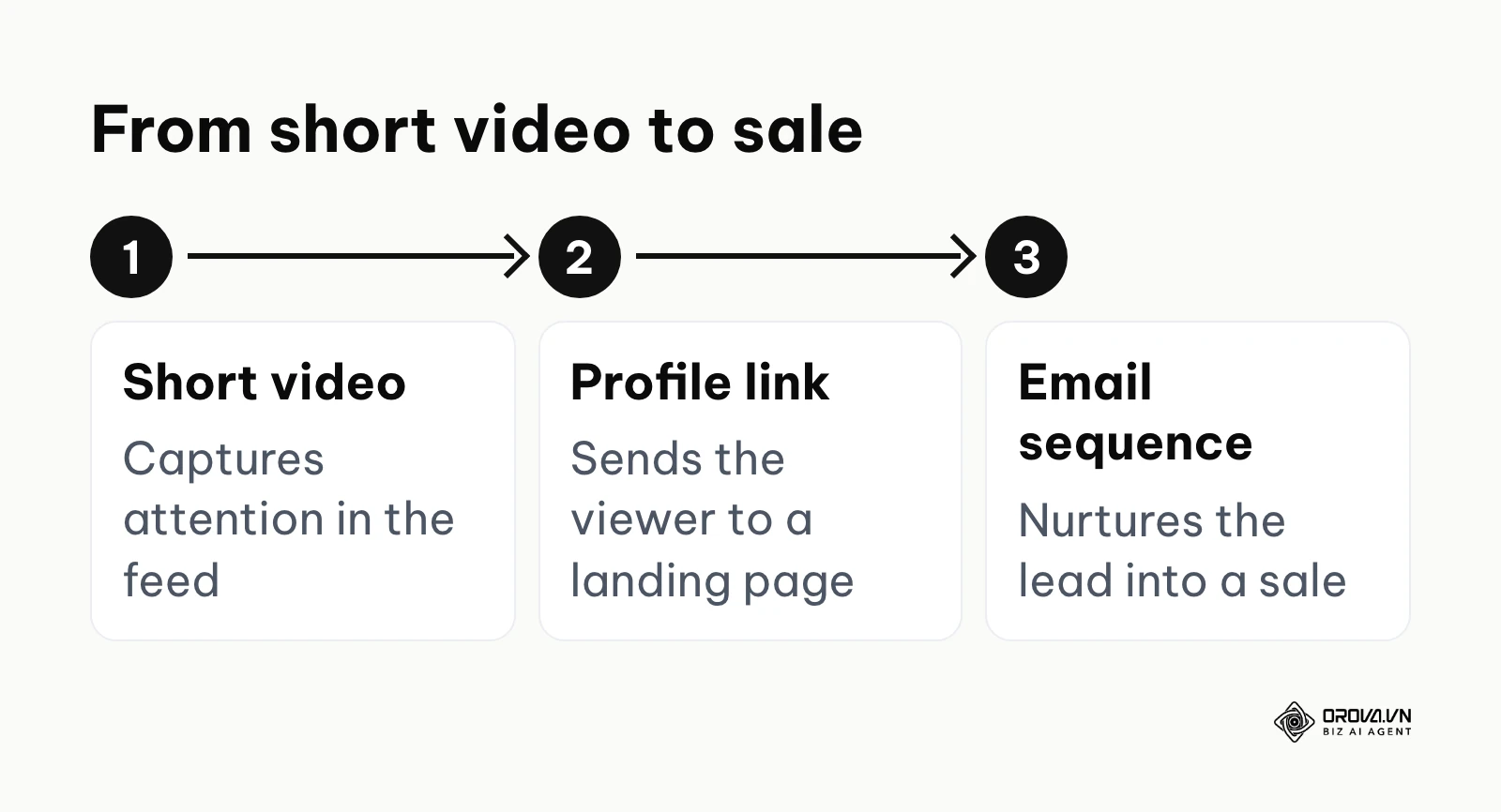
In the broader marketing picture, short vertical videos sit at the very beginning of the customer journey. They are the hook. The workflow follows a specific sequence: the short video captures attention, the profile link directs the user to a landing page, and an email sequence nurtures the lead into a sale. If you skip the video phase, your funnel simply lacks the raw traffic needed to function.
If you choose to ignore this format entirely, you lose access to the cheapest source of organic traffic available today. You also risk becoming invisible to a younger demographic that uses platforms like TikTok and Instagram as their primary search engines.
You should not invest in this format if your core product is highly technical enterprise software that requires extensive whitepapers to explain, or if you do not have a functional website to direct the traffic to. In these cases, rushing into trendy videos is a waste of resources. Instead, you should focus on building a robust foundational seo content writing strategy to capture high-intent search traffic first before attempting to entertain a cold audience on social media.
Core values and business benefits
The primary value lies in dramatically lowering customer acquisition costs for businesses while allowing creators to test ideas with rapid feedback loops. We can break these benefits down into two distinct layers.
Business value: Lowering acquisition costs
Producing traditional advertisements requires a massive budget for equipment, actors, and media buying. Short videos bypass all of this. Because the algorithm pushes content based on watch time rather than production budget, a small business can compete directly with a major corporation.
Illustrative example: A boutique clothing store owner relied on expensive billboard advertising for years. They began recording daily outfit styling tips using a standard smartphone. They initially struggled with dark lighting and rambling introductions. They fixed this by facing a window and scripting a tight three-second hook. The result was more local foot traffic and less reliance on billboard spend.
Creator value: Faster iteration and feedback loops
For the person actually making the content, the value is speed. You do not have to spend weeks editing a single video to find out if the market cares about the topic. You can post a rough idea in the morning and know by the evening if it resonates. This creates an incredibly fast feedback loop that allows you to refine your messaging quickly.
Risk mitigation: Testing ideas cheaply
Before launching a new product line or a massive marketing campaign, you can use short videos as a testing ground. If a specific topic goes viral organically, you have a strong signal that the market wants it. You can then confidently allocate resources to build out that product.
| Benefit | Measured By | Typical Timeframe |
|---|---|---|
| Lower Acquisition Cost | Cost Per Lead (CPL) | Four to eight weeks |
| Faster Iteration | Video Views & Retention Rate | Twenty-four hours |
| Risk Mitigation | Engagement Rate | One to two weeks |
Discover Orova.vn – a Biz AI Agent platform with OROVA SEO, a complete solution for every website. The system supports search engine optimization from A to Z with features including keyword research, writing new SEO-ready articles, optimizing existing content, rank tracking, plus competitor analysis and in-depth technical analysis. Sign up today to experience OROVA SEO completely free (offer valid through July 7, 2027).
How short form video content works: The 30-video workflow
A successful strategy requires moving away from single-video production and adopting an automated batch-creation system paired with proven script formulas. This is the longest and most critical phase of the process. If you try to wake up every day and invent a new video on the spot, you will burn out within a month.
The anatomy of a 30-second video
Before you can bulk-produce content, you must understand how a high-performing video is structured. A thirty-second video is not just a random compilation of thoughts. It is a carefully engineered psychological sequence.
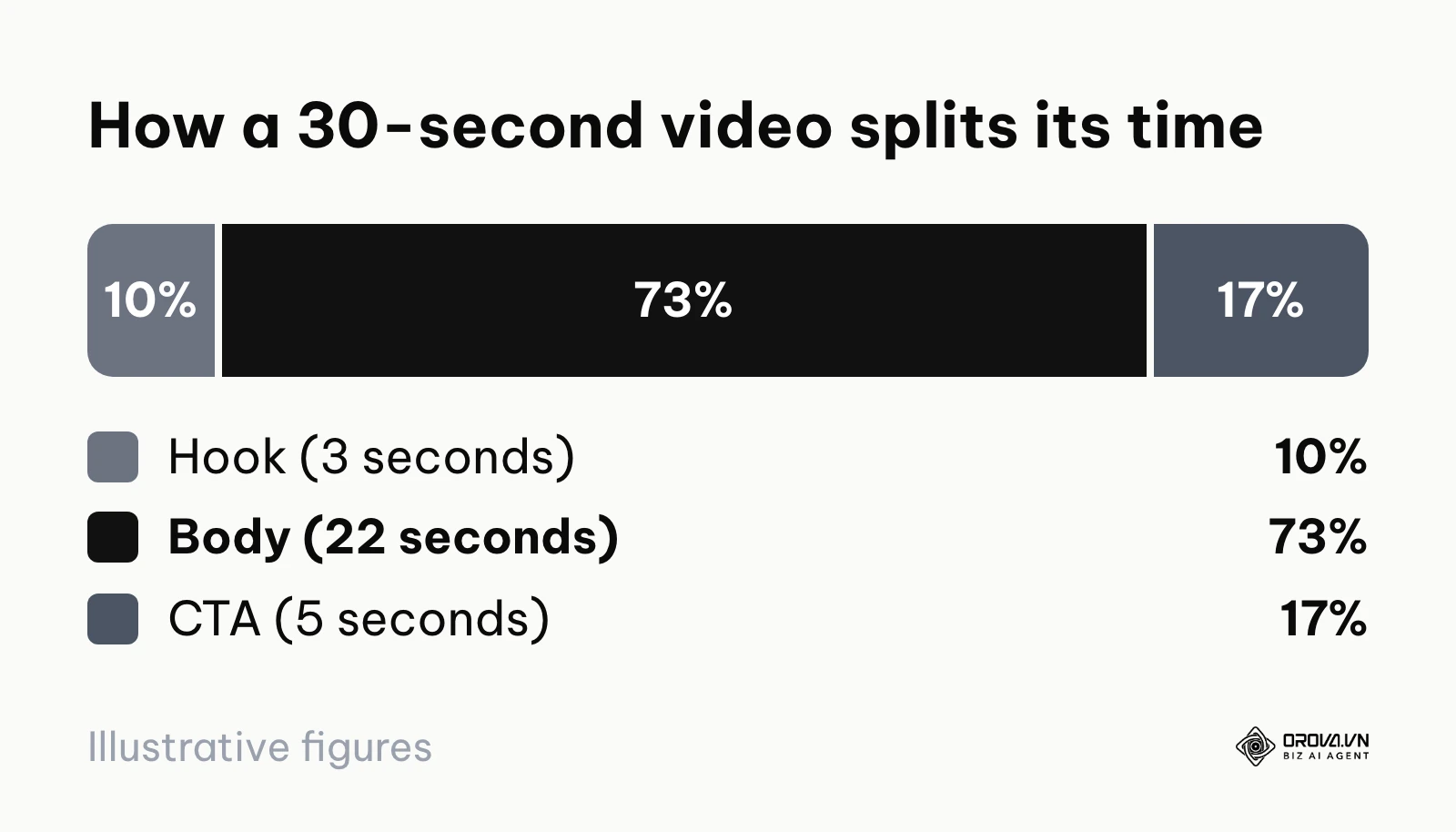
The first three seconds are the Hook. The only goal of the hook is to stop the user from scrolling (see these TikTok hook examples and formulas for more patterns). It must address a specific pain point or create intense curiosity. The next twenty-two seconds are the Body. This is where you deliver the actual value, keeping the pacing fast to maintain the retention rate. The final five seconds are the Call to Action (CTA). You tell the viewer exactly what to do next, whether that is following the page, leaving a comment, or clicking a link.
5 plug-and-play short form video script templates
Most beginners fail because they do not know what to say. They turn on the camera and ramble. To solve this, you need structured templates. You can use these five fill-in-the-blank frameworks for almost any industry.
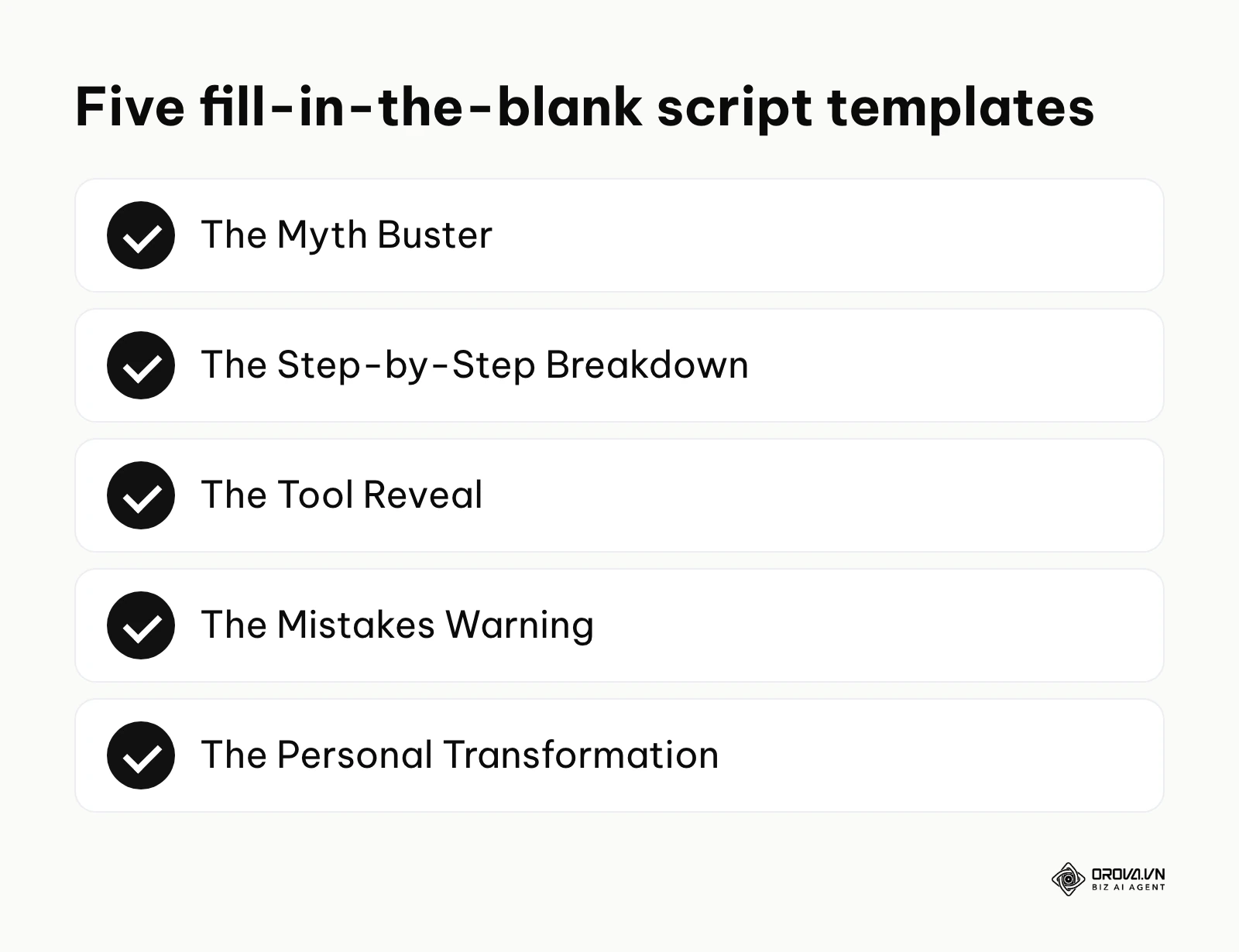
Template 1: The Myth Buster
- Hook: Everyone tells you that [Common Industry Belief], but they are completely wrong.
- Body: The truth is, [Contrary Fact]. When you do [Common Belief], you actually ruin [Negative Consequence]. Instead, you need to focus on [Your Solution].
- CTA: Stop making this mistake. Follow me for more [Niche] tips.
Template 2: The Step-by-Step Breakdown
- Hook: Here is exactly how to achieve [Desirable Result] in just [Timeframe] without [Common Pain Point].
- Body: Step one: [Actionable Step]. Step two: [Actionable Step]. Step three: [The Secret Sauce Step].
- CTA: Save this video so you do not forget the steps later.
Template 3: The Tool Reveal
- Hook: This one simple tool saved my business [Amount of Time/Money] last month.
- Body: It is called [Tool Name]. Instead of wasting time doing [Manual Task], this tool automatically does [Benefit]. The best part is it only takes five minutes to set up.
- CTA: Click the link in my bio to get my full list of recommended tools.
Template 4: The Mistakes Warning
- Hook: If you are struggling with [Specific Problem], you are probably making these three mistakes.
- Body: Mistake number one is [Mistake 1]. Mistake number two is [Mistake 2]. But the worst one is number three: [Mistake 3]. This destroys your progress because [Reason].
- CTA: Comment the word "HELP" and I will send you a guide to fix this.
Template 5: The Personal Transformation
- Hook: How I went from [Negative Starting Point] to [Positive End Result] in just [Timeframe].
- Body: I used to struggle heavily with [Pain Point]. I tried [Failed Solution] and it did not work. Everything changed when I discovered [Your Method]. It allowed me to finally achieve [Benefit].
- CTA: Read the caption below for the exact blueprint I used.
The batch-creation workflow (No burnout)
You cannot shoot a video every single day. The friction of setting up the camera, finding the right lighting, and getting into a speaking rhythm is too high. You must batch your tasks. Many buyers now prefer a short video over reading text to learn about a product, which means you need a steady volume of content.
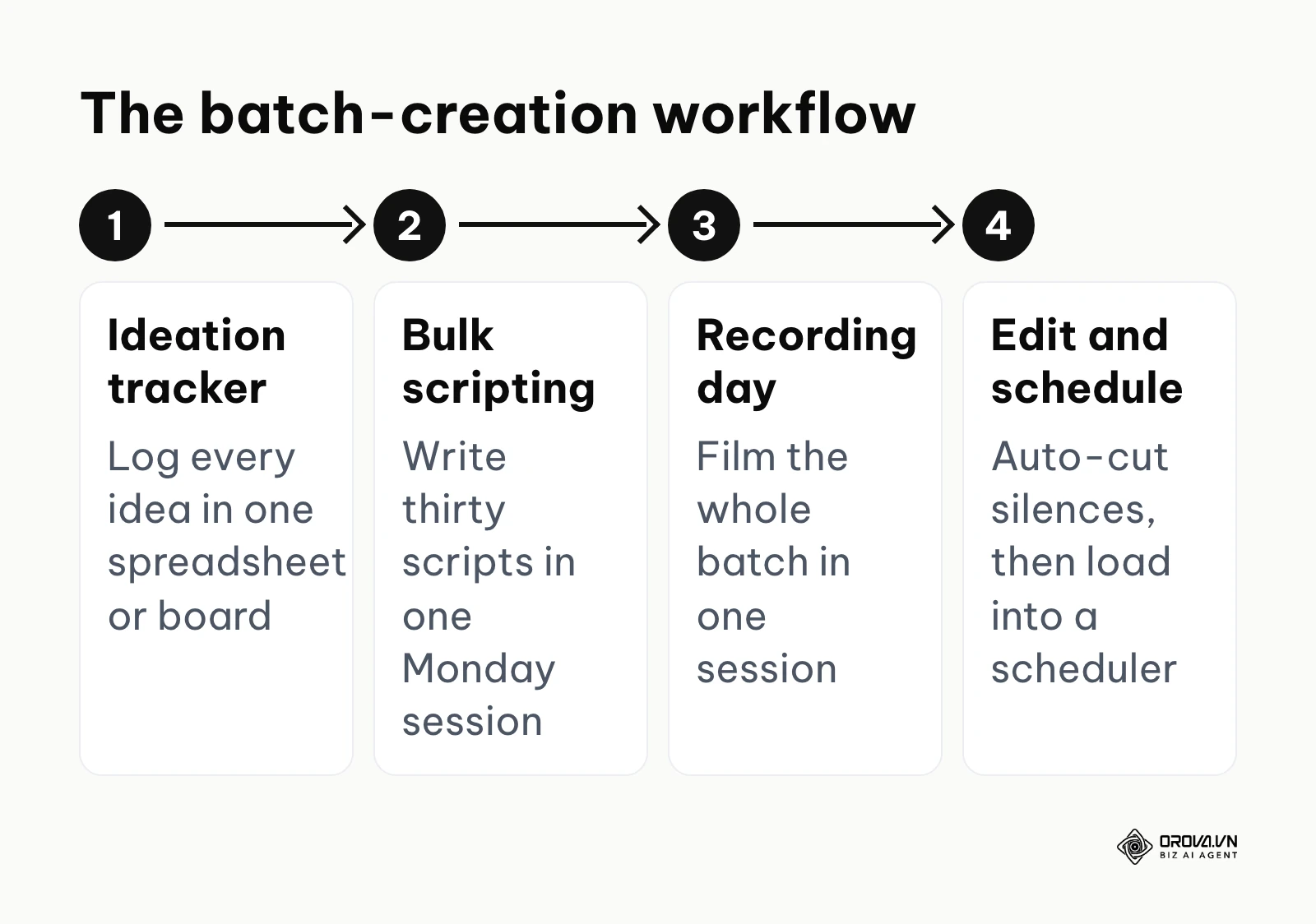
Step 1: Ideation and the Tracker You need a central place to store ideas. Open a spreadsheet or a Notion board. Whenever you get a question from a customer, read an interesting comment, or see a competitor's video do well, log it in the tracker.
| Idea Concept | Hook Concept | Status | Platform |
|---|---|---|---|
| Tax deductions | Did you know your home office is a write-off? | Scripting | Reels |
| Morning routine | 3 things I do before 8 AM for productivity | Ready to Shoot | TikTok |
| Product demo | Watch how easily this removes stains | Edited | YouTube Shorts |
Step 2: Scripting in bulk Dedicate two hours on a Monday to sit down and write thirty scripts using the templates provided above. Do not edit them as you write. Just get the ideas onto the page. Ensure every script has a clear hook, a tight body, and a strong CTA.
Step 3: The recording session Pick one day a month to film. Set up your camera, fix your lighting, and bring your wardrobe changes. Read your scripts from a teleprompter app on your phone or laptop. Because you are already in the zone, you can easily record thirty short videos in under three hours.
Illustrative example: A freelance video editor managing three client accounts faced severe burnout. They were shooting and editing single videos every day. They shifted to batching, grouping all scriptwriting on Mondays and recording on Tuesdays. They initially messed up file organization, which caused massive editing delays. They resolved this by creating strict naming conventions for every raw clip. The result was a steady monthly output across all three clients while reclaiming their weekends.
Step 4: Automated editing and scheduling Do not manually cut out dead air. Use AI tools like Opus Clip or the auto-cut features in CapCut to automatically remove silences and add dynamic captions. Once your batch is exported, you should load it into a social media scheduler to automate the publishing process across all platforms. If TikTok is your main channel, follow this guide on how to schedule TikTok posts.
Converting views into actual leads
Millions of views mean nothing if you cannot pay your rent. The goal of a short form video content strategy is to move people off the social platform. You need a dedicated funnel.
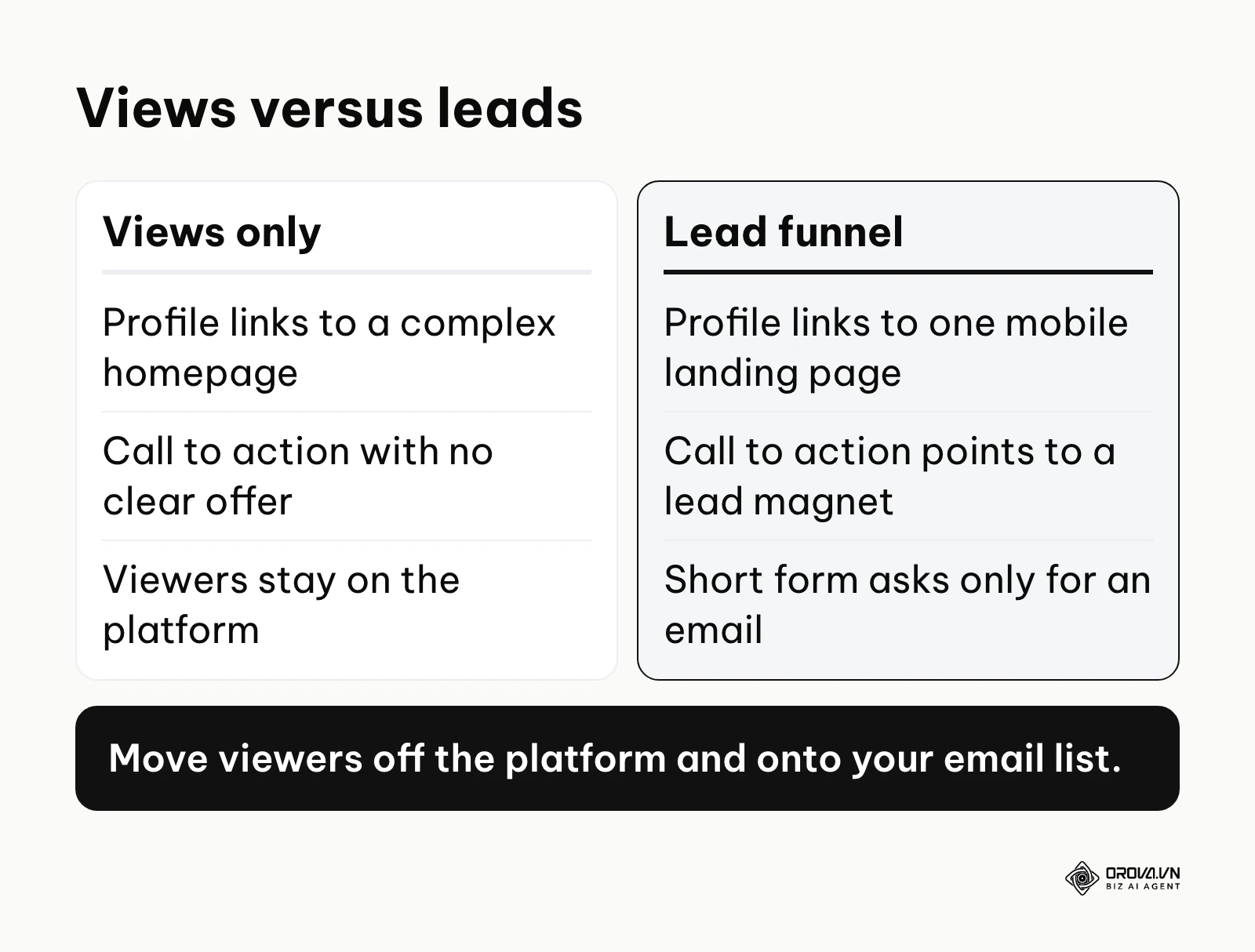
First, optimize your profile link. Do not link to your complex, multi-page homepage. Link to a single, mobile-optimized landing page that offers a specific "Lead Magnet" (like a free template, a checklist, or a mini-course) in exchange for an email address.
When you film your video, your call to action must point directly to this lead magnet. Tell them exactly what they will get. If organic reach plateaus, you can easily repurpose your best-performing organic clips into facebook video ads to scale your results systematically. For higher conversion rates on paid traffic, you can bypass landing pages entirely by pairing your videos with lead form ads to capture emails natively.
Illustrative example: A business software startup gained thousands of views but zero trial signups. They were using generic profile links that led to a complex homepage. They changed their approach to offer a specific checklist related to the video topic. Initially, the landing page asked for too much information and mobile users bounced. They simplified the form to just ask for an email address. The result was a steady flow of qualified email leads directly from their vertical videos.
Faceless videos and the zero-budget setup
You do not need to show your face to succeed. Many business owners have camera anxiety or simply lack the time to get ready for a shoot. Faceless videos are incredibly effective.
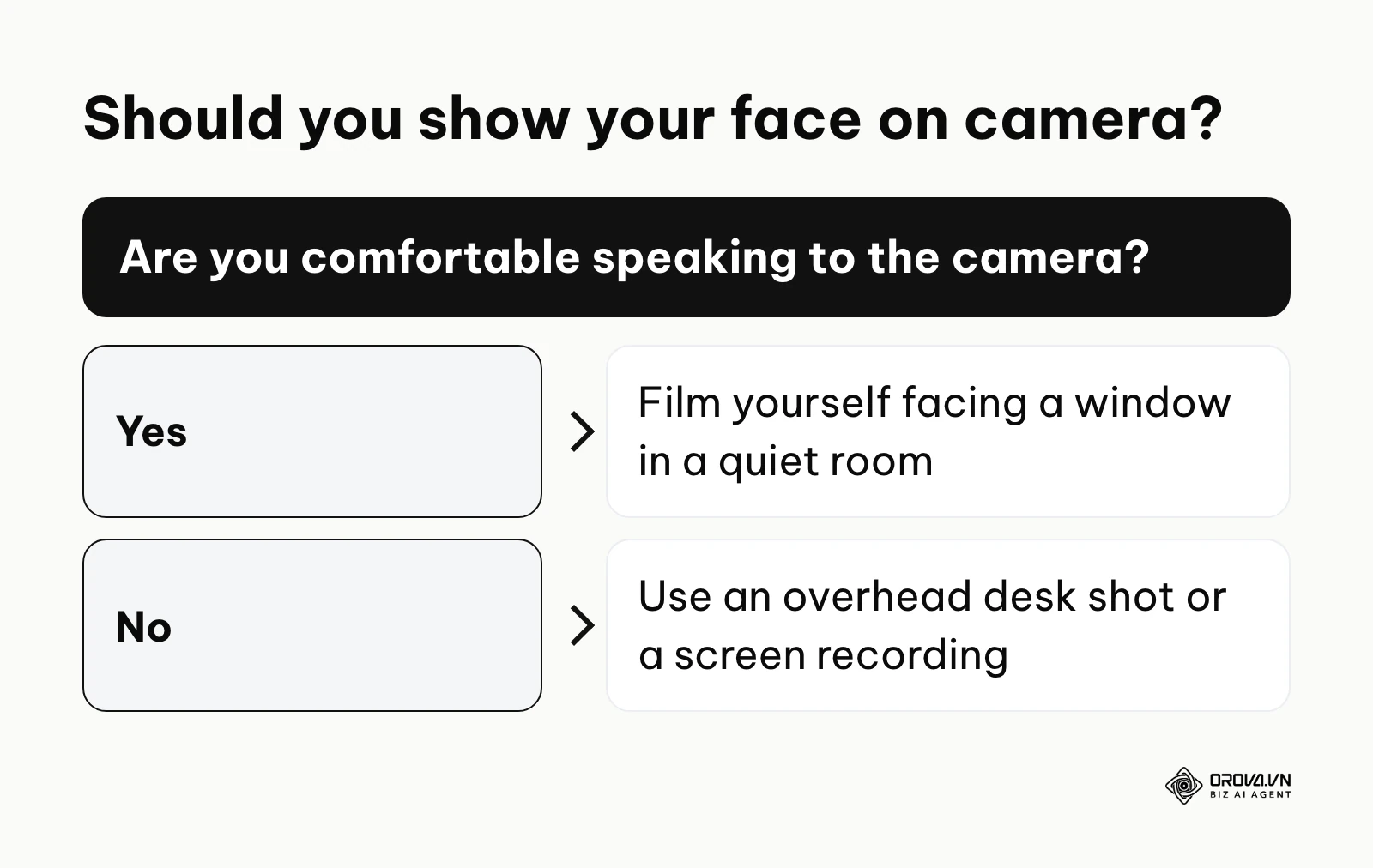
You can use the "overhead desk" setup. Mount your phone on a cheap tripod looking straight down at your hands while you write on a notepad or demonstrate a physical product. You can also use screen recordings where you navigate through a software tool while providing a voiceover.
For a zero-budget setup, you only need three things: a smartphone manufactured in the last four years, a window for natural lighting (stand facing the window), and a quiet room to ensure the microphone picks up clean audio. You do not need a specialized camera or expensive microphones to get started.
What to do to adapt and start executing
To succeed, you must stop treating vertical videos as a side project and start integrating them into your daily operational workflow. The approach varies depending on your role in the business.
For small business owners
As a business owner, your time is your most limited resource. You cannot afford to spend hours editing transitions.
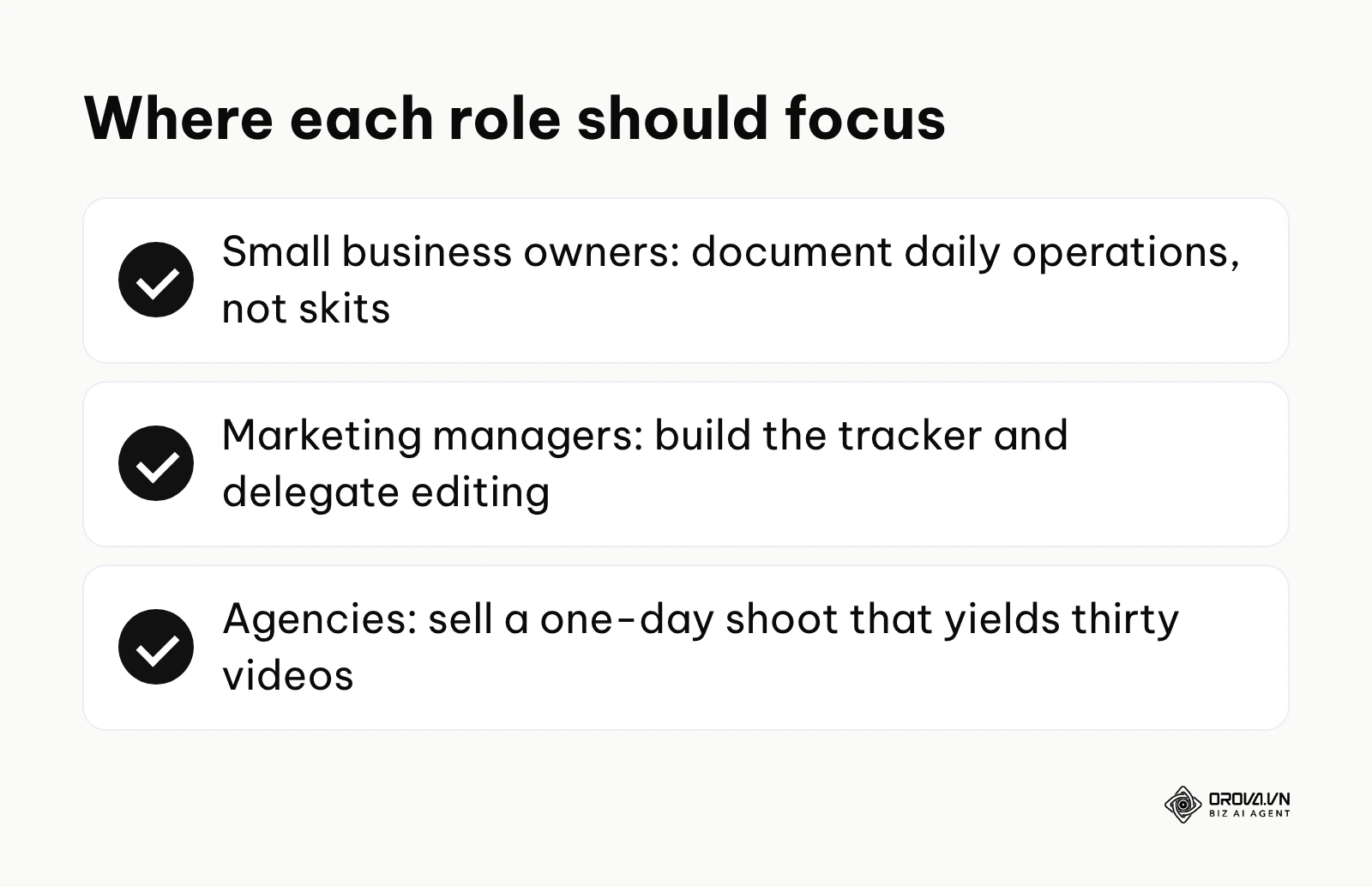
- Document, do not create: Stop trying to invent funny skits. Just set up a camera in the corner of your shop or office and record your daily operations.
- Focus on local reach: Use location-specific hashtags and mention your city in the hook.
- Answer common questions: Take the top five questions customers ask you every week and turn each one into a thirty-second answer.
For marketing managers
Your job is to build systems and measure return on investment.
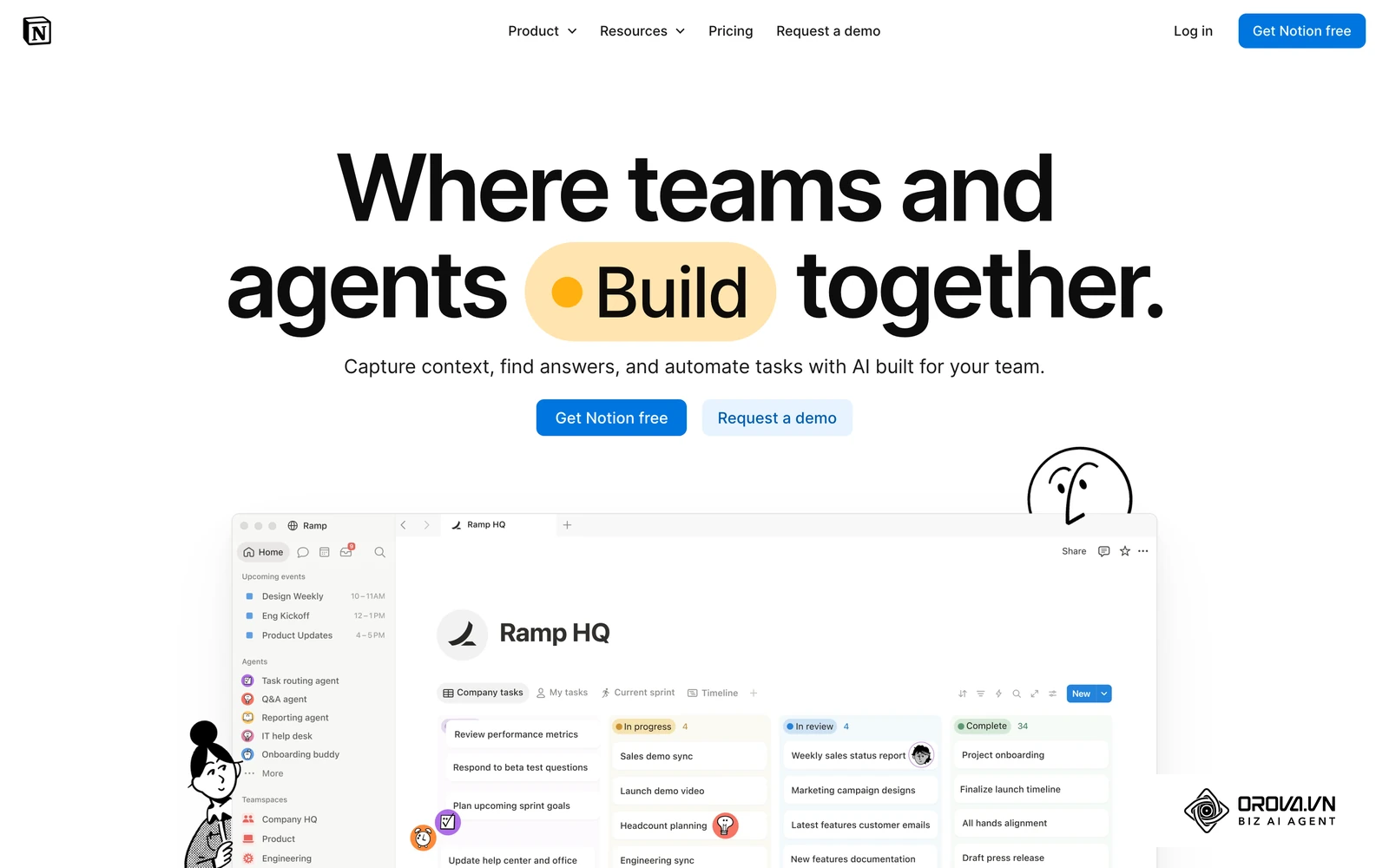
- Build the tracker: Set up the Notion content calendar for your team to standardize ideation.
- Delegate the editing: Stop doing the technical work. Use your budget to hire a freelance editor or invest in AI editing software.
- Blend native content: Consumers ignore over-produced corporate videos. You should consider shifting your budget toward user generated content ads to blend in with native content seamlessly.
For agencies and freelancers
You must offer scalable solutions to your clients without destroying your profit margins.
- Sell the batching process: Do not sell "one video a week." Sell a "one-day shoot" that yields thirty videos.
- Provide the scripts: Clients hate writing. Give them the templates so they only have to read.
- Focus on retention metrics: Report on watch time and link clicks, not just overall views, to prove your worth.
| Common Mistake | The Consequence | How to Avoid It |
|---|---|---|
| Rambling intros | Viewers scroll past within two seconds | Use a strict 3-second hook script |
| Poor audio quality | Viewers perceive the brand as cheap | Record in a quiet room or use a basic lapel mic |
| No clear CTA | Millions of views but zero website traffic | Tell them exactly what to click at the end |
With OROVA.VN and the OROVA SEO module, you put an end to the exhausting days of manual work for good. Instead of struggling for hours to write articles and compile reports, the entire process is now optimized and completed in just 5 minutes.
Future trends of short form video content: The author's perspective
Feeds move fast, and a single post rarely stays visible for long, so continuous output matters. Here is where I think the format is heading.
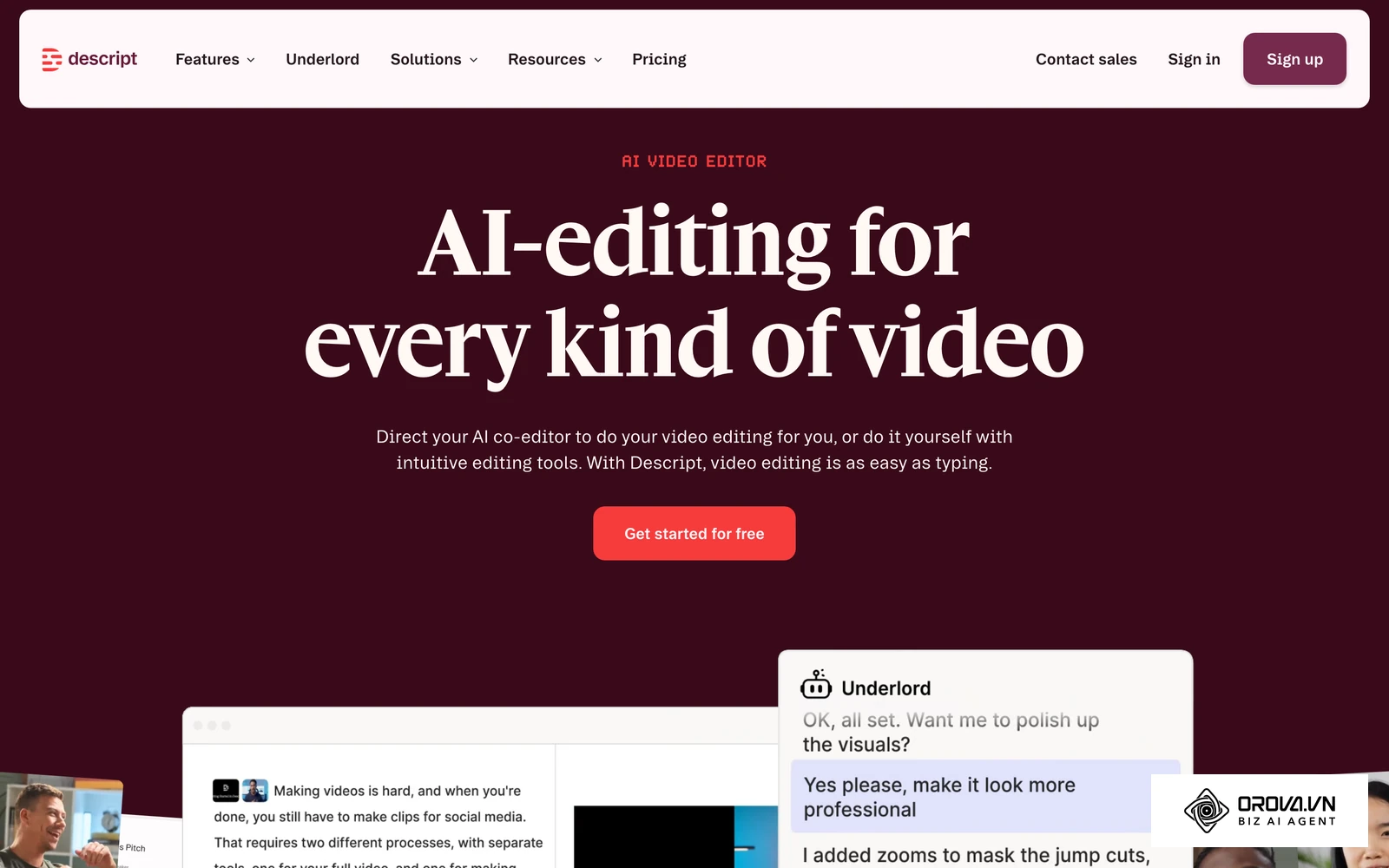
AI will handle most of the editing work
I believe manual video editing for short-form content will shrink to a small part of the job. We are already seeing AI tools that can chop long podcasts into short clips. AI is likely to get better at analyzing your raw footage, identify the most engaging moments based on facial expressions, and automatically apply trending audio and captions. You should prepare for this by focusing entirely on your messaging and strategy, as the technical execution will be commoditized. However, I could be wrong if platforms decide to penalize AI-generated edits to protect human creators.
Search intent will dominate social feeds
I lean towards the idea that TikTok and Instagram will function more like Google. People are already using these platforms to search for "best restaurants near me" or "how to fix a leaky sink." I believe that optimizing your on-screen text and spoken keywords for search engine optimization will become more important than chasing viral audio trends. You must start treating your video captions like blog post metadata, the same way YouTube SEO treats titles and descriptions.
Longer "short" formats will take over
My perspective is that the extremely short seven-second videos will lose value. Platforms want to keep users on the app longer, and several now allow videos well past the one-minute mark, so I expect longer clips that hold attention to gain ground. I suggest you start practicing how to hold attention for sixty to ninety seconds, rather than relying on rapid flash-cuts.
Frequently asked questions about short form video content
Here are the clear, definitive answers to the most common questions marketers have about launching a video strategy.
Is short form video content still needed with AI?
Yes, absolutely. While AI can generate text and images, human connection remains the strongest driver of trust. People buy from people. AI tools will help you edit faster and write scripts, but the authentic human element in a vertical video is what builds the parasocial relationship required to close sales.
How often should I post to see results?
Many brands aim to post daily, but there is no fixed number. Consistency is more important than raw volume. Posting three times a week for a year is vastly superior to posting three times a day for a week and then quitting.
Do I need professional equipment to go viral?
No. In fact, over-produced videos often perform worse because they look like traditional advertisements, which triggers users to scroll away immediately. A standard smartphone, natural lighting, and a basic understanding of audio clarity are all you need. Authenticity always outperforms high production budgets.
Which platform is best for B2B companies?
While TikTok has massive reach, LinkedIn now offers a vertical video feed, and YouTube Shorts remains highly searchable. For B2B companies, a combination of YouTube Shorts (for search longevity) and LinkedIn video (for targeted networking) often yields the highest quality leads.
Can I repurpose long videos into short ones?
Yes, this is one of the most efficient strategies available. If you have existing webinars, podcast episodes, or long YouTube tutorials, you can easily scrub through them to find one-minute segments of high-value advice. You can then reformat these clips into vertical aspect ratios and add captions.
Where to start?
Your very first step depends entirely on your current state of readiness, but it always involves simplifying your focus.
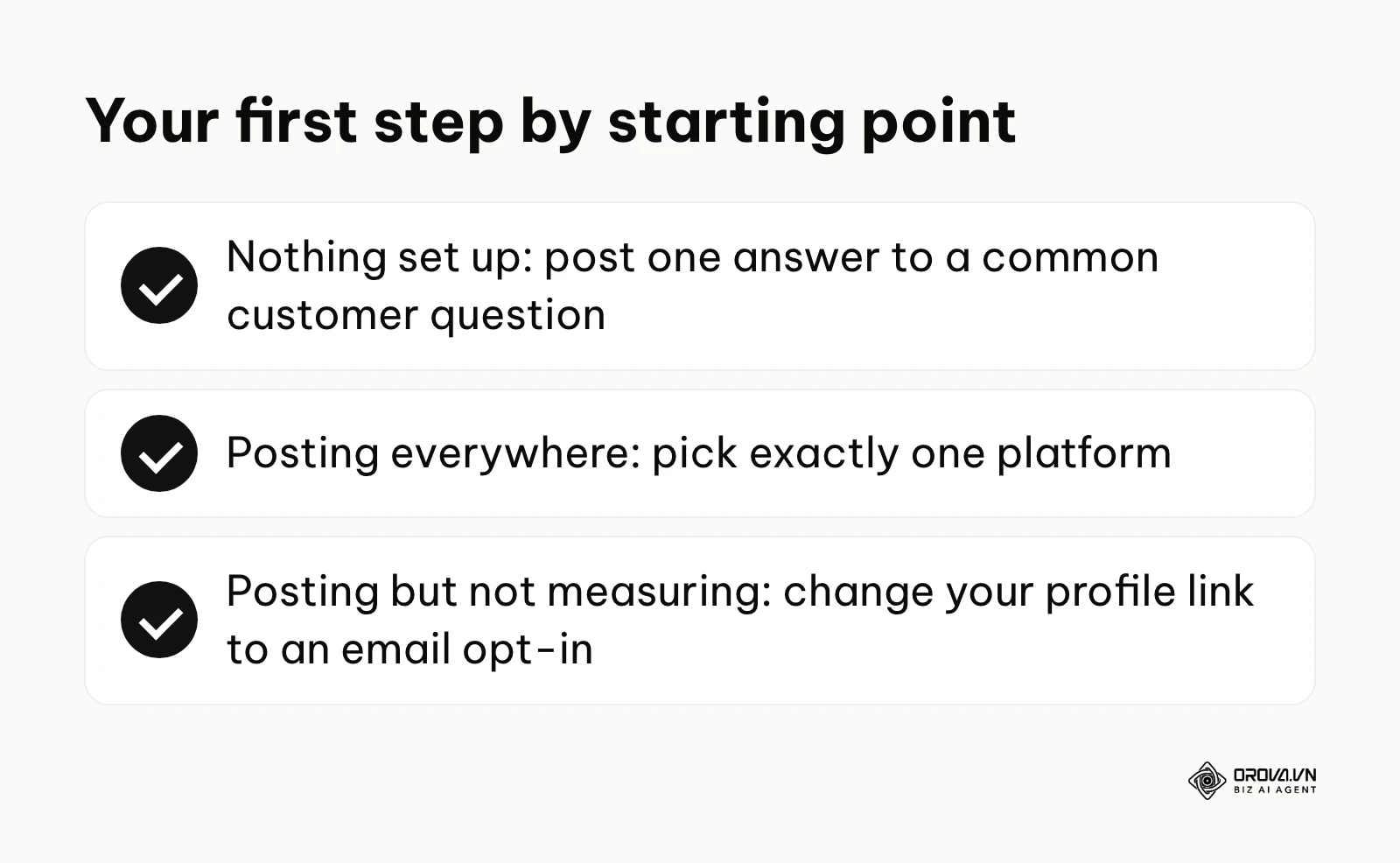
If you have absolutely nothing set up, your first step is to pick up your phone right now, stand in front of a window, and record yourself answering the single most common question your customers ask you. Do not edit it. Just post it. You need to break the psychological barrier of publishing your first imperfect video.
If you have a scattered presence where you post randomly across five platforms, your first step is to stop. Pick exactly one platform (like Instagram Reels) and commit to mastering its specific culture and algorithm before you attempt to distribute your content anywhere else.
If you are already posting consistently but not measuring any return on investment, your first step is to change your profile link. Remove the link to your homepage and replace it with a direct link to a free resource that requires an email opt-in. You must build a bridge between the social media platform and your owned audience list.
About the author

Builder of Orova
Nguyễn Đỗ Trọng Ân has 8 years of experience in marketing, including 6 years managing market development across Asia. He builds Orova, a Biz AI Agent that never sleeps: it plans, runs and optimizes work for businesses.
Run your business with AI Agents
Orova is the always-on Biz AI Agent — it plans, runs, and optimizes the work for you.
Save time, unlock productivity.