
What is a custom short link? A complete guide to branded URLs

A custom short link is a shortened URL that runs on a domain your business owns, such as brnd.co/sale, instead of a shared shortener domain. Imagine you just launched a promotional campaign and pasted a long tracking URL into a text message broadcast. Carriers can flag a generic, unbranded link as spam, and the customers who do receive it hesitate to click because the chaotic string of characters looks suspicious. Your marketing budget is wasted simply because the bridge connecting your audience to your content collapsed.
Historically, marketers relied on free, generic link shorteners to save space. However, relying on shared public domains means your brand's reputation is tied to every spammer using that same service. A branded domain projects professionalism, makes your links look trustworthy, and keeps every link tied to a domain you control. This guide covers how custom short links work, how to set one up and fix common DNS errors, how to name slugs, and how to compare popular tools.
What is a custom short link?
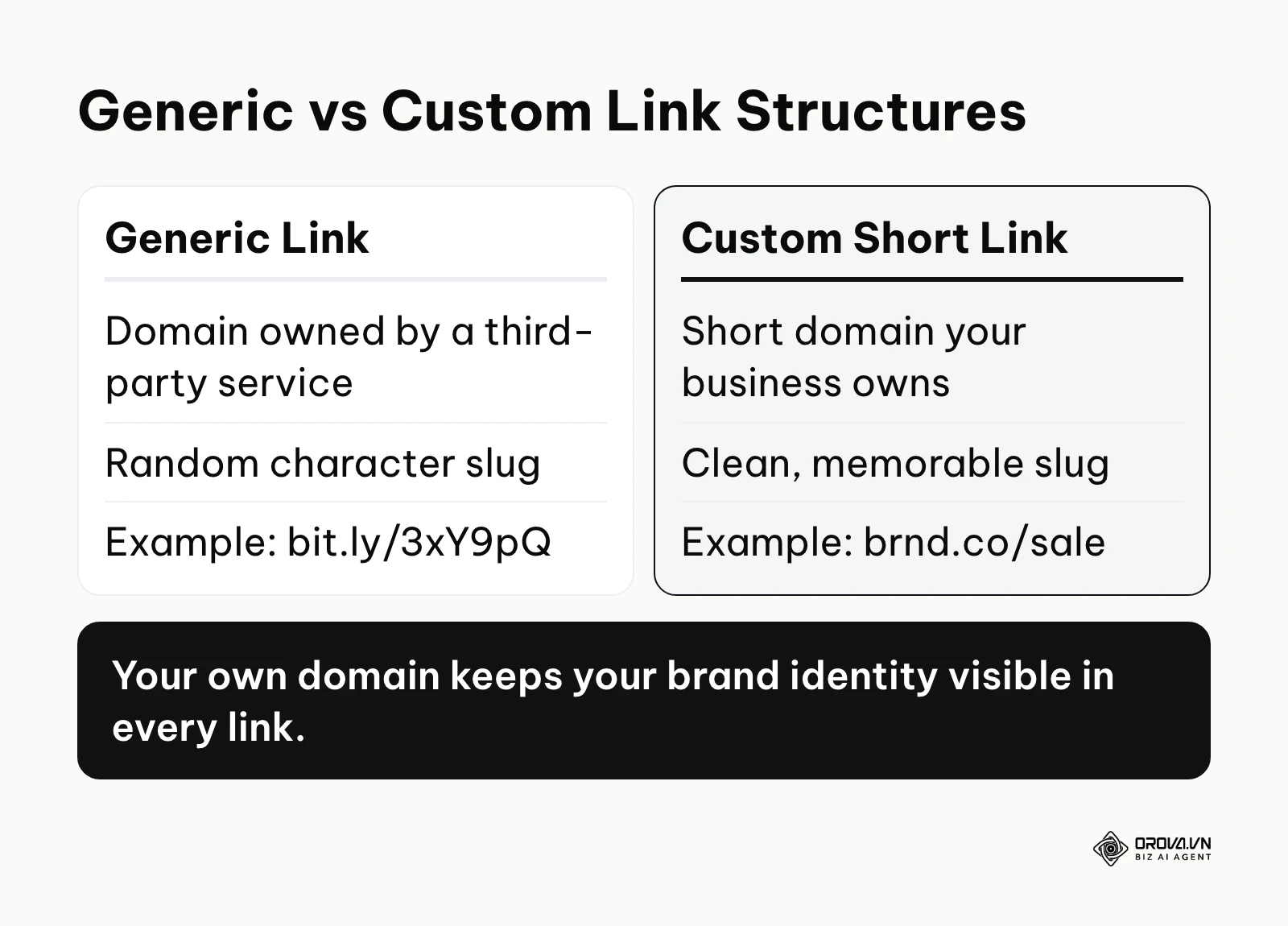
A custom short link is a shortened URL built with your own brand's domain instead of a generic public platform's domain. It is used to transform long, complex web addresses into clean, memorable links that build trust and track clicks, differing from standard shorteners by maintaining your brand identity throughout the user journey.
The concept of URL shortening originated in the early 2000s and spread quickly once early social media platforms imposed strict character limits. As digital marketing evolved, businesses realized that abandoning their brand name in favor of a third-party abbreviation was detrimental to user trust, leading to the creation of branded link infrastructure.
To clarify how a custom short link differs from other common web structures, consider the following distinctions:
| Concept | How it differs | Example |
|---|---|---|
| Generic Short Link | Uses a shared domain owned by a third-party service provider. | bit.ly/3xY9pQ |
| Custom Short Link | Uses a dedicated, short domain owned specifically by your business. | brnd.co/sale |
| Subdirectory Link | An extension of your primary, full-length website domain. | brand.com/summer-sale-2026 |
An everyday example of this difference is handing out a business card. Using a generic link is like handing someone a blank white card with only a phone number scribbled on it; they do not know who they are calling. Using a custom short link is like handing them a professionally printed, branded card featuring your exact logo and name.
The core meaning and purpose of custom short links
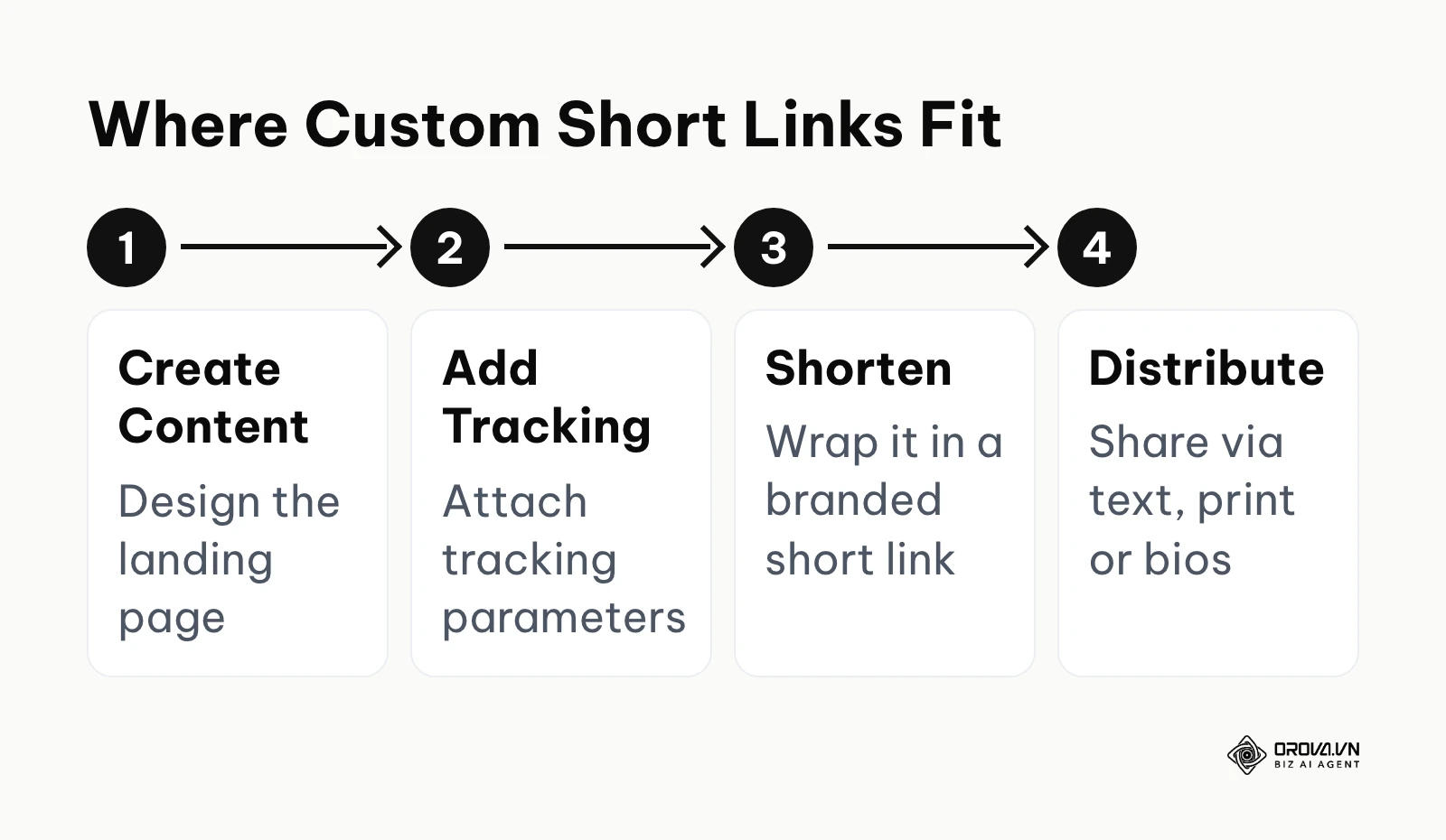
Custom short links exist to solve a fundamental problem of digital trust and attribution for modern businesses. In the larger picture of digital marketing, they sit perfectly between the content creation phase and the final distribution phase. After you design a landing page with complex tracking parameters, you need a mechanism to deliver that page cleanly across restricted channels like text messages, print, or social media bios.
If you ignore custom link infrastructure, your business loses brand equity with every click, and more importantly, you surrender control over your traffic routing. If a generic platform shuts down or suspends your account, every link you have ever distributed across the internet instantly breaks, severing your connection to your audience.
Illustrative example: You are a marketing manager running a text message promotion for a mid-sized retail chain. You generated a standard generic link, pasted it into your broadcast software, and sent it to ten thousand customers. The telecom carriers flagged the generic domain as spam, blocking a large portion of your messages. You quickly registered a dedicated short domain and updated the link infrastructure. The delivery failure warnings ceased, and foot traffic to the physical stores noticeably increased the following morning.
When NOT to use a custom short link
There are specific scenarios where deploying a custom short link is unnecessary or counterproductive. First, during internal one-to-one email communications, sharing the full, unshortened URL is better because it provides immediate context and transparency to your colleagues. Second, when linking to temporary staging servers or private development environments, standard direct links prevent accidental public indexing and sharing. Finally, if you are embedding hyperlinks directly into descriptive anchor text within a blog post, shortening the link adds an unnecessary redirection step that provides no additional cosmetic benefit to the reader.
The true value and benefits of branded short links
Investing in branded link infrastructure provides distinct advantages that span across high-level business security and daily operational efficiency.
Business value: Brand trust and security
The primary business value of a custom short link is the immediate establishment of trust. When consumers recognize your brand name in a URL, their fear of phishing or malware tends to decrease. That comfort can translate into higher engagement rates and a lower cost per acquisition. Furthermore, operating your own domain separates you from the bad reputation often associated with shared public shorteners, which some corporate firewalls block.
Business value: Data ownership and analytics
When you use a generic tool, your links live on the platform's domain. With a custom setup, the links live on your domain, so you can move them to another provider without changing a single public URL. You can monitor which channels are driving traffic and analyze geographic distribution. Accurate measuring marketing and ROI becomes easier when every campaign link follows the same domain and naming rules.
Operator benefits: Dynamic routing and error recovery
For the team executing the work, the ability to change a link's destination after it has been published is invaluable. If a typographical error occurs in the final destination URL, or if a product goes out of stock, operators can simply log into the dashboard and change the routing rules without needing to recall printed materials or edit social media posts.
Operator benefits: Streamlined campaign management
Operators benefit heavily from standardized slug naming. Instead of dealing with random character strings, teams can create semantic links that clearly indicate the campaign's purpose. This organization saves countless hours during end-of-month reporting, as marketers can easily filter and sort links by campaign name rather than guessing what a random string represents.
To illustrate these benefits clearly, here is a breakdown of what you can expect:
| Benefit | Metric to measure | Time to see results |
|---|---|---|
| Increased Trust | Click-Through Rate (CTR) | Immediate upon launch |
| Error Recovery | Reduced 404 error logs | Soon after a destination is fixed |
| Brand Recognition | Direct traffic volume | Over several months |
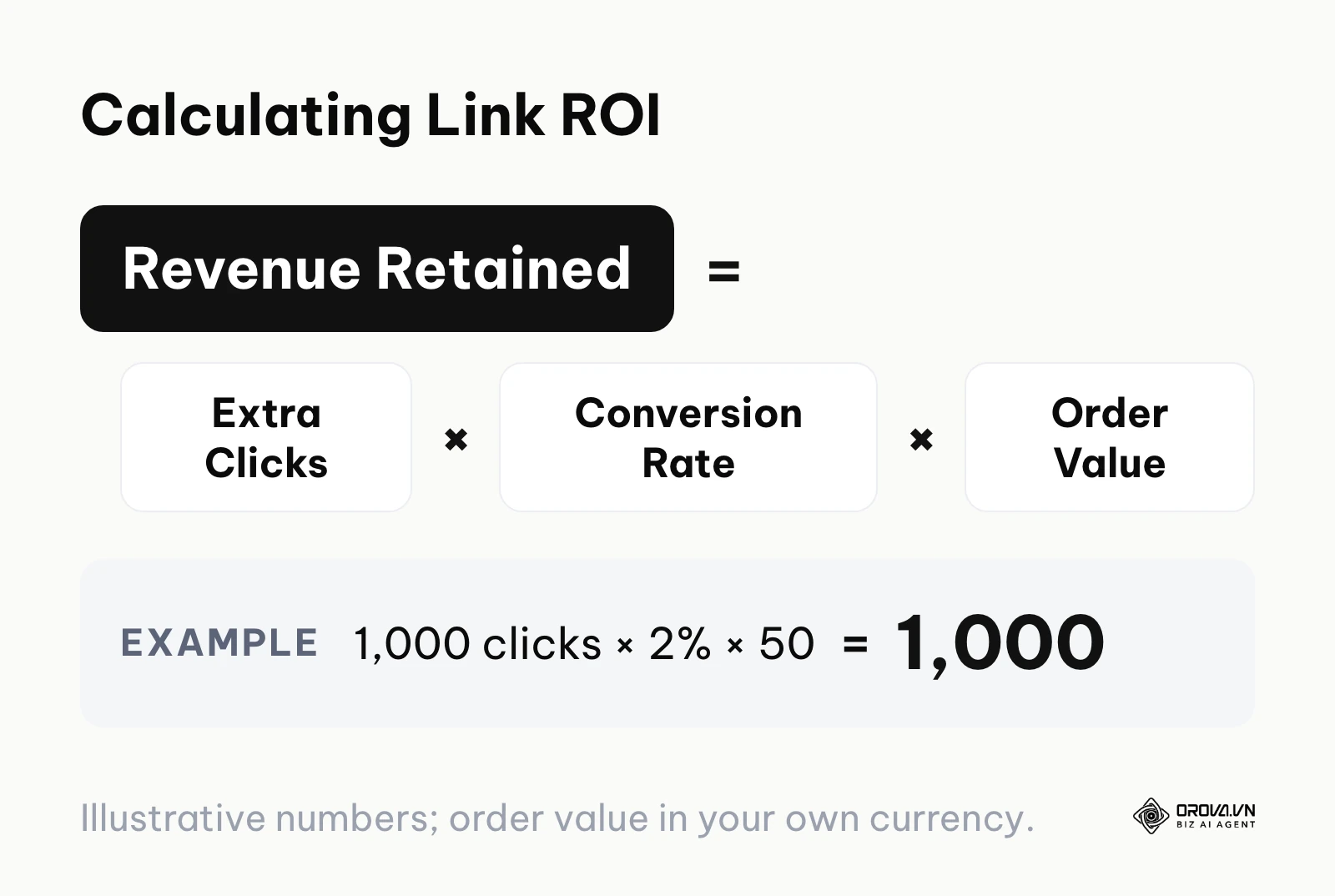
To estimate the value before you invest, use a simple formula: retained revenue = extra clicks × conversion rate × average order value. For example, if branded links bring 1,000 extra clicks to a campaign, your conversion rate is 2% and your average order value is 50 in your currency, the estimate is 1,000 × 2% × 50 = 1,000 in revenue. These numbers are illustrative; plug in your own campaign data and compare the result with what the domain and tool cost you.
Illustrative example: You operate as the lead event coordinator for an industry conference. You printed physical banners featuring a long URL directing attendees to the schedule page. During the event setup, the technical team altered the website structure, rendering the printed destination useless. Because you utilized a dynamic custom short link system, you logged into the routing dashboard and changed the background destination address. Attendees who scanned the banners were seamlessly directed to the updated schedule page without encountering a broken link.
If you manage many campaign links, Orova Link & QR lets you create short links on orova.vn/l/ with click counts, generate any of 59 QR code types, and change a dynamic QR code's destination even after it has been printed.
How a custom short link works (The complete breakdown)
Understanding the mechanics of a custom short link requires dissecting it into three distinct technical layers. Many marketers use these tools daily without realizing the complex series of handshakes happening behind the scenes in milliseconds.
The domain layer and DNS setup
The foundation of a custom short link is the Domain Name System (DNS). When you purchase a domain, it acts as an empty plot of digital land. To connect this domain to your link shortening software, you must configure DNS records. Typically, this involves pointing an A record (Address record) or a CNAME (Canonical Name) record to the software provider's servers. This tells the global internet routing system that any requests made to your short domain should be handled by your chosen link management platform.
DNS troubleshooting guide for marketers
Connecting a domain is often the biggest technical hurdle for non-technical users. If you encounter errors, here is exactly how to troubleshoot the two most common registrar issues:
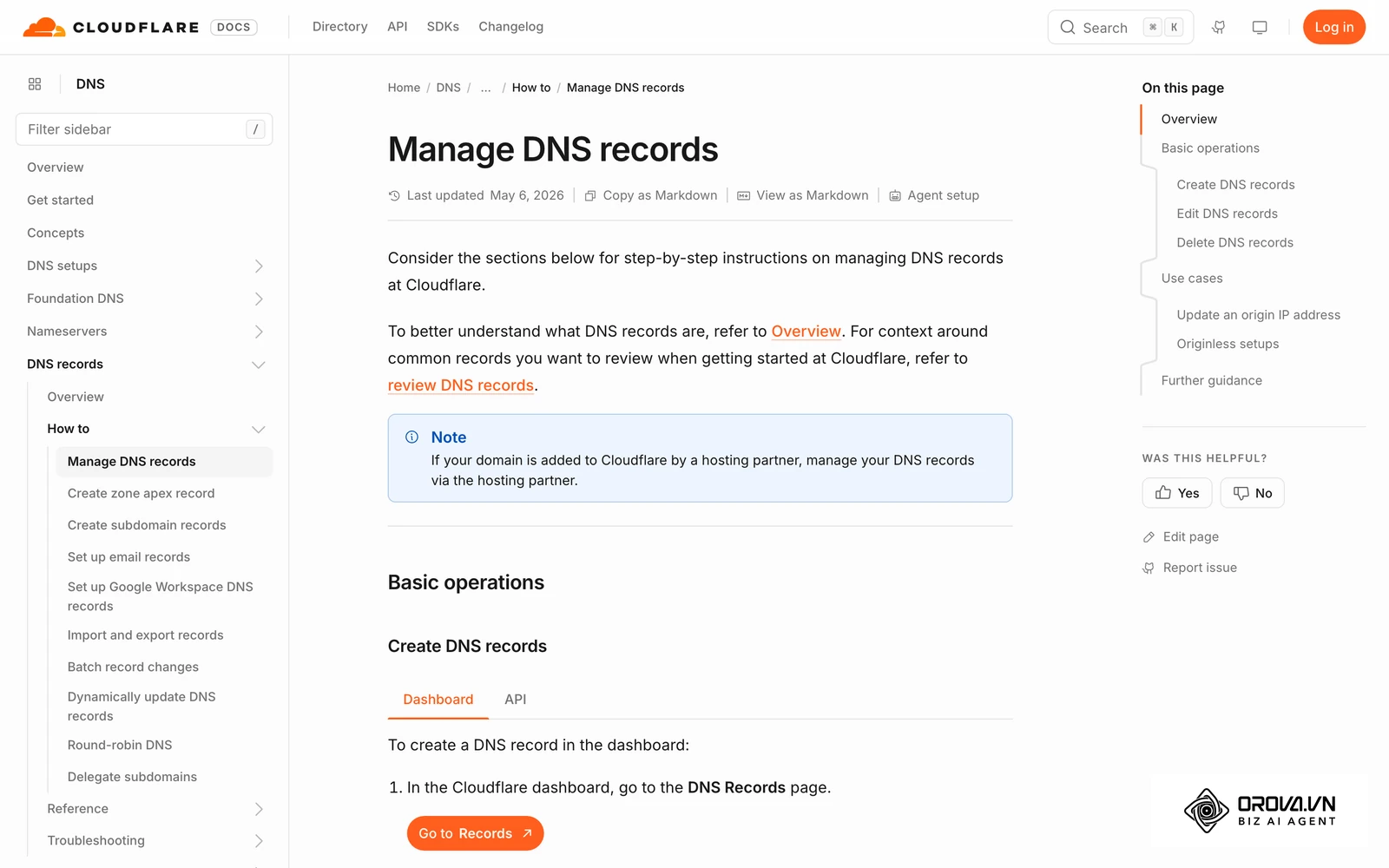
Cloudflare Troubleshooting: If you are using Cloudflare to manage your DNS, you will often encounter an SSL mismatch or a "Too Many Redirects" error when setting up a custom short link. This occurs because Cloudflare attempts to proxy the traffic (indicated by an orange cloud icon in the dashboard) while your link software is also trying to provision an SSL certificate. To fix this:
- Log into your Cloudflare dashboard and navigate to the DNS settings.
- Locate the CNAME or A record pointing to your link provider.
- Toggle the proxy status from "Proxied" (orange cloud) to "DNS Only" (gray cloud).
- Save the changes and wait a few minutes for the provider to issue the certificate.
GoDaddy Troubleshooting: When configuring records in GoDaddy, users often become frustrated when the link platform fails to verify the domain immediately. This is almost always related to TTL (Time To Live) settings. To fix this:
- Open your GoDaddy DNS management zone.
- Before changing your target CNAME record, edit the TTL value and lower it to the minimum allowed setting (often 600 seconds, or 10 minutes).
- Wait the original duration of the old TTL, then update the actual destination of the record.
- Ensure you have added the verification TXT record exactly as provided by your platform; trailing spaces in the GoDaddy input field can cause validation failures.
The routing and redirection component
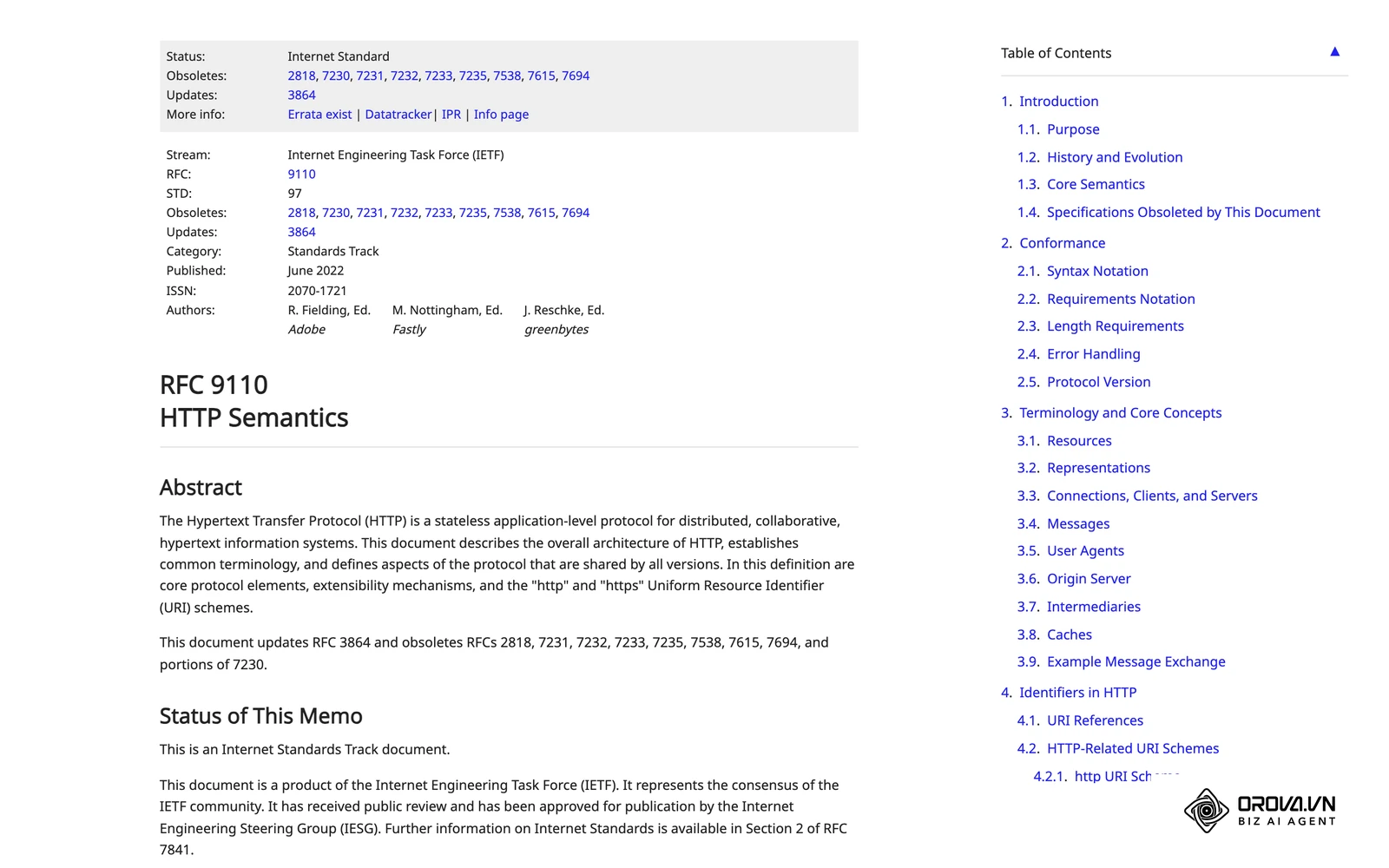
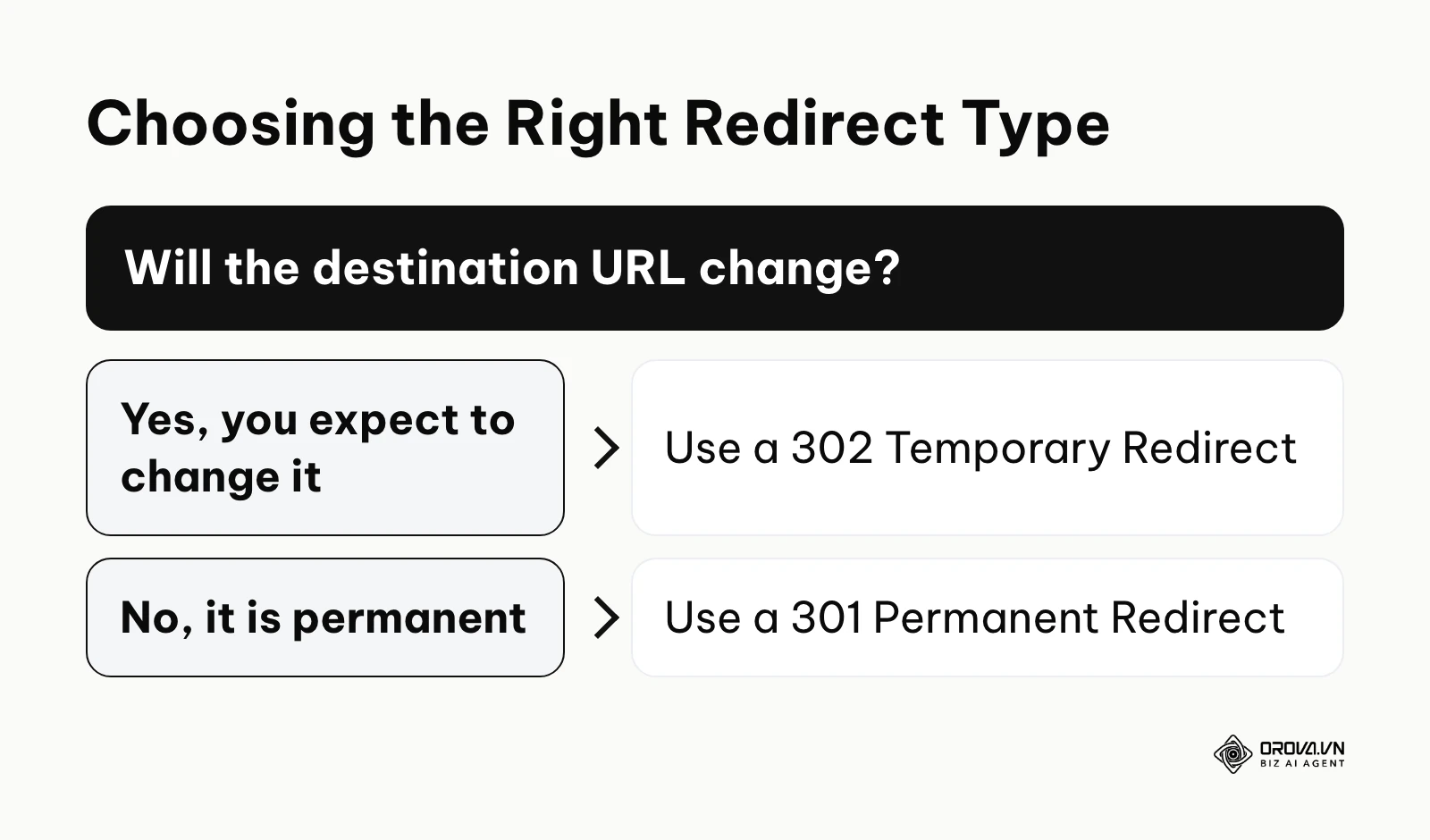
Once the domain layer connects to the platform, the routing layer dictates how traffic flows. When a user clicks your short link, their browser sends an HTTP request to the server. The server responds with a redirect status code. According to the Internet Engineering Task Force in their RFC 9110: HTTP Semantics document published in 2022, a 301 status code indicates that the target resource has been permanently assigned to a new uniform resource identifier. Conversely, a 302 code indicates a temporary move. As a rule of thumb, use a 301 when the destination is permanent and a 302 when you expect the destination to change. A good custom short link platform lets you choose, and it executes the redirect quickly so the user barely notices the transition.
The tracking and analytics component
As the redirect occurs, the analytics layer captures vital metadata from the user's browser agent. Before sending the user to the final destination, the server logs their IP address (to determine geographic location), their device type, their operating system, and the referring website. Many platforms also let you append UTM (Urchin Tracking Module) parameters to the final destination URL, so your core website analytics tools can properly attribute the traffic source.
Depending on your specific goals, custom short links can be categorized into several functional types:
| Type of Link | Defining Characteristic | Best Fit For |
|---|---|---|
| Static Link | The destination URL cannot be changed after creation. | Permanent print materials |
| Dynamic Link | The destination can be updated at any time without changing the front-end URL. | Seasonal campaigns and agile marketing |
| Deep Link | Forces the opening of a native mobile application instead of a web browser. | Mobile app developers |
| Bio Link | Routes to a central landing page containing multiple secondary links. | A link in bio on social profiles |
The same static versus dynamic split applies to QR codes, so check whether free QR codes are permanent before you print one.
The slug naming convention swipe file
The most critical aspect of managing a link library is establishing a rigorous naming convention for the "slug" (the part of the URL after the slash). The World Wide Web Consortium recommends in the Web Content Accessibility Guidelines (WCAG) 2.2 from 2023 that link text should be meaningful and readable to assist users who rely on assistive technologies. The same principle applies to the slugs your audience reads.
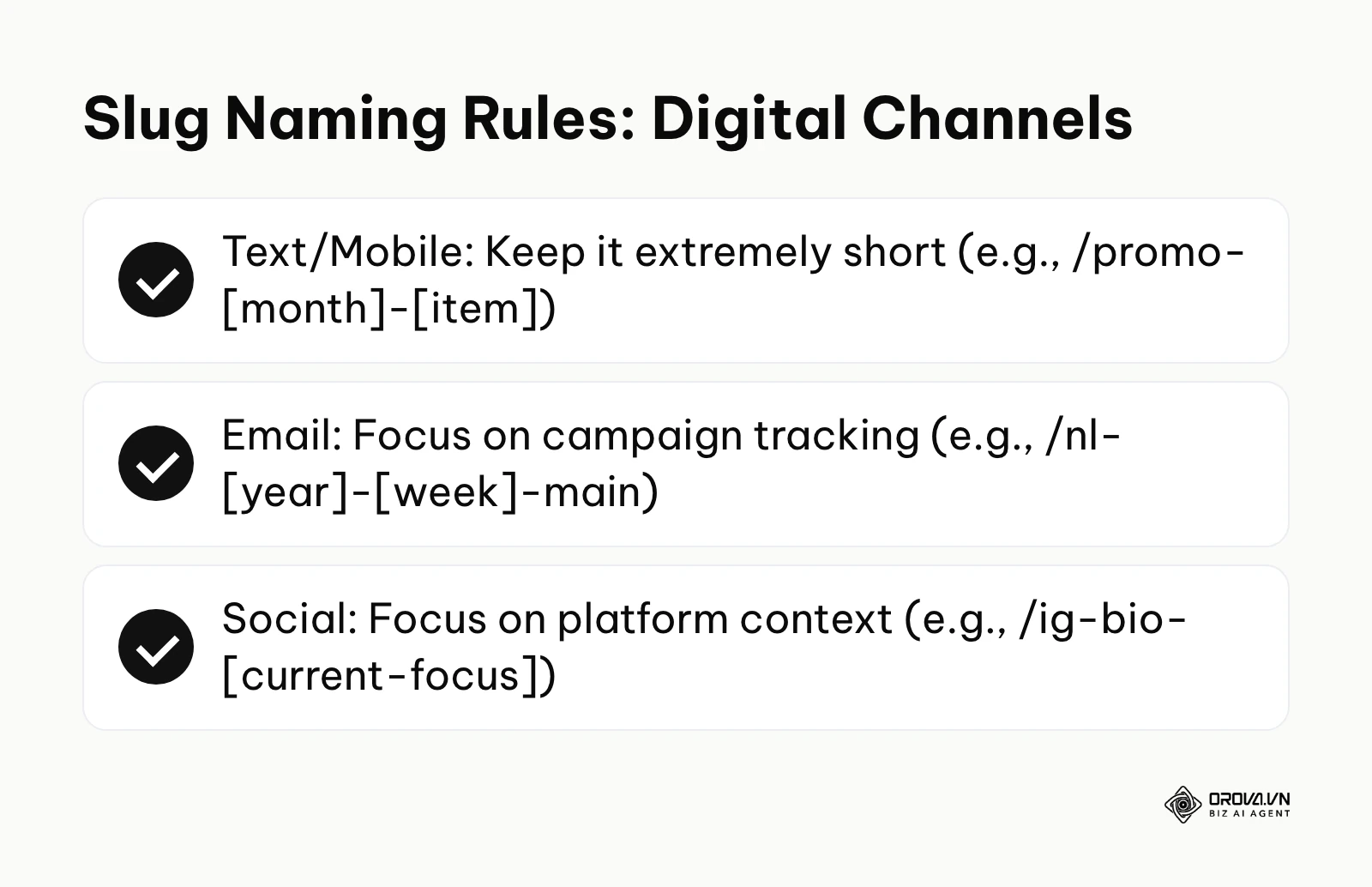
If your team relies on random strings (e.g., /x9f2a), reporting becomes impossible. Below is a comprehensive swipe file of 50 structured slug formulas categorized by marketing channel to ensure your analytics remain pristine.
Text Message & Mobile Campaigns (Keep it extremely short):
- Promo Alert: /promo-[month]-[item] (e.g., /promo-nov-shoes) - Highly readable for quick scanning.
- Flash Sale: /fs-[date] (e.g., /fs-1111) - Creates immediate urgency.
- Cart Abandonment: /cart-[item-category] (e.g., /cart-denim) - Reminds the user what they left behind.
- Welcome Series: /vip-[tier] (e.g., /vip-gold) - Makes the recipient feel exclusive.
- Event Reminder: /rsvp-[event-name] (e.g., /rsvp-expo26) - Clear call to action.
- Support Update: /ticket-[status] (e.g., /ticket-resolved) - Professional and direct.
- App Download: /app-[os] (e.g., /app-ios) - Directs users based on their device.
- Feedback Request: /rate-[service] (e.g., /rate-delivery) - Encourages quick interactions.
- Account Alert: /alert-[action] (e.g., /alert-login) - Establishes security context.
- Store Locator: /map-[city] (e.g., /map-boston) - Highly localized targeting.
Email Marketing (Focus on campaign tracking):
- Newsletter Main Link: /nl-[year]-[week]-main (e.g., /nl-26-w4-main) - Tracks the primary hero click.
- Newsletter Secondary Link: /nl-[year]-[week]-sub (e.g., /nl-26-w4-sub) - Measures engagement further down the email.
- Webinar Registration: /web-[topic]-[date] (e.g., /web-seo-oct) - Clearly identifies the event.
- Whitepaper Download: /dl-[document-name] (e.g., /dl-trend-report) - Indicates an asset exchange.
- Product Update: /update-[version] (e.g., /update-v2) - Professional release notes tracking.
- Re-engagement: /miss-you-[cohort] (e.g., /miss-you-q1) - Tracks churn recovery efforts.
- Upsell Offer: /upgrade-[plan] (e.g., /upgrade-pro) - Directly ties to revenue goals.
- Survey Link: /survey-[topic] (e.g., /survey-nps) - Organizes feedback channels.
- Partner Feature: /collab-[partner] (e.g., /collab-acme) - Tracks co-marketing efforts.
- Holiday Greeting: /cheer-[holiday] (e.g., /cheer-xmas) - Separates seasonal fluff from core metrics.
Social Media Channels (Focus on platform context):
- Instagram Bio: /ig-bio-[current-focus] (e.g., /ig-bio-sale) - Easy to update dynamically.
- Instagram Story: /ig-story-[product] (e.g., /ig-story-boots) - Tracks ephemeral 24-hour clicks.
- X (Twitter) Thread: /x-[thread-topic] (e.g., /x-seo-tips) - Attributes deep engagement.
- LinkedIn Post: /li-[asset-type] (e.g., /li-case-study) - Professional context tracking.
- LinkedIn Profile: /li-profile-[action] (e.g., /li-profile-hire) - Directs personal branding traffic.
- Facebook Group: /fb-group-[resource] (e.g., /fb-group-guide) - Tracks community engagement.
- Facebook Ad: /fb-ad-[campaign-id] (e.g., /fb-ad-retarget) - Aligns with paid spend reporting.
- TikTok Video: /tt-[video-topic] (e.g., /tt-dance-challenge) - Measures viral conversion paths.
- Pinterest Pin: /pin-[visual-theme] (e.g., /pin-autumn-decor) - Tracks long-tail visual discovery.
- YouTube Description: /yt-[video-id] (e.g., /yt-vid123) - Correlates video views to actual clicks.
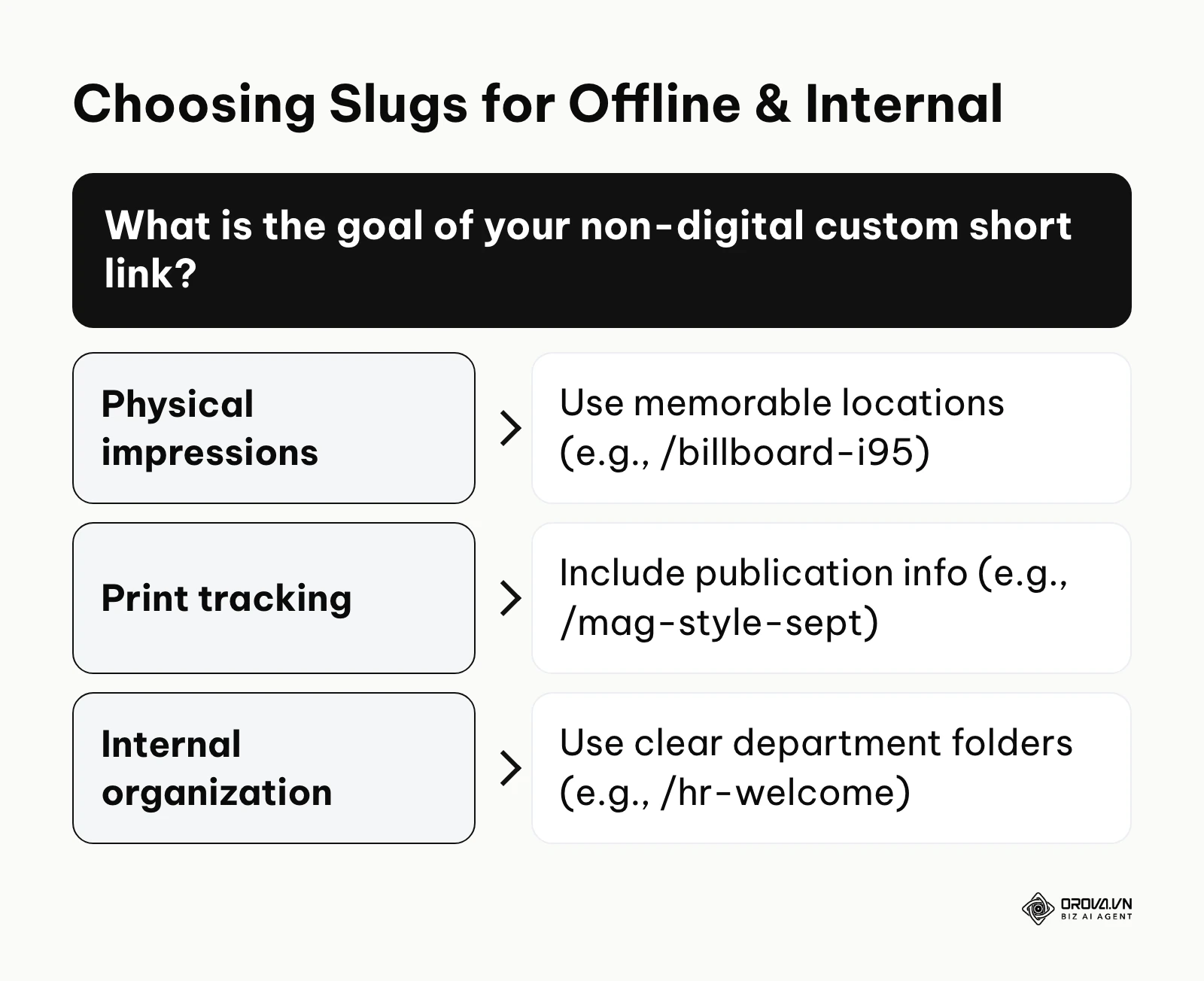
Slug formulas for offline and internal campaigns
Offline and Out-of-Home Advertising (Focus on memory retention):
- Billboard: /billboard-[highway] (e.g., /billboard-i95) - Essential for measuring physical impressions.
- Transit Ad: /bus-[route] (e.g., /bus-downtown) - Tracks commuter engagement.
- Print Magazine: /mag-[publication]-[issue] (e.g., /mag-style-sept) - Proves print ROI.
- Direct Mail: /mail-[zipcode] (e.g., /mail-90210) - Highly segmented physical tracking.
- Event Booth: /booth-[event] (e.g., /booth-ces) - Captures trade show lead generation.
- Product Packaging: /box-[product-line] (e.g., /box-skincare) - Tracks post-purchase behavior.
- Retail Receipt: /receipt-[survey] (e.g., /receipt-feedback) - Drives in-store customers online.
- TV Commercial: /tv-[network] (e.g., /tv-sports) - Measures immediate second-screen interaction.
- Podcast Audio: /pod-[show-name] (e.g., /pod-growth) - A simple way to track audio conversions.
- Sponsorship Banner: /sponsor-[team] (e.g., /sponsor-fc) - Validates sponsorship expenditures.
Internal Operations and HR (Focus on clear categorization):
- Employee Onboarding: /hr-[process] (e.g., /hr-welcome) - Streamlines new hire paperwork.
- Benefits Portal: /benefits-[year] (e.g., /benefits-26) - Centralizes internal resources.
- IT Support: /help-[issue] (e.g., /help-wifi) - Quick access for common technical problems.
- Company Meeting: /townhall-[quarter] (e.g., /townhall-q3) - Easy sharing in internal chats.
- Design Assets: /brand-[asset] (e.g., /brand-logos) - Quick retrieval of company materials.
- Sales Deck: /deck-[industry] (e.g., /deck-healthcare) - Tailored presentations for reps.
- Training Video: /train-[software] (e.g., /train-crm) - Organizes educational materials.
- Policy Document: /policy-[department] (e.g., /policy-remote) - Ensures compliance tracking.
- Leave Request: /form-[action] (e.g., /form-pto) - Simplifies administrative tasks.
- Internal Wiki: /wiki-[project] (e.g., /wiki-launch) - Centralized knowledge management.
What to do to start and adapt your linking strategy
Transitioning from messy, generic URLs to a tightly controlled custom short link environment requires deliberate planning. Before choosing a tool, you must finalize your domain strategy and evaluate the market offerings objectively.
Short domain strategy: subdomain vs dedicated domain
When setting up your infrastructure, you have two primary options: mapping a subdomain of your existing website, or purchasing a completely new dedicated short domain.
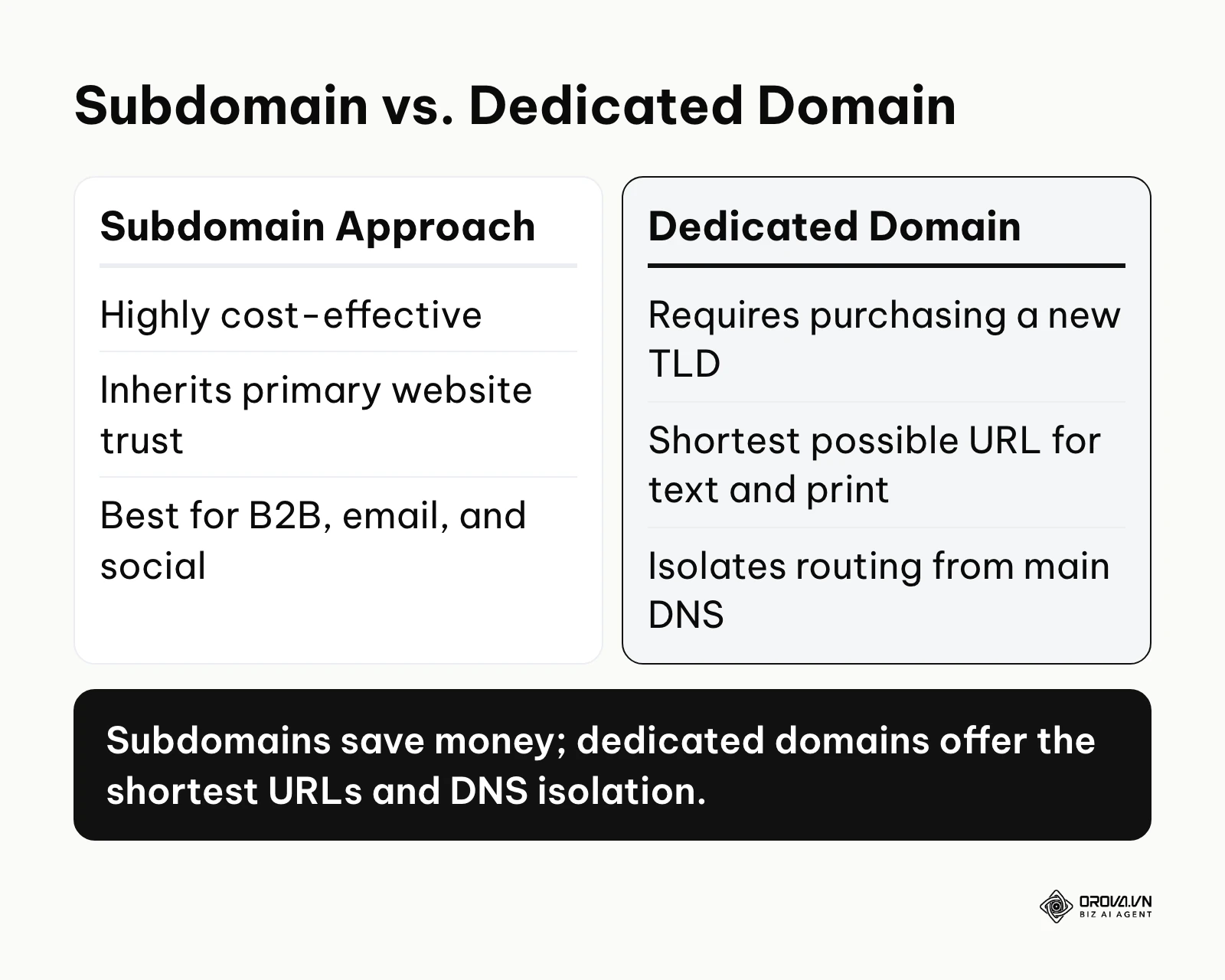
- The Subdomain Approach (e.g., go.brand.com): This is highly cost-effective because you do not need to purchase a new domain. It heavily reinforces your existing brand name and inherits any trust associated with your primary website. This approach is highly recommended for B2B companies focusing on email and social media where URL length is not strictly limited.
- The Dedicated Domain Approach (e.g., brnd.co): This requires purchasing a new Top-Level Domain (TLD) like .link, .co, or .click. It offers the absolute shortest possible URL, which is critical for text message marketing and offline printing where every character counts. It also isolates your link routing from your main website's DNS infrastructure, preventing accidental misconfigurations.
9 custom short link tools compared
The market is full of platforms offering link management. Choosing the right tool depends on your technical requirements and budget. Here is a neutral overview of nine widely used platforms; plans and limits change often, so confirm the details on each vendor's site:
- Bitly: One of the best-known link management platforms, with a long track record and enterprise security features. Check which plan includes custom domains before you commit.
- Rebrandly: Built specifically around custom domains. It lets users manage multiple branded domains from a single workspace, which suits agencies managing diverse client portfolios.
- Short.io: Popular with developers. It offers an API for creating links, which helps if you need to generate links programmatically from your own software.
- BL.INK: An enterprise-focused platform with an emphasis on governance and team access controls. It suits larger organizations and regulated industries such as finance.
- Sniply: Lets marketers attach a custom call-to-action (CTA) overlay to the page they share. This works well for content curation, where you share third-party articles but want to drive traffic back to your site.
- Dub: An open-source link management platform with analytics dashboards and built-in QR code generation.
- TinyURL: One of the oldest shorteners on the market, launched in 2002. Its paid plans support branded domains, and it is a familiar option if you want something simple.
- T2M: A URL shortener that also covers QR codes and branded links, with geographic targeting features.
- Polr: An open-source, self-hosted platform. You need the technical skills to install it on your own server, but in return you keep full control over your data.
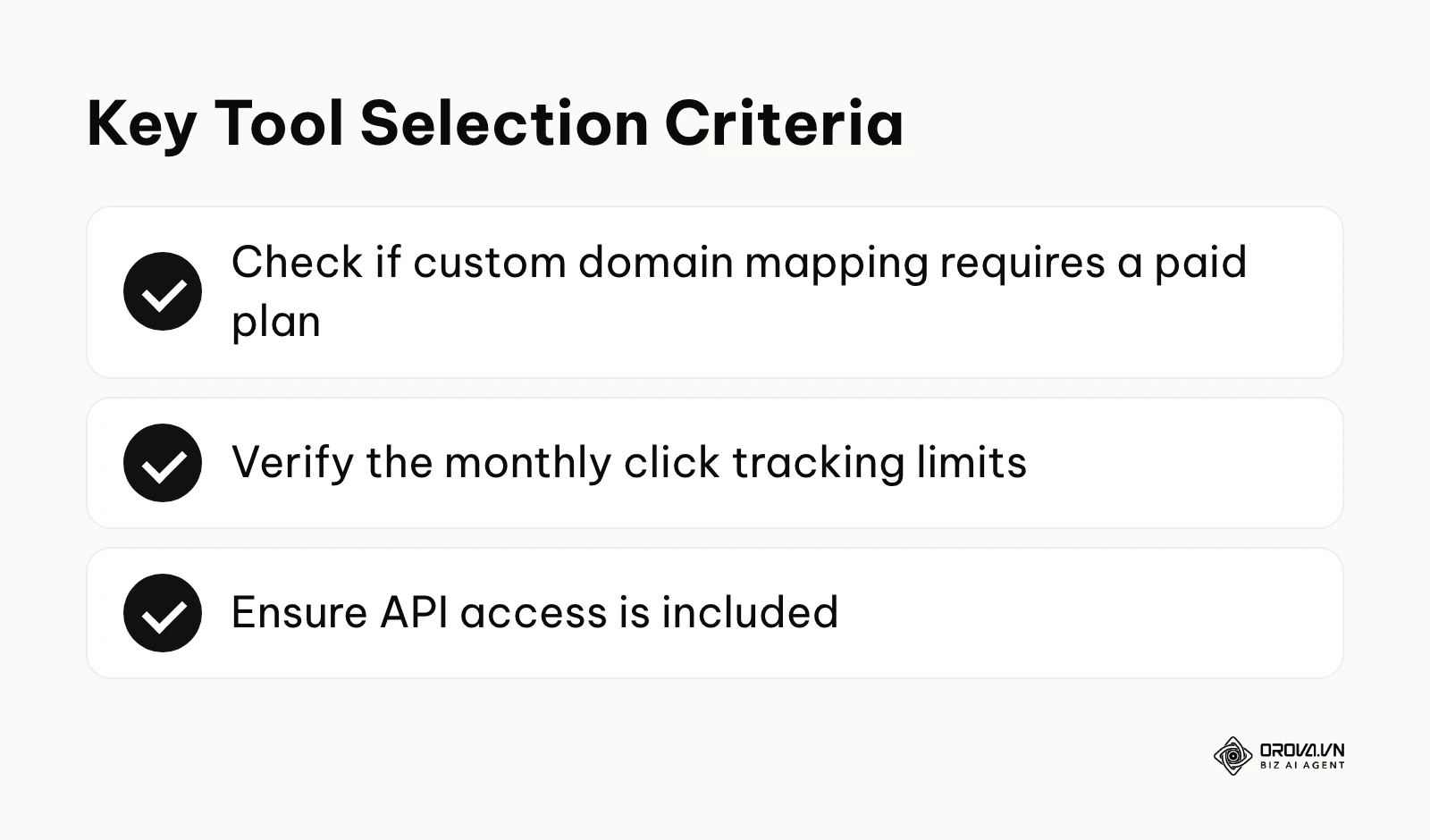
Before you commit to any of these, check three things: whether custom domain mapping requires a paid plan, how many clicks are tracked each month, and whether API access is included.
With your domain strategy selected and your tool evaluated, here is how different roles should begin their implementation.
Strategy for small business owners
- Audit your current assets to see where links are frequently shared.
- Register a cheap, dedicated short domain (like a .co or .link).
- Set up a default fallback destination so any broken links automatically route to your homepage.
Strategy for marketing managers
- Map out all UTM parameters currently used by your team to ensure consistency.
- Implement a strict slug naming convention (using the swipe file above).
- Integrate your link platform directly with your social media scheduler tools to automate link creation during the publishing workflow.
Strategy for agency freelancers
- Establish separate workspaces or tags for each of your clients.
- Present the branded link infrastructure as a value-added service during client pitches.
- Configure weekly automated reports to showcase the exact click volume generated from your campaigns.
As you implement these steps, be aware of common pitfalls that can derail your progress:
| Common Mistake | Consequence | How to Avoid |
|---|---|---|
| Changing DNS during peak hours | Temporary downtime and lost clicks | Always execute DNS migrations late at night or on weekends |
| Forgetting to renew the short domain | Links break globally; a squatter may buy the domain | Turn on auto-renew with your registrar immediately |
| Overcomplicating the slug name | Links become difficult to read and type manually | Stick to the strict, hyphenated naming conventions |
Want to see which links and codes actually get used? With Orova Link & QR, you can track scans and clicks by day, device, country and source, and build UTM links with the built-in tool. It is free until the end of July 7, 2027, with no card required.
Custom short link trends in the next few years: Author's perspective
As of 2026, carriers and email providers appear to be getting stricter with generic short URLs, because malicious actors abuse free public domains. Based on this trajectory, I expect generic short links to become harder to rely on for commercial messaging over the next few years. More companies may adopt branded domains simply to protect basic message deliverability, which would make custom short links feel more like a utility than an optional marketing upgrade.
Furthermore, I think we will see AI-assisted routing built into link infrastructure. Today, marketers set up rules based on geography, device, or time of day by hand. I expect link tools to start suggesting or adjusting those rules based on past click patterns, so a single branded link could serve several localized landing pages. How far this goes will depend on how well these tools respect privacy rules and keep a human in charge of the final decision.
Finally, I anticipate that dedicated short domains will matter more for compliance. As data privacy regulations tighten, relying on shared third-party domains for customer-facing links adds risk. I lean towards a future where more enterprises want to own the domain behind their link routing, so they can keep a clear, auditable record of how click data is handled. If telecom companies loosen their spam filters, this transition might slow down, but the privacy argument alone makes it worth securing your brand's short domain equivalents before someone else claims them.
Frequently asked questions about custom short links
Do I lose my SEO ranking when using short links?
No, provided your custom short link platform utilizes proper routing protocols. Google Search Central's documentation on redirects describes permanent server-side redirects as a strong signal that the target page should be shown in search results. If your platform issues a 301 permanent redirect, ranking signals are consolidated on your final destination page, which aligns with modern internal and external linking strategies.
What happens to my links if I change software providers?
If you own the custom domain, you can safely migrate to a new provider without breaking your links. You simply need to export your existing link data from the old platform, import the list of slugs and destinations into the new platform, and then update your DNS CNAME record. Because you control the domain, the URLs remain identical to the public, and they will simply begin routing through the new provider's servers.
Are branded link shortener free plans reliable for enterprises?
While many branded link shortener free plans offer excellent starting points, they are generally not suitable for enterprise operations. Free tiers usually impose strict limitations on the number of links you can create, the total clicks tracked per month, and access to API integrations. Depending on the provider, going over those limits can pause tracking or new link creation, so read the plan terms before you rely on a free tier for a large campaign.
Is a custom short link still needed with AI search capabilities?
Yes, arguably more than ever. While AI search engines summarize content, they still require verifiable, trustworthy source citations. A branded custom link shows clearly who is behind it, which generic links do not. Furthermore, a custom short link keeps your UTM tags attached to the destination URL, so the visit is still attributed correctly however the link is presented to the end user.
How do I create a custom short link for offline media?
To utilize links in the physical world, you must prioritize brevity. You should purchase the shortest possible dedicated domain and pair it with a very simple slug, such as brnd.co/event. Because users must manually type the link into their mobile browsers, avoiding complex characters, numbers, and long words is critical to minimizing typographical errors and maximizing the offline conversion rate.
Where to start right now?
Embarking on a custom short link transition does not require overhauling your entire marketing department in a single day. The best approach depends entirely on the current state of your digital infrastructure. Determine which of the following three scenarios best describes your situation, and execute the single recommended action this afternoon.
If you are starting completely from scratch and have never used a link shortener, do not immediately rush to buy software. Your first step should be to secure your brand's identity. Spend thirty minutes browsing a domain registrar to find and purchase a short domain that aligns with your company name (such as a .co or .link extension). Owning the asset prevents competitors from taking it while you plan the technical deployment.
If you have a messy setup where your team uses a mixture of generic tools, random spreadsheets, and disconnected platforms, your priority is consolidation. Do not try to migrate everything at once. Instead, identify your single most important upcoming campaign. Implement a custom domain specifically for that marketing campaign planning process. Use it as an isolated pilot program to train your team on proper slug naming conventions before rolling it out company-wide.
If you have already deployed custom short links but are not actively measuring the results, your immediate next step is to standardize your UTM parameters. Log into your routing dashboard, export your top fifty performing links, and audit them to ensure every link contains structured source, medium, and campaign tags. Fixing the tracking on your highest-traffic assets will immediately improve the accuracy of your analytics reporting.
About the author

Builder of Orova
Nguyễn Đỗ Trọng Ân has 8 years of experience in marketing, including 6 years managing market development across Asia. He builds Orova, a Biz AI Agent that never sleeps: it plans, runs and optimizes work for businesses.
Run your business with AI Agents
Orova is the always-on Biz AI Agent — it plans, runs, and optimizes the work for you.
Save time, unlock productivity.