
Facebook page management packages: What each tier should include

Many business owners find themselves staring at a screen, wondering why their daily Facebook posts aren't translating into actual sales. The instinct is to outsource, leading you to search for facebook page management packages to take the burden off your shoulders. However, the traditional agency model is often deeply flawed. You might end up paying a recurring fee for generic, templated graphics that do nothing but gather a few automated likes.
The familiar approach of just handing over your page to a freelancer and hoping for the best simply does not work in today's highly competitive, algorithm-driven environment. This comprehensive guide will completely deconstruct how these packages are structured, what specific deliverables you should actually demand in your contract, and how to avoid the common traps that drain your marketing budget. By the end of this deep dive, you will have a clear, actionable blueprint to evaluate agencies and choose a partner that delivers real, measurable business growth.
Decoding facebook page management packages in 2026
Facebook page management packages are standardized service bundles offered by marketing agencies or freelancers to handle your brand's total presence on the platform. They typically include a mix of content creation, post scheduling, community management, advertising strategy, and performance reporting. These packages exist to help businesses that lack the internal time, technical expertise, or creative resources to maintain an active, revenue-generating Facebook presence.
Preparation: What you need before evaluating agencies
Before you start requesting quotes and looking at different facebook page management packages, you need to get your own digital house in order. An agency can only amplify what already exists; they cannot build your fundamental business identity from scratch unless you pay them exorbitant foundational strategy fees. Having these core assets ready will not only drastically speed up the onboarding process but also protect you from agencies that artificially inflate their packages by charging you for basic setup tasks.
| What you need to prepare | Where to get it | Estimated time to complete |
|---|---|---|
| Brand guidelines | Your internal marketing team or previous designer (must include logos, exact fonts, color hex codes, and tone of voice). | 1-2 weeks to compile |
| Facebook Business Manager access | Create a free account at business.facebook.com and legally claim ownership of your page. | 2-4 hours |
| Historical performance data | Export the last 6-12 months of insights and engagement metrics directly from your Facebook page dashboard. | 1-2 hours |
| Clear business objectives | Internal leadership meetings to define if you primarily need leads, e-commerce sales, or local awareness. | 3-5 days |
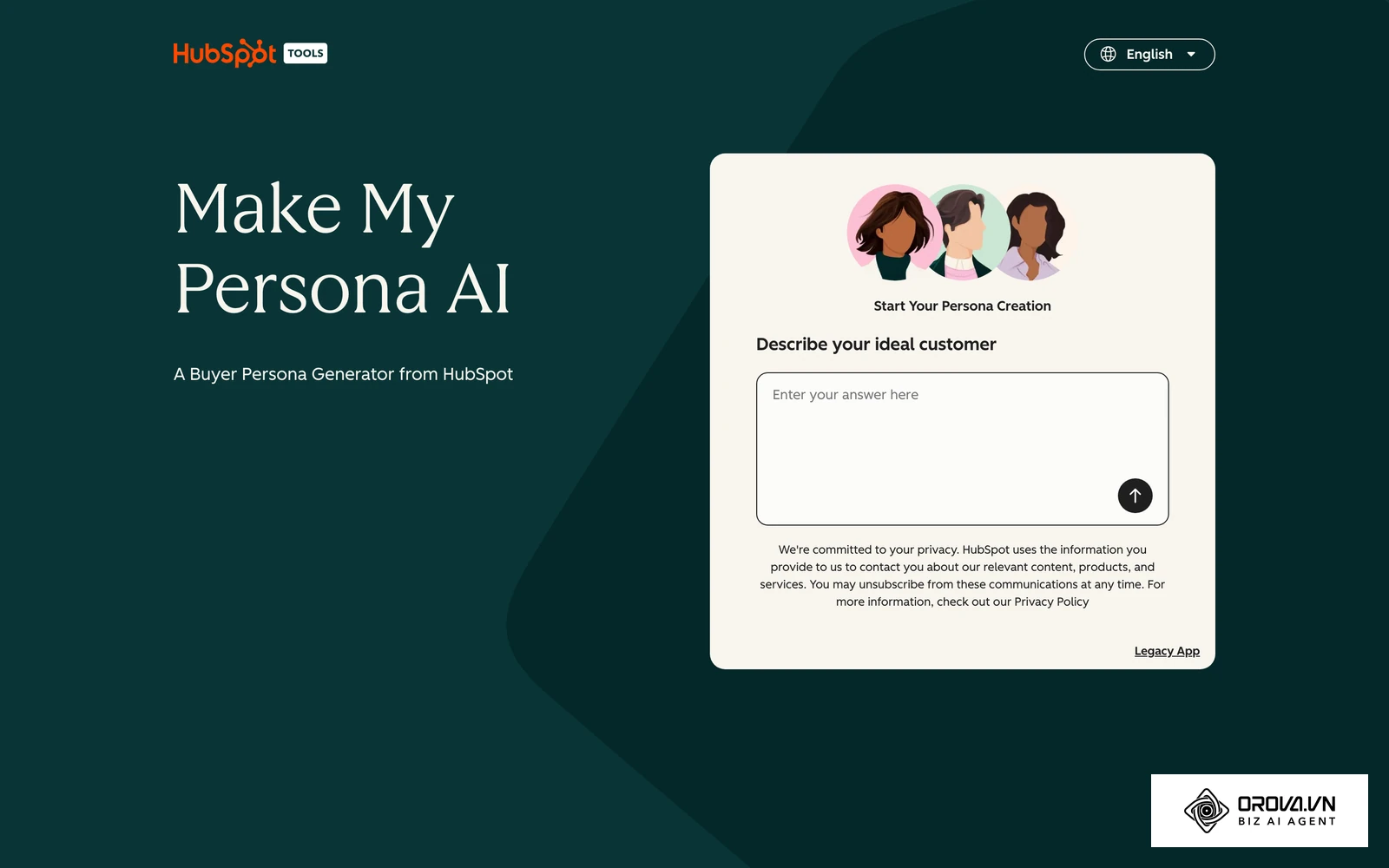
| Customer personas | A written document detailing your ideal buyer's deepest pain points, demographics, and online behaviors. | 1-2 weeks |
| Raw creative assets | A shared cloud drive containing your high-resolution product photos, authentic team pictures, and raw video footage. | Ongoing |
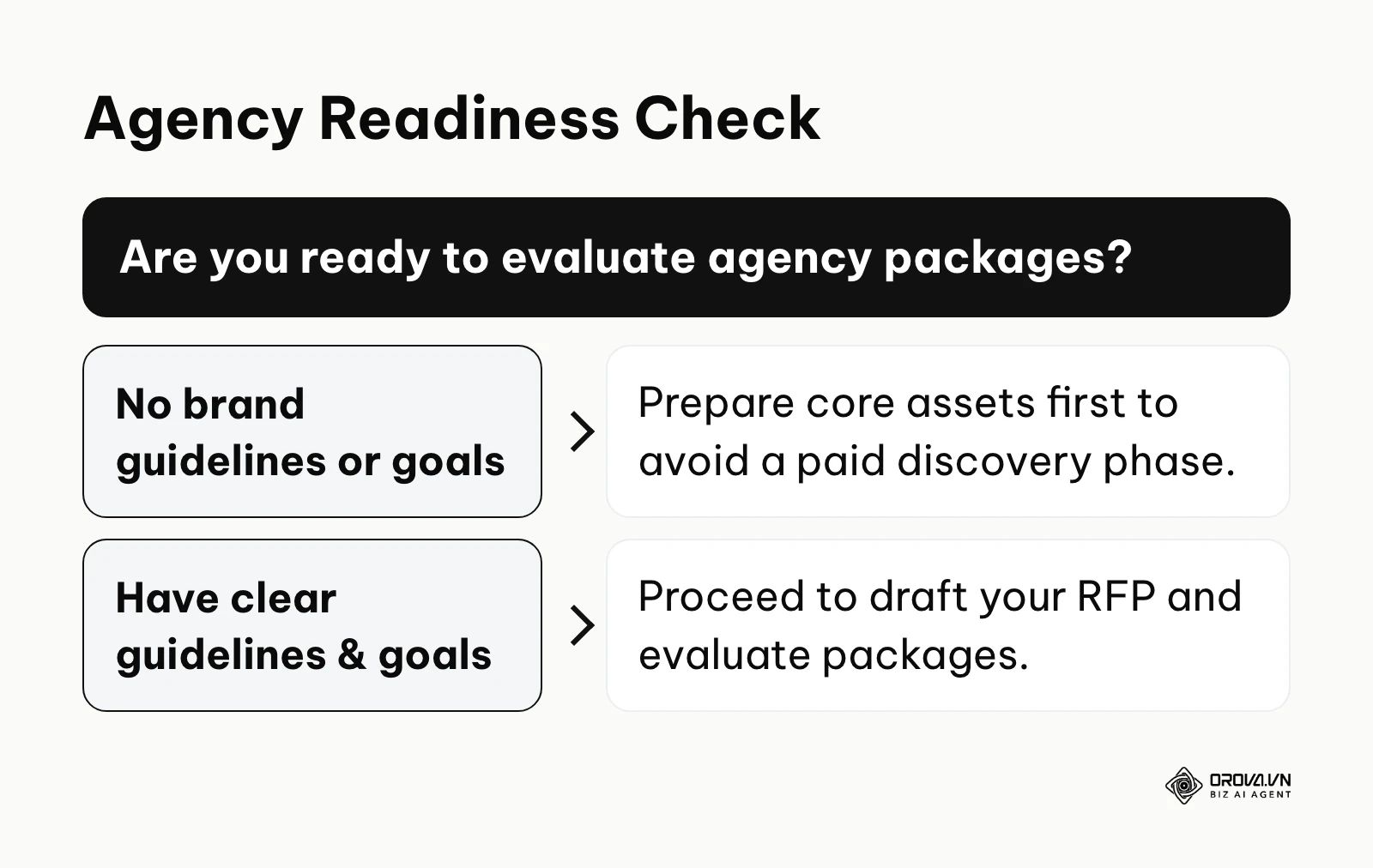
If you reach out to an agency without these elements, a reputable firm will either reject you or force you into a costly "discovery phase." By preparing this in advance, you immediately signal that you are a serious client who expects high-level execution, allowing you to bypass the fluff and get straight to negotiating the actual facebook page management packages.
6 steps to evaluate and select Facebook page management packages
Choosing the right agency is a critical financial decision. You are literally handing over the public voice of your company. Follow these six rigorous steps to ensure you are buying a service that will yield a high return on investment, rather than just becoming a recurring expense on your balance sheet.
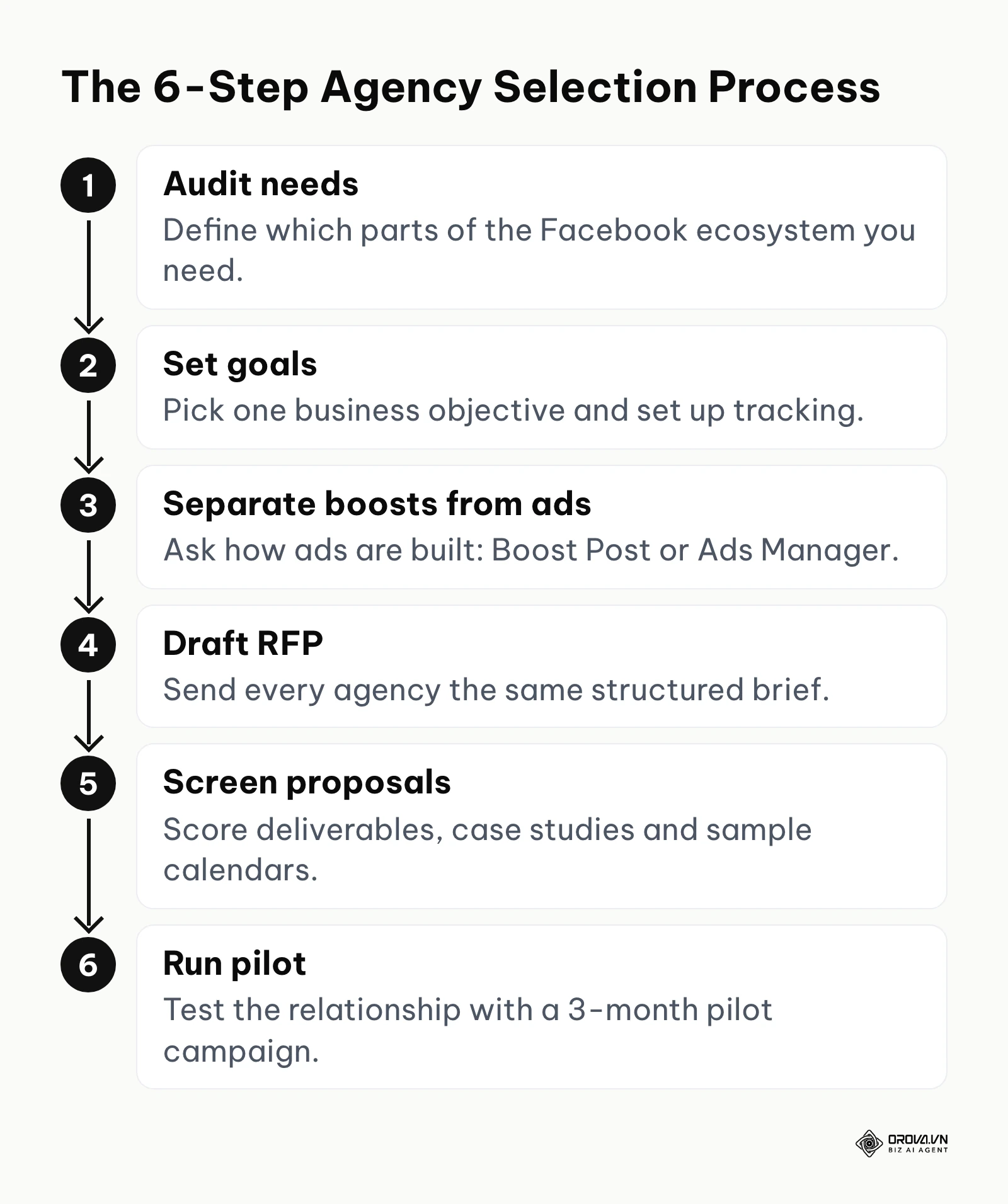
Step 1: Audit your specific Facebook ecosystem needs
Many business owners mistakenly believe that Facebook is just a static Fanpage timeline. In reality, the Facebook ecosystem is vast, complex, and highly fragmented. Before looking at packages, audit what specific parts of the platform your target audience actually uses.
Do you need a highly moderated Facebook Group to foster a private community of loyal customers? Are you relying heavily on short-form Facebook Reels to reach non-followers and go viral? Do you need complex automated Messenger Bots to handle initial customer service inquiries at scale? Generic social media packages often completely ignore these advanced elements and only offer standard image posts on your timeline. You must clearly define these requirements. For instance, if you want an internal AI caption generator to handle basic daily posts while the agency focuses entirely on high-end video production, state that upfront.
Illustrative example:
- Context: A local home decor retailer with a marketing team of two was struggling to define what they needed from an agency, initially just asking for a generic "daily posting" package.
- Steps taken: First, they audited their past performance and realized video content drove most of their direct inquiries. Next, they explicitly wrote down that they needed specialized Reels production. Finally, they requested potential agencies to show specific Facebook Reels portfolios.
- Stumble and fix: They initially received massive quotes for expensive, cinematic standard video production. They renegotiated to specify they needed lo-fi, authentic, smartphone-shot vertical videos, significantly reducing the quoted price.
- Result: They secured a customized package focused on 10 vertical Reels per month, which brought in a steady stream of local foot traffic and direct messages from real customers, rather than just passive page likes.
Step 2: Define your true objective and tracking mechanisms
Agencies love to sell engagement metrics like likes, comments, and shares because they are incredibly easy to manipulate and achieve. However, engagement does not pay your payroll. You must define your true business objective before signing any facebook page management packages.
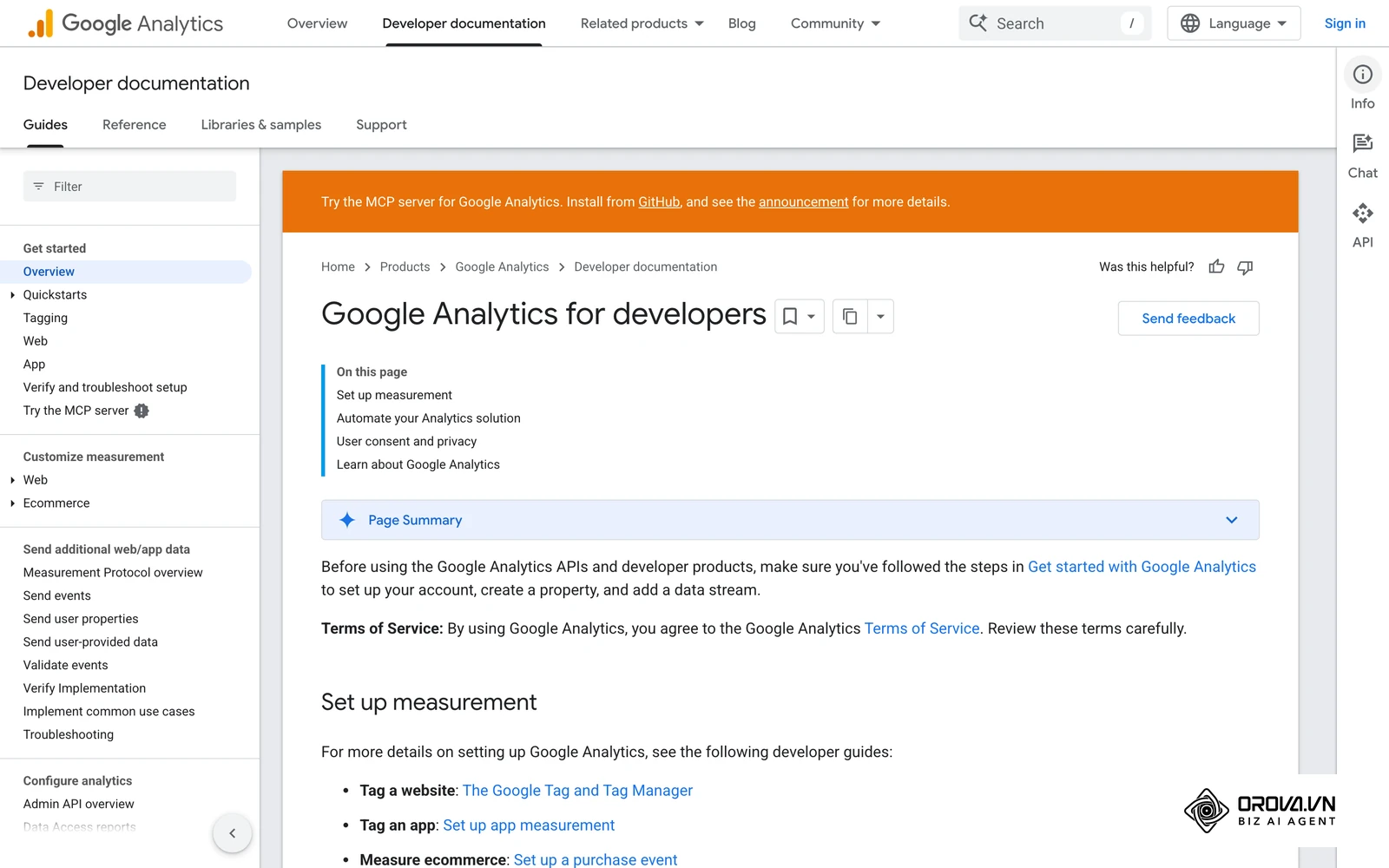
Are you trying to generate highly qualified B2B leads? Are you aiming to drive direct e-commerce sales with measurable revenue? Or is your goal strictly local brand awareness in a new physical market? Once your objective is strictly defined, you must establish the tracking mechanisms. If the goal is sales, ensure the agency knows exactly how to set up the Meta Pixel, Conversions API, and custom event tracking. If an agency pushes back on tracking hard business metrics and insists on only reporting on "reach," consider it a major warning sign.
Step 3: Differentiate between Boost Post and real Meta Ads management
A massive point of confusion and financial waste in facebook page management packages is the handling of paid advertising. Many cheap packages prominently claim to include "Ads Management," but in reality, the junior agency staff is just clicking the "Boost Post" button on your timeline with a token budget.
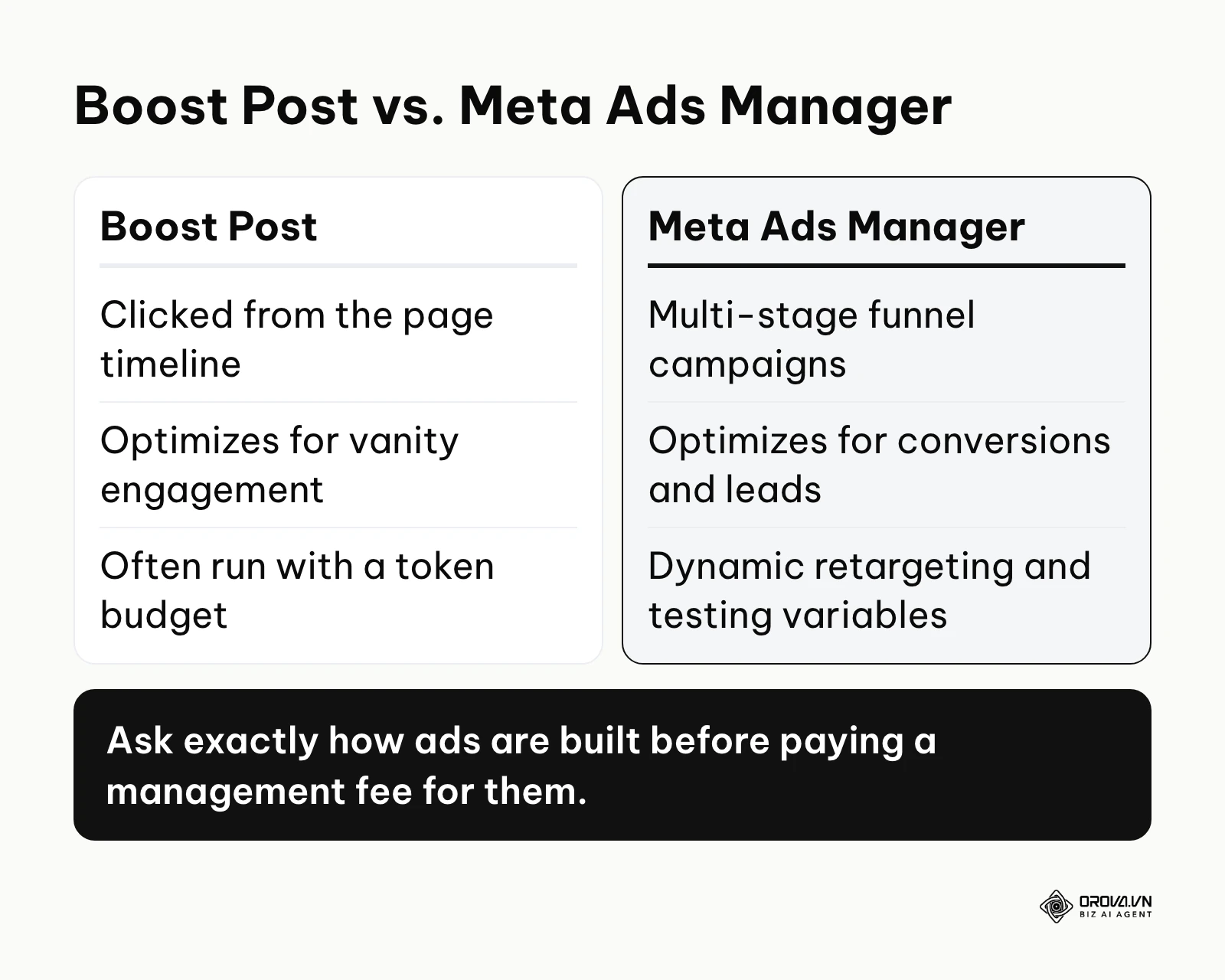
This is fundamentally different from building strategic, multi-stage funnel campaigns inside Facebook Ads Manager. Boosting a post optimizes heavily for vanity engagement, while real Meta Ads management optimizes for custom conversions, lead generation, and precise dynamic retargeting. You must explicitly ask the agency how they execute ads. If they do not use the Business Manager to create complex campaigns with distinct testing variables, you are wasting your advertising budget on amateur tactics.
Step 4: Build your Request for Proposal (RFP) using our standard template
Do not just email an agency asking "How much for Facebook management?" This lazy approach will result in vague, standardized quotes that do not address your unique business situation. Instead, build a professional Request for Proposal (RFP).
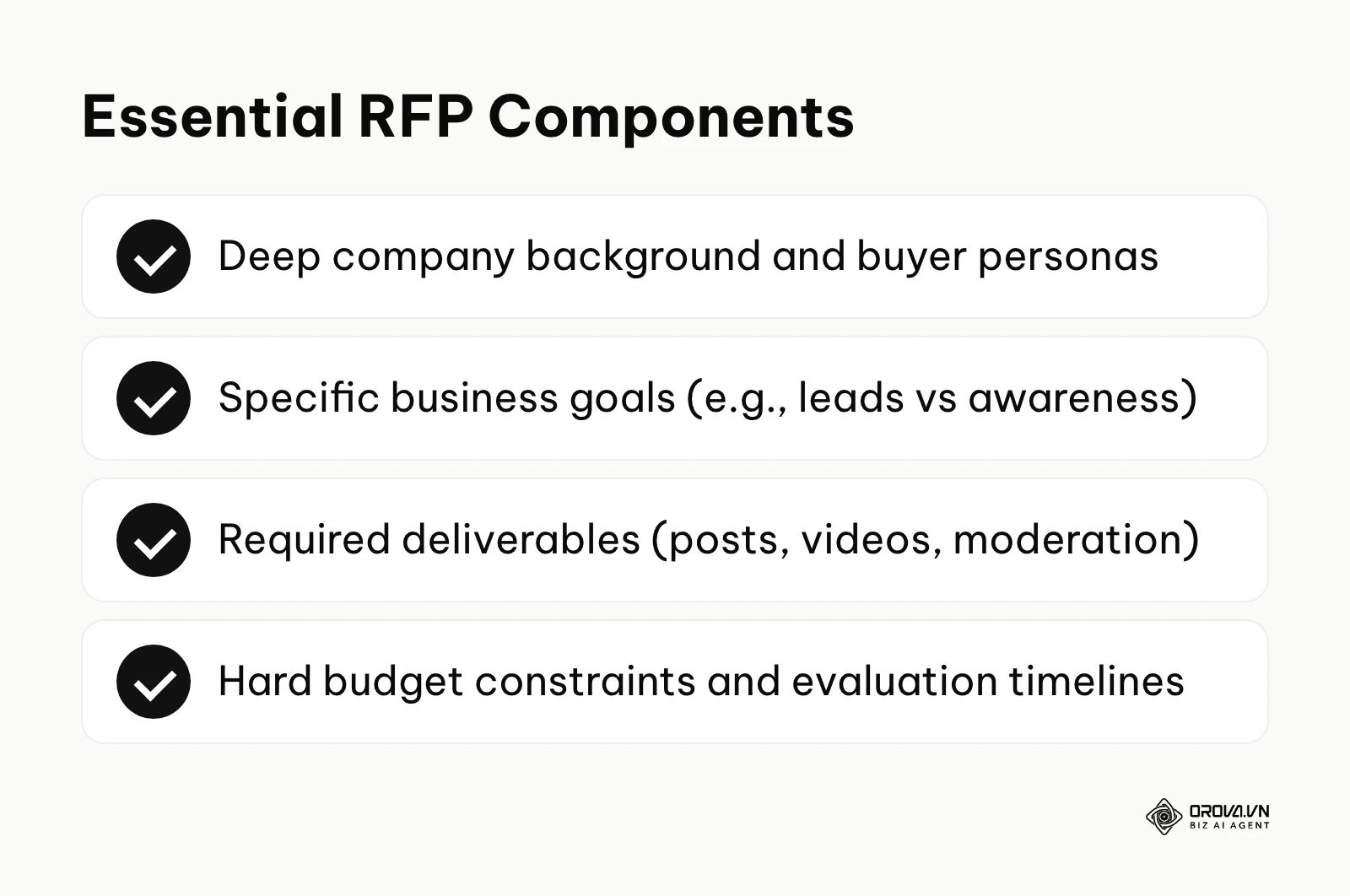
A strong RFP forces the agency to think critically about your business before they pitch. It should clearly outline your company background, your specific goals, the target audience you wish to reach, the exact deliverables you expect (e.g., 12 graphic posts, 4 vertical Reels, daily community management), your hard budget constraints, and the timeline for the selection process. Providing this structured document ensures you receive highly detailed, comparable proposals from every agency you contact, rather than a bunch of confusing, mismatched sales decks.
Use the template below as a starting point. Copy the three columns into a document, replace the example lines with your own details, and send the same version to every agency on your shortlist.
| RFP section | What to write | Example line |
|---|---|---|
| Company background | Who you are, what you sell, and who buys it. | "Family-run furniture store with two showrooms; buyers are homeowners aged 30-55." |
| Business goal | One primary outcome you want from Facebook. | "Increase showroom visit bookings made through Messenger." |
| Target audience | The people you need to reach and where they are. | "Homeowners within driving distance of both showrooms." |
| Required deliverables | The monthly output you expect, listed item by item. | "12 graphic posts, 4 vertical Reels, daily community management." |
| Ads scope | Whether ads are included and who pays the platform directly. | "Ad spend is billed to our own card; quote management only." |
| Reporting | Which metrics you want and how often. | "Monthly report covering bookings, cost per booking, and response time." |
| Budget and timeline | Your budget limit and the dates of the selection process. | "Proposals due in two weeks; decision within one month." |
| Ownership terms | Who owns the page, ad account, and creative files. | "We remain the Business Manager admin; agency gets partner access." |
Step 5: Screen agency proposals and deliverables
Once you receive the proposals, the rigorous screening process begins. Look past the flashy design of their presentation deck and focus intensely on the proposed deliverables. Are they proposing generic, stock-photo graphics that could apply to any company in your industry, or are they suggesting highly custom content that requires deep knowledge of your specific product?
Check their case studies carefully. Do they highlight actual business growth and revenue, or just superficial follower growth? It is often beneficial to evaluate an AI marketing agency alongside traditional ones to see how advanced technology can optimize the cost of content creation without sacrificing quality. Request a sample content calendar for a fictional two-week period to assess their creativity, brand voice matching, and overall strategic thinking.
To keep the comparison fair, score every proposal against the same criteria. A simple matrix like the one below works well: rate each criterion from 1 to 5, then compare the totals side by side.
| Criterion | What a strong proposal shows | Agency A | Agency B |
|---|---|---|---|
| Fit with your RFP | Every deliverable you listed is addressed, nothing vague. | 4 | 2 |
| Strategy depth | A clear reason behind content themes and posting mix. | 5 | 3 |
| Ads approach | Campaigns built in Ads Manager with testing, not just boosts. | 4 | 2 |
| Reporting | Business metrics such as leads and sales, not only reach. | 3 | 2 |
| Ownership terms | You stay the admin of every asset. | 5 | 3 |
In this example, Agency A clearly leads. The scores themselves matter less than the discipline: when every proposal is judged on the same rows, a polished sales deck can no longer hide a weak plan.
Illustrative example:
- Context: A B2B software startup marketing manager was evaluating three different agency proposals for their corporate facebook page management packages.
- Steps taken: They created a strict scoring matrix based on their initial RFP. They asked each agency to explain their specific content creation process in detail. They requested a mock content calendar.
- Stumble and fix: One agency promised a massive volume of 30 posts a month but couldn't coherently explain the overarching strategy behind them. The manager discarded that proposal and focused on an agency offering only 12 posts but with a clear, research-backed conversion strategy.
- Result: The chosen agency's focused, high-quality content strategy resulted in a surge of high-intent webinar signups and productive sales conversations within the first quarter, proving volume is useless without strategy.
Step 6: Conduct a pilot campaign before long-term commitment
Never sign a binding 12-month contract right out of the gate, no matter how good the pitch was. The absolute best way to test the true value of facebook page management packages is to insist on a paid 3-month pilot campaign.
During this pilot, you are not just measuring the final sales results; you are measuring the working relationship. Does the agency meet their stated deadlines? Do they accept creative feedback gracefully? Are their monthly reports insightful, or are they just automated data exports with no human analysis? The pilot period allows you to iron out communication workflows and ensures that the agency can actually deliver on the lofty promises made during the pitch phase. If the pilot fails catastrophically, you can walk away clean without a massive financial penalty.
If you want to handle part of your strategy internally before buying facebook page management packages, Orova Social can help. You can compose once and publish to 8 channels, schedule posts on a content calendar, use AI to write captions in your brand voice, and cut long videos into vertical 9:16 clips with subtitles for Facebook Reels.
Deep analysis: The real ROI of cheap vs premium packages
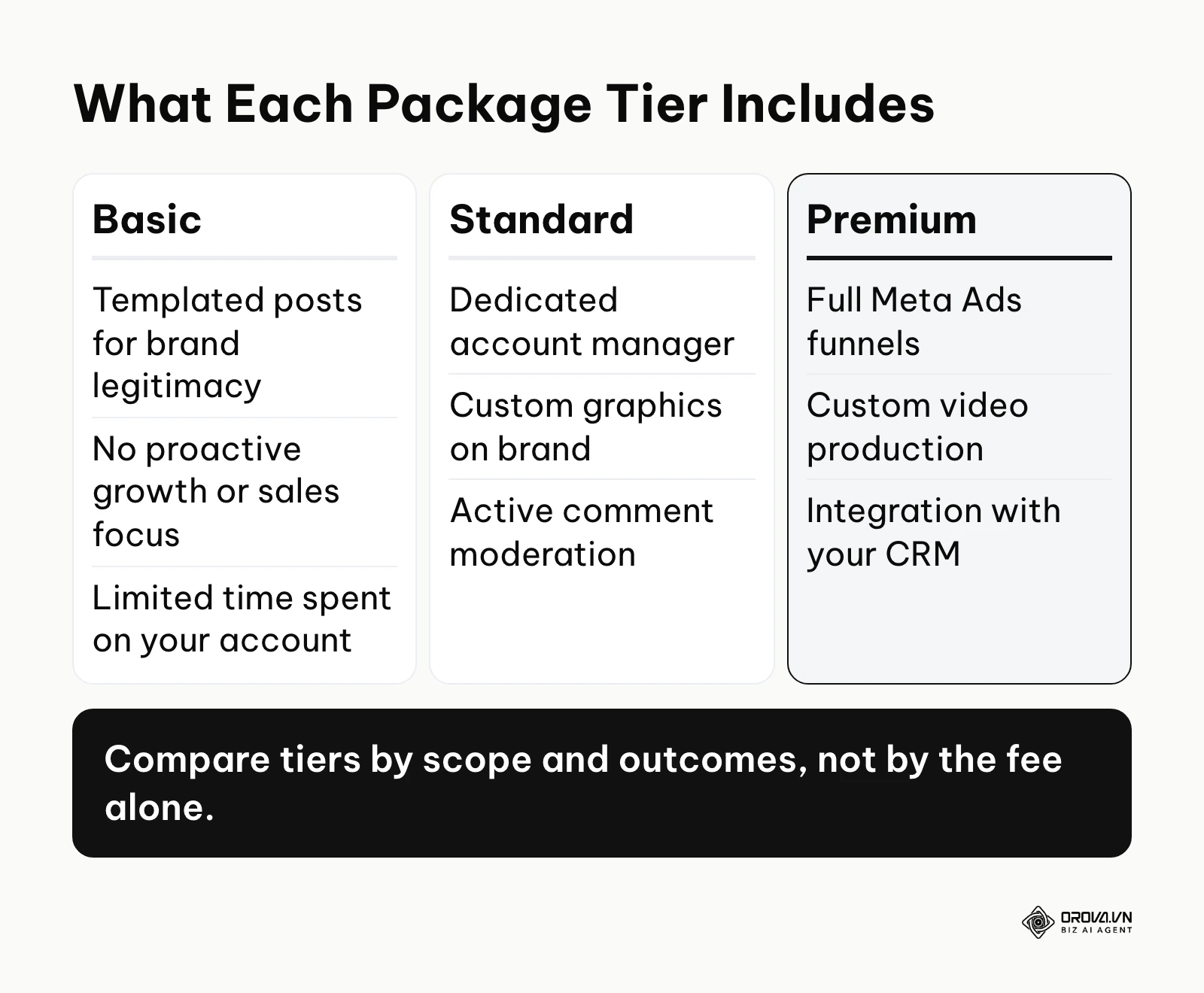
When shopping for facebook page management packages, you will encounter wildly different price points, and the gap between the cheapest and the most expensive offer can be very large. Understanding what you are actually buying at each tier is crucial to avoid severe disappointment. Prices vary by country, industry, and agency size, so this section compares tiers by scope rather than by fee. The absolute cheapest option is rarely the most cost-effective when you consider the massive opportunity cost of bad marketing. Let's break down the trade-offs of the most common tiers.
| Package tier | Best suited for | Weaknesses and Risks |
|---|---|---|
| Basic | Small local businesses just needing a digital pulse; minimal budgets. | Usually relies heavily on templated stock photos; zero strategic growth; no dedicated account manager; very slow response times. |
| Standard | Growing SMEs wanting active community engagement and custom graphics. | Often lacks deep Meta Ads technical integration; may struggle with high-quality original video production; limited deep strategic consulting. |
| Premium | Large enterprises or aggressive scaling brands needing full revenue funnels. | High upfront financial commitment; requires significant internal time for approvals; risk of over-engineering simple campaigns. |
At the Basic Tier, you are essentially paying for a digital heartbeat. The agency will schedule generic quotes, holiday greetings, and basic product photos. This is purely for brand legitimacy—so that when a potential customer searches for you, they see you are still in business. However, expect absolutely zero proactive growth or sales. Agencies at this tier usually serve many clients at once on thin margins, so the time spent on your account each week tends to be limited.
The Standard Tier is where true page management begins. Here, agencies will assign a dedicated account manager. They will create custom graphics that align perfectly with your brand guidelines, actively moderate comments to build a community, and perhaps run a basic ad campaign. The value here shifts from just "posting" to actively trying to engage your current audience. However, they might still lack the technical depth for complex, multi-stage ad funnels.
The Premium Tier is an entirely different beast. At this level, you are buying a strategic business partnership. These packages include intensive PPC ad management, high-end custom video production, and deep technical integration with your CRM system. They don't just manage the page; they manage the entire customer acquisition journey originating from Facebook. The cost is high, but so is the potential return, because the strategies are built around direct revenue generation rather than activity.
Illustrative example:
- Context: The owner of a boutique fitness studio previously paid for a basic social media package but saw exactly zero new member signups over a frustrating six-month period.
- Steps taken: They cancelled the basic package entirely. They allocated a much higher budget to hire a specialized local growth agency on a premium tier. They set a strict goal of generating paid trial class bookings.
- Stumble and fix: The new agency's initial ads were too polished and looked inauthentic, causing high costs. The owner provided raw, shaky footage of their actual intense classes, which the agency then rapidly edited into highly targeted local ads.
- Result: The studio's evening classes reached maximum physical capacity within two months, proving conclusively that paying for strategic management yields tangible business returns over cheap, passive posting.
Measuring success: Metrics that prove your agency is working
You cannot manage what you do not measure. When evaluating the ongoing success of your facebook page management packages, you must move far beyond the basic dashboard provided by the platform. Agencies will naturally present the metrics that make them look best. You must demand the metrics that actually matter to your business survival.
| Key Metric | What it actually means | Warning Threshold |
|---|---|---|
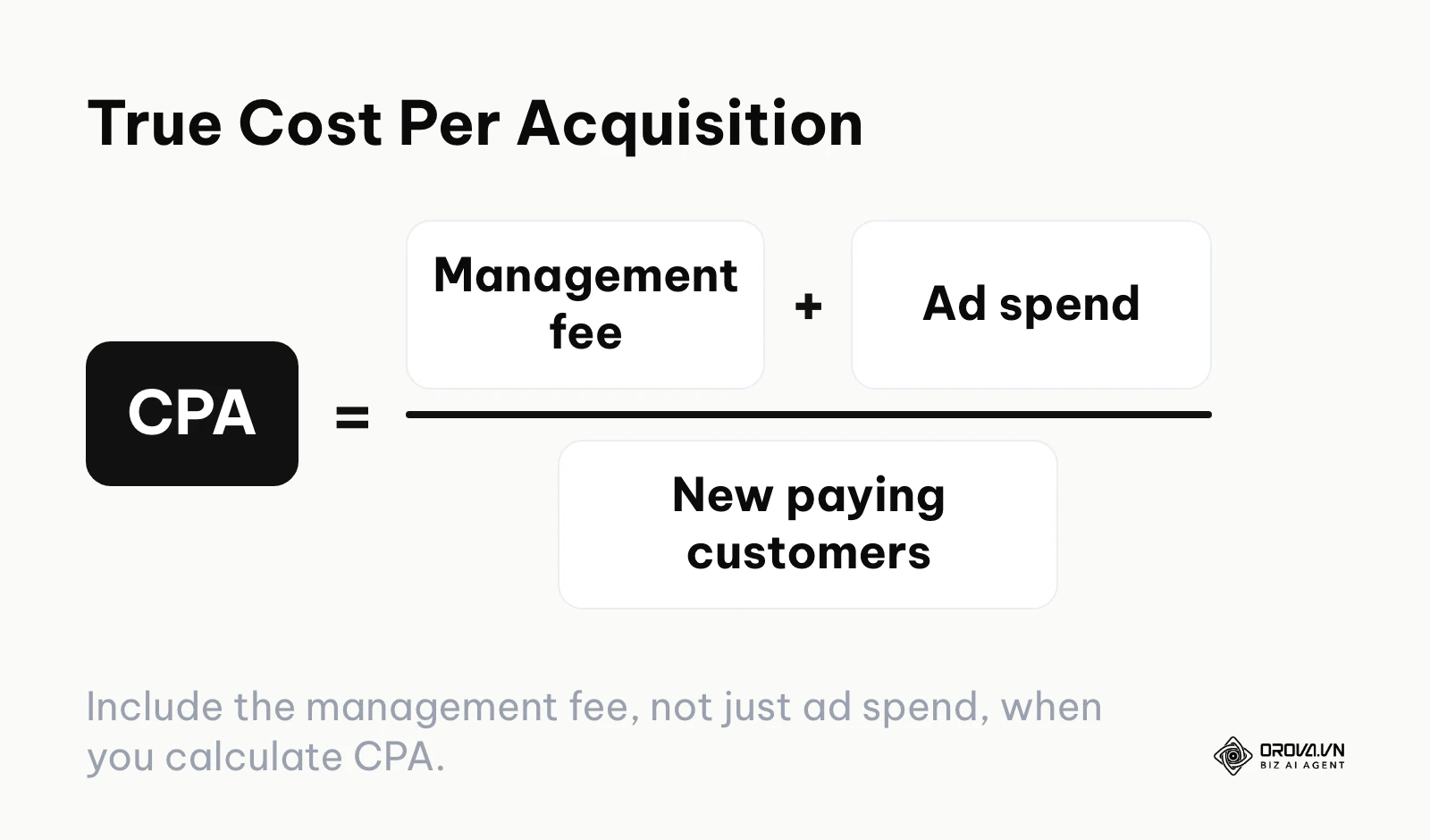
| Cost Per Acquisition (CPA) | The total amount spent on the management fee and ad spend divided by new paying customers. | If CPA consistently exceeds your gross profit margin on the product, you are losing money on every sale. |
| Return on Ad Spend (ROAS) | The direct revenue generated from campaigns compared to the ad spend. | If ROAS stays below the break-even level you calculate from your own margins, campaigns are not covering their costs. |
| Engagement Rate by Reach | The percentage of unique people who saw your post and actively interacted with it. | A rate that keeps falling month after month while reach holds steady means the content no longer fits the audience. |
| Lead Quality Score | A qualitative measure (often from your sales team) of how good the Facebook leads actually are. | If sales rejects a large share of the leads as unqualified, the targeting is fundamentally flawed. |
| Community Response Time | How fast the agency replies to customer inquiries in comments or Messenger. | Taking longer than 24 hours to respond during business days damages brand trust severely. |
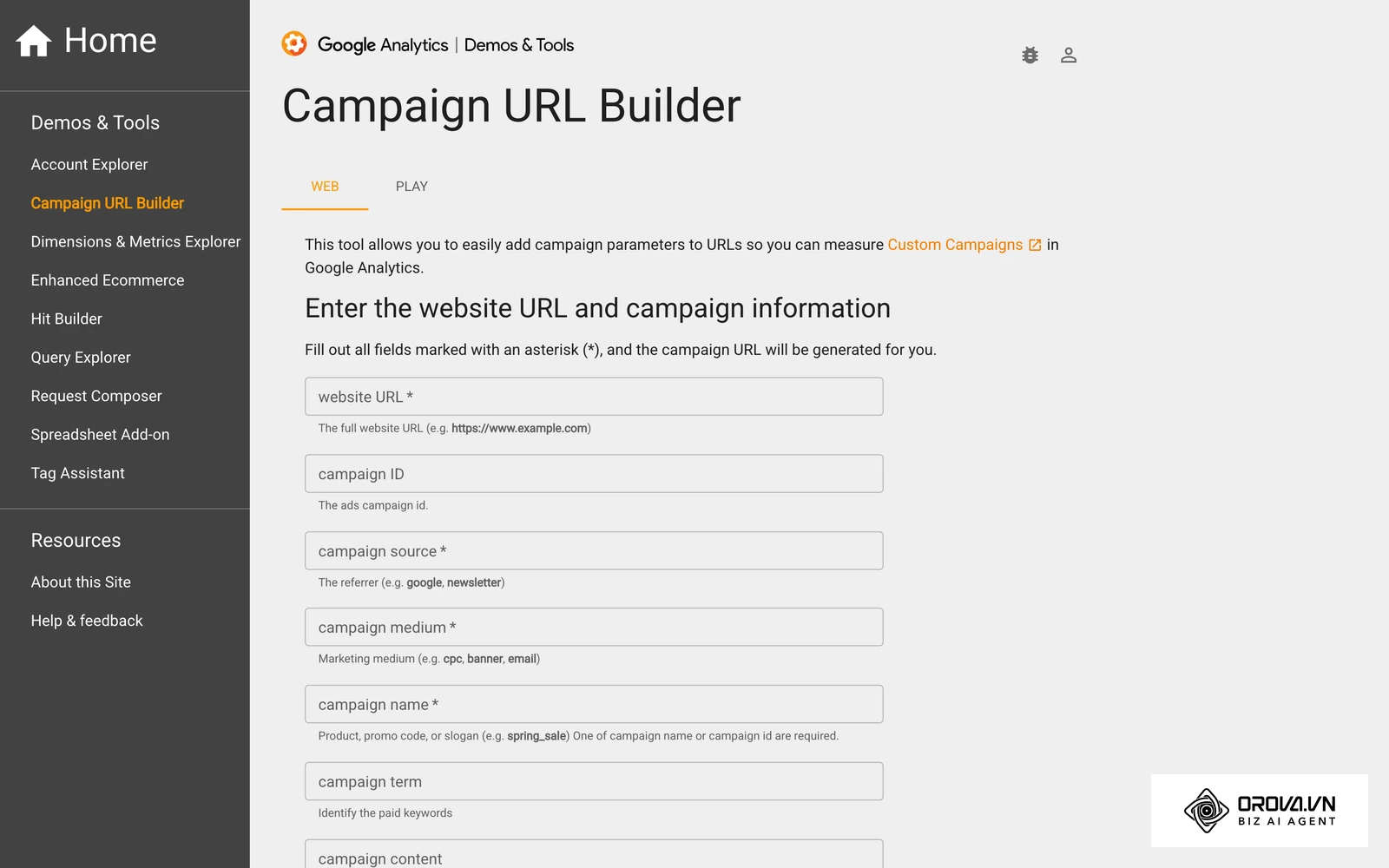
Tracking these metrics requires proper, airtight technical setup. Ensure that your Google Analytics 4 is properly configured to track UTM parameters from every single Facebook post and ad. Acquiring leads through social media requires a documented strategy, not just random posting. If your goal is purely brand awareness rather than direct sales, track branded search volume on Google; as your Facebook presence organically grows, more people should be actively searching for your brand name on search engines.
7 common mistakes when buying facebook page management packages
Even with careful planning and an RFP, businesses often fall into traps when buying these services. Avoid these seven red flags to protect your brand and your budget.
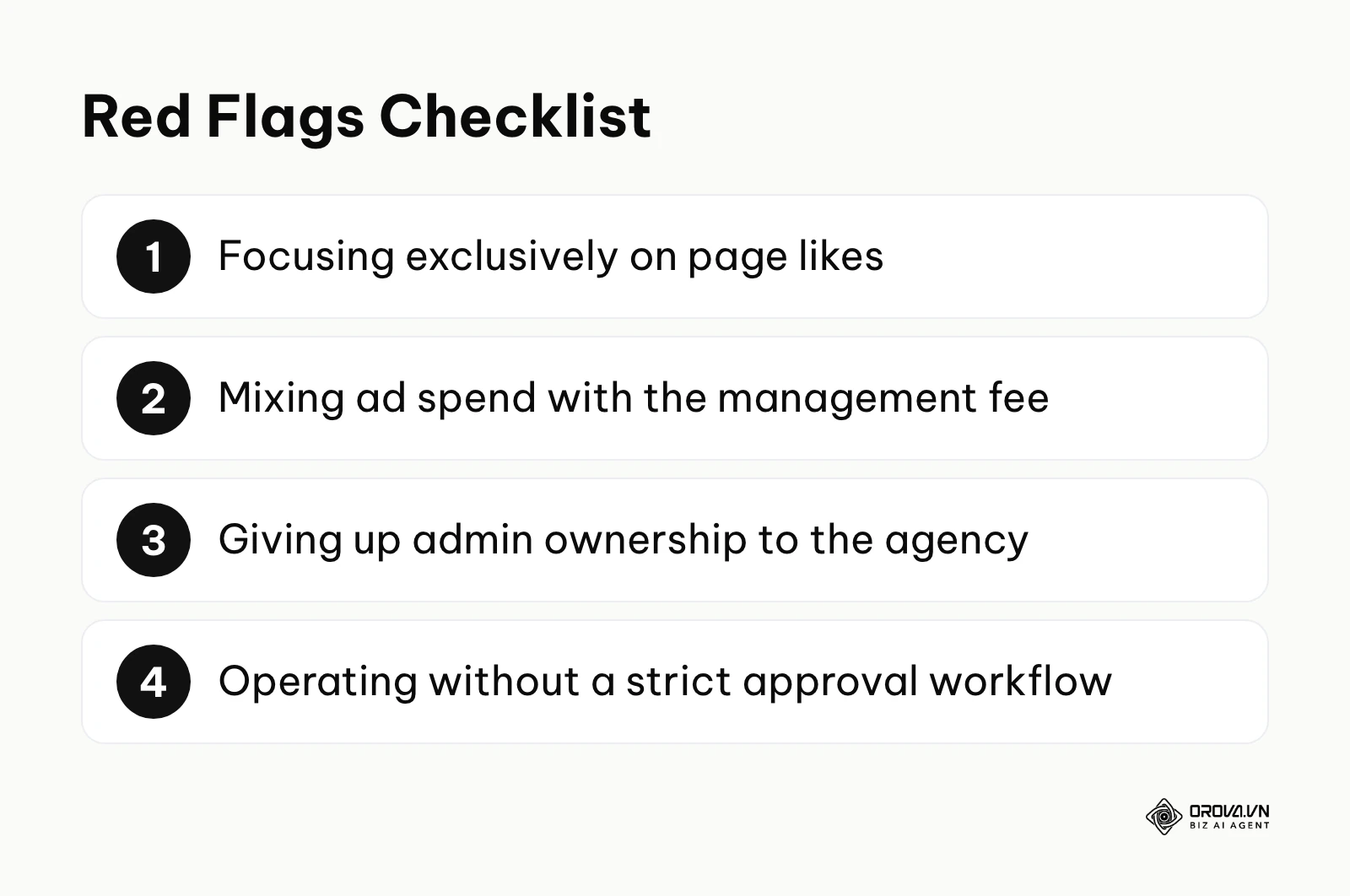
- Focusing exclusively on vanity metrics. Many businesses celebrate a surge in page likes without realizing they come from click-farms or irrelevant demographics. Consequence: You waste money talking to an audience that will never, ever buy your product. Fix: Always rigorously tie package goals to measurable business outcomes like website traffic, lead form submissions, or sales.
- Not separating ad spend from the management fee. Some shady agencies quote a single flat monthly fee and vaguely claim it "includes ads." Consequence: The agency has a massive financial incentive to spend as little on ads as possible to keep more of that fee as sheer profit. Fix: Always pay your ad spend directly to Meta via your own credit card, paying the agency strictly for the management service.
- Failing to retain asset ownership. Business owners sometimes lazily let the agency create the Facebook page or Ad Account under the agency's personal credentials. Consequence: If you eventually fire the agency, they can hold your page hostage or take all the historical ad data with them. Fix: You must be the ultimate Admin on the Meta Business Manager; the agency should only be granted temporary partner access.
- Accepting templated, cross-platform content. Lazy agencies often blast one piece of content identically across Facebook, Instagram, X, and LinkedIn. Consequence: The content looks robotic and completely fails to leverage the unique features of Facebook, like Groups or native video. Fix: Demand platform-specific content adaptations in your contract.
- Lacking a strict approval workflow. Allowing an agency to post without your final sign-off is incredibly risky, especially early on. Consequence: The agency might post something tone-deaf, off-brand, or factually incorrect, causing an immediate PR crisis. Fix: Implement a mandatory weekly review process where you explicitly approve all content before it ever goes live.
- Ignoring community management. Some basic packages only include "posting" and explicitly exclude replying to comments or direct messages. Consequence: Real customers ask buying questions on your posts and are met with total silence, destroying trust. Social media users increasingly treat comments and Messenger as a customer service channel, which makes community management a non-negotiable part of any package. Fix: Ensure the package includes daily community monitoring and response protocols.
- Believing "guaranteed" results. Any agency that guarantees a specific number of sales or viral hits is lying to you. Consequence: You set yourself up for disappointment and risk black-hat tactics that could get your page banned by Meta. Fix: Work exclusively with agencies that promise a rigorous testing methodology rather than guaranteed, magical outcomes.
If you lack the budget for a premium agency right now, a hybrid model is a sensible middle ground. Keep the routine work in-house, such as drafting captions, building the content calendar, and publishing with a social media scheduler, and buy only the parts that genuinely need specialist skill, such as video production, ads strategy, or community moderation. Quotes for a narrow scope are also easier to compare.
Ready to take control of your digital presence? Orova Social gives you the tools to apply your brand profile to all posts and download content calendars to Excel for easy team reporting. Best of all, it is free until July 7, 2027. Sign up today and streamline your workflow.
Facebook page management trends in the next few years: Author's perspective
As a deep observer of the digital marketing landscape, I am closely watching how the fundamental structure of facebook page management packages is shifting. The old model of simply paying an agency to act as a megaphone is rapidly becoming obsolete. Here is exactly where I see the industry heading as we move past 2026.
The shift towards community-led growth over page broadcasts
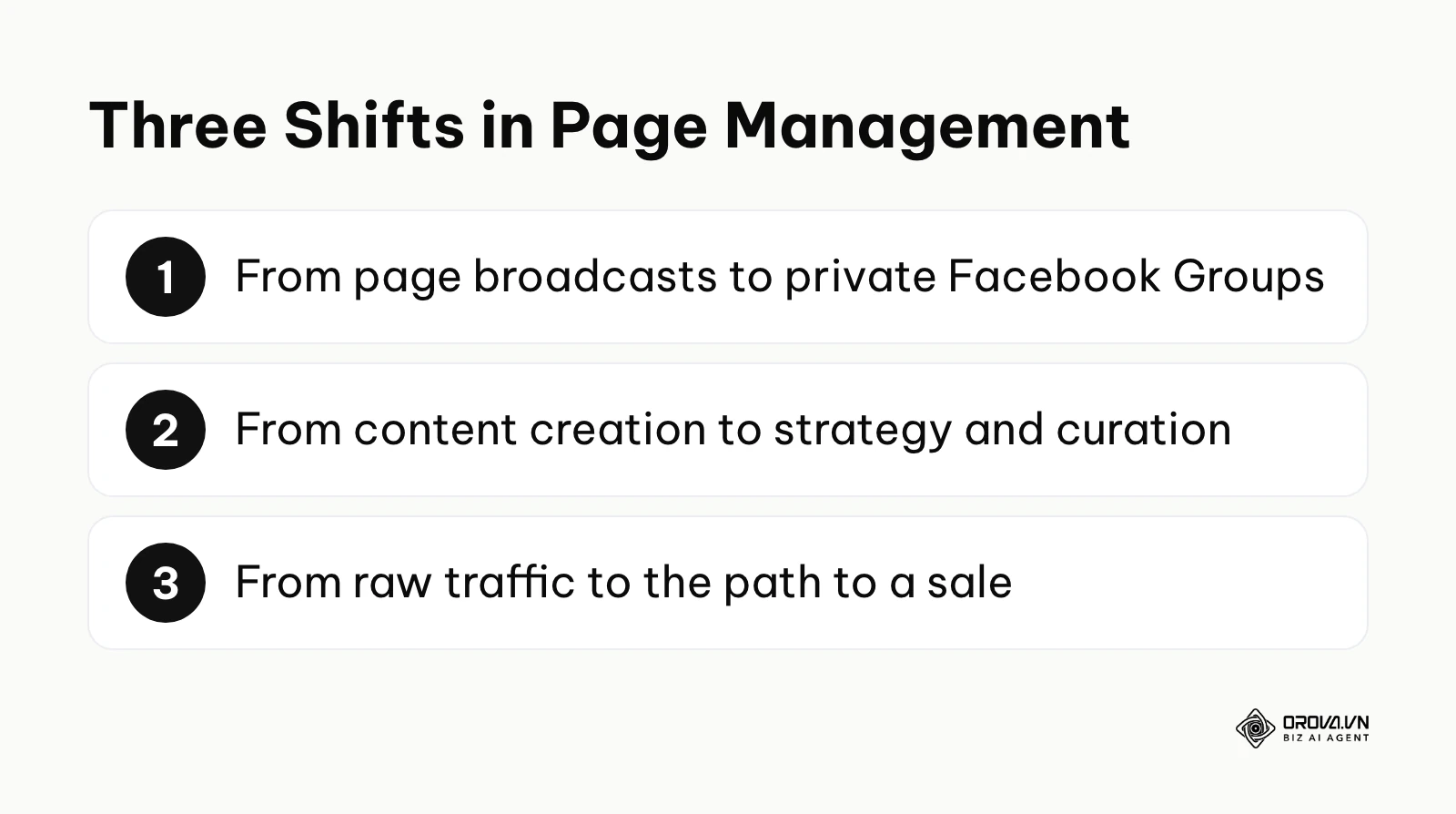
Right now, organic reach for standard Fanpage broadcasts is often very low. I believe that over the next few years, the core of Facebook management will pivot heavily toward building and nurturing private Facebook Groups. Many brands will realize that broadcasting to a passive audience yields terrible returns. Instead, packages will be priced based on deep community moderation, fostering user-generated content, and managing micro-communities. You should start shifting your focus away from how many posts go on your timeline, and start asking how you can build a dedicated group around your product category.
AI will commoditize content creation but elevate strategic curation
We are already seeing AI generate impressive images and draft decent copy instantly. I suspect that paying an agency purely for "content creation" will increasingly be seen as poor value, because AI tools can already do much of the heavy lifting. The true value of an agency will shift from creation to curation and strategy. Agencies will charge high premiums for knowing which AI-generated content to deploy, how to string it into a cohesive narrative, and how to intelligently allocate ad budget against it. To prepare, you must begin training your internal team on AI tools so you aren't paying external premiums for commoditized tasks. Of course, the risk is that the internet becomes flooded with synthetic garbage, making authentic, human-led strategy more valuable than ever.
Packages will be judged on the path to a sale, not on traffic
Video, and Reels in particular, already claims a large share of attention on Facebook, which means your package should include a vertical video plan. I also expect content and commerce to keep moving closer together, though not in a straight line: Meta has changed its shopping and checkout features several times over the years, so I would not build a package around any single in-app feature. My view is that the packages worth paying for will focus less on raw traffic and more on the plumbing behind a sale, such as a clean product catalog, reliable tracking, and fast answers to buying questions in Messenger. You should get your catalog and tracking in order now, so you are ready whichever way Meta's shopping tools move next.
Frequently asked questions about facebook page management packages
Do standard facebook page management packages include Facebook Group management?
Usually, no. Standard packages focus almost exclusively on the public-facing Fanpage. Managing an active Facebook Group requires significantly more time, emotional intelligence, and proactive moderation to keep discussions healthy and spam-free. If you want an agency to run a community Group, you must specifically negotiate it as a premium add-on to the standard contract.
How does AI change the pricing of management packages?
AI significantly reduces the time required to write captions and generate basic graphics. While some legacy agencies will stubbornly try to maintain their high pricing, transparent agencies will lower the cost of basic content production and shift their pricing model to emphasize high-level strategy, data analysis, and advanced ad buying—areas where human judgment still vastly outperforms AI.
Should I hire a freelancer or an agency for my page?
It depends entirely on your budget and risk tolerance. A freelancer is often much cheaper and provides a single point of contact, making them great for small businesses. However, if that freelancer gets sick, your marketing stops entirely. An agency costs more but provides a full team of specialists (copywriters, designers, media buyers) and offers better continuity of service when staff change.
Can I cancel a package if the results are poor?
This depends strictly on the specific contract you sign. Some agencies require a minimum commitment of several months because social media growth simply takes time. However, you should always negotiate a 30-day or 60-day out clause for severe underperformance. Never sign a binding year-long contract without a probationary pilot period.
Does paying for more posts guarantee higher engagement?
Absolutely not. In fact, posting too frequently can severely hurt your algorithmic ranking if the content is low quality and ignored by your audience. The algorithm rewards relevance and interaction, not sheer volume. A package offering 12 highly researched, visually stunning posts will usually outperform a package offering 30 mediocre, rushed posts.
Where should you start?
If you are overwhelmed by the sheer complexity of choosing the right agency and comparing facebook page management packages, take a deep breath. You do not need to overhaul your entire marketing strategy by tomorrow. Depending on your current situation, here is the immediate next step you can take today.
If you have never run a Facebook page professionally before, your absolute first step is simply to secure your digital assets. Spend a few hours this afternoon setting up a proper Meta Business Manager account. Claim your page, set up your ad account, and ensure you are the primary administrator. Do this before you even talk to an agency to ensure you always legally own your data and audience.
If you are currently paying an agency but feel you are getting zero results, your immediate action is to conduct a ruthless metric audit. Log into your dashboard and check your Cost Per Acquisition and Return on Ad Spend over the last 90 days. If the agency is only reporting on likes and impressions and hiding from sales numbers, draft an email today demanding a report on actual business conversions.
If you are ready to hire and have the budget officially approved, your task for today is to begin drafting the Request for Proposal (RFP). Open a document and rigorously write down your exact business goals, your target audience, and your hard budget limit. Having this document ready will put you in a position of immense power when you begin interviewing potential agency partners next week.
About the author

Builder of Orova
Nguyễn Đỗ Trọng Ân has 8 years of experience in marketing, including 6 years managing market development across Asia. He builds Orova, a Biz AI Agent that never sleeps: it plans, runs and optimizes work for businesses.
Run your business with AI Agents
Orova is the always-on Biz AI Agent — it plans, runs, and optimizes the work for you.
Save time, unlock productivity.