
What is an SEO expert? Skills, career path and how to become one

You are managing a business website and watching your organic traffic flatline, despite publishing new blog posts every single week. You might start thinking the search algorithm is broken or that the entire concept of organic search is dead. The old method of simply writing keyword-stuffed articles, buying a few cheap backlinks, and hoping for the best is failing completely because search engines have evolved into complex, AI-driven answer engines. This is exactly where a qualified seo expert steps in to turn things around. An SEO expert is the specialist who makes a website easy for search engines to crawl, understand and trust, so it earns qualified organic traffic. Instead of guessing what Google wants, an SEO expert systematically diagnoses deep technical bottlenecks, aligns content with true user intent, and builds a sustainable, compounding growth engine for the business. This comprehensive guide will break down exactly what this role entails, the highly specific skills you need to transition into the field, and the harsh realities of the industry today. This breakdown is written mainly for aspiring and working marketers who want to become an SEO expert or judge their own level; if you are deciding whether to hire outside help instead, see our comparison of SEO consultants vs AI automation.
What is an seo expert?
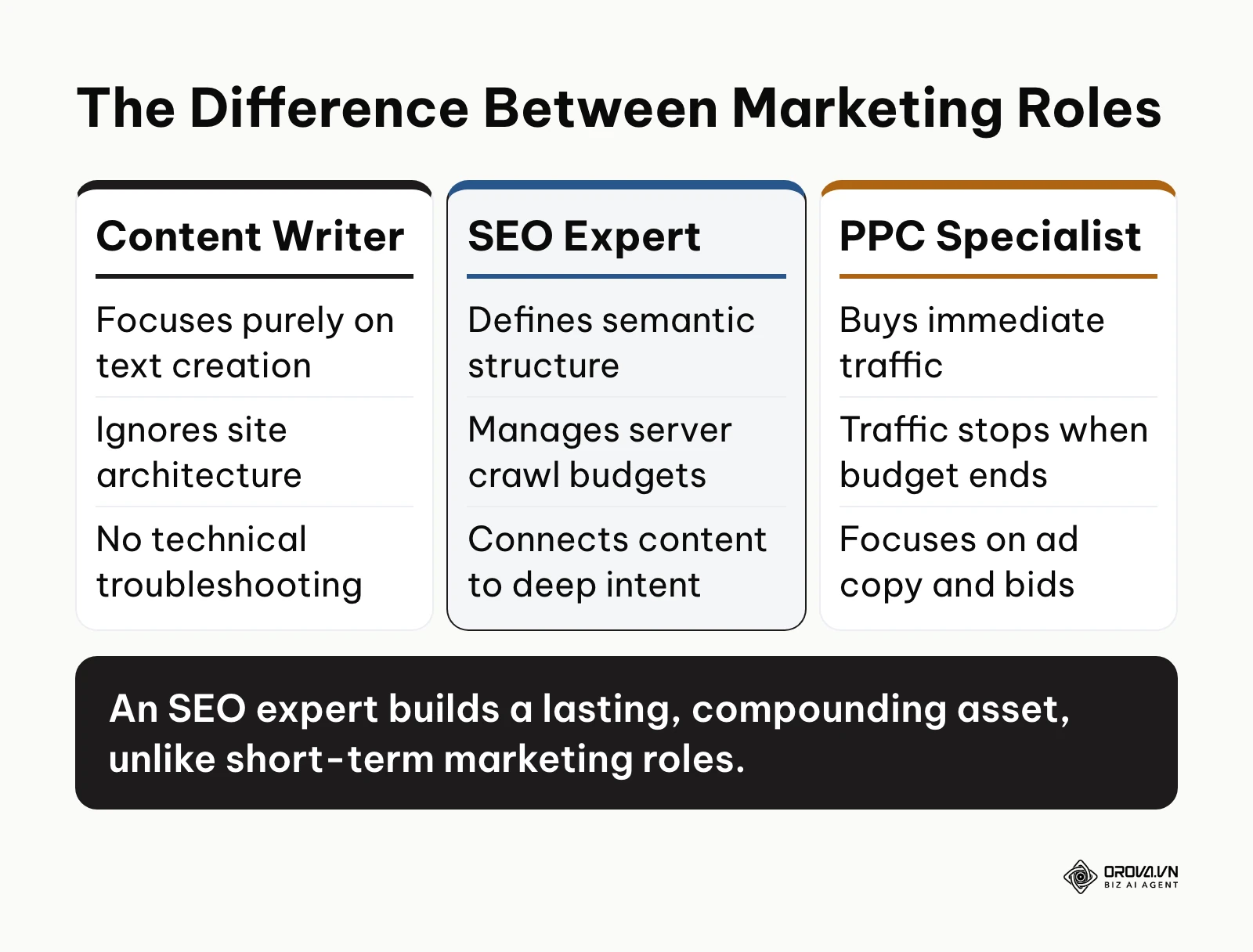
An seo expert is a specialized digital marketing professional who applies search engine optimization to websites to achieve higher rankings in search engine results pages. They are used to drive targeted organic traffic and predictable revenue. Unlike general marketers, they focus exclusively on search algorithms, technical website architecture, and matching deep user intent.
The origin of the title dates back to the late 1990s when early webmasters realized that search engines like AltaVista and Yahoo could be manipulated for visibility by repeating words. It has since evolved from a spam-driven hobby into a highly technical, data-centric corporate discipline that requires a deep understanding of computer science, linguistics, and consumer psychology.
| Concept | How it differs | Example |
|---|---|---|
| Content Writer | Focuses purely on creating text; does not handle site architecture, semantic HTML, or server crawl issues. | Writes a 2000-word blog post, while the SEO expert defines the semantic structure, the H-tag hierarchy, and the internal URL path. |
| Web Developer | Builds the site's functionality but often ignores indexability, semantic structure, and metadata best practices. | Writes complex JavaScript to load a product catalog, while the SEO ensures Googlebot can actually render that JavaScript to see the products. |
| Paid Search (PPC) Specialist | Buys immediate traffic through advertising platforms; results stop the second the daily budget runs out. | Runs Google Ads for the keyword "buy running shoes", while the SEO builds long-term domain authority for the exact same term. |
Illustrative example: Think of an SEO expert as a city planner. While a traditional web builder makes a storefront look visually appealing, the city planner ensures the digital roads (technical SEO and site speed) lead directly to the door, the street signs (on-page SEO and metadata) are perfectly clear to visitors, and other highly reputable businesses in the city (off-page SEO and backlinks) are actively recommending people to visit your location.
Why an seo expert is critical for modern business growth
The primary reason an seo expert exists is to solve the massive problem of digital invisibility for businesses operating in a saturated online market. When a potential customer faces a problem, their first instinct is to search for a solution online. If your business does not appear on the first page for that exact query, you essentially do not exist in the mind of the consumer. In the broader marketing ecosystem, SEO stands firmly in the middle and bottom of the funnel: after a website is built and a brand identity is established, but before you can sustainably convert massive audiences without constantly burning through expensive paid advertising budgets.
Illustrative example:
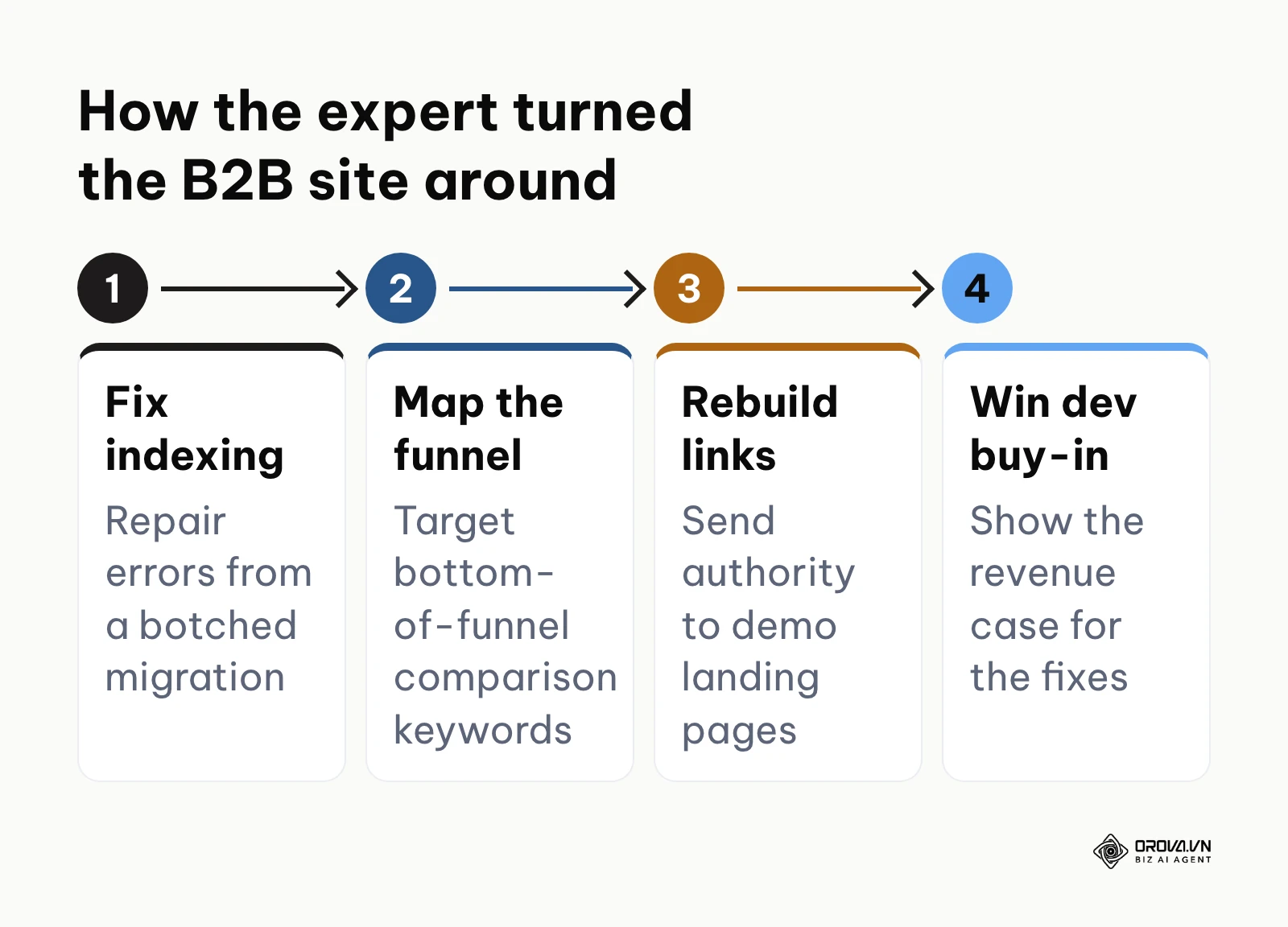
- Context: A mid-sized B2B software company possessed a strong, innovative product but generated zero organic leads. The marketing manager was overwhelmed, acting as a hybrid content creator and social media manager, spreading themselves too thin.
- Steps taken: They brought in a dedicated, senior SEO expert who immediately audited the site to fix massive indexing errors caused by a botched recent domain migration. Next, the expert mapped out a highly structured saas seo funnel strategy, targeting bottom-of-funnel comparison keywords (e.g., "alternative to [competitor]"). Finally, they entirely restructured the internal linking architecture to distribute page authority to high-converting demo landing pages.
- Hurdles and fixes: The internal development team heavily resisted making the required technical changes, citing a lack of bandwidth and sprint capacity. The SEO expert created a prioritized financial matrix, proving to the executive team that fixing three specific canonical tags would yield a higher monetary return than their upcoming feature launch, successfully getting developer buy-in.
- Visible results: Within about two quarters, qualified product demo requests from organic search grew clearly, and the company reduced its reliance on expensive LinkedIn advertising campaigns.
If you bypass the need for an SEO expert and ignore organic growth, you completely lose the compounding effect of organic traffic. Your customer acquisition cost will perpetually rise as you remain entirely dependent on paid acquisition channels, which are becoming increasingly volatile and expensive year over year. A website without SEO is simply a digital brochure collecting dust on a server.
When you do not need an seo expert yet: You should not invest in a dedicated, full-time seo expert if you are a pre-product-market-fit startup that is strictly testing minimum viable product (MVP) features; your entire focus at this stage should be on rapid user feedback, direct sales, and highly targeted paid acquisition to quickly validate the business model. Similarly, if your business relies entirely on hyper-local foot traffic with absolutely no digital product or online booking requirement (like a neighborhood convenience store), setting up a basic Google Business Profile by yourself is sufficient. Hiring an expert in these specific scenarios burns crucial cash prematurely before you have a scalable digital foundation to actually optimize.
The value and career path of a modern seo expert
The successful integration of an seo expert provides two distinct layers of profound value. The first layer is the immense organizational return on investment (ROI) and risk mitigation for the business. The second layer represents the highly lucrative and resilient career progression for the individual professional mastering these skills.
Business Value: Revenue and Risk Mitigation
For an enterprise or a growing company, an SEO expert fundamentally transforms a website from a static, expensive IT cost center into a dynamic, revenue-generating asset. Furthermore, they mitigate severe, company-ending financial risks associated with sudden algorithmic penalties or botched website migrations that can wipe out most of a site's traffic overnight. A business with a dedicated SEO function usually depends less on paid media to acquire every new customer. Understanding exact seo roi is critical here; the true expert does not just report on keyword rankings, they track exactly how every single technical tweak and content update translates to the bottom-line revenue of the company.
| Benefit | Measured by Metric | Time to See Impact |
|---|---|---|
| Drastically reduced reliance on paid advertising | Blended Customer Acquisition Cost (CAC) | 6 to 9 months |
| Increased organic revenue and pipeline generation | Non-branded organic conversions and sales | 3 to 6 months |
| Protection against devastating algorithm core updates | Global indexation rate and organic market visibility | 1 to 3 months |
Professional Benefits: Salary and Career Path
For the individual practitioner, mastering these complex skills opens doors to a resilient career in demand across many markets. Exact pay varies widely by country, company size and specialization, so the ladder below describes relative levels rather than fixed figures. To truly understand how to become an seo expert, you must look at the standard progression ladder and the exact skills required at each step. This is not a profession where you stay at the same level forever; the complexity of the job increases exponentially as you move from execution to strategy.
1. SEO Intern / Junior Specialist This foundational tier is entirely focused on flawless execution and learning the ropes. They learn exactly what is a keyword in seo and perform basic on-page optimization tasks assigned by seniors.
- Core skills required: Keyword research using standard tools, writing optimized metadata (titles and descriptions), formatting blog posts, and pulling basic Google Analytics reports.
- Pay level: entry-level marketing pay; rises quickly once you can show measurable results.
2. SEO Strategist / Manager At this mid-level tier, the focus shifts drastically from pure execution to campaign strategy and problem-solving. They manage complex, multi-month campaigns and start dealing heavily with technical SEO audits and managing junior staff or freelance writers.
- Core skills required: Comprehensive technical auditing, semantic content strategy development, team coordination, data analysis using Looker Studio, and basic HTML/CSS troubleshooting.
- Pay level: clearly above junior level, because you now own outcomes rather than tasks.
3. Director of SEO / Head of Organic Growth At this executive level, the role is entirely about business integration and high-level strategy. They tie organic performance directly to top-line company revenue and lead massive cross-functional teams including product managers, engineering pods, and the broader marketing department.
- Core skills required: Financial forecasting, enterprise-level technical SEO architecture, executive-level communication, budget management, and managing agency relationships.
- Pay level: among the highest in marketing, often with performance bonuses tied to organic revenue.
Discover Orova.vn – a Biz AI Agent platform with OROVA SEO, a complete solution for every website. The system supports search engine optimization from A to Z with features including keyword research, writing new SEO-ready articles, optimizing existing content, rank tracking, plus competitor analysis and in-depth technical analysis. Sign up today to experience OROVA SEO completely free (offer valid through July 7, 2027).
How an seo expert operates in the AI search era
This section outlines the most critical and complex aspects of the job. The daily workflow of an seo expert has fundamentally shifted with the introduction of generative AI and incredibly complex, dynamic search ecosystems. The days of simply adding keywords to a page and waiting are completely over. Today, the work is divided into four highly technical pillars.
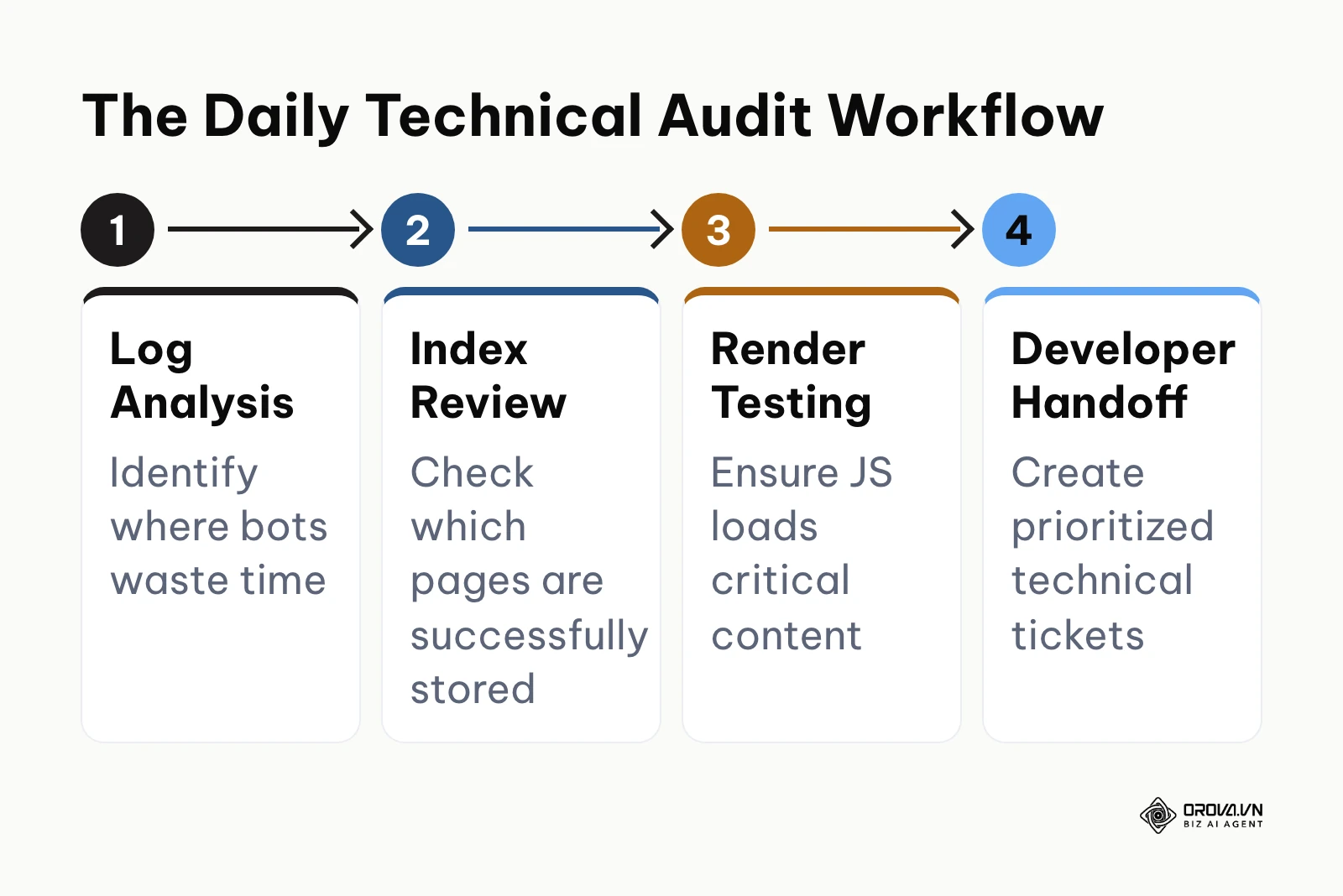
Technical Architecture and Crawl Management
- What they do: They ensure that search engine bots (like Googlebot) can efficiently access, crawl, render, and parse the website's content without wasting server resources or getting trapped in infinite, generated URL loops.
- Input: Server log files, deep site crawls using enterprise software, and staging environment access.
- Output: Highly optimized robots.txt files, dynamic XML sitemaps, and a prioritized list of technical Jira tickets for the engineering team.
- Where it breaks: Developers pushing new code that accidentally blocks JavaScript rendering, or an e-commerce platform automatically creating millions of parameterized duplicate URLs that exhaust the crawl budget.
Illustrative example:
- Context: A senior SEO expert was hired for a large e-commerce enterprise role managing a website with millions of URLs that was suffering from severe crawl budget issues and dropping traffic.
- Steps taken: The expert extracted and analyzed raw server log files and found that Googlebot was spending a large share of its daily crawl activity on faceted navigation filters (like sorting shirts by size and color combinations). They immediately implemented strict robots meta tags, adjusted canonicalization rules, and optimized the internal link architecture to funnel authority only to primary categories.
- Hurdles and fixes: The merchandising team aggressively demanded that all filter pages remain fully indexable, hoping to capture highly specific long-tail traffic. The expert pulled Google Analytics data to prove these specific filter pages generated almost no revenue over a full year but were actively harming the ranking of the primary category pages. This data led to a strict compromise where only heavily searched filter combinations were allowed in the index.
- Visible results: Googlebot began crawling the critical, high-margin product pages far more often within weeks, and organic revenue for core categories improved by the end of the quarter.
Content Engineering and Semantic Relevance
- What they do: Modern experts move far beyond exact-match keywords to build massive, entity-based content networks that satisfy the deep, underlying intent of the user. They map topics, not just phrases.
- Input: Deep user persona research, Search Engine Results Page (SERP) analysis, and overarching business revenue objectives.
- Output: Comprehensive, highly structured content briefs for writers, hub-and-spoke content models, and advanced schema markup implementation.
- Where it breaks: Freelance writers producing generic, unhelpful, AI-generated content that completely lacks unique human experience, directly violating Google's strict E-E-A-T (Experience, Expertise, Authoritativeness, Trustworthiness) guidelines.
Off-Page Authority and Digital PR
- What they do: They systematically build the website's reputation and trust by earning mentions and backlinks from highly authoritative, topically relevant domains within the same industry niche.
- Input: Unlinked brand mention monitoring, proprietary company data used for digital PR campaigns, and deep competitor backlink profile analysis.
- Output: Earned high-quality backlinks, improved domain entity trust, and increased brand search volume.
- Where it breaks: Desperate agencies relying on toxic, paid link schemes or private blog networks (PBNs) that eventually trigger devastating manual algorithmic penalties that can de-index a site entirely.
AI Integration and Automation
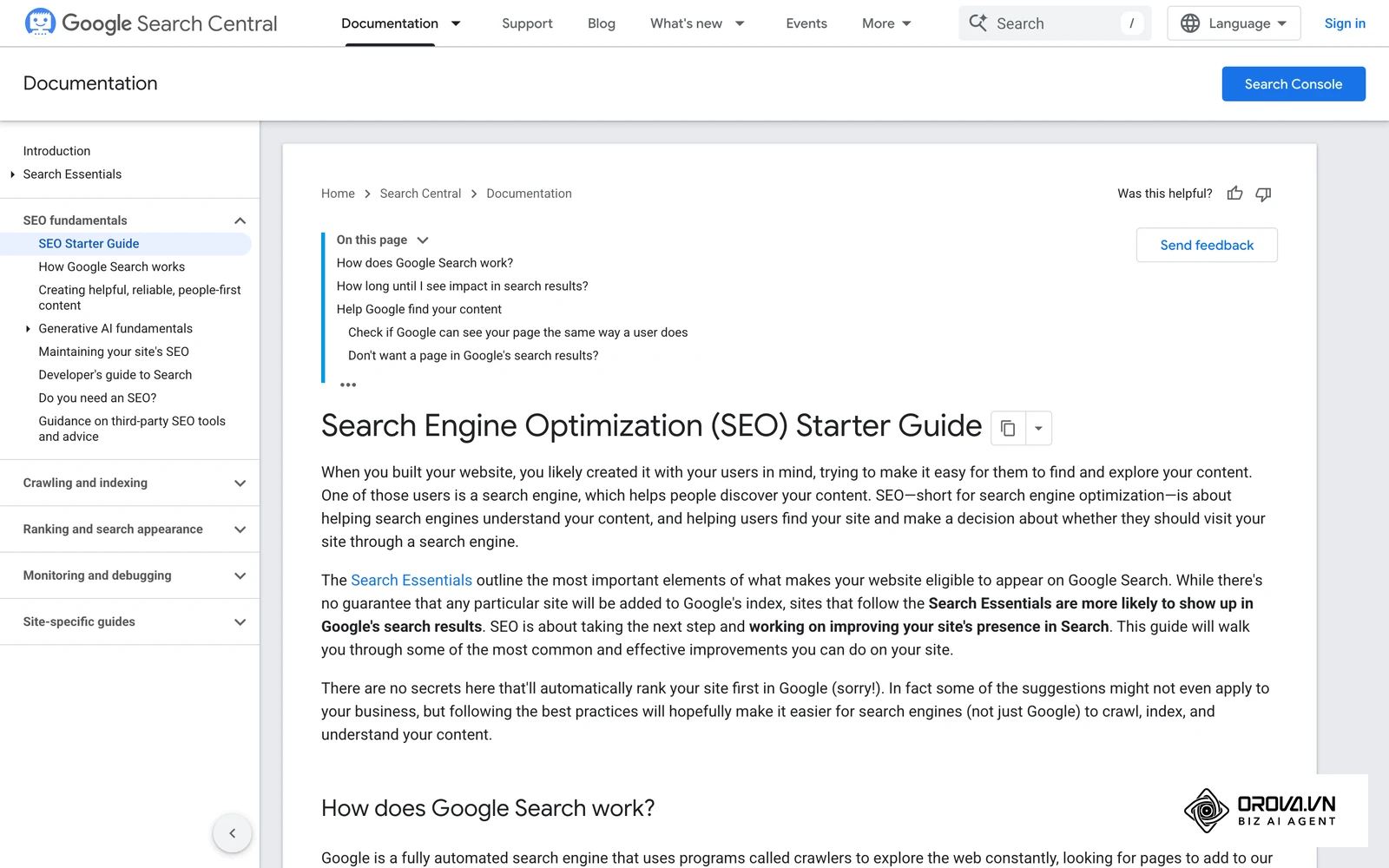
How exactly does an seo expert survive and thrive alongside Google's AI Overviews and other AI-generated answers? They adapt and automate. A modern expert uses AI not to write spammy blog posts, but to exponentially scale their analytical capabilities. Google's public guidance focuses on the quality, helpfulness and accuracy of content rather than on which tools were used to produce it. Therefore, top-tier experts are writing custom Python scripts to automate a massive google search console seo audit, using large language models to classify thousands of keywords by intent in mere minutes, and optimizing content specifically to be cited by AI Overviews by providing concise, highly structured factual answers at the very top of their pages.
Decision Framework: Choosing Your SEO Niche
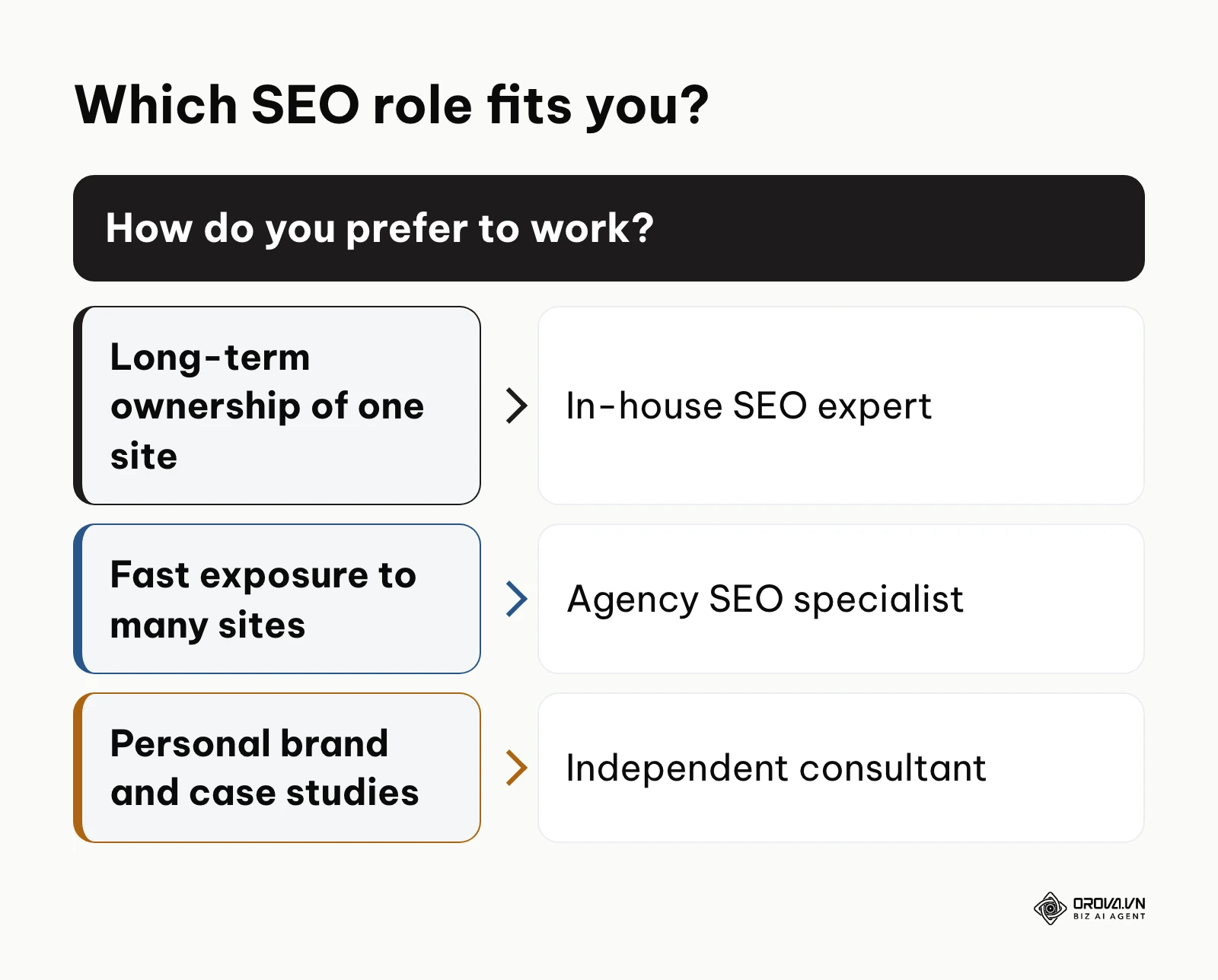
If you are currently learning how to become an seo expert, you must eventually specialize to command the highest salaries. Being a generalist only works for the first few years of your career.
| Types of SEO Roles | Characteristics | Best suited for |
|---|---|---|
| In-house SEO Expert | Deep focus on one single website over many years. Requires navigating complex corporate politics and building cross-departmental relationships. | Professionals who prefer long-term stability, deep project ownership, and working closely with product teams. |
| Agency SEO Specialist | Handles several client accounts simultaneously across vastly different industries. Incredibly fast-paced environment. | Rapid learners who want maximum exposure to many different CMS platforms, business models, and technical challenges quickly. |
| Independent Consultant | High risk, extremely high reward. Must continuously sell and market their services alongside actually delivering the technical work. | Senior practitioners with a strong, established personal brand, a massive network, and highly proven case studies. |
How to adapt and become an seo expert today
Adapting to the modern search landscape requires highly actionable steps tailored specifically to your current professional position. The theoretical knowledge found in blogs is useless without relentless practical application. Here is exactly how different professionals should approach building their seo specialist skills.
For the Aspiring Marketing Fresher
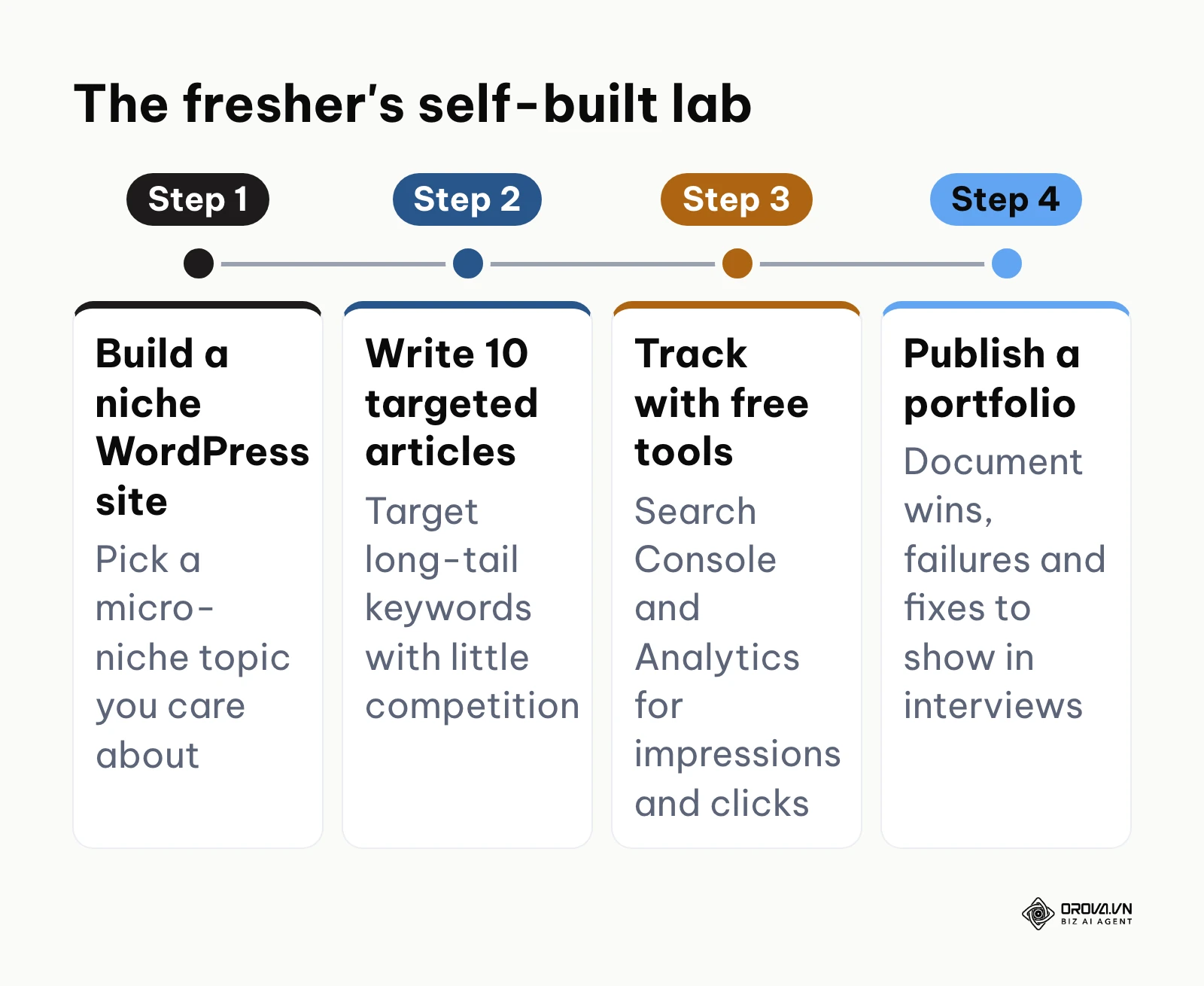
The biggest hurdle you face is the classic chicken-and-egg problem: you need real experience to get hired for a job, but you need a job to get real experience. The only solution is to build your own digital laboratory.
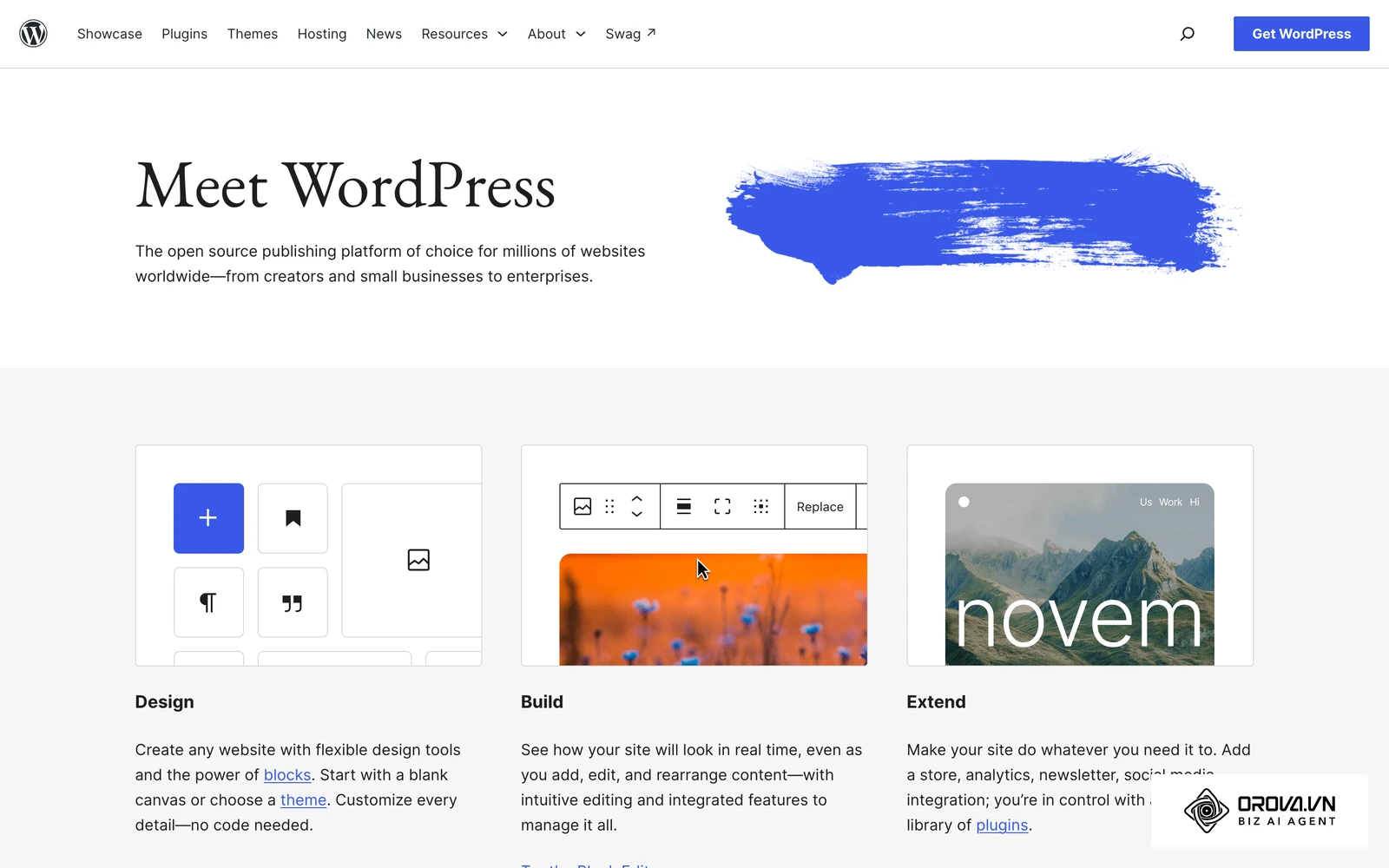
- Build a basic WordPress website from scratch this week on a highly specific micro-niche topic you care about (for example, indoor hydroponic gardening for small apartments).
- Write 10 highly targeted, deeply researched articles targeting long-tail keywords that currently have zero competition in the SERPs.
- Learn to configure and use free tracking tools (Google Search Console, Google Analytics, and the free tiers of Ahrefs or Semrush) to monitor your daily impressions and clicks.
- Document every single success, failure, and technical fix in a public portfolio. This website becomes your interactive resume. When you finally interview for an agency role, you don't just talk about SEO theory; you open your laptop and show them your live, growing Google Analytics dashboard.
For the In-House Generalist Marketer
You are already employed, but you desperately need to upskill to defend your company's organic traffic from competitors and algorithm shifts.
- Define exactly what are seo kpis for your specific business model this week, moving completely away from vanity metrics like raw traffic, and focusing on pipeline generated.
- Conduct a ruthless content audit of your top 20 traffic-driving landing pages to ensure they actually satisfy modern, deep search intent.
- Partner closely with your development team to run audits and significantly improve your Core Web Vitals scores for mobile users.
- Start running highly controlled SEO A/B split tests on meta titles and H1 tags to definitively prove incremental growth to your executives.
For the Agency Owner or Freelancer
You need to scale your operations and increase profit margins without sacrificing the quality of your deliverables in the AI era.
- Standardize your entire technical audit process into a strict, repeatable framework that junior staff can execute flawlessly.
- Upskill your entire team on writing advanced AI prompts that generate deep data analysis and code snippets, not just generic blog text.
- Shift your pricing model entirely away from "deliverables" (e.g., charging for a set number of articles) to "performance" (e.g., charging based on organic revenue generated or traffic milestones).
- Integrate advanced JSON-LD schema markup implementation as a standard, non-negotiable offering for all new client retainers.
Illustrative example:
- Context: A freelance copywriter wanted to transition into a strategic seo expert role to charge significantly higher monthly retainers, rather than being paid per word.
- Steps taken: They spent 90 strict days following a self-study technical roadmap. They then pitched and offered a completely free technical SEO audit and optimization to a local, struggling bakery in exchange for a documented case study. They fixed severely broken canonical tags, optimized the Google Business Profile, and restructured the local landing pages.
- Hurdles and fixes: The bakery client's legacy, custom-built CMS did not allow for custom metadata input through the dashboard. The freelancer had to learn basic HTML and PHP over a weekend to hardcode the changes directly via FTP, demonstrating extreme technical resourcefulness.
- Visible results: Within a couple of months the bakery appeared on the first page for several local cake searches, yielding a documented case study. The freelancer used that case study to land a monthly retainer with a regional restaurant chain.
| Common Mistake | Consequence | How to Avoid |
|---|---|---|
| Chasing algorithm updates blindly | Constant panic, strategy whiplash, and wasted resources | Focus relentlessly on long-term user intent, technical excellence, and brand building. |
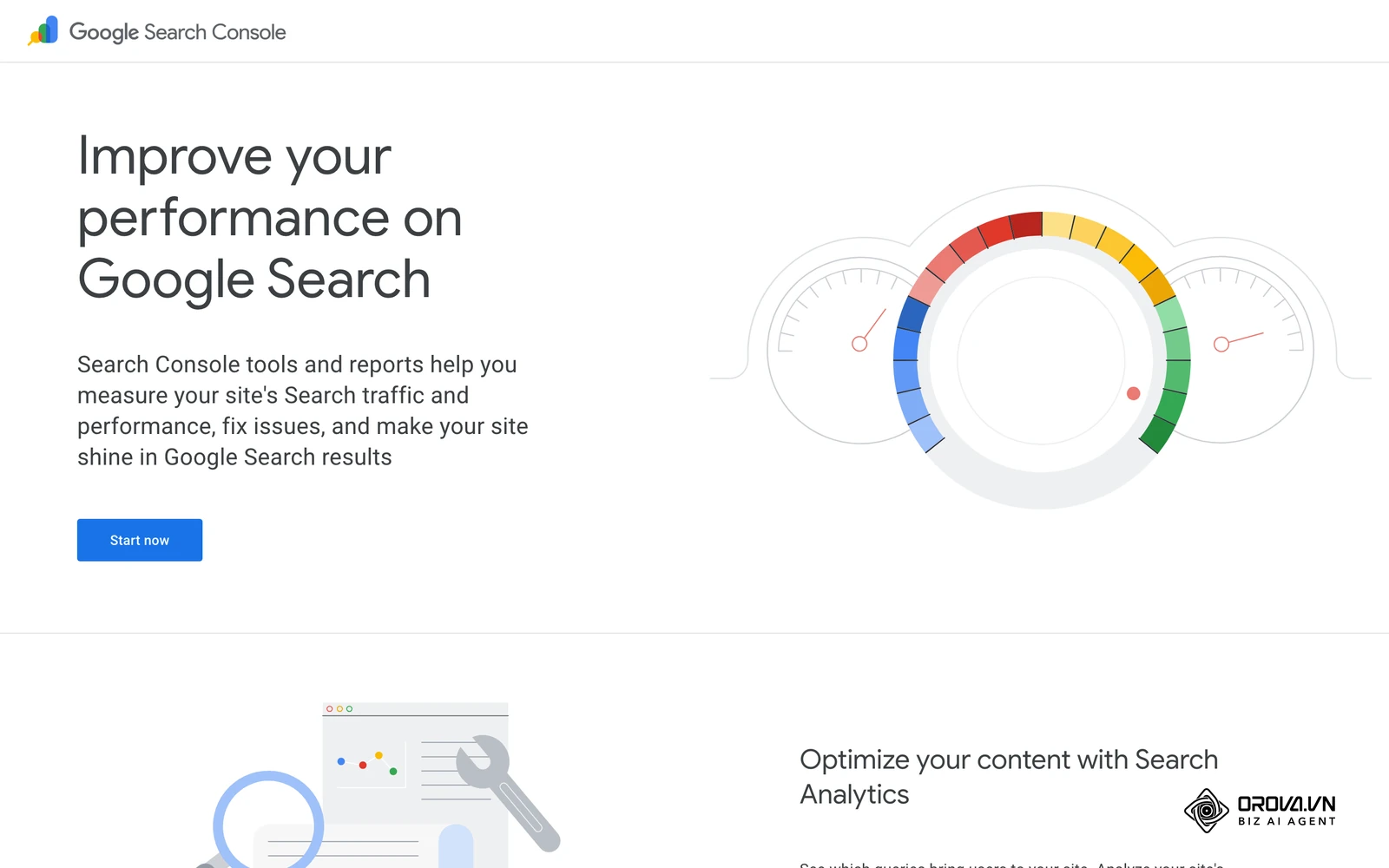
| Relying entirely on expensive third-party tools | Complete paralysis when corporate budgets are inevitably cut | Master Google Search Console inside and out; it provides the only true, un-modeled first-party data. |
| Ignoring the core business model | Organic traffic increases massively, but company revenue stays completely flat | Map every single target keyword directly to a specific stage of the product's sales and conversion funnel. |
With OROVA.VN and the OROVA SEO module, you put an end to the exhausting days of manual work for good. Instead of struggling for hours to write articles and compile reports, the entire process is now optimized and completed in just 5 minutes.
SEO expert trends in the next few years: an insider's view
The definition of an seo expert is shifting quickly. Based on the current direction of technology and user behavior, here are three views I hold on where this profession is heading over the next few years. These are opinions, not certainties; regulation of AI data use, for example, could change the picture.
AI Overviews Will Force a Shift from Clicks to Mentions
The signs are already vividly clear today: Google's AI Overviews and similar generative engines are answering complex user queries directly on the search results page, removing the need for the user to ever click a link. I believe that over the next few years, click-through rates for many informational queries will keep falling. The role of the seo expert will pivot completely from asking, "How do I get the user to click my blue link?" to asking, "How do I make it more likely that the AI language model cites my brand as the primary, trusted source in its generated answer?". To prepare for this massive shift, you must start structuring your content right now with extreme factual density. Use clear lists, definitive bold statements, and aggressive schema markup to make your proprietary data easily digestible for AI crawlers.
Technical SEO Will Merge with Edge Computing
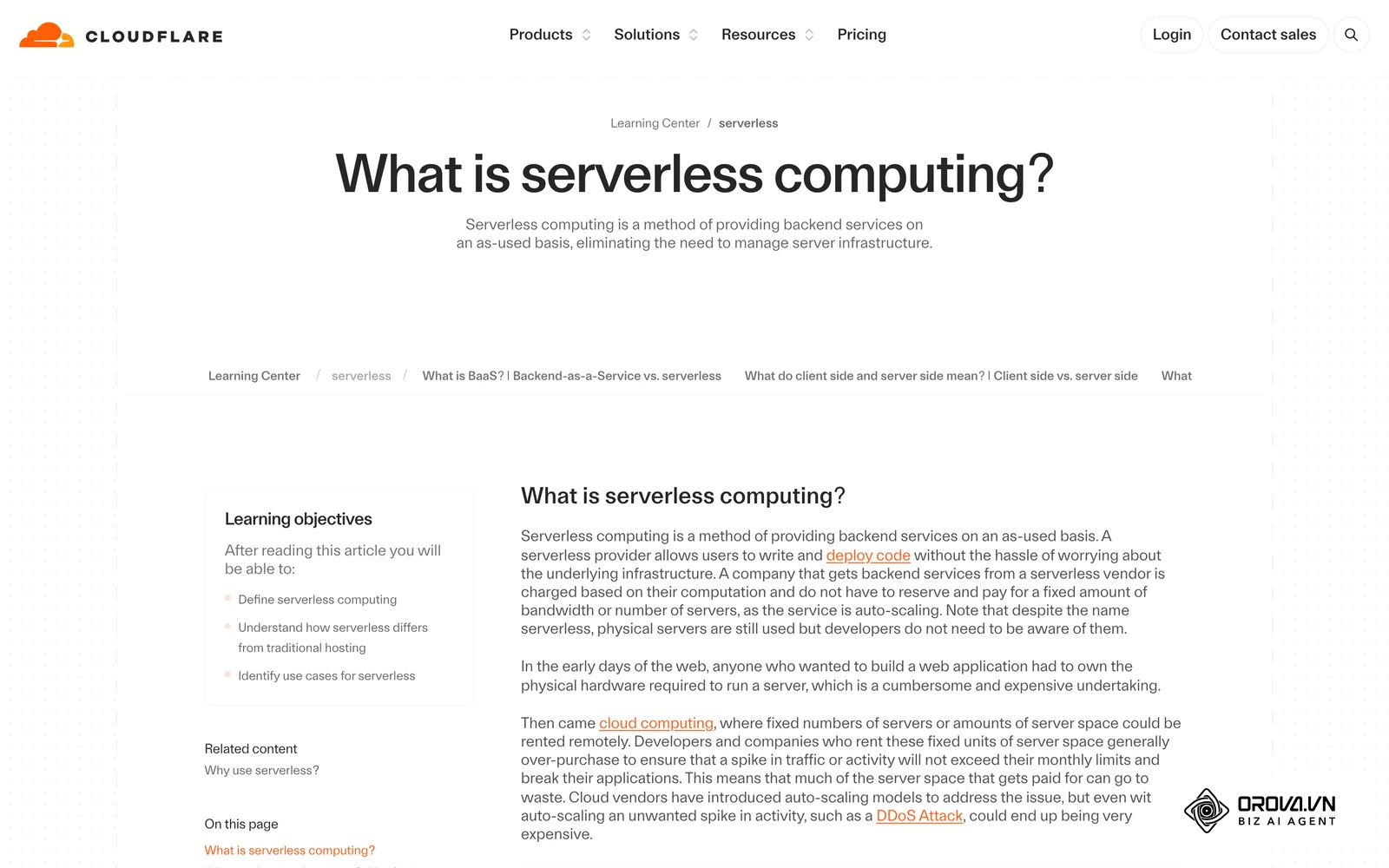
Today, we see massive enterprise sites struggling immensely with server-side rendering costs and bloated JavaScript files that cripple mobile performance. I expect that advanced technical SEO will increasingly move to the "edge" using Cloudflare Workers or similar CDN technologies. SEO professionals will write and deploy JavaScript snippets that execute at the server edge to alter HTTP headers, inject schema dynamically, and manage complex redirects before the webpage even reaches the user's browser, completely bypassing sluggish internal development queues. If you want to remain highly competitive and command top salaries, I strongly advise you to start learning basic JavaScript today and understand exactly how serverless edge functions operate.
The Death of the "Average" Content SEO
We are currently witnessing an absolute flood of mediocre, AI-generated content polluting the web at an unprecedented scale. In my view, demand is moving toward specialized, analytical marketing roles rather than generic content producers, and the mid-level SEO writer who merely rewrites competitor articles will find it increasingly hard to stay relevant. The future belongs exclusively to the "Information Retrieval Specialist"—an expert who conducts original research, runs proprietary industry surveys, and extracts unique, actionable data that an AI simply cannot hallucinate. You need to start building deep skills in data analysis, investigative journalism, and true subject matter expertise rather than relying solely on basic keyword optimization tricks.
Frequently asked questions about SEO experts
Is an seo expert still needed with AI answering everything?
Yes, absolutely. AI does not create new, original facts; it merely synthesizes existing information found on the web. An seo expert is the critical person who ensures a company's proprietary data, new products, and unique insights are fed into the digital ecosystem correctly so the AI can actually find and understand them. Furthermore, AI cannot log into your server to fix a broken site architecture, resolve millions of duplicate content issues, or negotiate with stubborn developers to improve Core Web Vitals.
How long does it take to learn enough to get hired?
If you treat the learning process like a full-time job and focus strictly on execution, many people acquire enough practical skills within a few months to compete for a junior role. The key is not reading endless blogs or watching tutorials, but actually building a live website, breaking it, and figuring out how to fix it. Demonstrable practical experience, proven by a live portfolio site, always trumps theoretical certifications in this industry.
Can I practice advanced SEO without paying for expensive software?
Yes. The most powerful, accurate tool in the entire industry—Google Search Console—is completely free to use for any site you own. You can also use the free version of a desktop crawler such as Screaming Frog, which crawls a limited number of URLs, to learn deep technical auditing. You can use free browser extensions to inspect on-page elements. Expensive tools only speed up the workflow for large agencies; they do not replace the fundamental analytical knowledge required to interpret the raw data.
How do you measure the true success of an expert?
Success is never measured by keyword rankings alone. Rankings are a dangerous vanity metric if they do not lead directly to business growth. A true expert measures their success by the tangible increase in qualified organic traffic, the measurable reduction in blended customer acquisition costs, and ultimately, the total organic pipeline and revenue generated for the business.
Do I need to know how to code to be an expert?
You do not need to be a full-stack software engineer, but you absolutely must be technically literate to survive. You need to read raw HTML comfortably, understand how CSS impacts page layout and speed, and grasp exactly how JavaScript loads resources in the DOM. If you cannot explain to a developer exactly why a specific code change is necessary and how to implement it, you will constantly struggle to get any of your technical recommendations implemented.
Where to start your seo expert journey?
Your immediate next step depends entirely on your current situation and resources. Do not try to learn everything at once; focus on the single, highest-leverage action that moves you forward today.
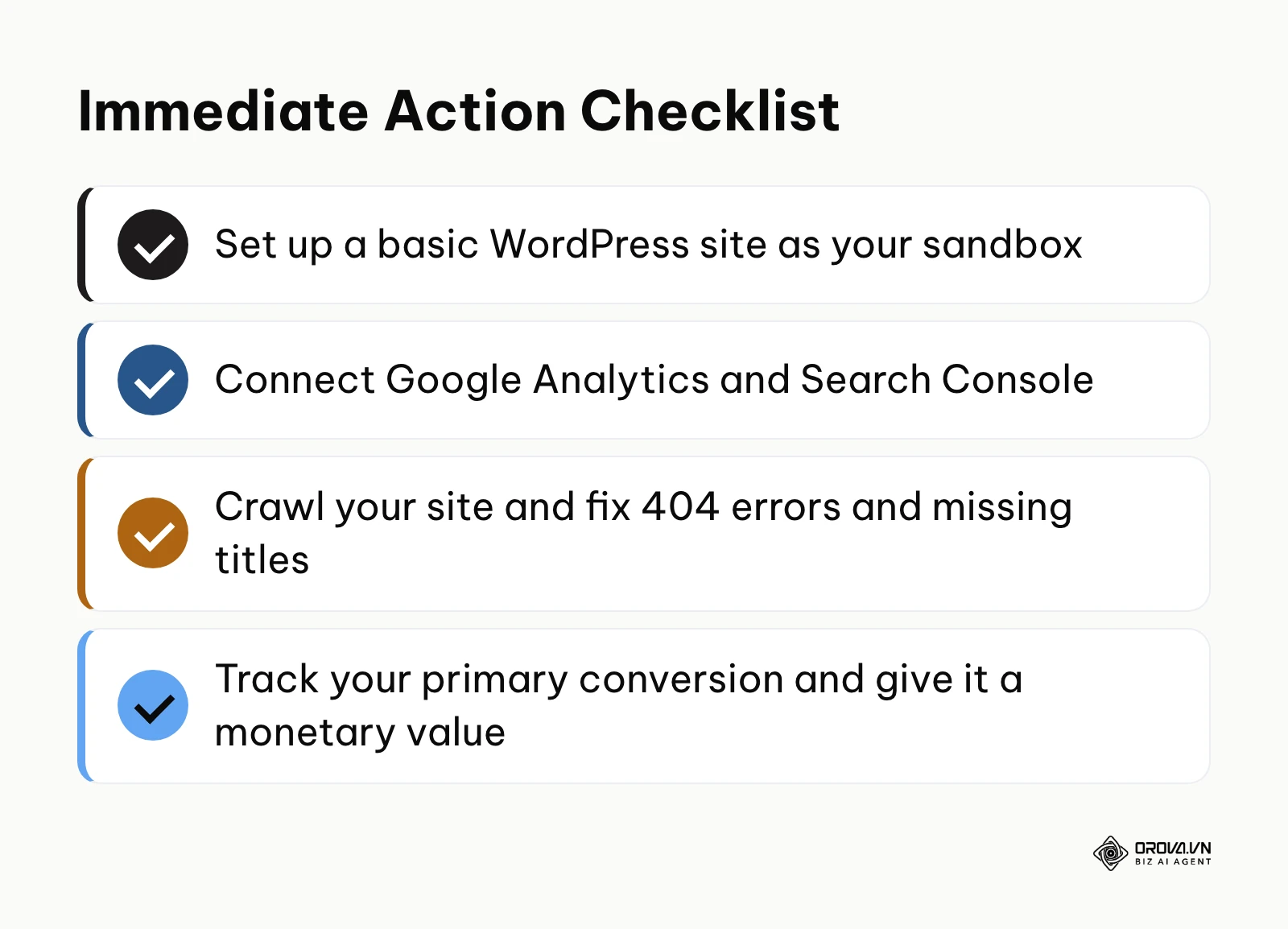
If you have absolutely nothing and are starting from scratch: Your only goal for this afternoon is to buy a cheap domain name and set up a basic WordPress installation. Do not worry about the site design, the perfect logo, or the color scheme. Your first task is simply to create a digital sandbox. Once it is live, write your very first article about a topic you know intimately, and connect the site to Google Analytics and Search Console. This single, highly actionable step moves you from being a passive reader to an active webmaster.
If you already have a website but your efforts are scattered: Stop writing new content immediately. Your very first step today is to run a comprehensive technical crawl of your existing site using the free version of a crawler such as Screaming Frog. Identify every single broken link (404 error) and every page missing a fundamental meta title. Spend your next working session relentlessly fixing these foundational errors. You cannot build a skyscraper on a cracked foundation, and scattered content efforts usually mask deep technical debt that is holding the site back.
If you have been doing SEO but are not measuring revenue: Your critical next step is to log in and set up proper conversion tracking. Open your analytics platform and configure a highly specific event for your primary business goal—whether that is a B2B form submission, a newsletter signup, or a direct product purchase. Tie a realistic monetary value to that exact goal. Until you can definitively prove that your organic traffic is generating actual dollars, your role as an seo expert will always be viewed by executives as an expendable cost center rather than a crucial, irreplaceable growth engine.
About the author

Builder of Orova
Nguyễn Đỗ Trọng Ân has 8 years of experience in marketing, including 6 years managing market development across Asia. He builds Orova, a Biz AI Agent that never sleeps: it plans, runs and optimizes work for businesses.
Run your business with AI Agents
Orova is the always-on Biz AI Agent — it plans, runs, and optimizes the work for you.
Save time, unlock productivity.