
What Is Programmatic SEO? A No-Code Guide to Scaling Safely

Programmatic SEO is the practice of generating many search-targeted landing pages from one structured database and one page template. Imagine you manage a travel blog and want to rank for "best time to visit [city]" for 500 different cities around the world. Writing each of these pages manually would take months of grueling, repetitive work. Most marketers traditionally tackle this massive undertaking by hiring an army of freelance writers, only to end up with wildly inconsistent quality, blown budgets, and missed deadlines. They often mistakenly think that scaling organic traffic means linearly scaling human effort. However, this outdated manual approach completely fails to leverage the structured data you probably already possess in your spreadsheets.
This is exactly where programmatic SEO comes in. This comprehensive guide will show you how to build hundreds of highly relevant, search-optimized pages using automated, no-code workflows. You will learn how to structure your database, design dynamic templates, and safely deploy these pages without triggering Google's latest spam penalties. We will move far beyond the massive enterprise examples and focus on actionable strategies that small to medium websites can implement today.
What Is Programmatic SEO?
Programmatic SEO is a strategic method of generating hundreds or thousands of landing pages automatically by connecting a structured database to a website template. It is used to capture long-tail search traffic at scale. Unlike traditional SEO, which relies on manual writing, programmatic SEO relies on data architecture.
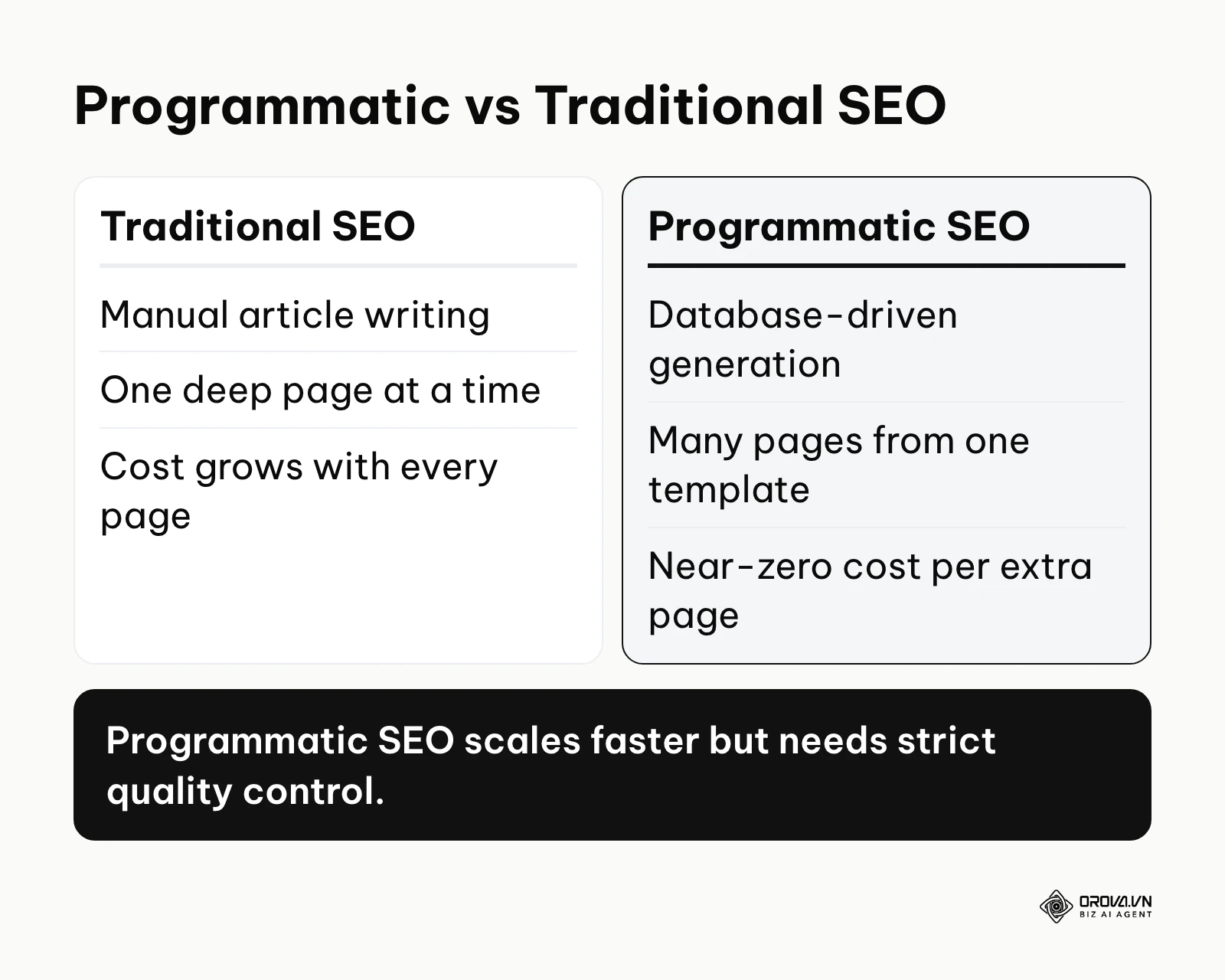
The term originally gained traction when large aggregators like Yelp, Zillow, and TripAdvisor started dominating search results. They achieved this by turning their massive datasets into individual, indexable URLs for every single location and category combination imaginable.
| Concept | How it differs | Example |
|---|---|---|
| Traditional SEO | Focuses on crafting single, high-depth articles manually. | A 3,000-word definitive guide on "How to train a puppy". |
| Programmatic SEO | Focuses on building a system to generate many pages from data. | 500 individual pages for "Best dog trainers in [City]". |
| E-commerce SEO | Focuses specifically on physical or digital product listings. | Filtering systems for "Red running shoes size 10". |
For a relatable everyday example, think of a regional real estate website generating a unique, detailed page for "apartments in [neighborhood]" for every single neighborhood in a sprawling metropolitan city, simply by routing their property database into a predefined page layout.
The Meaning and Purpose of Programmatic SEO
Programmatic SEO exists to solve a very specific problem: capturing highly fragmented, low-volume search intent at an unprecedented scale. For many businesses, their potential customers are not searching for broad, highly competitive head terms. Instead, they are typing incredibly specific, long-tail queries into Google. While each individual query might only get ten searches a month, capturing thousands of these variations can result in massive, highly qualified organic traffic. This strategy exists for companies that possess vast amounts of structured data but lack the human resources to manually turn that data into readable web pages.
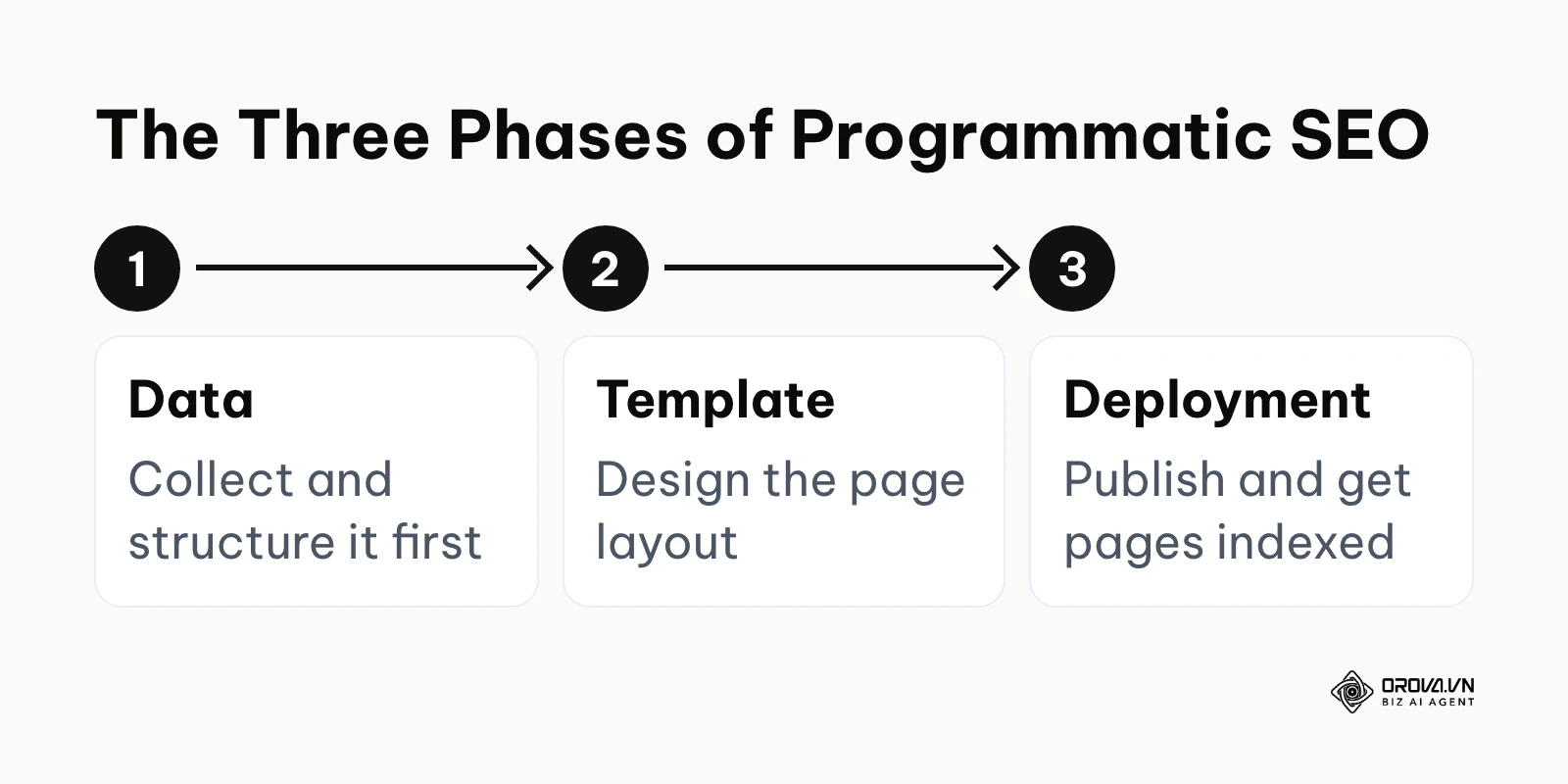
In the larger picture of digital marketing, programmatic SEO sits squarely at the intersection of data engineering and content marketing. The foundational step is always data collection and structuring—this must happen before anything else. The subsequent step is template design, and the final phase is technical deployment and indexation. If you skip the data structuring phase, your automation will simply output garbage. If you ignore this methodology entirely, you lose the ability to compete in localized or hyper-specific search markets, essentially leaving thousands of easy, low-competition keywords on the table for your competitors to claim.
When you do not need Programmatic SEO: You should avoid this approach if your business relies heavily on highly opinionated, thought-leadership content where personal nuance and unique perspectives are your main selling points. Additionally, if your total addressable market only searches for a dozen core head terms, building an automated infrastructure is a massive waste of resources. Finally, local businesses operating in a single town do not need thousands of pages; a traditional, hand-crafted local strategy is far more effective. In these cases, focus your budget on deep, manual content creation instead.
The Value and Benefits of Programmatic SEO
The advantages of this approach extend far beyond simple time savings, fundamentally shifting how a business approaches organic growth. We can break these down into the overarching business value and the day-to-day benefits for the practitioner.
Dramatic Reduction in Cost Per Page
Before implementing programmatic workflows, a business pays a freelance writer a separate fee for every single localized landing page. If you need 1,000 pages, the financial barrier becomes insurmountable for a small startup. After setting up a programmatic infrastructure, the marginal cost of publishing the 1,000th page drops to practically zero, governed only by minor server and database hosting fees. This allows companies to aggressively expand their digital footprint without securing massive new marketing budgets.
Illustrative Example: A regional pet adoption network wanted to rank for specific dog breeds in various counties to increase local adoptions. First, the marketing manager compiled a massive dataset of 300 shelters, breed availability, and adoption fees into Airtable. Second, they designed a custom WordPress template with dedicated sections for local fees and volunteer requirements. Third, they mapped the Airtable fields to the template using a standard API webhook. The main hurdle was that missing data fields for certain shelters caused ugly blank spaces that broke the mobile layout. They fixed this by adding conditional logic in the CMS to hide entirely any sections where data was missing. As a result, the network achieved top-three rankings for over 150 long-tail geographic search terms, leading to a visible increase in daily shelter visit appointments within three months.
Instant Scalability for Rapid Market Expansion
When entering a new market or launching a new product category, speed is essential. Traditionally, rolling out content for 50 new service areas would take a content team six months of grueling production. With a programmatic system, once the foundational database and template are built, adding 50 new locations simply requires adding 50 new rows to your spreadsheet. The system instantly generates and publishes the pages, allowing you to test new markets and capture search intent almost overnight.
| Benefit | Measured By | Visible Timeframe |
|---|---|---|
| Cost Efficiency | Average cost to publish one new page | Immediately upon deployment |
| Organic Reach | Total number of indexed long-tail keywords | 3 to 6 months post-launch |
| Technical Agility | Hours required to update a data point globally | Instantly across all live pages |
Centralized Quality and Accuracy Control
For the SEO practitioner, managing thousands of manually written pages is an editorial nightmare. If a regulatory law changes, or a product specification is updated, finding and editing every mention across a massive website is nearly impossible. Programmatic SEO solves this by centralizing the data. If you need to update the average price of a service across 500 city pages, you simply change one cell in your master database. The template automatically pulls the new variable, updating all 500 pages instantly, ensuring total accuracy and compliance without manual auditing.
Discover Orova.vn – a Biz AI Agent platform with OROVA SEO, a complete solution for every website. The system supports search engine optimization from A to Z with features including keyword research, writing new SEO-ready articles, optimizing existing content, rank tracking, plus competitor analysis and in-depth technical analysis. Sign up today to experience OROVA SEO completely free (offer valid through July 7, 2027).
How Programmatic SEO Works: The Core Mechanisms
Building a successful programmatic engine requires orchestrating several different technical disciplines. It is not just about writing code; it is about structuring information so that a machine can present it beautifully to a human. Here is a deep dive into every moving part of the system.
Identifying the Keyword Modifiers
The foundation of any programmatic campaign is the keyword formula. You are not researching individual keywords; you are researching syntax patterns. This typically involves a "Head Term" combined with a "Modifier".
For example, your Head Term might be "Best accounting software for". Your Modifiers would be the variables: "[Industry]", "[Company Size]", or "[Location]". By multiplying the head term against a list of 50 industries, you instantly generate 50 unique search intents. The key here is verifying that search volume actually exists for these combinations. You must use tools to check if people actually search for "Best accounting software for plumbers" before you dedicate database resources to building that specific page. Do not guess; rely on concrete search volume data to validate your modifier lists.
Sourcing and Structuring the Database
Once you have your keyword formula, you need the actual data to populate the pages. This is often the hardest part. You cannot simply scrape copyrighted content; you must find legal, reliable data sources.
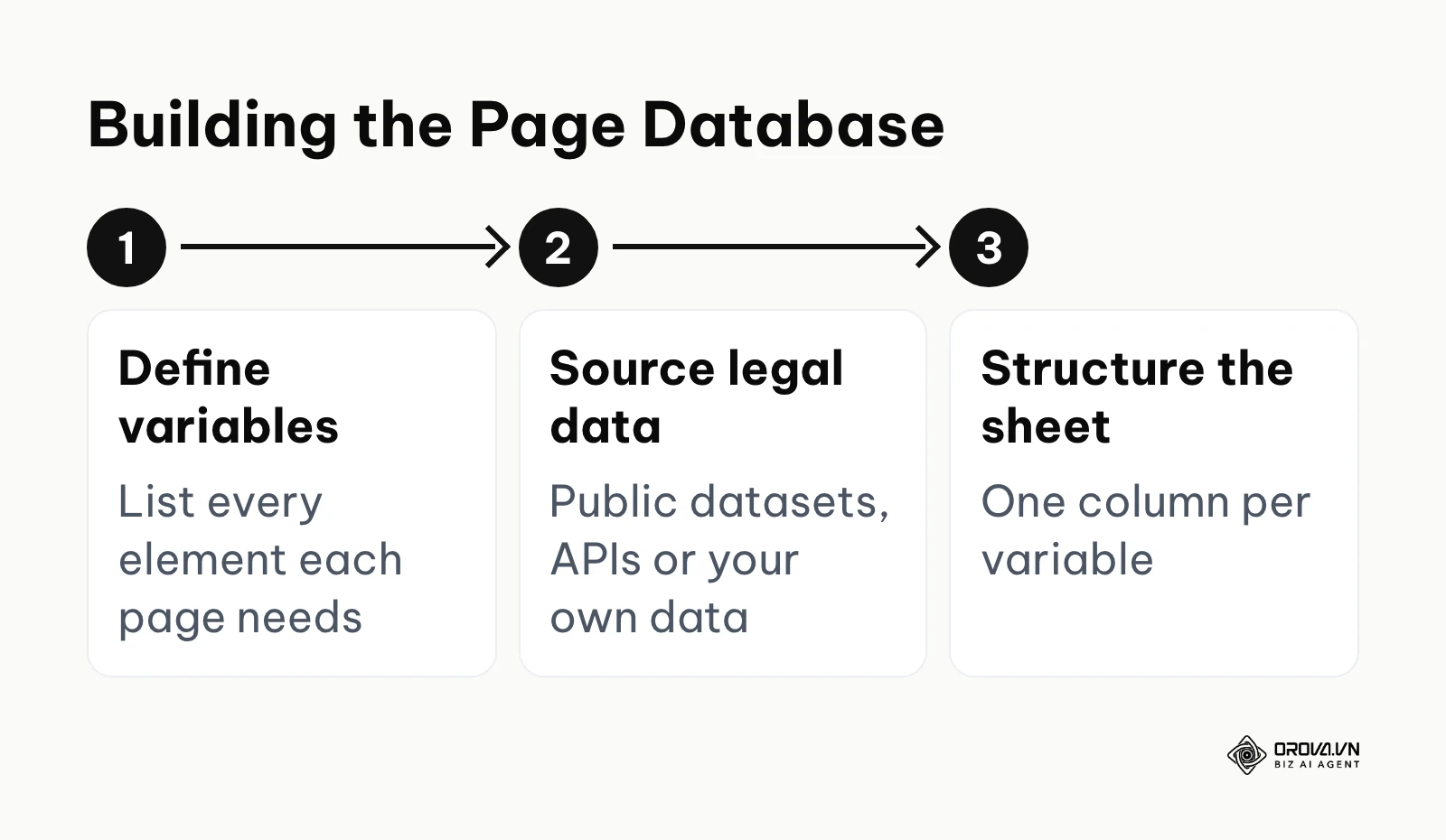
Excellent starting points include public government datasets (like census data, licensing boards, or weather history), open-source APIs, or your own proprietary internal company data. For massive product catalogs, this overlaps heavily with understanding what is ecommerce SEO, but programmatic SEO can apply to any data type, not just products. You must gather this raw information and organize it rigorously. Every single variable that will appear on the final page—from the H1 title to the specific numbers in a pricing table—must have its own dedicated column in your database.
The Google Sheets / Airtable Architecture
To execute this without complex coding, you need a robust no-code database. Google Sheets is great for beginners, but Airtable is generally preferred for its strict field types (ensuring a number field only accepts numbers) and robust API capabilities.
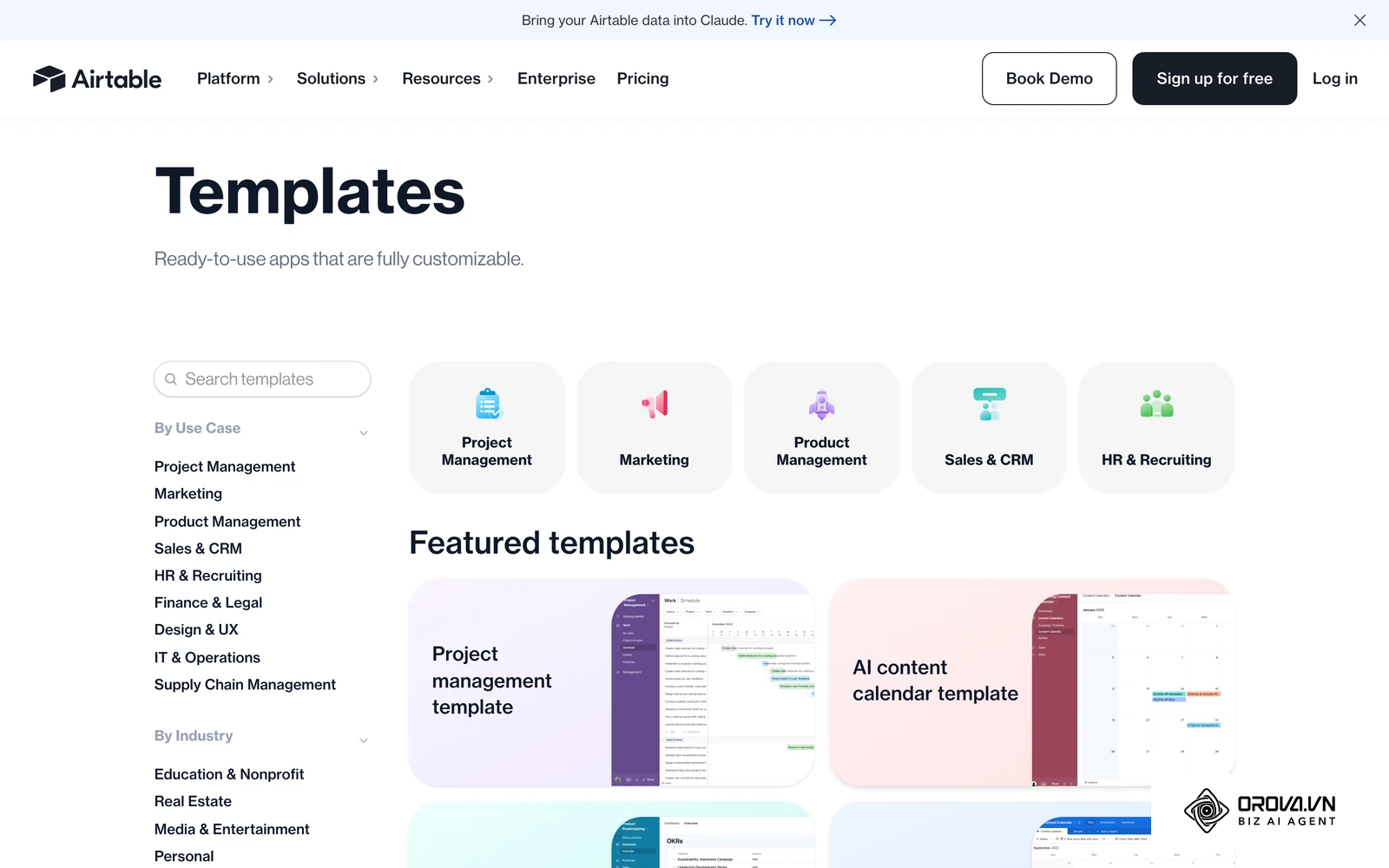
Your spreadsheet must be impeccably structured. Here is a baseline architecture you must implement:
| Column Name | Data Type | Purpose on the Final Page |
|---|---|---|
| Page_Slug | Text (URL format) | Defines the exact URL path (e.g., /plumbers-in-austin). |
| Meta_Title | Text (Formula) | Generates the SEO title tag automatically. |
| Primary_Keyword | Text | Injects the exact target phrase into the H1 heading. |
| Data_Point_1 | Number | A specific statistic (e.g., Average cost in this city). |
| Data_Point_2 | Text (Long) | A unique paragraph describing local regulations or nuances. |
| Image_URL | URL | A link to a localized, dynamic image to embed. |
| Publish_Status | Checkbox/Boolean | Acts as a trigger switch for the automation tool. |
Every row in this table represents one completely unique landing page. The cleaner this architecture is, the smoother your deployment will be.
Designing the Page Template for UX
A common failure in programmatic SEO is creating pages that rank well but look terrible, resulting in massive bounce rates. You must design a template that is optimized for user experience (UX), not just search engine bots.
Your wireframe must accommodate dynamic data gracefully. What happens if Data_Point_2 is empty for a specific row? Your template must have conditional visibility settings to hide the entire section rather than displaying a broken, empty box. You should incorporate sticky sidebars for navigation, dynamic tables to display complex numbers, and clear, above-the-fold calls to action. Even automatically generated pages need perfect headings and metadata, following the core principles of mastering what is on page SEO. Accessibility matters too: the W3C's WCAG guidelines apply to generated pages just as they do to hand-built ones. The goal is to make the page feel entirely bespoke, as if a human designer crafted it specifically for that single long-tail query.
The No-Code Deployment Workflow
This is where the magic happens. You need a bridge to carry the data from your Airtable to your Content Management System (CMS), like WordPress or Webflow. For a strictly no-code setup, Make.com (formerly Integromat) and Zapier are popular choices.
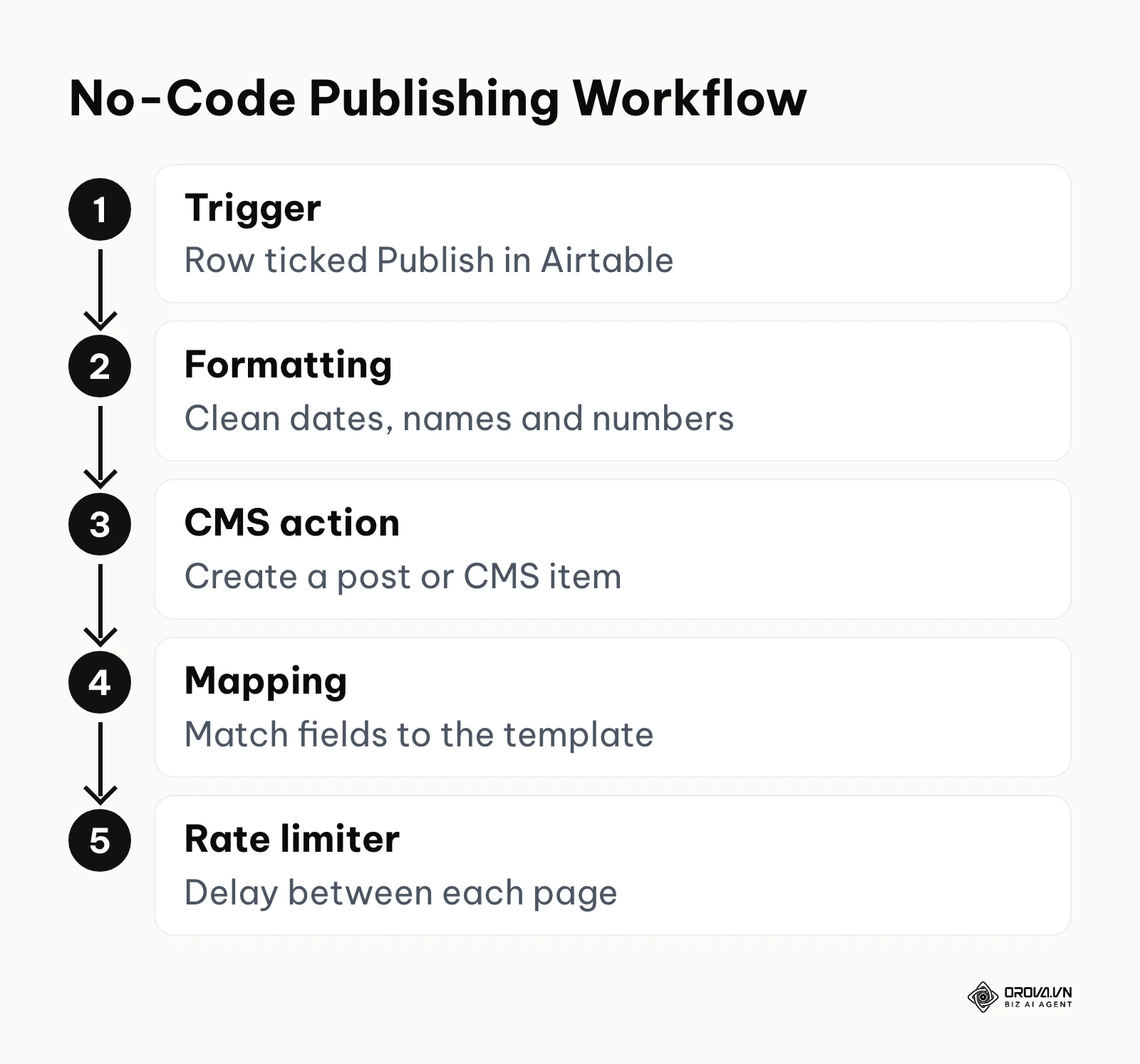
Here is the exact step-by-step workflow you need to build in your automation platform:
- The Trigger: Set the automation to watch your Airtable database for a specific event. Usually, this is when a row enters a specific view, such as when the Publish_Status checkbox is ticked.
- The Formatting Module: Sometimes raw data needs cleaning. Add a module to format dates perfectly, capitalize the first letters of cities, or ensure numbers have proper comma separators.
- The CMS Action: Add a module connecting to your CMS (e.g., "Create an Item in Webflow" or "Create a Post in WordPress").
- The Mapping: Meticulously map the Airtable fields to the corresponding fields in your CMS template. Map the Page_Slug to the URL field, the Meta_Title to the SEO settings, and the data points to the rich text blocks.
- The Rate Limiter: Crucially, if you are publishing 1,000 pages, you will crash your server or hit API limits. Insert a "Sleep" or delay module (e.g., wait 5 seconds) between each iteration to throttle the publishing speed.
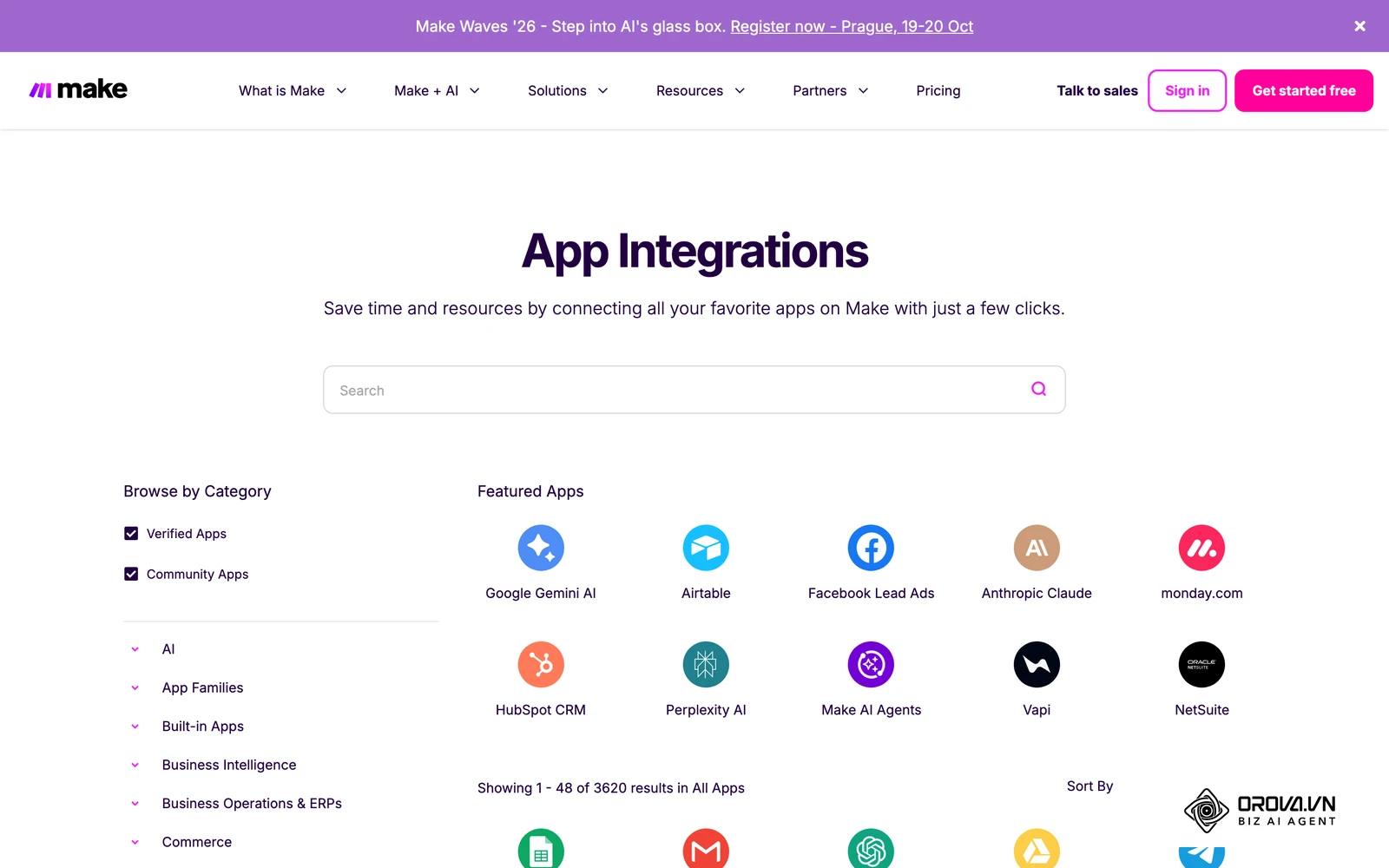
Illustrative Example: An in-house content team for a financial software company needed to create comparison pages against 50 different competitors. First, they meticulously researched and inputted specific feature differences, pricing tiers, and integration capabilities into a Google Sheet. Second, they built a Make.com scenario to pull this data automatically. Third, they routed it directly into their Webflow CMS collections. The major hurdle occurred when the Make.com scenario repeatedly timed out and failed due to Webflow's strict API rate limits during bulk publishing attempts. They resolved this simply by inserting a 2-second delay module between each individual API call. The result was the successful, automated deployment of all 50 complex comparison pages without a single server error, immediately capturing comparison-focused search queries.
The Scaled Content Abuse Safety Checklist
Google's spam policies name "scaled content abuse": generating many pages mainly to manipulate rankings rather than to help people. If your programmatic pages are just thin, scraped data with no added value, they put your whole site at risk. Google's quality guidance consistently treats pages that copy data without adding original value as low quality.
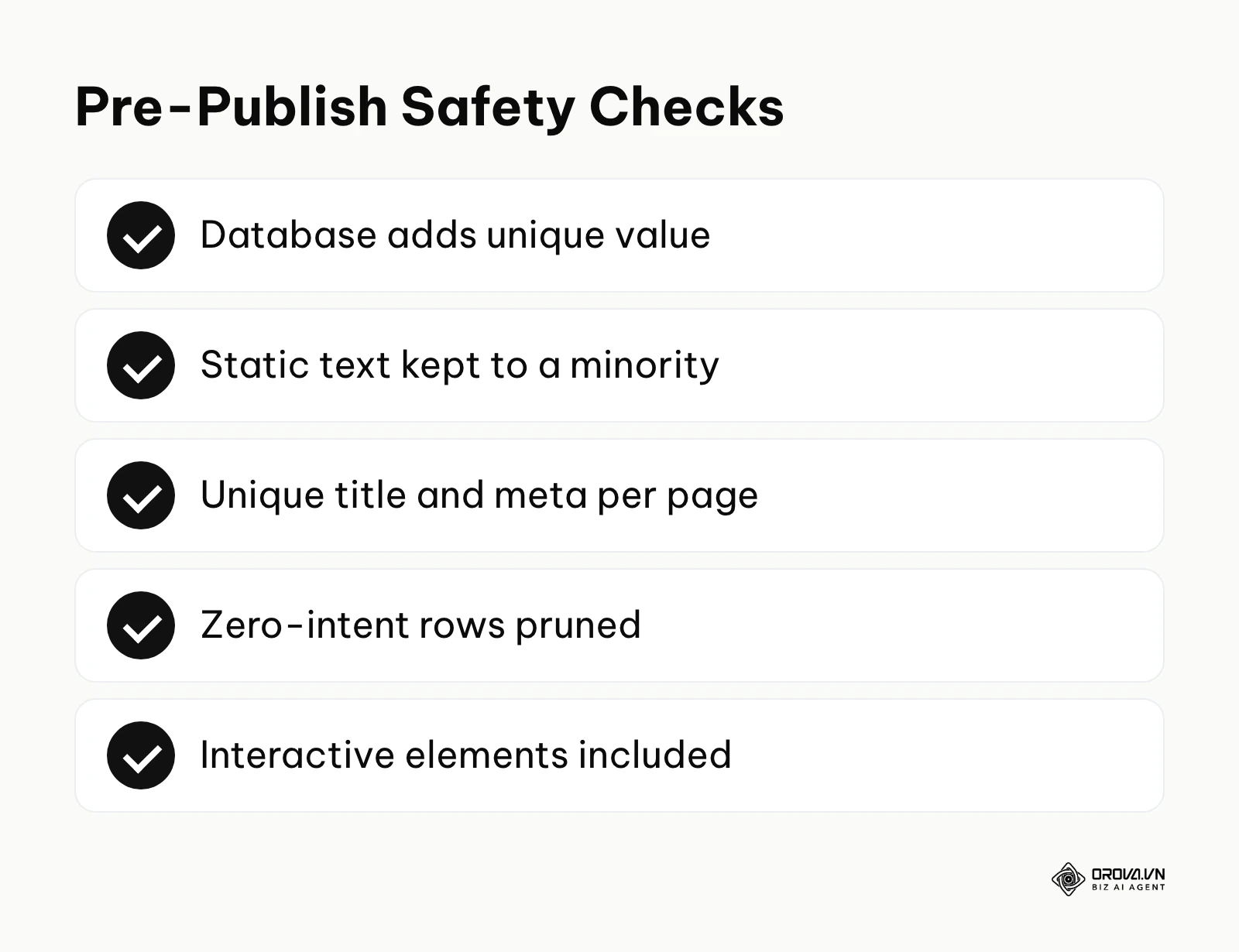
To survive and thrive, you must adhere to this strict safety checklist before publishing a single page:
- The Primary Data Test: Ensure your core database provides a unique angle, calculation, or aggregation that is not easily found on a basic Wikipedia search.
- The Boilerplate Ratio: Keep your static template text (the words that remain the same on every page) to a minority of the page. The majority must be dynamic, page-specific content.
- The Orphan Page Check: Build a logical, hierarchical internal linking structure (e.g., Country > State > City directories) so that search engine crawlers can reach every page naturally. No page should be isolated.
- The Indexing Pace: Drip-feed your new pages. A steady daily batch looks like natural growth; dumping thousands of pages in one hour looks like spam.
- The Dynamic Meta Tag Rule: Verify that absolutely every <title> and <meta description> is structurally unique and accurately reflects the specific page content.
- The Multimedia Integration: Include dynamically generated charts, localized maps, or unique images on every page to break up the text.
- The Zero-Search-Volume Filter: Ruthlessly prune and delete data rows that target keyword combinations with absolutely zero realistic search intent.
- The Cannibalization Audit: Verify that your variables do not overlap closely (e.g., generating separate pages for "cheap hotels" and "budget hotels" in the same city will cannibalize each other).
- The Mobile Rendering Test: Massive data tables often break mobile screens. Test thoroughly to ensure tables collapse or scroll horizontally on phones.
- The User Interaction Hook: Add functional elements like calculators, filtering sorting toggles, or review submission forms so the page acts as a tool, not just a wall of text.
| Type of Programmatic SEO | Defining Characteristic | Best Suited For |
|---|---|---|
| Aggregator Directories | Large lists of external businesses or services. | Review sites, local service finders, job boards. |
| Data Visualizations | Focuses on presenting complex statistics via charts. | Financial sites, real estate market reports. |
| Feature Comparisons | Pitting "X vs Y" using structured feature lists. | SaaS companies, B2B software, electronics. |
| Geographic Landers | Same core service applied to different cities. | Local service franchises, delivery apps. |
What to Do to Start and Adapt to Programmatic SEO
Transitioning to a programmatic mindset requires different approaches depending on your role and resources. Here is how different professionals should adapt their workflows.
Small Business Owners
For small business owners, the goal is capturing local market share without huge overhead.
- Identify your geographic footprint: Map out every single city, county, or neighborhood you can legally and realistically service.
- Standardize your service data: Create a simple spreadsheet listing your base pricing, common problems solved, and specific local regulations for each of those areas.
- Build one master template: Work with a developer or use a visual builder to create one perfect landing page layout that can accept this local data.
- Launch a small pilot: Do not generate 500 pages immediately. Start by automating just 10 neighboring towns this week to test how your server and Google react.
In-house Marketing Managers
In-house teams usually possess vast amounts of proprietary data but struggle to align it with SEO goals.
- Audit internal databases: Talk to your sales or product teams to uncover hidden data assets (e.g., customer usage statistics, proprietary industry benchmarks).
- Align data with search intent: Cross-reference this internal data with keyword research to find where your proprietary numbers answer public questions.
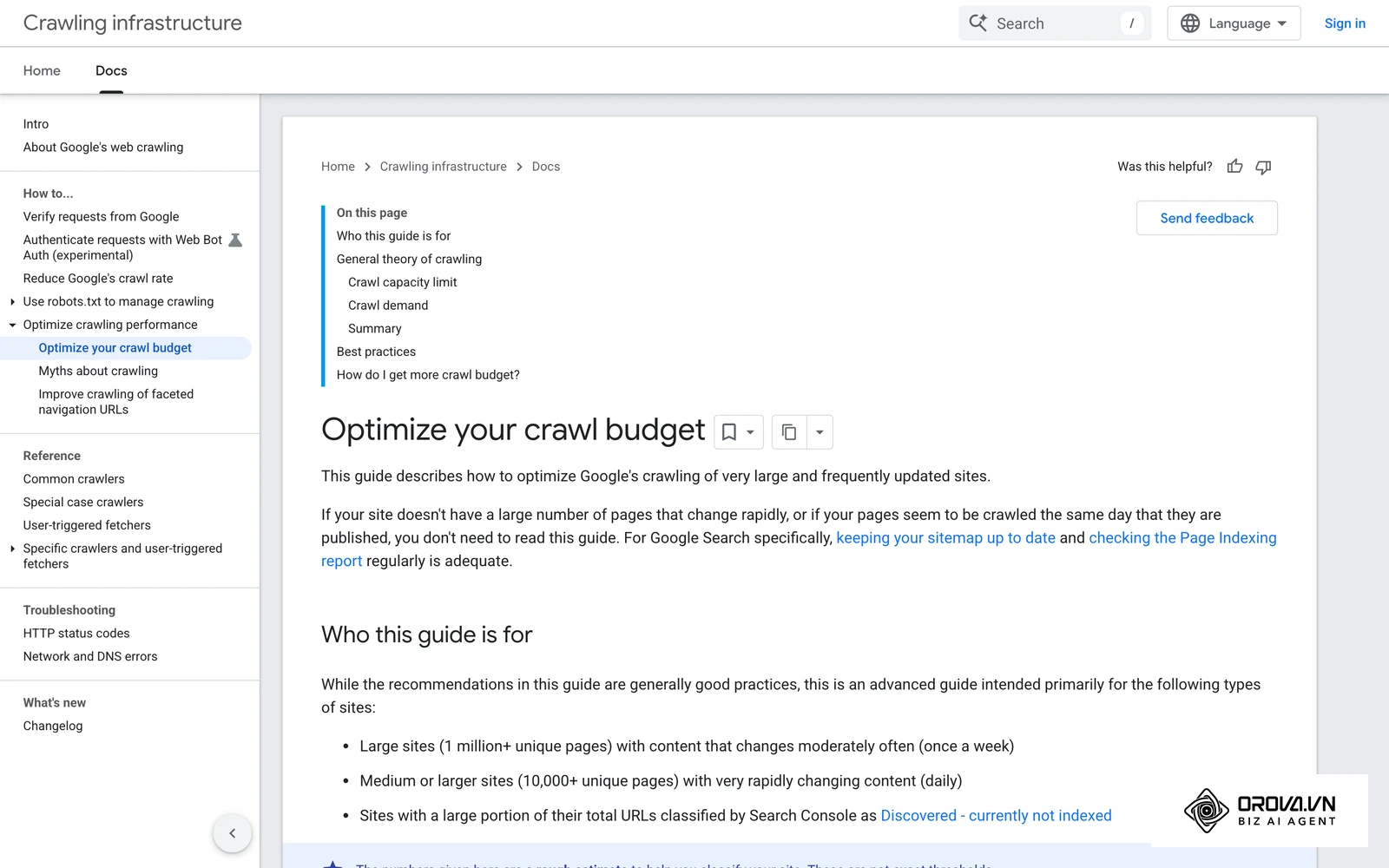
- Establish technical guardrails: Work closely with IT to ensure your programmatic publishing schedule does not overload the primary company servers during peak hours. You must ensure your server can handle the load, which requires a deep understanding of what is technical SEO regarding crawl budgets.
- Implement feedback loops: Set up Google Analytics reports specifically to monitor the bounce rates of your automated pages versus manually written ones.
Agency SEO Specialists
Agencies need to build repeatable programmatic infrastructures that they can deploy across multiple clients quickly.
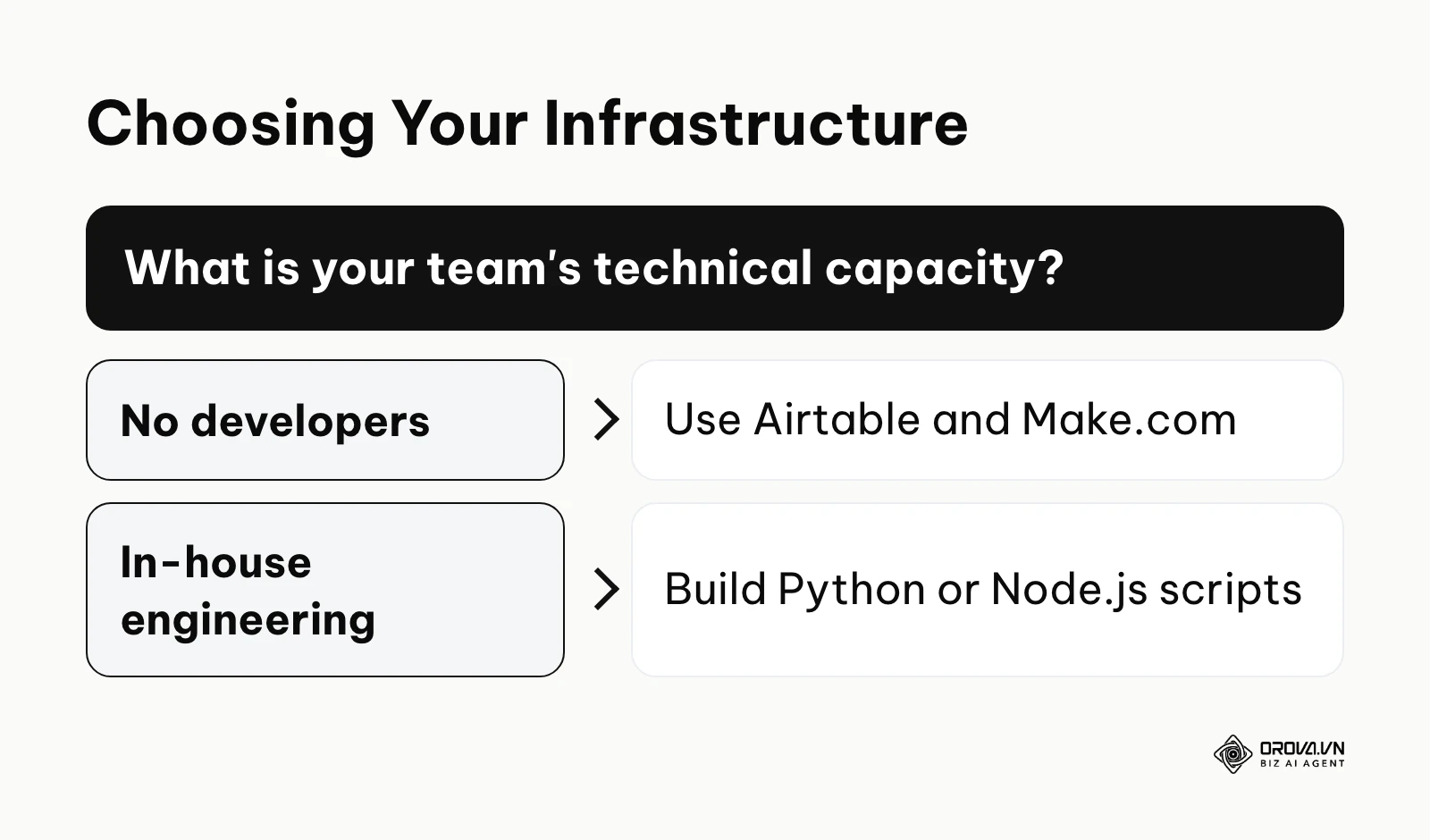
- Standardize the tech stack: Choose one database (like Airtable) and one automation tool (like Make) and master them completely, rather than switching tools for every client.
- Develop proprietary scraping scripts: Build internal Python or Node.js scripts to safely and legally extract public data faster than relying on third-party APIs.
- Create industry-specific wireframes: Design pre-built, high-converting templates for specific niches (e.g., one standard wireframe for real estate clients, one for e-commerce).
- Focus on indexation monitoring: Tracking indexation requires specific Google Search Console for SEO workflows to monitor coverage errors daily, as bulk publishing often triggers crawling anomalies.
Illustrative Example: A freelance SEO specialist was building a niche directory website for remote coworking spaces across Europe. First, they legally scraped public business listings, organizing them into a database categorized by internet speed, seating capacity, and daily rates. Second, they generated localized landing pages for 200 different cities using a standard WordPress plugin. The major hurdle was a sudden, drastic drop in indexation because Google's algorithm flagged the highly repetitive introductory paragraphs as "Scaled Content Abuse." To fix this, the freelancer completely revamped the template, integrating user-submitted photos and pulling in unique localized weather data via an external API to make each page distinct and valuable. The result was a full recovery of indexed pages within Google Search Console and a steady, predictable stream of organic clicks from digital nomads.
| Common Mistake | Consequence | How to Avoid |
|---|---|---|
| Too much static boilerplate text | Google flags the site for duplicate or thin content | Ensure dynamic, page-specific data makes up the majority of the text. |
| Publishing 10,000 pages at once | Exhausts crawl budget and triggers spam filters | Drip-feed publishing via scheduled automation delays. |
| Ignoring mobile UX for data tables | High bounce rates signal low quality to search engines | Use responsive CSS specifically designed for complex tables. |
If your plan also includes hand-written supporting articles around these pages, Orova SEO can draft them in your brand voice and publish them to WordPress.
With OROVA.VN and the OROVA SEO module, you put an end to the exhausting days of manual work for good. Instead of struggling for hours to write articles and compile reports, the entire process is now optimized and completed in just 5 minutes.
Where Programmatic SEO Is Heading in the Next Few Years: The Author's Take
Automated content generation is shifting quickly as search engines tighten spam policies and AI tools get cheaper. Based on the signals visible today, here is how I think programmatic SEO will evolve over the next few years.
AI will move programmatic SEO from static data presentation toward on-the-fly synthesis. Currently, most programmatic templates just rigidly drop database fields into static text blocks. My read is that within two to three years, more teams will use AI to read each data row and write a page-specific narrative around it, softening the rigid template feel. This is happening because search engines are getting exceptionally good at detecting boilerplate text structures. You should prepare for this by structuring your databases not just with raw numbers, but with semantic context that an AI model can easily interpret. However, if AI API computation costs remain high, this prediction might fail, keeping static templates viable for smaller budgets.
The barrier to entry for deployment will drop to zero, making proprietary data the only differentiator. We are already seeing no-code tools becoming universally accessible. I think it will soon be easy for almost anyone to launch a technically clean, very large directory in a short time. When execution becomes a cheap commodity, the only way to rank will be possessing data that no one else has. You should start focusing heavily on gathering first-party data, user surveys, or proprietary research rather than relying on common public APIs. If search engines decide to heavily favor massive legacy domain authority regardless of data uniqueness, this shift might not matter as much.
Search engines will increasingly penalize "headless" automation in favor of community-vetted information. Today, many sites publish programmatic pages and leave them untouched forever. I think algorithms will increasingly look for signs of human interaction—like comments, reviews, or user corrections—to validate automated pages. I believe this because platforms desperately want to serve content that humans actually engage with. You need to build interactive elements into your templates now, allowing users to rate or update the data. This perspective could be wrong if search algorithms pivot back to prioritizing raw information density over user engagement metrics.
Frequently Asked Questions About Programmatic SEO
Is programmatic SEO still needed when we have AI search?
Yes, it is still highly relevant. While AI search engines synthesize answers, they still need structured, deeply factual source material to cite. Programmatic SEO creates the massive, highly organized factual data hubs that AI models rely on to understand niche, localized topics that aren't covered in broad, manual articles.
How do I index thousands of pages without exhausting my crawl budget?
You must prioritize site architecture. Create HTML sitemaps and category hub pages that logically link to your programmatic pages in a hierarchical structure. Never rely solely on an XML sitemap to force indexing. Additionally, drastically improve your server response time, as faster servers allow Googlebot to crawl more pages within the same budget limit.
What are the most legal and accessible data sources for beginners?
The safest sources are public government datasets (like Data.gov), academic repositories, and open-source APIs that explicitly grant commercial usage rights in their terms of service. For beginners, building a proprietary database via manual research or surveying your own customer base is the most legally secure and competitively advantageous method.
How do I avoid creating "thin content"?
Thin content happens when your dynamic variables only change a few words on the page. To avoid this, ensure that your database injects substantial value: unique paragraphs of context, specific localized images, completely different numerical data sets, and interactive elements. If the user experience doesn't feel completely unique to that specific query, it is thin content.
How long does it take to see traffic from programmatic SEO?
Because programmatic SEO targets low-competition, long-tail keywords, some pages can start ranking soon after they are indexed. However, because you are publishing at scale, it typically takes 3 to 6 months for search engines to fully crawl, process, and trust the entire new section of your website, leading to significant, aggregated traffic spikes.
Where to Start With Programmatic SEO?
Jumping into automation can feel overwhelming, but your starting point depends entirely on your current technical maturity and data assets.
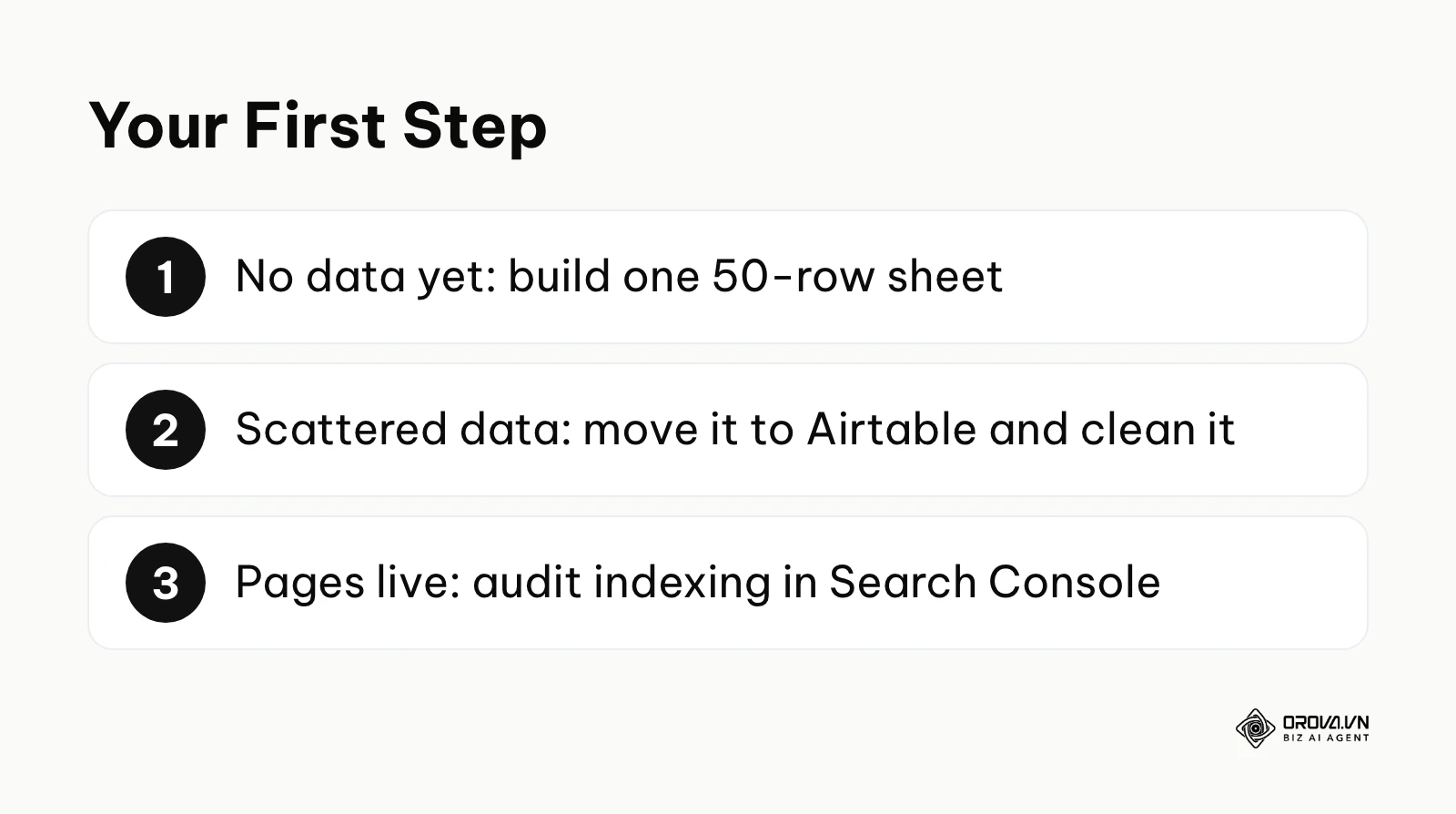
If you are starting entirely from scratch with no data: Your first step must be defining a single, narrow keyword modifier and manually building a spreadsheet. Do not look at automation tools yet. Spend one afternoon researching 50 rows of hyper-specific data for one niche (e.g., "Best coffee shops in 50 neighborhoods of your city"). Structure it perfectly in Google Sheets. This forces you to understand the data architecture before you ever touch a piece of software.
If you have existing data but it is disjointed: Many companies have massive Excel files sitting on local hard drives, completely disconnected from their website. If this is you, your first step is migrating that data into a cloud-based relational database like Airtable. Spend a session cleaning the data—standardizing spelling, formatting numbers consistently, and removing blank rows. Clean data is the absolute prerequisite for any automated CMS mapping.
If you have already deployed pages but they are unmeasured: If you previously attempted programmatic SEO but have no idea if it worked, your immediate next step is technical auditing. Stop publishing new pages. Add the folder of your automated pages as a URL-prefix property in Google Search Console and analyze the page indexing report for those URL paths. Identify whether Google is discovering them but refusing to index them (a sign of thin content) or failing to crawl them entirely (a sign of poor internal linking).
About the author

Builder of Orova
Nguyễn Đỗ Trọng Ân has 8 years of experience in marketing, including 6 years managing market development across Asia. He builds Orova, a Biz AI Agent that never sleeps: it plans, runs and optimizes work for businesses.
Run your business with AI Agents
Orova is the always-on Biz AI Agent — it plans, runs, and optimizes the work for you.
Save time, unlock productivity.