
What is AI in recruitment? The 2026 playbook for hiring teams

AI in recruitment means using artificial intelligence to help source, screen, interview and schedule candidates, while people keep the final hiring decision. The landscape of talent acquisition is shifting faster than ever. If you are a hiring manager, talent acquisition specialist, or a business owner, you have likely felt the pressure of managing an overwhelming volume of daily applications. The traditional method of manually reading through hundreds of PDF files to find one qualified candidate is no longer sustainable. It is slow, highly prone to human error, and heavily influenced by unconscious bias. You might have already tried basic recruitment automation, but simply setting up automated email triggers or basic keyword filters is often not enough to solve the core problem of talent discovery. When candidates do not use the exact phrasing your legacy system expects, brilliant talent slips through the cracks.
This guide will dive deeply into the concept of ai in recruitment. Instead of offering vague promises about the future of work, this playbook provides actionable strategies. We will break down exactly how to evaluate different tools, how to implement low-cost solutions for small businesses, and how to navigate the complex web of new legal compliance requirements. By the end of this article, you will have a clear, step-by-step framework to modernize your hiring workflow without losing the essential human touch that candidates value.
What is AI in recruitment?
AI in recruitment is the application of artificial intelligence technologies—such as machine learning, natural language processing, and predictive analytics—to automate, optimize, and assist in hiring processes. It is used to source candidates, screen resumes, generate interview questions, and schedule meetings, differing from traditional applicant tracking software by learning from data context rather than merely following rigid, hard-coded rules.
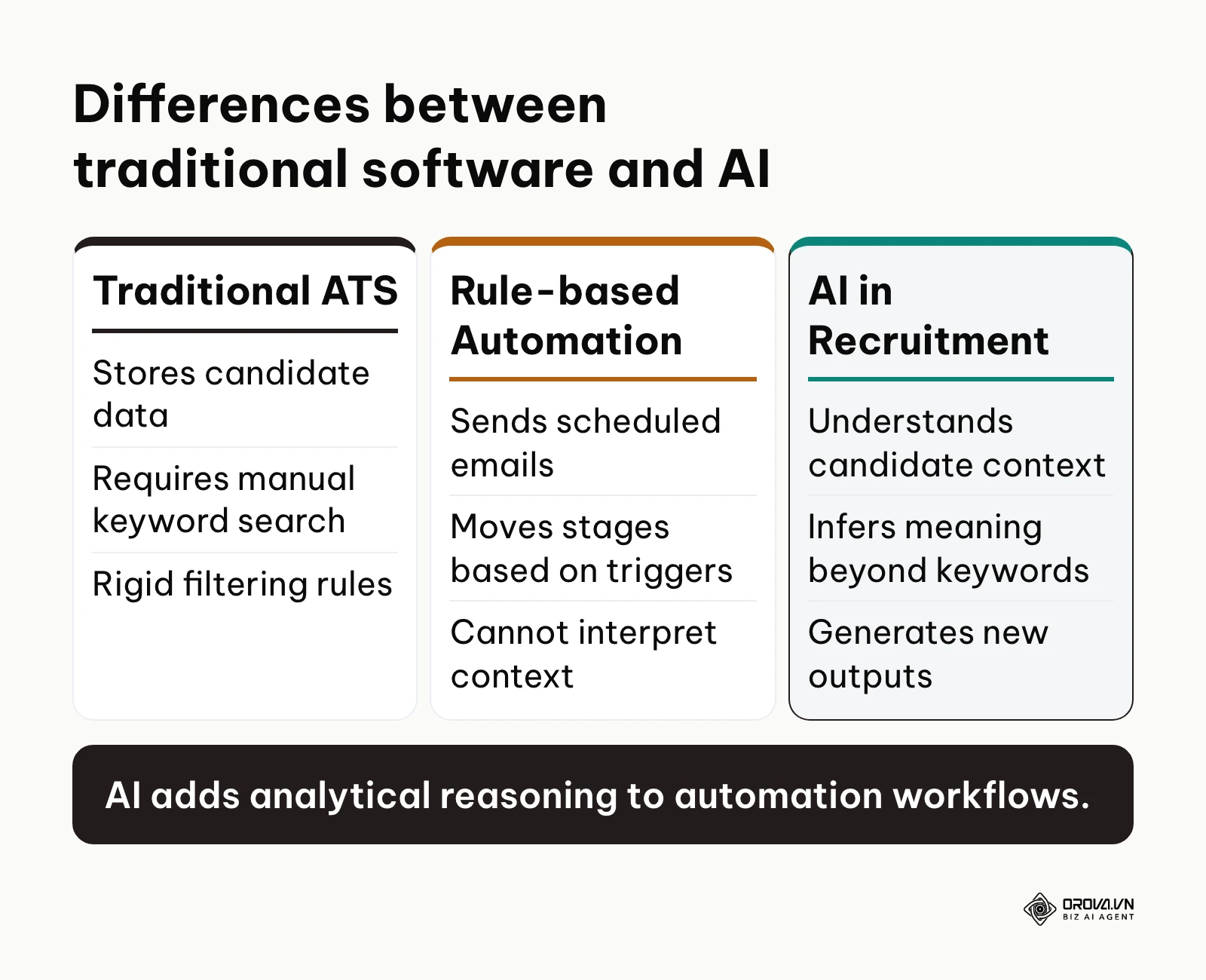
The term gained significant traction around the late 2010s as machine learning algorithms became sophisticated enough to parse human language accurately. Initially, AI was only accessible to enterprise-level corporations with massive budgets. However, with the rapid democratization of large language models, these capabilities have trickled down to everyday tools accessible to businesses of all sizes.
To clearly understand this technology, it is helpful to see how it differs from systems you may already be using. Many professionals confuse true AI with basic automation.
| Concept | How it differs | Example |
|---|---|---|
| Traditional ATS (Applicant Tracking System) | Acts simply as a digital filing cabinet. It stores data but does not analyze it contextually. | Searching for the exact word "Manager" to filter a database of 1,000 resumes. |
| Rule-based Automation | Executes a pre-set action based on a specific trigger without understanding the content. | Automatically sending a rejection email if the candidate selects "No" for work authorization. |
| AI in Recruitment | Analyzes context, infers meaning, and generates novel outputs based on historical patterns. | Recognizing that a candidate who was a "Team Lead" possesses the necessary leadership skills, even without the word "Manager". |
Think of it like having an incredibly fast reading assistant. If you ask a basic software program to find people who know how to cook, it will only look for the word "cook." If you ask an AI assistant, it understands that someone whose resume says "prepared meals in a high-volume kitchen" or "served as head chef" is also a qualified candidate, even if the exact keyword is missing.
Why AI in recruitment matters to your business
AI in recruitment exists to solve a fundamental mathematical problem in modern business: the imbalance between candidate volume and recruiter capacity. In today's digital economy, a single job posting can attract thousands of applications within days. Human reviewers cannot physically read every application with equal attention, leading to fatigue, delayed hiring times, and inevitable bias. AI steps in to process this massive data layer, ensuring every single applicant gets an initial, objective evaluation based purely on the criteria set for the role.
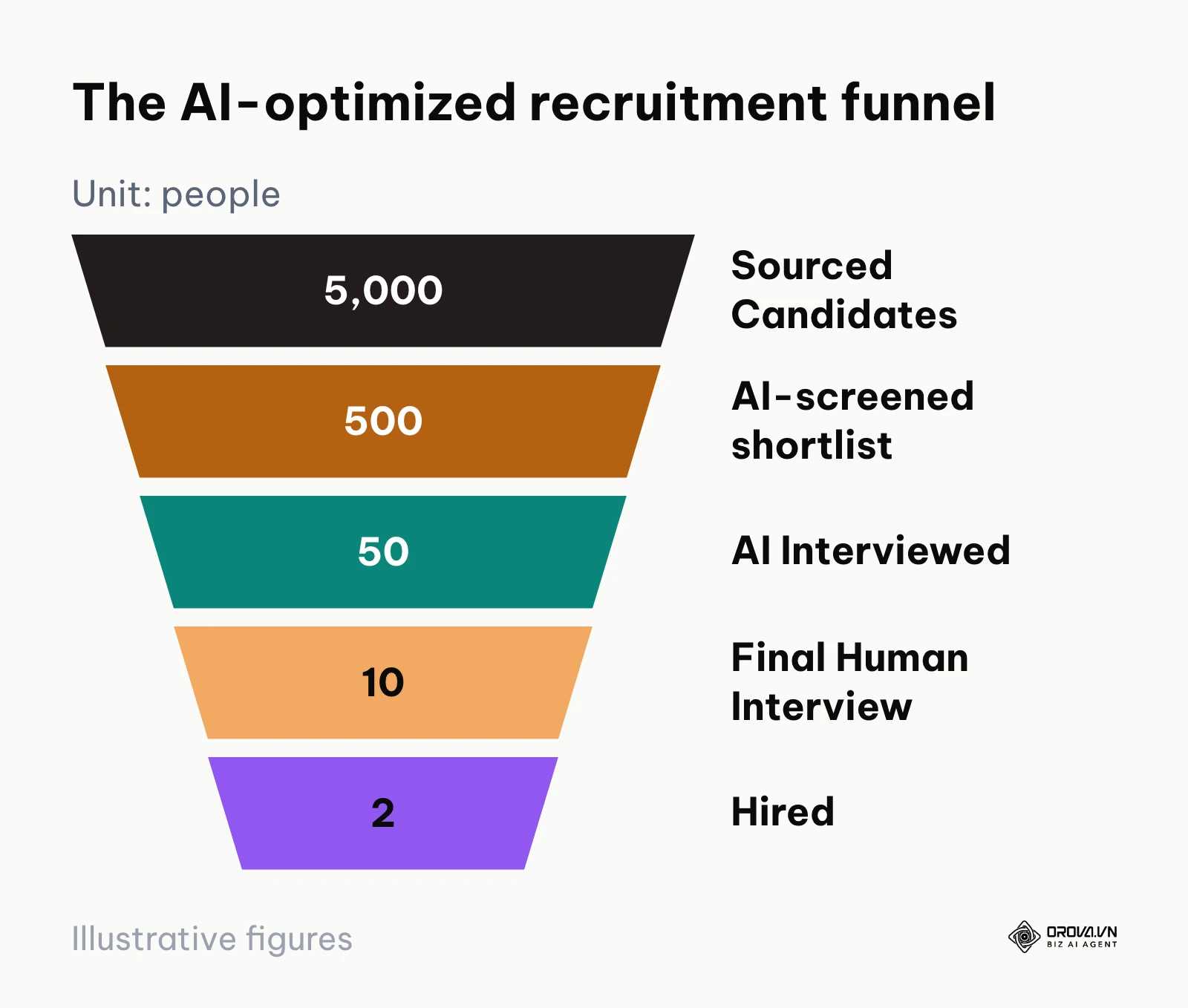
In the broader picture of your organization, recruitment AI sits squarely between employer branding (how you attract talent) and employee onboarding (how you retain them). It acts as the intelligent filter that connects your marketing efforts to your operational reality. If you rely solely on manual processes while your competitors use algorithmic matching, you will systematically lose top talent. Strong candidates rarely stay on the market for long; if your team takes weeks just to review resumes, those candidates may have already accepted offers from faster companies. Ignoring AI means accepting a slower, more expensive, and less competitive hiring engine.
However, AI is not a universal remedy for every situation.
When you do not need AI in recruitment yet: If your company hires fewer than five people a year, investing in complex AI systems is largely a waste of resources. Similarly, if you are hiring for highly specialized, C-level executive roles that rely entirely on deep industry networking, headhunting, and personal relationships, algorithmic screening will add little value. In cases where your entire talent acquisition strategy is based on internal employee referrals, a simple spreadsheet or basic tracking system is often more than sufficient. You should only consider AI when data volume and administrative tasks become the primary bottlenecks in your workflow.
The real value and benefits of AI in hiring
To understand the true impact of this technology, we must separate its value into two distinct layers: the macro value it brings to the business organization, and the micro benefits it provides to the individual recruiter doing the daily work.
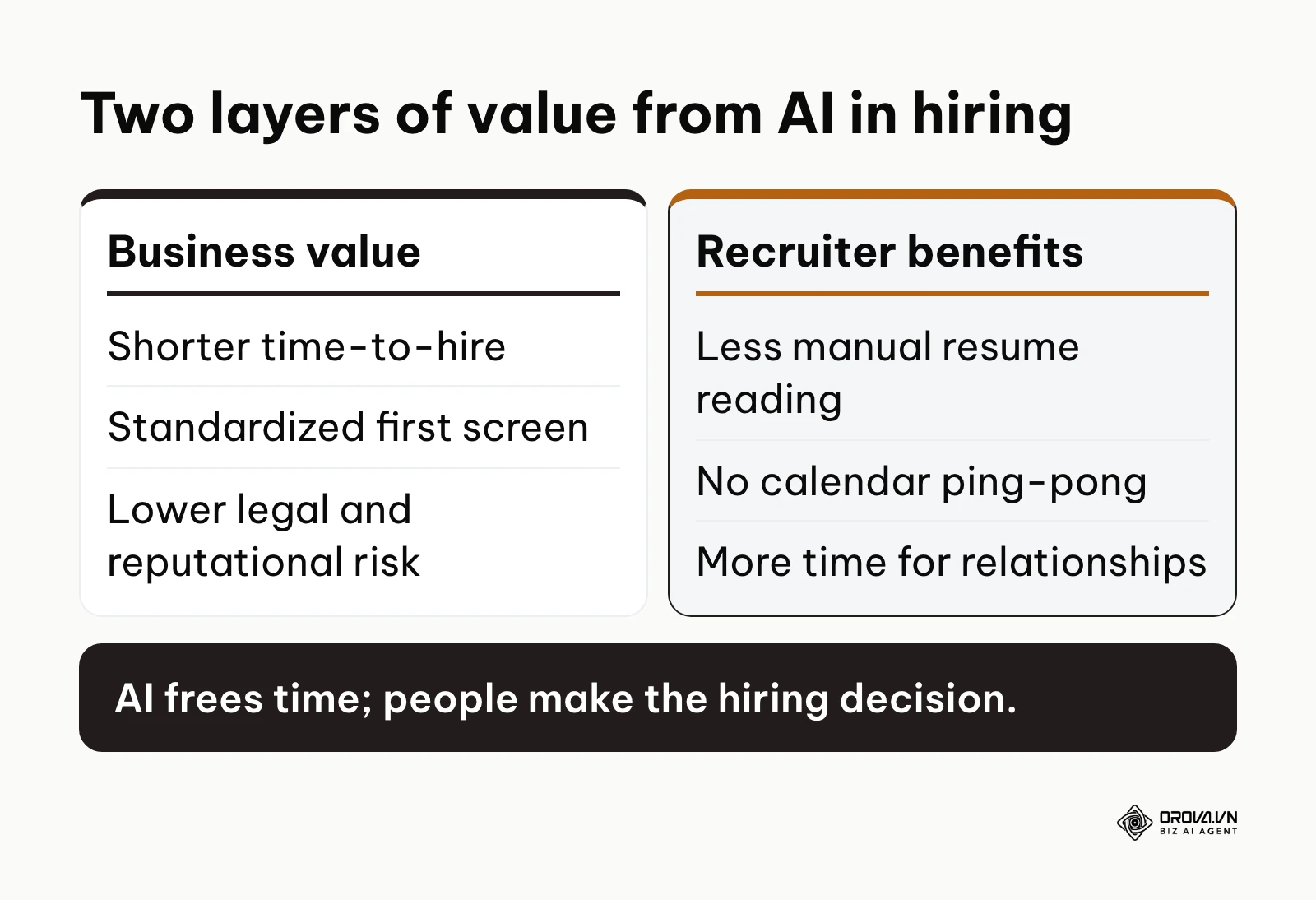
Business Value: Cost, Time, and Risk Reduction
For the business owner or financial director, AI in recruitment translates directly to measurable operational efficiency. The traditional cost per hire includes thousands of dollars in wasted administrative hours, lost productivity due to open roles, and the heavy financial burden of a bad hire. By applying intelligent filtering early in the process, companies dramatically reduce their time-to-hire metrics, ensuring revenue-generating roles are filled quickly. Furthermore, when calibrated correctly, AI helps mitigate legal and reputational risks by applying a standardized, objective evaluation framework to every candidate, reducing the influence of individual human bias during the initial screening phase.
Illustrative example: The context was a mid-sized software firm urgently needing to scale its engineering team by 20 developers. The steps they took involved auditing their legacy ATS, integrating a new AI screening module designed specifically to evaluate Python coding skills based on GitHub activity, and automating the scheduling of technical assessments. The hurdle they faced was that the AI initially rejected highly skilled self-taught candidates because they lacked a formal computer science degree name on their profile. The fix was simple: they adjusted the tool's parameters to heavily weigh portfolio links and code commits while completely ignoring the education field. The result was a much shorter time-to-hire, with a visible improvement in the quality of code submitted during final technical interviews.
Recruiter Benefits: Eliminating Administrative Burnout
For the individual recruiter, the value of AI is intensely personal. It eliminates the soul-crushing administrative work that leads to industry burnout. Instead of spending a large share of the week manually reading poorly formatted PDFs, writing repetitive emails, and playing calendar ping-pong to schedule interviews, recruiters can function as strategic talent advisors. They can spend their time doing what humans do best: building relationships, assessing cultural alignment, and persuading top candidates to accept an offer over a competitor.
Illustrative example: The context involved a lead recruiter managing mass hiring for a national retail chain ahead of the holiday season. The steps she took included deploying an AI-powered conversational chatbot on the career page, setting up text-message outreach to reach retail workers directly, and programming the bot to automatically parse candidate availability. The hurdle was an unexpected drop-off in completion rates because the bot used overly formal, robotic corporate language that intimidated teenage applicants. Her fix was to rewrite the conversational prompts to include friendly emojis, straightforward language, and clear expectations about the role. The result was a noticeably higher screening completion rate, freeing up many hours each week that she previously spent leaving voicemails that were never returned.
| Benefit | Metric to Measure | Typical Time to See Results |
|---|---|---|
| Faster Candidate Processing | Average Time-to-Hire (days) | 2 to 4 weeks |
| Reduced Administrative Work | Hours spent on screening per week | Immediate (within days) |
| Higher Quality Interviews | Offer Acceptance Rate (%) | 3 to 6 months |
| Improved Candidate Experience | Candidate Net Promoter Score (cNPS) | 1 to 2 months |
Ready to speed up screening? Orova Recruit grades up to 500 CVs per role against the criteria you set, quoting the exact lines from each resume as evidence, and generates interview questions from the job description and the candidate's CV.
How AI in recruitment actually works (and how to use it safely)
This is the most critical phase of understanding the technology. To deploy AI effectively, you cannot view it as a magical black box that simply produces great employees. You must deconstruct it into its functional components. Each stage of the recruitment funnel uses different types of machine learning and natural language processing.
Sourcing and Job Description Optimization
The first step in any hiring process is attracting the right people. Historically, writing a job description meant copying an old Word document and changing the title. Today, AI can analyze thousands of successful job postings across your industry to identify the exact phrasing, skills, and tone that attract top-tier talent. It also helps optimize your postings for search algorithms. Much like understanding what is a keyword in SEO is crucial for digital marketing, understanding how candidates search for jobs allows AI to insert the right terminology into your descriptions.
For small businesses without a budget for expensive software, you can leverage general large language models (like ChatGPT or Claude) to act as your sourcing assistant.
Prompt Library for HR: Writing the Perfect Job Description If you want to create a compelling job description using a free AI tool, do not just ask it to "write a job description for a sales manager." You will get generic, uninspiring text. Instead, use this detailed prompt:
Prompt Template: "You are an expert Talent Acquisition Strategist. I need you to write a compelling, modern job description for a [Job Title] at our company, [Company Name]. We are in the [Industry] sector. The primary goal of this role in the first 6 months is to [Insert main goal]. The three absolute must-have hard skills are [Skill 1], [Skill 2], and [Skill 3]. Please structure the output with the following sections: 1) A 3-sentence hook about why this role matters. 2) 'What you will do' (5 bullet points). 3) 'What you bring to the table' (Focusing on outcomes, not just years of experience). 4) 'Why you will love working here' (Highlighting our culture of [Culture trait]). Keep the tone professional but warm, avoiding corporate jargon like 'synergy' or 'rockstar'."
This prompt works because it gives the AI specific constraints, defines the persona it should adopt, and dictates the exact output structure, ensuring you get a ready-to-use document. By optimizing how you describe the role, you also make it easier for candidates to find the posting when they search.
AI Resume Screening and Candidate Matching
Once candidates apply, the core engine of recruitment AI takes over: the screening phase. Traditional software uses simple keyword matching. If a resume does not have the word "Photoshop," the candidate is rejected, even if they wrote "Expert in Adobe Creative Suite."
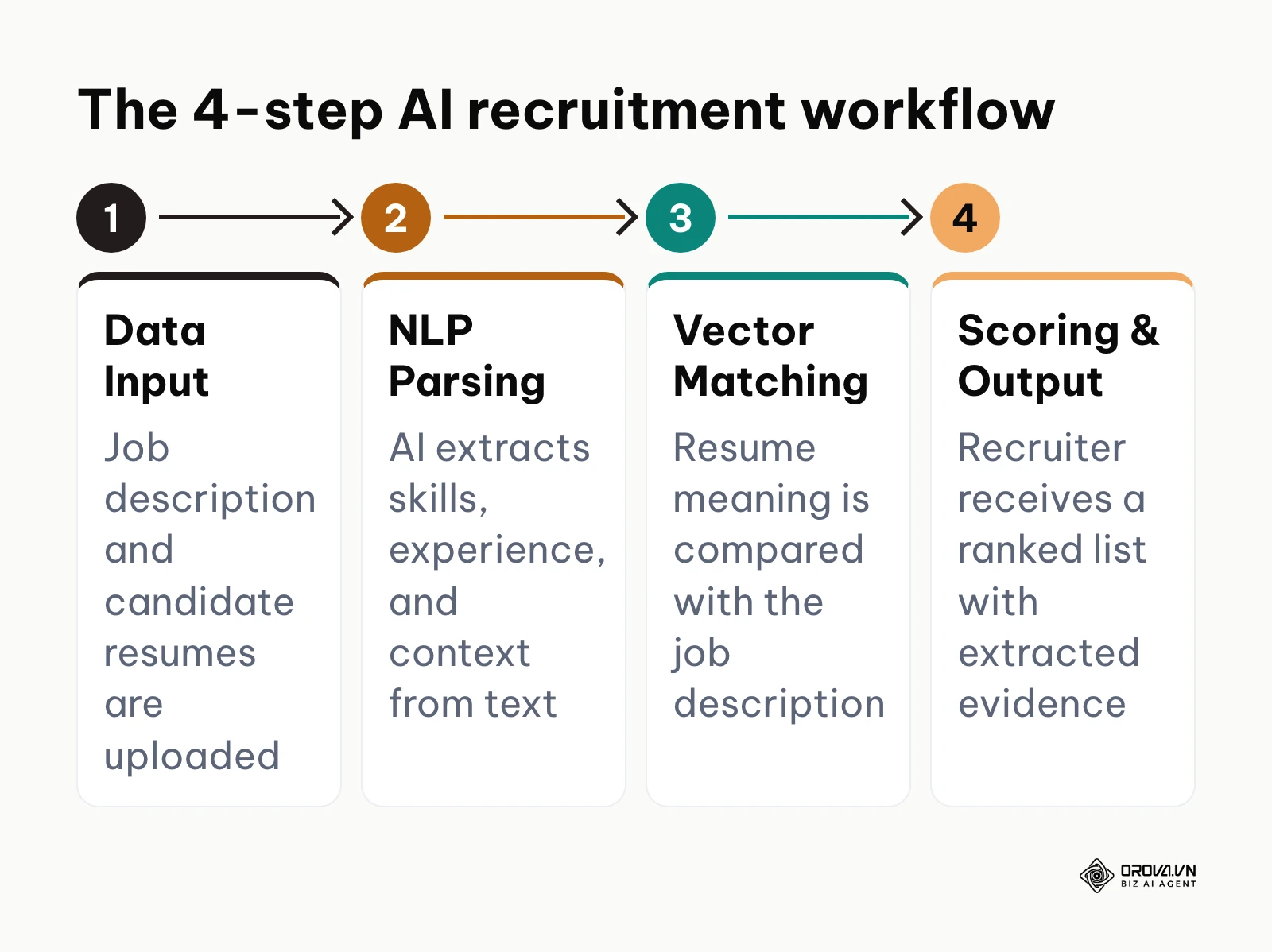
Modern AI uses NLP (Natural Language Processing) and Vector Databases. Instead of looking for exact words, the AI converts the text of a resume into mathematical vectors (numbers that represent meaning). It then compares the meaning of the resume to the meaning of the job description. It understands that "managed a budget" is semantically similar to "oversaw financial resources."
When learning how to use AI for resume screening, it is vital to configure the AI's scoring criteria carefully. You must instruct the system on what matters most—is it technical skills, specific project outcomes, or industry experience? Advanced systems will not only give a candidate a match score (e.g., 85%) but will also extract the exact sentences from the resume that justify that score, allowing the human recruiter to quickly verify the AI's logic. If you want to see how the underlying extraction step works, our guide to the resume parser explains it in detail.
AI Interviewing and Assessment
The interview phase is where AI is currently making massive leaps. Beyond simply reading text, AI can now analyze conversational data. Some platforms conduct initial asynchronous video interviews where the AI analyzes the transcript of the candidate's answers to grade their technical knowledge or problem-solving skills against a predefined rubric.
However, a major emerging challenge is detecting candidates who use AI to cheat. Candidates are increasingly using generative AI to write their resumes, complete take-home tests, and even generate real-time answers during video interviews using teleprompter apps.
How should a recruiter respond? First, do not rely on "AI detectors" to scan resumes; these tools are notoriously inaccurate and often flag non-native English speakers as "AI-generated" due to their predictable grammar structures. Instead, adapt your interview process. Move away from generic questions ("What is your biggest weakness?") to highly specific, behavioral questions based on the candidate's unique resume. If a candidate used AI to write a bullet point about a complex project, ask them to explain the specific failure points of that project in real-time. If they cannot provide granular, messy, real-world details, it becomes obvious they did not do the work.
Legal Compliance and Ethical AI in Hiring
This is arguably the most critical area of AI recruitment. If you deploy AI blindly, you expose your company to massive legal liabilities. AI algorithms learn from historical data. If your company historically only hired men for engineering roles, an AI trained on your past data will silently learn to downgrade female candidates, perpetuating historical bias at a massive scale.
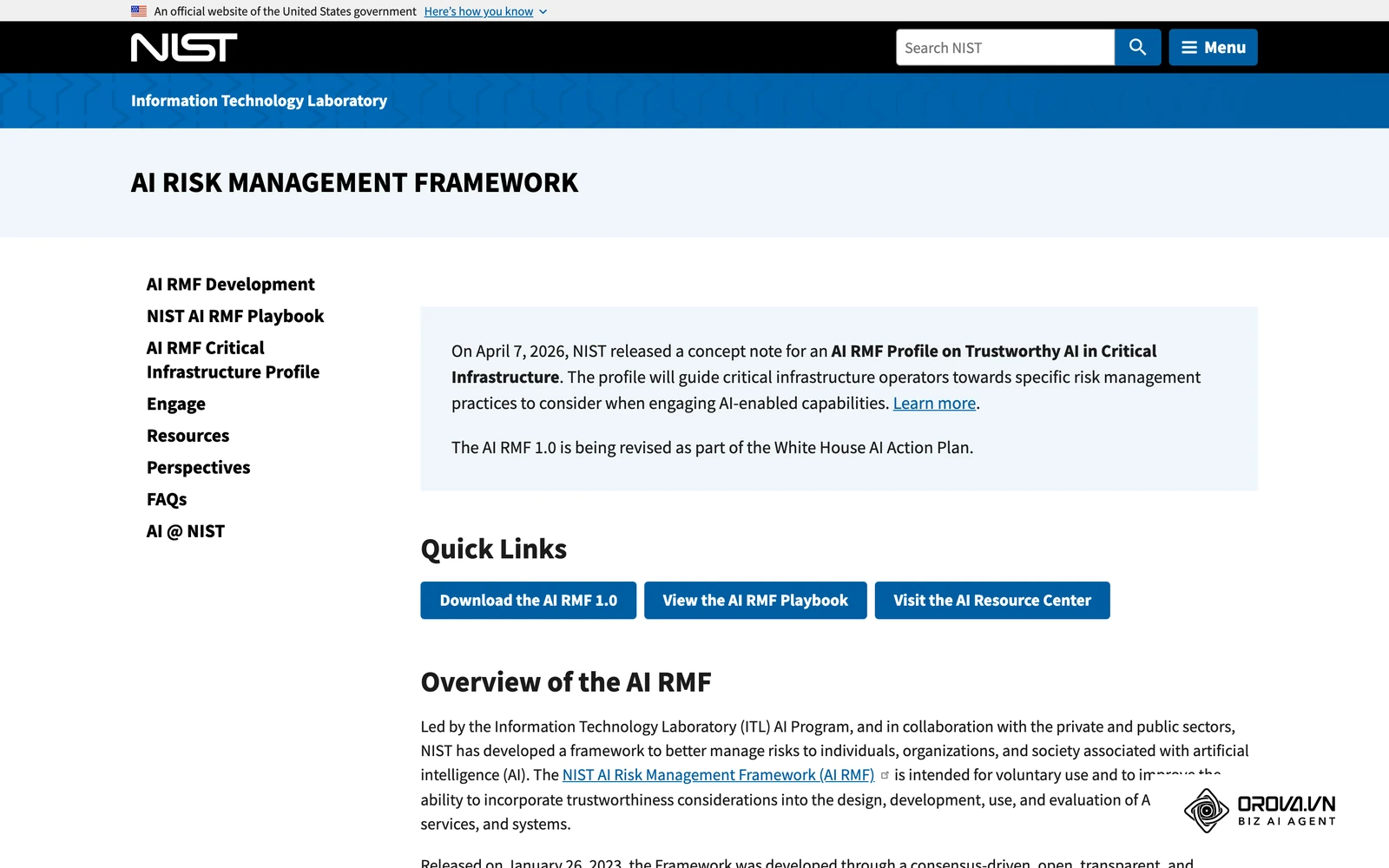
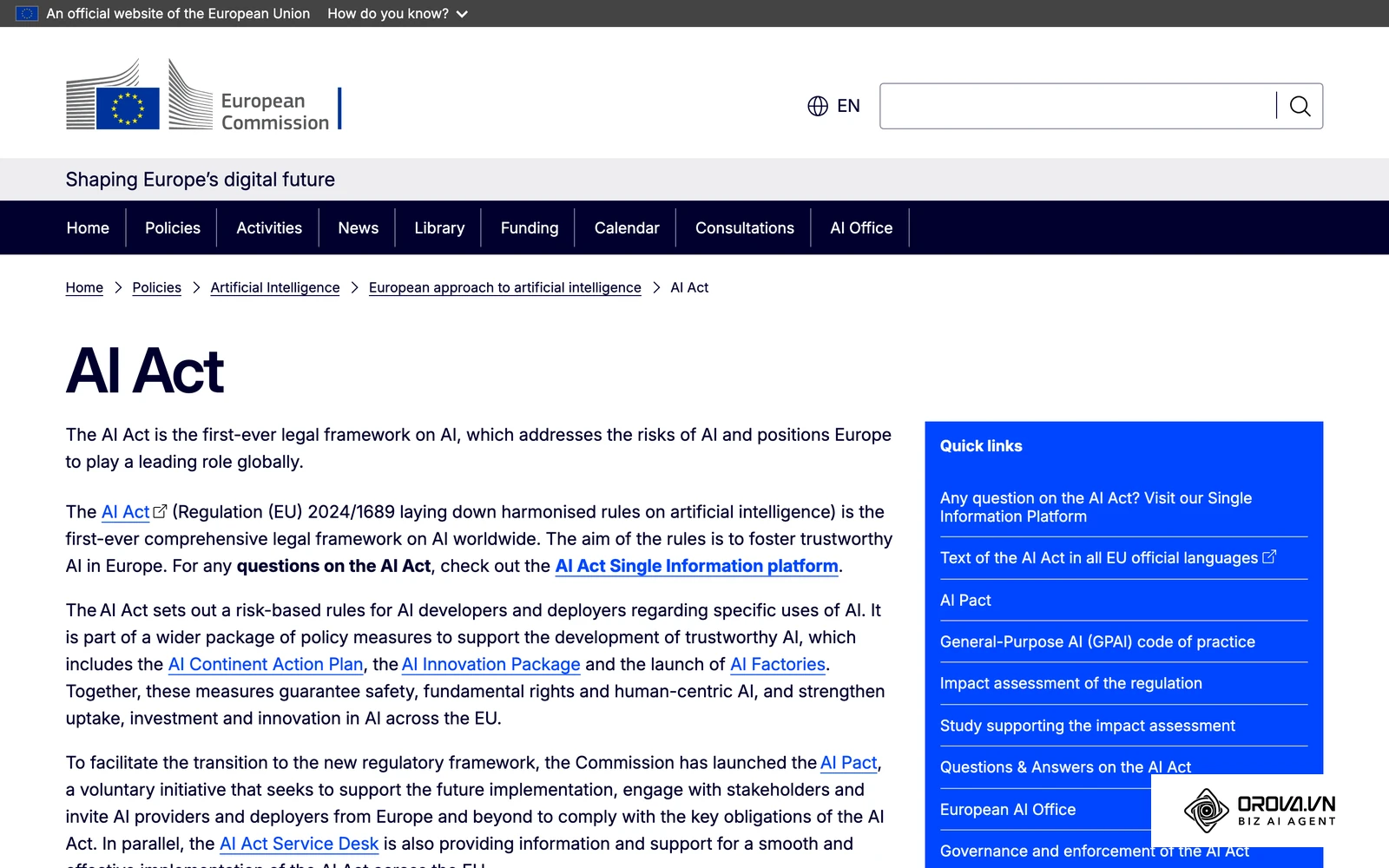
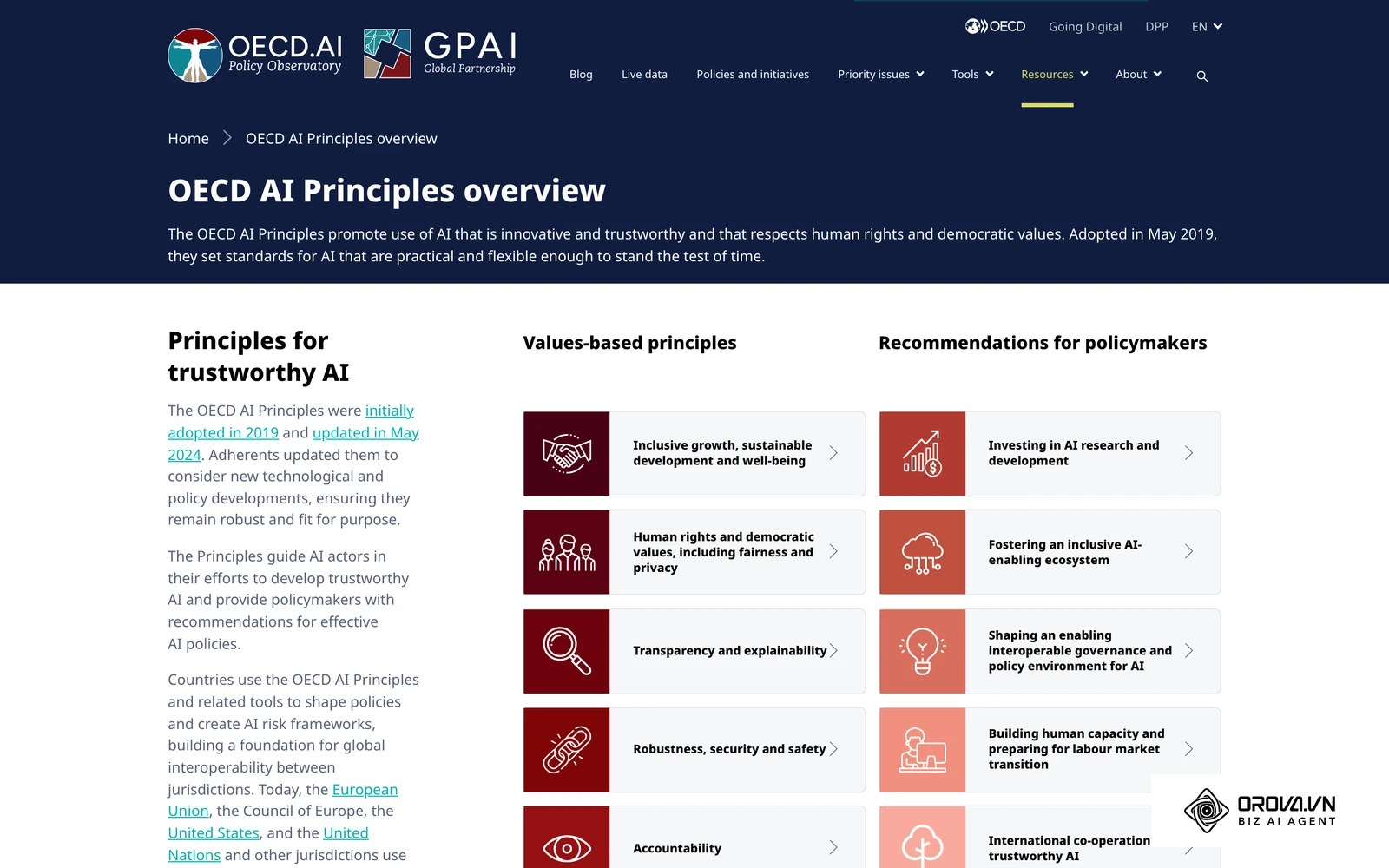
Regulators are responding. Under the EU Artificial Intelligence Act (Regulation (EU) 2024/1689), AI systems used in employment and worker management are classified as high-risk, which brings strict oversight obligations. In New York City, Local Law 144 on automated employment decision tools, enforced by the Department of Consumer and Worker Protection, requires employers to have a covered tool independently audited for bias before use and to publish a summary of the results.
To stay safe, you need a framework similar to a digital marketing compliance checklist, but tailored for HR data.
Bias Risk Assessment Checklist for Buying HR Tech:
- Does the vendor provide a clear explanation of what data was used to train their algorithm?
- Does the tool allow you to turn off facial analysis or tone-of-voice analysis (both widely criticized for bias risk)?
- Can the vendor provide a recent third-party bias audit certificate?
- Does the software allow human recruiters to easily override an AI-generated rejection?
- Is there a clear mechanism to inform candidates that an AI is being used in the screening process?
If a vendor cannot answer these questions clearly, do not buy their software.
Integrating AI into Legacy Systems
Many HR leaders assume that adopting AI requires ripping out their entire existing HR infrastructure. This is false. Modern AI tools are often built as lightweight middleware that connects to your legacy systems via API integrations.
When you look at modern AI marketing automation tools, they are designed to plug into older CRM databases without destroying data. The same applies to HR tech. You can keep your old, clunky HRIS for payroll and compliance data, and simply plug in a specialized AI screening module that sits on top of it. The AI pulls the resumes from the old system, processes them in the cloud, and sends the scores back. This modular approach significantly reduces the risk and cost of digital transformation.
The AI Recruitment Tech Landscape
To help you navigate the overwhelming number of ai recruiting tools, here is a breakdown of different categories you might encounter.
| Type of Tool | Core Features | Best Suited For |
|---|---|---|
| Comprehensive AI-ATS | End-to-end management, semantic matching, automated scheduling. | Enterprises replacing their entire tech stack. |
| Specialized Screening Modules | Plugs into existing ATS, focuses purely on scoring resumes and extracting skills. | Mid-sized companies happy with their current database but needing faster screening. |
| Programmatic Job Advertising | Uses predictive analytics to buy job ads on platforms where ideal candidates are likely to be. | High-volume retail or hospitality businesses. |
| AI Assessment Platforms | Conducts coding tests or soft-skills games, grading them automatically. | Tech companies or graduate recruitment programs. |
What you need to do to adapt and get started
Transitioning to an AI-assisted workflow requires a strategic approach tailored to your specific organizational structure. What works for a massive enterprise will completely break a small startup.
For Small Business Owners and Startups
If you have a tight budget and no dedicated HR team, do not immediately buy expensive enterprise software. Start by building a free toolkit.
- Create a library of engineered prompts to standardize your job descriptions and rejection emails.
- Use free LLMs to brainstorm interview questions based on the exact skills you need.
- Establish a standard operating procedure (SOP) requiring whoever does the hiring to use these specific AI prompts, ensuring consistency.
- Focus on keeping your candidate data clean and organized in a simple spreadsheet so that when you eventually migrate to paid software, the data is ready to be imported.
For HR Managers in Mid-sized Companies
Mid-sized companies often have an ATS but suffer from clunky processes and lack of integration, and integration is a frequent hurdle when adopting new recruitment tech. If you are still choosing a core system, our comparison of applicant tracking software is a useful starting point.
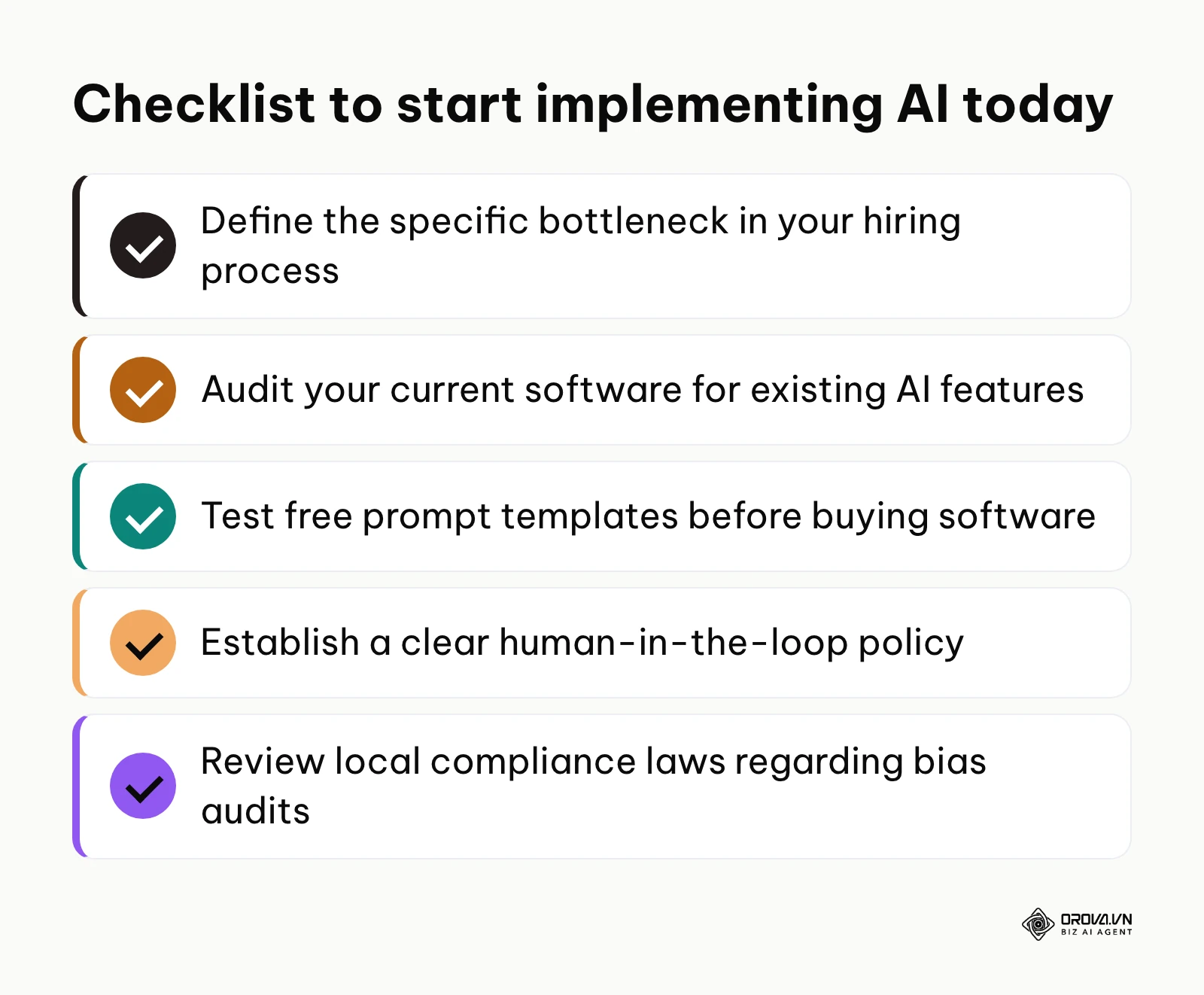
- Audit your current software stack. Your existing ATS provider might have already rolled out beta AI features that you are not using.
- Identify the single biggest bottleneck. Is it screening? Scheduling? Target that specific pain point with a specialized, low-cost API tool rather than a full system overhaul.
- Run a split test. Have one recruiter screen a batch of 100 resumes manually, and run the same batch through an AI tool. Compare the shortlisted candidates to evaluate the tool's accuracy and ROI before signing a long-term contract.
- Draft a clear "Human-in-the-Loop" policy detailing exactly which decisions the AI is allowed to make independently and which require human sign-off.
For Recruitment Agencies and Headhunters
Agencies live and die by their speed and candidate relationships. AI should be used aggressively to scale your outreach.
- Implement AI sourcing tools that scrape public profiles and enrich your internal candidate database automatically.
- Use AI to generate highly personalized outreach emails at scale, referencing specific details from a candidate's public portfolio.
- Automate the entirety of your interview scheduling and follow-up reminders.
- Train your recruiters on how to use AI for deep market research, allowing them to speak intelligently about niche technical roles they may not deeply understand.
| Common Mistake | Consequence | How to Avoid It |
|---|---|---|
| Letting AI make final hiring decisions. | Severe legal liability and loss of candidate trust. | Always keep a human in the loop for final approvals and offer generation. |
| Buying complex tools before defining the problem. | Wasted budget on software nobody uses. | Map your current manual process step-by-step and only buy a tool for the slowest step. |
| Hiding AI usage from candidates. | Reputational damage when discovered. | Be transparent in your job postings about how AI is used to process applications. |
Spend less time on admin and more on people. With Orova Recruit, you can score interviews, compare candidates side by side and export PDF reports, schedule interviews, and send step-by-step candidate emails from your company inbox. Try it free until July 7, 2027.
Trends in AI recruitment over the next few years: Author's perspective
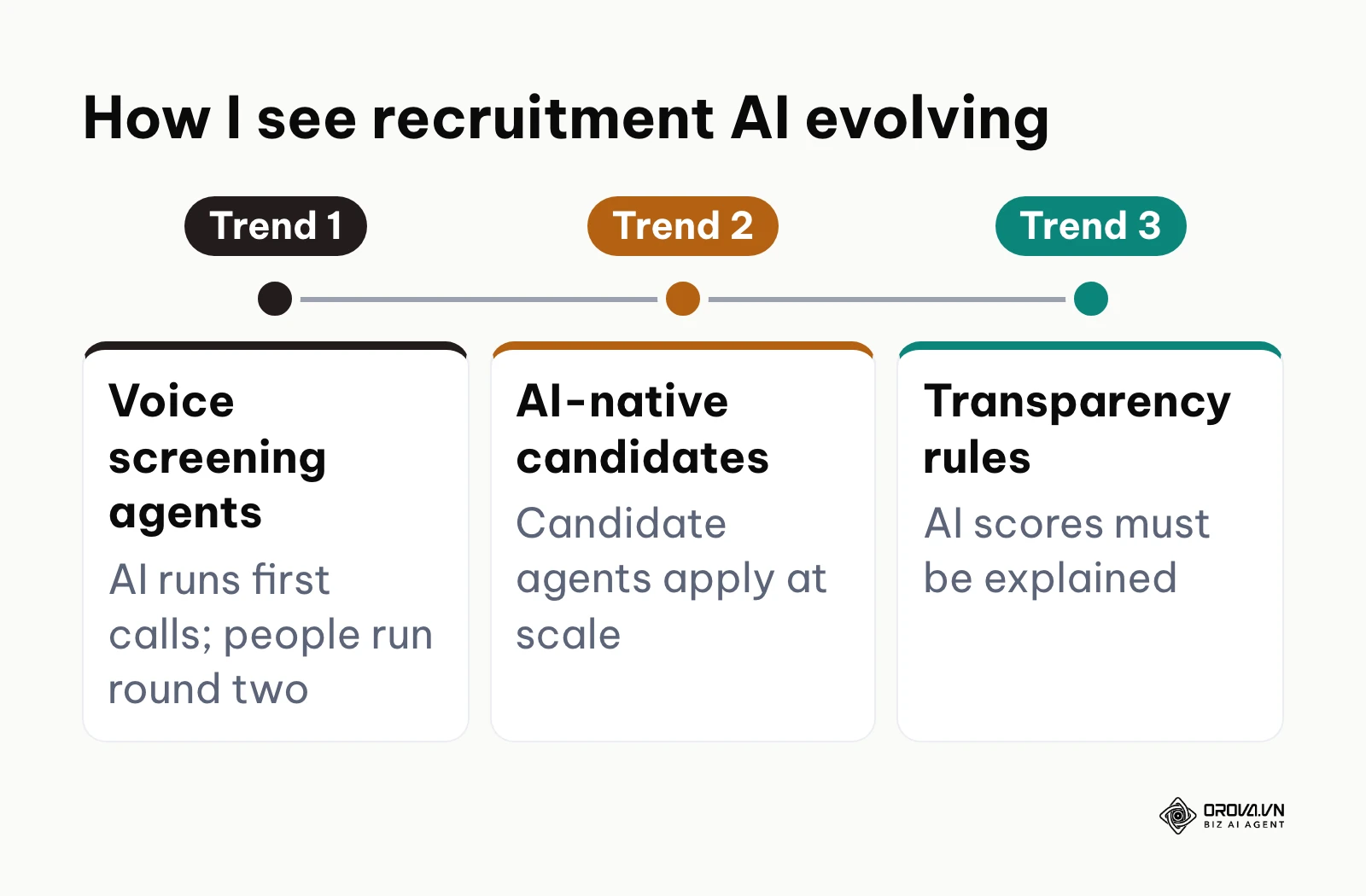
These are my opinions rather than forecasts backed by data. Looking ahead to the next few years, the landscape of recruitment will shift from simple text automation to complex behavioral prediction. Here is how I see the market evolving.
The rise of autonomous conversational agents
Right now, as of 2026, we are seeing the peak of "assistive" AI—tools that help human recruiters read faster or write better. I believe that in the coming years we will see wider adoption of fully autonomous voice agents conducting initial screening calls. These will not be clunky, robotic phone trees. They will be highly sophisticated, empathetic-sounding voice models capable of holding dynamic, structured conversations to assess baseline technical knowledge and cultural fit. Humans will only step in for the second-round interviews. You should prepare for this by starting to document exactly what qualitative traits your best interviewers look for, as these traits will need to be programmed into future agents.
Candidates will become AI-native
I am convinced that we are about to face an arms race between candidate AI and recruiter AI. Currently, recruiters worry about candidates using ChatGPT to cheat. In the near future, candidates will deploy personal AI agents to apply to large numbers of jobs simultaneously, automatically negotiating salaries and answering screening questions on their behalf. The sheer volume of applications will break traditional ATS filters completely. To survive this, I lean towards the idea that hiring teams must stop relying on resumes altogether and shift entirely to verified skills assessments and interactive, real-time problem-solving challenges that AI cannot fake.
Radical transparency will be mandated
I anticipate that the era of black-box AI algorithms is ending. Driven by legislation like the EU AI Act, I believe that companies will increasingly be expected, and in some places required, to provide candidates with a detailed "algorithmic receipt" upon rejection. This receipt will clearly explain exactly which data points the AI used to score them and why they fell short of the threshold. If your current software cannot explain its reasoning in plain text, you will be forced to abandon it. Businesses must start prioritizing "explainable AI" over highly complex, opaque models today to avoid massive regulatory fines tomorrow. Note that this prediction relies heavily on the speed of government legislative bodies, which could delay enforcement, but I expect the overall direction toward transparency to hold.
Frequently asked questions about AI in recruitment
Do we still need recruiters when we have AI?
Yes, absolutely. AI is exceptional at processing large volumes of data and identifying patterns, but it fundamentally lacks human empathy, intuition, and persuasive ability. AI can tell you which candidate has the best technical skills on paper, but a human recruiter is required to understand a candidate's personal career motivations, assess true cultural alignment, and persuade a highly sought-after professional to leave their current job. AI handles the science of matching; humans handle the art of recruiting.
How much does it cost to implement AI in hiring?
The cost varies wildly depending on your approach. Small businesses can start utilizing basic AI prompt engineering with free tools like ChatGPT at zero financial cost. Specialized software modules that plug into an existing ATS sit in the middle of the range, while full enterprise overhauls are the most expensive option by a wide margin. The key is to start small, prove ROI on a single bottleneck, and scale up your budget based on actual time saved.
Is AI biased against certain demographics?
AI itself is not inherently prejudiced, but it is trained on historical human data. If a company's historical hiring data shows a preference for a specific demographic, the AI will learn and replicate that preference, often at a faster and more damaging scale. This is why human oversight, regular third-party bias audits, and careful calibration of the algorithm's training data are non-negotiable requirements when deploying these tools.
Can candidates tell if an AI is reading their resume?
In most cases, candidates cannot technically see the software reading their file. However, candidates are becoming highly aware of market trends. If they receive a generic rejection email precisely three seconds after submitting an application at 2:00 AM, they will immediately know an automated system processed it. Transparency is the best policy; openly stating that you use AI to assist in initial screening often builds trust rather than eroding it.
What is the best way to train my HR team on these tools?
Do not rely solely on vendor training videos. The most effective training involves hands-on, low-stakes experimentation. Have your team run a "shadow" hiring process for an open role: process candidates manually as usual, but simultaneously run the data through the new AI tool. Comparing the results in real-time builds confidence in the system's accuracy and highlights any necessary adjustments to the scoring parameters before the tool is used for live, binding decisions.
Where should you start today?
Taking the first step into AI recruitment does not require a massive budget or a six-month strategic overhaul. Your starting point depends entirely on your current operational reality. Find the situation below that matches your organization, and commit to taking that single step during your next working session.
If you currently have no specialized hiring software and rely entirely on email and spreadsheets, your first step is purely behavioral. Do not buy software yet. Spend one hour creating a standardized prompt library for your most common administrative tasks. Write a highly detailed prompt for generating job descriptions and another for writing polite, constructive rejection emails. Save these in a shared document and require anyone involved in hiring to use them. This immediately introduces the efficiency of generative AI into your workflow at zero cost.
If you already use an ATS but find your process slow and disconnected, your first step is an integration audit. Log into your current ATS platform's admin dashboard and review their latest release notes or app marketplace. Many legacy providers have recently launched native AI screening or scheduling add-ons that are included in your current subscription tier but simply need to be toggled on. Activating a feature you already pay for is the fastest path to modernization.
If you have experimented with AI tools but cannot prove their value to leadership, your first step is establishing a baseline metric. Choose one specific role you are currently hiring for. Document exactly how many hours your team spends manually screening resumes and scheduling interviews for that role this week. You cannot justify investing in AI software until you can definitively show that it will reduce that specific time metric, translating directly into saved labor costs.
About the author

Builder of Orova
Nguyễn Đỗ Trọng Ân has 8 years of experience in marketing, including 6 years managing market development across Asia. He builds Orova, a Biz AI Agent that never sleeps: it plans, runs and optimizes work for businesses.
Run your business with AI Agents
Orova is the always-on Biz AI Agent — it plans, runs, and optimizes the work for you.
Save time, unlock productivity.