
Link building services evaluated: how to avoid scams and calculate true ROI

The best link building services are the ones you can verify: they let you approve every site before publication, show recent live placements, accept a small pilot, and never sell links from networks they own. Business owners often turn to them after hitting a frustrating plateau where writing more content, optimizing title tags, and fixing technical errors simply does not move the needle on search engine rankings. Your competitors continue to outrank you despite having inferior products, slower websites, and poorly written articles. You stare at analytics dashboards wondering what invisible force is holding your domain back. The missing ingredient is almost always domain authority—the trust search engines place in your website based on the quantity and quality of external websites linking to it. This realization leads many founders, marketing directors, and SEO managers to start comparing providers to close the gap.
However, the market for acquiring backlinks is fraught with extreme risk, opaque practices, and outright fraud. Buying placements blindly or trusting the wrong vendor can result in severe algorithmic penalties that wipe out your existing organic traffic overnight. An algorithmic demotion from a core update can take months, or even years, to recover from, potentially costing you significant revenue and lasting brand damage.
This comprehensive guide will provide you with a rigorous, uncompromising framework to vet agencies, calculate the true financial return on your investment, understand the underlying mechanics of off-page SEO, and navigate the complex landscape of external outreach without falling victim to hidden scams.
What are link building services and who really needs them?
Link building services involve outsourcing the labor-intensive process of acquiring hyperlinks from external websites back to your own. In the eyes of search engines like Google, a link from a reputable external site acts as a "vote of confidence." The more high-quality votes a page receives, the more likely it is to rank for competitive search queries.
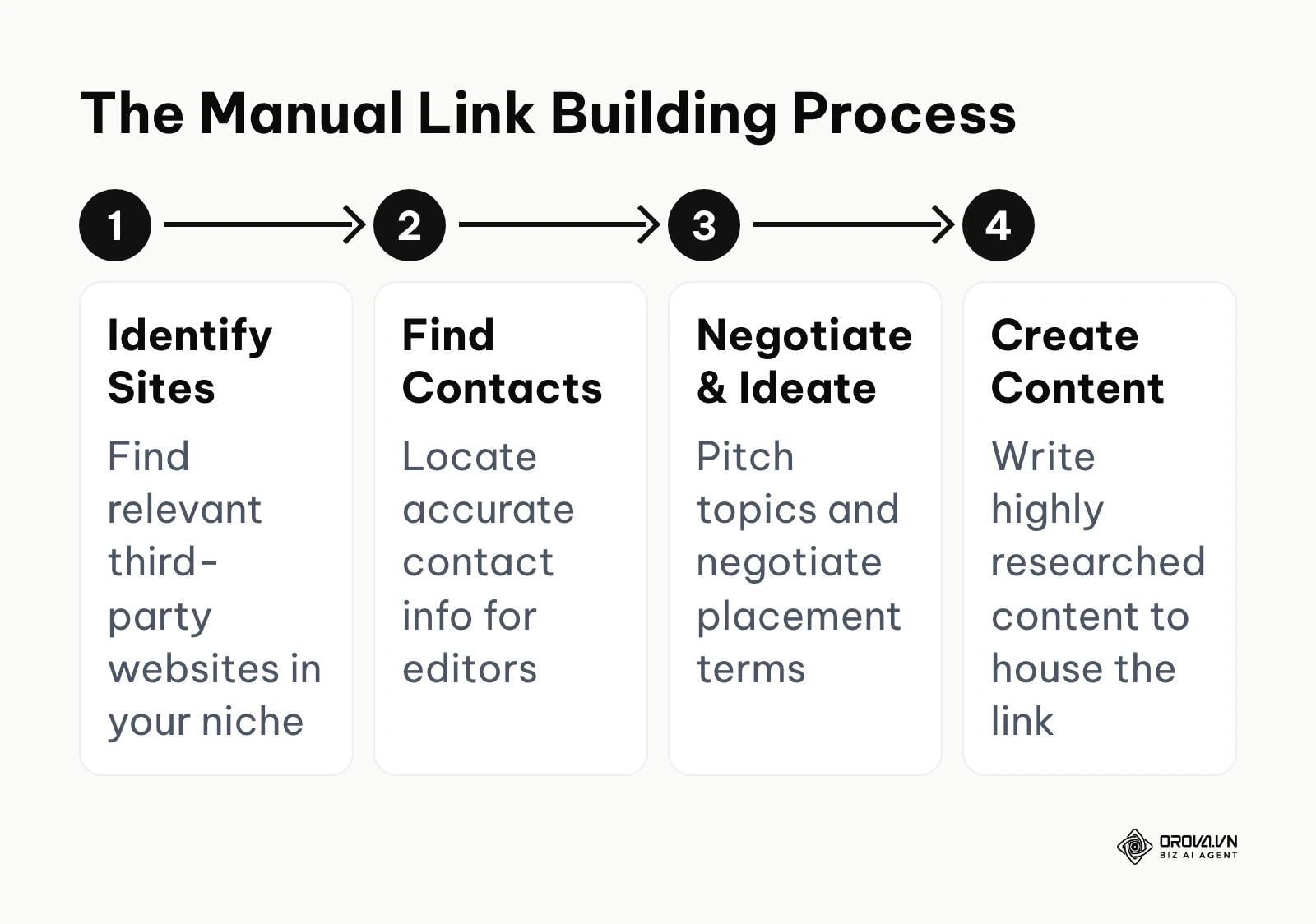
This process requires a massive amount of manual effort: identifying relevant websites, finding accurate contact information for editors or webmasters, negotiating placements, ideating topics, and often creating the highly researched content that houses the link. Because this work is tedious, requires specialized relationship management, and demands a unique blend of PR and SEO skills, specialized agencies exist to handle the execution on behalf of businesses.
The ideal candidates for outreach services
These services are absolutely necessary for companies operating in moderately to highly competitive niches where on-page optimization is no longer a competitive advantage. If every business on the first page has perfectly optimized content and lightning-fast loading speeds, external authority becomes the sole tiebreaker.
You desperately need link building services if you operate in:
- Software as a Service (SaaS): Competing against established tech giants requires massive authority. SaaS companies need constant link acquisition to rank for high-intent queries like "best CRM software."
- Your Money or Your Life (YMYL) Niches: If you sell financial products, insurance, healthcare services, or legal advice, search engines demand exceptional trust signals before they will show your site to users.
- High-Ticket E-commerce: Selling expensive machinery, luxury goods, or bulk B2B supplies requires overcoming established marketplace giants like Amazon or industry titans.
- Highly Competitive Local Services: Plumbers, roofers, and personal injury lawyers in major metropolitan areas face brutal competition where local link building is the only way to dominate the local map pack.
Who should completely avoid these services?
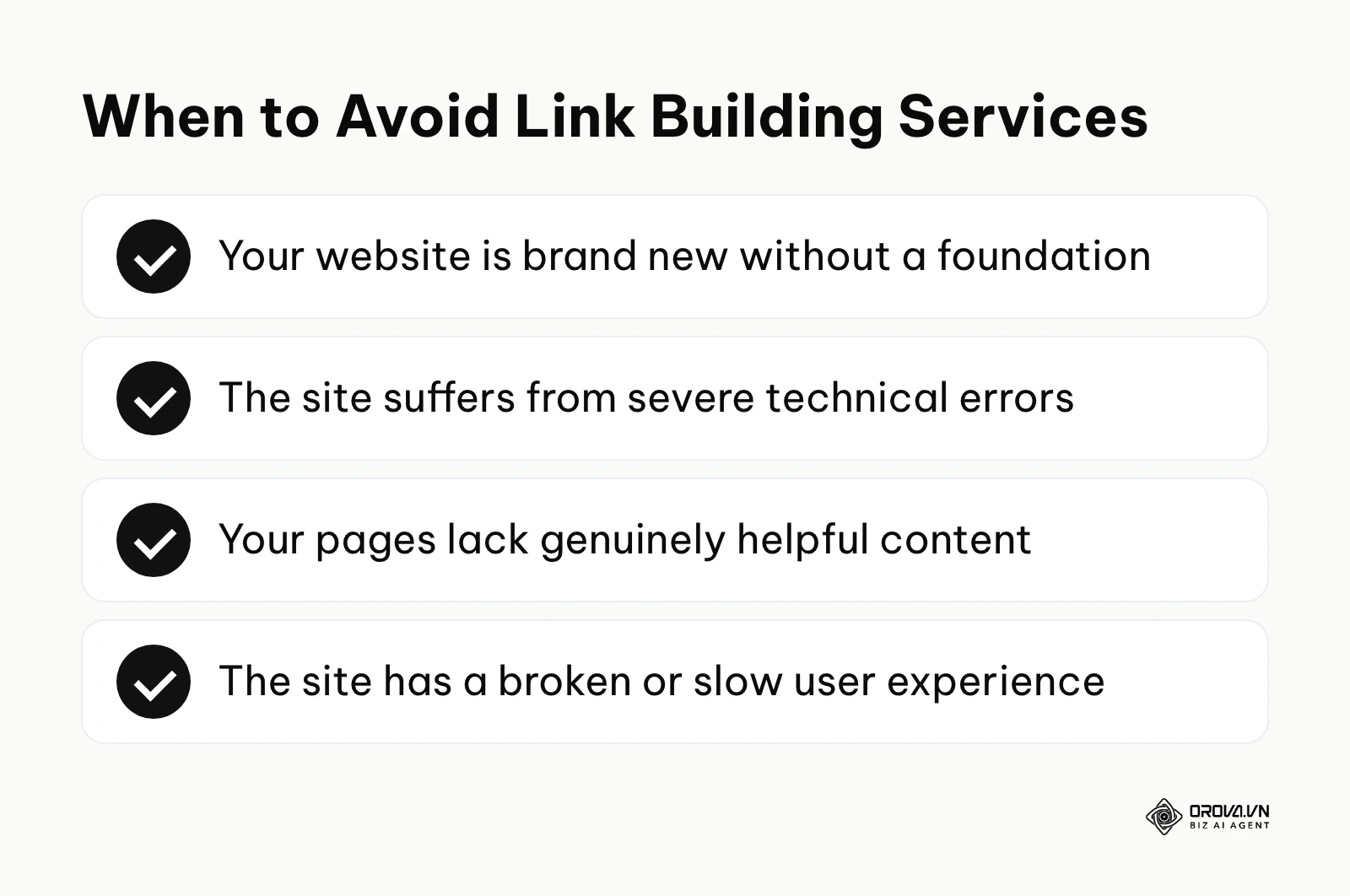
However, you should rigorously avoid these services if your website is brand new, suffers from severe technical errors, or lacks genuinely helpful content. Pointing authoritative signals to a broken, slow, or empty website is a complete waste of capital. Search engines evaluate the destination just as harshly as the source. If a user clicks a link on a reputable site, lands on your page, and immediately bounces back to the search results because your content is thin or aggressive, the algorithm will recognize the mismatch and ignore the link's value.
Preparation: Essential assets before hiring a link building service
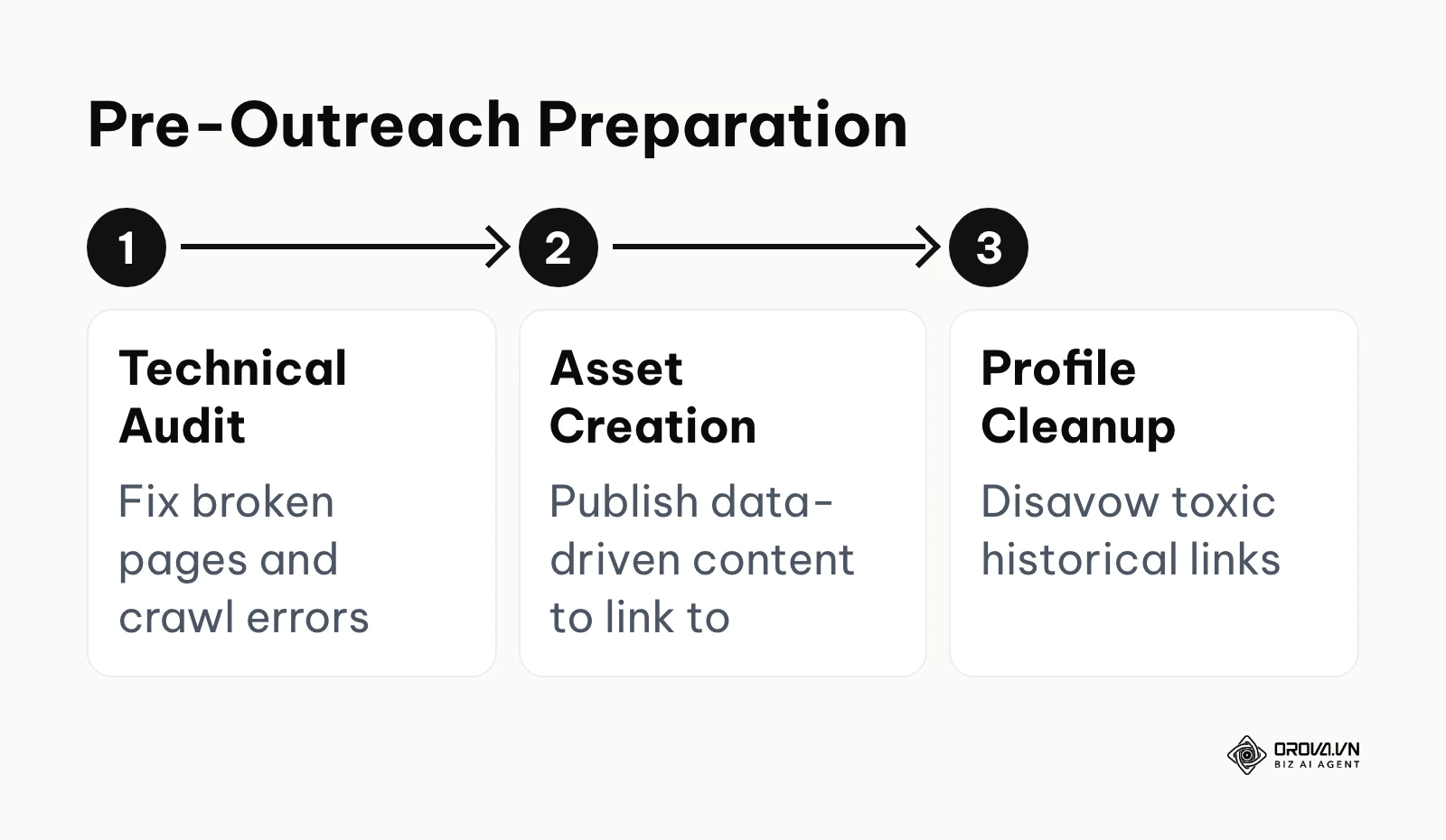
Before you spend a single dollar on outreach, your own digital house must be in pristine order. Agencies cannot fix bad user experience, and they cannot make uninteresting, scraped content rank permanently. You must prepare a solid foundation to ensure every placement you buy actually transfers maximum equity to your bottom line.
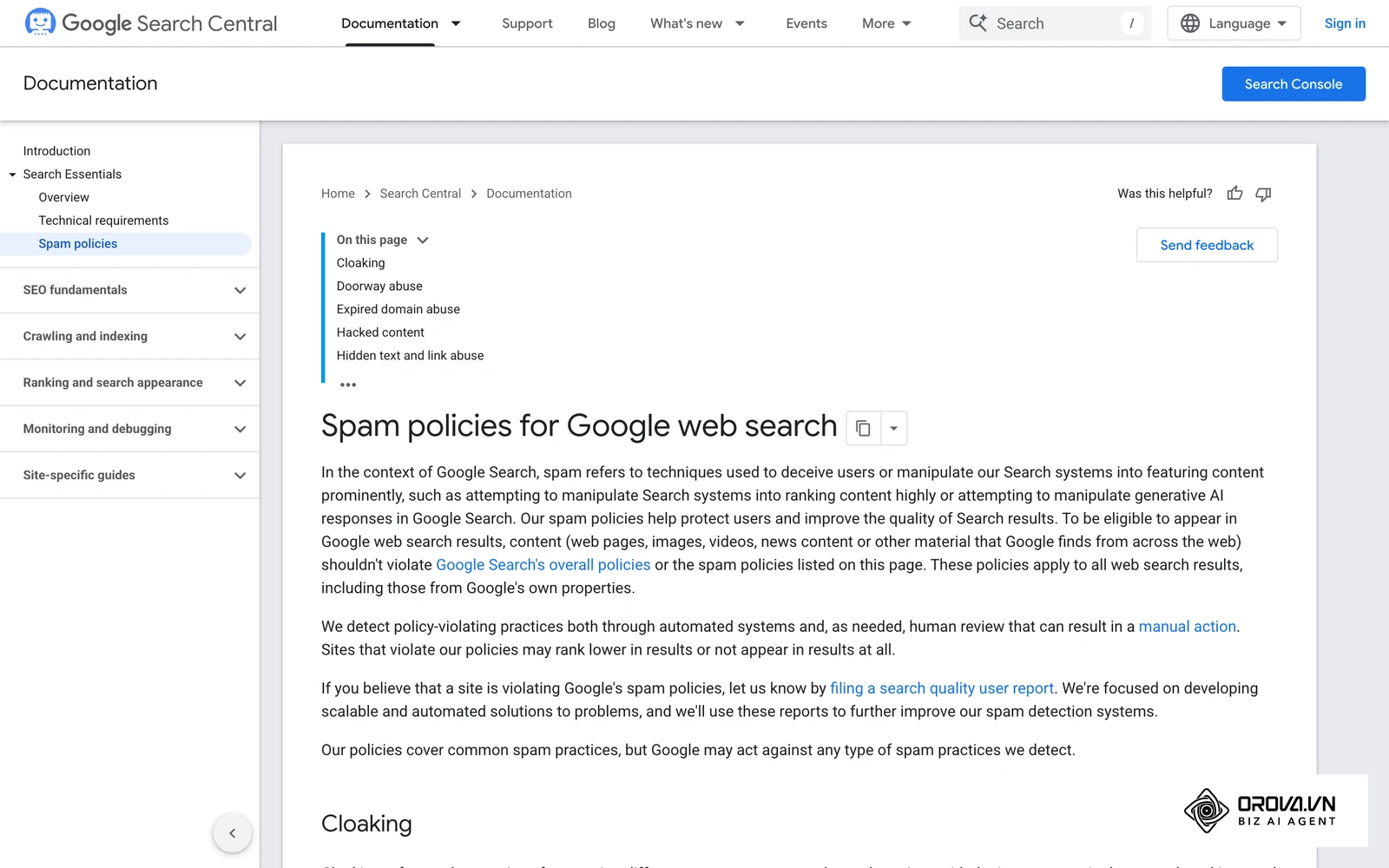
According to the Google Search Essentials Spam Policies, any links intended to manipulate rankings may be considered link spam. Therefore, your goal is to build a site that naturally deserves the placements you are actively negotiating for. You need a solid internal link strategy before pointing external authority to your site, ensuring the equity flows correctly through your pages to your core money pages.
The pre-outreach checklist
| Asset Required | Purpose and Importance | Where to acquire it | Time Required |
|---|---|---|---|
| Technical SEO Audit | Ensures search engines can actually crawl and index the pages you are building links to. A link to a page with a noindex tag is worthless. | Crawl tools like Screaming Frog, Sitebulb, or deep Google Search Console analysis. | 3 to 7 days |
| Disavow File Update | Clears out historic toxic links before building new ones. You do not want new, high-quality links mixing with an old, spammy foundation. | Google Search Console data analysis cross-referenced with tools like Ahrefs or Semrush. | 1 to 2 weeks |
| Linkable Content Assets | Gives the agency something actually worth linking to, such as original research, data studies, free calculators, or ultimate guides. | Internal writing team, data scientists, or subject matter experts within your company. | 2 to 4 weeks |
| Target URL Priority List | Aligns SEO efforts with business revenue. Focuses budget on high-margin products or services rather than vanity blog posts, with one page per target term. | Business analytics, CRM data, and conversion tracking platforms. | 1 to 3 days |
| Competitor Gap Analysis | Identifies exactly how many links you need to catch up, setting realistic expectations for budget and timeline. | SEO platforms like Ahrefs, Semrush, or Majestic SEO. | 2 to 4 days |
Creating linkable assets
Agencies will struggle to secure top-tier placements if they are forced to link directly to your aggressive sales pages. Top-tier journalists and editors simply will not link to a "Buy Now" page. You must arm your agency with "linkable assets." These are non-promotional, highly informative pages on your domain that naturally attract citations. Examples include industry surveys, proprietary data reports, interactive calculators, or deeply researched whitepapers. The agency builds links to these assets, and you use strategic internal linking to funnel that acquired authority directly to your product pages. Make sure only one page targets each commercial term first, because keyword cannibalization splits the value of every new link between competing URLs.
Illustrative example: A marketing manager at a mid-sized software company needed to rank their primary product page. They immediately bought a package of twenty high-authority links pointing directly to the sales page. The rankings dropped because the page had very thin content, slow load times, and poor internal linking. They paused the campaign, expanded the page with a comprehensive 3,000-word feature guide, added internal pathways from their existing high-traffic blog posts, created a proprietary industry survey, and then resumed the outreach targeting informative tech blogs to link to the survey. The entire domain authority rose, and the core product page began to slowly climb to the first page of search results, resulting in a steady stream of qualified leads.
The step-by-step process to vetting and hiring a link building service
The barrier to entry for starting an outreach agency is incredibly low. Anyone with an internet connection, a pirated list of emails, and a fake LinkedIn profile can claim to be an elite SEO expert. To protect your business and your domain's reputation, you must follow a rigid, uncompromising process when selecting a partner.
Phase 1: Define your exact requirements and allocate budget
You must know what you are buying before you start shopping. Understand the different methodologies:
- Digital PR: Creating newsworthy stories or data drops and pitching them to major journalists (e.g., Forbes, TechCrunch, local news). It is expensive, unpredictable in volume, but incredibly safe and capable of driving massive brand awareness.
- Guest Posting / Content Placement: Writing high-quality articles for industry-specific blogs and seamlessly integrating your link into the narrative. It offers steady, predictable results, but Google's spam policies name large-scale guest posting campaigns with keyword-rich anchor text as link spam, so the content and the anchor must stay editorial.
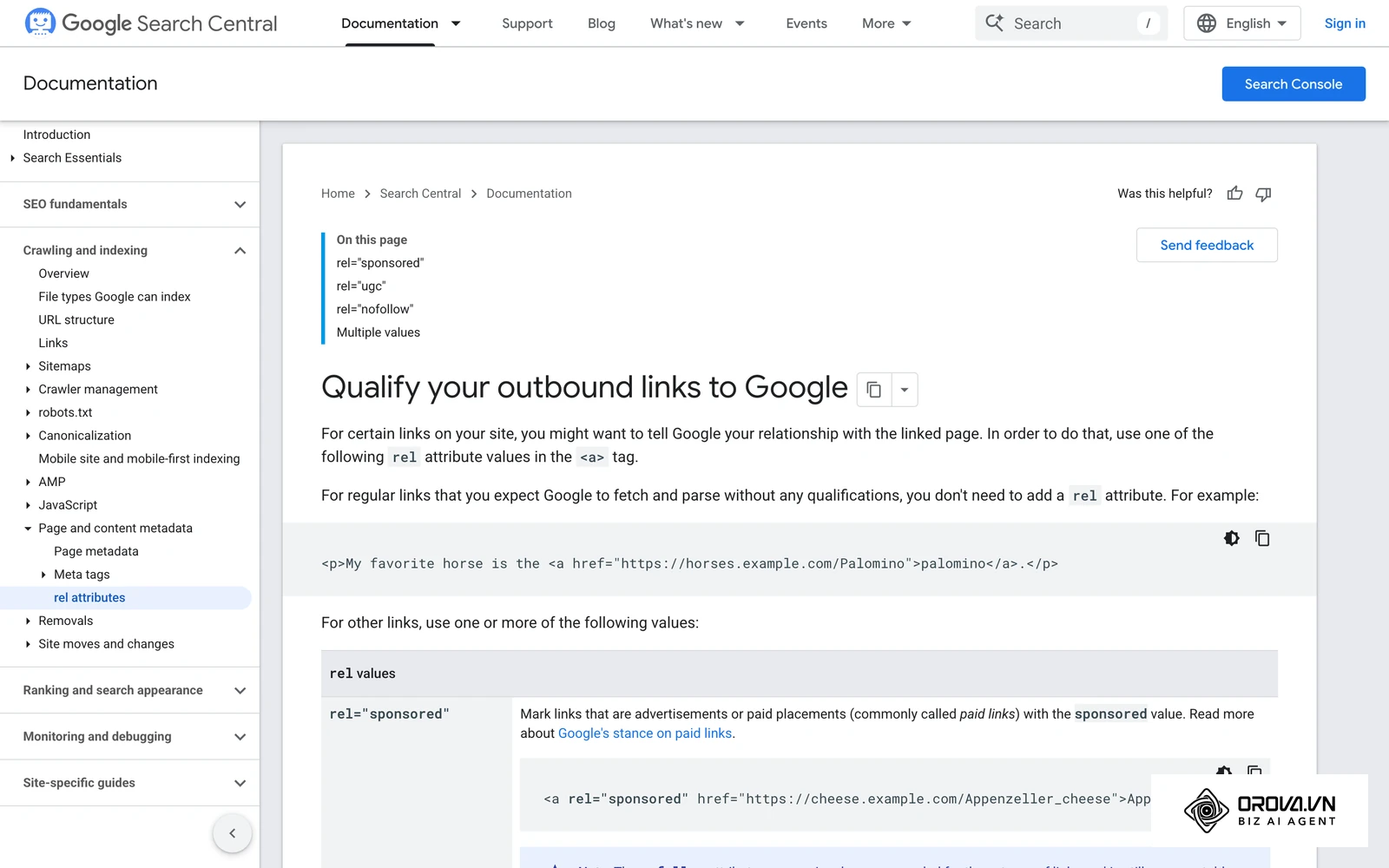
- Niche Edits / Link Insertions: Negotiating with webmasters to insert your link into an existing, aged article that is already indexed and ranking. If you pay for an insertion, it must carry the rel="sponsored" attribute; a paid link that passes ranking credit is a link scheme under Google's spam policies and puts your site at risk.
- Resource Page Link Building: Reaching out to sites that curate lists of helpful tools or resources in your industry and asking to be included.
Set a realistic budget. Careful manual outreach is slow, skilled work, so a very small monthly budget usually buys either very few placements or low-quality ones. If your budget is tight, invest in your own content and outreach first.
Phase 2: Sourcing unbiased candidates
Do not rely on Google searches for "best outreach agencies" or "buy high DA links." The companies ranking at the top for these terms are simply the ones best at optimizing their own sites, or they are massive link farms, not necessarily the best at servicing clients safely. Instead, look for recommendations in private professional communities, Slack groups (like Traffic Think Tank or Women in Tech SEO), or vetted B2B review platforms like Clutch. You want agencies that have public faces, verified LinkedIn profiles for their leadership, and a track record of speaking at reputable industry conferences (like BrightonSEO or SMX). Finding reliable seo advice is incredibly hard when every vendor claims to be the premier expert.
Phase 3: The 10-question anti-scam interrogation
When you get on a sales call, you must control the conversation. Do not let them dazzle you with generic case studies. Ask these exact questions to separate the professionals from the scammers.
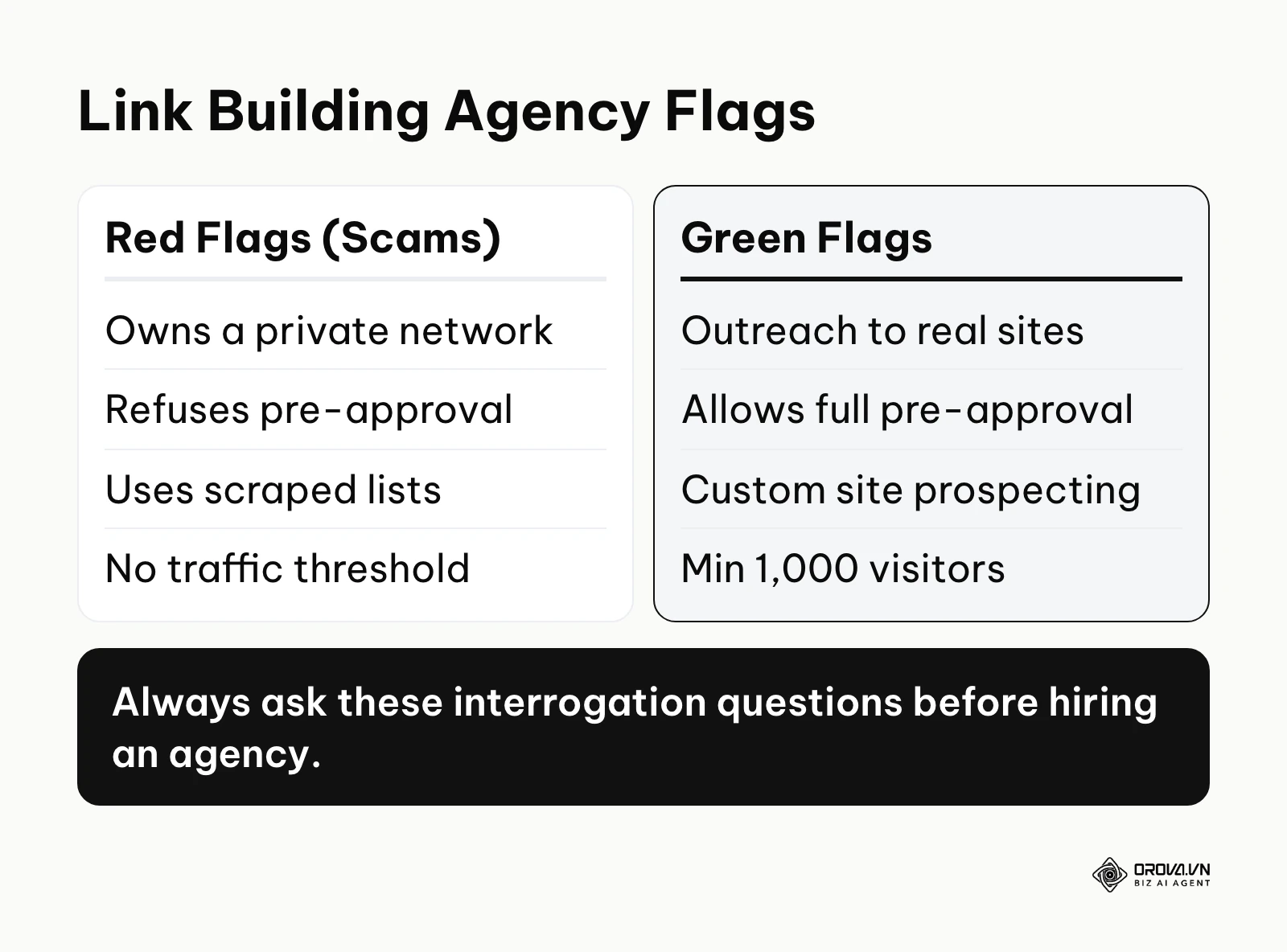
1. Do you own or control any of the websites you will place my links on?
- Red Flag Answer: "Yes, we have an exclusive private network of high-DA sites just for our clients." (They are selling a Private Blog Network, which will eventually get penalized).
- Green Flag Answer: "No, we strictly conduct external outreach to independent, third-party webmasters and editors."
2. Can I review and pre-approve every single domain and piece of content before it goes live?
- Red Flag Answer: "No, that slows down our process too much. Trust our quality control."
- Green Flag Answer: "Yes, you will get a staging spreadsheet to approve the domain metrics, relevance, and the exact article draft before we submit it."
3. What is your absolute minimum organic traffic threshold for a placement site?
- Red Flag Answer: "We focus on Domain Authority (DA) over 50, regardless of traffic."
- Green Flag Answer: "We require a strict minimum of 1,000 real organic visitors per month according to Ahrefs or Semrush, and the traffic trend must be stable or growing."
4. How do you handle links that are removed by the webmaster after publication?
- Red Flag Answer: "Once it's live, it's out of our hands."
- Green Flag Answer: "We have a contractual 12-month replacement guarantee. If a link drops, we replace it with one of equal or greater value at no cost."
5. Do you rely on pre-existing scraped lists, or do you conduct custom outreach for my specific campaign?
- Red Flag Answer: "We have a proprietary list of 10,000 sites ready to post." (This is a list of known link farms).
- Green Flag Answer: "While we have existing relationships, 80% of our work is custom prospecting tailored precisely to your niche and target URLs."
6. Can you show me a live, non-redacted placement you secured for a client in my industry within the last thirty days?
- Red Flag Answer: "We have strict NDAs and cannot show client work." (Scammers hide behind fake NDAs to avoid showing their poorly spun content).
- Green Flag Answer: "Yes, here are three URLs we secured last week. You can see the content quality and the site's relevance."
7. Do you ever pay webmasters directly for placements, and if so, how do you handle sponsored attributes?
- Red Flag Answer: "We pay everyone, but we force them to keep it 'dofollow' and hide it from Google."
- Green Flag Answer: "We prefer earned Digital PR. If we do utilize sponsored content, we strictly adhere to FTC guidelines and Google's rel=sponsored directives, focusing on the referral traffic value."
8. What is the ratio of your team's time spent on prospecting versus sending automated emails?
- Red Flag Answer: "We use AI to blast 5,000 emails a day to guarantee results."
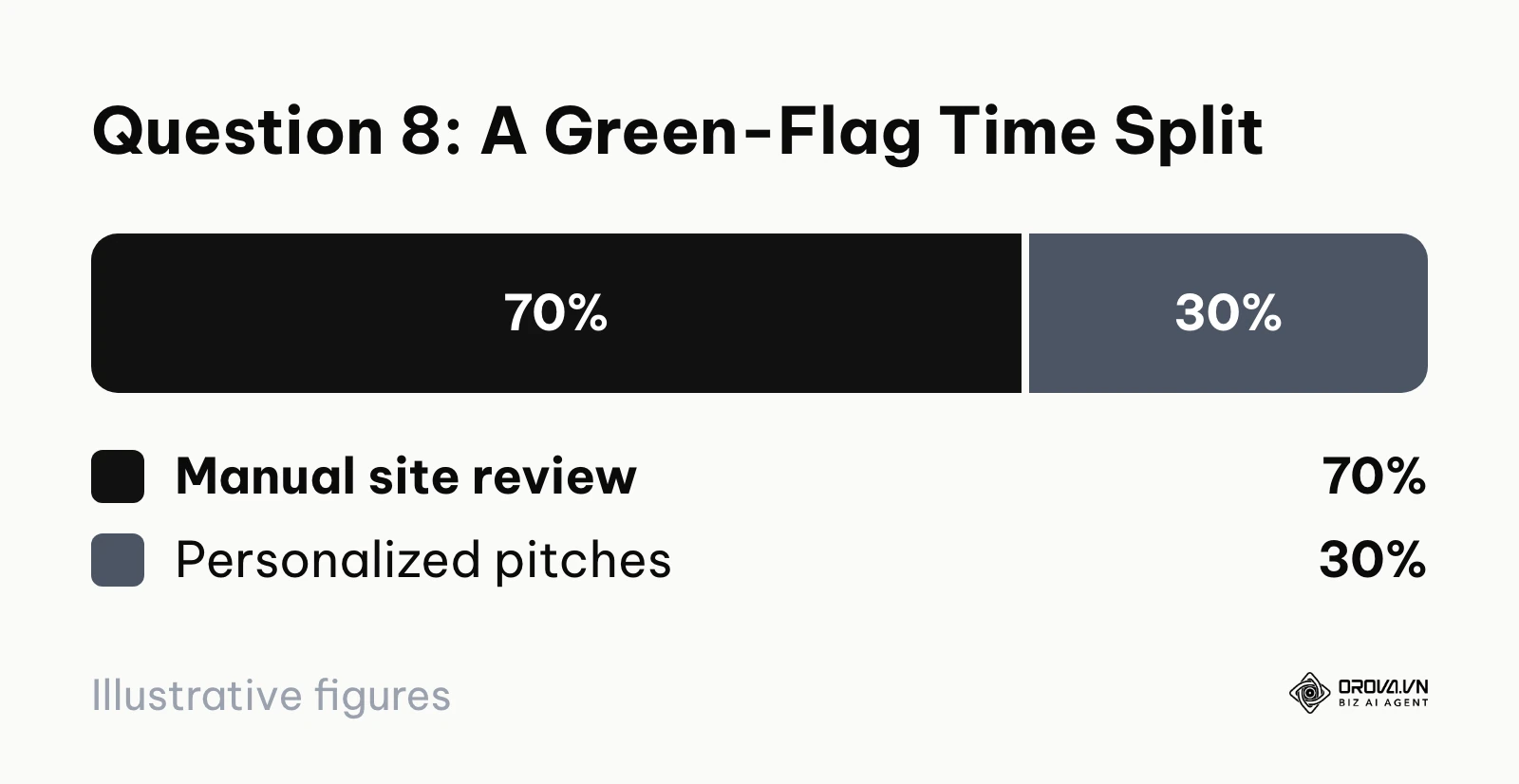
- Green Flag Answer: "Our team spends 70% of their time manually reviewing sites for quality and 30% crafting highly personalized pitches to specific editors."
9. How do you ensure the topical relevance of the linking page to my target URL?
- Red Flag Answer: "As long as the DA is high, it helps."
- Green Flag Answer: "We analyze the site's core entity. We won't put your SaaS link on a mommy blog. The site's entire ecosystem must logically relate to your industry."
10. Are your writers in-house subject matter experts or outsourced freelancers?
- Red Flag Answer: "We use AI tools to generate content quickly to save you money."
- Green Flag Answer: "We use vetted, native-speaking writers who research the topic extensively. Poorly written content will not pass manual reviews by quality webmasters, so we invest heavily in editorial quality."
Phase 4: Contract negotiation and SLA definition
Never sign a standard boilerplate contract without adding specific clauses for your protection. The Service Level Agreement (SLA) must explicitly state the minimum metrics for acceptable placements. If you agree on a minimum Domain Rating (DR) of forty and minimum traffic of two thousand visitors, put it in writing. Ensure the contract includes the exact duration of the replacement warranty for dropped links. Furthermore, include an "approval clause" that states you will not be billed for any placement that you did not explicitly approve in writing prior to publication.
Phase 5: The pilot campaign
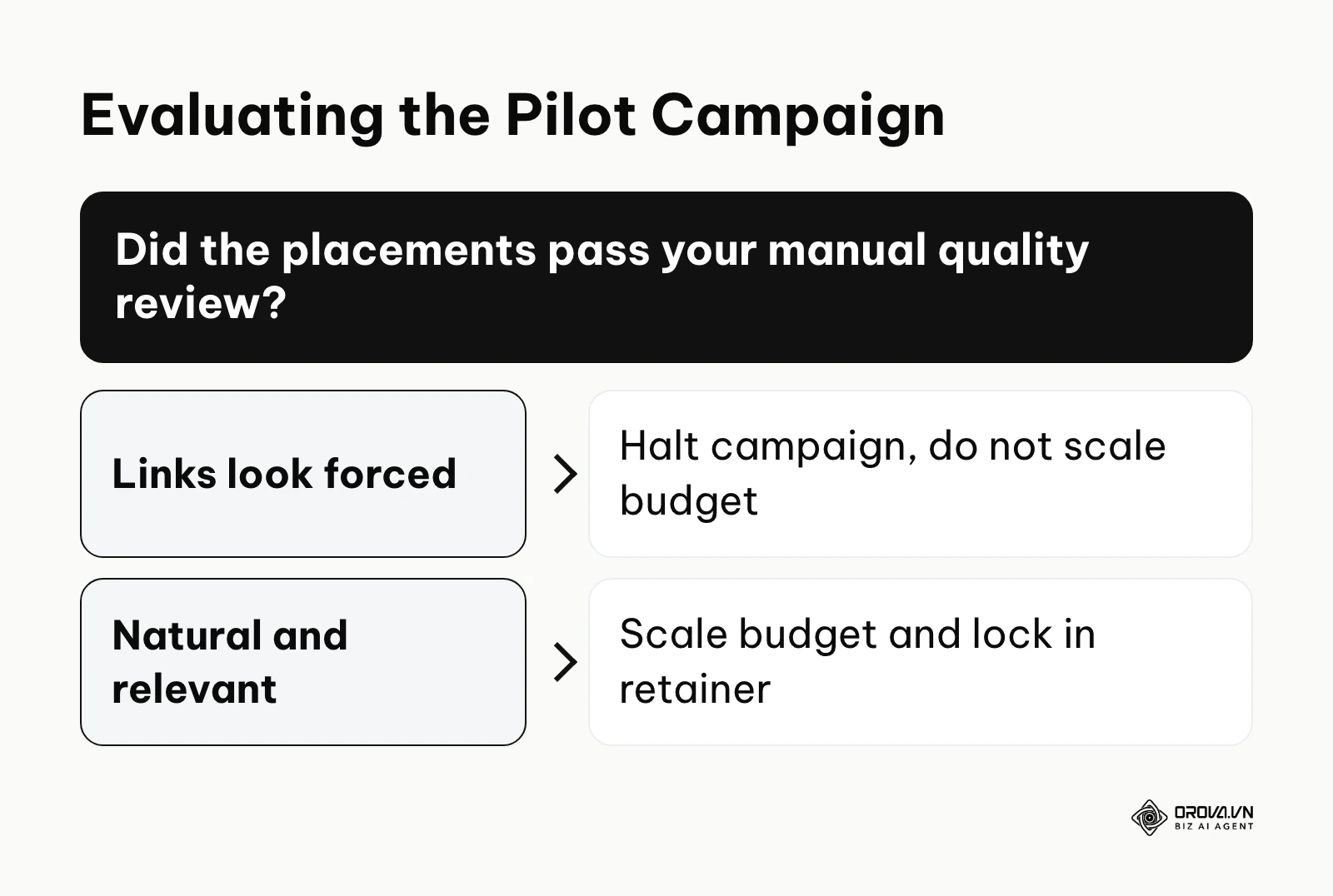
Do not commit to a large six-month retainer immediately, no matter how good the sales pitch sounds. Negotiate a one-month pilot or a small, discrete batch of three to five placements. This allows you to test their communication speed, the clarity of their reporting, their responsiveness to feedback, and the actual, undeniable standard of the sites they secure. If an agency pushes back heavily against a small pilot, claiming they "only work with serious long-term partners," they likely rely on high-volume churn to maintain their margins and are terrified of close scrutiny.
Phase 6: Manual evaluation and scaling
When the pilot links are delivered, do not just check the spreadsheet metrics and pay the invoice. Click every single link. Read the article. Is the English natural and professional? Does the link placement make logical, semantic sense within the paragraph, or does it look forcefully wedged in? Look at the website's other recent articles. Are they linking out to casinos, payday loans, or dubious pharmaceutical sites? If the pilot passes your rigorous, manual, human review, you can then confidently scale the budget and lock in a longer retainer.
Discover Orova.vn – a Biz AI Agent platform with OROVA SEO, a complete solution for every website. The system supports search engine optimization from A to Z with features including keyword research, writing new SEO-ready articles, optimizing existing content, rank tracking, plus competitor analysis and in-depth technical analysis. Sign up today to experience OROVA SEO completely free (offer valid through July 7, 2027).
Deep analysis: In-house team vs. hiring a link building agency
Business owners eventually face the economic dilemma of whether to build an internal capability or outsource the operation entirely. Making the wrong choice here can drain tens of thousands of dollars with absolutely zero return on investment. You must analyze the true operational costs deeply, looking far beyond just the sticker price.
The hidden costs and friction of building an in-house team
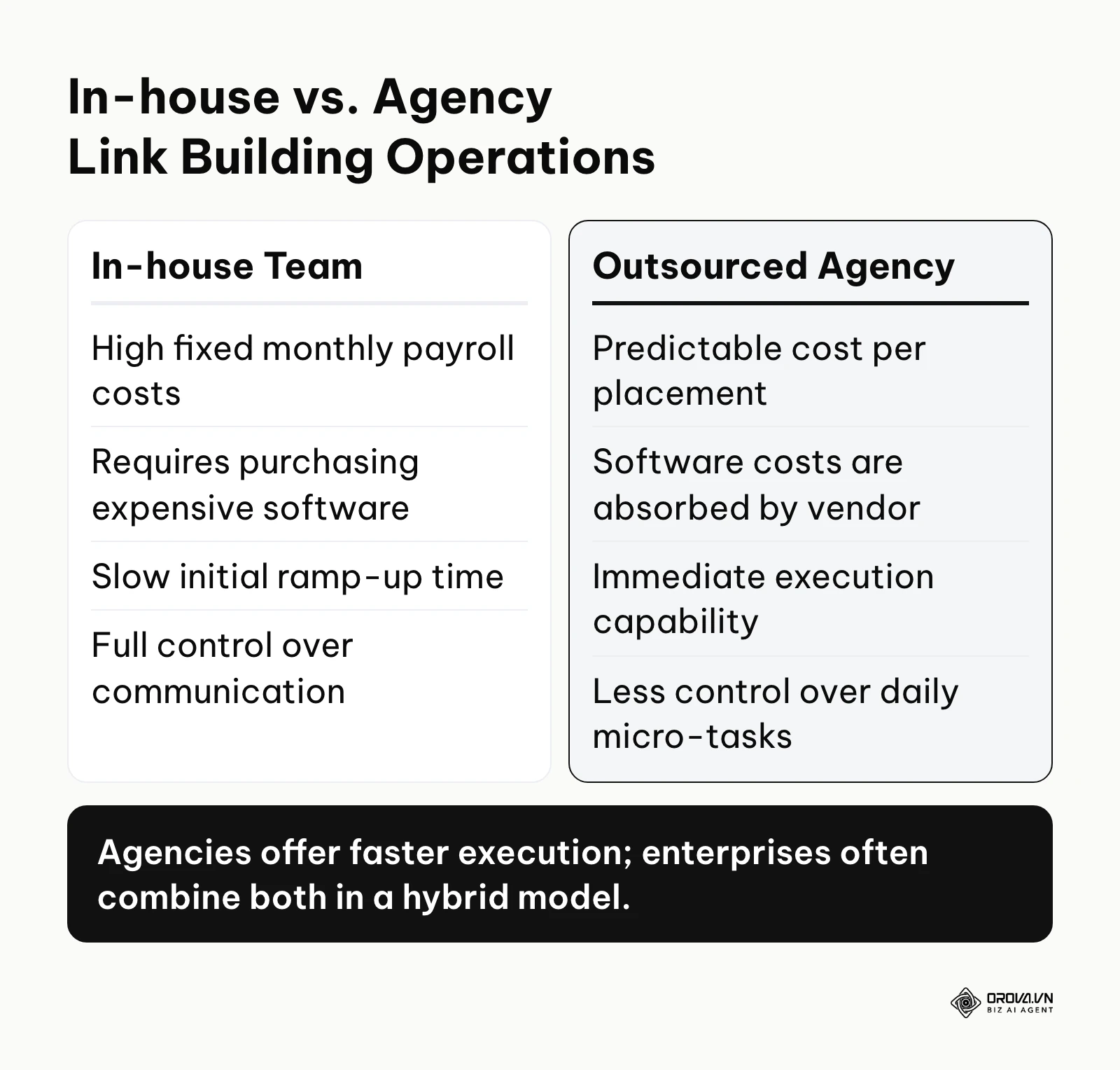
Building a team internally sounds cheaper on paper because you avoid paying an agency's markup or profit margin. However, the infrastructure and human capital required are immense. You need a dedicated SEO manager to oversee the strategy and map URLs. You need an outreach specialist to handle the grueling, daily grind of finding contacts, sending emails, and facing far more rejections than replies. You need a skilled content writer to produce the guest posts.
Beyond salaries, the software stack is incredibly expensive and complex. You will need subscriptions for SEO analysis, for email finding and verification, and for outreach management, and together they become a meaningful monthly line item.
Furthermore, the time it takes to train a team, build trust with editors, and refine email templates is significant. You might spend three to four months paying full salaries before securing a single high-quality placement. Tracking your marketing ROI is crucial when evaluating these internal operational burns, as the initial ROI will be deeply negative.
The premium of agency retainers
Agencies charge a premium because they have already absorbed all the setup costs. They own the expensive software subscriptions. They have established, warm relationships with journalists, bloggers, and webmasters, allowing them to secure placements faster and with less friction. They have tested thousands of email subject lines and know exactly what converts. When you hire a top-tier agency, you are paying for immediate execution capability, institutional knowledge, and predictability. You agree on a budget, and they deliver a set number of deliverables or hours worked, completely removing the HR and management burden from your plate.
The Hybrid Model: The best of both worlds
For enterprise companies, a hybrid model often works best. You keep the core strategy, content creation, and high-level Digital PR in-house to protect brand messaging. Then, you outsource the tedious, high-volume prospecting and relationship management for standard guest posting and niche edits to a specialized agency.
Cost comparison: The financial reality
The table below uses illustrative monthly estimates, not quotes from any provider, for a mid-sized operation aiming for roughly 15 high-quality, high-traffic placements per month. Replace each line with your own numbers.
| Cost Category | In-house Team (US dollars per month) | Outsourced Agency (US dollars per month) |
|---|---|---|
| Salaries (SEO Manager + Outreach Specialist) | 7,500 - 9,000 | 0 (Included in retainer) |
| Software & Infrastructure (SEO, email and outreach tools) | 800 - 1,200 | 0 (Absorbed by vendor) |
| Freelance Content Creation (High-quality articles) | 1,500 - 2,500 | 0 (Included in retainer) |
| Management Overhead (Time) (Training, 1-on-1s) | 20 - 30 hours/month | 2 - 4 hours/month |
| Direct Webmaster Fees (Sponsorships marked rel="sponsored") | 2,000 - 3,500 | 0 (Factored into pricing) |
| Total Estimated Financial Cost | 11,800 - 16,200 | 8,500 - 13,000 |
| Time to First Result | 3 to 4 months | 30 to 45 days |
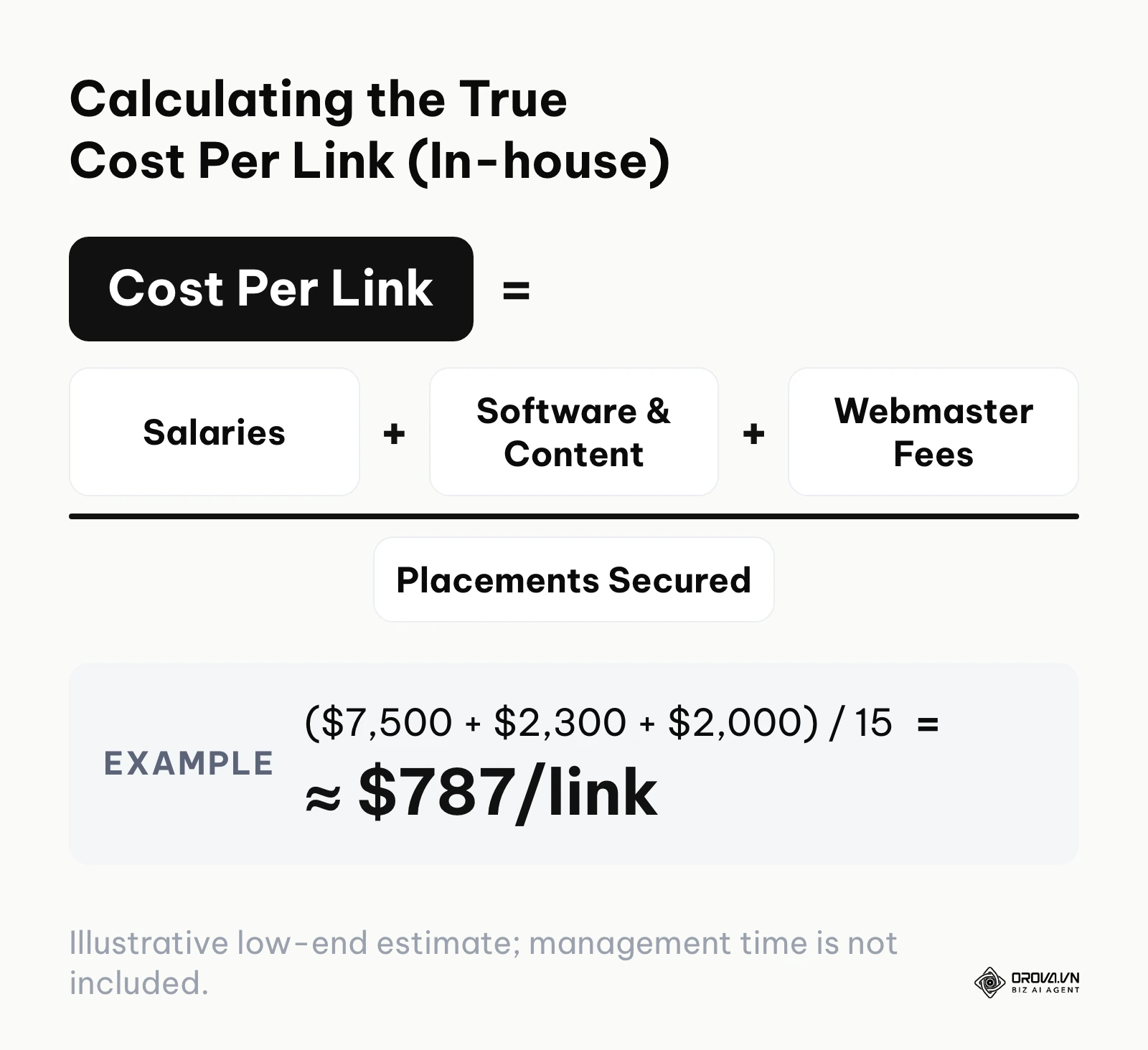
To turn the table into a cost per link, add up the in-house lines and divide by the placements you actually secure. At the low end, 7,500 in salaries plus 2,300 for software and content (800 + 1,500) plus 2,000 in webmaster fees gives 11,800 US dollars; divided by 15 placements, that is roughly 787 dollars per link, before you count the 20 to 30 hours of management time.
Illustrative example: A founder of an online retail store decided to build an internal team to save money. They hired a junior marketing specialist straight out of college, bought specialized outreach software, and purchased lists of email addresses. After three months of sending tens of thousands of emails, they only secured three low-quality placements because their generic templates were flagged as spam by webmasters, and their domain was blacklisted by major email providers. They fired the internal team, reallocated the exact same budget to a specialized digital PR agency, and focused solely on providing unique internal sales data to the vendor. The agency used that data to secure premium placements on major business news outlets within two months, driving significant referral traffic and domain authority.
Measuring results and illustrative scenarios for link building services
You must measure the impact of your investment correctly. Many buyers focus entirely on vanity metrics provided by SEO tools, which do not pay the bills or payroll. You need to connect external signals to actual business growth and pipeline generation.
Defining the right performance metrics
Domain Rating (DR) and Domain Authority (DA) are third-party estimations created by software companies; Google does not use them, and they are easily manipulated by spammers. While they are useful for quickly filtering prospects during the vetting phase, they are terrible performance metrics for an ongoing campaign. You should focus on page-level keyword movement for the specific URLs you are building links to. Monitoring your website ranking requires looking at page-level fluctuations over a 90-to-120-day period, as algorithmic shifts take time to settle.
| Metric | Meaning for your business | Worrying threshold / Red Flag |
|---|---|---|
| Referring Domains (to Target URL) | The total number of unique, quality sites linking to your specific page. | Zero or negative growth over a 3-month active campaign. |
| Page-Level Organic Traffic | The actual human visitors landing on the page from search engines. | Traffic declining or flatlining despite new links being added and indexed. |
| Target Keyword Position | The rank of the specific commercial term you want to win. | Stagnation on page two after 6 months of continuous, quality link building. |
| Referral Traffic | Visitors physically clicking the link on the external site to visit yours. | A bounce rate near 100% from referral traffic indicates poor placement relevance or bot traffic. |
| Pipeline/Revenue Correlation | Deals closed from organic traffic on the target pages. | High traffic but zero conversions implies wrong keyword targeting, regardless of links. |
The Timeline of Link Building
Link building is not an overnight hack.
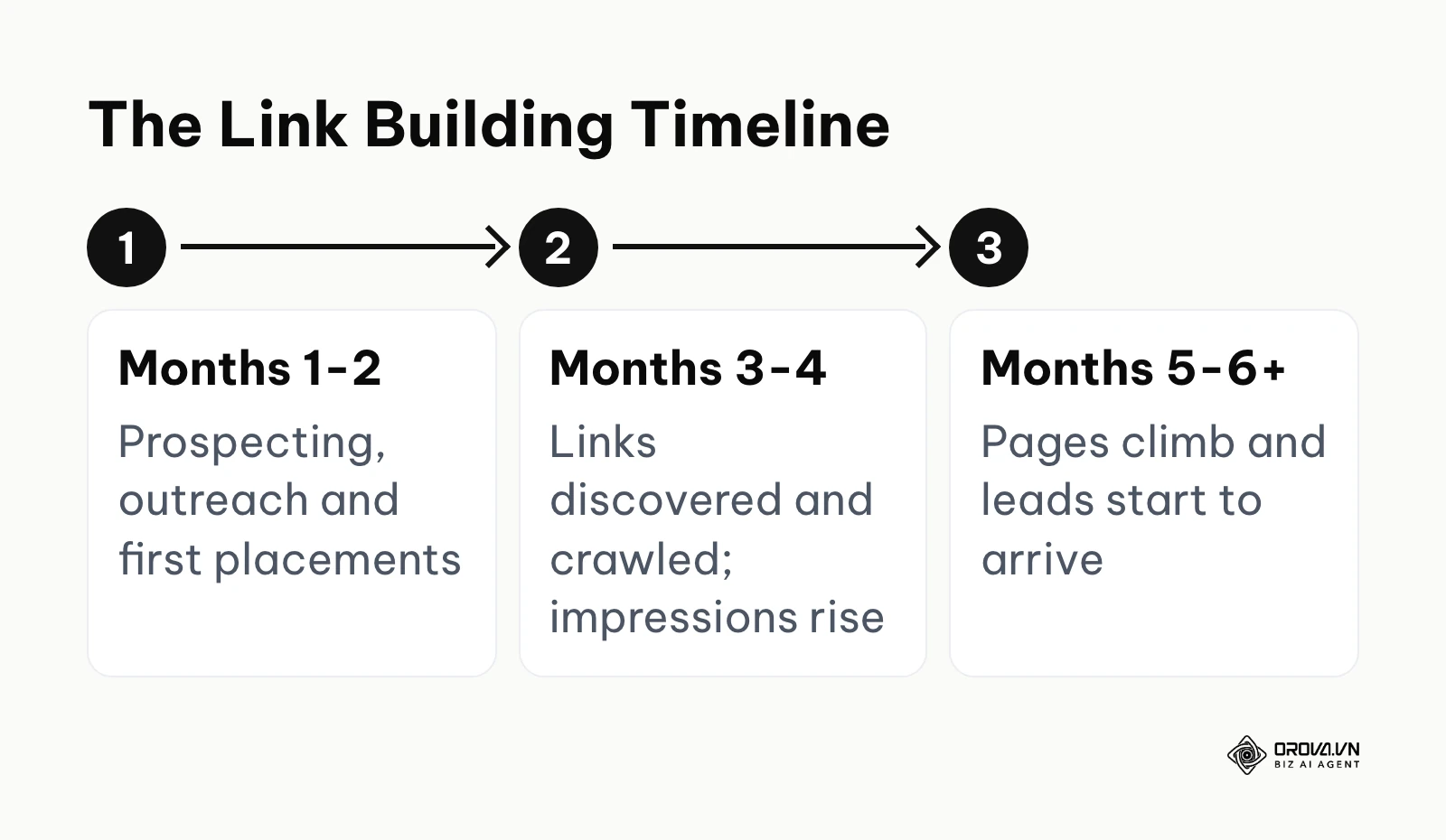
- Months 1-2 (The Foundation): Prospecting, outreach, content creation, and initial placements going live. Traffic rarely moves here.
- Months 3-4 (The Crawl): Search engines discover the links, crawl the content, and begin adjusting the algorithmic weight of your pages. You will see impressions rise.
- Months 5-6+ (The ROI): Pages jump to the first page. Organic traffic surges. The investment begins paying for itself in actual leads and sales.
Scenario 1: Conquering a medium difficulty keyword in B2B SaaS
Illustrative example: Consider a B2B software company trying to rank for an inventory management keyword with a Keyword Difficulty (KD) score of approximately forty. They identified that the top-ranking pages had an average of twenty unique referring domains. They hired an agency to secure fifteen highly relevant placements pointing to a recently updated, comprehensive landing page.
The company spent roughly five thousand five hundred dollars over three months. The results were not immediate. In month one, the page moved from position twenty-five to position eighteen. In month two, as Google discovered and evaluated the links, the page climbed to position nine. By month four, long after the campaign ended, the page stabilized at position three, generating consistent, high-value enterprise leads that covered the cost of the entire campaign in a single software subscription sale.
Scenario 2: Local SEO triumph for a legal firm
Illustrative example: A personal injury law firm in a major metropolitan area was stuck in the 5th position in the local Google Map Pack. They engaged a specialized local link building agency. Instead of focusing on massive international blogs, the agency focused entirely on local sponsorships, local news mentions, and highly specific legal directories. They secured only 10 links over two months, but they were hyper-local (e.g., the local chamber of commerce, a regional newspaper covering a charity event the firm sponsored). Within 60 days, the firm jumped into the top 3 of the Map Pack for "personal injury lawyer near me," resulting in a clear rise in direct phone calls.
Scenario 3: Recovering from toxic placements
Illustrative example: Another company previously hired a cheap offshore vendor promising "500 High PR DoFollow Links" for two hundred dollars on a freelance marketplace. Their traffic tanked entirely following a Google core algorithm update. An audit revealed thousands of exact-match anchor text links from irrelevant, spammy forums, unrelated foreign-language comment sections, and hacked WordPress sites. The recovery process took six agonizing months. They had to manually review thousands of domains, compile a massive disavow file, file a reconsideration request only where Search Console showed a manual action, and then execute a completely clean, high-quality digital PR campaign to show search engines they had reformed their practices. The cost of fixing the mistake in lost revenue and consulting fees far exceeded the cost of doing it right the first time.
With OROVA.VN and the OROVA SEO module, you put an end to the exhausting days of manual work for good. Instead of struggling for hours to write articles and compile reports, the entire process is now optimized and completed in just 5 minutes.
Common mistakes and how to spot link building scams
The SEO industry is unfortunately filled with unscrupulous vendors who prey on business owners desperate for fast results. Understanding their tactics is your absolute best defense. If a deal seems too good, too cheap, or too fast to be true, it is a scam.
The PBN trap and hidden networks
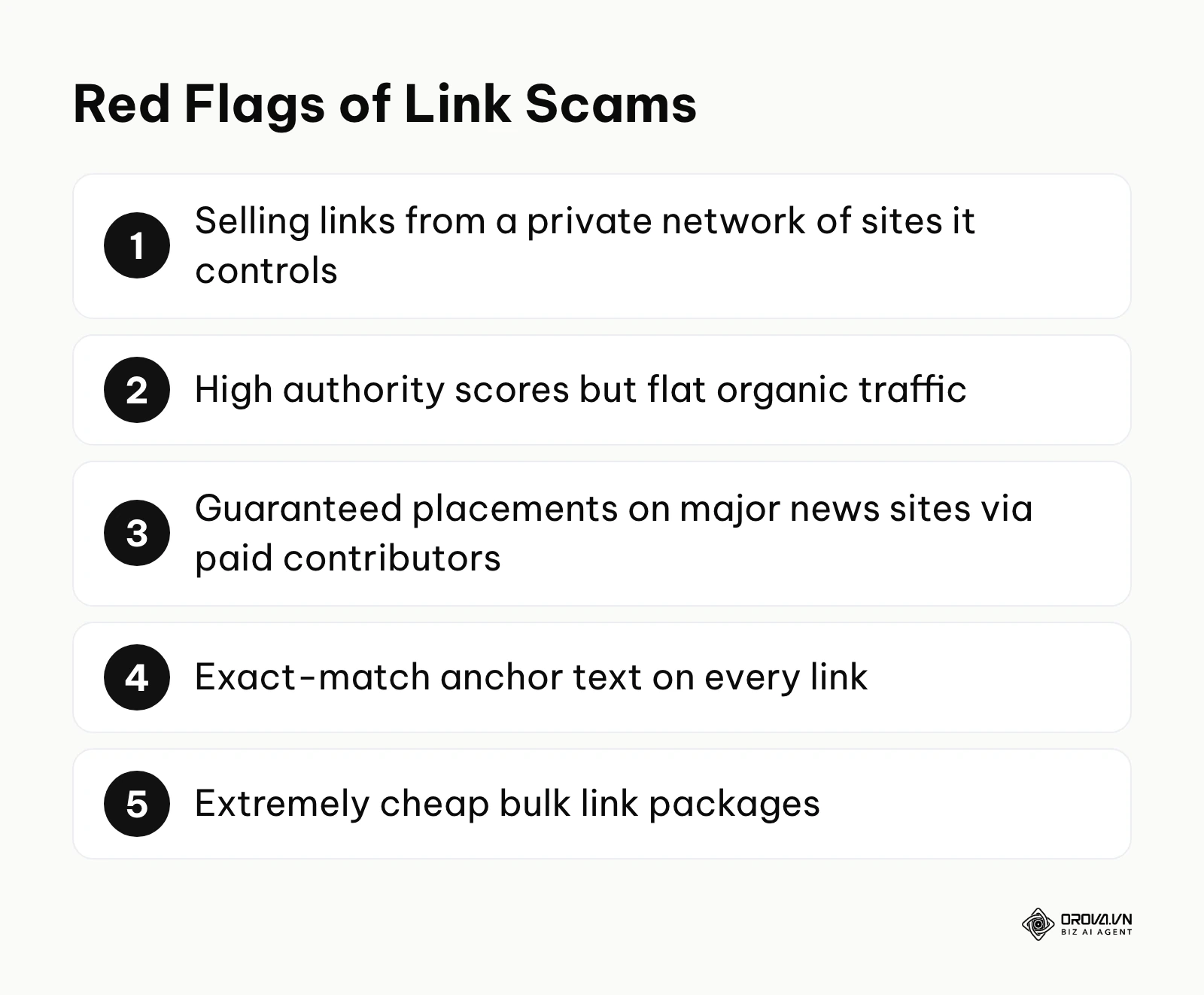
A Private Blog Network (PBN) is a cluster of websites owned by the same person or group, created solely to sell links. Buying links from a PBN is a link scheme that violates Google's spam policies, and it can lead to a manual action or to your links being ignored. They buy expired domains that used to have high authority, slap up cheap, scraped, or AI-generated content, and sell placements. Google's algorithms are exceptionally good at detecting these footprints. Scammers will try to hide their networks by using different hosting providers and blocking common SEO crawlers like Ahrefs bots. You can spot them by manually looking at their outbound link profiles. If every article on a "lifestyle" blog links out to a random local plumber, a crypto casino, and an enterprise software company in the span of three days, it is a farm. Avoid it at all costs.
The traffic illusion and zero-value domains
A domain might show high authority scores in third-party tools because it has a lot of historical incoming links, but if you check its organic traffic, the chart is completely flat or near zero. Google has already recognized the site is useless and refuses to rank its content, yet scammers will still sell you a placement there based purely on the vanity metrics (DA/DR). A link from a site that Google does not trust to send traffic to will not help you in any capacity. Always demand a minimum organic traffic threshold.
The "Forbes/Entrepreneur" Contributor Scam
Many vendors sell "guaranteed placements" on massive sites like Forbes, Entrepreneur, or premium news outlets for a few thousand dollars. They achieve this by paying off freelance contributors who have publishing rights. Search engines are highly aware of this. Paying a contributor for a link also falls under Google's link spam policies, these contributor sections are often devalued, and many publications mark such links 'nofollow' or remove them later. Paying massive premiums for temporary, rented contributor links is a highly volatile strategy.
Anchor text over-optimization
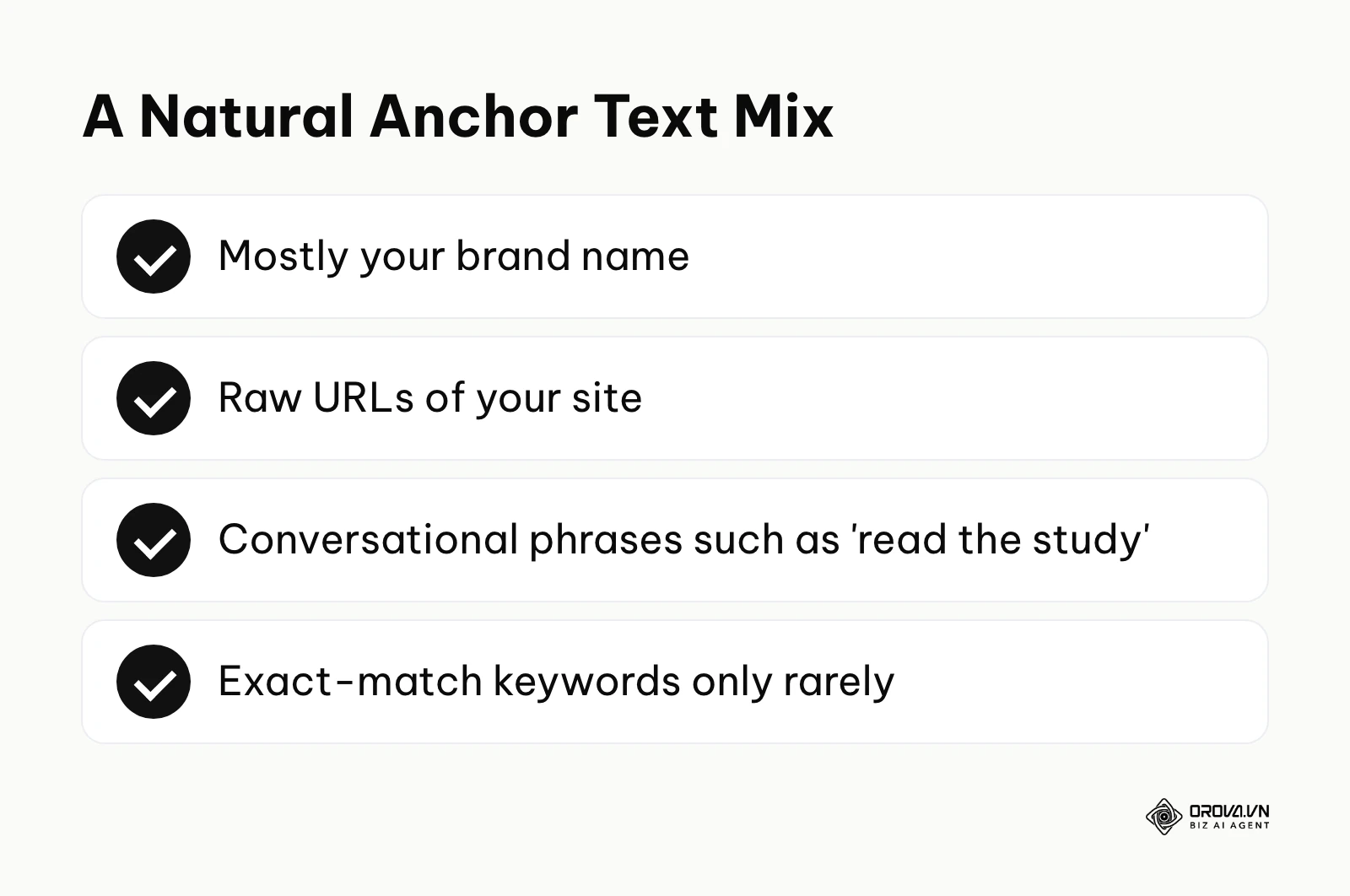
When you control the placement, there is a massive temptation to use your exact target keyword (e.g., "buy cheap car insurance") as the clickable text every single time. Links still matter, but unnatural, manipulated anchor profiles can trigger manual actions and algorithmic filters. A natural, healthy profile consists mostly of your brand name (e.g., "Company XYZ"), raw URLs (e.g., "https://www.company.com"), and conversational phrases (e.g., "click here to read the study"). Using ai generated content for guest posts without human editing often leads to awkward, forced anchor text insertions that look entirely artificial to both readers and search engine crawlers.
The Hacked Link Trap
Some of the cheapest vendors on the market do not do outreach at all. They utilize automated software to find vulnerabilities in poorly secured WordPress sites, hack in, and inject hidden links to their clients in the footers or hidden CSS elements. This is illegal, highly unethical, and will result in a permanent ban from search engines when discovered. Never buy extremely cheap, bulk link packages, and treat any offer of large-scale link exchanges ("link to me and I'll link to you") the same way: Google's spam policies list excessive link exchanges as link spam.
Ignoring the foundation
The most common mistake by business owners is spending their entire marketing budget on external signals when their own website is broken. If your pages load slowly, your content is thin, your mobile experience is terrible, and your internal architecture is a mess, no amount of external authority will save you. You must fix the house before inviting guests over.
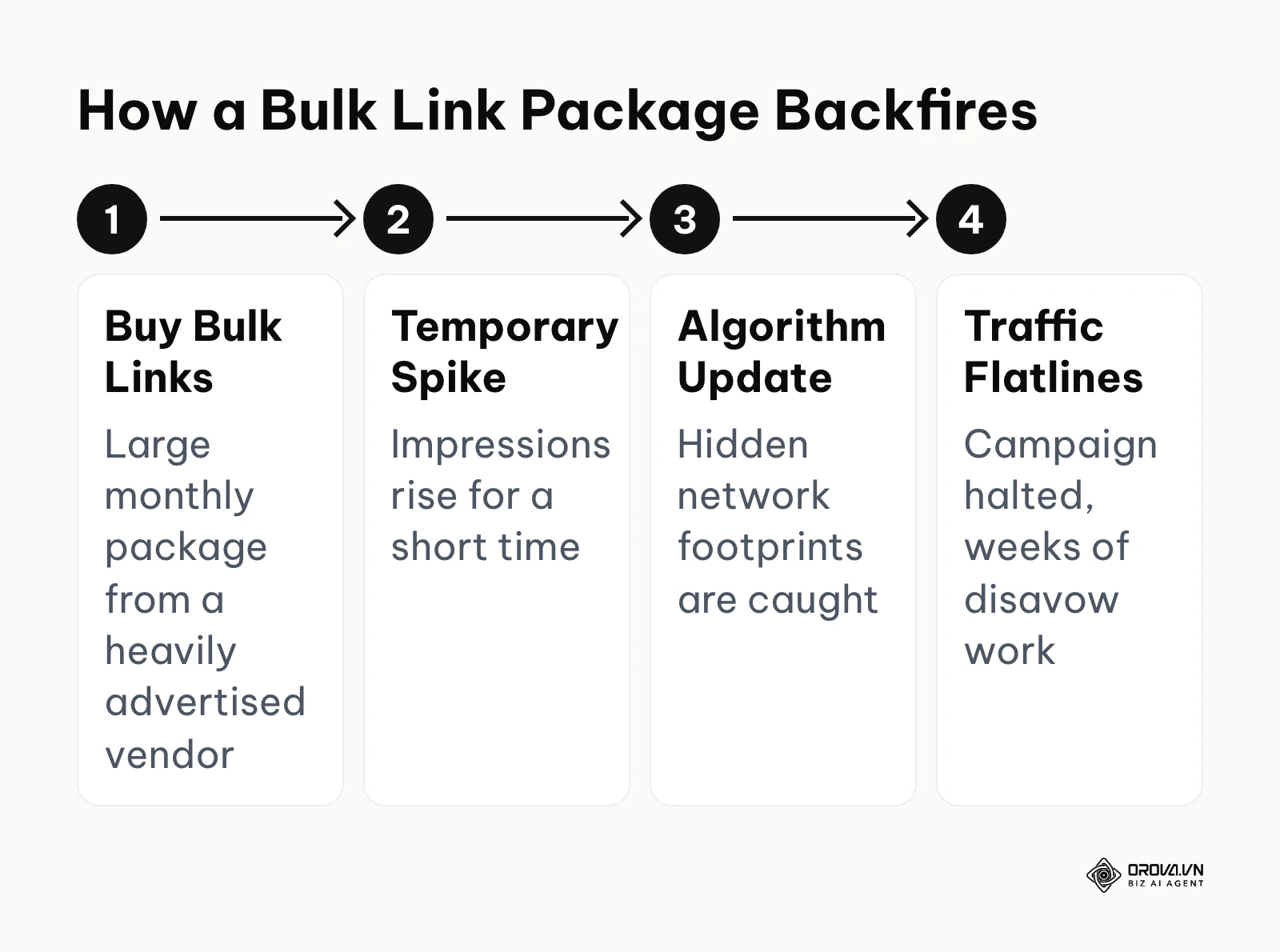
Illustrative example: An e-commerce site bought a massive package of fifty high-authority placements per month from a heavily advertised vendor. They received the reports and saw a temporary spike in impressions. Three months later, a major algorithm update rolled out, and their organic traffic flatlined entirely. They conducted a manual audit and found that all the placements came from a hidden network of sites sharing duplicate footer code, identical WordPress themes, and overlapping IP addresses. They had to immediately halt the campaign and spend weeks submitting disavow requests to recover their previous standing.
Future trends in link building services: Author's perspective
The landscape of search is shifting dramatically with the advent of generative AI and changing user behaviors. Here is what I believe will happen in the coming years and how you need to prepare.
AI will force a massive shift toward Digital PR and Proprietary Data
Calculated PR campaigns are likely to become the standard. As search engines get flooded with AI-generated articles, standard guest posting on mediocre, generic blogs looks set to lose much of its value. I believe that within the next few years, the only external signals that will truly move the needle for competitive terms will be un-fakeable mentions from major news publications and authoritative industry journals. You need to start building proprietary datasets, conducting original surveys, and forming unique opinions now to have something worthy of a real journalist's attention.
The total collapse of the "Write for Us" economy
Thousands of blogs currently survive solely by charging a fee to publish guest posts. I think this entire micro-economy is heading for serious trouble. Search engines keep improving at spotting paid placement footprints, and I expect websites that openly sell guest posts or have an outbound link profile that looks like a yellow pages directory to lose much of their value. You should immediately pivot away from any vendor whose primary strategy is negotiating with these visible link farms.
E-E-A-T and Entity connection will supersede raw domain authority
I am leaning heavily toward the idea that search engines are moving away from treating a link simply as a mathematical vote of authority, and more as a relationship between entities (brands, authors, concepts). I believe that a mention from a small, highly relevant niche blog authored by a recognized, verified expert in your field will carry significantly more weight than a random link from a massive, general-news website. You need to start focusing your outreach on building relationships with actual human experts in your specific vertical.
Frequently asked questions about link building services
How much should I reasonably pay for a good placement?
Quality requires significant manual labor, software costs, and relationship building. In the current market, quotes for a legitimate, high-quality placement are often in the hundreds of dollars on a site with real traffic and stringent editorial standards. Digital PR placements can cost far more per link once you include campaign costs. If a vendor offers links for a tiny fraction of that, they are likely using automated spam tactics, compromised sites, or cheap PBNs.
Are these services safe from search engine penalties?
No service is entirely risk-free. Buying links that pass ranking credit violates Google's spam policies, so any paid placement should carry rel="sponsored". The safest agencies focus on earning editorial links through useful content, digital PR, and genuine relevance rather than on making paid links look natural. Safety comes from that methodology, not from a guarantee.
Do "Nofollow" links matter at all?
Yes. While "dofollow" links pass direct SEO equity, a natural backlink profile contains a healthy mix of both. Nofollow links from massive sites (like Wikipedia or major news syndications) drive significant referral traffic and brand awareness, which search engines notice. Furthermore, Google treats the nofollow attribute as a "hint" rather than a strict directive, meaning highly relevant nofollow links may still positively impact your rankings.
What is Tier 2 Link Building?
Tier 2 link building means building links to the pages that already link to you, in the hope of passing more authority down the chain. When those tier 2 links are bought or mass-produced, it is still a link scheme under Google's spam policies, and it does not add a layer of safety. Treat any vendor that sells tier 2 packages as a red flag.
How does AI change the way these agencies operate?
AI is completely transforming the prospecting, data analysis, and outreach phases. Elite agencies use AI to rapidly analyze massive datasets of potential targets, evaluate the semantic contextual relevance of domains, and personalize initial outreach emails at scale. However, relying on AI to write the actual guest post content without expert human editing remains a massive risk that top-tier agencies avoid.
What happens to my rankings if I stop paying a retainer?
If you used a reputable service that secured permanent, high-quality, earned placements, your rankings should remain stable over time, provided your competitors do not outpace you with new aggressive campaigns. If you used a shady vendor, they might intentionally remove your links when you stop paying, causing an immediate drop in visibility. Always read the contract clauses regarding link permanence.
Can I just do this myself instead of hiring someone?
Yes, absolutely. The fundamental process of outreach is not a closely guarded secret; it is just incredibly tedious and requires a high tolerance for rejection. If you have the time to learn the software, build relationships, handle constant ignored emails, and manage writers, doing it in-house gives you maximum control. The decision usually comes down to whether your time is better spent running your core business and closing deals, or sending outreach emails.
Where should you start?
Taking the first step can be paralyzing given the financial risks and potential penalties involved. Your immediate action depends entirely on the current maturity of your business and website. Follow this structured roadmap:
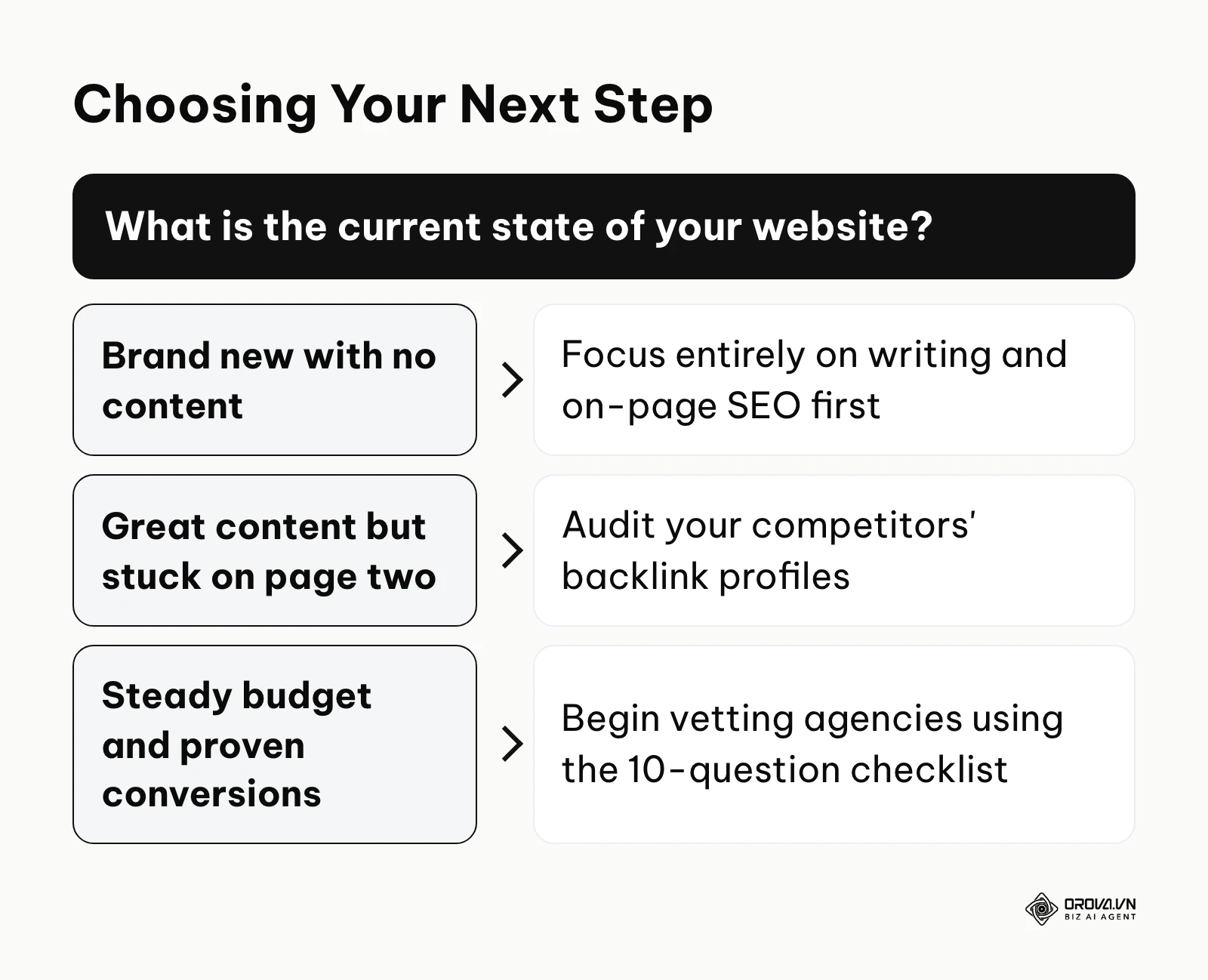
- If you have a new website with minimal content (Months 0-6): Do not spend a single dollar on outreach agencies yet. Your only focus should be producing highly comprehensive, genuinely helpful content that addresses the exact problems your target audience faces. Establish your technical foundation, ensure mobile responsiveness, and build a logical internal architecture.
- If you have great content but cannot break past page two (Months 6-12): It is time to run a detailed competitor gap analysis. Look at the three websites consistently outranking you for your most important commercial terms. Analyze their backlink profiles to understand exactly how many referring domains they have and what types of sites are linking to them. This sets your baseline numerical goal.
- If you have a steady marketing budget and proven conversion rates (Months 12+): Begin sourcing three potential agency partners. Do not look at their pricing pages first. Schedule a consultation and immediately deploy the 10-question checklist provided in this guide. Eliminate any vendor that hesitates, offers vague answers, refuses to show recent examples of their work, or guarantees #1 rankings. Start with a small pilot program to verify their quality before scaling to a full retainer. Focus on building relationships and assets that will withstand the next decade of algorithm updates.
About the author

Builder of Orova
Nguyễn Đỗ Trọng Ân has 8 years of experience in marketing, including 6 years managing market development across Asia. He builds Orova, a Biz AI Agent that never sleeps: it plans, runs and optimizes work for businesses.
Run your business with AI Agents
Orova is the always-on Biz AI Agent — it plans, runs, and optimizes the work for you.
Save time, unlock productivity.